
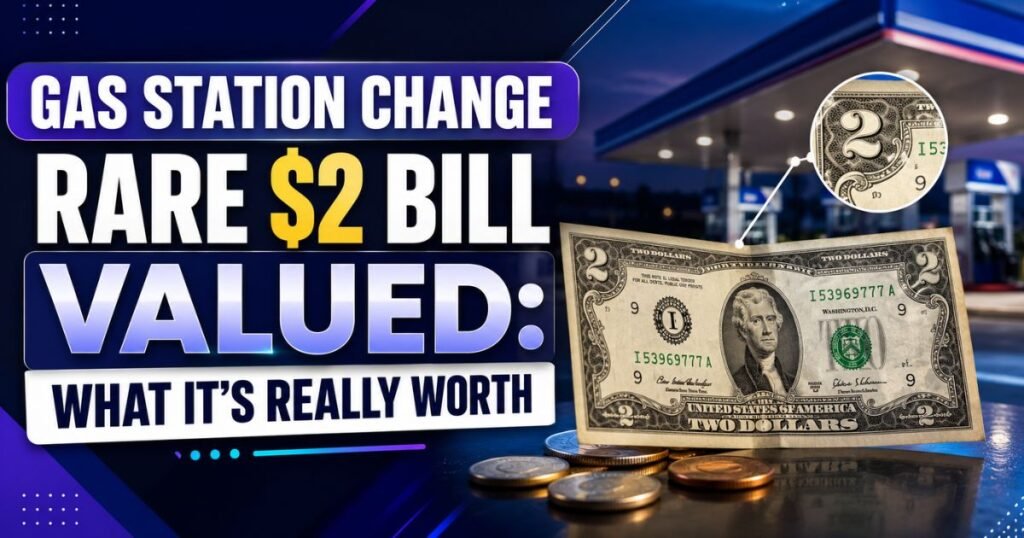
If you got a $2 bill in your gas station change rare $2 bill valued can be valued anywhere from $2 to over $4,000, depending on its year, print run, and condition. Most $2 bills are only worth face value. But a small number carry serial numbers, star notes, or print errors that collectors pay real money for.
This guide walks you through exactly how to check your bill, what makes one valuable, and how to sell it if it turns out to be worth something. No guesswork. Just clear steps you can follow right now with the bill in your hand.
Why Gas Stations Sometimes Give Out $2 Bills
Gas stations hand out $2 bills as change because banks still stock them, even though most people never see one. The Bureau of Engraving and Printing has never stopped making $2 bills. Banks order them in bulk, and busy stores like gas stations sometimes get a stack in their cash delivery.
Because $2 bills move slowly through the economy, people treat them like novelties. Some cashiers even keep them aside as tip jars or lucky charms instead of spending them. That’s part of why finding one in your change feels exciting, even before you know its value.
Here’s the honest part: getting a $2 bill in your change does not automatically mean it’s rare or valuable. It just means the bank had some in circulation. The real value question depends on the bill’s year, printing details, and condition, which we’ll break down next.
Is Every $2 Bill Rare?
No, most $2 bills in circulation today are common and worth exactly $2. The U.S. Treasury has printed billions of them since 1976, when the modern series began. A regular, well-circulated $2 bill from a common year is not rare.
What makes a $2 bill genuinely rare is a combination of factors:
- Low print numbers for that series
- A star note replacing a misprinted bill
- A printing error that slipped past quality control
- An uncirculated or crisp condition
- A special serial number pattern
Think of it like a baseball card. Most cards from a common pack are worth little. But a specific card, in specific condition, with a specific print flaw can be worth hundreds. The $2 bill works the same way.
How to Tell If Your $2 Bill Is Valuable
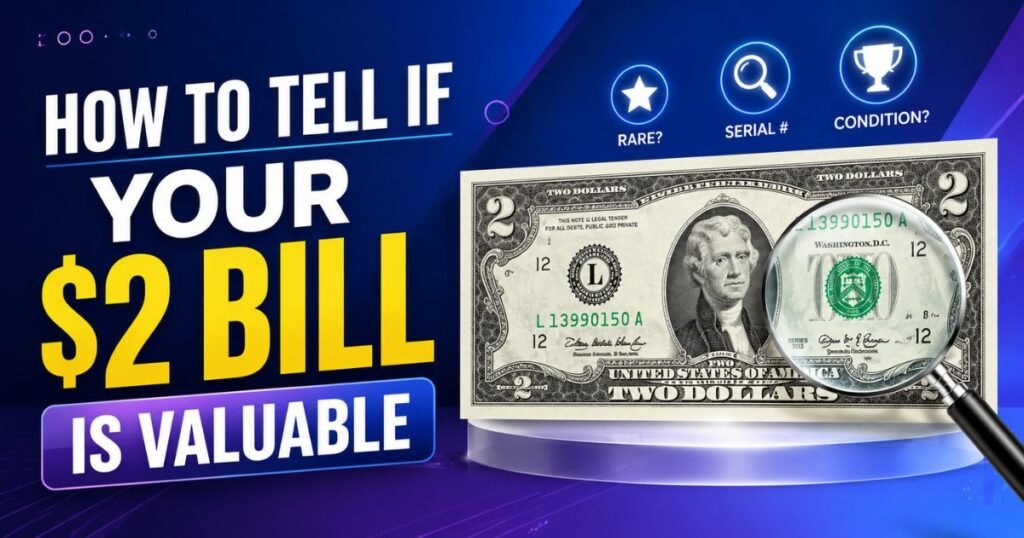
You can tell if your $2 bill is valuable by checking four things: the series year, the serial number, whether it has a star symbol, and its physical condition. Here’s how to check each one in under five minutes.
Step 1: Check the Series Year
Look at the bottom right area near the portrait of Thomas Jefferson. You’ll see a year, like “Series 1976” or “Series 2013.” Older series years, especially pre-1976, tend to carry higher base value simply due to age and lower surviving quantities.
Step 2: Look for a Star Symbol
Find the serial number, usually printed in green ink on the front. If you see a small star symbol at the end of the serial number instead of a letter, you’re holding a star note. Star notes replace bills that were damaged during printing, and fewer of them exist.
Step 3: Study the Serial Number Pattern
Serial numbers with repeating digits, sequential numbers, or very low numbers (like 00000001 to 00000100) attract collector interest. A serial number like 12345678 or 11111111 is worth checking against collector price guides.
Step 4: Assess the Condition
A crisp, flat, uncirculated bill is worth more than a folded, stained, or torn one. Collectors use a grading scale from “Poor” to “Gem Uncirculated.” Even a common-year $2 bill in perfect condition can sell for more than face value.
Unlock More: HearthStats net in 2026: What This Site Actually Is Now (Honest Review)
$2 Bill Value Chart by Year
Here’s a general value range based on common auction and dealer pricing patterns. Actual value always depends on condition and specific serial number features.
| Series Year | Typical Circulated Value | Uncirculated Value | Notes |
| Before 1928 | $500+ | $2,000+ | Large-size notes, rare survivors |
| 1928 | $50–$150 | $300–$800 | First small-size $2 bill series |
| 1953 | $10–$30 | $50–$150 | Common but collectible |
| 1963 | $8–$20 | $40–$100 | Last series before 13-year gap |
| 1976 | $2–$5 | $15–$50 | Modern series relaunch, Bicentennial |
| 1995–2003 | $2–$4 | $10–$25 | Common, low collector demand |
| 2003A–2013 | $2 | $5–$15 | Widely available, mostly face value |
| 2017 | $2 | $4–$10 | Recent series, low premium |
Star notes and error notes from any year above can be worth several times these amounts. Always verify current pricing with a dealer or auction site before selling, since collector demand shifts over time.
Star Notes: The Hidden Value Marker
A star note is a $2 bill printed as a replacement for a bill that was damaged or misprinted during production, and it’s marked with a star symbol next to the serial number. Star notes are printed in smaller batches than regular notes, which makes them scarcer.
Not every star note is valuable. A common-year star note might sell for $5 to $15. But a star note from a low print run, or one paired with a low serial number, can sell for $100 or more.
To check if your star note has real value:
- Note the series year printed on the bill
- Search “[series year] $2 star note value” on a trusted numismatic site
- Compare your serial number range to known low-print batches
Print Errors That Boost Value
Print errors happen when something goes wrong during the printing process, and bills with visible errors often sell for far more than face value. Common errors on $2 bills include:
- Off-center printing — the design sits noticeably off the paper’s center
- Ink smearing or doubling — text or images appear doubled or blurred
- Missing print layers — part of the design (like the seal) is missing
- Cutting errors — the bill is cut unevenly, showing part of the next note
Error notes can range from $20 for minor errors to several thousand dollars for dramatic, well-documented errors. If you spot something unusual on your bill, don’t fold it or write on it. Store it flat in a protective sleeve and get it evaluated.
Low Serial Numbers and Fancy Serial Numbers
Collectors pay a premium for serial numbers that stand out. Here’s what to look for:
- Low numbers: 00000001 through 00000100
- Repeaters: like 21212121
- Solid numbers: like 55555555
- Ladders: like 12345678 or 87654321
- Radars: numbers that read the same forwards and backwards, like 32455423
A regular $2 bill with a radar or solid serial number can jump from $2 in value to $50, $100, or more, even if the series year is common.
How Condition Affects Value
Condition changes value more than most people expect. A folded, worn $2 bill from a common series might only be worth face value, while the same bill in crisp, uncirculated condition could sell for 5 to 10 times more.
Collectors use these general condition categories:
| Condition | Description |
| Poor/Fair | Heavily worn, torn, or stained |
| Good | Visible wear, no major damage |
| Fine | Moderate wear, still intact |
| Extremely Fine | Light wear, sharp corners |
| Uncirculated | No folds, crisp paper, full color |
If your bill looks new, handle it by the edges and avoid folding it further. This preserves value until you can get it checked.
Read More: How to Play Community Servers: A Complete Beginner-to-Pro Guide
Real vs Fake: Spotting Reproductions
You can spot a fake $2 bill by checking the paper texture, the security thread, and the color-shifting ink, since genuine U.S. currency has all three. Novelty or souvenir “bills” sold online are not legal currency and have no collector value beyond curiosity.
Quick checks:
- Feel the paper — real currency uses a cotton-linen blend, not standard paper
- Hold it to light — a security thread should run vertically through genuine bills printed after certain years
- Tilt the bill — the numeral in the corner should shift color slightly on modern notes
- Check for “COPY” or “SPECIMEN” printing — novelty bills often say this in small text
If you’re unsure, a local bank or coin shop can verify authenticity for free in most cases.
How to Get Your $2 Bill Professionally Grading
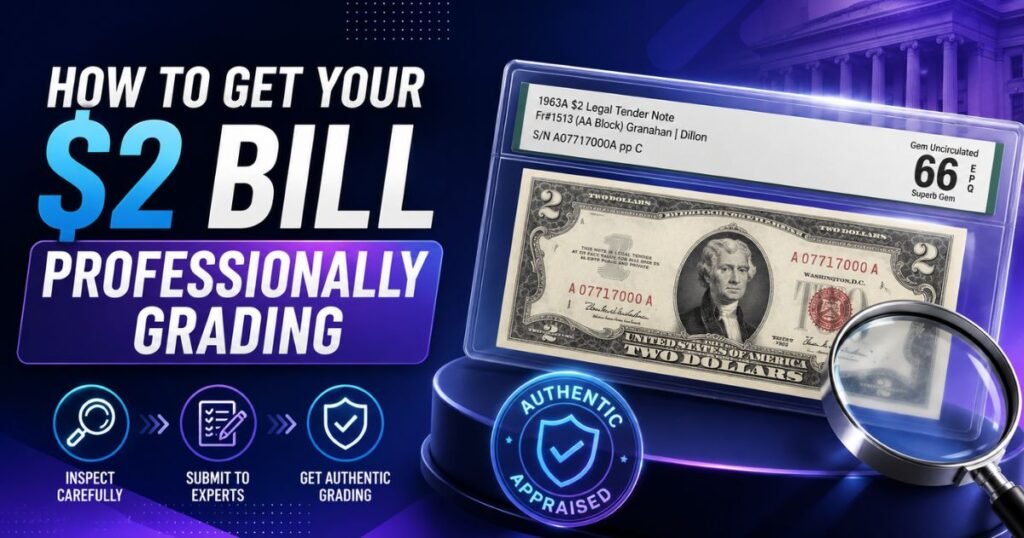
You can get your $2 bill professionally graded by submitting it to a third-party grading service like PMG (Paper Money Guaranty) or PCGS Banknote. These services examine the bill, assign a numeric grade, and seal it in a tamper-proof holder.
Professional grading matters if:
- The bill appears rare or old
- You plan to sell at auction
- You want proof of authenticity for a high-value sale
Grading typically costs between $20 and $50 per bill, depending on turnaround speed. For a bill only worth a few dollars, grading isn’t worth the cost. For a bill that might be worth hundreds, it’s a smart investment.
Where to Sell a Rare $2 Bill
You can sell a rare $2 bill through specialized currency dealers, online auction platforms, coin and currency shows, or numismatic marketplaces. Each option has tradeoffs worth knowing before you commit.
Pros and Cons of Selling Options
Currency Dealers
- Pros: Fast payment, expert opinion on the spot
- Cons: May offer below full market value
Online Auctions
- Pros: Wider buyer pool, competitive bidding can raise price
- Cons: Listing fees, shipping risk, takes longer to sell
Coin and Currency Shows
- Pros: Face-to-face negotiation, multiple buyers in one place
- Cons: Requires travel, show schedules vary by region
Numismatic Marketplaces
- Pros: Reaches serious collectors directly
- Cons: Some platforms charge listing or seller fees
Before selling anywhere, get at least two independent opinions on value. Prices for the same bill can vary between buyers, so comparing offers protects you from underselling.
Discover Now: TheLifestyleEdge com: Review 2026 What It Really Is Before You Trust the Advice
Common Mistakes to Avoid
- Folding or creasing the bill to check features closely this lowers value instantly
- Cleaning or ironing the bill this damages the paper and removes original texture
- Selling to the first buyer without comparing offers
- Assuming all $2 bills are rare just because they’re uncommon in daily use
- Skipping authentication before paying for grading services
- Storing the bill loose in a wallet use a paper currency sleeve instead
Expert Tips From Currency Collectors
- Always check both sides of the bill under good lighting before deciding it has no value
- Compare your serial number against known error and star note lists specific to your series year
- Join a local coin and currency club members often help identify value for free
- Keep uncirculated bills flat between cardboard, never folded, even temporarily
- When in doubt, get a second opinion from a different dealer before selling
FAQs about gas station change rare $2 bill valued
Is a $2 bill from a gas station rare?
Not usually. Most $2 bills handed out as change are common, modern-series notes worth exactly $2. Rarity depends on the series year, star note status, and condition, not on where you received it.
How much is a 1976 $2 bill worth?
A circulated 1976 $2 bill is typically worth $2 to $5. Uncirculated examples can sell for $15 to $50, and ones with special serial numbers can be worth more.
What makes a $2 bill valuable?
A $2 bill becomes valuable through a combination of factors: an old series year, a star note designation, a printing error, a rare serial number pattern, or uncirculated condition.
How can I check my $2 bill serial number for value?
Search the series year and full serial number on a trusted numismatic price guide or ask a certified currency dealer. Star notes and fancy serial numbers (repeaters, radars, low numbers) carry the most interest.
Are all star note $2 bills worth more money?
Not automatically. Star notes are scarcer than regular notes, but value still depends on the series year, print run size, and condition. Some common-year star notes sell for only slightly above face value.
Can banks tell me if my $2 bill is valuable?
Most bank tellers can confirm a bill is genuine currency, but they usually can’t assess collector value. For an accurate valuation, consult a currency dealer or grading service.
Should I spend my $2 bill or keep it?
If your bill shows no star note, no error, and no special serial number, and it’s from a common series year, its collector value likely matches its face value. In that case, spending it is a reasonable choice.
What’s the rarest $2 bill in circulation?
Pre-1928 large-size $2 notes and certain low-print star notes are among the rarest. These can be worth hundreds to thousands of dollars depending on condition and documented rarity.
Does a red seal or blue seal matter on a $2 bill?
Older $2 bills used red seals (Legal Tender notes) and blue seals (Silver Certificates), while modern bills since 1976 use green seals. Red and blue seal notes are generally older and can carry higher collector value.
How do I know if my $2 bill is a print error?
Look for off-center printing, doubled or smeared ink, missing design elements, or uneven cutting. If anything looks visibly different from a normal $2 bill, avoid folding it and have it evaluated by a dealer.
Can I get my $2 bill appraised for free?
Many local coin shops offer free basic appraisals, especially if you’re a potential seller. Formal grading services charge a fee but provide documented, sealed authentication.
What should I do if I think I found a rare $2 bill?
Handle it by the edges, store it flat in a protective sleeve, avoid cleaning it, and take it to a reputable currency dealer or grading service for a professional opinion before selling or spending it.
Conclusion
A gas station change rare $2 bill valued at real collector money is possible, but it’s the exception, not the rule. Most $2 bills you’ll come across are common and worth exactly what’s printed on them. The ones that stand out have a specific mix of age, star note status, print errors, or standout serial numbers, combined with good condition.
If you found a $2 bill recently, take five minutes to check the series year, look for a star symbol, scan the serial number for patterns, and judge the condition. That quick check tells you whether it’s worth a trip to a currency dealer or just fine to spend on your next tank of gas.

Team TrandyVilla is the passionate home decor team behind Trandy Villa, where style meets comfort in everyday living. The team loves transforming simple spaces into beautiful, functional homes through smart ideas, budget-friendly hacks, and modern design trends. Their content focuses on helping readers create homes that feel both stylish and personal without spending too much.