
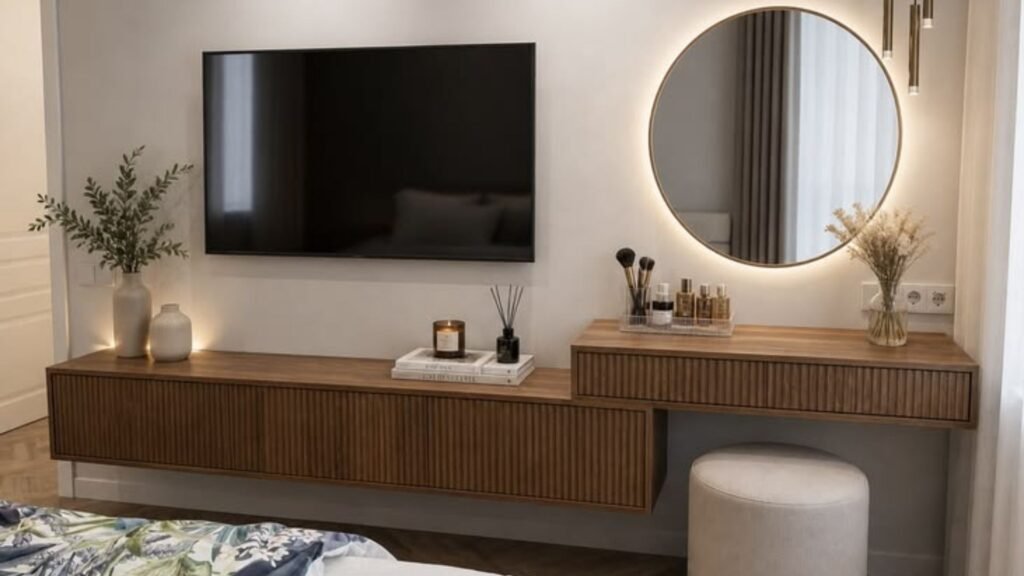
Bedroom Dresser Decor with TV ideas combine storage, entertainment, and style in one practical space. They help create a balanced bedroom with better organization and visual appeal. Smart layouts, simple decor, and functional accessories keep the dresser neat while making the TV blend naturally with the room’s design.
Bedroom Dresser Decor with TV creates a stylish and functional focal point for your bedroom. It combines practical TV placement with attractive decor to keep the space organized, comfortable, and visually balanced while enhancing your room with simple, elegant styling that feels warm and inviting every day.
Bedroom Dresser Decor with TV ideas focus on clean styling and everyday function. Decorative trays, lamps, plants, framed art, and hidden cable solutions create a polished look. Coordinated colors and layered accessories add warmth while maintaining a tidy, modern, and comfortable bedroom atmosphere.
Anchor the TV with a Low-Profile Stand or Riser
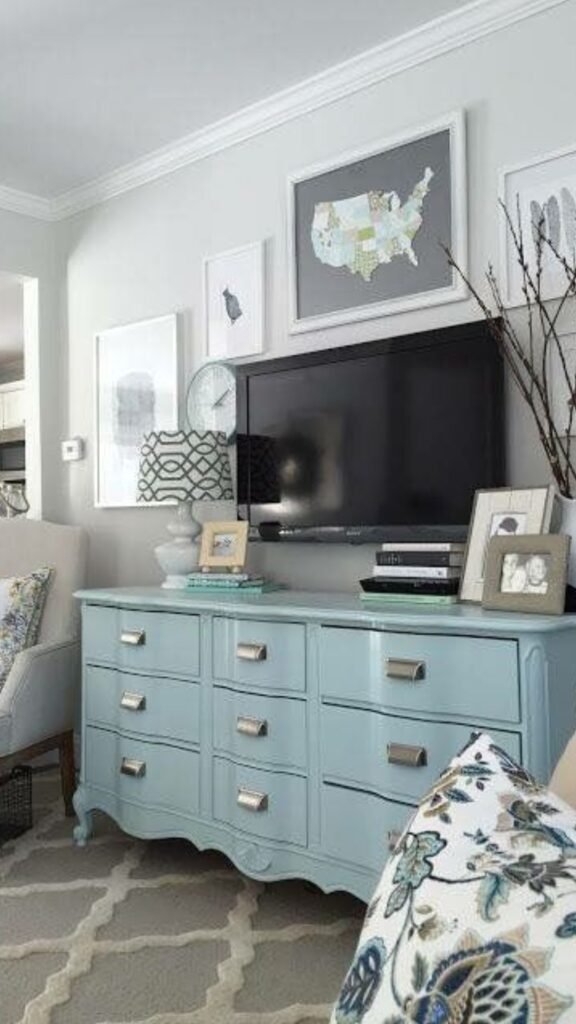
A television plopped directly on a dresser surface tends to look like an afterthought. Adding a slim riser or low stand underneath lifts the screen slightly, creates visual structure, and opens up a thin gap for hiding a power strip or streaming device. Look for risers under 4 inches tall so the TV doesn’t dominate the dresser’s height. This small addition instantly makes the setup feel designed rather than improvised.
Wood risers work well in warm, traditional bedrooms, while matte black or brushed metal versions suit modern spaces. For example, a walnut riser under a 32-inch TV on an oak dresser ties the wood tones together and makes the whole vignette read as one cohesive unit instead of two separate objects competing for attention.
Many people skip this step because they assume a stand is only for furniture-free surfaces like TV consoles. In reality, a riser on a dresser does double duty: it elevates the screen for better eye-level viewing from bed and gives you a hidden shelf for cable boxes or remotes, keeping the top surface visually calm.
Balance the TV with Asymmetrical Styling
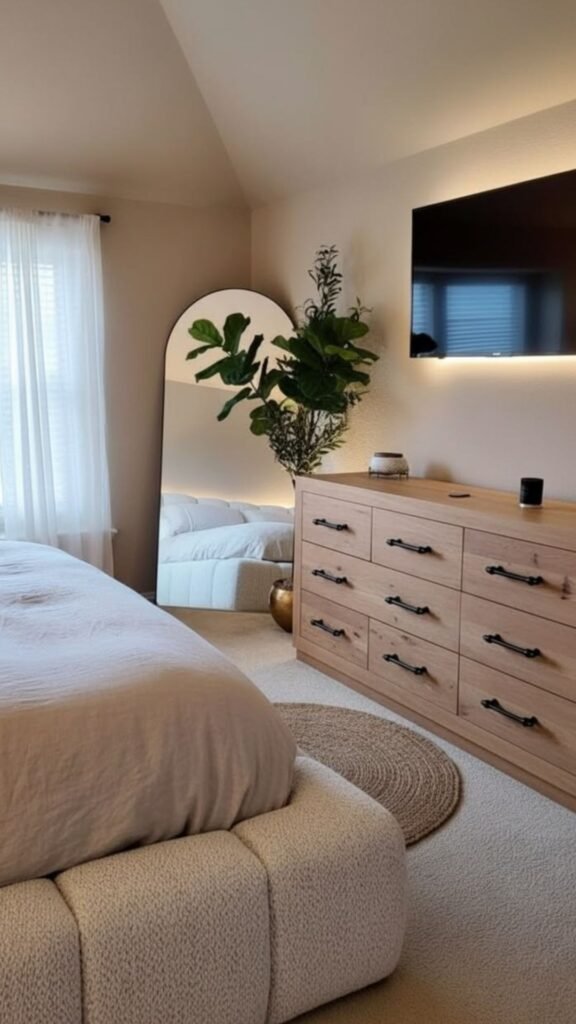
Centering a TV on a dresser and stacking symmetrical decor on either side often looks stiff and dated. Instead, treat the TV as one visual weight and build an asymmetrical arrangement around it a taller lamp on one side, a low stack of books and a small plant on the other. This mirrors how professional stylists arrange bookshelves and mantels, where uneven groupings feel more natural to the eye.
For instance, if your TV sits slightly left of center, place a table lamp to its immediate right at a taller height, then a shorter object like a ceramic bowl or framed photo further right. This staggered height pattern draws the eye across the whole dresser rather than stopping it flat at the screen.
Asymmetry also solves a common complaint: dressers with a TV often look empty on one side once the screen is off. By deliberately unbalancing the layout, the empty side has a reason to exist rather than looking like storage space nobody decorated.
Just What You Were Looking For: TV Stand Ideas That Match Your Bedroom Dresser Decor Perfectly
Use a Console-Style Dresser
For Better Proportions
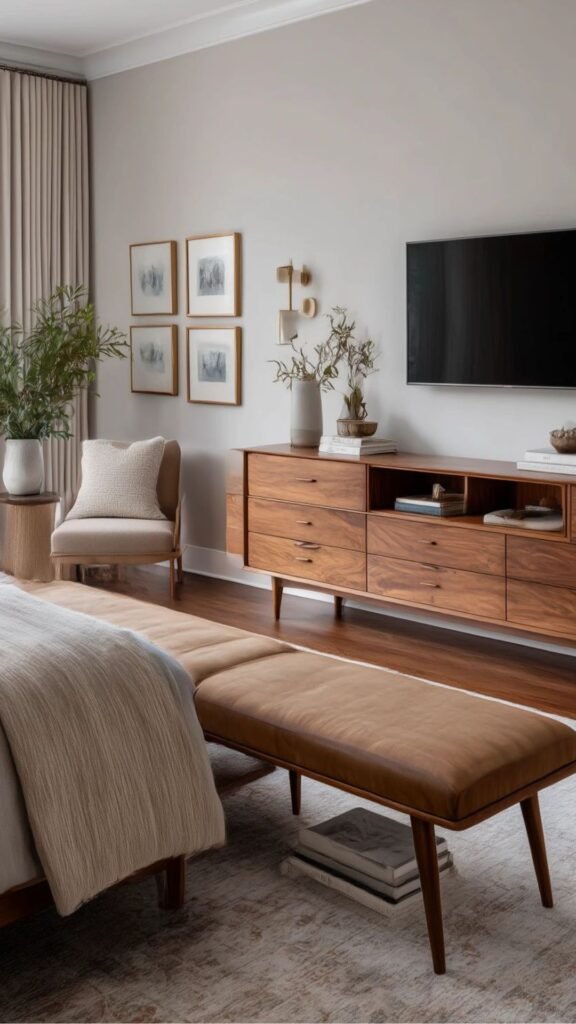
Not every dresser is built to double as a media surface. Tall, narrow dressers make TVs look oversized and top-heavy, while wide, low dressers (often called “media dressers” or “credenza-style” pieces) give the screen room to breathe. If you’re shopping specifically for this purpose, look for a dresser between 30 and 36 inches high with a depth of at least 18 inches to support the TV base safely.
A practical example: a 55-inch TV needs roughly 48 inches of surface width to sit comfortably without decor squeezed to the edges. If your current dresser is narrower, consider a 32-inch TV instead, or shift to wall-mounting and let the dresser handle decor and storage only.
This is a detail most articles skip matching TV size to dresser width isn’t just aesthetic, it’s a safety consideration. An oversized TV on a narrow surface increases tip-over risk, especially in bedrooms with pets, kids, or shared spaces where the dresser gets bumped.
Mount the TV Above the Dresser Instead
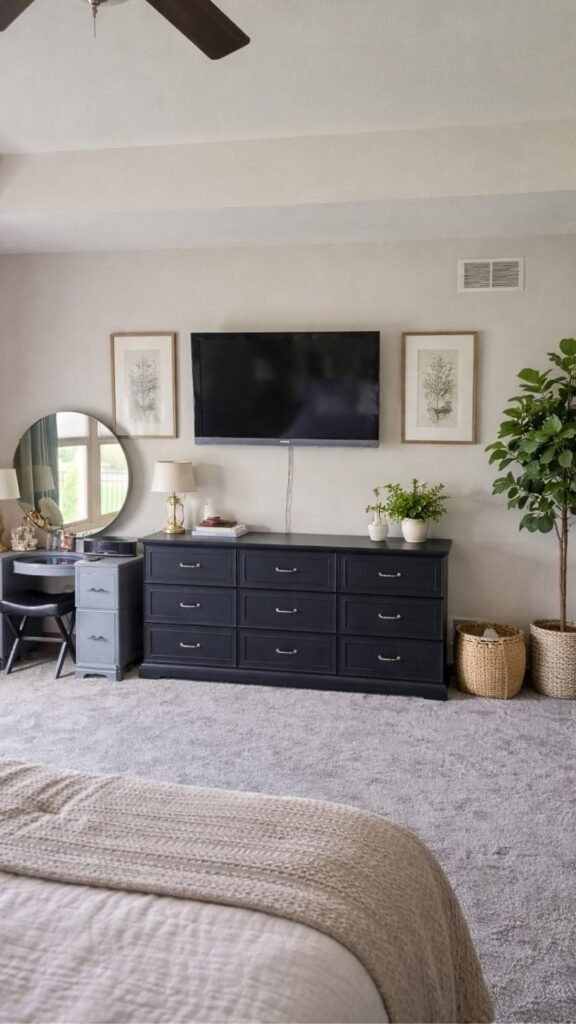
Wall-mounting frees up the entire dresser top for decor, which is often the cleanest solution for smaller bedrooms. This approach also improves viewing height, since mounted TVs can be centered around eye level while lying in bed, rather than sitting low on a dresser surface. It’s a shift in thinking: the dresser becomes purely a styling and storage piece, and the wall handles the tech.
When mounting above a dresser, keep at least 6 to 8 inches of clearance between the top of the dresser and the bottom of the TV. This gap prevents the screen from visually crowding your decor and gives room for a slim floating shelf if you want layered styling beneath it.
One future-focused tip: if you’re planning to mount later but using the dresser for now, choose a TV with a VESA-compatible mount pattern from the start. This avoids buying a second television down the line and keeps your options open as your bedroom dresser decor with tv layout evolves.
Cannot Skip This One: Master Bedroom Ideas That Show How a Dresser with TV Elevates the Whole Room
Manage Cords Before You Style Anything Else
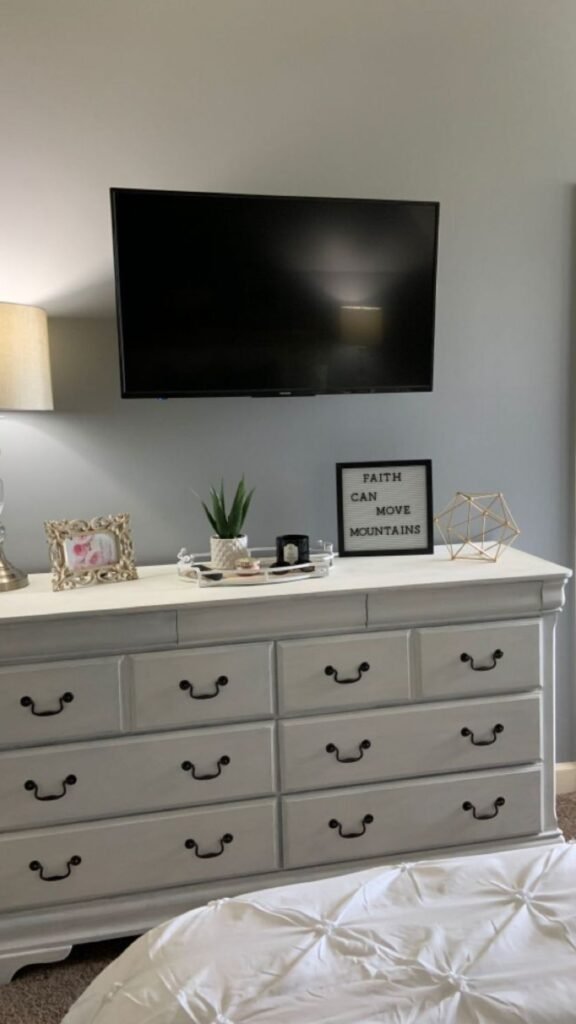
Visible cords are the single biggest reason dresser-TV setups look messy, yet most decor guides mention this last, if at all. Before adding a single decorative object, deal with cable management first. Use adhesive cord clips along the back edge of the dresser, a cord cover channel if the TV is wall-adjacent, or a small drawer with a back cutout to route cables discreetly.
For example, drilling a 1-inch cable pass-through hole in the back panel of a dresser drawer lets you route the TV cord, streaming device cord, and power strip through a single hidden channel. It takes fifteen minutes and instantly makes the whole setup look intentional rather than makeshift.
If drilling isn’t an option for a rented space or antique piece, a fabric cord sleeve in a neutral tone (black, white, or wood-toned) bundles multiple cables into one slim line that’s far less distracting than a tangle of individual wires running down the dresser leg.
Layer Decor in Front of, Not Around, the TV
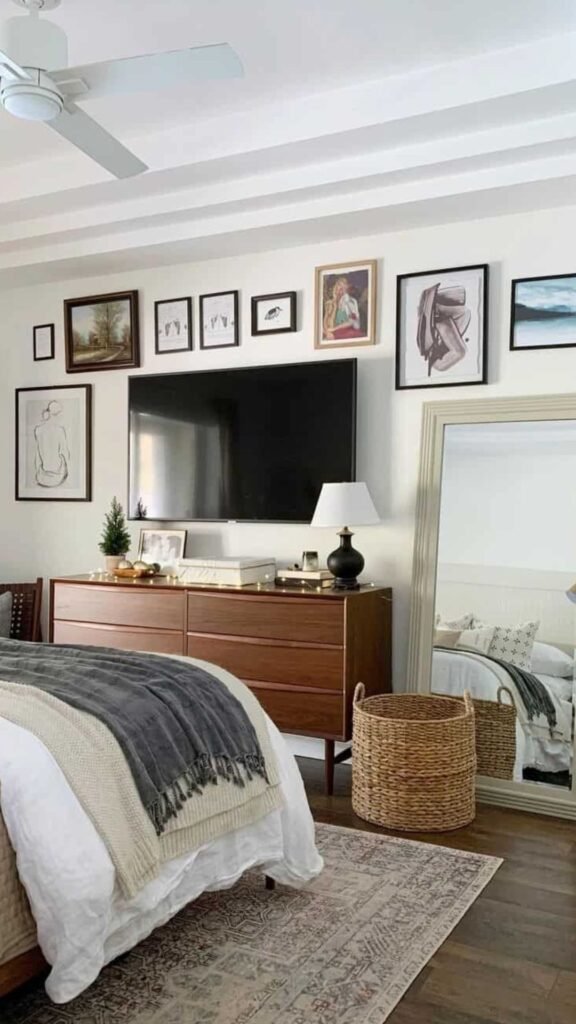
A common mistake is decorating only the empty space beside the TV while leaving the area directly in front bare. Instead, place a few low-profile items a small tray, a short candle, a slim vase directly in front of the screen’s base. This grounds the TV visually and prevents it from looking like it’s floating on an otherwise empty surface.
Keep these front-layer pieces under 3 inches tall so they don’t block the screen when the TV is on. A shallow ceramic tray holding a few smooth stones or a mini succulent works well here, adding texture without interrupting sightlines from the bed.
This layering technique is borrowed from console table styling, where designers build depth by placing objects at varying distances from the wall. Applied to a dresser TV setup, it transforms a flat, one-dimensional surface into something with visual depth, even in a small footprint.
Choose a Decor Palette
That Complements the Screen’s Black Frame
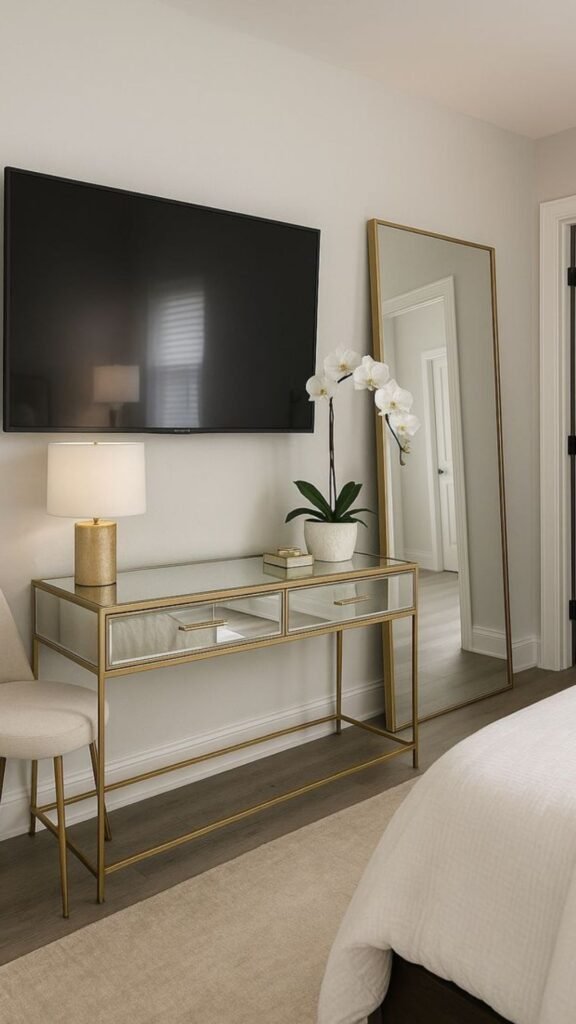
Most TVs have black or dark gray bezels, and decor that ignores this creates visual clash. Building your dresser styling around black, brass, or deep wood-tone accents ties the TV frame into the overall look rather than letting it sit as a jarring rectangle. This is a subtle detail that separates a styled bedroom from one that simply has furniture in it.
For example, pairing the TV with a black-framed mirror leaned nearby, a brass-based lamp, and a dark wood photo frame creates a repeated color thread that makes the screen feel like part of the design rather than an intrusion. Warm metals like brass or bronze soften the coolness of a black screen particularly well.
Avoid an all-white or all-pastel palette directly around the TV unless you’re intentionally going for high contrast. Without a bridging color, the screen tends to look like a dark hole cut into an otherwise light, airy surface jarring rather than integrated.
Use the Top Drawer
For Remote and Device Storage
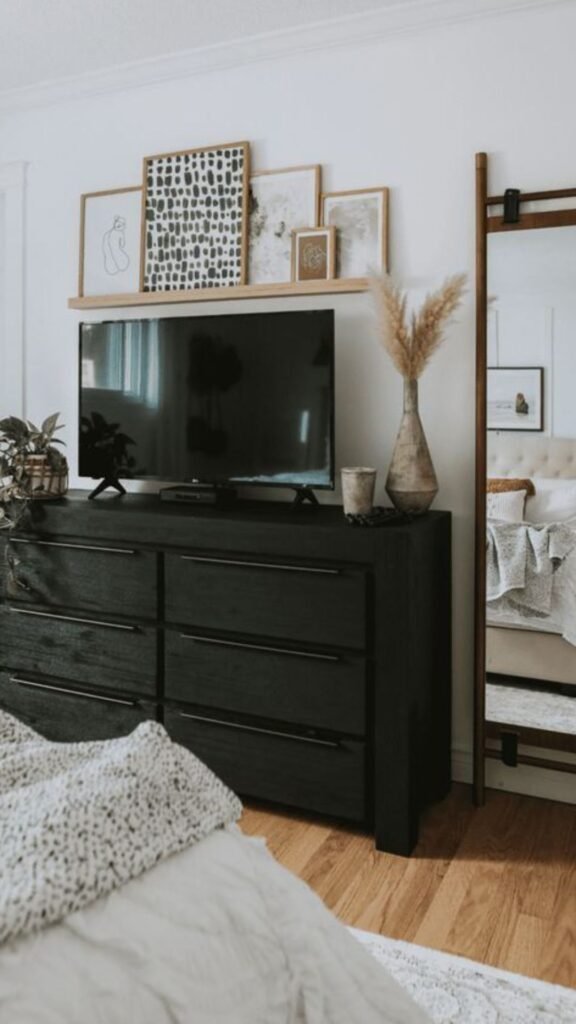
Loose remotes, HDMI adapters, and streaming sticks are a top complaint in bedroom TV setups, and they quietly undo good styling if left sitting on the dresser surface. Dedicate the top drawer directly beneath the TV to a small organizer tray for remotes, charging cables, and spare batteries. This keeps everyday clutter out of sight while staying within arm’s reach from bed.
A simple three-compartment drawer tray costs very little and makes a noticeable difference. One section for remotes, one for cords, one for miscellaneous small electronics keeps the drawer from becoming a junk catch-all, which is what usually happens without a system in place.
This idea rarely appears in decor-focused articles because it’s not visually glamorous, but it’s one of the most functional upgrades you can make. A styled dresser only stays styled if there’s a clear, close home for the small items that would otherwise pile up on top.
Sneak a Peek Here: Bedroom Shelving Ideas That Complement Your Dresser and TV Setup Beautifully
Add a Floating Shelf Above
For Extra Styling Room
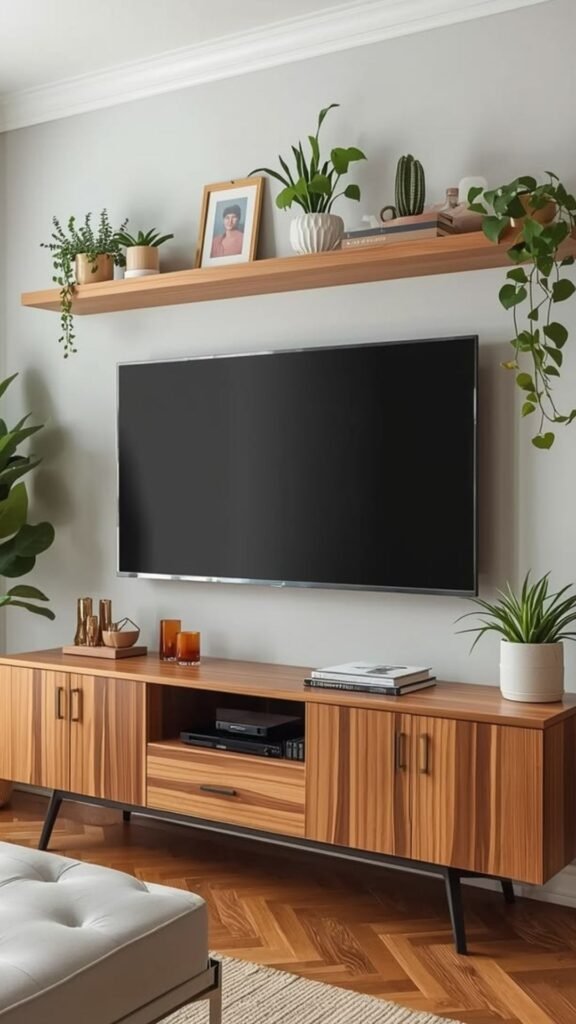
If your TV sits on the dresser rather than being wall-mounted, a floating shelf installed 10 to 12 inches above the screen adds a second styling layer without competing for the same surface. This works especially well for showing off framed art, a small plant, or a stack of books above the TV’s sightline.
For instance, a single walnut floating shelf holding one framed print and a small trailing plant draws the eye upward, balancing the visual weight of the TV below. It also breaks up the large blank wall space that often appears above a dresser-mounted television, which otherwise looks unfinished.
Keep shelf items lightweight and secure, since anything near a screen should avoid vibration risk from nearby speakers or foot traffic. A shallow shelf with a raised front lip prevents small objects from sliding forward over time, which matters more in bedrooms than in living rooms due to nightly movement nearby.
Coordinate Dresser Decor with Your Bedding, Not Just the Wall
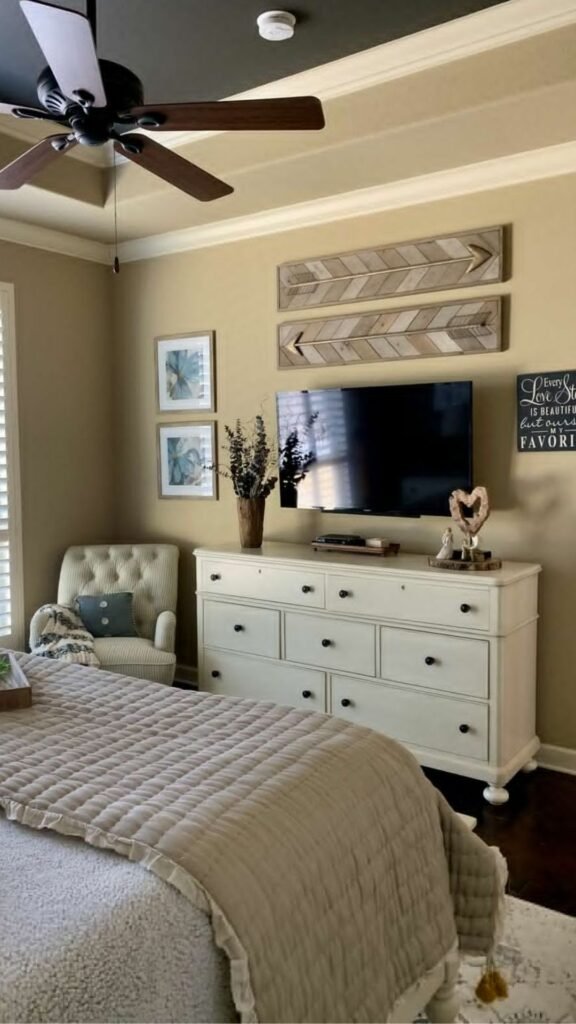
Most styling advice treats the dresser as an isolated zone, but in a bedroom, the dresser and bed share the same sightline constantly. Pulling one or two colors from your bedding a throw pillow shade, a duvet pattern accent into the dresser’s decor creates a cohesive room rather than two separately styled zones interrupted by a TV.
For example, if your bedding includes a sage green accent pillow, echoing that shade in a small vase or candle on the dresser ties the whole room together visually, even with the TV present. This kind of color echo is a professional styling trick that’s easy to apply without hiring a designer.
This approach also future-proofs your styling. When you change bedding seasonally, you only need to swap one or two small dresser accents to keep the room feeling coordinated, rather than restyling the entire surface from scratch every time.
Use a Backdrop Panel or Accent Wall Behind the TV
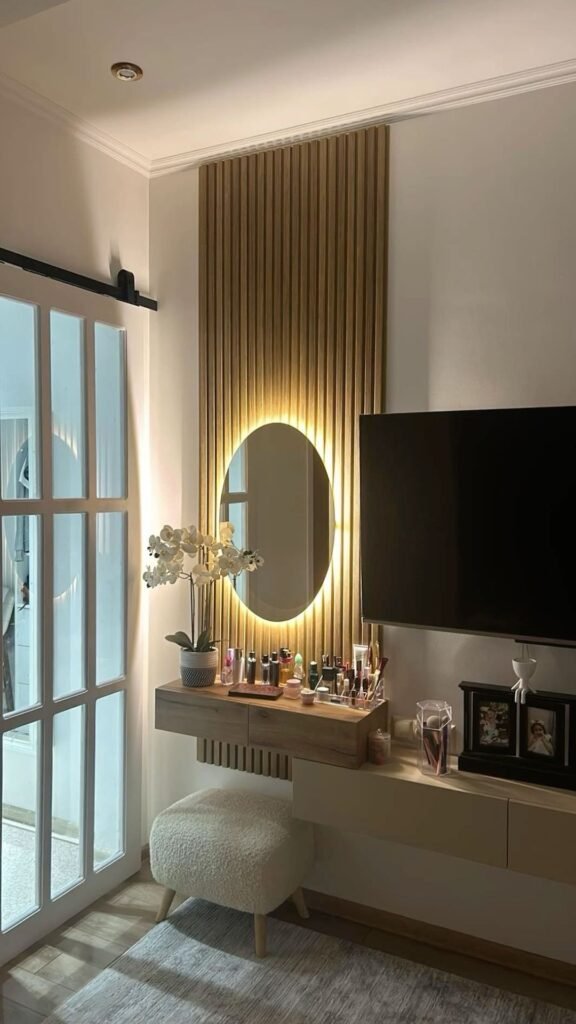
A TV sitting against a plain, unstyled wall can look flat no matter how well the dresser itself is decorated. Adding a subtle backdrop a piece of textured wallpaper, a painted accent panel, or even a large woven wall hanging positioned just behind and around the screen gives the whole setup a sense of intention. The TV stops looking like an object plopped in front of a bare wall and starts reading as part of a designed focal point.
For example, a matte charcoal or deep terracotta painted panel sized slightly larger than the TV itself creates a frame-like effect. When the screen is off, it still reads as a piece of art on the wall. When it’s on, the darker backdrop actually improves contrast and reduces eye strain compared to a stark white wall, since bright walls behind a screen can wash out picture quality at night.
This idea is especially useful in rented apartments where wall-mounting or drilling isn’t allowed. A large fabric tapestry or a peel-and-stick wallpaper panel achieves the same visual effect without permanent changes, and both can be removed cleanly when you move.
Most decor guides focus only on the dresser surface and ignore the wall behind it, but the backdrop is often what separates a styled bedroom from one that simply has a TV sitting on furniture. It’s a low-cost, high-impact addition worth prioritizing early in the process.
Conclusion
Styling a bedroom dresser decor with TV setup comes down to balance managing cords, layering thoughtfully, and letting color and height variation do the work. These 12 ideas turn a purely functional surface into a finished, intentional part of your bedroom. Try picking two or three that fit your space today, and build from there as your room evolves.

Team TrandyVilla is the passionate home decor team behind Trandy Villa, where style meets comfort in everyday living. The team loves transforming simple spaces into beautiful, functional homes through smart ideas, budget-friendly hacks, and modern design trends. Their content focuses on helping readers create homes that feel both stylish and personal without spending too much.