
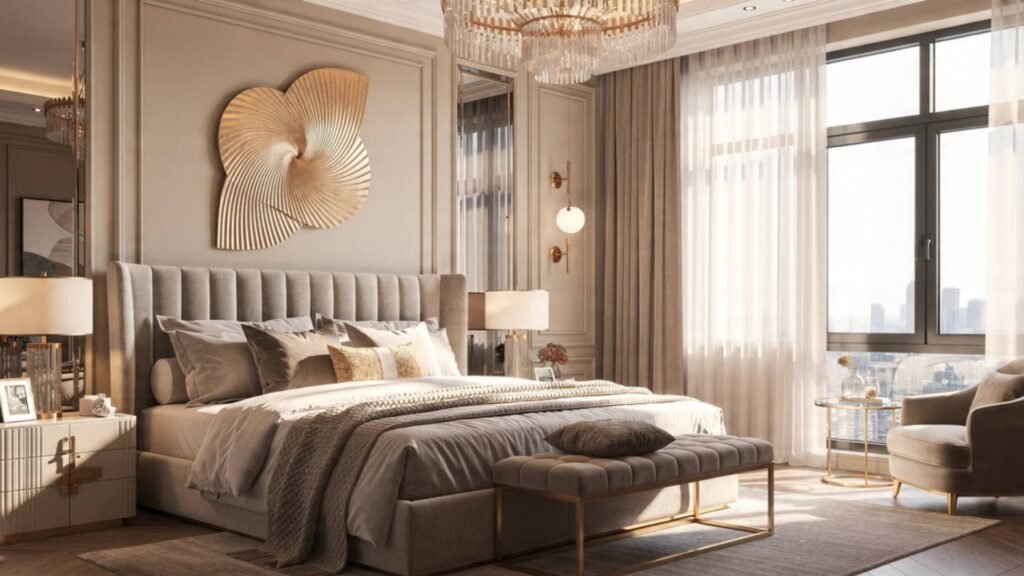
Master bedrooms decor transforms your sleeping space into a personal sanctuary. It combines color, furniture, lighting, and texture to create a restful and beautiful room. Good decor reflects your personality while maximizing comfort and function. Every design choice from bedding to wall art contributes to the overall mood. A well-decorated master bedrooms decor improves sleep quality and daily well-being.
Your master bedrooms decor deserves more than just a bed and four walls. The right decor turns an ordinary room into a luxurious retreat you look forward to every night. Master bedrooms decor is the art of creating a space that is both beautiful and deeply personal. Small, intentional changes make the biggest difference. You do not need a large budget to achieve a stunning result.
Master bedrooms decor includes a wide range of design elements working together. Furniture placement, color palettes, lighting layers, and textile choices all play equal roles. Natural materials add warmth, while mirrors and rugs define the space. Statement headboards anchor the room visually. Thoughtful accessories and greenery bring life and personality to every corner. Each element supports a calm, cohesive, and inviting bedroom environment.
Create a Focal Point with a Statement Headboard:
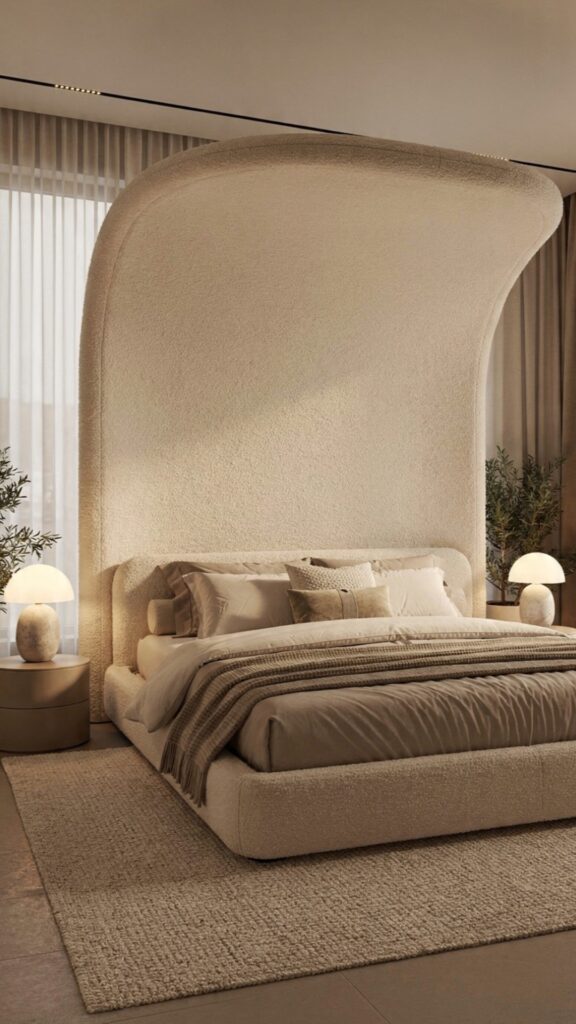
A statement headboard is one of the most powerful design moves you can make in master bedrooms decor. It instantly draws the eye, anchors the entire room, and communicates your personal style without saying a word.
Whether you choose a tufted velvet design, a rustic reclaimed wood panel, or an upholstered arch shape, the headboard sets the visual tone for everything else in the room. What many decorators miss is that the headboard doesn’t have to match the bed frame exactly.
Mixing materials like a linen headboard with a metal frame creates a layered, high-end look that feels curated rather than catalogue-bought. This contrast adds character and depth, which is something budget-friendly rooms often lack.
Consider sizing up. Many homeowners choose headboards that are too small for their wall, which makes the room feel underwhelming. Ideally, your headboard should extend at least a few inches beyond the width of your mattress on each side. For ceilings above 9 feet, floor-to-ceiling headboard panels are a breathtaking architectural option worth exploring.
For a future-forward approach, consider integrated headboards with built-in LED lighting channels or USB charging ports hidden within the frame. These smart headboard designs are growing in popularity and merge aesthetics with everyday functionality a combination that defines modern master bedrooms decor.
Layer Your Lighting for Ambience and Function:
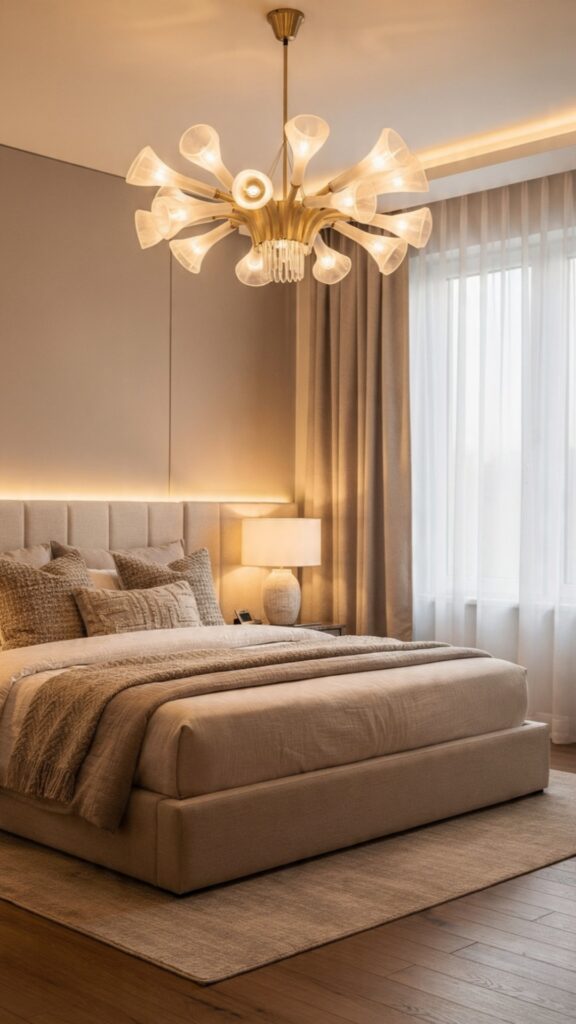
Lighting is the single most underestimated element in master bedrooms decor, yet it has the power to completely transform the mood of a space. Most bedrooms rely solely on one overhead fixture, which creates flat, unflattering light. Instead, think in three layers: ambient lighting, task lighting, and accent lighting each serving a different purpose.
Ambient lighting provides the overall glow of the room. A chandelier, flush-mount fixture, or recessed lights work well here. Task lighting such as bedside wall sconces or adjustable table lamps is essential for reading or winding down before sleep.
Accent lighting, like LED strip lights behind the headboard or inside open shelving, adds drama and visual warmth that elevates the entire room. One insight competitors rarely mention: the color temperature of your bulbs matters enormously.
Warm white bulbs (2700K–3000K) promote relaxation and create a cozy, hotel-like atmosphere, while cool-white bulbs can feel clinical and disruptive to sleep. Investing in dimmable fixtures and smart bulbs lets you shift between energizing morning light and calming evening tones with ease.
Looking ahead, human-centric lighting systems that automatically adjust color temperature based on the time of day are becoming mainstream in luxury bedroom design. These systems sync with your circadian rhythm, supporting better sleep a benefit that goes far beyond aesthetics.
Choose a Calming and Cohesive Color Palette:
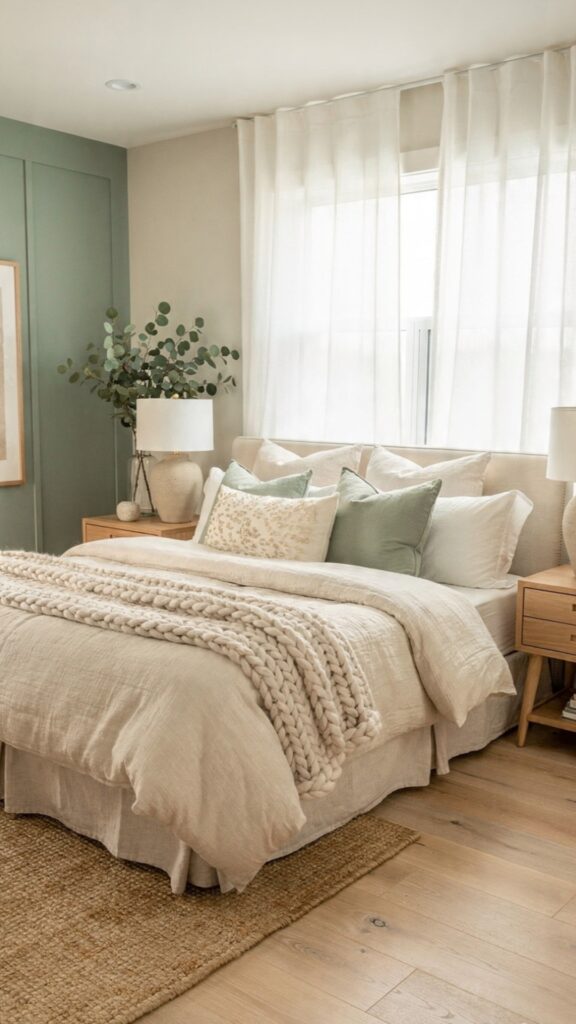
Color is arguably the fastest way to change how a master bedrooms decor feels. The right palette can make a small room feel expansive, a cold room feel cozy, and a chaotic space feel serene. For master bedrooms, the most successful color schemes are those that feel intentional where every shade, from the wall paint to the throw pillows, works in harmony.
Soft neutrals like warm white, greige, taupe, and sage green consistently perform well in master bedroom decor because they create a restful backdrop. However, the real skill lies in layering tones within the same color family. For example, pairing a dusty rose wall with blush bedding and terracotta accents creates richness without visual chaos.
Bold doesn’t have to mean bright. Deep navy, forest green, and charcoal are increasingly popular master bedrooms decor colors because they create a cocoon-like, intimate atmosphere especially in larger rooms that can feel too open. These moody tones photograph beautifully and age gracefully over time.
One often-missed tip: always test paint colors in both natural daylight and artificial evening light before committing. Colors shift dramatically between day and night, and what looks perfect at noon can feel completely different at 10 PM the time you’re most likely to be using your bedroom.
Discover More : Bedroom Bench Ideas That Add a Perfect Finishing Touch to Your Master Bedroom.
Invest in High-Quality Bedding and Linens:
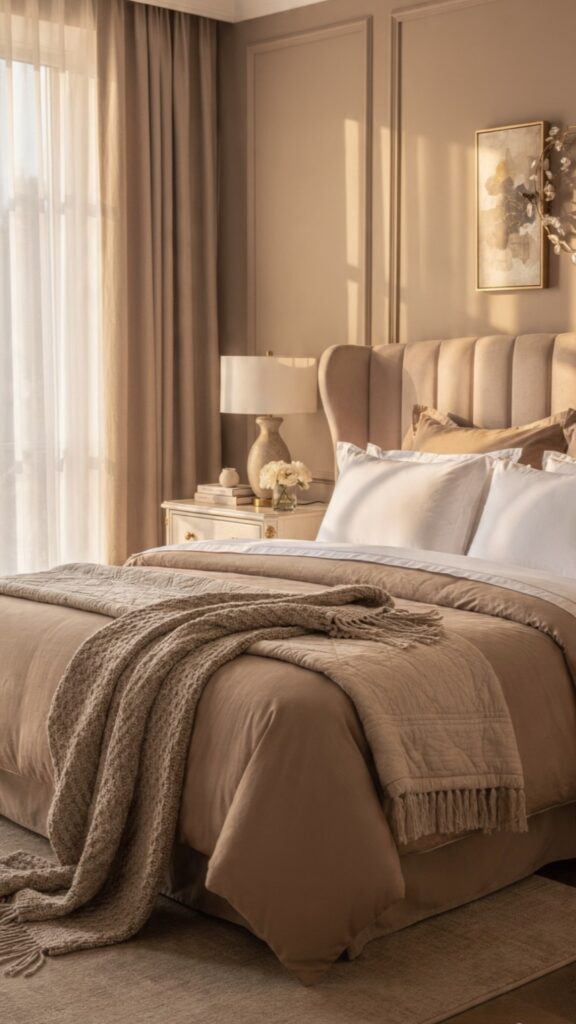
Your bed is the centerpiece of your master bedrooms decor, and the bedding you choose communicates quality instantly. High-thread-count cotton, linen, or bamboo sheets not only look luxurious but also significantly improve sleep quality a benefit that directly impacts your daily life. This is where spending a little more pays dividends both visually and physically.
The hotel-bed look that so many homeowners desire comes down to layering. Start with a fitted sheet, add a flat sheet, then a lightweight blanket, a duvet, and finally decorative throw pillows and a folded coverlet at the foot of the bed.
This layered approach creates visual texture and depth while allowing you to adjust comfort levels seasonally. Color and pattern choices in bedding should relate back to your overall room palette.
Solid, tone-on-tone bedding feels effortlessly sophisticated, while subtle patterns like herringbone or jacquard weaves add interest without overwhelming the space. Avoid overly busy prints unless the rest of the room is very minimal balance is everything.
An insight many overlook: pillow arrangement makes a significant difference. A simple formula two Euro shams at the back, two standard sleeping pillows in the middle, and one or two decorative lumbar pillows in front creates a polished, layered look that mimics high-end interior photography without requiring a designer.
Incorporate Natural Materials and Textures:
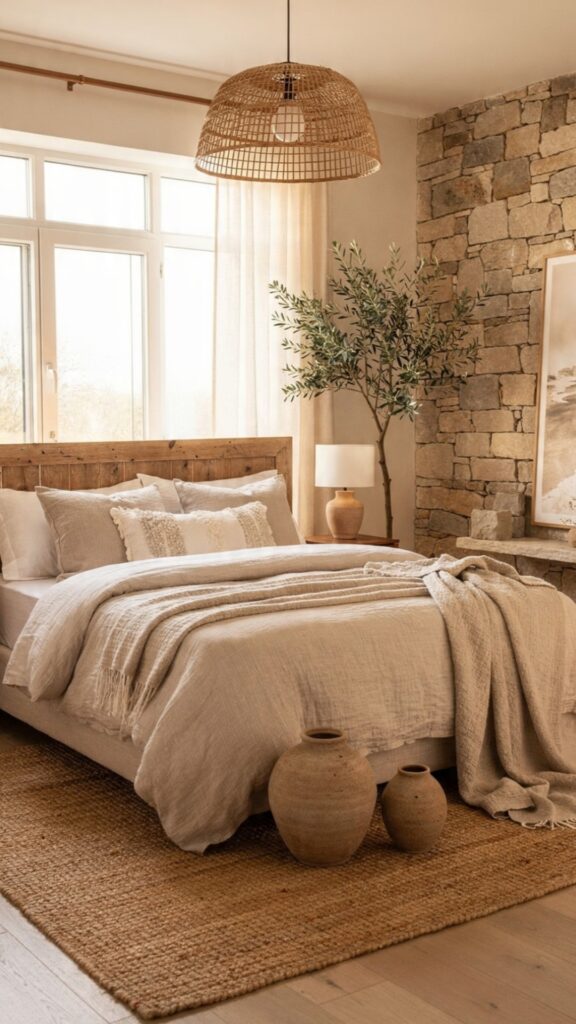
Texture is what separates a flat, uninspired bedroom from one that feels rich and lived-in. Natural materials like wood, rattan, linen, jute, stone, and leather bring warmth and organic beauty into master bedrooms decor. They also connect your interior to the natural world, which has proven psychological benefits for relaxation and stress reduction.
Consider a wooden nightstand paired with a woven rattan pendant light above it. This simple pairing introduces two textures that are visually distinct but tonally related, creating a layered effect that feels both casual and considered.
Natural wood tones also work beautifully with almost every color palette, making them one of the most versatile choices in bedroom decor. Textiles are another powerful way to layer texture. Think chunky knit throws, velvet cushions, a jute area rug, or linen curtains.
Each material catches light differently and contributes to the sensory experience of the room something that photographs can suggest but only physical space can fully deliver. A forward-looking trend worth noting: biophilic design principles are now guiding high-end bedroom interiors.
This goes beyond adding a plant or two it includes curved furniture that mimics natural forms, earthy pigments in paint and fabric, and the intentional use of imperfect, handmade materials. Rooms designed with biophilia in mind consistently score higher in occupant well-being studies.
Design a Functional and Beautiful master Bedrooms decor Layout:
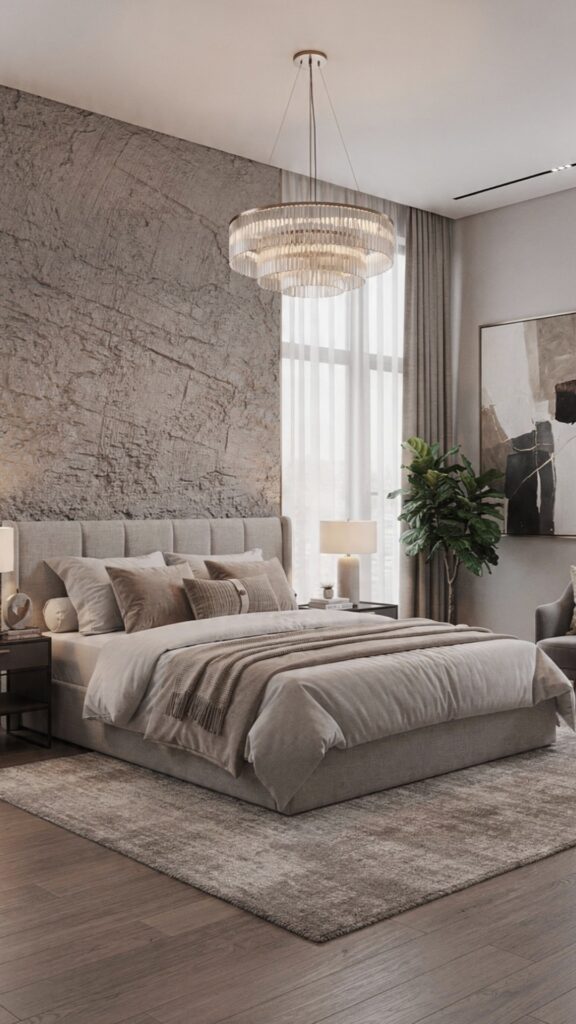
Even the most beautifully decorated master bedrooms decor will feel frustrating if the layout doesn’t work for daily life. Furniture arrangement is both a spatial and psychological decision it determines how you move through the room, how much light reaches key areas, and how restful the space ultimately feels.
The bed should almost always be the first piece you place, and in most rooms, positioning it against the largest wall ideally facing the door without being directly in line with it creates a commanding, balanced feel. This placement, rooted in principles of feng shui and classical interior design, gives a sense of security and visual calm.
Leave adequate clearance around the bed: at least 24 inches on each side for movement, and more if you can spare it. Cramped pathways make even a beautifully furnished room feel stressful. If your master bedrooms decor is on the smaller side, consider a platform bed without a bulky box spring, or a bed with built-in storage to reduce the need for additional furniture.
One layout mistake that competitors rarely address: placing large furniture pieces against every wall. This approach makes a room feel like a storage unit rather than a retreat. Instead, allow one or two walls to breathe a floating nightstand, a single piece of art, or an empty corner with a floor lamp creates visual relief and makes the room feel larger and more intentional.
Add a Cozy Reading Nook or Sitting Area:
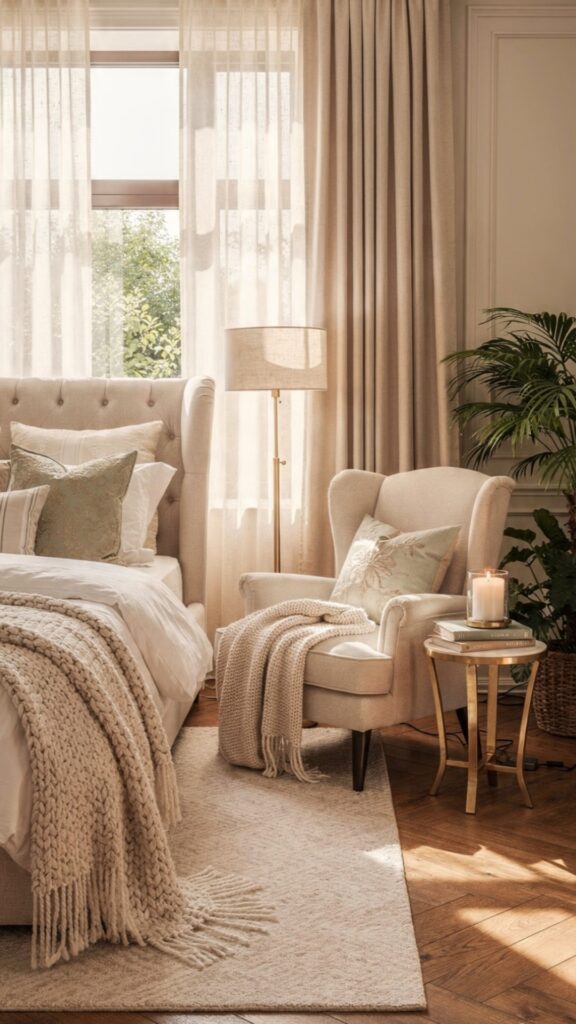
A master bedrooms decor that includes a dedicated sitting or reading area immediately elevates itself from a simple sleeping space to a private retreat. This doesn’t require a large room even a corner with a comfortable armchair, a small side table, and a floor lamp creates a functional and inviting nook that adds enormous lifestyle value.
Choose a chair that complements the bedroom’s overall aesthetic. A curved bouclé armchair works beautifully in a soft, feminine space, while a leather or linen wingback feels more tailored and classic.
The chair doesn’t need to match anything exactly it just needs to feel cohesive through color or material connection to the rest of the room. Layering the nook with texture makes it feel intentional rather than incidental.
A small area rug beneath the chair, a throw blanket draped over the arm, and a stack of books or a potted plant nearby transforms a simple seating arrangement into a lifestyle vignette the kind that appears in aspirational interior magazines for a reason.
This sitting area also serves a practical purpose that’s often overlooked: it gives couples a space to coexist without both being in bed, and it provides a quiet spot for morning coffee, journaling, or simply unwinding away from screens. In a post-pandemic world where bedrooms have taken on greater lifestyle significance, this kind of multi-functional space adds genuine value.
Use Mirrors Strategically to Expand Space and Light:
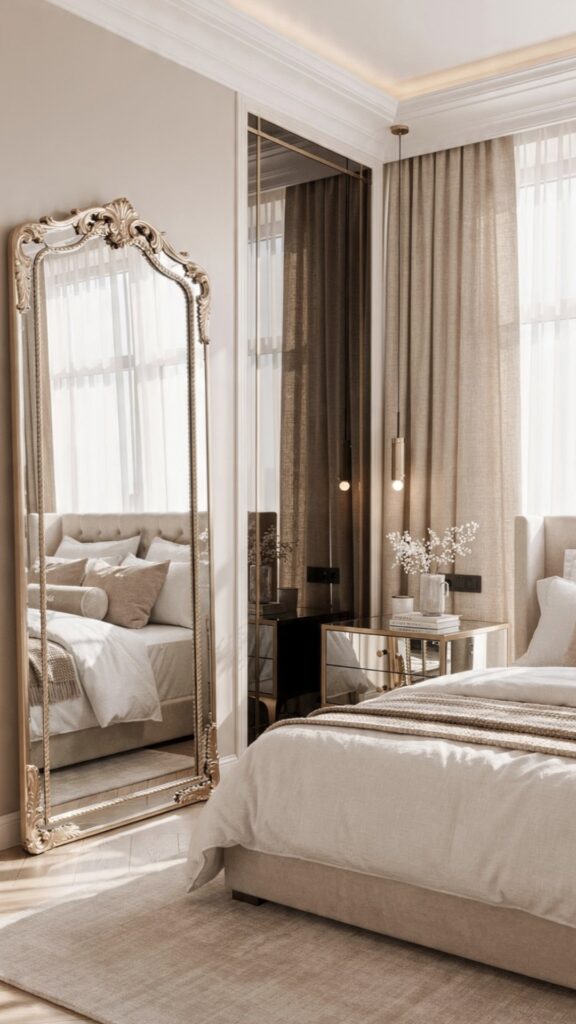
Mirrors are one of the most effective and underused tools in master bedrooms decor. When placed thoughtfully, they amplify natural light, create the illusion of more square footage, and add a decorative element that can range from glamorous to minimalist depending on the frame style.
The most impactful placement for a large mirror is on a wall perpendicular to a window this captures incoming natural light and bounces it across the room, brightening even north-facing bedrooms that receive limited sunlight. Leaning a large mirror against a wall rather than hanging it creates a casual, editorial look that’s very current in contemporary bedroom design.
Frame style matters more than most people realize. An ornate gold or antique frame adds old-world elegance and pairs beautifully with rich, jewel-toned bedrooms. A simple thin black or white frame feels clean and modern. A frameless mirror reads as understated luxury the kind that disappears into the design while still doing its visual work.
One mirror trick that competitors rarely share: placing a mirror opposite a piece of art or a beautiful view doubles the visual interest of the room. Instead of reflecting something plain or functional, your mirror becomes a framing device that makes the room feel curated from every angle a technique borrowed directly from high-end hotel design.
Bring Nature Indoors with Plants and Greenery:
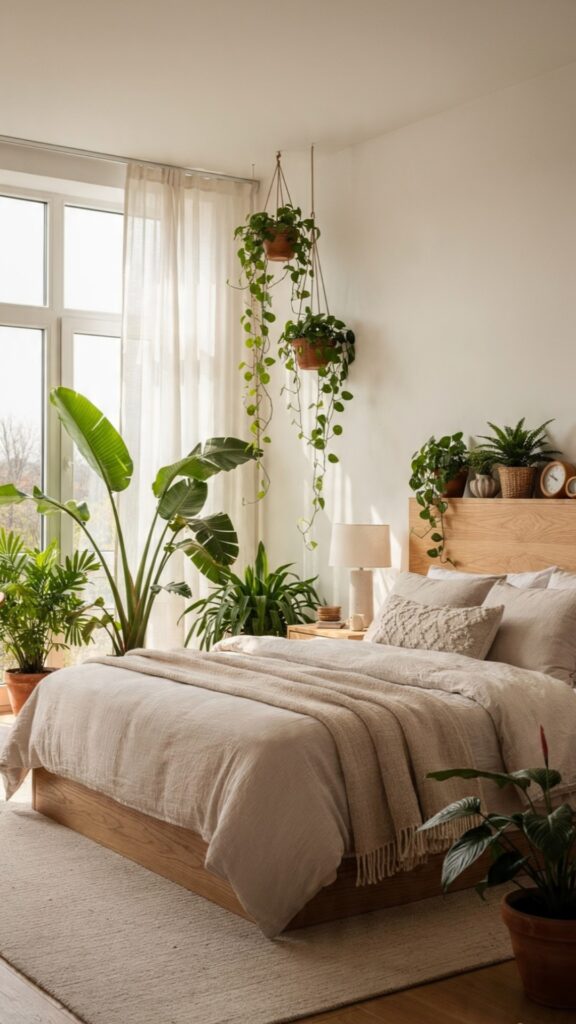
Indoor plants have evolved from a passing trend into a foundational element of thoughtful interior design and master bedrooms decor are one of the best rooms to incorporate them. Plants add life, color, and movement to a space that can otherwise feel static, while also improving air quality and contributing to a sense of well-being.
For master bedrooms decor, choose plants that thrive in lower light and don’t require constant attention. Peace lilies, snake plants, pothos, and ZZ plants are all excellent choices they’re visually lush, low-maintenance, and have air-purifying properties that are particularly beneficial in sleeping spaces. Place them on nightstands, dressers, or in corners that need visual anchoring.
Scale matters enormously with bedroom plants. A single large plant like a fiddle-leaf fig, monstera, or bird of paradise in an empty corner creates dramatic visual impact and can replace the need for additional furniture in that zone.
Conversely, a cluster of small plants on a windowsill or shelf creates a collected, layered look that feels personal and organic. An insight that sets this apart from generic decor advice: the pot and planter you choose is as important as the plant itself.
A terracotta pot in a muted earthy tone feels warm and artisan. A white ceramic planter feels clean and architectural. A woven seagrass basket softens industrial or modern spaces. The right vessel turns a plant from a botanical element into a design object.
Have a Look : Gothic Bedroom Ideas That Bring Bold and Dramatic Style to Your Master Bedroom.
Style Your Nightstands Like a Pro:
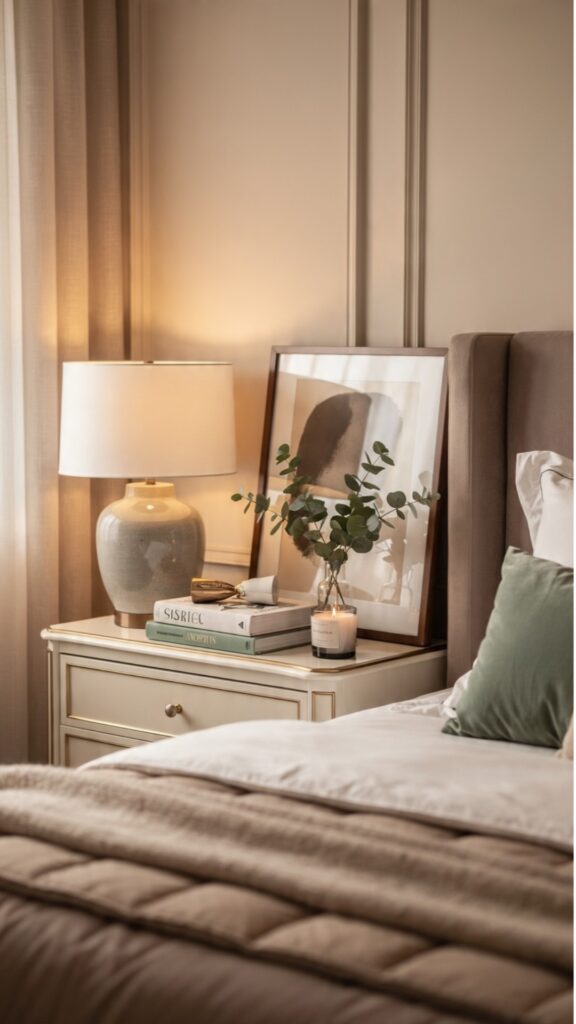
Nightstands are functional by necessity but decorative by opportunity and most people dramatically undersell their potential. A well-styled nightstand tells a story about who you are, what you value, and how intentionally you’ve approached your bedroom design. It’s a small surface with outsized visual impact.
The classic nightstand styling formula involves three elements: something tall (a lamp), something medium (a small plant, vase, or framed photo), and something small (a candle, book, or decorative object). This creates visual hierarchy and prevents the surface from looking either too sparse or too cluttered. Vary the heights and materials to add depth.
Symmetry vs. asymmetry is a real design choice worth making consciously. Matching nightstands and identical styling on both sides creates a formal, balanced look that suits traditional and transitional bedrooms.
Deliberately mismatched nightstands different shapes or finishes that share a color family create a more relaxed, eclectic feel that reads as intentionally collected rather than store-bought. One nightstand detail that competitors frequently overlook: cable management.
A beautifully styled surface is immediately undermined by a tangle of charging cables. Investing in a nightstand with a built-in charging drawer, using a small cable organizer, or routing cords through a discreet hole in the back transforms the surface from functional to genuinely polished.
Install Luxurious Window Treatments:
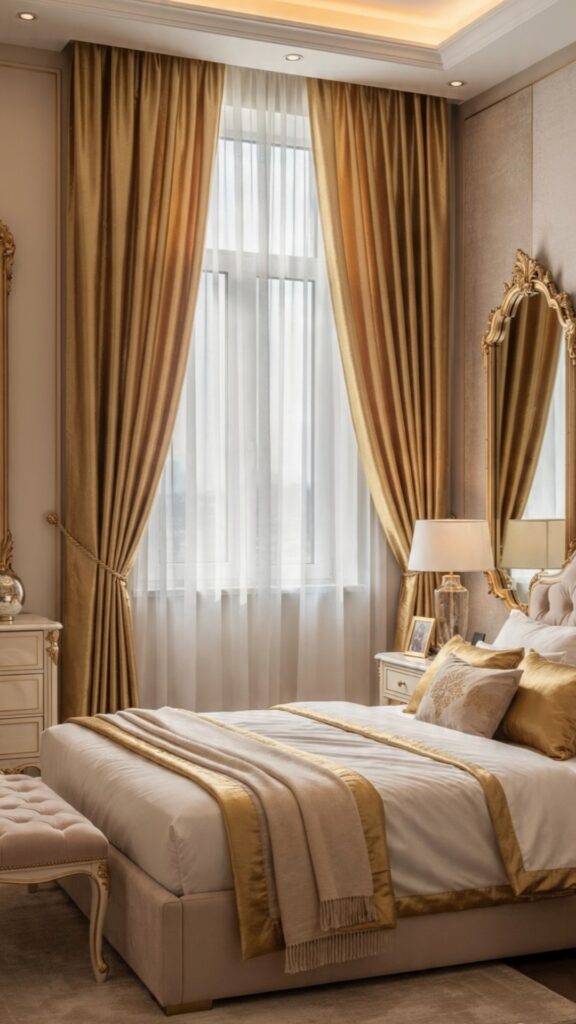
Window treatments are the most transformative and most frequently neglected element of master bedrooms decor. The right curtains or blinds don’t just control light and privacy; they add height, softness, color, and architectural interest to walls that might otherwise feel flat and uninspiring.
The number one mistake in bedroom window treatments: hanging curtains too low and too narrow. Curtain rods should be mounted 4–6 inches above the window frame (or closer to the ceiling in rooms with high ceilings), and panels should extend 6–12 inches beyond the window on each side. This simple adjustment makes windows look dramatically larger and rooms feel taller and more expensive.
Fabric selection is crucial for master bedrooms decor specifically. Linen curtains filter light beautifully, creating a soft, diffused glow that flatters the room at any time of day. Velvet drapes add drama and exceptional light-blocking capability ideal for those who are sensitive to morning light. Sheer panels layered beneath heavier drapes give you maximum flexibility across day and night.
For a future-forward approach, motorized curtain systems are no longer exclusively for luxury homes. Affordable smart curtain motors now integrate with Amazon Alexa, Google Home, and Apple HomeKit, allowing you to schedule curtains to open with your alarm and close at sunset automatically. This level of integration is where bedroom design and smart living genuinely intersect.
Design a Stylish and Organized Wardrobe Area:
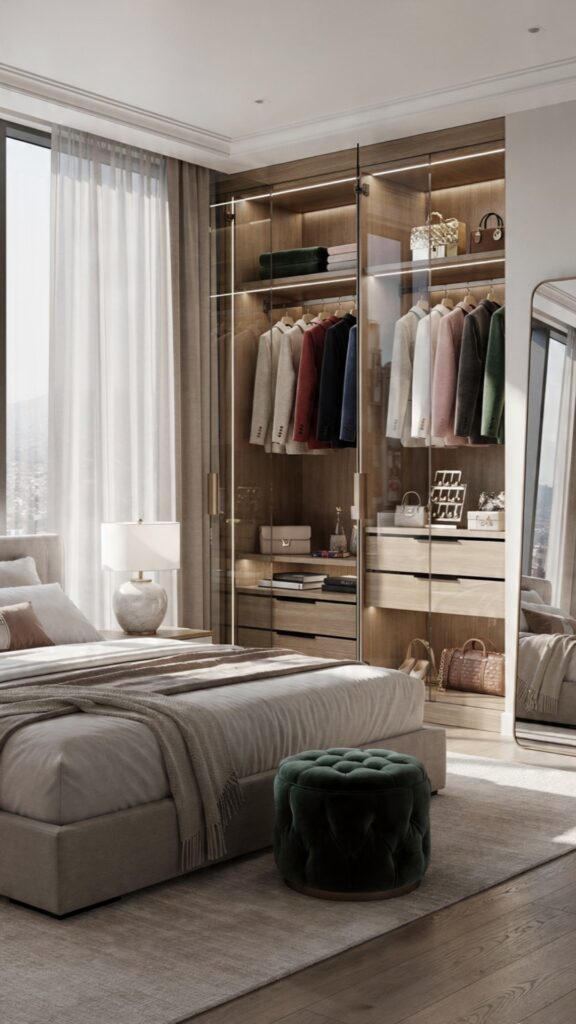
In master bedrooms decor, the wardrobe or closet area is often treated as purely functional hidden behind doors and forgotten from a design perspective. However, an open or semi-open wardrobe arrangement, styled thoughtfully, can become one of the most striking features of the room and significantly improves how the space functions on a daily basis.
Open wardrobe systems using a combination of hanging rails, shelves, and drawers allow you to display your clothing and accessories as a curated collection. When organized by color and category, an open wardrobe creates a boutique-like atmosphere that makes getting dressed feel intentional and even enjoyable.
This approach works particularly well in Scandinavian, minimalist, and loft-style bedrooms. If full visibility isn’t your preference, consider wardrobe doors with frosted glass or cane panels these conceal the interior while still feeling light and open.
Alternatively, a beautiful curtain hung from a ceiling-mounted track can screen a wardrobe alcove while adding softness and color to the room in a way that solid doors never could. Lighting inside the wardrobe is a detail that pays off every single day.
Motion-activated LED strip lights inside shelves and hanging sections are inexpensive to install and make the wardrobe both more functional and more visually appealing. This is the kind of practical-meets-beautiful thinking that defines truly successful master bedrooms decor design.
Create a Spa-Like Atmosphere with Scent and Sound:
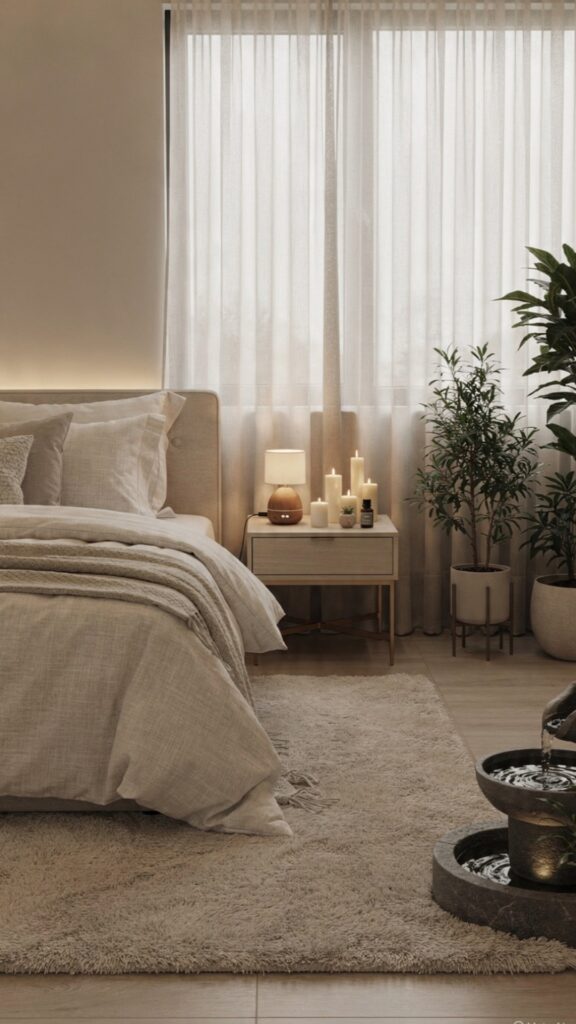
The most immersive master bedrooms decor experiences engage more than just sight. Scent and sound are powerful, often underutilized design tools that can transform a visually beautiful room into a genuinely restorative retreat the kind that makes you look forward to being in it at the end of every day.
For scent, consider a high-quality reed diffuser, beeswax candle, or ultrasonic essential oil diffuser placed on a dresser or nightstand. Lavender, sandalwood, eucalyptus, and cedarwood are consistently associated with relaxation and sleep quality.
The key is subtlety the scent should be present but not overpowering, like the lingering warmth of a freshly cleaned room. Sound design in bedrooms is an emerging area that most decor guides don’t address at all.
A small, high-quality Bluetooth speaker hidden within a decorative object or built into a bedside lamp allows you to play white noise, nature sounds, or ambient music without cluttering the room with visible technology. The goal is to make the technology invisible while its effects are very much felt.
Combining scent and sound creates a multi-sensory experience that signals to your nervous system that it’s time to relax essentially a programmed wind-down ritual that begins the moment you enter the room. This is a technique borrowed from luxury spa and hotel design, and it’s entirely achievable in a home master bedrooms decor with modest investment.
Incorporate Artwork That Reflects Your Personality:
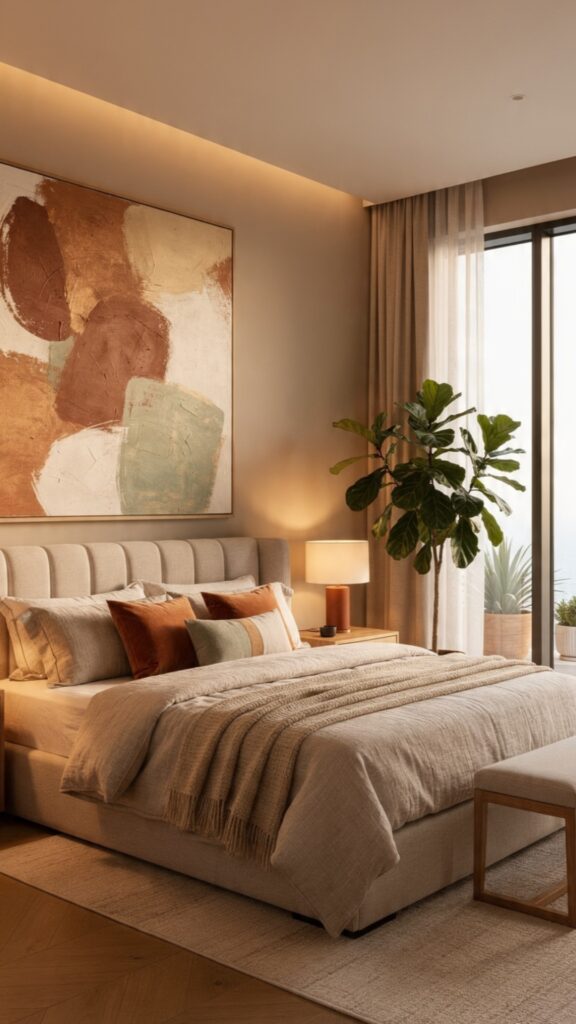
Artwork is the element of master bedrooms decor that most directly reflects who you are, yet it’s also the area where people feel most uncertain. The fear of choosing “wrong” often leads to no art at all which leaves walls feeling bare, cold, and unfinished. The truth is that personal resonance matters more than following trends.
Above the bed is the most impactful location for art in a master bedrooms decor. A single large-scale print or painting creates a bold, hotel-quality focal point. Alternatively, a gallery wall of smaller pieces arranged in a cohesive grid or organic cluster can feel more personal and collected.
The key is maintaining a consistent frame style or color palette to keep the arrangement feeling intentional rather than random.
Art selection for bedrooms should prioritize imagery that feels calming and personal. Abstract art with soft color palettes, nature photography, botanical illustrations, or line drawings are all popular choices that age well and complement a wide range of decor styles. Avoid high-energy or emotionally complex imagery your bedroom should be a place that calms you, not one that provokes thought at midnight.
A tip that interior designers use but rarely share publicly: scale your art to the wall, not the furniture. Art that’s too small for the wall it hangs on is one of the most common and most noticeable mistakes in bedroom decor. A piece that feels almost too large in the store will often look perfectly proportioned once it’s on the wall of your actual room.
Add a Statement Rug to Ground the Space:
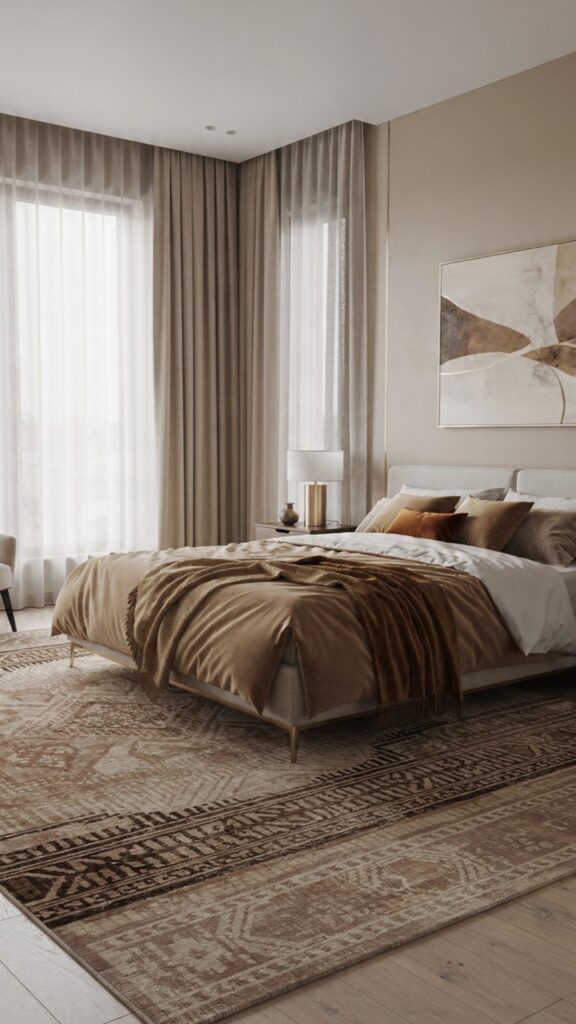
An area rug is one of the most impactful investments you can make in master bedrooms decor. It adds warmth underfoot, defines the sleeping zone, reduces noise, and introduces color, pattern, and texture all at once. Yet many bedrooms either skip the rug entirely or choose one that’s far too small to make any real visual difference.
The most common rug sizing mistake: choosing a rug that only fits under the nightstands. A properly sized bedroom rug should extend at least 18–24 inches beyond the sides and foot of the bed.
This creates a generous landing zone when you get out of bed each morning and makes the entire room feel more proportional and luxurious. In a king bedroom, this typically means a 9×12 or even 10×14 rug. Material choice is particularly important in the bedroom, where comfort underfoot is a daily experience.
A plush wool or high-pile synthetic rug feels indulgent and soft ideal for a cozy, layered bedroom aesthetic. A flat-woven or low-pile rug feels more streamlined and is easier to maintain, making it better suited for minimalist or contemporary spaces.
Pattern and color in a rug can either anchor the room or introduce the central design theme. A neutral rug with subtle texture lets the furniture and textiles take center stage. A boldly patterned rug Moroccan, Persian, or geometric can become the design starting point around which the rest of the room is built. Either approach works beautifully when the choice is made intentionally.
Worth Exploring : LED Lights Bedroom Ideas That Create a Stunning Ambiance in Your Master Bedroom.
Personalize with Meaningful Decorative Objects:
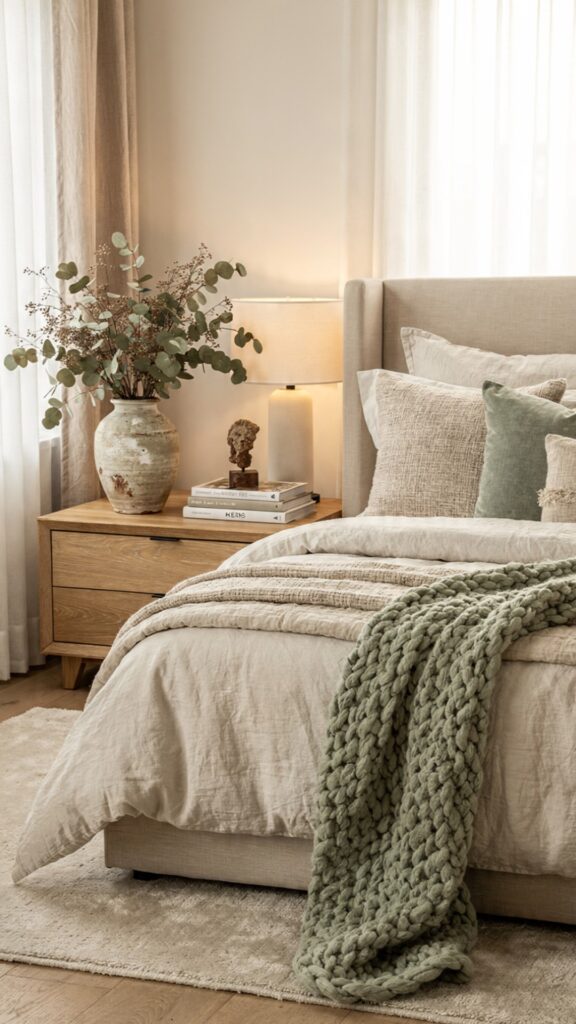
The difference between a bedroom that looks designed and one that feels lived-in comes down to personal objects the things that tell your story rather than simply filling space. Thoughtfully chosen decorative objects give a master bedrooms decor its soul, and they’re the element that makes guests feel they’ve glimpsed something genuine about who you are.
A curated collection on a dresser or open shelf might include a stack of meaningful books, a small sculpture picked up during travel, a handmade ceramic vase, a vintage clock, or a framed quote that genuinely resonates with you.
The key word is curated restraint is essential. Three to five objects grouped thoughtfully carry far more design weight than a surface crowded with ten. Vignette styling the art of arranging small groups of objects is the technique interior stylists use to make decorative surfaces look effortlessly composed.
Group objects in odd numbers (three or five), vary the heights, and connect items through a shared material or color. For example, a brass candleholder, a small brass bowl, and a warm-toned book spine create a cohesive moment without matching exactly.
One deeply personal approach that most decor guides overlook: incorporating heirlooms or inherited objects into your bedroom design. A grandmother’s perfume bottle, a parent’s vintage photograph, or a handmade quilt becomes not just a decorative object but a story and rooms that contain stories feel irreplaceable in a way that perfectly curated, impersonal rooms never quite achieve.
Embrace Smart Home Technology Seamlessly:
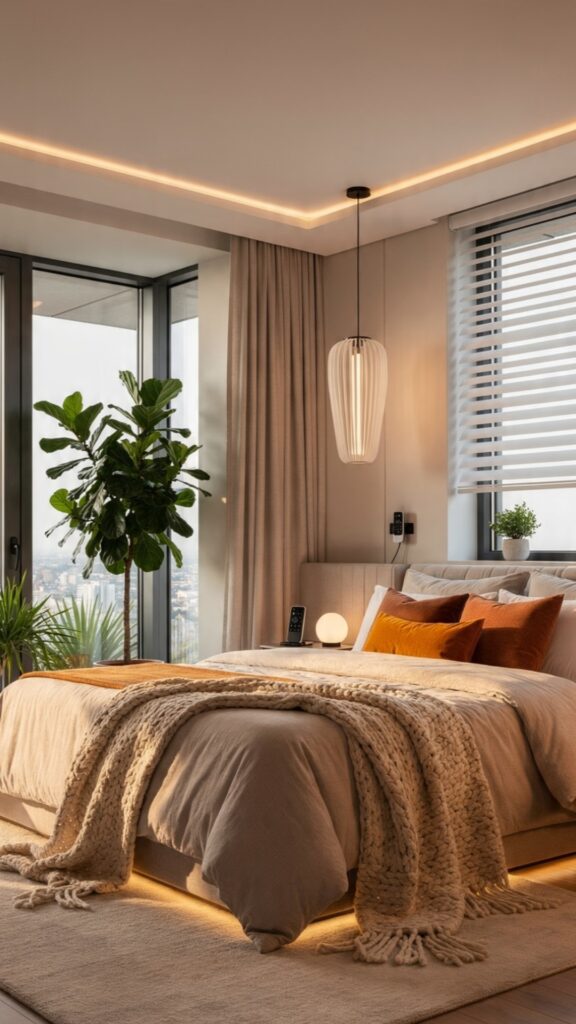
The future of master bedrooms decor isn’t just about aesthetics it’s about how beautifully technology integrates into the room without announcing itself. Smart home features that once felt gimmicky are now genuinely enhancing the bedroom experience, and the best implementations are the ones you barely notice because they’ve been so thoughtfully embedded into the design.
Smart lighting is the most impactful starting point. Systems like Philips Hue, Lutron Caséta, or LIFX allow you to program lighting scenes for different times of day a gradual brightening at 7 AM to ease you awake, a warm amber dimming at 10 PM to signal sleep. When controlled by a discreet wall panel or voice command, these systems eliminate the visual clutter of multiple lamps and switches.
Smart thermostats and climate control devices when integrated with bedroom design maintain the ideal sleep temperature (typically between 65–68°F / 18–20°C) automatically. Some newer systems even detect when you’ve fallen asleep using bed sensors and adjust the temperature accordingly, providing a level of personalized comfort that no traditional HVAC system can match.
For visual integration, the best smart home setups hide their technology entirely. Screens fold away into furniture. Speakers are embedded into artwork frames or concealed in ceilings. Charging solutions are built into nightstands. The design principle guiding all of this is simple but powerful: technology should serve the room, never dominate it. When executed well, a smart master bedrooms decor feels both deeply human and quietly extraordinary.
Conclusion
Master bedrooms decor is ultimately about creating a space that restores you visually, physically, and emotionally. From a statement headboard and layered lighting to personalized objects and seamlessly integrated technology, each idea in this guide offers a pathway to a bedroom that feels genuinely luxurious without requiring an unlimited budget.
The most important takeaway is this: intentionality always outperforms spending. Start with one or two ideas that resonate most with your lifestyle, implement them thoughtfully, and build from there your perfect master bedroom is closer than you think.

Team TrandyVilla is the passionate home decor team behind Trandy Villa, where style meets comfort in everyday living. The team loves transforming simple spaces into beautiful, functional homes through smart ideas, budget-friendly hacks, and modern design trends. Their content focuses on helping readers create homes that feel both stylish and personal without spending too much.