
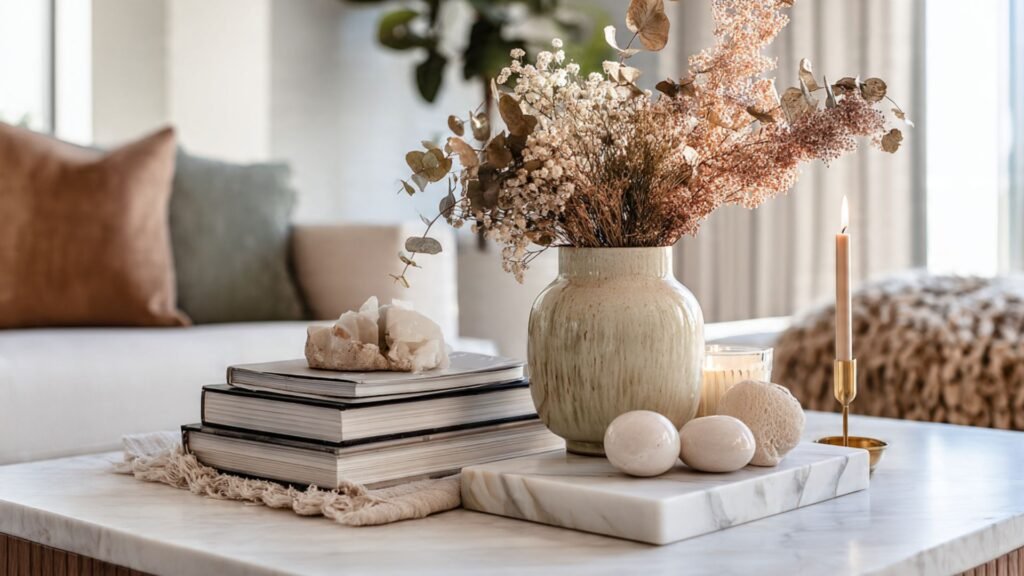
A coffee table is the centerpiece of every living room yet most homeowners treat it as a surface for remote controls and coffee mugs. Styled thoughtfully, it becomes the most expressive design element in the room. The right coffee table decor communicates your personality, anchors the seating area, and ties together colors, textures, and styles from across the space.
Coffee table decor refers to the art of styling a coffee table with decorative objects to enhance a living room’s visual appeal. It includes trays, books, candles, plants, and sculptural pieces. Each element serves a purpose adding color, texture, height, or personality. Good decor transforms a plain surface into a curated focal point. It reflects the homeowner’s taste and ties the room together with intention and style.
Most homeowners overlook the one surface that sits at the heart of every living room and a few simple, thoughtful choices can change everything. The right coffee table decor instantly elevates the entire space, creating a room that feels styled, warm, and intentionally designed.
Coffee table decor works best when it balances beauty with function. Trays organize small items while adding visual structure. Stacked books create height and reflect personal interests. Candles introduce warmth and soft texture to any arrangement. Fresh or dried botanicals bring natural life and seasonal color. Decorative objects like ceramics and sculptures add artistic character. Together, these elements create a living room centerpiece that feels complete, considered, and genuinely personal.
The Rule of Three:
The Foundation of Every Styled Coffee Table
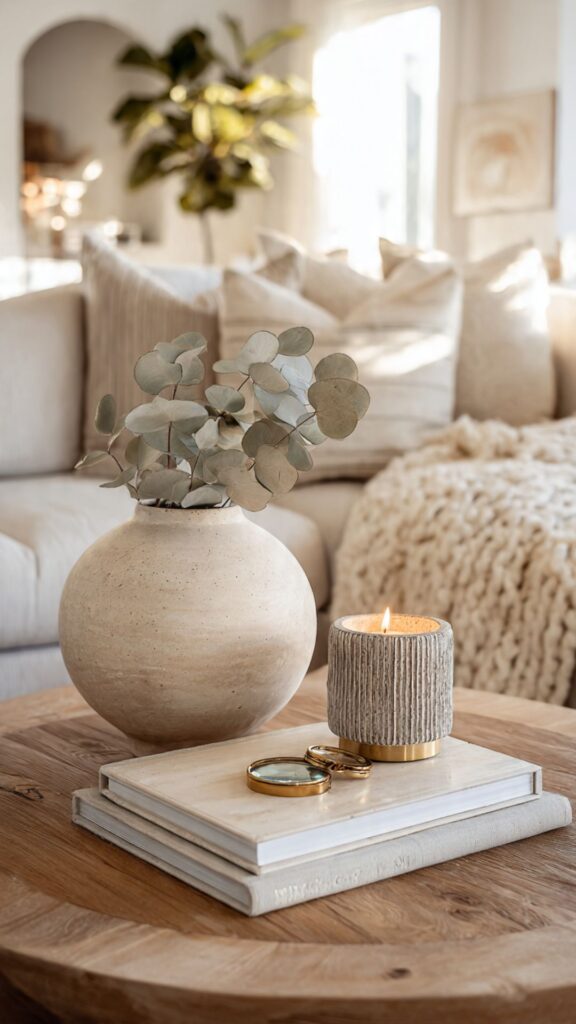
Professional interior designers rely on the rule of three more than almost any other styling principle, and nowhere does it apply more powerfully than on a coffee table. The rule simply states that objects arranged in odd-numbered groups particularly threes are more visually compelling than even-numbered arrangements.
The human eye perceives even groupings as rigid and static, while groups of three create natural tension, movement, and interest. Understanding this principle before purchasing a single decor item saves money and prevents the cluttered, random look that undermines so many otherwise attractive living rooms.
The practical application of the rule of three on a coffee table involves selecting one tall element, one medium element, and one low or flat element. For example: a tall vase with dried pampas grass, a medium-height stack of art books, and a low decorative tray with a candle and small object.
This height variation creates a visual rhythm that draws the eye across the table surface in a sweeping, natural arc. The variation in height is as important as the objects themselves even beautiful items arranged at the same height create a flat, unengaging display.
The rule of three extends beyond quantity to material and texture as well. Pairing three different textures smooth ceramic, rough linen, and reflective glass, for example within a single grouping creates depth and tactile interest that a single-material arrangement cannot achieve.
This multi-texture approach is a hallmark of professionally styled interiors and is one of the key differences between a coffee table that looks designed and one that looks assembled. Most design guides mention the rule of three but rarely explain its full dimensional application across height, quantity, and texture simultaneously.
Looking ahead, the rule of three remains a timeless compositional principle that transcends trend cycles. As interior design moves increasingly toward maximalism and eclectic layering, the rule of three provides a structural framework that prevents styled arrangements from tipping into chaos. It is, in essence, the grammar of coffee table styling once understood, it makes every subsequent decor decision faster, more confident, and more consistently successful.
Coffee Table Books:
Style, Substance, and Curated Personality
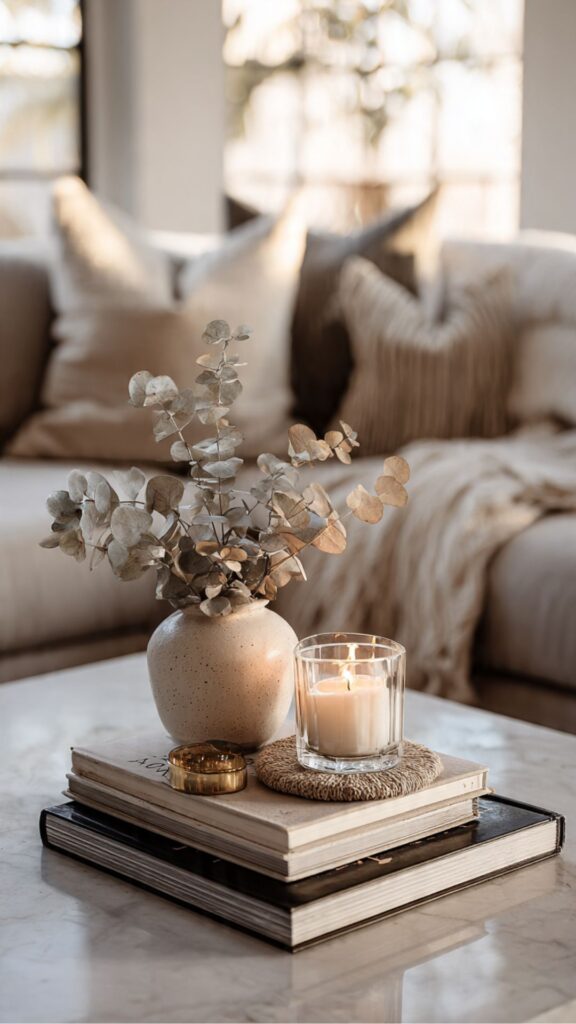
Coffee table books are simultaneously decorative objects and intellectual signals they communicate taste, curiosity, and identity in a way that most other decor items cannot. A carefully chosen stack of books on a coffee table tells visitors something genuine about the person who lives there. This dual function decorative and expressive makes coffee table books one of the highest-value styling investments available, particularly because their cost is modest relative to their visual and conversational impact.
Selecting coffee table books purely for their spines and cover colors is a common styling shortcut, but it produces a result that feels hollow to observant guests. A far more effective approach is to choose books that genuinely reflect your interests architecture, travel photography, fashion history, botany, or contemporary art and allow them to serve as conversation starters when guests visit. This authenticity elevates the coffee table from a styled display to a genuine reflection of the home’s inhabitants, which is always more compelling than perfect aesthetics alone.
The stacking and arrangement of coffee table books matters almost as much as the selection. Stacking three to five books horizontally, largest at the bottom and smallest at the top, creates a stable visual plinth that can support a small decorative object a candle, a small sculpture, or a botanical sprig in a bud vase.
Alternatively, mixing horizontal stacks with one vertically displayed book creates variety and suggests that the books are actually read rather than purely decorative. Leaning a single book open to a full-page photograph against another stack adds a spontaneous, lived-in quality that perfectly styled arrangements often lack.
The covers and spine colors of coffee table books can be used strategically to reinforce or complement the room’s color palette. A room with a neutral palette whites, creams, and natural linens benefits from books with earthy, muted tones: terracotta spines, sage green covers, warm taupe and natural linen bindings.
A bolder room with jewel tones or saturated accents can accommodate more graphic, high-contrast book covers. Some homeowners remove dust jackets entirely to reveal the often more elegant cloth-bound cover beneath a detail that adds quiet sophistication to any styled book stack.
Decorative Trays:
The Secret to an Organized and Styled Coffee Table
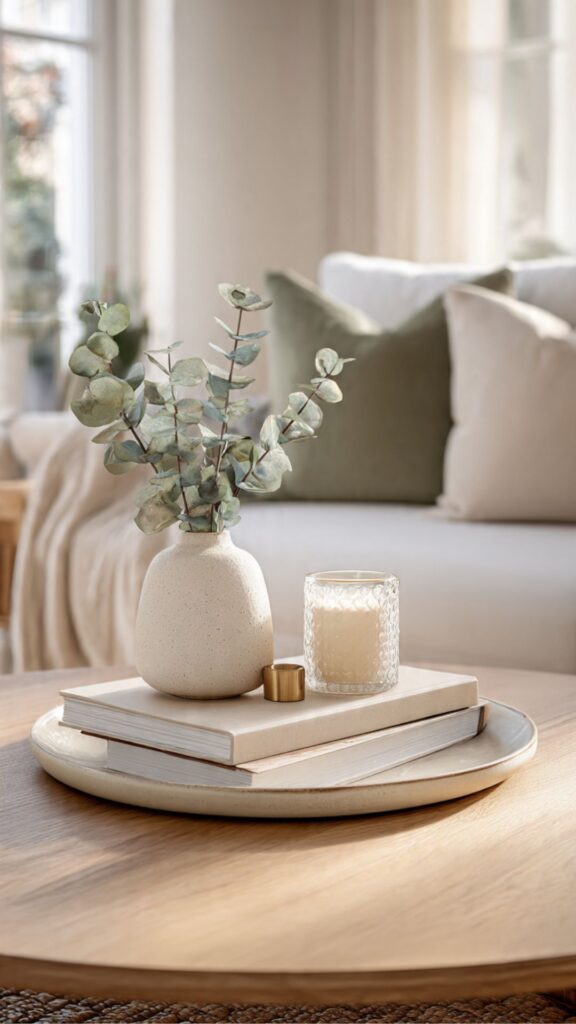
A decorative tray is the single most useful tool in coffee table styling, yet its full strategic value is rarely explained in design guides. Placed on the coffee table surface, a tray instantly creates a defined zone a visual boundary that tells the eye where the styled arrangement begins and ends.
This containment is psychologically significant: objects within a tray read as a curated collection, while the same objects scattered freely across the table surface read as clutter. The tray is, in essence, a frame for the arrangement it holds.
The material and finish of the tray contributes meaningfully to the room’s overall palette and tone. Rattan and woven trays bring organic warmth and texture, suiting coastal, Bohemian, and organic modern interiors. Lacquered wood trays in deep tones black, navy, or forest green add a polished, tailored quality that complements contemporary and transitional rooms.
Marble or stone trays read as luxurious and architectural, working beautifully in modern and Scandinavian-influenced spaces. Hammered brass or antique gold metal trays introduce warmth and historical character, best suited to eclectic and maximalist interiors.
Tray sizing relative to the coffee table is a detail that most homeowners get wrong. A tray that is too small looks lost on a large table surface it creates a timid, unconvincing arrangement regardless of how well the objects within it are styled. A tray should occupy approximately one-third to one-half of the coffee table’s total surface area.
This proportion leaves enough table surface visible to prevent a cluttered appearance while giving the styled arrangement the visual weight it needs to anchor the seating area. When in doubt, size up.
One underexplored use of trays in coffee table decor is the two-tray approach using one tray for a styled decorative arrangement and a second, smaller tray nearby as a functional catch-all for remote controls, coasters, and everyday items.
This separation of decorative and functional zones is a practical strategy that allows the styled arrangement to remain intact regardless of daily use. It is exactly the approach that interior stylists use when photographing living rooms for publications maintaining the aesthetic display while accommodating the reality of a lived-in home.
A Beautiful Coffee Table Deserves an Equally Stunning Living Room — Take a Look.
Candles and Candleholders:
Light, Warmth, and Layered Texture
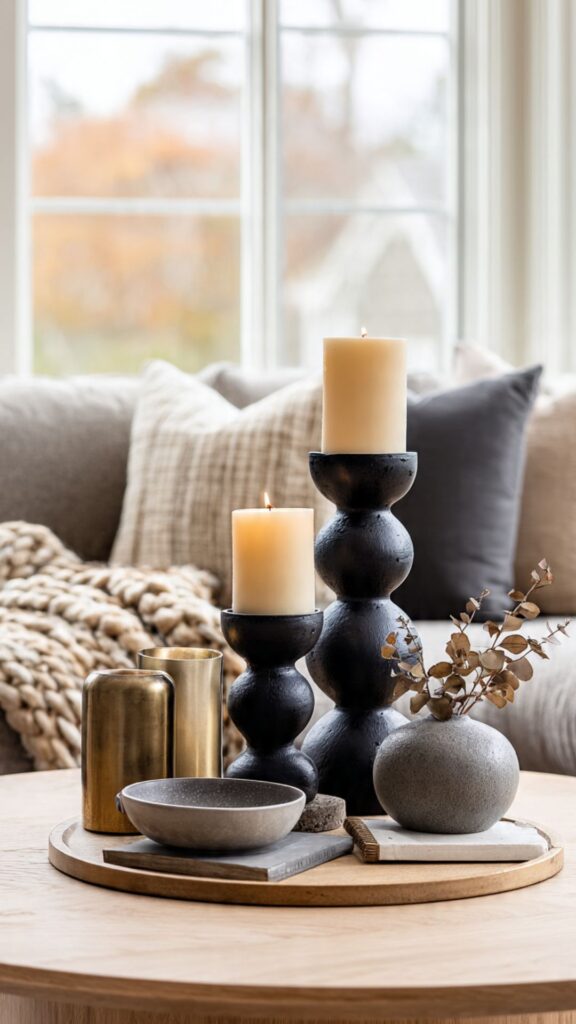
Candles are among the most universally used coffee table decor elements, and for understandable reasons they add warmth, fragrance, texture, and the suggestion of relaxed luxury that few other objects achieve. However, the difference between a coffee table decor that uses candles effectively and one that simply has candles on it is significant and worth understanding. The type, size, quantity, holder style, and placement of candles each contribute to the quality of the final effect.
Pillar candles grouped at varying heights create a strong, sculptural arrangement that holds its visual weight on larger coffee tables. Pairing wide, low pillar candles with taller, narrower ones generates the same height variation principle discussed in the rule of three the contrast in height creates visual movement and prevents the grouping from reading as flat.
Placing a grouping of pillar candles on a decorative plate or tray unifies them into a single arrangement and protects the table surface from wax drips simultaneously. This is both aesthetically and practically the most sensible approach.
Scented candles add a sensory dimension to coffee table decor that purely visual objects cannot provide. The fragrance of a candle contributes to the atmosphere of the entire room, making it one of the few decor items that engages multiple senses simultaneously.
Choosing a scent that complements the room’s overall character warm woods and spice for a cosy traditional interior, fresh eucalyptus or sea salt for a coastal space, vetiver and leather for a sophisticated contemporary room creates a cohesive multi-sensory environment that feels genuinely curated rather than accidentally assembled.
Flameless LED candles with wax finishes and realistic flicker simulation have improved dramatically in quality and are now a legitimate alternative to real candles for households with children, pets, or allergy sensitivities. Premium flameless candles are indistinguishable from real candles at conversational distances, and their timer functions allow them to activate automatically each evening without any manual effort.
For homeowners who want the consistent aesthetic benefit of candles on their coffee table decor without the maintenance commitment, flameless options are the most practical and increasingly the most aesthetically credible solution.
Fresh and Dried Botanicals:
Living Texture That Transforms Any Arrangement
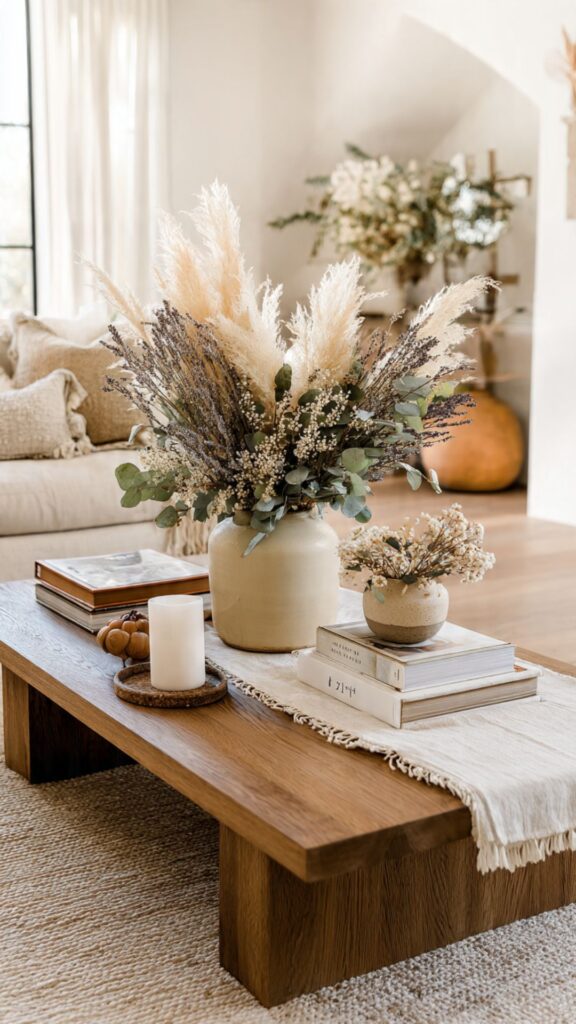
Introducing botanical elements whether fresh flowers, dried stems, potted plants, or foliage cuttings is one of the most impactful and relatively affordable ways to elevate coffee table decor. Plants and botanicals bring organic texture, natural color, and the sense of life and movement that manufactured decor items simply cannot replicate.
A single well-chosen botanical element can make a coffee table arrangement feel fresh, seasonal, and personally tended qualities that photographs of perfectly styled interiors consistently convey but rarely explain how to achieve.
Fresh flowers in a bud vase or small vessel are the most immediate and transformative option. The key is choosing vessels that are proportionally appropriate to the coffee table scale a large, statement vase belongs on a sideboard or console, not a coffee table decor where it will obstruct sightlines and overwhelm the arrangement.
Small bud vases in ceramic, glass, or terracotta holding three to five stems of a single flower variety create a more refined, considered effect than a mixed bouquet in a larger vase. Repeating a single stem type tulips, ranunculus, dried cotton stems across two or three separate small vessels creates a cohesive botanical still life.
Dried botanicals have surged in popularity in recent years, and their appeal extends well beyond their visual beauty. Unlike fresh flowers, dried stems require no water, no maintenance, and no replacement once styled, they remain in place for months or years with only occasional gentle dusting.
Pampas grass, dried lunaria (honesty), cotton stems, preserved eucalyptus, and dried seed heads all offer exceptional textural and tonal interest that complements a wide range of interior palettes. Their muted, earthy tones work particularly well in neutral and organic modern interiors, where their natural quality reinforces the room’s material story.
Potted plants bring a different quality to coffee table decor they suggest ongoing care and attention, which communicates a warmth and domesticity that styled objects alone cannot achieve. Small succulents, air plants in geometric holders, moss terrariums, and low-maintenance trailing plants in textured ceramic pots are all well-suited to coffee table decor scale and light conditions.
Grouping a small plant with a candle and a stack of books creates a perfectly balanced arrangement that requires minimal investment while delivering substantial visual and atmospheric impact.
Sculptural Objects:
Adding Artistic Dimension to Your Coffee Table
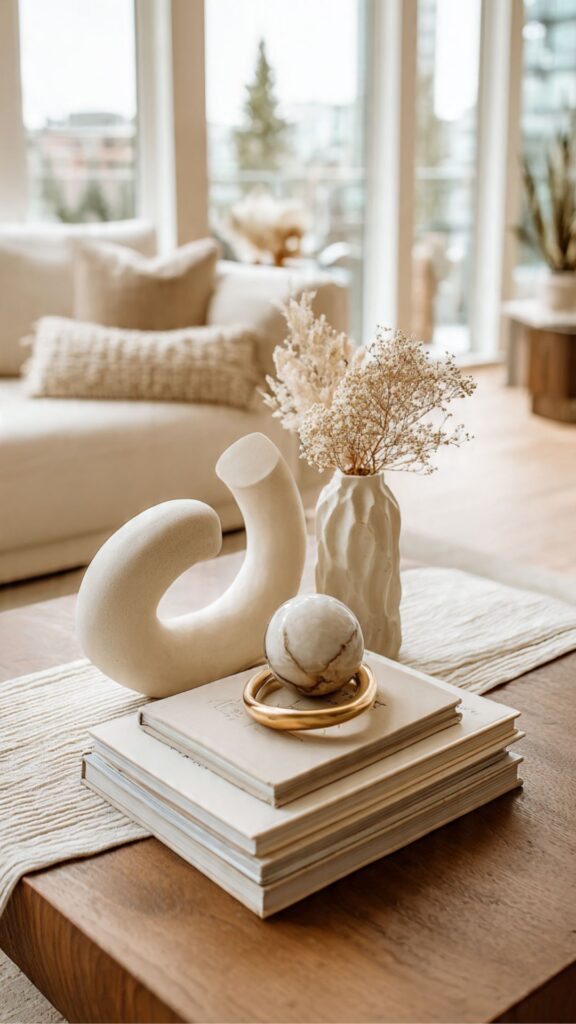
A sculptural object on a coffee table functions like a small piece of public art it invites attention, communicates aesthetic values, and creates a focal point that purely flat or functional items cannot achieve. Sculptures do not need to be expensive or sourced from galleries to be effective.
Objects with interesting form, unusual materiality, or personal meaning can all function as sculptural elements when placed with intention. A smooth river stone, a ceramic vessel with an unusual shape, a wooden carving, or a brass geometric form can each serve as the sculptural anchor of a coffee table arrangement.
The most compelling sculptural coffee table objects tend to combine visual interest with tactile appeal forms that make visitors want to reach out and touch them. This quality is particularly notable in hand-thrown ceramics, raw stone objects, and objects with visible craftsmanship such as hand-carved wood or hammered metal.
These tactile materials introduce an element of sensory engagement that mass-produced decor items rarely achieve, and they communicate a genuine appreciation for craft that resonates with the growing cultural shift toward artisanal, intentional consumption.
Scale is the most important variable in sculptural coffee table decor. An object that is too small disappears within the arrangement and contributes nothing to the composition’s visual weight. An object that is too large overwhelms the table and competes with the furniture itself.
As a practical guideline, sculptural objects intended to serve as focal points should be approximately 20 to 35 centimetres in height when used as standalone pieces, or slightly smaller when used within a grouped arrangement.
This scale range is large enough to read confidently from seated viewing distance while remaining proportional to standard coffee table decor dimensions. Sourcing sculptural coffee table decor objects is one area where shopping beyond mainstream homeware retailers pays dividends.
Artisan markets, independent ceramicists on online craft platforms, antique dealers, and even natural object collecting interesting stones, coral formations, driftwood pieces all yield objects with genuine character and uniqueness that mass-market alternatives cannot replicate. Interior designers consistently source from these channels precisely because the resulting arrangements feel collected and personal rather than purchased and assembled.
Coffee Table Decor for Small Living Rooms:
Maximizing Impact in Minimal Space
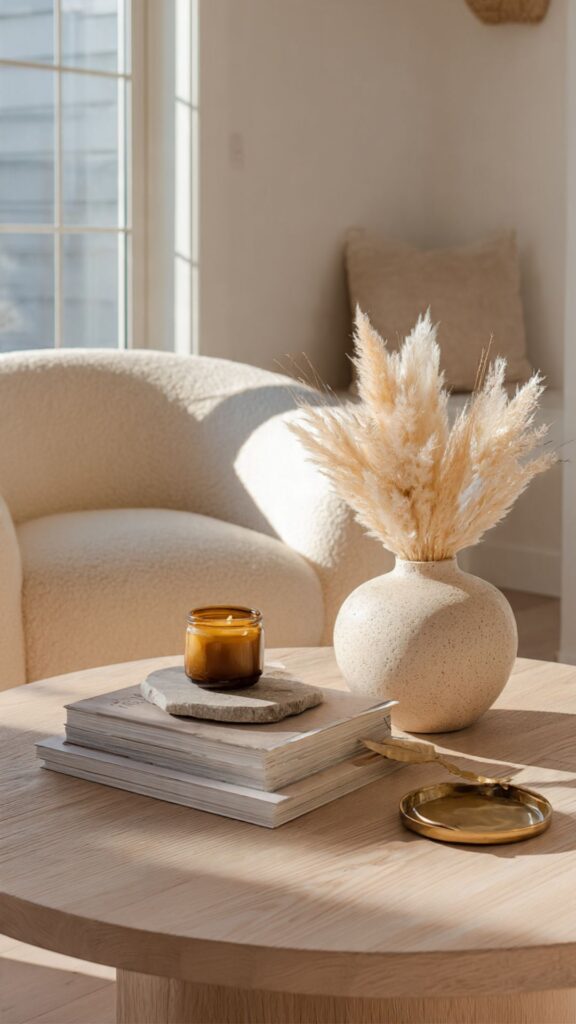
Small living rooms present specific challenges for coffee table styling the risk of visual clutter is higher, the sightlines across the room are more easily blocked, and the proportional relationship between the table and its decor is more critical.
However, small living rooms also benefit most dramatically from well-executed coffee table decor, because in a compact space, every element carries more visual weight and the coffee table decor arrangement becomes even more central to the room’s overall aesthetic.
The first and most important principle for small-room coffee table decor is restraint. Two or three carefully chosen items will always outperform six or seven competing pieces in a small space. The temptation to fill every surface is particularly strong in small rooms, where empty space can feel wasteful.
However, negative space the deliberately uncovered portions of the table surface is a design tool in its own right. It creates breathing room, prevents the arrangement from feeling anxious, and actually makes the styled items more visually prominent by surrounding them with calm.
Vertical height in coffee table decor should be used carefully in small rooms. Tall elements that obstruct the sightline between the sofa and television or between different seating positions are a common and frustrating mistake. In a small room, the maximum practical height for coffee table decor is typically around 25 to 30 centimetres high enough to create visual interest but low enough to maintain comfortable sightlines across the space.
This constraint actually encourages more creative use of low-profile objects, trays, and layered horizontal elements, often resulting in more sophisticated arrangements than those that rely on tall pieces for impact.
Multipurpose decor items are especially valuable in small-room coffee table decor styling. A beautiful box with a decorative lid that also stores remote controls combines aesthetic and functional value. A tray that doubles as a serving surface. A small plant that also humidifies the room.
Choosing items that work on multiple levels is the most intelligent approach to small-space styling because it prevents the trade-off between a beautiful coffee table and a functional one a compromise that should never be necessary.
Seasonal Coffee Table Decor:
Refreshing Your Living Room Throughout the Year
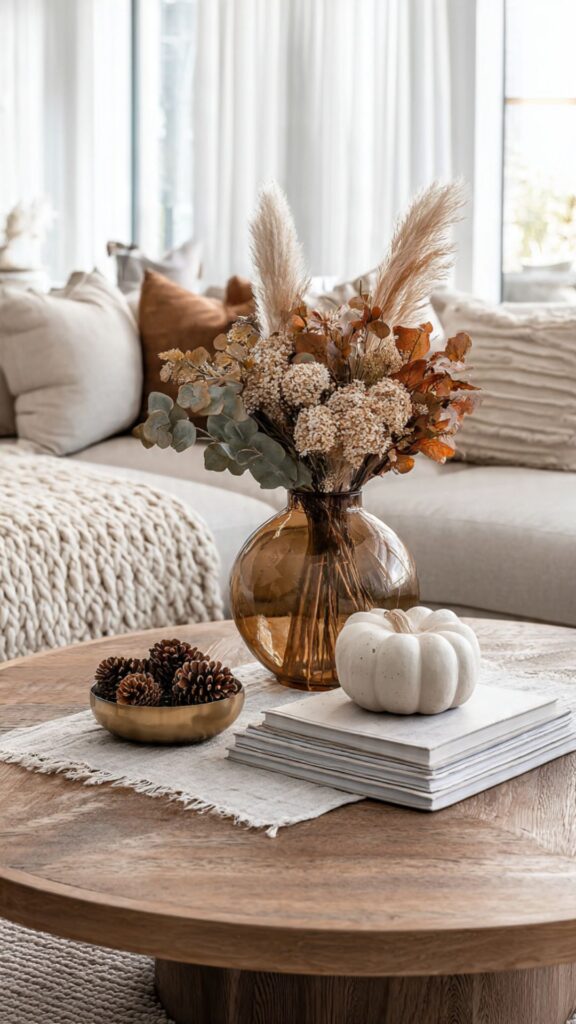
One of the most overlooked opportunities in coffee table styling is seasonal rotation the practice of updating the arrangement to reflect the colors, textures, and moods of each season. This approach keeps the living room feeling fresh and intentional throughout the year without requiring a full redecoration.
It also creates a design rhythm that residents and regular visitors consciously or unconsciously appreciate the home feels cared for and dynamically alive rather than static and forgotten.
A spring coffee table decor arrangement might feature a small ceramic vase with fresh tulips or cherry blossom branches, a linen-covered book in soft green or blush, and a single white pillar candle on a pale marble slab. Summer invites lighter, breezier compositions driftwood, coral-toned ceramics, and trailing greenery in terracotta pots.
Autumn calls for warming textures: dried seed heads and pampas grass, deep amber candles, rough-textured vessels in burnt orange and brown, and richly colored foliage collected from the garden. Winter leans into darkness and warmth dark green foliage, berry sprigs, brass or copper candleholders, and scented candles with woody fragrance profiles.
The investment required for seasonal coffee table decor updates is genuinely modest when approached strategically. Maintaining a core of permanent, high-quality items a tray, a quality vase, and a good book stack means that only two or three rotating elements need to be updated each season.
Fresh botanicals, a single seasonal candle, and one small textural object are all that is needed to transform the arrangement’s entire character. This selective rotation approach maximizes visual impact while minimizing both cost and storage requirements.
Seasonal coffee table decor also has measurable benefits for the psychological experience of the home’s inhabitants. Interior psychology research consistently identifies the positive mood effects of environments that change in response to seasonal cues they reinforce a sense of connection to the natural world and the passage of time that static, unchanging interiors do not provide.
For homeowners who invest in creating living environments that genuinely support wellbeing, seasonal decor rotation is one of the simplest and most effective tools available.
If You Love Stylish Decor, You Will Absolutely Love These Bedroom Bench Ideas Too!
Minimalist Coffee Table Decor:
The Art of Considered Simplicity
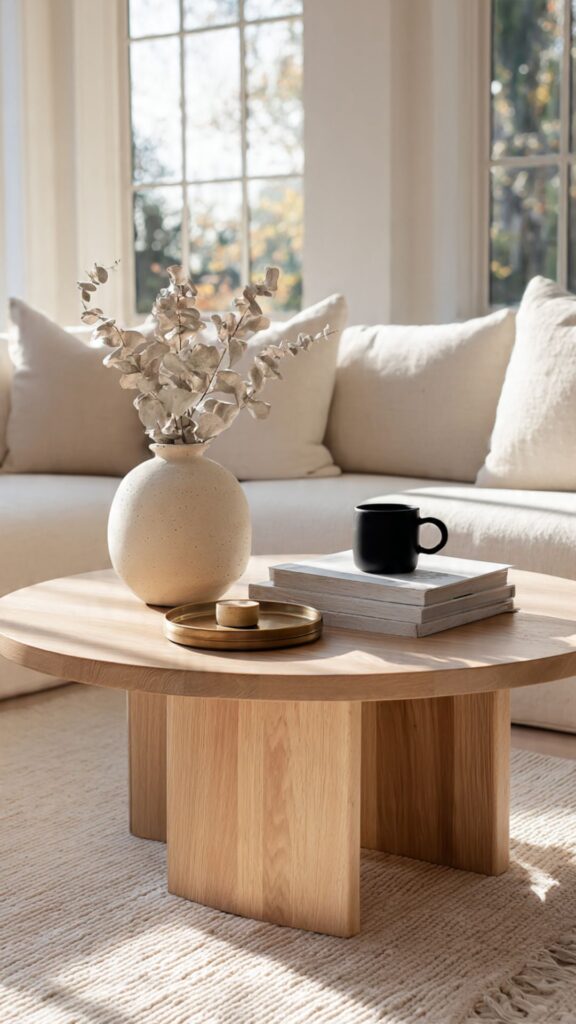
Minimalist coffee table decor is, counterintuitively, one of the most difficult styles to execute well. While it appears simple, genuine minimalism requires a higher level of design confidence and object selectivity than maximalist approaches, where quantity and layering can compensate for individual item quality.
In minimalist coffee table decor, every single object is exposed to full scrutiny there is nowhere for a mediocre item to hide, and every choice communicates something precise about the homeowner’s aesthetic values.The foundation of minimalist coffee table decor styling is the selection of one or two genuinely exceptional objects rather than a curated collection. A single large, beautifully formed ceramic vessel with interesting texture.
A stack of two or three architectural books with refined covers. One perfect candle in an elegant holder. The restraint involved in choosing so few items, and the confidence required to leave significant portions of the table surface bare, are what distinguish true minimalism from merely sparse decorating. Empty space is not absence it is a design choice.
Material quality becomes paramount in minimalist coffee table decor precisely because there are so few items to distract from individual object scrutiny. A cheap candle in a poor-quality holder reads as mean and unconsidered in a minimalist context, whereas the same object might be absorbed within a busier arrangement.
Investing in fewer, better-quality items a handmade ceramic, a genuinely well-designed candle, a book with beautiful production values is the single most important principle for anyone pursuing a minimalist coffee table decor aesthetic. Quality, not quantity, is the organizing principle.
Wabi-sabi the Japanese aesthetic philosophy that finds beauty in imperfection, incompleteness, and the natural passage of time is a closely related concept that elevates minimalist coffee table decor beyond the purely visual. A slightly asymmetrical ceramic bowl, a candle burned down to an interesting level, a single dried flower stem that has shifted from its original position these imperfections create an authenticity and humanity that perfectly symmetrical, pristine arrangements lack.
Embracing wabi-sabi in minimalist coffee table styling produces arrangements that feel genuinely lived-in and deeply considered simultaneously.
Bohemian Coffee Table Decor:
Layered, Eclectic, and Unapologetically Personal
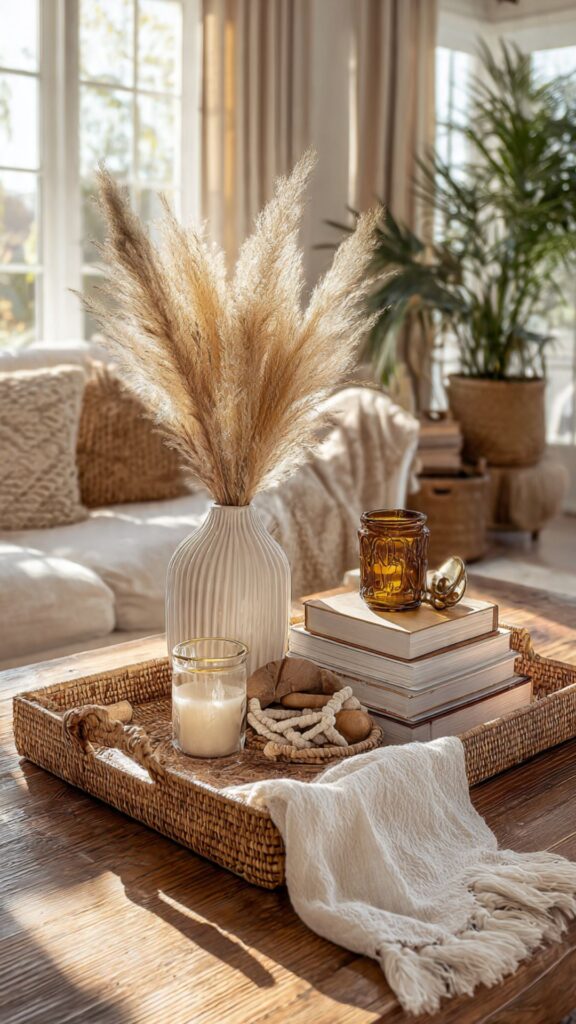
Bohemian coffee table decor is the antithesis of minimalism it revels in layering, mixing, and the celebration of objects collected from diverse sources and traditions. The Bohemian approach places personal resonance above design rules, allowing cultural objects, travel souvenirs, artisan pieces, and natural elements to coexist in arrangements that feel globally inspired and genuinely personal.
When executed with even a modest sense of composition, Bohemian coffee table decor styling creates the most characterful and memorable arrangements of any design style. The visual language of Bohemian coffee table decor includes specific textures and materials that appear consistently across the style: hammered brass, aged copper, hand-knotted textiles, macramé coasters, rattan and woven elements, raw crystals and geodes, hand-thrown pottery with drip glazes, and layered rugs or textile runners used beneath the arrangement.
These materials share an organic, hand-crafted quality that creates the warm, tactile atmosphere central to the Bohemian aesthetic. Mixing them brass with rattan, crystal with macramé creates the layered complexity that defines the style.
Color in Bohemian coffee table decor tends toward warm, earthy richness: terracotta, burnt orange, deep teal, mustard yellow, and dusty rose. These tones work in varied combination without clashing because they all share warm undertones and muted saturation.
Introducing a single cooler or more neutral element a natural linen runner, a grey ceramic, or a black cast iron piece prevents the arrangement from tipping into overly warm or visually chaotic territory. This single neutral anchor is a subtle but important compositional tool in Bohemian styling.
The most authentic Bohemian coffee table arrangements are built over time rather than purchased as a complete set. Objects gathered from travels a small terracotta vessel from a market in Morocco, a hand-carved wooden box from Bali, a brass candleholder from an antique dealer in Istanbul tell real stories and create genuine interest.
Starting with a few meaningful objects and adding to the arrangement gradually produces a far more compelling result than buying a pre-curated Bohemian set from a homeware retailer. The personality of the arrangement depends entirely on the authenticity of its components.
Styling a Round Coffee Table:
Circular Arrangements and Balance
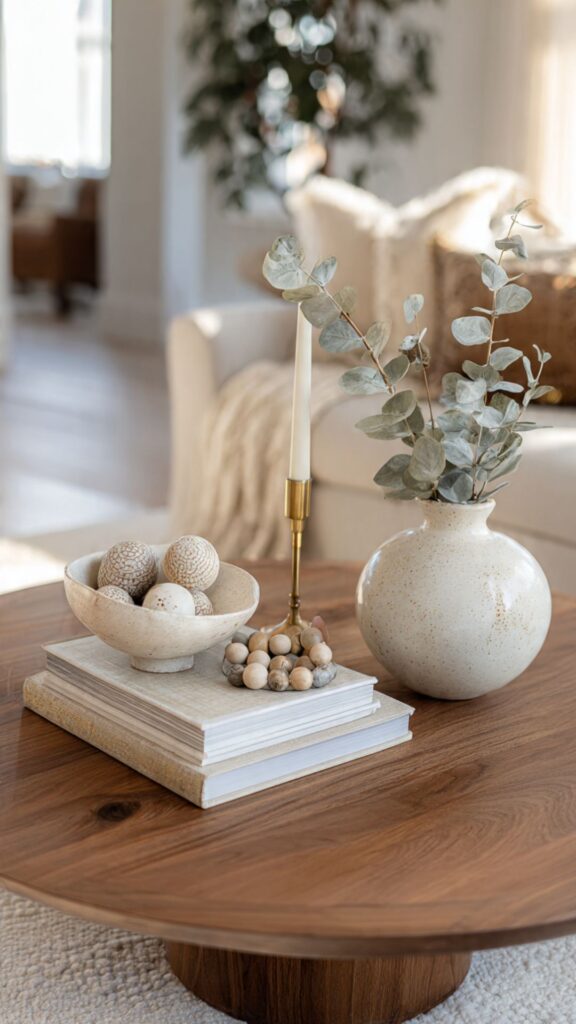
Round coffee tables present unique styling challenges and opportunities that rectangular surfaces do not. Without defined corners to anchor objects, a round table requires a different compositional approach one that works with the circular geometry rather than against it.
Understanding how to style a round coffee table effectively unlocks a surface that, when well arranged, creates arrangements with a natural, radial harmony that rectangular coffee table styling cannot achieve.
The most effective approach for a round coffee table is to create a central focal point and build outward from it. A single substantial object a large decorative bowl, a substantial candle cluster, a small plant placed at the center creates the visual anchor from which the rest of the arrangement radiates.
Surrounding this central object with smaller elements at varying distances from the center a book at two o’clock, a small tray at seven o’clock, a single small vessel at eleven o’clock creates an arrangement that feels natural and balanced without being rigidly symmetrical.
Circular and oval decorative objects are naturally at home on a round coffee table decor and should be prioritized in the styling. Round trays, circular bowls, spherical objects, and cylindrical candles all echo the table’s geometry, creating a cohesive visual harmony that angular objects on a round surface occasionally disturb.
This material-to-form harmony is a design principle borrowed from architecture the idea that objects should resonate with the geometry of their host surface and it produces arrangements on round tables that feel genuinely inevitable rather than imposed. Scale is particularly critical on round coffee tables. A large round table requires objects with sufficient visual weight to occupy its substantial central surface without looking lost.
Conversely, a small round table the kind commonly used in apartment living rooms requires restraint: one central object and perhaps one or two minor supporting elements, using the table’s natural compactness as a design feature rather than a limitation. The instinct to fill a small round table with many small objects consistently results in clutter. One strong, well-scaled object is always the correct choice.
Luxury Coffee Table Decor:
High-End Styling on Any Budget
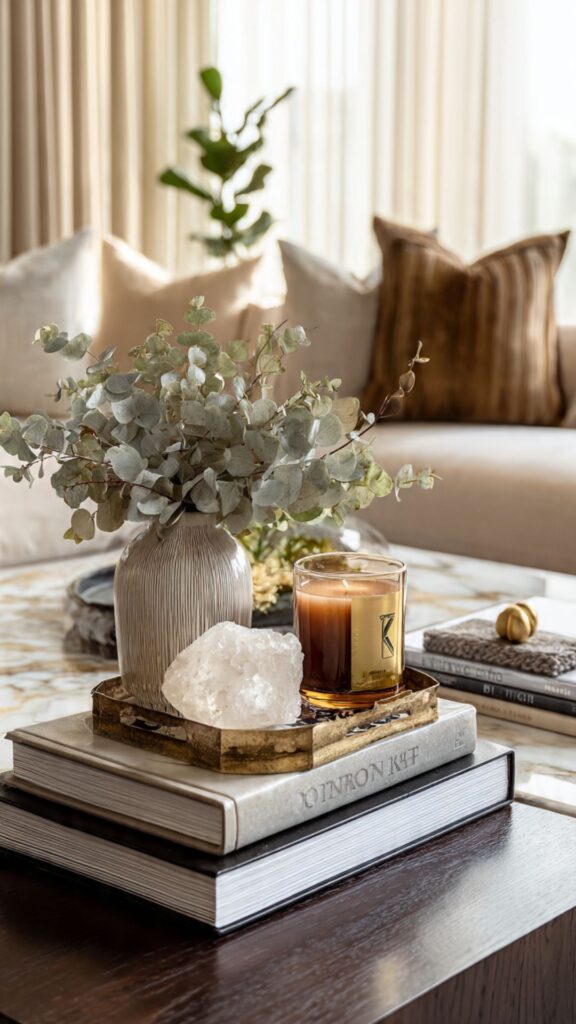
Luxury coffee table decor is not exclusively about expensive objects it is about the quality of choices made at every price point. Professional interior stylists consistently work within tight budgets to create arrangements that read as high-end, and the techniques they use are accessible to any homeowner willing to approach coffee table styling with the same level of intentionality. Understanding what creates the perception of luxury is far more valuable than simply spending more money.
The most reliable route to a luxurious-looking coffee table decor at any budget is to invest in one genuinely exceptional anchor object and keep everything else simple. A single hand-thrown ceramic vase or bowl from an independent ceramicist, a beautiful marble or stone tray, or a particularly well-crafted candle in a quality holder priced at the upper end of what you can afford for a single item creates an arrangement that reads as considered and valuable. Surrounding this anchor object with a few inexpensive but well-chosen supporting items extends the luxury aesthetic far beyond what the total expenditure suggests.
Material selection is the most powerful luxury signal in coffee table decor. Natural materials marble, stone, solid brass, solid wood, hand-thrown ceramics, quality linen and leather read as luxurious because they have inherent material integrity that mass-produced alternatives lack.
Even a small piece of genuine marble a coaster, a small tray, a paperweight introduces a quality of material that elevates the entire arrangement. Contrast this with plastic or resin objects styled to look like stone or metal: they are immediately legible as imitations and undermine the arrangement’s overall credibility regardless of the other items present.
Negative space is the ultimate luxury signal in coffee table styling. Restrained arrangements with generous empty table surface between items communicate that the homeowner is confident enough in their choices not to fill every available centimetre.
This confidence the willingness to leave space is what most clearly distinguishes a luxury interior from an aspirational one. In practical terms, it means removing rather than adding when an arrangement feels unresolved. The counterintuitive act of taking something away almost always improves a coffee table arrangement.
Coffee Table Decor with Personal Mementos:
Making Your Space Genuinely Yours
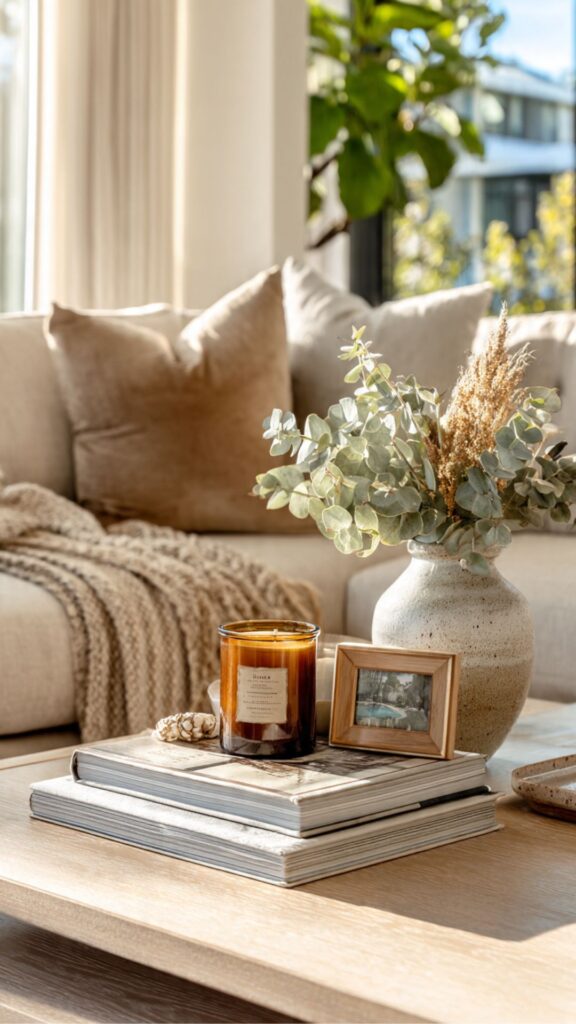
The distinction between a coffee table that looks professionally styled and one that feels genuinely personal often comes down to the inclusion of meaningful objects alongside purely decorative ones. A photograph in a beautiful frame, a small object collected from a meaningful trip, a piece of art made by a child, or a book with genuine personal significance these items introduce a human story into the arrangement that no amount of carefully curated homeware can replicate.
The best-styled living rooms always include some evidence of the lives lived in them. Integrating personal mementos into a styled coffee table decor arrangement requires compositional care to prevent the arrangement from reading as sentimental clutter rather than a curated personal collection.
The key is to apply the same styling principles height variation, material contrast, negative space to the mementos as to any other element in the arrangement. A meaningful small sculpture placed on a stack of books and surrounded by space reads as an intentional, honored object. The same sculpture buried among six other items reads as forgotten.
Framed photographs on a coffee table decor are a point of genuine interior design debate. Many professional stylists avoid them on coffee tables because they can feel overly personal in a space also intended for guests. However, a single beautifully framed black-and-white photograph, used as a leaning element against a stack of books or a small vessel, creates exactly the kind of human warmth and authenticity that makes a home feel genuinely inhabited.
The framing quality which should be the best available does most of the work in elevating a personal photograph to a design element. Travel objects and cultural artifacts are among the most compelling personal mementos for coffee table display because they invite conversation and communicate a life actively explored.
A small ceramic piece from a specific market, a handwoven textile used as a tray liner, a carved wooden object from a specific artisan tradition these items create an implicit narrative that purely decorative objects cannot. They are the kind of coffee table elements that guests ask about, which transforms the styled arrangement from a visual display into a genuine social catalyst.
Coffee Table Decor for Families:
Practical Beauty That Survives Daily Life
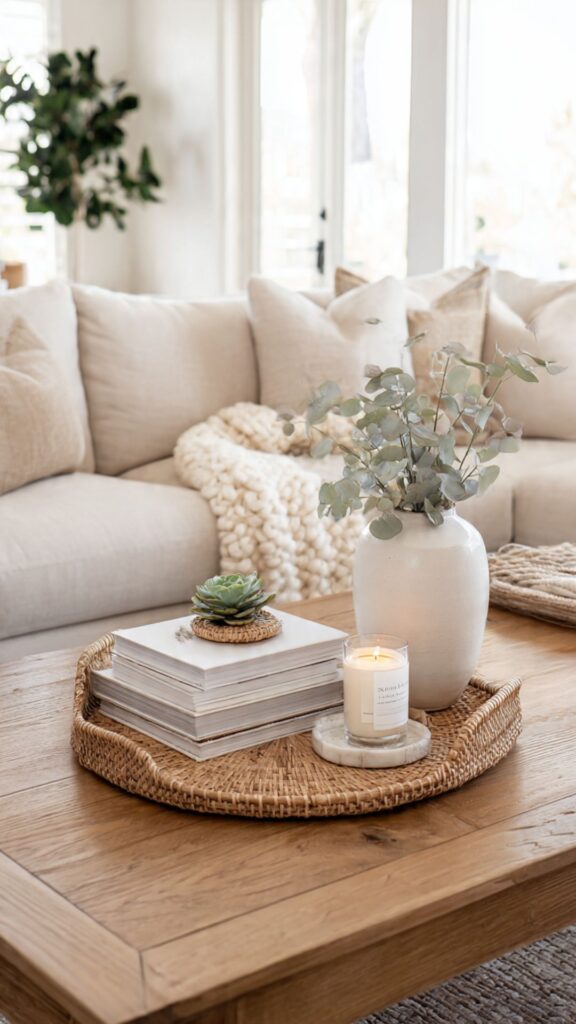
Family living rooms present perhaps the most demanding context for coffee table styling the aesthetic ambitions of the adult inhabitants must coexist with the practical reality of children, pets, and the inevitable daily activity of a functioning household.
Many parents abandon coffee table decor entirely after repeated incidents with breakable objects or frustrating tidying routines. However, with the right approach, it is entirely possible to maintain a beautiful coffee table arrangement in a family home without creating daily conflict or anxiety.
The selection of durable, unbreakable materials is the foundation of family-friendly coffee table decor. Wooden objects, solid stone or concrete pieces, metal candleholders, woven baskets, and quality resin objects can all withstand the contact and occasional knocking that comes with family life.
Fragile ceramics, glass vases, and thin-stemmed candles are better reserved for high shelves and mantlepieces in households with active children. This material selection principle does not require any sacrifice of style the most tactile and characterful materials in interior design are also among the most durable.
Lidded boxes and baskets used as coffee table decor serve double duty in family rooms they are decorative from a distance while providing concealed storage for toys, art supplies, or the inevitable collection of items that migrate to the living room from other parts of the house.
A beautifully lidded rattan box, a lacquered wooden box, or a leather-handled basket sitting on or beside the coffee table decor maintains the aesthetic of a styled arrangement while solving a genuine storage problem. This pragmatic-yet-beautiful approach is the core philosophy of successful family home interior design.
Involving children in the coffee table styling process allowing them to choose a small plant, a meaningful object, or a book to include in the arrangement creates ownership and respect for the display that instruction and rules rarely achieve.
A child who has chosen and placed an object in the family’s living room arrangement is far less likely to disrupt it than one who has been excluded from the process. This inclusive approach also creates the kind of authentic, personally meaningful arrangements discussed in the previous section genuine family artifacts alongside curated decor pieces.
Complete Your Home’s Elegant Feel with These Lovely Hallway Decor Ideas.
Coffee Table Decor Mistakes to Avoid:
What Most Guides Never Tell You
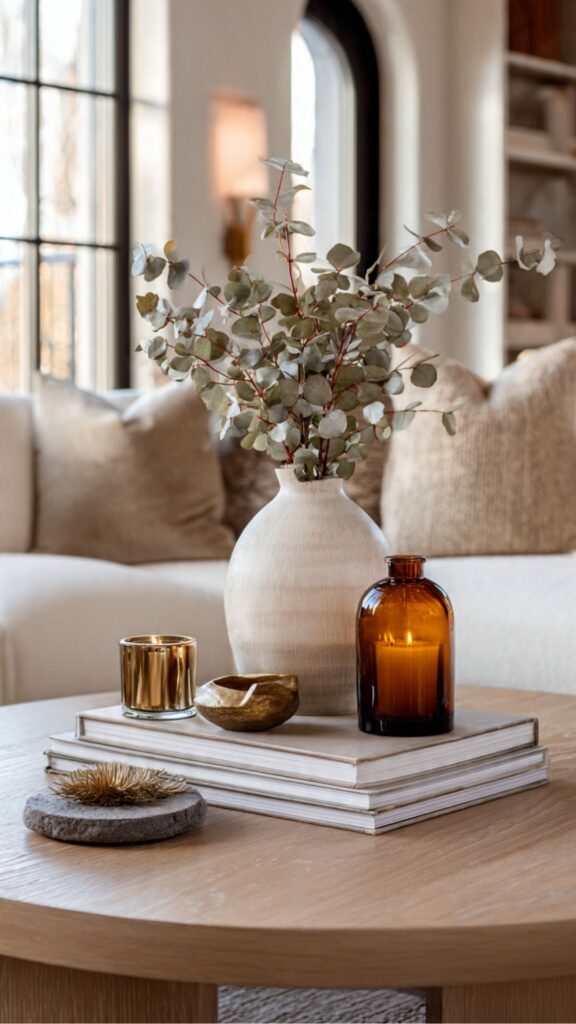
Understanding what not to do is as valuable as knowing what to do in coffee table styling, yet most design guides focus almost exclusively on positive recommendations. The most common coffee table decor mistakes are made by intelligent, style-conscious people precisely because they are subtle errors of proportion, scale, or editorial judgment rather than obvious taste failures. Identifying and avoiding these errors is the final refinement that separates a genuinely excellent coffee table arrangement from a merely adequate one.
The most pervasive mistake is overcrowding. More objects do not create more interest they create more noise. A coffee table decor with seven or eight items, however individually attractive, reads as cluttered and anxious. The resolution is always editorial: select the three or four strongest items, remove the rest, and allow the survivors room to breathe.
This editing process is genuinely difficult because it requires abandoning items that may be beautiful in isolation but are weakening the arrangement as a whole. The willingness to remove things is the most important skill in coffee table decor styling.
Matching sets are a frequently overlooked mistake. Purchasing a coordinated set of coffee table decor items vase, tray, candle holder, and sculpture in the same material and finish produces an arrangement that looks retail-displayed rather than personally curated.
The visual signature of a professionally styled interior is always a mix of objects from different sources, periods, and materials that have been brought together by an informed sensibility. Introducing one item that is clearly from a different context an antique, a handmade piece, a natural object immediately breaks the retail look and elevates the arrangement toward the personal.
Ignoring the table-to-decor scale relationship is the third most common mistake. Objects that are correctly scaled to the individual a lovely small vase, an attractive little dish can look lost and diminished on a large coffee table surface.
The scale of every object should be evaluated in relation to the table it will occupy, not in isolation. A vase that looks substantial on a kitchen counter may look delicate and inconsequential on a 120-centimetre coffee table. Evaluating potential purchases with a photograph of the table on hand for reference is a simple but effective safeguard against this common error.
Conclusion
The coffee table decor is one of the most accessible and rewarding aspects of interior design it requires no structural changes, no professional installation, and only a modest investment to transform the most visible surface in your living room.
The key takeaway from this guide is that great coffee table styling is not about spending more, but about choosing more thoughtfully applying principles of scale, material, restraint, and personal meaning to every decision. Start with one strong idea from this guide, apply it to your own space, and allow your coffee table to become the intentional, beautiful centerpiece your living room deserves.

Team TrandyVilla is the passionate home decor team behind Trandy Villa, where style meets comfort in everyday living. The team loves transforming simple spaces into beautiful, functional homes through smart ideas, budget-friendly hacks, and modern design trends. Their content focuses on helping readers create homes that feel both stylish and personal without spending too much.