
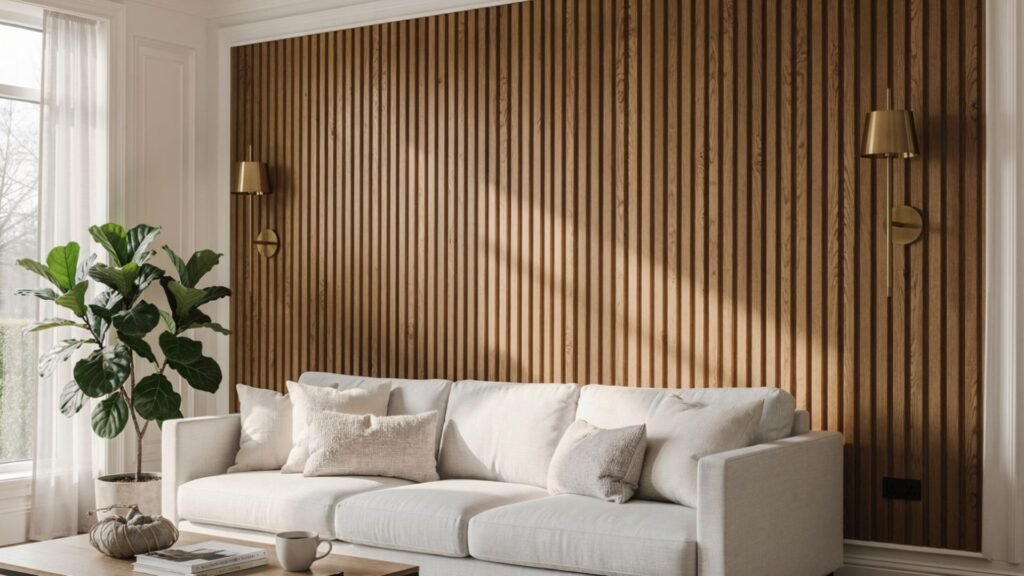
Wall panel design has evolved far beyond simple wood boards and basic wainscoting. Today, it sits at the intersection of interior architecture, material science, and personal expression. Whether you’re renovating a modern apartment or upgrading a traditional home, the right wall panel design treatment can completely redefine a space adding depth, warmth, acoustic comfort, and visual drama that paint alone simply cannot achieve.
Wall panel design transforms ordinary walls into stunning architectural features. It covers decorative and functional surface treatments wood, stone, fabric, 3D textures, and more applied to interior walls. These panels add depth, warmth, and character to any room.
They also serve practical purposes: hiding imperfections, improving insulation, and absorbing sound. Homeowners and designers use wall panel design to elevate bedrooms, living rooms, offices, and commercial spaces with minimal structural work.
The right wall panel design can completely redefine a space turning a plain, lifeless room into one that feels deliberately crafted, visually rich, and deeply personal.
Modern wall panel design ideas span a wide range of styles, materials, and budgets. Shiplap panels suit rustic and coastal interiors. Slat wood panels work beautifully in minimalist, contemporary homes. Geometric and 3D panels create bold focal points in living areas.
Upholstered panels add softness and luxury to bedrooms. Stone veneer panels bring industrial character to kitchens and bars. Each option delivers a distinct mood, finish, and function making wall panels one of the most versatile upgrades in interior design today.
3D Textured Wall Panels for Depth and Drama:
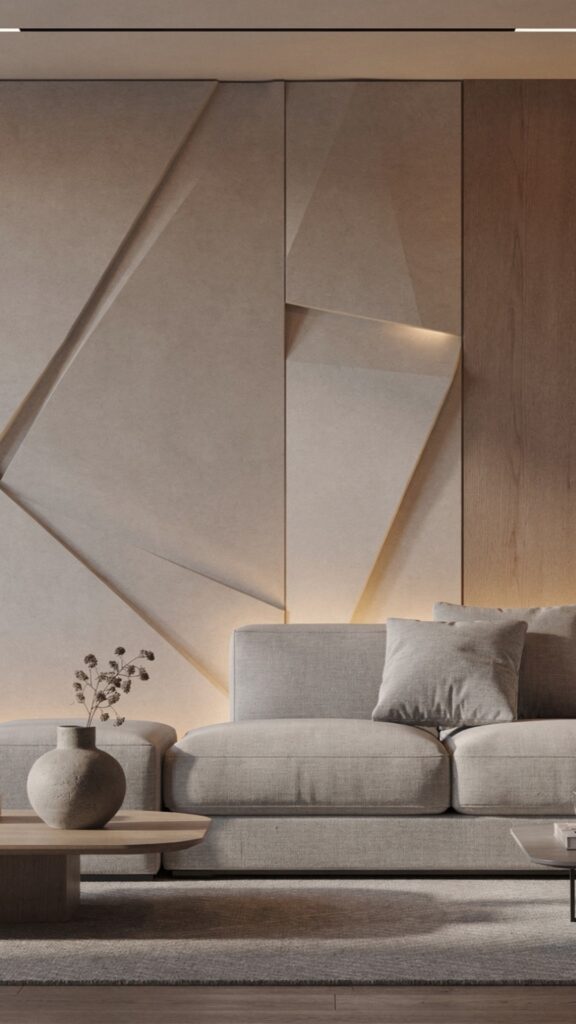
Three-dimensional wall panel design are one of the most striking options available today. Unlike flat surfaces, 3D panels create a play of light and shadow that changes throughout the day as natural and artificial light shifts. This dynamic quality makes a room feel alive and constantly evolving something static wallpaper or paint can never replicate.
These panels are typically made from MDF, PVC, gypsum, or natural stone composites, each offering different levels of texture depth, durability, and cost. MDF panels are perfect for interior feature walls with low moisture exposure, while PVC variants work well in bathrooms or kitchens where humidity is a concern.
Gypsum panels offer a luxurious, plaster-like finish that suits contemporary and art deco interiors beautifully. When installing 3D panels, lighting placement is everything. Recessed ceiling lights or strategically placed wall sconces that graze the surface will amplify the three-dimensional effect dramatically.
However, avoid overhead lighting directly above it tends to flatten textures rather than enhance them. A practical design tip: use 3D textured panels on a single accent wall rather than all four walls. Overuse creates visual noise. Reserve the texture for the wall behind a bed headboard, sofa, or TV unit to anchor the room’s focal point cleanly.
Shiplap Wall Panels for Rustic Warmth:
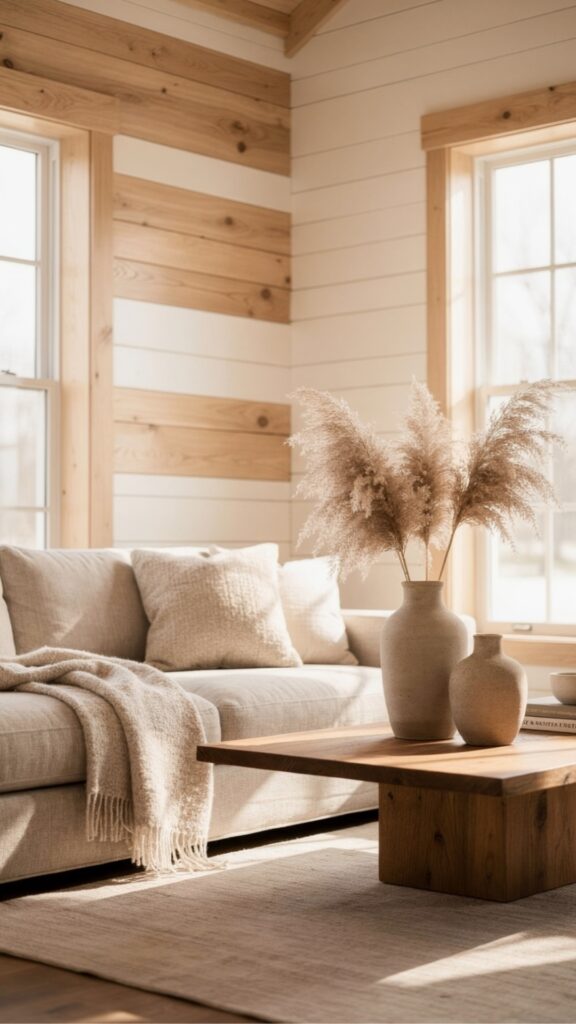
Shiplap horizontal wooden boards with a slight groove between each plank has moved well beyond its farmhouse origins. Today, it appears in Scandinavian minimalist interiors, coastal homes, and even urban industrial lofts, proving its versatility across design languages.
The key is how you finish it: raw and whitewashed for a coastal feel, dark walnut-stained for a moody modern look, or left natural for a cabin-style warmth. What makes shiplap particularly valuable from a design standpoint is its ability to make spaces feel taller or wider depending on orientation.
Horizontal shiplap draws the eye across the room, creating a perception of width ideal for narrow corridors or small bedrooms. Vertical shiplap, on the other hand, pulls the gaze upward, making low ceilings feel more generous and airy.
Shiplap is also one of the most DIY-friendly wall panel design options available. With basic carpentry tools, most homeowners can install it over a weekend, making it an excellent cost-effective solution compared to custom-built alternatives.
That said, one common mistake is failing to account for wood expansion always leave a small gap between boards and use a proper primer coat to prevent warping over time.
For best results, paint or stain shiplap before installation. Trying to cut in paint along the grooves after the boards are on the wall panel design is tedious and often results in uneven coverage. Pre-finishing each board also ensures the shadow lines between planks remain crisp and clean.
Wainscoting Panels for Classic Elegance:
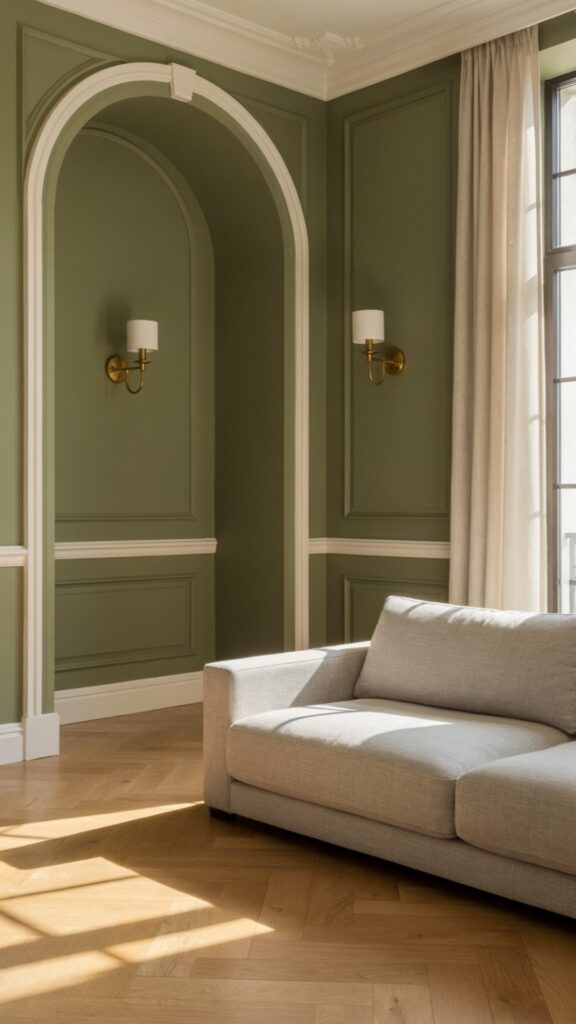
Wainscoting is one of the oldest wall panel design traditions in Western architecture, dating back to 16th-century Europe when it was used primarily to protect walls from moisture and everyday damage. In its modern form, however, wainscoting has become a symbol of refined interior taste particularly in dining rooms, entryways, and home offices where a sense of formality and craftsmanship is desired.
Traditional wainscoting features a raised panel within a frame, typically covering the lower third to half of a wall. Above it, a chair rail molding separates the panel from the painted or wallpapered upper wall. This layering of materials and heights creates visual complexity and a sense of architectural substance that new-build homes often lack entirely.
Contemporary designers have been pushing the boundaries of wainscoting by applying it in unexpected ways full-height wainscoting that reaches the ceiling, painted in deep jewel tones like forest green or midnight navy, creates a dramatic library or study feel. Alternatively, mixing white wainscoting with wallpaper above offers a balanced contrast that feels both classic and fresh.
For renovation projects on a budget, MDF wainscoting kits offer a significant cost advantage over solid wood without sacrificing appearance. When painted ideally in a semi-gloss finish for washability MDF wainscoting is virtually indistinguishable from more expensive wood alternatives.
Have a Look: Black Living Room Decor Ideas That Pair Perfectly with Bold Wall Panel Designs.
Slat Wood Panels for Modern Minimalism:
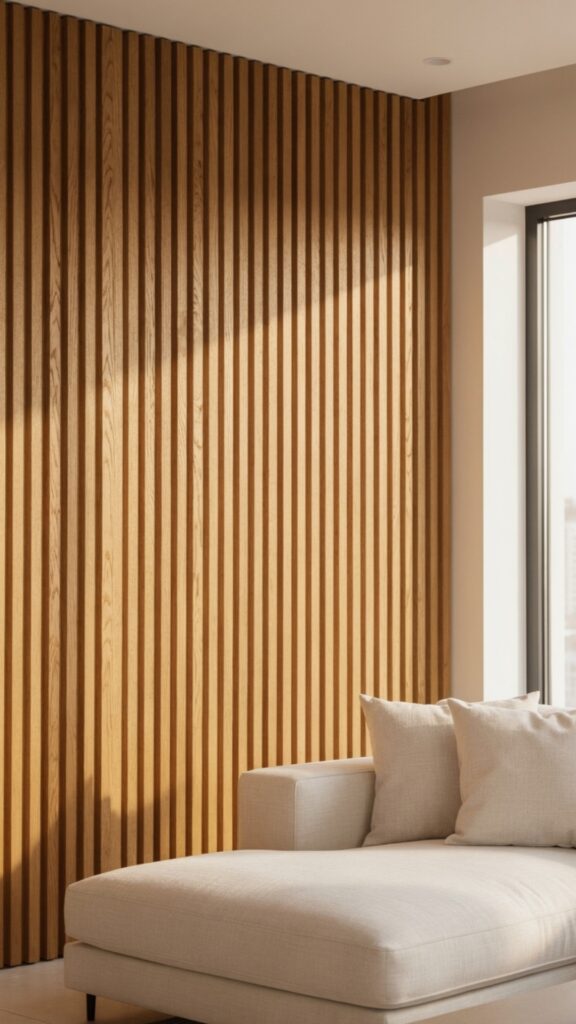
Slat wood panels thin vertical strips of wood applied to a wall, often with acoustic felt backing have become the defining wall panel design element of contemporary minimalist interiors. Their appeal lies in their extraordinary versatility: they can be installed floor-to-ceiling for a bold architectural statement, or in a lower panel arrangement for a more subtle, grounded effect.
The acoustic dimension of slat panels is often underappreciated. The felt backing behind the slats absorbs sound waves, reducing echo and improving room acoustics significantly. This makes them a genuinely functional choice for home theaters, music rooms, open-plan offices, and any space where sound quality matters. You’re essentially getting beautiful design and acoustic treatment in one installation.
Material choice greatly impacts the final look. Real wood slats oak, walnut, and ash are the most popular bring warmth, natural grain variation, and a premium tactile quality. MDF or PVC slat panels with wood-effect finishes offer a more affordable alternative but lack the depth and authenticity of real timber.
For high-traffic areas or humid environments, composite slat panels offer the best balance of appearance and durability. From a colour perspective, contrast is key. Pairing natural oak slats against a dark anthracite or charcoal backing felt creates a stunning depth effect.
Matching slat and backing colours, on the other hand, produces a more monolithic, understated look ideal for those who prefer their walls to recede rather than dominate the room.
Fabric-Upholstered Wall Panels for Luxury and Comfort:
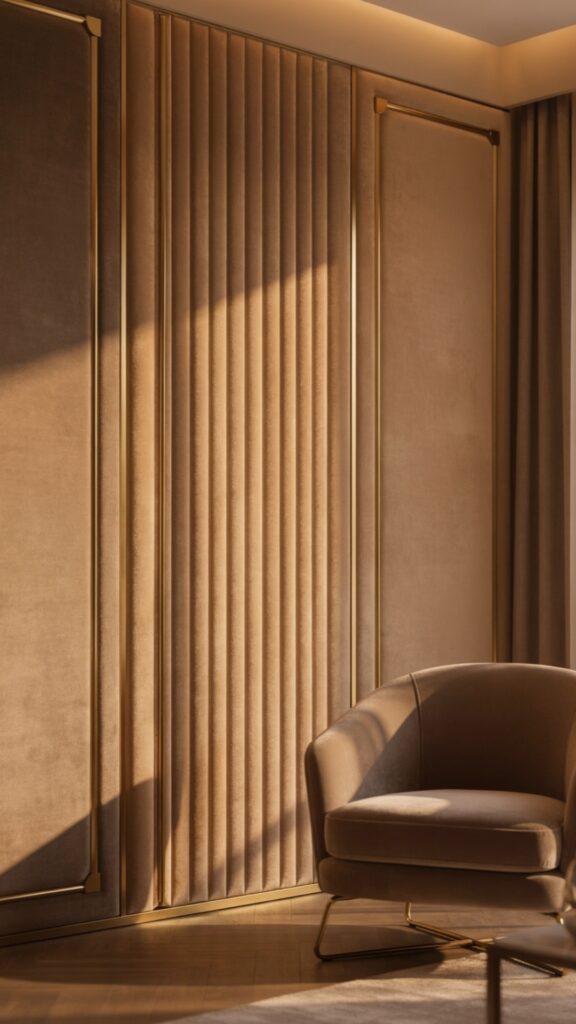
Upholstered wall panels represent perhaps the most sensory-rich option in wall panel design. By stretching fabric velvet, linen, bouclé, or even leather over a padded frame and mounting it to the wall, you create a surface that is visually soft, acoustically absorbent, and physically comfortable to lean against. This makes them particularly popular for bedrooms, home cinemas, and high-end hospitality spaces.
The padding beneath the fabric can range from a thin foam layer for a sleek, tailored appearance to a thick, deeply tufted cushion for a more opulent, traditional effect. Button tufting the classic diamond or square pattern of buttons pressed into the fabric adds decorative texture and is strongly associated with luxury upholstery traditions.
Conversely, a flat, channelled upholstered panel offers a more contemporary, graphic quality. One underappreciated benefit of fabric wall panel design is their ability to transform acoustics dramatically. In a hard-surfaced room with wood floors, glass windows, and plaster ceilings, sound bounces freely, creating an uncomfortable reverb.
A wall panel design of fabric panels absorbs mid and high frequencies effectively, making conversations clearer and music more enjoyable a significant quality-of-life improvement in open-plan living spaces. Maintenance is the main concern with fabric panels. In a bedroom setting away from direct traffic, velvet or silk panels can last decades with minimal care.
However, for family rooms or dining areas, choosing performance fabrics those treated for stain resistance and durability is essential. Always request fabric samples and test for cleanability before committing.
Stone and Brick Veneer Panels for Industrial Appeal:
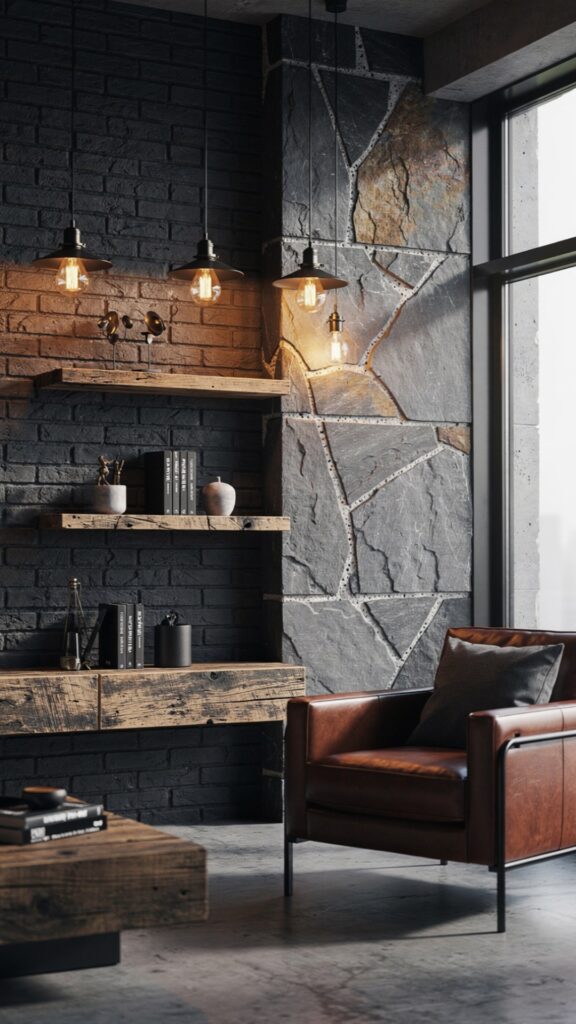
Natural stone or brick veneer panels bring raw, geological texture into interior spaces without the structural requirements of actual stone or masonry. These panels are typically 10–20mm thick, lightweight enough to adhere directly to drywall, and available in finishes ranging from rough-hewn limestone and exposed brick to polished marble and slate.
The industrial interior design trend characterised by exposed materials, raw finishes, and a utilitarian aesthetic has made brick veneer panels particularly popular in urban apartments and loft-style spaces.
A single wall panel design of faux brick behind a kitchen island, bar area, or entertainment unit instantly communicates a lived-in, workshop-like character that feels authentic despite being an applied finish.
Stone veneer panels, particularly those mimicking marble or travertine, suit more formal or luxurious interiors. A feature wall behind a fireplace finished in honed travertine veneer, for example, creates an immediate focal point of quiet elegance. Pair it with brass fixtures and warm ambient lighting for a result that feels genuinely high-end without the cost of full stone installation.
One important technical consideration: heavier stone veneer panels require appropriate adhesive and, in some cases, mechanical fixings to ensure long-term security. Always follow the manufacturer’s installation guidelines carefully, and for large-format panels, consult a professional installer.
The last thing you want is a spectacular wall feature that becomes a safety hazard.
Geometric Wall Panels for Contemporary Interiors:
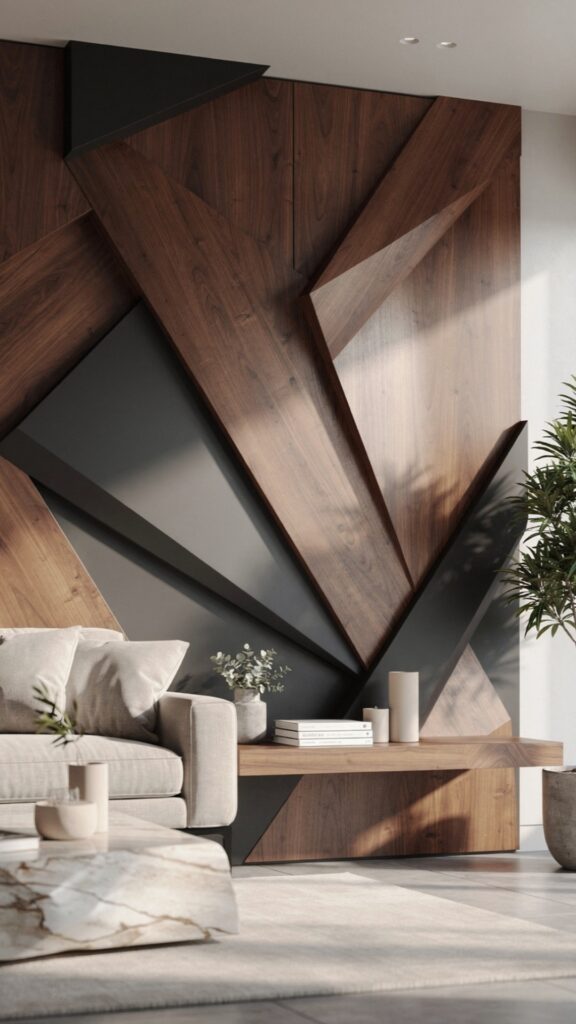
Geometric wall panel design take the concept of surface decoration into the realm of architectural sculpture. Featuring repeating patterns of hexagons, diamonds, chevrons, or custom asymmetric forms, these panels create a graphic, almost mathematical rhythm across the wall panel design surface.
The result is visually bold and immediately contemporary well-suited to commercial spaces, modern home offices, and feature walls in living rooms. What makes geometric panels particularly interesting from a design perspective is how they interact with light.
Hexagonal panels with angled faces, for example, catch light from different directions simultaneously, meaning the wall’s appearance literally changes depending on where you stand. This kinetic quality is something flat surfaces simply cannot offer, and it’s why geometric panels photograph so dramatically.
Material choice shapes the personality of geometric panels dramatically. Painted MDF hexagons feel playful and accessible great for children’s rooms or creative studios. The same hexagon pattern in polished brass or brushed copper creates a totally different atmosphere: luxurious, sophisticated, and edgy in equal measure. Concrete-effect geometric panels add brutalist drama without the weight of actual concrete.
For residential interiors, geometric panels work best when used selectively. A full room of repeating geometric forms can feel overwhelming and difficult to decorate around. Instead, consider a partial wall treatment perhaps from dado height to ceiling on a single wall panel design and keep the surrounding furnishings simple and neutral to let the geometry speak.
Fluted Wall Panels for Architectural Sophistication:
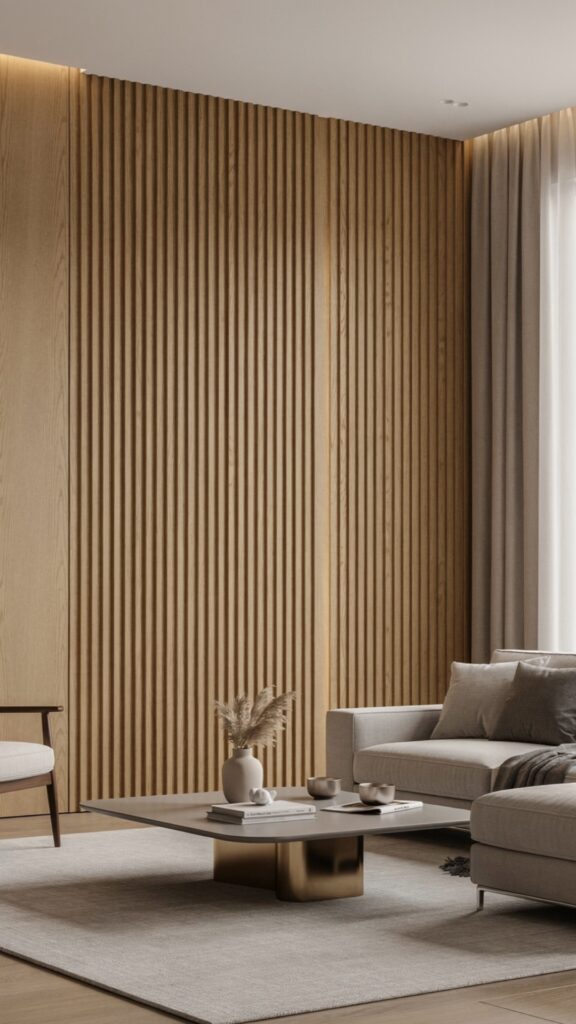
Fluted panels characterised by a series of vertical, parallel ridges or channels are experiencing a remarkable renaissance in contemporary interior design. Originally derived from classical Greek and Roman column architecture, fluting has been reinterpreted in modern materials including oak, walnut, marble, concrete, and even resin, making it equally at home in traditional and cutting-edge interiors.
The appeal of fluted panels lies in their subtle three-dimensionality. Unlike bold 3D textures that dominate a room, fluting adds depth and rhythm without visual aggression. The narrow ridges create a fine-grained texture that feels refined and crafted particularly when executed in real timber with a clear oil finish that highlights the natural grain running through each flute.
Fluted panels work exceptionally well as cabinet and furniture fronts, not just wall panel design treatments. Applying fluted MDF or timber veneer to kitchen island panels, wardrobe doors, or bathroom vanities creates a cohesive, considered interior where the wall treatment and the furniture speak the same design language. This kind of repetition across surfaces is what elevates a good interior to a truly exceptional one.
From a colour perspective, fluted panels in darker tones charcoal, dark green, or deep navy create a strong, immersive quality when used floor-to-ceiling. In lighter tones natural oak or white-painted MDF they feel airy and elegant. Either way, they repay the investment in installation with a look that is decidedly upscale.
Must Check: Luxury Living Room Ideas That Elevate Your Wall Panel Design to a Whole New Level.
Mirror Panel Walls for Space and Light:
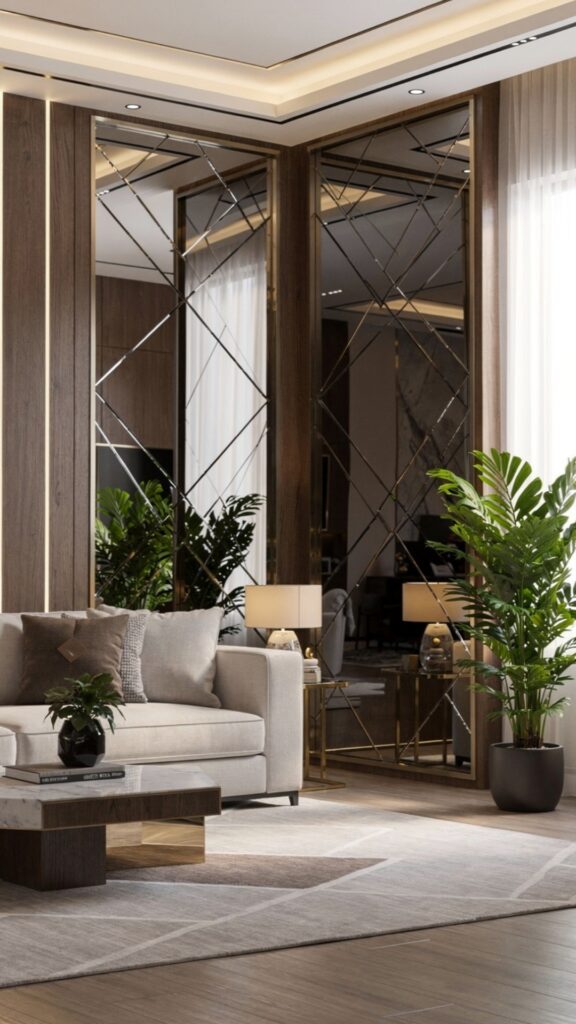
Mirror panels are one of interior design’s most powerful space-expanding tools. When used strategically, they can visually double a room’s apparent size, multiply natural light sources, and add a glamorous, reflective quality that is simultaneously timeless and dramatic.
However, poorly executed mirror walls can feel dated, disorienting, or excessively clinical so understanding when and how to use them is critical. The key to successful mirror panel design is framing and scale. Large, frameless mirror panels covering an entire wall panel design feel clinical unless paired with strong contrasting elements dark furnishings, rich textiles, or dramatic lighting.
Framed mirror panels whether in slim gold, black iron, or antique bronze frames feel more curated and intentional, anchoring the mirror as a design element rather than a functional afterthought. Antiqued or smoked mirror panels offer a more sophisticated alternative to clear mirrors.
The subtle grey or bronze tint softens the reflection, creating a warmer, more atmospheric effect. Antiqued mirror panels featuring deliberately aged, mottled finishes are particularly effective in Art Deco, maximalist, or high-end traditional interiors where a sense of heritage and patina is valued.
Placement matters enormously. Mirror panels opposite a window maximise light multiplication, but mirror panels behind a dining table or sofa create an elegant depth effect that makes gatherings feel more expansive. Avoid placing mirrors directly opposite each other the infinite regression effect quickly becomes disorienting and is generally considered poor design practice.
Acoustic Wall Panels for Function and Form:
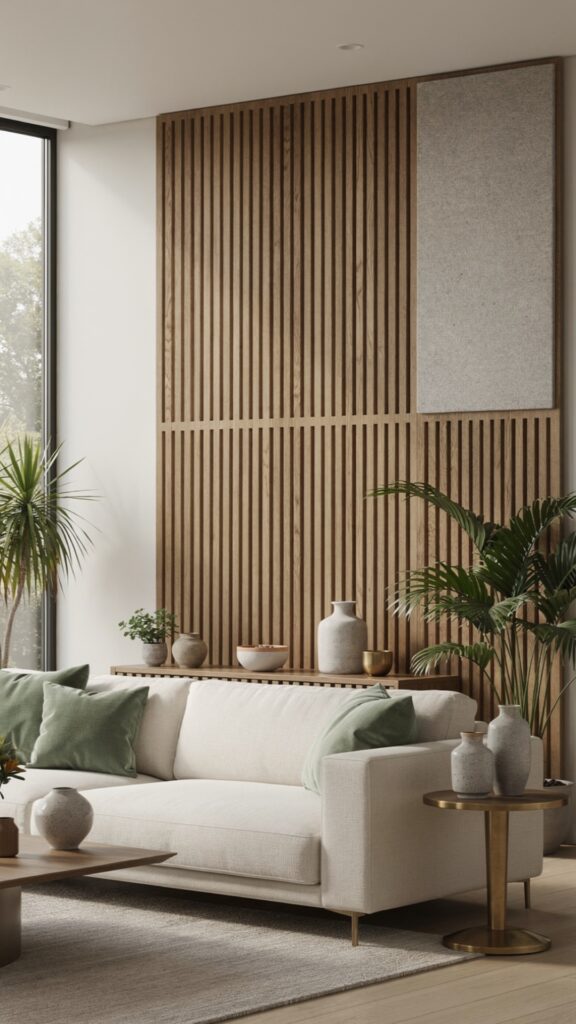
Acoustic wall panel design have traditionally been associated with recording studios and conference rooms functional, ugly, and purely technical. That perception has changed dramatically. Today’s acoustic panels are design-forward, available in hundreds of fabric colours, custom shapes, and arrangements that function as genuine art installations while simultaneously controlling room acoustics.
The science behind acoustic panels is straightforward: fabric-wrapped panels containing mineral wool or acoustic foam absorb sound energy rather than reflecting it. This reduces reverberation time the time it takes for sound to decay after a source stops making speech clearer and music more enjoyable.
The placement of panels matters as much as the panels themselves; primary reflection points (the wall to the side of a listener and behind a sound source) deliver the most significant acoustic improvement.
Contemporary acoustic panel manufacturers now offer bespoke printed acoustic panels meaning any image, pattern, or design can be printed onto acoustically transparent fabric and stretched over an absorbing frame.
A stunning landscape photograph, an abstract art piece, or even a company logo can become a full-wall acoustic treatment. For home studios, podcast rooms, or open-plan offices, this represents an extraordinary opportunity to solve an acoustic problem beautifully.
The future of acoustic wall panel design is increasingly integrating digital and interactive elements. Panels with LED lighting embedded behind them, for example, can change colour to match the mood of the content being played a genuinely exciting convergence of function, technology, and aesthetics that is already appearing in high-end commercial installations.
Reclaimed Wood Wall Panels for Sustainable Style:
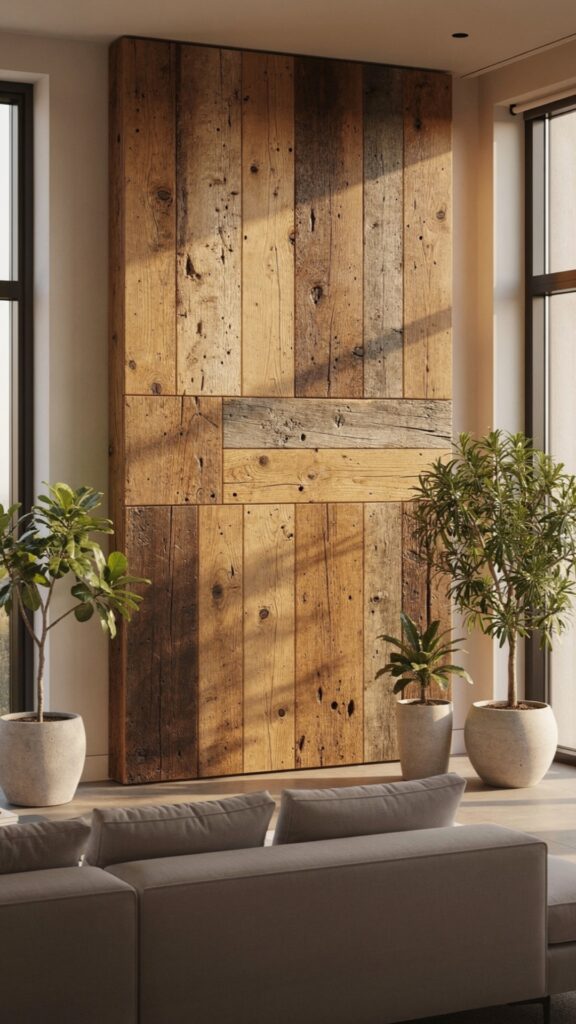
Reclaimed wood wall panel design bring a unique narrative quality to interior spaces that no new material can replicate. Every board carries visible evidence of its previous life weathered grain, nail holes, saw marks, colour variation creating a surface with genuine depth and history.
This authenticity is increasingly valued by homeowners and designers who are tired of interiors that feel mass-produced and anonymous. From a sustainability perspective, reclaimed wood is an excellent choice. Using timber that has already been harvested avoids the environmental cost of new logging and reduces material going to landfill.
Many reclaimed wood suppliers source from demolished factories, barns, wine barrels, or railway sleepers each source imparting its own characteristic patina and texture. Wine barrel staves, for example, produce panels with a beautiful reddish-brown tone and subtle tannin smell.
The practical challenge with reclaimed wood is its variability. Unlike new timber, reclaimed boards are rarely uniform in width, thickness, or surface quality. This requires more careful planning during installation sorting boards by width, pre-drilling to avoid splitting, and using flexible adhesive alongside mechanical fixing to accommodate natural wood movement. The extra effort, however, produces a result of unmatched visual richness.
Sealing reclaimed wood properly is essential for interior applications. A penetrating oil or hardwax oil finish protects the wood while preserving its natural, low-sheen appearance. Avoid high-gloss varnishes, which tend to make rustic wood look incongruously plastic. For bathroom or kitchen applications, a marine-grade oil or sealed treatment is necessary to prevent moisture damage.
Terrazzo and Concrete Effect Panels for Urban Cool:
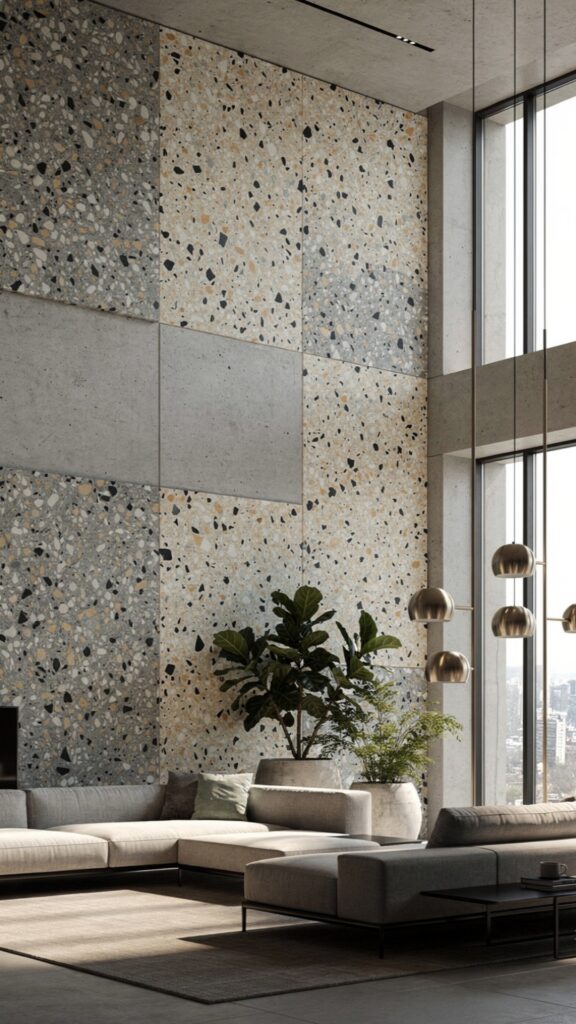
Terrazzo and concrete effect wall panel design capture the industrial-luxe aesthetic that has defined progressive interior design for the past decade. Terrazzo originally a composite of marble chips set in cement has evolved into a fully printed or cast panel format that brings its characteristic speckled, colourful surface to walls without the weight or expense of the original material.
What makes terrazzo wall panel design particularly interesting is their colour versatility. Traditional terrazzo was limited to natural marble chips in grey, cream, or black cement bases. Contemporary terrazzo panels, however, can incorporate almost any colour of chip dusty pink, terracotta, sage green, cobalt blue against a contrasting base, making them adaptable to a wide range of design palettes.
Matched with brass or copper fixtures, terrazzo panels feel genuinely luxurious rather than merely industrial. Concrete effect panels whether cast concrete, ultra-compact sintered stone, or high-quality porcelain offer a sophisticated, muted backdrop that suits both minimalist and maximalist interiors depending on what is placed in front of them.
A raw concrete-effect panel behind a collection of colourful art feels surprisingly gallery-like, allowing the artwork to lead while the wall quietly anchors the scene. One technical advantage of concrete effect panels over real concrete is their manageability.
Actual poured concrete walls are extremely expensive, structurally complex, and prone to cracking as buildings settle. Concrete-effect panels in ceramic or sintered stone formats offer the same aesthetic result with far greater durability, easier installation, and better performance in terms of resistance to moisture and staining.
Colour-Block Wall Panels for Bold Maximalism:
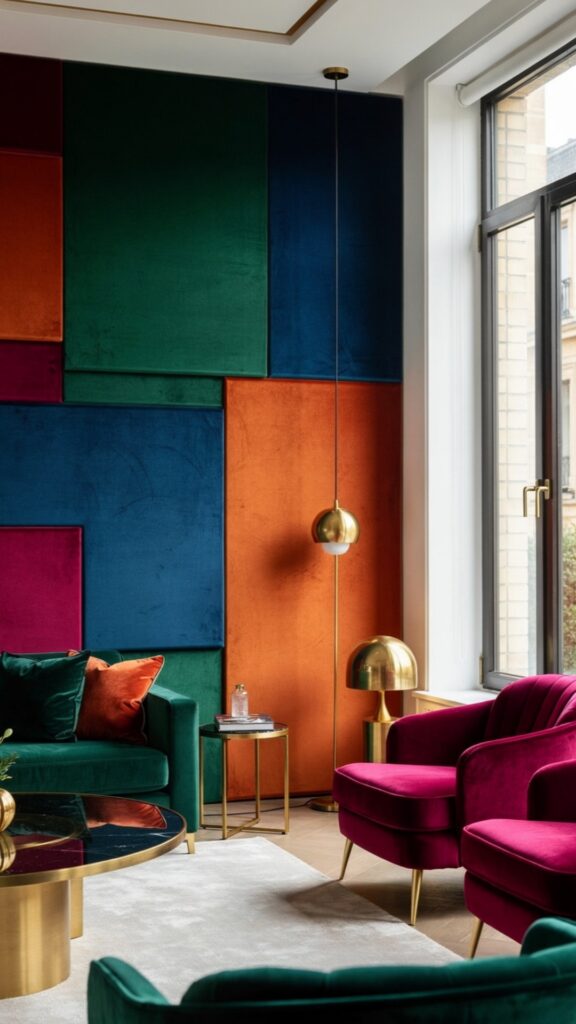
Colour-block wall panel design uses panels either physical divisions or painted sections to create bold graphic contrasts across a single wall surface. Far from the subtle, tone-on-tone approach to colour favoured by minimalists, colour blocking embraces contrast, energy, and visual excitement. Done well, it can transform an ordinary room into a genuinely memorable one.
The physical panel element in colour blocking often takes the form of a recessed MDF frame or applied moulding that creates a defined border between colours. Rather than simply painting two colours side by side (which can look arbitrary), the moulding panel gives the colour boundary a three-dimensional, intentional quality it looks designed rather than accidental. This small detail elevates the result significantly.
Colour selection is everything. The most effective colour-block combinations involve colours from opposite ends of the colour wheel burnt orange and deep teal, mustard yellow and inky blue, terracotta and sage green.
However, for those less confident with colour, a monochromatic approach using different tones of the same colour in the panels creates a sophisticated, layered effect that is easier to integrate with existing furniture.
One forward-looking trend in colour-block panel design is the integration of metallic paint within the blocked sections. A matte-painted outer panel surrounding a metallic gold or copper inner section, for example, creates a dynamic interplay between light-absorbing and light-reflecting surfaces.
As light conditions in the room change throughout the day, the metallic section shifts from subtle to dramatic adding genuine life to the wall.
Perforated Metal Wall Panels for Industrial Elegance:
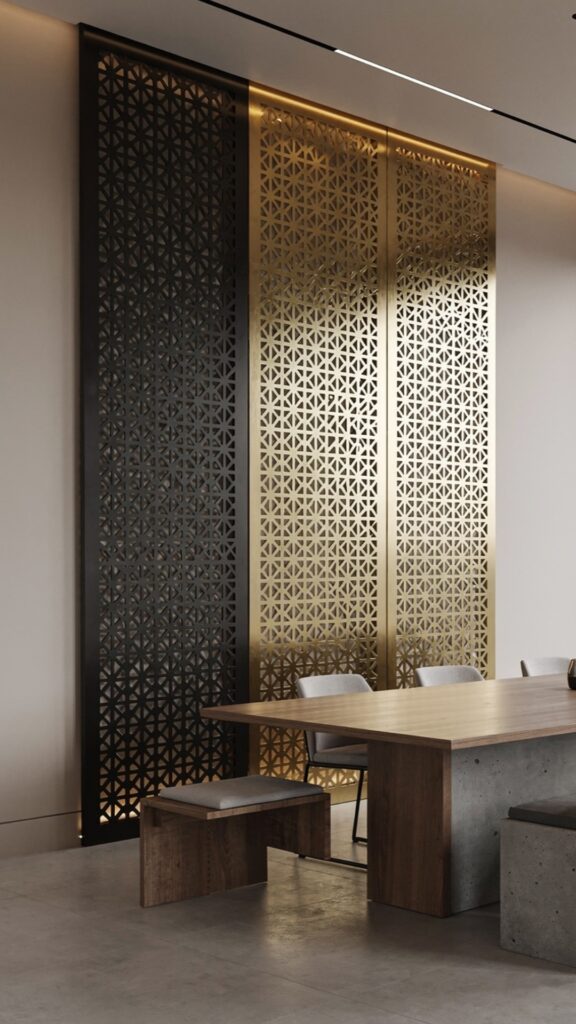
Perforated metal panels sheets of steel, aluminium, or brass punched with repeating patterns of holes bring a uniquely industrial-meets-refined quality to interior spaces. Often associated with commercial fitouts and restaurant design, they are increasingly appearing in residential interiors, particularly in kitchens, home bars, and modern staircase enclosures where their combination of strength, pattern, and light transmission creates something genuinely striking.
The most exciting property of perforated metal panels is what happens when light passes through them. Whether it’s natural daylight filtering through a perforated brass screen or a backlit LED panel shining through perforated stainless steel, the shadows and patterns cast onto adjacent surfaces create an ever-changing spatial experience.
Geometric perforation patterns produce graphic shadow grids; organic, floral perforations cast something closer to botanical shadow play. Material and finish choices dramatically shape the aesthetic. Powder-coated perforated steel in matte black reads as industrial and urban.
Raw or brushed brass reads as luxurious and warm. Anodised aluminium in copper or bronze reads as contemporary and precise. Each brings a fundamentally different character to the same basic construction, giving designers significant latitude to match the broader interior vision.
For residential applications, acoustic performance is worth considering. Perforated metal panels used as room dividers or feature walls particularly when backed with acoustic material can deliver both visual drama and meaningful sound reduction.
Some high-end residential projects use perforated panels as the visible layer of a composite wall system that includes insulation, acoustic absorption, and structural substrate all in one assembly.
Discover More: TV Wall Design Ideas That Look Absolutely Stunning with Beautiful Wall Panels.
Smart and LED-Integrated Wall Panels for Future-Ready Homes:
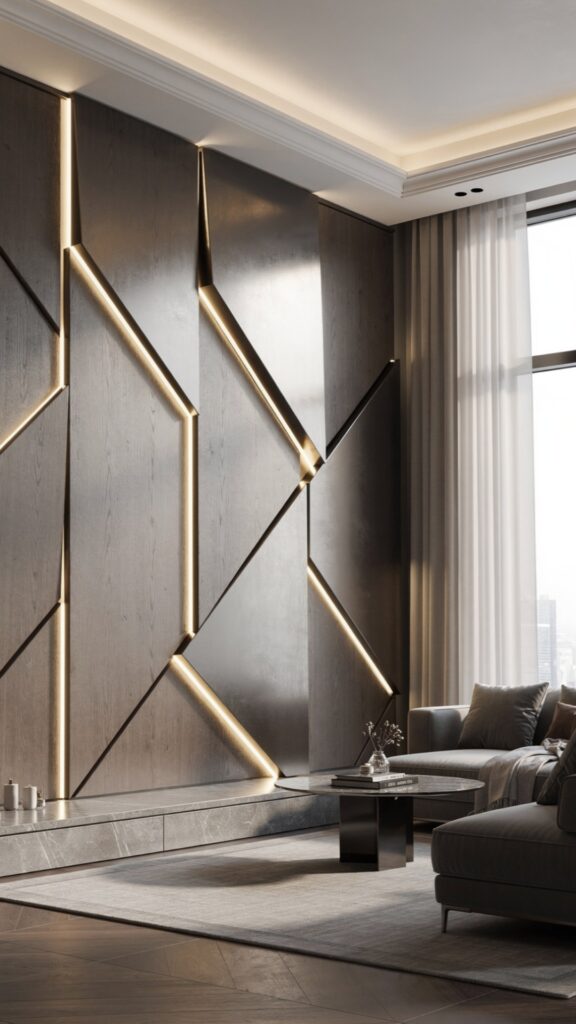
The newest frontier in wall panel design is the integration of LED lighting, smart controls, and even flexible display technology directly into the panel system itself. Rather than treating lighting and wall cladding as separate systems lights above, panels below this approach embeds illumination within the wall surface, creating effects that range from subtle ambient glows to full dynamic colour-changing installations.
LED-integrated panels most commonly take two forms: backlit panels, where the LED source sits behind a translucent or perforated surface, and edge-lit panels, where LEDs run along the panel border and light travels through the material’s face.
Both approaches can be tuned to mimic natural daylight colour temperatures (2700K warm white to 6500K cool daylight), which is particularly valuable in rooms with limited natural light such as basements, windowless offices, or north-facing bedrooms.
Smart control is what elevates LED-integrated panels from a novelty to a genuinely useful home technology. Connected to a home automation system or smartphone app, these panels can change colour, adjust brightness, respond to music, or shift from warm evening light to energising morning light automatically.
This kind of circadian-rhythm-aware lighting integrated directly into the architectural fabric of a home represents a significant quality-of-life advancement.
The cost of smart wall panel design systems has decreased substantially over the past five years, and future developments are likely to incorporate ultra-thin flexible OLED displays embedded directly within panel surfaces meaning a wall panel could function as ambient art, dynamic wallpaper, or even a display screen at the touch of a button.
For anyone building or renovating now with a 10-year horizon in mind, specifying conduit routes and smart infrastructure while walls are open is a wise investment in future flexibility.
Conclusion
Wall panel design has become one of the most powerful and versatile tools in the modern interior designer’s toolkit. From the timeless elegance of wainscoting to the technological frontier of smart LED panels, the options available today allow any homeowner to express personality, solve functional problems, and dramatically elevate the quality of their living environment.
The key is choosing the right panel for each room’s specific needs balancing aesthetics, acoustics, durability, and budget thoughtfully. Start with one statement wall, choose materials that genuinely excite you, and let the transformation speak for itself.

Team TrandyVilla is the passionate home decor team behind Trandy Villa, where style meets comfort in everyday living. The team loves transforming simple spaces into beautiful, functional homes through smart ideas, budget-friendly hacks, and modern design trends. Their content focuses on helping readers create homes that feel both stylish and personal without spending too much.