
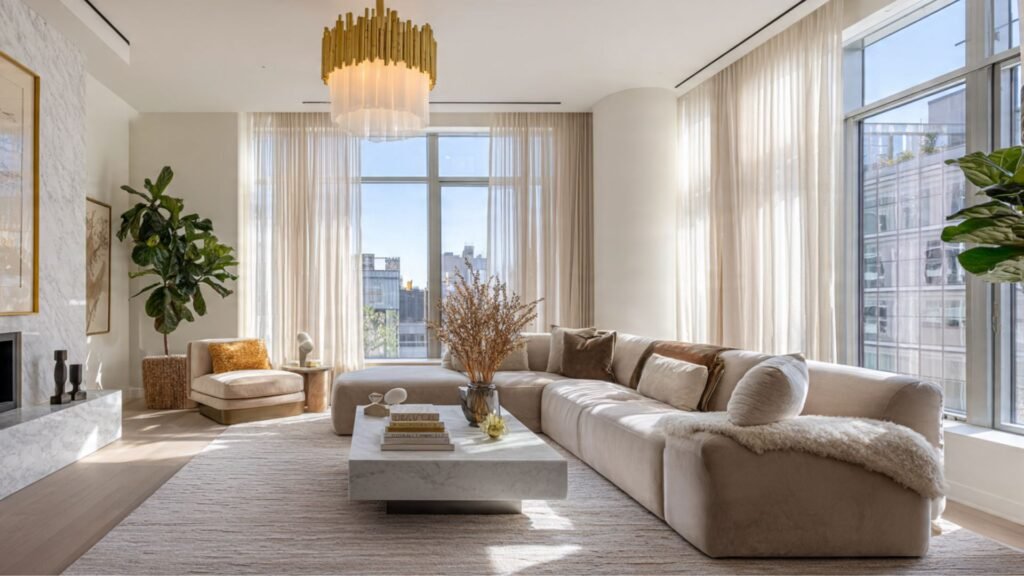
A luxury living room is no longer reserved for penthouses and celebrity homes. Today, thoughtful design choices the right materials, proportions, lighting, and layering can transform any living space into a high-end sanctuary. Whether you are working with a generous floor plan or a modest-sized room, the principles of luxury interior design remain the same: intentionality, quality, and coherent style.
A luxury living room is a thoughtfully designed space that combines high-quality materials, elegant furniture, and refined décor to create an atmosphere of comfort and sophistication. It reflects personal taste while maintaining a sense of timeless style. Key elements include premium upholstery, curated accessories, layered lighting, and cohesive color palettes. These features work together to transform an ordinary room into an extraordinary living experience.
A well-designed luxury living room can completely change how a home feels and how life is lived inside it. This space becomes the heart of the home, where comfort meets elegance in every carefully chosen detail. A luxury living room blends beauty with function to create a space that feels both impressive and deeply personal.
Luxury living room ideas cover a wide range of design choices, from statement furniture and natural stone surfaces to smart lighting and bespoke accessories. Each idea serves a clear purpose to elevate the look, feel, and function of the space. Great design starts with quality materials, intentional layouts, and a consistent visual theme. Small upgrades, like premium textiles or architectural details, create a significant impact. These ideas suit various budgets and styles, making luxury design more accessible than ever.
Invest in a Statement Sofa That Commands the Room:
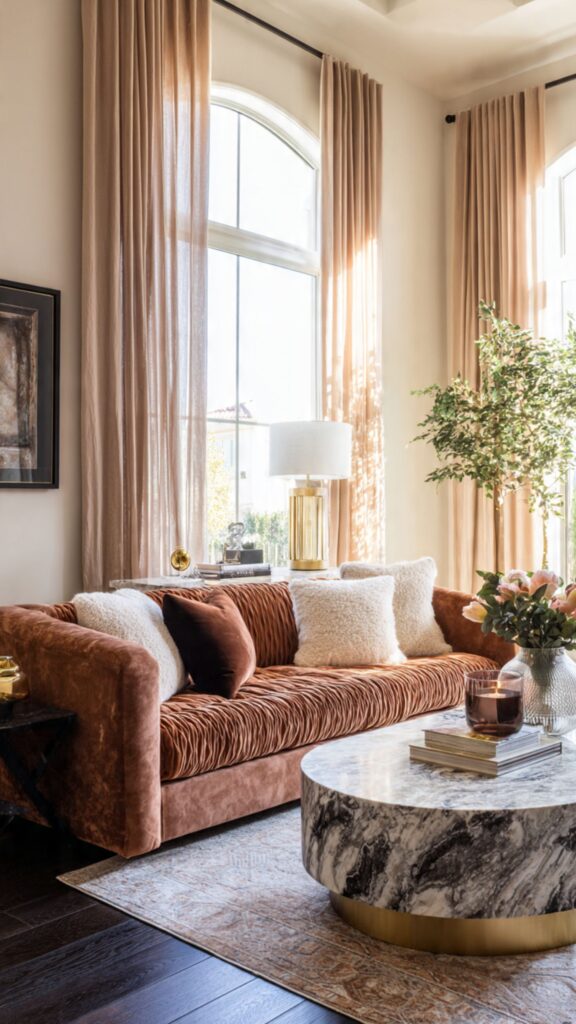
The sofa is the centerpiece of any luxury living room, and in high-end design, it must do more than offer comfort it must anchor the entire visual composition. A well-chosen statement sofa signals the room’s style before anything else does. Think deep-seated Italian leather in cognac or midnight navy, or a tufted Chesterfield in charcoal velvet that draws the eye immediately upon entering.
The scale matters enormously: an oversized sofa in a small room feels crowded, while a delicate silhouette gets lost in a grand space. What many designers emphasize and competitors rarely mention is the importance of sofa leg material. Brushed brass or solid walnut legs on a sofa elevate the entire piece from furniture to sculpture.
These small details are what luxury buyers notice immediately. If you cannot afford a fully custom sofa, investing in a high-quality ready-made piece from brands like Roche Bobois, B&B Italia, or Restoration Hardware and pairing it with bespoke cushions achieves a very similar effect.
Fabric selection is equally critical. Performance velvets, bouclé, and chenille have become the hallmarks of contemporary luxury living rooms they are visually rich, tactilely satisfying, and surprisingly durable. Avoid synthetic microfibers that look cheap under natural light. Stick to natural fiber blends or high-pile velvets. The sofa you choose will anchor every other decision in the room, so take your time, see samples in your actual space, and never underestimate its impact.
Finally, consider the sofa arrangement carefully. In a luxury setting, floating furniture away from walls rather than pushing everything to the perimeter creates a more intentional, designer-approved look. A sofa placed confidently in the center of the room, paired with a generous area rug beneath it, communicates sophistication that even the most expensive pieces cannot achieve if they are hugging the walls.
Layer Your Lighting for Maximum Ambience:
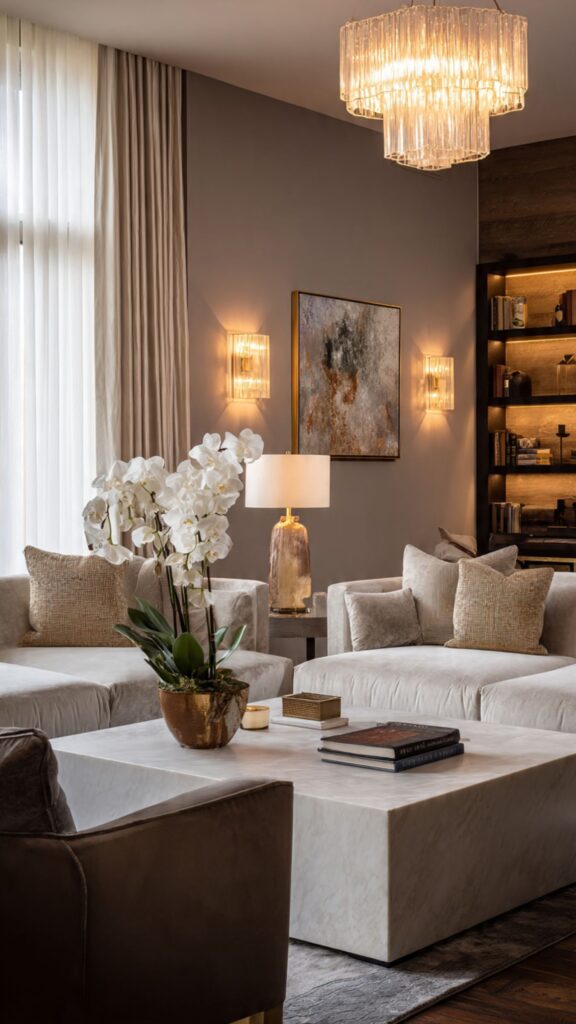
Lighting is arguably the single most underutilized tool in luxury interior design, and getting it right separates a good living room from a great one. The golden rule is to never rely on a single light source. Luxury living rooms layer at least three types of lighting: ambient (general illumination from ceiling fixtures or recessed lights), task (reading lamps or floor lamps positioned near seating), and accent (wall sconces, picture lights, or LED strips that highlight architectural features or art).
One insight that most interior design blogs overlook is the role of dimmer switches in achieving luxury. Installing dimmers on every light source in your living room costs relatively little but allows you to shift the atmosphere dramatically from bright and energizing during the day to warm and intimate in the evening.
Top-tier hotels design their rooms this way deliberately, and the same psychology applies to residential spaces. Your living room should feel like different rooms at different times of day, and lighting is what makes that possible.
Statement lighting fixtures a sculptural chandelier, an architectural pendant, or a cluster of hand-blown glass globes also function as decorative art. Brands like Kelly Wearstler, Apparatus, and Lindsey Adelman have redefined what a light fixture can be: no longer an afterthought, but a conversation piece that draws as much attention as any painting. Even if your budget does not stretch to designer fixtures, the shape and finish of a light fitting communicates quality and intention.
Consider also the color temperature of your bulbs. Luxury living rooms almost always use warm white light (2700K–3000K) rather than cool white or daylight bulbs, which can make even the most beautiful space feel clinical.
Warm light flatters skin tones, makes colors look richer, and creates the kind of glow that reads as inherently sophisticated. Pair this with reflective surfaces mirrors, metallic accents, lacquered furniture and your lighting scheme will multiply in impact throughout the room.
Choose a Sophisticated Neutral Color Palette:
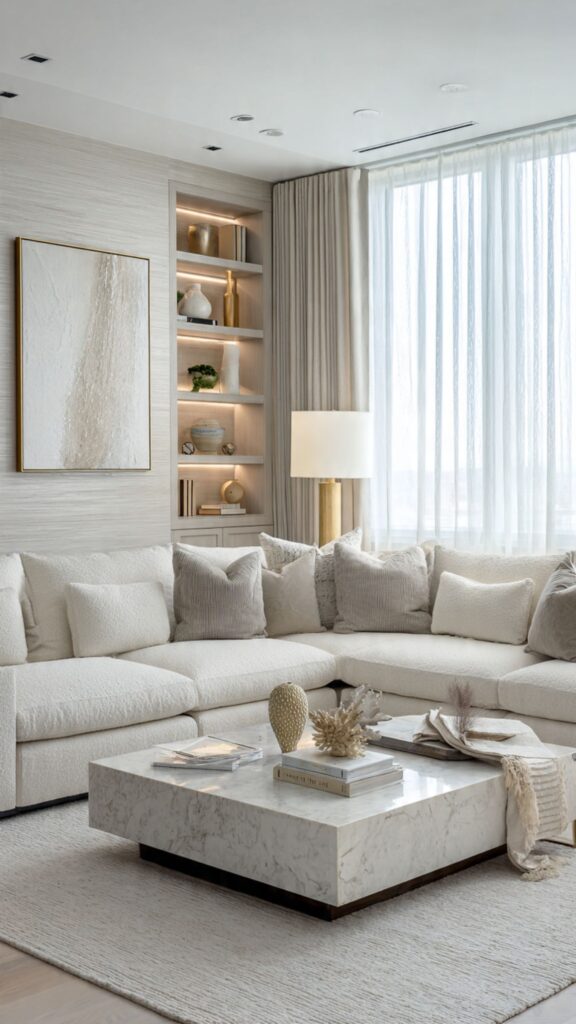
Color is where many people go wrong when attempting a luxury look. The instinct is often to reach for bold, dramatic hues but the world’s most celebrated luxury living rooms are typically built on a sophisticated neutral foundation. Think warm greiges, deep taupes, creamy whites, and stone-inspired tones that shift subtly in different lights. These palettes are forgiving, timeless, and provide the perfect backdrop for layering textures and materials.
The key to making neutrals feel luxurious rather than boring is tonal variation and depth. A monochromatic scheme where the walls, upholstery, rugs, and drapery all fall within the same color family but at different shades creates an incredibly cohesive, sophisticated atmosphere.
For example, pairing warm white walls with oatmeal linen upholstery, a taupe wool rug, and greige drapery creates quiet luxury that never feels flat because the eye is constantly discovering subtle tonal shifts.
However, luxury is not always understated. Some of the most dramatic high-end living rooms feature deep jewel-toned walls forest green lacquer, midnight blue limewash, or charcoal plaster as a bold foundation. The trick is commitment: when using a deep, saturated color, apply it generously (walls and ceiling in the same shade) and let the richness of the finish do the work. Half-hearted applications of bold color look amateur; fully-committed ones look expensive.
What your color choices say about your space is also a function of finish. Matte limewash, soft sheen, and high-gloss lacquer all communicate different things. Limewash and clay plasters textures increasingly used in luxury renovations add a handmade, artisanal quality that no standard paint can replicate. These finishes absorb light differently throughout the day, which is exactly the kind of aliveness that makes a room feel special and magazine-worthy rather than showroom-stiff.
If You Loved This Look, You Will Adore These Hallway Decor Ideas Too.
Invest in High-Quality, Handmade Area Rugs:
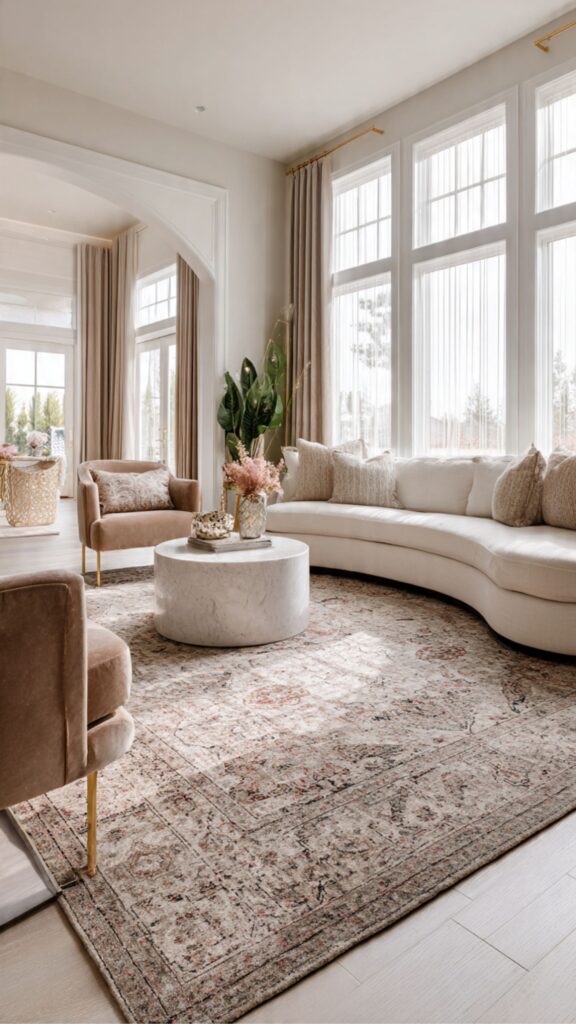
Few elements have as dramatic an impact on the perceived luxury of a living room as the rug beneath your feet. A high-quality area rug defines the seating zone, adds warmth and sound absorption, and introduces texture and pattern in a way that feels grounded rather than decorative. In luxury interiors, the rug is often the most expensive single purchase in the room and for good reason.
Hand-knotted Persian, Afghan, or Turkish rugs are considered the gold standard of luxury floor coverings. A genuine hand-knotted wool or silk rug can take months or even years to produce, and this investment of human skill is visible in the depth of color, the intricacy of pattern, and the quality of pile.
These are also rugs that appreciate in value over time, making them genuinely worth the investment for serious collectors. Brands like Jan Kath, Zollanvari, and Christopher Farr Cloth offer contemporary takes on this ancient craft at various price points.
For those seeking a more contemporary aesthetic, large-format abstract rugs in wool or viscose particularly those with a high-low pile texture create a modern luxury feel. The critical factor regardless of style is size: a rug that is too small is one of the most common and costly decorating mistakes.
In a luxury living room, the front legs of all major seating pieces should sit on the rug, and ideally, all four legs should be fully on it. A rug that is at least 8×10 feet for a standard living room, or 9×12 feet for a larger space, is almost always the right choice.
Beyond aesthetics, the padding beneath the rug matters enormously. A quality rug pad prevents slipping, protects your floors, and adds a softness underfoot that makes the rug feel even more plush and expensive. This is the kind of invisible detail that contributes to that ineffable sense of quality everything feels considered, even the parts you cannot see.
Incorporate Architectural Details and Millwork:
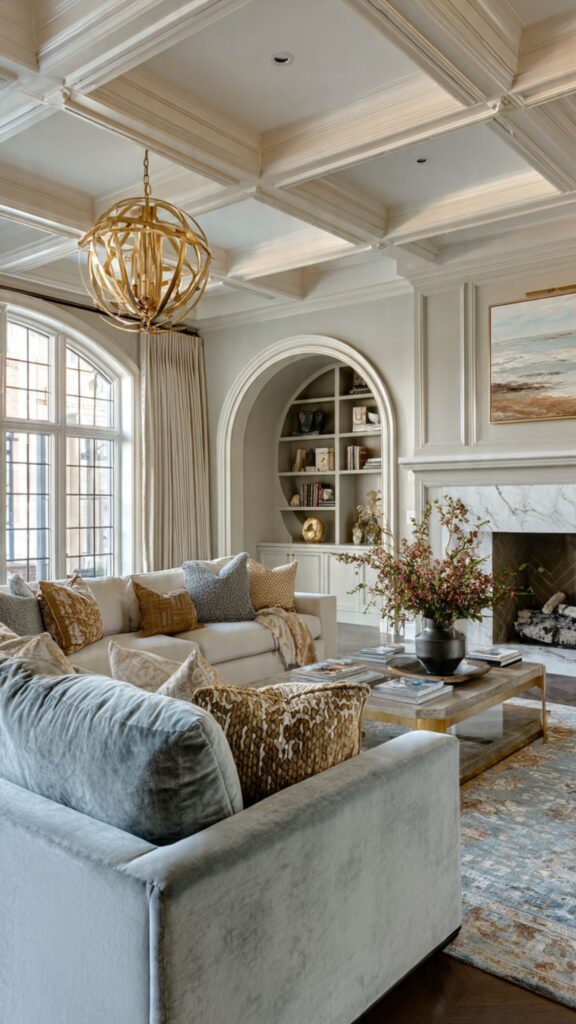
Nothing signals luxury quite like custom architectural details elements that were designed for the specific room rather than purchased off a shelf. Crown moldings, coffered ceilings, wainscoting, built-in bookshelves, and fireplace surrounds all add a layer of architectural richness that immediately elevates a room’s perceived value.
These details are what separate a custom home from a tract house, and they are what high-end interior designers almost always specify. Built-in cabinetry and bookshelves, in particular, are transformative.
A wall of floor-to-ceiling built-ins flanking a fireplace, painted in a deep gloss hue or finished in a burl wood veneer, creates a focal point that feels both functional and profoundly elegant. Interior designers like Bunny Williams and David Collins have built entire careers on the power of thoughtful millwork to define a room’s character. When budgeting for a luxury renovation, custom millwork is almost always money well spent.
For those who cannot undertake structural changes, architectural additions like applied moldings (which are installed on top of existing flat walls) can achieve a surprisingly authentic effect. Modern millwork can be painted out in the same color as the walls for a tonal, gallery-like quality, or highlighted in a contrasting hue for more traditional grandeur.
The key is precision: architectural details executed with sharp lines and clean paint edges communicate quality; sloppy execution undermines even the most beautiful design. Ceiling treatments deserve special attention. A luxury living room rarely has a plain, flat ceiling.
Whether it is a deeply recessed cove, exposed original beams, a lacquered ceiling in a contrasting color, or elaborate plasterwork inspired by period architecture, the ceiling is the largest unobstructed surface in any room and presents an extraordinary opportunity for design impact. Treating it as a design element not just a functional surface is a hallmark of true luxury interior design thinking.
Add Bespoke or Collector-Level Art:
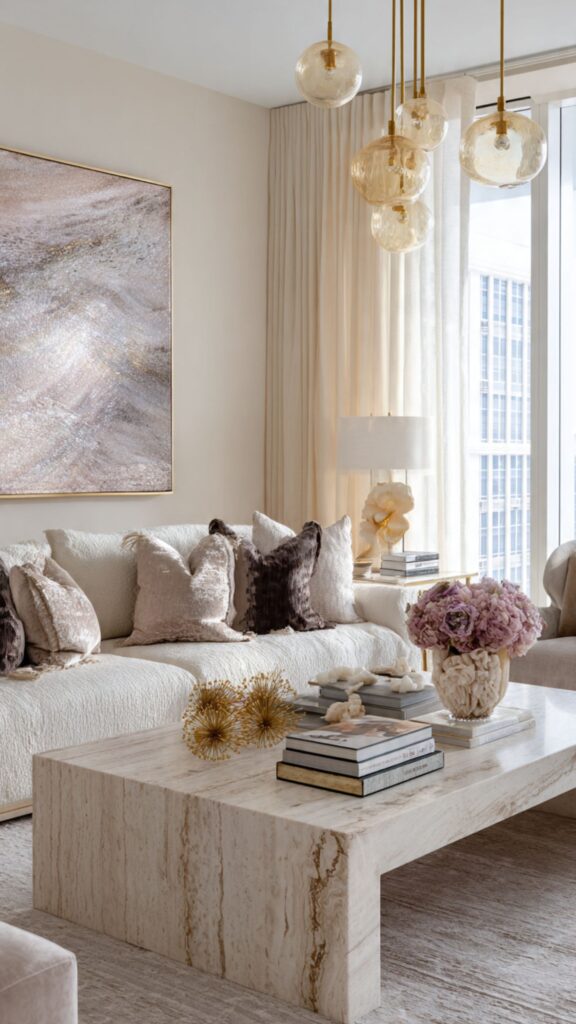
Art is perhaps the most personal expression of luxury in any living room, and the way art is selected, framed, and displayed reveals more about a homeowner’s sophistication than almost any other element. In the world’s great private residences, art is not decorative afterthought it is the foundation around which the room is designed. Furniture is pulled in to complement the art, lighting is engineered to illuminate it, and color palettes echo its tones.
You do not need a Hockney or a Basquiat to achieve this effect. What matters most is originality and curation. A single large-scale original painting by an emerging artist, a limited-edition photograph by a respected contemporary photographer, or a collection of smaller works arranged with intentionality can have as much impact as a masterwork. The key is avoiding mass-produced prints and generic wall art that telegraphs generic thinking. Purchasing original art even at an accessible price point communicates genuine engagement with culture.
Gallery walls done right are another hallmark of considered luxury. The mistake most people make is using frames of inconsistent quality and hanging pieces without a cohesive thread (subject matter, color palette, or era). A well-curated gallery wall in a luxury living room has a point of view: all black frames in varying sizes, all works on paper from the same period, or all abstract works sharing a palette.
The framing itself is critical museum-quality frames with archival mats, or clean raw wood or metal float frames, elevate even modest works. One forward-thinking insight worth noting: digital art and NFT-linked screens are increasingly appearing in luxury interiors.
High-resolution screens disguised as framed artwork, like the Samsung Frame TV, allow collectors to display rotating digital works in context that is indistinguishable from traditional framing. As the digital art market matures, this hybrid approach to art display is expected to become a fixture of high-end residential design.
Use Natural Stone and Marble Surfaces:
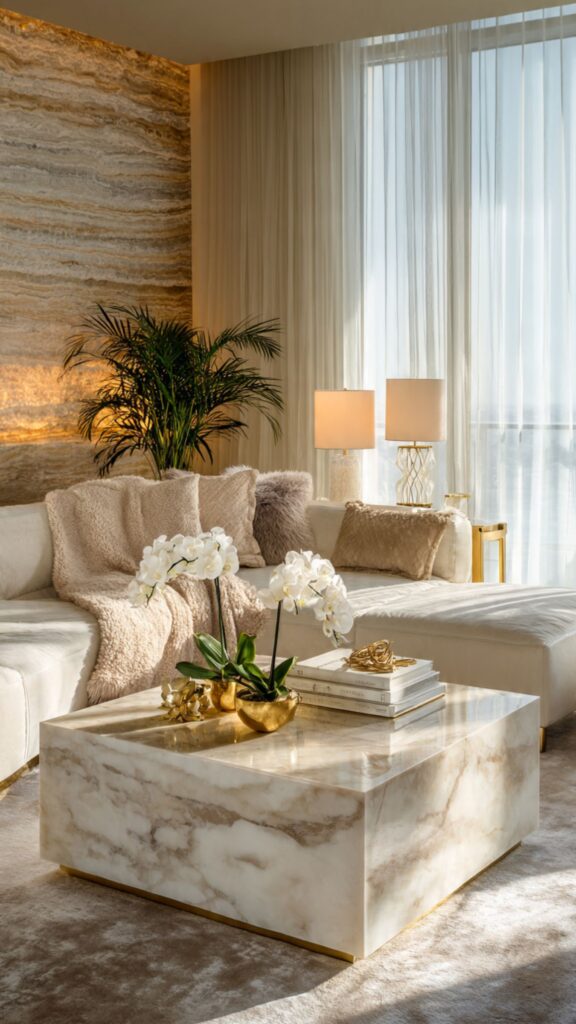
Natural stone is one of the most powerful signals of genuine luxury in interior design, and its use in living rooms not just kitchens and bathrooms is a defining feature of the world’s most celebrated residential spaces. A marble fireplace surround, a travertine coffee table, a book-matched stone accent wall, or simply a sculptural bowl of onyx on a side table introduces material richness that no manufactured alternative can replicate.
The appeal of natural stone is fundamentally about uniqueness. Every slab of marble, every piece of travertine, every sheet of quartzite is geologically one-of-a-kind a record of millions of years of natural processes. This irreproducibility is the essence of what makes natural materials feel luxurious.
When you purchase a marble-topped console table, you are purchasing something that cannot be duplicated. This is a deeply different relationship with a material than purchasing engineered stone or porcelain tile, however beautiful those alternatives may be. Current trends in luxury interior design show a strong preference for bookmatched stone applications where two adjacent slabs are opened like a book to create a perfectly mirrored natural pattern.
Applied to a fireplace surround or an accent wall, this technique creates a dramatic, architecturally striking statement that combines the art of nature with the art of craft. Stone companies like Antolini, ABC Stone, and Salvatori offer extraordinary slabs in configurations that are available to residential clients.
For those concerned about the maintenance demands of marble and other soft stones, harder alternatives like quartzite (not to be confused with engineered quartz) and leathered granite offer extraordinary visual beauty with greater durability.
The leathered finish a matte, slightly textured surface achieved by brushing is particularly popular in luxury interiors because it hides fingerprints and water marks while maintaining the authentic stone character. This is the kind of inside knowledge that separates informed design decisions from aspirational but impractical choices.
Layer Textiles and Soft Furnishings Thoughtfully:
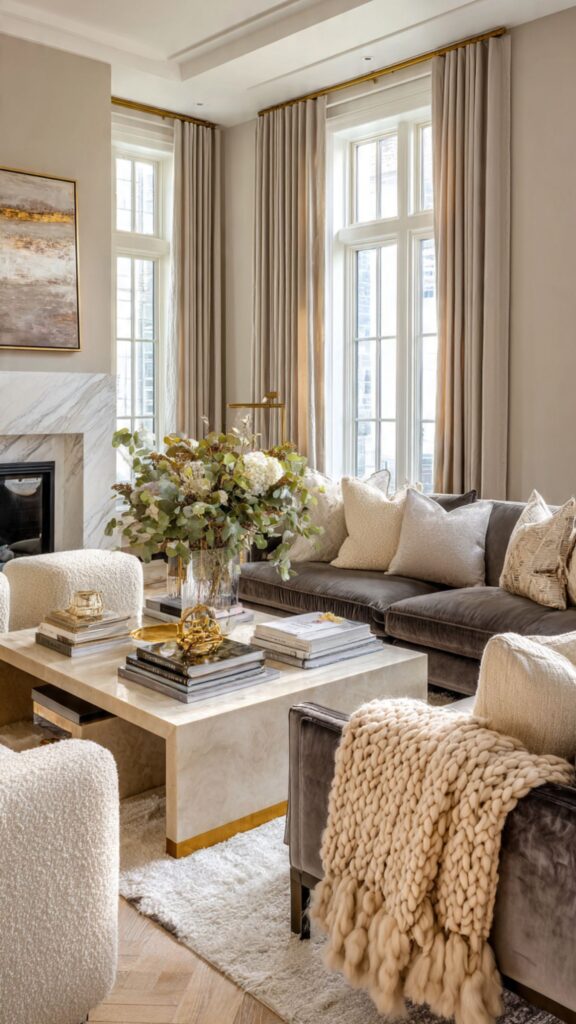
Luxury is ultimately a tactile experience, and nowhere is this more evident than in the way textiles and soft furnishings are layered in a high-end living room. The difference between a room that looks expensive and one that feels expensive is almost always the quality and layering of its soft furnishings: cushions, throws, drapery, upholstery, and decorative pillows all work together to create a sensory richness that photographs cannot fully capture.
The layering principle is key: luxury living rooms rarely have a single textile at any given visual zone. A sofa might feature a velvet upholstery base, with cushions in linen, mohair, and embroidered silk, topped with a cashmere throw folded casually across one arm.
This combination of textures matte against sheen, rough against smooth, heavy against light creates a visual and tactile complexity that reads immediately as sophisticated. Each textile contributes something slightly different, and the whole is far greater than the sum of its parts.
Drapery is one of the most transformative elements in a luxury living room, yet it is consistently underutilized or poorly executed. For maximum impact, curtains should be hung from as close to the ceiling as possible (or ceiling-mounted) and should pool slightly on the floor both practices make ceilings feel higher and the room feel grander.
Fabric choice matters enormously: heavyweight linen, silk dupioni, and custom-printed cottons communicate quality in a way that standard polyester drapes simply cannot, regardless of how they are sewn.
A final word on cushions: the interior design industry’s standard for luxury cushion presentation involves using an odd number of cushions (three or five), varying sizes and proportions, and ensuring that cushion inserts are overstuffed with down or down-alternative for a full, generous look.
Flat, understuffed cushions are among the most common signs of underinvestment in a living room. Replacing inserts with premium options is one of the most impactful low-cost changes you can make to an existing sofa arrangement.
A Beautiful Living Room Deserves an Equally Stunning Sunroom — Take a Look.
Design Around a Focal Point:
Not Just a Television
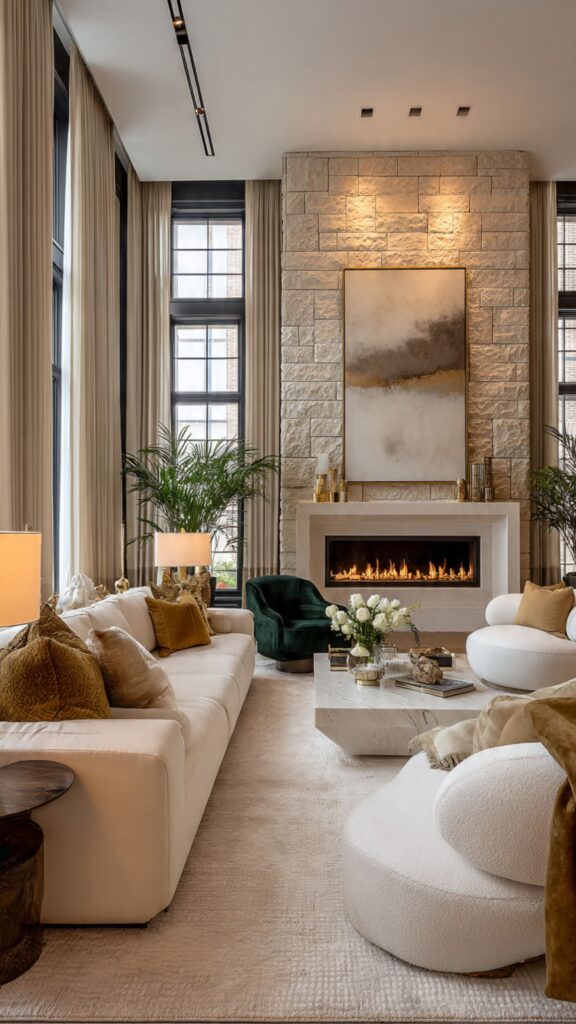
One of the greatest challenges in contemporary luxury living room design is the television specifically, how to integrate a screen without allowing it to dominate and undermine the room’s aesthetic ambitions. The best luxury interiors address this challenge directly, either by designing the room around an alternative focal point or by integrating the television so seamlessly that it becomes invisible when not in use.
The fireplace remains the most powerful alternative focal point in a luxury living room. Whether original and wood-burning, or a contemporary gas or ethanol fire installation, a fireplace creates a natural gathering point that has no technological equivalent.
Designer fireplaces from Davide Oppici’s artistic ethanol burners to the iconic ribbon fire installations by STUV have become genuine luxury objects in their own right. Even apartments without structural fireplaces can incorporate freestanding ethanol fireplaces or beautifully detailed fire surrounds housing electric units.
For rooms where the television is unavoidable, the most elegant solution is to integrate it within a purpose-designed built-in. A wall of bookshelves or cabinetry with the television housed within a central bay, surrounded by books, objects, and art, dramatically reduces its visual dominance.
When the television is off, it reads as a dark panel within a larger composition rather than as a black void dominating the room. Alternatively, motorized panels that descend to conceal the screen when not in use are increasingly popular in high-end renovations. Looking ahead, the future of luxury living room design will increasingly separate the viewing space from the living space.
Embrace Curated Antiques and Vintage Pieces:
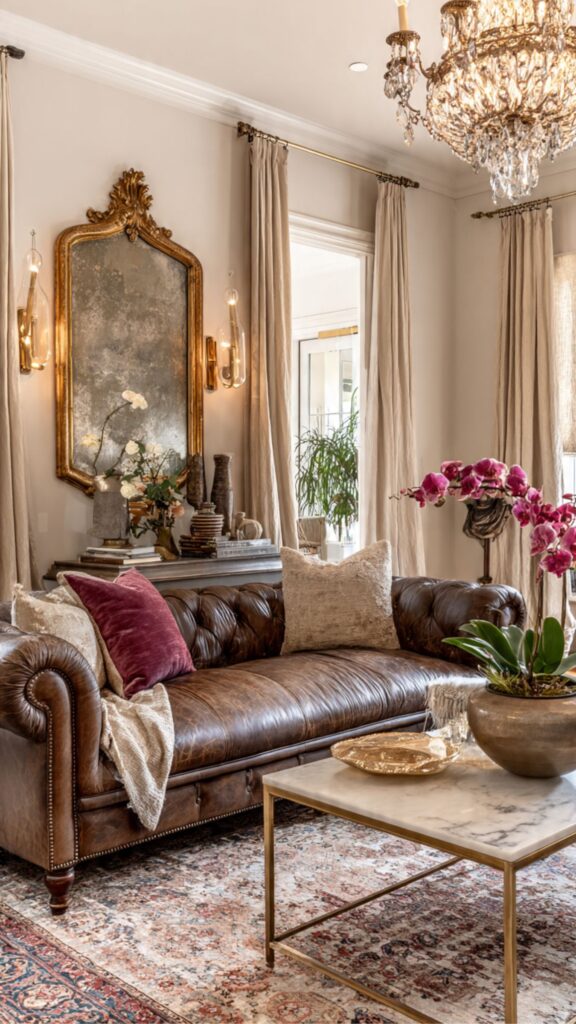
The most telling sign of a deeply considered luxury interior is often the presence of antique or vintage pieces objects that carry history, craftsmanship, and patina that no contemporary production piece can replicate. The world’s most celebrated interior designers Axel Vervoordt,
Martyn Lawrence Bullard, Ben Pentreath are consistent in their integration of antique and vintage elements into otherwise contemporary rooms. This dialogue between old and new is what gives luxury spaces their particular sense of depth and authenticity.
Antiques function differently from contemporary furniture in a design composition. A pair of 18th-century French bergère chairs reupholstered in a contemporary performance fabric becomes a bridge between eras the form is historical, the function is modern, and the combination is both sophisticated and original.
A Ming dynasty ceramic vessel on a contemporary lacquered console, an early 20th-century Persian lamp beside a sleek modern sofa these juxtapositions create a visual tension that feels dynamic and intelligent, the opposite of a room furnished from a single source.
From a practical investment perspective, antiques also hold their value in ways that contemporary furniture rarely does. A good quality 19th-century English secretary or a signed Mid-Century Modern piece by a recognized designer will appreciate over time, making it not just a design choice but a financially intelligent one.
Auction houses like Christie’s, Sotheby’s, and Bonhams hold regular sales at a wide range of price points, as do specialist antique dealers in most major cities. The key is developing an eye which comes from looking at a great deal of furniture over time and being patient for the right piece.
One underappreciated source of luxury vintage pieces is the estate sale market. Unlike retail antique dealers, estate sales often offer pieces at significantly below market value because the sellers are not professional traders. Apps and websites like Chairish, 1stDibs, and TRNK have made the hunt for curated vintage pieces accessible globally, democratizing access to the kind of unique objects that once required significant connections and physical travel to acquire.
Forward-thinking homeowners and their designers are creating dedicated media rooms or home theaters adjacent to the main living room, allowing the primary space to remain purely aesthetic free from the compromises that television placement demands. This separation, which allows for perfect acoustic and visual design in each space, is becoming a new benchmark of residential luxury.
Introduce Biophilic Design Elements:
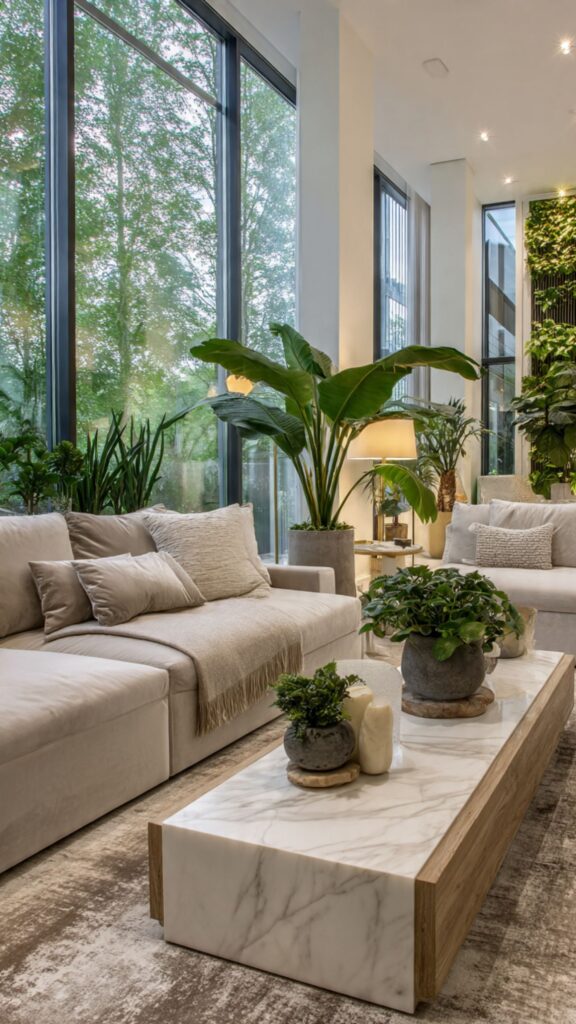
Biophilic design the integration of natural elements, patterns, and materials into interior spaces has moved from trend to established principle in luxury residential design. Its inclusion in a living room is not merely aesthetic; it is grounded in substantial research showing that connection to nature reduces stress, improves cognitive function, and increases overall wellbeing. Luxury living rooms that incorporate biophilic elements feel alive in a way that purely material-focused spaces do not.
The most obvious expression of biophilic design is plant life. However, the way plants are incorporated in a luxury context is very different from a few potted houseplants. Think architectural specimens: a mature fiddle-leaf fig as a floor-standing focal point, a wall-mounted preserved moss installation, a sculptural arrangement of dried botanicals in a ceramic vessel, or in more ambitious renovations an integrated planter running the length of a built-in or a full green wall installation. These large-scale botanical features command the same visual attention as art or furniture.
Beyond plants, biophilic design in a luxury living room manifests in the choice of materials. Natural wood with visible grain, unpolished stone, handmade ceramic vessels, rattan and wicker accent pieces, linen and raw silk textiles all of these materials connect the interior to the natural world in ways that feel grounding rather than raw.
The 2020s have seen a significant shift in luxury interiors away from the high-gloss, hyper-refined aesthetic of the previous decade toward something warmer, more tactile, and more in dialogue with nature. This shift is expected to deepen as environmental consciousness becomes increasingly central to luxury values.
Water features, natural light maximization, and even the strategic use of organic shapes (curves in furniture, irregular edges on stone surfaces, undulating ceiling forms) are all expressions of biophilic thinking that belong in a luxury living room. The key unifying principle is that the space should feel connected to the broader natural world never sealed off from it in a way that feels sterile or hermetic. This connection is, at its core, one of the most ancient definitions of what a truly comfortable and nourishing space should feel like.
Personalize with Bespoke and Custom Furniture:
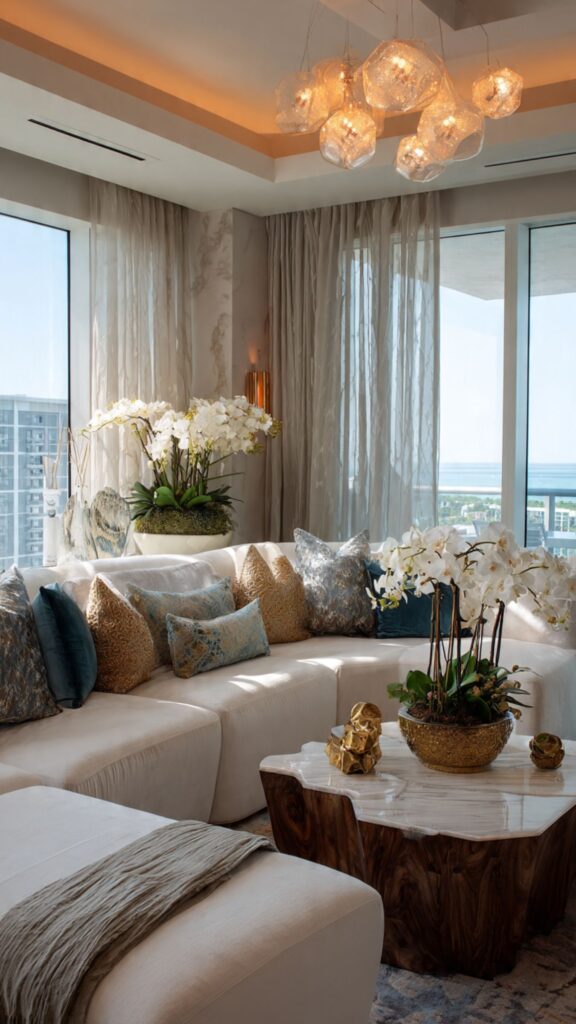
The highest expression of luxury in any living room is customization furniture, fixtures, and objects that were made specifically for the space and the person who inhabits it. Ready-made furniture, however beautifully designed, is by definition a compromise: a size, material, and configuration chosen to meet the needs of the broadest possible market. Custom furniture inverts this equation, starting from your specific room, lifestyle, and aesthetic vision and working outward.
Working with a bespoke furniture maker whether a local craftsperson or an established atelier allows you to specify every dimension, material, finish, and detail. The sofa can be the exact length needed to fill your wall, in the exact fabric that complements your rug, with a base that matches your other metalwork.
A custom coffee table can be sized precisely to the proportions of your seating group, in a material combination (say, a smoked glass top with a solid bronze frame) that simply does not exist in any retail offering. This precision is what makes custom furniture feel inevitable as though the piece could not exist in any other room.
Custom furniture is not exclusively the territory of the ultra-wealthy. Many skilled cabinetmakers, upholsterers, and independent furniture designers work at price points not dramatically above good-quality retail, particularly for simpler pieces like sofas, coffee tables, and shelving.
The value lies not in the material cost but in the design fit a bespoke piece that is perfectly scaled and styled for your room will outperform a more expensive off-the-shelf piece that does not quite fit every time.
For those not ready to commission fully bespoke pieces, customizable furniture lines from brands like Room & Board, Ligne Roset, or Blu Dot offer meaningful personalization choice of dimensions, leg finishes, fabric, and sometimes form that moves meaningfully beyond standard retail.
This middle path allows for a degree of specificity and investment in quality that represents a genuine step toward the custom ideal, even if it does not achieve it completely.
Integrate Smart Home Technology Invisibly:
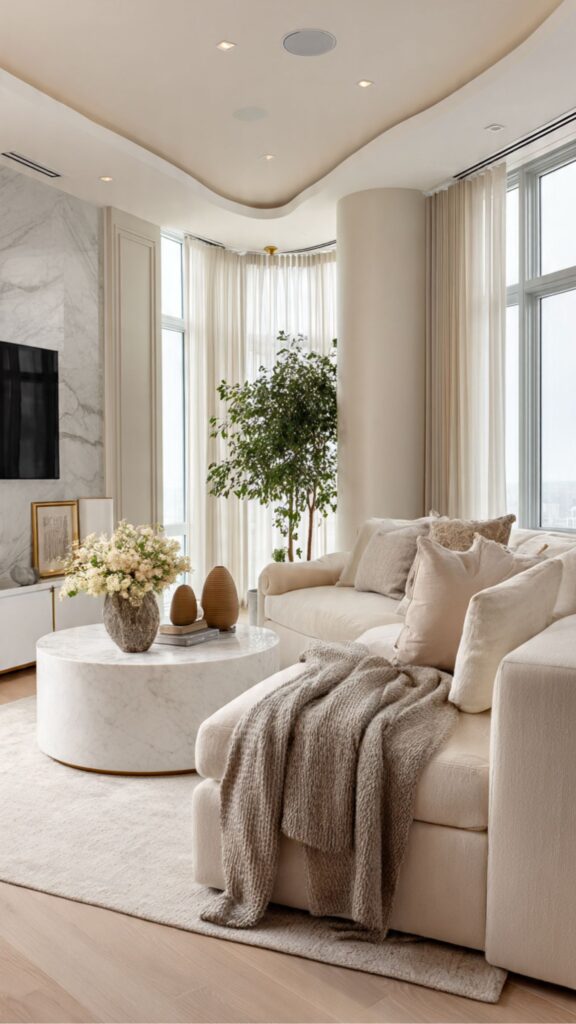
The modern luxury living room is increasingly defined not only by how it looks but by how intelligently it functions. Smart home technology when integrated thoughtfully and invisibly elevates the living experience in ways that feel genuinely magical. Conversely, poorly integrated technology (visible cables, bulky control panels, devices that clash with the décor) actively undermines luxury no matter how sophisticated the underlying system.
The gold standard of smart home integration in luxury living rooms centers on centralized control systems like Crestron, Savant, or Control4. These platforms allow a single interface or voice command, or automated schedule to control lighting levels, motorized drapery, HVAC, audio-visual systems, and security across the entire home.
In the living room specifically, the ability to transition from a bright, energized daytime setting to a warm, dimmed evening atmosphere at a single touch (or automatically at sunset) is the kind of seamless functionality that defines what it means to live well.
Motorized window treatments are particularly transformative. Shades and drapery that move silently on schedule, or in response to sunlight sensors, maintain the room’s aesthetic integrity without requiring manual adjustment and they protect valuable art, textiles, and furniture from UV damage with far greater consistency than manually operated alternatives.
Brands like Lutron and Hunter Douglas offer motorized systems that can be retrofitted into almost any window opening with minimal disruption to existing décor. Looking forward, the integration of AI-driven home systems platforms that learn your patterns and preferences over time, adjusting the environment proactively rather than reactively represents the next frontier of intelligent luxury living.
Systems from companies like Josh.ai are moving beyond simple voice commands toward genuinely anticipatory home management. The living room of the near future will feel less like a programmed space and more like a responsive one an environment that understands you and adapts accordingly.
Complete Your Home’s Elegant Feel with These Lovely Bathroom Wall Decor Ideas.
Choose Window Treatments That Frame Rather Than Cover:
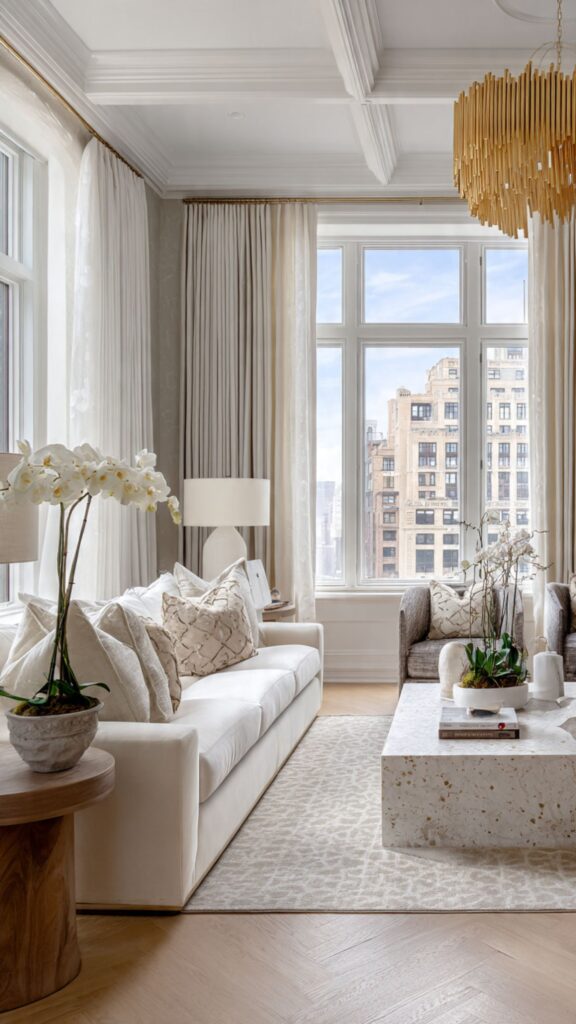
Windows in a luxury living room should never be an afterthought, and the treatments you choose should enhance the view, manipulate light, and add architectural presence not simply provide privacy or block sun. The most common mistake in non-luxury interiors is treating windows as problems to be solved rather than features to be celebrated. In a high-end context, windows and their treatments are among the most powerful design tools available.
Drapery at full ceiling height or very close to it is the single most impactful window treatment technique for creating a sense of luxury. When curtains are mounted just below the ceiling cornice (rather than just above the window frame), they visually extend the height of the room dramatically.
This is a technique used universally in designer show houses and high-end hotel lobbies because it works it makes any room feel grander, regardless of its actual ceiling height. Equally, curtain width should exceed the window width on each side, so the fabric stacks off the glass when open, maximizing natural light.
The fabric of drapery in a luxury living room communicates quality immediately. Heavyweight linen in a natural or warm-white tone is perhaps the most versatile and timeless choice it diffuses light beautifully, hangs with a natural weight, and improves with age. Silk adds a reflective luminosity perfect for more formal or evenings-focused rooms.
Wool and velvet drapery creates a sense of warmth and sound dampening ideal for colder climates or rooms with acoustic challenges. In all cases, lining is essential unlined curtains look insubstantial and age poorly. Roman shades, fabric roller shades in natural grasscloth or woven textures, and wooden shutters all have appropriate places in the luxury living room vocabulary, typically in combination with drapery rather than as standalone treatments.
Layering a sheer fabric shade for privacy and light diffusion, with a heavier drapery panel for drama and blackout when needed gives maximum flexibility while maintaining a layered, luxurious aesthetic. This is exactly how the best hotels handle their rooms, and the same logic applies perfectly to residential design.
Curate Your Accessories and Avoid Clutter:
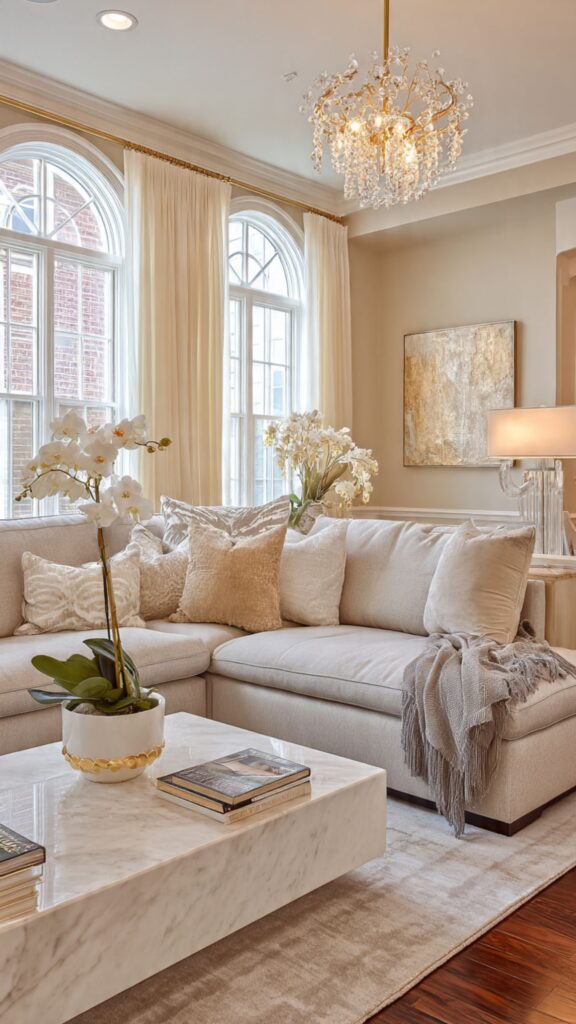
The final and perhaps most overlooked principle of luxury living room design is restraint in accessorizing. A luxury room is never cluttered, never overcrowded with objects, and never gives the sense that things have simply accumulated. Every object in a thoughtfully designed luxury interior is there for a reason: because it is beautiful, meaningful, or both. This curation requires the discipline to edit ruthlessly and the confidence to let space breathe.
The principle interior designers call negative space the intentional emptiness between objects is just as important as the objects themselves. A carefully chosen sculptural vase on a console, with generous empty space on either side, makes a more powerful statement than a console crowded with vignettes.
A single large-scale book on a coffee table, placed deliberately with a sculptural object alongside it, communicates a kind of confident minimalism that reads as deeply luxurious. More is not more in high-end design; more considered is more.
That said, luxury is not about austerity or emptiness. Books, objects collected on travels, inherited pieces, fresh flowers, and meaningful personal items all belong in a lived-in luxury room. The distinction is between objects that have been chosen and objects that have simply accumulated.
A luxury living room reflects its owner’s character and history but selectively, curated rather than comprehensive. Every item on display should be able to answer the question: “Why is this here?” with a satisfying answer.
Fresh flowers and seasonal botanicals deserve special mention as accessories that add life and luxury with minimal permanence. A generous arrangement of seasonal flowers or even beautifully presented single-variety stems in a sculptural vessel adds color, fragrance, and organic movement to a space in a way that no permanent object can replicate.
The luxury hospitality industry has understood this for decades, which is why hotel lobbies and private members’ clubs invest significantly in fresh florals. Bringing this practice into your living room, even once a week, signals a commitment to living beautifully that is itself a form of luxury.
Conclusion
Creating a luxury living room is ultimately an exercise in intention the commitment to choosing well, investing in quality, and creating a space that genuinely reflects your values and aesthetic vision. The 15 ideas in this guide, from architectural millwork and natural stone surfaces to layered lighting and curated accessories, each contribute to a living room that feels as extraordinary as it looks.
True luxury living room design is not about the most expensive pieces, but about the most thoughtful ones. Start with one idea, implement it with care, and let the transformation inspire the next your dream living room is closer than you think.

Team TrandyVilla is the passionate home decor team behind Trandy Villa, where style meets comfort in everyday living. The team loves transforming simple spaces into beautiful, functional homes through smart ideas, budget-friendly hacks, and modern design trends. Their content focuses on helping readers create homes that feel both stylish and personal without spending too much.