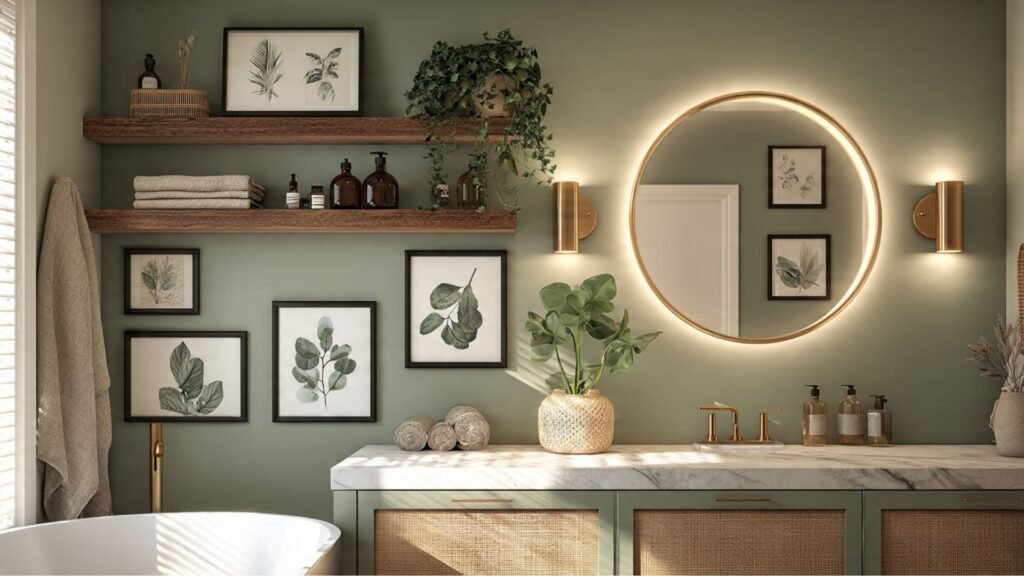
Your bathroom walls are silent design storytellers and most people completely ignore them. While homeowners obsess over vanities, fixtures, and flooring, the walls often get a rushed coat of paint and nothing else. That’s a missed opportunity. Research from interior design studies consistently shows that vertical space especially in compact rooms plays a disproportionate role in how spacious, calm, or luxurious a room feels.
Bathroom wall decor refers to any decorative element applied to bathroom walls to enhance their visual appeal and atmosphere. It includes art prints, mirrors, shelves, tiles, wallpaper, and textile pieces. These elements serve a clear purpose they transform a purely functional space into one that feels personal, calm, and intentional. Good wall decor improves both the aesthetic value and the daily experience of using the room.
A beautiful bathroom begins with its walls. Thoughtful bathroom wall decor turns an ordinary space into a private retreat that reflects your personality and style. The right wall choices make even a small bathroom feel larger, warmer, and more welcoming proof that great design lives in the details.
Many affordable and stylish options exist for decorating bathroom walls effectively. Framed botanical prints add natural warmth. Statement mirrors create depth and reflect light. Floating shelves combine storage with visual interest. Accent wallpaper brings bold personality to compact spaces. Woven macramé and rattan pieces introduce soft texture. Each choice contributes to a layered, finished look that feels deliberate and well-designed.
Curated Gallery Wall:
Turn Blank Space into Storytelling
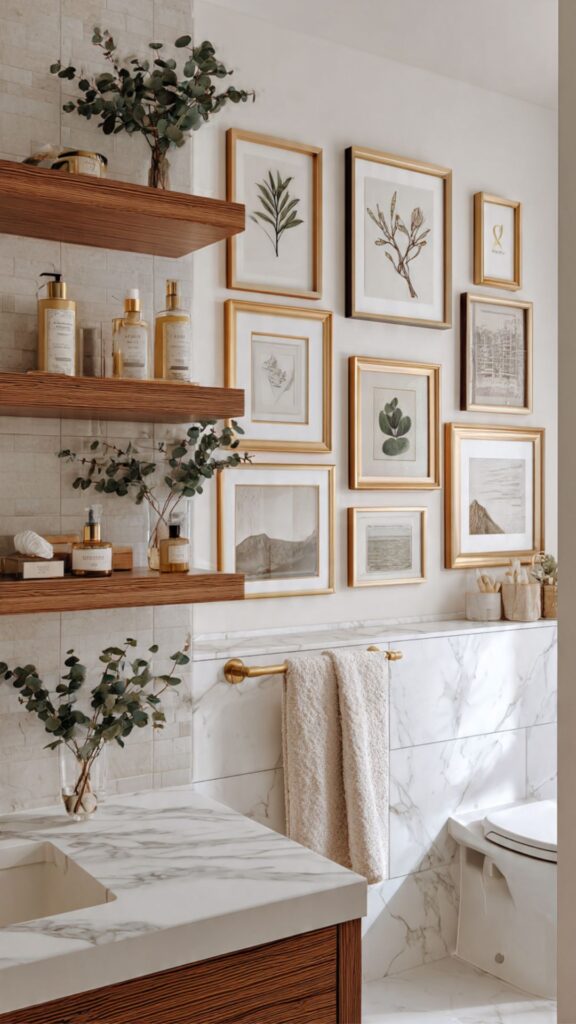
A gallery wall in the bathroom is one of the highest-impact, most customizable forms of wall decor available. Unlike a single large print, a gallery arrangement lets you mix frame sizes, art styles, and mediums creating a composition that feels personal and evolving. The key distinction most design guides miss is that bathroom gallery walls require moisture-resistant framing.
Standard wooden frames can warp in high-humidity environments, so opt for metal frames, sealed wood, or acrylic-front frames that resist condensation damage over time. The most common mistake people make is treating the bathroom gallery wall identically to a living room one. In a bathroom, you’re typically working with a long, narrow wall often beside or above the vanity.
Start by selecting a visual anchor piece, such as a large 16″x20″ print, and build outward. Stick to a cohesive color story earth tones, monochromes, or pastels so the arrangement feels unified rather than cluttered. Odd numbers of pieces (3, 5, or 7) tend to feel more organic and visually balanced than even groupings.
For content, think beyond generic prints. Black-and-white botanical illustrations, vintage maps, or abstract watercolors all perform beautifully in bathrooms because they’re timeless and calm. If you’re short on budget, downloadable art prints from sites like Society6 or Etsy can be printed at home and framed for under $20 per piece. However, don’t overlook personal photography a series of film-style travel photos printed in soft tones can be deeply meaningful and completely unique to your home.
💡 Pro Tip: Before hammering a single nail, lay your gallery arrangement flat on the floor first. Photograph it from above, then use that photo as a reference guide while hanging. This saves hours of adjustment and prevents unnecessary wall holes.
Botanical & Nature Prints:
Bring the Outdoors In
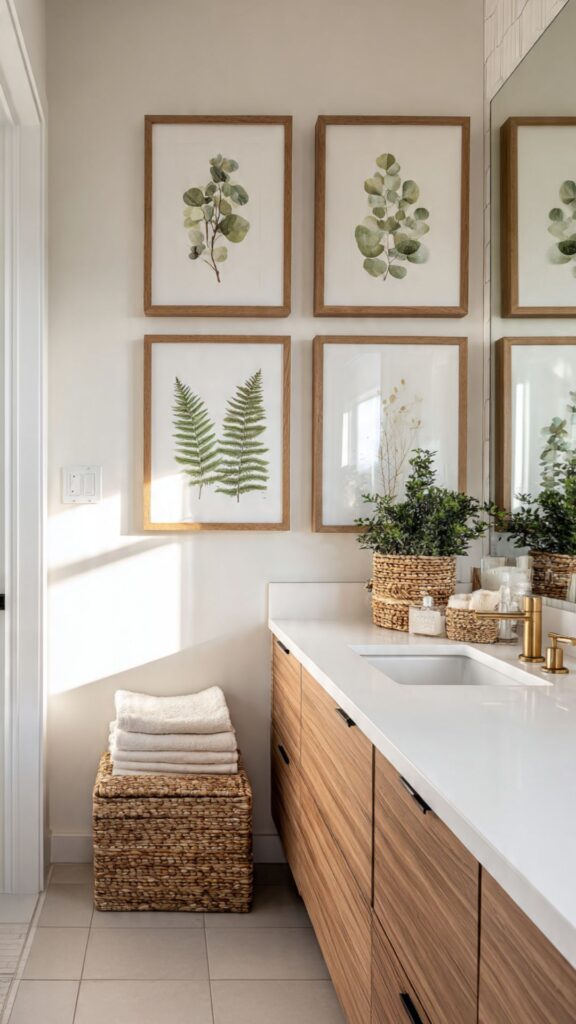
Botanical prints have been a cornerstone of bathroom wall decor for decades and there’s a deeply psychological reason for that staying power. Research in environmental psychology shows that exposure to nature imagery, even two-dimensional representations, can lower cortisol levels and create a sense of calm. In a space designed for relaxation and personal grooming, this psychological effect is particularly valuable.
The bathroom is where many people begin and end their day, so surrounding it with imagery that evokes peace makes genuine functional sense. What competitors rarely explain is the difference between botanical print styles and how to choose the right one for your bathroom aesthetic. Victorian-era botanical engravings (often found in antique illustration books) suit traditional or farmhouse-style bathrooms with clawfoot tubs and brass fixtures.
Modern flat-lay botanical photography, with clean backgrounds and high contrast, fits contemporary and Scandinavian minimalist bathrooms. Watercolor botanicals, loose and expressive, are perfect for boho, eclectic, or maximalist bathrooms that embrace warmth and color. For small bathrooms, one oversized botanical print say, a large-scale monstera or eucalyptus illustration can visually expand the space by drawing the eye upward and outward.
For larger bathrooms, a triptych of botanical prints (three matching panels) creates rhythm and sophistication. Consider framing in natural materials thin bamboo or light oak frames to reinforce the organic theme. And for the moisture concern: always use UV-protective glass or acrylic covers to prevent any print fading caused by steam and condensation over time.
Design Insight: Pair dark-background botanical prints (white illustrations on deep green or black) with matte black fixtures for a dramatic, high-end look that feels both modern and lush a combination increasingly popular in boutique hotel bathroom design.
Statement Mirrors:
Functional Art That Transforms a Room
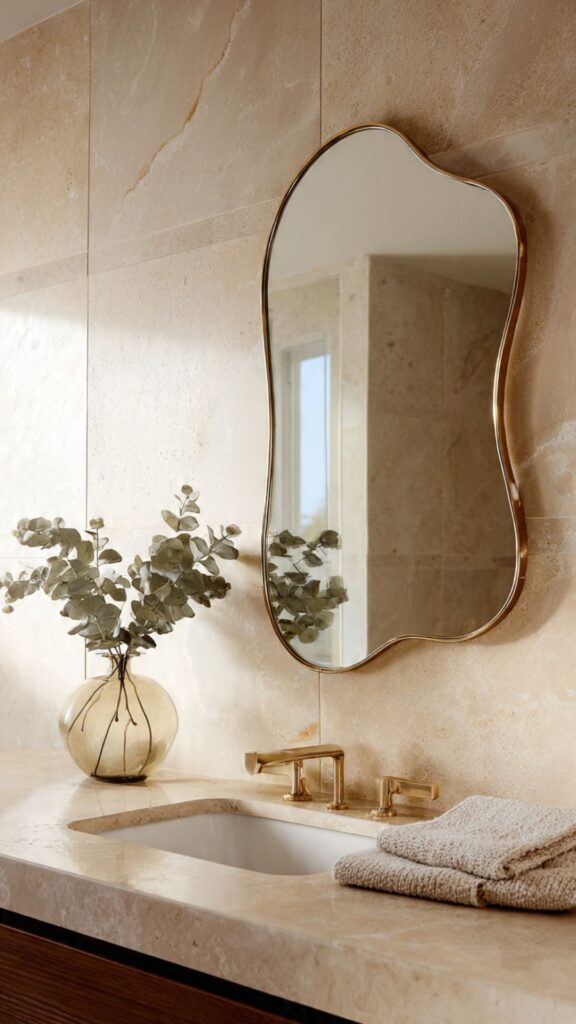
A mirror is arguably the most powerful piece of bathroom wall decor because it serves double duty it’s a functional necessity and a visual design statement simultaneously. Most bathrooms have a basic rectangular mirror above the vanity, but upgrading to a statement mirror is one of the single highest-ROI changes you can make to a bathroom’s appearance. Arch-top mirrors, sunburst frames, irregular organic shapes, and vintage-style ornate frames can completely transform the mood of a bathroom without touching a single tile or fixture.
What separates a good statement mirror choice from a great one is proportional awareness. Interior designers follow a general rule: the mirror should be no wider than the vanity below it (usually 70–90% of the vanity width) and tall enough to reflect the upper body comfortably.
However, in bathrooms with high ceilings or those that feel claustrophobic, you can break this rule intentionally an oversized floor-to-ceiling mirror leaning against the wall can make even a tiny bathroom feel dramatically spacious. The reflective surface bounces light in ways that paint and art simply cannot.
Consider layering mirrors for an elevated, gallery-like effect. A large primary mirror flanked by two smaller circular mirrors creates visual interest and reflects light from multiple angles. Brass and brushed gold frames are currently among the most sought-after finishes in bathroom design because they add warmth to the typically cool, neutral palette of bathrooms.
Matte black frames, on the other hand, deliver sharp contrast and a bold modern edge. For renters who can’t make permanent changes, adhesive-mounted frameless mirrors or leaner mirrors are entirely valid options that look intentional when styled properly.
💡 Pro Tip: Position your statement mirror so it reflects natural light from a window even an indirect reflection significantly brightens a windowless bathroom and makes it feel larger and more open.
Shiplap & Wood Paneling:
Warmth, Texture, and Character
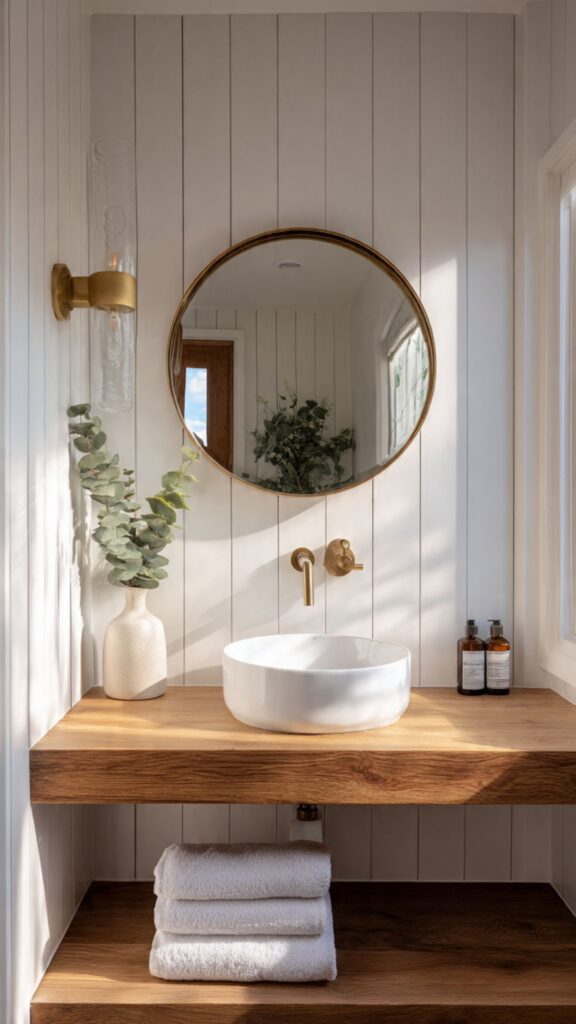
Wall paneling has undergone a massive design renaissance in recent years, and the bathroom is now one of the most popular rooms to feature it. Shiplap horizontal wooden planks with a small reveal gap between them became culturally mainstream through farmhouse interior design and continues to dominate because of its warmth and textural depth.
In bathrooms, the application has evolved: rather than covering all four walls, designers now recommend paneling a single accent wall often behind the bathtub or toilet to create a focal point without overwhelming the space.
Moisture management is the critical technical factor that most guides gloss over. Real wood paneling in bathrooms requires proper sealing with polyurethane or epoxy-based finishes, good ventilation, and ideally placement on walls that don’t experience direct water splashing.
For wetter zones like inside a shower PVC shiplap or porcelain tile panels that mimic wood grain are superior alternatives that look virtually identical but perform dramatically better in high-moisture environments. Composite MDF panels with moisture-resistant primer are also an excellent middle-ground option for moderate-humidity walls.
Color is where shiplap really shines as bathroom wall decor. White shiplap creates a classic, clean look that pairs well with any fixture color. Dark-painted shiplap in charcoal, forest green, or navy creates a dramatic, moody atmosphere that feels sophisticated and intentional. Natural unstained wood in ash or pine brings an organic spa quality, especially when paired with stone countertops and matte fixtures. Vertical installation (rather than horizontal) is a lesser-known trick that adds height to low-ceiling bathrooms, making the room feel taller and more open.
Cost Perspective: DIY shiplap using pine boards from a hardware store costs approximately $1–$3 per square foot in materials making it one of the most affordable high-impact bathroom wall decor upgrades available.
Love this look? See our Hallway Decor ideas for more small space styling!
Floating Shelves as Decor:
Storage That Looks Like Art
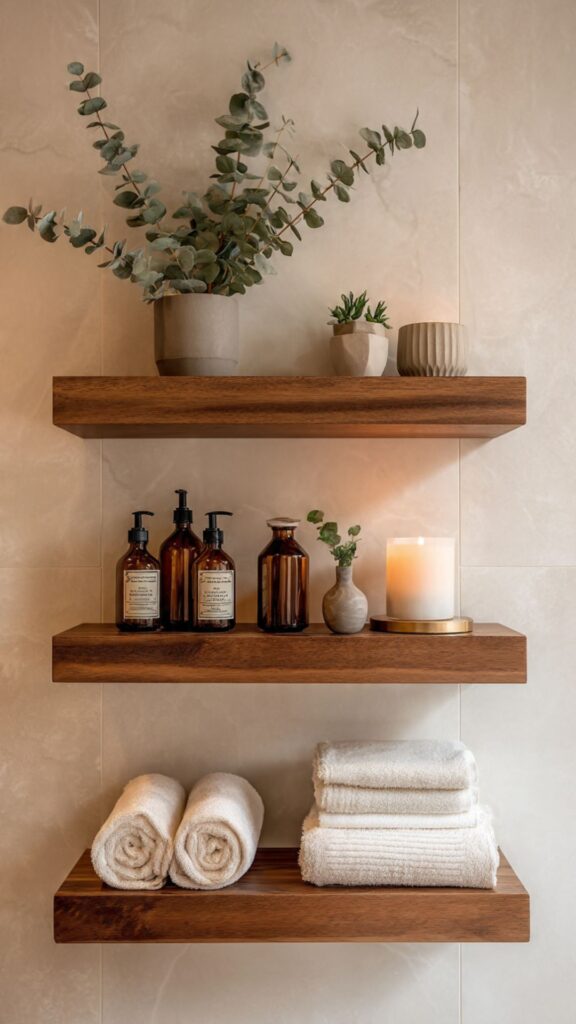
Floating shelves are the unsung heroes of bathroom wall decor because they blur the line between functional storage and intentional styling. A well-curated bathroom shelf isn’t just holding things it’s displaying them. When styled thoughtfully, floating shelves become a living vignette: a cluster of amber glass bottles, a small succulent, a rolled linen hand towel, and a sculptural soap dish can transform a blank wall into a design moment that rivals any framed print. The key is restraint leave at least 30% of the shelf empty to avoid the cluttered feeling that undermines the aesthetic.
The material choice for bathroom floating shelves matters enormously. Solid marble or quartz shelves feel luxurious and are naturally moisture-resistant ideal for master bathroom ensuite walls. Live-edge wood shelves bring a warm, artisanal quality and suit farmhouse, boho, or Japandi-style bathrooms. Black powder-coated metal shelves with exposed brackets deliver an industrial aesthetic that contrasts beautifully with soft subway tile or white shiplap. For humid bathrooms, always seal porous materials and use stainless steel or brass mounting hardware to prevent rust staining on the wall over time.
Arrangement matters as much as the shelves themselves. A trio of shelves at varying heights rather than evenly spaced creates more visual dynamism. One deeper shelf can hold plants or apothecary jars, while a narrower upper shelf holds a single sculptural object. Consider integrating LED strip lighting underneath shelves for a floating glow effect that feels luxurious and spa-like. This is a particularly effective technique in bathrooms without great natural light the warm under-shelf illumination softens the space and draws attention to curated objects without being harsh or clinical.
💡 Pro Tip: Group shelf objects in odd numbers and vary heights within the grouping. Three objects at three different heights (a tall candle, a medium plant, a low dish) create more visual interest than three items of identical height lined up in a row.
Accent Wallpaper:
Bold Pattern, Big Personality
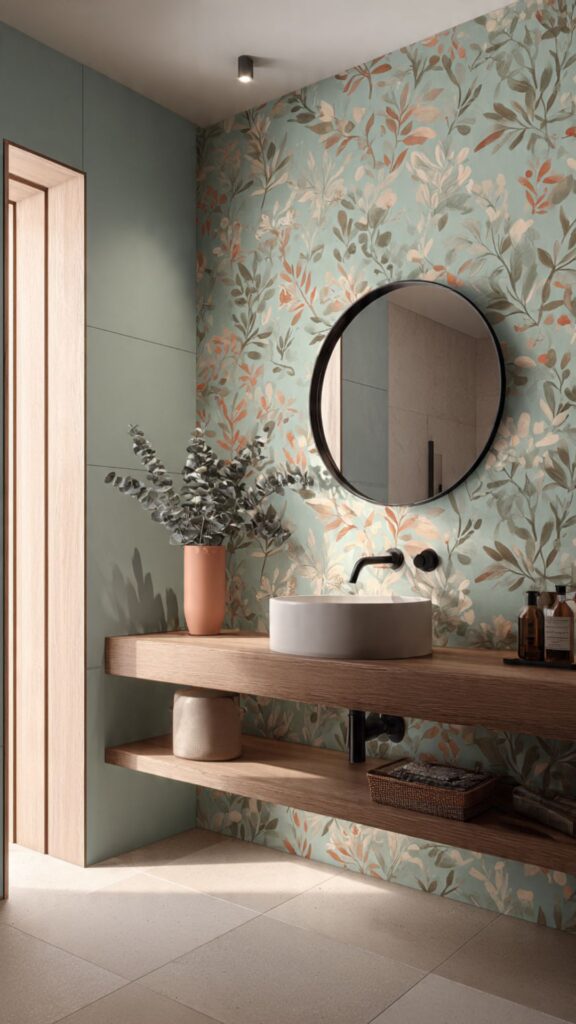
Wallpaper in bathrooms was once considered impractical and in the era of low-quality, paper-backed wallpaper, that concern was valid. Today’s bathroom wallpaper category is entirely different. Vinyl-coated, peel-and-stick, and moisture-resistant fabric wallpapers are engineered specifically for high-humidity rooms and have become one of the fastest-growing bathroom wall decor trends in the past five years.
A single accent wall of bold wallpaper especially in a powder room or half-bath that doesn’t have a shower or bathtub can be genuinely transformative, making a compact, forgotten room feel like the most interesting space in the house. The design principle behind bathroom wallpaper is scale and courage.
Small bathrooms benefit most from large-scale patterns counterintuitively, a big, bold print in a small room creates intimacy and drama rather than overwhelming it. Geometric patterns, tropical palm prints, vintage floral designs, and abstract painterly patterns are all thriving in bathroom design right now. Peel-and-stick options from brands like Chasing Paper, Removable Wallpaper Co., or Tempaper are particularly valuable for renters and indecisive decorators because they can be swapped seasonally without damage or commitment.
One advanced technique that most guides miss is the combination of wallpaper and architectural detail. Running wallpaper above a dado rail (a horizontal molding at waist height) and painting below it in a complementary color creates layered, period-appropriate charm.
Alternatively, papering only the ceiling instead of the walls a bold move called the “fifth wall” technique adds unexpected personality and draws the eye upward in a way that makes the bathroom feel taller. This approach is especially effective in master bathrooms with higher ceilings where standard wall treatments feel insufficient to fill the vertical space.
Trend Alert: Moody, deep-toned wallpapers in forest green, burgundy, and midnight blue are dominating bathroom design right now particularly in powder rooms and ensuites where an intimate, jewel-box effect is the goal.
Decorative Wall Sconces:
Lighting as Wall Art
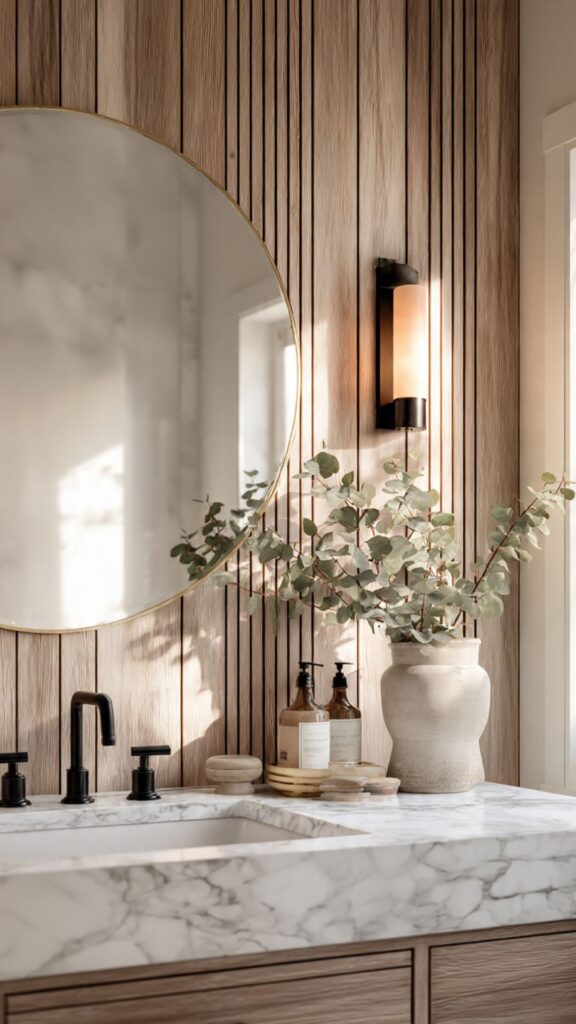
Wall sconces are one of the most overlooked categories of bathroom wall decor primarily because people categorize them as lighting rather than decoration. That’s a fundamental error. A beautifully designed sconce is simultaneously a light source and a sculptural wall object, and the right pair of sconces flanking a vanity mirror can elevate an entire bathroom’s design language.
The specific position of sconces matters greatly: at eye level on either side of the mirror (approximately 60–65 inches from the floor) eliminates the harsh under-eye shadows created by overhead lighting a genuinely practical improvement, not just an aesthetic one.
The design range of bathroom wall decor sconces has expanded dramatically. Articulating arm sconces in brass bring a mid-century library quality. Globe sconces in smoked glass create a moody, atmospheric effect. Cage-style sconces in matte black deliver industrial character.
Fluted glass sconces with warm-toned bulbs are among the most popular current choices because they diffuse light softly while adding texture and visual interest even when turned off. When sconces are off, they function as wall sculptures their presence contributes to the bathroom’s visual weight and style even in daylight.
For bathrooms without existing wiring, plug-in wall sconces (with visible cords neatly covered by a cord cover kit) are a completely viable solution that requires no electrician. Many plug-in designs are virtually indistinguishable from hardwired versions.
Another forward-thinking option is battery-operated LED sconces with rechargeable bases these can be mounted anywhere without any wiring, opening up decor possibilities on walls without electrical access. Pair any sconce choice with Edison-style or warm white LED bulbs (2700K color temperature) to maintain the warm, relaxing ambiance bathrooms should ideally project.
💡 Pro Tip: Dimmer-compatible sconces are a worthwhile investment. Being able to reduce bathroom wall decor light intensity in the evening supports natural melatonin production and signals the body that it’s time to wind down a functional benefit that makes the decor choice genuinely wellness-oriented.
Artisan Tile Arrangements:
Timeless Craftsmanship on Your Walls
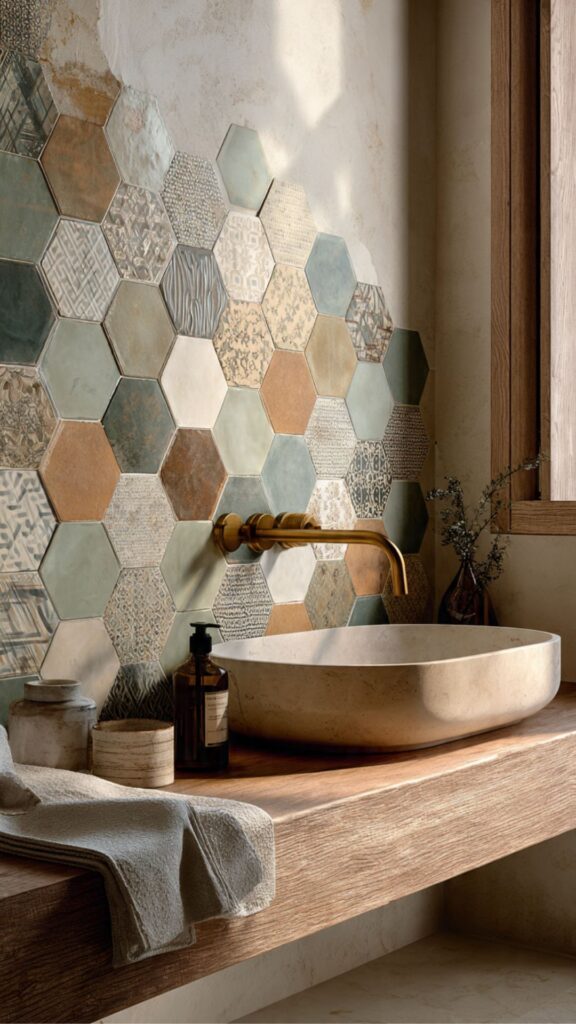
Tile is the original bathroom wall decor and its potential goes far beyond functional waterproofing. Artisan tile arrangements, when approached with design intentionality, are among the most permanently satisfying bathroom wall decor upgrades you can make because they’re built into the architecture of the room rather than added on top of it.
Handmade zellige tiles from Morocco, encaustic cement tiles with geometric patterns, and handpainted Talavera tiles each bring a level of craft and uniqueness that mass-produced tiles simply cannot replicate. Even a small feature wall behind a freestanding bathtub or at the back of a niche in artisan tile becomes an unforgettable focal point.
Tile layout and orientation are as important as tile selection. The classic horizontal subway tile layout, while enduringly practical, has given way to more expressive alternatives: herringbone arrangements bring movement and dynamism; vertical stack bond layouts add height; diagonal layouts introduce playfulness.
Combining two complementary tile types for example, large format matte field tiles with a thin border of handmade glazed accent tiles creates visual complexity without chaos. This approach is particularly effective in transitional-style bathrooms that need to bridge traditional character with modern simplicity.
What most bathroom wall decor guides fail to mention is the grout color decision, which has enormous impact on the final appearance. White grout between white subway tiles creates a soft, seamless effect. Dark charcoal or black grout between the same tiles creates a bold, graphic pattern that makes each individual tile pop.
Colored grout in terracotta, sage, or dusty blue matching or complementing the tile creates a cohesive, intentional look that feels bespoke. As a 2026 trend: limewash finishes and plaster-look tiles are growing rapidly, offering soft, aged texture that brings Old World warmth to contemporary bathroom wall decor spaces.
Budget Note: You don’t need to tile an entire wall to create impact. A single niche, an alcove, or a 3-foot feature section behind a freestanding tub can use premium artisan tiles cost-effectively while standard tiles cover the rest of the walls.
For rustic vibes, check out our Farmhouse Kitchen decor guide!
Typography & Quotes:
Words That Add Intention and Warmth
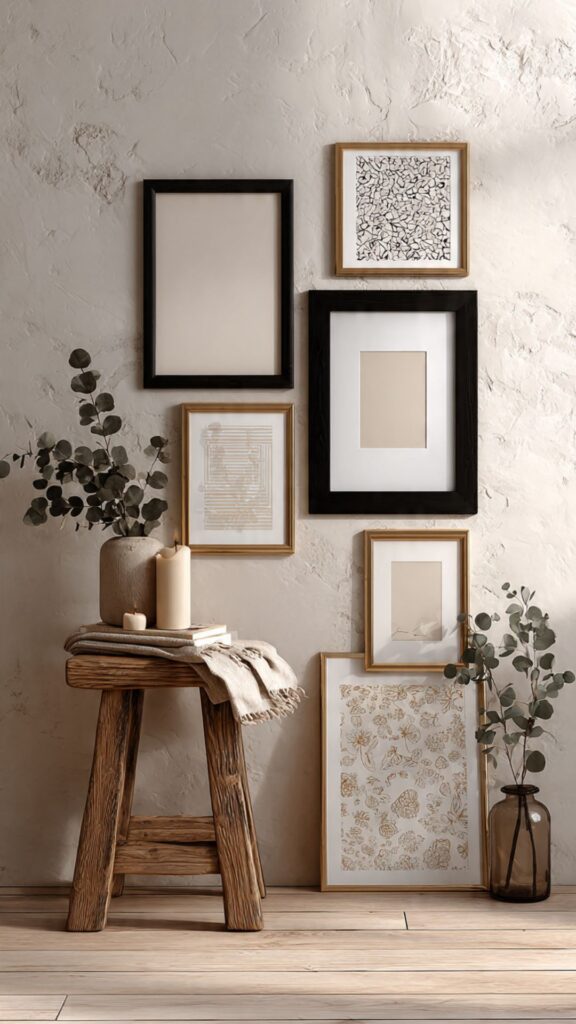
Typography-based bathroom wall decor from framed quote prints to vinyl wall lettering remains one of the most accessible and personally meaningful ways to personalize a bathroom. However, the quality difference between generic mass-market quote prints and genuinely well-designed typographic art is enormous. The former clutters; the latter elevates.
When selecting typography as bathroom wall decor, consider the font as carefully as the words themselves. Serif typefaces feel classic and literary. Script fonts feel romantic and intimate. Bold sans-serif type feels graphic and contemporary. The font choice should harmonize with the broader design language of your bathroom.
Quote selection is where personalization becomes truly meaningful. Rather than defaulting to overused bathroom-specific phrases (“Wash Your Worries Away,” “Soak, Relax, Repeat”), consider quotes that reflect your personal values, favorite literature, or a meaningful moment in your life.
A line from a poem that moved you, a phrase in another language that holds significance, or even a single beautifully typeset word “Breathe,” “Still,” “Bloom” can be more impactful than a full sentence that feels borrowed rather than owned. The bathroom, as a private daily retreat, is an ideal canvas for personal expression.
Beyond framed prints, vinyl wall decals and removable lettering are popular options for renters they apply cleanly and remove without damage. For a more permanent and handcrafted feel, stenciled lettering directly onto a painted wall creates a bespoke, artisanal quality.
Neon signs in script lettering have also emerged as a bold bathroom wall decor choice for contemporary and maximalist interiors particularly effective in powder rooms or en-suites where a playful, unexpected touch is welcome. LED neon (rather than traditional glass neon) is safer for bathroom environments and significantly more energy-efficient.
💡 Pro Tip: Scale your typography piece to command the right amount of wall space. A quote framed at 8″x10″ on a large empty wall will look lost and timid. Go bigger than feels comfortable oversized typographic prints often look more grounded and intentional than small ones on expansive walls.
Macramé & Textile Wall Art:
Texture That Softens Hard Surfaces
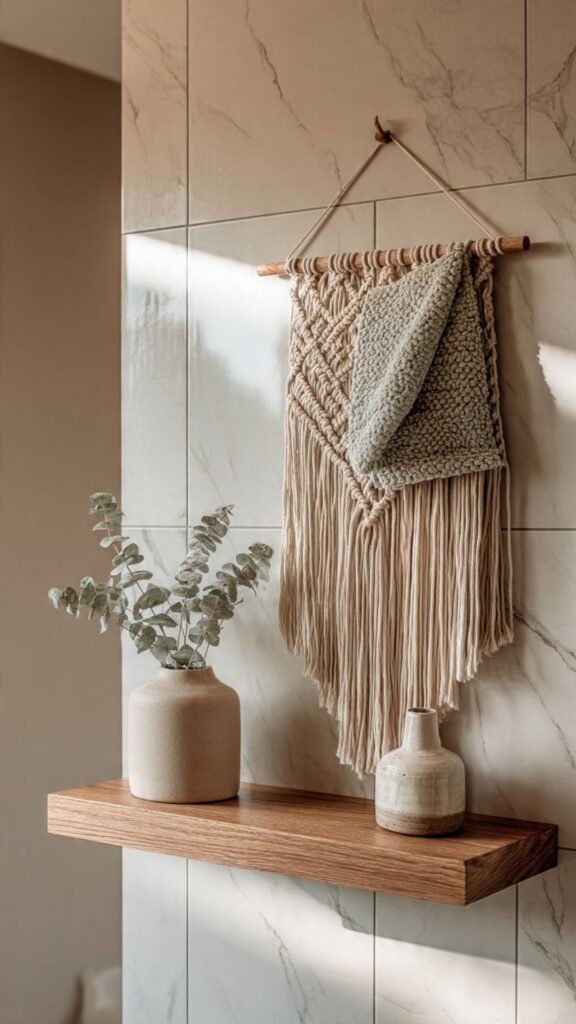
Macramé and textile wall hangings bring something that no other form of bathroom wall decor can: softness. Bathrooms are inherently hard-surface environments tile, porcelain, glass, chrome and the introduction of a woven, textured textile element creates a sensory counterbalance that makes the space feel immediately warmer and more livable.
Macramé wall hangings, in particular, have evolved well beyond their boho-only origins and now appear in Scandinavian-minimalist bathrooms, organic modern spaces, and even eclectic maximalist bathrooms where layered textures are celebrated.
The material composition of textile wall art matters in bathroom environments. Natural cotton macramé is beautiful but absorbs moisture over time and may develop mildew in consistently humid bathrooms without adequate ventilation.
For steamy bathrooms, synthetic macramé or wall hangings treated with moisture-resistant coating are more durable long-term choices. Alternatively, placing the textile on a wall far from the shower or bathtub such as above the toilet or beside the entry door minimizes humidity exposure while still contributing to the room’s softness and warmth.
Beyond macramé, consider woven rattan art panels, fabric-wrapped canvases, vintage kilim fabric stretched over a frame, or even a beautifully patterned linen runner mounted horizontally as a fabric art piece. The tactile quality of textile art adds a dimension that flat prints cannot especially meaningful in bathrooms where sensory comfort is a core design goal.
For DIY enthusiasts, basic macramé is a learnable skill with many free tutorials available, and a custom handmade piece carries personal significance that no mass-produced item can replicate. Pair with wooden dowels or driftwood mounting rods for an organic, nature-connected aesthetic.
Style Match: Macramé works especially well in boho, farmhouse, organic modern, and Japandi bathrooms. For ultra-contemporary or industrial styles, consider geometric woven wall art or abstract textile pieces with a cleaner, more structural silhouette.
Living Wall & Greenery:
The Most Biophilic Bathroom Wall Decor
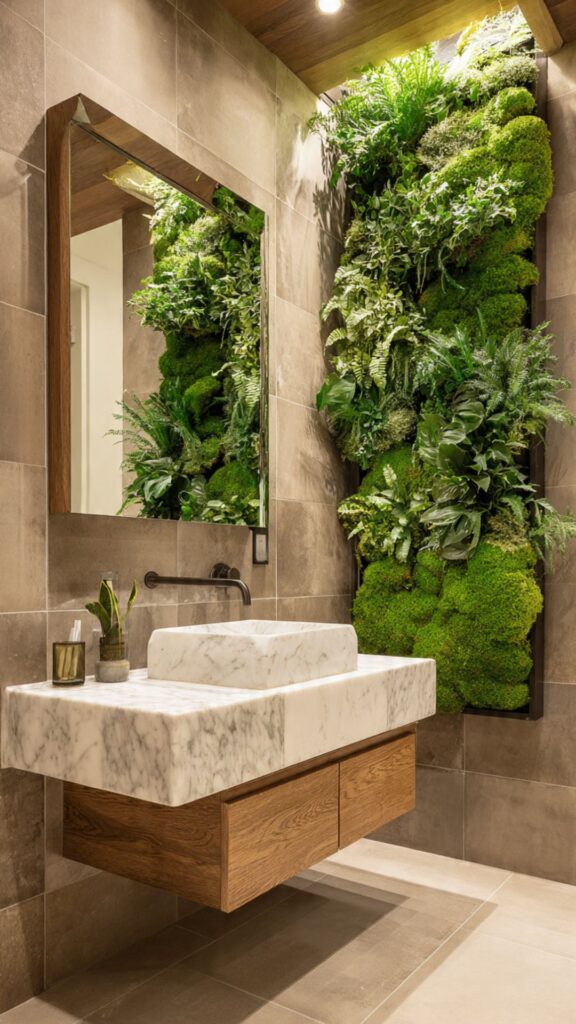
A living green wall or even a single wall-mounted planter represents the most genuinely biophilic form of bathroom wall decor. Biophilic design, the practice of incorporating natural elements into built environments to support human psychological wellbeing, has moved from academic research into mainstream interior design.
Bathrooms, with their naturally higher humidity and indirect light, are actually among the best rooms in the house to support certain plants making a living wall more practical here than almost anywhere else. Species like pothos, heartleaf philodendrons, air plants (tillandsia), ferns, and peace lilies all thrive in bathroom humidity and moderate light.
Wall-mounted planting systems range from simple individual pocket planters to modular living wall panels with built-in irrigation. For most homeowners, the accessible starting point is a wall-mounted wooden planter rail or a series of hanging ceramic pots both create the lush, living effect without requiring a complex irrigation setup.
Trailing plants like pothos or string of pearls are particularly effective because they grow downward, adding vertical visual interest and motion. A corner wall with a cascading pothos can transform a completely blank, utilitarian bathroom wall decor into something that feels genuinely alive and nurturing.
Even for those without a green thumb, preserved moss panels and frames are an increasingly popular alternative. Preserved moss (which is real, natural moss treated to remain green and soft without watering) requires zero maintenance, never dies, and maintains its vivid color for years.
A moss wall panel in circular, rectangular, or abstract shapes can be mounted directly on the wall like art. They absorb sound slightly, add genuine organic texture, and read as lush and alive even though they require no care. Combine preserved moss with air plants (which need only occasional misting) for a low-effort living wall that has real plant presence without the complexity of soil and watering systems.
💡 Pro Tip: Place wall-mounted plants near natural light sources (windows, skylights) or supplement with a small full-spectrum LED grow light mounted discreetly under a shelf. Plants that look good and stay healthy are always better decor than those that are slowly declining.
Black & White Photography:
Timeless Elegance in Monochrome
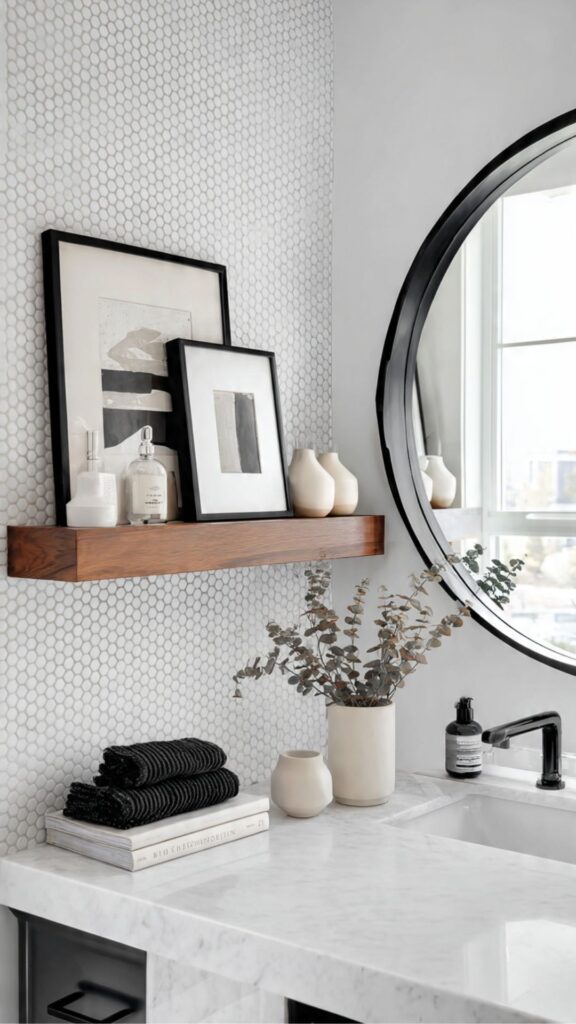
Black and white photography as bathroom wall decor occupies a unique sweet spot: it’s personal, timeless, and stylistically versatile enough to work in nearly any bathroom wall decor aesthetic. Unlike color art that can clash with paint, tile, or fixture colors, black and white photography maintains visual harmony regardless of the surrounding palette. This makes it a particularly safe and sophisticated choice for bathrooms that are transitioning through design phases or where the owner doesn’t want to commit to a specific color story in the art. It reads as elegant and intentional without requiring a perfectly coordinated room to support it.
The content of black and white bathroom wall decor photography spans a wide range. Fine art figure photography (tasteful, abstract, non-explicit) is a popular choice for adult master bathrooms where sophistication and sensuality are design goals. Architectural photography cityscapes, bridge structures, urban geometry brings graphic energy and intellectual interest.
Landscape photography in black and white misty forests, crashing waves, empty deserts creates a contemplative, meditative quality ideal for bathrooms designed as relaxation retreats. Personal photographs converted to black and white and printed on high-quality paper can add deep sentimental value while maintaining the visual elegance of the monochrome palette.
Framing choices matter enormously for black and white photography in bathrooms. Thin black metal frames maximize the graphic, contemporary quality. Wide white mats (with narrower black frames) give the photographs a fine-art gallery presentation. Frameless mounting on acrylic or direct printing on aluminum panels gives a sleek, modern look that suits contemporary bathrooms with minimal ornamentation.
For large walls, consider a single oversized print (30″x40″ or larger) rather than a gallery of smaller pieces a single commanding black and white image in a large format has a presence and stillness that a busy arrangement of smaller frames cannot achieve.
Printing Tip: For long-lasting bathroom wall decor photography prints, request printing on chromaluxe aluminum panels or use UV-coated acrylic-mounted prints. Both are moisture-resistant and dramatically more durable in bathroom environments than standard paper prints behind glass.
Wicker & Rattan Accents:
Natural Material as Sculptural Wall Decor
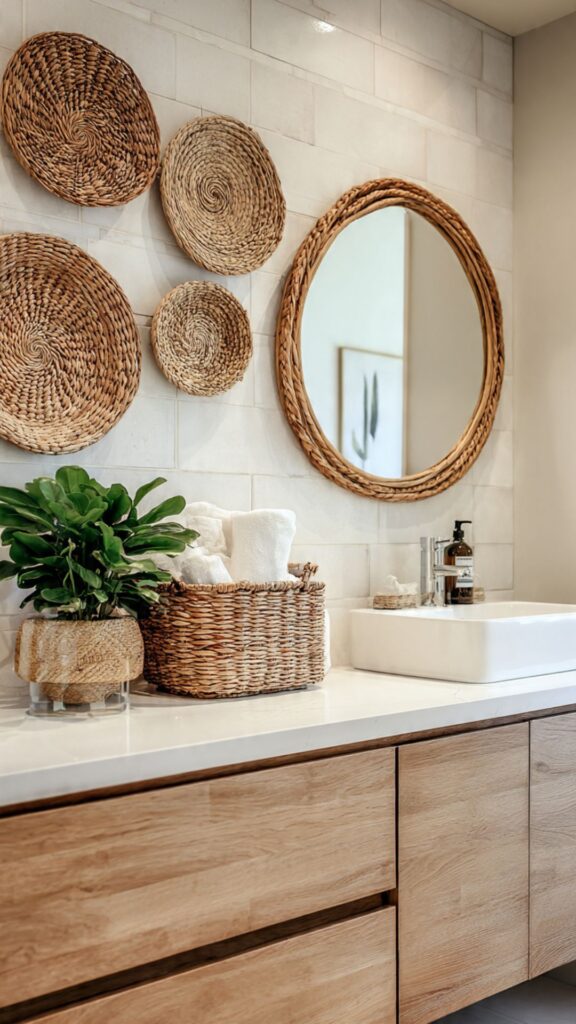
Wicker and rattan wall decor has surged in popularity as the organic modern and coastal grandmother aesthetics have taken hold in interior design. These natural materials bring warmth, texture, and a handcrafted quality to bathroom wall decor particularly effective in spaces that feel cold, clinical, or over-tiled. Rattan sunburst mirrors, wicker plate wall arrangements, woven rattan art panels, and decorative wicker baskets hung as wall decor all fall into this category. The appeal is multidimensional: these materials are sustainably sourced, visually warm, lightweight for wall mounting, and remarkably affordable relative to their visual impact.
The rattan sunburst mirror deserves special mention as one of the most high-impact, budget-friendly single items in bathroom wall decor. A well-chosen rattan mirror typically 24–36 inches in diameter adds warmth, roundness, and organic texture to a bathroom wall decor while also functioning as a reflective surface that expands perceived space. When positioned to catch window light, a rattan sunburst mirror creates dappled, golden reflections that animate the wall throughout the day as light shifts.
Pair with white walls and neutral stone countertops for a coastal or resort-inspired aesthetic. Wicker plate wall arrangements groupings of woven rattan or seagrass plates mounted at varying heights are an underused form of bathroom wall decor art that is simultaneously sculptural and textural. Plates of 8–14 inch diameters in a cluster of five to seven create a bohemian, layered composition that photographs beautifully and feels genuinely handcrafted.
Consider combining round and oval plates for shape variety. Humidity tolerance is generally good for rattan it’s a tropical material by nature but avoid placing these pieces directly inside shower zones where persistent water contact would cause deterioration over time.
💡 Pro Tip: Mix wicker and ceramic elements a rattan mirror alongside a ceramic wall vase holding dried pampas grass creates an earthy, layered composition that feels curated rather than themed or costume-like.
3D Wall Panels:
Texture, Shadow, and Architectural Depth
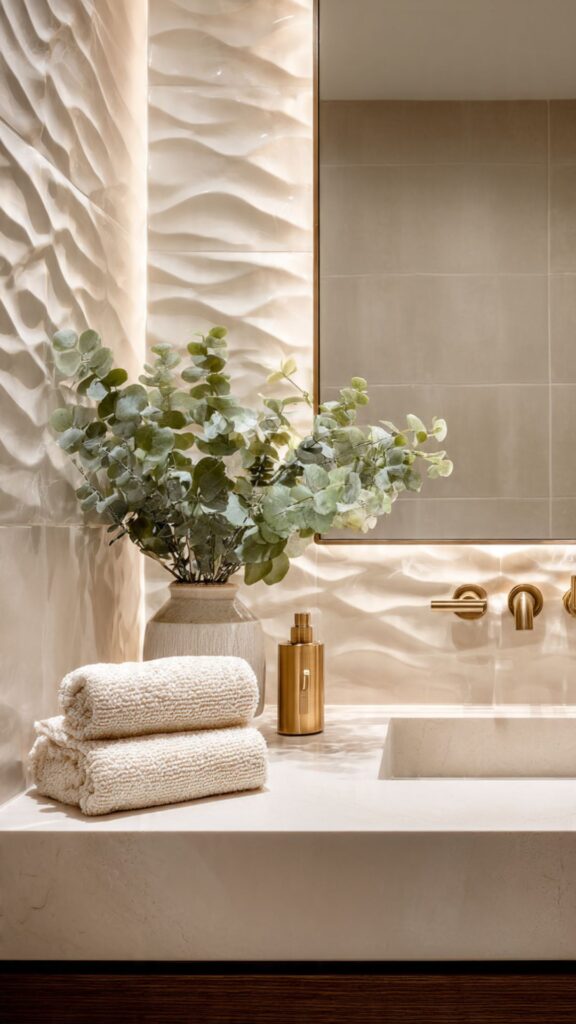
Three-dimensional wall panels are among the most avant-garde and overlooked forms of bathroom wall decor. Unlike flat art or paint treatments, 3D panels create physical depth on the wall surface they interact with light to cast moving shadows that shift throughout the day as natural light changes direction. This dynamic quality makes them unlike any other wall treatment: they’re never quite the same twice.
Panel materials include gypsum plaster, PVC, bamboo composite, cork, and solid wood each bringing a different texture quality, from the clean geometric precision of molded plaster to the warm organic randomness of cork or bamboo.
For bathrooms specifically, PVC 3D wall panels are the most practical choice. They’re moisture-resistant, lightweight, easy to cut and install with adhesive, and available in an enormous range of patterns from geometric hexagons and diamonds to organic wave patterns and brick-like textures. They can be painted any color, meaning a white PVC 3D panel wall can be transformed with a coat of deep teal, charcoal, or warm terracotta to become a dramatically personalized feature wall.
Many homeowners install them on a single accent wall behind the bathtub or facing the bathroom wall decor entry to create maximum impact with minimal material cost. The interplay of 3D panels with lighting is what makes them truly spectacular in bathrooms. Wall-grazing light sconces or strip lighting positioned close to and parallel with the panel surface exaggerates the texture dramatically, creating deep, dramatic shadow play that flat wall art simply cannot achieve.
For a subtle effect, use diffuse overhead lighting that softens the shadows. For dramatic effect in an ensuite or spa bathroom, directional accent lighting aimed at a 3D feature panel wall creates a sculptural, almost theatrical quality that elevates the entire room. This technique is frequently used in luxury hotel bathrooms and is increasingly accessible for residential applications.
Installation Note: 3D wall panels require a level, clean surface and proper adhesive. Always prime bare walls before installing panels and use a notched trowel to apply panel adhesive evenly for a flat, professional-looking result without warps or gaps.
Bring in natural light — get inspired by our Sunroom Ideas!
Decorative Framed Tiles:
Art That Bridges Craft and Culture
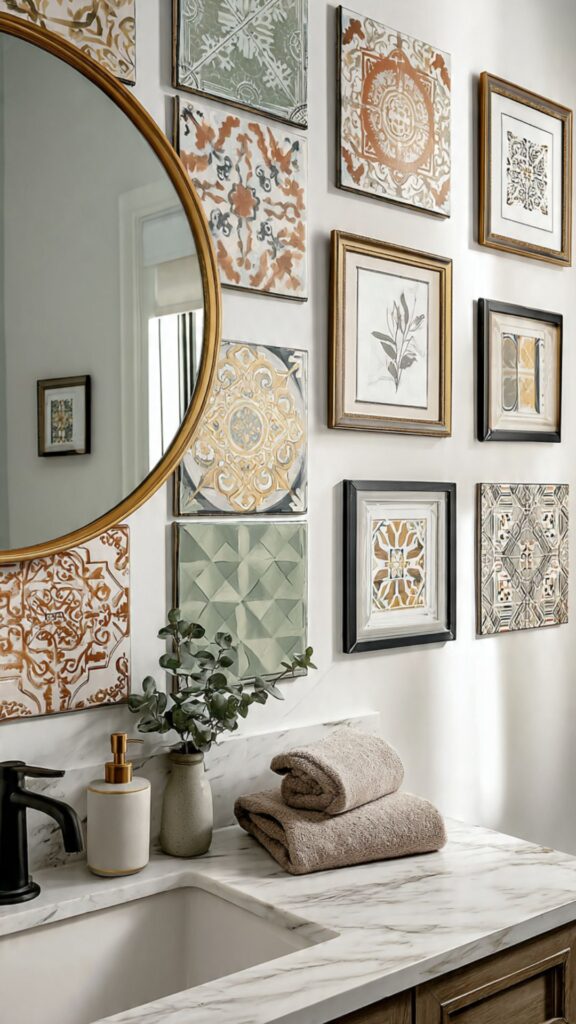
Decorative framed tiles are a deeply underappreciated form of bathroom wall decor art. Individual handpainted or handcrafted ceramic tiles mounted and framed as standalone art pieces rather than used for wall covering bring an authenticity and cultural richness that most other wall decor categories cannot match.
Portuguese azulejo tiles with their intricate blue-and-white patterns, Mexican Talavera tiles with hand-painted florals, Turkish Iznik tiles with vivid geometric motifs, and Japanese Imari-style tiles all function beautifully as framed wall art. They connect the bathroom wall decor to a broader cultural and craft tradition that feels genuinely meaningful.
Framing individual tiles is simpler than it might seem. A basic shadow box frame from a craft store in a depth that accommodates the tile’s thickness is all that’s needed. Foam board backing holds the tile in place without adhesive damage.
A series of three or five matched or complementary tiles arranged in a horizontal or vertical line creates a gallery-quality installation that reads as intentional and well-considered. For maximum visual impact, choose tiles with graphic color or pattern and mount them against a plain, muted wall where the tile art becomes the single visual focal point.
Beyond traditional decorative tiles, consider contemporary ceramic art tiles hand-thrown with intentional glazing irregularities, or pressed with botanical or animal impressions. Many ceramic artists sell individual tiles as art objects, and purchasing from artisans supports small craft businesses while bringing genuinely original work into your home. Hand-painted tile reproductions of famous artworks Van Gogh’s patterns,
William Morris’s botanical designs, or Arts & Crafts movement motifs are also widely available and bridge the gap between fine art prints and traditional tile craft. These make particularly strong gifts and conversation pieces in bathroom wall decor spaces where guests spend meaningful time.
💡 Pro Tip: Protect your framed tile wall art by using UV-protective glass or acrylic in the frame. This prevents the colors from fading from steam and indirect light exposure over time particularly important for handpainted tiles where pigment permanence can vary.
Minimalist Abstract Art:
Calm, Considered, and Quietly Powerful
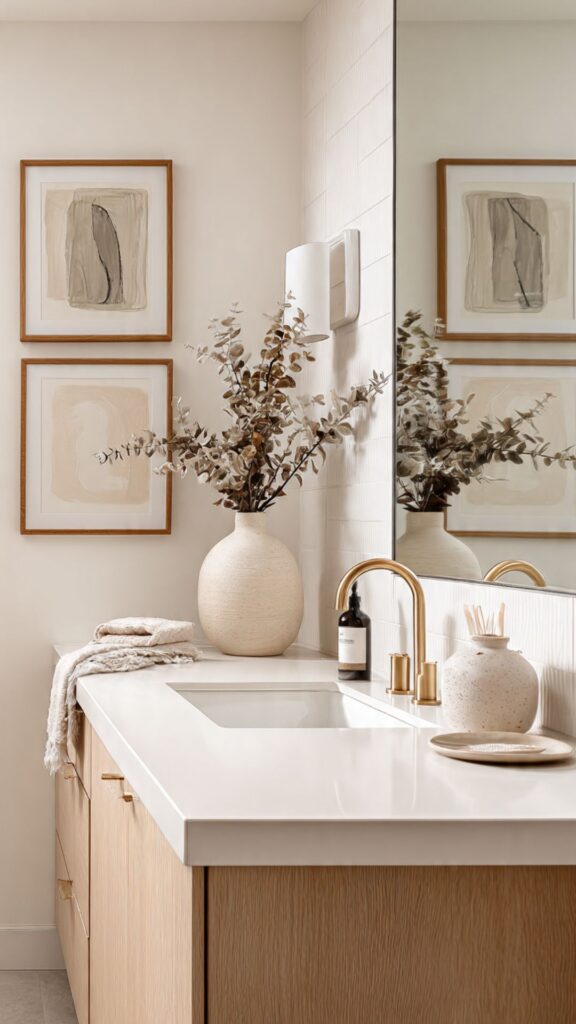
Minimalist abstract art characterized by simple shapes, limited color palettes, and generous negative space is one of the most sophisticated and enduring choices for bathroom wall decor. In a space designed for quiet rituals and mental decompression, art that asks little of the viewer but rewards close attention is ideal.
A single large-format canvas with soft organic brushstrokes in neutral tones, a framed ink wash painting with one gestural line, or a muted color field print with subtle tonal variation these pieces feel calm and contemplative in a way that busier art cannot achieve.
The growing influence of Japandi design (a fusion of Japanese wabi-sabi aesthetics and Scandinavian minimalism) has made minimalist abstract art particularly relevant in contemporary bathrooms. The Japandi bathroom ethos values imperfection, natural materials, and emptiness as a design quality and minimalist art embodies all of these values.
Wabi-sabi-inspired artworks that celebrate aged textures, cracked surfaces, and imperfect brushwork are deeply aligned with this movement and resonate particularly well in bathrooms with natural stone surfaces, wooden accents, and muted neutral color palettes.
For those who want to try this style without significant investment, watercolor experiments on quality art paper can produce surprisingly sophisticated minimalist results. Abstract line drawings in a single ink color especially when printed oversized and framed with a wide mat have the visual gravity of expensive fine art at a fraction of the cost.
The“less is more” principle applies forcefully to minimalist bathroom wall decor art: a single well-chosen, properly scaled piece on an otherwise blank wall is infinitely more powerful than filling every surface with competing visual information. The white space around the artwork is itself part of the composition and in a bathroom, that breathing room is a gift to the senses.
Curation Principle: Resist the impulse to fill every wall. In minimalist bathroom wall decor design, one commanding piece of abstract art properly scaled and positioned creates more visual richness than five smaller pieces competing for attention. Restraint is a skill, and its reward is serenity.
Final Thoughts
Your bathroom wall decor hold far more potential than most people realize. From living plant walls and artisan tile arrangements to minimalist abstract art and handcrafted macramé, the world of bathroom wall decor is rich, diverse, and deeply personal. The right choices made with your specific space, aesthetic, and lifestyle in mind can transform a purely functional room into a daily sanctuary that supports your wellbeing and reflects your taste.
You don’t need to renovate or overspend. A single statement mirror, a curated floating shelf, or a piece of botanical art can dramatically shift how your bathroom wall decor feels. Start with one idea from this guide that resonates most strongly, execute it well, and build from there. The best bathroom wall decor is always the one that feels like yours.
Team TrandyVilla is the passionate home decor team behind Trandy Villa, where style meets comfort in everyday living. The team loves transforming simple spaces into beautiful, functional homes through smart ideas, budget-friendly hacks, and modern design trends. Their content focuses on helping readers create homes that feel both stylish and personal without spending too much.