
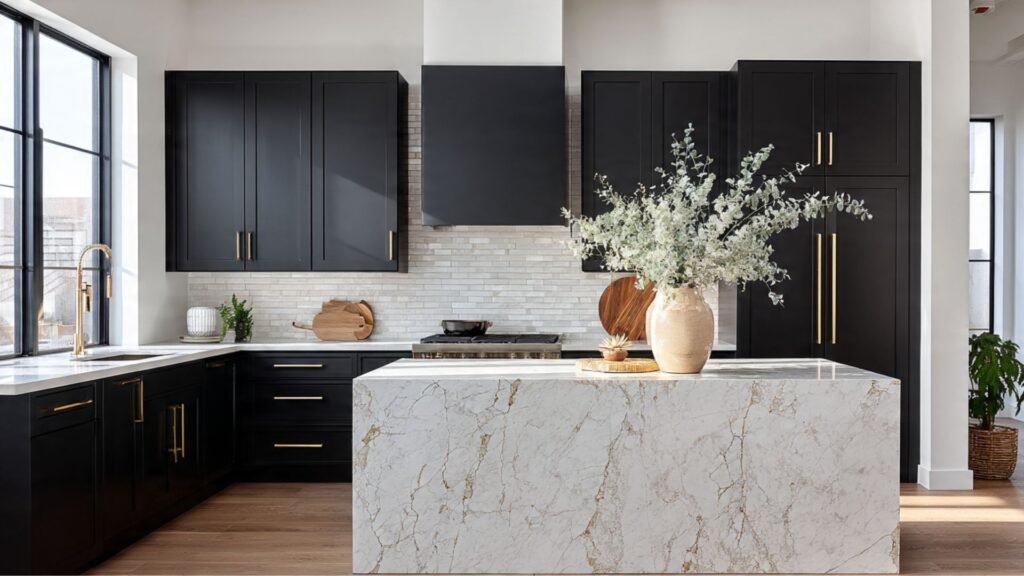
Black kitchen cabinets have moved far beyond a passing trend. Today, they represent a deliberate, design-forward choice made by homeowners who want kitchens that feel sophisticated, grounded, and unmistakably modern. Unlike white or beige cabinets that can feel generic, black cabinetry creates instant visual depth and anchors the entire room.
Black kitchen cabinets are dark-toned storage units installed in kitchens to create a bold, sophisticated look. They come in matte, glossy, and textured finishes. Homeowners choose them to add depth, contrast, and visual strength to their kitchen space. These cabinets pair well with light countertops, gold hardware, and open shelving. They suit modern, farmhouse, and transitional kitchen styles equally. Black cabinetry transforms an ordinary kitchen into a striking, design-forward space with lasting appeal.
Most homeowners overlook one powerful design move that instantly elevates any kitchen and it starts with the right cabinet color. Black kitchen cabinets deliver bold contrast, timeless style, and a high-end feel that transforms the entire space dramatically.
Black kitchen cabinets work beautifully with marble countertops, butcher block surfaces, and colorful backsplash tiles. Matte finishes reduce fingerprints and suit minimalist designs. Glossy finishes reflect light and create a luxurious atmosphere. Two-tone combinations with white upper cabinets balance the boldness effectively. Gold and brass hardware adds warmth against dark cabinetry. These cabinets suit small and large kitchens with equal design confidence.
Matte Black Cabinets for a Sleek:
Contemporary Look
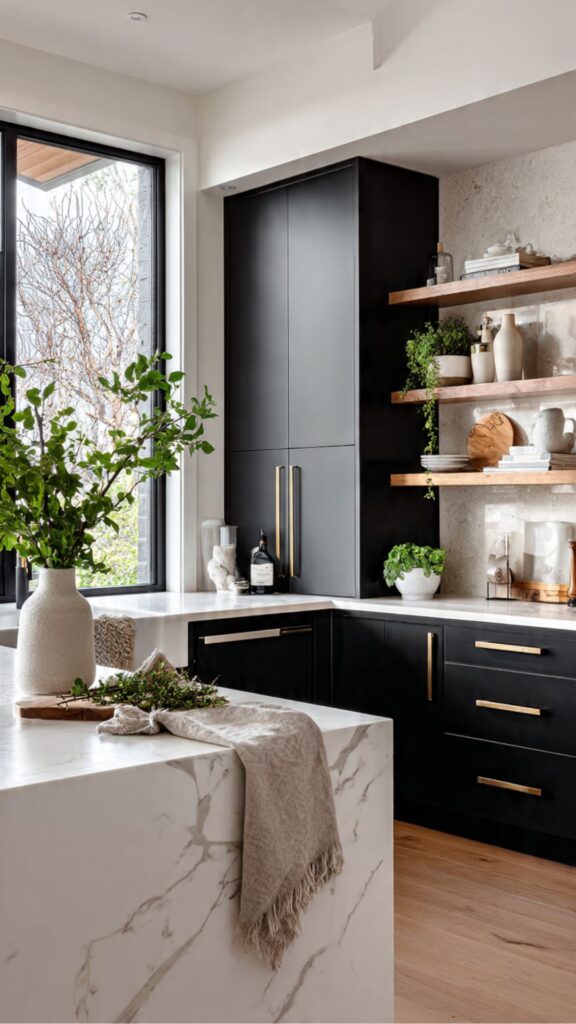
Matte black kitchen cabinets are the go-to choice for homeowners seeking a clean, understated aesthetic. Unlike high-gloss finishes, matte surfaces absorb light rather than reflecting it, which gives the kitchen a calm, gallery-like atmosphere. This finish works especially well in kitchens with large windows or skylights, where natural light can counterbalance the darkness of the cabinetry.
The result is a room that feels intentional and refined not heavy or oppressive. One often-overlooked benefit of matte black kitchen cabinets is its ability to hide fingerprints and smudges far better than glossy alternatives. For busy family kitchens, this is a major practical advantage.
Matte finishes are also highly compatible with a wide range of hardware brushed brass, matte gold, and satin nickel all look stunning against a flat black surface. These hardware choices add warmth and contrast without competing with the cabinetry.
From a design strategy perspective, matte black kitchen cabinets pair best with lighter countertops such as white quartz, light marble, or natural oak butcher block. This contrast creates visual balance and prevents the kitchen from feeling closed in. If you’re working with a smaller kitchen, consider using matte black on lower cabinets only, leaving upper cabinets white or off-white to maintain an open, airy feel. This two-tone approach has become increasingly popular in 2025–2026 kitchen design trends.
Looking ahead, matte black kitchen cabinets is expected to remain a dominant finish well into the late 2020s as minimalist and Japandi-inspired design philosophies continue to gain traction. Its timeless, non-reflective quality ensures it doesn’t feel trendy in a short-lived way. Investing in matte black cabinetry is, therefore, a decision with strong long-term design value.
Glossy Black kitchen Cabinets for a High-Drama:
Luxurious Feel
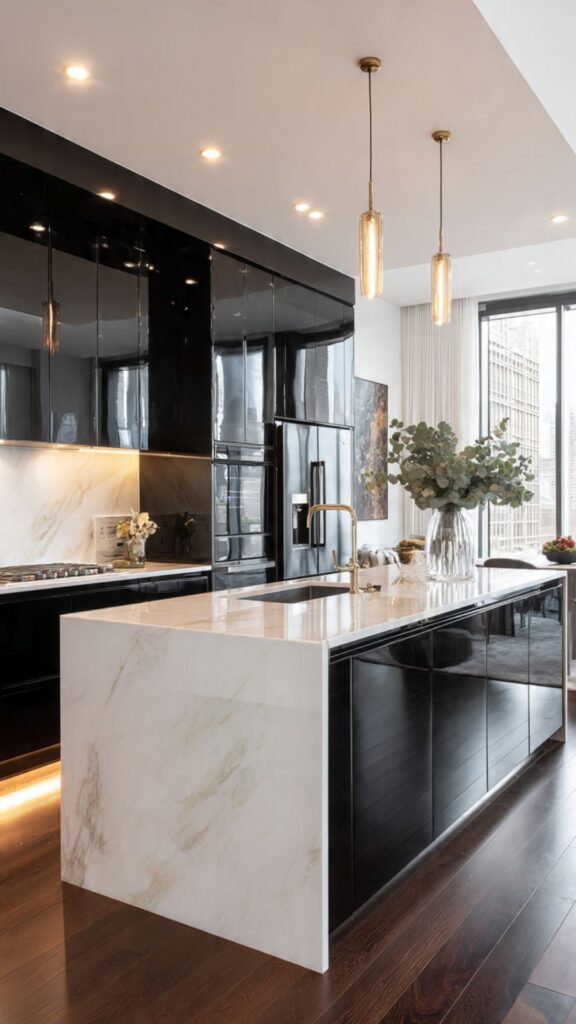
If matte black is the quiet achiever, glossy black kitchen cabinets are the showstopper. The reflective surface creates a mirror-like effect that bounces light around the room, making the kitchen feel larger and more dynamic. This finish is particularly popular in contemporary and Hollywood Regency-inspired kitchen designs where drama and luxury are the goals. Think of it as the kitchen equivalent of a lacquered grand piano bold, polished, and undeniably impressive.
Glossy black kitchen cabinets work best in kitchens with strong, curated lighting. Recessed LED lighting, pendant lights, and under-cabinet lighting all play beautifully off the reflective surface. However, it’s worth noting that glossy finishes show fingerprints and watermarks much more readily than matte options. This makes them better suited for kitchens used more for entertaining than daily heavy cooking. If your kitchen doubles as a social hub where aesthetics take priority, glossy black kitchen cabinets is a strong contender.
For countertops, pairing glossy black kitchen cabinets with waterfall-edge marble or quartz creates a seamless, ultra-modern look. Dark countertops in charcoal or deep grey can also create a tone-on-tone effect that feels genuinely high-end.
Gold or chrome hardware elevates the luxurious quality further, especially when combined with matching faucet finishes. The key is to keep other design elements minimal let the glossy cabinetry do the heavy lifting. One future-forward trend is the use of ultra-high-gloss lacquer finishes on handleless cabinets, creating a sleek, European-style kitchen with almost no visual interruption.
This style is gaining fast momentum in luxury new-builds and upscale kitchen renovations. If your budget allows, custom lacquered cabinetry from specialist manufacturers delivers a finish that mass-market options simply cannot replicate.
Complete Your Home’s Elegant Dark Theme with These Lovely Bathroom Wall Decor Ideas.
Two-Tone Black and White Kitchen Cabinets:
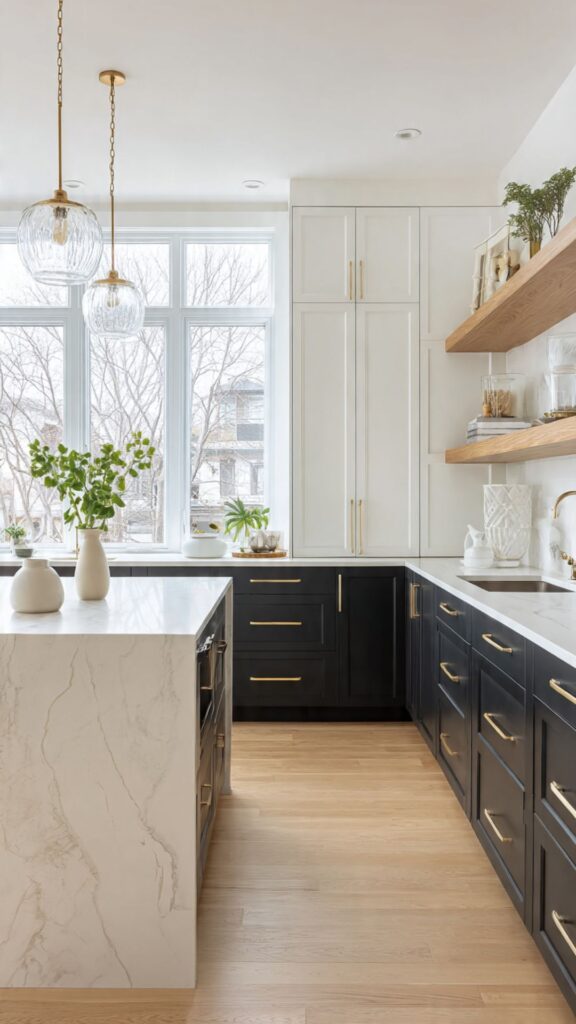
The two-tone kitchen cabinet trend pairing black and white cabinetry is one of the smartest design strategies available today. Rather than committing fully to all-black or all-white, this approach creates balance, contrast, and visual interest.
The most common configuration places white upper cabinets and black lower cabinets, which keeps the eye level of the room light while grounding the lower portion with depth. It’s a formula that works in almost every kitchen size and layout.
This approach is particularly effective in open-plan kitchens where the cooking space flows into a living or dining area. The black lower cabinets act as a visual anchor, delineating the kitchen zone without the need for walls or partitions. Meanwhile, the white upper cabinets keep the space feeling connected to the rest of the room.
It’s a design technique borrowed from high-end interior design that’s now accessible to anyone undertaking a kitchen renovation. Hardware choices become even more important in two-tone kitchens. Matching hardware finishes across both upper and lower cabinets such as brushed brass or matte black pulls creates cohesion and prevents the design from feeling disjointed.
Alternatively, using contrasting hardware on each set of cabinets (gold on white, matte black on black) adds a more eclectic, layered feel for homeowners who prefer personality over polish.
From an SEO and interior design perspective, searches for “black and white kitchen cabinets” have grown steadily year over year, indicating that homeowners are increasingly drawn to this thoughtful, balanced approach. It’s also a smart investment two-tone kitchens photograph exceptionally well, adding perceived value if you ever choose to sell your home.
Black Kitchen Cabinets with Gold Hardware:
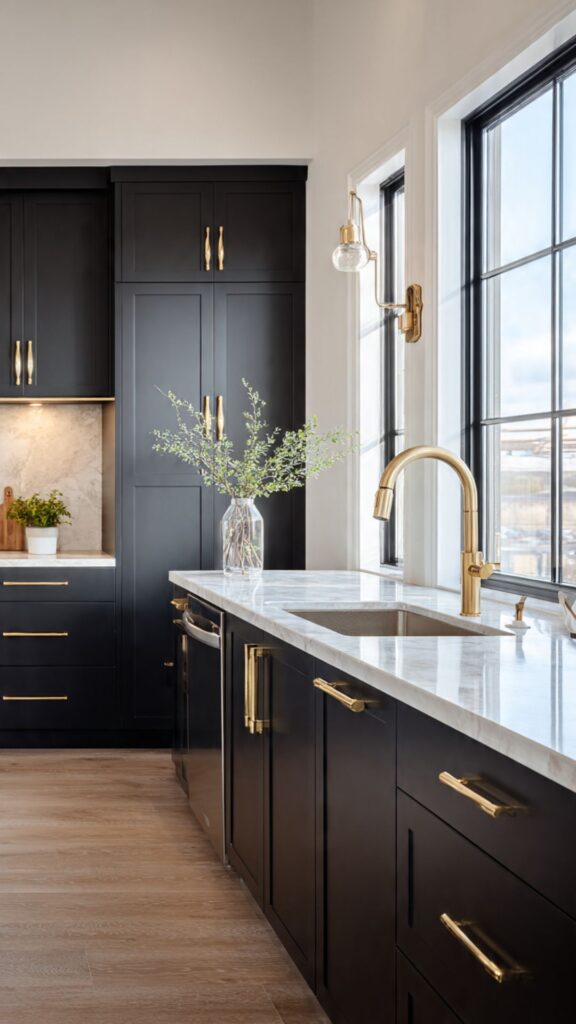
One of the most talked-about pairings in modern kitchen design is black kitchen cabinets with gold or brass hardware. This combination balances the boldness of black with the warmth of metallic accents, resulting in a kitchen that feels both luxurious and inviting. It avoids the coldness that can sometimes come with all-black or all-silver kitchens, and it adds a timeless quality that resonates across multiple design styles from Art Deco to contemporary farmhouse.
The specific shade of gold matters more than most homeowners realize. Polished gold leans opulent and formal, making it ideal for traditional or transitional kitchens. Brushed brass, on the other hand, has a softer, more antique quality that suits farmhouse, Scandinavian, and transitional aesthetics.
Matte gold is the most versatile option, sitting comfortably between the two and working in both modern and classic settings. Choosing the right tone of gold ensures the hardware enhances rather than overwhelms the cabinetry.
Beyond cabinet pulls and knobs, the gold accent can be extended to other kitchen elements for a curated, layered look. Gold faucets, light switch plates, pendant lights, and even pot racks can all carry the metallic theme throughout the space. This kind of intentional repetition of a single accent color is a hallmark of professionally designed kitchens it creates rhythm and coherence without feeling overdone.
From a market trend perspective, the black-and-gold kitchen aesthetic is well established enough to feel timeless rather than trendy, yet specific enough to feel intentional and designed. It photographs extremely well for real estate listings and interior design portfolios alike.
For homeowners seeking maximum impact with a single change, swapping existing hardware for brushed brass on black or navy cabinets is one of the highest return-on-investment updates available.
Black Shaker Cabinets:
Classic Style Meets Modern Edge
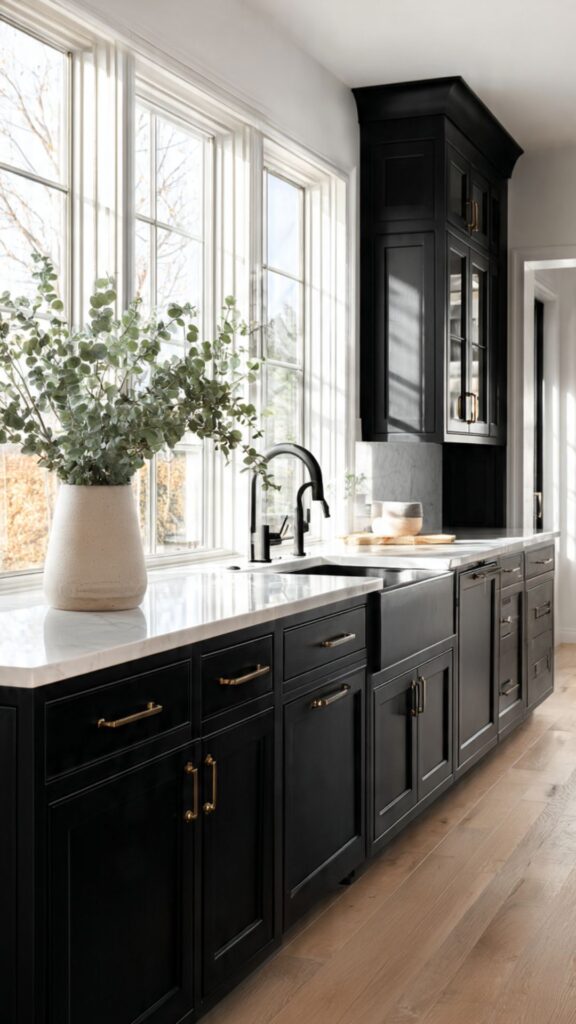
Shaker-style cabinets are the most enduringly popular cabinet profile in North America, beloved for their clean lines, recessed panel design, and timeless versatility. When rendered in black, shaker cabinets undergo a remarkable transformation they retain their traditional craftsmanship while taking on a strikingly contemporary edge. The result is a kitchen that bridges traditional and modern aesthetics effortlessly, appealing to a broad range of tastes.
Black shaker cabinets work particularly well in transitional kitchens spaces that blend classic architectural details with modern finishes and appliances. A farmhouse sink paired with black shaker cabinets and quartz countertops, for example, creates a kitchen that feels warm and functional without being dated.
This flexibility is one reason why black shaker cabinets consistently top renovation wishlists. They’re approachable enough for those new to bold colors yet sophisticated enough to satisfy design enthusiasts. The Shaker profile also lends itself well to painted finishes, which means homeowners who want to experiment with black but fear commitment can choose paintable MDF or solid wood shaker cabinets making future color changes straightforward.
This is a particularly savvy choice for those who anticipate selling their home in the next five to ten years and want flexibility in how they present the kitchen to potential buyers. One design tip often missed in competitor guides: the depth of the recessed panel on shaker cabinets creates subtle shadow lines that add dimensionality to a black kitchen cabinets.
In natural daylight, these shadow lines shift throughout the day, giving the kitchen a dynamic quality that flat-panel cabinets simply don’t offer. This textural quality makes black shaker cabinets genuinely more interesting to live with over time.
Black Kitchen Cabinets with Butcher Block Countertops:
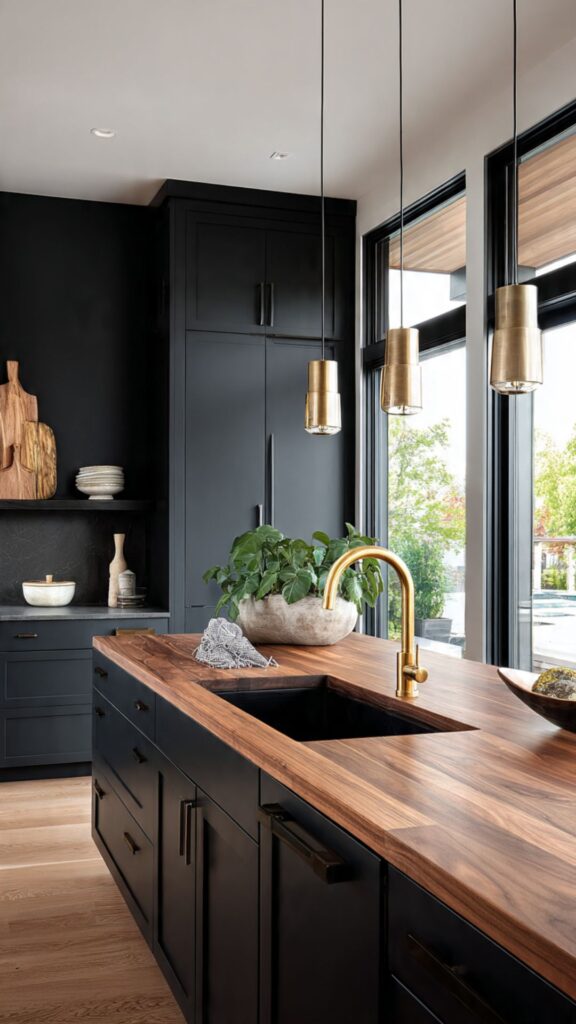
The pairing of black kitchen cabinets with butcher block countertops is a design choice that combines warmth with drama. Black is inherently bold and dramatic; butcher block is warm, organic, and natural. Together, they create a kitchen that feels both grounded and livable never cold or sterile. This combination has become a signature of the organic modern design movement, which emphasizes natural materials alongside muted, dark tones.
Butcher block countertops are available in a range of wood species, each offering a different level of warmth and grain complexity. Maple is the lightest and most refined, ideal for kitchens where you want the warmest possible contrast against black cabinetry.
Walnut is the richest and most dramatic, offering deep brown tones that create a tone-on-tone effect with the black. Oak and acacia fall in between, offering more pronounced grain patterns that add texture and visual interest. Maintenance is an important consideration that many design articles underemphasize.
Butcher block countertops require periodic oiling typically every few months to prevent drying and cracking. In a kitchen with black cabinetry, this maintenance routine is well worth the effort, as the payoff in warmth and character is substantial. Homeowners who prefer lower maintenance can opt for a sealed, non-food-contact version of butcher block for areas away from the sink, reserving easier-care quartz for high-use zones.
From a cost perspective, butcher block is one of the most affordable countertop materials available, making it an excellent choice for homeowners who have invested significantly in black cabinetry and need to balance the renovation budget. This combination high-impact black cabinets plus affordable wood countertops delivers a premium aesthetic at a fraction of what marble or engineered stone would cost.
Black Lower Cabinets with Open Upper Shelving:
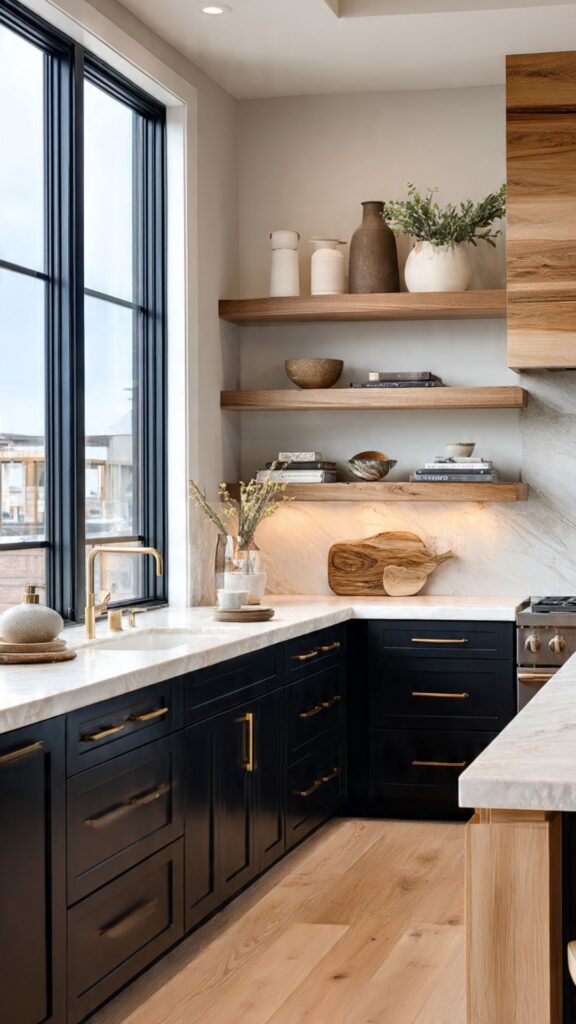
One of the most innovative and space-enhancing approaches to black kitchen cabinets design involves replacing upper cabinets entirely with open shelving. By keeping black cabinetry on the lower level and installing floating wooden or metal shelves above, homeowners create a kitchen that feels dramatically more open, personal, and visually layered. This approach has grown in popularity as open-concept living spaces have normalized more relaxed, lived-in kitchen aesthetics.
Open shelving above base black kitchen cabinets offers a canvas for intentional styling. Ceramic dishes, glass jars, cookbooks, and small plants add color and personality to what might otherwise be a predominantly dark space. The contrast between the curated items on open shelves and the sleekness of the black lower cabinetry creates a kitchen that looks genuinely designed rather than merely functional.
This is a strategy that interior designers use in high-end residential projects but that any homeowner can replicate. The practical concern most people raise about open shelving is dust accumulation and the effort required to keep it looking neat. This is a valid consideration, but one that is easily managed with a thoughtful shelf-styling strategy.
Grouping items by color or function, keeping everyday items within easy reach, and storing lesser-used items in the lower black cabinets resolves most of the practical challenges. A weekly quick-wipe of the shelves is all that’s needed to keep the display looking fresh.
This design approach also works particularly well in galley kitchens and narrow spaces where full upper cabinets can feel claustrophobic. Replacing upper cabinets with shelves while keeping the base cabinets black kitchen cabinets creates a visual trick that makes the ceiling feel higher and the room feel wider. It’s one of the more underutilized tools in small kitchen design and deserves far more attention than it typically receives.
If You Love Bold Kitchens, You Will Absolutely Adore These Farmhouse Kitchen Ideas.
Black Kitchen Cabinets in Small Kitchens:
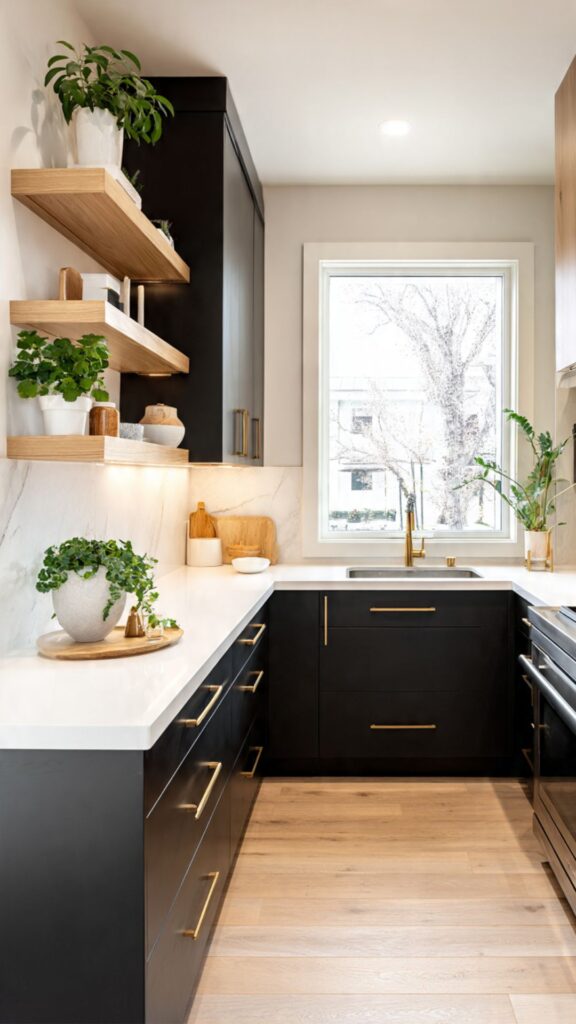
There’s a persistent design myth that dark colors shrink small spaces and should therefore be avoided in compact kitchens. This rule, while well-intentioned, is an oversimplification that prevents many homeowners from accessing the full potential of black cabinetry. The truth is that when executed correctly, black kitchen cabinets in small kitchens can create a sense of depth and intentionality that white or light-colored cabinets simply cannot achieve.
The key to making black work in a small kitchen is strategic contrast. Light countertops white quartz, light grey marble, or pale wood provide the visual contrast needed to prevent the room from closing in. Light-colored backsplashes, particularly large-format tiles that minimize grout lines, expand the perceived wall space and keep the upper portion of the kitchen bright.
Adequate lighting is non-negotiable: recessed ceiling lights, under-cabinet LED strips, and a statement pendant light work together to fill the space with light and prevent shadows from accumulating in corners. Reflective surfaces are another powerful tool in the small kitchen with black kitchen cabinets.
A mirror-finish or large-scale ceramic tile backsplash, a glossy black kitchen cabinets finish, or stainless steel appliances all bounce light around the room and counteract any sense of darkness. Even a single reflective element such as a large over-range mirror or a metallic backsplash makes a measurable difference in how light and open the kitchen feels.
Designers working on compact luxury apartments increasingly use black cabinetry to create kitchens that feel deliberately designed rather than constrained by their size. A small kitchen with black kitchen cabinets and marble countertops reads as a sophisticated boutique space far more compelling than the same kitchen in beige or oak. The design confidence required to make this choice is, itself, a form of visual authority that elevates the entire home.
Black kitchen Cabinets with White or Marble Countertops:
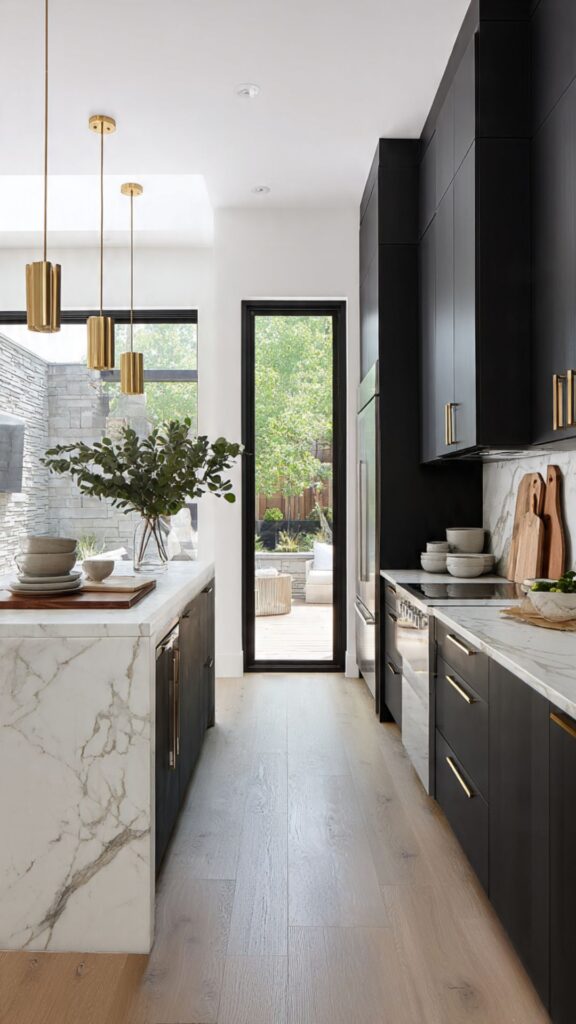
Few kitchen pairings are as classically compelling as black kitchen cabinets with white or marble countertops. This high-contrast combination is rooted in the same visual logic as black-and-white photography the drama of opposites, the clarity of contrast, and the timeless appeal of two non-negotiable classics. It’s a pairing that works across kitchen sizes, architectural styles, and design philosophies, making it one of the most versatile choices available.
White quartz is the most practical choice for homeowners who want the white-and-black look without the maintenance demands of natural stone. It’s non-porous, highly stain-resistant, and available in an enormous range of shades from pure white to warm cream. For those who prefer the organic variation and natural beauty of real stone, Calacatta or Carrara marble delivers a timeless elegance that quartz can only approximate. The slight veining in marble adds visual movement that complements the stillness of black cabinetry beautifully.
Waterfall edge countertops where the stone material continues vertically down the side of an island or cabinet run are particularly striking when paired with black cabinetry. The continuous flow of white or marble creates a sculptural quality that elevates the kitchen from functional to architectural. This detail is often seen in luxury kitchen renovations and is now increasingly accessible through high-quality quartz alternatives.
From a design longevity perspective, the black-and-white kitchen is one of the safest investments available. Unlike specific color trends that come and go, this foundational pairing has maintained its appeal across decades and design movements. Homeowners can update accessories, hardware, and accent colors over time without ever needing to change the underlying cabinetry and countertop combination.
Black Kitchen cabinets Island with White Perimeter Cabinets:
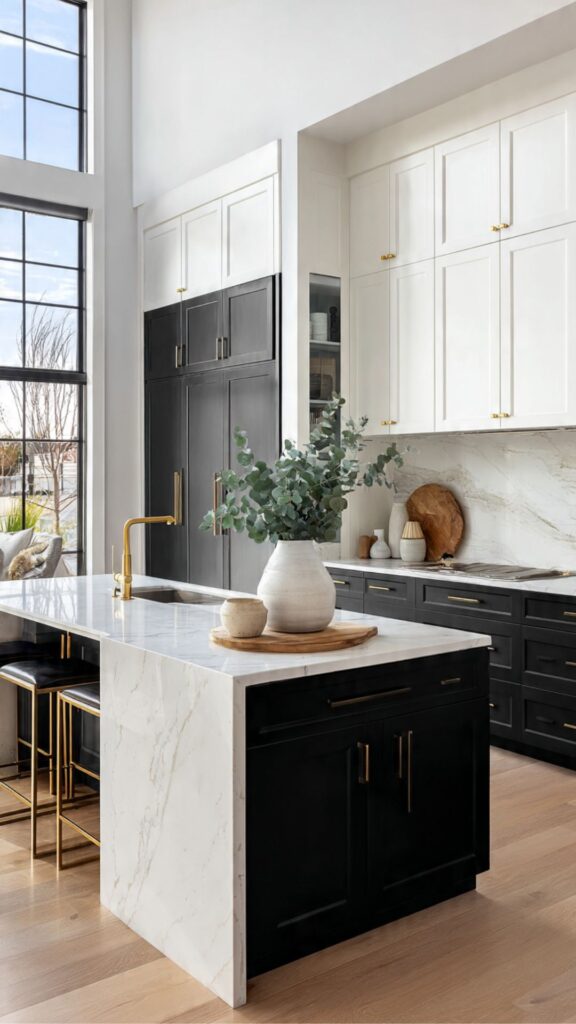
Using a black kitchen cabinets island as a standalone design statement against white perimeter cabinets is a strategy that offers the drama of black cabinetry without the full commitment. The island becomes the visual centerpiece of the kitchen a dark, grounding element around which the lighter perimeter cabinets and walls can breathe. This approach is particularly effective in large, open-plan kitchens where the island serves as both a functional workspace and an architectural focal point.
The island color contrast creates a natural gathering point, signaling to visitors that this is the heart of the kitchen. Black islands often feel more substantial and permanent than lighter alternatives, which contributes to the overall sense that the kitchen is well designed and purposeful. Adding a contrasting countertop material to the island such as butcher block on a black kitchen cabinets island while using quartz on white perimeter cabinets reinforces this sense of intentional differentiation and adds practical utility.
Seating configuration on a black island deserves special attention. Bar stools in natural materials rattan, leather, light wood provide warm contrast against the dark island cabinetry and prevent the seating area from feeling cold or unwelcoming.
Alternatively, upholstered stools in a deep jewel tone(forest green, navy, or burgundy) create a curated, layered color palette that elevates the kitchen’s overall sophistication. Lighting above the black kitchen cabinets island is critical. Pendant lights whether industrial, sculptural, or minimalist should be chosen with the island’s proportions in mind.
A single large pendant over a small island or three smaller pendants over a larger one are the most commonly recommended configurations. The pendant finish should complement the island’s hardware to create visual unity in what is, effectively, the most photographed corner of your kitchen.
Black kitchen Cabinets with Colored Backsplashes:
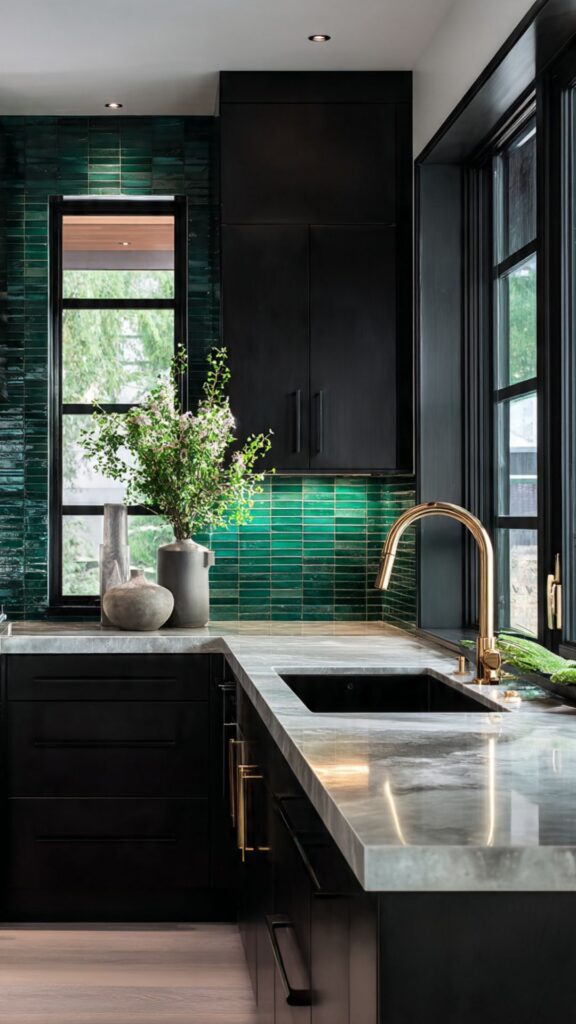
While white subway tiles are the default choice for kitchen backsplashes, pairing black kitchen cabinets with a colored or patterned backsplash is one of the most impactful and underexplored design moves available. Because black kitchen cabinets serves as a neutral anchor much like a dark wall in an art gallery it allows virtually any backsplash color to shine without competing or clashing. This gives homeowners extraordinary creative freedom to introduce personality through tile.
Emerald green or sage green backsplash tiles against black kitchen cabinets create a richly layered, jewel-toned kitchen that feels both modern and organic. This combination draws on the strong influence of biophilic design the incorporation of natural colors and materials into interior spaces which has become one of the defining trends of the 2020s. Terracotta, dusty rose, and warm amber backsplash tiles offer a warmer, more eclectic alternative, particularly suited to kitchens with natural wood accents.
Bold geometric or encaustic cement tile backsplashes work especially well with black cabinetry because the dark cabinets provide a stable visual frame that lets intricate tile patterns take center stage without overwhelming the room.
In a kitchen with lighter cabinetry, a busy tile backsplash can feel chaotic; against black, it feels curated and intentional. This is a principle that professional interior designers use regularly but that rarely appears in mass-market design guides.
For homeowners who want maximum impact with minimum risk, a full-height backsplash in a large-format tile whether colored or veined creates an immersive effect that photographs beautifully and adds genuine architectural interest. The absence of visible grout lines in large-format tiles also creates a cleaner, more seamless look that complements the bold simplicity of black cabinetry.
Black Cabinets in Farmhouse and Rustic Kitchen Designs:
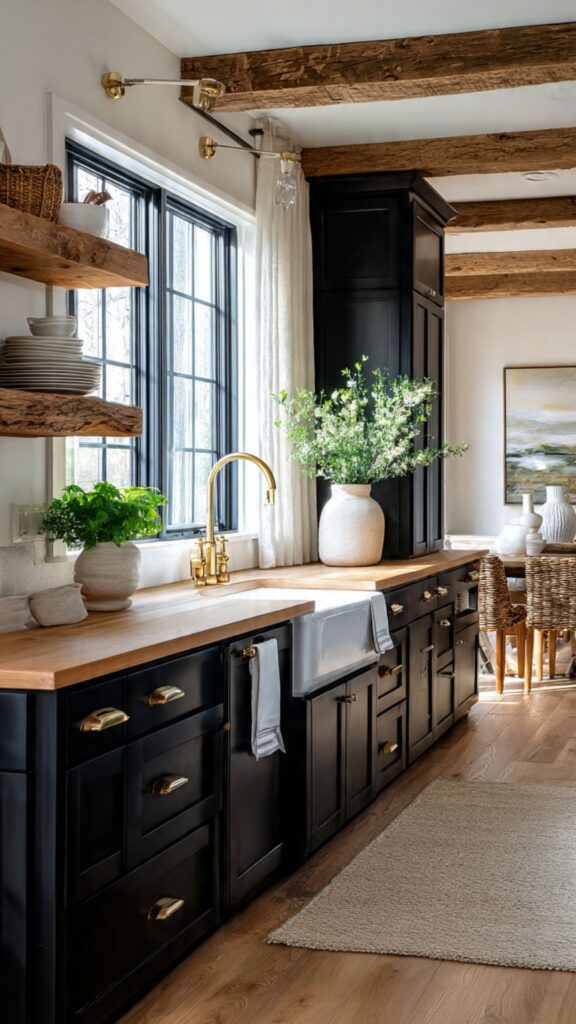
The intersection of black cabinetry and farmhouse design might seem counterintuitive at first farmhouse kitchens are traditionally associated with whites, creams, and natural woods. However, the evolution of the farmhouse aesthetic toward what designers now call “modern farmhouse” or “dark farmhouse” has opened significant space for black cabinetry in this beloved style category. The result is a kitchen that feels rooted, authentic, and deeply livable.
In a dark farmhouse kitchen, black cabinets are typically paired with shiplap or beadboard wall paneling in white or cream, which provides the textural warmth characteristic of the farmhouse style while allowing the cabinetry to command visual authority.
Exposed brick, stone, or wood beam ceilings add further rustic character. An apron-front farmhouse sink particularly in white or aged ceramic creates a beautiful focal point against black cabinetry, bridging the traditional and contemporary aspects of the design.
Hardware choices in the dark farmhouse kitchen lean toward oil-rubbed bronze, wrought iron, or antique brass materials with age, patina, and weight that align with the farmhouse’s reverence for craft and authenticity. These finishes have an organic quality that feels genuinely different from the sleek precision of modern hardware, making them the right choice for a kitchen that aims to feel collected over time rather than purchased all at once.
Open wood shelving, vintage-style pendant lights, and woven baskets used as storage accessories all reinforce the farmhouse ethos without undermining the boldness of the black cabinetry. This is a design style where accessories and details genuinely matter each element contributes to the sense that the kitchen has a history and a soul.
For homeowners who love character but also want a kitchen that feels current, the modern dark farmhouse is one of the most compelling options available today.
A Stunning Kitchen Deserves an Equally Beautiful Living Room — Have a Look
Caring for Black Kitchen Cabinets:
Maintenance Tips That Last
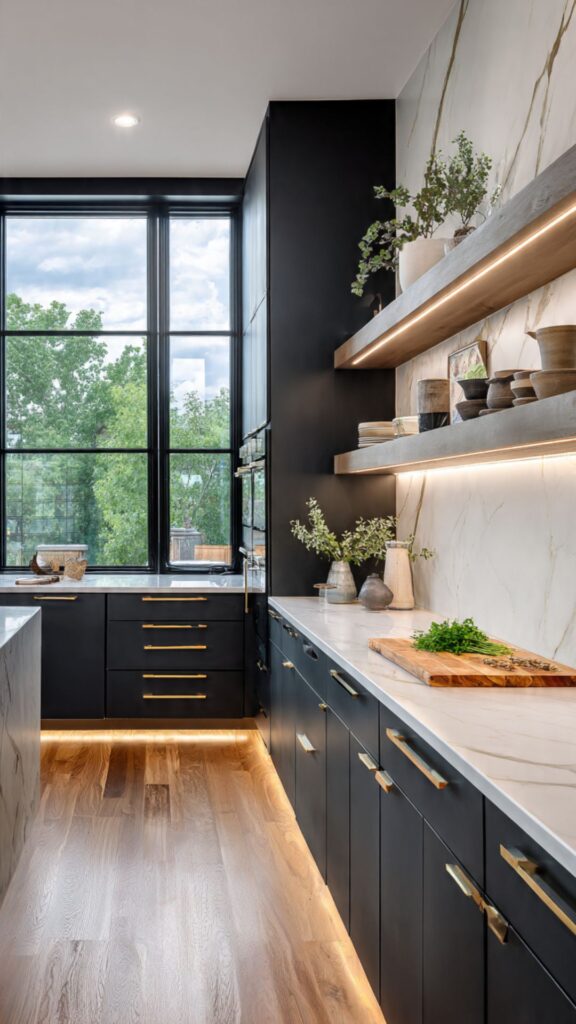
Black kitchen cabinets require a slightly different maintenance approach than lighter alternatives, and understanding this before you install them ensures years of lasting beauty. The primary challenge with black cabinetry is that dust, water spots, and cleaning product residue are more visible against dark surfaces than on white or grey cabinetry. However, this doesn’t mean black kitchen cabinets are high-maintenance it means they require the right maintenance routine, applied consistently.
For matte black finishes, the most important rule is to avoid abrasive cleaners and rough sponges, which can dull the surface over time. A soft microfiber cloth dampened with warm water and a small amount of dish soap is all you need for daily cleaning.
For tougher grease spots, a diluted white vinegar solution applied gently and wiped clean immediately is highly effective. Avoid spray cleaners that contain alcohol or acetone, as these can break down the finish over time and create dull patches that are difficult to repair.
Glossy black kitchen cabinets surfaces require slightly more frequent wiping because fingerprints and watermarks show more readily. Keeping a dry microfiber cloth nearby and doing a quick wipe-down after cooking sessions prevents buildup.
For a streak-free shine, a minimal amount of glass cleaner applied with a microfiber cloth (never sprayed directly onto the surface) delivers excellent results. Annual reapplication of a cabinet-specific protective wax or polish will extend the life of the finish significantly.
Hardware maintenance is often overlooked but contributes meaningfully to the overall appearance of black cabinetry. Brass or gold hardware should be wiped clean regularly and, depending on the finish, may benefit from an occasional application of a brass cleaner or protective wax. Matte and satin hardware finishes are generally lower maintenance. Checking and tightening hardware screws every six to twelve months prevents wobbling and maintains the clean, precise look that black cabinetry demands.
Conclusion
Black kitchen cabinets offer a rare combination of timeless elegance, design versatility, and long-term value that few other choices can match. Whether you opt for matte or glossy finishes, two-tone pairings, or bold backsplash combinations, black cabinetry gives your kitchen a visual authority that endures well beyond seasonal trends.
The key is choosing the approach that best suits your kitchen’s size, layout, and your own aesthetic preferences. Start with one idea from this guide, trust your instincts, and transform your kitchen into the bold, beautiful space it deserves to be.

Team TrandyVilla is the passionate home decor team behind Trandy Villa, where style meets comfort in everyday living. The team loves transforming simple spaces into beautiful, functional homes through smart ideas, budget-friendly hacks, and modern design trends. Their content focuses on helping readers create homes that feel both stylish and personal without spending too much.