
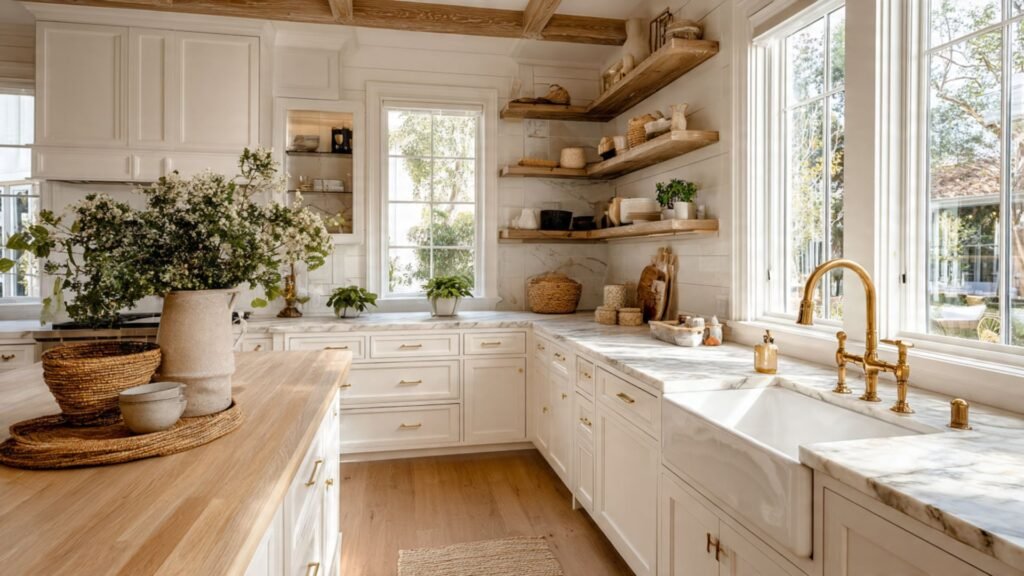
The farmhouse kitchen has evolved far beyond rustic clichés. Today it blends vintage warmth with modern efficiency making it one of the most enduring and liveable kitchen styles in home design. Whether you’re renovating fully or refreshing on a budget, these 12 ideas give you depth, direction, and design confidence.
A farmhouse kitchen is a warm, functional kitchen style rooted in rural American and European design traditions. It combines natural materials, simple cabinetry, and practical layouts to create a welcoming cooking space. The core motive of farmhouse kitchen ideas is clear: make the kitchen feel lived-in, comfortable, and useful. Key elements include apron-front sinks, shiplap walls, open shelving, butcher block countertops, and neutral color palettes. These ideas serve a purposeful goal to bring warmth into the home’s most used room. Farmhouse kitchen design suits both large country homes and compact urban spaces with equal effect.
A well-designed farmhouse kitchen transforms an ordinary cooking space into the warmest room in the home. It blends rustic charm with everyday function. Natural wood, vintage hardware, and simple white cabinetry work together to create a kitchen that feels timeless, welcoming, and beautifully practical for modern families.
Farmhouse kitchen ideas cover a wide range of design choices suitable for any home size or budget. Apron-front sinks add a classic focal point to the room. Open wooden shelves provide accessible storage and attractive display space. Shiplap walls contribute texture and architectural character without major renovation cost. Butcher block countertops bring natural warmth to cabinetry. Neutral tones, vintage-inspired hardware, and statement range hoods complete the overall look with purpose and style.
The Iconic Apron:
Front Sink:
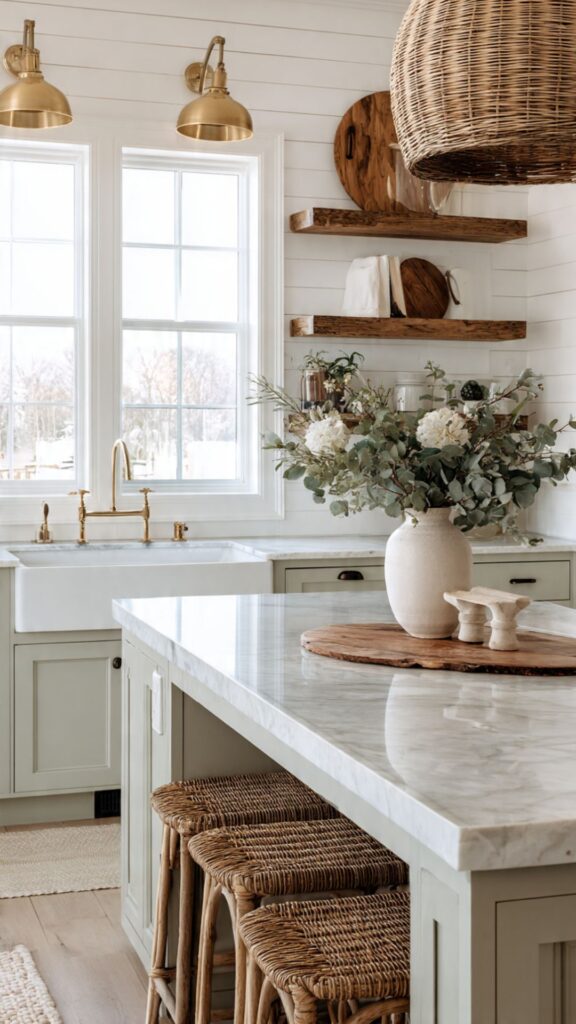
No element defines the farmhouse kitchen more immediately than the apron-front sink also known as a fireclay or farmhouse sink. Its deep, single-basin design dates back centuries, when farm households needed generous space to wash produce, scrub pots, and handle large cookware. Today, it still solves the same practical problems while delivering an unmistakable aesthetic anchor to your kitchen. If you’re choosing one feature that signals “farmhouse” clearly to any eye, this is it.
When selecting an apron sink, material matters enormously. Fireclay is the gold standard: it’s dense, chip-resistant, and develops a gentle patina over years of use. Cast iron sinks coated in porcelain enamel offer heft and heat retention but require careful maintenance. Stainless steel apron sinks, increasingly popular in “modern farmhouse” kitchens, offer durability and a lighter aesthetic without losing the characteristic silhouette.
Your countertop material whether butcher block, marble, or quartz should guide your sink choice for cohesion. Positioning is equally important. Apron sinks traditionally sit slightly lower than standard counter height around 34 inches because the deep basin already provides ergonomic reach. Centering the sink under a window is the classic farmhouse move: it frames an outdoor view while maximizing natural light during dishwashing.
If you’re renovating cabinets, choose a sink-base cabinet specifically engineered for apron sinks, as the front panel is typically removed to expose the sink face.
Unique Insight: A single-basin apron sink is easier for bathing small children or washing large sheet pans the hidden functional advantage that makes it a permanent fixture in family-focused kitchens, not just a stylistic choice.
Shiplap Walls & Ceilings That Add Instant Character:
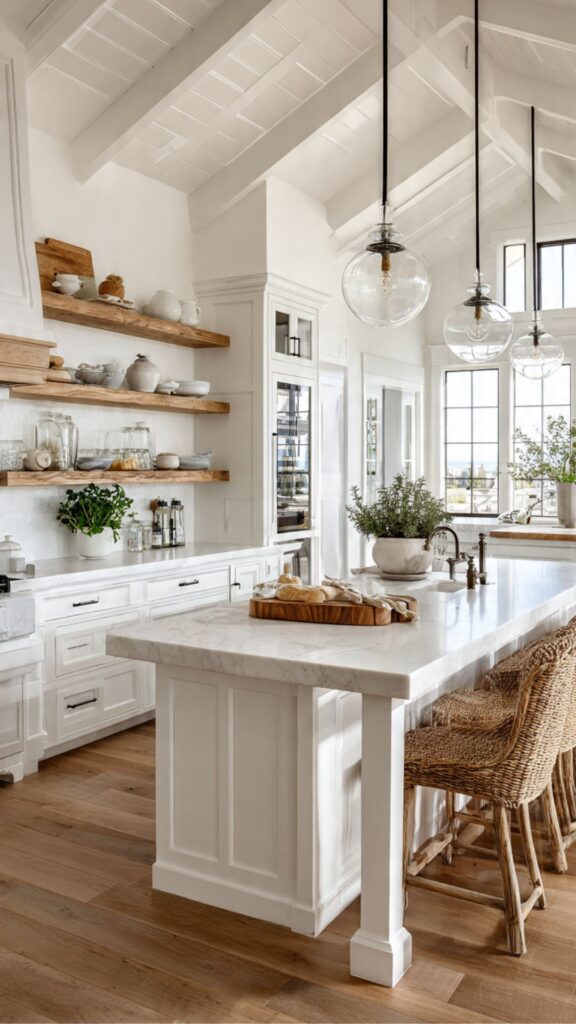
Shiplap horizontal wood boards installed with a slight reveal gap was originally a functional weatherproofing technique used on exterior barn walls and boat hulls. Its migration into interior design, particularly kitchens, is relatively recent, but the material has become synonymous with farmhouse style. Unlike wainscoting or beadboard, shiplap has a clean linearity that reads as both rustic and refined, making it versatile enough for traditional farmhouses and updated contemporary takes alike.
In kitchen applications, shiplap works best on accent walls behind an open shelf display, as a kitchen island wrap, or on the ceiling to add architectural interest without lowering the perceived height. Painting shiplap in soft whites (Benjamin Moore Chantilly Lace or Sherwin-Williams Alabaster are perennial farmhouse favorites) keeps the space bright. If you prefer warmth, whitewashed or lightly stained shiplap adds depth without going too dark.
For coastal farmhouse kitchens specifically, pale greige shiplap creates a particularly inviting layered effect. A frequently missed detail: the gap. The traditional shiplap reveal is typically 1/8 to 1/4 inch. Painting the inside of the gap a slightly darker shade (a mid-gray or taupe) creates shadow lines that give the wall three-dimensionality a subtle trick professional interior designers use to elevate what could otherwise look flat or builder-grade.
MDF shiplap is cost-effective for painted applications, while real pine or cedar boards are worth the investment if you plan to stain or leave the wood natural.
Pro Tip: Vertical shiplap on kitchen islands creates the illusion of height and draws the eye down to the floor, making ceilings feel taller an especially useful trick in kitchens under 9 feet.
Must Read: Hallway Decor Ideas to Make a Stunning First Impression.
Open Shelving Done Right:
Not Just Pretty, But Practical:
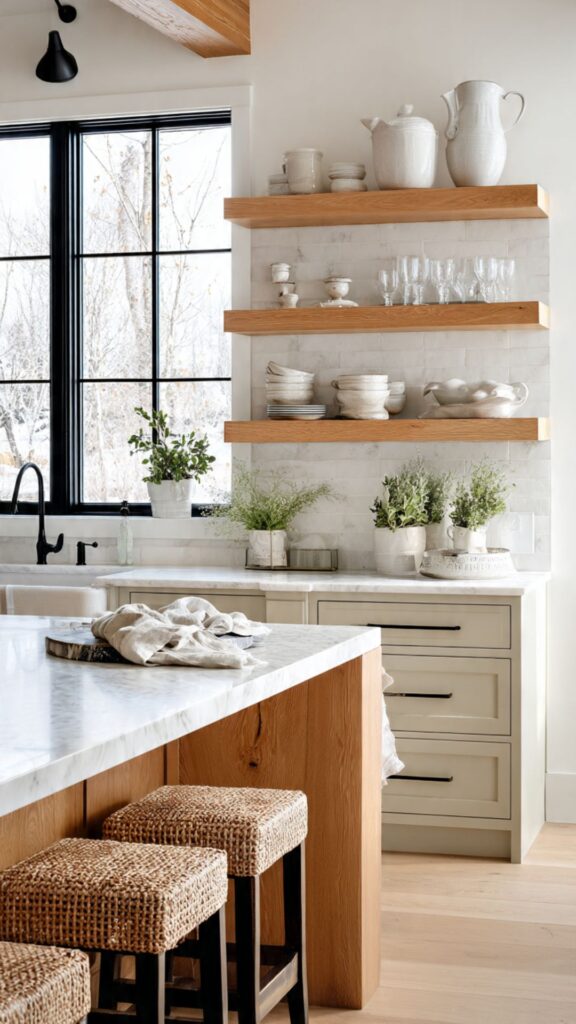
Open shelving is one of the most debated elements in farmhouse kitchen design. Proponents love the airy feel, the opportunity for curated display, and the accessibility of everyday items. Critics point to dust accumulation, the pressure to keep shelves styled, and the loss of concealed storage. The truth is that open shelving only succeeds when it’s used strategically not as a wholesale replacement for cabinets, but as a thoughtful complement to them.
In a well-designed farmhouse kitchen, open shelving typically appears in one or two focused zones: flanking a window, above a coffee station, or beside the refrigerator. Materials for shelving brackets and boards lean into farmhouse vocabulary thick live-edge walnut slabs, reclaimed barn wood, or simple white oak with visible grain.
Black iron or matte bronze pipe brackets are the most common hardware choice, but hand-forged iron brackets add a truly artisan touch for those willing to invest. Styling open shelves is itself a skill. The farmhouse kitchen shelf aesthetic favors function-forward objects: stacked white ceramic plates, ironstone pitchers, glass canning jars filled with dry goods, cast iron skillets hanging from hooks, and small potted herbs.
Resist the temptation to over-decorate a common mistake visible in many blog posts. Every item on a farmhouse shelf should either earn its place through daily use or serve a clear visual purpose. Rotate seasonal items (a ceramic pumpkin in fall, dried botanicals in winter) to keep the display feeling fresh without permanent clutter.
Unique Insight: Most guides ignore shelf depth. Ten-to-twelve-inch deep shelves suit dishware beautifully, while 8-inch shelves are ideal for spice display. Mixing depths across different shelf zones creates a built-in, collected-over-time look that feels authentic rather than staged.
Butcher Block Countertops:
Warmth, Function & Soul
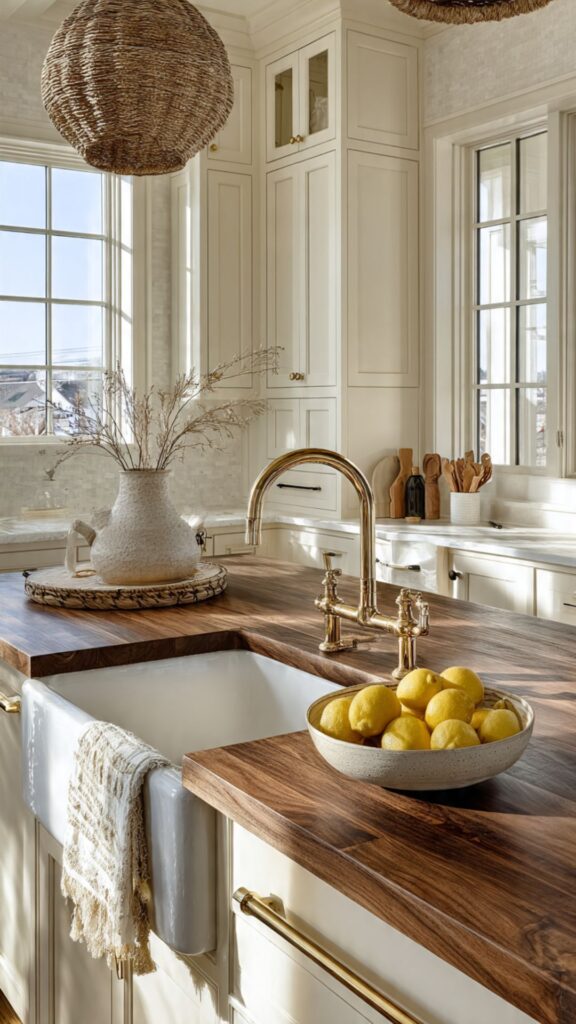
Butcher block countertops have appeared in professional and domestic kitchens for over a century, and for excellent reason: they are warm to the touch, self-healing to a degree, naturally antimicrobial when properly maintained, and visually rich in a way no engineered stone can replicate. In a farmhouse kitchen, butcher block serves as the material that ties together painted cabinetry, white subway tile, and metal hardware into a cohesive, lived-in story. It communicates that the kitchen is actually used not merely displayed.
Wood species matter significantly. Hard maple is the traditional choice for butcher-block kitchen surfaces due to its tight grain and resistance to knife scarring. Walnut adds a darker, moodier warmth ideal for darker farmhouse kitchens or those with navy or forest green cabinetry. White oak has surged in popularity recently due to its cathedral grain pattern and blonde-to-honey coloration, which pairs beautifully with cream or off-white shaker cabinets.
End-grain butcher block where wood fibers run vertically is superior for cutting surfaces but more expensive and requires more attentive oiling. Maintenance is the honest conversation most articles skip. Butcher block requires regular oiling — food-safe mineral oil applied monthly for the first year, then seasonally thereafter to prevent cracking and warping from moisture exposure.
Avoid leaving standing water near seams. A properly maintained butcher block develops a personality over years of use, darkening slightly near the stove and lightening where it’s regularly oiled. This evolution is the point: butcher block is a living surface, and in a farmhouse kitchen, that aging is a feature, not a flaw.
Unique Insight: Many designers recommend using butcher block only on an island while using quartz or stone on perimeter counters near the sink a practical hybrid that gives warmth without placing wood where it’s most vulnerable to sustained moisture damage.
Neutral Color Palettes That Create Depth, Not Boredom:
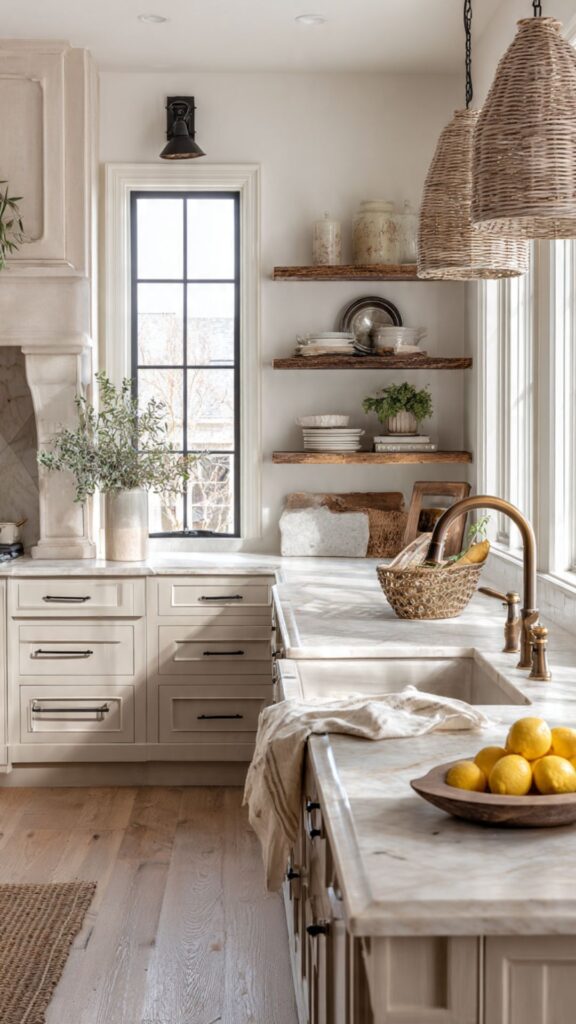
The instinct in farmhouse kitchen design is to default to all-white and while white is genuinely foundational to the aesthetic, treating it as the entire palette is a missed opportunity. The most compelling farmhouse kitchens use white as a base and then layer in warm neutrals, muted greens, soft blues, creamy off-whites, and natural wood tones to create depth that photographs well and feels even better in person. The goal is not stark cleanliness but gentle warmth the visual equivalent of a well-worn linen shirt.
Current color trends within the farmhouse kitchen space have moved decisively toward nature-derived hues. Sage green cabinetry (particularly on kitchen islands) has become a defining look of the 2020s farmhouse revival, offering a botanical richness that reads as both timeless and fresh. Dusty blue think faded denim or a weathered barn wall works similarly well on lower cabinets paired with white uppers. Greige (gray-beige hybrid) walls in tones like Sherwin-Williams Accessible Beige or Benjamin Moore Pale Oak create a cocooning warmth that solid gray or bright white cannot achieve.
A technique rarely discussed in color guides: use the 60-30-10 rule deliberately. In a farmhouse kitchen, 60% of the visual volume might be a warm white (walls, upper cabinets), 30% a natural wood (butcher block, floating shelves, ceiling beams), and 10% a muted accent color (cabinet hardware, pendant light shades, a painted kitchen island).
This distribution prevents any single element from dominating while maintaining a unified, cohesive look. The accent color is where personal expression lives changing the island color from sage to navy is a weekend project that completely refreshes the kitchen’s personality.
Unique Insight: Ceiling color is consistently overlooked. Painting the ceiling in a warm white (one shade lighter than the wall color) rather than a cool bright white prevents the “icebox” effect common in kitchens with lots of natural light bouncing off white surfaces.
Vintage-Inspired Hardware:
The Jewelry of Your Kitchen
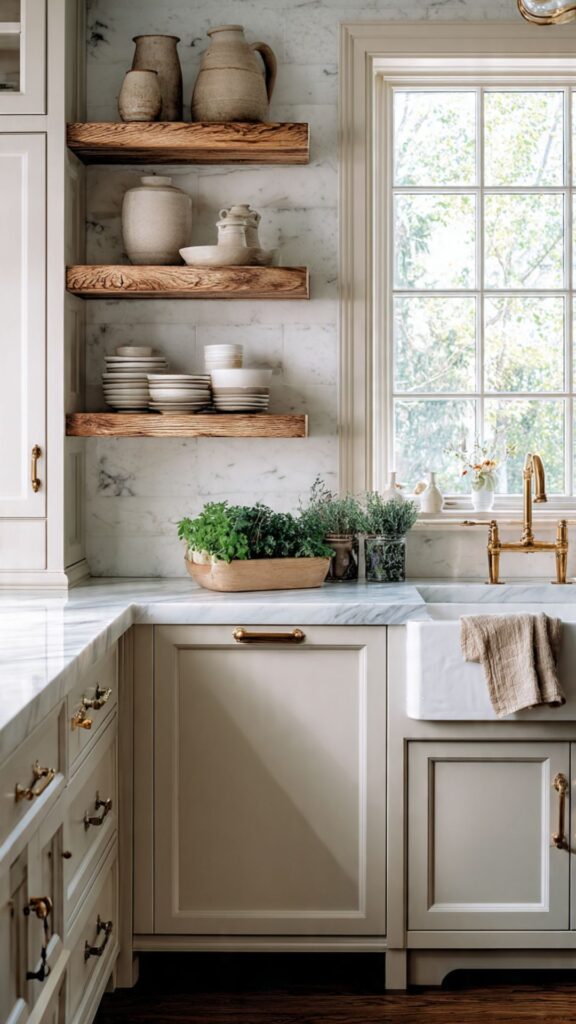
Cabinet hardware in a farmhouse kitchen functions the way jewelry functions in an outfit: it is relatively small in scale but enormous in visual impact. The wrong hardware choice can make high-quality cabinetry look cheap; the right choice elevates even stock Ikea cabinets into something cohesive and intentional. In farmhouse kitchen design, hardware should feel collected rather than coordinated as though gathered from different eras and sources, unified by a common material or tone rather than a matching set purchased all at once.
The dominant hardware finishes in farmhouse kitchens are matte black, unlacquered brass, oil-rubbed bronze, and pewter. Matte black offers crisp contrast against white or cream cabinetry and ages gracefully without oxidizing. Unlacquered brass develops a natural patina over time darkening slightly at touchpoints which is actively desirable in a farmhouse context, as it reinforces the aged, curated aesthetic. Oil-rubbed bronze is softer, warmer, and pairs exceptionally well with walnut countertops and earth-toned walls.
Shape vocabulary matters as well. Bin pulls (cup pulls) are quintessentially farmhouse and work beautifully on lower drawers near the stove and island. Shaker-style cabinetry pairs naturally with simple wire bar pulls or flat rectangular pulls. Ceramic knobs white, cream, or hand-painted introduce a folk-craft dimension that feels genuinely old-world.
For adventurous designers, mixing two hardware styles within a single kitchen (bin pulls on lower drawers, ceramic knobs on upper cabinets) creates the collected-over-time aesthetic that defines authentic farmhouse character, as opposed to a showroom-perfect look that feels too curated.
Unique Insight: Hardware scale is frequently underestimated. A standard 3.75-inch bar pull on a wide 24-inch drawer looks proportionally insignificant. For large drawers and wide cabinet doors, 6–8-inch pulls or bin pulls sized at 4–5 inches create far more visual authority and better ergonomics.
Don’t Miss: Rooftop Garden Ideas for a Fresh and Green Urban Escape.
Statement Range Hoods That Command Attention:
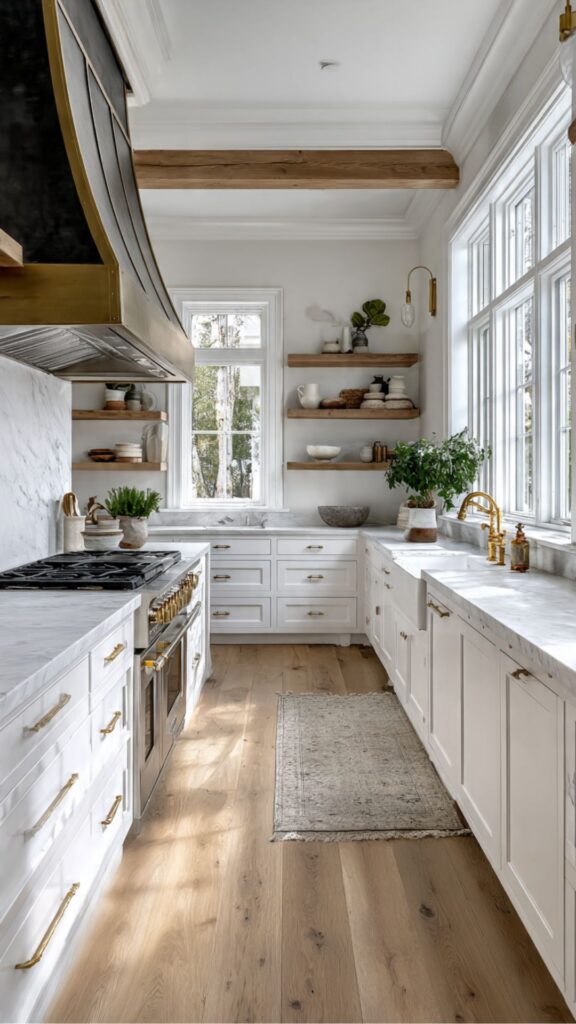
The range hood is one of the most architecturally significant elements in a farmhouse kitchen it occupies prime visual real estate directly above the stove, at eye level, within the central focal zone of the room. Yet in many kitchens, it is treated as an afterthought: a stainless steel box covered in a basic wood surround. In a genuinely well-designed farmhouse kitchen, the range hood is a design statement sometimes the single most distinctive element that gives the space its character and elevates the entire aesthetic.
The most popular farmhouse range hood styles are the plaster or shiplap hood (a plastered box hood with clean angular lines, often painted the same color as the wall for a seamless built-in look), the wood-paneled hood (using reclaimed wood or shiplap boards to clad the exterior), and the arched plaster hood (a softer, European farmhouse-inspired form with a curved soffit that has become enormously popular in the last five years). Each style projects a different personality: angular for modern farmhouse, wood-clad for rustic, arched for romantic European country.
A common oversight is the relationship between hood size and stove width. Current professional guidelines recommend the hood extend at least 3 inches beyond each side of the cooking surface for effective ventilation capture.
A 36-inch range typically needs a 42-inch hood minimum. Going larger 48 or even 60 inches is increasingly common in farmhouse kitchens because the oversized hood becomes a genuine architectural focal point, especially when flanked by open shelving. Combine a plaster hood with hand-painted Dutch tile backsplash beneath it for a kitchen moment that no one will forget.
Unique Insight: Most homeowners don’t realize that a custom plaster hood can be built for $800–$1,500 in materials over a standard liner insert a fraction of the cost of a custom-fabricated stainless hood while delivering far more farmhouse visual impact.
Barn Doors:
Solving Space Problems With Style
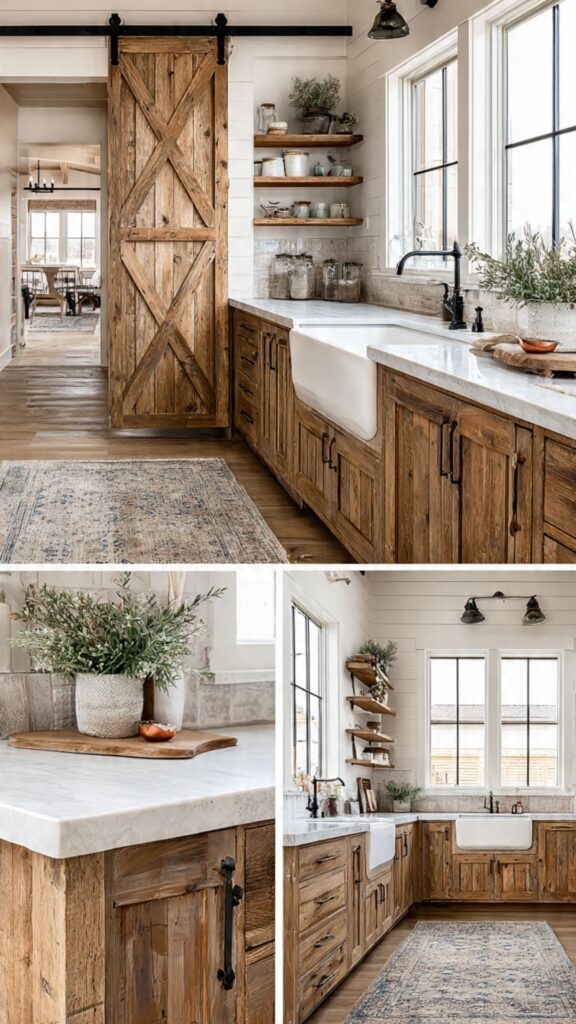
The sliding barn door migrated from agricultural outbuildings into interior design via the American farmhouse revival of the early 2000s, and it remains one of the most space-efficient and visually distinctive design solutions available. In kitchen contexts, barn doors are most commonly used on pantry openings, separating the kitchen from a mudroom or laundry room, concealing a home office nook, or covering a built-in appliance garage.
Their primary functional advantage: they require zero swing clearance, making them ideal for tight floor plans where a traditional hinged door would disrupt traffic flow. Design options for farmhouse barn doors range from classic to contemporary. The traditional X-brace design (two diagonal braces forming a cross on a vertical plank door) is the most rustic, referencing genuine barn architecture.
Flat panel doors with simple trim lines read as modern farmhouse. Glass-insert barn doors featuring panes of antique-look glass or chicken wire glass bring light through while maintaining visual separation, ideal for pantry or laundry applications. For kitchens with shiplap or board-and-batten walls, matching the door material to the wall treatment creates a cohesive, intentional built-environment aesthetic.
Hardware quality is the defining factor between a barn door that feels architectural and one that feels like a Pinterest project. Invest in solid steel track hardware with soft-close mechanisms the thud of a sliding door crashing into a stopper is the fastest way to regret a budget hardware choice. Black matte powder-coated steel is the most common finish; exposed antique bronze hardware adds a craftsman dimension.
Door width should be 1 to 2 inches wider than the opening on each side for coverage, and the track must be mounted into wall studs or a proper header board never drywall anchors alone for a door this heavy.
Unique Insight: A detail most barn door guides never address: stack-up clearance. When open, the door slides along the wall beside the opening and must have enough unobstructed wall space to fully retract. Plan this before purchasing many kitchens have switches, outlets, or artwork exactly where the open door needs to go.
Mixing Old & New Appliances for Authentic Character:
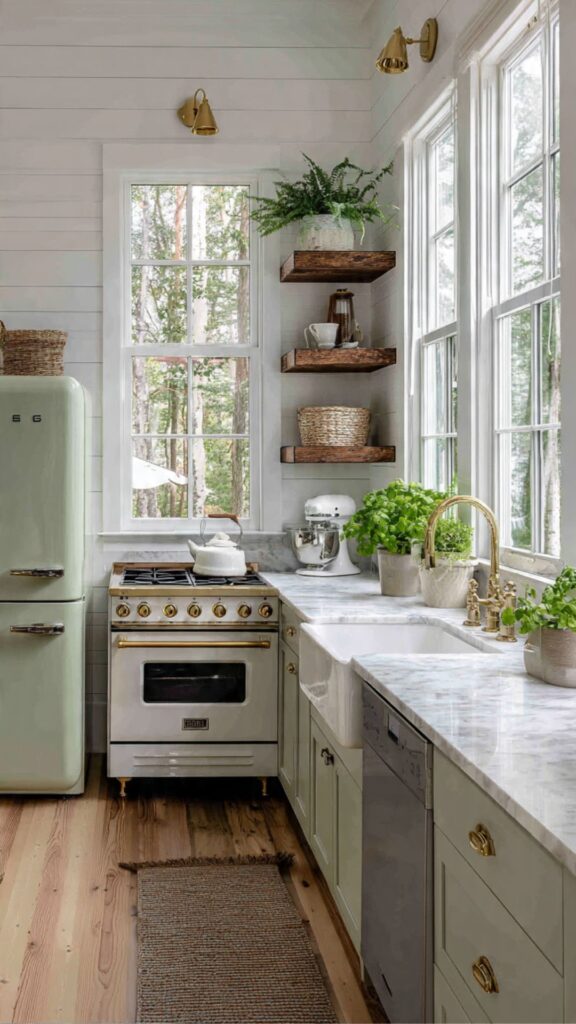
One of the defining marks of a truly successful farmhouse kitchen — as opposed to a manufactured showroom version is the thoughtful coexistence of old and new. Real farmhouses accumulate appliances, tools, and objects across decades. The aesthetic appeal of that layering is something you can intentionally recreate by pairing modern high-performance appliances with vintage or vintage-inspired pieces. The result is a kitchen that feels genuinely lived-in rather than assembled from a single catalog page.
The most effective modern-vintage pairings in farmhouse kitchens include: a retro-styled range (from brands like Smeg, Lacanche, or the AGA-inspired designs by Heartland) alongside fully contemporary refrigerators and dishwashers; a modern induction cooktop paired with a vintage cast-iron skillet rack hung from a ceiling-mounted pot rack; or brand-new Shaker cabinetry paired with a vintage baker’s rack as a standalone storage piece.
The goal is contrast in time period, unified by material aged metals, natural wood, ceramics that appears across both old and new pieces. Appliance finish selection is critical. Stainless steel, the dominant appliance finish of the 2000s and 2010s, has given way in farmhouse kitchens to matte white, panel-ready, or black appliances that blend more softly into the overall design.
Panel-ready refrigerators which accept custom cabinet panels matching your cabinetry exactly are particularly valuable in farmhouse kitchens where concealing the refrigerator creates a seamlessly furniture-like aesthetic. For a genuinely authentic farmhouse feel, a small vintage Chambers stove or restored O’Keefe & Merritt range as a second statement piece in a large kitchen creates the kind of kitchen personality money cannot simply purchase.
Unique Insight: A vintage tin ceiling tile backsplash behind a modern induction range creates stunning old-meets-new contrast, is heat-safe, and is far more distinctive than standard subway tile at a similar or lower cost.
Farmhouse Kitchen Islands:
The Hardworking Heart of the Room
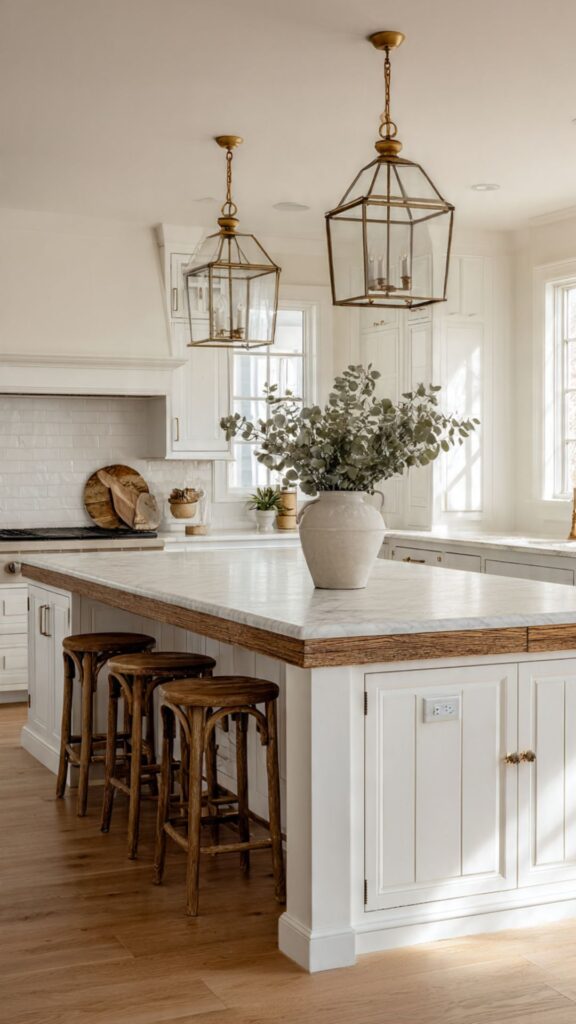
The kitchen island in a farmhouse home is not merely a work surface it is the gravitational center of daily life: where breakfast happens standing up, homework gets done while dinner cooks, and friends gather with a glass of wine while the host chops vegetables.
Farmhouse kitchen islands distinguish themselves from contemporary counterparts through material warmth, functional unpretentiousness, and a furniture-like quality that suggests the island might have been inherited, not installed. This aesthetic goal shapes every design decision from legs to countertop to paint color.
Furniture-style islands featuring visible legs or feet, bun feet, turned post legs, or open bottom shelving rather than a closed toe-kick base are the quintessential farmhouse choice. They break the “box on the floor” monotony of standard island construction and immediately signal a considered design sensibility. Painting the island a contrasting color to the perimeter cabinetry (sage green island with white perimeter, for instance, or navy blue island with cream cabinetry) is a now-classic move that adds depth to a kitchen without any structural changes.
Consider the working surface of the island carefully. A single-slab butcher block top provides a continuous cutting and prep surface, but a combination top butcher block on one end for chopping and marble or quartz on the other for pastry work can serve professional-grade functions within a home kitchen.
Building in a prep sink on the island (even a small 18-inch undermount bar sink) transforms it from a work surface into a true second kitchen station, invaluable when two cooks work simultaneously. Seating overhang of 10–12 inches accommodates standard counter stools; 15 inches allows comfortable seated dining.
Unique Insight: Most islands are too large for their kitchen footprint a common renovation regret. The universal rule: maintain at least 42 inches of clearance on all working sides of the island, and 48 inches if two cooks regularly use the kitchen simultaneously.
Also Read: Sunroom Ideas for a Bright and Relaxing Indoor Space.
Natural Light & Window Styles That Brighten the Farmhouse Look:
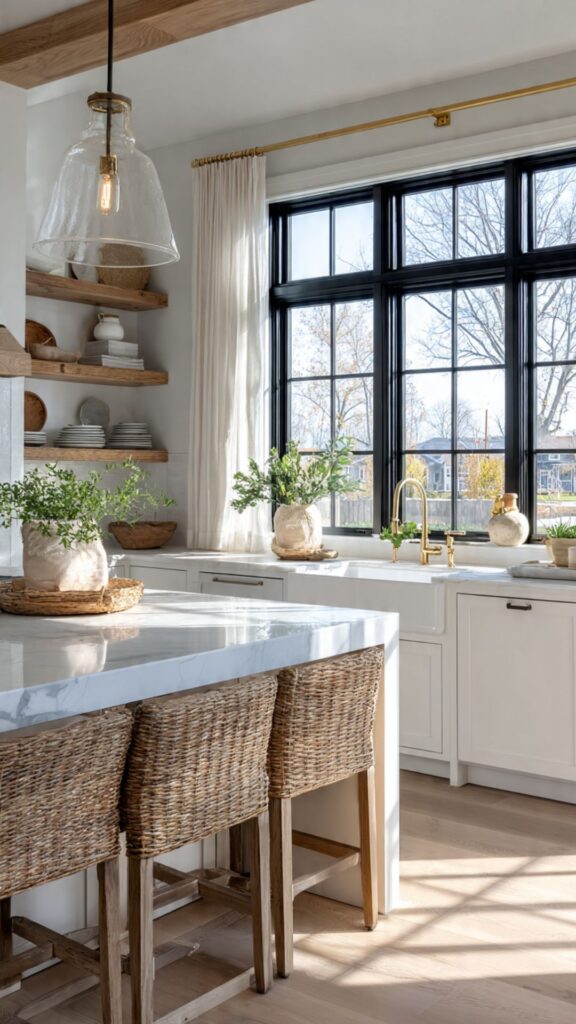
Natural light is not merely an aesthetic preference in farmhouse kitchen design it is arguably the most important material in the entire room. A farmhouse kitchen flooded with morning light feels categorically different from an identical kitchen under artificial lighting. The traditional farmhouse was oriented to maximize southern light through the working areas of the home, a centuries-old principle of passive solar design that remains entirely relevant in kitchen planning today. If you are renovating, light placement deserves as much attention as cabinet layout or countertop selection.
Window styles that align with farmhouse kitchen aesthetics include double-hung windows (the most traditional choice, with their classic divided-lite grilles), casement windows that open outward to catch cross-breezes, and large picture windows above the kitchen sink that frame a garden view.
The increasingly popular “greenhouse window” a box window that projects outward over the kitchen sink, creating a small glass growing shelf is a charming farmhouse update that brings the outdoors in literally, providing a perfect home for herbs and small succulents used in daily cooking. Window treatments in farmhouse kitchens should be simple and natural-fiber-forward. Roman shades in linen, cotton muslin, or ticking stripe fabric filter light softly while contributing textural warmth.
Cafe curtains covering only the lower half of the window allow maximum light entry while maintaining privacy; this classic farmhouse window treatment is currently experiencing a well-deserved revival. Avoid heavy drapery near the kitchen: it collects grease vapor and cooking odors, making laundering impractical. Bare windows with beautiful hardware (simple iron or brass rods) are also a valid and clean farmhouse choice.
Unique Insight: A skylight above an interior kitchen even a small 24×24-inch fixed skylight provides more usable natural light than three additional windows, because it introduces overhead diffuse light that eliminates the deep shadows typically pooling in cabinet-heavy kitchen corners.
Layered Textures & Materials:
The Secret to Depth in Farmhouse Design
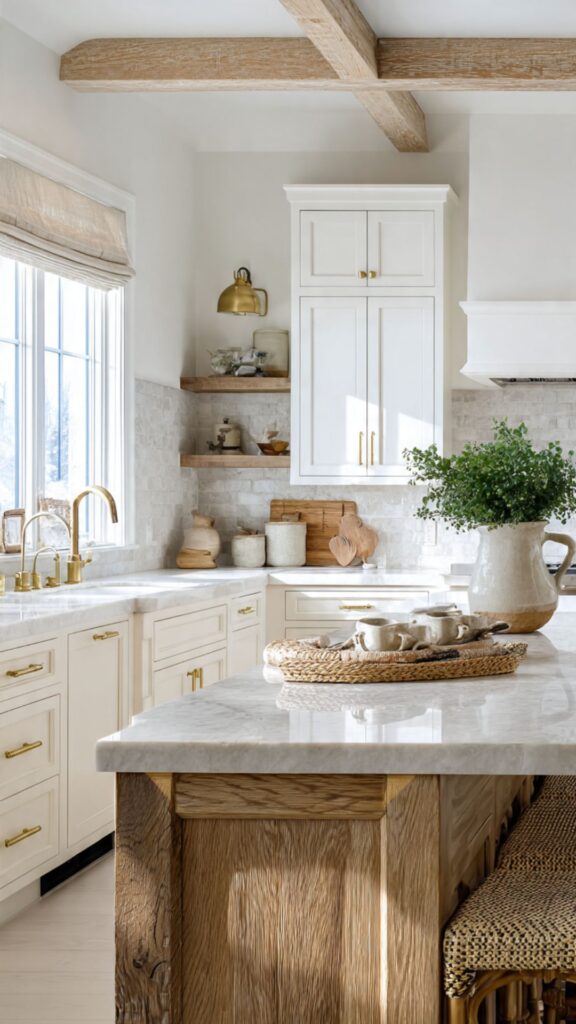
The most visually compelling farmhouse kitchens share a quality that is difficult to name but immediately felt: richness. Not richness in the sense of expense, but in the sense of sensory depth multiple textures, finishes, and materials coexisting in a single space that rewards close attention. This is what separates a genuinely exceptional farmhouse kitchen from a competent but forgettable one: the layering of tactile experiences that make the space feel assembled over time rather than purchased at once. Understanding this principle is the master key to elevated farmhouse kitchen design.
Successful material layering in farmhouse kitchens typically involves at least four distinct texture categories: rough (shiplap walls, rough-sawn wood beams), smooth (painted cabinetry, fireclay sink, plastered hood), natural (butcher block, live-edge shelf, wicker basket), and metallic (iron hardware, copper pot, brass faucet).
When these four categories are represented in roughly balanced visual proportions throughout the kitchen, the result is a room that is simultaneously stimulating and calming a paradox that explains why farmhouse kitchens photograph so well and feel so comfortable to inhabit.
Ceiling beams deserve special mention as a texturing element. Exposed wood beams whether structural or decorative faux beams — add an enormous amount of visual warmth and architectural interest to a farmhouse kitchen ceiling. Hand-hewn beams with visible adze marks and irregular surfaces carry the most authentic character; smooth-planed box beams offer a cleaner modern farmhouse look.
Position beams perpendicular to the longest wall to draw the eye across the kitchen’s full width. Combining ceiling beams with a plaster range hood and open wood shelving creates a triumvirate of natural material moments that defines the farmhouse kitchen at its finest expression.
Unique Insight: A ceramic or handmade tile backsplash with its naturally irregular glaze variation is the single highest-value texture addition in a farmhouse kitchen because it introduces the visual complexity of handcraft within the most intensely viewed zone of the room, directly behind the stove and between the countertop and upper cabinetry.
Conclusion
The farmhouse kitchen endures because it solves a timeless human need: a space that is warm enough to linger in, functional enough for serious cooking, and honest enough to reflect how real families actually live.
Whether you adopt one idea from this guide or undertake a full renovation, these principles will serve you across the years ahead. Start with the single change that excites you most your farmhouse kitchen is closer than you think.

Team TrandyVilla is the passionate home decor team behind Trandy Villa, where style meets comfort in everyday living. The team loves transforming simple spaces into beautiful, functional homes through smart ideas, budget-friendly hacks, and modern design trends. Their content focuses on helping readers create homes that feel both stylish and personal without spending too much.