
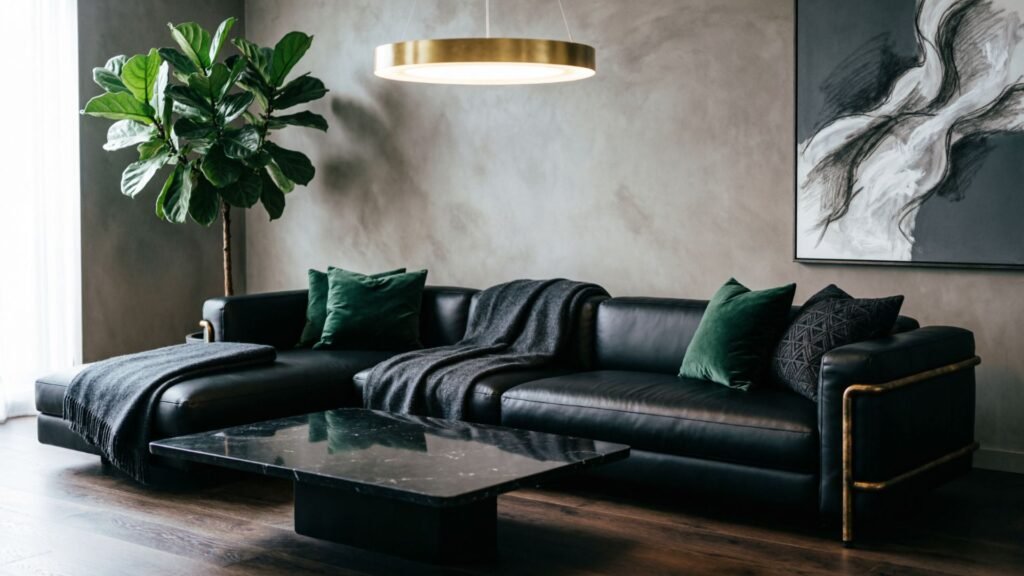
Black living room decor were once considered risky too dark, too dramatic, too bold. Today, interior designers and homeowners alike are embracing black as a foundational color, not just an accent. When used correctly, black living room decor creates a space that feels luxurious, grounded, and surprisingly warm.
Whether you’re planning a full redesign or adding a few strategic touches, black gives your living room a depth that few other colors can match.
Black living room decor refers to the intentional use of black as a primary or accent color throughout a living space. It combines dark tones with textures, materials, and contrasting elements to create a bold, cohesive interior. The core motives are simple: add depth, create sophistication, and build a timeless aesthetic that adapts to any style modern, maximalist, or minimalist.
Black living room decor transforms an ordinary space into a statement of bold elegance. Homeowners worldwide now embrace black not as a risk, but as a powerful design foundation that adds instant character, depth, and lasting visual impact to any living room.
Black living room decor works through contrast, texture, and intentional layering. Dark walls pair beautifully with light furniture. Rich fabrics like velvet and linen add warmth. Natural wood tones soften the boldness. Gold accents bring in luxury. Strategic lighting keeps the space bright and inviting. Every element serves a clear purpose making the room feel curated, comfortable, and deeply stylish.
Start With a Black Accent Wall:
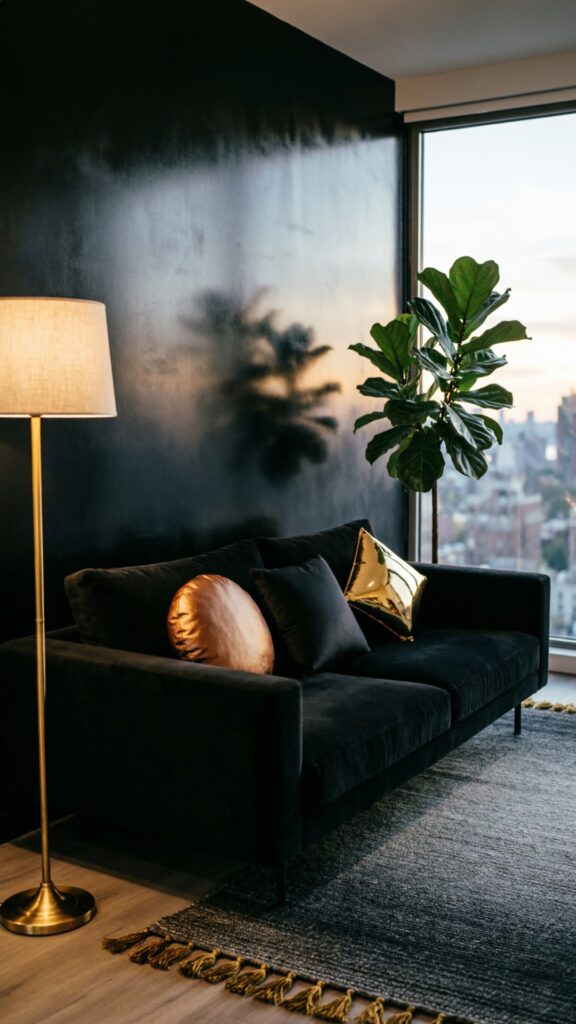
A black living room decor accent wall is one of the most powerful ways to anchor a living room without overwhelming the entire space. Choose the wall behind your sofa or the one that naturally draws the eye when you enter the room. This creates an immediate focal point and makes the space feel intentional and curated.
Matte black living room decor paint works beautifully for accent walls because it absorbs light and reduces glare, giving the room a soft, velvety feel. Brands like Farrow & Ball’s “Pitch Black” or Benjamin Moore’s “Black” are popular among designers for their depth and richness. Unlike flat black, matte finishes hide minor wall imperfections while adding sophistication.
For a more textured approach, consider black living room decor limewash paint or a black shiplap treatment. These add dimensional interest to the wall without requiring art or shelving. Pair the accent wall with lighter furniture cream sofas, natural wood tables to create balance and prevent the room from feeling closed in.
One often-overlooked tip: extend the black a few inches onto the adjacent walls. This subtle technique, used by professional designers, makes the accent wall look more intentional and less like an isolated patch of dark color.
Use Black Furniture as a Style Foundation:
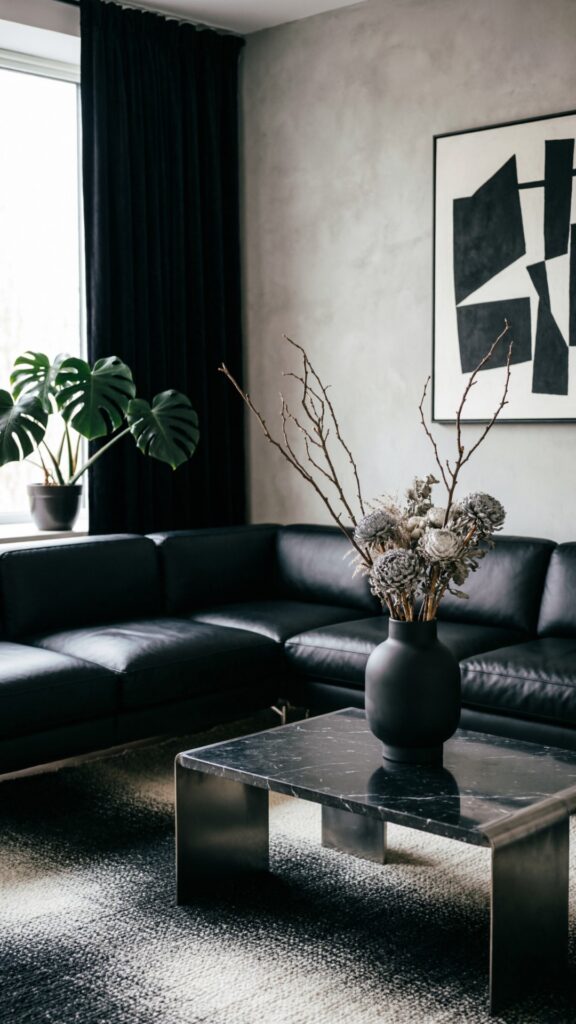
Black furniture grounds a living room and creates a cohesive, sophisticated look. A black living room decor velvet sofa, for example, immediately elevates the space and works with virtually any color palette whether you prefer warm terracottas, cool grays, or earthy greens. Unlike trendy colored furniture, black pieces have remarkable staying power.
When selecting black furniture, pay attention to texture and material. A black living room decor leather sofa reads as sleek and modern. A black linen sofa feels relaxed and artsy. A black velvet sofa leans toward glamour and luxury. These subtle distinctions make a big difference in how the room ultimately feels.
Mixing black furniture pieces such as a black coffee table with a black bookshelf creates a “tone-on-tone” layering effect that looks deliberate and high-end.
The key is to vary the finishes: matte with gloss, solid with open-frame. This contrast adds visual complexity without introducing new colors. For smaller living rooms, consider black living room decor furniture with slim legs and open silhouettes. These designs allow light to pass beneath the pieces, making the room feel more open and airy despite the darker palette.
Layer Black With Natural Wood Tones:
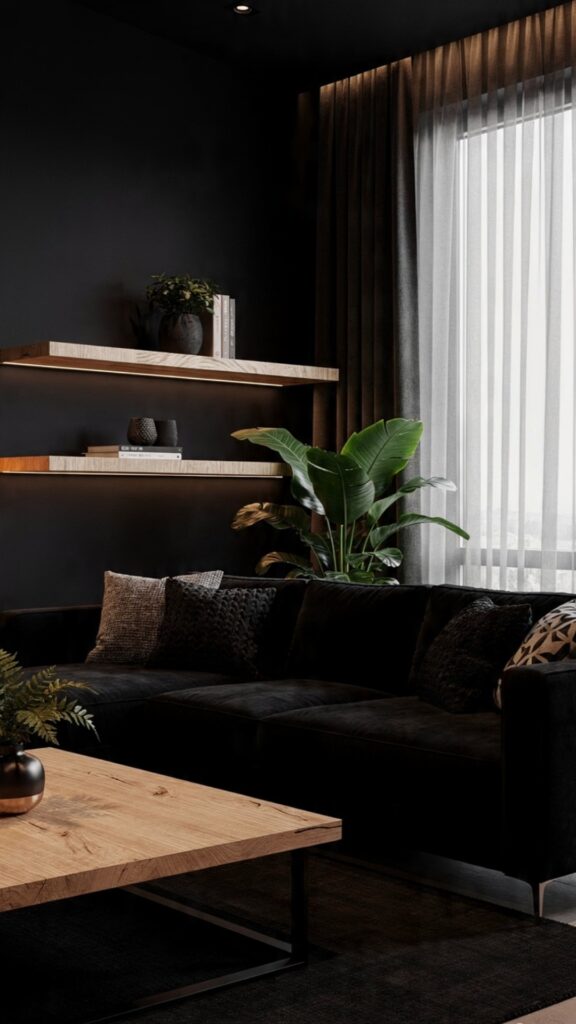
One of the most timeless pairings in interior design is black and natural wood. The warmth of oak, walnut, or ash immediately softens the starkness of black, creating a balanced, organic aesthetic. This combination appears frequently in Scandinavian, Japanese (wabi-sabi), and mid-century modern interiors all of which are known for their enduring appeal.
A black sofa paired with a walnut coffee table, or black shelving filled with wooden accents and plant pots, creates a layered look that feels both curated and lived-in. The natural grain of wood adds an organic texture that black alone cannot provide. Together, they create a visual tension that keeps the eye engaged.
Consider a black TV console with warm wood legs, or black living room decor picture frames mounted on a wood-paneled wall. These small combinations reinforce the theme throughout the room without requiring a complete redesign. Even wooden cutting boards used decoratively on open black shelves can contribute to this aesthetic.
From a future design perspective, biophilic design which integrates natural materials into living spaces continues to grow in popularity. Combining black with natural wood positions your living room at the intersection of contemporary style and timeless nature-inspired design.
Get Inspired : Luxury Living Room Ideas That Take Your Black Living Room Decor to the Next Level.
Introduce Black Through Soft Furnishings:
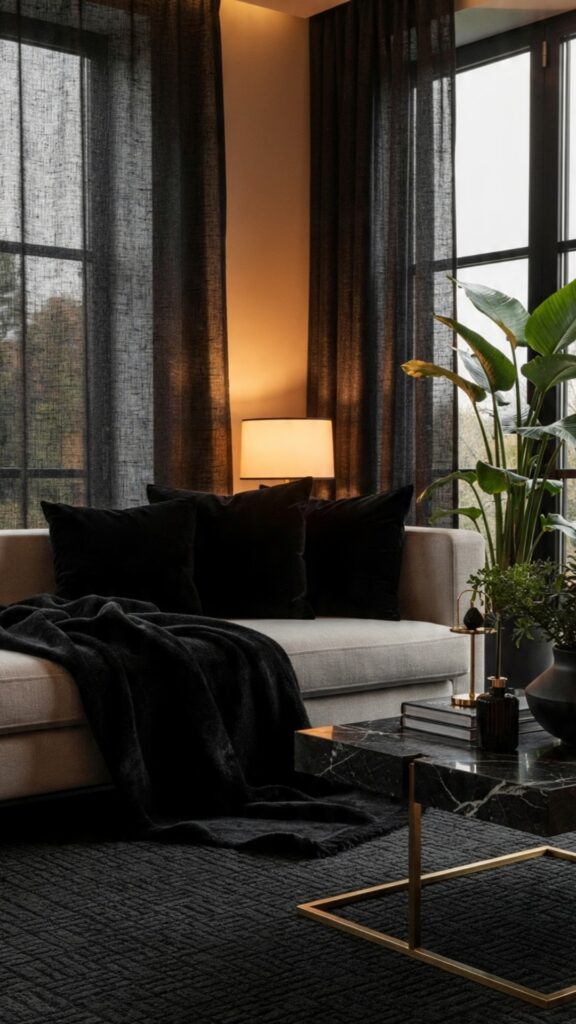
If painting walls or buying new furniture feels too committing, soft furnishings are the perfect entry point into black living room decor. Black throw pillows, blankets, curtains, and rugs are low-cost, low-risk ways to test the aesthetic before going all in.
A black and white geometric rug, for instance, can completely transform a neutral living room. It creates visual structure and ties together furniture that might otherwise feel disconnected. Similarly, black velvet throw pillows on a beige sofa instantly add contrast and a touch of glamour without a single coat of paint.
Black curtains deserve special mention. Many homeowners avoid them, fearing the room will become too dark. In reality, black linen or sheer black curtains diffuse light beautifully while framing windows dramatically. In rooms with strong natural light, black curtains create a gorgeous interplay of light and shadow throughout the day.
For layering, combine a black rug with a black throw blanket and one or two black pillows. Keep the rest of the soft furnishings in neutral or complementary tones. This approach ensures the black elements feel intentional rather than accidental.
Go Bold With Black Ceilings:
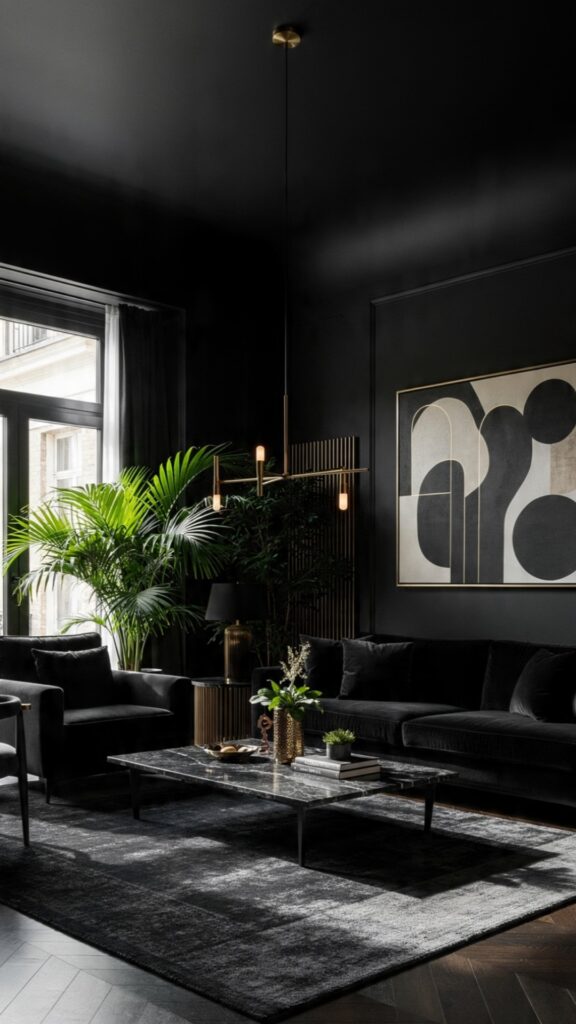
Black ceilings are one of the most underused and underrated design moves in living room decor. While most people focus on walls and floors, the ceiling offers a dramatic canvas that can completely change how a room feels. A black ceiling draws the eye upward and creates an enveloping, cocooning effect that feels both intimate and luxurious.
This technique works especially well in rooms with high ceilings. In a standard 8-foot room, a black ceiling can feel oppressive. But in a space with 10-foot or higher ceilings, it becomes a bold design statement that makes the room feel like a private retreat. Interior designers often use this approach in home theaters, libraries, and reading nooks for exactly this reason.
To keep the room balanced, pair a black ceiling with lighter walls white, off-white, or warm gray work best. Add upward-facing lighting, such as floor lamps or wall sconces that cast light toward the ceiling, to illuminate the dark surface and create a warm glow.
This interaction between dark ceiling and upward light is visually stunning. For a less permanent version, consider black ceiling tiles, black-painted exposed beams, or a canopy effect using black fabric. These alternatives achieve a similar visual impact while remaining easier to reverse if your tastes change.
Pair Black With Gold or Brass Accents:
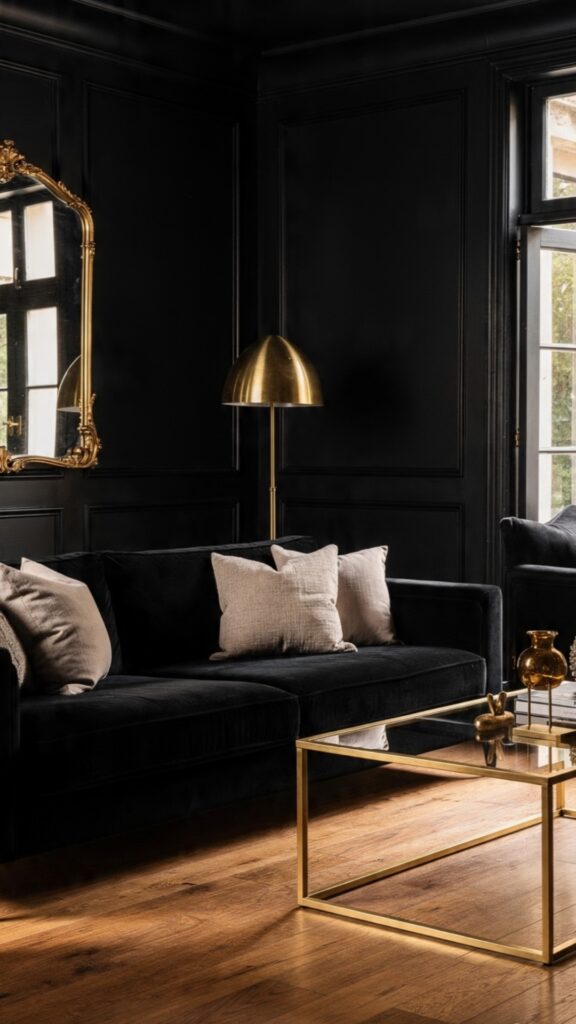
Few color combinations feel as luxurious as black and gold. Gold and brass accents add warmth, richness, and a sense of glamour that elevates any black living room decor. This pairing appears frequently in Art Deco interiors a design style that has seen a significant revival in recent years.
Gold accent pieces to consider include: brass-legged coffee tables, gold picture frames, metallic light fixtures, gilded mirrors, and decorative objects like candleholders or trays. Each piece adds a glimmer of warmth that prevents the black palette from feeling cold or harsh.
When using gold accents, resist the urge to overdo it. The power of this combination lies in restraint. A few well-chosen gold pieces scattered throughout the room create a curated, intentional look. Too many metallic accents, however, can feel cluttered and overwhelm the space.
Mixing gold tones antique brass, polished gold, champagne adds depth and avoids the space looking too matchy. Designers often call this “imperfect layering,” and it gives the room a collected-over-time feel rather than a showroom aesthetic.
Use Black Shelving to Display Collections:
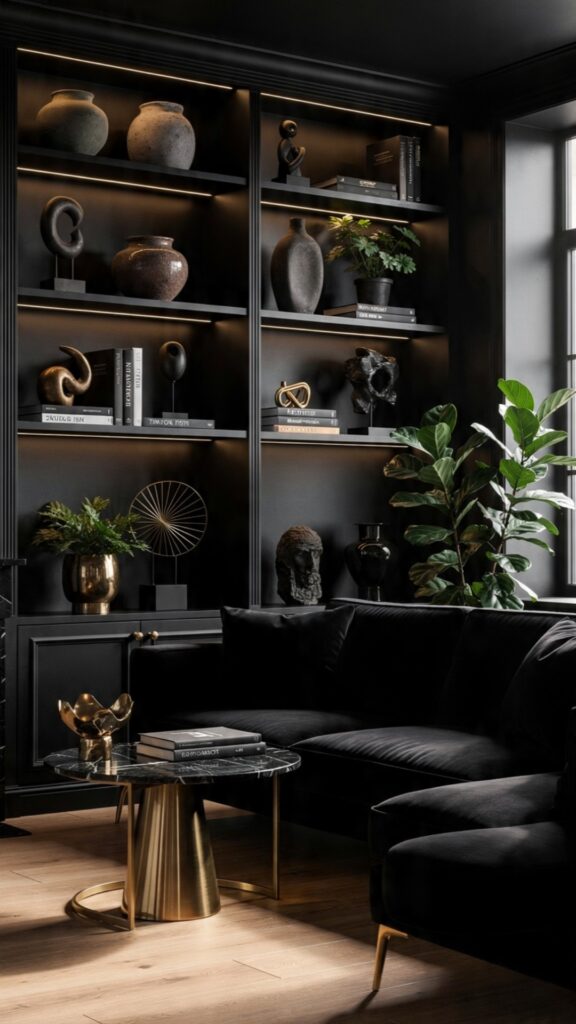
Black shelving is both functional and deeply decorative in a black living room decor. Whether you opt for floating black shelves, a black bookcase, or a floor-to-ceiling shelving unit, the dark backdrop makes everything displayed on it stand out beautifully. Books, plants, ceramics, and art objects all appear more vivid against a black surface.
The contrast effect is particularly powerful with light-colored or brightly colored objects. White ceramics, green plants, and terracotta pots look especially striking when displayed on black shelves. This is a technique that professional stylists use regularly when staging homes for sale or editorial photography.
When styling black shelves, follow the “rule of three” group objects in odd numbers, vary the heights, and mix textures. For example: a tall plant, a medium stack of books, and a small decorative object form a natural, balanced grouping. Repeat this approach across the shelf for a curated look.
From a practical standpoint, black shelving hides dust and fingerprints more effectively than white shelving. For families with busy households, this is a meaningful advantage that combines aesthetics with everyday functionality.
Add Texture With Black Wallpaper:
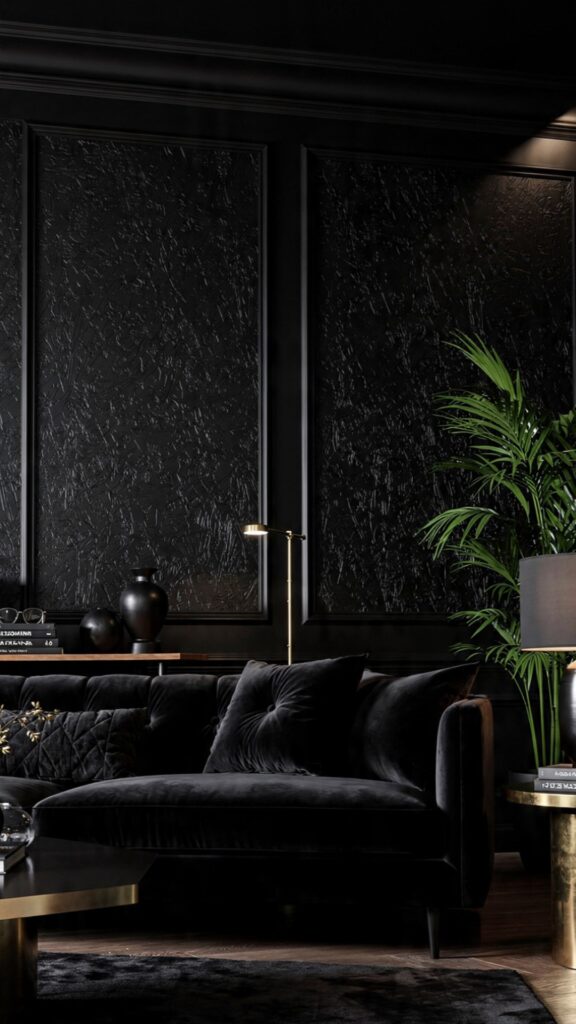
Black wallpaper is one of the most transformative tools available for black living room decor. Unlike paint, wallpaper adds texture, pattern, and depth simultaneously. From bold geometric prints to subtle linen-effect wallpapers, the options are vast and the visual impact is significant.
Botanical black wallpaper featuring dark backgrounds with leaf or floral prints is particularly popular right now. It creates a dramatic, jungle-like atmosphere that feels both moody and alive. This style works especially well in smaller living rooms where an accent wall can make a big visual statement without requiring a large space.
Textured black wallpapers, such as grasscloth, silk-effect, or embossed patterns, catch light differently throughout the day. Morning light reveals the texture in subtle ways, while evening lighting makes the pattern almost disappear into a rich, dark surface. This dynamic quality keeps the room visually interesting across different times of day.
For renters or those who want flexibility, peel-and-stick black wallpapers have improved dramatically in quality over recent years. Many are indistinguishable from traditional wallpaper and can be removed without damage making them a practical option for commitment-shy decorators.
Incorporate Black Lighting Fixtures:
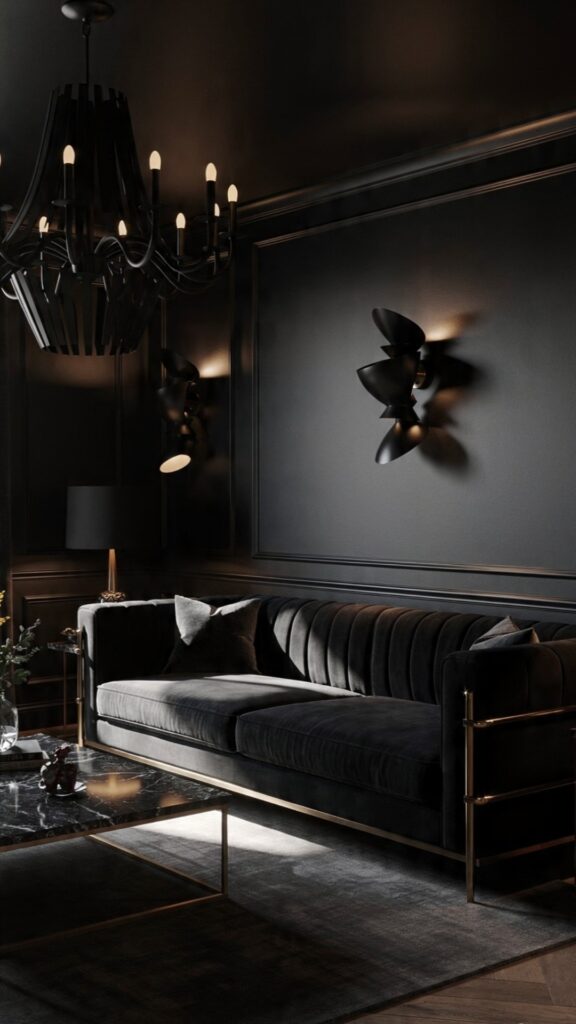
Lighting fixtures in black are an increasingly popular design choice, and for good reason. A black pendant light, chandelier, or floor lamp acts as both a functional light source and a sculptural design element. In a living room with otherwise neutral tones, a black fixture creates an unexpected focal point that draws the eye upward.
Industrial-style black lighting featuring exposed bulbs, cage shades, and iron frames has been popular for years and shows no signs of fading. However, more elegant interpretations are now gaining traction: black ceramic pendants, matte black arc floor lamps, and black rattan pendant lights offer diverse aesthetic options that suit different living room styles.
When choosing black lighting fixtures, consider the scale of the room. A large, dramatic chandelier works beautifully in an open-plan living space, while a sleek arc floor lamp suits a more compact room. The goal is for the fixture to feel proportional prominent enough to make an impact without dominating the space.
An important functional consideration: since black fixtures absorb light, ensure the bulbs used are bright enough to adequately illuminate the room. Warm white bulbs (2700–3000K) are ideal for living rooms as they create a cozy, inviting glow that complements dark decor beautifully.
Mix Black With White for High-Contrast Drama:
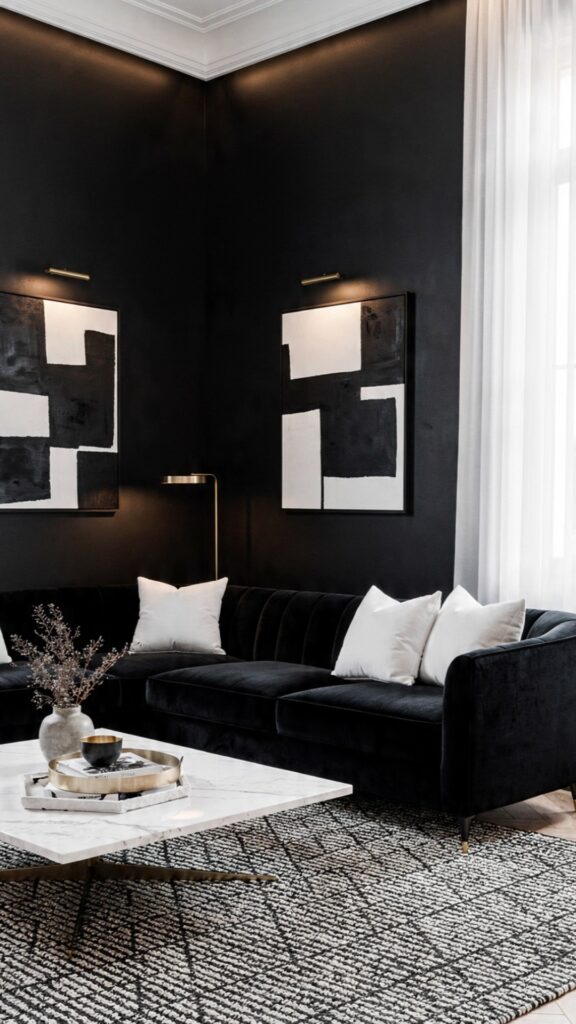
Black and white is the ultimate high-contrast combination timeless, graphic, and endlessly versatile. In a living room context, this pairing can range from bold and graphic (think: black walls, white sofa, black-and-white geometric rug) to soft and airy (white walls, black accents, marble details).
The graphic quality of black and white works particularly well in modern and contemporary living rooms. A black-and-white gallery wall, for instance, creates a striking feature without introducing any color. Photography, graphic art, typographic prints, and abstract pieces all look clean and intentional when unified by a black-and-white palette.
For a softer interpretation, incorporate off-white and cream tones alongside pure black. This approach, sometimes called “soft contrast,” avoids the harshness of stark black-and-white while maintaining the visual drama of the combination. Layering textures a cream linen sofa, a white marble coffee table, a black knitted throw creates depth within the restrained palette.
Future design trends suggest that black-and-white living rooms will increasingly incorporate natural materials wood, stone, rattan to prevent the palette from feeling too clinical. This three-element combination of black, white, and natural materials is shaping up to be one of the defining interior aesthetics of the next decade.
Bring Life With Plants Against Black Backgrounds:
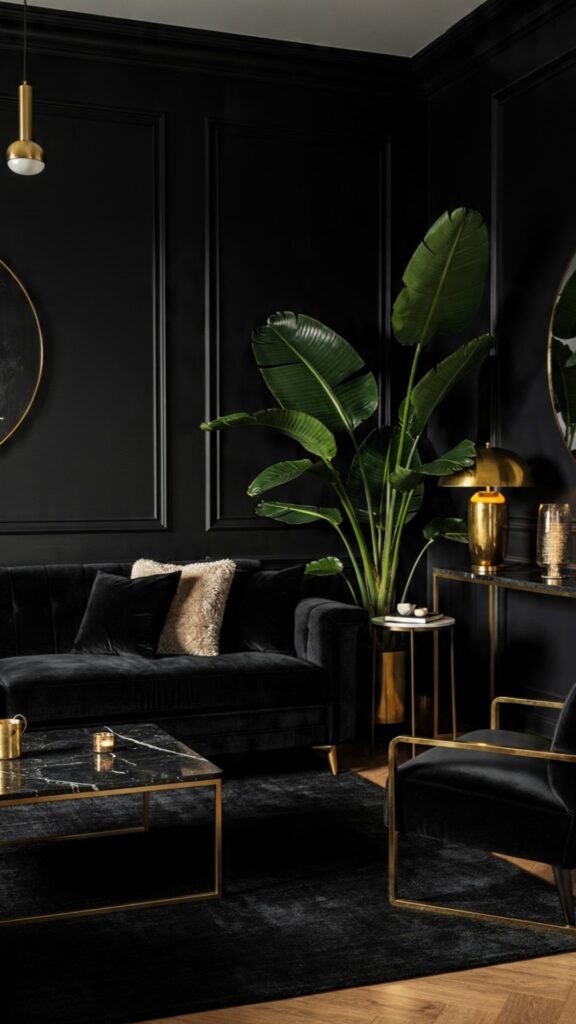
Few decorating strategies are as effective or as simple as placing lush green plants against a black background. The contrast between deep black and vivid green is visually electric, making both elements look more alive and dynamic. This is why black-background botanical wallpaper has become so popular: it replicates this effect permanently on a wall.
Large-leafed plants work best in this context: monstera deliciosa, fiddle-leaf figs, bird of paradise, and snake plants all create bold silhouettes that stand out dramatically against dark surfaces. Smaller plants, like trailing pothos or succulents in black pots, add greenery at a different scale and create a layered, garden-like effect.
The combination of plants and black decor also has biophilic benefits connecting the interior to the natural world in a way that enhances wellbeing. Research consistently shows that indoor plants reduce stress, improve air quality, and make people feel more connected to nature. In a black living room decor, this connection feels especially intentional and grounding.
For low-maintenance options, consider air plants, ZZ plants, or cast-iron plants all of which thrive with minimal light and attention. This makes them practical companions for darker living rooms where natural light may be limited.
Use Black Flooring for a Dramatic Base:
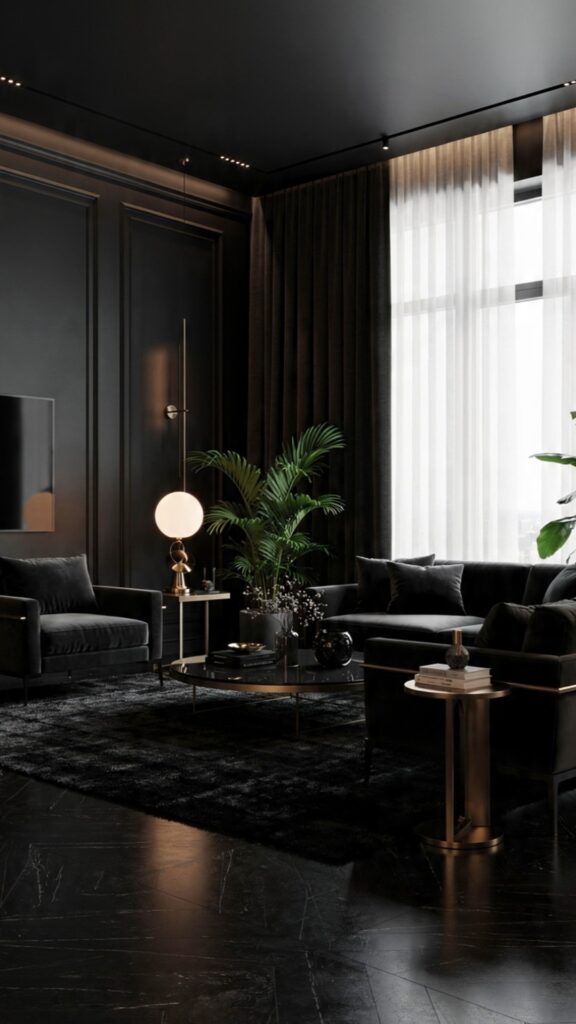
Black flooring is a bold choice that pays off enormously in terms of drama and sophistication. Whether you choose black hardwood, black tile, dark slate, or black-stained concrete, a dark floor creates a sense of depth that makes the entire room feel more intentional and designed.
Black hardwood floors, particularly in wide-plank formats, are experiencing a significant resurgence in popularity. They read as deeply elegant especially when paired with lighter walls and furniture, which creates a floating effect. The contrast between the dark floor and lighter furnishings is visually satisfying and makes the room feel curated rather than accidental.
One practical consideration with black flooring is maintenance. Dark floors do show dust, pet hair, and light debris more readily than lighter options. However, they are also more forgiving of scuffs and stains which tend to disappear against a dark surface. A regular cleaning routine (microfiber mop, low-moisture cleaning) keeps black floors looking pristine.
For those who want the look without the permanence, large black area rugs achieve a similar visual effect. A dark rug anchors the seating area and creates the same sense of depth and drama as black flooring, without requiring any structural changes to the room.
Tap to Explore : Gothic Bedroom Ideas That Share the Same Bold and Dark Elegance as Your Living Room.
Create Contrast With Colorful Art on Black Walls:
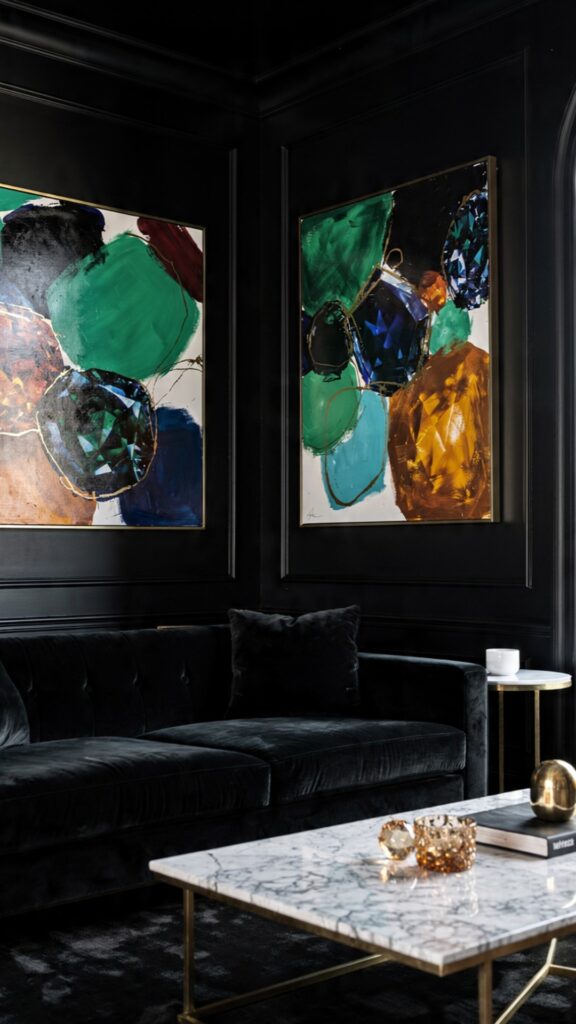
A black wall is the ultimate art gallery backdrop. Just as museums often use dark walls to make paintings pop, a black living room decor wall makes artwork appear more vivid, more saturated, and more impactful than it would on a white or gray surface. This technique is used in high-end galleries worldwide and translates beautifully into home settings.
Any art style works against black abstract paintings, photography, botanical prints, portrait art but pieces with strong color contrasts are particularly effective. A painting with bold reds, oranges, or yellows creates a stunning focal point against a black wall. Similarly, black-and-white photography takes on a timeless, editorial quality in this context.
When hanging art on black walls, consider the frame carefully. Gold and brass frames add warmth and luxury. Natural wood frames create an organic, earthy feel. White or light-colored frames create a crisp, graphic effect that highlights the contrast between the wall and the artwork.
For those building a gallery wall on a black surface, consistency matters more than on lighter walls. Choose frames in one or two finishes, and group pieces by theme or color palette. The black wall already provides strong visual drama the art should complement it, not compete with it.
Incorporate Black Through Architectural Details:
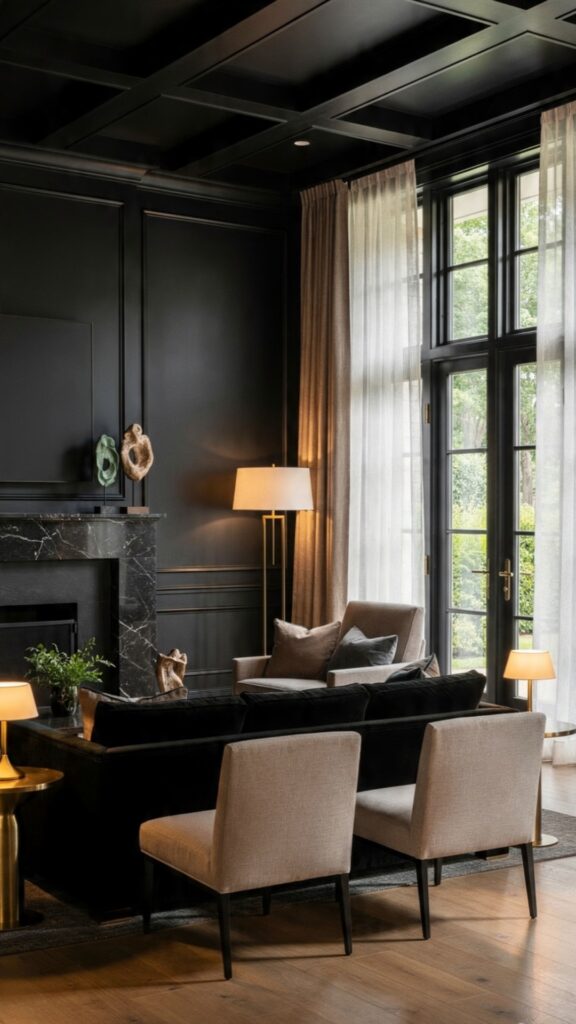
Black architectural details are a sophisticated way to introduce the color without overwhelming the space. Crown molding, door frames, window trim, fireplace surrounds, and built-in cabinetry painted in black create a sense of structure and definition that elevates the entire room.
This technique is deeply rooted in traditional interior design but has been modernized in contemporary homes. Painting door frames and window trim in black while keeping walls white or light gray creates a graphic, editorial look that feels both classic and current. It’s a relatively inexpensive update that dramatically transforms how polished a room appears.
A black fireplace surround deserves special attention. The fireplace is often the natural focal point of a living room, and painting the surround black whether it’s marble, tile, or painted plaster makes it feel anchored, dramatic, and deeply sophisticated. Pair it with a large mirror or statement artwork above to complete the look.
Built-in cabinetry and shelving units painted in matte black are another powerful architectural choice. Unlike freestanding furniture, built-ins feel permanent and intentional. When painted black, they create a gallery-like effect especially effective when used to display books, art, and decorative objects.
Balance Black With Warm Ambient Lighting:
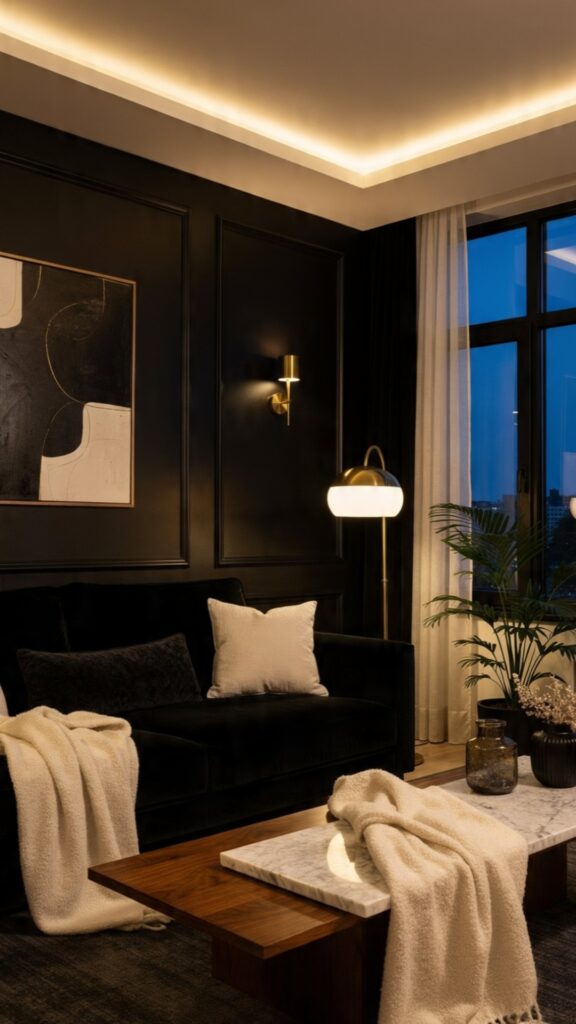
One of the most important principles of black living room decor is that lighting can make or break the look. Dark rooms require thoughtful, layered lighting to feel welcoming rather than oppressive. The goal is to create warmth and atmosphere while ensuring the space remains functional and comfortable for everyday use.
Layered lighting combining ambient, task, and accent lighting is essential in a black living room decor. Ambient lighting (ceiling fixtures, recessed lighting) provides the overall base illumination. Task lighting (reading lamps, desk lamps) serves functional purposes. Accent lighting (picture lights, uplights, candlelight) creates drama and highlights key features.
Warm white bulbs (2700K–3000K) are non-negotiable in a black living room decor. Cool white or daylight bulbs (4000K–6500K) create a clinical, harsh feel that clashes with the warmth and depth of black decor. Warm bulbs, by contrast, cast a golden glow that makes the space feel cozy and inviting like candlelight, but brighter.
Dimmer switches are a worthwhile investment for any black living room decor. The ability to adjust lighting levels means you can shift the room from bright and functional (daytime use) to moody and atmospheric (evening entertaining) with a simple adjustment. This flexibility is one of the hallmarks of a well-designed room.
Try Black in an Eclectic or Maximalist Style:
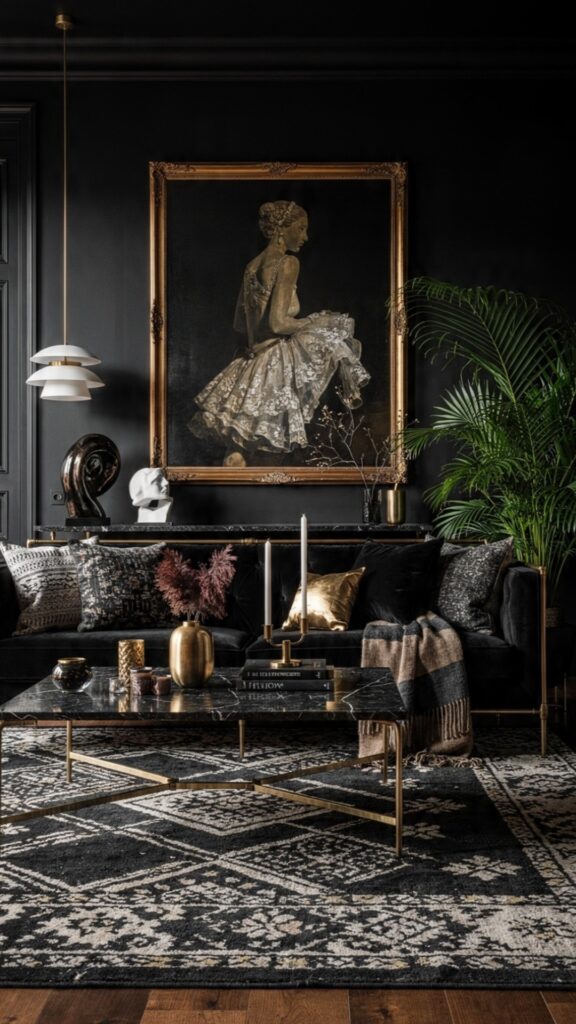
Black is often associated with minimalism, but it thrives equally if not more in maximalist and eclectic interiors. In a maximalist living room, black acts as a unifying thread that ties together a diverse mix of colors, patterns, textures, and styles. It provides visual grounding that prevents a richly layered room from feeling chaotic.
Imagine a black-walled living room filled with jewel-toned velvet furniture, layered Persian rugs, gilt-framed mirrors, tropical plants, and an eclectic mix of global artifacts. The black background makes every element feel intentional and curated like a carefully assembled collection rather than a random assortment. This is the power of black in maximalist design.
Eclectic living rooms also benefit from black through smaller, mixed-in elements: a black lacquered sideboard among warm wood furniture, black-framed mirrors in a gallery of mixed-style artworks, or black ceramic vessels among colorful decorative objects. These touches add contrast and cohesion simultaneously.
The key principle in maximalist black decor is intentionality. Every piece should feel chosen and deliberate. When black is used thoughtfully within a rich, layered palette, it prevents the room from feeling overwhelming while allowing individual pieces to shine.
Design a Moody, Cozy Reading Corner in Black:
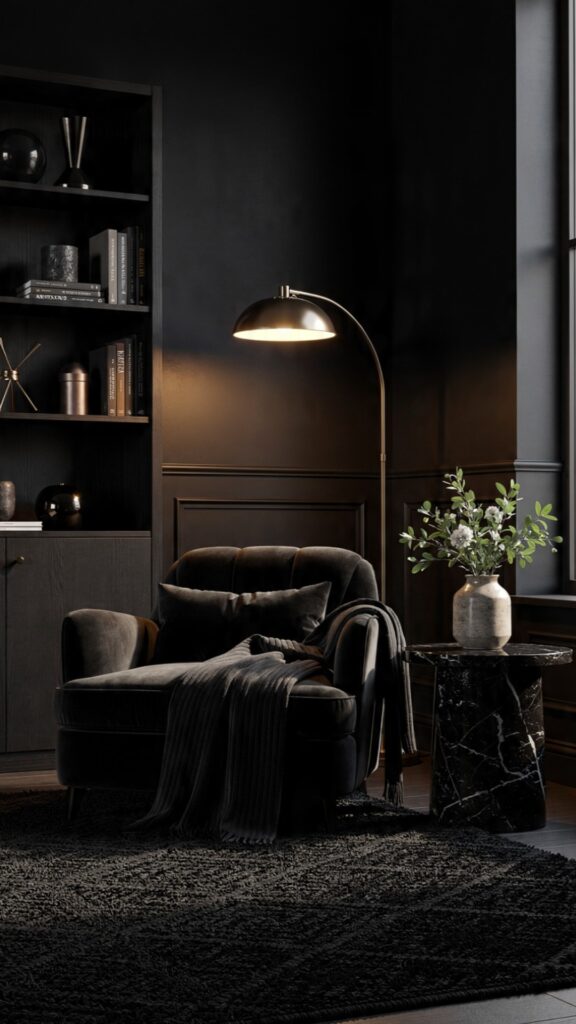
Black is the perfect color for creating a cozy, enveloping reading nook within a larger living room. A black accent wall or dark painted alcove immediately creates a sense of separation a “room within a room” that feels intimate and focused. This is the design principle behind many boutique hotel libraries and private members’ clubs.
To design a black reading corner, start with a comfortable armchair or chaise in a rich fabric velvet, boucle, or leather all work beautifully. Add a black floor lamp for task lighting, a small side table for books and drinks, and a cozy throw blanket.
Line the surrounding walls with black shelves filled with books, and the corner instantly becomes the most inviting spot in the house. Layering textures is especially important in a small, dark nook. Without textural variety, a black reading corner can feel flat and uninviting.
Combine smooth leather with a nubby wool throw, a silk pillow, and a rough linen lampshade. Each texture catches light differently, creating a subtle richness that makes the space feel deeply comfortable.
Scented candles, small indoor plants, and personal mementos complete the reading corner and make it feel personal rather than generic. This micro-environment within the larger living room is one of the most satisfying design achievements in a black living room decor.
Combine Black With Jewel Tones for Richness:
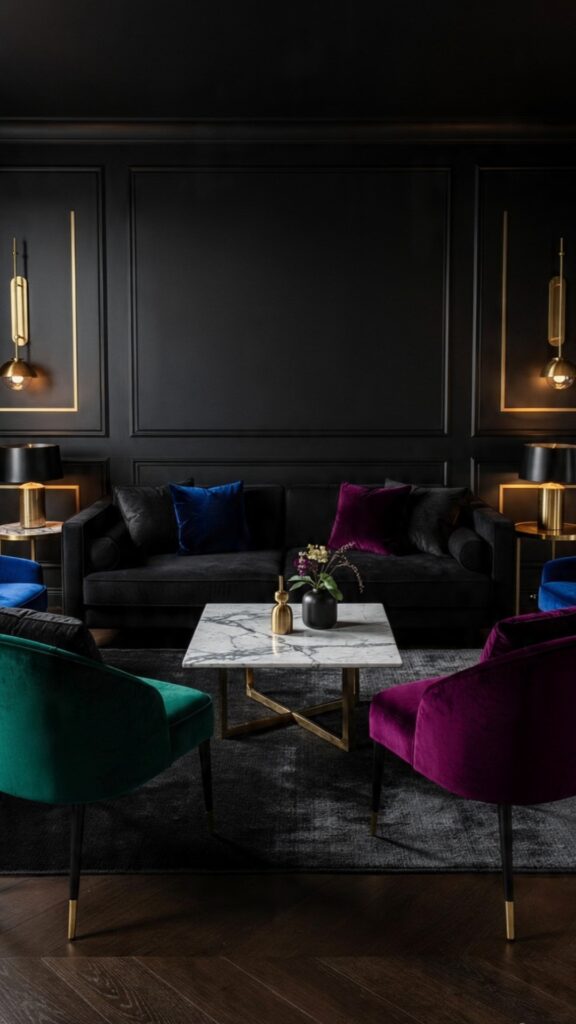
Jewel tones sapphire blue, emerald green, amethyst purple, ruby red, topaz gold come alive against black backgrounds in a way that they simply don’t against white or gray. The dark backdrop saturates the colors, making them appear more vivid and luminous.
This combination appears frequently in luxury interior design and high-end fashion and for good reason. Consider a black living room decor with an emerald green velvet sofa as the hero piece. The deep green looks richer and more saturated against the black backdrop than it would in any other context.
Add sapphire blue cushions, a ruby red throw, and gold accents for a maximally rich, jewel-toned palette that feels opulent without being kitsch. Jewel-toned art is particularly effective in a black living room decor.
A large painting with rich blues, greens, or purples creates an immediate focal point and introduces color in a sophisticated, curated way. Pair it with jewel-toned accessories vases, candles, books to carry the palette throughout the room.
From a color psychology perspective, jewel tones create feelings of luxury, depth, and emotional warmth. Combined with the grounding quality of black, this palette creates a living room that feels both stimulating and deeply comfortable a rare combination that skilled designers spend careers trying to achieve.
Use Mirrors to Brighten a Black Living Room decor:
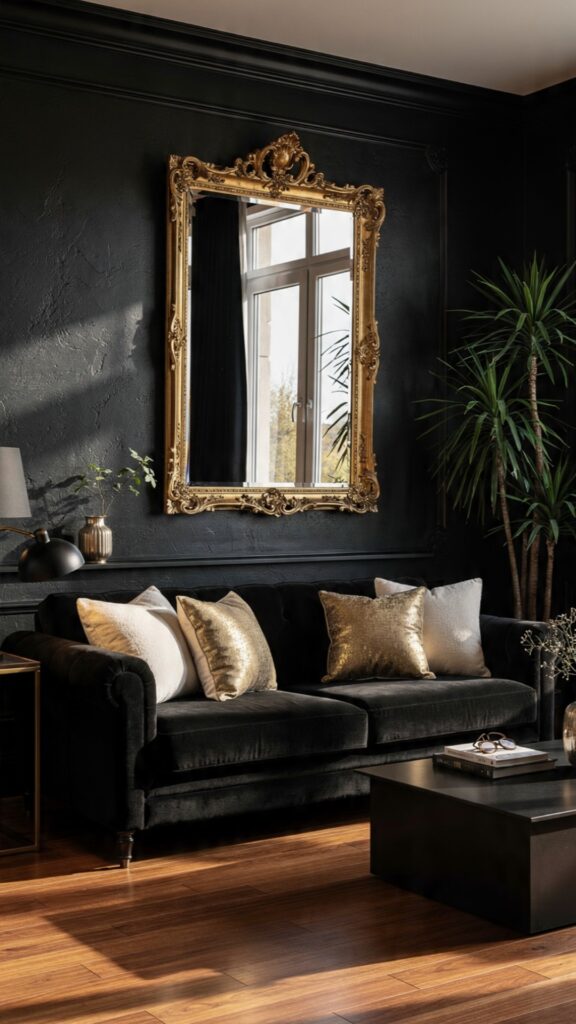
Mirrors are an essential tool in black living room decor. They reflect light and create an illusion of space two qualities that are especially valuable in darker rooms. A well-placed mirror can prevent a black living room decor from feeling claustrophobic, instead making it feel open, luminous, and dynamic.
Large statement mirrors leaning against a wall or hung as a focal point work best in black living room decor. A vintage or ornate mirror in a gold or brass frame looks particularly stunning against black walls, combining the richness of the dark background with the warmth of the metallic frame. The reflected light creates a glow that brightens the entire room.
Gallery arrangements of smaller mirrors also work beautifully. A collection of differently shaped mirrors round, oval, arched, rectangular creates an eclectic, artistic display while multiplying light throughout the space. This approach is especially effective on black walls where the frames become part of the overall composition.
Position mirrors to reflect light sources windows, lamps, or candles. A mirror placed opposite a window reflects natural daylight back into the room throughout the day. A mirror positioned near a lamp creates a warm, glowing halo effect in the evenings. Both techniques amplify the brightness of the room without adding more fixtures.
You Will Love This : TV Wall Design Ideas That Look Absolutely Stunning in a Black Living Room.
Add Tactile Interest With Black Textured Surfaces:
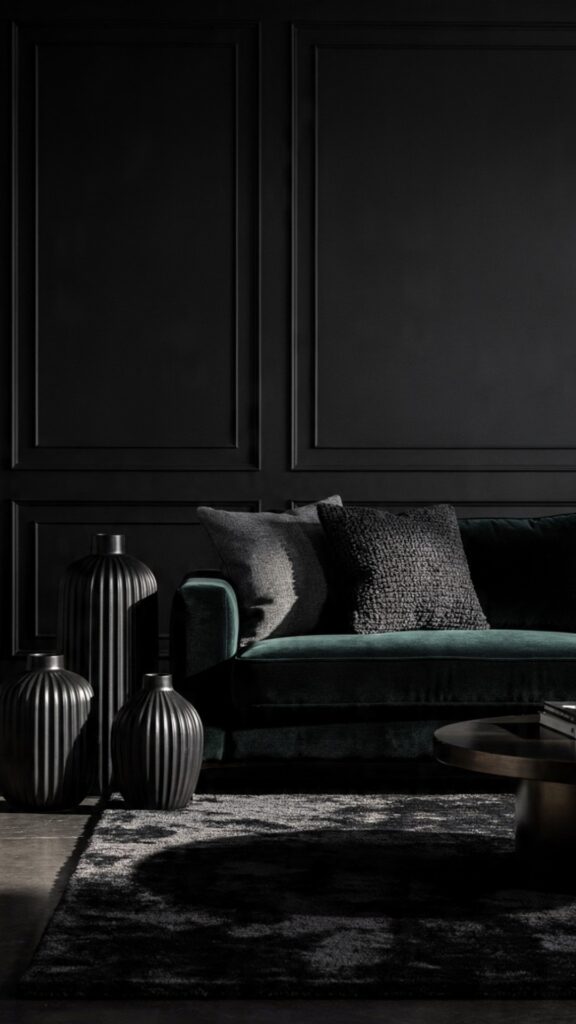
Texture is the unsung hero of black living room decor. Because a monochromatic black palette lacks the visual variety of multiple colors, texture takes on an outsized role in creating interest, depth, and warmth. Without it, a black living room decor risks feeling flat, cold, and one-dimensional.
Think of all the different ways black surfaces can feel: velvet is soft and plush, matte paint is quiet and sophisticated, glossy lacquer is reflective and dramatic, leather is smooth and luxurious, brushed steel is cool and industrial, concrete is raw and tactile. Each of these materials has a completely different quality, even though all of them are black.
In a well-designed black living room decor, you should be able to identify at least 4–5 distinct textures. This might include a matte black wall, a glossy black coffee table, a velvet black sofa, a black woven rug, and matte black shelving. The interplay between these different surface qualities creates visual and tactile richness that keeps the room engaging.
When shopping for black decor pieces, train yourself to think about texture first, color second. The exact shade of black matters less than the surface quality. A slightly warm-toned matte black paint and a slightly cool-toned black lacquer table can coexist beautifully if their textures create interesting contrast.
Consider Black in Open-Plan Living Spaces:
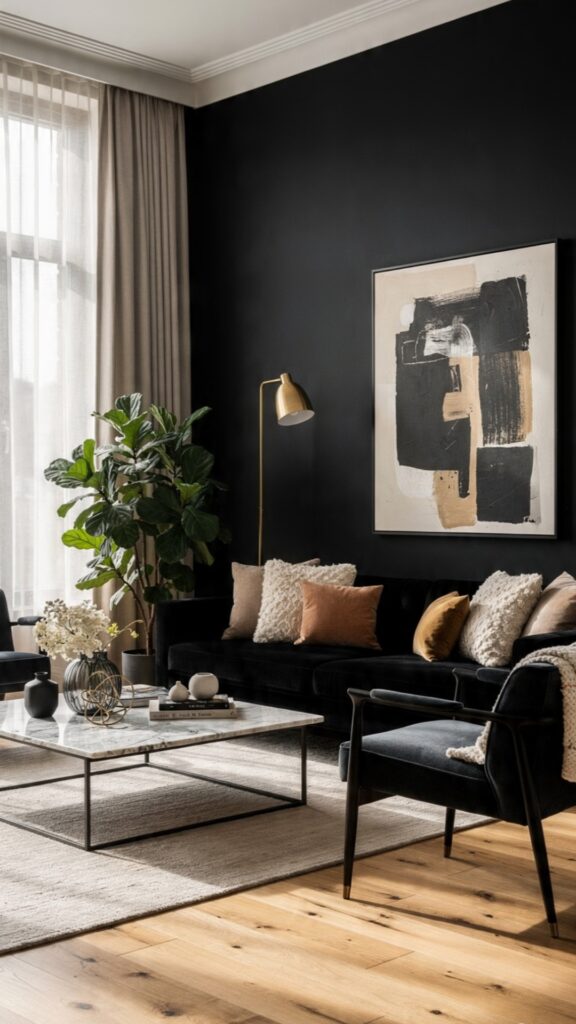
Open-plan living spaces present unique opportunities for black living room decor. In an open-plan home where the living area connects to a kitchen or dining room, black can be used strategically to define and anchor the living zone without requiring physical walls.
A black feature wall behind the sofa, for example, visually separates the living area from the rest of the open-plan space. It creates a sense of enclosure and identity for the living zone while maintaining the openness of the overall floor plan. This zoning technique is increasingly popular in contemporary home design.
Black furniture a dark sofa, a black coffee table, a black bookshelf also helps anchor the living zone within a larger open-plan space. These pieces create visual weight that grounds the seating area and distinguishes it from adjacent zones. The contrast between the dark living area and a lighter kitchen or dining area creates a natural sense of rhythm throughout the space.
For cohesion in an open-plan home, carry black accents from the living area into adjacent zones. Black pendant lights over the dining table, black cabinet hardware in the kitchen, and black picture frames in the hallway create a thread of continuity that ties the whole space together without making every area feel identical.
Evolve Your Black Decor Seasonally:
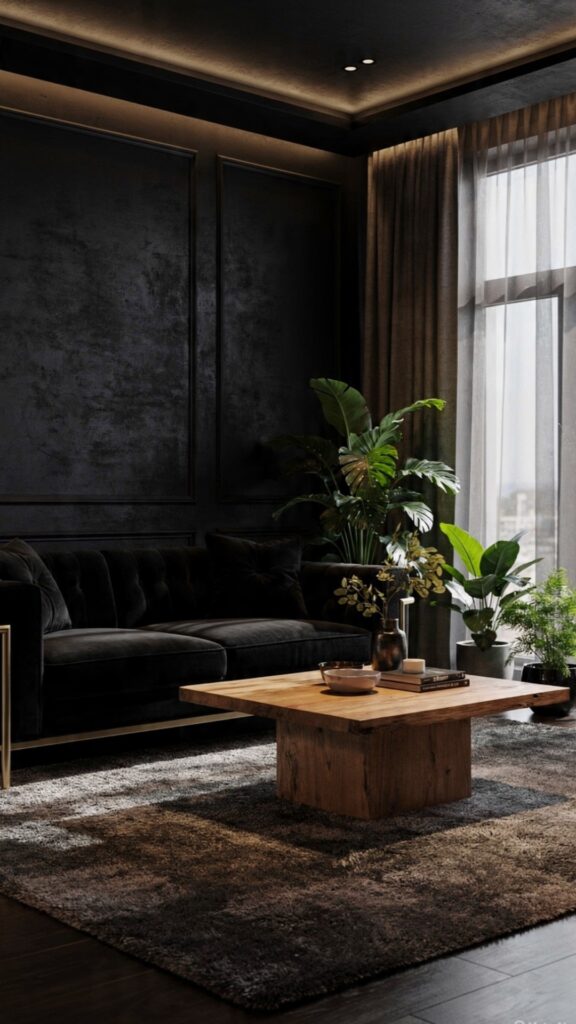
One of the most underappreciated qualities of a black living room decor is its seasonal versatility. Unlike pale, neutral rooms that can feel flat and unchanging, a black living room decorprovides a rich backdrop that responds beautifully to seasonal decorating changes. With relatively small adjustments, the room can feel completely different across autumn, winter, spring, and summer.
In autumn and winter, lean into the warmth and coziness that black naturally evokes. Add extra throw blankets, layer rugs for depth, introduce rich amber and burgundy accents, and light candles freely. This seasonal layering transforms the black living room decor into the ultimate winter retreat warm, enveloping, and deeply comforting.
In spring and summer, lighten the room by swapping heavy textiles for lighter linen alternatives. Introduce fresh flowers in bold colors sunflowers, peonies, dahlias and replace warm-toned candles with fresh green plants. Open windows to flood the room with natural light, which transforms the black palette from moody to crisp and graphic.
This seasonal flexibility is one of the most compelling arguments for committing to black living room decor. Rather than a fixed, static aesthetic, a black room is a living canvas that evolves with the seasons, your mood, and your evolving taste making it a genuinely long-term investment in your home.
Conclusion
Black living room decor is one of the most versatile, enduring, and deeply sophisticated design choices you can make. From bold black walls and furniture to subtle textural accents and strategic lighting, the ideas in this guide offer practical, actionable ways to bring this powerful aesthetic into your home.
Whether you go all-in or start small, black living room decor rewards those who approach it thoughtfully. Choose one idea that resonates and start there your most striking, most personal living room is waiting to be created.

Team TrandyVilla is the passionate home decor team behind Trandy Villa, where style meets comfort in everyday living. The team loves transforming simple spaces into beautiful, functional homes through smart ideas, budget-friendly hacks, and modern design trends. Their content focuses on helping readers create homes that feel both stylish and personal without spending too much.