
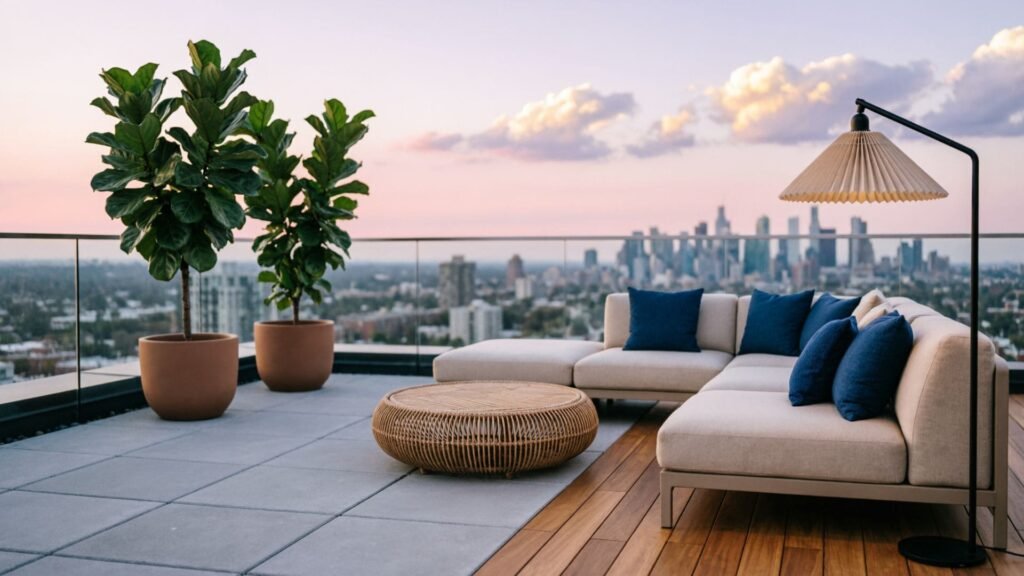
Rooftop terraces are no longer just empty concrete slabs sitting above apartment buildings. Today, they represent some of the most exciting and creative outdoor living spaces in modern home and urban design. A well-planned rooftop terrace design transforms unused rooftop square footage into a private sanctuary a place for entertaining, relaxing, gardening, or simply enjoying elevated views of the city or landscape around you.
Rooftop terrace design is the art of transforming an empty rooftop into a functional, beautiful outdoor living space. It combines smart planning, durable materials, and creative styling. The core goals are clear: maximize usable space, add comfort, create privacy, and reflect personal lifestyle. Every decision from flooring to planting serves a specific purpose.
A stunning rooftop terrace design turns unused urban space into a private retreat above the city. It solves the problem of limited outdoor space beautifully. Done right, a rooftop terrace design adds living area, boosts property value, and creates a personal sanctuary unlike any other.
Rooftop terrace design ideas cover a wide range of practical and aesthetic choices. Structural assessment comes first. Flooring, shade structures, and seating zones follow naturally. Smart planting adds life and privacy. Lighting extends evening usability. Heating makes the space comfortable year-round. Every element works together to create an outdoor space that is stylish, safe, and genuinely enjoyable.
Start With a Structural and Safety Assessment:
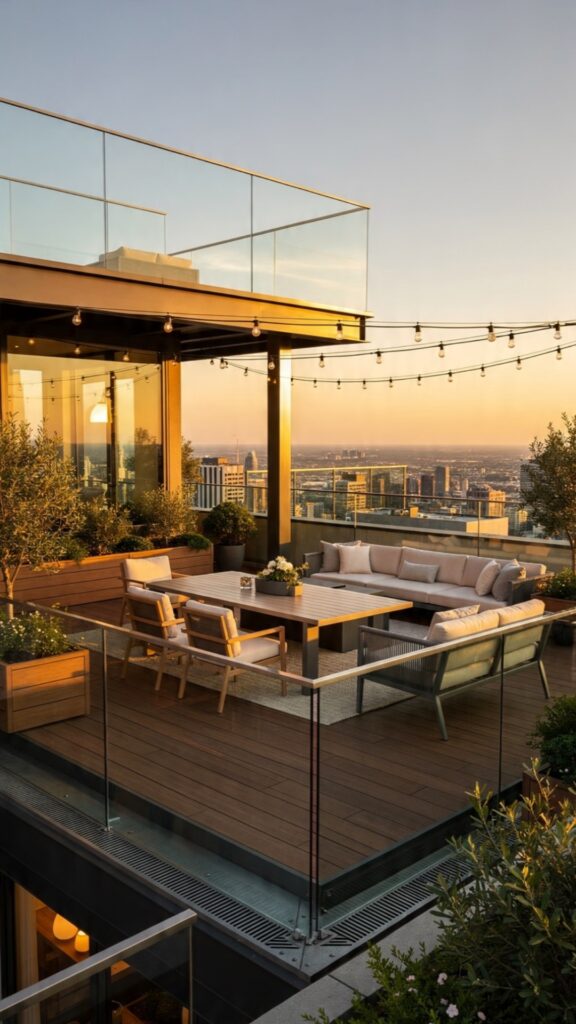
Before any design decision is made, a rooftop terrace project must begin with a thorough structural and safety evaluation. Rooftops are not automatically designed to carry the weight of furniture, planters, paving, and regular foot traffic. A structural engineer must assess the load-bearing capacity of the roof before any renovation begins. Skipping this step is not just a design mistake it is a safety risk.
Load capacity determines every major design decision that follows. It affects whether you can install heavy stone paving or must use lightweight composite decking. It determines how large your planters can be and what type of soil they can hold. It influences whether a pergola, shade structure, or rooftop pool is even feasible. Every element in your rooftop terrace design flows from this foundational assessment.
Waterproofing is equally critical. Rooftop terraces are exposed to rain, temperature fluctuations, and UV radiation year-round. A professional waterproofing membrane beneath your chosen flooring material protects the structural integrity of the building below. Poor waterproofing leads to water infiltration, damp ceilings, and costly repairs that far exceed the original investment in the terrace.
Local building codes and planning permissions must also be considered. Many municipalities have regulations about rooftop structures including railings, pergolas, screens, and mechanical equipment. Consulting a local architect or planning authority early in the process saves significant time, money, and frustration during the project.
Choose the Right Flooring for Your Rooftop Terrace:
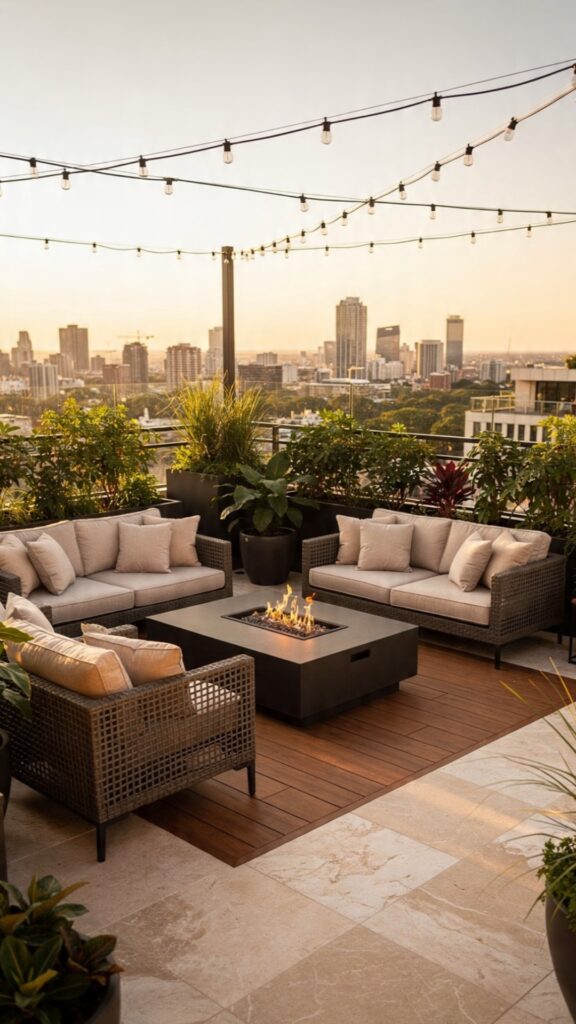
Flooring is one of the most impactful decisions in rooftop terrace design. It sets the visual tone of the entire space, affects comfort underfoot, and must withstand constant exposure to weather, UV light, and temperature changes. The right flooring balances aesthetics with durability, weight, and maintenance requirements.
Composite decking is one of the most popular choices for modern rooftop terraces. Made from a blend of wood fibers and recycled plastic, composite boards are lightweight, resistant to moisture and UV fading, and require minimal maintenance.
They are available in a wide range of wood-effect finishes that closely mimic natural timber without the warping, splitting, or regular oiling that real wood demands. For weight-sensitive rooftops, composite decking is often the most practical solution.
Porcelain tiles are another excellent option for rooftop terraces, particularly those with a contemporary or minimalist design aesthetic. Large-format porcelain tiles 60x60cm or larger create a seamless, architectural look that photographs beautifully and feels luxurious underfoot.
Outdoor-rated porcelain tiles are frost-resistant, non-slip, and highly durable. Raised pedestal systems allow tiles to be installed over an existing surface without adhesive, making them easier to remove for maintenance access.
Natural stone such as slate, travertine, or granite is visually stunning but heavy, expensive, and requires professional sealing and maintenance. It is best suited to rooftops with confirmed high load capacity and generous budgets.
For a lighter alternative that achieves a similar aesthetic, look for thin-format stone tiles (10–12mm) mounted on composite backing boards a solution increasingly used by high-end landscape architects on weight-restricted projects.
Design a Functional Outdoor Seating Zone:
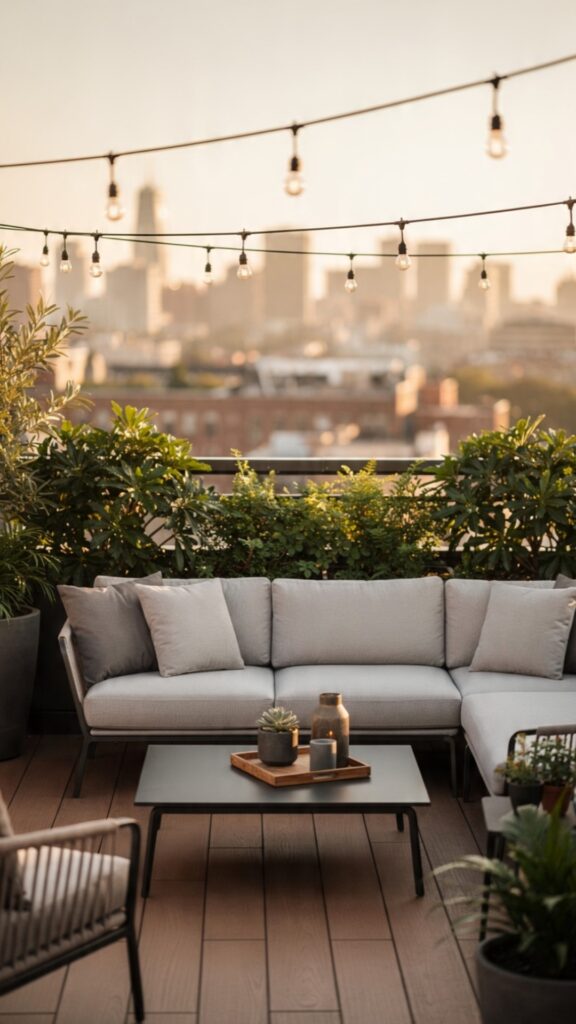
Every successful rooftop terrace design centers on a well-planned seating zone. This is where people gather, relax, and spend the majority of their time outdoors. A functional seating area needs to feel comfortable, be appropriately scaled for the space, and be positioned to take advantage of the best views and the most sheltered spot on the terrace.
Sectional outdoor sofas are the most popular choice for rooftop seating. Their modular format allows them to be configured precisely to fit the available space, and they create the feeling of a proper outdoor living room with cushioned comfort and a conversational layout that invites people to settle in and stay.
Choose frames in aluminum or powder-coated steel, which resist rust and corrosion far better than untreated iron or low-quality materials. Weather-resistant cushion fabrics deserve serious attention. Solution-dyed acrylic fabrics such as those made by Sunbrella are the industry standard for outdoor upholstery.
They resist fading, moisture, mold, and mildew, and maintain their color and texture for years of rooftop use. Avoid cheaper polyester cushions that fade within one season and become home to mold in wet climates.
The positioning of the seating zone within the terrace is as important as the furniture itself. In general, seating should be placed to maximize the view, be sheltered from the dominant wind direction, and receive the right amount of sun sunny enough to be warm, but not so exposed that it becomes uncomfortable in summer. A professional landscape designer will assess these factors as part of the rooftop terrace design layout process.
Discover More : Rooftop Garden Ideas That Add Lush Greenery to Your Stunning Terrace Design.
Add a Pergola or Shade Structure for Year-Round Comfort:
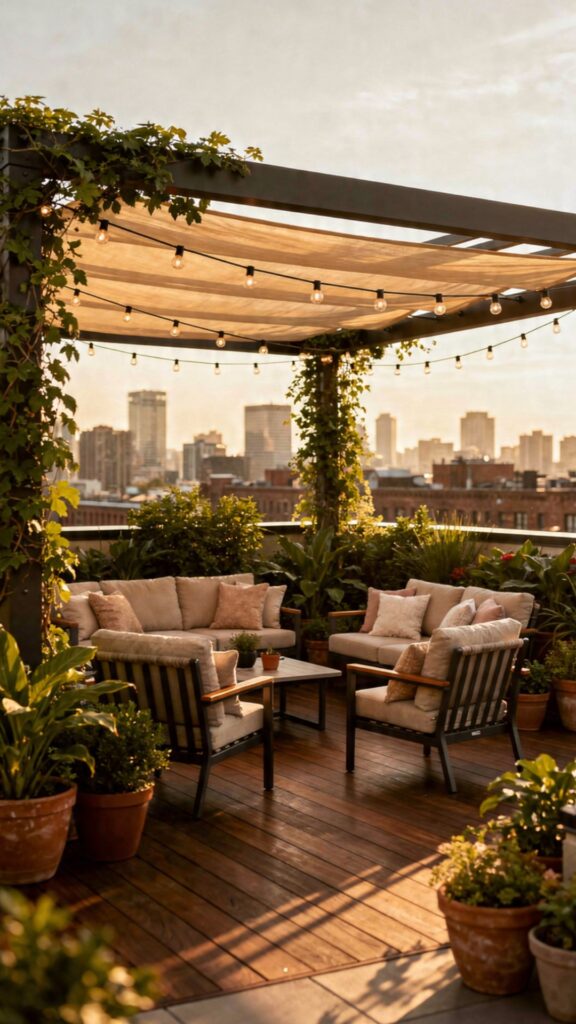
A pergola or shade structure is one of the most transformative additions to any rooftop terrace design. Without shade, a rooftop terrace design in summer can become uncomfortably hot exposed to direct sun with no natural shelter from trees or buildings. A well-designed shade structure extends the usability of the terrace across all seasons and weather conditions.
Aluminum louvred pergolas are the current gold standard in rooftop shade structures. Their adjustable louvers allow you to control the amount of sunlight and ventilation entering the space open them fully for fresh air, angle them to filter light, or close them completely during rain.
Many systems also integrate lighting, heating, and drainage, making them an all-season outdoor room solution that is increasingly affordable for residential use.
For a softer, more aesthetic approach, retractable fabric shade sails and awnings offer flexible shading without the permanence of a fixed structure. High-quality shade sails in HDPE fabric block up to 95% of UV radiation while allowing air circulation preventing the greenhouse effect that solid roofs can create. They can be retracted in high winds, making them suitable for exposed rooftop environments.
Bamboo, timber, and rattan pergola structures offer a more natural, organic aesthetic that suits garden-style rooftop terrace designs.
However, these materials require more maintenance than aluminum regular sealing, treatment, or replacement of components may be necessary over time. For low-maintenance rooftops, aluminum frames with natural material cladding offer the best of both worlds: structural durability with aesthetic warmth.
Incorporate Rooftop Greenery and Planting:
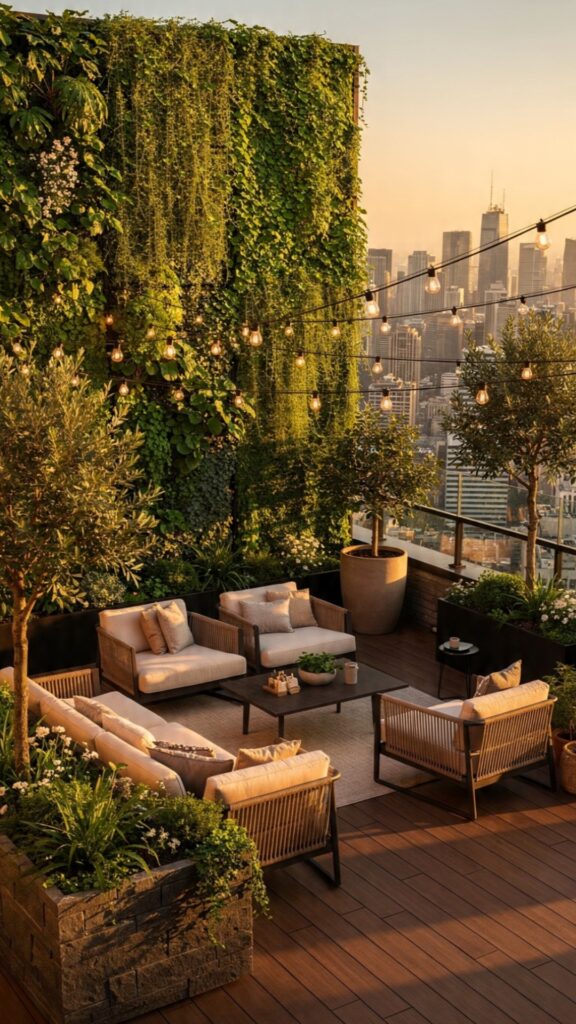
Planting is what separates a truly exceptional rooftop terrace design from a simple paved outdoor space. Greenery adds life, color, texture, and oxygen to the rooftop environment. It softens hard surfaces, provides privacy, attracts pollinators, and creates a sensory experience that no furniture or lighting can replicate. A rooftop without plants is a missed opportunity.
Weight management is the central challenge of rooftop planting. Traditional garden soil is extremely heavy a cubic meter of wet soil can weigh up to 1,600 kg. Lightweight growing media, specifically formulated for rooftop gardens, offer similar growing performance at a fraction of the weight.
Products like perlite-enriched mixes, green roof substrates, and expanded clay aggregates are used by professional rooftop garden designers to maximize planting while minimizing load.
Raised planters in aluminum, fiberglass, or Corten steel are the most practical solution for rooftop planting. These materials are lightweight, durable, weather-resistant, and available in a wide range of sizes and finishes.
Tall planters 80cm or higher create an immediate sense of enclosure and privacy on open rooftop terraces. Plant them with tall grasses, bamboo (in root barriers), or tall architectural plants like Phormium for maximum impact.
Plant selection for rooftop terraces requires careful thought. Rooftop environments are harsher than ground-level gardens higher wind speeds, stronger UV exposure, temperature extremes, and faster soil drying. Drought-tolerant, wind-resistant plants perform best.
Lavender, ornamental grasses, sedum, rosemary, agave, and Mediterranean herbs are all excellent choices. They are beautiful, low-maintenance, and genuinely suited to the rooftop microclimate.
Create Privacy Screens for Urban Rooftop Settings:
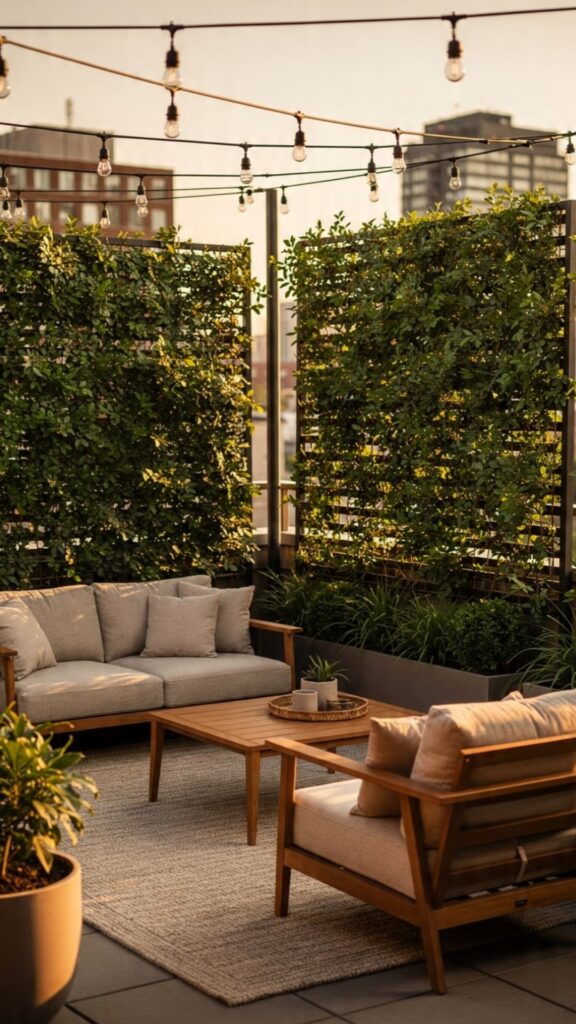
Privacy is one of the most common challenges in urban rooftop terrace design. City rooftops are often overlooked by neighboring buildings, creating the uncomfortable feeling of being on display. Without adequate screening, even the most beautifully designed terrace can feel exposed and unusable. Addressing privacy early in the design process is essential.
Planting-based privacy screens are the most beautiful solution. A row of tall planters filled with bamboo, pleached trees, or dense evergreen shrubs creates a natural green screen that provides privacy while adding life and texture to the terrace perimeter.
Bamboo in root-control bags is particularly effective it grows quickly, handles wind well, and creates a dense, lush screen without becoming invasive. However, it requires regular watering, particularly in exposed rooftop conditions.
Built privacy screens in timber, metal, or composite materials offer a more architectural solution. Slatted screens with gaps between the slats filter views without blocking air circulation or light entirely. This balance is crucial on rooftops, where solid screens can create wind turbulence and excessive shade. A professional designer will calculate the appropriate slat spacing to achieve visual privacy while maintaining airflow.
Glass balustrades and frameless glass screens are increasingly popular for rooftops where views are a priority. They provide structural safety and wind protection without obstructing sightlines making them the preferred choice for high-rise terraces with panoramic city views.
Toughened safety glass panels in aluminum or stainless steel channels are the standard specification, and their clean, minimal aesthetic suits contemporary rooftop terrace designs particularly well.
Integrate Rooftop Terrace Lighting for Evening Ambience:
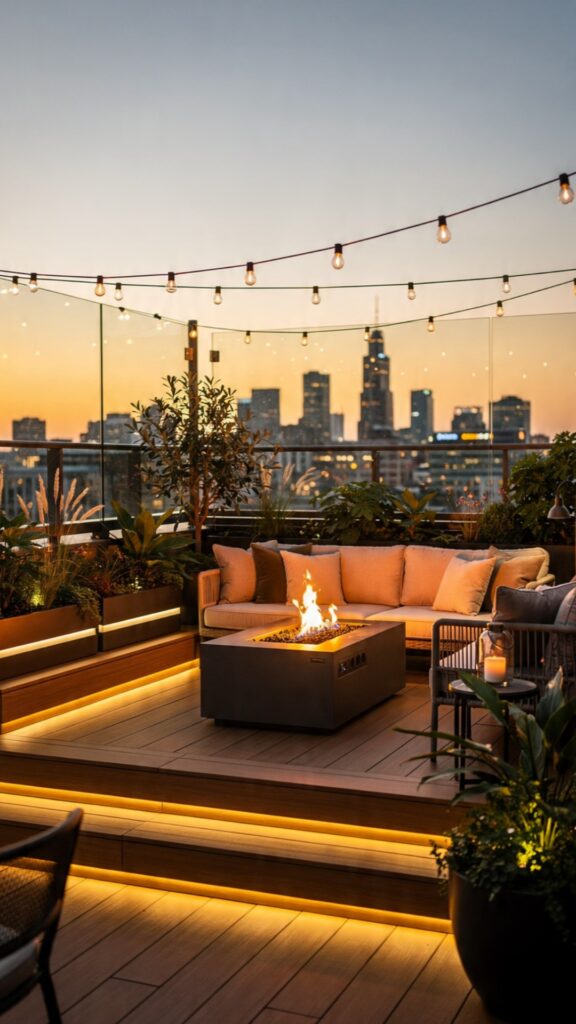
Rooftop terrace lighting transforms the space after dark, extending its usability into the evening hours and creating an atmosphere that cannot be replicated during the day. Good rooftop lighting is layered combining ambient, task, and accent sources to create depth, warmth, and visual interest across the entire terrace.
String lights also known as festoon lights or café lights are the most popular choice for rooftop terrace design ambience. Strung between posts, pergola beams, or across the perimeter of the terrace, they create a warm, intimate glow that is inherently celebratory and relaxed.
LED versions consume minimal energy and last for thousands of hours, making them a practical as well as beautiful choice. Solar-powered string lights are an excellent option for rooftops where adding electrical cabling is difficult or expensive.
Integrated lighting within the terrace structure creates a more polished, architectural look. Recessed deck lights set into the flooring, LED strip lighting beneath planters or benches, and uplighting within planted areas all create layers of light that make the terrace feel designed and intentional.
These elements require planning at the early stages of the project retrofitting integrated lighting into a completed terrace is significantly more complex and expensive.
Fire features including tabletop fire bowls, gas fire pits, and bioethanol lanterns add both warmth and light to a rooftop terrace in a way that electric lighting cannot. The dynamic, living quality of firelight creates atmosphere that instantly makes a rooftop terrace feel magical.
Gas fire pits require a professional gas installation, while bioethanol versions are self-contained and require no fixed fuel supply making them the more accessible option for most rooftop settings.
Design a Rooftop Dining Area for Outdoor Entertaining:
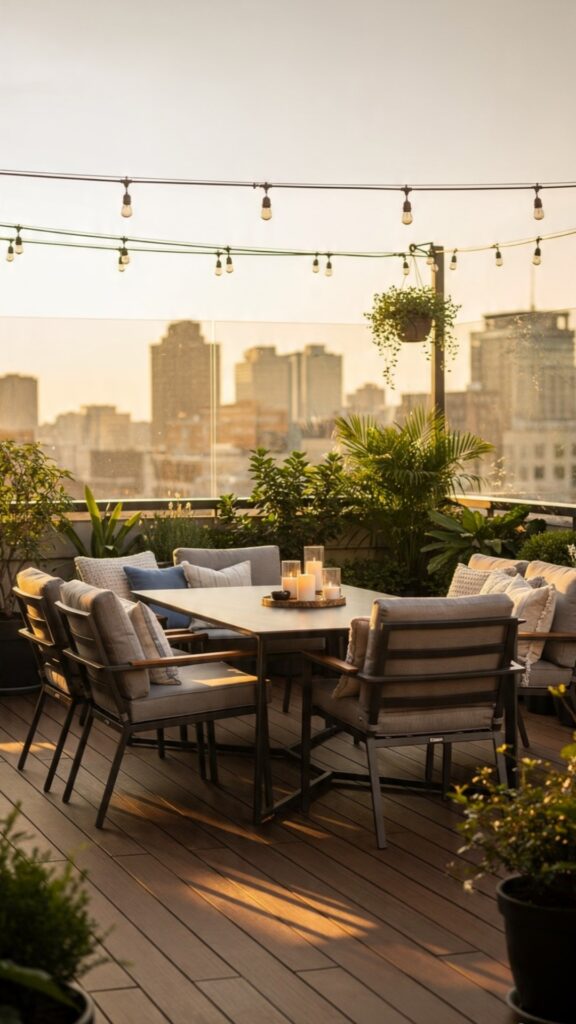
A dedicated dining area is one of the most valuable functional zones in rooftop terrace design. Eating outdoors with a view whether urban skyline, garden, or landscape transforms even a simple meal into a memorable experience. A well-designed rooftop dining zone needs the right furniture, adequate shade, and enough space for comfortable movement around the table.
Outdoor dining tables in aluminum, teak, or composite materials offer the best durability for rooftop use. Aluminum tables are lightweight and rust-proof critical qualities on a rooftop exposed to rain and strong winds.
Teak ages beautifully with minimal maintenance, developing a silver-gray patina over time that many designers find more attractive than the original honey-brown color. Round tables work well in smaller spaces, encouraging conversation and making the most of limited square footage.
Dining chairs for rooftop terraces should be stackable this practical feature makes it easy to store chairs when the terrace is not in use, freeing up space and protecting them from prolonged weather exposure. Polypropylene stackable chairs have improved dramatically in design quality, with many now featuring woven rattan effects or upholstered seat pads that combine style with practicality.
Position the dining table to take advantage of the best views while being sheltered from the prevailing wind. A positioning that places the view at the end of the table visible to all diners is the most effective.
Overhead lighting, such as a pendant lamp hung from a pergola beam or a string of festoon lights directly above the table, creates a focused, intimate dining environment that makes evening meals feel special.
Incorporate a Rooftop Kitchen or BBQ Station:
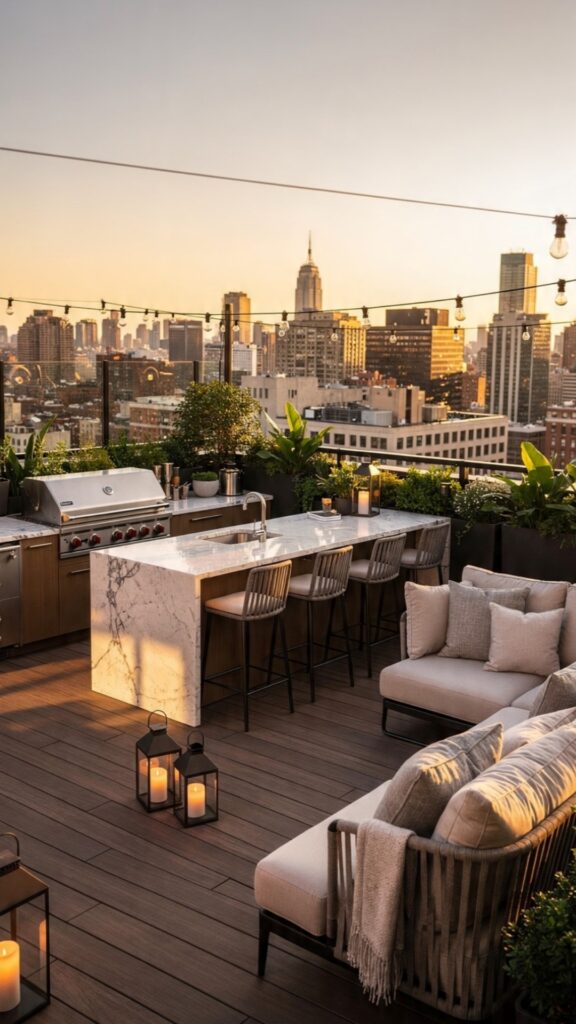
An outdoor kitchen or BBQ station elevates a rooftop terrace design from a relaxation space to a full entertainment destination. The ability to cook, serve, and eat entirely outdoors without repeated trips through the building transforms how a rooftop terrace is used and how often it is enjoyed. Even a basic outdoor kitchen dramatically increases the terrace’s functionality and appeal.
A well-designed rooftop outdoor kitchen typically includes a built-in gas or charcoal grill, a worktop for food preparation, under-counter storage, and ideally a small sink with running water. All materials must be weather-resistant marine-grade stainless steel for appliances and worktops, porcelain tile or composite for cabinet fronts, and sealed stone or porcelain for countertops. These materials withstand rain, UV exposure, and temperature fluctuations without warping, rusting, or degrading.
For rooftops where a full kitchen installation is not feasible, a freestanding premium gas grill on a purpose-built station creates a practical and attractive alternative. Brands such as Weber, Napoleon, and Big Green Egg offer high-quality freestanding grills that are built for outdoor use.
Pair the grill with a powder-coated steel outdoor kitchen unit that provides worktop space, storage, and a cooler compartment creating a functional outdoor cooking zone without fixed construction.
Gas supply to a rooftop outdoor kitchen requires a professional installation by a certified gas engineer. This is non-negotiable from both a safety and legal compliance perspective.
For rooftops where running a gas line is impractical, induction hob units powered by the building’s electrical supply offer a clean, efficient, and increasingly popular alternative with the added advantage of precise temperature control.
Create a Rooftop Garden With Edible Plants:
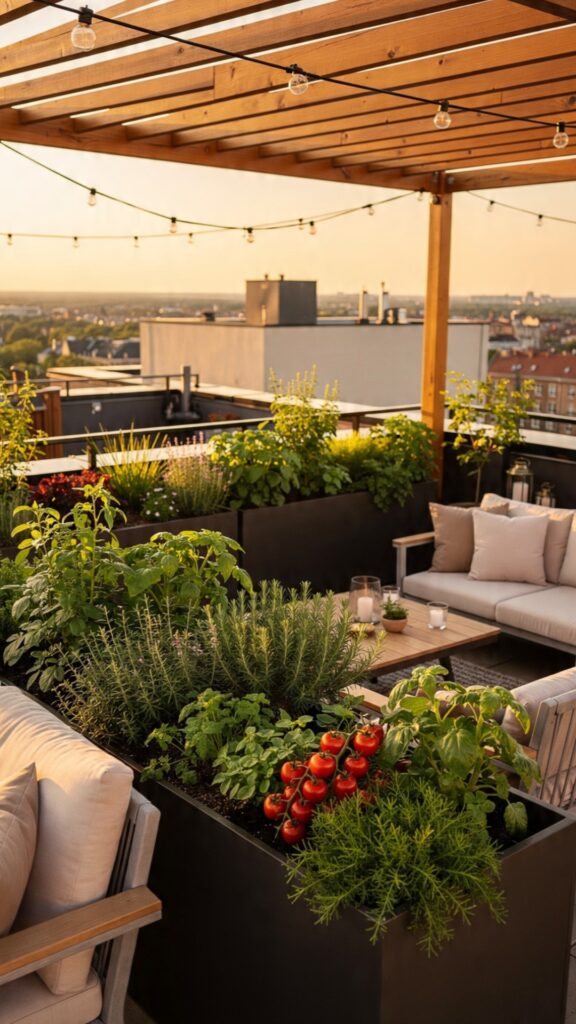
A rooftop kitchen garden is one of the most rewarding and future-focused rooftop terrace design ideas. Growing herbs, vegetables, and edible flowers on a rooftop combines the pleasure of gardening with the practical benefit of having fresh produce just steps from the kitchen. Rooftop food growing is also deeply aligned with sustainable living principles reducing food miles, supporting pollinators, and connecting urban residents with the growing cycle.
Herbs are the ideal starting point for a rooftop edible garden. Basil, rosemary, thyme, mint, chives, parsley, and oregano all perform well in containers and require relatively little space or maintenance. They thrive in the sunny, well-drained conditions that most rooftop terraces provide naturally.
Grouping herb planters near the outdoor kitchen or dining area creates a beautiful, fragrant, and highly practical arrangement. Compact vegetables such as cherry tomatoes, lettuce, radishes, chili peppers, and dwarf varieties of courgette and beans can be successfully grown in large rooftop containers.
The key is to choose compact or dwarf varieties specifically bred for container growing, use high-quality lightweight growing medium, and establish a consistent watering routine. An automated drip irrigation system is a worthwhile investment for rooftop vegetable growing, as containers dry out quickly in warm, windy conditions.
Edible flowers including nasturtiums, borage, calendula, and violas add color and culinary interest to a rooftop kitchen garden. They attract pollinators, look beautiful in planters and hanging baskets, and can be used in salads, cocktails, and as plate garnishes. This functional beauty is a hallmark of thoughtful rooftop terrace design where every element serves both an aesthetic and a practical purpose.
Have a Look : Back Patio Ideas That Perfectly Inspire Your Rooftop Terrace Style!
Use Water Features to Add Calm and Sensory Interest:
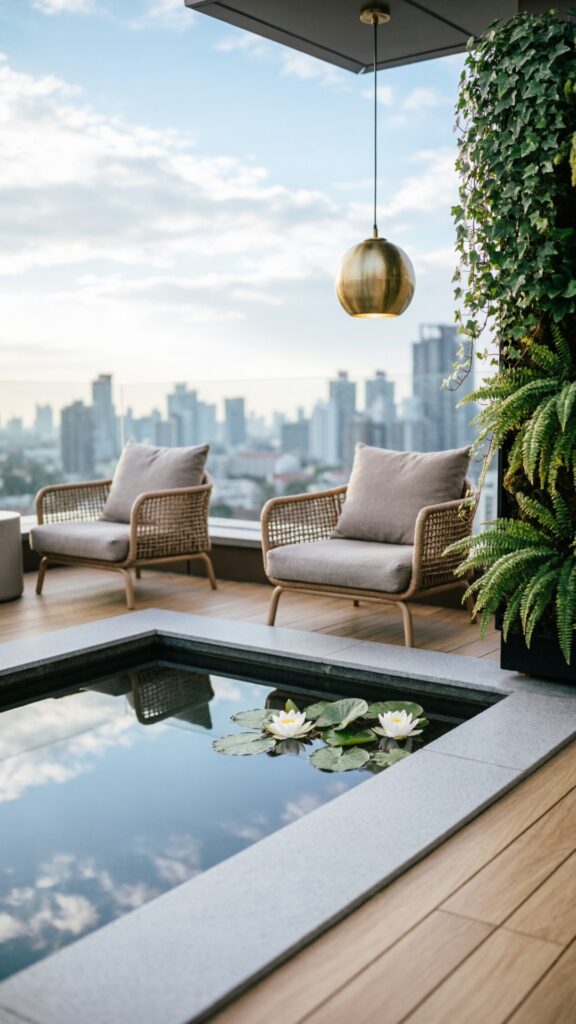
Water features bring a sensory dimension to rooftop terrace design that no other element can replicate. The sound of moving water masks urban noise traffic, construction, sirens creating a more peaceful and private outdoor environment. Visually, water introduces movement, light reflection, and a quality of tranquility that transforms a terrace into a genuine sanctuary.
Self-contained water features including wall-mounted fountains, tabletop water bowls, and freestanding pebble fountains are the most accessible option for rooftop terraces. They require no plumbing connection, running instead on a recirculating pump powered by a standard electrical outlet or a small solar panel.
Modern self-contained water features are designed for outdoor use, with frost-resistant materials and sealed pump units that require minimal maintenance.
For larger rooftop terrace design, a custom-built water feature such as a shallow reflecting pool, a linear rill, or a planted water garden creates a more permanent and architecturally integrated design statement.
These features require professional design and installation, careful waterproofing of the basin, and connection to the building’s water supply and drainage system. The result, however, is a genuinely spectacular rooftop element that significantly increases the value and desirability of the property.
The positioning of a water feature on a rooftop terrace design requires careful thought. Placing it near the seating area maximizes the acoustic benefit the sound of water is most calming when heard from a comfortable, stationary position. Avoid positioning water features in areas exposed to strong winds, as wind disrupts the water surface and can push spray onto seating areas or into planters, over-watering delicate plants.
Design for Wind Protection on Exposed Rooftops:
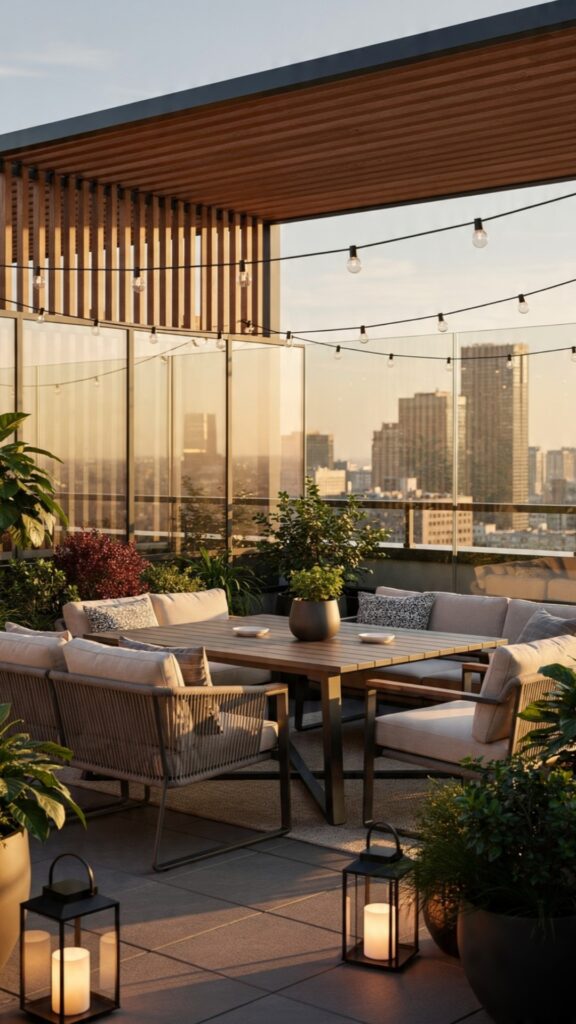
Wind is the single most underestimated challenge in rooftop terrace design. Rooftops are significantly more exposed to wind than ground-level gardens, and without adequate wind protection, even a beautifully designed terrace becomes unusable on all but the calmest days. Wind management must be considered at the very beginning of the design process not added as an afterthought.
Understanding the dominant wind direction at your specific rooftop location is the essential first step. A simple wind study observing wind behavior across different weather conditions and at different times of year identifies where wind protection is most needed.
Professional rooftop designers use computational fluid dynamics (CFD) analysis for complex or high-rise situations, modeling exactly how wind behaves across the terrace surface and identifying areas of turbulence.
Permeable wind barriers slatted timber screens, open-weave glass fiber mesh panels, or perforated metal screens are the most effective solution for rooftop wind protection. Unlike solid walls or glass panels, permeable barriers filter and reduce wind speed rather than deflecting it, which avoids the turbulence and eddying that solid barriers create.
The principle is counterintuitive but well-established in landscape design: a barrier that lets some wind through creates a larger, calmer protected zone than one that blocks it entirely.
Strategic planting also contributes to wind management. Dense evergreen shrubs such as Griselinia, Pittosporum, or Photinia planted in a row of tall perimeter planters create a flexible, living windbreak that improves over time as the plants establish and grow. This biological approach to wind protection is especially suitable for rooftop terraces where the aesthetic of a planted garden is a design priority.
Install Rooftop Heating for Cooler Months:
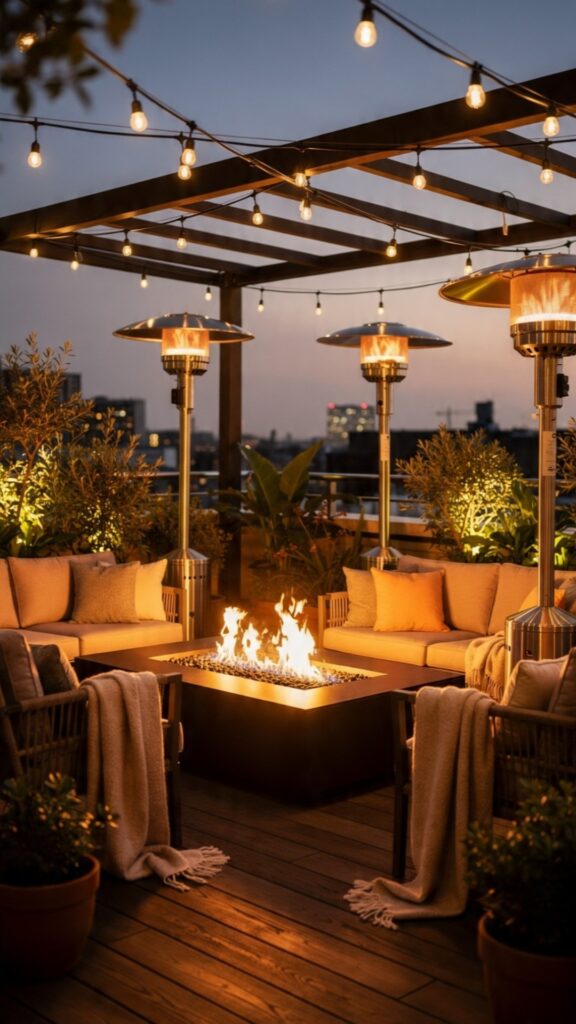
Heating extends the seasonal usability of a rooftop terrace design beyond the warm summer months. In temperate climates, without any form of heating, rooftop terrace design are often abandoned from October through April representing six months of unused potential.
Outdoor heating makes the terrace a genuinely year-round living space, significantly increasing its value and the return on your design investment.
Infrared electric heaters are the most practical choice for most rooftop terrace design. Unlike traditional convective heaters that warm the air (which is quickly dissipated outdoors), infrared heaters warm objects and people directly just as sunlight does.
They activate instantly, produce no emissions, and are highly energy-efficient. Mounted beneath a pergola beam or on a wall bracket, they provide targeted warmth exactly where it is needed. Look for IP65-rated waterproof models specifically designed for outdoor use.
Gas-powered patio heaters the classic mushroom-shaped standing models have fallen somewhat out of favor due to their high energy consumption, CO2 emissions, and visual bulk.
However, modern versions are more efficient than earlier models, and for terraces without an electrical supply, they remain a practical heating option. Tabletop gas heaters are a more aesthetically refined alternative smaller, more portable, and less visually dominant in the terrace landscape.
Fire pits provide both heat and atmosphere a dual-function feature that makes them one of the most popular rooftop terrace design additions. Gas fire pits with lava rock or glass bead filling produce a clean, controllable flame that provides genuine warmth in a visually stunning package. Position the fire pit as the centerpiece of the seating zone where it becomes both a heat source and the natural focal point of evening gatherings.
Plan Smart Storage Within the Terrace Design:
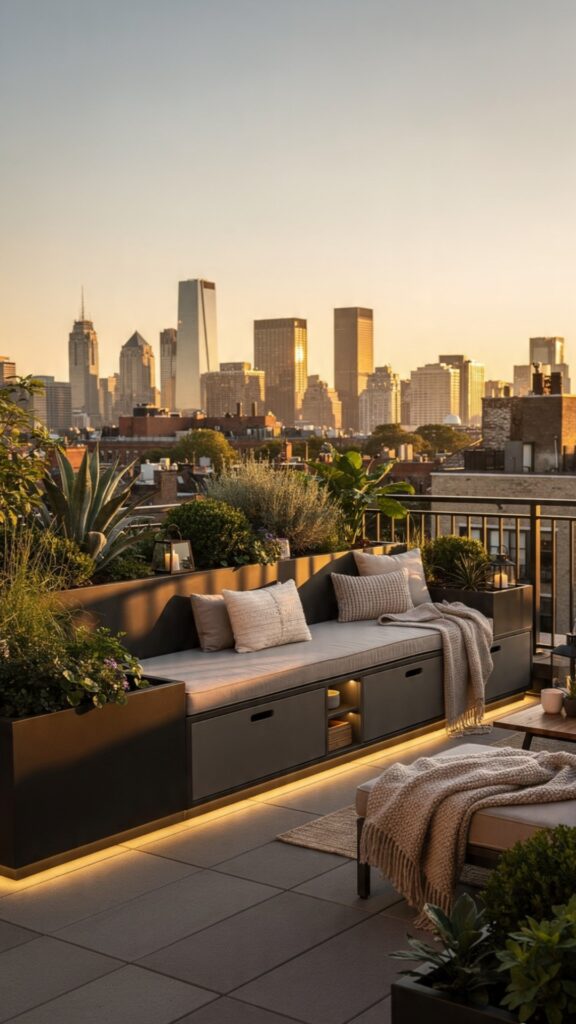
Storage is one of the most overlooked elements in rooftop terrace design, and its absence is one of the most common causes of a terrace feeling cluttered, underused, and frustrating to maintain. Cushions, throws, gardening tools, candles, lighting equipment, and outdoor accessories all need a home and on a rooftop, bringing them through the building every time the terrace is used is both inconvenient and impractical.
Built-in storage benches are the most space-efficient solution for rooftop terrace design . A bench with a hinged seat and weatherproof storage compartment beneath serves two functions simultaneously providing seating and concealing a substantial volume of outdoor accessories.
These units can be custom-built in timber or composite materials to match the terrace decking, or purchased as freestanding units from outdoor furniture specialists.
Waterproof outdoor storage boxes deck boxes are a more flexible and affordable alternative to built-in storage. High-quality versions in resin or HDPE plastic are UV-resistant, lockable, and large enough to store full cushion sets for a 6-seat sofa. Place them in a corner of the terrace, behind a privacy screen, or beneath a bench to minimize visual impact. Some deck box designs double as additional occasional seating, adding further functional value.
A small lockable outdoor cabinet for storing candles, lighters, tools, and small accessories is a practical addition that is often overlooked. Stainless steel or powder-coated aluminum cabinets with marine-grade fittings withstand rooftop conditions reliably. Position the cabinet near the outdoor kitchen or in a practical working area of the terrace where it is accessible but unobtrusive.
Find Out More : Garden Lighting Ideas That Transform Your Rooftop Terrace into a Magical Nighttime Space.
Incorporate Sustainable and Eco-Friendly Design Principles:
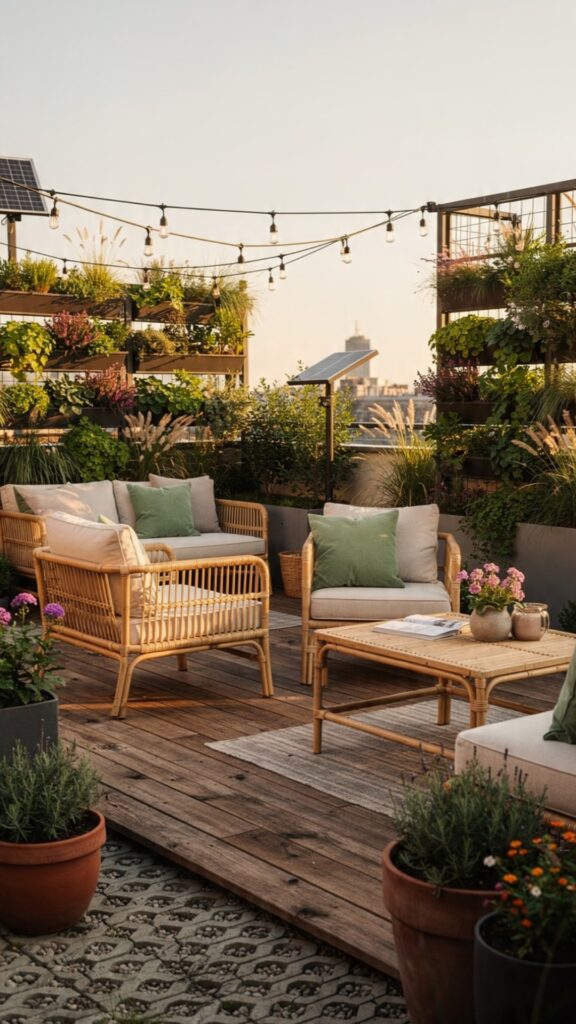
Sustainable rooftop terrace design is no longer a niche consideration it is rapidly becoming a mainstream expectation, driven by both environmental awareness and the tangible benefits that eco-friendly design delivers.
Green rooftop terrace design reduce urban heat island effect, improve building insulation, support biodiversity, and manage stormwater making them valuable not just to the individual homeowner but to the wider urban environment.
Green roofing systems shallow planted substrates covering all or part of the rooftop surface are the most established sustainable rooftop design strategy. Sedum-based green roofs are particularly effective: sedum is lightweight, drought-tolerant, and requires virtually no maintenance after establishment.
A sedum green roof layer insulates the building in winter, cools it in summer, and can reduce rooftop stormwater runoff by up to 70%. Combined with a designed terrace area, a hybrid green roof and terrace design maximizes both sustainability and usability.
Solar panels and integrated renewable energy systems are increasingly common on rooftop terrace design in eco-conscious residential projects. Where the structural load allows, solar panels can power the terrace’s lighting, heating, and irrigation systems entirely creating a self-sufficient outdoor space with zero ongoing energy costs.
Solar-powered string lights, water feature pumps, and drip irrigation timers are entry-level versions of this principle that are accessible to any budget. Specifying reclaimed, recycled, or sustainably sourced materials is a meaningful commitment that can be made at every level of the design. Reclaimed timber decking, recycled plastic composite boards,
Corten steel planters with recycled content, and FSC-certified hardwood furniture all reduce the environmental footprint of the project without compromising on quality or aesthetics. Increasingly, premium outdoor furniture brands are building sustainability credentials into their product range making ethical specification easier than ever before.
Add Personal Touches to Reflect Your Lifestyle:
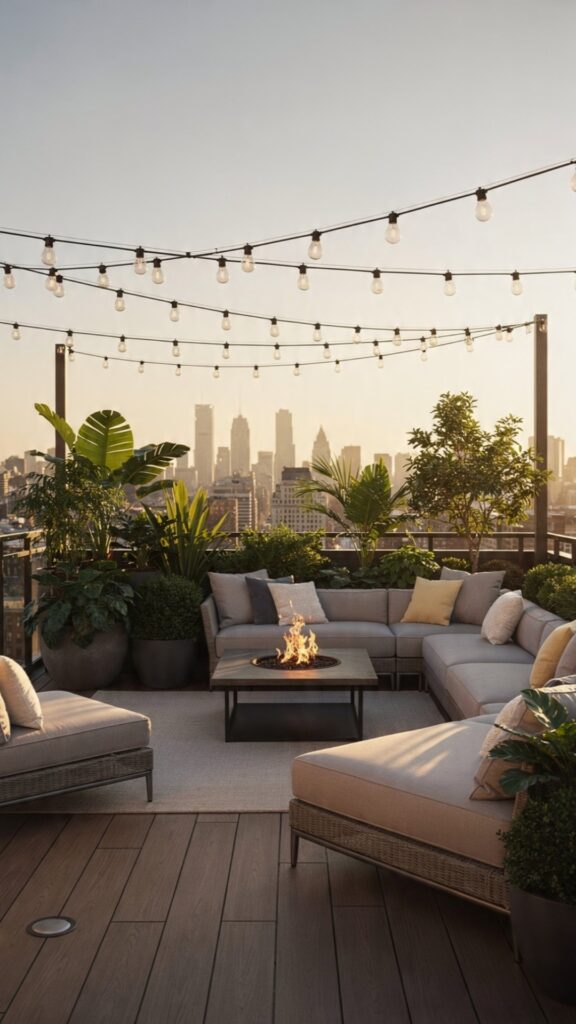
The finest rooftop terrace design in the world share one quality: they feel unmistakably personal. They reflect the specific lifestyle, personality, and preferences of the people who use them not a generic showroom aesthetic or a design trend followed without consideration. Adding personal touches is not a superficial finishing step. It is what transforms a well-designed space into a genuinely beloved one.
Consider how you actually want to use your rooftop terrace design. Do you want a space for yoga and morning meditation? A lively entertaining space for large gatherings? A quiet retreat for reading and evening drinks? A productive garden that feeds your household?
The honest answer to these questions should drive every design decision from layout and furniture to planting and lighting. Design for your real life, not your aspirational one.
Personal style should be visible in every detail. If you love art, commission a bespoke ceramic planter or a weather-resistant outdoor sculpture. If you love travel, incorporate tiles, textiles, or ceramics that reflect places you love.
If you love cooking, build the most functional outdoor kitchen your budget allows. These specific, personal choices are what give a rooftop terrace design its character and make it a space people genuinely want to spend time in.
Looking forward, rooftop terrace design are increasingly being recognized as an extension of the home’s living space with the same design intelligence, material quality, and personal expression applied outdoors as indoors.
The most compelling rooftop terrace design of the next decade will blur the boundary between interior and exterior entirely creating seamless, year-round outdoor living spaces that feel as comfortable, considered, and personal as any room inside the home.
Conclusion
Rooftop terrace design is one of the most rewarding investments you can make in your home turning unused space into a personal outdoor sanctuary that adds beauty, functionality, and real estate value. From structural planning and smart flooring to planting, lighting, and personal touches, every decision shapes a space that is uniquely yours.
Start with one idea from this guide, apply it thoughtfully, and let your rooftop terrace design evolve into the outdoor living space you have always imagined.

Team TrandyVilla is the passionate home decor team behind Trandy Villa, where style meets comfort in everyday living. The team loves transforming simple spaces into beautiful, functional homes through smart ideas, budget-friendly hacks, and modern design trends. Their content focuses on helping readers create homes that feel both stylish and personal without spending too much.