
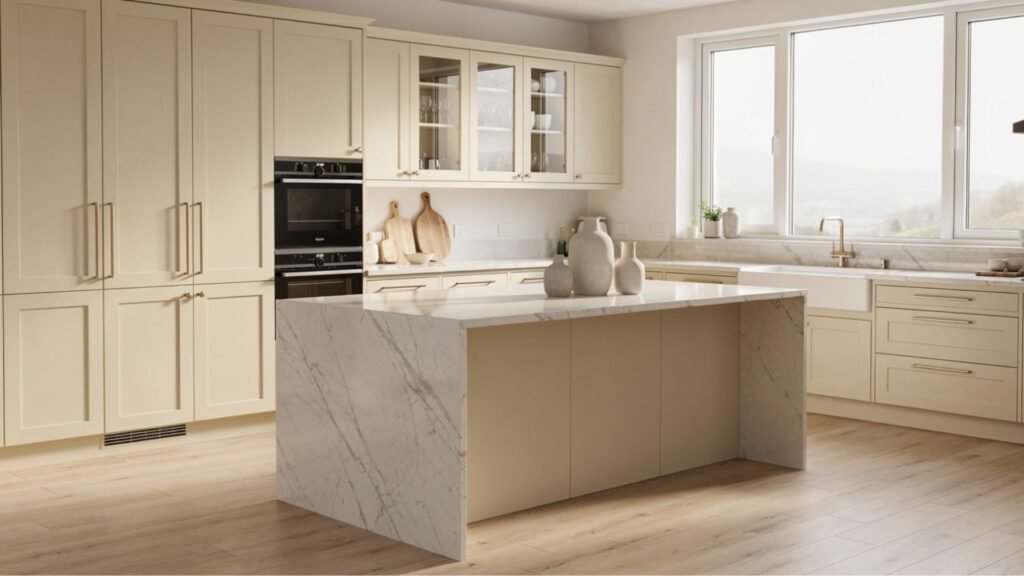
Cream kitchen cabinets have stood the test of time for one simple reason they work. They bring warmth without the starkness of pure white, sophistication without the drama of dark cabinetry, and a neutral versatility that accommodates almost any countertop, flooring, or hardware choice.
In a design world that moves quickly from trend to trend, cream remains a constant always relevant, always welcoming, always beautiful. Cream kitchen cabinets bring warmth, elegance, and timeless style to any kitchen space. They work beautifully with marble countertops, butcher block surfaces, brass hardware, and dark hardwood floors.
Each design idea serves a clear purpose adding brightness, depth, character, or a cozy, welcoming atmosphere. The right cream cabinet style makes even a small kitchen feel polished and intentional. It transforms an ordinary cooking space into a warm, stylish heart of the home that every homeowner loves.
Not every kitchen needs a bold color to feel beautiful, stylish, and completely transformed. The right cream kitchen cabinets create a warm, timeless foundation that works with almost any countertop, flooring, hardware, or wall color choice.
From classic shaker styles to two-tone contrast designs and vintage brass accents, cream cabinetry adapts to every kitchen size, layout, and personal taste. This expert guide covers 20 deeply researched and actionable cream kitchen cabinet ideas to help homeowners design a space that is both functional and genuinely stunning.
Cream kitchen cabinets idea span a wide range of styles, materials, and design approaches suitable for every home. Shaker-style doors in cream pair naturally with marble countertops, subway tile backsplashes, and brushed brass hardware. Two-tone cabinet designs use cream uppers alongside navy, sage, or charcoal lowers for bold visual contrast.
Open shelving alongside cream cabinetry adds an airy, modern farmhouse character to the kitchen. Repainting existing cabinets cream delivers a high-impact transformation at a fraction of the renovation cost. Every idea in this guide builds a warmer, more beautiful, and more functional kitchen environment.
Pair Cream Cabinets with Warm White Walls for a Seamless Look:
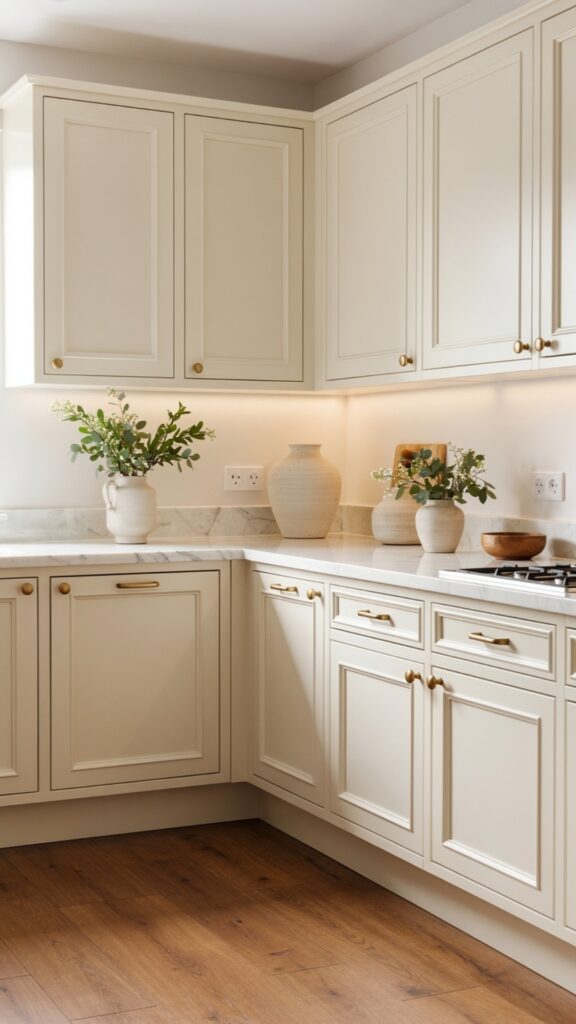
One of the most effective and underappreciated strategies in cream kitchen cabinets design is choosing the right wall color to accompany them. Cream cabinets exist in a warm, yellow-undertoned spectrum and pairing them with cool white walls creates a jarring contrast that makes the cabinets look dingy rather than warm.
The solution is choosing a wall color from the same warm family to create a harmonious, seamlessly layered effect. Warm white wall colors with gentle yellow, peach, or greige undertones are the ideal companions for cream kitchen cabinets.
Paint shades like Benjamin Moore’s White Dove, Sherwin-Williams Alabaster, or Farrow and Ball’s Strong White sit in a warm neutral zone that reads as white in photographs but creates an unmistakably cozy, unified atmosphere in person. These walls allow the cream cabinets to feel like the intentional design choice they are rich, warm, and considered rather than an accident of fading white paint.
The ceiling color is a detail most homeowners overlook when designing around cream cabinets. Painting the ceiling the same warm white as the walls rather than a standard bright white extends the warm, enveloping quality throughout the entire kitchen.
In kitchens with lower ceilings particularly, this consistency makes the space feel taller and more cohesive. A crisp bright white ceiling against warm cream cabinets and warm walls creates an unnecessary contrast that interrupts the visual flow of the room.
A useful technique from professional interior designers: paint a large sample at least 12 by 12 inches of your proposed wall color directly on the wall next to your cabinet door sample, and observe both in morning light, afternoon light, and artificial evening light before committing.
Cream cabinetry can shift significantly in appearance under different lighting conditions, and a wall color that looks perfect on a paint chip at the store may read very differently next to your actual cabinets in your specific kitchen environment.
Choose Cream Shaker Cabinets for Classic Timeless Style:
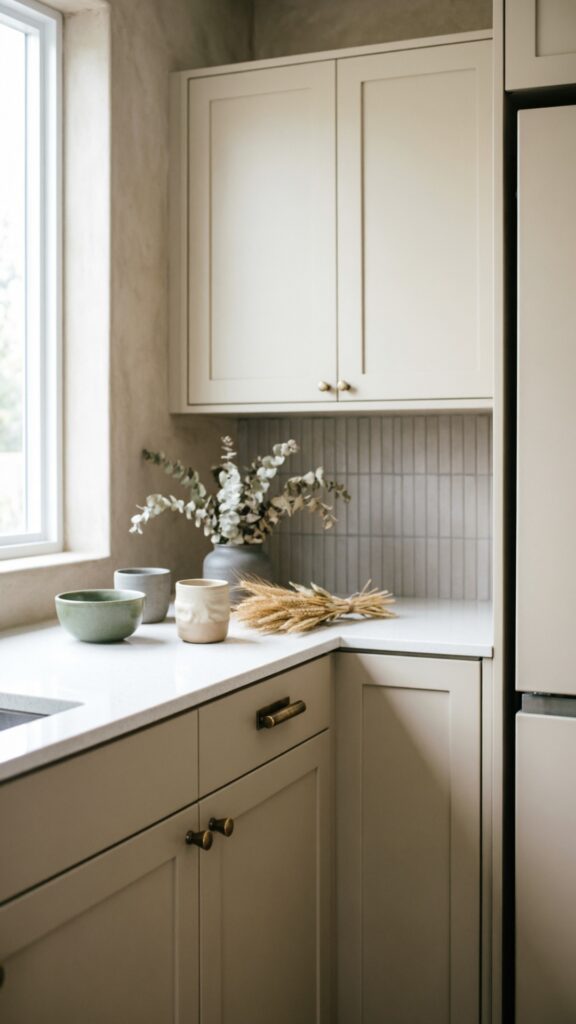
Shaker-style cabinet doors are the most popular cabinet profile in kitchen design for a reason their clean recessed panel construction is simultaneously simple and detailed, modern and traditional, versatile enough to work in virtually any kitchen aesthetic. When combined with cream paint or finish, shaker cabinets achieve a warmth and character that feels genuinely timeless rather than tied to a specific design era.
The appeal of cream shaker cabinets lies in their shadow lines. The recessed panel creates a subtle play of light and shadow across the cabinet face that adds three-dimensional interest to the kitchen without any additional decorative elements.
In cream tones, these shadow lines are soft and gentle more understated than in darker paint colors creating an effect that is sophisticated without being heavy or dramatic. This quality makes cream shaker cabinets equally at home in a formal traditional kitchen and a relaxed, casual family kitchen.
Hardware selection is where cream shaker cabinets can be steered in distinctly different directions. Brushed brass or unlacquered brass pulls and knobs warm up cream shakers and push them toward a traditional or transitional aesthetic. Matte black hardware creates a modern farmhouse contrast that is both current and graphic.
Brushed nickel or satin nickel maintains a lighter, more neutral appearance that suits contemporary and Scandinavian-influenced kitchens. Oil-rubbed bronze adds an aged, antique quality that works beautifully in more traditional or cottage-style cream kitchen cabinets design.
For 2026, cream shaker cabinets are being updated with a subtle profile variation that is gaining rapidly in popularity: the “slim shaker” or “thin frame shaker,” where the rails and stiles of the cabinet door are narrower than traditional shaker proportions.
This refined variation maintains all the warmth and character of classic shaker style while feeling distinctly more current and sleek making it an excellent choice for homeowners who want the timeless appeal of cream shaker cabinets with a forward-looking edge.
Combine Cream Upper Cabinets with a Contrasting Lower Cabinet Color:
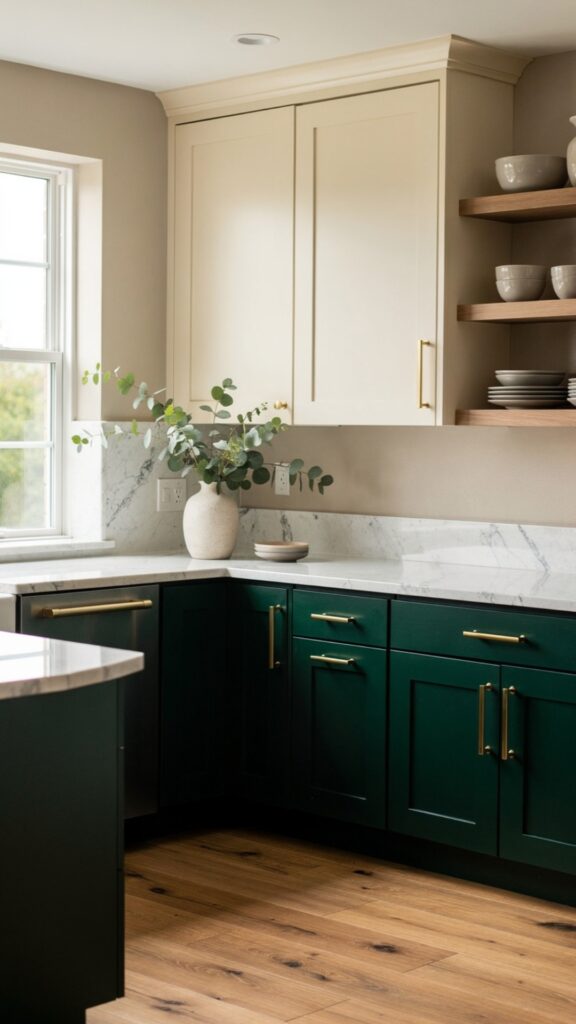
Two-tone kitchen cabinetry using one color for upper cabinets and a different color for lower cabinets has become one of the most popular and design-forward approaches in contemporary kitchen design, and cream kitchen cabinets are ideally positioned to star in this strategy.
Cream uppers are light and airy, creating a bright, open feeling in the upper portion of the kitchen, while a contrasting lower cabinet color adds depth, grounding, and personality.
The most successful color pairings for cream upper cabinets and contrasting lower cabinets follow a clear principle: the lower cabinet color should share an undertone family with the cream. Navy blue with warm undertones pairs naturally with cream because both colors have yellow-to-warm undertones rather than cool blue-gray ones.
Sage green works beautifully because its earthy, organic quality harmonizes with cream’s warmth. Forest green, terracotta, warm charcoal, and deep walnut stained wood are all excellent lower cabinet companions for cream uppers.
The visual logic behind cream uppers and dark lowers is rooted in how we perceive space. Lighter colors above and darker colors below creates a sense of stability and groundedness that mirrors the natural world light sky above, solid earth below. In kitchen terms, this means the space feels both open and anchored simultaneously.
The cream uppers reflect light and make the kitchen feel larger, while the darker lowers add the visual weight that prevents the kitchen from feeling too light or insubstantial.
A two-tone kitchen with cream upper cabinets also provides a practical advantage in terms of maintenance and longevity. Lower cabinets bear the brunt of daily contact scuffs, kicks, handprints, and splashes from the floor and cooking area while upper cabinets remain relatively pristine.
Choosing a darker or more forgiving color for the lower cabinets means any wear or marks are far less visible, extending the period before repainting is necessary. This is one of those design-meets-practicality insights that experienced kitchen designers factor in from the start.
Step Inside: Farmhouse Kitchen Ideas That Pair Beautifully with Your Elegant Cream Kitchen Cabinets.
Add Warmth with Cream Cabinets and Butcher Block Countertops:
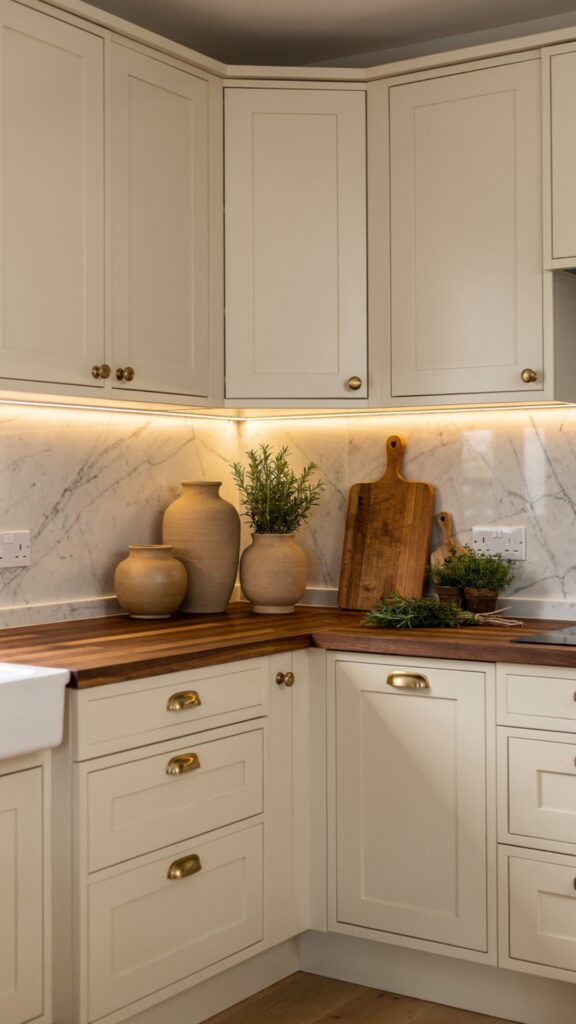
The combination of cream kitchen cabinets and butcher block countertops is one of the warmest, most organic, and most genuinely inviting pairings in kitchen design. Both materials share a natural, warm character cream evoking soft linen and aged stone, wood bringing organic grain and tactile richness and together they create a kitchen that feels lived in, comfortable, and deeply welcoming in a way that more clinical material combinations rarely achieve.
Butcher block countertops in walnut, maple, or oak each pair differently with cream cabinets. Walnut’s deep chocolate tones create a rich, high-contrast partnership with cream that feels sophisticated and bold. Maple’s lighter, honey-toned grain creates a softer, more unified look where the countertop and cabinets exist in the same warm color family.
Oak butcher block, particularly white oak with its gentle grain, sits between these two options warm enough to harmonize with cream while dark enough to create visible definition at the countertop line.
The practical considerations of butcher block countertops are often presented as disadvantages they require regular oiling, they can scratch and stain, and they are not suitable for placement next to dishwashers without proper sealing.
However, experienced kitchen designers see these properties differently: with proper care, butcher block develops a patina over time that becomes more beautiful rather than less. The marks and character that accumulate tell the story of the kitchen’s use a quality that resonates deeply with homeowners who value authenticity and warmth over clinical perfection.
For a design approach that maximizes both the beauty and practicality of this pairing, consider using butcher block for a central kitchen island or specific sections of the countertop near the prep area or breakfast bar while using a more durable surface like quartz or marble for sections near the sink and cooktop.
This “mixed countertop” approach is increasingly popular in high-end kitchen design and delivers the warmth and organic beauty of butcher block in the areas where it looks best while maintaining practicality where durability matters most.
Pair Cream Cabinets with Marble or Quartz Countertops for Elegance:
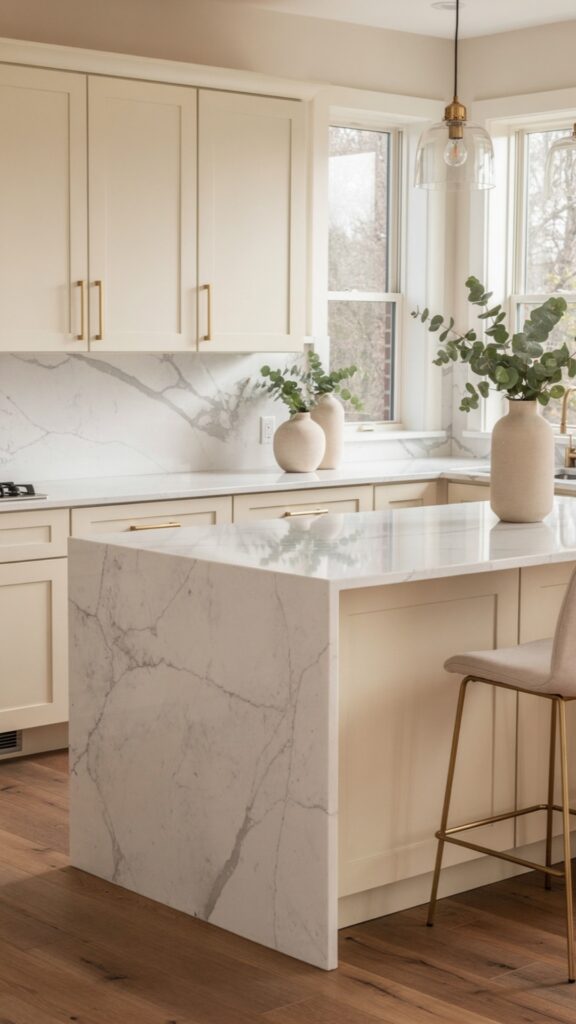
If warmth is the defining quality of cream kitchen cabinets paired with wood, then elegance is the defining quality when cream cabinets meet marble or high-quality quartz countertops. This combination belongs in the category of truly classic kitchen design pairings both materials are neutral, both have a gentle warmth, and together they create an environment that feels effortlessly refined and sophisticated.
Carrara marble with its white base and soft gray veining is the most classic companion for cream cabinetry and has been used in this pairing for generations in European and American kitchen design. The gray veining in Carrara provides just enough visual contrast to define the countertop line above the cream cabinets without introducing a harsh or competing color.
However, Calacatta marble with bolder, more dramatic veining in warmer gold and cream tones can be even more beautiful with cream cabinets because the warm undertones of the veining echo and reinforce the warmth of the cabinetry.
Engineered quartz countertops offer the aesthetic benefits of marble the white base, the gentle veining, the cool smooth surface with significantly superior durability and stain resistance. For busy family kitchens with cream cabinets, quartz is often the more practical choice, providing the classic beauty of the marble-and-cream combination without the maintenance demands of natural stone.
Brands like Caesarstone, Silestone, and Cambria offer quartz options with marble-like veining in warm white and cream tones that pair seamlessly with cream cabinetry. A design detail that makes the cream cabinet and marble countertop combination feel particularly polished: using a honed (matte) finish on the countertop rather than the standard polished finish.
A honed marble or quartz countertop has a soft, chalky surface texture that harmonizes with the matte or eggshell finish of cream cabinet paint far better than a high-gloss polished surface. The consistency of finish between countertop and cabinets creates a quiet sophistication the same principle that makes a well-dressed outfit in tonal, matte fabrics look more considered than a mix of shiny and flat textures.
Install Cream Cabinets with Open Shelving for a Modern Farmhouse Feel:
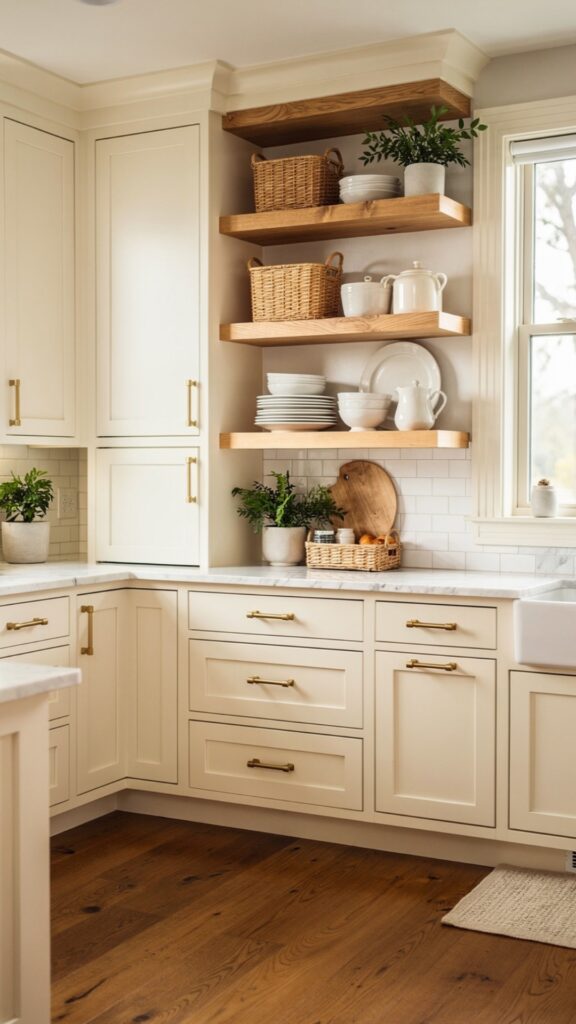
The modern farmhouse kitchen aesthetic has influenced interior design significantly over the past decade, and cream kitchen cabinets sit at the center of this style’s enduring appeal. Adding open shelving either replacing some upper cabinet doors with open shelves or incorporating floating shelves alongside closed cabinetry introduces an airy, casual quality that softens the kitchen and gives it a curated, lived-in character.
Open shelving in a cream kitchen works best when the shelves themselves are made from a warm natural material that complements the cabinet color. Thick oak or walnut floating shelves with visible wood grain add organic warmth and tactile contrast to the smooth cream cabinet surfaces.
The wood shelf color should reference other warm tones in the kitchen the flooring, bar stools, pendant light finishes, or hardware to create a cohesive material language throughout the space.
The styling of open shelves in a cream kitchen cabinets is as important as the shelves themselves. The objects displayed should follow the principle of “useful beauty” items that are both genuinely used and genuinely beautiful. White or cream ceramic dishware stacked on shelves creates a tonal, gallery-like quality that is calm and organized.
Vintage glass jars filled with pantry staples add warmth and authenticity. A few meaningful objects a small plant, a cookbook you actually cook from, a ceramic piece you love give the shelves personality without tipping into clutter.
One insight that open shelving advocates rarely acknowledge honestly: open shelves in a kitchen require a genuine commitment to ongoing organization and cleaning. The dishes and objects on display collect grease particles and dust in a kitchen environment, requiring regular wiping down.
Before committing to open shelving in your cream kitchen cabinets, consider a hybrid approach open shelves in one section of the kitchen, perhaps flanking a window or range hood, with closed cabinetry for the majority of storage. This gives you the aesthetic benefit of open shelving without the full organizational commitment.
Use Cream Cabinets with Black Hardware for a Bold Contrast:
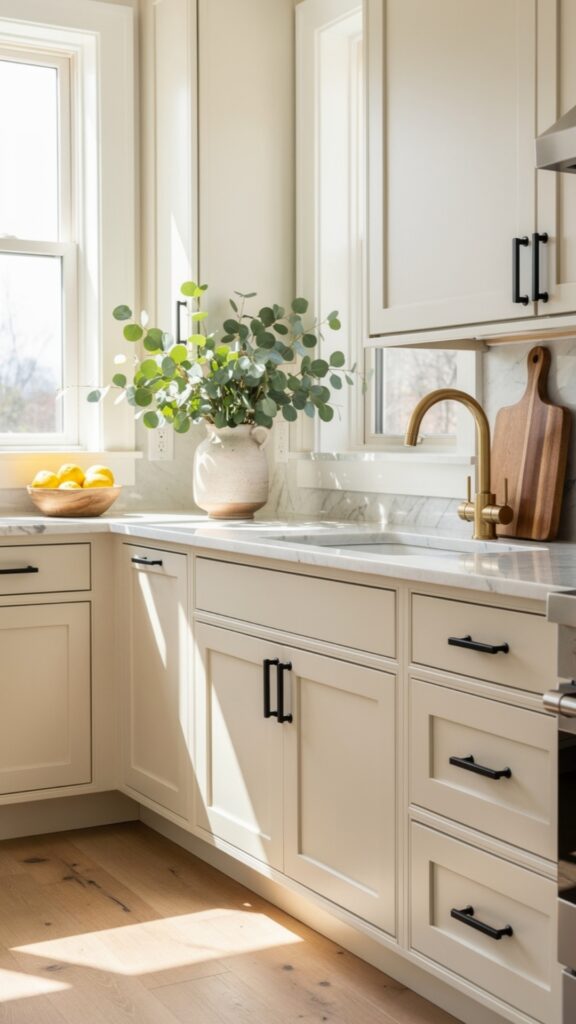
Matte black hardware on cream kitchen cabinets is one of the most striking and photographically arresting combinations in contemporary kitchen design. The contrast between the warm, soft cream and the graphic, dark hardware creates a tension that is genuinely beautiful each element making the other look better by comparison. This pairing has sustained its popularity over several design cycles because the contrast it creates is both bold and balanced.
The choice of black hardware profile matters as much as the finish. Simple, linear bar pulls in matte black on cream shaker cabinets create a clean, modern farmhouse aesthetic. More sculptural cabinet pulls with curved or geometric forms push the combination toward a more contemporary or even art deco-influenced direction.
Traditional cup pulls and bin pulls in matte black on cream cabinets create a vintage, utility-inspired look that works beautifully in cottage or English country-style kitchens. The profile should be chosen to reflect the overall kitchen aesthetic rather than selected in isolation.
Extending the black accent beyond the hardware to other kitchen elements creates a more intentional and cohesive design. A matte black faucet, black-framed window panes, a black range, or black pendant lights above a kitchen island all reinforce the cream-and-black color story and make the hardware choice feel like part of a deliberate design system rather than an afterthought.
This extension of the accent color is what separates a styled kitchen from a designed kitchen the difference between individual good choices and a cohesive vision. For those who love the cream-and-black contrast but are cautious about committing to a permanent hardware choice, cup hooks are an excellent testing ground.
Installing inexpensive matte black cup hooks inside cabinets or as drawer pulls allows you to live with the contrast before investing in full hardware replacement. If the look resonates and it very often does you can then confidently invest in high-quality matte black hardware knowing the combination works in your specific kitchen environment with your specific cream cabinet tone.
Incorporate a Cream Kitchen Island as a Focal Point:
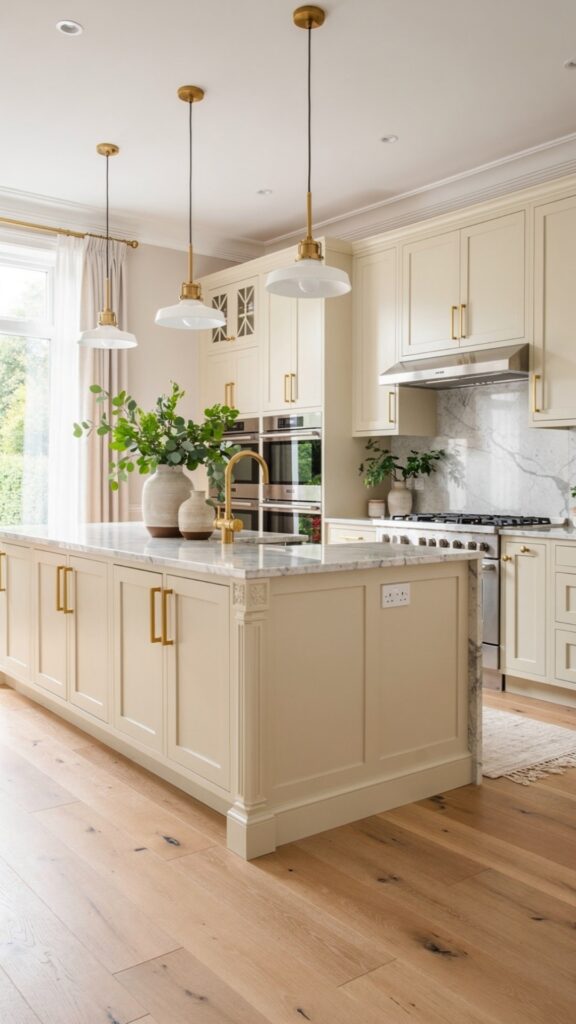
A cream kitchen cabinets island is one of the most versatile and impactful design decisions in a kitchen renovation. It provides additional work surface, storage, and seating while creating a natural focal point in the kitchen’s center.
When the island is painted cream whether it matches the perimeter cabinets or is used as the sole cream element in a kitchen with differently colored surrounding cabinetry it anchors the space with warmth and serves as the visual heart of the kitchen.
A cream island paired with perimeter cabinets in a contrasting color navy, dark green, or charcoal is one of the most sophisticated two-tone kitchen configurations available. The cream island becomes the lightest, brightest element in the kitchen, drawing the eye to the center of the room and creating a natural gathering point.
This configuration also makes the kitchen feel larger than a uniform dark cabinetry scheme because the cream island reflects light back into the space and creates visual relief within a darker surrounding environment. The countertop choice for a cream kitchen cabinets island requires particular thought because the island is seen from all sides and from a greater distance than perimeter countertops.
A visually rich countertop material dramatic veining in marble or quartz, the warm grain of butcher block, the textured surface of leathered granite reads well from across the kitchen and rewards closer inspection. Avoid countertop materials with very subtle pattern or texture for the island, as these can look flat and uninteresting from a distance and miss the visual opportunity that a central island presents.
Pendant lighting above a cream kitchen island is a critical design decision that can either elevate the cream-and-warmth theme or create a jarring visual disconnect. The most successful pendant choices for cream islands are those that incorporate warm metals brass, bronze, copper or natural materials like rattan, wicker, or wood.
These materials extend the warm, organic quality of the cream cabinets upward into the overhead space. Avoid very cool-toned or industrial-feeling pendants above a cream island, as the contrast between the fixture’s coldness and the cabinet’s warmth creates an uncomfortable visual discontinuity.
Try Cream Cabinets with a Subway Tile Backsplash:
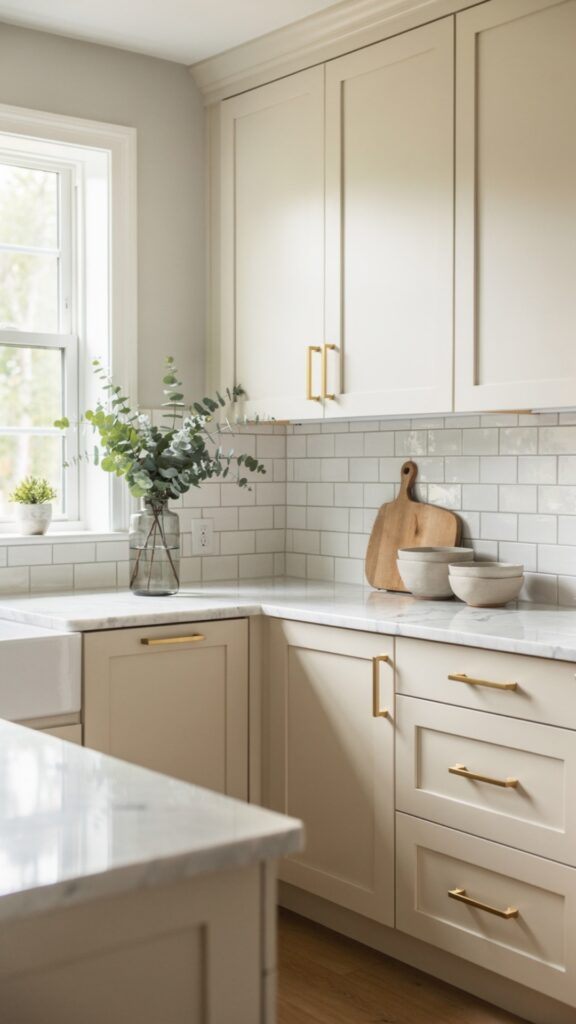
The classic white subway tile backsplash is one of the most enduringly popular companions for cream kitchen cabinets and for good reason. Its simple, clean geometry provides visual order behind the stove and sink, its reflective glaze bounces light around the kitchen, and its neutral color family harmonizes naturally with cream cabinetry.
However, the specific tile you choose, the grout color, and the laying pattern significantly affect the outcome. For cream kitchen cabinets, the subway tile selection requires careful attention to undertones.
A standard bright white subway tile can look jarring next to warm cream cabinets the same cool-versus-warm tension that affects paint selection. Instead, choose subway tiles with a warm, slightly off-white tone ivory, antique white, or very soft greige that sits in the same warm spectrum as the cream cabinets. Many tile manufacturers offer “warm white” or “ivory” colorways in their subway tile collections specifically to address this design need.
Grout color is the most underappreciated variable in backsplash design for cream kitchens. White grout with cream cabinets creates a very clean, graphic grid effect that suits modern farmhouse and contemporary styles. Warm gray grout softens the tile pattern and creates a more organic, less clinical feeling behind cream cabinetry.
Tinted grout in a greige or light tan tone reduces the visibility of the tile grid entirely, making the backsplash read as a smoother, more unified surface an approach that is particularly effective in smaller kitchens where a busy tile pattern can feel overwhelming.
Beyond standard horizontal subway tile laying, several alternative patterns add significantly more visual interest behind cream cabinets. The vertical subway tile installation creates a distinctly more contemporary look and makes kitchen walls appear taller. The herringbone pattern adds movement and energy particularly beautiful behind a range.
The offset vertical “stack bond” pattern is graphic and modern. Choosing a more interesting laying pattern is a low-cost upgrade that dramatically changes the visual character of the backsplash and, by extension, the entire cream kitchen cabinets design.
Design a Cream Kitchen with Brass Accents for Vintage Charm:
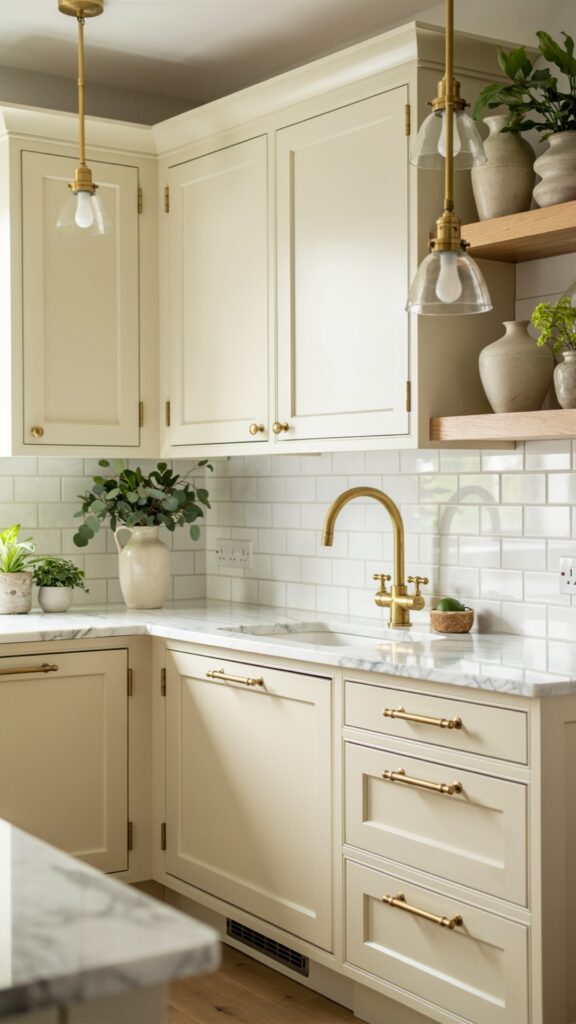
Cream kitchen cabinets and brass accents are a combination rooted in design history the warm, golden tones of brass hardware, fixtures, and accessories have accompanied cream and ivory cabinetry in classic European kitchen design for centuries.
Today, unlacquered brass and brushed brass are experiencing a powerful resurgence in contemporary kitchen design, bringing an aged, artisanal quality that feels both antique and thoroughly modern. Unlacquered brass is particularly beautiful with cream cabinets because it develops a patina over time darkening in areas of frequent touch and maintaining its brightness in less-handled spots.
This living quality mirrors the organic warmth of cream cabinetry itself and creates a kitchen that feels genuinely aged and collected rather than fresh from a showroom. Brushed brass, which is sealed and maintains a consistent appearance, offers a more uniform and contemporary expression of the same warm metallic tone without the commitment to patina development.
Brass in a cream kitchen cabinets should extend beyond just cabinet hardware to feel truly integrated. A brass faucet is one of the highest-impact single upgrades available the sink area is one of the most-used and most-viewed parts of any kitchen, and a statement brass faucet in a warm polished or brushed finish is immediately noticed and admired.
Brass pendant lights above an island, brass shelf brackets on open shelving, brass cabinet hinges (often overlooked but quietly beautiful when they match pulls), and brass-trimmed range hoods all reinforce the vintage-warm material story.
A design detail that separates well-executed brass-and-cream kitchen cabinets from amateur attempts: consistency within a finish family. Mixing unlacquered brass, brushed brass, and polished brass in the same kitchen creates visual noise that reads as unintentional.
Choose one brass finish and apply it consistently across all metal elements hardware, faucet, light fixtures, and decorative accessories. This discipline is what creates the collected, curated feeling that the best cream kitchen designs with brass accents achieve.
See The Magic: Two Tone Kitchen Cabinet Ideas That Take Your Cream Cabinet Style to a Whole New Level.
Pair Cream Cabinets with Dark Hardwood Floors for Rich Contrast:
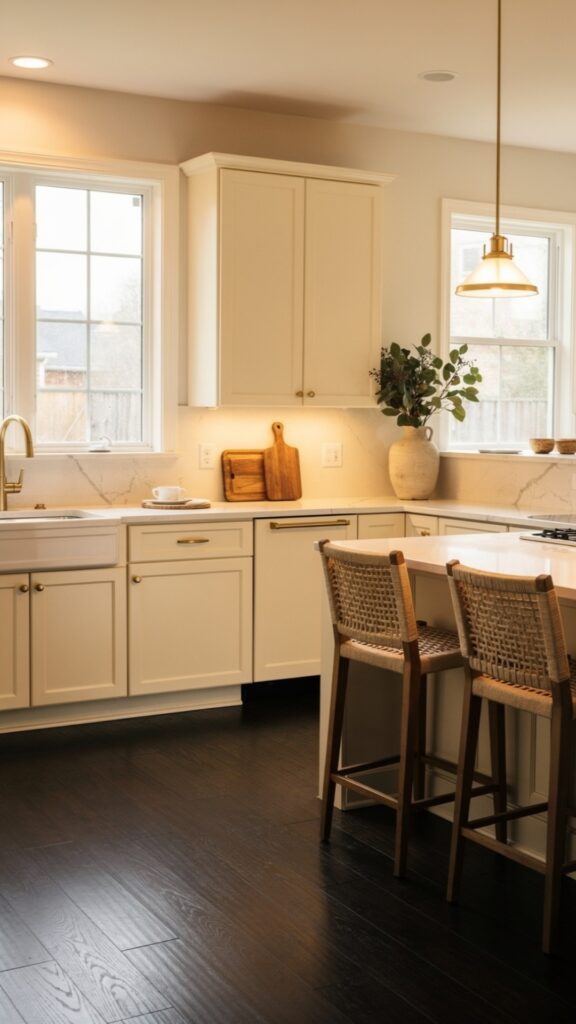
The combination of cream kitchen cabinets and dark hardwood flooring is one of the most visually satisfying contrasts in kitchen design the light, warm softness of cream above and the rich, dark depth of hardwood below creates a beautifully grounded, balanced visual composition. This pairing has genuine staying power because it draws on the same natural logic as a tree light canopy above, dark trunk and earth below.
Dark hardwood floors in walnut, dark oak, or espresso-stained maple create the richest contrast with cream cabinets. The key to making this combination feel sophisticated rather than stark is the warmth of the floor’s undertone.
Dark floors with warm brown or red undertones harmonize naturally with cream cabinetry’s yellow-warm character. Dark floors with cool gray or ash undertones can feel disconnected from the warmth of cream cabinets the visual language shifts from harmonious to contrasting in a less flattering way.
The flooring’s finish is a significant variable in this pairing. High-gloss dark hardwood floors reflect the cream cabinets and ceiling, creating a luminous, almost lacquered effect that works beautifully in formal, elegant kitchen settings.
Matte or wire-brushed dark hardwood creates a more relaxed, organic atmosphere that suits farmhouse and transitional kitchen styles. The wire-brushed texture also has a practical advantage it hides the inevitable scratches and marks of kitchen floor life far more forgivingly than a smooth gloss finish.
For kitchens where dark hardwood meets cream cabinets and the result feels too contrasted particularly in small kitchens or those with limited natural light a medium-toned area rug under the kitchen island or dining table provides a visual bridge between the dark floor and light cabinetry.
Choose a rug with both cream and dark tones woven into its pattern to explicitly connect the two dominant colors of the space. This is a technique used regularly by professional kitchen and interior designers to create visual cohesion in high-contrast material combinations.
Create a Cozy Cottage Kitchen with Cream Cabinets:
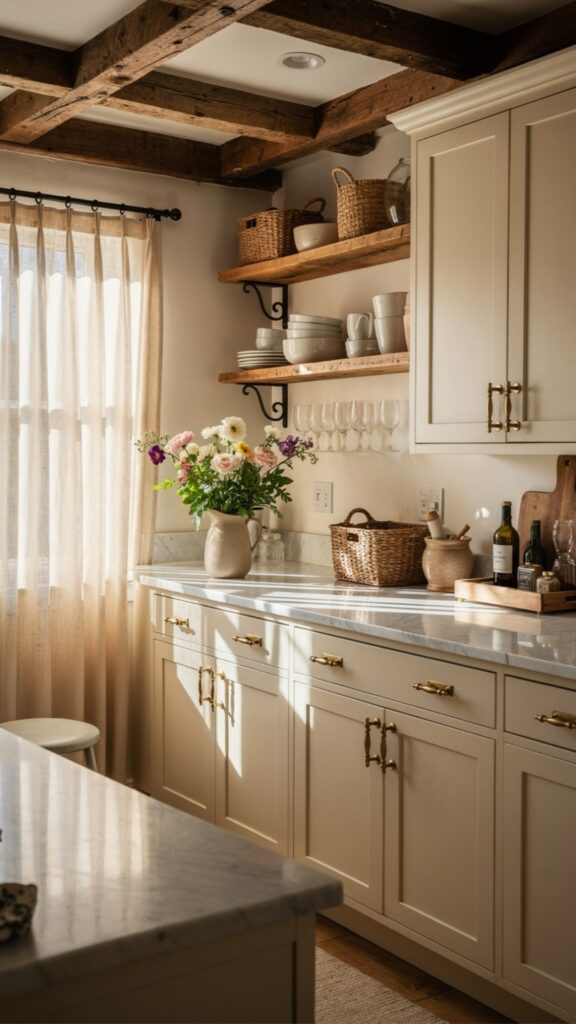
The cottage kitchen aesthetic cozy, unpretentious, filled with character and warmth finds its most natural expression in cream kitchen cabinets. Cream is the color of farmhouse linen, aged porcelain, fresh butter, and old stone walls all the materials and textures that define the cottage aesthetic. A cottage-style cream kitchen cabinets is deliberately imperfect, layered, and personal in a way that no other kitchen style quite achieves.
In a cottage cream kitchen, the cabinetry itself should feel slightly handcrafted rather than factory-perfect. Inset cabinet doors where the door sits flush within the cabinet frame rather than overlapping it create a built-in, furniture-like quality that reads as older and more artisanal than standard overlay doors.
Slightly varied door heights, glass-front upper cabinet doors with wavy antique glass inserts, and open plate-rack sections all contribute to the cottage character. These details suggest a kitchen that was assembled over time rather than installed in a single renovation.
The countertop choice in a cottage cream kitchen should prioritize natural, tactile materials over engineered ones. Soapstone dark gray, smooth, and naturally soft to the touch creates a striking contrast with cream cabinets that has a historic quality rooted in Victorian and Edwardian kitchen design.
Honed Carrara marble with visible veining brings an aged European farmhouse quality. Concrete countertops sealed and matte-finished add an unexpected industrial-artisanal note that can work beautifully in more eclectic cottage settings. All these materials share a quality of imperfection and tactile richness that resonates with the cottage aesthetic.
Accessories and display are critical to completing the cottage cream kitchen cabinets look. Open shelves with mismatched collected dishware rather than perfectly matching sets, a vintage-style apron front sink, an antique pot rack above a farmhouse stove, botanical prints in mismatched frames on a spare wall section these elements are what transform a cream kitchen from simply light-colored to genuinely cottage in character. The distinction is in the authenticity of the objects displayed: in a cottage kitchen, everything has a story.
Use Cream Cabinets in a Small Kitchen to Maximize Brightness:
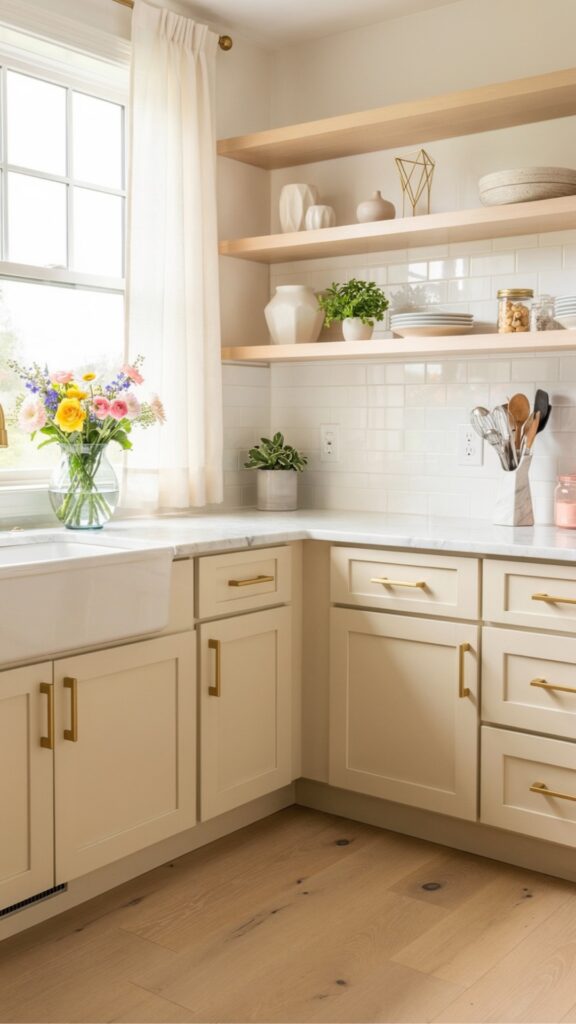
Small kitchens present specific design challenges limited space, reduced natural light, and the perpetual risk of feeling cramped and claustrophobic. Cream kitchen cabinets are one of the most effective tools for addressing all three challenges simultaneously.
Their warm, reflective quality makes small kitchens feel significantly brighter and more spacious than they actually are, without the cold clinical feeling that pure white cabinetry can produce in a small, boxy space.
In a small kitchen, cream cabinets work best when they are paired with complementary light materials on every other surface. Light-toned countertops in white or warm gray quartz, a light-colored backsplash tile, warm wood or light stone flooring, and warm white walls collectively keep the space open and airy while the cream cabinets provide warmth that prevents the lightness from feeling sterile.
The goal is to create a layered light effect where every surface contributes brightness without any single element reading as stark or cold. Cabinet hardware in a small cream kitchen cabinets should be chosen to minimize visual interruption rather than create bold contrast. Recessed finger-pull hardware where a small groove replaces a protruding knob or pull eliminates hardware entirely and creates the cleanest, most seamless cabinet face, which visually expands the space.
If hardware is desired, slender bar pulls in a warm finish (brushed brass or brushed nickel) provide the functional grip without the visual weight of larger knobs or cup pulls. Every element that reduces visual busyness in a small kitchen contributes to the feeling of expanded space.
Reflective surfaces are the small kitchen’s secret weapon when paired with cream cabinets. A glossy subway tile backsplash, a mirrored backsplash behind the range, glass-front upper cabinet doors, and under-cabinet LED lighting that illuminates the countertop surface all work together to bounce light around the kitchen and create the impression of greater depth and dimension.
In a small cream kitchen, light is a design material as important as any physical surface maximizing and directing it through reflective choices multiplies the brightening effect of the cream cabinetry several times over.
Design a Transitional Kitchen with Cream Cabinets and Clean Lines:
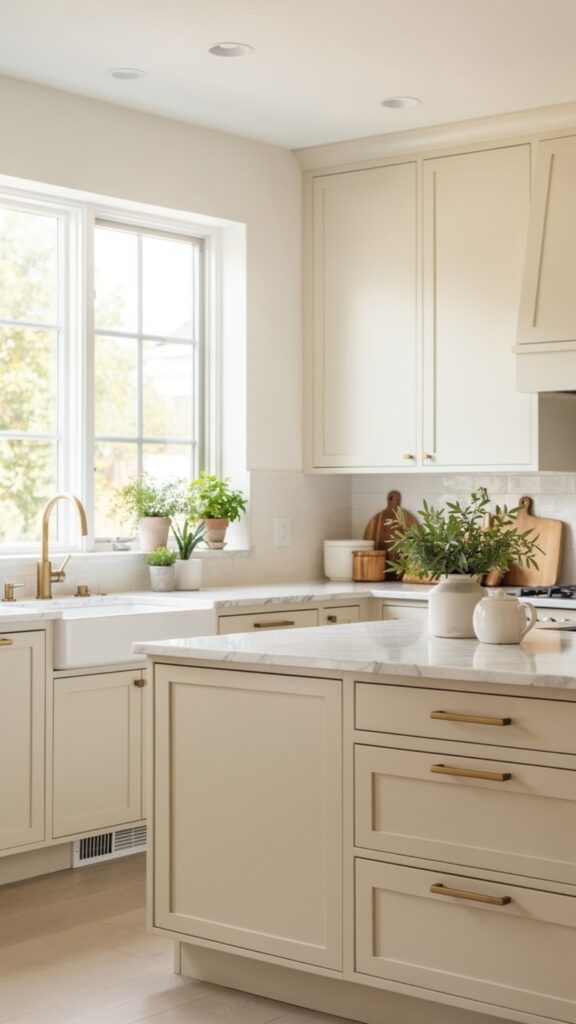
The transitional kitchen aesthetic positioned between traditional warmth and contemporary cleanness is the most popular kitchen style in North America, and cream kitchen cabinets are its most natural expression. Transitional design takes the best of both worlds: the warmth, materials, and livability of traditional design combined with the edited simplicity, clean geometry, and lack of excessive ornamentation that defines contemporary style.
In a transitional cream kitchen cabinets, the cabinet profile is the starting point. A slim-rail shaker door the refined version of the classic shaker with narrower stiles and rails is the ideal transitional cabinet door because it references traditional craft and detail while reading as clean and current.
Paired with brushed nickel or satin brass hardware in simple bar or cup pull forms, this cabinet creates the transitional balance between warmth and restraint that the style demands. Transitional cream kitchens work best with countertops that are visually rich but geometrically simple quartz with subtle veining rather than dramatically bold slabs, or honed marble with a clean waterfall edge rather than an ornate ogee profile.
The principle is: material interest, geometric restraint. A large-format slab of subtly veined warm white quartz with a simple square edge on a cream transitional kitchen is a masterclass in this approach visually compelling without being busy, timeless without being boring.
The lighting in a transitional cream kitchen should follow the same clean-but-warm principle as the cabinets and countertops. Semi-flush ceiling fixtures with simple geometric forms in brushed metal rather than ornate chandeliers, under-cabinet LED strips that illuminate work surfaces without visible fixtures, and simple pendant lights with clear glass shades above the island all maintain the transitional balance.
Lighting design in a transitional kitchen is always about providing warmth and function with geometric simplicity never about the fixture calling more attention to itself than the space it serves.
Add Glass-Front Cabinet Doors to Cream Kitchen Cabinets:
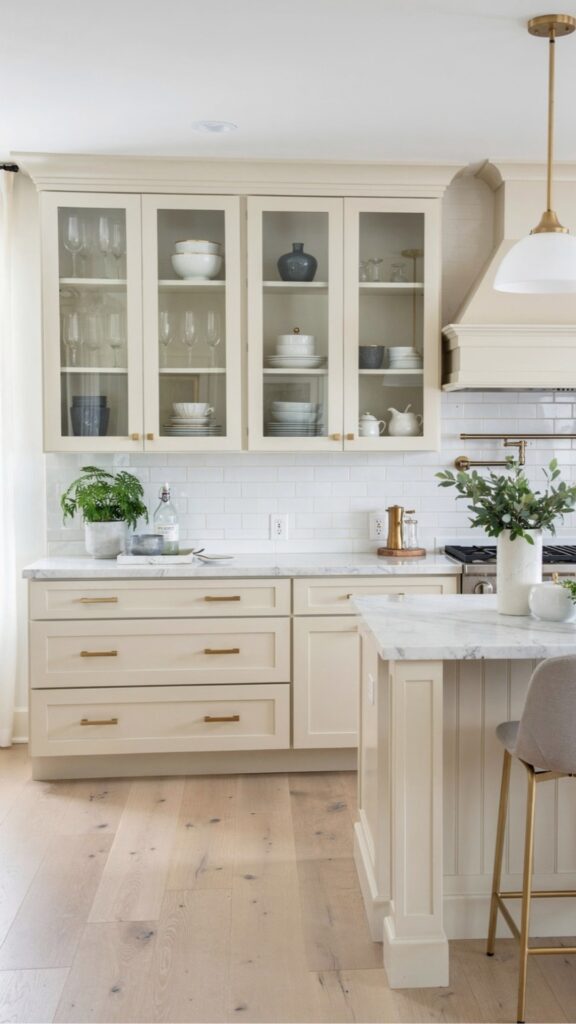
Glass-front cabinet doors are one of the most transformative upgrades available for cream kitchen cabinets they immediately make cabinetry feel lighter, more refined, and more personalized. By revealing what’s inside the cabinet, glass doors create an invitation for display and encourage the kind of thoughtful, curated organization that makes a kitchen feel genuinely designed rather than simply functional.
The choice of glass type significantly affects the result. Clear glass provides maximum transparency and works best when the cabinet interior is beautifully organized with attractive dishware. Reeded or fluted glass a currently trending choice in 2026 has a vertical ribbed texture that partially obscures the interior contents while creating a beautiful, light-diffusing surface that adds texture and visual interest to the cabinet face.
Frosted glass provides maximum privacy for cabinet contents while maintaining the lighter, more open feeling that glass doors create. Antique or seeded glass, with its slight distortion and bubbles, adds a vintage, artisanal quality that is perfect for cottage and traditional cream kitchen styles.
The interior of glass-front cabinets in a cream kitchen deserves as much attention as the glass itself. Paint the cabinet interior in a color that creates a flattering backdrop for whatever is displayed: a soft warm white interior keeps the focus on the dishware; a moody navy or sage green interior adds drama and makes even simple white dishes look curated and intentional.
Adding LED strip lighting inside glass-front cabinets illuminates the display beautifully and makes the cabinetry a focal point after dark a detail borrowed from retail display design that works extraordinarily well in residential kitchens.
The placement of glass-front doors within a cream kitchen cabinetry plan requires strategic thinking. Glass-front doors on every upper cabinet creates an obligation to maintain perfect organization throughout which is genuinely demanding in a working kitchen.
A more practical approach is incorporating glass-front doors on two or four cabinet sections that are specifically designated for attractive display items good glassware, decorative ceramics, collections of cookbooks while keeping everyday items behind solid doors. This selective approach delivers the aesthetic benefit of glass-front cabinetry with realistic organizational demands.
Incorporate Cream Cabinets with a Statement Range Hood:
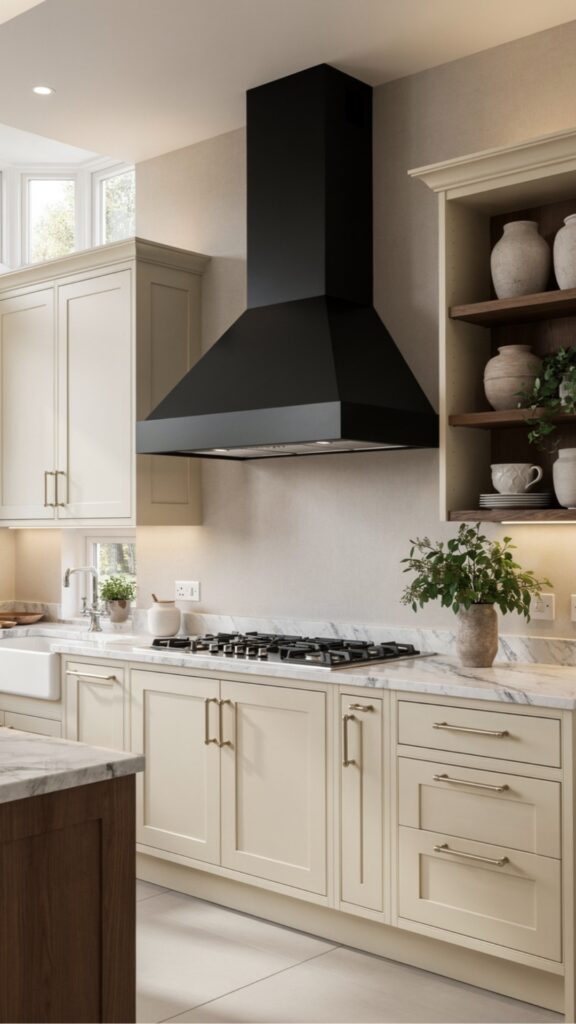
The range hood is one of the most architecturally significant elements in a kitchen it rises from the countertop to the ceiling, occupies the visual center of the cooking wall, and is visible from virtually every point in the kitchen. In a cream kitchen, the range hood is an opportunity to create a statement that reinforces, elevates, and personalizes the entire design.
A plastered or painted range hood in the same cream tone as the cabinets particularly one with architectural detailing like corbels, molding profiles, or a curved arched form creates a seamless, built-in quality that makes the kitchen feel designed by an architect rather than assembled from components.
This monochromatic approach is powerful because it makes the range hood feel like a permanent architectural element of the house rather than an appliance installation it has the quality of something that has always been there.
Conversely, a contrasting range hood creates a focal point and design statement that anchors the cooking wall. A custom-colored range hood in deep navy, forest green, or matte black above cream kitchen cabinets creates a dramatic visual hierarchy the cooking wall becomes the clear star of the kitchen.
This approach requires confidence and commitment, but when executed well, it is the kind of design decision that defines the entire kitchen’s character and is immediately memorable to anyone who enters the space.
Materials beyond painted wood are increasingly popular for statement range hoods in cream kitchens. Plaster hoods in a warm ivory tone have an ancient, European farmhouse quality that pairs beautifully with cream cabinetry and stone countertops.
Reclaimed wood hoods add organic warmth and craft. Copper and brass metal hoods create a glamorous, culinary-professional atmosphere. Zellige tile-covered hoods using handmade Moroccan tiles in warm white, cream, or terracotta are a 2026 trend that adds extraordinary texture and artisanal quality to the kitchen’s focal wall.
Style Cream Cabinets with Patterned or Colorful Tile Backsplash:
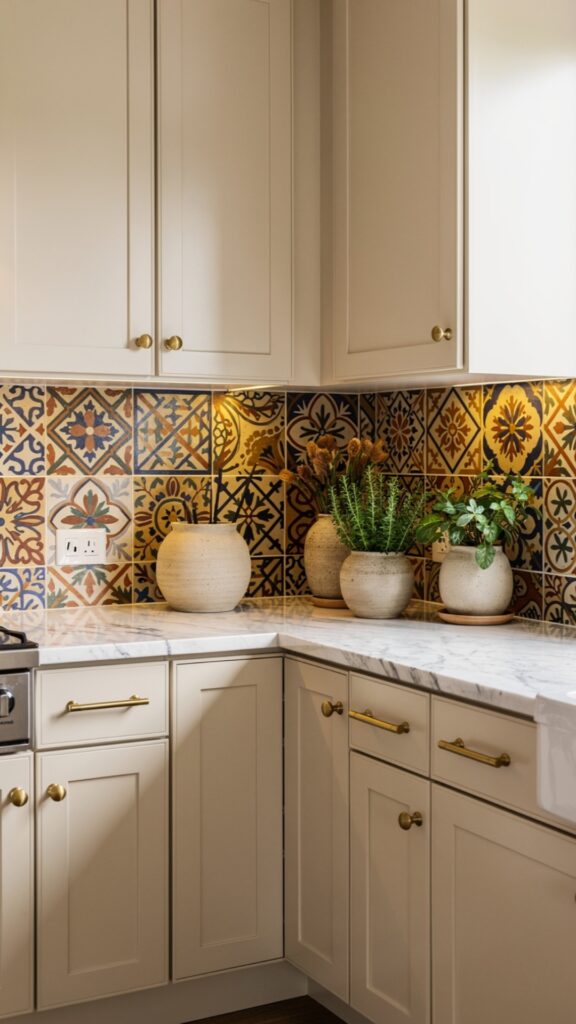
While the classic subway tile backsplash is a reliable companion for cream kitchen cabinets, a patterned or colorful backsplash introduces a level of personality, visual excitement, and design confidence that transforms a cream kitchen from beautiful to genuinely memorable. A patterned tile backsplash behind the range or across the full kitchen wall becomes the artwork of the kitchen a fixed, permanent expression of taste and character.
Zellige tiles handmade Moroccan tiles with slightly irregular surfaces, rich glazing depth, and gentle color variation are one of the most beautiful backsplash choices for cream kitchen cabinets. In warm white, cream, or soft ivory, zellige creates a backsplash that appears to be a single color but shimmers and shifts as light moves across its uneven surface.
This subtly dynamic quality adds life and depth to the kitchen in a way that machine-made tiles simply cannot replicate. In a warm terracotta or antique green colorway, zellige introduces color that complements cream cabinetry without overpowering it.
Encaustic cement tiles flat, matte-finished tiles with geometric or floral patterns applied in colored cement have a strong heritage in Victorian, Spanish Colonial, and Mediterranean kitchen design and pair beautifully with cream kitchen cabinets in those traditional or globally-inspired styles.
A black-and-white encaustic tile backsplash against cream cabinets creates a striking graphic contrast. A blue-and-white pattern references Portuguese azulejo tile tradition and creates a kitchen with genuine cultural character and historical resonance.
The scale of the patterned tile relative to the kitchen size is a critical design decision. Large-format patterned tiles 12 by 24 inches or larger work best in spacious kitchens where the full pattern repeat can be appreciated. In smaller kitchens, smaller tile sizes 4 by 4 or 3 by 3 inch patterned tiles allow the pattern to repeat more often within the available space, creating a richer, more textured effect.
Always order patterned tiles with at least 15 percent overage to account for cuts and any future repairs matching patterned tiles from the same production run is difficult or impossible after the fact.
Design a Scullery or Butler’s Pantry with Cream Cabinets:
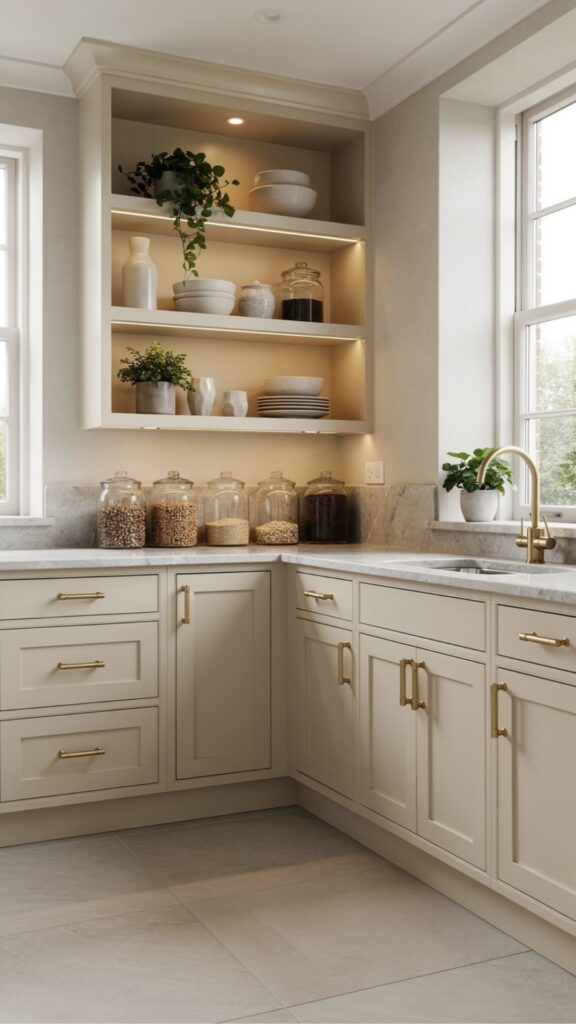
A scullery or butler’s pantry a secondary kitchen workspace adjacent to the main kitchen is one of the most coveted features in modern home design, and cream kitchen cabinets are among the most popular choices for these spaces. The scullery’s function is to hide the mess of food preparation, washing up, and storage from the main kitchen, allowing the primary space to remain presentable while the real work happens out of sight.
In a scullery with cream cabinets, the design can be slightly more utilitarian and less precious than the main kitchen while still maintaining the warm, inviting quality of cream cabinetry. Open shelving replaces some upper cabinets to provide easy access to frequently used items. Deep drawers below the countertop maximize storage efficiency.
A large single or double sink for soaking and washing occupies the primary counter position. Pull-out pantry columns alongside the cabinetry provide organized dry goods storage. The cream cabinetry ties the scullery visually to the main kitchen, creating a cohesive aesthetic throughout the connected spaces.
The countertop in a scullery with cream cabinets can prioritize durability over aesthetics more explicitly than the main kitchen countertop. A solid surface material in a warm white or light gray tone is highly practical seamless, easy to clean, resistant to staining from food preparation, and more affordable than natural stone.
However, butcher block or laminate in a wood-look finish maintains the warm, organic feel of cream cabinetry without the cost of premium materials, which is appropriate in a space designed for function over display. For homeowners designing a new home or undertaking a major renovation, the scullery represents a significant opportunity to reframe how cream kitchen cabinets are used throughout the home.
Rather than limiting cream cabinetry to the main kitchen, extending cream or complementary-toned cabinetry into the scullery, laundry room, and even home bar or coffee station creates a cohesive, through-the-home design language that is rare and impressive. This continuity the same warm cream cabinetry tone flowing through multiple rooms gives a home a custom, designer-led quality that feels genuinely distinguished.
Explore This: Black Kitchen Cabinet Ideas That Create a Stunning Contrast with Your Cream Kitchen Cabinets.
Refresh Cream Cabinets with New Lighting for Instant Impact:
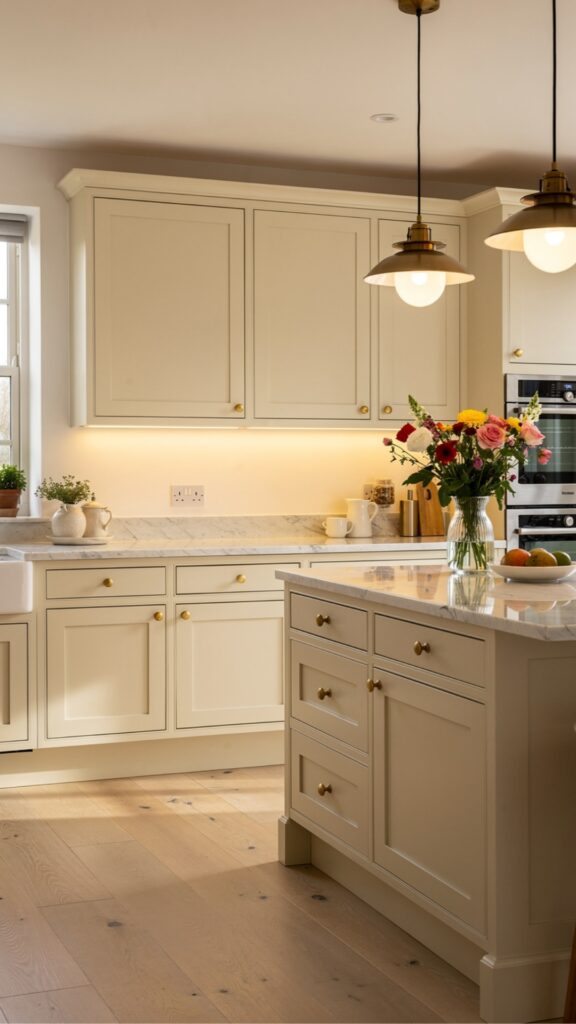
Lighting is the most underestimated variable in cream kitchen cabinets design. The same cream cabinetry can look warm and beautiful under the right light or flat and muddy under the wrong light and changing the lighting in a kitchen is one of the most cost-effective upgrades available, requiring no cabinetry replacement or renovation. Understanding how different light sources interact with cream cabinetry is the first step toward optimizing this relationship.
Recessed downlights the most common kitchen ceiling fixture can be either the best friend or the worst enemy of cream kitchen cabinets, depending entirely on their color temperature. Lights in the 2700K to 3000K range produce warm white light that enhances the golden, warm quality of cream cabinetry and makes the kitchen feel inviting and cozy.
Lights above 4000K produce a cool, bluish-white light that drains the warmth from cream cabinets and makes them appear grayish, dingy, or yellow in an unflattering way. Always specify warm white LEDs for kitchens with cream cabinetry.
Under-cabinet lighting is one of the most practical and aesthetically rewarding lighting additions for cream kitchen cabinets. Warm LED strip lights mounted under the upper cabinets illuminate the countertop work surface and backsplash, making the kitchen significantly more functional for food preparation while also creating a warm glow that enhances the cream cabinetry’s color from below.
This “uplighting from below” effect gives the cabinets dimension and depth that overhead lighting alone cannot achieve. Dimmable under-cabinet lights allow adjustment from bright task lighting during cooking to a warm, ambient glow during dining and entertaining.
Statement pendant lights above a kitchen island with cream cabinets should always be chosen with warm metal finishes brass, bronze, or copper or natural materials like rattan and wicker. These finishes and materials share undertones with cream cabinetry and reinforce the warm material story of the kitchen.
A pendant with a warm amber or amber-tinted glass shade casts a beautiful warm glow over the island that enhances the cream below it. This coordination between the light fixture’s materials and finish and the warm quality of the cream cabinets beneath is the lighting design detail that makes a cream kitchen cabinets feel truly considered and complete.
Repaint Existing Cabinets Cream for a Budget-Friendly Makeover:
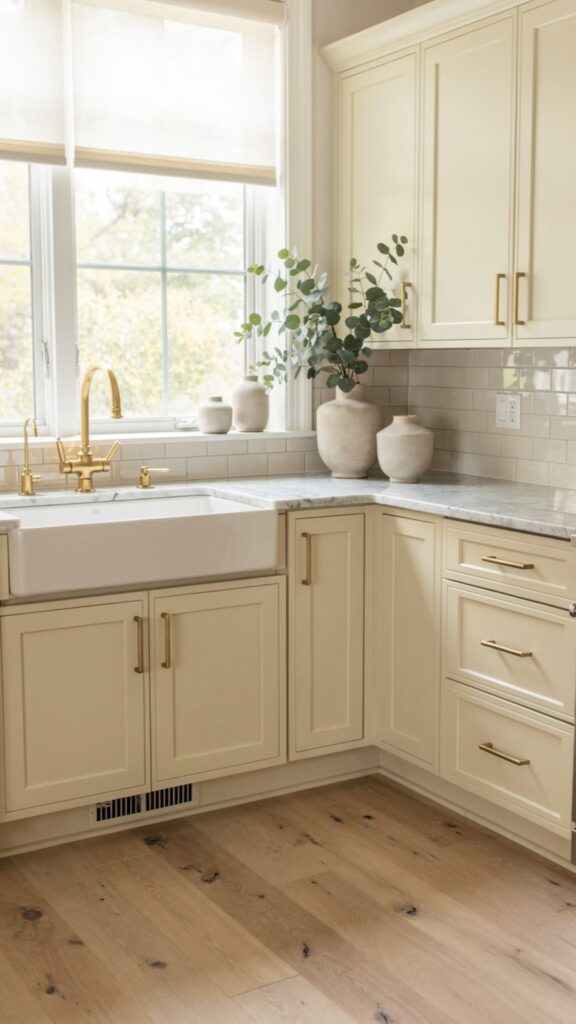
Repainting existing kitchen cabinets in a cream color is one of the highest return-on-investment projects available in home improvement transforming the look and feel of an entire kitchen at a fraction of the cost of full cabinet replacement. For homeowners with solid wood or MDF cabinets in good structural condition but dated color or finish, cream cabinet painting is a genuinely transformative and relatively accessible project.
The preparation stage of a cream cabinet painting project is where most DIY projects succeed or fail. Thorough degreasing using a dedicated degreaser like TSP substitute rather than ordinary soap removes the invisible film of cooking grease that accumulates on kitchen cabinet surfaces over time.
This film prevents paint from adhering properly and is the primary cause of peeling and chipping in repainted cabinets. After degreasing, light sanding with 220-grit sandpaper scuffs the existing finish to create a surface that primer and paint can bond to firmly.
Primer selection is critical for cream cabinet painting. A high-adhesion shellac-based primer or an oil-based primer creates a surface that paint adheres to with far greater durability than a standard latex primer alone. These primers also provide superior stain-blocking, preventing tannins from wood and any residual grease from bleeding through the cream topcoat and causing yellowing or discoloration over time.
This is the step that professional cabinet painters emphasize and that DIY guides most often underplay the primer is responsible for 70 percent of the finished paint job’s durability.
For the cream topcoat itself, a cabinet-specific paint or a high-quality trim paint in an eggshell or satin finish provides the optimal combination of cream warmth, durability, and cleanability. Pure matte cream paint is not recommended for kitchen cabinets it is difficult to clean and marks easily.
Cream colors to consider for repainting: Benjamin Moore White Chocolate, Sherwin-Williams Antique White, Farrow and Ball Pointing, and Behr Cottage White are all highly regarded choices that have been tested extensively in kitchen environments and consistently deliver beautiful, warm, durable results.
Conclusion
Cream kitchen cabinets remain one of the most versatile, timeless, and warmly beautiful choices available in kitchen design capable of spanning styles from classic cottage to contemporary transitional, from bold two-tone contrasts to serene monochromatic schemes.
Whether you are choosing cream cabinets for a new kitchen, repainting existing cabinetry, or simply refining the details around your existing cream kitchen, the ideas in this guide give you a complete, expert-level foundation for making decisions with confidence. Start with the idea that resonates most with your style and your space and let the warmth of cream transform your kitchen into the heart of your home.

Team TrandyVilla is the passionate home decor team behind Trandy Villa, where style meets comfort in everyday living. The team loves transforming simple spaces into beautiful, functional homes through smart ideas, budget-friendly hacks, and modern design trends. Their content focuses on helping readers create homes that feel both stylish and personal without spending too much.