
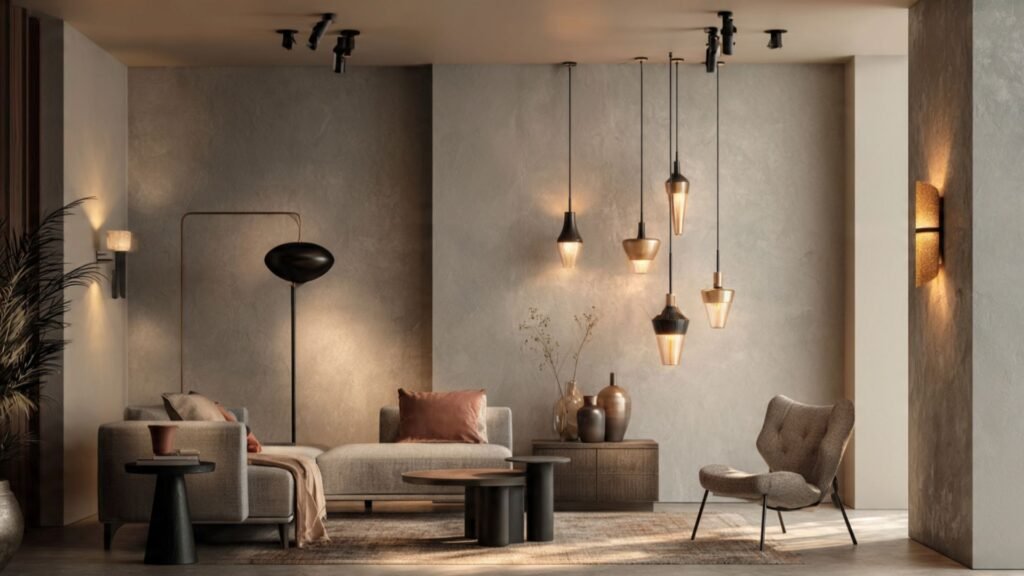
Living Room Lighting Ideas improve brightness, comfort, and interior style in modern homes. Good lighting supports relaxation and daily activities. These ideas include layered lighting, floor lamps, pendant fixtures, and warm LED bulbs that create a balanced and comfortable atmosphere inside every living room lighting space today.
Soft lighting changes the mood of a home instantly. Living Room Lighting creates warmth, comfort, and visual balance with simple design upgrades. Floor lamps, pendant lights, and dimmable LEDs improve relaxation, support evening routines, and make the living room feel modern, inviting, and beautifully designed every day.
Living Room Lighting Ideas include smart lighting systems, accent fixtures, and natural light solutions for stylish interiors. Warm white bulbs create a calm and welcoming atmosphere. Recessed lights, dimmers, and decorative lamps add depth and elegance. These lighting ideas work perfectly in both compact apartments and spacious family homes.
Layer Your Lighting Like a Pro:
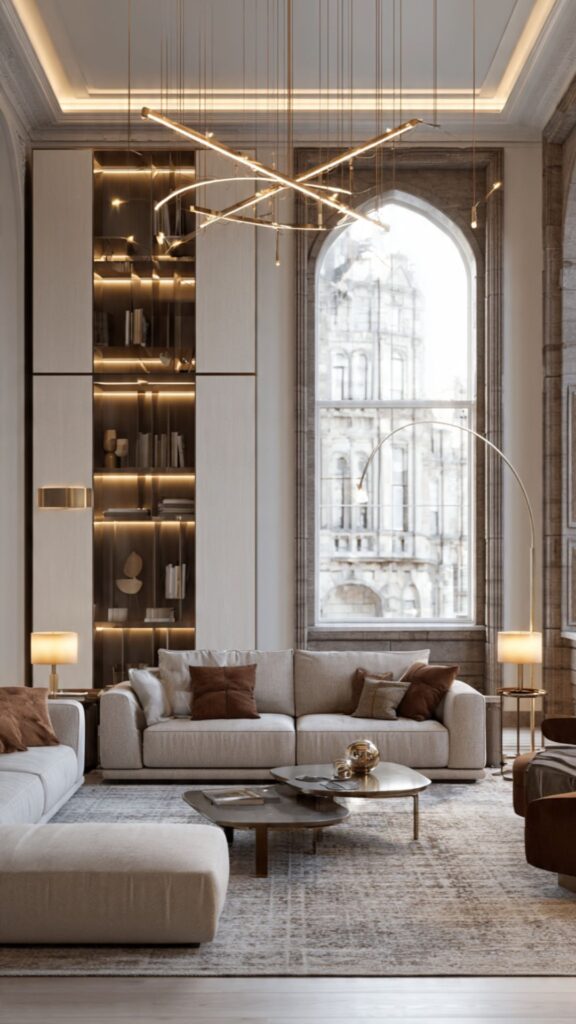
The single biggest mistake homeowners make is relying on one central ceiling light to illuminate their entire living room lighting. Professional designers never do this. Instead, they work with three distinct lighting layers ambient, task, and accent each serving a specific purpose.
Ambient lighting provides overall illumination; task lighting supports reading, gaming, or working; and accent lighting adds drama, depth, and visual interest. When these three layers work together, the room feels intentional, luxurious, and comfortable at the same time.
Think of your living room lighting like a stage set. A theatre director doesn’t use a single floodlight they mix overhead rigs, spotlights, and footlights to guide the audience’s eye and create emotion. The same principle applies to your living space.
For example, a sofa area benefits from a warm-toned floor lamp (task), a recessed ceiling fixture set to 30% (ambient), and a small LED strip behind the TV unit (accent). This trio of light sources makes the space feel curated rather than functional.
“A well-lit living room lighting doesn’t just illuminate it choreographs how you feel the moment you walk in.”
The layered lighting approach also gives you extraordinary flexibility. On a Saturday movie night, you can dim the overhead ambient light, turn off the task lamp, and let only the accent and bias lighting glow. For a dinner party or festive gathering, you bring all three layers up to create a lively, social atmosphere. This kind of adaptability is impossible when you rely on a single fixture, making layer lighting one of the most high-impact, low-cost upgrades available to any homeowner regardless of budget or room size.
Smart Lighting & Automation:
The Future Is Already Here
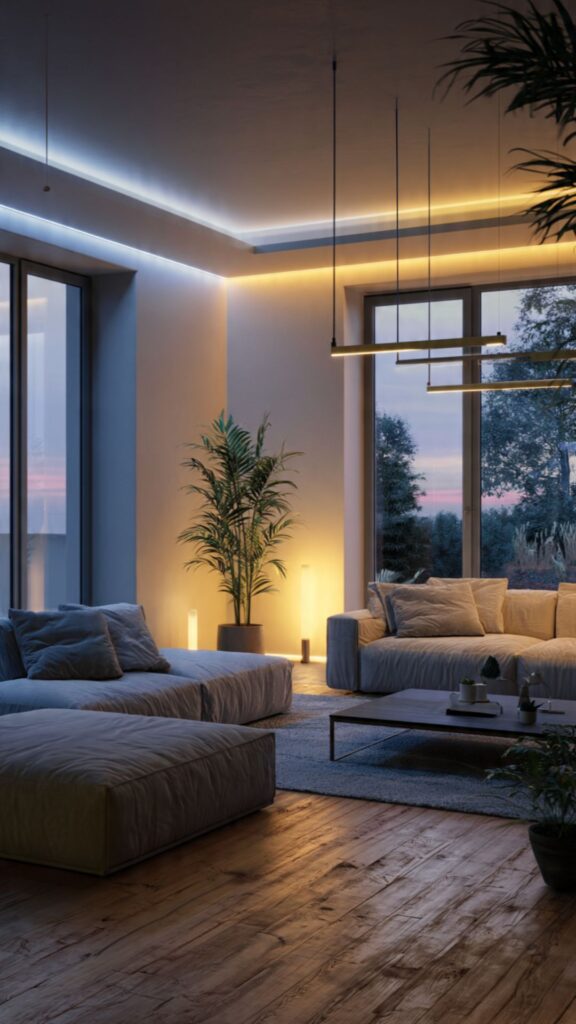
Smart living room lighting has moved far beyond simple voice commands to turn a bulb on or off. In 2026, whole-home lighting ecosystems like Philips Hue, Lutron Caséta, and LIFX allow you to program “scenes” pre-set combinations of brightness, color temperature, and which fixtures are active tied to time of day, a voice command, or even your location.
Imagine your living room lighting automatically shifting to a warm, dim amber scene as the sun sets, without you lifting a finger. This isn’t science fiction; it’s an affordable reality for most households today. The practical benefit of smart lighting extends beyond convenience. Research from the Lighting Research Center shows that properly timed light exposure throughout the day can improve alertness in the morning and promote better sleep quality at night.
Smart systems can be programmed to support your circadian rhythm cooler, brighter light during the day to boost focus, and warmer, dimmer light in the evening to signal wind-down time. For families working or studying from home, this has measurable benefits on productivity and wellbeing, making smart lighting a genuine health investment, not just a luxury gadget.
One underrated feature is geofencing the ability for your smart home system to detect when you’re approaching your home and turn on the lights before you even open the door. Pairing this with motion sensors means lights auto-adjust as you move between rooms, creating a seamless, hotel-like experience at home.
From a cost perspective, smart LED bulbs combined with automated dimming can reduce lighting energy use by 40–60% compared to traditional bulbs left on at full brightness, meaning the system often pays for itself within 18–24 months in energy savings alone.
Before You Go: Fairy Lights Bedroom Ideas That Inspire the Same Magical Lighting Touch for Your Living Room
Statement Pendant Lights:
Sculpture Meets Illumination
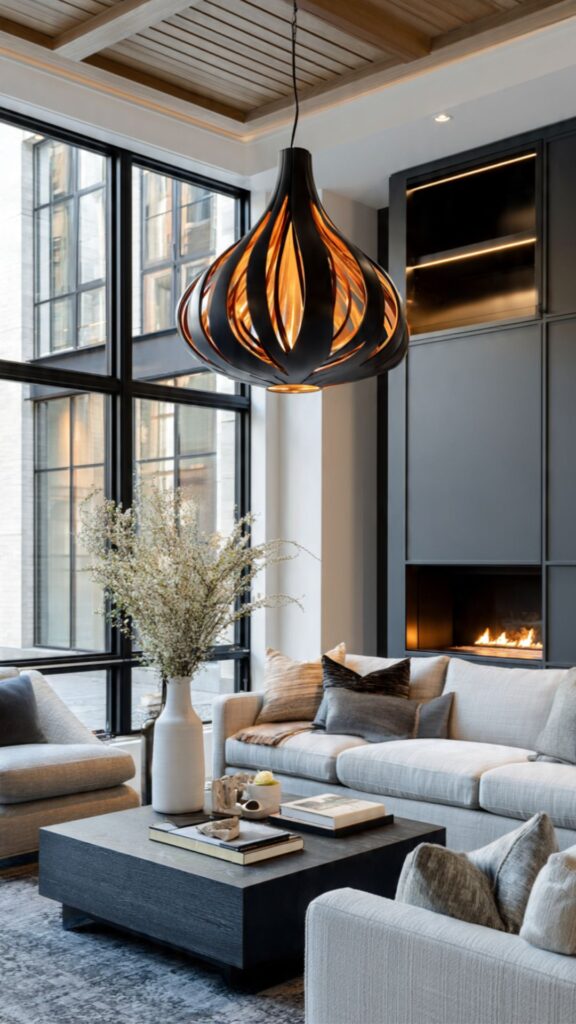
A statement pendant light is arguably the single most powerful design move you can make in a living room lighting. Unlike a flat recessed ceiling fixture, a pendant light occupies three-dimensional space it hangs at eye level, draws the gaze upward, and becomes a focal point even when switched off.
In recent years, the pendant light market has exploded with options spanning rattan, blown glass, blackened steel, concrete, and even recycled paper. The variety means there is a genuinely perfect pendant for every interior style, from Scandinavian minimalism to eclectic maximalism.
Placement and hanging height are critical and often misunderstood. Over a coffee table or seating cluster, pendant lights should hang between 150–165 cm from the floor low enough to feel intimate and cozy, but high enough that no one bumps their head. In rooms with tall ceilings (3m+), grouping three or five pendants at staggered heights creates dramatic visual depth that a single fixture simply cannot achieve.
An emerging trend in 2026 is the “pendant cluster” or “pendant constellation” where multiple small pendants in the same material family are grouped asymmetrically, creating a curated, gallery-like quality overhead.
The light output from a pendant should complement, not replace, your other light layers. Pendants with opaque or frosted shades create a pool of downward light excellent for reading nooks or conversation areas while open, cage-style pendants throw light in all directions and contribute more meaningfully to the room’s ambient layer.
When choosing a bulb for your pendant, consider an Edison-style filament LED: it provides warm 2200K light, is energy-efficient, and adds a vintage, artisanal quality even to contemporary interiors. Match the metal finish of your pendant to at least one other metal in the room (door handles, side table legs, mirror frames) to create a cohesive, designed-on-purpose look.
Floor Lamps as Design Anchors:
Functional Art for Your Living Room
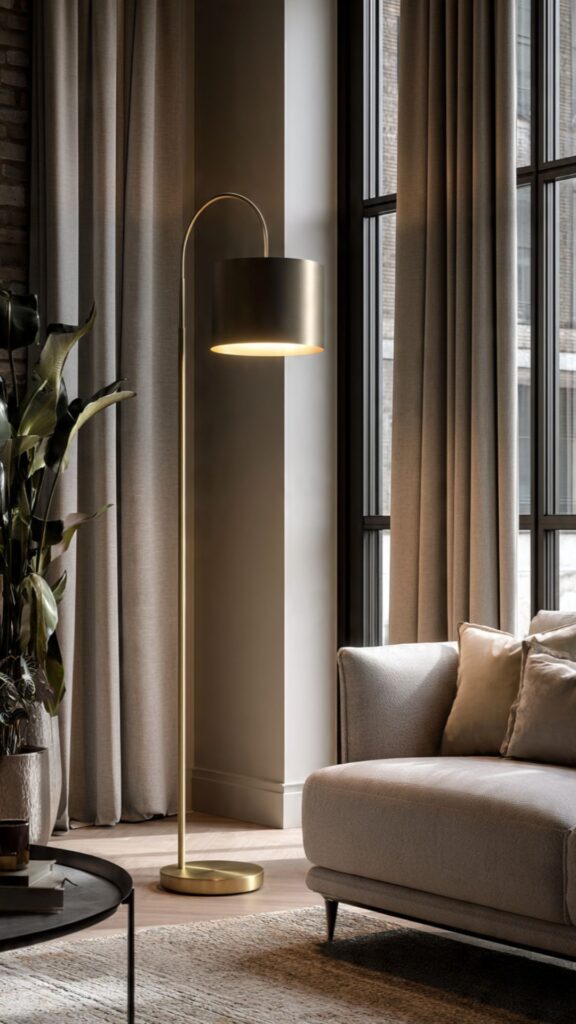
Floor lamps are the most versatile lighting tool in any interior designer’s kit yet they’re chronically underused by homeowners who relegate them to a corner as an afterthought. The best approach is to think of a floor lamp as furniture, not just a light source.
A well-placed arc lamp sweeping over a reading chair creates a complete, composition-worthy vignette. A tripod lamp in brushed brass beside a linen sofa adds texture, warmth, and a sense of deliberate styling that no overhead fixture can replicate.
The “arc lamp + armchair” combination is one of the most timeless and practical arrangements in interior design. The arc directs focused light directly onto reading material without the harsh overhead glare of a ceiling fixture. For people who spend long hours reading or working from home in their living room lighting, this setup significantly reduces eye strain.
The key technical detail: look for arc lamps with a weighted marble or concrete base, which prevents the lamp from tipping as the arm extends. Cheaper models with thin metal bases are a safety hazard, especially in households with children or pets.
Beyond function, floor lamps contribute to a room’s vertical rhythm the visual interest created by varying heights of objects. A living room lighting that lacks vertical rhythm feels flat and one-dimensional, like a showroom rather than a home. Positioning a tall floor lamp (170–190cm) beside a low-slung sofa creates a pleasing contrast of heights.
An increasingly popular move in 2026 is the “lamp in a corner” technique: placing an upward-facing floor lamp in a room’s corner to wash the ceiling and upper walls with diffused light, softening architectural edges and making the space feel larger and more spa-like. This trick costs almost nothing yet produces a genuinely transformative effect.
Must Read: LED Lights Bedroom Ideas That Bring Creative Lighting Ideas to Your Living Room Too
Recessed & Cove Lighting:
The Secret Behind Magazine-Worthy Rooms
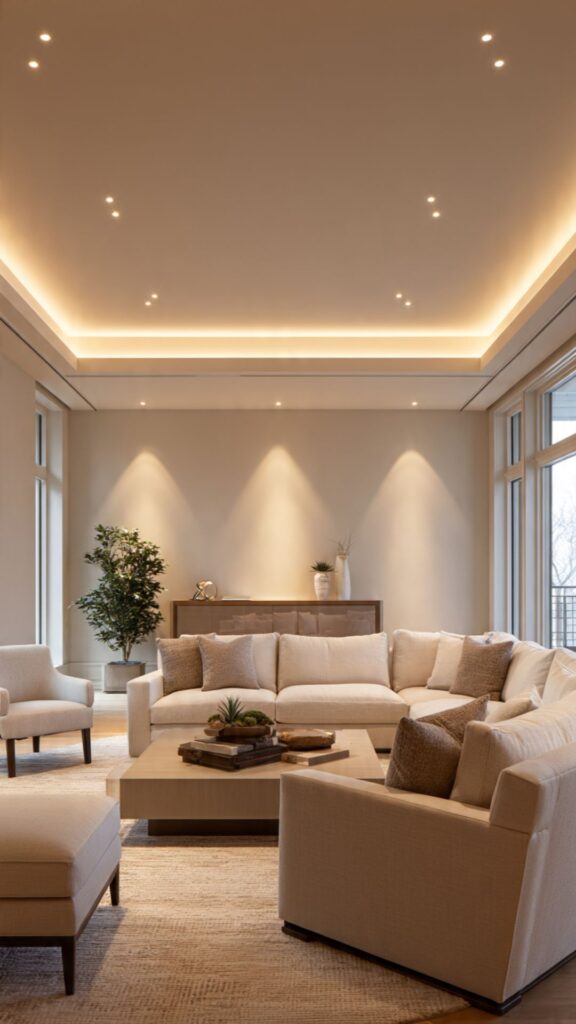
Recessed lighting also called downlights or can lights is the backbone of most professionally designed living room lighting. When planned correctly, recessed lights become nearly invisible, providing clean, uninterrupted ambient illumination without visual clutter on the ceiling.
The critical planning principle is spacing: recessed lights should be placed at intervals roughly equal to half the ceiling height. In a room with 2.7m ceilings, space downlights approximately 1.3–1.4m apart to avoid both dark spots and over-lit “hot spots.”
However, recessed lighting taken alone can produce a cold, clinical environment the lighting equivalent of a supermarket. This is where cove lighting transforms the picture entirely. Cove lighting refers to LED strips concealed within a ledge or trough built into the ceiling (or the top of built-in cabinetry), so that light washes upward and outward rather than pointing straight down.
The effect is a soft, indirect glow that makes ceilings appear higher and gives the entire room a gentle, almost cinematic warmth. High-end hotels have used this technique for decades; it’s now achievable in residential settings with affordable LED strip kits.
“Cove lighting is the closest thing to natural candlelight that modern electrical engineering has ever achieved.”
A commonly missed opportunity is combining recessed downlights with adjustable gimbal fixtures recessed housings where the bulb can be tilted 30–45 degrees to highlight a specific wall, artwork, or architectural feature. Fixed downlights shine straight down and illuminate floors; gimbals act like invisible spotlights, allowing you to “paint” key areas with light precisely.
Pairing standard downlights for general illumination with gimbals for wall washing creates a sophisticated depth of light that photographs beautifully and feels exceptional in person. This is a detail that separates genuinely well-lit living rooms from merely adequate ones.
Accent & Picture Lighting:
Turning Your Walls Into Gallery-Worthy Displays
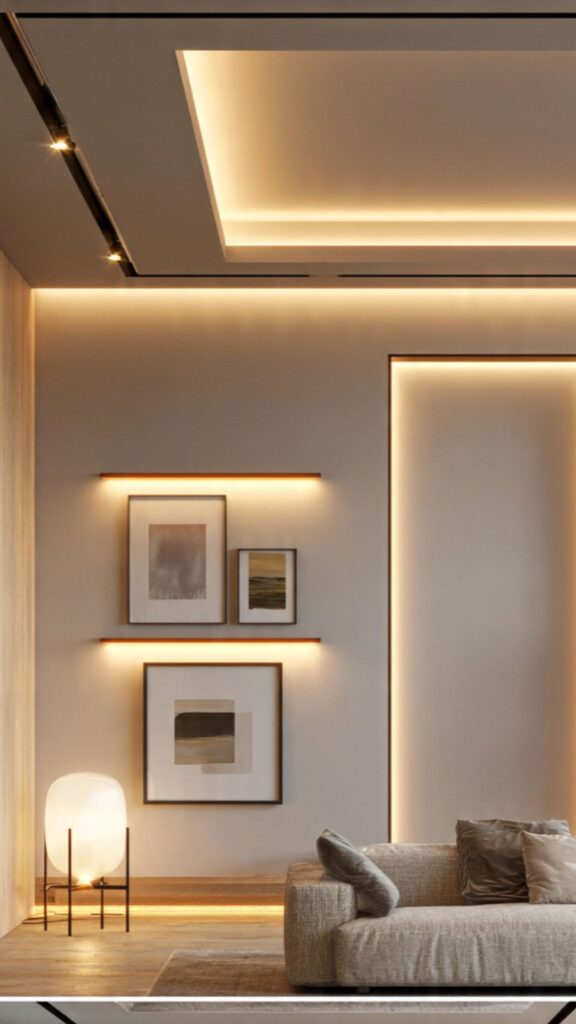
Accent lighting is the most emotionally resonant layer of a well-designed living room. While ambient lighting sets the overall mood and task lighting serves practical needs, accent lighting does something far more powerful: it tells you what to look at. Picture lights small, adjustable fixtures mounted above or below artwork are the clearest example.
A painting illuminated by a dedicated picture light becomes a genuine focal point, anchoring the room’s design around it. Without that accent light, even exceptional art can appear flat and forgettable against a pale wall.
Beyond artwork, accent lighting can be used creatively to highlight architectural features, bookshelves, indoor plants, sculptural objects, and textured wall materials like exposed brick or limewash plaster. LED strip lighting inside a bookshelf, for example, transforms a utilitarian storage element into a glowing display that adds warmth to the entire room after dark.
Strategically placed spotlights can be used to illuminate a dramatic indoor plant a fiddle-leaf fig or tall olive tree creating natural, organic silhouettes that bring the living room lighting to life in a way that feels genuinely luxurious.
The most effective accent lighting is often used in a selective and uneven way rather than being spread evenly across the entire room. Focusing light on two or three key areas creates a natural visual hierarchy, drawing attention to certain features first and then guiding the eye smoothly through the space. Designers often refer to this technique as “lighting choreography” because it changes how a room feels without moving any furniture.
The direction and intensity of light can completely transform the atmosphere of a space. Instead of lighting everything equally, it’s usually better to highlight a few elements more dramatically. This sense of restraint gives the room a more refined, intentional, and professionally designed appearance.
Use 3000K LED strips inside bookshelves and cabinetry the warm tone makes books, objects, and plants glow richly. Avoid cool-white (4000K+) accent lighting indoors; it makes organic materials look clinical and uninviting.
Color Temperature Strategy:
The Science of Warm vs Cool Light
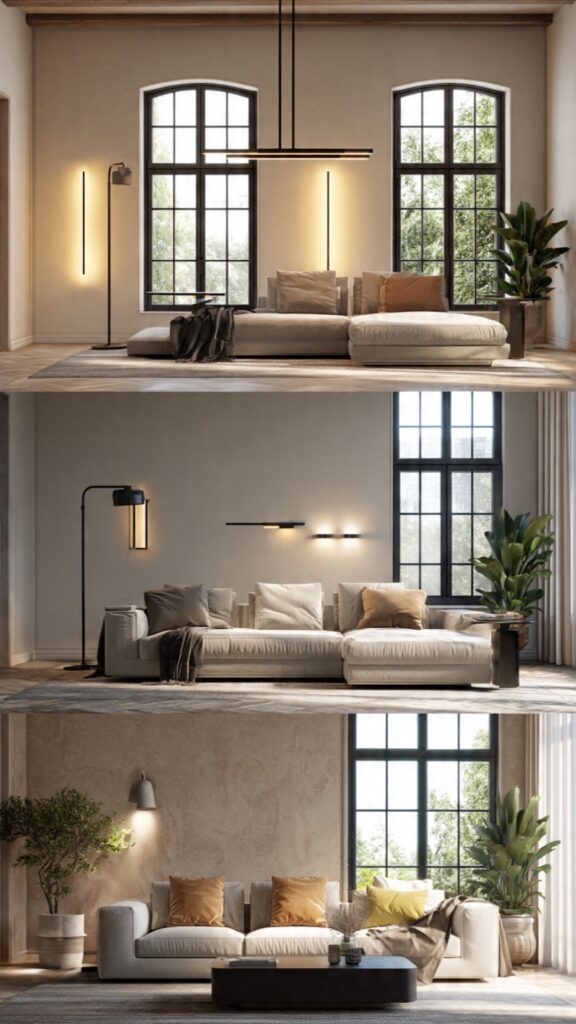
Color temperature, measured in Kelvin (K), plays a major role in how a living room lighting looks and feels. Bulbs in the 2700K–3000K range give off a warm, soft glow similar to candlelight or traditional incandescent bulbs. In contrast, bulbs between 4000K and 6500K produce a cooler, bluish light that feels more like daylight or typical office lighting.
This difference can completely change the atmosphere of a room. Warm lighting creates a cozy, relaxing, and inviting environment, while cooler lighting feels brighter and more energetic but can sometimes appear harsh or clinical. Since living rooms are mainly used for comfort and socializing, warm light in the 2700K–3000K range is usually the best choice.
However, there’s a nuanced exception worth knowing. If your living room lighting doubles as a home office or study area, slightly cooler task lighting (3500K–4000K) at the desk or reading area can help maintain focus and reduce the cognitive sluggishness that warm light can sometimes induce during working hours.
The smart move is to use tunable white bulbs in those zones bulbs that can shift between warm and cool along a spectrum so you can optimize for productivity during the day and switch to cozy warmth in the evening with a single tap.
One insight consistently missing from mainstream interior design content is the concept of color rendering index (CRI). CRI measures how accurately a light source renders colors compared to natural sunlight, on a scale of 0–100. Cheap LEDs often have a CRI of 70–75, which makes reds look muddy and greens look yellow a problem if you have colorful artwork, upholstery, or plants.
High-quality LEDs with a CRI of 90+ render all colors with richness and accuracy, making your furnishings look genuinely beautiful rather than washed out. Always check the CRI rating on bulb packaging, and choose 90+ CRI for any living area where aesthetics matter.
Maximizing Natural Light:
The Free Upgrade Every Living Room Needs
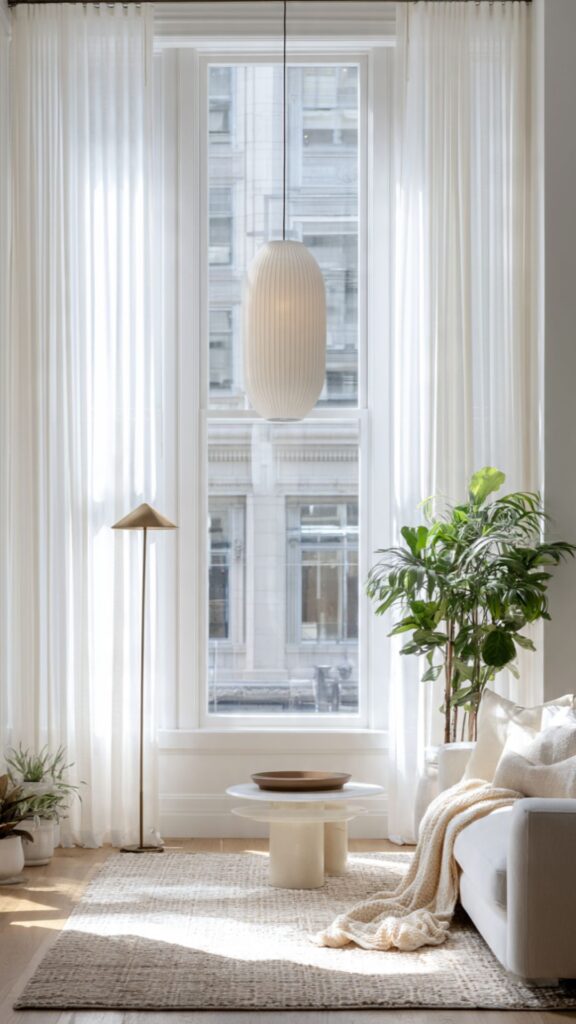
Natural light is the gold standard of all lighting it’s dynamic, health-promoting, free, and universally flattering. Yet the majority of homeowners treat it as a fixed variable, accepting whatever light their windows provide without attempting to optimize it. The truth is there are numerous practical strategies to dramatically increase the amount and quality of natural light in your living room lighting, many of which cost little to nothing.
The most impactful starting point is window treatment strategy: heavy lined curtains hung close to the window frame block a significant portion of available light even when “open.” Replacing them with sheer panels, or extending the curtain rod 15–20cm beyond the window on each side so curtains hang beside not in front of the glass, can increase effective daylight by 30% or more.
Mirrors are the most powerful natural-light multiplier available to homeowners. A large mirror placed on the wall opposite or adjacent to your primary window reflects daylight deep into the room, making even north-facing living rooms feel bright and airy.
The mirror’s position matters enormously: it should be angled to catch and redirect the strongest light source, not just hung wherever a gap on the wall exists. Leaning a large mirror against a wall at a slight angle, rather than hanging it flush, maximizes its light-catching surface area and also adds a casual, editorial quality that feels contemporary and confident.
Light-colored paint particularly in warm whites, soft creams, and pale mineral tones reflects natural light around the room rather than absorbing it. Darker walls create atmosphere but reduce perceived brightness by up to 50%, making artificial lighting work much harder. If you love a dramatic wall color, apply it to a single feature wall while keeping the remaining three walls pale and reflective. This approach gives you visual richness without sacrificing the daylight that makes a living room lighting feel genuinely welcoming.
Glass furniture coffee tables, side tables, console units also allows light to pass through rather than blocking it, a particularly useful choice in smaller living rooms where maximizing the sense of space and brightness is a priority.
Dimmers & Scene Control:
The Lowest-Cost, Highest-Impact Lighting Upgrade
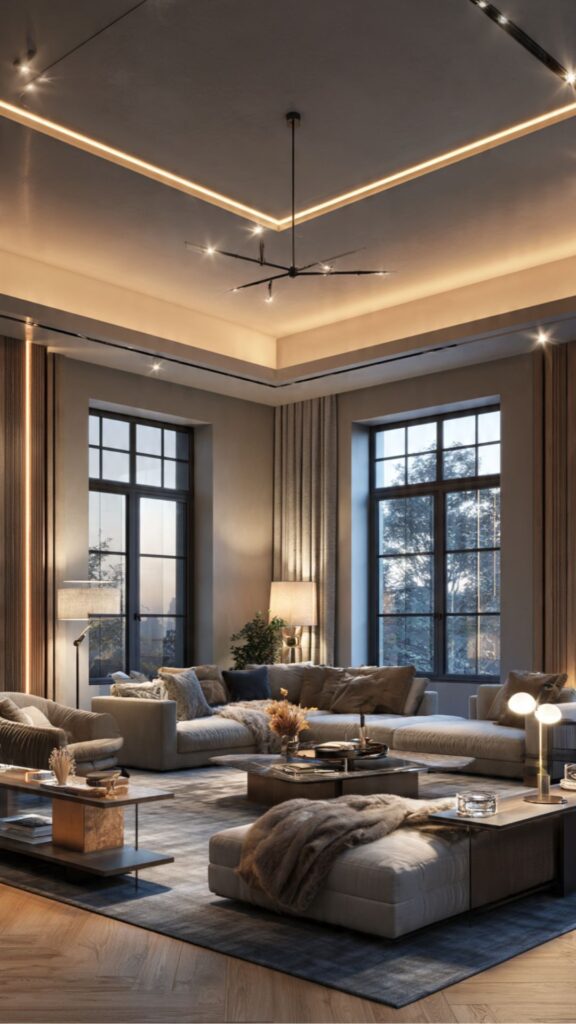
If there is a single lighting upgrade that delivers the greatest return on investment for any living room, it is installing dimmer switches. The transformation is immediate and staggering: a room that felt harsh or ordinary at full brightness becomes warm, intimate, and atmospheric at 40–60%. Yet surveys consistently show that fewer than 30% of UK and US homeowners have dimmers installed in their living rooms a missed opportunity of enormous proportions.
Modern dimmer switches are inexpensive (starting around £15/$20), compatible with most LED bulbs, and can be installed in under an hour without an electrician in many jurisdictions.
When installing dimmers, LED compatibility is one of the most important things to consider. Not every LED bulb is designed for dimming, and using a non-dimmable bulb with a dimmer switch can lead to flickering, buzzing, or a shorter lifespan. To avoid these issues, always choose bulbs labeled as “dimmable LED.”
It’s also best to pair them with a trailing-edge dimmer, which is made specifically for LED lighting and provides smoother, flicker-free dimming. Trusted brands like Lutron and Leviton offer reliable dimmers at affordable prices that work well with most quality dimmable LED bulbs.
For those wanting to go further without committing to a full smart home system, scene controllers multi-gang switches that can recall preset light levels across several circuits simultaneously offer a powerful middle ground. Pressing “Relax” dims all ceiling lights to 30% and turns on the floor lamp circuit; pressing “Entertain” brings everything to 70% with a warm tone.
This level of control transforms how you experience your living room lighting across different times of day and activities, without requiring any app, Wi-Fi setup, or subscription fee. It’s an often-overlooked technology that interior designers use extensively in high-end residential projects but rarely features in mainstream home improvement advice.
A Perfect Read For You: TV Wall Design Ideas That Look Absolutely Stunning with Beautiful Living Room Lighting
Biophilic & Wellness Lighting:
The Next Frontier for Living Room Design
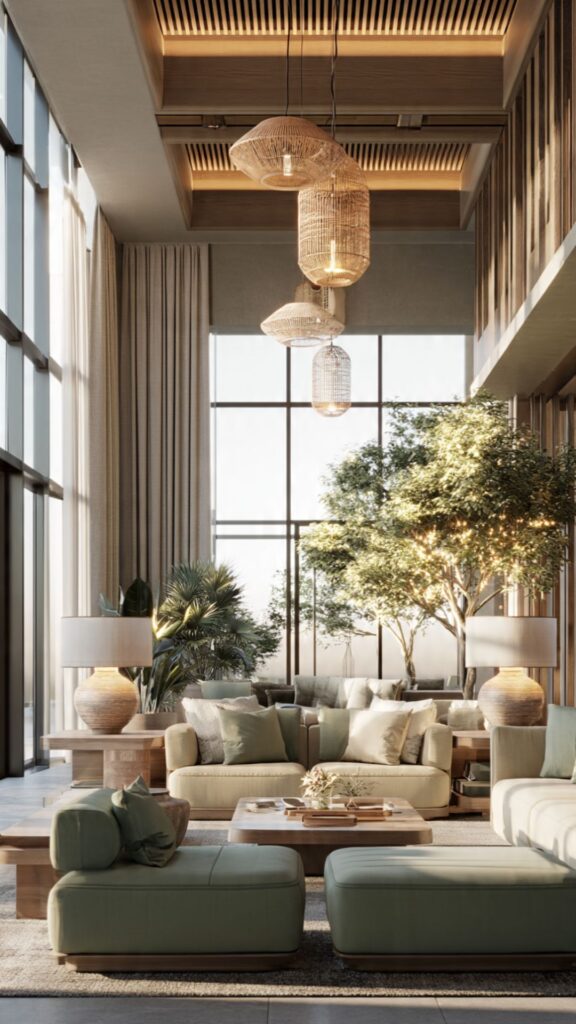
Biophilic lighting is becoming an important part of modern living room lighting design because it focuses on creating a stronger connection between indoor spaces and nature. This approach is inspired by the way natural daylight changes throughout the day bright and cool during the afternoon, then softer and warmer in the evening. Since our bodies naturally respond to these light patterns, lighting that follows a similar rhythm can help create a more comfortable and relaxing environment.
More than just a design trend, biophilic lighting is also linked to better physical and mental well-being. Lighting that mimics natural daylight can support healthy circadian rhythms, improve mood, and make living spaces feel calmer and more balanced. In 2026, this idea is becoming increasingly popular in both home interiors and wellness-focused spaces.
Practical biophilic lighting starts with dynamic lighting systems that shift in both color temperature and intensity throughout the day, following the natural arc of sunlight. Philips Hue’s “Natural Light” scenes and LIFX’s circadian routines are consumer-friendly entry points into this approach.
But even without smart technology, you can apply biophilic principles manually: use cooler, brighter light in the morning and afternoon (daylight bulbs at windows), then transition to warm, dimmed incandescent-style LEDs by early evening, and finally switch to salt lamps, candlelight, or very low-brightness 1800K “firelight” bulbs for the hour before bed. This gradual shift in light quality supports melatonin production and improves sleep quality in ways that standard home lighting never considers.
An emerging trend within biophilic lighting is the use of natural material fixtures rattan, woven seagrass, driftwood, ceramic, and hand-blown glass that cast organic, patterned shadows when lit. Unlike a metal or plastic shade, a woven rattan pendant casts intricate, dappled shadow patterns across the ceiling and walls, mimicking the effect of sunlight filtering through leaves. This creates a living quality in the room’s light that feels genuinely calming and restorative.
Paired with indoor plants that are uplit by warm LED spotlights, the effect is a living room that feels less like an interior space and more like a beautifully lit garden at dusk arguably the most desirable ambiance any living room lighting can aspire to achieve.
By 2027, circadian-tuned lighting is projected to be a standard feature in new-build residential specifications across Europe and North America. Retrofitting biophilic lighting principles now even simply through bulb choices and dimmer habits positions your home ahead of this curve, with proven wellbeing and resale value benefits.
Final Thoughts
Living room lighting is far more than a practical necessity it is the invisible architecture that defines how every space feels, every single day. From the layered warmth of a well-placed floor lamp to the health benefits of circadian-tuned smart systems, thoughtful lighting choices elevate not just your room, but your daily quality of life.
The ideas in this guide work individually, but they compound powerfully when combined each layer of light, each deliberate Kelvin choice, each dimmer switch adds up to a living room that genuinely feels designed for you.
The best part? You don’t have to do everything at once. Start with a single dimmer switch, or swap your main bulbs for 2700K, 90+ CRI LEDs. Notice the difference. Then add a floor lamp. Then explore smart scenes. Each small step moves you closer to a space that truly reflects how you want to live.
Ready to get started? Pick the one idea from this guide that resonates most, and apply it this week. Your living room lighting is already halfway there it just needs the right light.

Team TrandyVilla is the passionate home decor team behind Trandy Villa, where style meets comfort in everyday living. The team loves transforming simple spaces into beautiful, functional homes through smart ideas, budget-friendly hacks, and modern design trends. Their content focuses on helping readers create homes that feel both stylish and personal without spending too much.