
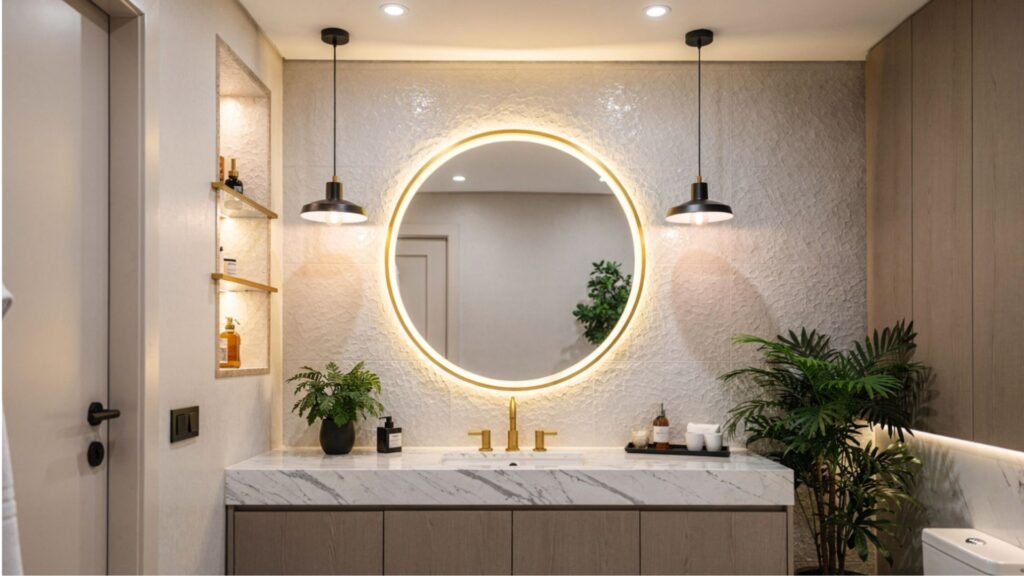
Bathroom lighting is one of the most underestimated elements of interior design. Most homeowners spend thousands on tiles, fixtures, and cabinetry yet they settle for a single overhead bulb that casts unflattering shadows and drains energy. The truth is, the right bathroom lighting can make a small bathroom feel larger, a plain vanity look luxurious, and your morning routine feel effortless.
Bathroom Lighting Ideas define how different lighting types improve visibility, safety, and style in bathrooms. These ideas include task, ambient, and accent lighting. They help create balanced brightness, reduce shadows, and enhance comfort, functionality, and modern interior design results effectively.
Bathroom Lighting Ideas transform ordinary spaces into bright, stylish, and functional environments by combining modern fixtures, smart controls, and layered illumination techniques that improve mood, visibility, and comfort while enhancing daily routines with practical and aesthetic lighting balance for homes.
Bathroom lighting focuses on practical illumination and visual appeal in daily use. It guides safe movement, supports grooming tasks, and improves room atmosphere. Designers use layered lighting and energy-efficient LEDs to create clear, comfortable, and stylish bathroom environments for users.
Layer Your Lighting:
For a Spa-Like Bathroom Experience
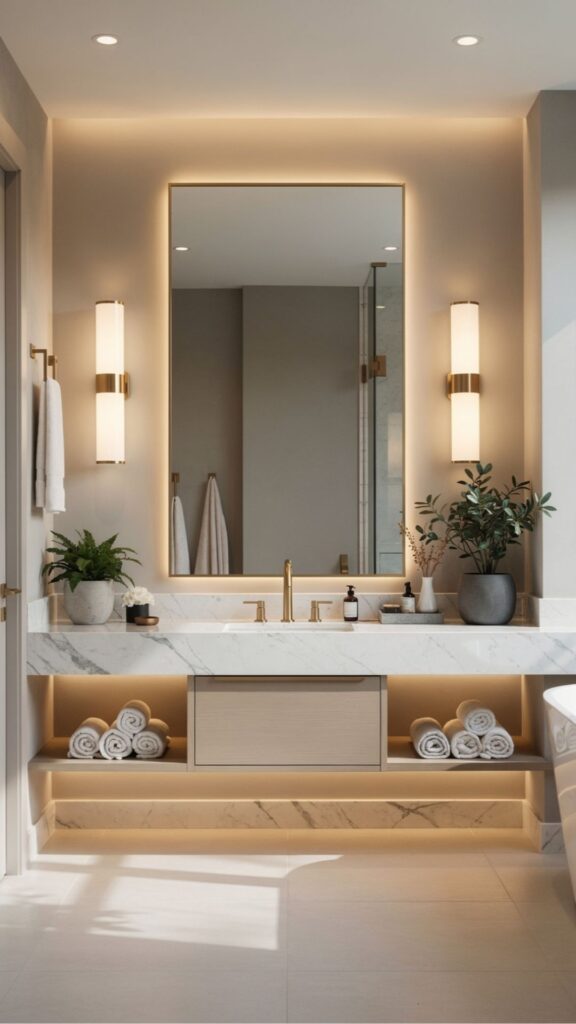
The single biggest mistake in bathroom lighting design is relying on one light source. Professional interior designers always work with layered lighting a concept borrowed from hospitality and luxury hotel design. Layered lighting means combining three types: ambient (general illumination), task (focused light for grooming), and accent (decorative or mood-enhancing light). Each layer serves a specific function, and together they create a bathroom that feels complete, balanced, and intentional.
Ambient lighting provides the overall brightness of the room. This is typically handled by a ceiling-mounted fixture, a flush mount, or a recessed light array. Task lighting focuses on areas where precision matters around the mirror, above the sink, or near the shower.
Accent lighting adds depth: think LED strips under a floating vanity, a backlit mirror, or a glowing niche inside the shower. When all three layers are used together, the bathroom stops feeling like a utility room and starts feeling like a retreat.
The layering approach also solves a common problem: harsh, single-source lighting that creates unflattering shadows on the face. Shadowless, even light around the mirror is critical for tasks like shaving or applying makeup. Studies in interior lighting show that side-mounted vanity lights at eye level produce significantly fewer facial shadows than overhead lighting alone. This is why most professional makeup artists prefer side lighting over top-down illumination.
For 2026, smart lighting systems make layering even easier. Products like Philips Hue and Lutron allow you to program different lighting “scenes” bright and energizing in the morning, warm and dim for an evening bath. This future-focused approach means your bathroom lighting can adapt to your needs in real time, with no manual dimmer adjustments needed.
Must Read This: Bathroom Mirror Ideas That Look Absolutely Stunning with the Perfect Bathroom Lighting Around Them
Vanity Bathroom Lighting Ideas:
The Most Important Bathroom Light You’ll Install
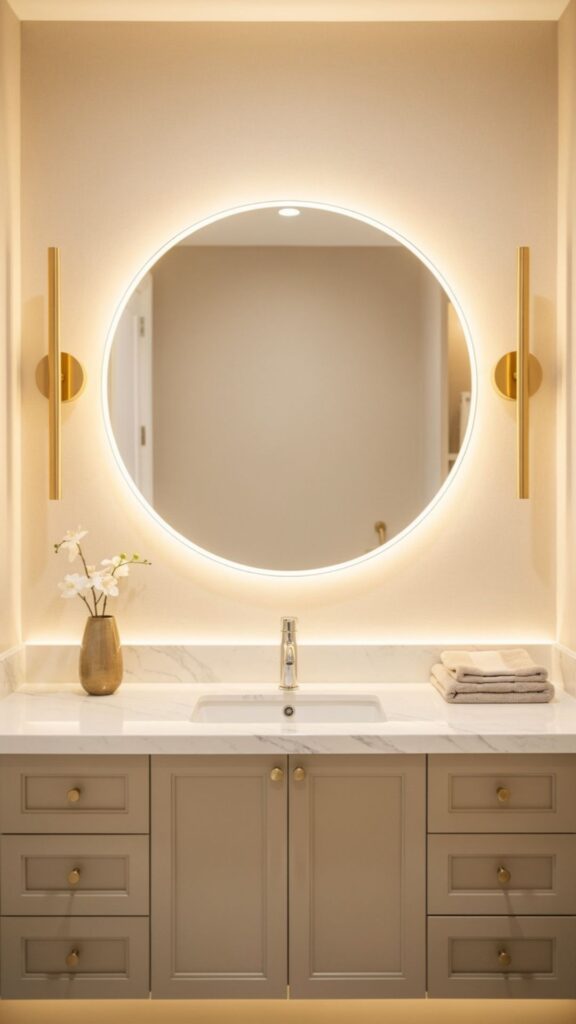
Your vanity area is where you spend the most focused time in the bathroom, which makes vanity lighting the single most important fixture you’ll choose. A poorly lit vanity leads to uneven makeup application, missed shaving spots, and general frustration. Yet many bathrooms still use a single bar light mounted above the mirror a setup that sends light downward and creates unwanted shadows under the eyes, nose, and chin.
The superior approach is Hollywood-style side lighting: mounting fixtures on both sides of the mirror at approximately eye level (roughly 60–65 inches from the floor). This mimics natural outdoor light and wraps the face evenly. If side mounting isn’t structurally possible, a light bar mounted directly above the mirror should be paired with at least 2,700K–3,000K warm-white bulbs rather than cool-white LEDs, which wash out skin tones.
Backlit mirrors are a rapidly growing alternative that solves both the aesthetic and functional problems at once. These mirrors have LEDs embedded directly behind or around the reflective surface, producing a soft, even halo of light. They eliminate harsh shadows, reduce the visual clutter of separate fixtures, and deliver a sleek, modern look. Many models now include built-in dimming, anti-fog heating, and even built-in Bluetooth speakers making them one of the smartest investments in a bathroom upgrade.
One insight competitors rarely mention: the Color Rendering Index (CRI) of your vanity bulbs matters as much as brightness. Always choose bulbs with a CRI of 90 or above for vanity areas. A high CRI bulb renders skin tones, clothing colors, and cosmetics accurately so what you see in the bathroom mirror matches what you look like in natural light outside. This single specification change can dramatically improve your grooming routine without changing a single fixture.
Recessed Lighting:
Clean, Versatile, and Perfectly Flush
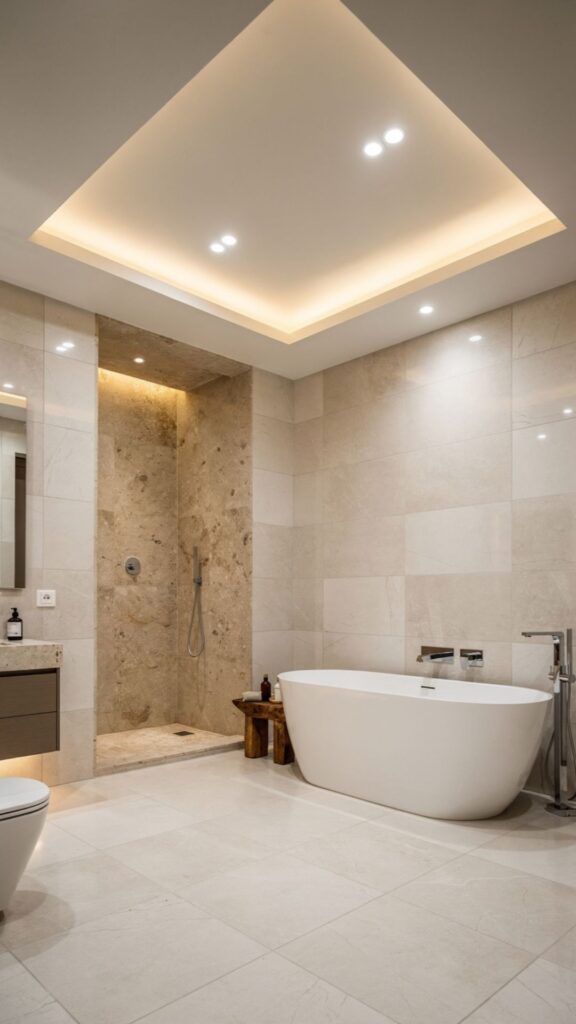
Recessed lighting also called can lights or downlights is a bathroom staple for good reason. These fixtures sit flush within the ceiling, which means they don’t compete visually with other design elements. They’re ideal for low-ceiling bathrooms where hanging fixtures would feel crowded, and they work seamlessly in modern, minimalist, and transitional bathroom styles. When properly placed, recessed lights deliver even ambient illumination without visual clutter.
However, placement is where most homeowners go wrong with recessed lighting. A common error is installing too few cans and placing them directly above the sink or shower which concentrates light in one spot and leaves corners dim.
The correct approach is to space recessed lights evenly across the ceiling, typically 4 feet apart for a standard bathroom, with additional focused cans over the vanity or shower zone. Using a 4-inch trim in smaller bathrooms and 6-inch in larger ones keeps the proportions correct.
Moisture ratings are another critical factor that often gets overlooked. Bathroom recessed lights must be rated for damp or wet locations depending on where they’re installed. Lights outside the shower zone need a damp-location rating, while fixtures inside the shower enclosure require a full wet-location (IP65 or higher) rating. Installing a standard indoor recessed light in a humid bathroom ceiling can be both a safety hazard and a code violation so always check the IP rating before purchasing.
For energy efficiency, LED recessed lights are now the undisputed best choice. They consume up to 75% less energy than incandescent alternatives and last 15,000–25,000 hours. Pair them with a compatible dimmer switch (not all LED trims are dimmer-compatible, so verify before buying) for maximum flexibility. The result is a clean, spa-quality ceiling that looks expensive and functions beautifully.
LED Strip Lights:
The Hidden Detail That Elevates Everything
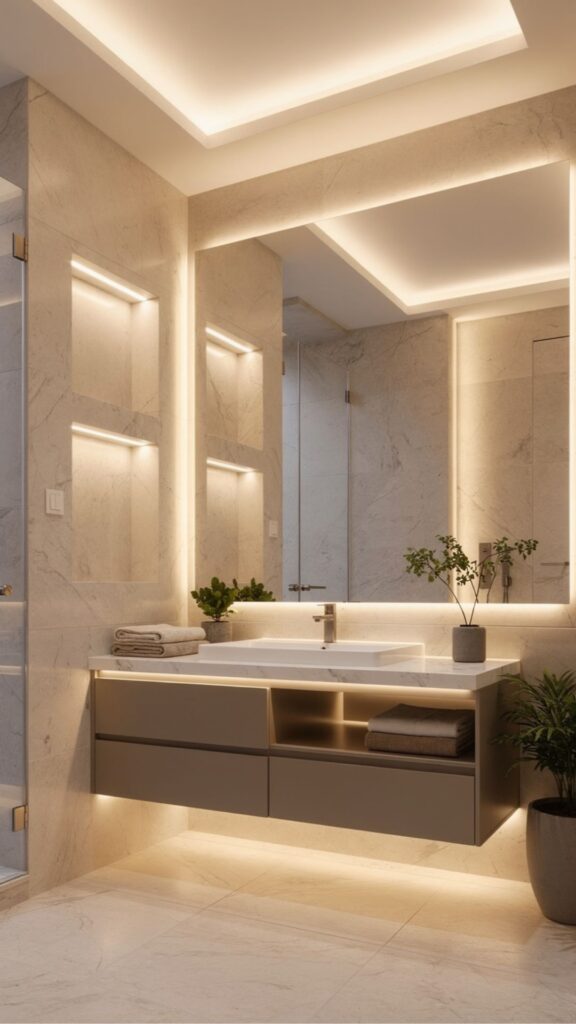
LED strip lighting has moved far beyond the novelty-light era. Today, LED strips are a legitimate and sophisticated design tool used by interior designers in luxury bathrooms worldwide. The idea is simple: install a flexible strip of LEDs in a concealed location so the light source itself is invisible, and only the glow is visible. The effect is dramatic, elegant, and surprisingly affordable.
The most popular application is under a floating vanity. When an LED strip is installed along the underside of a wall-mounted cabinet, it creates a soft pool of light on the floor that makes the vanity appear to float even more dramatically. It also adds a layer of subtle ambient light that reduces the need for harsh overhead lighting during nighttime bathroom visits. This is especially practical for parents who need soft light at 2 AM without blinding themselves or waking up completely.
Mirror backlighting is another high-impact application. Running an LED strip behind a frameless mirror especially a large one creates a backlit halo effect that is both functional and visually striking. It softens the contrast between the bright mirror and the surrounding wall, reducing eye strain during grooming. For the best result, use indirect LED strips with a color temperature between 2,700K and 3,000K (warm white) and a diffuser channel to avoid seeing individual LED dots.
Inside shower niches, toe-kick areas, and even along the ceiling perimeter (cove lighting), LED strips can transform a flat, uninspired bathroom into something that feels curated and intentional. Smart LED strips like those compatible with Alexa or Google Home allow you to change color temperatures or even shift to soft amber at night, which supports your body’s natural melatonin production and leads to better sleep quality. That’s a wellness benefit most lighting articles never connect to bathroom design.
Natural Light Optimization:
The Most Powerful (and Free) Light Source
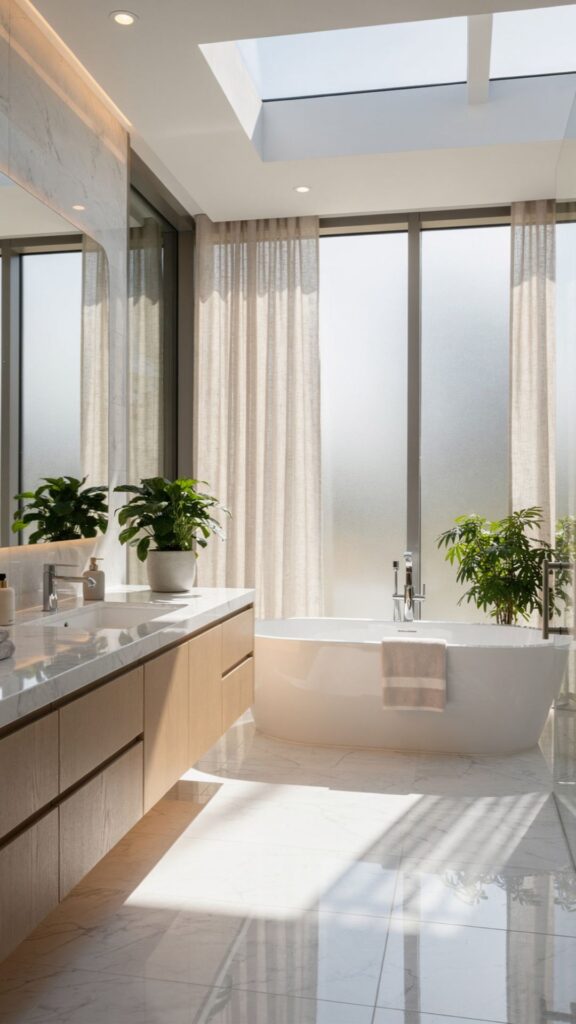
No artificial lighting can fully replicate the quality of natural daylight, and yet most bathroom renovation guides focus entirely on fixtures. Natural light improves mood, accurately renders colors, reduces eye strain, and makes any bathroom feel larger and more inviting. If your bathroom has any access to natural light a window, skylight, or glass block panel optimizing it should be your first priority before adding any electrical fixtures.
Skylights are the gold standard for bathrooms that lack exterior wall windows. A tubular skylight (also called a sun tunnel or solar tube) is especially useful in interior bathrooms with no exterior wall access. These devices capture sunlight on the roof and channel it through a reflective tube directly into the bathroom ceiling, mimicking the effect of a natural window. They’re far less expensive than traditional skylights, require minimal structural work, and deliver impressive amounts of daylight even on overcast days.
For bathroom lighting Ideas with existing windows, the challenge is balancing natural light with privacy. The most elegant solution is frosted or textured window glass that allows light transmission while blocking visibility. This eliminates the need for heavy window treatments that block light.
Another option is top-down/bottom-up blinds that let you expose the upper half of the window (for light) while keeping the lower half covered (for privacy). This approach is common in Scandinavian bathroom design and works exceptionally well.
Reflective surfaces amplify natural light throughout the space. Large mirrors, glossy tiles, and light-colored walls all bounce daylight deeper into the room. If your bathroom only has one small window, positioning a large mirror on the opposite wall can effectively double the perceived light in the space. This principle using reflection to distribute natural light is one of the most cost-effective lighting improvements you can make without touching a single electrical outlet.
Keep This in Mind: White Bathroom Ideas That Show How Beautiful Lighting Can Make Your Bathroom Glow Beautifully
Shower Lighting:
Safety, Ambiance, and Waterproofing Done Right
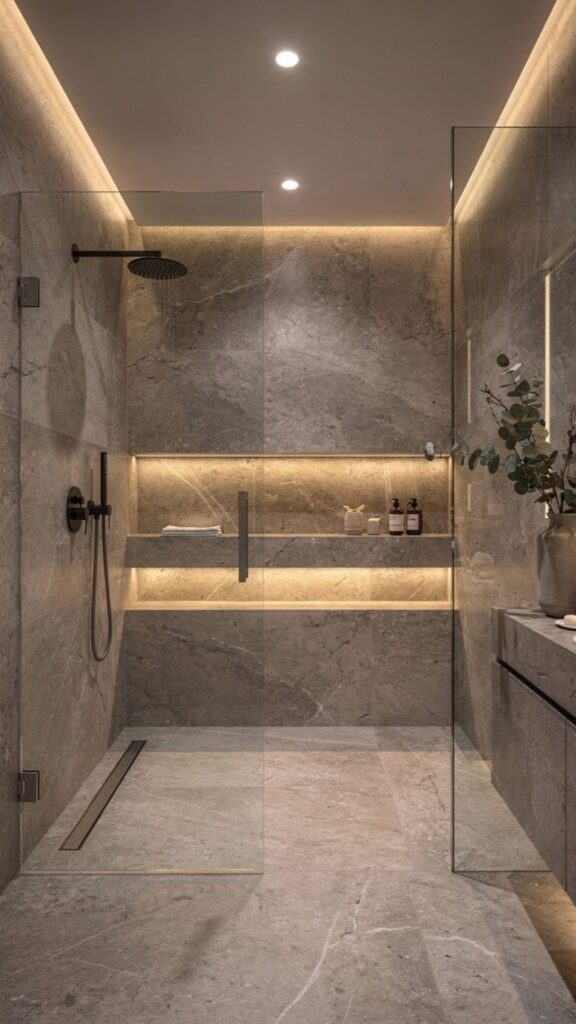
Shower lighting is a technically demanding area that combines electrical safety, waterproofing requirements, and aesthetic goals. Most bathrooms default to a single recessed light directly above the shower which works functionally but misses a significant opportunity. A well-lit shower isn’t just brighter; it feels like a private spa, and it’s also safer, helping you identify slip hazards and see clearly when using razors or reading shampoo labels.
The baseline requirement for any shower light is an IP65 or higher wet-location rating. This means the fixture is sealed against water jets and moisture infiltration. In the United States, the National Electrical Code (NEC) requires wet-location-rated fixtures for any light installed within the shower zone. Many homeowners don’t realize that a standard damp-location recessed light even one marketed as “bathroom safe” is not code-compliant inside a shower enclosure. Always verify the IP rating on the product specification sheet.
Beyond a single overhead can, consider adding a recessed niche with integrated lighting inside the shower wall. A lit shower niche does double duty: it provides storage for shampoo and soap while emitting a soft, directional glow that adds depth and dimension to the shower space. Some designers also install a small LED strip along the base of the shower bench or along the curb, creating an underlighting effect that is both atmospheric and practical for nighttime showers.
Color temperature matters significantly in the shower. Many people instinctively choose cool white (5,000K–6,500K) because it feels “bright and clean,” but this choice can feel harsh, especially in the morning. A warm-to-neutral white (3,000K–4,000K) provides excellent visibility while feeling more relaxing. If you want the best of both worlds, install a dimmable, color-tunable LED fixture that lets you choose between an energizing cool light in the morning and a soothing warm glow in the evening.
Statement Pendant Lights:
Adding Personality Above the Vanity
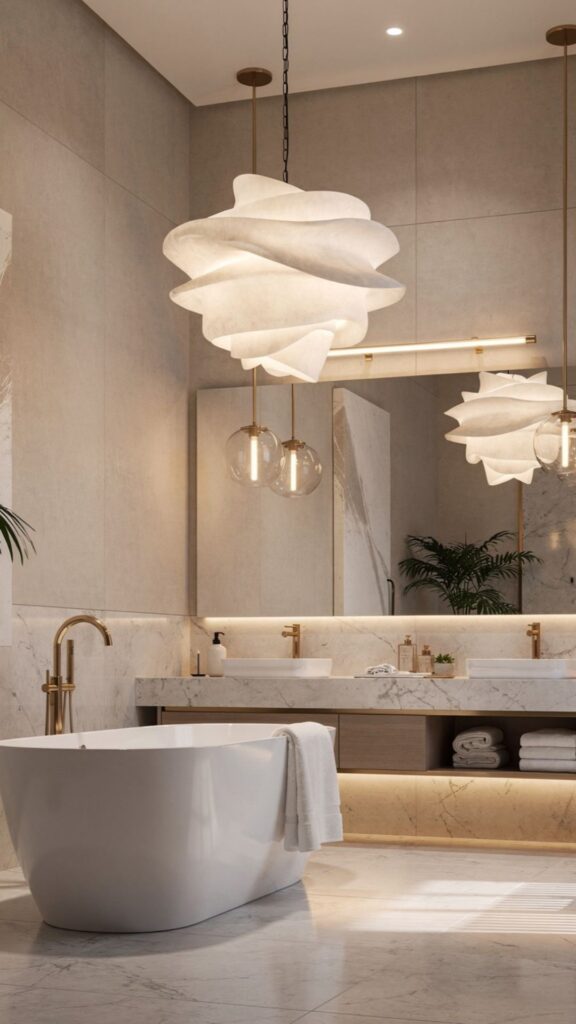
Pendant lights above a bathroom vanity are one of the most visually distinctive choices you can make and yet they remain relatively uncommon, which means using them immediately sets your bathroom apart. In double-vanity bathrooms with 8-foot or higher ceilings, a pair of pendant lights flanking the mirror delivers a boutique hotel quality that no standard bar light can match. The key is hanging them at the right height: approximately 60–65 inches from the floor to the bottom of the shade, aligning them with eye level.
Choosing the right pendant style depends on your bathroom’s overall design language. For a modern or industrial bathroom, exposed-bulb pendants with Edison or globe bulbs add texture and warmth. For a transitional or classic bathroom, drum shades or globe pendants in matte black, brushed gold, or polished nickel create an elegant focal point. For a coastal or organic bathroom, woven rattan or ceramic pendants add natural warmth. The fixture finish should ideally repeat at least one other metal tone already present in the bathroom faucets, towel bars, or hardware.
One important consideration with pendants is moisture and ventilation. Unlike in kitchens or dining rooms, bathroom pendants are exposed to elevated humidity levels every day. Choose pendants with shades made from glass, ceramic, or metal rather than fabric, which can absorb moisture, develop mildew, and degrade quickly. Also ensure the pendant is installed outside the wet zone (at least 3 feet from the shower or tub) and that your bathroom has adequate ventilation to prevent prolonged humidity buildup.
From a future design perspective, the pendant-above-vanity trend is accelerating. As bathrooms evolve into personal wellness spaces rather than purely utilitarian rooms, decorative lighting is becoming a priority rather than an afterthought. Investing in a well-chosen statement pendant now is a decision that will still feel current in 10 years and it significantly increases the perceived value of your bathroom during a home appraisal or sale.
Dimmer Switches and Smart Controls:
Lighting That Adapts to You
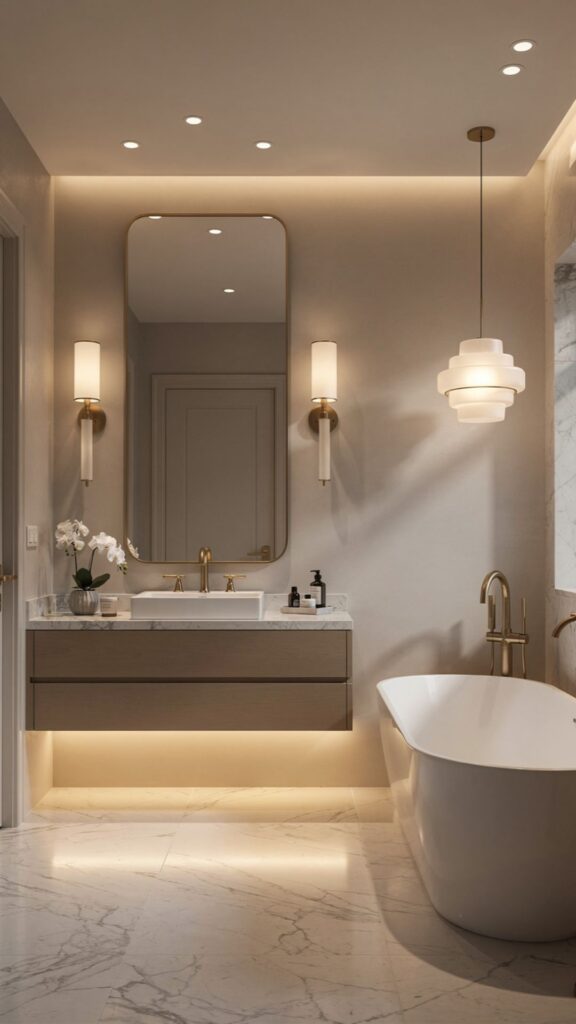
Installing dimmer switches is arguably the highest-return-on-investment upgrade you can make to an existing bathroom lighting setup. A dimmer costs between $15 and $60, takes under an hour to install, and fundamentally changes how your bathroom functions. With a dimmer, the same fixtures that provide bright, efficient light during your morning routine can shift to a soft, candlelit glow for an evening bath. This single change transforms a bathroom from a static, single-purpose room into a genuinely flexible space.
The most important technical detail when adding dimmers is LED compatibility. Not all LED bulbs are dimmable, and even dimmable LEDs can flicker, buzz, or have a limited dimming range if paired with the wrong dimmer switch. Always check the bulb manufacturer’s compatibility list or look for a dimmer specifically designed for LED loads. Brands like Lutron Caseta and Leviton offer LED-compatible dimmers that are widely trusted by electricians and interior designers alike.
Smart lighting controls take dimming to the next level. Systems like Lutron Caseta, Philips Hue, or LIFX allow you to control bathroom lights through a smartphone app, voice commands (Alexa, Google, Siri), or pre-programmed schedules.
You can set your bathroom lights to gradually brighten 15 minutes before your alarm goes off simulating a sunrise and making waking up significantly easier. You can program a “night mode” that triggers dim, warm light anytime someone enters after 10 PM, protecting sleep quality by minimizing blue light exposure.
Motion sensors paired with smart lighting are especially useful in shared bathrooms or family homes. A motion-activated low-glow night light eliminates the blinding experience of turning on full bathroom lights at 3 AM. Some smart switches also track usage patterns and adjust schedules automatically over time. These intelligent systems represent the future of home lighting and starting with your bathroom lighting ideas is a natural, contained way to explore smart home technology without a full-house commitment.
This Changes Everything: Black Bathroom Ideas That Prove How the Right Lighting Can Transform Your Whole Bathroom Look
Accent and Decorative Lighting:
The Final 10% That Makes 100% Difference
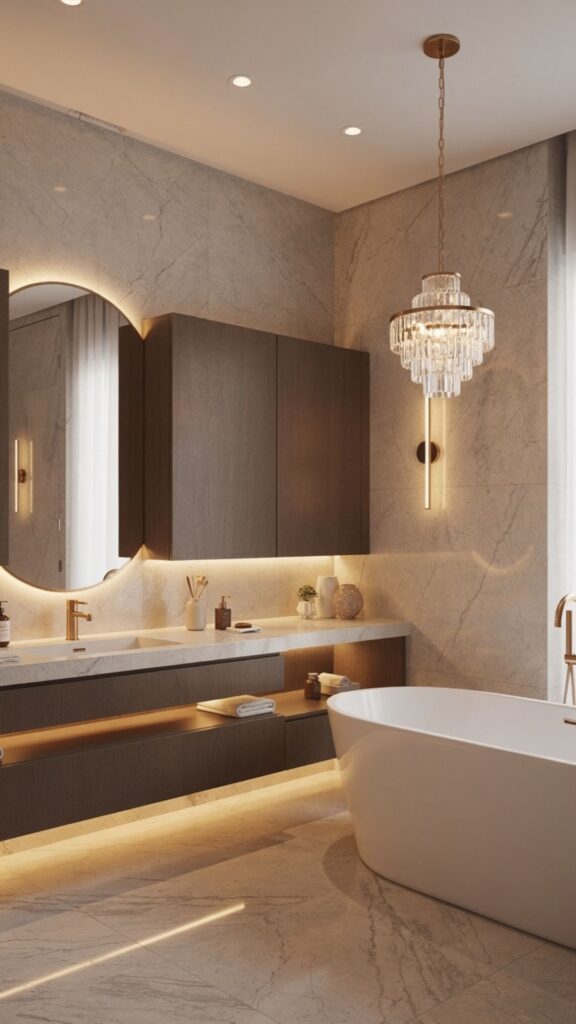
Accent lighting in bathrooms is the design detail that separates a professionally finished space from a standard one. It doesn’t provide the primary illumination that’s the job of ambient and task lights. Instead, accent lighting draws attention to architectural features, creates visual interest, and contributes to the overall mood of the room. Think of it as the jewelry of your bathroom’s lighting scheme: subtle, intentional, and powerful.
Recessed picture lights or directional spotlights can highlight a textured feature wall, a piece of art, or a decorative tile installation. If you’ve invested in a beautiful stone or handcrafted tile wall, a small directional spotlight brings out the texture and color in a way that standard overhead lighting simply cannot. This technique is used extensively in luxury hotel bathrooms and spa environments and it’s entirely achievable in a residential setting with relatively modest fixture investment.
Candlelight is the original accent light, and for good reason: warm, flickering light is deeply calming and universally flattering. While you may not want real candles in your daily routine, high-quality flameless LED candles with realistic flicker modes deliver virtually the same visual warmth and ambiance without fire risk. Grouped in odd numbers (3 or 5) on a ledge, windowsill, or tub surround, they add an organic, spa-like quality that no electrical fixture can fully replicate.
Finally, don’t overlook the impact of lit artwork or decorative mirrors with integrated lighting. A mirror with a warm-glow frame or a small piece of illuminated wall art adds a layer of personality that transforms the bathroom from a functional room into a personal sanctuary. As bathrooms increasingly double as wellness retreats, self-care spaces, and even places for meditation or morning mindset rituals, decorative lighting is no longer a luxury it’s an essential part of a thoughtfully designed home.
Conclusion
Great bathroom lighting ideas go far beyond picking a fixture at a hardware store they require thinking in layers, understanding color temperature, prioritizing safety ratings, and embracing technology that makes your space work smarter. From vanity lighting that eliminates shadows to smart dimmers that protect your sleep cycle, every idea in this guide has the power to meaningfully improve how your bathroom looks and functions.
Start with one upgrade whether it’s a backlit mirror, an LED strip under the vanity, or a simple dimmer switch and experience the difference firsthand. The right light changes everything.

Team TrandyVilla is the passionate home decor team behind Trandy Villa, where style meets comfort in everyday living. The team loves transforming simple spaces into beautiful, functional homes through smart ideas, budget-friendly hacks, and modern design trends. Their content focuses on helping readers create homes that feel both stylish and personal without spending too much.