
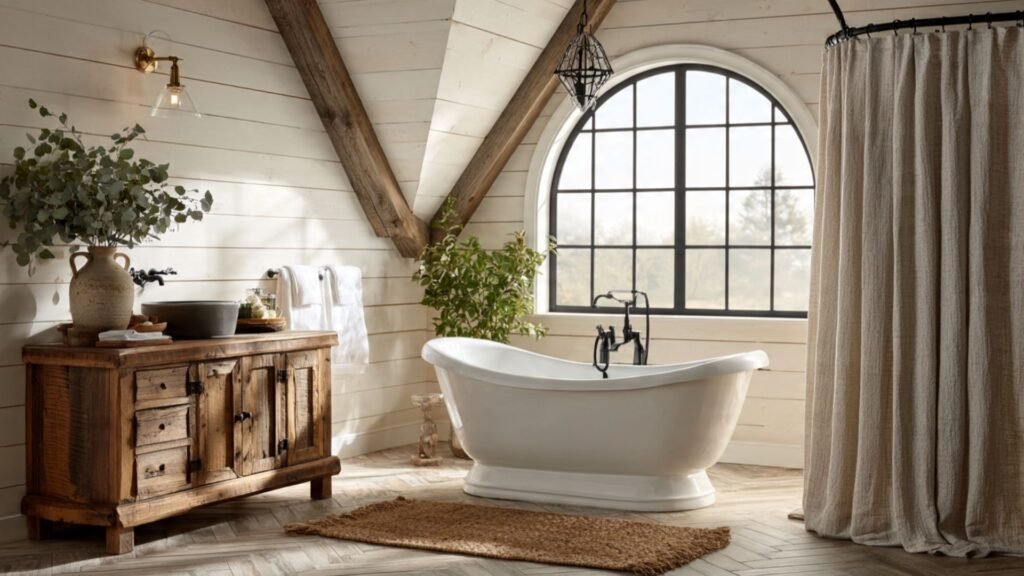
A Farmhouse Bathroom combines rustic charm with modern comfort. It uses natural materials, simple colors, and practical features. Farmhouse Bathroom Ideas focus on warmth, storage, texture, and timeless style. They help create a cozy, functional, and welcoming space.
Farmhouse Bathroom brings warmth, charm, and comfort to everyday living. It blends rustic details with modern function for a balanced look. This design style creates a relaxing retreat with natural textures, classic finishes, and practical features that never go out of style.
Farmhouse Bathroom Ideas include shiplap walls, vintage vanities, open shelving, and soft neutral colors. Natural wood, black hardware, and woven accents add character. These ideas improve both style and function while creating a bright, comfortable, and inviting bathroom.
Shiplap Accent Walls:
The Farmhouse Signature Move
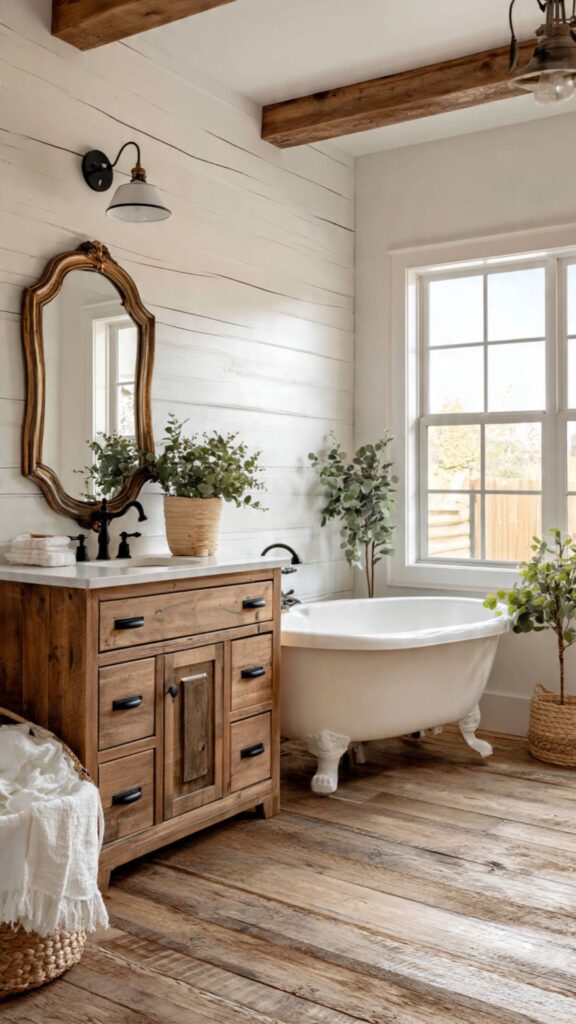
Shiplap is arguably the most recognizable element in farmhouse bathroom design, and for good reason it adds instant texture, warmth, and architectural character to an otherwise plain wall. When applied to a single accent wall behind a freestanding tub or vanity, it frames the space without overwhelming it. Painted in a crisp white or soft off-white like Benjamin Moore’s “White Dove,” shiplap reflects light beautifully in smaller bathrooms. For a bolder statement, a warm sage green or navy shiplap creates contrast that feels curated, not accidental.
What most design guides miss is that shiplap placement matters as much as the material itself. A horizontal installation on a short wall makes a low ceiling feel wider; vertical boards on a narrow wall draw the eye upward and add visual height. The spacing between boards called the reveal is typically 1/8 inch, but going slightly wider at 1/4 inch gives a more relaxed, authentic farmhouse look. If you’re on a budget, beadboard paneling achieves a very similar effect at a fraction of the cost and installs over existing tile or drywall.
From a practical standpoint, shiplap in bathrooms requires moisture-resistant priming and at least two coats of semi-gloss or satin paint to protect against humidity. MDF shiplap is the most affordable option but needs a primer specifically formulated for high-moisture environments. Real pine or cedar shiplap costs more but adds a subtle grain texture that reads as genuinely rustic rather than manufactured. Either way, sealing the seams and top edge prevents water infiltration, which is the number one failure point for shiplap bathroom installations.
Looking ahead, textured wall treatments are trending toward dimensional plaster and limewash finishes that complement shiplap beautifully without competing with it. Designers are now layering limewash-painted shiplap for a finish that looks decades old in the best possible way lived-in, warm, and uniquely personal. This layered approach adds depth that no single-finish wall can replicate.
Freestanding Clawfoot Tub:
A Timeless Farmhouse Centerpiece
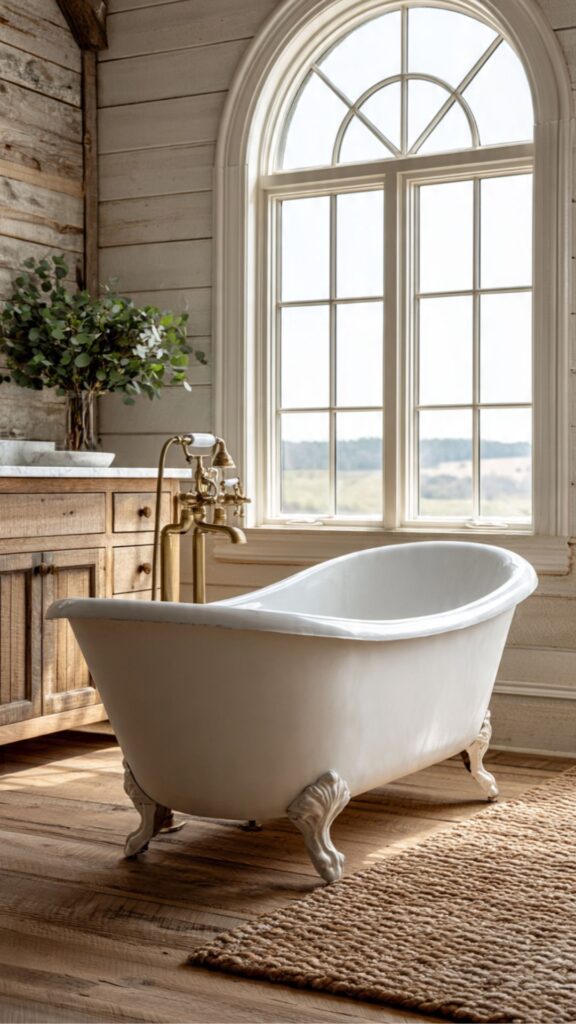
A freestanding clawfoot bathtub is the undisputed statement piece of the farmhouse bathroom. It commands attention while simultaneously evoking the simplicity and craftsmanship of an earlier era. Cast iron clawfoot tubs retain heat exceptionally well far better than acrylic making every bath feel more luxurious. Positioned under a window or centered against a shiplap wall, it becomes the room’s natural focal point without requiring additional décor to justify its presence.
The revival of clawfoot tubs in modern farmhouse design reflects a broader cultural shift toward slowness and intentionality. Homeowners are choosing baths that feel like an experience rather than a utility. For smaller bathrooms, a slipper tub a clawfoot style with one raised end fits in tighter spaces and still delivers the visual impact of its larger counterparts. Paired with a floor-mounted tub filler in an oil-rubbed bronze or matte black finish, the combination of old-world silhouette and contemporary hardware feels fresh without feeling forced.
One consideration that’s rarely discussed is floor reinforcement. Cast iron clawfoot tubs can weigh between 250 and 500 pounds when filled with water, so older homes may require subfloor reinforcement before installation. Always consult a structural engineer or experienced contractor before committing to a cast iron option. If weight is a concern, high-quality acrylic versions are available that mimic the look closely and weigh significantly less around 100 pounds making them suitable for most floor structures without modification.
For a future-forward take, soaking tubs with a farmhouse silhouette but integrated chromatherapy lighting or jetted systems are growing in popularity. These hybrid options satisfy the aesthetic desire for vintage charm while meeting modern expectations for wellness-focused design. Brands like Barclay Products and American Standard offer models that bridge both worlds elegantly, and the price range is wider than most people expect from around $600 for acrylic to $3,000+ for cast iron with custom feet finishes.
A Must Bookmark: Farmhouse Kitchen Ideas That Share the Same Warm and Rustic Charm as Your Beautiful Farmhouse Bathroom
Barn Door Bathroom Entryways:
Space-Saving Style
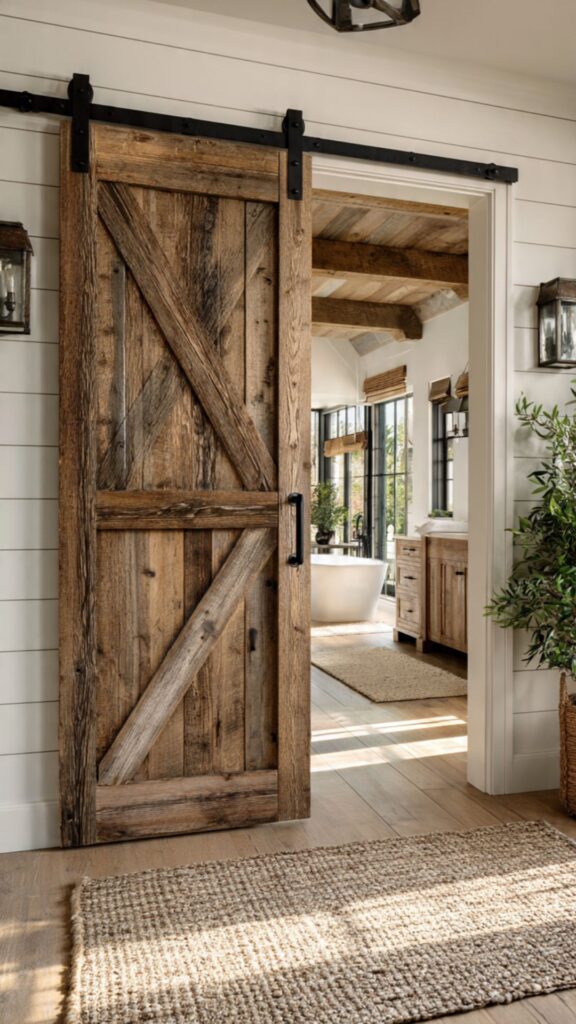
A sliding barn door on a bathroom entryway is one of the most practical and visually impactful farmhouse upgrades you can make, especially in tight hallways where a swinging door eats into usable space. The visual language of a barn door exposed hardware, natural wood grain, bold rollers signals the farmhouse aesthetic immediately and sets the tone for everything inside the room. In a neutral-colored bathroom, a warm-toned reclaimed wood barn door adds exactly the organic texture that keeps the space from feeling sterile or overly polished.
The hardware finish matters enormously here. Matte black barn door hardware is the most popular choice in contemporary farmhouse design, offering a clean contrast against natural or painted wood without the cold feeling of chrome or nickel.
However, antique bronze or iron hardware reads as more authentically vintage and pairs particularly well with rooms that lean into a more traditional farmhouse aesthetic rather than the “modern farmhouse” trend popularized by Joanna Gaines. The choice between the two ultimately reflects whether you want the room to feel curated or casually collected.
One thing most guides overlook: privacy is a legitimate concern with barn doors. Unlike traditional hinged doors, barn doors don’t fully seal the door frame, which means light and some sound can travel around the edges. For a primary bathroom, this may be a dealbreaker unless you install a privacy latch and use a door slightly wider than the frame opening.
For a powder room or guest bath, the visual payoff often outweighs the minor privacy limitation. Frosted glass barn doors solve this problem elegantly they block sight lines while still allowing light to pass through, keeping the space feeling open.
Custom barn doors built from reclaimed wood, corrugated metal panels, or even repurposed shutters are increasingly popular among design enthusiasts who want something truly one-of-a-kind. Salvage yards and architectural antique dealers are excellent sources for raw materials that can be transformed into stunning barn doors with just a saw, sandpaper, and a coat of finishing oil. This DIY approach can reduce costs dramatically while producing a door with genuine character and provenance.
Vintage-Inspired Vanities:
Farmhouse with a Collected Feel
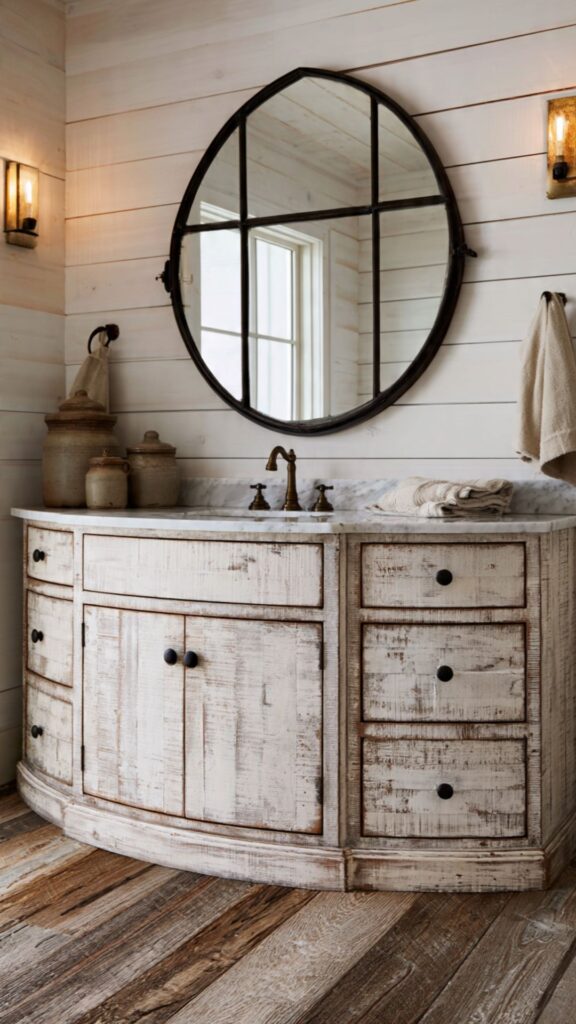
A farmhouse bathroom vanity should look like it has a story not like it came off a showroom floor yesterday. The most successful vanity choices in farmhouse design are either genuinely vintage pieces converted for bathroom use or new furniture built to replicate that aged, handcrafted quality.
A converted antique dresser with a vessel sink on top is the classic example: it introduces natural wood grain, irregular proportions, and patina that no factory-made vanity can fully imitate. Add plumbing and a marble or butcher block top, and you have a piece that anchors the entire room.
When shopping for vintage vanities, look specifically at pieces from the late 19th and early 20th century Eastlake, Arts and Crafts, and early Colonial Revival styles translate beautifully into farmhouse bathrooms. These pieces often feature carved details, tapered legs, and dovetail drawer construction that modern vanities simply don’t offer at any price point. Habitat for Humanity ReStores, estate sales, and online marketplaces like Facebook Marketplace are consistently the best sources for undervalued vintage furniture with genuine farmhouse character.
For those who prefer new construction with a vintage look, companies like Pottery Barn, Magnolia Home (through Wayfair), and Signature Hardware offer farmhouse vanities with furniture-style bases, open shelving, and distressed finishes.
However, be cautious about vanities with particleboard or MDF construction in high-humidity environments they can warp and swell without proper sealing. Solid wood or plywood box construction with dovetail joints is significantly more durable for bathroom use and worth the investment premium.
The future of farmhouse vanities is moving toward mixed materials a natural wood base with a concrete, unlacquered brass, or hand-hammered copper sink. These combinations feel organic without being predictable, and they introduce a level of handcraft authenticity that mass-produced vanities can’t match. Stone vessel sinks in particular are gaining traction in high-end farmhouse bathrooms for their sculptural quality and the way they contrast beautifully with weathered wood bases.
Subway Tile with a Twist:
Classic Meets Character
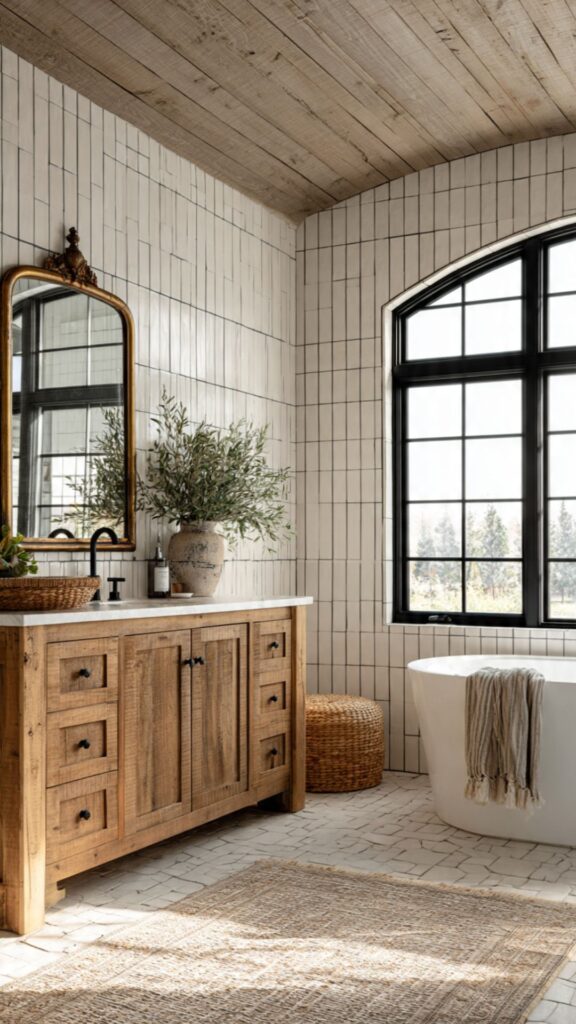
Subway tile has been a bathroom standard for over a century, but farmhouse design gives it new life by playing with layout, grout color, and scale in unexpected ways. The traditional 3×6 white subway tile in a running bond pattern is beautiful, reliable, and always appropriate but it’s also everywhere. The farmhouse approach pushes beyond the default: vertical subway tile installation makes low ceilings feel taller, offset brick patterns add movement, and herringbone arrangements introduce an artisanal quality that standard layouts can’t achieve.
Grout color is where farmhouse bathrooms really differentiate themselves. Dark grout charcoal, slate, even black on white subway tile creates a graphic, high-contrast look that emphasizes the grid pattern and reads as intentional rather than dated. Warm gray or greige grout softens the look while still providing definition.
Avoid bright white grout in farmhouse bathrooms: it disappears visually and doesn’t contribute to the warm, slightly imperfect aesthetic that defines the style. Unsanded grout works for joints under 1/8 inch; sanded grout is required for wider spacing and is actually preferable in farmhouse design because it has a more textural, handmade quality.
Beyond the standard 3×6, elongated subway tiles (4×12 or even 4×16) in a stacked vertical pattern are one of the most underused options in farmhouse bathroom design. They have a more architectural, almost art deco quality that layers well with natural wood vanities and black iron hardware.
Handmade ceramic subway tiles from companies like Heath Ceramics or Fireclay Tile introduce the slight size variations and surface imperfections that machine-made tile can’t replicate each tile is marginally different, and that variation is precisely what creates depth and warmth in a tiled space.
A growing trend is combining subway tile wainscoting (tile from floor to approximately 60 inches) with a contrasting wall treatment above shiplap, limewash plaster, or textured wallpaper. This layered approach divides the wall into two zones of visual interest and prevents the all-tile look from feeling too clinical or cold. It also solves the practical challenge of tiling an entire wall while keeping costs manageable by limiting tile coverage to the moisture-prone lower half of the room.
Farmhouse Bathroom Lighting:
Warm Glow Over Overhead Glare
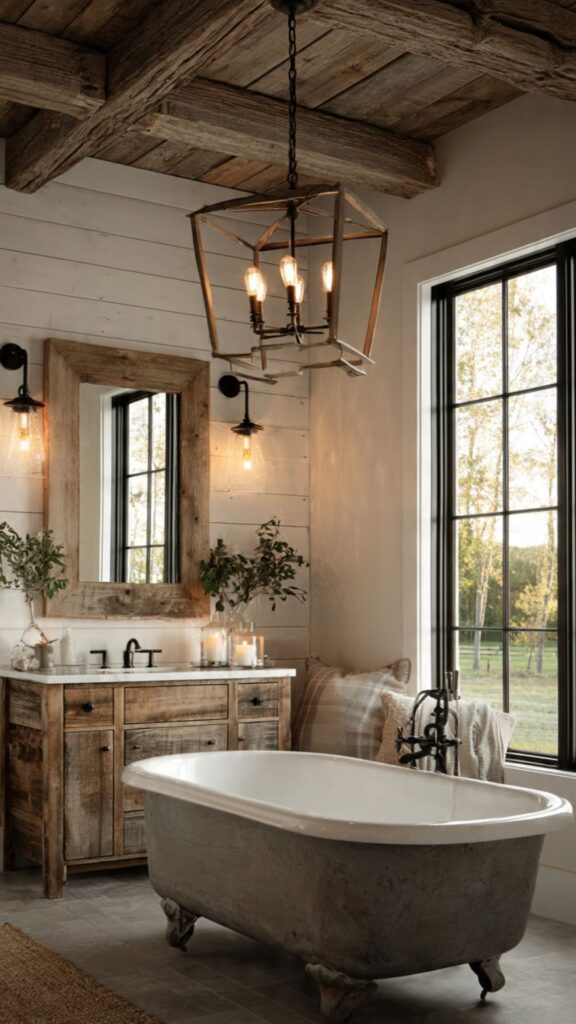
Lighting is the most underestimated element in farmhouse bathroom design, and it’s the one that most significantly affects how the entire room feels. Overhead recessed lighting creates flat, unflattering illumination that strips warmth out of even the most beautifully designed spaces. Farmhouse bathrooms benefit enormously from layered lighting: a central overhead fixture for ambient light, wall sconces flanking the mirror for task lighting, and accent lighting inside open shelving or under a floating vanity for depth and warmth.
The fixtures themselves should look like they belong in an old farmhouse or industrial building Edison bulbs in wire cage pendants, milk glass sconces, schoolhouse globe lights, or lantern-style vanity bars in black iron or aged bronze.
These fixtures are widely available at multiple price points and have an inherent honesty about them: they don’t try to be minimalist or futuristic, they simply reference a time when things were made to last and look handsome doing it. Restoration Hardware, Schoolhouse Electric, and even IKEA (with their TRÅDFRI smart bulb system) all offer options in this aesthetic family.
Bulb selection matters as much as fixture design. Farmhouse bathrooms should use bulbs in the 2700K–3000K color temperature range warm white, never cool or daylight. An Edison-style filament bulb at 2700K inside a wire cage pendant gives off light that feels almost like candlelight, which is the atmospheric effect most farmhouse bathroom designers are chasing. LED versions of these bulbs are now indistinguishable from incandescent at distance and use 80% less energy, making the choice between aesthetics and efficiency a non-issue.
The underrated move is a dimmer switch for every lighting circuit in the bathroom. A dimmer transforms a functional bathroom into a spa-like retreat with a single gesture. Most LED bulbs are dimmable now, but verify compatibility before purchasing some flicker or buzz with certain dimmer models.
Lutron’s Caseta dimmer system works reliably with a wide range of LED bulbs and can be integrated into smart home ecosystems for added convenience, which is increasingly relevant as homeowners renovate with long-term resale value in mind.
Open Wooden Shelving:
Display and Function Combined
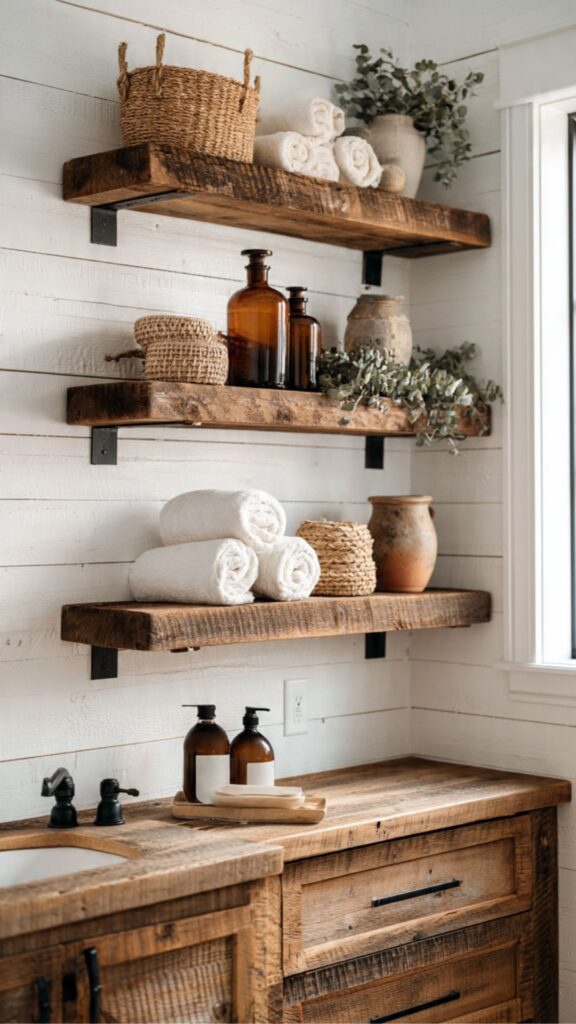
Open shelving in farmhouse bathrooms performs double duty it provides accessible storage while also functioning as a display space for the textures, vessels, and objects that give the room its personality. Where a medicine cabinet hides everything behind a mirror, open shelving invites curation: folded Turkish towels in natural linen tones, a mason jar of cotton balls, a small potted succulent, a vintage apothecary bottle repurposed for liquid soap. The arrangement should look effortless but is actually quite deliberate.
The material choice for shelving significantly impacts the overall aesthetic. Solid pine or Douglas fir with a clear matte finish or light natural stain is the most authentic farmhouse option it has visible grain, minor knots, and the kind of warmth that painted MDF simply can’t deliver.
Reclaimed wood from old barns, factories, or warehouses adds the most character; each plank carries its own history of nail holes, weathering, and color variation. For a more refined look, white oak with a simple oil finish reads as farmhouse with a Scandinavian influence cleaner and more architectural than classic American farmhouse but still warm and natural.
Floating shelf brackets in black iron pipe or hand-forged steel are the hardware choice that most effectively bridges rustic and industrial within the farmhouse aesthetic. Pipe shelving in particular has become an enduring farmhouse staple because it’s adjustable, visually honest about its construction, and available as a DIY kit that most homeowners can install in a weekend. The exposed pipe adds a touch of character that standard shelf brackets can’t match, and it’s proportionally appropriate even in smaller bathrooms when scaled correctly.
From a storage optimization standpoint, open shelving works best when combined with at least one closed storage solution a vanity with drawers, a linen closet, or a wicker basket underneath the bottom shelf. This combination keeps everyday clutter out of sight while maintaining the curated, open-air quality that makes farmhouse shelving so visually appealing. The rule of thumb used by professional farmhouse stylists: leave 30% of shelf space intentionally empty so the eye has room to rest between displayed objects.
Grab This Idea Now: Bathroom Double Vanity Ideas That Look Absolutely Stunning in a Classic Farmhouse Bathroom Style
Black Iron Hardware and Fixtures:
The Farmhouse Accent
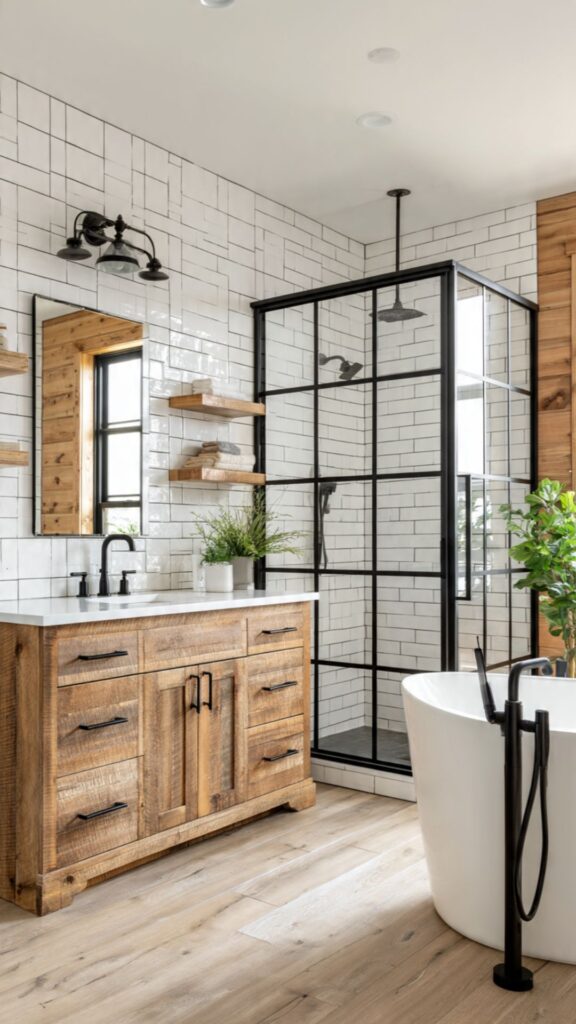
Matte black hardware is the detail that consistently elevates farmhouse bathrooms from pleasant to polished. Towel bars, toilet paper holders, robe hooks, cabinet pulls, and faucets in matte black finish have a visual weight that grounds the room and provides sharp contrast against white subway tile, shiplap, or light-colored vanities. The key to making black hardware work is consistency using the same finish on every metal element in the room, from the faucet to the mirror frame to the light fixtures. A mixed-finish bathroom reads as accidental; a single-finish bathroom reads as designed.
Matte black has largely overtaken oil-rubbed bronze as the dominant hardware choice in farmhouse design over the past five years, partly because it photographs beautifully and maintains a more contemporary edge than bronze. However, oil-rubbed bronze remains the superior choice in bathrooms that lean toward a more traditional or Victorian farmhouse aesthetic, especially when paired with clawfoot tubs and ornate mirrors. It has a depth and warmth that matte black lacks the finish actually reveals the metal’s underlying color variations through its rubbed highlights, making each piece unique.
The most impactful single hardware upgrade for any farmhouse bathroom Ideas is replacing the faucet. A widespread faucet in matte black or oil-rubbed bronze immediately reads as an intentional design choice and upgrades the perceived quality of even a basic vanity. Bridge faucets with a horizontal bar connecting the hot and cold handles are particularly well-suited to farmhouse bathrooms because of their vintage proportions and classic silhouette. Delta Faucet, Moen, and Kohler all offer excellent bridge faucet options in both finishes at price points from moderate to premium.
An often-overlooked hardware opportunity: the toilet paper holder and towel hooks. These are the smallest hardware pieces in the room, but they’re also the most frequently touched and closely examined. Choosing a hand-forged or cast iron version of these pieces available from small-batch makers on Etsy and specialty hardware companies adds a level of authenticity and craftsmanship that the mass-produced alternatives simply can’t replicate. The cost difference is often less than people expect, and the visual and tactile upgrade is significant.
Farmhouse Bathroom Mirrors:
Statement Framing
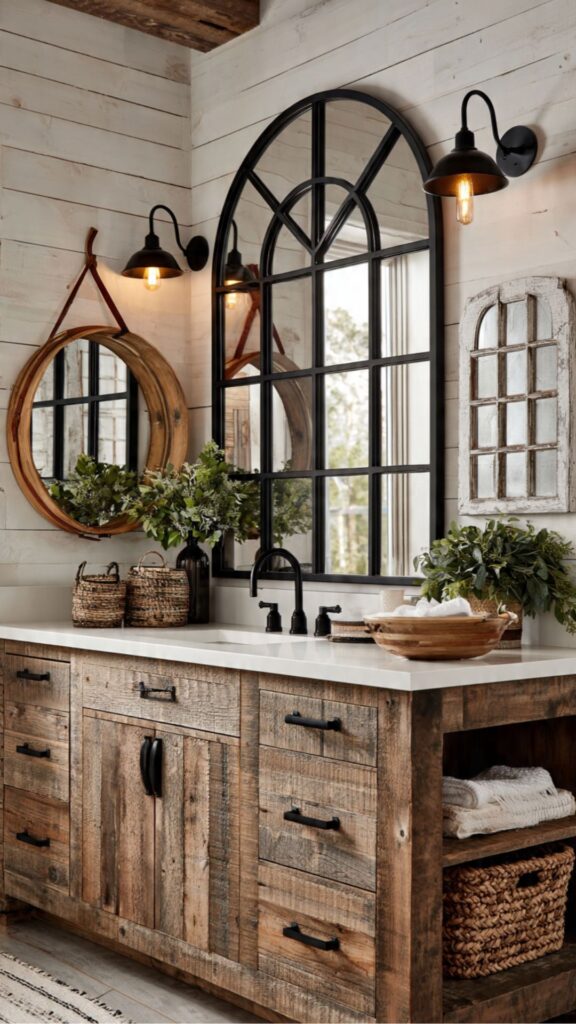
The mirror in a farmhouse bathroom is an opportunity to introduce character, craft, and architectural scale that transcends its functional purpose. A basic frameless mirror does the job but adds nothing to the room’s personality. By contrast, a mirror with a frame in reclaimed wood, wrought iron, rope, or distressed white paint becomes a piece that anchors the vanity, grounds the wall, and ties together the room’s visual narrative. Scale is critical: the mirror should fill the visual space above the vanity without crowding the light fixtures or touching the ceiling.
Window-pane mirrors large multi-pane frames that reference old factory windows or divided-light barn doors are one of the most distinctively farmhouse mirror styles and one that creates the most architectural impact. They work particularly well in bathrooms with high ceilings, where their vertical proportions and structural grid lines add dimension and visual complexity. A single 36×48 inch window-pane mirror over a double vanity reads as both functional and genuinely beautiful, especially when flanked by wall sconces at eye level.
Round mirrors in farmhouse bathrooms are a contemporary counterpoint to the rectangular, horizontal lines that dominate most bathroom architecture. A 30- or 36-inch round mirror in a thick rope frame, a hammered metal surround, or a distressed wood ring frame introduces organic softness that prevents the room from feeling too rigid or grid-like. This works especially well in bathrooms with straight-line shiplap, square subway tile, and angular vanities the circle breaks the pattern and draws the eye in a way that rectangular mirrors simply don’t.
Repurposed windows and architectural salvage pieces make extraordinary farmhouse bathroom mirrors that can’t be purchased in any store. Old factory windows with original wavy glass, barn windows with divided panes, and even antique door frames with mirror inserts are all options that turn an ordinary wall into a conversation piece. The wavy, imperfect quality of old glass actually enhances the farmhouse aesthetic it reflects light in a softer, more diffused way than modern float glass, adding warmth that precision manufacturing can’t reproduce.
Neutral Color Palettes with Warm Undertones:
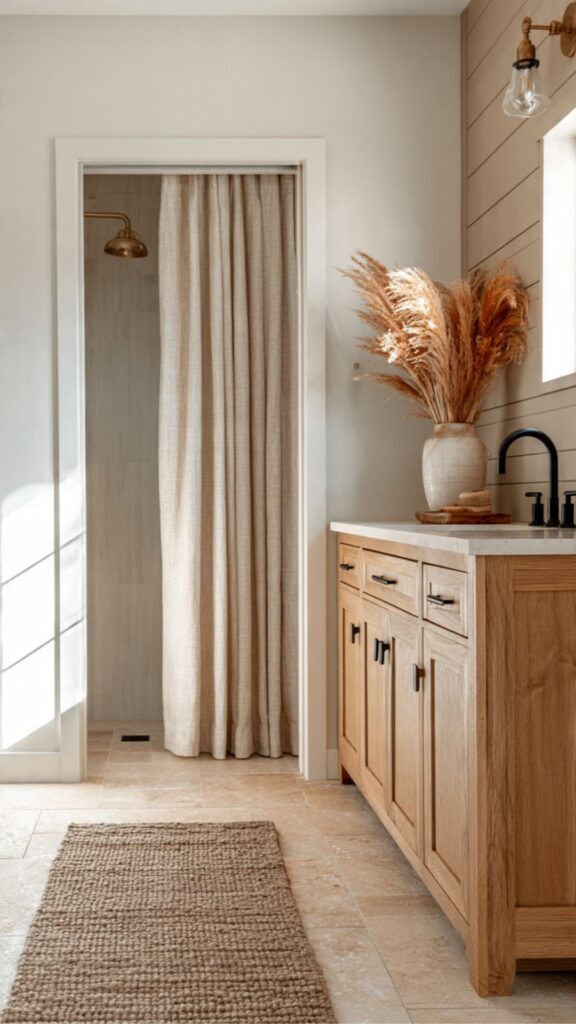
The color palette of a farmhouse bathroom should feel as though the earth and sky contributed equally to its creation. Whites, creams, warm grays, sage greens, dusty blues, and natural linens are the core colors of the farmhouse palette, and they work because they reference the natural world without forcing it. The critical distinction is undertone: farmhouse bathrooms use whites and grays with warm yellow, red, or green undertones never cool blue or violet undertones, which read as more contemporary or Scandinavian than classically American farmhouse.
Benjamin Moore’s “Chantilly Lace” is a cooler white that works in farmhouse spaces with abundant natural light. For rooms with less natural light or northern exposure, warmer options like “White Dove” (OC-17) or Sherwin-Williams “Antique White” provide the creamy warmth that keeps the space from feeling clinical. Sage green particularly in the muted, grayish tones of Sherwin-Williams “Retreat” or Benjamin Moore “Pale Sage” has become one of the defining accent colors of contemporary farmhouse bathroom design, offering a connection to the natural world without the boldness of a fully saturated green.
The underused strategy in farmhouse color planning is the warm neutral layering approach: starting with a warm white base on walls and ceiling, introducing a second neutral in a slightly deeper or more saturated tone on the vanity or built-ins, and then grounding everything with natural wood and matte black accents. This three-layer approach creates visual depth and dimensional warmth that a single-color palette can never achieve. It’s how professional farmhouse designers create rooms that look layered and considered rather than simply “painted and furnished.”
One forward-looking color trend in farmhouse bathroom design is the introduction of dark, moody tones charcoal, deep forest green, black applied in a selective, strategic way. A vanity painted in a deep charcoal green, a ceiling painted in a warm black, or an accent wall in a deep navy creates unexpected drama that still feels cohesive with farmhouse materiality. When paired with natural wood, white subway tile, and warm lighting, these darker tones read as sophisticated farmhouse rather than gothic or contemporary a distinction made entirely by the surrounding material choices.
Woven and Textile Accents:
Softness in the Right Places

Textiles are the element most often underweighted in farmhouse bathroom design, yet they’re the fastest and most affordable way to inject warmth, softness, and personal character. A jute bath mat brings immediate organic texture and warmth underfoot in a way that synthetic mats simply don’t.
Turkish cotton towels in natural linen tones, soft terracottas, or sage greens hung on iron hooks or a wooden ladder towel rack introduce color and softness without requiring any renovation work. These are the details that make a well-designed farmhouse bathroom feel genuinely lived-in rather than staged.
Linen window curtains in farmhouse bathrooms serve both function and aesthetic purpose. A simple unlined linen panel on a wrought iron rod softens the hard lines of tile, shiplap, and hardware while allowing filtered natural light to pass through the warm, diffused quality of linen-filtered sunlight is genuinely beautiful and almost impossible to replicate with artificial lighting alone. For privacy in street-facing windows, a white cotton café curtain on a tension rod at the lower half of the window provides coverage without blocking upper light.
Basket storage is another textile-adjacent element that farmhouse bathrooms handle particularly well. Woven seagrass, water hyacinth, or wicker baskets tucked under an open vanity or stacked on shelving provide concealed storage while contributing organic texture that plastic bins and chrome wire baskets can’t match. The slight imperfection of woven baskets the visible individual strands, the subtle color variation is precisely the quality that makes them feel authentic in a farmhouse context. Look for baskets with natural handles rather than metal hardware for the most cohesive look.
The most overlooked textile opportunity in farmhouse bathrooms is the ceiling. A simple white-painted bead board ceiling adds texture overhead and bounces warm light down into the room in a way that a flat painted ceiling doesn’t. For bathrooms with enough ceiling height, a tongue-and-groove wood ceiling in knotty pine, whitewashed cedar, or natural oak adds warmth and visual interest that dramatically changes the room’s atmosphere from functional bathroom to warm, enclosing retreat.
Farmhouse Bathroom Ideas Flooring:
Texture Underfoot
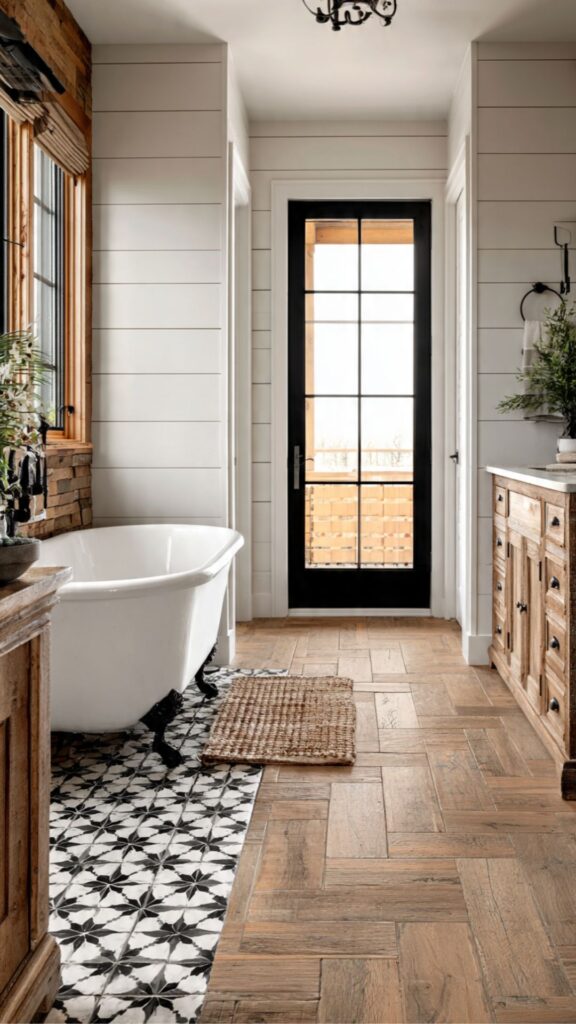
The floor is the largest visual surface in any bathroom and the one that most directly influences how the room feels underfoot and underfoot. Farmhouse bathrooms thrive with flooring that references natural materials: wide-plank wood-look porcelain tile, encaustic cement tiles in simple geometric patterns, hexagonal penny tiles in matte white or soft gray, or actual sealed hardwood for bathrooms with controlled humidity. Each of these options provides the warmth and visual texture that cold, shiny large-format porcelain slabs fundamentally lack.
Wide-plank wood-look porcelain is arguably the most practical farmhouse flooring option because it delivers authentic wood grain texture and warmth while being completely waterproof, scratch-resistant, and easy to maintain.
The best versions in this category from manufacturers like MSI, Marazzi, and Daltile are printed with such detail that they’re difficult to distinguish from real wood at a glance, with realistic knot patterns, grain variation, and subtle surface texture. For maximum authenticity, choose a format with visible plank-end variation and avoid tiles that repeat their pattern across the floor in an obvious way.
Encaustic cement tiles are the choice for farmhouse bathrooms with a European or Mediterranean farmhouse sensibility. Their hand-pressed manufacturing process produces slight surface variation and depth of color that machine-made ceramic tiles can’t replicate, and their geometric patterns diamonds, quatrefoils, simple stars and crosses reference centuries of handcraft tradition. They require sealing before use and annual resealing thereafter, but that maintenance investment produces a floor that only improves with age, developing a patina that mass-produced tile never achieves.
For authentic character and warmth, sealed solid hardwood remains the most beautiful farmhouse bathroom flooring option for those willing to manage its moisture sensitivity. Wide-plank white oak with a matte satin finish sealed with a water-based polyurethane or a hard wax oil performs reasonably well in bathrooms without standing water risk (no tub surround, careful shower management).
The key is proper subfloor waterproofing, adequate ventilation, and a commitment to drying the floor after wet use. For a powder room or half bath, hardwood is genuinely low-risk and adds warmth that no tile can rival.
Farmhouse-Style Shower Design:
Thoughtful and Functional
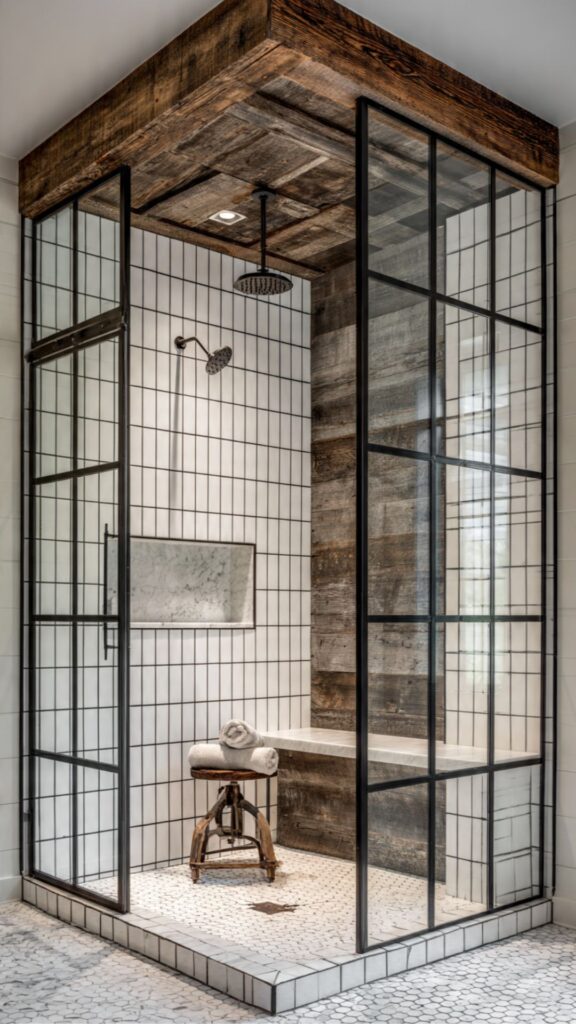
A farmhouse shower doesn’t need to be an elaborate wet room to be beautiful and functional it needs to feel intentional, warm, and connected to the rest of the room’s design language. Walk-in showers with minimal framing, dark grout subway tile walls, a built-in wood-look niche, and a rainfall showerhead in matte black encapsulate the farmhouse shower aesthetic without requiring architectural complexity.
The shower door (or lack thereof) matters enormously: a frameless glass door or an open walk-in design feels far more cohesive with farmhouse design than a chrome-framed sliding door, which reads as a different design era entirely.
Showerhead selection is a statement in farmhouse bathrooms. A large-format rainfall showerhead in matte black, positioned at ceiling height, creates the immersive, waterfall experience that defines luxury farmhouse bathing. Handheld showerheads in the same finish add flexibility for rinsing, cleaning, and accessibility needs.
For a more vintage farmhouse feel, exposed pipe shower systems where the supply pipe runs visibly along the wall and ceiling reference old plumbing aesthetics in a way that in-wall systems hide. Companies like Signature Hardware and Vintage Tub & Bath specialize in these exposed pipe systems and offer them in period-appropriate finishes.
The shower floor is an underdesigned surface in most bathrooms. Pebble tile small river stones set in a mosaic mesh is one of the most effective farmhouse shower floor choices because it introduces natural texture and organic variation that standard tile can’t provide. It also provides excellent slip resistance and creates a pleasant sensory underfoot experience that feels genuinely different from smooth tile. The grout lines between pebble tiles, when sealed properly, are no more difficult to maintain than standard grout and become part of the floor’s character over time.
An increasingly popular farmhouse shower detail is the integration of a teak or white oak shower bench or slotted floor mat. Sustainably sourced teak is naturally water-resistant and doesn’t require finishing for bathroom use; white oak for shower environments should be treated with a teak oil or Danish oil for moisture protection. Either material introduces a warmth of natural wood into the all-tile environment of the shower, creating a sensory and visual counterpoint that makes the space feel more spa-like and intentional.
One More Thing: White Bathroom Ideas That Perfectly Complement the Clean and Fresh Feel of Your Farmhouse Bathroom
Botanical and Natural Décor:
Living Elements

Nothing finishes a farmhouse bathroom like the presence of living plants and natural botanical elements. The farmhouse aesthetic is rooted in a deep connection to land and nature, and introducing actual plant life into the bathroom reinforces that connection in the most direct way possible.
High-humidity-tolerant plants pothos, ferns, air plants, ZZ plants, snake plants thrive in bathroom environments with moderate indirect light and can be displayed on open shelving, hanging from ceiling hooks, or placed on the windowsill. A trailing golden pothos on a high shelf, cascading down in the warm steam of a morning shower, adds a level of organic life that no decorative object can replicate.
Dried botanicals are the farmhouse bathroom’s most versatile decorative element because they require no maintenance, tolerate any light condition, and introduce color, texture, and a poetic sense of impermanence. A bundle of dried cotton stems, eucalyptus branches, dried lavender, or pampas grass arranged in a simple ceramic or wicker vase on the vanity introduces agricultural beauty that’s completely at home in the farmhouse context. These arrangements last for months to years and can be refreshed seasonally dried citrus slices, pine cones, and winter botanicals in cooler months; wildflowers and grass seed heads in warmer seasons.
Wooden accessories a teak soap dish, a bamboo toothbrush holder, a carved wooden bowl for jewelry or trinkets near the sink are the quiet natural elements that collectively make a farmhouse bathroom feel cohesive and considered. These pieces don’t need to match each other precisely; in fact, the slight variation of different wood species and tones (teak’s golden brown alongside bamboo’s lighter green-yellow, alongside a dark walnut bowl) creates the layered, collected quality that defines authentic farmhouse décor versus a showroom approximation of it.
For a more structured botanical approach, consider framed pressed botanical prints or herbarium specimens displayed in simple black or natural wood frames on the walls. Victorian botanical illustration widely available as public domain images references a scientific and horticultural tradition that fits perfectly with the farmhouse’s agricultural heritage. A grid of four matching frames above the toilet or beside the mirror introduces visual art without the pretension of fine art, which is exactly the unpretentious, genuine quality that farmhouse design is built on.
Farmhouse Powder Room:
Maximum Impact in Minimum Space

The powder room typically just a toilet and a small sink is the farmhouse bathroom idea that offers the highest return on design investment because its small footprint makes bold choices more accessible and more affordable than in larger rooms. What would be overwhelming in a master bath becomes perfectly calibrated in a 30-square-foot powder room: a dramatic dark wallpaper, a vessel sink on a rough-hewn wood bracket, a large ornate mirror, a wall-mounted iron sconce each of these moves would be too much in a big room but is exactly right in a small one.
Wallpaper is the single most transformative farmhouse powder room upgrade available. Botanical print wallpapers oversized leaves, vintage floral patterns, fern illustrations are having a sustained moment in interior design because they introduce the natural world in a bold, graphic way that paint simply can’t achieve.
In a farmhouse powder room, a dark-background botanical wallpaper (forest green, charcoal, or deep navy) with white or cream botanical illustrations creates a dramatic, enveloping environment that guests always comment on. Companies like Rifle Paper Co., Spoonflower, and Graham & Brown offer wallpapers in this aesthetic family at a wide range of price points.
Vessel sinks can make a big impact in a farmhouse powder room, especially since the sink is often the main focal point in a smaller space. Their elevated shape and decorative appearance add character and help the room feel more thoughtfully designed. Options like a hammered copper sink on a rustic wood shelf, a handmade ceramic vessel on iron brackets, or a stone sink paired with reclaimed wood all bring a handcrafted and authentic farmhouse feel.
These combinations create a powder room that feels unique and intentionally styled rather than purely functional. Most vessel sinks are paired with wall-mounted faucets, which add to the clean, sculptural look and enhance the overall charm of the space.
The powder room is also where vintage and antique furniture pieces work best as vanity alternatives, because their smaller scale fits the space and the absence of a shower means moisture management is less critical. A small oak secretary desk, a vintage sewing machine cabinet, a Victorian washstand all of these can be converted to functional powder room vanities with plumbing modifications and a vessel sink. These conversions are weekend projects for anyone comfortable with basic plumbing, and the result is a piece with genuine history and character that will outlast any manufactured vanity by decades.
Conclusion
Farmhouse bathroom Ideas design is all about creating a space that feels warm, welcoming, and full of character. It combines timeless craftsmanship with modern comfort, resulting in a bathroom that feels both practical and personal. Whether you add a simple shiplap accent wall or plan a complete remodel with a clawfoot tub, barn door, and open shelving, the goal remains the same.
The key is to choose materials and details that feel authentic and have lasting appeal. By layering textures, finishes, and decorative elements thoughtfully, you can create a space that grows and evolves naturally over time. Start with the farmhouse bathroom idea that inspires you most, and build from there.

Team TrandyVilla is the passionate home decor team behind Trandy Villa, where style meets comfort in everyday living. The team loves transforming simple spaces into beautiful, functional homes through smart ideas, budget-friendly hacks, and modern design trends. Their content focuses on helping readers create homes that feel both stylish and personal without spending too much.