
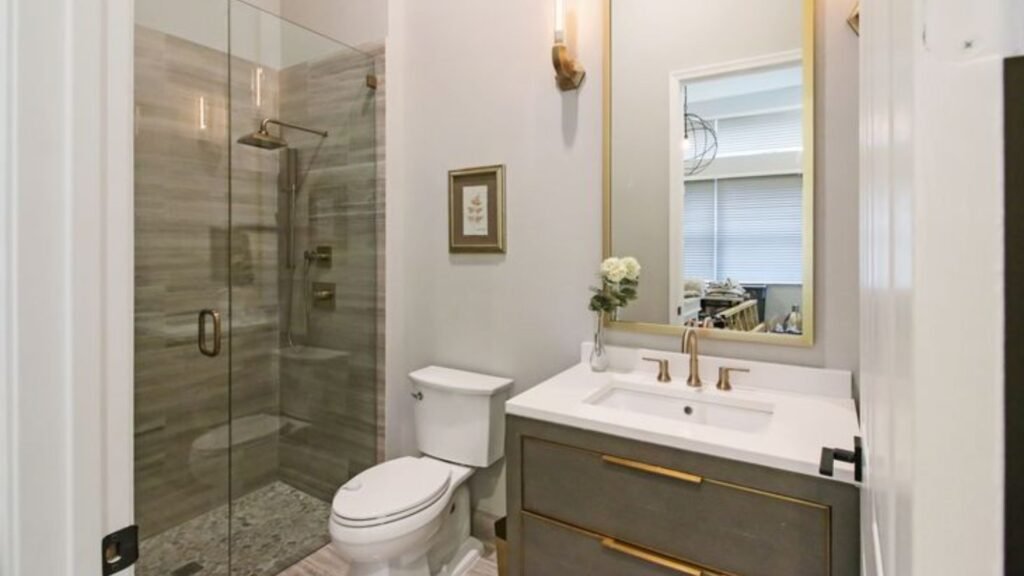
Guest Half Bathroom Ideas focus on improving a small bathroom used by visitors. They help create a stylish, functional, and welcoming space. Smart storage, attractive fixtures, and thoughtful decor can make a strong impression while maximizing every inch of the room.
A well-designed Guest Half Bathroom adds comfort and character to your home. It gives guests a clean and inviting space while reflecting your personal style. Simple upgrades can improve appearance, increase functionality, and create a polished atmosphere that feels warm and memorable.
Guest Half Bathroom Ideas often include statement mirrors, layered lighting, elegant hardware, and cohesive color palettes. Natural textures and decorative accents add visual interest. These ideas help create a beautiful powder room that feels organized, comfortable, and easy to maintain every day.
Go Bold with a Statement Wallpaper:
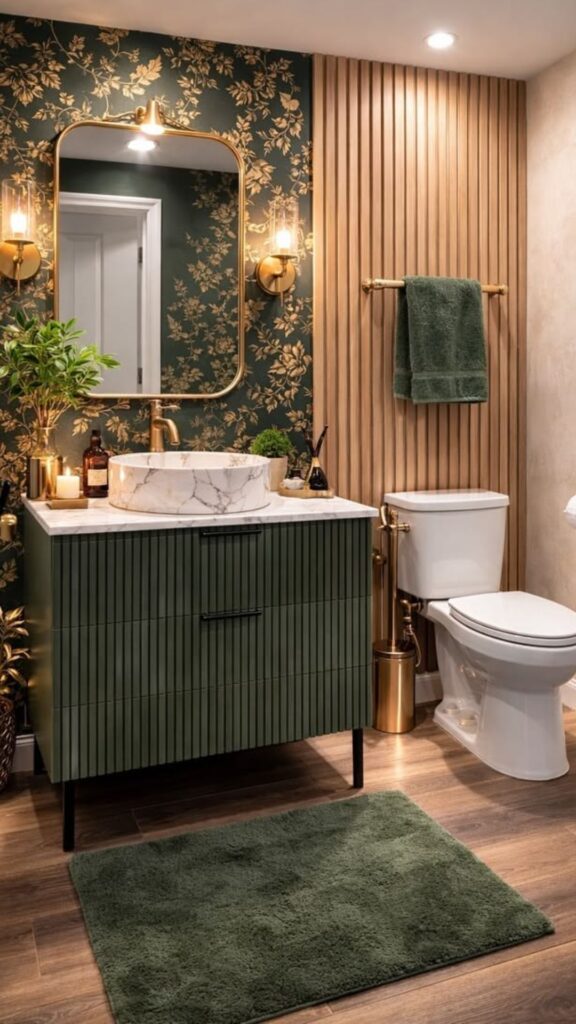
If there’s one room in your home where you can take a dramatic design risk without commitment fatigue, it’s the half bathroom. Bold, patterned wallpaper think oversized botanicals, graphic geometrics, or moody vintage toile works beautifully in a small space precisely because the scale creates visual tension that feels intentional rather than overwhelming. Since guests spend only a few minutes in the space, bold choices feel exciting rather than exhausting.
The key is to treat the wallpaper as the focal point and let everything else serve it. Choose a wallpaper with two or three dominant colors, then pull your hardware, towel rings, and accent accessories directly from those tones. For example, a deep navy-and-gold botanical print pairs naturally with brushed gold fixtures and a white vessel sink. This cohesion signals deliberate design rather than random decoration.
Vinyl or moisture-resistant wallpaper is the right choice for bathroom applications, especially in homes with variable humidity. Brands like Brewster, Graham & Brown, and Rifle Paper Co. all offer washable, paste-the-wall options that hold up beautifully over time. If you’re renting or reluctant to commit, peel-and-stick wallpaper has improved significantly in recent years and can mimic the look convincingly.
One insight most décor guides miss: don’t paper all four walls if your ceiling is low. Instead, paper the accent wall behind the toilet or vanity only, and paint the remaining walls in the darkest tone pulled from the pattern. This technique makes the room feel taller while still delivering that wow factor your guests will notice immediately.
Install a Floating Vanity:
To Maximize the Feeling of Space
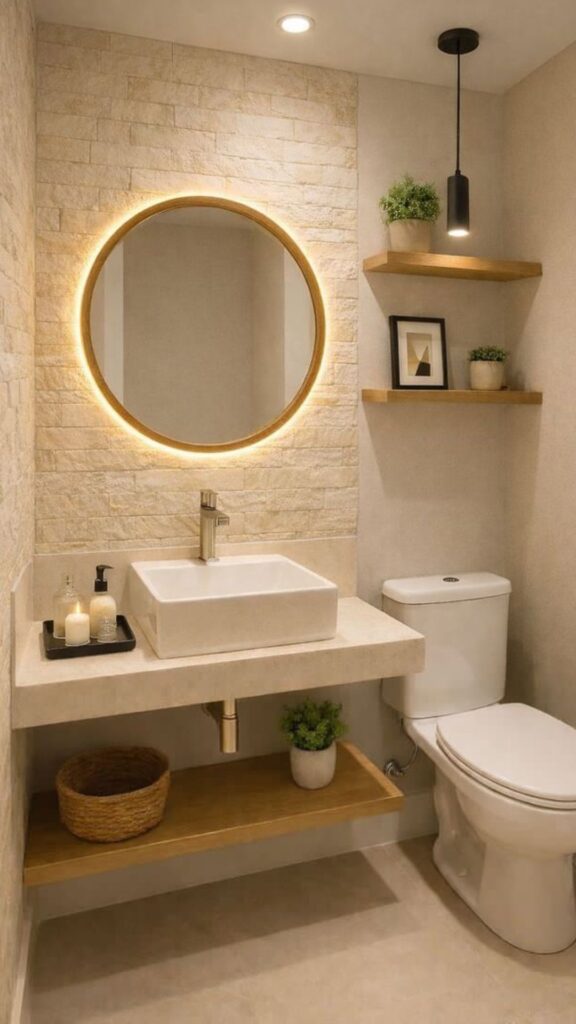
In a half bathroom that’s typically between 18 and 30 square feet, the vanity is the dominant piece of furniture. A wall-mounted, floating vanity instantly makes the floor visible, which tricks the eye into perceiving more square footage than actually exists. This is not just an aesthetic trick it’s a well-documented principle of spatial perception used by interior architects in compact residential and commercial design.
A floating vanity also creates practical advantages. The open space beneath the cabinet makes cleaning the floor far easier, which matters in a high-traffic guest bathroom. Additionally, you can use the “negative space” below the vanity strategically a small woven basket, a sculptural object, or even subtle under-cabinet lighting adds depth without clutter.
When choosing a floating vanity for your powder room, look for one with integrated storage, such as soft-close drawers or a simple cabinet behind the basin. This keeps the countertop clear, which is critical in a small vanity where a cluttered surface immediately makes the room feel cramped. A countertop with nothing on it except one beautiful soap dispenser and perhaps a small plant is the design ideal.
Material-wise, light-toned wood veneers like white oak or walnut create warmth and texture in a way that painted MDF cabinets simply can’t match. Pair a wood-toned floating vanity with a matte black faucet and a round ceramic vessel sink for a look that feels current without being trendy. This combination photographs well and holds its appeal across design cycles an important consideration if you’re planning to sell your home within the next few years.
You Deserve to See This: Half Bathroom Ideas That Perfectly Inspire the Same Smart and Stylish Layout for Your Guest Half Bathroom
Upgrade Your Mirror:
To a Functional Showpiece
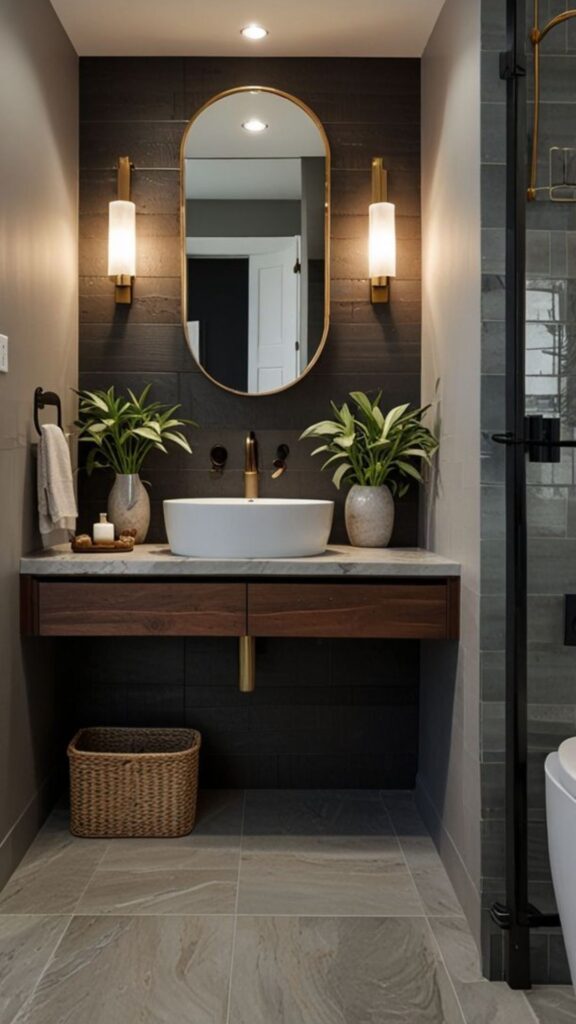
Most builders install a basic rectangular mirror above the bathroom vanity because it’s inexpensive and universally inoffensive. But in a guest powder room, the mirror is a prime opportunity to add personality, architectural interest, and even additional light. A well-chosen mirror can double as art, making it one of the highest-ROI upgrades you can make in a small bathroom.
Arched mirrors are currently one of the most popular choices in powder room design, and for good reason. The curved silhouette softens the boxy geometry of a small room and introduces an organic quality that contrasts beautifully with tile and cabinetry. However, sunburst mirrors, beveled antique-style mirrors, and irregular-edge mirrors all deliver equally strong visual statements when chosen thoughtfully.
Size matters more than most people realize. A common mistake is choosing a mirror that’s too small for the vanity beneath it. As a general rule, your mirror should be no wider than the vanity itself, but it can extend quite high almost to the ceiling without looking out of place. Tall, narrow mirrors draw the eye upward and make low-ceiling powder rooms feel more vertical.
Consider a backlit mirror or one with integrated LED lighting if your bathroom has limited natural light. These provide even, flattering illumination that also reduces eye strain a functional upgrade that guests will genuinely appreciate. Some backlit mirrors now include anti-fog technology and adjustable color temperature, features that feel like luxuries in a powder room context and cost far less than a full bathroom renovation.
Choose Dark, Moody Paint Colors:
For Dramatic Impact
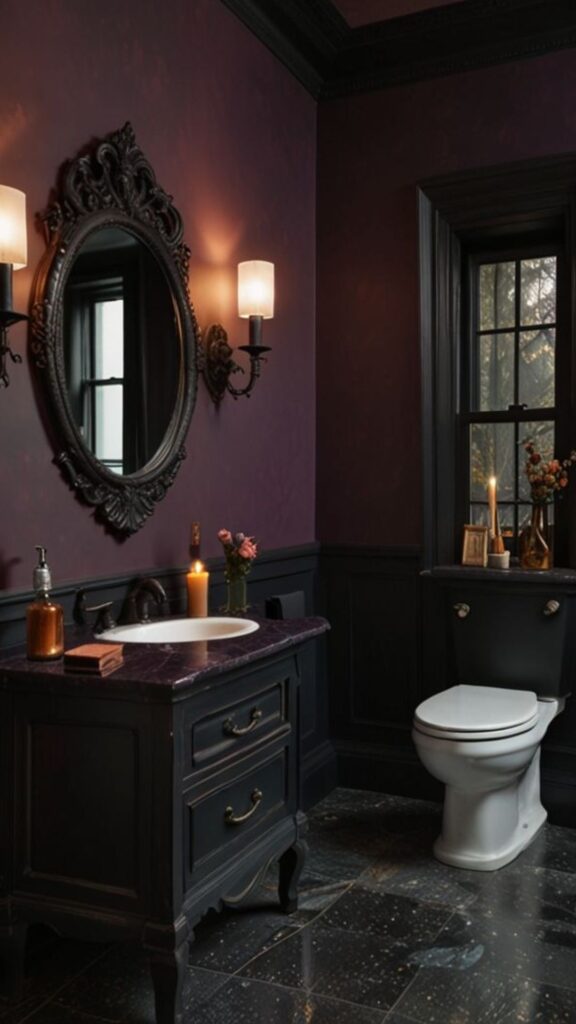
There’s a persistent myth in home design that small rooms must be painted white or light colors to feel larger. Experienced interior designers will tell you the opposite is often true for rooms like powder rooms. A dark, enveloping color deep forest green, charcoal navy, rich burgundy, or warm chocolate brown can make a small half bathroom feel like an intimate jewel box rather than a cramped afterthought.
The psychology behind this is straightforward: dark colors eliminate the perception of walls receding or advancing, which is what makes small rooms feel either too tight or oddly proportioned. Instead, a moody, deep tone creates a sense of depth and enclosure that reads as cozy and intentional rather than restrictive. Designers often describe this effect as making the room feel like it has “weight” a quality that communicates craftsmanship and design investment.
For paint selection, finish matters enormously in a bathroom. Eggshell or satin finishes are ideal they’re slightly reflective enough to bounce candlelight and sconces beautifully while remaining wipeable and moisture-resistant. Avoid flat matte finishes in bathrooms, as they absorb moisture and show fingerprints and water marks readily. High-gloss is also an option if you want a dramatic, lacquered effect on the walls.
Pair your dark paint with warm-toned lighting specifically bulbs in the 2700K to 3000K range to prevent the space from feeling cold or cave-like. Add a large mirror with warm-toned framing to amplify light, and consider a light-colored floor tile to anchor the space. This combination of dark walls and light flooring is one of the oldest and most reliable tricks in residential interior design.
Add Personality with Unique Hardware and Fixtures:
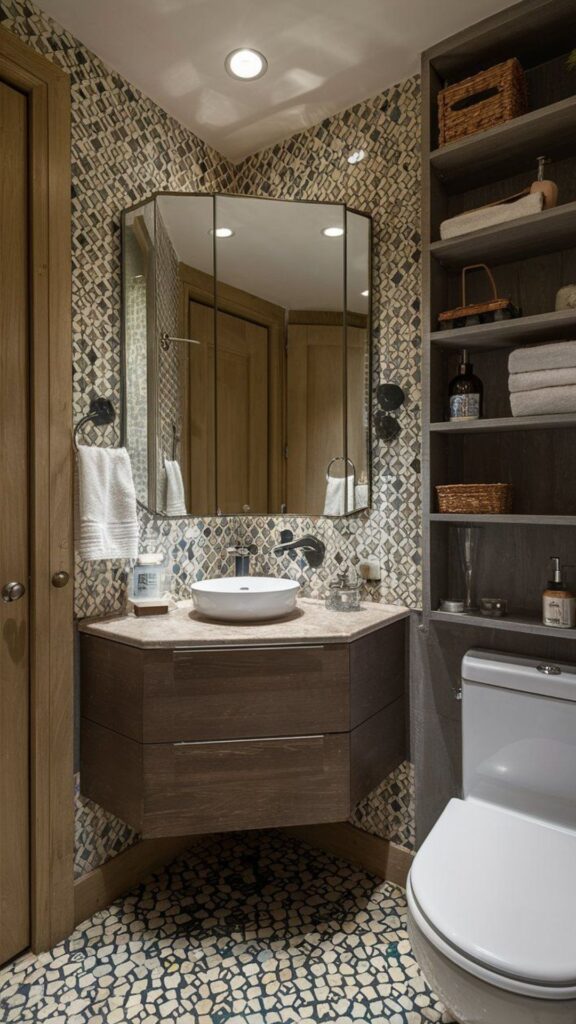
In a guest half bathroom, you’re working with a limited number of surfaces and objects, which means each individual element carries more visual weight than it would in a larger room. Hardware faucets, towel rings, toilet paper holders, robe hooks, and cabinet pulls is the jewelry of the bathroom. Swapping builder-grade chrome fixtures for something more considered is one of the fastest and most affordable ways to elevate the entire space.
Matte black hardware has dominated bathroom design trends for the last several years for good reason: it’s versatile, it’s graphic, and it ages beautifully without showing water spots the way polished chrome does. However, unlacquered brass is having a genuine resurgence in interior design right now, offering a warmth and patina that develops uniquely over time. Brushed nickel and oil-rubbed bronze are perennially reliable choices for more traditional or transitional aesthetics.
The insight most renovation guides overlook is the importance of mixing metal finishes thoughtfully. Matching every single metal finish used to be considered a rule, but contemporary interior design has moved decisively toward curated mixing for example, matte black faucets with aged brass sconces and a brushed nickel mirror frame. The key word is curated: mixing requires intentional choices, not random ones.
Don’t neglect the toilet itself as a design element. Most standard toilets are functional but aesthetically neutral at best. One-piece toilets with a sleeker, more architectural profile are available at mid-range price points and make a meaningful visual difference in a small room. Some homeowners in the luxury segment are now incorporating wall-hung toilets into guest powder rooms, which like the floating vanity opens the floor and creates an unmistakably high-end look.
Incorporate Natural Stone:
For Texture and Luxury
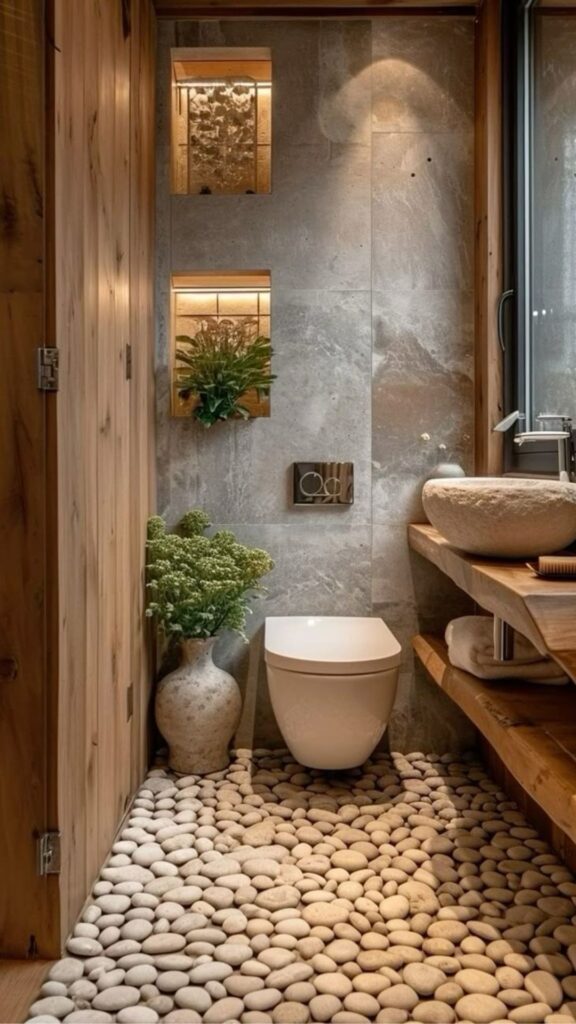
Natural stone marble, travertine, slate, quartzite, or limestone introduces a material richness into a guest powder room that synthetic surfaces simply cannot replicate. Even a modest amount of stone, such as a single marble slab vanity top or a travertine tile accent wall, shifts the room’s perceived quality dramatically. Guests touch surfaces and notice textures in ways that photographs don’t fully capture.
Marble is the most iconic choice, and its appeal is enduring precisely because it’s genuinely natural no two slabs are identical. Calacatta and Carrara are the most recognized varieties, but for a powder room where cost is more controlled and usage is lighter than in a full bathroom, even a remnant piece of marble can be fabricated into a small vanity top affordably. Many stone yards sell remnants at a fraction of the cost of a full slab.
For those concerned about maintenance marble does require sealing and is susceptible to etching from acidic products porcelain tiles engineered to mimic stone have improved dramatically in recent years. Large-format porcelain tiles (24×48 inches or larger) with realistic vein patterns and textured surfaces are now convincing enough that even trained eyes sometimes require close inspection to distinguish them from genuine stone. This is a legitimate middle-ground option that delivers the aesthetic without the upkeep concern.
Consider using stone in unexpected ways: a stone vessel sink, a stone soap dish, or even a small piece of natural stone displayed as a sculptural object on the vanity shelf. These touches signal design intentionality without requiring a full stone renovation. In 2026 and beyond, “earthy naturalism” continues to be a dominant theme in interior design, making stone-forward powder rooms feel both current and timeless simultaneously.
Layer Lighting for Atmosphere and Function:
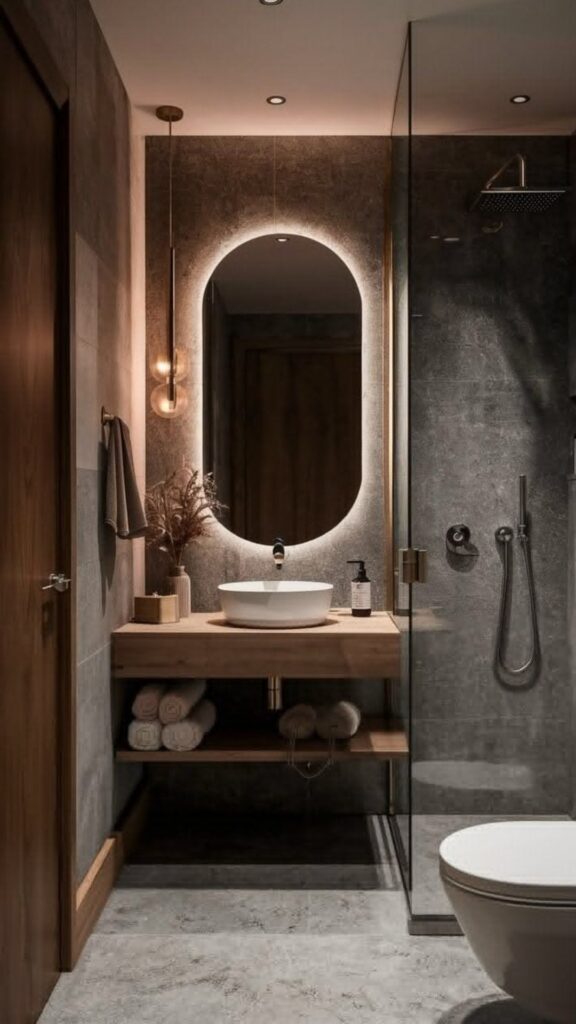
Lighting is the element that separates a professionally designed bathroom from an amateur one. Most half bathrooms ship from builders with a single overhead fixture, which provides harsh, unflattering light that flattens the room’s texture and makes both the space and its occupants look worse. Layered lighting combining at least two or three different light sources at different heights and intensities transforms the experience entirely.
The three layers to aim for in a powder room are: ambient (general illumination), task (vanity-level lighting for functional use), and accent (atmosphere and depth). In a half bath, you typically don’t need a full ceiling fixture for ambient lighting if your sconces or backlit mirror provide sufficient overall illumination. A dimmer switch on at least one circuit allows guests and homeowners alike to adjust the atmosphere instantly.
Sconces positioned at eye level on either side of the mirror are the gold standard for flattering vanity lighting. This placement eliminates the shadows that a single overhead fixture casts on the face. The height should place the center of the sconce approximately 60 to 65 inches from the floor, or at roughly eye level for an average adult. This is a detail that most builders skip and most guests never consciously notice but they will notice how they look in your mirror.
For accent and atmosphere, consider a small pendant light, a backlit floating shelf, or even a simple tabletop candle lantern on a floating shelf. Warm-toned Edison bulbs in an exposed-filament style add texture and warmth. Smart bulbs with app or voice control allow you to set specific “guest scenes” a warm, dimmed setting that makes the room feel welcoming and luxurious without requiring any special installation beyond a standard bulb socket.
Use Tile Creatively on the Floor:
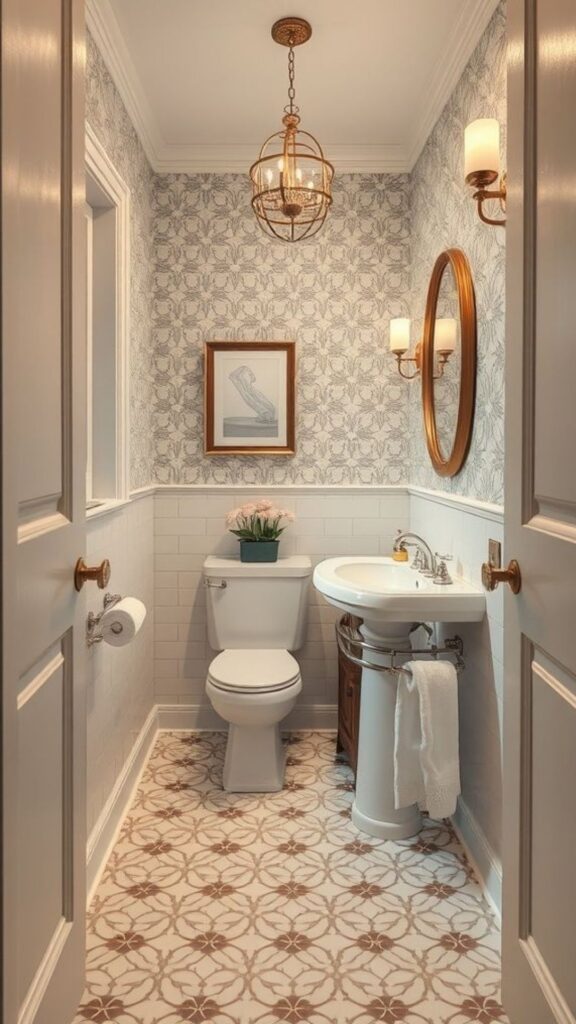
The floor of a powder room is a canvas that most homeowners treat as a background when it should be treated as a feature. In a room with no shower, bathtub, or large window to draw the eye, the floor is often the first surface a guest sees when they step inside and close the door. An interesting, well-chosen tile pattern elevates the room from functional to genuinely beautiful in a way that’s permanent and adds real resale value.
Patterned encaustic-style cement tiles or their porcelain equivalents are a perennial powder room favorite because they deliver maximum personality in a small footprint. Classic Moroccan zellige-inspired patterns, vintage hex tiles with contrasting grout, and contemporary geometric designs all work well in a powder room context. The small square footage means even a premium tile selection remains relatively affordable; 30 to 40 square feet of tile goes a long way.
Large-format tiles can work in a powder room too, though they require more careful planning. A single large slab-look tile especially in a book-matched pattern can make a small powder room feel more expansive. The key is to minimize grout lines, which the eye reads as visual noise that fragments the floor and makes it appear busier and smaller than it is. Rectified large-format tiles with thin-set grout lines achieve this minimalist effect.
Don’t overlook the ceiling in a tiled powder room. Running floor tile up onto the lower portion of a wall “wainscoting” style or choosing a contrasting tile for a feature wall creates architectural interest that competitors’ articles rarely mention. This technique adds visual layers that make the room feel designed, not just decorated, and it’s an approach that professional interior designers use regularly in high-end residential projects.
Absolute Game Changer: Pink Bathroom Ideas That Add a Sweet and Welcoming Touch to Your Guest Half Bathroom
Display Curated Art:
For a Gallery-Like Feel
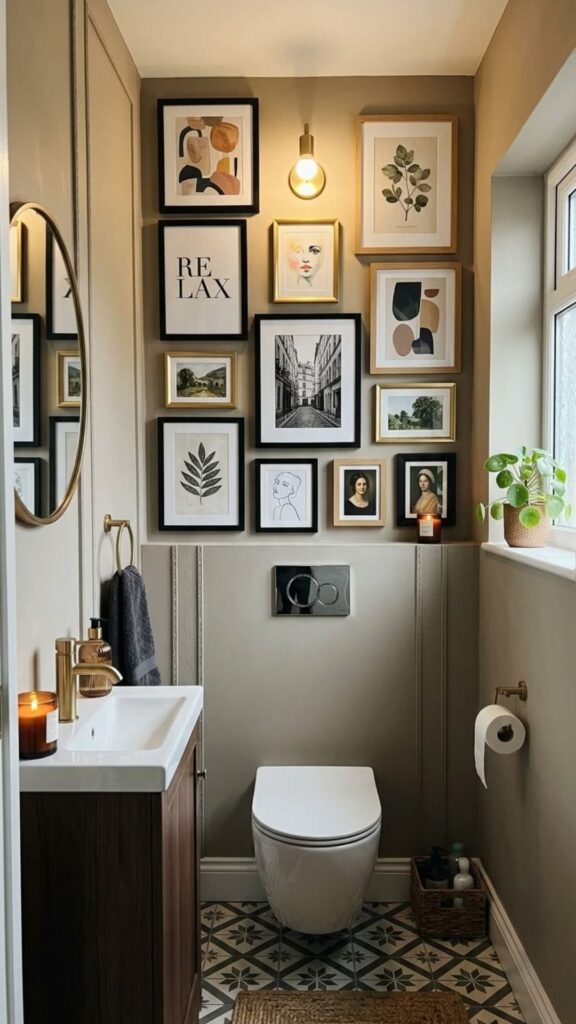
Art in a bathroom might seem unconventional, but in a guest powder room a space with zero practical clutter like showers or bathtubs wall art becomes one of the most powerful design tools available. A single, well-chosen piece of art transforms an otherwise simple half bath into a genuinely interesting room. It also signals hospitality: you’ve thought about the experience your guests have even in this private moment.
The selection matters enormously. Avoid generic landscapes or mass-produced prints. Instead, look for pieces with some personal meaning, visual distinctiveness, or genuine artistic quality even if they’re affordable. Original art from local artists, vintage poster prints in custom frames, or limited-edition prints from artists you genuinely admire all work better than perfectly inoffensive filler art that communicates nothing about your personality or taste.
Humidity is a legitimate concern for artwork in bathrooms. Original paintings on canvas are generally fine in a half bath with reasonable ventilation, but watercolor originals or paper prints should be framed under UV-protective glass and sealed appropriately. Metal prints, acrylic prints, and canvas wraps are essentially humidity-immune and a practical choice for bathroom display. Vintage ceramic pieces or sculptural wall hangings are even more durable options that add texture alongside visual interest.
The placement of art in a small bathroom requires more precision than in a larger room. A single large piece tends to work better than a gallery wall in a tiny space too many frames create visual noise that makes the room feel chaotic. Hang art at eye level, which in a bathroom context is typically lower than in a living space, since people are often sitting. A piece hung at approximately 55 to 60 inches from the floor to the center of the artwork generally works well.
Add Warmth with Natural Materials and Texture:
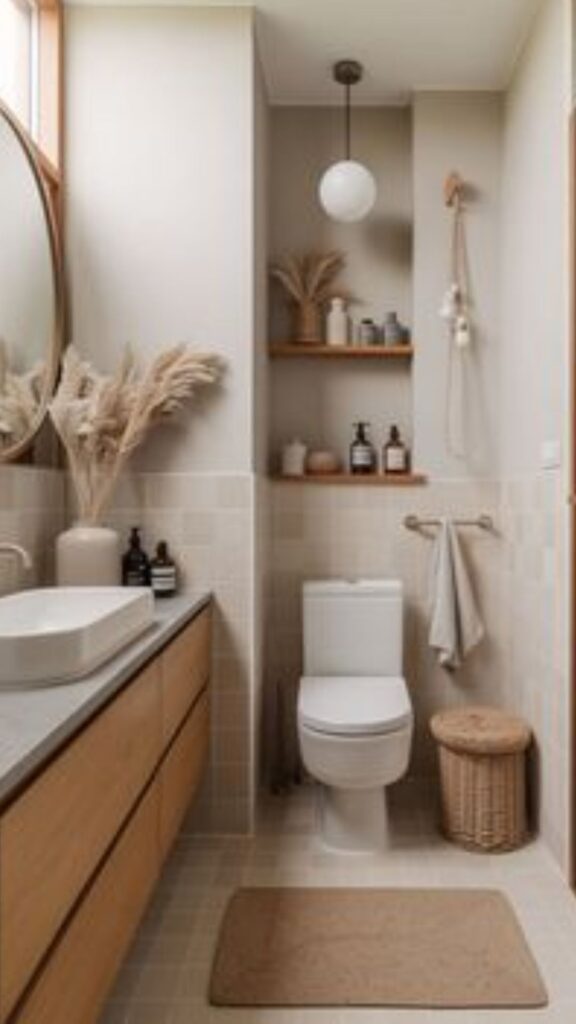
Contemporary bathroom design is moving decisively away from the cold, clinical all-white aesthetic that dominated the 2010s and toward spaces that feel warm, grounded, and human. Natural materials wood, rattan, linen, jute, stone, and terracotta bring organic texture into a guest half bathroom ideas that makes it feel genuinely welcoming rather than merely functional. This is especially meaningful in a powder room, where comfort and atmosphere matter more than technical utility.
A small wooden stool, a rattan basket for hand towel display, a linen hand towel in a natural undyed tone, or a terracotta pot holding a simple plant all contribute to this warmth without requiring renovation or significant expense. These are styling choices, not construction choices, and they’re reversible and replaceable as your taste evolves. The cumulative effect, however, is significant a bathroom styled with natural materials reads as thoughtful and curated.
Live plants are a particularly powerful addition. Even a small, humidity-tolerant plant a pothos on a floating shelf, a single air plant in a ceramic holder, or a compact orchid on the vanity instantly makes a bathroom feel alive rather than inert. Guests respond viscerally to plants in unexpected spaces. If you’re concerned about maintenance, high-quality artificial plants have improved dramatically and can be convincing in a bathroom where close inspection is unlikely.
One underused technique is bringing in natural wood as an accent material a wooden vanity frame, a teak soap dish, or a floating wooden shelf finished in tung oil. Wood in a bathroom carries associations of spa design and high-end hospitality that guests immediately register, even if they can’t articulate why. Properly sealed and finished wood is genuinely durable in a half bathroom environment, which sees far less moisture than a shower-equipped full bath.
Install a Vessel Sink, guest half bathroom ideas:
For a Sculptural Focal Point
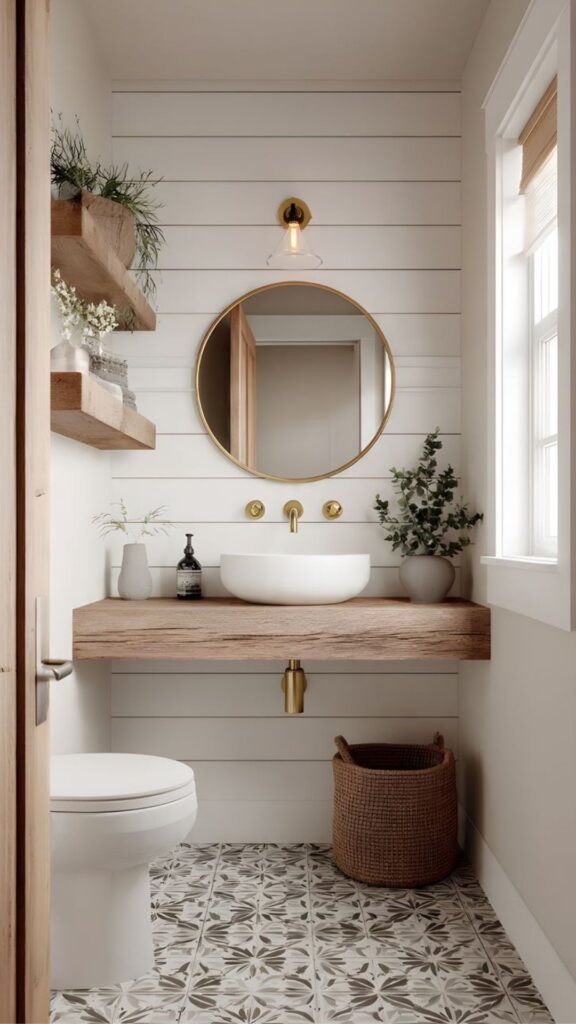
The sink in a guest half bathroom is more than a functional fixture it’s a sculptural object that sits at visual center stage in the room. A vessel sink one that sits on top of the vanity surface rather than dropping in or mounting underneath immediately distinguishes a powder room from a standard bathroom and creates a statement piece that guests genuinely notice and respond to.
Vessel sinks come in an extraordinary range of materials, shapes, and finishes. Stone vessel sinks particularly those in marble, onyx, travertine, or river stone deliver the highest visual impact and a genuinely tactile quality that feels luxurious. Ceramic and porcelain vessel sinks offer more color and shape options, from clean geometric forms to organic, hand-thrown designs that feel artisanal. Glass vessel sinks in smoked, frosted, or clear finishes offer a contemporary transparency that pairs beautifully with floating vanities.
The practical considerations for vessel sinks are worth understanding before purchase. The rim of the sink sits 5 to 7 inches above the vanity surface, which means your faucet must be tall enough a waterfall or high-arc faucet is typically required. The overall counter height should be slightly lower than a standard vanity (around 31 to 33 inches from floor to counter) to compensate for the sink’s height and ensure comfortable use. These measurements are details that online product listings often omit.
A vessel sink also requires a vanity with no center-mount faucet hole or at minimum, one where the existing holes can be covered by the sink’s base footprint. This is worth verifying before purchase. The good news is that vessel sinks have one significant installation advantage: since they rest on the surface, they’re easier to replace in the future if you want to update your look without a full vanity replacement.
Create Vertical Interest with Tall Shelving or Cabinetry:
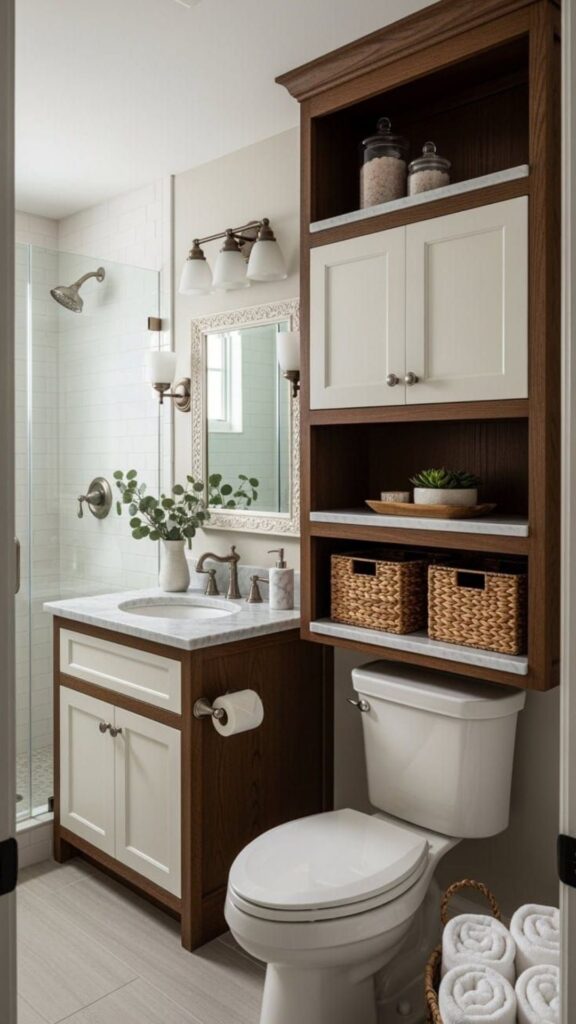
Half bathrooms typically lack storage, which forces homeowners to think creatively about where to put the essentials spare hand towels, soap, small décor objects. Vertical shelving that takes advantage of wall height rather than floor space is the elegant solution. A tall, narrow shelving unit or a floating shelf arrangement that extends toward the ceiling draws the eye upward, makes the room feel taller, and provides genuinely useful storage without consuming the limited floor area.
Open floating shelves work beautifully in a powder room when styled with restraint. The key word is restraint: a floating shelf loaded with 15 different objects creates clutter, not character. Instead, think in terms of one functional item (soap dispenser or small plant) and one decorative item (a sculptural object, a candle, a small framed photo) per shelf level. This rule of two keeps the display feeling intentional and spacious even when the shelf itself is small.
Built-in vertical niches recessed into the wall between studs are a higher-investment option that delivers a deeply polished, architectural result. A vertical niche beside the vanity, tiled to match the floor or wall, can hold rolled hand towels, a candle, and a small plant in a way that looks designed-from-the-start rather than added on. This detail reads as the work of a genuine interior designer, not a DIY weekend project.
For a half bathroom adjacent to other living spaces common in older homes where the powder room was converted from a closet consider installing a full-height built-in with a cabinet section at the bottom for hidden storage and open shelves above. This creates the illusion of a more substantial, purposeful room while providing genuine utility. Paint the built-in the same color as the walls for a seamless, bespoke effect that makes the room feel larger than its actual square footage.
Use Scented Candles and Diffusers:
To Engage Every Sense
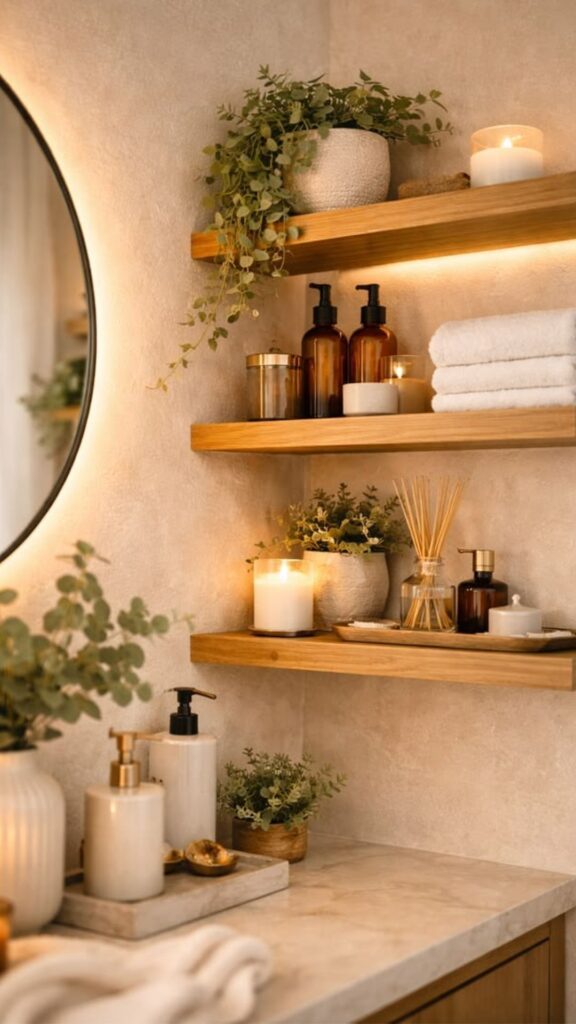
Design is primarily discussed as a visual discipline, but the most memorable spaces engage all five senses. A guest powder room that smells extraordinary creates a lasting impression that even the most beautiful tile and hardware cannot replicate on its own. Scent is neurologically unique in its ability to trigger emotional memory a guest who encounters a beautiful scent in your powder room will literally remember the experience differently than they remember rooms that smell neutral.
Choosing the right scent requires some consideration. You want something that feels clean and elevated without being aggressively perfumed. Popular choices for powder rooms include cedarwood and vetiver for a grounded, warm quality; bergamot and white tea for a clean, spa-like freshness; or gardenia and neroli for a floral note that feels luxurious without being overpowering. Avoid heavily synthetic, air-freshener-style fragrances, which signal effort without class.
Reed diffusers are the most practical choice for a guest bathroom because they require no attention no flame, no electricity, no timing. They provide continuous, low-level fragrance that’s detectable without being intense. Place a diffuser in a corner or on a floating shelf away from direct airflow, which would cause it to burn through the oil too quickly. High-quality diffusers from brands like Diptyque, Aesop, or Byredo offer both excellent fragrance and beautiful packaging that contributes to the room’s visual aesthetic.
A single luxury candle even unlit during guest visits adds visual warmth and the suggestion of fragrance. If you light it when guests arrive, the melting wax releases scent at a controlled, gentle level. Pair the candle with a beautiful matchbook or match cloche as part of the vanity display. This small detail signals the same kind of thoughtful hospitality that a fine hotel provides and guests in your home notice and remember exactly that association.
Opt for Minimalism and Negative Space:
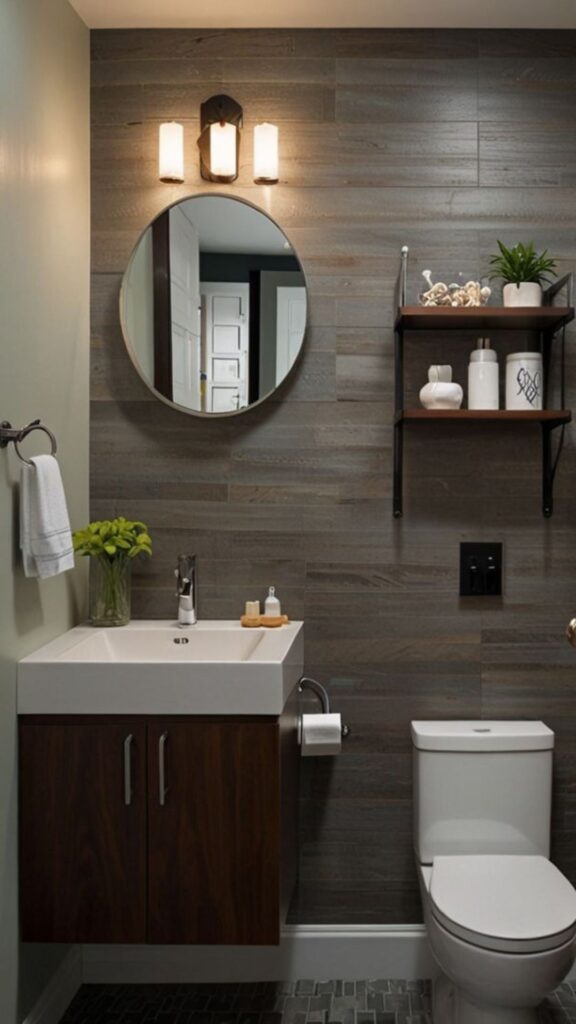
In an era of maximalist design content on social media, minimalism in a guest powder room is genuinely differentiated and quietly confident. A half bathroom where every element has been chosen with purpose and where empty space is treated as a design feature rather than a problem to fill creates a sense of calm and quality that guests register immediately. Minimalism done well is not sparse or cold it’s intentional and refined.
The minimalist powder room starts with a deliberate edit: every object in the room should be there because it’s either functional or genuinely beautiful, not both, not simply because it fills a gap. Clear everything off the vanity except one soap dispenser and one small plant or sculptural object. Remove the toilet brush from sight if possible wall-mounted models are available. Hide any extra rolls of toilet paper in a closed cabinet rather than a visible holder. These edits alone, applied to a typical bathroom, immediately lift its apparent quality.
Surface selection is crucial in a minimalist approach because each surface is more visible. A seamless, single-material approach for example, large-format white porcelain tile on both the floor and walls, with thin grout lines in a matching tone creates an almost architectural purity. Combine this with a wall-mounted toilet, a floating vanity in a single warm-toned wood veneer, and a simple oval mirror in a frameless or thin-frame design, and the result is a room that feels expensive and considered regardless of the actual cost.
Minimalism in a powder room is also a practical advantage for ongoing maintenance. Fewer objects means less clutter to manage, fewer surfaces to dust, and a space that looks guest-ready with minimal preparation. This is a detail that homeowners with busy lives appreciate deeply a high-style room that requires minimal daily upkeep is genuinely superior design, not just aesthetically but functionally.
Introduce a Cohesive Color Palette Rooted in One Anchor Hue:
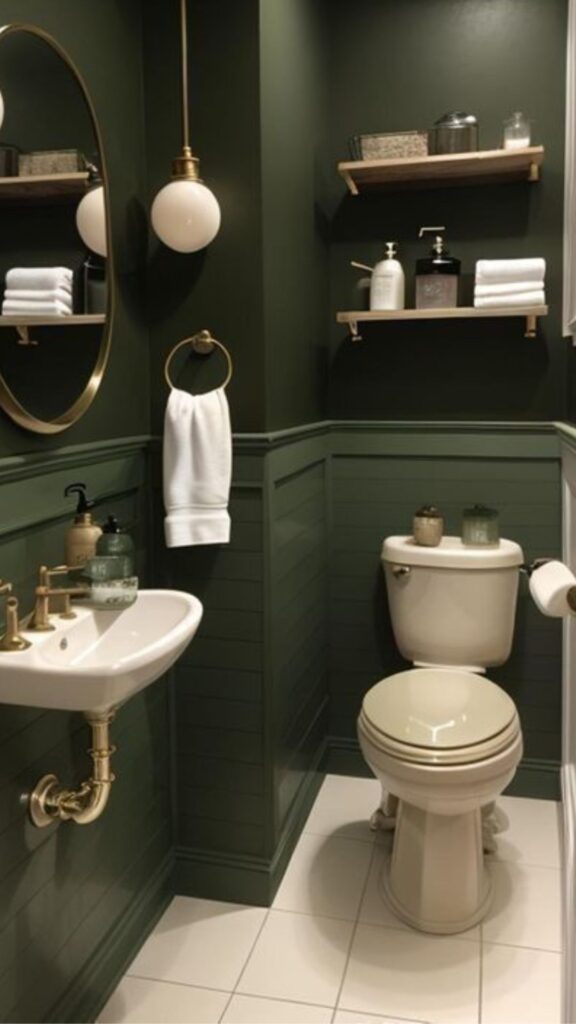
Amateur decorating tends toward safe neutrals or uncoordinated collections of individual pieces purchased at different times. Professional interior design starts with a defined color palette typically one anchor color, one or two supporting tones, and a neutral and applies it consistently to every element in the room. In a powder room, where the room is small enough to see nearly every surface simultaneously, color cohesion creates a level of visual sophistication that’s immediately perceptible.
Choosing your anchor color is the most important decision. For a powder room, you want a color that feels distinct from the rest of your home’s public spaces (which creates a sense of discovery when guests enter) while remaining harmonious with the overall palette. Deep sage green, dusty terracotta, warm caramel, dusty mauve, and rich cobalt are all currently popular anchor choices that designers are working with successfully in 2025–2026 powder room projects.
Once you have your anchor, the discipline is applying it with confidence. Paint the walls in the anchor tone. Pull the grout color to complement it. Choose hardware in a metal that enhances the temperature of the color (cool colors pair with silver and chrome; warm colors pair with brass and copper). Select a hand towel in a tone that sits adjacent on the color wheel. Use your neutral typically warm white, ivory, or a greige for the vanity, toilet, and sink to provide visual relief.
The mistake most homeowners make is diluting this approach with too many exceptions a printed towel that introduces three new colors, a mirror frame in a completely unrelated finish, a soap dispenser in a mismatched tone. Each exception weakens the cohesion that makes the palette approach work. In a small room, even one incongruous element is immediately visible. The solution is simple: when in doubt, choose the option that exists within your defined palette rather than the one that “also looks nice” in isolation.
This is Pure Gold: Bathroom Mirror Ideas That Add the Perfect Finishing Touch to Your Guest Half Bathroom
Make It Memorable with a Thoughtful Guest Experience:
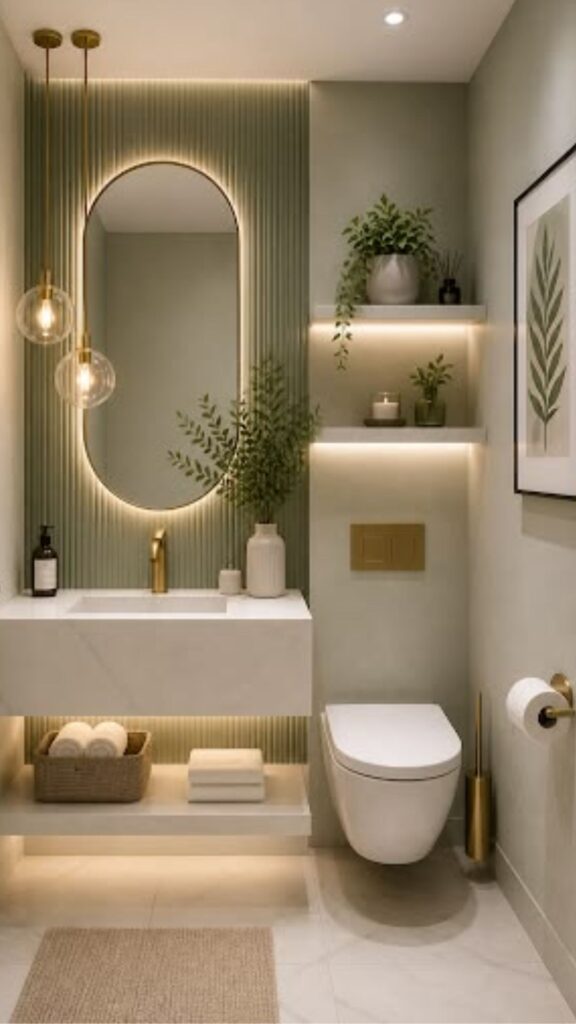
The ultimate guest half bathroom isn’t defined by any single design choice but by the cumulative experience it delivers to someone using it. Great hospitality design the kind you find in boutique hotels and high-end restaurants considers the experience from entry to exit and ensures that every interaction point (what you see, touch, smell, and use) contributes to a feeling of care and welcome. You can bring this same hospitality mindset to your home powder room without a significant budget.
Start with what guests actually need: clean hand towels (cloth, not paper), quality soap (liquid soap in a beautiful dispenser, or a high-end bar soap on a proper dish), reliable hand lotion, and adequate lighting at the mirror. These functional elements, delivered beautifully, form the foundation of a guest-ready bathroom. A small tray on the vanity holding these items in an organized arrangement signals thoughtfulness more powerfully than almost any aesthetic upgrade.
Small extras make a disproportionate impression. A fresh orchid or a small succulent on the vanity. A beautiful matchbook beside a candle. A soft, thick hand towel in a color that complements the room’s palette. A small dish for jewelry removal. A handwritten note in a boutique hotel style is an unusual touch in a home context that some hosts use to add personality and warmth. These are not expensive additions; they’re attentive ones, and attention is what guests remember.
Finally, keep the room consistently maintained. The most beautifully designed powder room fails if the towels are damp, the soap is running low, or the mirror has water spots. Develop a simple pre-guest checklist: fresh towel, full soap dispenser, clean mirror, emptied waste bin, lit candle or fresh reed diffuser. This consistency of experience the room always looking its best when a guest arrives is the standard that transforms a well-designed bathroom into a genuinely memorable one.
Conclusion
Your guest half bathroom is a small space with an outsized impact on how visitors experience your home. From bold wallpaper and statement lighting to curated scent and cohesive color palettes, these 16 guest half bathroom ideas give you a full toolkit for transforming even the most modest powder room into a space worth remembering.
The key takeaway is simple: treat the powder room as a design opportunity, not an afterthought, and your guests will notice the difference every time. Start with one idea that excites you most, execute it with intention, and build from there the results will speak for themselves.

Team TrandyVilla is the passionate home decor team behind Trandy Villa, where style meets comfort in everyday living. The team loves transforming simple spaces into beautiful, functional homes through smart ideas, budget-friendly hacks, and modern design trends. Their content focuses on helping readers create homes that feel both stylish and personal without spending too much.