
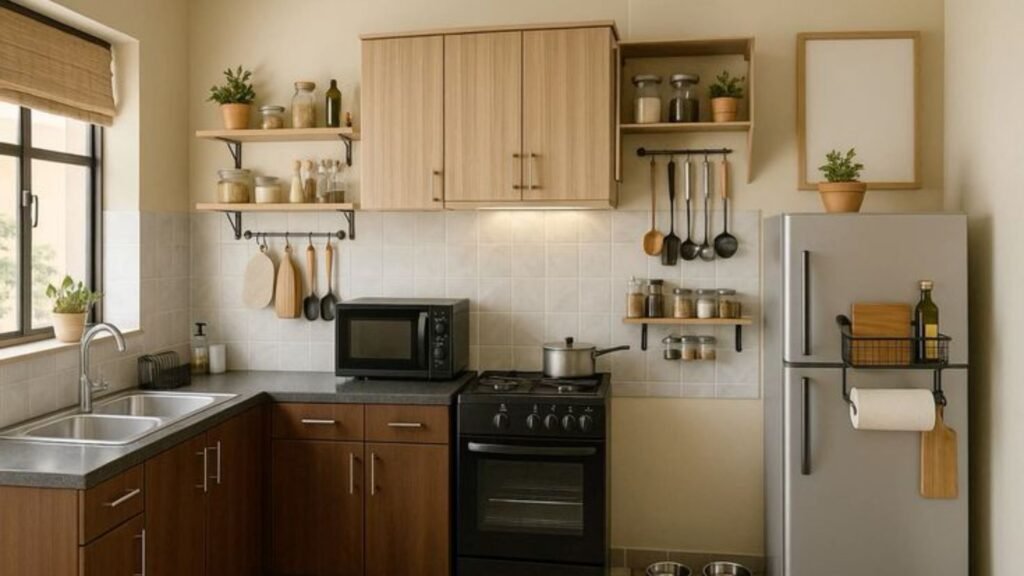
Small Kitchen Decorating helps transform limited kitchen space into a stylish and functional area. It focuses on smart layouts, better storage, improved lighting, and simple décor choices. Small Kitchen Decorating Ideas create comfort, increase efficiency, enhance organization, and make the kitchen feel more open and inviting.
Small Kitchen Decorating can turn a compact cooking space into a bright and attractive area with thoughtful design choices. Smart storage, balanced colors, proper lighting, and space-saving features improve both appearance and functionality while helping the kitchen feel larger and more comfortable every day.
Small Kitchen Decorating Ideas include light color schemes, open shelving, vertical storage, reflective surfaces, and multi-purpose furniture. These ideas reduce visual clutter and maximize available space. They also improve workflow, add style, and create a clean, welcoming kitchen environment.
Maximize Natural and Artificial Light Together:
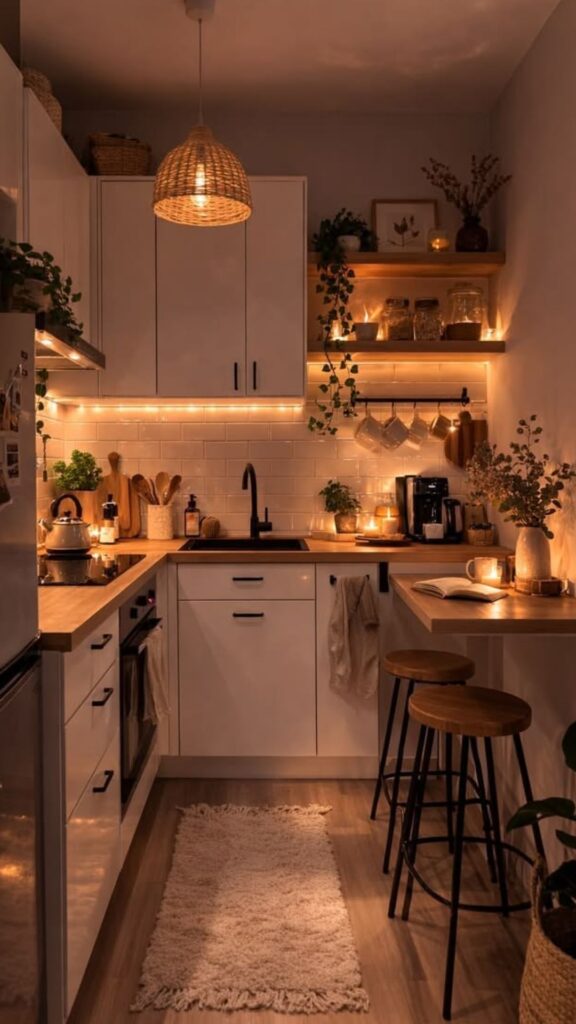
Lighting is the single most underrated factor in making a small kitchen feel spacious. Natural light bounces off surfaces and creates depth, while artificial light fills in shadows that make corners feel boxed in. For example, if your kitchen has a window above the sink, avoid heavy curtains or dark blinds that block daylight. Instead, use sheer fabric or a simple frosted film for privacy without sacrificing brightness.
Layering light sources matters just as much as the amount of light. A single overhead fixture often creates harsh shadows under cabinets and along countertops, making the room feel smaller at night. Combining ceiling lights with task lighting near workspaces eliminates these dark zones. This layered approach mimics daylight conditions even after sunset, which helps the eye perceive more depth in the room.
A mistake many homeowners make is choosing warm, yellow-toned bulbs throughout the kitchen because they think it feels “cozy.” However, in small spaces, this can make walls and cabinets look dingy over time. A cooler, neutral white (around 3000K-4000K) keeps colors true and surfaces looking clean, which subtly contributes to a feeling of openness.
Choose a Cohesive, Light Color Palette:
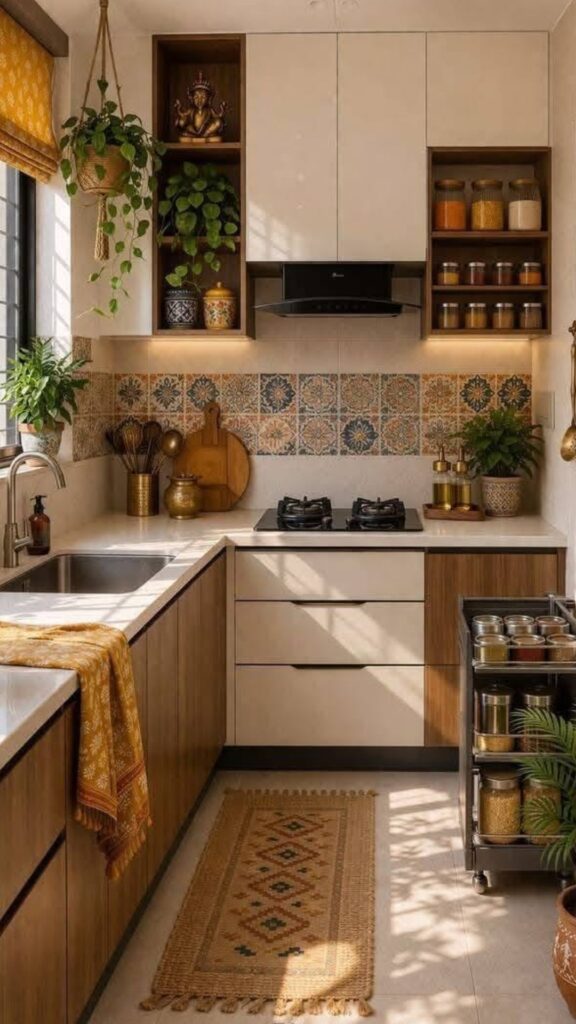
Color has a direct psychological effect on how large or small a room feels. Light, cohesive palettes think soft whites, warm beiges, pale sage, or light gray reflect more light and create fewer visual breaks between surfaces. When walls, cabinets, and countertops share similar tones, the eye doesn’t register where one element ends and another begins, which makes the whole kitchen feel more continuous and open.
That said, an all-white kitchen isn’t the only option, and it can sometimes feel sterile or hard to maintain. A smarter approach is choosing one dominant light tone and pairing it with one or two complementary accent colors used sparingly. For instance, soft cream cabinets with a muted terracotta backsplash tile create warmth without shrinking the visual space, because the accent color is used in a small, defined area rather than across large surfaces.
Glossy and satin finishes also play a role here. Matte finishes absorb light, while glossy or semi-gloss surfaces reflect it, adding a subtle sense of brightness and depth. Using a satin finish on cabinet doors, for example, can make the same color feel airier than a flat matte version. This small finish choice is something most decorating guides overlook entirely.
Seriously Worth a Look: Kitchen Storage Ideas That Help You Maximize Every Inch of Your Small Kitchen Space
Use Open Shelving Strategically, Not Everywhere:
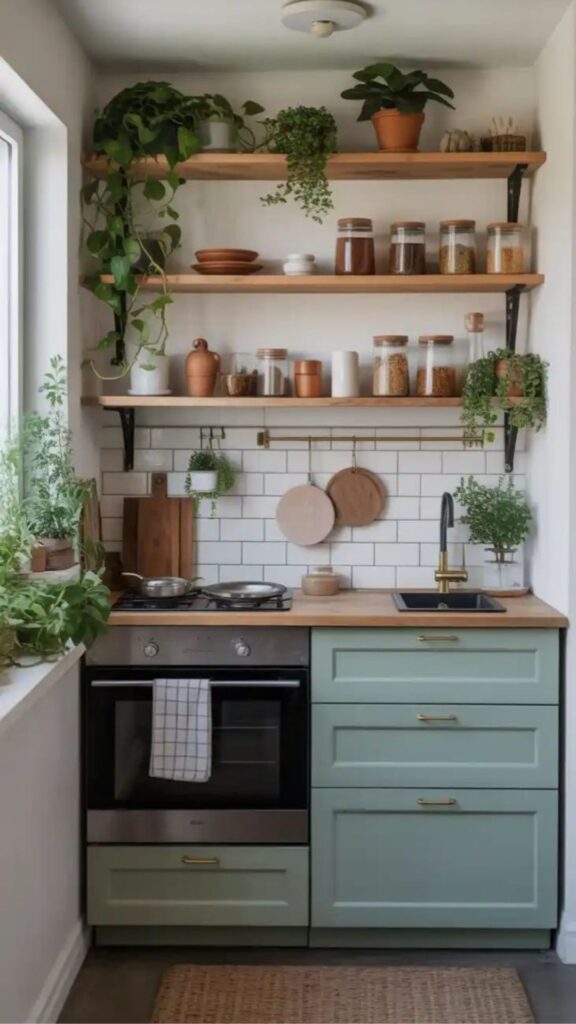
Open shelving has become a popular small kitchen trend, and for good reason: it removes the bulk of upper cabinet doors and creates visual breathing room. However, open shelving only works well when it’s curated. A shelf packed with mismatched mugs, boxes, and bottles will make a small kitchen look more chaotic, not less. The goal is to display a limited number of attractive, useful items like a stack of neutral plates, a few glass jars, or a small plant.
A practical scenario: instead of converting your entire upper cabinet run to open shelves, try replacing just one or two cabinet doors above a counter section. This gives you the visual lightness of open shelving while keeping closed storage for less attractive items like cleaning supplies or bulk pantry goods. This hybrid approach is something interior designers use often, but it rarely gets mentioned in beginner guides.
Material choice matters too. Floating wood shelves against a light wall create warmth and contrast without feeling heavy, especially compared to bulky bracket-supported shelves. If your kitchen has a window nearby, position open shelves so they don’t block natural light from reaching deeper into the room placement, not just style, affects how spacious the kitchen feels.
Add Vertical Storage, Small Kitchen Decorating Ideas:
To Free Up Floor and Counter Space
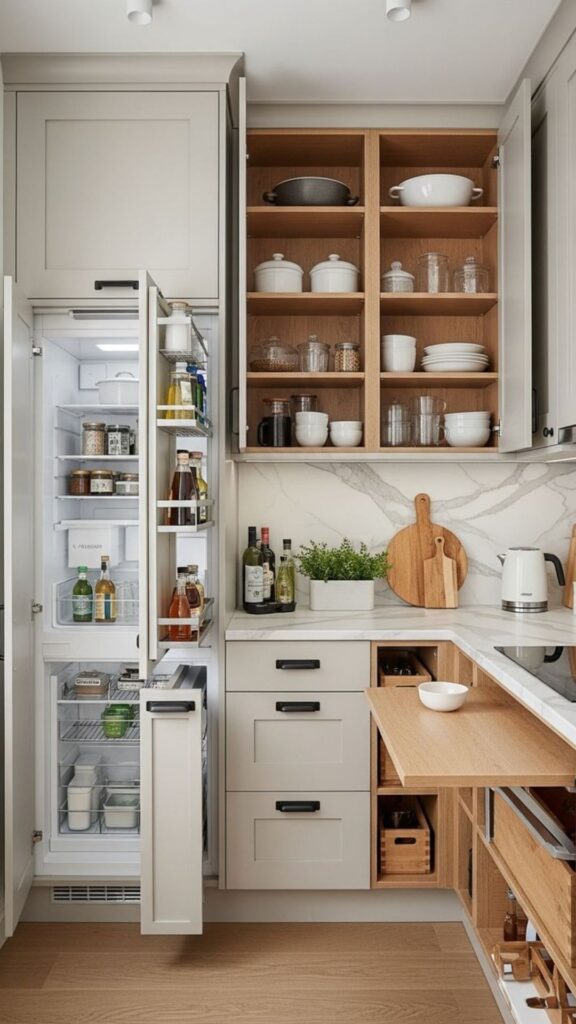
When floor space is limited, the walls become your most valuable real estate. Vertical storage solutions like tall, narrow cabinets, pegboards, or wall-mounted racks let you store more items without expanding the kitchen’s footprint. For example, a pegboard mounted behind a stove can hold pots, pans, and utensils that would otherwise clutter drawers or counters, while also adding a decorative, almost gallery-like element to the wall.
Tall, narrow pull-out pantry units are another excellent option, especially for kitchens with awkward gaps next to the refrigerator or oven. These units are often only 6 to 12 inches wide but can hold an impressive amount of canned goods, spices, or oils. Because they’re built into existing gaps, they don’t reduce walking space, which is a common issue with bulky freestanding pantries.
Don’t overlook the space above your refrigerator or cabinets, either. Adding a shallow shelf or cabinet extension up to the ceiling uses “dead space” that’s otherwise wasted. Store rarely-used items like holiday dishware or appliances here. This keeps your everyday storage areas less crowded, which indirectly makes the more visible parts of your kitchen feel tidier and more spacious.
Create a Statement with a Bold Backsplash:
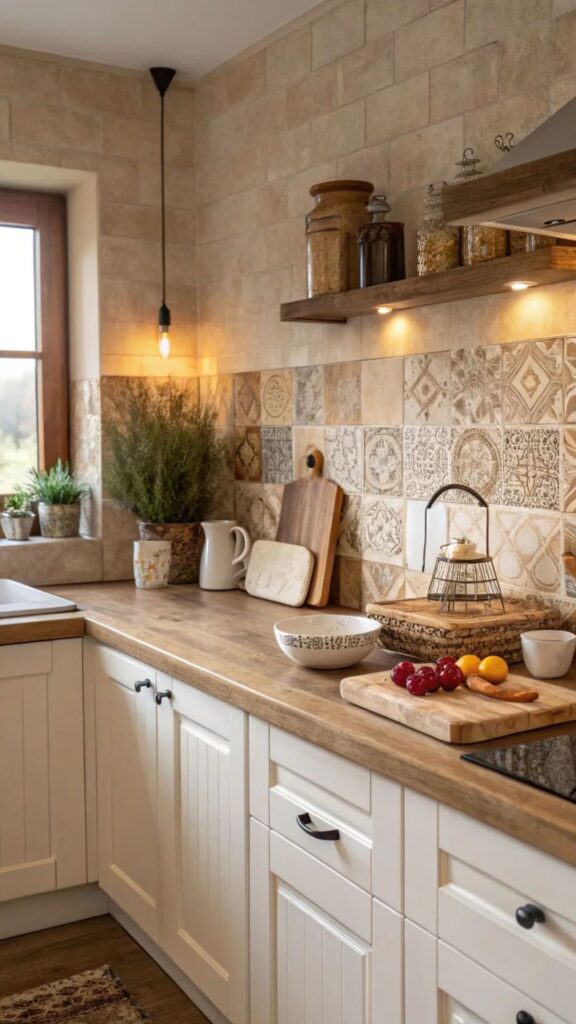
A backsplash is one of the few areas in a small kitchen decorating ideas where you can introduce pattern or color without overwhelming the space, because it’s a relatively small, contained surface. A patterned tile like Moroccan-style tiles, herringbone subway tiles, or a geometric design can add personality and become a focal point that draws the eye, distracting from the room’s actual size.
For example, a kitchen with plain white cabinets and countertops can feel flat or even boring. Adding a backsplash with a subtle blue-and-white pattern instantly gives the space character without requiring a full renovation. Because the rest of the kitchen remains neutral, the backsplash doesn’t compete for attention it simply adds interest in a contained, intentional way.
If tile installation isn’t in your budget, peel-and-stick backsplash options have improved significantly in recent years and can mimic the look of ceramic, marble, or even hand-painted tile. This is a particularly useful tip for renters, who often can’t make permanent changes but still want a refreshed, designer look. Just be sure to choose heat-resistant versions near stovetops for safety and durability.
Use Reflective and Glass Surfaces to Add Depth:
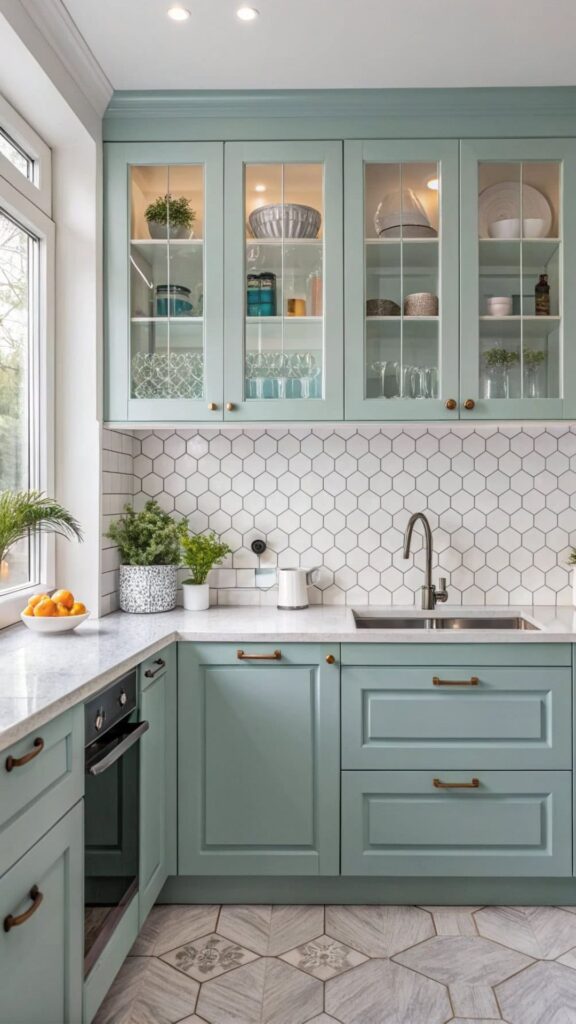
Mirrors aren’t just for bathrooms and hallways a well-placed mirror or mirrored backsplash panel in a kitchen can visually double the perceived space by reflecting light and the room itself. For instance, installing a mirrored tile section behind open shelving can make the shelves appear to float in a larger area, while also bouncing light from windows deeper into the room.
Glass cabinet doors serve a similar purpose. Unlike solid wood doors, glass-fronted cabinets allow the eye to see through to the contents and the wall behind, creating a sense of layered depth rather than a flat, solid wall of cabinetry. This works especially well when the cabinet interiors are painted a light color and organized neatly, since cluttered glass cabinets can have the opposite effect.
Stainless steel appliances and metallic accents like a chrome faucet or brushed nickel cabinet handles also reflect ambient light subtly throughout the day. While this might seem like a minor detail, the cumulative effect of multiple reflective surfaces (glass, metal, mirrors) creates a brighter, more dynamic environment than an all-matte, light-absorbing kitchen would.
You Will Not Regret This: Farmhouse Kitchen Ideas That Show How Even a Small Kitchen Can Look Absolutely Stunning
Hang Pots, Pans, and Utensils:
For Easy Access and Style
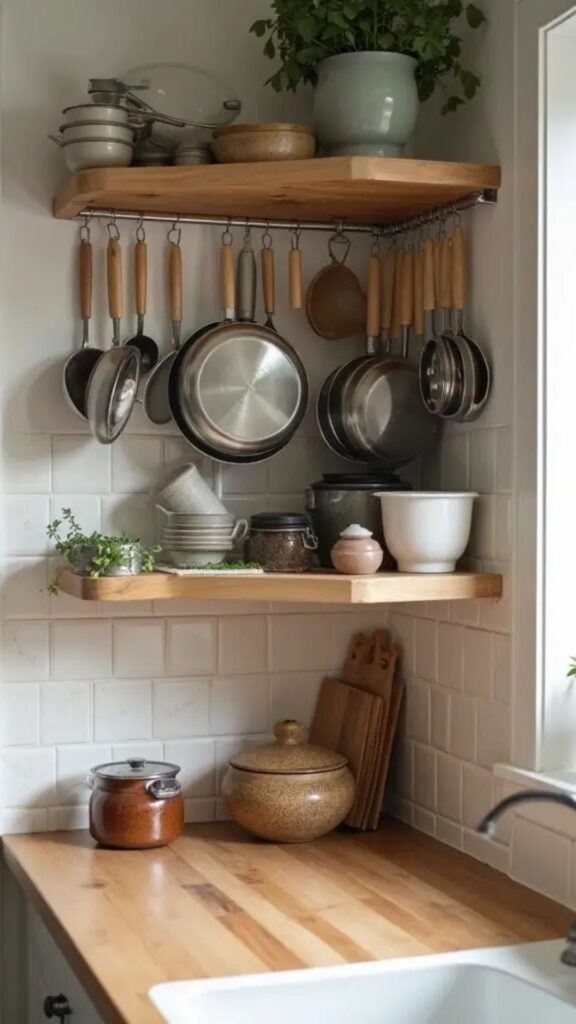
A hanging pot rack does double duty: it frees up valuable cabinet space while turning your cookware into a decorative element. Ceiling-mounted racks work well in kitchens with higher ceilings, while wall-mounted rails are better suited for standard-height rooms. For example, a simple iron rail with S-hooks installed along an empty wall section can hold everything from ladles to copper pots, adding warmth and texture.
This approach is particularly useful in kitchens where cabinet space is at a premium but wall space is underutilized. Instead of stacking pots inside a cabinet where they’re often hard to reach and prone to scratching hanging them keeps them accessible and visible. Visible, well-organized tools can actually make a kitchen feel more “lived-in” and welcoming, rather than cluttered, as long as the items themselves are clean and coordinated in finish.
A practical tip many guides miss: group items by color or material when hanging them. A mix of copper pots, black cast iron, and stainless steel utensils hung together can look chaotic. Choosing one dominant finish say, all matte black or all copper creates a cohesive display that reads as intentional design rather than overflow storage.
Choose Compact, Energy-Efficient Appliances:
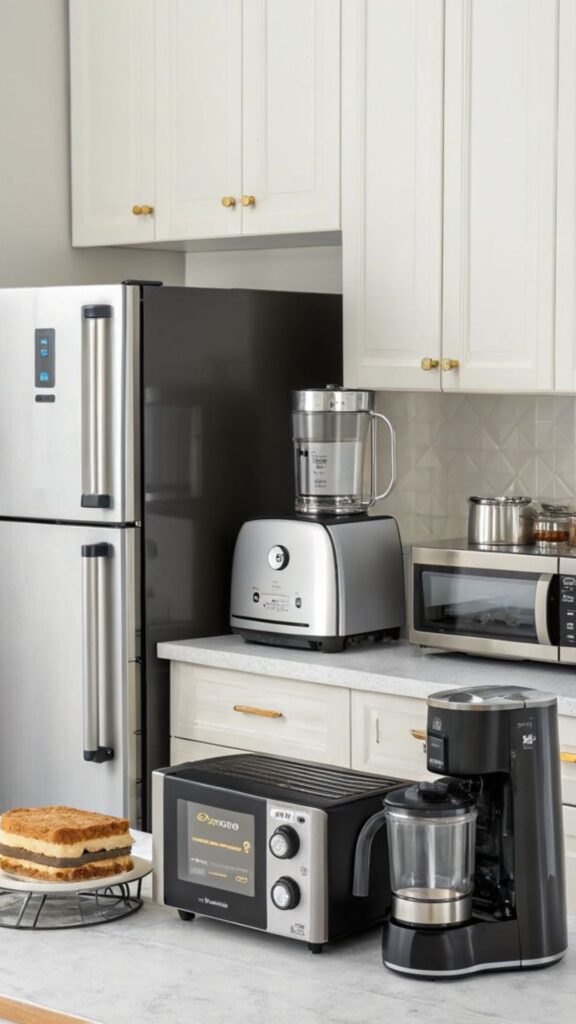
Full-size appliances are often unnecessary in small kitchens and can make the room feel cramped before you’ve even added decor. Compact or slimline versions of refrigerators, dishwashers, and ranges are widely available and often more energy-efficient, which is a growing priority for many households heading into the next few years as energy costs remain a concern.
For example, a 24-inch range instead of a standard 30-inch model can free up an extra six inches of counter space enough room for a coffee station or small prep area. Similarly, drawer-style dishwashers, which can be installed under the counter in a smaller footprint, are becoming more popular in compact kitchen designs because they fit into spaces a standard dishwasher simply can’t.
Beyond size, consider appliances with finishes that blend into your cabinetry, such as panel-ready refrigerators or dishwashers that can be covered with a matching cabinet front. This “disappearing appliance” trend reduces visual clutter significantly, since large appliances often create harsh color or material breaks that make a small kitchen feel busier than it actually is.
Bring in Greenery with Space-Conscious Plants:
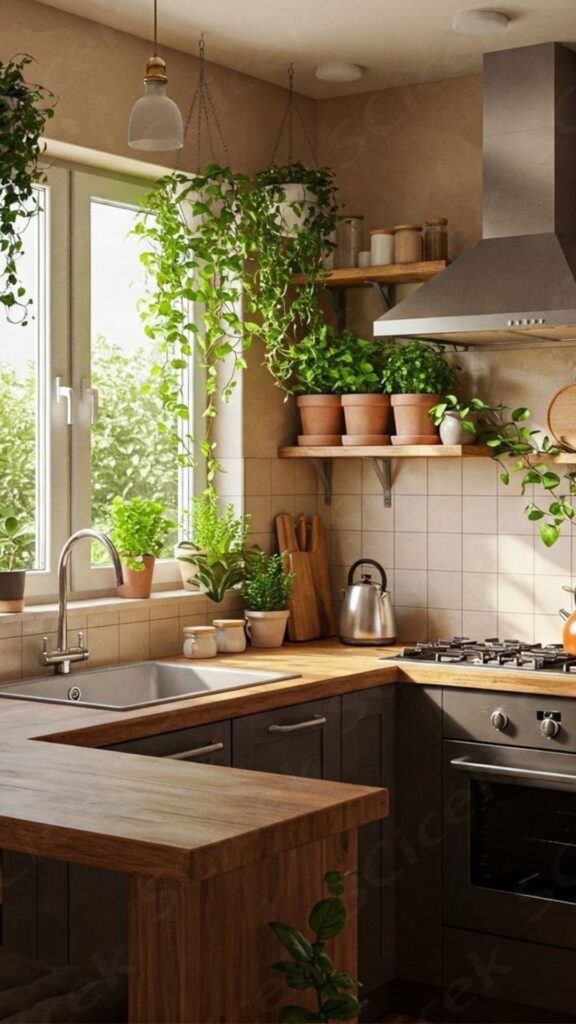
Plants add life, color, and a sense of freshness to any kitchen, but in small spaces, placement is everything. Hanging planters near a window, small pots on a windowsill, or a vertical herb garden mounted on a wall are all ways to incorporate greenery without taking up counter or floor space. A small wall-mounted herb garden near the stove, for example, is both decorative and functional—you get fresh basil or thyme within arm’s reach while prepping meals.
Low-maintenance plants are particularly important here, since kitchens can have fluctuating humidity and temperature from cooking. Herbs like rosemary, mint, and chives tend to do well in bright kitchen windows, while succulents are a good option for kitchens with less natural light, as long as they’re kept away from direct heat sources like stovetops.
One often-overlooked benefit of kitchen greenery is its impact on air quality and mood. Cooking can release odors and moisture into the air, and certain plants help absorb excess humidity and freshen the space naturally. While plants alone won’t solve ventilation issues, they contribute to a kitchen that feels more cared-for and inviting an emotional element that’s just as important as visual space-saving.
Mix Textures for Warmth Without Adding Clutter:
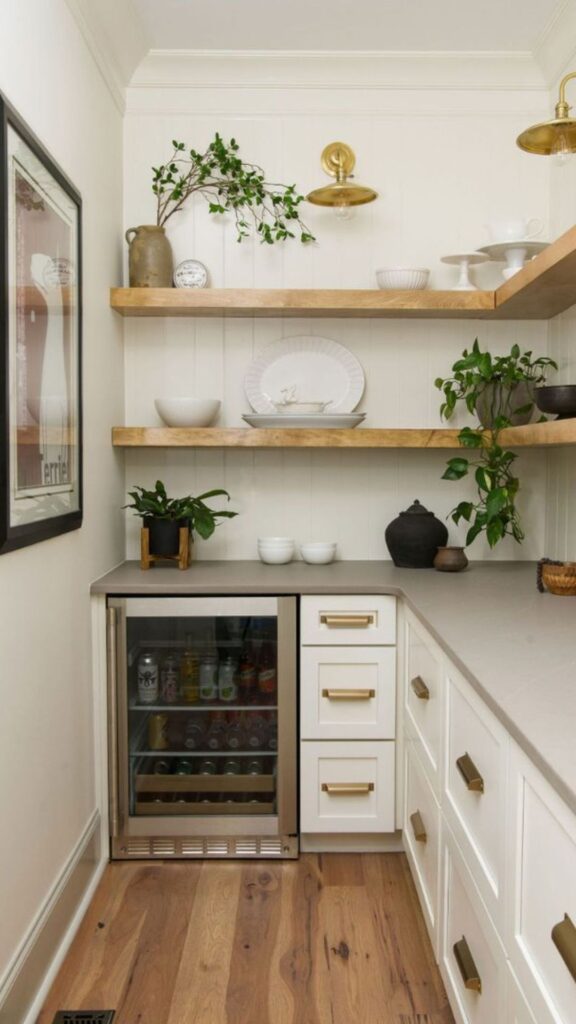
In small spaces, color isn’t the only tool for adding personality texture plays an equally important role. A kitchen with only smooth, glossy surfaces (laminate counters, glass cabinets, tile floors) can feel cold and clinical, even if it’s technically spacious. Introducing one or two textured elements, like a woven rattan light fixture or a wooden cutting board displayed on the counter, adds warmth without requiring extra floor space.
For example, pairing sleek white cabinets with a butcher-block countertop section creates contrast through material rather than color. This is a subtle design move that adds visual interest and a sense of craftsmanship, while still keeping the overall palette light and cohesive. The wood grain introduces texture without darkening the room significantly.
Textiles also matter more than people realize. A simple woven runner on a counter, linen tea towels, or a patterned seat cushion on a bar stool can soften a small kitchen’s hard surfaces. The key is restraint one or two textured accents are enough to add character. Overdoing it with too many patterns or materials can quickly tip a small space from “cozy” into “busy.”
Use Hidden and Built-In Storage:
To Reduce Visual Clutter
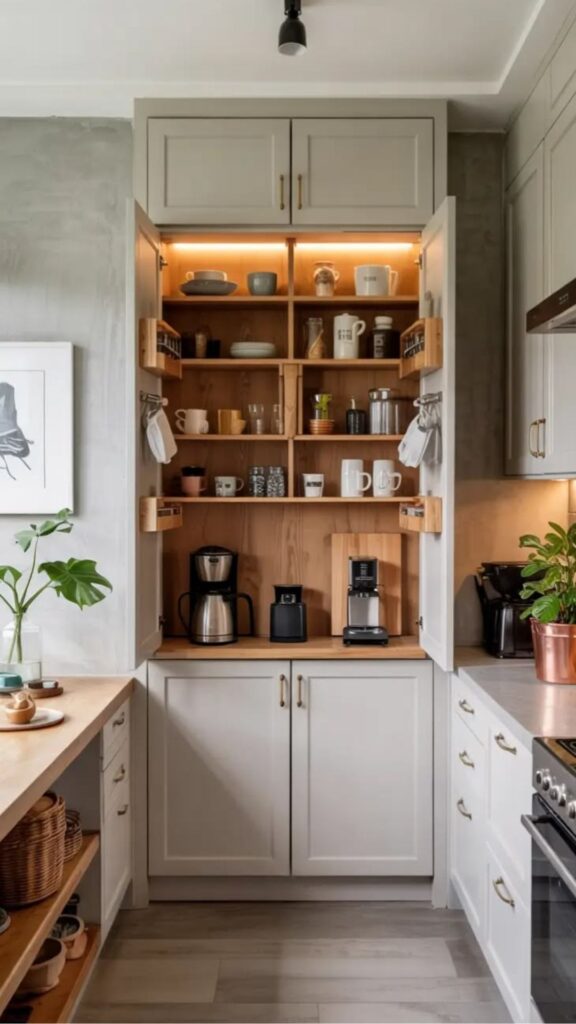
One of the biggest contributors to a small kitchen feeling chaotic isn’t actually the size of the room it’s visible clutter. Built-in storage solutions, like toe-kick drawers (the often-empty space beneath lower cabinets), pull-out spice racks, and corner carousel cabinets, allow you to store more items out of sight. For example, a toe-kick drawer is perfect for storing baking sheets or platters that are awkward to fit in standard cabinets but rarely need daily access.
Drawer dividers and organizers are another small but impactful addition. A junk drawer filled with loose utensils not only looks messy when opened but often leads to duplicate purchases because items can’t be found. Simple dividers create defined spaces for each item type, which makes the kitchen function better and, indirectly, makes it easier to keep counters clear since everything has a designated home.
Magnetic strips for knives, under-shelf baskets for produce, and door-mounted organizers for cutting boards or foil are all examples of “invisible” storage upgrades that don’t require renovation. These solutions address a problem most small kitchen articles gloss over: it’s not just about how much storage you have, but how efficiently that storage is organized and how much of it stays hidden from view.
Right Up Your Alley: Modern Kitchen Design Ideas That Perfectly Inspire Your Beautiful Small Kitchen Decorating Style
Define Zones with Rugs, Lighting, and Layout:
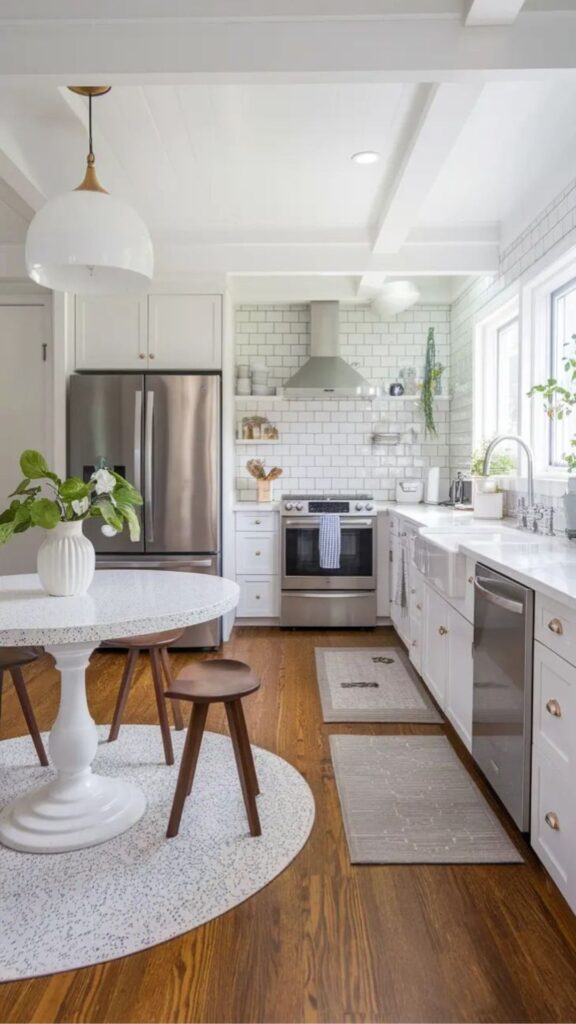
Even in an open-concept layout, small kitchens benefit from having visually defined “zones” a prep area, a cooking area, and perhaps a small seating or coffee nook. A washable kitchen rug placed in front of the sink or stove not only adds comfort underfoot but also visually separates that zone from the rest of the space, similar to how a rug defines a living room seating area.
Lighting can reinforce these zones as well. A pendant light over a small breakfast bar, for instance, signals “this is the dining area” even if it’s just two stools tucked into a corner. This kind of zoning helps a small kitchen feel like it has multiple purposeful areas rather than one cramped, undefined space—an effect that’s particularly valuable in studio apartments or open-plan homes.
Layout adjustments, even small ones, can also redefine zones. Angling a small table toward a window rather than against a wall, or placing a cart perpendicular to the counter to create a mini “peninsula,” can make a kitchen feel more deliberately designed. These layout choices cost little to nothing but often have a bigger impact than adding new decor items, because they change how the space is actually used and experienced.
Final Thoughts
These small kitchen decorating ideas show that limited square footage doesn’t mean limited style. From smart lighting and reflective surfaces to multi-functional furniture and hidden storage, every choice can make your kitchen feel larger and more inviting. The best results come from combining a few of these ideas rather than trying all 12 at once.
Start small perhaps with lighting or open shelving and build from there. Your small kitchen has more potential than you think, so pick one idea today and give it a try

Team TrandyVilla is the passionate home decor team behind Trandy Villa, where style meets comfort in everyday living. The team loves transforming simple spaces into beautiful, functional homes through smart ideas, budget-friendly hacks, and modern design trends. Their content focuses on helping readers create homes that feel both stylish and personal without spending too much.