
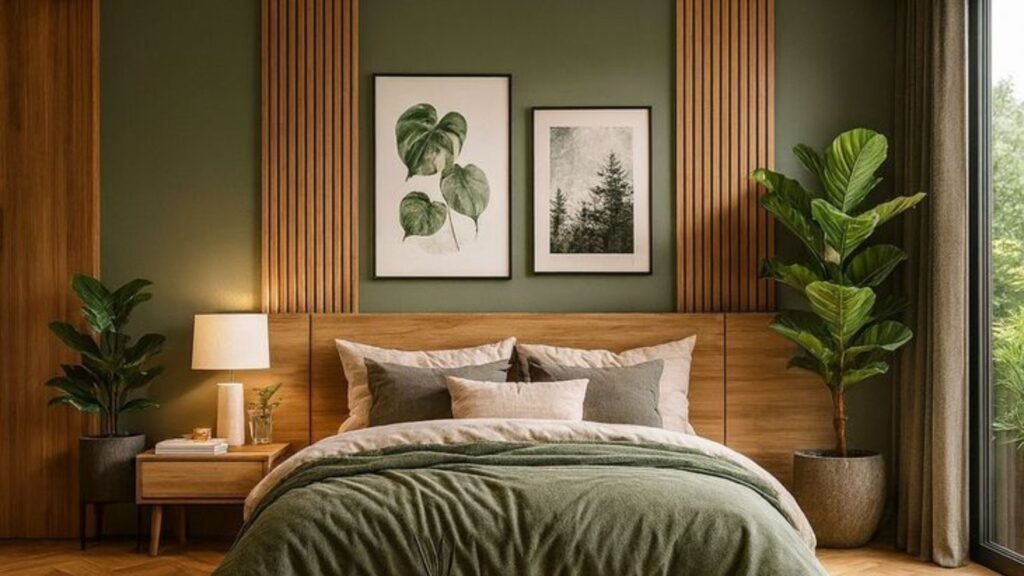
Sage green has quietly become one of the most requested bedroom colors of the decade, and it’s not hard to see why. This muted, earthy green sits at the intersection of calm and sophistication, giving bedrooms a grounded, nature-inspired feel without the visual weight of darker tones. Unlike trendy colors that fade in popularity within a year or two, sage green has staying power because it’s rooted in biophilic design our innate connection to natural elements like plants, stone, and soil.
A sage green accent wall bedroom uses a soft green feature wall to create a calm and stylish space. It adds depth, highlights the bed area, and brings a natural feel to the room. Sage green accent wall bedroom ideas also help balance colors, improve visual appeal, and create a relaxing atmosphere.
A sage green accent wall bedroom brings comfort, elegance, and timeless charm to any home. This simple design choice adds warmth without overwhelming the space. It creates a peaceful setting that supports rest while making the bedroom feel fresh, inviting, and beautifully coordinated every day.
Many sage green accent wall bedroom ideas combine natural textures, warm wood furniture, and soft neutral colors. These elements work together to create a balanced look. Sage green fits modern, farmhouse, boho, and traditional styles, making it a versatile choice for a comfortable and attractive bedroom.
Choose the Right Wall for Maximum Impact:
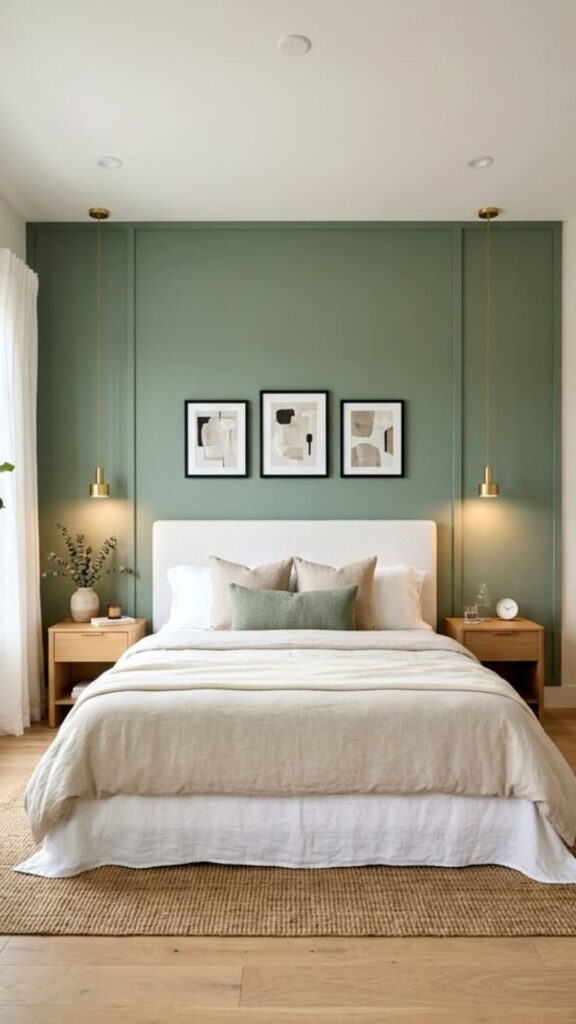
Not every wall deserves to be the accent wall. The headboard wall is almost always the strongest choice because it naturally draws the eye when you enter the room and frames your bed as the room’s focal point. For example, if your bed sits against a long wall opposite the door, painting that wall sage green creates an immediate sense of calm the moment you walk in, since it’s the first surface your eyes land on.
Avoid choosing a wall broken up by multiple doors, closets, or windows, as this fragments the color and weakens its visual effect. A solid, uninterrupted wall lets sage green read as one cohesive block of color rather than scattered patches. If your headboard wall has a window, that’s still workable sage green pairs beautifully with natural light and often looks richer during the day and cozier at night under warm bulbs.
In rooms with low ceilings, painting the wall behind a tall headboard or extending the color slightly onto the ceiling (a technique called “wrapping”) can trick the eye into perceiving more height. This is a trick many professional stagers use specifically with muted greens because the color recedes visually rather than advancing, unlike bold reds or deep navy.
Pair Sage Green With the Right Neutrals:
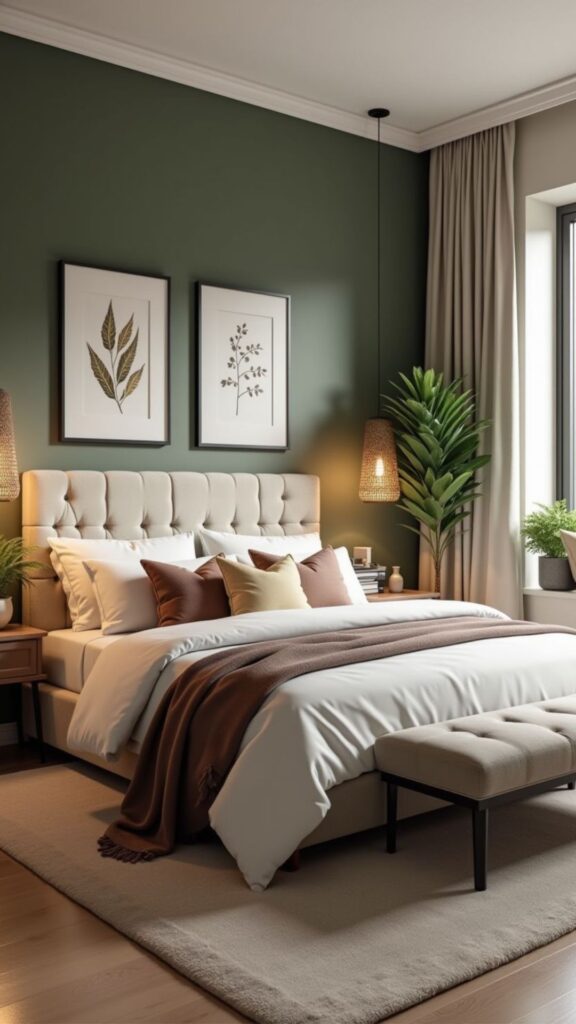
Sage green is a chameleon color, but it performs best when paired with warm, soft neutrals rather than stark, cool ones. Cream, oatmeal, warm white, and light beige all complement sage’s earthy undertones, creating a cohesive palette that feels intentional rather than thrown together. A pure white trim, by contrast, can sometimes make sage green look slightly washed out or clinical, especially in rooms with limited natural light.
Wood tones are another natural partner for sage green, particularly warm oak, walnut, and rattan. For instance, a sage green wall behind a mid-century walnut bed frame instantly creates a curated, organic bedroom that feels like it belongs in a design magazine. This pairing works because both sage green and warm wood share the same earthy, grounded quality, so neither element competes for attention.
If you want contrast without clashing, terracotta and dusty rose are excellent accent colors to layer in through pillows, throws, or artwork. These warmer hues create a gentle complementary effect against sage green’s coolness, adding visual interest without disrupting the room’s overall serenity. Avoid pairing sage with bright primary colors, which can make the space feel busy rather than restful.
Seriously Worth a Look: Bedroom Wall Decor Ideas That Perfectly Complement the Fresh and Calming Feel of Your Sage Green Accent Wall
Balance the Room With Strategic Lighting:
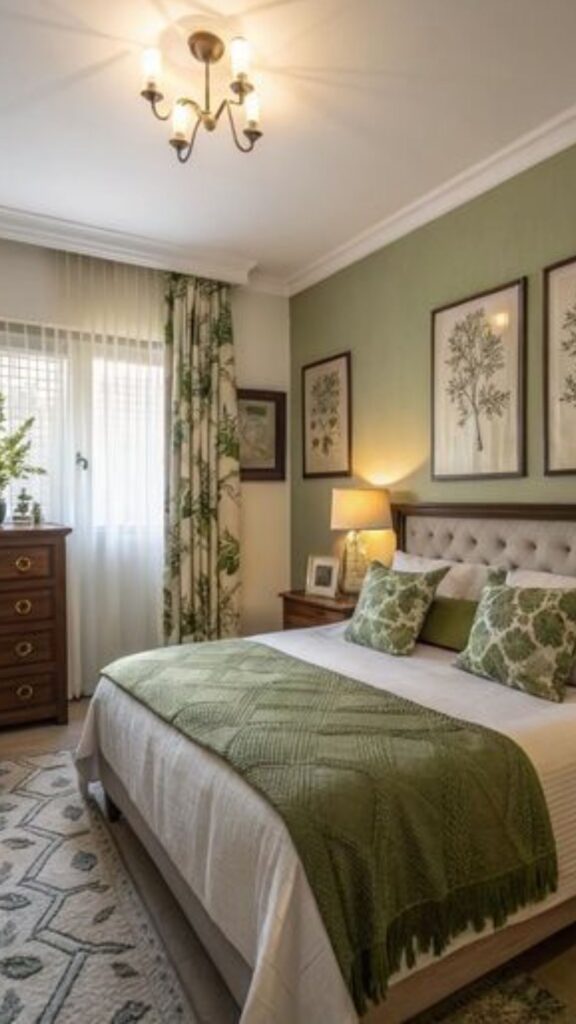
Lighting dramatically changes how sage green reads on a wall, and this is a detail many homeowners overlook until after painting. Warm-toned bulbs (2700K to 3000K) bring out the yellow undertones in sage green, making it feel cozy and inviting in the evening. Cooler bulbs (4000K and above) shift the color toward a more blue-gray appearance, which can feel sharper and more modern but less warm.
Natural light also plays a major role. A sage green accent wall bedroom in a north-facing room which receives cooler, indirect light will often look more muted and gray than the same color in a south-facing room with warmer, direct sunlight. Before committing to a full wall, paint a large sample swatch and observe it across different times of day, since lighting shifts can change the color’s mood from soothing to slightly dull.
Layered lighting also helps the accent wall shine without overpowering the room. Combining a central ceiling fixture with bedside lamps and perhaps a small wall sconce creates depth and prevents the sage green from looking flat under a single harsh light source. This layered approach is a technique professional designers use to make any accent color feel dimensional rather than two-dimensional.
Use Texture to Add Depth and Dimension:
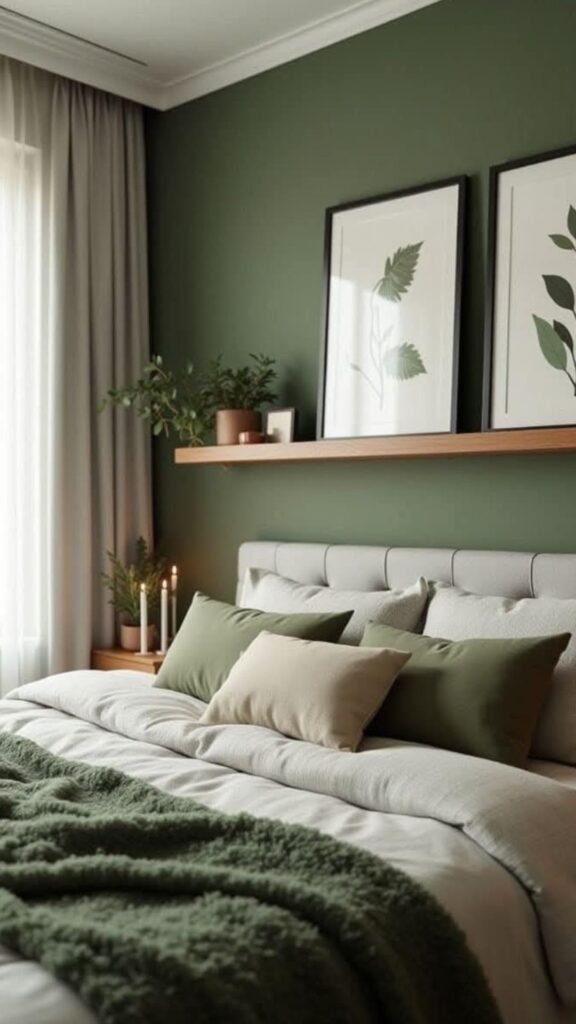
A flat coat of sage green paint looks good, but adding texture elevates the wall from simple to genuinely designer-grade. Limewash and matte clay-based paints are particularly popular right now because they create subtle tonal variation across the wall, mimicking the organic, slightly imperfect look of natural plaster. This technique works especially well with sage green because it reinforces the color’s earthy, nature-inspired identity.
Textured wallpaper is another option worth considering, especially grasscloth or linen-weave designs in sage tones. For example, a grasscloth sage green wallpaper behind a bed adds tactile richness that flat paint simply can’t replicate, and it tends to hide minor wall imperfections better than paint does. This makes it a smart choice for older homes or rental-friendly removable wallpaper options.
Beyond wall treatments, you can introduce texture through the surrounding elements a boucle headboard, a woven rattan pendant light, or a chunky knit throw. These textures interact with the matte quality of sage green paint, creating visual layers that keep the eye engaged without adding more color. This is a detail that separates a thoughtfully designed bedroom from one that simply has a painted wall.
Coordinate Bedding and Soft Furnishings Thoughtfully:
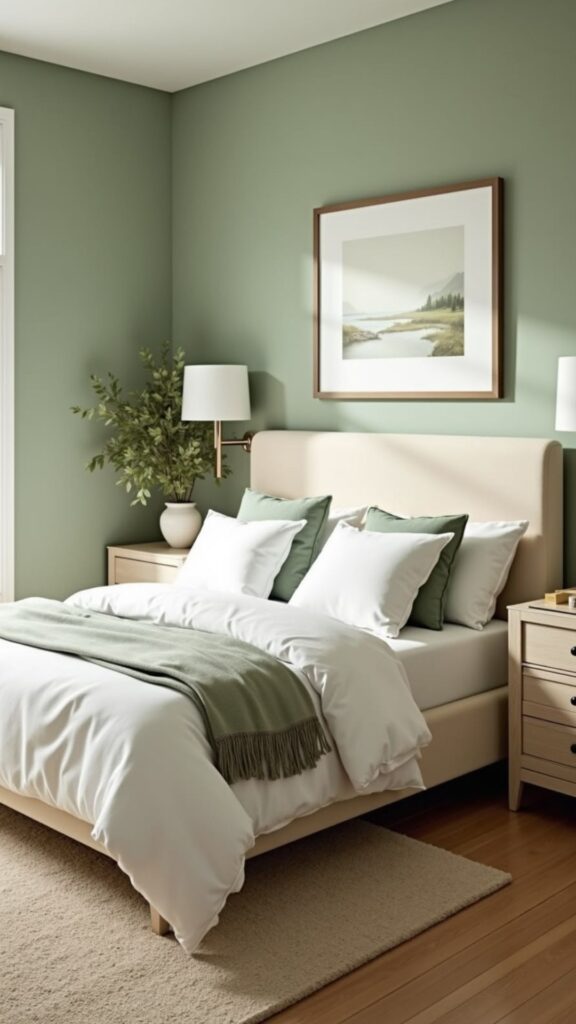
Your bedding does more visual work in the room than almost any other element, so it needs to complement the sage green wall rather than compete with it. White or cream bedding with subtle texture, like waffle-weave or linen, lets the wall remain the star while keeping the bed feeling fresh and inviting. This is the safest and most timeless choice for those unsure where to start.
For a more layered look, consider adding one or two accent pillows in a complementary tone, such as mustard, terracotta, or soft blush. A sage green wall paired with cream bedding and a single mustard lumbar pillow creates a curated, intentional palette without requiring an interior designer’s eye. The key is restraint one or two accent colors is plenty, since too many competing hues can make the room feel cluttered.
Patterned bedding can also work beautifully against a solid sage green wall, particularly botanical prints, subtle stripes, or block-printed florals. Because the wall itself is a solid color, it acts as a calm backdrop that allows the pattern to stand out without overwhelming the senses. Just be cautious about mixing busy patterns with busy wallpaper, since this combination can quickly feel chaotic.
Don’t Skip This: Coastal Bedroom Ideas That Share the Same Natural and Soothing Vibe as Your Beautiful Sage Green Accent Wall
Select the Right Shade for Your Room Size:
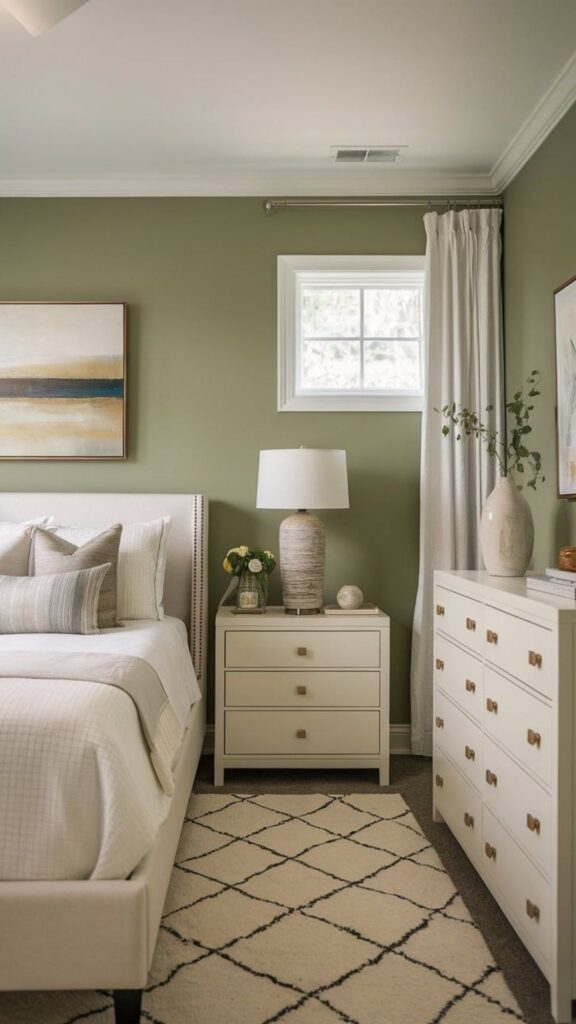
Not all sage greens are created equal, and the specific shade you choose should depend on your room’s size and natural light levels. Lighter, more desaturated sage shades (closer to a soft gray-green) work best in smaller bedrooms or rooms with limited natural light, as they reflect more light and prevent the space from feeling closed in. Darker, more saturated sage tones can make a small room feel cozy but potentially cramped if not balanced with enough light-colored furniture.
In larger bedrooms or rooms with abundant natural light, a deeper sage green can add drama and richness without feeling oppressive. For example, a spacious primary bedroom with large windows can comfortably handle a deeper, more saturated sage on the headboard wall, since the natural light prevents the color from feeling heavy. This is an area where many homeowners go too light, missing an opportunity for a richer, more memorable space.
A practical tip many professionals use: paint a sample on poster board and move it around the room at different times of day, rather than painting directly on the wall. This lets you test the color in multiple lighting conditions without committing, and it avoids the common mistake of judging a color solely under store lighting or a small paint chip.
Combine Sage Green With Black Accents:
For a Modern Edge
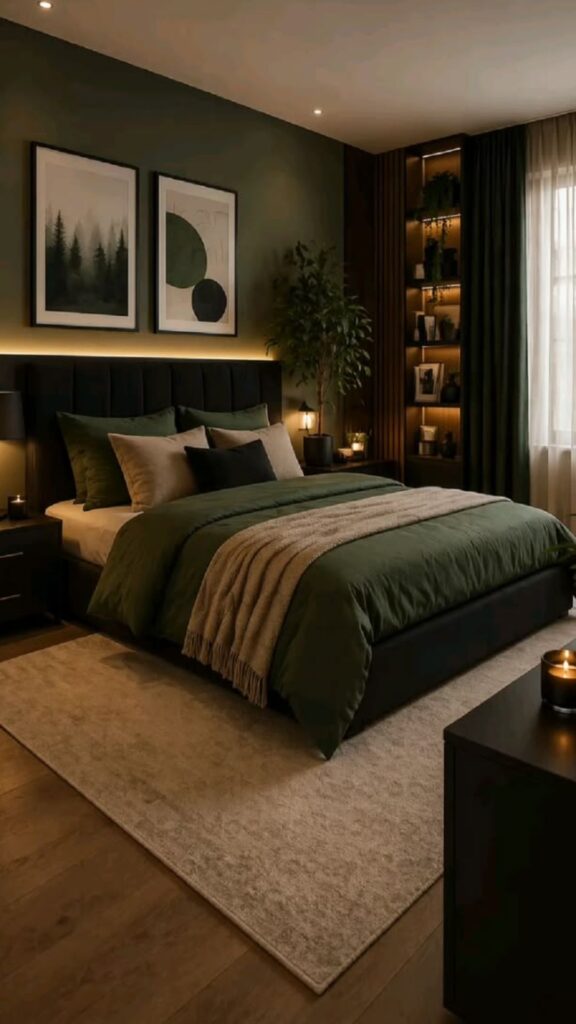
While sage green is often styled in soft, cottage-inspired ways, it also pairs surprisingly well with black accents for a more modern, editorial look. Black metal light fixtures, matte black drawer pulls, or a black-framed mirror against a sage green wall create sharp contrast that keeps the room from feeling overly soft or precious. This combination has grown in popularity among design-forward homeowners who want sage green without a strictly farmhouse or cottagecore aesthetic.
The trick to making this pairing work is using black sparingly, almost like punctuation rather than a dominant color. For instance, a single black-framed piece of art or a matte black pendant light above a nightstand is enough to add edge without darkening the room’s overall mood. Overusing black against sage green can tip the room from “modern and grounded” into “heavy and cold.”
This pairing is particularly effective in bedrooms with brass or warm metal accents already present, since brass bridges the gap between the coolness of black and the warmth of sage green. A brass reading lamp, black-framed window, and sage green wall together create a layered, intentional palette that feels current without chasing a fleeting trend.
Add Greenery and Natural Materials for a Cohesive Look:
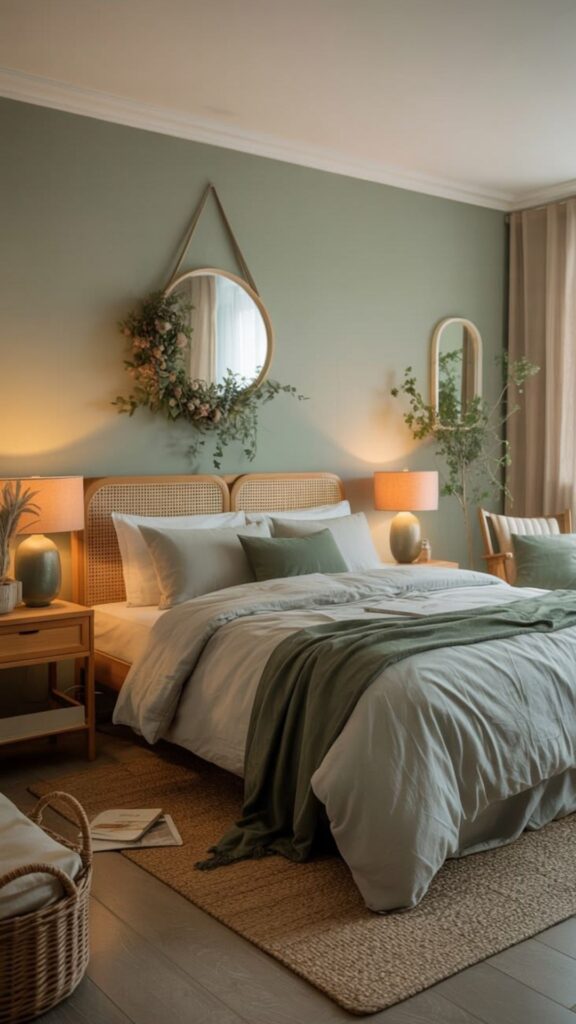
Since sage green is directly inspired by nature, reinforcing that connection with real or high-quality faux plants ties the whole room together. A few potted plants like a snake plant, pothos, or eucalyptus stems in a vase placed near the accent wall extend the color story into three dimensions rather than confining it to a flat surface. This is a low-cost way to make the room feel more curated and alive.
Natural materials like jute rugs, wicker baskets, and linen curtains also reinforce the earthy, organic mood that sage green establishes. For example, a jute area rug at the foot of the bed grounds the room visually and adds textural contrast to the smooth painted wall, preventing the space from feeling one-note. These materials age well too, meaning the room won’t feel dated as quickly as one filled with synthetic or glossy finishes.
This biophilic approach isn’t just aesthetic research in environmental psychology has consistently linked exposure to natural colors and materials with lower stress levels and improved sleep quality. A sage green bedroom styled with real plants and natural textures isn’t just trend-following; it’s a design choice with genuine wellness benefits backed by how our brains respond to nature-inspired environments.
Coordinate Trim, Ceiling, and Doors:
For a Polished Finish
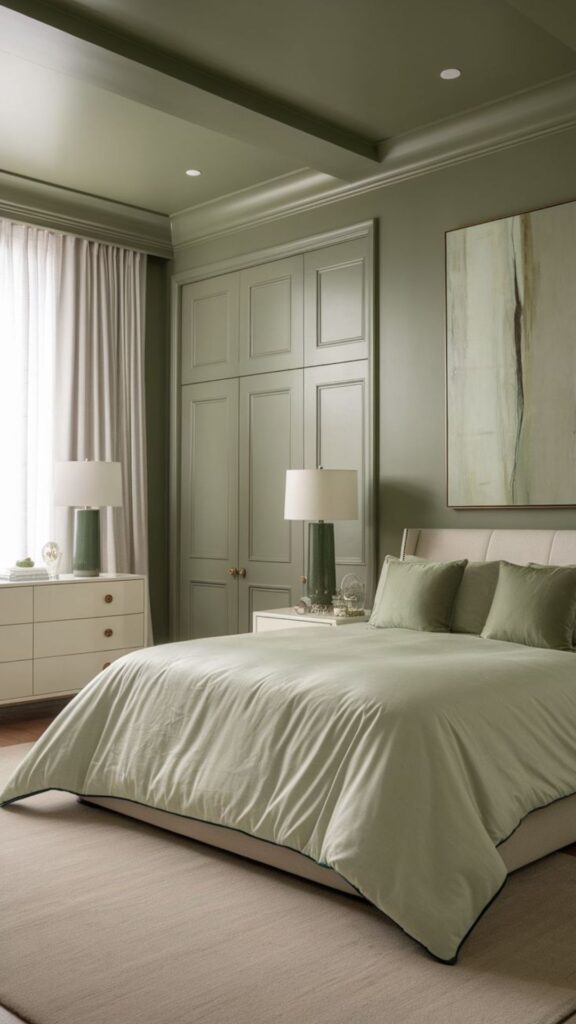
Many homeowners paint the accent wall and stop there, but the trim, ceiling, and door color around it have an outsized effect on how finished the room feels. A warm white trim (rather than stark white) softens the transition between the sage green wall and the surrounding walls, preventing the harsh contrast that can make an accent wall look like an afterthought. This small adjustment is a detail professional painters always check before calling a room complete.
Ceiling color matters more than most people realize, especially in rooms with the wall-wrapping technique mentioned earlier. If your ceiling is bright white while your trim is warm white, the mismatch can read as visually “off” even if you can’t immediately identify why. For example, matching your ceiling to the same warm white as your trim creates a seamless envelope that makes the sage green wall look deliberately framed rather than randomly placed.
Door color is the most overlooked element of all. A bedroom door painted the same warm white as the trim disappears into the background, keeping focus on the accent wall, while a door painted in a contrasting color can either complement or distract depending on execution. If you want a more designer-level finish, consider painting the interior door a deep, complementary tone like charcoal or forest green but only after the rest of the room’s palette is locked in, since this is an advanced move best added last.
Must Reading: Master Bedroom Decor Ideas That Show How a Stunning Sage Green Accent Wall Can Transform Your Whole Bedroom
Style the Wall Seasonally Without Repainting:
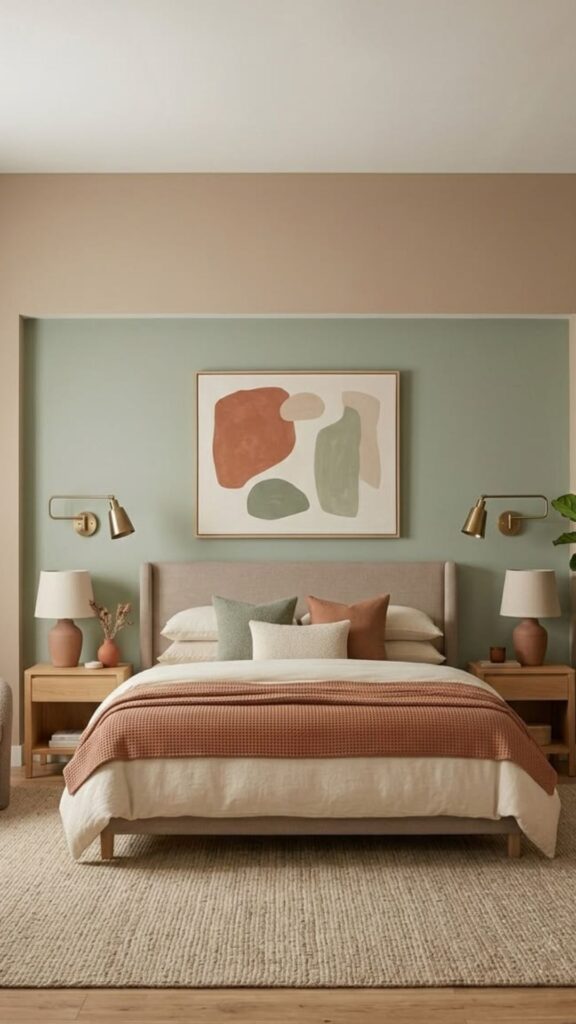
One advantage of sage green that’s rarely discussed is how easily it transitions between seasons through styling alone, meaning you never actually need to repaint. In cooler months, layering in heavier textures like wool throws, deeper-toned pillows in rust or chocolate brown, and warmer lamp lighting makes the same sage green wall feel cozy and cabin-like. For example, swapping a thin cotton throw for a chunky knit wool one instantly shifts the room’s mood toward winter without touching the paint.
In warmer months, switching to lighter linen bedding, woven natural-fiber baskets, and brighter white accents makes that identical wall feel airy and fresh again. This seasonal flexibility is a major practical advantage over trend colors like terracotta or mustard, which tend to feel locked into one mood year-round and require more effort to adapt. Sage green’s neutral-adjacent quality means it absorbs whatever seasonal styling you layer on top of it.
This approach also extends the life of your decor budget significantly. Instead of repainting or buying entirely new furniture each year to keep the room feeling current, you can rotate a handful of textiles pillow covers, a throw blanket, a vase of seasonal stems and get a meaningfully different mood from the same base investment. It’s a strategy interior stylists use constantly for client homes precisely because it’s cost-effective and low-risk.
Final Thoughts
A sage green accent wall bedroom offers a rare combination of calm, style, and lasting appeal that few other color choices can match. By choosing the right wall, shade, lighting, and complementary materials, you can create a space that feels both grounded and genuinely beautiful.
The best part is that this look adapts easily as your style evolves over time. Ready to bring this calming color into your space? Pick your favorite idea from this guide and give your bedroom the refresh it deserves.

Team TrandyVilla is the passionate home decor team behind Trandy Villa, where style meets comfort in everyday living. The team loves transforming simple spaces into beautiful, functional homes through smart ideas, budget-friendly hacks, and modern design trends. Their content focuses on helping readers create homes that feel both stylish and personal without spending too much.