
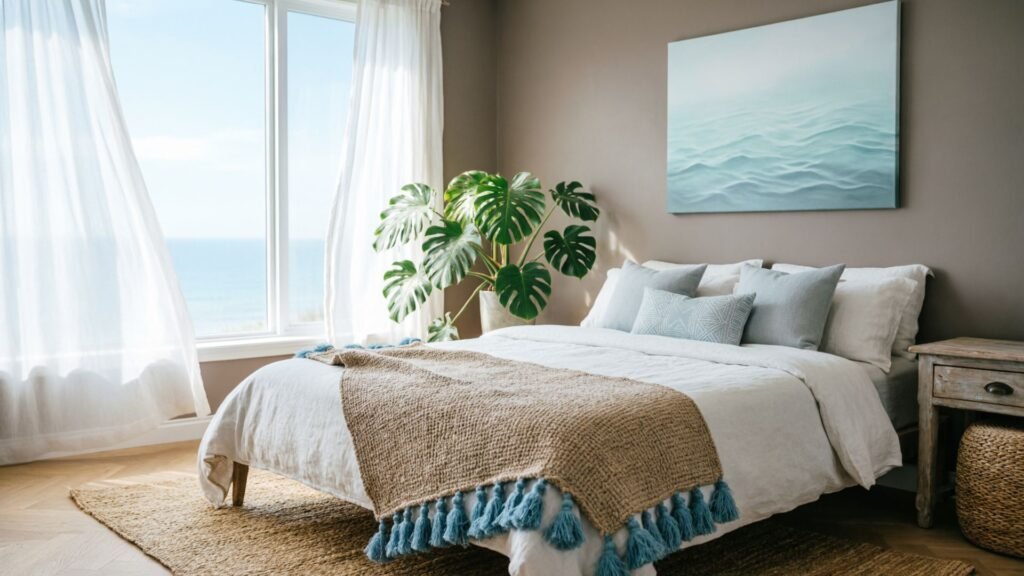
There is something deeply calming about a bedroom that feels like the ocean. The soft blues, natural textures, breezy linens, and sun-bleached tones of a coastal bedroom do more than look beautiful they psychologically lower stress and promote deeper sleep.
Interior designers have long known that the ocean aesthetic triggers what researchers call“blue mind,” a meditative state brought on by water-associated visuals and textures. A coastal bedroom is a sleep space designed to reflect the calm, natural beauty of the ocean and shoreline. It uses soft blues, sandy neutrals, natural textures, and breezy fabrics to create a relaxing retreat.
The core ideas include choosing ocean-inspired colors, adding natural materials like rattan and linen, layering light textures, maximizing natural light, and decorating with sea-inspired accents. Each element works together to bring the peaceful feeling of the beach indoors.
Imagine waking up every morning feeling completely calm, refreshed, and at peace that is exactly what a well-designed coastal bedroom delivers. This space transforms ordinary rest into a true sensory escape. A coastal bedroom uses nature-inspired design to reduce stress, improve sleep quality, and create a personal retreat that feels both beautiful and deeply restorative every single day.
Coastal bedroom ideas cover a wide range of design choices that work together to build a cohesive, beach-inspired space. Designers recommend starting with a soft color palette, then selecting natural furniture, breathable bedding, and organic decorative objects.
Shiplap walls, rattan headboards, linen curtains, and sea glass accents all contribute to the overall look. Every detail, from lighting to scent, plays a role in making the room feel genuinely connected to the coast.
Start With a Soft, Ocean-Inspired Color Palette:
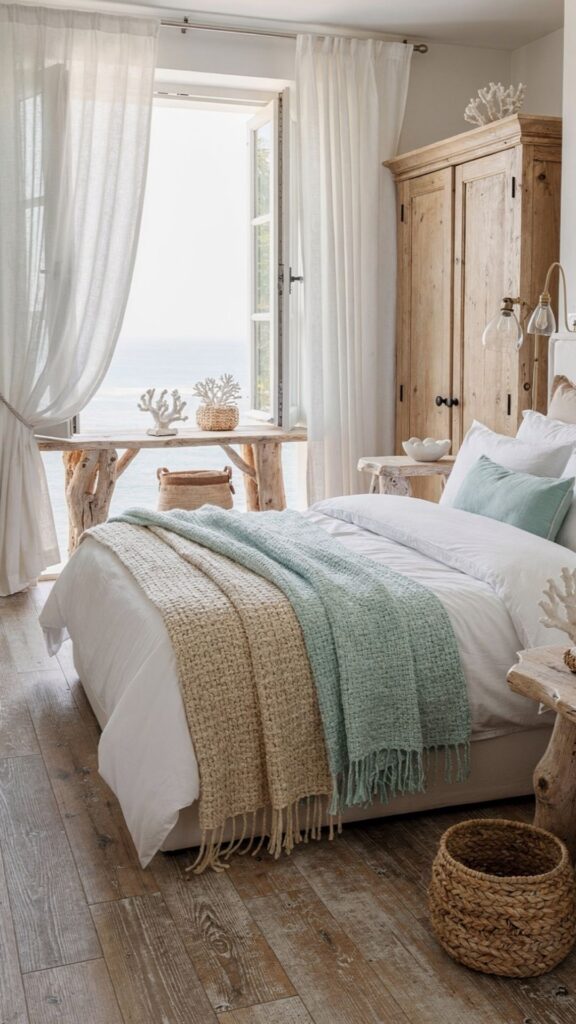
The foundation of every great coastal bedroom is color. Think beyond clichéd navy and white today’s coastal palette is far more nuanced. Designers are favoring soft sage greens, weathered driftwood grays, warm sandy beiges, and pale aquas that feel sophisticated rather than kitschy.
These tones mimic the actual colors of the shoreline at different times of day dawn pinks, midday whites, and dusk lavenders all have a place in a well-designed coastal room. When choosing your base wall color, consider how natural light hits the room throughout the day. A north-facing room benefits from warmer whites and sandy tones to compensate for cooler light.
A south-facing room can handle deeper ocean blues without feeling dark. For example, Benjamin Moore’s “Sea Salt” or Farrow & Ball’s “Borrowed Light” are frequently recommended by coastal interior designers for their ability to shift beautifully with changing daylight. These colors feel alive rather than flat.
Don’t forget about the fifth wall your ceiling. Many coastal bedroom designers paint ceilings in a light sky blue or barely-there aqua to create the feeling of looking up into open sky. This subtle touch significantly elevates the room’s atmosphere. Combined with the right flooring and textiles, a thoughtfully chosen color palette becomes the invisible backbone of the entire coastal design.
To avoid the look feeling overly themed or like a vacation rental, use one dominant color and pull 2–3 accent tones from it. Too many competing colors strip the room of the calm serenity that makes coastal design so appealing in the first place.
Choose Natural Materials for Furniture and Flooring:
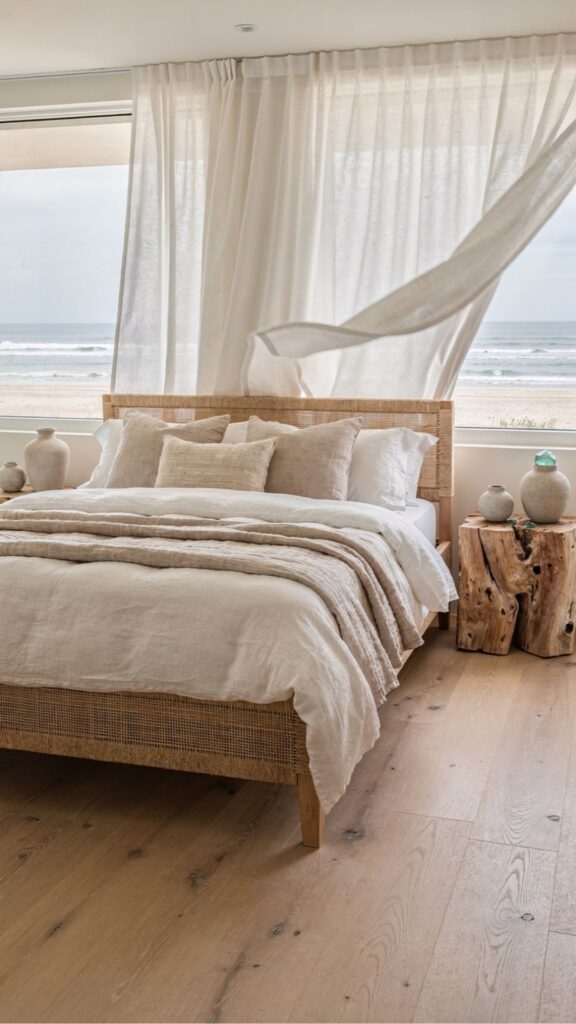
Coastal bedrooms thrive on authenticity, and nothing communicates that better than natural, organic materials. Rattan, wicker, bamboo, driftwood, reclaimed pine, and seagrass are all materials that carry the sensory memory of the beach they feel warm, tactile, and deeply relaxed.
A rattan headboard, for example, immediately reads as coastal without requiring any other design cues in the room. When selecting furniture, look for pieces with visible grain, weathered finishes, or handcrafted textures.
A whitewashed oak dresser or a bedframe made from reclaimed wood connects the room to nature in a way that mass-produced laminate furniture simply cannot. These materials also age beautifully, developing character over time rather than looking dated after a few years. This is a key advantage over trend-driven coastal design from the 2000s.
Flooring plays a major role too. Wide-plank hardwood floors in pale or gray-washed tones are ideal for coastal bedrooms. If hardwood isn’t an option, high-quality luxury vinyl plank (LVP) in driftwood or whitewashed oak finishes achieves a similar effect at a fraction of the cost. Area rugs made from jute, sisal, or natural fiber weaves add warmth and texture underfoot while keeping the organic theme consistent.
One often-missed tip: avoid matching furniture sets. A curated mix of natural pieces a cane bedside table, a linen upholstered bench, a mango wood chest creates the layered, collected-over-time feel that authentic coastal interiors have. It looks personal rather than staged.
Step Inside: Master Bedroom Decor Ideas That Perfectly Complement Your Beautiful Coastal Bedroom Style.
Layer Bedding With Texture and Light Fabrics:
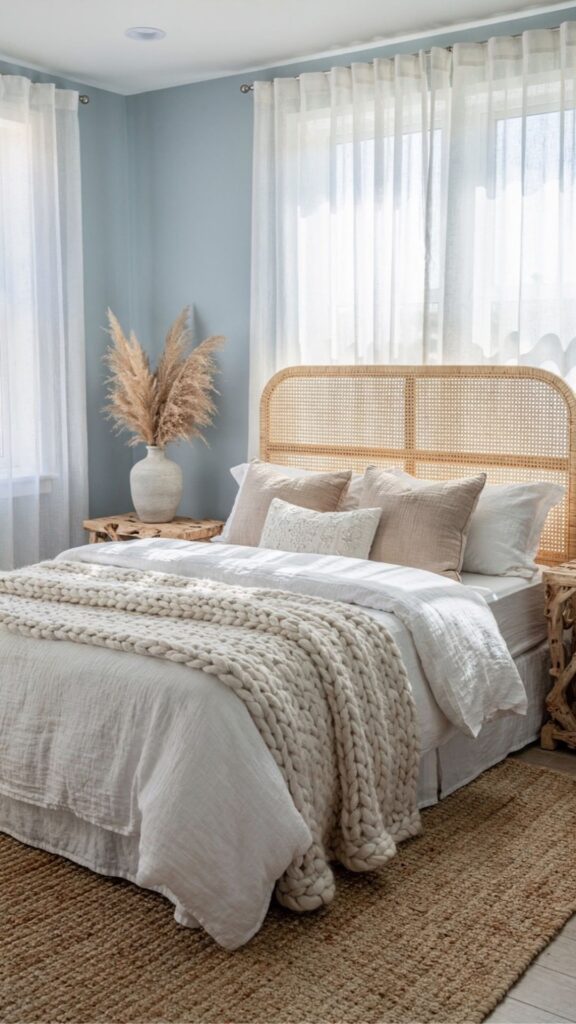
The bed is the centerpiece of any bedroom, and in a coastal space it should feel like the most inviting place to collapse after a long day at the beach. Bedding layering is an art: start with high-quality linen or cotton percale sheets in white or light cream, add a lightweight cotton quilt in a soft stripe or solid coastal tone, and finish with a chunky-knit or waffle-weave throw draped casually at the foot.
Linen is a particularly smart choice for coastal bedrooms. It’s naturally breathable, becomes softer with every wash, and has an effortless, slightly rumpled look that perfectly captures the casual elegance of beach house style. Belgian linen, in particular, is a premium option favored by interior designers for its durability and texture. If linen is out of budget, linen-cotton blends offer a similar look for less.
Pillows are another major layering opportunity. Mix solid and patterned pillowcase stripes, subtle wave prints, or abstract textures all work beautifully in a coastal bedroom. Avoid overly literal nautical prints like anchors or ship wheels unless you’re going for a very specific sailor-themed aesthetic. Instead, look for organic shapes and watercolor-style patterns that suggest the ocean without spelling it out.
A lesser-known tip from interior stylists: don’t overload the bed with too many pillows. Three to five well-chosen pillows in varying sizes look more sophisticated than a mountain of mismatched cushions. The goal is inviting ease, not formal excess.
Maximize Natural Light With Breezy Window Treatments:
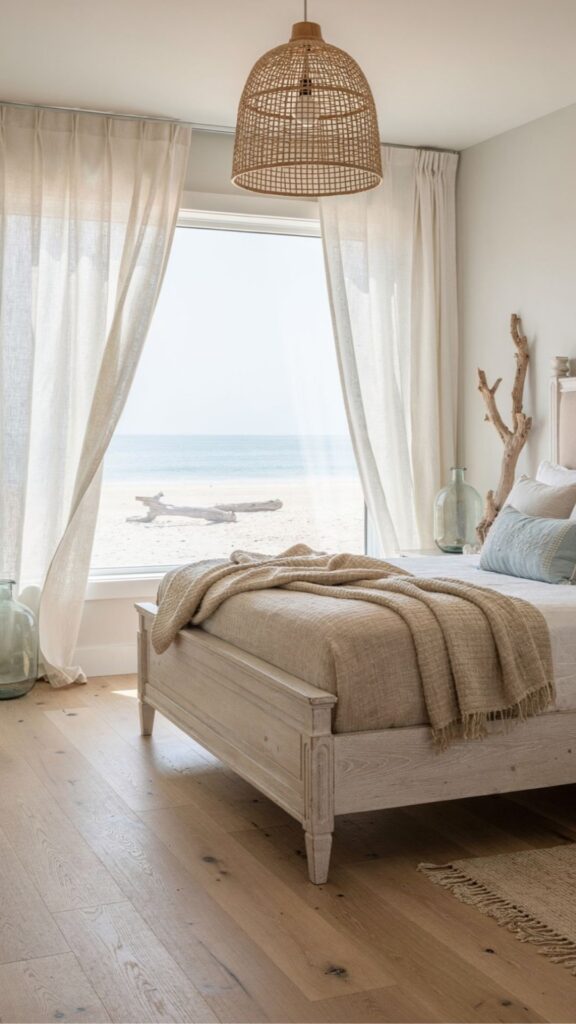
Light is one of the most powerful design tools in a coastal bedroom. Real beach houses are full of windows, and the rooms feel alive because sunlight moves through them all day. Even if you can’t add new windows, you can maximize the light you have through smart window treatment choices.
Sheer linen or cotton voile curtains are the gold standard for coastal bedrooms. They filter light without blocking it, creating a soft, hazy glow that mimics sunlight through sea mist. In ivory, white, or very pale aqua, these sheers billow softly in air conditioning drafts, adding a subtle sense of movement to the room.
For privacy needs, layer them with simple roman shades in a natural fabric that can be raised fully during the day. Avoid heavy drapes, blackout curtains in dark colors, or anything that makes the room feel closed off. If you need blackout functionality which many people do for quality sleep choose blackout lining sewn inside linen-look curtain panels rather than standalone blackout drapes.
This way you get the coastal aesthetic during the day and full darkness when you need it. Hardware matters too. Opt for wooden curtain rods in driftwood or whitewashed finishes, or simple brushed brass rods for a slightly elevated coastal look. Avoid cold chrome or ornate iron rods, which conflict with the organic warmth of coastal design.
Incorporate Coastal Artwork and Wall Décor Thoughtfully:
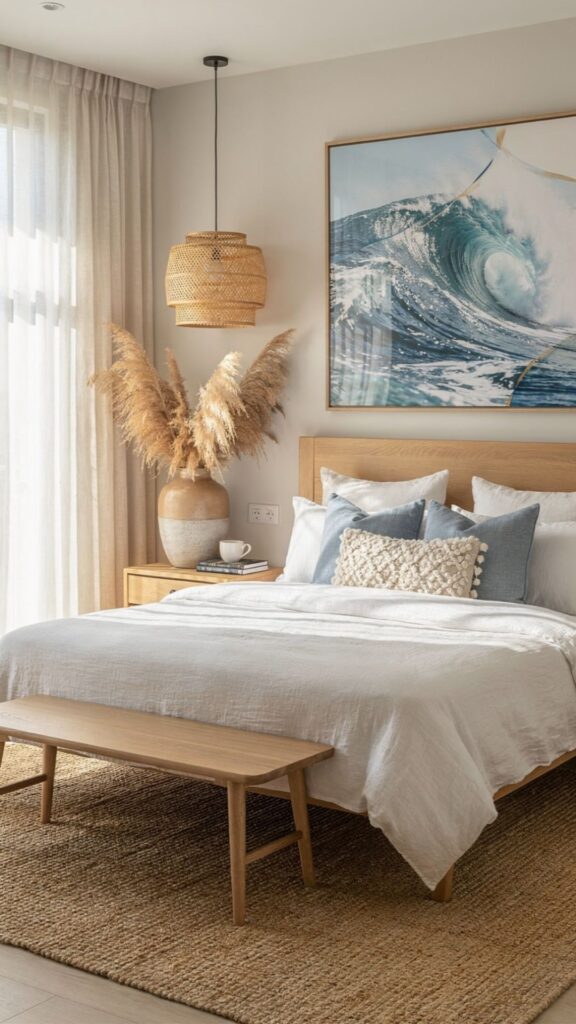
Art is where coastal bedrooms can go beautifully right or terribly wrong. The wrong approach is buying a “SET” of pre-packaged coastal wall art from a big-box store. The right approach is curating a mix of pieces that feel personal, layered, and slightly unexpected. Think abstract ocean prints, vintage nautical maps, black-and-white beach photography, or even framed pressed seagrass.
Large-scale art has a significant impact. A single oversized abstract painting in ocean tones deep teal, sandy gold, soft white can anchor an entire wall and make the room feel gallery-level without any other wall décor needed.
Watercolor artists who specialize in seascapes are widely available on platforms like Etsy and Society6, offering original or printed work that feels curated rather than generic.
Gallery walls work well in coastal bedrooms when done with restraint. Mix different frame materials driftwood, bleached wood, thin brass and include a variety of content: a vintage sea chart, a simple line-drawing of a wave, a botanical print of coastal grasses, and a family beach photo. The key is coherence through color, not through matching frames and identical print styles.
One insider tip designers rarely share: hang art lower than you think. Eye-level hanging (approximately 57–60 inches from the floor to the center of the artwork) makes art feel more intimate and human in a bedroom setting. Art hung too high feels institutional and disconnected from the space.
Add a Rattan or Wicker Headboard as a Statement Piece:
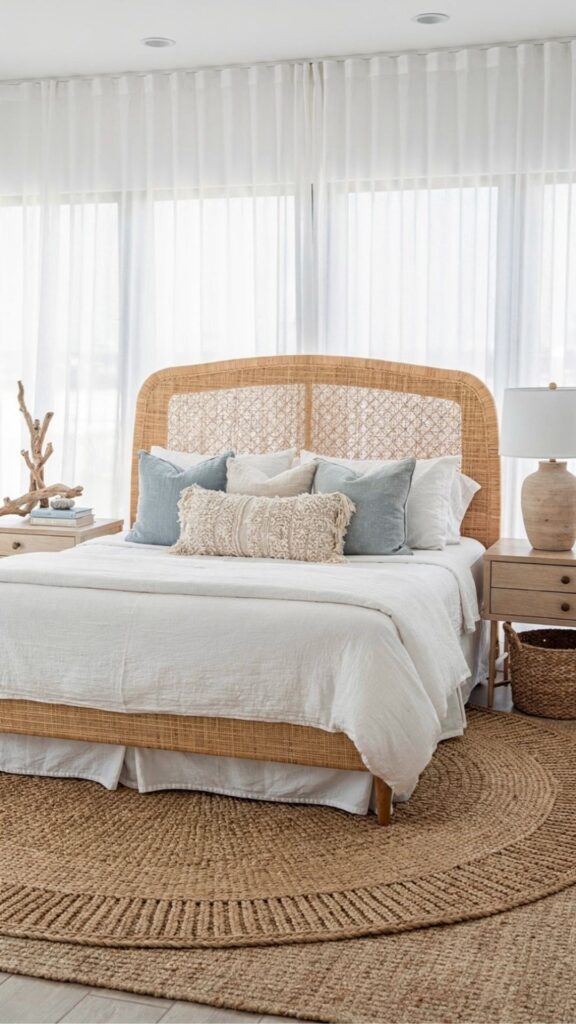
The headboard is the single most impactful piece of furniture in a bedroom, and in a coastal room it deserves serious attention. Rattan and wicker headboards have surged in popularity among interior designers and for good reason they bring immediate texture, warmth, and organic visual interest without competing with the rest of the room.
Rattan headboards come in a variety of weave styles. A tightly woven natural rattan headboard in a sunburst or arched shape feels bohemian-coastal. A more open, geometric weave in painted white rattan reads cleaner and more Hamptons-style.
The choice between natural tan tones and painted white or black depends entirely on your room’s overall palette both work brilliantly. Beyond rattan, consider a linen-upholstered headboard in a soft coastal tone like dusty blue or warm cream.
Upholstered headboards add acoustic softness to a room (they literally absorb sound), making the space feel quieter and more restful. For a more architectural option, shiplap or whitewashed wood plank headboard walls create a stunning focal point with a deeply coastal feel.
What to avoid: overly ornate, carved wood headboards with dark stains, or metal headboards in industrial finishes. These pull the room away from the relaxed, sun-washed coastal aesthetic. The headboard should feel like something you might find in a beautifully designed beach house, not a city hotel.
Use Driftwood Accents and Organic Decorative Objects:
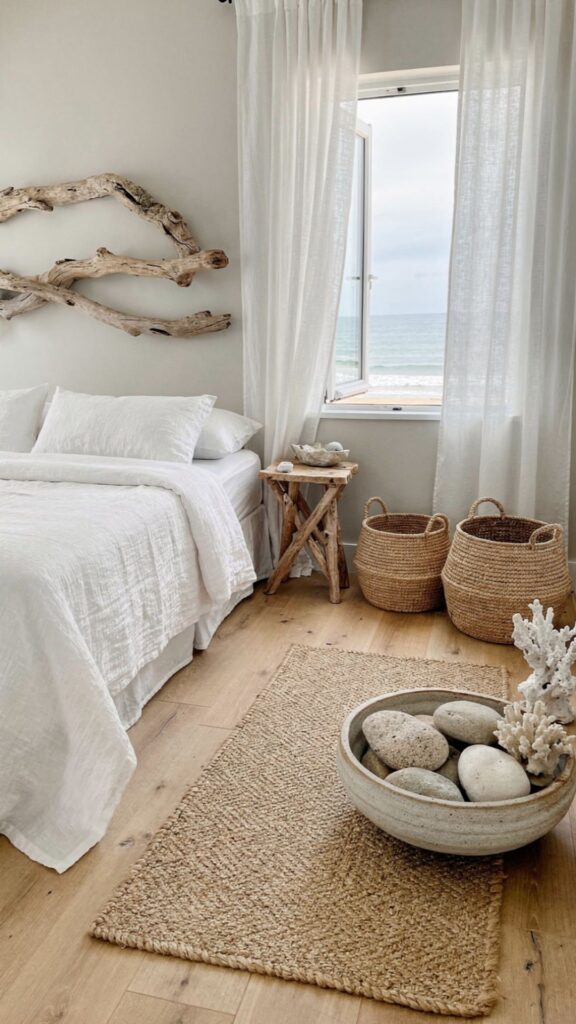
Decorative accessories are where coastal bedroom design gets really personal. The best coastal rooms feel like they’ve been collected over years of beach trips a piece of driftwood found on a walk, a glass jar filled with shells, a coral-shaped sculpture, a woven seagrass basket. These objects carry narrative and soul.
Driftwood in particular is a highly versatile coastal design element. A large piece of naturally shaped driftwood can serve as wall art, a sculptural bedside lamp base, a curtain rod, or a decorative tray accent. Its pale, silvery-gray color works with virtually every coastal palette. If you can’t source real driftwood, high-quality faux driftwood décor pieces are widely available and virtually indistinguishable.
Sea glass collections displayed in apothecary jars or shallow bowls on a dresser add color and texture. If you collect shells or coral during travels, display them intentionally rather than crowding them on every surface.
A single beautiful conch shell displayed alone on a stack of coffee table books has far more visual impact than a bowl full of mixed shells on every surface. One forward-looking trend: sustainable and ethically sourced coastal décor is gaining traction.
Rather than purchasing coral (which raises ecological concerns), designers are favoring sustainable alternatives like carved limestone, bleached wood sculptures, and handmade ceramic pieces inspired by ocean forms. This approach is both more responsible and more design-forward.
Bring in Coastal Greenery and Indoor Plants:
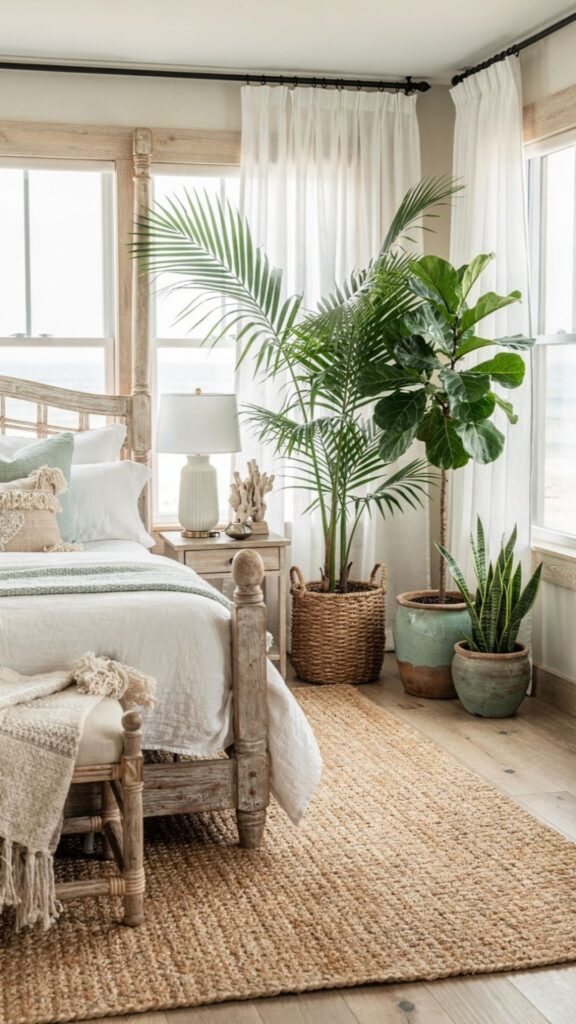
Plants are often underutilized in coastal bedrooms, which is a missed opportunity. The right plants reinforce the connection to nature, improve air quality, and add a layer of living texture that no artificial material can replicate. In a coastal context, the goal is plants that feel like they belong near the ocean or on a sun-drenched porch.
Tropical and trailing plants work particularly well: pothos, monstera, birds of paradise, palms, and trailing string of pearls all read as coastal-adjacent. Succulents and air plants (tillandsia) are ideal for coastal bedrooms because they’re low-maintenance, visually interesting, and thrive in bright, airy environments.
A cluster of air plants in a driftwood display or a shallow ceramic dish is a beautiful, low-effort coastal vignette. Coastal grasses in tall, slender ceramic vases are another underused gem. Dried pampas grass, bleached wheat stalks, or tall dried sea oats in a simple vase instantly evoke beachside dunes. These are maintenance-free and last for months, making them practical as well as beautiful.
The container matters as much as the plant. Use terracotta pots, woven basket planters, concrete vessels, or glazed ceramics in coastal tones. Avoid plastic pots left uncovered they immediately cheapen the look. A trailing pothos in a simple woven rattan planter on a dresser corner adds life, texture, and just the right amount of organic chaos to an otherwise composed coastal bedroom.
See The Magic: Bedroom Wall Decor Ideas That Bring a Fresh Coastal Vibe to Your Bedroom Walls.
Layer Area Rugs in Natural Fibers and Coastal Patterns:
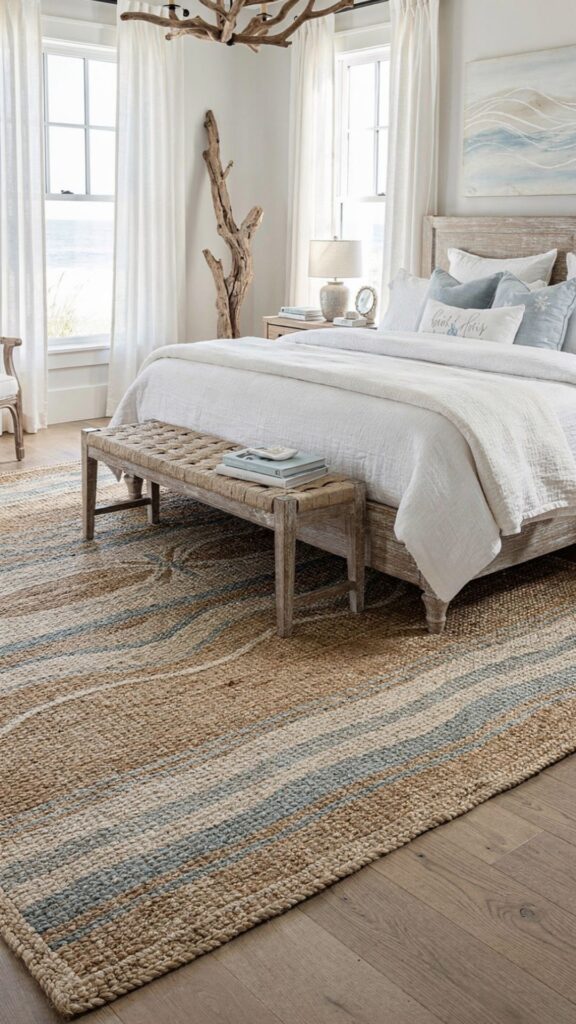
Rugs play a critical functional and aesthetic role in bedrooms, and in a coastal design, they’re an opportunity to add significant texture and warmth underfoot. The best coastal bedroom rugs feel natural, relaxed, and slightly imperfect characteristics that define beach house style at its best.
Jute and sisal rugs are classics for good reason. They’re affordable, highly durable, and their natural tan and brown tones work with every coastal palette. The rough texture adds an earthy, grounded quality that balances the softer elements like linen bedding and sheer curtains. For a bedroom, look for softer jute blends (jute-wool or jute-cotton) rather than pure sisal, which can feel scratchy on bare feet.
Layering rugs is a sophisticated technique that designers use to add visual depth. A smaller, patterned rug (perhaps in a soft blue-and-white stripe or abstract wave print) placed over a larger natural fiber rug creates a layered, collected look that elevates the design. This works particularly well in larger bedrooms where a single rug might look undersized.
Pattern choices for coastal bedroom rugs include: thin stripes in navy or aqua, abstract watercolor-style prints, organic geometric weaves, and Moroccan-inspired patterns in coastal tones. What to avoid: overly busy, high-contrast patterns or anything that looks like it belongs in a tiki bar. The rug should support the room’s serenity, not compete with it.
Design a Coastal Bedroom With Smart Storage Solutions:
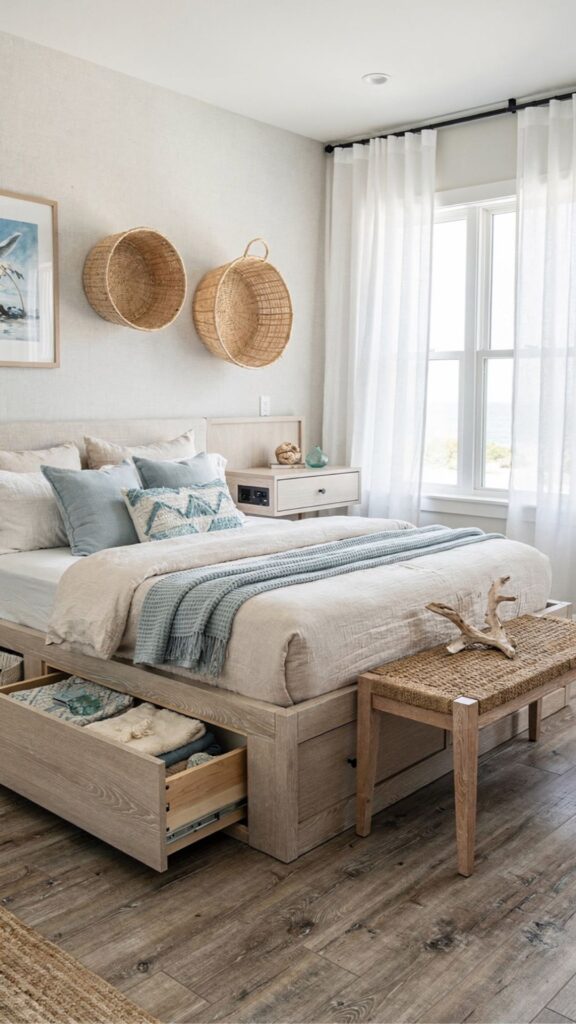
Coastal bedrooms often feel calming partly because they’re uncluttered. A well-organized, storage-smart room reinforces the relaxed, airy feel that beach house interiors are known for. But the storage solutions themselves should also feel coastal no cold metal shelving or dark wooden wardrobes.
Woven seagrass or water hyacinth baskets are a staple of coastal storage. They’re inexpensive, beautiful, and functional perfect for storing extra blankets, laundry, books, or shoes in an open or under bed configuration. Stacked in a corner or lined up on open shelving, they become a design element in their own right. Open shelving in bedrooms is a beautiful coastal design choice when curated thoughtfully.
White-painted floating shelves displaying a mix of books, plants, candles, and a few select decorative objects create a relaxed, personalized look. The key is editing ruthlessly display only items that are genuinely beautiful or meaningful. Clutter on open shelves destroys the coastal calm instantly.
Beds with built-in storage (drawers underneath) are a practical coastal choice, especially in smaller bedrooms. They keep the floor clear, which visually expands the space. Pair a storage bed with a simple platform frame in natural wood and you have a piece that’s both functional and beautiful exactly what good coastal design demands.
Install Shiplap or Beadboard Accent Walls:
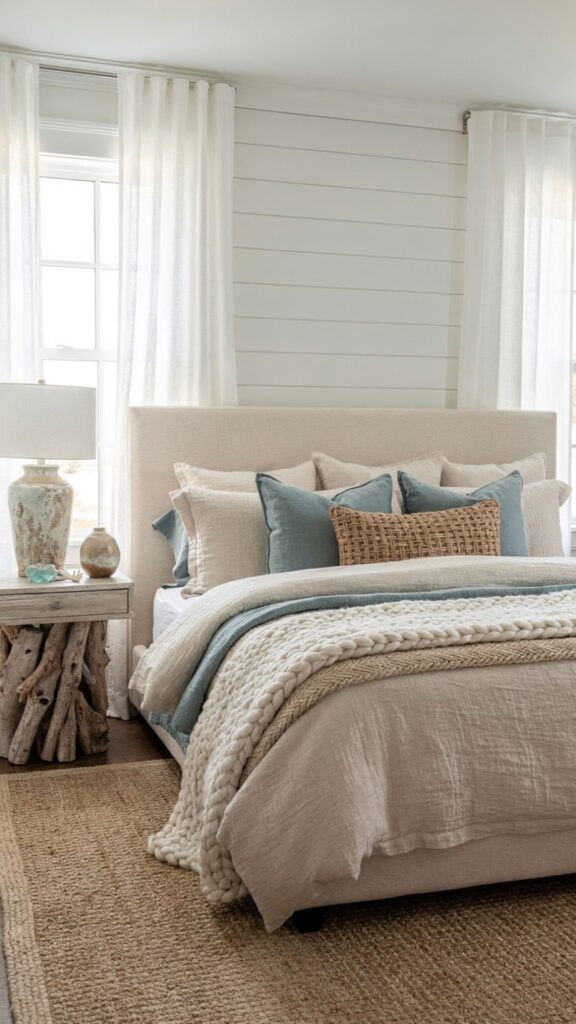
Few architectural features say “coastal” as immediately and eloquently as a shiplap or beadboard wall. Once associated exclusively with traditional seaside cottages, these wall treatments have been modernized by designers and are now appearing in everything from Hamptons estates to urban coastal-inspired apartments.
Shiplap horizontal wooden planks with a slight gap between each board works beautifully as a full accent wall behind the bed. Painted in bright white, soft off-white, or even a pale sage or blue-gray, it creates a textured, architectural backdrop that photographs beautifully and adds genuine depth to the room.
The horizontal lines also make rooms feel wider, a useful trick in smaller bedrooms. Beadboard, with its narrower vertical grooves, creates a slightly more traditional, cottage-like coastal feel. It works particularly well in lower half applications (wainscoting) combined with a painted upper wall.
This is a smart, cost-effective option because you only need to panel half the room typically 36–42 inches up from the floor and paint above it, creating two distinct zones that add visual interest.
Real wood shiplap is the premium option, but MDF (medium-density fiberboard) tongue-and-groove panels offer a similar look at a fraction of the cost and are easier to install. Peel-and-stick shiplap boards have also improved dramatically in quality and are a renter-friendly option for those who can’t make permanent changes. Whatever material you choose, proper priming and painting are essential a poorly painted shiplap wall defeats its own purpose.
Choose Coastal-Inspired Lighting Fixtures:
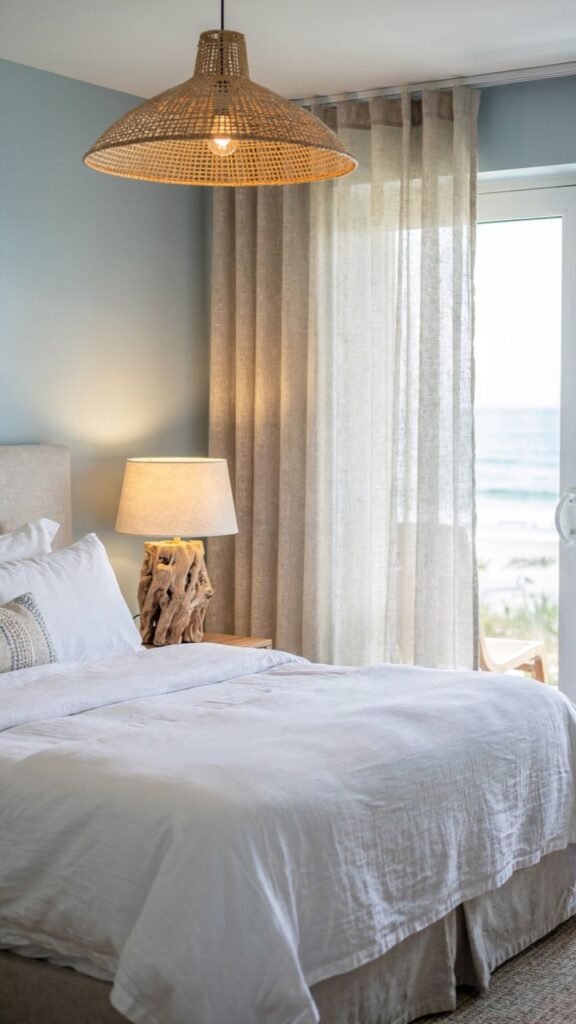
Lighting in a coastal bedroom should feel like an extension of the overall atmosphere warm, layered, and slightly organic. The overhead lighting choice is particularly important because it sets the room’s ambient mood before any other light source is switched on.
Woven rattan pendant lights are currently among the most popular coastal lighting choices, and for good reason. Their warm, diffused light (created by light shining through the weave) creates a golden, lantern-like glow that feels instantly beach-house appropriate.
Paired with a vintage-style Edison bulb or a warm-white LED, a rattan pendant over the bed creates a focal point and practical overhead light in one elegant package. Table lamps on bedside tables are essential for a layered lighting scheme.
In coastal bedrooms, look for lamp bases in materials like driftwood, sea-glass-look ceramics, woven sea grass, or weathered bronze. Lampshades in linen or natural cotton diffuse light softly avoid white shiny shades that produce harsh light. A warm-toned bulb (2700K color temperature) will make the room feel more golden and relaxing than a cooler daylight bulb.
Dimmer switches are non-negotiable in a well-designed coastal bedroom. The ability to lower all lighting to a low, warm setting in the evening supports the wind-down process and dramatically enhances the overall atmosphere. Many smart bulbs now allow color temperature adjustment as well, so you can shift from cool daylight white while reading to warm amber before sleep a powerful but underutilized feature for bedroom wellness.
Add a Canopy or Draped Bed for a Romantic Coastal Feel:
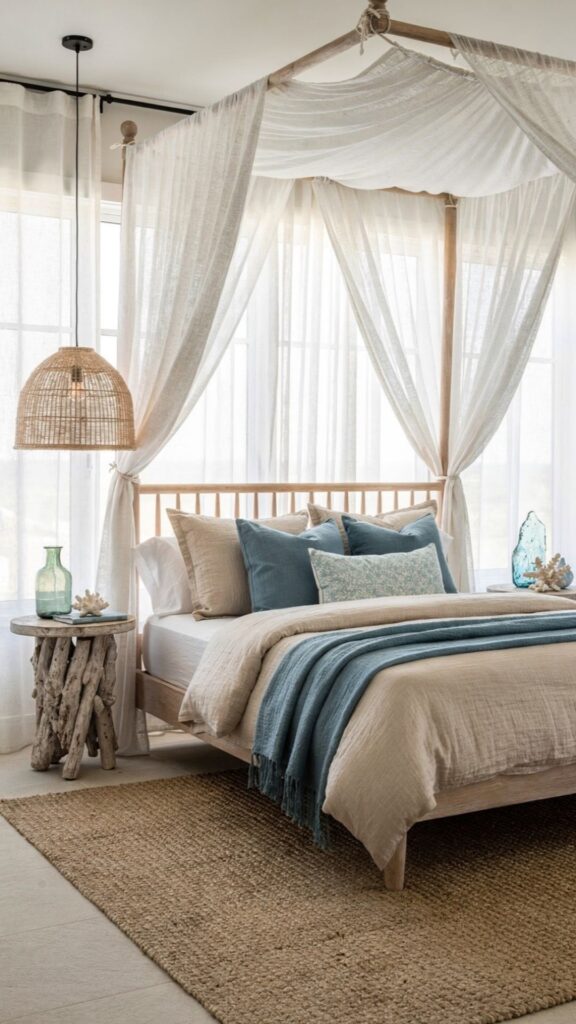
A bed canopy or draped frame instantly transforms a bedroom into something that feels special and in a coastal context, it evokes the romance of sleeping under mosquito-net canopies in tropical beach resorts. This is one of those design moves that requires almost no technical skill but delivers enormous visual impact.
The simplest approach is a ceiling-mounted canopy ring from which sheer linen or cotton voile curtains fall on either side of the headboard. This requires only a ceiling hook or curtain rail and creates an effect far more luxurious than its cost or effort.
Alternatively, four-poster beds particularly those in raw wood, whitewashed finish, or bamboo provide a built-in canopy frame that complements the coastal aesthetic beautifully. For renters or those who can’t mount anything from the ceiling, a freestanding canopy frame (available in bamboo or metal) can be placed behind the bed to achieve a similar effect.
Draping sheer fabric over the frame rather than using curtain panels gives a more bohemian, relaxed coastal feel. This works particularly well in children’s coastal bedrooms, where the canopy adds a playful, tent-like quality.
Color and fabric choices for canopies are important. Sheer white or ivory fabric is the classic coastal choice and works in virtually every context. For a slightly more dramatic effect, a very pale aqua or seafoam green adds a delicate wash of color without being heavy. Heavy fabrics or dark colors defeat the purpose the canopy should feel light, airy, and almost weightless.
Create a Serene Coastal Reading Nook:
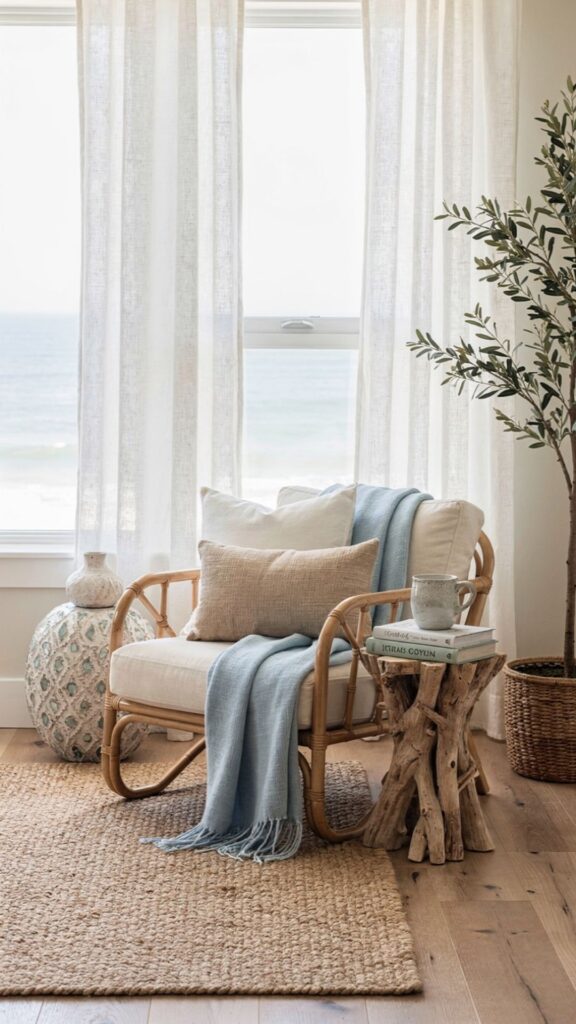
A coastal bedroom isn’t just for sleeping it’s a full retreat space, and a reading nook elevates it to sanctuary status. The best coastal reading nooks feel tucked away, comfortable, and surrounded by natural light and texture. They invite you to sit, slow down, and stay a while.
A window seat is the ideal foundation for a coastal reading nook. If your bedroom has a window with enough sill depth (at least 18–20 inches), a simple bench cushion in a durable outdoor fabric (which mimics canvas or linen beautifully and is far more resistant to fading) transforms it into a perfect perch.
Add a few scatter cushions and a small side table, and the nook becomes fully functional and irresistibly cozy. If window seating isn’t possible, a round rattan or papasan chair with a thick, generously cushioned seat is a beloved coastal option.
Positioned in a corner with a floor lamp beside it and a small woven basket for books or throws, this arrangement creates a self-contained relaxation zone within the bedroom. The curved lines of a rattan chair add a softness that contrasts beautifully with more geometric furniture elsewhere in the room.
Lighting the reading nook correctly is key. A wall-mounted swing-arm lamp or a simple arc floor lamp in a warm finish provides practical task lighting without cluttering the small space with another furniture piece.
If you’re fortunate enough to have built-in shelving nearby, a reading nook surrounded by books filled with coastal art, travel memoirs, and nature titles adds an additional layer of intentionality to the space.
Explore This: Staircase Wall Design Ideas That Carry Your Coastal Style Throughout Your Whole Home.
Incorporate Sea Glass, Shells, and Natural Coastal Collectibles:
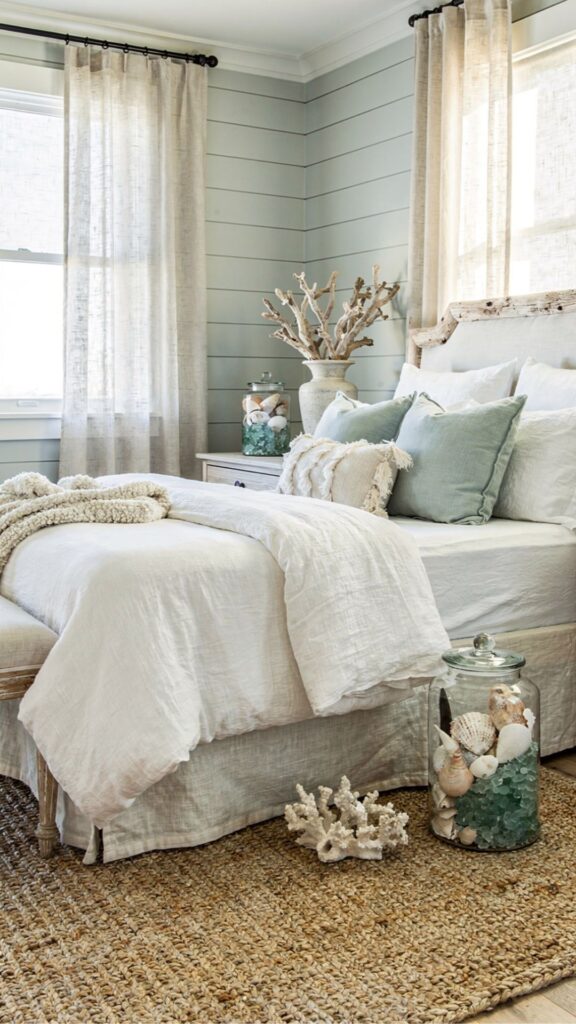
The decorative objects you choose for your coastal bedroom tell a story and the best coastal bedrooms feel like they’ve been slowly curated over years of living near or visiting the sea. Sea glass, shells, coral-shaped objects, driftwood fragments, and beach stones all carry this narrative quality, especially when they’ve actually been collected during meaningful moments.
Sea glass those smooth, frosted pieces of glass tumbled by ocean waves is particularly beautiful as a coastal decorative element. Displayed in apothecary jars, hurricane vases, or shallow ceramic bowls, sea glass collections in soft greens, blues, and whites create quiet, glowing color that enhances any coastal color palette.
Backlit with a small LED candle inside a glass vessel, sea glass becomes luminous and magical. Shell arrangements are another timeless coastal decorative choice, but they require curation to avoid looking dated. Instead of a generic bowl of mixed shells, consider grouping one type of shell together a collection of moon snail shells in graduated sizes, or a series of sand dollars displayed on a small stand.This focused approach feels more intentional and design-forward than an indiscriminate mix.
The key principle for all coastal collectibles is: quality over quantity, and placement with intention. A single large, perfectly formed conch shell on an otherwise bare nightstand is far more impactful than a shelf crowded with a dozen small objects. Let each piece breathe, and it will communicate much more powerfully. This is one area where restraint is not limiting it’s liberating.
Add Scent to Complete the Coastal Sensory Experience:
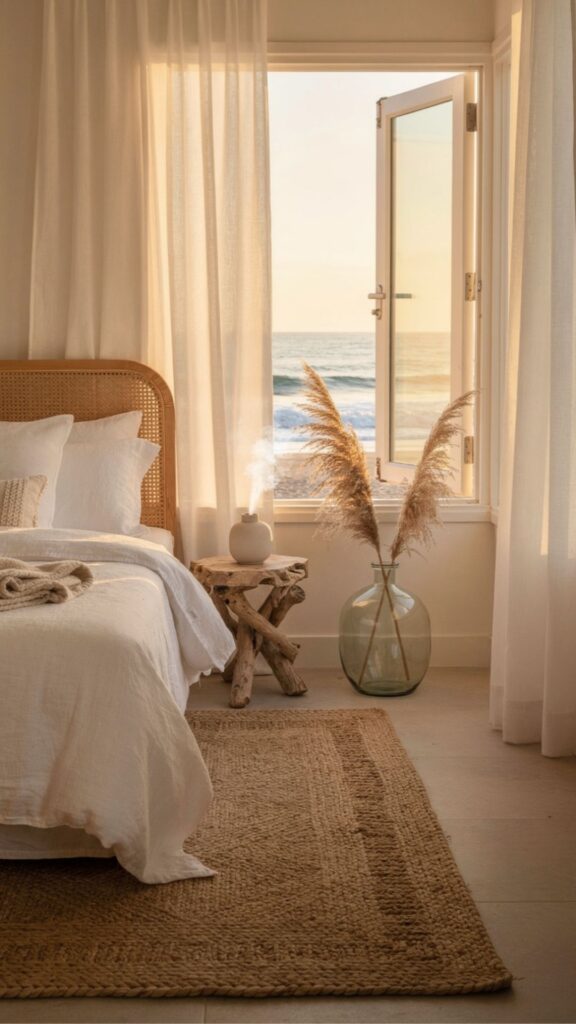
A fully realized coastal bedroom engages all five senses, not just vision. Scent is perhaps the most powerful and most overlooked dimension of coastal bedroom design. The right scent can transport you to the beach even on a gray winter morning, making it a remarkably impactful and inexpensive design tool.
Candles are the most accessible option. Look for scents that evoke the actual ocean environment: sea salt, driftwood, coconut, sunscreen (nostalgia is powerful), citrus, and marine or aquatic notes.
Brands like Nest, Boy Smells, Voluspa, and Aesop offer sophisticated coastal-inspired candles that smell genuinely complex rather than synthetic. Soy or beeswax candles are preferred for cleaner burning and better scent throw.
Reed diffusers are ideal for bedrooms because they provide continuous, low-level ambient scent without requiring supervision (unlike candles). A quality reed diffuser in a beautiful glass vessel also becomes a decorative object in its own right a small, elegant detail on a nightstand or dresser. Refresh the reeds every few weeks by flipping them for a stronger scent throw.
Linen sprays are an often-underrated tool in the coastal bedroom arsenal. A few spritzes of a sea salt or fresh ocean linen spray on your pillows and sheets before bed transforms the sleep experience with remarkable immediacy.
This is also the most renter-friendly and budget-conscious way to add coastal scent to a bedroom no open flames, no installation, just a quick spray.
Design a Coastal Bedroom for Year-Round Comfort:
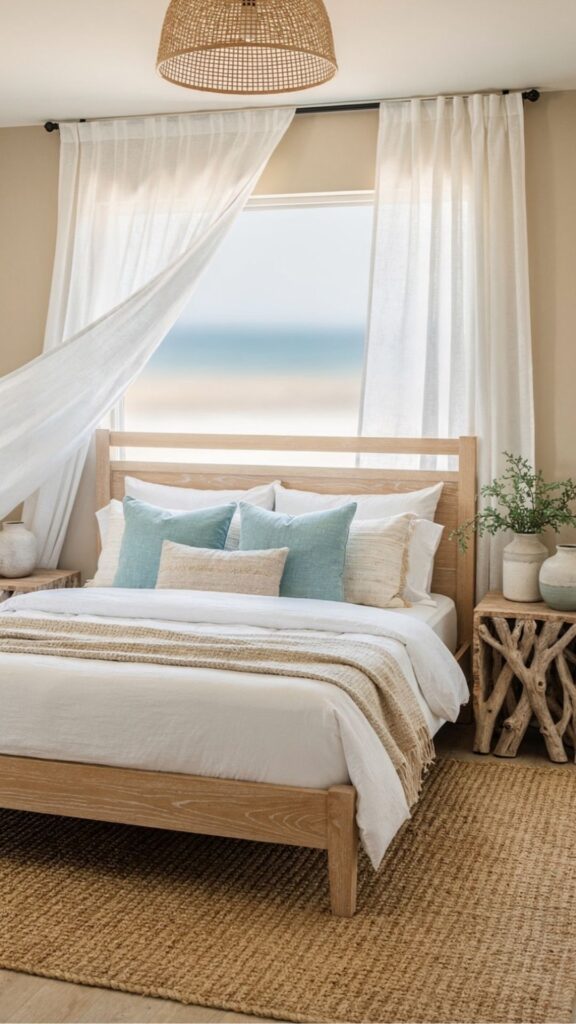
The final and perhaps most important idea is designing your coastal bedroom to feel genuinely comfortable and livable across all seasons, not just summer. Many coastal bedrooms look beautiful in July photographs but feel cold, sparse, and unwelcoming in January. The best coastal bedrooms are designed for year-round use.
The trick is layering warmth without losing the coastal aesthetic. In winter months, add heavier throw blankets in chunky wool or waffle-cotton textures but keep them in coastal colors (cream, soft gray, pale blue) rather than the bold warm tones of autumnal design.
A faux sheepskin rug placed bedside adds warmth underfoot during colder months and can be stored away when the weather warms. Swap out sheer curtains for a slightly heavier linen option in colder months if your bedroom feels drafty.
Linen is a naturally insulating material in heavier weights it keeps warmth in during winter and allows airflow in summer. This seasonal curtain rotation is a small change that makes an enormous difference in year-round comfort.
Lighting also requires seasonal adjustment. In summer, embrace natural light fully and supplement with airy, open fixtures. In winter, layer more artificial warmth add a salt lamp, increase the number of candles in use, and switch bulbs to an even warmer color temperature.
These adjustments keep the bedroom feeling like a cozy retreat regardless of what season the calendar shows, making your coastal bedroom a true year-round sanctuary.
Conclusion:
A well-designed coastal bedroom is more than an aesthetic choice it is an investment in daily wellbeing, rest, and mental tranquility. By combining the right colors, natural materials, thoughtful lighting, and curated decorative objects, you can create a space that genuinely feels like an escape from the everyday.
Start with one or two ideas from this guide that resonate most, and build from there great coastal bedrooms are never designed in a single weekend, but rather refined slowly over time. Your beach retreat is closer than you think.

Team TrandyVilla is the passionate home decor team behind Trandy Villa, where style meets comfort in everyday living. The team loves transforming simple spaces into beautiful, functional homes through smart ideas, budget-friendly hacks, and modern design trends. Their content focuses on helping readers create homes that feel both stylish and personal without spending too much.