
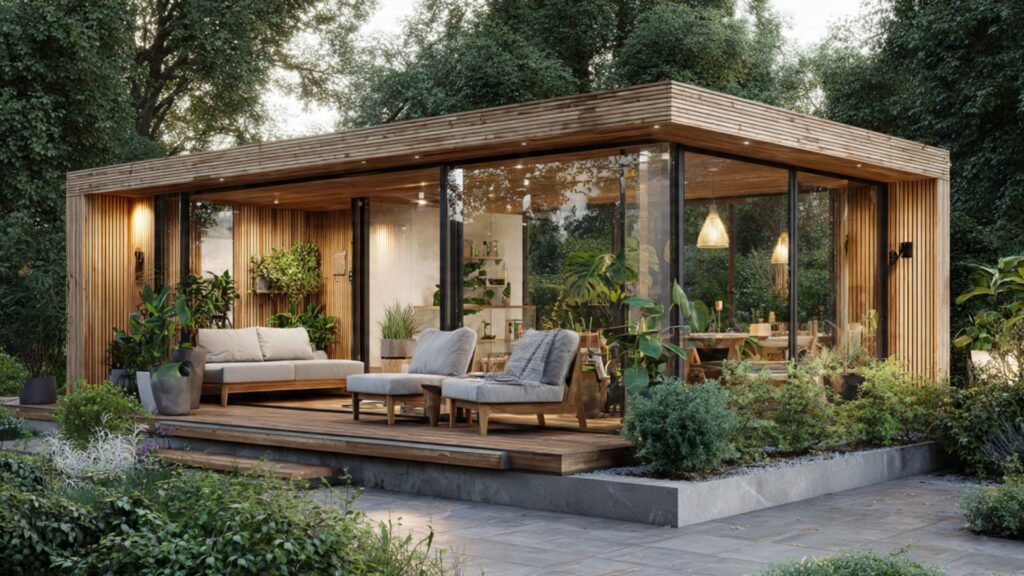
A garden room is one of the most exciting and value-adding investments a homeowner can make. Unlike a simple garden shed, a garden room is a fully insulated, purpose-built structure designed to extend your living space into the outdoors. It bridges the gap between your home and garden, giving you a dedicated area for work, relaxation, creativity, fitness, or entertaining all just steps from your back door. The demand for garden rooms has surged dramatically since 2020, driven by the rise of remote work and the growing desire for personal sanctuary spaces at home.
A garden room is a fully insulated, purpose-built structure placed in your outdoor space. It extends your home without requiring major construction work. Garden room ideas serve clear motives: creating a home office, a gym, a studio, a reading retreat, or a social space. Each idea adds function, comfort, and value to your property. Modern garden rooms work year-round, in all seasons and weather conditions.
A garden room transforms unused outdoor space into your most productive and personal place at home. It delivers privacy, purpose, and comfort just steps from your back door. This single addition changes how you live, work, and relax every day.
Garden room ideas cover a wide range of uses for every lifestyle and budget. Homeowners choose garden rooms for offices, gyms, studios, bars, cinemas, and wellness spaces. Proper insulation and electrics make them fully functional throughout the entire year. Smart design choices maximize comfort and long-term value from day one. A well-planned garden room serves your needs today and adapts easily to future changes.
Garden Room Home Office:
The Ultimate Work-From-Home Solution
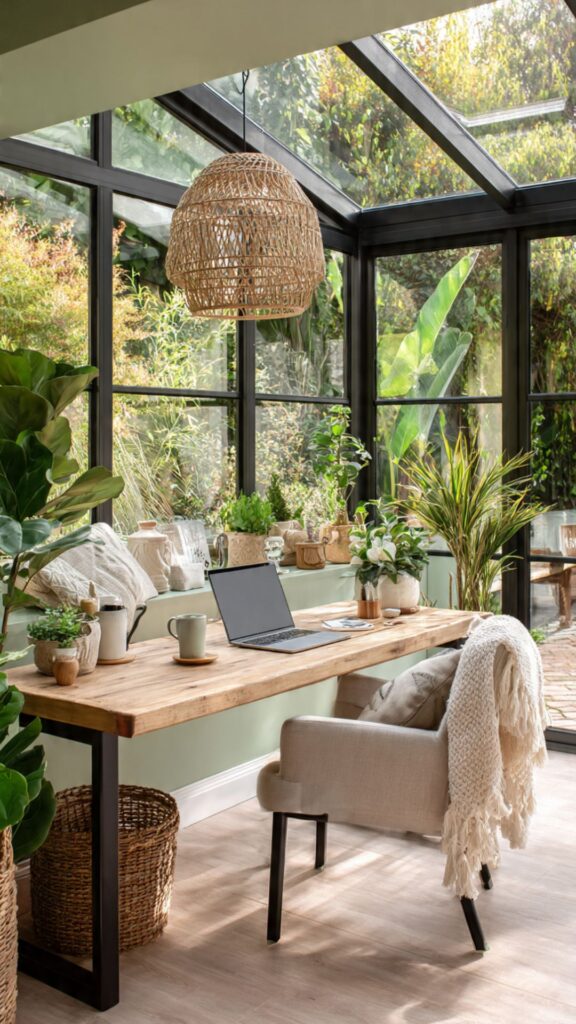
The garden room home office has become the most popular type of garden building in the UK and across Europe, and for very good reason. Working from a dedicated garden cabin separates professional life from domestic life in a way that working from a kitchen table or spare bedroom simply cannot.
The psychological boundary of physically stepping outside, walking to your garden room, and closing the door behind you signals to your brain that work has begun and that distinction profoundly improves both productivity and wellbeing.
A well-designed garden office should be treated as a proper workspace, not a garden shed with a desk. This means adequate electrical sockets (minimum 6-8 circuits), fast broadband connection via ethernet cable run underground from your home router, and sufficient insulation to maintain comfortable temperatures without expensive heating. Bi-fold or sliding glass doors facing the garden create a sense of openness that typical offices lack, reducing the psychological fatigue that comes with enclosed indoor workspaces.
Soundproofing is a consideration most garden office guides skip entirely, but it matters enormously for video calls and focused work. Adding acoustic insulation between the inner wall lining and outer cladding reduces external noise significantly.
A quiet garden room also means your household noise children, dogs, kitchen sounds doesn’t leak into your professional calls. This is a detail worth specifying when ordering a bespoke garden office build.
Future-proofing your garden home office is critical. Technology changes fast install more electrical circuits than you think you need today, include a data conduit for future cable runs, and consider a small HVAC system rather than basic electric heaters. A garden office that serves you well for 10-15 years is a far better investment than one that feels inadequate within 3 years. Plan for the workspace you want in five years, not just the one you need today.
Garden Gym and Fitness Studio:
Exercise Without Leaving Home
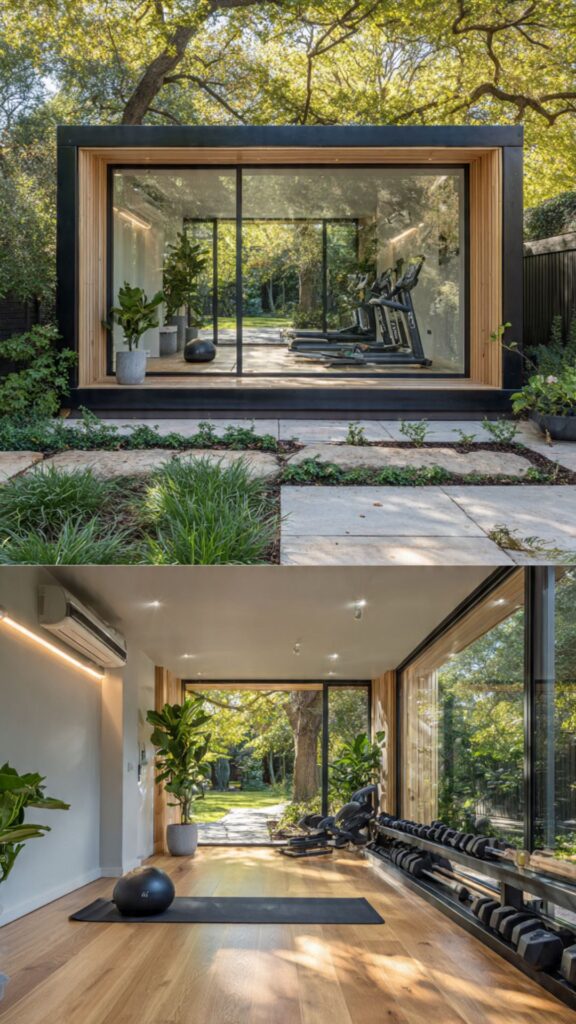
A garden gym is the second most popular garden room type, and it delivers genuine lifestyle value that no gym membership can replicate. The convenience of walking 30 seconds to your workout space eliminates the single biggest barrier to regular exercise the friction of getting to the gym.
Studies on exercise adherence consistently show that proximity and accessibility are the strongest predictors of consistent training habits. A garden gym removes every excuse and replaces them with results.
Designing a functional garden gym requires more thought than simply placing equipment in a wooden room. Flooring is critical standard rubber gym tiles at 15-20mm thickness protect both your equipment and the subfloor from heavy impacts. Adequate ceiling height matters too; for overhead pressing, pull-up bars, and jump rope, you need a minimum of 2.4 meters clearance, preferably 2.6 meters.
Many standard garden room suppliers offer reduced ceiling heights that create significant limitations for fitness use always confirm internal dimensions before ordering.Ventilation is the most underestimated element in garden gym design. Exercise generates substantial heat and moisture, and without adequate airflow, even a well-insulated garden room becomes uncomfortably hot and humid within minutes of training.
A combination of openable roof windows and wall-mounted exhaust fans manages this effectively. Mirrors along one full wall improve spatial awareness during training and make the space feel significantly larger a functional benefit, not just an aesthetic one.
Garden Art Studio:
A Creative Space Built for Inspiration
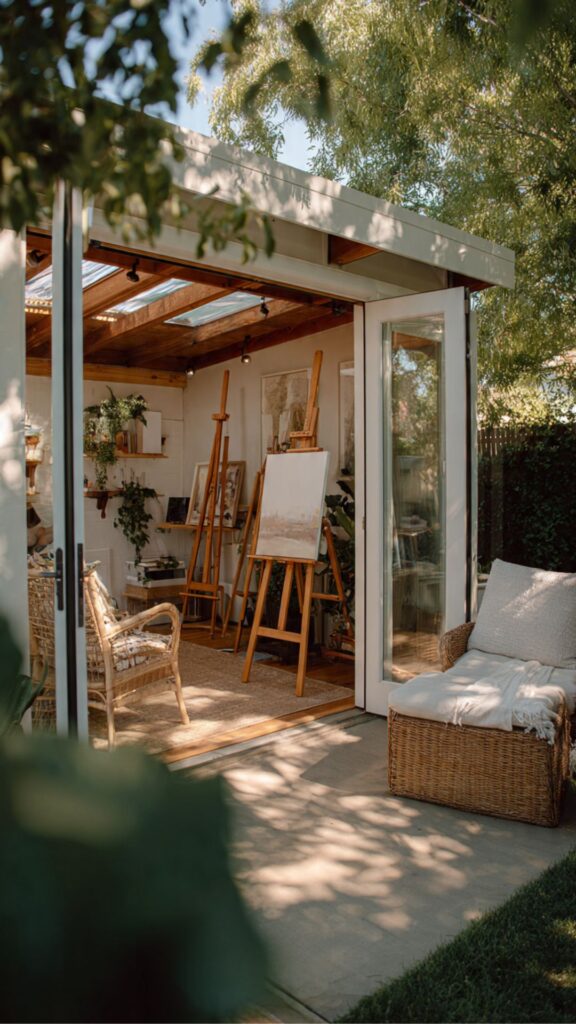
For artists, photographers, illustrators, and craft makers, a garden art studio offers something a spare bedroom never can a space designed entirely around creative work. The ability to leave work in progress without tidying up, to have dedicated storage for supplies and equipment, and to work in natural light without household distractions creates conditions where creativity genuinely flourishes.
Many professional artists cite their dedicated studio as the single biggest factor in the consistency and quality of their output. Natural light is the most important design consideration for any art studio. North-facing roof windows (in the Northern Hemisphere) provide consistent, shadow-free diffused light throughout the day without direct sun that distorts color perception.
Skylights rather than standard wall windows are preferred by most working artists precisely because ceiling-level light illuminates the entire room evenly. If your garden’s orientation doesn’t allow for ideal natural light positioning, high-CRI artificial LED lighting at 5000-6500K provides the next best alternative for accurate color assessment.
Practical considerations for a garden art studio include utility sink installation for paint cleaning and water-based media, sealed or epoxy-coated flooring that tolerates spills without permanent staining, and wall-mounted shelving for material storage.
A separate drying area or dedicated print storage zone prevents finished work from being damaged during the creative process. These functional details transform a basic garden room into a genuinely professional creative workspace.
Must Read : Rooftop Garden Ideas That Will Make Your Garden Room Look Even More Stunning.
Garden Room Bar and Entertainment Space:
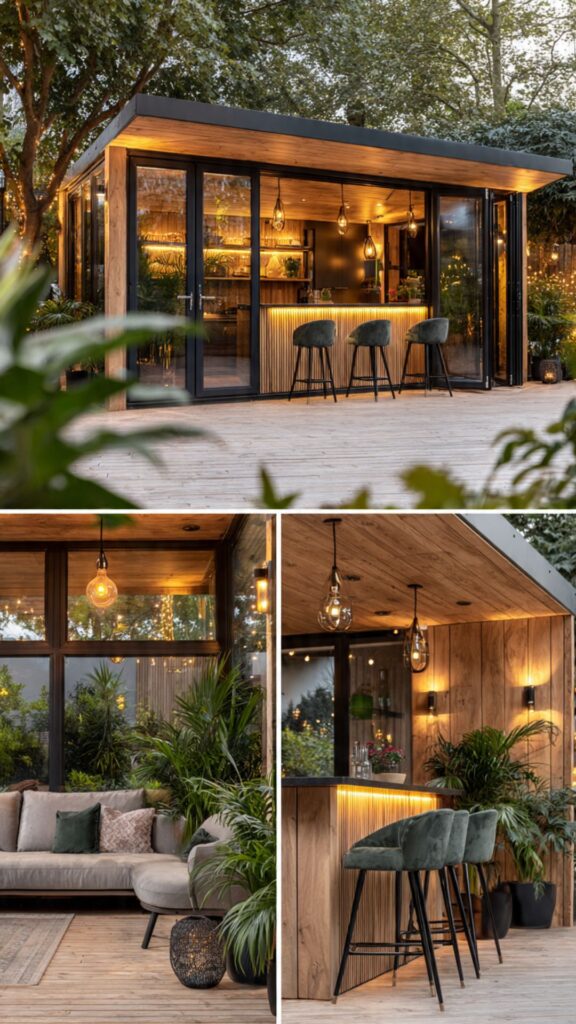
A garden bar or entertainment room is one of the most social and joyful uses of a garden room, and it consistently adds significant perceived value to a property. Whether you envision a rustic pub-style space with a reclaimed wood bar top, a sleek cocktail lounge aesthetic, or a simple party room with a mini fridge and Bluetooth speakers, the garden entertainment room creates a destination within your own property a place guests genuinely look forward to visiting.
The practical elements of a garden bar room go beyond a simple bar counter. Proper refrigeration requires dedicated electrical circuits. A sink with plumbing either connected to your home supply or fed by a water butt and pump system keeps things functional for washing glasses and ice prep.
Outdoor-rated bar stools and furnishings handle humidity and temperature variation better than indoor equivalents. Consider also how sound travels your neighbors are closer outdoors than indoors, and a garden entertainment room needs thoughtful acoustic management for evening use.
Lighting design makes or breaks an entertainment space. Layered lighting ambient overhead LEDs on dimmers, accent shelf lighting behind the bar, and feature lighting over a pool table or seating area creates the atmosphere that makes a garden bar feel like a curated venue rather than a repurposed shed.
Smart lighting control from a phone app lets you change the mood instantly between relaxed lounging and lively party settings. This is one space where investing in quality lighting pays back in atmosphere every single time you use it.
Garden Room Garden Office with Living Roof:
Eco-Friendly Design
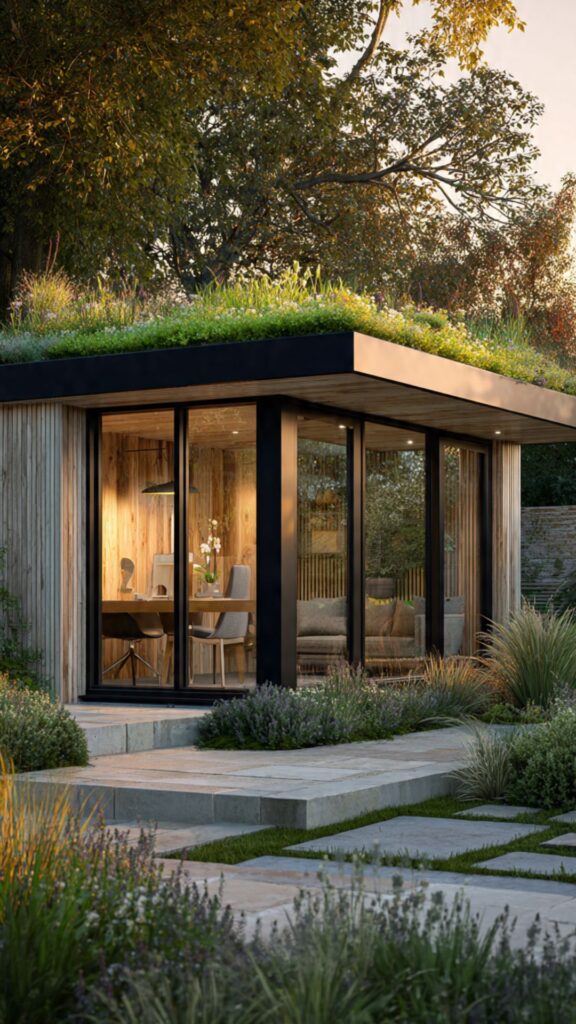
A living roof garden room one topped with sedum plants, wildflowers, or even a small lawn represents the intersection of sustainability, aesthetics, and biodiversity in modern outdoor architecture. Living roofs provide excellent natural insulation (reducing heating and cooling costs by up to 20%), absorb rainwater that would otherwise run off, and create vital habitat for pollinators including bees and butterflies.
In urban and suburban gardens, a sedum roof garden room is genuinely one of the most ecologically responsible structures you can add to a property. The structural requirements for a living roof differ from standard garden rooms. The roof frame needs to support significantly more weight saturated growing medium can weigh 80-150kg per square meter depending on depth.
This means the primary timber or steel frame needs engineering to match. Most bespoke garden room manufacturers offer living roof options as an upgrade, but always request engineering calculations if retrofitting an existing structure. An undersized frame that deflects under a living roof load creates serious structural risks over time.
Beyond the environmental benefits, a sedum or wildflower living roof visually integrates your garden room into the landscape in a way no painted cladding can. From upper floors of your home, the roof becomes a fifth garden surface an additional green element that enhances the overall garden design.
Planning authorities also look more favorably on living roof structures in sensitive locations. If your garden room is adjacent to a protected view, a green roof can be the detail that gets your planning application approved where a standard design would not.
Garden Room Music Studio:
Soundproofed and Fully Functional
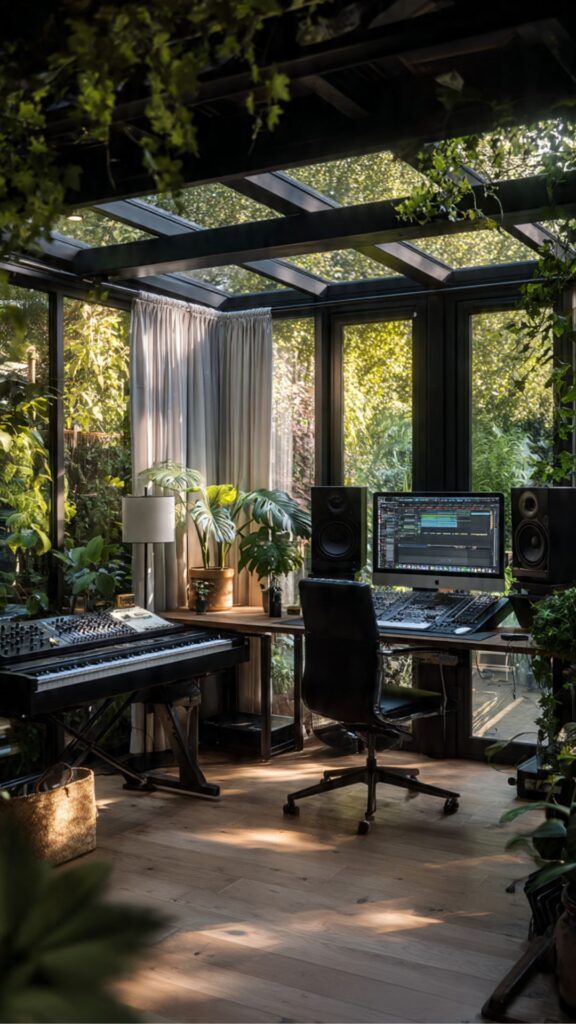
A garden music studio is a dream for musicians, podcasters, voice-over artists, and audio professionals who need a quiet, acoustically controlled recording environment separate from their home. Standard rooms in houses are full of parallel surfaces,
HVAC noise, and domestic sound bleed that make quality audio recording nearly impossible. A purpose-built garden room music studio solves all of these problems simultaneously, and the investment pays for itself quickly when compared to hourly studio hire rates.
True acoustic isolation in a garden room music studio requires a ‘room within a room’ approach the inner acoustic shell is decoupled from the outer structure using resilient mounts and an air gap. This prevents structure-borne vibration from entering or leaving the recording space.
The floor, walls, and ceiling all require this decoupled treatment for effective isolation. Acoustic panels inside the room manage reflections and reverberation, which are separate from isolation. Many people confuse the two acoustic panels improve the sound inside the room but do not prevent sound escaping through walls.
Ventilation in a recording studio requires special attention because standard HVAC systems create noise that ruins recordings. Acoustic baffled ventilation systems essentially sound-labyrinth intake and exhaust pathways allow air to circulate without creating audible airflow noise.
These systems are available from specialist acoustic suppliers and can be specified when commissioning a bespoke garden room studio build. The result is a space where a condenser microphone at 6 inches can capture studio-quality audio with ambient noise floors below -40dB comparable to professional studio spaces.
Garden Reading Room and Library:
A Personal Sanctuary for Book Lovers
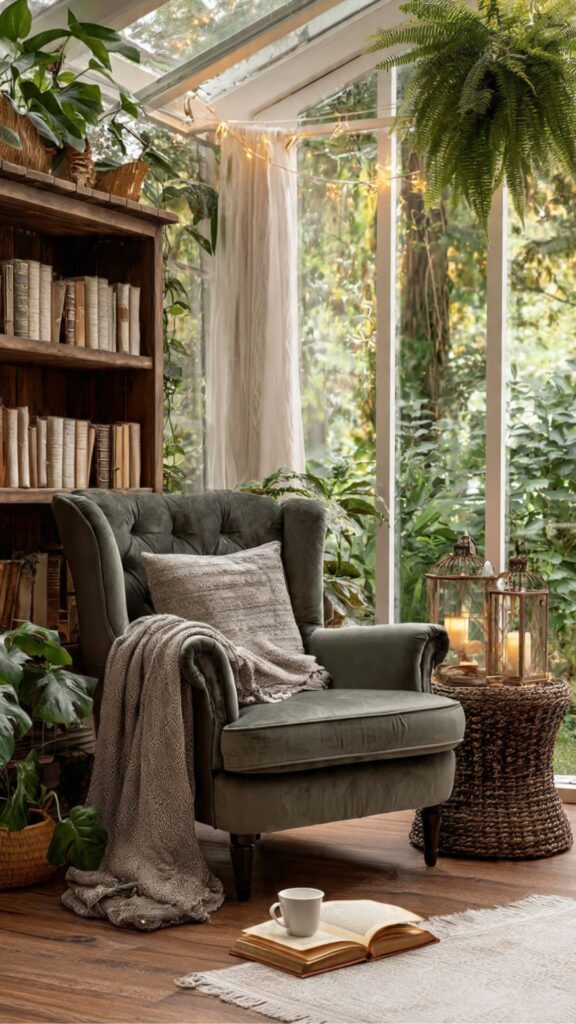
A garden reading room is perhaps the most intimate and personal of all garden room types a quiet retreat dedicated entirely to the pleasure of reading, thinking, and escaping the noise of daily life. For book lovers, creating a purpose-built garden library with floor-to-ceiling shelving, a deep armchair, and soft lighting is less a luxury and more a profound act of self-care.
The physical separation from the household children, television, notifications creates conditions for the deep, sustained attention that great reading requires. Designing a garden reading room involves balancing natural light with glare control. Large windows are desirable for connection to the garden view and daylight reading, but direct sun on a page (or screen) causes immediate discomfort.
External timber louvres, roller blinds, or carefully positioned overhanging eaves can manage direct sunlight while maintaining the sense of garden connection. A velux skylight positioned away from the main seating area introduces overhead light without glare one of the most satisfying natural lighting solutions for a reading space.
Temperature stability is especially important in a reading room, as you’ll often be stationary for extended periods a state where body temperature drops noticeably. Underfloor heating is the ideal solution: it warms the space from the ground up, maintains even temperature without creating drafts, and runs silently a critical consideration when you want complete quiet.
A small wood-burning stove or log burner adds both supplementary heat and an atmospheric focal point that makes a garden reading room feel genuinely special through autumn and winter months.
Garden Yoga and Meditation Studio:
Wellness at Home
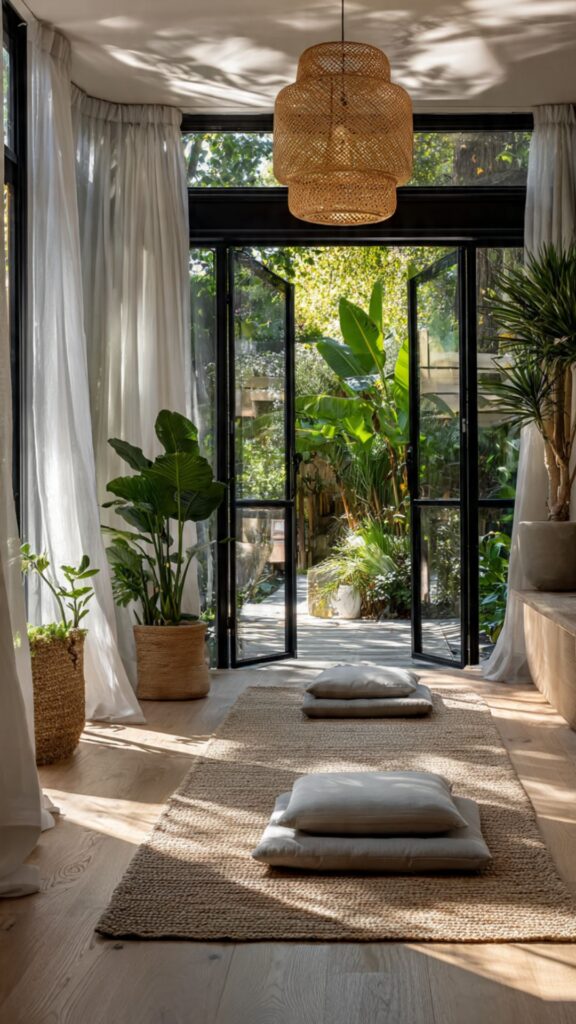
Dedicated garden yoga and meditation studios are among the fastest-growing garden room categories, driven by growing awareness of mental health, mindfulness practice, and holistic wellness. Having a space at home reserved exclusively for practice eliminates the logistical friction of attending classes and creates a consistent routine.
The garden setting naturally supports the intention behind yoga and meditation connection to nature, fresh air, and visual calm are built into the environment rather than requiring mental effort to create.
A yoga studio garden room requires a clear, uncluttered space with enough floor area for a mat plus surrounding movement. A 4m x 4m internal footprint accommodates solo practice comfortably and allows two practitioners if needed.
Timber flooring at the right hardness is important very soft floors absorb energy during standing poses, while very hard floors stress joints. A bamboo or engineered hardwood floor at 14-18mm thickness strikes the right balance. Mirrored walls on one side support alignment checking without dominating the space aesthetically.
Natural ventilation through operable roof windows or bi-fold doors facing the garden is essential for a yoga room the practice generates substantial body heat. Acoustic insulation helps retain the peaceful atmosphere during windy conditions or when neighbours are active nearby.
The colour palette of interior walls should reflect the calming intention of the space: neutral tones, warm whites, sage greens, or soft terracotta all support a meditative environment far more effectively than bold or cool colours.
Garden Room Annex:
for Guests or Family Members
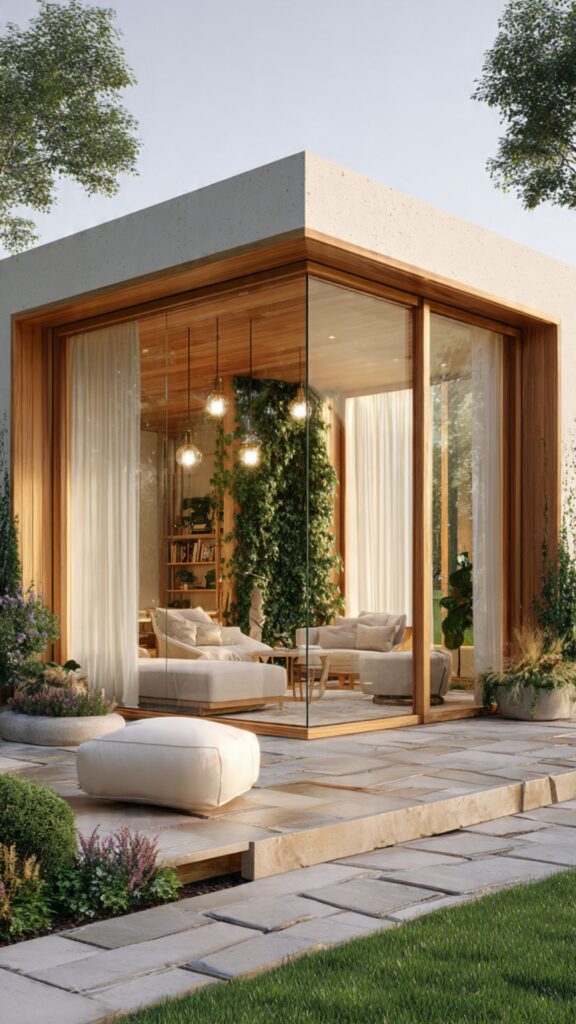
A garden room annex a garden building fitted with sleeping accommodation, a kitchenette, and a bathroom represents one of the most significant property improvements a homeowner can make. It provides genuine additional living space that functions as a self-contained unit for family guests, elderly relatives, adult children, or short-term holiday lets.
The demand for this type of garden room has grown significantly as multi-generational living becomes more common across the UK, Europe, and North America.
Planning permission requirements change significantly when a garden room annex includes sleeping and cooking facilities, as the structure legally transitions from a garden building to an annexe or dwelling. In the UK, permitted development rights generally do not cover self-contained living spaces; a full planning application is typically required.
However, many councils look favourably on annexes designed for dependent relatives. Consulting your local planning authority before investing in design work is always the right first step.
From a design standpoint, a garden annexe should prioritize privacy and acoustic separation between the annexe and the main house. Positioning the annexe at the far end of the garden with its own entrance path creates a sense of independence for the occupant.
Wet rooms rather than standard bathrooms save significant floor space in compact annexe layouts a 900mm x 900mm wet room is fully functional and fits comfortably even in a 4m x 5m overall footprint when thoughtfully planned.
Check This : Sunroom Ideas That Perfectly Complete Your Beautiful Garden Room Look.
Children’s Garden Playroom:
Safe, Fun Outdoor Space for Kids
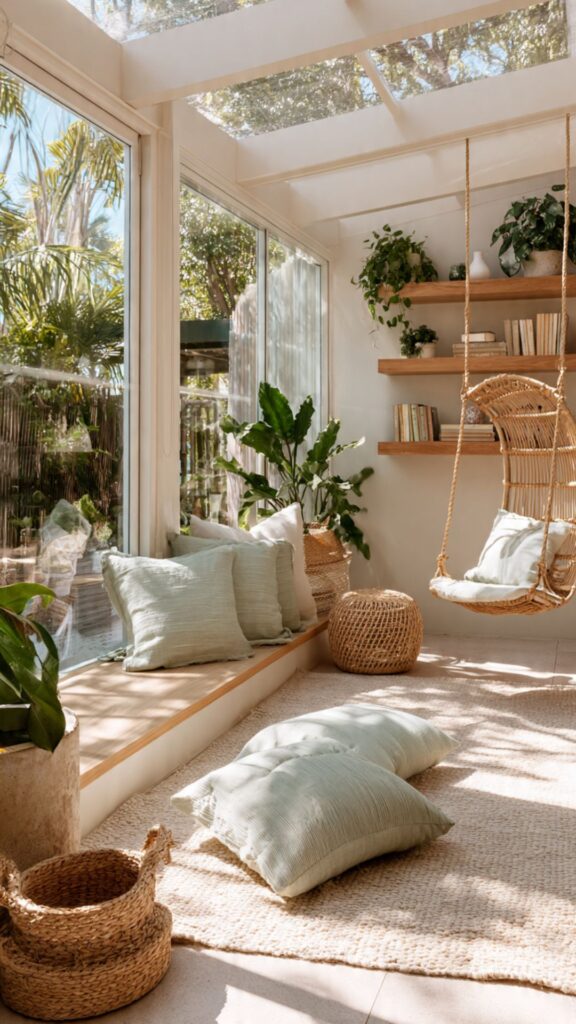
A garden playroom gives children a dedicated, weather-proof outdoor play space that keeps toys, games, and creative mess outside the main house a benefit that parents consistently underestimate until they experience it firsthand.
Unlike indoor playrooms, a garden playroom encourages children to spend more time outdoors, which developmental research consistently links to improved physical health, creativity, and reduced screen time. The garden location also means the mess stays where it belongs.
Safety is the primary design consideration for a children’s garden playroom. Insulation and heating must be child-appropriate no exposed pipework, no sharp protrusions, and no trip hazards at floor level. Soft EVA foam flooring or rubber matting provides comfortable, impact-absorbent surfaces for active play.
Window placement should allow adult supervision from the garden or home without requiring constant physical presence inside the room. Childproof locks on doors and windows are non-negotiable for younger children. As children grow, a garden playroom that was designed for versatile use transitions naturally into a teenage hangout room, a homework space, or eventually a home office.
Building adaptability into the initial design removable storage systems, modular furniture solutions, and practical electrical planning with sufficient sockets means the garden room continues to deliver value across 15-20 years of changing family needs rather than becoming redundant when childhood ends.
Garden Cinema Room:
Outdoor Movie Experience All Year
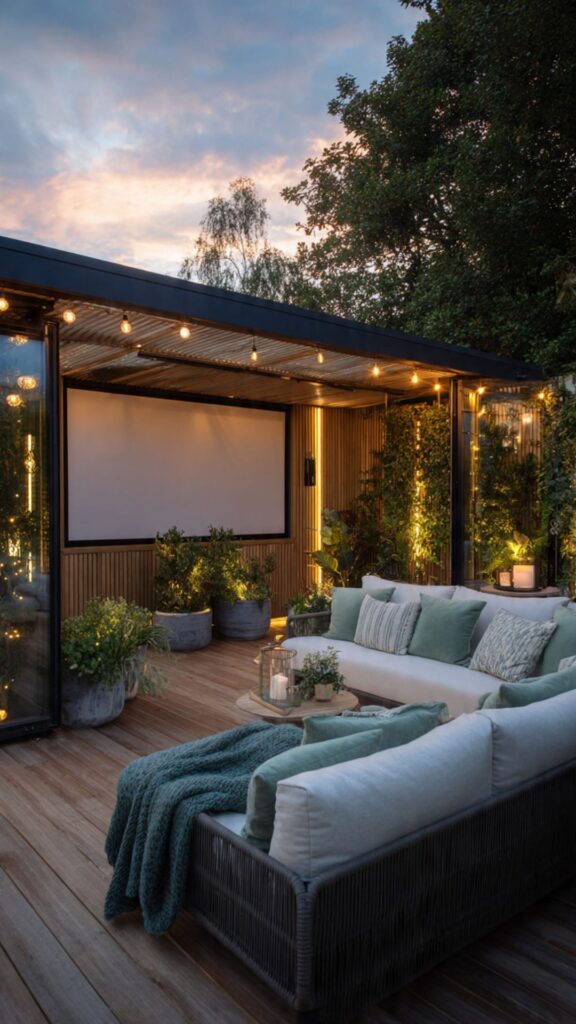
A garden cinema room brings the immersive movie-watching experience right to your back garden, combining the comfort of a proper indoor screening environment with the novelty of a dedicated private cinema outside your home. This is a garden room type that creates genuine wow factor for guests and delivers exceptional entertainment value for families and film enthusiasts alike.
Unlike a TV in a living room, a purpose-built garden cinema creates a real event atmosphere every time you use it. The key technical elements of a successful garden cinema room are projection or large-format display, acoustic treatment, blackout control, and seating.
A 4K projector on a retractable screen delivers the most immersive experience, but a 75-85 inch QLED or OLED TV mounted on the wall provides a simpler, lower-maintenance alternative with excellent picture quality. Blackout blinds or solid shutters are essential any ambient light destroys contrast on a projected image. Acoustic panels prevent excessive echo that makes dialogue difficult to follow.
Surround sound in a garden cinema room requires a properly installed multi-channel audio system with subwoofer management. Because a garden room is a separate structure, you have freedom to install a genuinely loud system without disturbing the rest of the house something impossible in a standard home cinema setup.
However, external sound bleed to neighbours remains a consideration, and acoustic cladding combined with solid-core insulated doors can reduce external noise transmission dramatically. A dedicated 20-amp electrical circuit for AV equipment is the baseline electrical requirement for a quality setup.
Garden Room Workshop:
Maker Space for Crafts and DIY
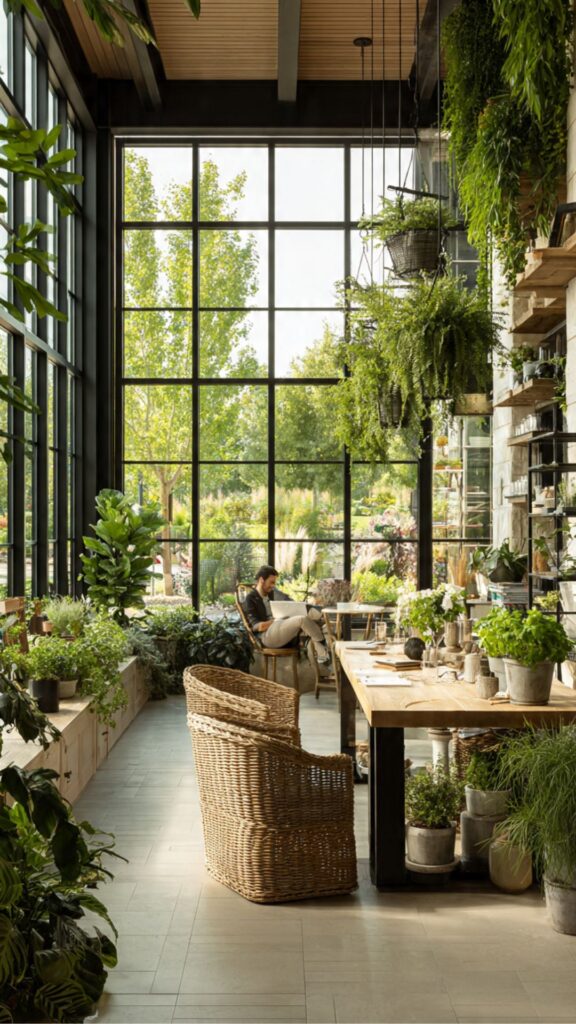
A dedicated garden workshop is a transformative space for woodworkers, metalworkers, model makers, electronics hobbyists, and serious DIY enthusiasts. Moving workshop activities from the garage into a purpose-built garden room provides better light, better temperature control, and critically better separation of hazardous materials, sawdust, and fumes from your main living space.
A well-designed workshop garden room allows you to leave a project mid-build and return to it without disrupting family life. Electrical planning is the most important technical consideration for a workshop garden room. Industrial and hobbyist power tools demand more electrical capacity than a standard domestic room.
A dedicated consumer unit (fuse board) in the garden room fed by its own armoured cable run from the main house supply is the correct approach not extending a ring main. This allows multiple tools to run simultaneously without tripping circuits. Specify 32-amp and 16-amp sockets alongside standard 13-amp outlets for larger equipment.
Dust management is a workshop consideration that most generic garden room guides completely ignore. Fine sawdust and MDF dust are both fire hazards and serious respiratory risks. A wall-mounted or ceiling-hung dust extraction system connected to your sanding and cutting equipment keeps the air clean and the floor manageable.
Good overhead LED lighting at high CRI (95+) reveals surface details accurately during fine work a critical functional requirement that far exceeds standard domestic lighting specifications.
Garden Room Sauna and Spa Retreat:
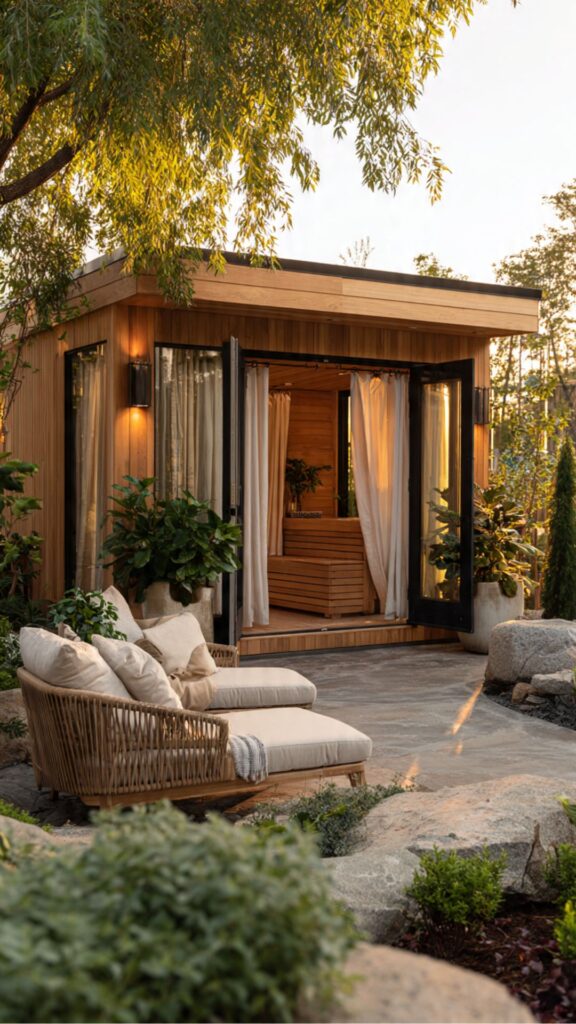
A garden room sauna or home spa is the ultimate wellness-focused garden building and once considered an exclusive luxury, it is now accessible to a much wider range of homeowners. Nordic countries have long understood the profound physical and mental health benefits of regular sauna use: improved cardiovascular health, stress reduction, muscle recovery acceleration, and better sleep quality are all documented in clinical research. Bringing this practice home eliminates the barriers of gym membership and scheduling.
There are two primary sauna types for garden rooms: traditional Finnish saunas using a wood-burning or electric kiuas (sauna stove) at 80-100°C, and infrared saunas that operate at lower temperatures (45-65°C) with a different heat penetration mechanism.
Traditional saunas require higher temperature management and steam-resistant wall materials (typically spruce or alder timber). Infrared saunas are electrically simpler, lower energy, and easier to retrofit into an existing garden room structure. Both deliver genuine wellness benefits through regular use. Complementing a sauna with a cold plunge option even a simple cold water stock tank creates a full contrast therapy circuit that is increasingly popular in athletic recovery and general wellness communities.
Outdoor showers adjacent to the garden room sauna allow the hot-cold cycle that Scandinavian wellness tradition has practiced for centuries. From a planning standpoint, a garden sauna typically falls within permitted development in the UK, making it one of the more straightforward garden room types to build without formal application.
Garden Office Studio with Living Wall:
Biophilic Design Trends
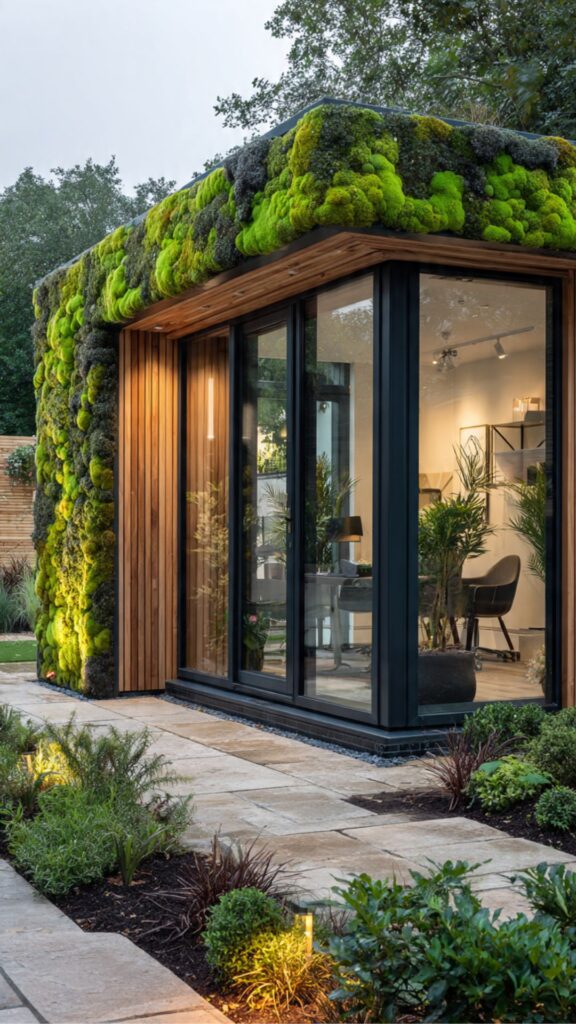
Biophilic design incorporating natural elements, living plants, and organic materials into built environments is one of the most significant trends in contemporary architecture and interior design. Research by organisations including the World Green Building Council consistently shows that exposure to natural elements within work and living spaces reduces stress, boosts creativity, and improves cognitive performance.
A garden room designed with biophilic principles takes this philosophy to its logical conclusion a workspace that is as close to nature as possible. A living interior wall a vertical garden system fitted inside your garden room brings a dense panel of living plants into the workspace. Indoor living walls improve air quality by absorbing VOCs and CO2 while releasing oxygen and humidity.
The visual presence of living greenery within the workspace has measurable psychological benefits backed by multiple academic studies. Moss walls are a lower-maintenance alternative that provides the aesthetic benefit of greenery without the irrigation systems required by full planting walls.
Beyond living walls, biophilic garden room design incorporates natural timber interiors (exposed grain, not painted), stone or riven slate flooring, and maximum visual connection to the outdoor garden through large glazing. Bringing the natural world visually inside through garden views, natural materials, and living plants creates a workspace that genuinely restores mental energy rather than depleting it.
This is the future direction of garden office design, and getting ahead of the trend today means creating a space that feels fresh and relevant for decades.
Garden Room Games and Hobbies Room:
Personal Passion Space
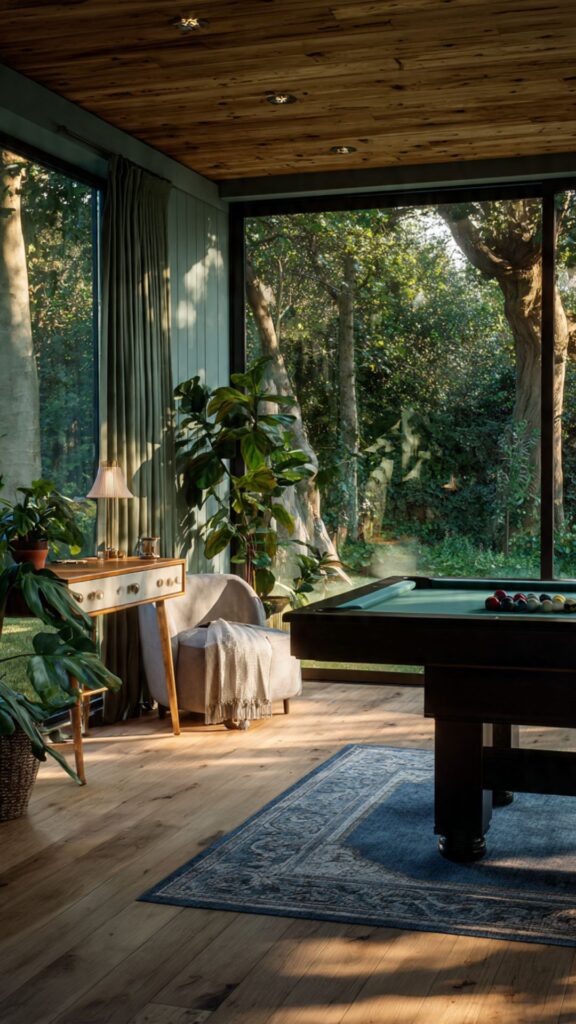
A dedicated garden hobbies and games room is a highly personal garden room concept one that is defined entirely by what you love to do. For some, that means a full-size snooker or pool table that would never fit in a standard home.
For others, it’s a vintage arcade cabinet collection, a tabletop wargaming room with dedicated terrain storage, a scale model railway layout, or a serious board game library. Whatever the passion, a garden room creates the dedicated, permanent space that a shared living room fundamentally cannot provide.
The practical requirements of a hobbies room vary enormously based on the activity, but several principles apply universally. Adequate storage prevents the room from becoming cluttered within months of use built-in shelving, cabinetry, and dedicated display areas maintain the room’s function and atmosphere long-term. Climate control matters for collections of sensitive items: vinyl records, paper models, and electronic equipment all deteriorate in environments with fluctuating humidity.
A dehumidifier or climate-controlled HVAC system protects valuable hobby investments. Lighting design for a hobbies room should support the specific visual demands of the activity. Fine scale modellers need high-CRI task lighting at close range.
Pool and snooker tables require overhead pendant lighting positioned precisely to eliminate shadows on the playing surface typically 3 pendants spaced evenly along the table’s length. Games rooms benefit from dimmable ambient lighting for social play combined with focused task lighting for more detail-oriented activities. Thinking through these specifics before installation avoids expensive rewiring later.
You Must See : Garden Lighting Ideas That Will Transform Your Space into Pure Magic!
Garden Room Therapy and Counselling Space:
Professional Home Practice
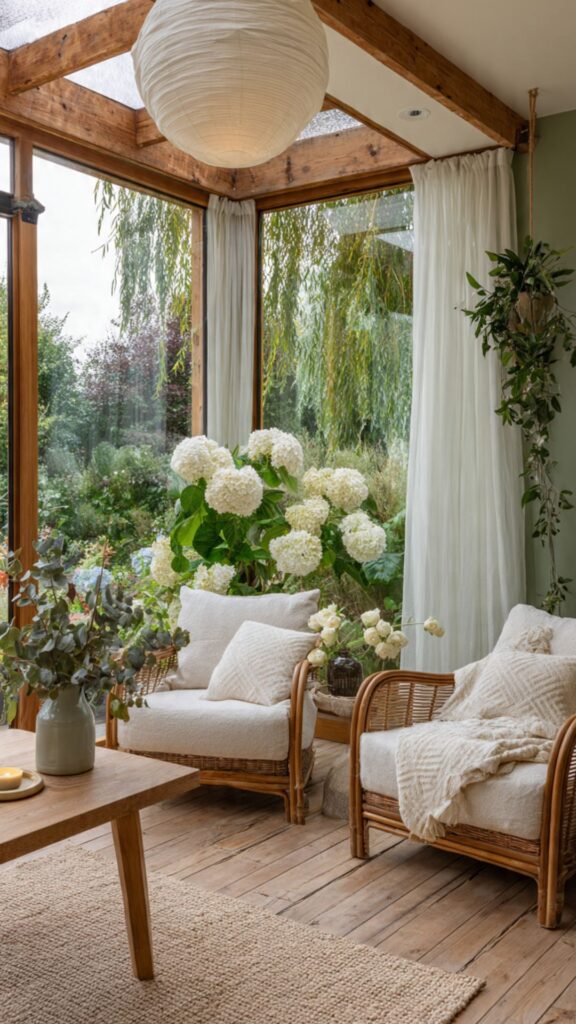
Mental health professionals, counsellors, therapists, physiotherapists, and life coaches increasingly use garden rooms as dedicated professional practice spaces. A garden room therapy space provides complete privacy from the practitioner’s home, a separate entrance for clients, and a professional environment that is fully separated from domestic life all critical requirements for ethical professional practice.
The growth of this use case has accelerated significantly with the mainstreaming of remote and flexible professional working. Confidentiality is the non-negotiable design requirement for a therapy or counselling garden room. Acoustic privacy ensuring conversation cannot be heard outside the room requires thorough insulation of walls, floor, and roof, as well as solid-core acoustic doors with proper perimeter seals.
A white noise machine positioned near the entrance further masks conversation from anyone approaching. These are not optional refinements; they are professional and ethical requirements that must be designed in from the start.
The therapeutic environment itself benefits from careful design choices. A calm, neutral colour palette warm whites, soft greens, sage, or pale clay tones supports the emotional safety that effective therapy requires. Natural light is important but should be controllable for client privacy.
Furniture should be comfortable and equal in status therapist and client chairs of similar height and comfort signal the relational equality that underpins good therapeutic practice. A separate client entrance from the main garden gate, with its own path, maintains professional privacy and dignity for clients visiting your practice.
Seasonal Garden Room with Retractable Walls and Outdoor Integration:
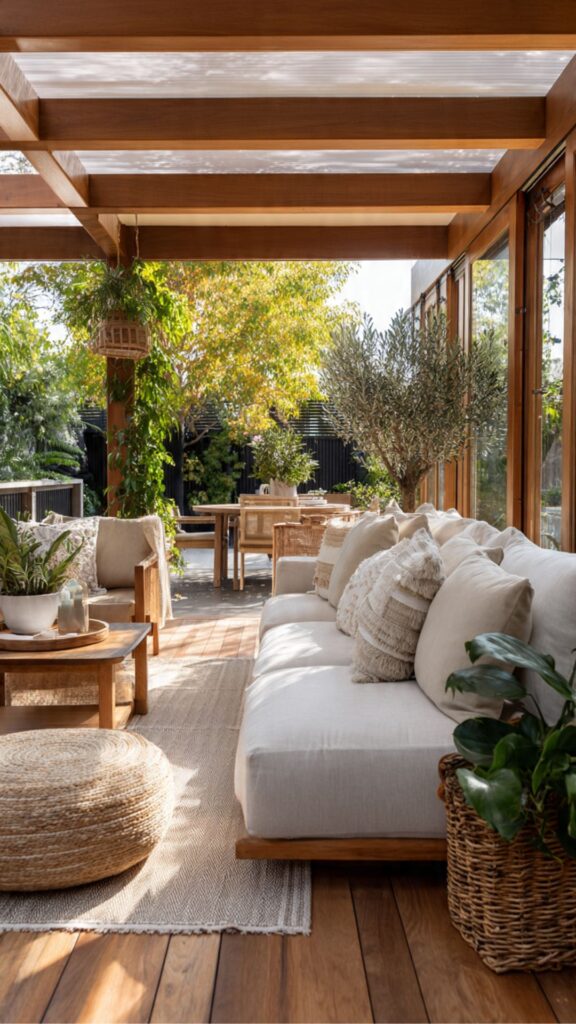
The most architecturally exciting direction in garden room design is the fully integrated indoor-outdoor space a garden room where entire walls retract or fold away entirely, removing the boundary between interior and garden when conditions allow.
Bi-fold doors across one or two full walls are now common, but the next level involves sliding glass walls, concertina glazed panels, or automated louvred roof systems that transform the space from fully enclosed to fully open within seconds. This is garden room design at its most dynamic and future-forward.
Retractable louvred roofs aluminium louvre systems that can open and close like a giant blind above a patio or garden room extension represent a particularly versatile solution. When closed, they are weathertight and can incorporate integrated guttering. When open, they provide dappled shade similar to a timber pergola but with complete rain protection at the touch of a button.
LED lighting, heating elements, and speakers can all be integrated directly into louvre roof systems, creating an all-season outdoor room that adapts to any weather condition. The key structural consideration for retractable wall systems is threshold management how the floor level transitions from inside to outside. A flush threshold (no step between interior and garden) creates a seamless flow and is strongly recommended for both aesthetic and accessibility reasons.
This requires careful ground level management and appropriate drainage at the transition point to prevent water ingress. Working with an architect or specialist garden room designer rather than a standard supplier is strongly advisable for this level of integration.
Budget Garden Room Ideas:
How to Build Smart Without Overspending
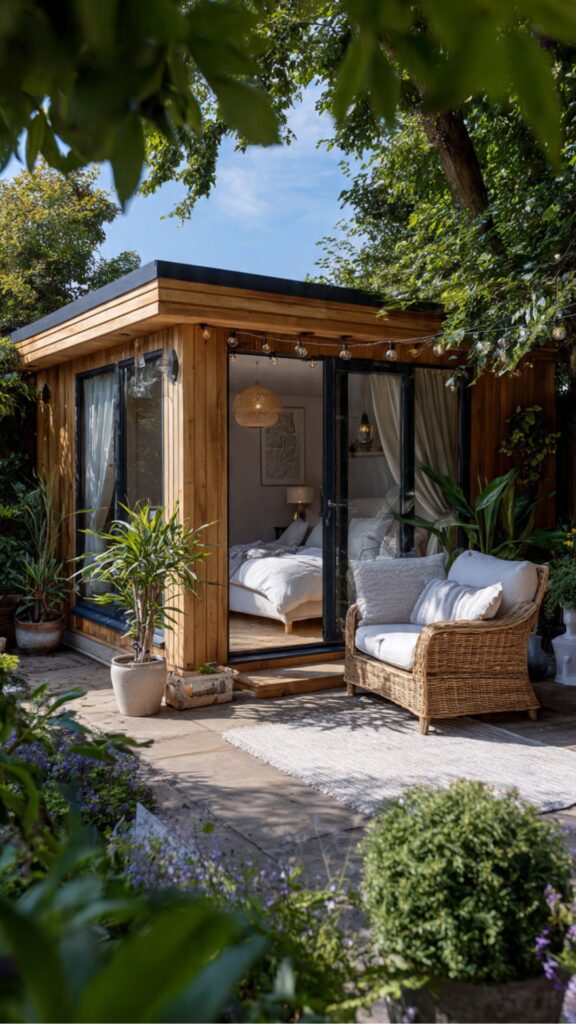
Not every garden room requires a five-figure investment. For budget-conscious homeowners, there are genuinely smart approaches to creating a functional, insulated garden room without compromising on the elements that matter most. Understanding where to invest and where to economise is the key skill and it separates garden rooms that serve well for decades from those that disappoint within the first year.
The single worst budget decision is under-insulating to save money upfront; this creates a room unusable in winter and an expensive retrofit problem later. Timber frame construction is the most cost-effective structural approach for a garden room, and it performs excellently when properly detailed.
A quality SIP (Structural Insulated Panel) construction uses factory-built panels that are thermally efficient, fast to erect, and cost-competitive with traditional timber frame when labour and time are factored in. Sourcing a kit from a reputable supplier and hiring a local builder to erect and finish it sits comfortably below the price of a fully bespoke turnkey garden room while delivering similar thermal and structural performance.
On a budget, prioritise in this order: structural integrity and weatherproofing first, then insulation quality, then electrical installation, then interior fit-out and aesthetics. A plain-clad, modestly finished garden room that is structurally sound, properly insulated, and correctly wired will serve you far better than a beautifully cladded structure with poor insulation and inadequate electrics.
Aesthetics can be improved over time; structural and technical remediation is always expensive. Starting right even at a modest budget is always the wisest long-term approach.
Conclusion
A garden room is far more than an extra structure in your garden it is an investment in how you live, work, and relax every single day. Whether your vision is a quiet home office, a vibrant social space, a wellness retreat, or a creative studio, the right garden room design delivers value that genuinely transforms daily life.
The 18 ideas in this guide offer a complete foundation for making the most of your outdoor space in a way that suits your lifestyle, budget, and long-term goals. The most important step is to start with a clear purpose and plan every detail from insulation and electrics to lighting and access before a single timber is fixed in place.
A well-planned garden room built to a modest budget consistently outperforms an impulse purchase at twice the price. Start with one strong idea from this guide, research your local planning rules, and take the first step toward a garden room that you will use and love for years to come.

Team TrandyVilla is the passionate home decor team behind Trandy Villa, where style meets comfort in everyday living. The team loves transforming simple spaces into beautiful, functional homes through smart ideas, budget-friendly hacks, and modern design trends. Their content focuses on helping readers create homes that feel both stylish and personal without spending too much.