
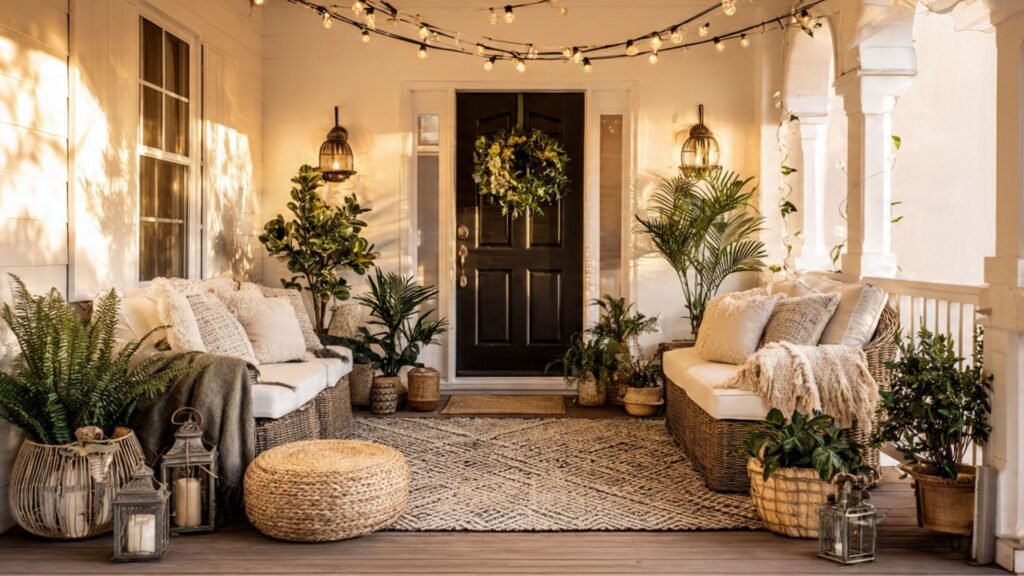
A well-decorated front porch decor is the first thing visitors notice and the last thing they forget. It sets the tone for your entire home, communicates your personal style, and adds genuine curb appeal that translates directly into real estate value. Yet most homeowners treat the front porch decor as an afterthought, filling it with mismatched furniture and a single potted plant.
Front porch decor defines the first impression your home makes on every visitor. It combines color, furniture, plants, and lighting into a welcoming, purposeful space. Good porch decor reflects personal style and boosts curb appeal. It transforms a simple entryway into a warm, inviting extension of your home’s interior. Every design choice from the door color to the planter size contributes to the overall look.
A beautifully decorated front porch decor tells your home’s story before anyone steps inside. Front porch decor turns an overlooked entryway into a space full of personality, warmth, and intention. The right details a bold door, a lush planter, a cozy chair create a lasting impression that no visitor forgets.
Seasonal plants bring consistent color and life to any front porch decor throughout the year. Outdoor rugs define the seating area and anchor the entire composition. A freshly painted front door delivers the highest visual impact at the lowest cost. Quality furniture materials like teak and powder-coated aluminum ensure long-term durability. Layered lighting from sconces to string lights creates warmth and safety after dark.
Choosing a Cohesive Front Porch Color Palette:
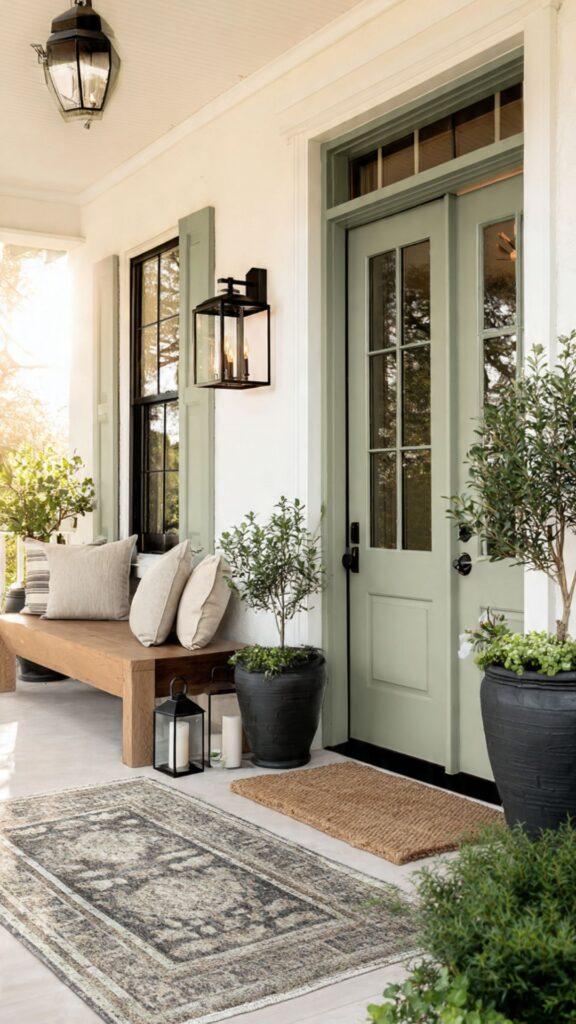
Color is the single most powerful tool in front porch decor, yet it is also the most commonly mishandled. Most homeowners choose porch colors in isolation a red door here, a gray floor there, some green plants somewhere without considering how all elements interact as a unified composition. The result is a porch that feels busy rather than intentional.
A strong front porch decor color palette starts with your home’s exterior color and works outward from there, treating the porch as an extension of the architecture rather than a separate decorating project. The most effective approach is to build a three-color system for your porch: a dominant neutral (the largest surface area floor, columns, ceiling), a secondary accent (furniture, planters, shutters), and a pop color (door, cushions, small decor objects).
This three-part hierarchy prevents the visual chaos that results from too many competing colors and gives the eye a clear, satisfying sequence to follow. For example, a gray stone porch with white furniture and a deep teal door follows this system perfectly grounded, clean, and memorable.
One insight that most porch decor guides miss entirely: the porch ceiling color matters far more than most homeowners realize. The tradition of painting porch ceilings “haint blue” a soft, pale blue-green comes from both folklore and practical wisdom. In practice, this soft color reflects the sky downward, making the porch feel more open and airy even on overcast days.
It also bounces light onto faces in a flattering, warm way. Today, the choice need not be strictly traditional haint blue; any pale, cool-toned ceiling color soft sage, pale aqua, powder blue achieves a similar lifting and brightening effect.
Looking ahead into 2026 and 2027, color trend forecasters are identifying a shift toward more saturated, confident front porch decor door and porch accent colors: deep burgundy, forest green, midnight blue, and rich terracotta are all gaining ground against the safe grays and blacks that dominated the previous decade. If you want a porch that feels current rather than dated, this is the moment to commit to a bolder accent color and let the rest of the palette be your steady, neutral foundation.
Front Porch Furniture:
That Works for Every Style
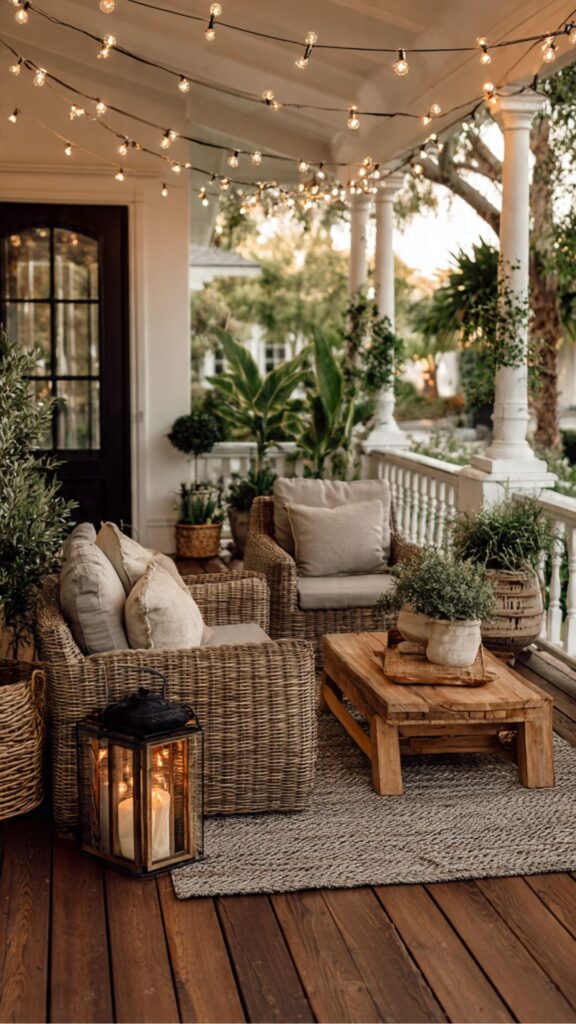
Porch furniture selection is where many homeowners make their biggest front porch decor mistake: choosing pieces based on individual appeal rather than on how they function together as a seating arrangement. A beautiful rocking chair, a charming bistro table, and an oversized swing can individually look wonderful but placed together on a small porch without a clear spatial plan, they create a cluttered, uncomfortable space that nobody actually wants to sit in.
Start with the intended use case. A front porch decor designed primarily for morning coffee and quiet reading calls for one or two comfortable chairs perhaps a classic porch rocker or an Adirondack with a small side table and excellent lighting.
A porch designed for socializing and entertaining requires a complete seating group: a loveseat or settee, two chairs, and a low coffee table, arranged so that people can comfortably face each other in conversation. Defining the use case first prevents the accumulation of furniture that serves no one well.
Material selection for porch furniture is critical and far more consequential than most buyers realize at the time of purchase. Teak and cedar weather beautifully over time, developing a silvery patina that looks intentional and refined. Powder-coated aluminum is the most maintenance-free option it resists rust, UV fading, and moisture without any seasonal treatment.
Resin wicker has improved dramatically in quality and now offers a natural appearance with exceptional durability. Avoid untreated pine, raw iron, or cheap particleboard constructions these deteriorate quickly under outdoor conditions and end up costing more in replacement than quality pieces would have initially.
A future-focused consideration worth noting: the outdoor furniture market is rapidly expanding its offerings in what manufacturers are calling “porch-grade” pieces furniture engineered specifically for the semi-exposed porch environment rather than for full outdoor or full indoor use.
These pieces use fabrics with superior fade and moisture resistance, frame materials that breathe in humidity, and cushion fills that dry quickly after a rain event. As porch living becomes a more intentional lifestyle choice, this category will continue to grow, offering significantly better porch-specific options than what was available even three years ago.
Front Door Styling:
As the Focal Point of Porch Decor
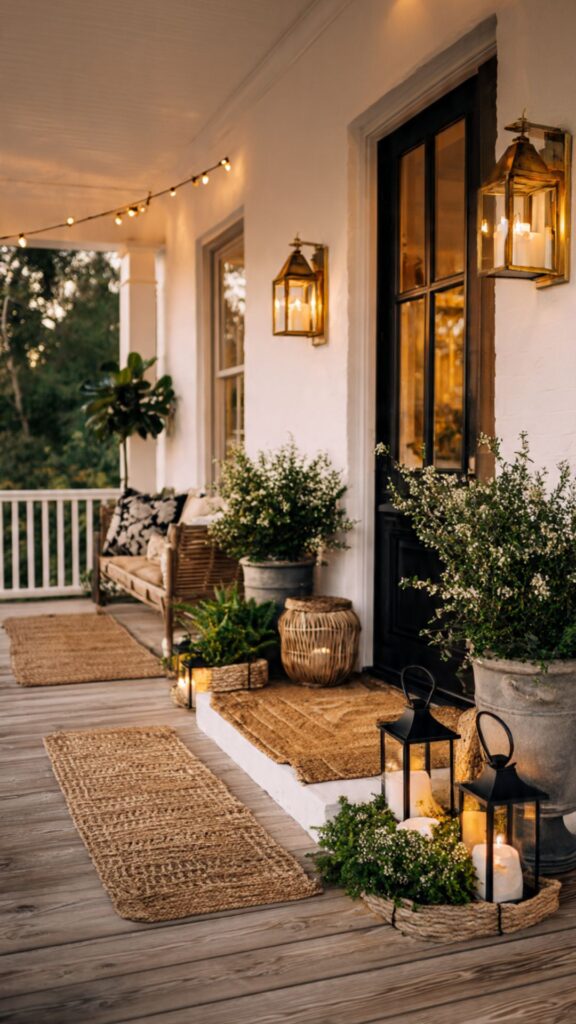
The front porch decor door is the undisputed focal point of any porch it is where the eye naturally lands first and where the architectural story of the home either comes together or falls apart. Yet most homeowners treat the door as a fixed, unchangeable element when in reality, repainting a front porch decor door is one of the highest-return investments in curb appeal available.
A gallon of paint, a weekend afternoon, and a well-chosen color can transform an ordinary porch into one that draws genuine admiration from the street. Color selection for the front door should follow a clear principle: the door color should be the most saturated element on the porch. It does not have to be the most dramatic or the darkest but it should be the most resolved and confident color in the composition.
A front porch decor door that is only slightly different from the rest of the exterior reads as indecisive. A front porch decor door that owns its color even if that color is a deep, rich neutral like black or mahogany reads as deliberate and well-designed.
Beyond color, door hardware deserves far more attention than it typically receives in front porch decor discussions. Door knockers, handle sets, kick plates, house numbers, and door bells collectively function as the porch’s jewelry. Mixing metals is now widely accepted in interior design but on a front porch decor door, cohesion reads better.
Choose one metal finish brushed bronze, polished nickel, aged brass, matte black and carry it consistently across every hardware element on the door. This level of consistency signals intentionality and elevates the entire porch’s design quality without spending significantly.
Layering around the door is the final and most often missed step. The decorative elements that frame the door a wreath, a pair of lantern-style sconces, flanking planters, a door mat should feel like a composed vignette rather than a random collection of purchases. The scale of each element matters enormously.
Oversized planters flanking a small door overwhelm it; undersized ones look apologetic. A good rule of thumb: flanking elements should reach approximately two-thirds to three-quarters of the door’s height when fully planted. This proportion creates balance and draws the eye toward the door rather than away from it.
Must Read : Hallway Decor Ideas That Beautifully Continue Your Front Porch Style Inside.
Seasonal Front Porch Decor:
That Transitions Smoothly
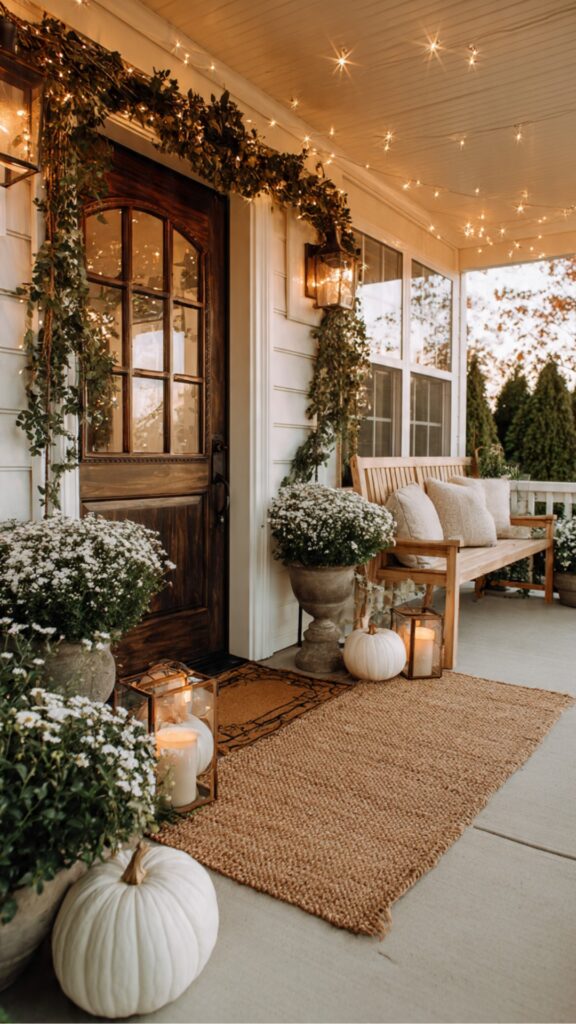
One of the hallmarks of a truly well-designed front porch decor is the ability to transition through seasons gracefully with a core framework that stays consistent year-round and seasonal layer changes that feel fresh without requiring a complete overhaul.
Most homeowners operate at one of two extremes: either leaving the same decor out year-round until it looks tired, or doing a full swap for every season that consumes significant time and money. Neither approach is optimal.
The smarter strategy is the “bones and layers” method. The bones of your porch decor the furniture arrangement, the large planters, the door hardware, the lighting fixtures, the rug stay consistent year-round. These are your neutral investments that provide a permanent, attractive foundation.
The layers are what change seasonally: cushion covers, wreaths, smaller decorative objects, seasonal plants, and textiles. By investing in the bones once and rotating only the layers, you get a porch that always looks seasonally appropriate without the cost or effort of a full seasonal changeover.
For spring and summer front porch decor, the emphasis should be on living plants, light colors, and textiles that invite lingering. Ferns, impatiens, petunias, and caladiums are classic summer porch plants that offer consistent color through the warm months.
For fall, layer in pumpkins, ornamental cabbages, mums, and richly textured textiles a plaid blanket on the chair, a jute-wrapped wreath that signal warmth and harvest without crossing into overtly kitschy territory. Winter and holiday decor can incorporate evergreen garland, lanterns with pillar candles, and a refined wreath in magnolia leaves or cedar that carries through the full cold season.
One often-overlooked seasonal transition strategy: using your planter sizes to indicate the season. Large statement planters with tall, architectural plants ornamental grasses, elephant ears, tall dahlias read as summer. As fall arrives, those same planters receive layers of mums, trailing ivy, and seasonal gourds.
In winter, the planters hold bare birch branches, pine boughs, and pine cones structure and texture without color. This single-planter transition approach creates seasonal narrative continuity that makes the porch feel thoughtfully managed across the entire year.
Porch Lighting:
That Creates Atmosphere and Safety
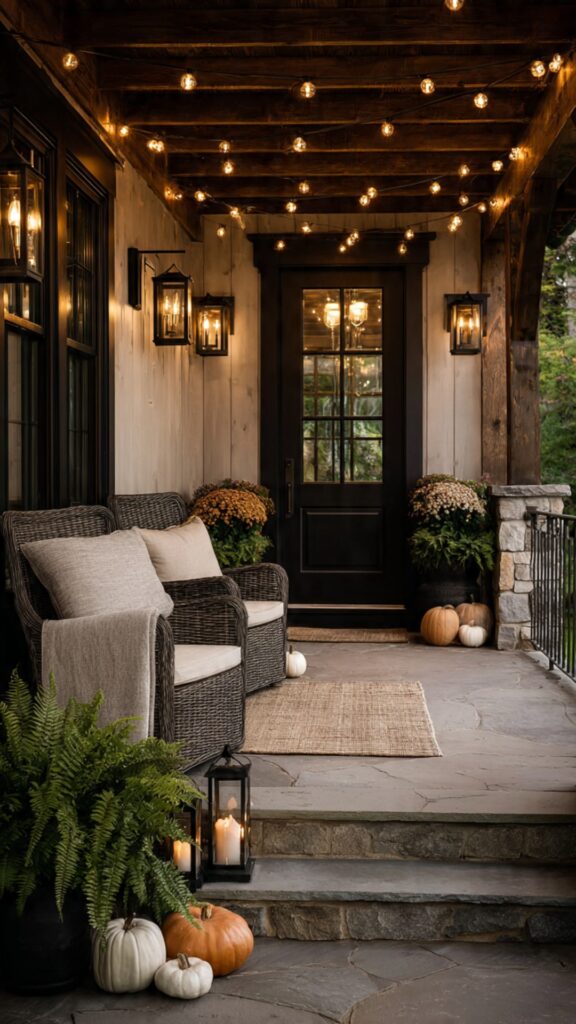
Front porch decor lighting is one of the most functionally important and aesthetically impactful elements of porch decor and it is dramatically underinvested in by most homeowners. The standard builder-grade carriage light flanking the door, a single overhead fixture, and perhaps a motion-sensor floodlight represents the baseline.
However, a thoughtfully layered porch lighting plan creates warmth, security, visual depth, and a sense of arrival that elevates the entire exterior of the home. The best porch lighting designs work in layers, just as the best interior lighting designs do.
Layer one is ambient lighting the primary overhead fixture or ceiling-mounted light that provides general illumination across the porch. Layer two is accent lighting sconces flanking the door, recessed lights in the porch ceiling, or a pendant hung at a lower point.
Layer three is decorative lighting string lights draped along the porch railing, lanterns with candles placed on steps or beside planters, LED candle clusters inside hurricane glasses. Each layer serves a different purpose, and together they create a porch that is welcoming at every level from street view to close proximity.
Fixture style selection should follow the home’s architectural language. Traditional clapboard or craftsman homes look best with seeded glass lanterns, oil-rubbed bronze finishes, or cage-style sconces that echo the period detailing of the architecture.
Modern or contemporary homes suit sleek, architectural fixtures clean-lined cylinders, rectangular wall sconces, or minimalist pendant lights in matte black or brushed nickel. Mediterranean or Spanish-style homes call for wrought iron fixtures with amber glass. Matching the fixture style to the architecture is more important than chasing trend-driven designs that date quickly.
Smart lighting integration is the most forward-looking development in porch lighting right now. Smart bulbs and smart switches allow porch lights to activate automatically at dusk, shift color temperature from cool white (for task visibility at night) to warm white (for atmosphere during evening entertaining), and be controlled remotely via smartphone.
For homeowners renovating or updating porch lighting in 2026, specifying smart-compatible fixtures from the outset future-proofs the investment against the rapidly advancing capabilities of home automation systems.
Planters and Container Gardening on the Front Porch:
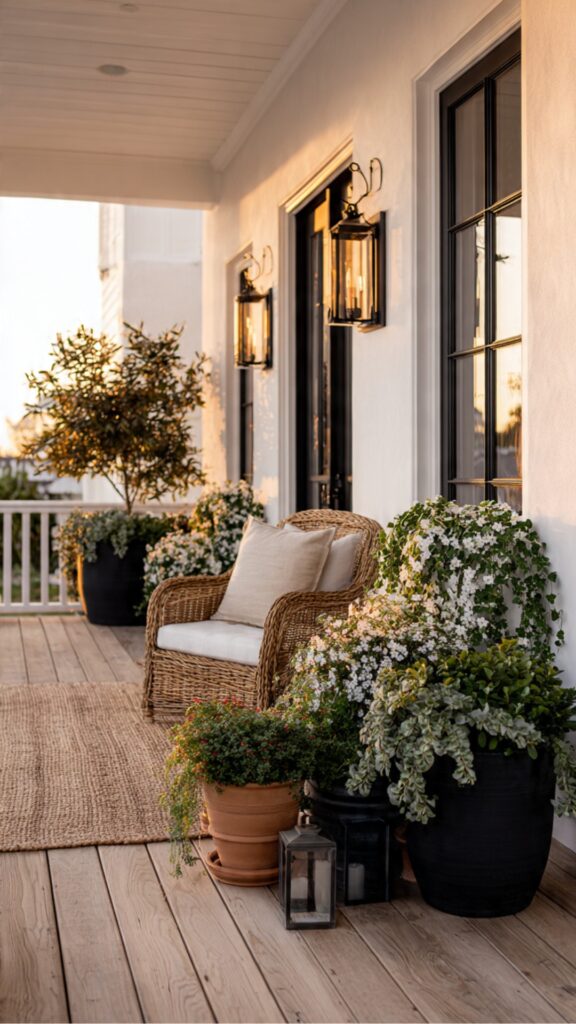
Plants are the most life-giving element in any front porch decor scheme they introduce color, texture, movement, and living warmth that no inanimate decor object can replicate. However, the difference between a porch plant arrangement that looks professionally curated and one that looks haphazard comes down to a few specific principles that most homeowners are never taught.
The most important principle is the “thriller, filler, spiller” container planting formula a professional planting design approach where each container includes one tall, architectural “thriller” plant (such as a dwarf ornamental grass, a tall coleus, or a spike/dracaena), one mounding “filler” plant (impatiens, petunias, begonias, or calibrachoa), and one trailing “spiller” plant (sweet potato vine, ivy, lobelia, or bacopa) that cascades over the edge of the container.
This combination creates a visually complete, layered planting that looks abundant and intentional from the moment it is installed. Planter selection is as important as plant selection. The planter style, material, and color should complement the home’s architecture and the porch’s color palette rather than competing with it. Large, simple planters in neutral tones terracotta, concrete gray, white, or black allow the plants to be the star.
Ornate, heavily detailed planters work better with simpler, more architectural plant choices where the container itself contributes to the visual interest. Avoid using too many different planter styles simultaneously a cohesive set of matching or deliberately coordinated planters looks far more polished than a collection of individually purchased pots in different sizes, materials, and colors.
Scale is the variable that is most consistently underestimated in porch container gardening. Small pots on a large porch look apologetic and lost they fail to provide the visual weight that the space needs. For a standard-width porch, planters should be a minimum of 16 inches in diameter; 20-to-24-inch planters are ideal for most situations.
Very large porch spaces wide craftsman porches, covered verandas, or grand colonial-style entries can accommodate planters of 30 inches or more without overwhelming the space. When in doubt, err toward larger rather than smaller a large planter with a full planting always elevates a porch in a way that a cluster of small pots cannot.
Front Porch Rugs:
That Anchor the Space
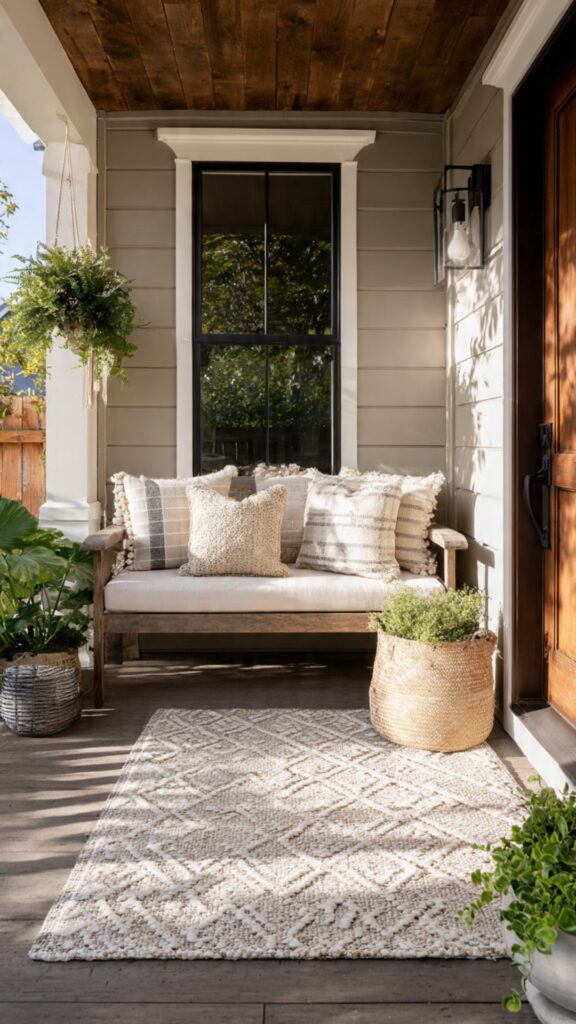
A front porch decor rug is one of the most transformative and underrated elements in porch decor. A well-chosen outdoor rug defines the seating area, adds color and pattern, introduces texture underfoot, and signals to visitors that the porch is a furnished, intentional space rather than a transitional zone.
A porch without a rug almost always looks unfinished, regardless of how well-selected the furniture, plants, and lighting might be. Outdoor rug materials have improved enormously in recent years. Polypropylene and recycled PET fiber rugs are now available in designs and textures that rival indoor rugs in visual quality while offering full resistance to moisture, mildew, fading, and foot traffic.
Natural fiber rugs sisal, jute, seagrass have a beautiful organic texture but are not fully weather-resistant and are better suited for covered porches with minimal rain exposure. For fully exposed porches, a high-quality polypropylene rug in a flat-weave or low-pile construction is the most practical choice without sacrificing aesthetics.
Pattern selection for porch rugs follows the same logic as interior rug selection: if the surrounding decor is complex and layered, choose a simpler rug a solid color, a subtle stripe, or a small geometric. If the surrounding decor is relatively minimal and neutral, the rug is the opportunity to introduce pattern and visual interest.
The most consistently successful porch rug choices are: broad stripes in two coordinating colors, diamond or trellis patterns in neutral tones, and global-inspired flatweave patterns in earthy colors. Avoid overly trendy or theme-specific patterns they date quickly and limit seasonal flexibility.
Sizing is a common error in porch rug selection. The rug should be large enough that all front porch decor furniture legs sit either fully on the rug or fully off it the worst outcome is furniture legs partially on and partially off the rug, which creates visual instability and makes the space look poorly planned.
For a standard rocking chair arrangement, a 4×6 or 5×7 rug is typically appropriate. For a fuller seating group with a loveseat and two chairs, a 6×9 or 8×10 provides better proportional coverage. Always measure your furniture footprint before purchasing.
Porch Swings and Rocking Chairs:
As Statement Pieces
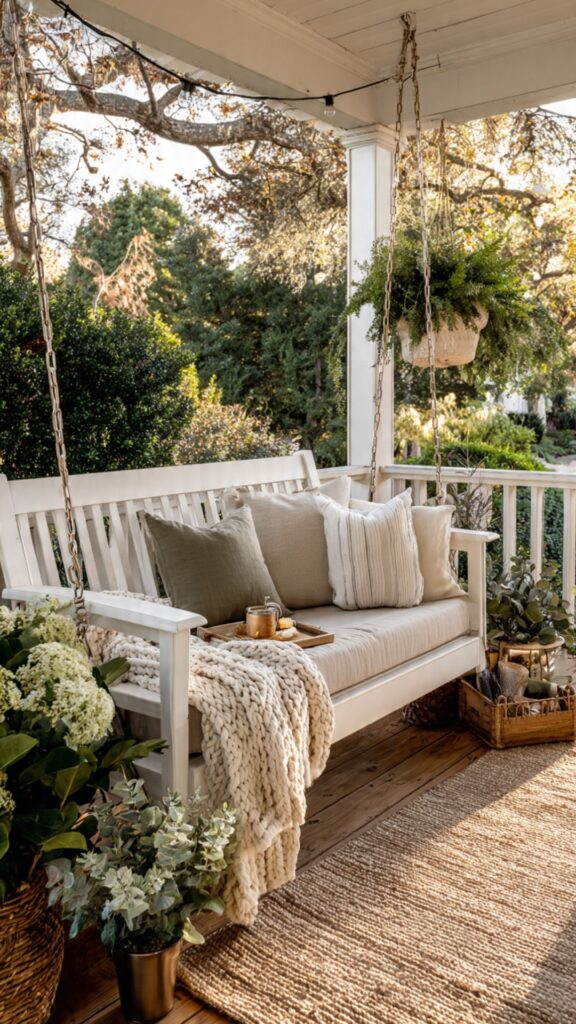
Few front porch decor elements carry the same nostalgic, emotional resonance as a porch swing or a pair of rocking chairs. They immediately communicate hospitality, leisure, and a particular version of home that is both timeless and deeply appealing. However, selecting the right swing or rocker and positioning it correctly requires more thought than most homeowners apply to the decision.
Porch swings require careful structural consideration before installation. A swing must be hung from ceiling joists, not simply from the porch ceiling decking the dynamic load of a swinging bench with one or two adults requires a structural attachment point that can handle that weight safely and repeatedly.
The ceiling joist must be located, the hardware must be rated for the load, and the hang distance from the wall must allow the swing to arc naturally without hitting the house. Consulting a contractor or following manufacturer specifications precisely is essential here. A swing installed incorrectly is not just aesthetically problematic it is a safety hazard.
Style matching is critical for swings and rockers. A sleek modern swing in painted hardwood or powder-coated metal looks architectural and contemporary. A natural cedar or teak swing with a classic slatted design reads as transitional and timeless.
A painted wood swing in a pop color sage green, navy, warm red becomes a statement piece that anchors the entire porch composition. Rocking chairs follow similar logic: classic white painted rockers suit colonial, farmhouse, and cottage styles; natural wood Adirondacks suit craftsman and rustic styles; sleek woven rockers suit contemporary or coastal aesthetics.
Cushion selection for swings and rockers does dual aesthetic and comfort duty. Performance outdoor fabrics Sunbrella being the industry benchmark offer exceptional fade resistance and water repellency while providing the visual softness that makes cushions worth having.
The cushion color or pattern should connect to at least one other element on the porch the planter color, the door color, or the rug pattern to create a compositional link rather than an isolated accent. Piped edges, tufting, and other cushion detailing add a more refined, custom look that elevates the overall porch appearance.
Go Check : Garden Lighting Ideas That Make Your Front Porch Look Magical at Night.
Vertical Elements:
Trellises, Climbing Plants, and Wall Decor
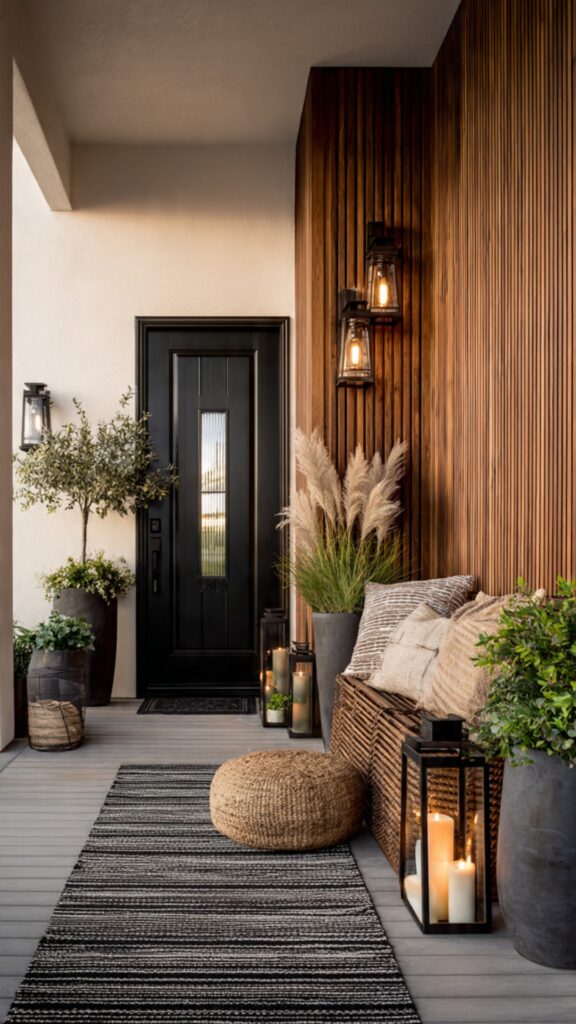
Most front porch decor guides focus almost exclusively on horizontal surfaces the floor, the furniture, the steps. However, vertical space is equally important in creating a porch that feels fully resolved and intentionally designed. Walls, columns, railings, and the space between eye level and the ceiling offer enormous decorating potential that the majority of homeowners leave completely untapped.
Climbing plants on porch columns or trellises are one of the most beautiful vertical additions available and one of the most committed. Wisteria, climbing roses, clematis, Confederate jasmine, and climbing hydrangea all create a lush, romantic quality on a covered porch.
However, each of these plants takes multiple growing seasons to establish fully, so they represent a long-term investment rather than an immediate transformation. For faster results, consider annual vines black-eyed Susan vine, morning glory, or sweet peas which can reach impressive heights in a single growing season with the right support structure.
Wall-mounted decor brings personality and visual interest to porch walls without requiring plant care. Galvanized metal wall art, a large outdoor clock, a set of decorative shutters flanking the door, a wall-mounted lantern, or a grouping of woven baskets all work well as porch wall elements.
The most important principle for porch wall decor is scale on an exterior porch, pieces need to be significantly larger than equivalent interior pieces to read correctly from the street or the porch itself. What looks oversized in the store is often just right on the porch wall.
Porch railings offer underused decorating opportunities, particularly for seasonal decor. Garland, string lights, and ribbon can be woven through railings for holiday decoration. Hanging planters suspended from railing brackets bring plant life to the vertical plane without requiring ceiling hooks.
Railing top caps can be used as narrow display ledges for small potted herbs, votive candles in hurricane glasses, or small sculptural objects. In contemporary porch design, some homeowners are now replacing traditional wooden railings with cable railings thin stainless steel cables stretched horizontally which are virtually invisible from a distance and preserve the view of front porch decor gardens and street life while meeting code requirements.
Small Front Porch Decor:
That Maximizes Every Inch
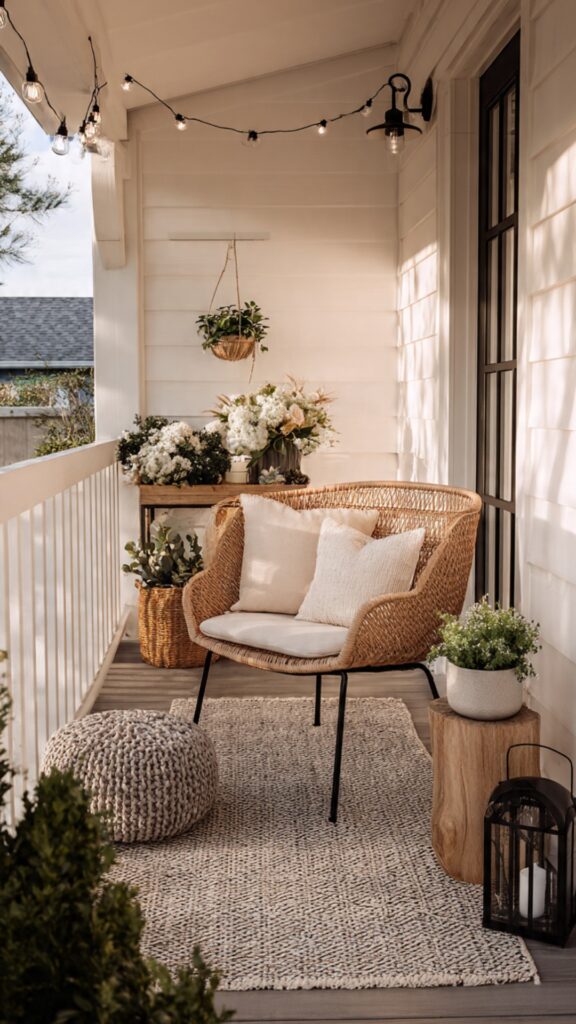
A small front porch decor presents unique design constraints but also unique design opportunities. The limited space forces a level of curation and intentionality that larger porches rarely achieve. When every square foot counts, each decor decision matters more, and the result when done well is a porch that feels gem-like and perfectly resolved rather than compromised.
The foundational rule for small front porch decor is to resist the urge to fill every available space. Negative space areas of the porch that are deliberately left open is what prevents a small porch from feeling cluttered.
A single well-chosen rocking chair, one large planter rather than three small ones, a beautiful door mat, and a thoughtfully framed door can create a small porch that feels abundant and welcoming through quality and composition rather than quantity.
Vertical planting is especially valuable on small porches because it uses height rather than floor space. A tall, slim planter with a vertically growing plant a boxwood topiary, a columnar ornamental grass, or a trellis-trained vine draws the eye upward and makes the porch feel taller and more spacious without consuming precious floor area.
Wall-mounted planters and hanging baskets extend the plant palette into the vertical plane, adding life and color without encroaching on the space needed to walk and move comfortably.
Multi-functional furniture is a smart strategy for small porch spaces. A storage bench that doubles as seating, a side table with a lower shelf for storage, or a planter with built-in seating are all solutions that provide function without requiring additional pieces.
Folding bistro chairs that can be brought out for entertaining and stored flat when not in use are another excellent option for small covered porches where weather protection allows for lighter furniture choices.
Front Porch Decor for Farmhouse Style Homes:
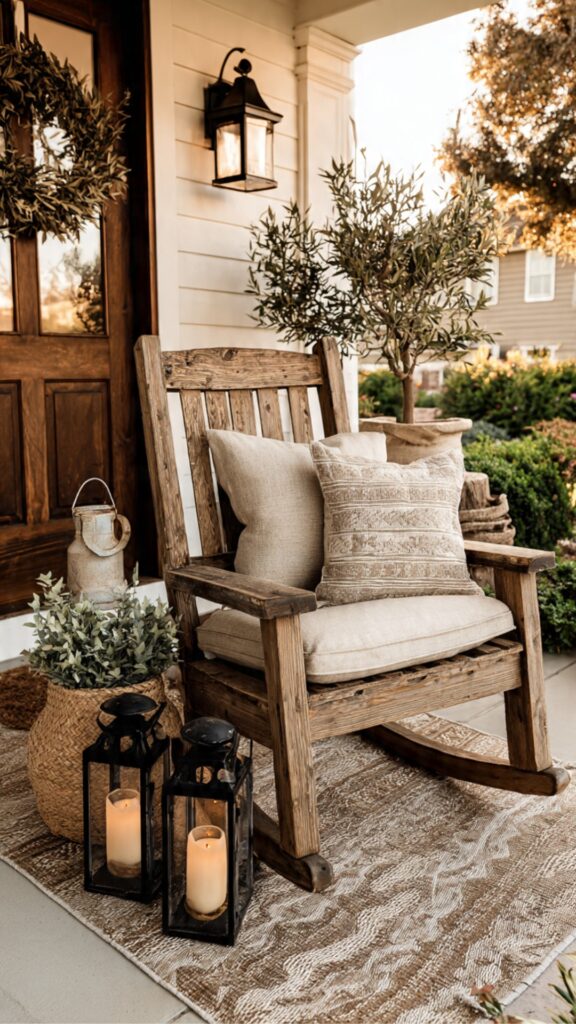
The farmhouse front porch decor is one of the most beloved and widely pursued aesthetics in residential design and it is also one of the most frequently executed poorly. The authentic farmhouse porch feeling comes from a specific combination of materials, textures, and objects that feel weathered, humble, and genuine.
When executed with store-bought farmhouse kitsch rather than real material consideration, the result looks more like a Halloween decoration than a genuine farmhouse.
Authentic farmhouse porch materials include: natural wood in weathered gray or warm honey tones, raw or galvanized metal, terracotta and concrete, woven natural fibers, and aged or distressed paint finishes. These materials share a quality of being unfinished, textural, and apparently aged the opposite of the sleek, polished surfaces that define contemporary or transitional porch decor.
When selecting furniture, planters, and accessories for a farmhouse porch, prioritizing these material qualities over trend-driven farmhouse graphics or mass-produced “rustic” signs will always produce a more genuinely satisfying result.
Plant selection is central to the farmhouse porch aesthetic. Oversized galvanized metal tubs planted with heirloom tomatoes, lavender, or herbs; a collection of mismatched terracotta pots at varying heights; a window box overflowing with trailing plants; or a large olive tree in a concrete planter all capture the lived-in, purposeful quality that defines genuine farmhouse style.
Avoid perfectly matched planter sets the slight imperfection and layering of collected objects over time is what creates authentic farmhouse character rather than store-bought uniformity.
Functional objects used decoratively is a hallmark of farmhouse porch styling that most guides miss. A wooden crate used as a plant stand, an old milk can repurposed as an umbrella holder, a vintage metal sign above the door, a grain sack pillow on a natural wood bench the farmhouse approach borrows from a tradition where beautiful objects were also useful objects, and useful objects were made to be beautiful.
This philosophy of finding and repurposing objects with history and purpose produces a farmhouse porch that feels genuinely earned rather than staged.
Modern and Minimalist Front Porch Decor Ideas:
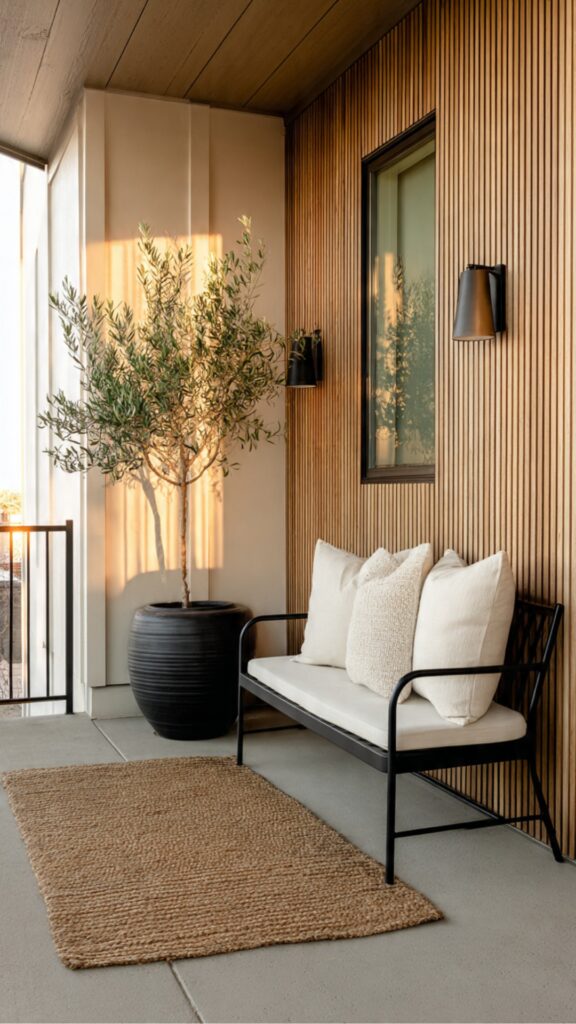
Minimalist front porch decor is the most technically demanding approach in exterior design not because it requires more objects or more effort, but because it requires more precision. When there is less to look at, every detail is amplified.
A slightly misaligned planter, a scratched railing, a single faded cushion these details are forgiven in a layered, maximalist composition but are immediately visible in a minimalist one. Successful minimalist porch design demands high-quality materials, precise proportions, and disciplined restraint.
The minimalist porch palette is typically narrow and deliberate two or three colors maximum, with one being a true neutral (white, black, concrete gray, warm sand) and the others serving as carefully controlled accents. The most effective minimalist porch compositions use monochromatic tonal layering different values and textures of the same color family rather than contrasting color combinations.
A porch in all whites, creams, and natural linen with architectural black hardware and one black planter achieves a quiet richness that reads as sophisticated rather than cold.
Plant selection in minimalist front porch decor design favors architectural plants with strong silhouettes over abundant, colorful blooms. Clipped boxwood topiaries, tall ornamental grasses, agaves, succulents, snake plants (for covered areas), or a single olive tree in a large concrete or terracotta planter all provide organic life without introducing the visual busyness of mixed annual plantings.
The goal is a plant that makes a statement through form and structure rather than through color or abundance. Material quality is the distinguishing factor in minimalist front porch decor. When the composition is simple, the quality of each material is immediately apparent.
This means choosing real teak or concrete rather than plastic imitations, choosing powder-coated aluminum rather than painted steel that will chip, and choosing high-quality outdoor textiles rather than cheap alternatives that fade and deteriorate within a single season. The investment calculus in minimalist porch design is straightforward: fewer pieces, but each piece chosen at the highest quality level affordable.
Do See : Rooftop Garden Ideas That Perfectly Complement Your Beautiful Front Porch Look.
Budget-Friendly Front Porch Decor Transformations:
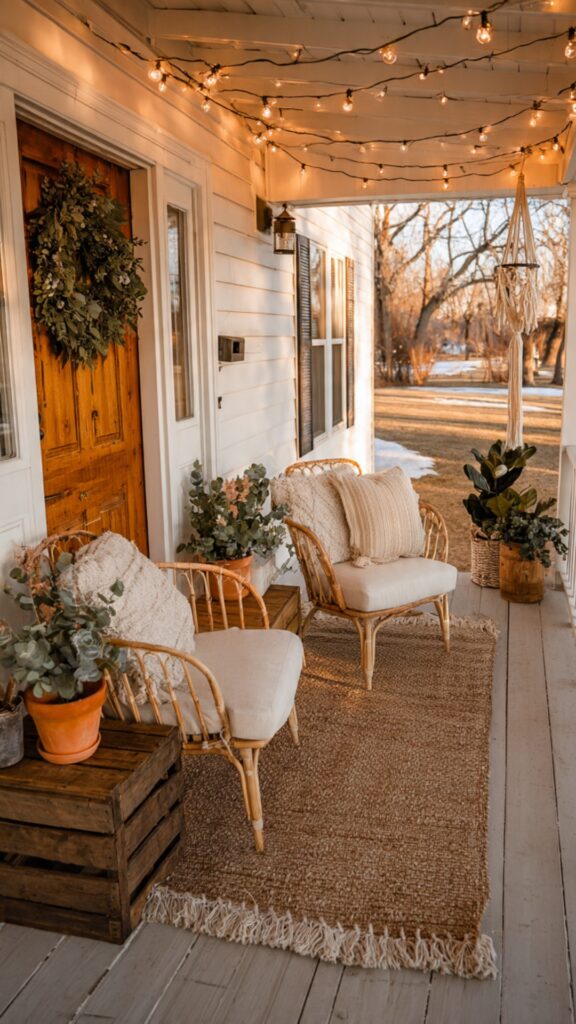
A beautiful front porch decor does not require a significant financial investment it requires a thoughtful one. Some of the most striking front porch decor transformations are achieved with paint, rearrangement, thrift store finds, and a weekend of focused effort rather than a large budget. The key is understanding which changes create the most visual impact per dollar spent and prioritizing those before any others.
Repainting the front porch decor door is consistently the highest-impact, lowest-cost front porch decor improvement available. A quart of exterior paint in a bold, well-chosen color costs between $20 and $40, and the transformation it creates is disproportionate to the cost.
Combined with new door hardware which can be found for well under $100 at most home improvement stores a repainted front porch decor door is a budget porch makeover in its own right. Choose a color that relates to something already existing on the home’s exterior a shutter color, a stone undertone, a roof color to ensure it reads as intentional rather than random.
Thrift stores, estate sales, and online marketplaces like Facebook Marketplace and Craigslist are excellent sources for porch furniture that can be refreshed with outdoor spray paint. Wooden chairs and benches that look worn can be sanded and repainted in a weekend. Metal bistro sets can be wire-brushed, primed, and repainted in an afternoon.
The quality of the structural form matters more than the current condition of the finish look for solid wood joinery, heavy metal gauge, and good proportions, then invest a small amount in materials to restore and personalize the finish.
Seasonal plants purchased toward the end of the season when garden centers discount remaining inventory — offer excellent quality at dramatically reduced prices. A flat of impatiens or petunias in late June costs half what the same plants would cost in early May, and they will still perform beautifully through summer.
Similarly, purchasing fall mums in October rather than September saves significant money while still providing weeks of seasonal color before frost. Timing plant purchases strategically around the discount cycle is a consistently effective budget front porch decor gardening strategy.
An often-overlooked budget front porch decor upgrade: deep cleaning and small repairs. Pressure washing a front porch decor floor, repainting front porch decor steps, tightening loose railings, cleaning light fixtures, replacing a worn doormat, and cleaning out gutters directly above the porch line can transform a tired-looking front porch decor into one that appears well-maintained and loved without adding a single new decorative object.
Cleanliness and maintenance are foundational tofront porch decor quality, and their absence undermines even the most expensive decorating investments.
Conclusion
Front porch decor is far more than a collection of seasonal accessories it is a design discipline that combines architecture, horticulture, furniture, lighting, and color into a composition that speaks for your home before a single word is exchanged.
From a bold front porch decor door color to a thoughtfully planted container, every element on a well-designed porch contributes to a welcoming, beautiful, and lasting first impression. Start with one idea from this guide even a single well-chosen planter or a freshly painted door and let the transformation build from there. Your ideal front porch decor is closer than you think.

Team TrandyVilla is the passionate home decor team behind Trandy Villa, where style meets comfort in everyday living. The team loves transforming simple spaces into beautiful, functional homes through smart ideas, budget-friendly hacks, and modern design trends. Their content focuses on helping readers create homes that feel both stylish and personal without spending too much.