
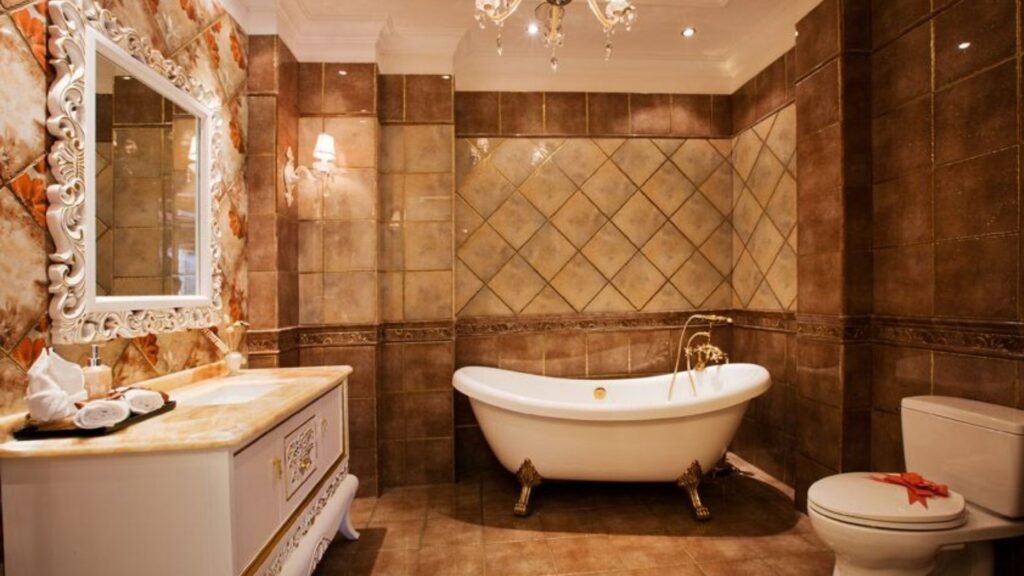
Luxury Bathroom means a bathroom with premium materials, modern features, and a relaxing design. Luxury Bathroom Ideas help create a stylish, comfortable, and practical space. They improve daily routines, increase home value, and add a spa-like feel with smart planning and elegant details.
Luxury Bathroom brings comfort, beauty, and function into one space for everyday living. It creates a calm setting with elegant finishes, quality fixtures, and thoughtful design choices. Small upgrades or full renovations can give your bathroom a refined and relaxing atmosphere that feels timeless.
Luxury Bathroom Ideas focus on smart layouts, quality materials, and beautiful finishes. They include features like soaking tubs, walk-in showers, statement lighting, and custom storage. These ideas improve comfort, support daily use, and create a space that feels modern, peaceful, and inviting.
Install a Freestanding Soaking Tub as a Focal Point
Design Element
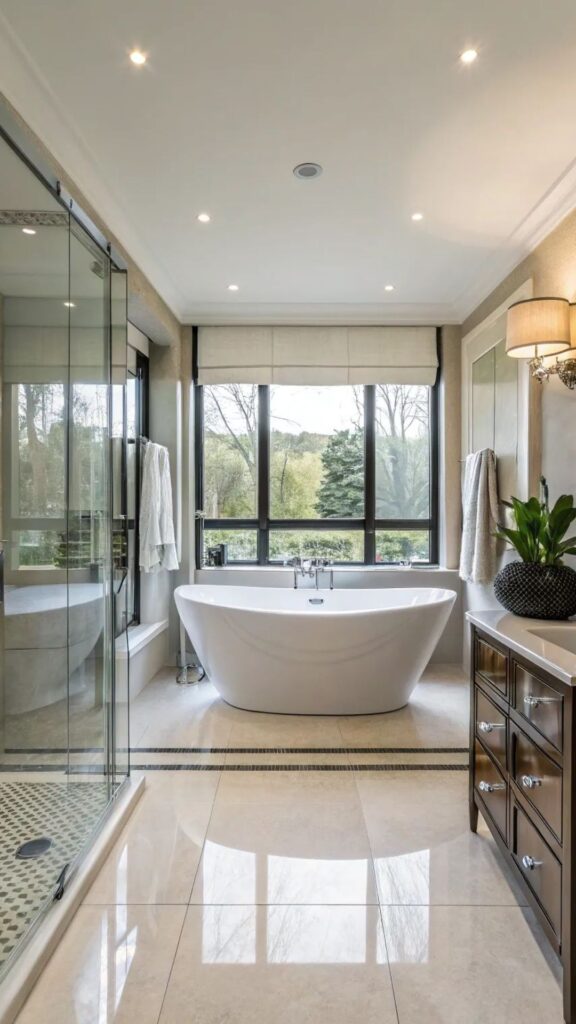
Nothing signals luxury bathroom ideas quite like a freestanding soaking tub positioned in the heart of your bathroom. Unlike built-in tubs that hug a wall, freestanding designs command the room they’re sculptural, bold, and emotionally evocative. Materials like cast iron retain heat for up to 30 minutes longer than acrylic, while stone resin options offer a matte, contemporary finish that’s both tactile and visually stunning. Japanese soaking tubs (ofuro) are particularly gaining momentum in 2025–2026, offering deeper water levels at a narrower footprint ideal for city apartments with spatial constraints.
Placement matters as much as the tub itself. Position it near a window for natural light if privacy allows, or center it under a skylight for a dramatic spa-like moment. In larger bathrooms, placing the tub on a raised platform creates an almost ceremonial sense of bathing. Pair it with a floor-mounted tub filler a sleek, column-style faucet that rises from the floor beside the tub rather than wall-mounted taps, to preserve the tub’s sculptural independence. This keeps sightlines clean and elevates the overall composition.
From a practical standpoint, consider weight: cast iron tubs can weigh 300–500 lbs when filled. Always consult a structural engineer before placing one on an upper floor. If weight is a concern, stone resin composites offer a nearly identical aesthetic at roughly half the weight. For a futuristic upgrade, some tubs now integrate chromotherapy (color-changing LED lighting beneath translucent acrylic panels) to deliver mood-responsive bathing sessions a feature that is surprisingly therapeutic for stress recovery.
Pro Tip: Choose a matte white or warm greige finish over high-gloss. Matte tones show fewer water marks and age gracefully critical for a bathroom that sees daily use.
Use Large-Format Stone or Porcelain Tiles
Surfaces & Materials
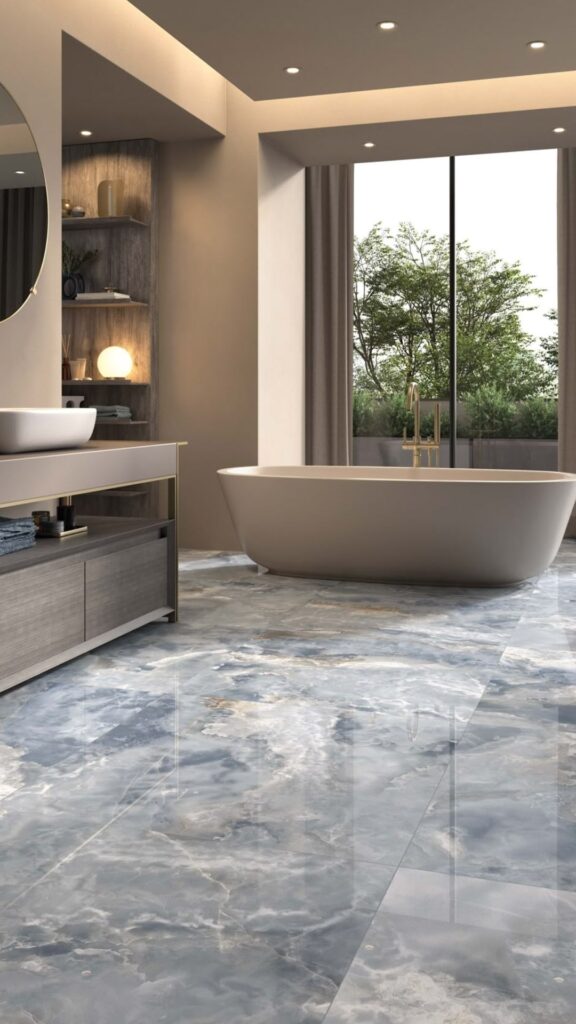
The shift from small mosaic tiles to large-format slabs has been one of the most defining trends in luxury bathroom design over the past decade. Tiles measuring 1200×2400mm (roughly 4×8 feet) dramatically reduce grout lines, which does two important things: it creates a seamless, expansive visual field, and it makes the space significantly easier to clean. Marble remains the gold standard, but rectified porcelain tiles that replicate Calacatta, Statuario, or Emperador marble are now virtually indistinguishable from the real thing and at a fraction of the cost and maintenance burden.
Porcelain tiles with through-body color are particularly smart in wet environments because chips or scratches don’t reveal a white ceramic base underneath. In shower enclosures, book-matching tile patterns where two adjacent tiles mirror each other like an open book creates the illusion of flowing natural stone veining that’s breathtakingly organic and tailored. This technique, borrowed from high-end hotel design, is now accessible to residential projects thanks to digital printing technology that can produce matched pairs at scale.
On the floor, honed or bush-hammered finishes provide subtle texture that improves grip when wet without sacrificing the refined visual quality of stone. Heated tile floors (radiant heating systems embedded beneath the tile) are the final luxury touch stepping onto warm stone at 6 a.m. in winter is an experience that, once you’ve had it, feels impossible to give up. Modern electric radiant systems are thin enough (approximately 3–4mm) to install under tiles without significant floor height changes.
Designer Insight: Carry the same large tile format from floor to wall for a continuous, enveloping effect. This continuity is the signature of high-end spa bathrooms worldwide.
Seriously Worth a Look: Bathroom Double Vanity Ideas That Add Pure Luxury to Your Stunning Bathroom
Design a Walk-In Rain Shower with Multiple Spray Zones
Shower Systems
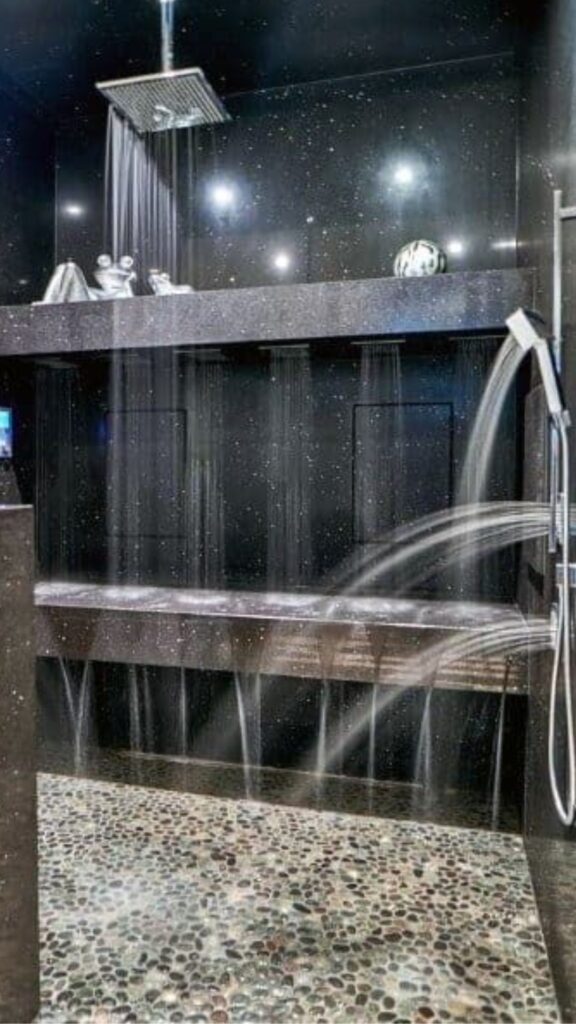
The modern luxury shower is less a fixture and more a multi-sensory experience. Walk-in showers with no threshold (zero-entry or wet room designs) eliminate barriers both visually and physically they’re also ADA-compliant, making them smart investments for long-term living.
Rain showerheads, typically mounted overhead at ceiling height, produce a gentle, enveloping downpour that mimics natural rainfall at a flow rate designed for relaxation rather than rinse efficiency. Larger heads 16 to 24 inches in diameter cover more surface area and feel significantly more immersive than standard 8-inch alternatives.
The real magic happens when you add multiple spray zones. A body spray system with jets positioned along the walls at shoulder, hip, and knee height allows you to dial in hydrotherapy settings that target muscle groups specifically. Professional athletes and physiotherapists have long used contrast therapy (alternating hot and cold spray) for recovery; smart shower systems from brands like Kohler DTV+, Moen U by Moen, and Duravit Shower Systems now let you program these sequences and activate them via smartphone before you even step out of bed. This is genuine wellness technology, not just bathroom gadgetry.
Steam showers represent the next tier of the walk-in experience. A hermetically sealed enclosure with a steam generator (typically 9–18kW depending on enclosure size) can reach sauna-like steam conditions within 5–8 minutes. Regular steam sessions have been shown to improve circulation, open airways, and support skin hydration. For those with 30–40 square feet to dedicate to a shower space, combining rain head, body sprays, and a steam generator creates what interior designers often call a ‘shower spa’ a complete personal wellness room embedded within the bathroom.
Contractor Note: Recessing the rain head into a ceiling housing (rather than surface-mounting) creates an architectural flush look and prevents water pooling on top of the head a common maintenance issue.
Incorporate Smart Bathroom Technology
Technology & Automation
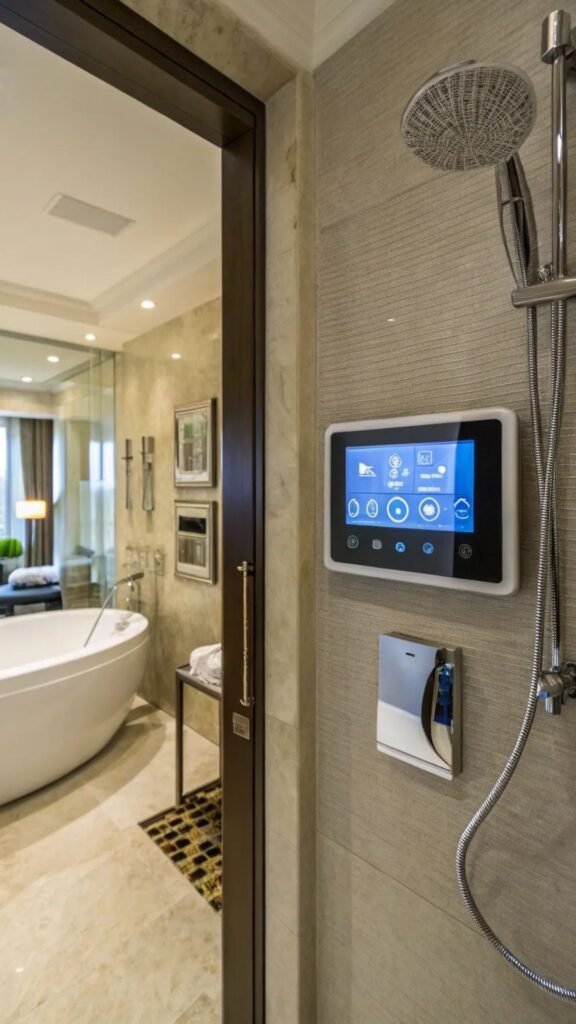
Smart home technology has arrived in the bathroom with remarkable sophistication. Smart mirrors featuring embedded LED displays, anti-fog heating elements, and Bluetooth speakers are now among the most sought-after luxury bathroom upgrades. Products like the Kohler Verdera Voice Lighted Mirror integrate Amazon Alexa directly into your reflection, allowing hands-free control of lighting, music, and even smart home devices while you brush your teeth. Dimmer-controlled, color-temperature-adjustable LED lighting around the mirror lets you simulate natural daylight for makeup application or switch to warm amber for evening wind-down routines.
Intelligent toilets sometimes called bidet toilets or washlet systems represent perhaps the single largest leap in bathroom comfort that most Western markets are still underutilizing. Japanese brands like TOTO and Lixil have perfected toilets with heated seats, oscillating warm water cleansing wands, built-in air dryers, automatic lid opening and closing, and even health-monitoring sensors that analyze urine composition. The TOTO Neorest NX2, for example, includes an eWater+ system that mists the ceramic bowl with electrolyzed water to prevent waste from adhering meaning the toilet effectively self-cleans after each use.
Programmable ambient lighting goes far beyond simple dimmer switches. Circadian lighting systems (like Casambi or Lutron systems integrated with tunable LEDs) automatically adjust color temperature throughout the day blue-white in the morning to boost alertness, transitioning to warm amber in the evening to support melatonin production. In a bathroom used for both energizing morning routines and calming evening baths, this kind of adaptive lighting has tangible health value that interior designers increasingly emphasize as a foundational luxury rather than a novelty.
Future-Proofing: Run a dedicated data conduit when renovating pulling ethernet or smart home cabling after tiling is expensive. Prepare your bathroom for tomorrow’s technology today.
Choose a Double Vanity with Bespoke Storage
Cabinetry & Vanity
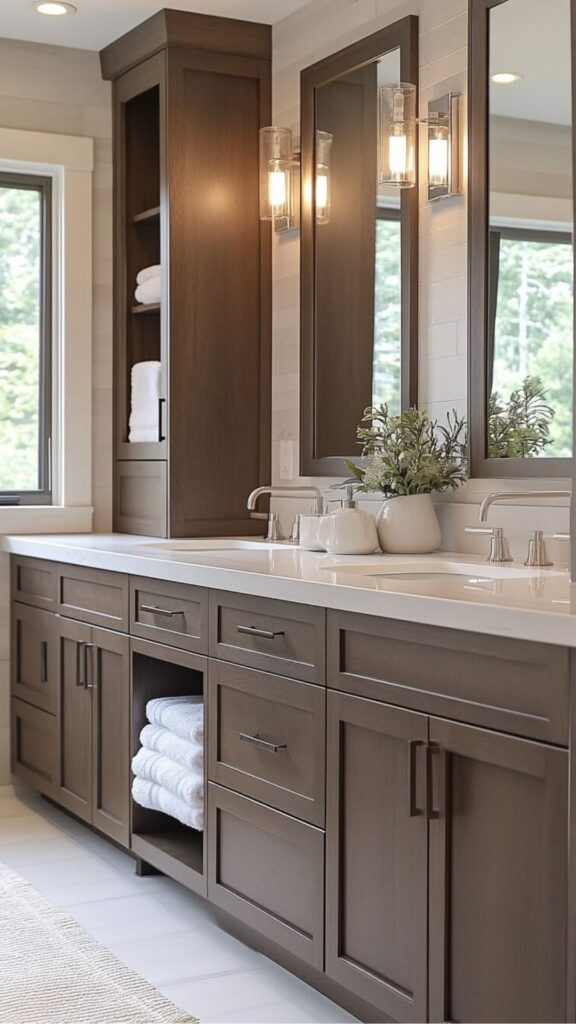
A double vanity two sinks within a single extended vanity unit is one of those upgrades that couples immediately regret not having sooner. Beyond the obvious convenience of parallel morning routines, a well-designed double vanity anchors the entire bathroom visually.
Standard double vanities run 60 to 72 inches wide, but for a truly bespoke luxury look, custom furniture-quality vanities can extend to 84 or even 96 inches, incorporating towers, open shelving niches, and integrated lighting channels beneath floating bases. The ‘floating’ or wall-mounted vanity design is particularly favored in contemporary luxury bathrooms because it visually expands the floor space and simplifies cleaning.
Material selection for the vanity defines the bathroom’s personality as much as any other element. High-gloss lacquered cabinetry in deep jewel tones navy, forest green, graphite offers dramatic contrast against white or light stone.
Alternatively, quarter-sawn oak, teak, or walnut with a Danish oil finish brings warmth and organic texture that’s increasingly popular in wellness-forward designs. The most sophisticated approach blends materials: a matte stone countertop over lacquered base cabinets, for instance, combines softness with precision in a way that feels genuinely designed rather than assembled from a showroom.
Internal organization is where bespoke vanity design truly separates itself from off-the-shelf options. Pull-out drawers with felt-lined dividers for jewelry and accessories, integrated power sockets for shavers and toothbrush chargers within the cabinet, soft-close mechanisms on every door and drawer, and built-in LED interior lighting that activates when you open a drawer these are the micro-details that accumulate into the feeling of daily luxury. When budgeting, remember that hardware quality (hinges, drawer runners, handles) disproportionately affects both longevity and tactile experience.
Countertop Tip: Waterfall-edge countertops where the stone continues vertically down the sides of the vanity are architecturally striking and worth the added stone cost in a luxury context.
Add Statement Lighting for Ambience and Function
Lighting Design
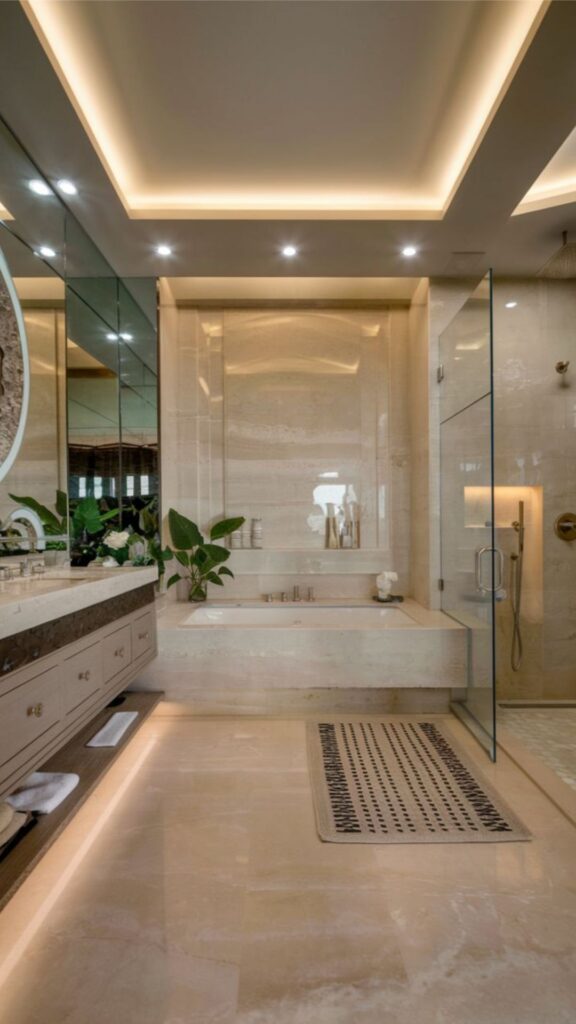
Lighting is the most underinvested element in bathroom design, yet it has the greatest impact on how the finished space feels at different times of day. A luxury bathroom requires at least three distinct lighting layers: ambient (overall illumination), task (precise, shadow-free light for grooming), and accent (atmospheric, decorative illumination).
Ambient light typically comes from recessed ceiling fixtures or a central pendant; task lighting flanks the mirror at eye level (vertical strips are far superior to overhead fixtures, which cast shadows beneath the nose and chin); and accent lighting hidden LED strips behind floating vanities, within niches, or beneath the freestanding tub creates the glowing, layered quality seen in 5-star hotel bathrooms.
Statement pendant lights above a freestanding tub or double vanity are one of the fastest-growing trends in luxury bathroom ideas design. Pendants that might seem more at home in a dining room blown glass globes, sculptural rattan shades, aged brass cage designs bring personality and editorial quality to a bathroom when chosen thoughtfully. IP44-rated pendants (suitable for Zone 2 bathroom use, meaning areas beyond 60cm from water sources) give designers creative latitude to use genuinely interesting light fixtures rather than limiting choices to clinical bathroom-specific products.
The color rendering index (CRI) of light bulbs matters enormously in a bathroom. Bulbs with CRI 90+ (ideally 95+) render skin tones, makeup colors, and material textures with near-natural accuracy. Most budget lighting uses bulbs with CRI in the mid-80s, which flattens colors and makes the bathroom feel clinical. Switching to high-CRI LED bulbs in warm white (2700K–3000K) is a remarkably affordable upgrade often under $50 in bulbs that transforms how every other element in the bathroom looks and feels.
Designer Rule: Never place the only light source above the mirror. It will always cast unflattering shadows. Side-mounted sconces at face height are non-negotiable for quality task lighting.
You Will Not Regret This: Bathroom Mirror Ideas That Give Your Luxury Bathroom a Gorgeous Finishing Touch
Create a Spa-Like Atmosphere with Natural Materials
Natural Elements
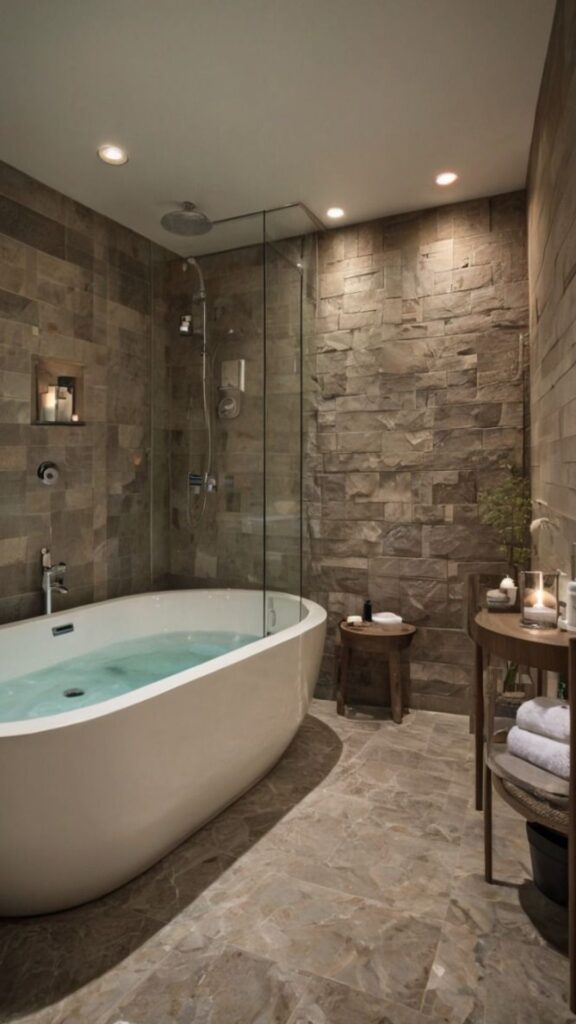
The most enduring luxury bathroom designs draw heavily from the natural world not merely as aesthetic reference, but as a philosophy of materials. Teak, a naturally water-resistant hardwood with high oil content, has been used in spa and marine environments for centuries precisely because it thrives in wet conditions, develops a silver-grey patina over time (or can be oiled to maintain its honey-gold color), and brings genuine warmth to spaces that might otherwise feel cold and clinical. Teak shower benches, bath mats, and even teak wall cladding panels are having a significant moment in high-end residential bathroom design right now.
Stone is the other essential natural material and not just as a surface covering. Stone vessel sinks carved from a single piece of marble, travertine, or onyx are extraordinary functional sculptures. Each is unique; the veining, the crystalline structure, the slight variations in color these are qualities no manufactured material can replicate.
Paired with a wall-mounted faucet in brushed gold or unlacquered brass (which naturally patinas over time), a stone vessel sink becomes a centrepiece that grounds the entire room in geological time. This kind of material thinking considering how something will age and change is fundamentally different from the ‘perfect on day one’ approach of cheaper materials.
Living plants in the bathroom create oxygen, regulate humidity, and introduce a biophilic dimension a connection to living systems that interior designers now recognize as a measurable contributor to psychological wellbeing. Species particularly well-suited to bathrooms include Ficus pumila (creeping fig), Asplenium nidus (bird’s nest fern), Monstera deliciosa, and Sansevieria (snake plant), all of which tolerate high humidity and indirect light. Wall-mounted planters, hanging glass terrariums, or built-in living wall panels turn a bathroom into a genuine garden sanctuary and are far more achievable than most people assume.
Material Tip: Aged or ‘raw’ brass fixtures develop a living patina that many designers now prefer to polished alternatives. Embrace the patina it signals genuine material quality rather than plating.
Design a Custom Walk-In Shower Niche or Built-In Shelving
Storage & Detail
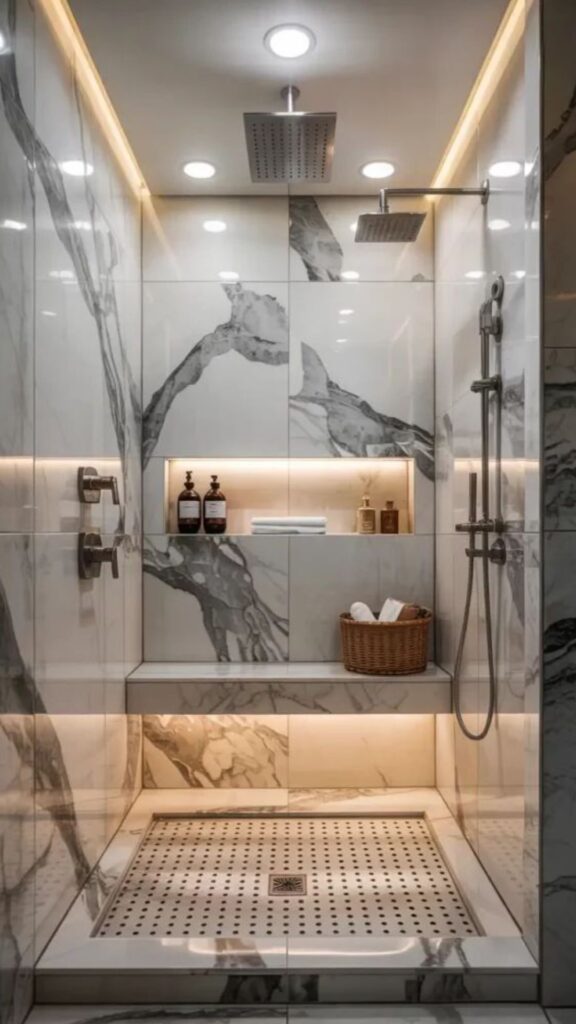
Recessed shower niches are one of those design details that look effortlessly clean in finished bathrooms but require precise planning before a single tile goes up. A niche is cut into the wall cavity typically between studs to create a flush, waterproofed storage shelf for shampoo, conditioner, and soap.
The alternative, wire caddies or adhesive holders, immediately compromise the luxury aesthetic no matter how beautiful the surrounding tile work is. Niches should be planned in multiples of 3 inches to align with standard stud spacing, positioned at shoulder height, and ideally tiled in a contrasting material a mosaic liner, a vertical stacked tile pattern, or even a slab of mirror glass to add visual depth.
The niche concept can extend beyond the shower. Built-in bathroom shelving either as open floating shelves or as framed alcoves flanking the vanity mirror performs double duty as storage and display. Curated bathroom shelving, with folded linen towels, a trailing plant, glass apothecary bottles, and a single scented candle, creates the boutique hotel aesthetic that many homeowners aspire to. The key is restraint: luxury is as much about what’s not on display as what is. Purpose-built shelving with routed edges and integrated LED under-lighting transforms functional storage into architectural detail.
Heated towel rails are often treated as an afterthought but deserve more strategic placement. A single ladder-style towel rail on the main wall heats the towels you’ll use; a second, smaller rail inside or adjacent to the shower enclosure means your pre-warmed towel is exactly where you need it when you step out a micro-detail that makes an enormous experiential difference. Brands like Zehnder make heated towel rails that are as architecturally elegant as any piece of bathroom furniture, available in formats from slim vertical panels to sculptural horizontal arrays that function as room dividers.
Waterproofing Critical: All niches must be waterproofed with a membrane (Schluter Kerdi or RedGard) before tiling. An untreated niche cavity behind tiles is one of the leading causes of bathroom water damage.
Use a Statement Mirror or Custom Mirror Wall
Reflective Design
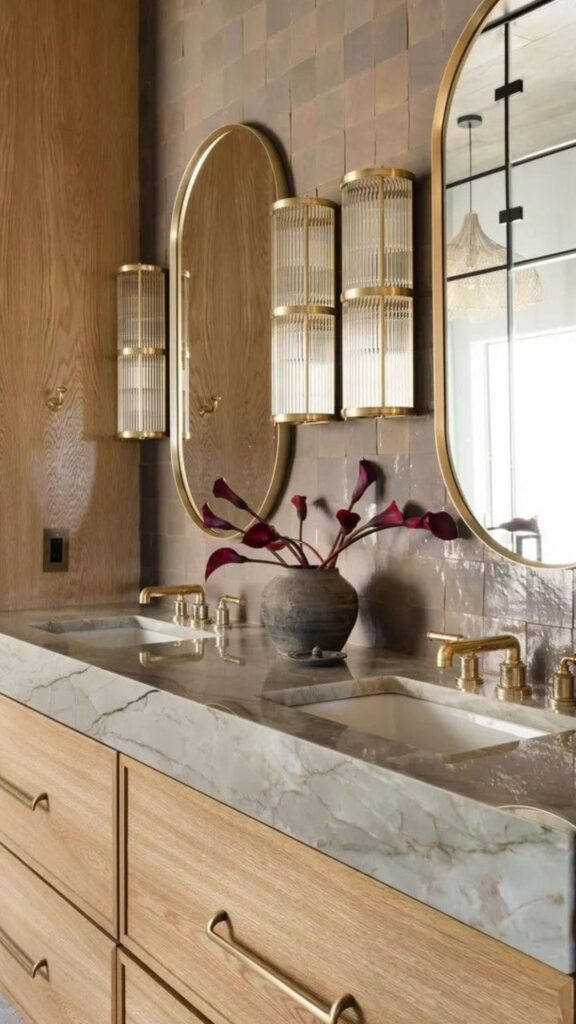
Mirrors are doing extraordinary work in contemporary luxury bathroom design far beyond their reflective utility. An oversized mirror (floor-to-ceiling or spanning the full width of the vanity wall) visually doubles the perceived size of the bathroom and brings in amplified natural light. Frameless mirror installations, where the glass appears to float directly on the tile, create a seamless, architectural quality. Backlit LED mirrors where light emanates from behind the glass rather than illuminating the front face produce a soft, even halo that’s both functionally excellent for grooming and visually beautiful as ambient lighting.
Custom-shaped mirrors are emerging as one of the most expressive elements in bathroom interior design. Where rectangular mirrors once dominated, arch-topped mirrors (both pointed Gothic and round Roman arches), round porthole mirrors, and irregular organic-form mirrors are appearing in design-forward bathrooms. The arch mirror in particular has become culturally significant it introduces a sense of proportion and classical reference that feels simultaneously historical and entirely contemporary. A single large arch mirror over a double vanity can transform a bathroom from merely functional to genuinely beautiful with a single design decision.
Mirror glass itself has variables worth understanding: clear float glass, low-iron Starphire glass (which has 99.9% clarity with no green tint), antique mirror glass (with deliberate foxing and patina applied during manufacturing), and smoked or tinted mirror glass each create dramatically different effects. Antique mirror panels used as backsplashes or cabinet door panels are a particularly sophisticated choice they add depth, warmth, and a sense of history that new materials can’t manufacture. Consider using antique mirror as a framing device around a central clear mirror, creating a composed, gallery-like installation.
Proportion Rule: A mirror should be at least as wide as the vanity it serves, and ideally slightly wider. Undersized mirrors feel cramped; the right-scaled mirror makes the entire vanity composition feel resolved.
Incorporate a Dedicated Makeup or Grooming Station
Functional Luxury
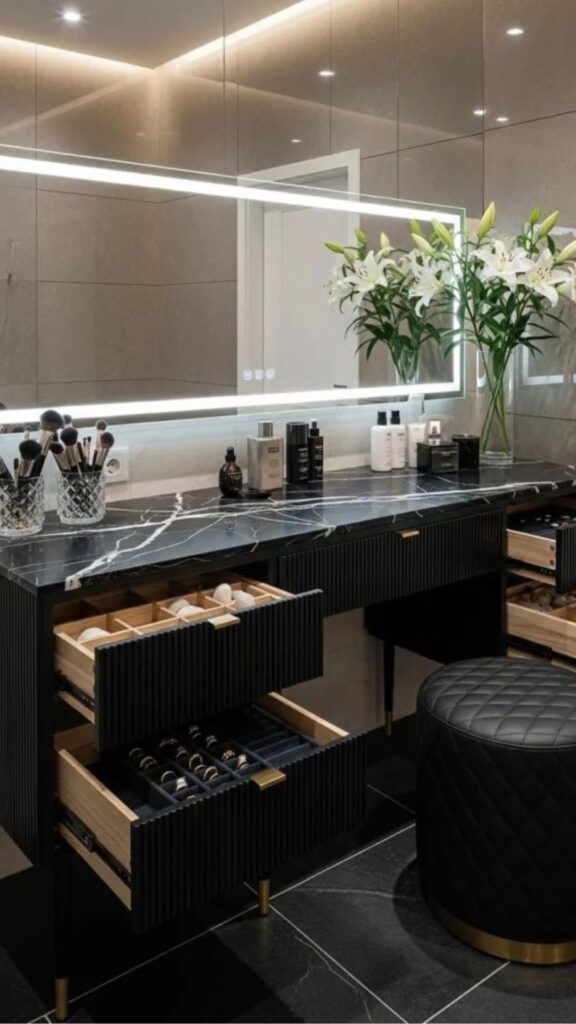
The separation of grooming functions bathing, skincare, makeup into dedicated zones is a hallmark of the most thoughtfully designed luxury bathrooms. A built-in makeup vanity with a sit-down counter at the correct ergonomic height (approximately 28–30 inches, lower than a standard standing vanity) changes how long and how comfortably people engage in their skincare and makeup routines. This isn’t a frivolous indulgence; it’s a functional improvement with daily compounding benefits. Hollywood-style mirrors with individually controllable bulbs around the perimeter provide shadow-free illumination that mimics professional studio conditions.
The dedicated grooming station also creates organizational opportunities that standard bathrooms lack. Drawer inserts with specific wells for lipsticks, palettes, brushes, and skincare bottles eliminate the daily friction of searching through a communal vanity drawer. Built-in electrical outlets within the counter (recessed, with flip-top covers to maintain the clean surface) keep styling tools organized and accessible without visible cords. Some high-end installations even include a small refrigerator drawer within the makeup station, maintaining temperature-sensitive skincare products like vitamin C serums, jade rollers, and eye creams at their optimal storage conditions.
For male-focused grooming stations, the priorities shift to precise task lighting, storage for multiple grooming tools (straight razor, electric trimmer, skincare products), and integration of heated magnifying mirrors. Brands like Georg Jensen Damask and Acqua di Parma have made luxury grooming a cultural movement, and the physical space in which grooming happens should match the quality of the products. A well-designed grooming station elevates the ritual of self-care something increasingly recognized as meaningful rather than vain.
Lighting Specification: For makeup or grooming stations, specify bulbs at 4000K (neutral white) with CRI 95+ for the most accurate color rendering. Warm light (2700K) flatters but distorts cosmetic colors.
Layer Textiles for a Hotel-Quality Feel
Soft Furnishings
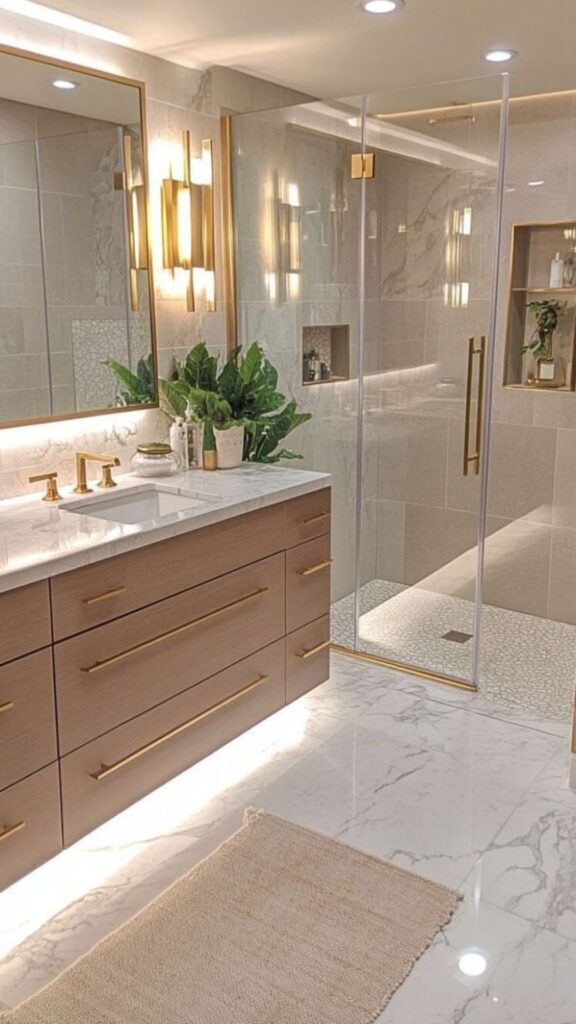
The tactile dimension of a luxury bathroom is almost entirely determined by textiles. Hotel brands like The Four Seasons, Aman, and Raffles invest enormous resources in specifying bathroom linens because they understand that how a towel feels when it touches skin is the last sensory impression a guest takes from the bathroom. Egyptian cotton or Supima cotton towels with a weight of 700–900 GSM (grams per square meter) have a plush density that budget towels typically 400–500 GSM cannot approach. This is one of the most cost-effective luxury upgrades in the entire bathroom: high-quality bath linens cost more upfront but last significantly longer and improve with every wash.
Waffle-weave bathrobes hung on architectural hooks or a slim rail beside the shower create an instant hotel aesthetic and are functionally superior to terry robes for humid bathroom environments the textured weave promotes airflow and faster drying. Bath mats should be deep-pile and substantial (again, 700+ GSM cotton or cashmere-cotton blends), chosen in colors that complement rather than match the towels for a curated, editorial quality. Rolled guest towels displayed in a vintage wicker basket or a wall-mounted display rack shift the aesthetic register toward boutique hotel immediately and cost almost nothing beyond the towels themselves.
Window treatments in bathrooms are often overlooked or reduced to functional frosted glass but for bathrooms with privacy, Roman shades or woven bamboo blinds in natural fibers add softness and organic texture that hard surfaces alone can’t provide. Linen or cotton-linen blend curtains (in a bathroom with sufficient air circulation to prevent mold) introduce movement and warmth. If the bathroom receives morning sun, sheer linen panels that diffuse rather than block light create a luminous, golden atmosphere that’s extraordinarily beautiful in the first hour of the day.
Textile Care: Wash new luxury towels twice before first use without detergent to remove manufacturing residue and activate the cotton fibers they’ll be 20–30% more absorbent afterward.
Right Up Your Alley: Farmhouse Bathroom Ideas That Blend Rustic Charm with Luxury Bathroom Style
Add a Sauna or Steam Room Annex
Wellness Integration
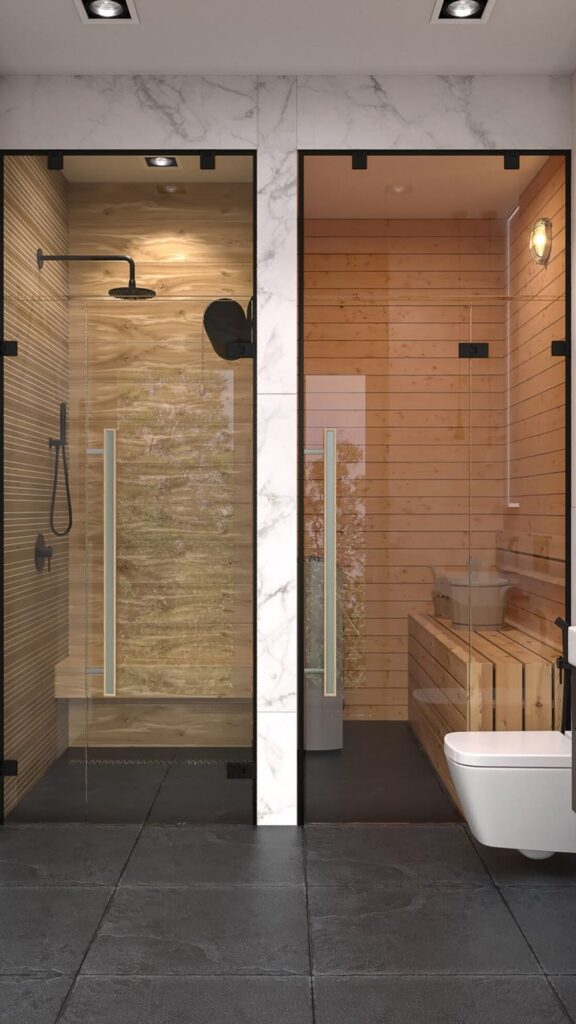
The integration of sauna or steam room functionality directly into or adjacent to the primary bathroom is one of the most significant trends in luxury residential design right now and for good reason. The science supporting regular sauna use has become compelling: a landmark study published in JAMA Internal Medicine found that sauna use four to seven times per week was associated with a 40% reduction in all-cause mortality risk. Infrared saunas, which operate at lower temperatures (120–150°F) compared to traditional Finnish saunas (170–195°F), are particularly accessible for residential installation because they require less ventilation, lower power supply, and significantly smaller footprints.
Compact infrared sauna cabins from brands like Sunlighten, Clearlight, and Therasage are purpose-built for residential installation and can fit in spaces as small as 4×4 feet. These units come pre-assembled or in flat-pack panel systems and require nothing more than a dedicated 240V electrical outlet no plumbing, no drainage, no structural modification. The emitters in high-end infrared saunas produce full-spectrum wavelengths (near, mid, and far infrared) that penetrate tissue more deeply than conventional heat, supporting muscle recovery, detoxification pathways, and parasympathetic nervous system activation (the relaxation response).
For those with more space, a dedicated steam room adjacent to the bathroom separated by a glass door with heated stone or tile walls and a built-in teak bench creates an extraordinary home wellness suite. Chromotherapy lighting within the steam room, eucalyptus or mint essential oil dispensers connected to the steam generator, and a cold plunge shower immediately outside the sauna complete a genuine contrast therapy circuit that exceeds many commercial spa offerings. This level of investment typically $15,000–$50,000 for a purpose-built steam room repositions the home as a genuine health asset.
2026 Trend: Red light therapy panels integrated into bathroom ceilings or shower walls are emerging as the next wellness technology combining infrared and red-spectrum LED light for skin rejuvenation and cellular energy support.
Conclusion
Luxury bathroom ideas design is ultimately the art of elevating everyday rituals into experiences worth having. The 12 ideas explored here from freestanding tubs and smart technology to curated scent environments and integrated wellness spaces are not about extravagance for its own sake. They’re about investing intentionally in the spaces where you begin and end each day. Even implementing two or three of these ideas can shift the emotional quality of your bathroom from functional to restorative.
Start with the elements that align most closely with how you actually use the space, and build from there. Your bathroom is closer to a spa than you think.

Team TrandyVilla is the passionate home decor team behind Trandy Villa, where style meets comfort in everyday living. The team loves transforming simple spaces into beautiful, functional homes through smart ideas, budget-friendly hacks, and modern design trends. Their content focuses on helping readers create homes that feel both stylish and personal without spending too much.