
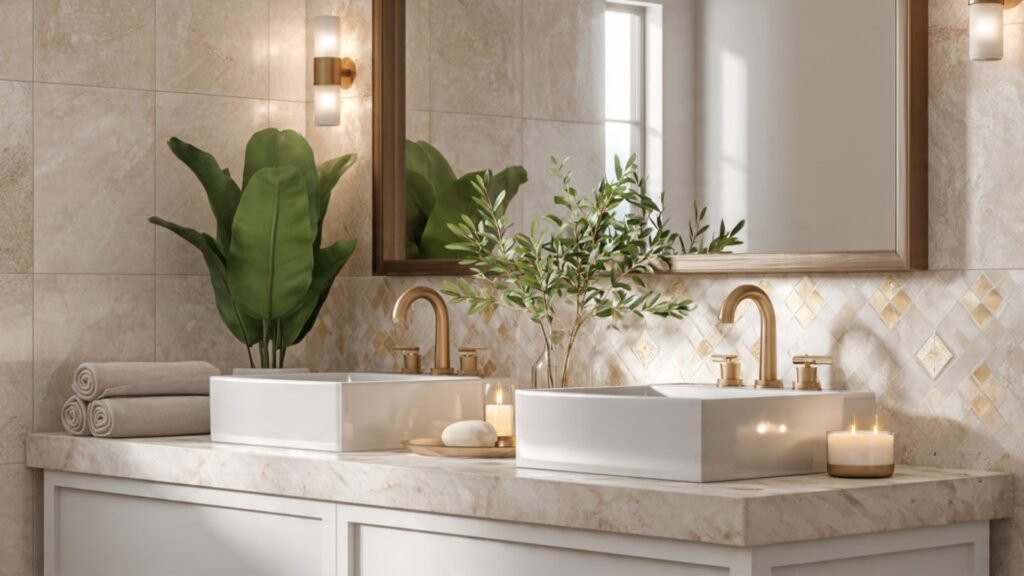
Bathroom Double Vanity Ideas focus on adding two sinks within one vanity unit to improve comfort, storage, and daily convenience. These ideas help create a more organized bathroom, support shared use, and enhance the overall design. They also improve functionality while adding style and value to the space.
A Bathroom Double Vanity creates a practical and elegant bathroom layout for couples and families. It provides separate sink areas, extra counter space, and better storage solutions. This popular bathroom feature helps reduce morning congestion and supports a smoother daily routine with a balanced, polished appearance.
Bathroom Double Vanity Ideas include floating vanities, freestanding designs, modern storage drawers, stylish mirrors, and durable countertop materials. Different sizes and finishes fit various bathroom layouts and décor styles. Smart planning, proper lighting, and quality materials help create a beautiful and functional bathroom environment.
Standard Sizes & Dimensions:
Getting It Right
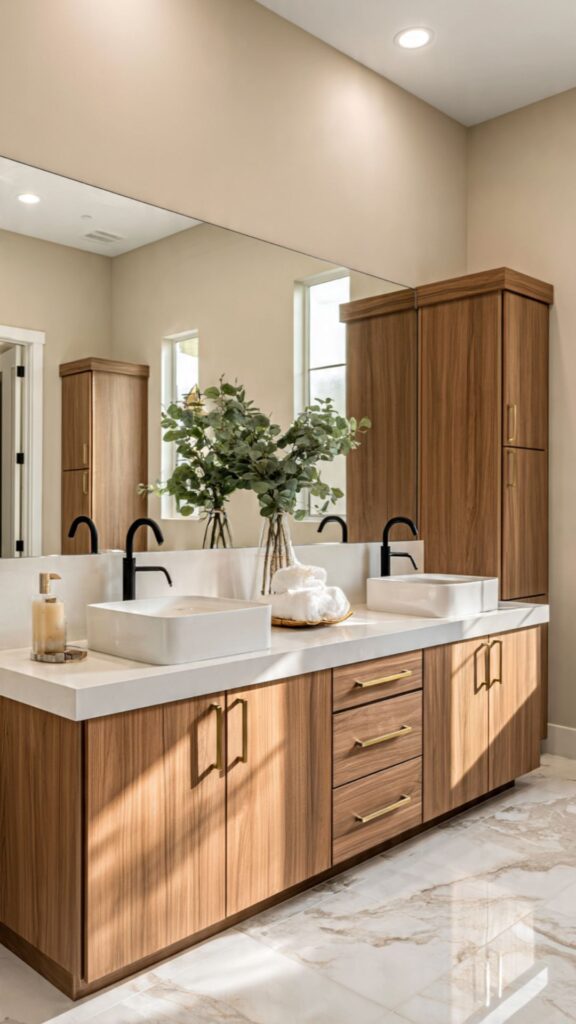
Choosing the right size for a bathroom double vanity is perhaps the most critical decision in the entire purchase process. Double vanities are typically available in 48″, 60″, and 72″ widths, with 60″ being the most popular for standard master bathrooms. The height standard sits at 34–36 inches with “comfort height” vanities at 36 inches becoming increasingly preferred by adults for ergonomic ease and reduced back strain during use.
Before committing to a size, measure your bathroom carefully. You need at minimum 30 inches of clearance in front of the vanity for comfortable use and to comply with most building codes. Doorways, toilet proximity, and shower enclosures all influence the maximum size your space can accommodate. Many buyers make the mistake of ordering a vanity before taking these clearance measurements, only to discover the cabinet blocks a door swing or feels cramped in use.
Pro Tip: Always measure the width of your bathroom entry door and any hallway the vanity must pass through during delivery. A 72″ double vanity arrives disassembled in most cases, but the countertop slab may arrive in one piece check with your supplier before ordering.
Depth is another often-overlooked dimension. Most double vanities have a standard depth of 21–22 inches, which balances countertop usability with floor-space efficiency. Shallower 18-inch depth options exist for tighter bathrooms, but they sacrifice under-sink storage capacity. If you’re working with a narrow bathroom (under 8 feet wide), a shallower vanity can prevent the space from feeling overcrowded while still delivering dual-sink functionality.
Floating vs. Freestanding:
Which Style Wins?

The floating (wall-mounted) vs. freestanding debate is one of the most common dilemmas in double vanity shopping. Floating vanities are attached directly to the wall and appear to hover above the floor, creating a visually open, airy effect. This style is a hallmark of modern and contemporary bathroom design. Because the floor beneath is exposed, floating vanities make cleaning significantly easier no need to maneuver a mop around cabinet legs or toe kicks.
Freestanding vanities rest on the floor using either legs, a toe kick panel, or a solid base. They tend to feel more substantial and traditional, and are generally easier to install since they don’t require wall reinforcement. A floor-standing double vanity also typically offers more under-cabinet storage volume because the base extends fully to the floor. For bathrooms with concealed plumbing, this style also hides pipes more naturally without custom paneling.
The structural difference matters a great deal during installation. Floating vanities must be anchored to wall studs capable of bearing considerable weight especially once a stone countertop and two ceramic sinks are installed. In homes with older construction or non-standard stud spacing, installing a floating vanity may require adding a reinforced blocking panel inside the wall. Freestanding vanities bypass this concern entirely, resting their weight on the floor instead.
Design insight: Interior designers increasingly recommend floating double vanities for bathrooms under 100 sq ft. The visual “lift” created by the exposed floor makes the space feel larger than it actually is a smart optical trick in tight master baths.
Saving This For You: Bathroom Mirror Ideas That Look Absolutely Gorgeous Above Your Stunning Bathroom Double Vanity
Best Materials:
For Long-Lasting Durability
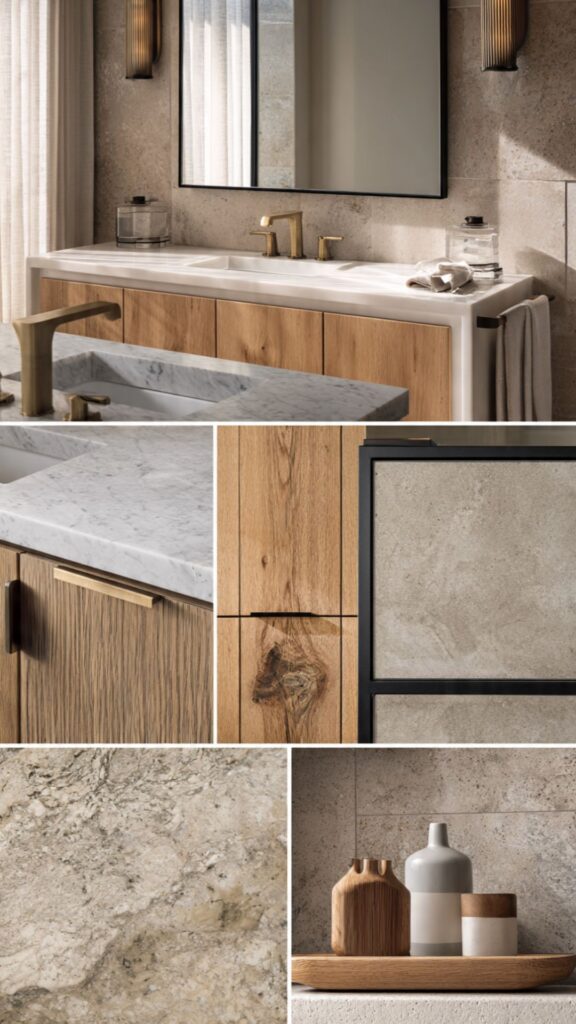
The cabinet material of a bathroom double vanity directly impacts its lifespan, moisture resistance, and long-term appearance. Solid wood (typically oak, birch, or maple) is the premium choice for quality and longevity, but it requires proper sealing and ventilation to prevent warping in high-humidity environments. Solid wood vanities can last 20–30 years with appropriate care, making them a worthwhile investment for primary bathrooms used daily.
Medium-density fiberboard (MDF) is the most commonly used material in mid-range vanities. When properly sealed and coated, MDF delivers a smooth, paint-ready surface and resists minor moisture exposure. However, MDF is vulnerable to prolonged water exposure particularly at joints, edges, and around drain cutouts which can cause swelling and delamination. For bathrooms with poor ventilation or frequent steam exposure, MDF is not the ideal long-term choice.
Plywood-core construction represents a strong middle ground. It offers better moisture resistance than MDF, holds fasteners more securely, and provides greater structural integrity under heavy countertop loads like natural stone. Many high-end vanity brands advertise “plywood construction” as a premium differentiator. If you’re comparing two similarly priced vanities, plywood construction is almost always the better long-term investment over MDF.
Expert Note: Look for vanities with soft-close drawer slides made from full-extension, under-mount hardware. This is a hidden quality indicator it signals that the manufacturer paid attention to structural details beyond the exterior finish.
Top Countertop Options:
For Double Vanities
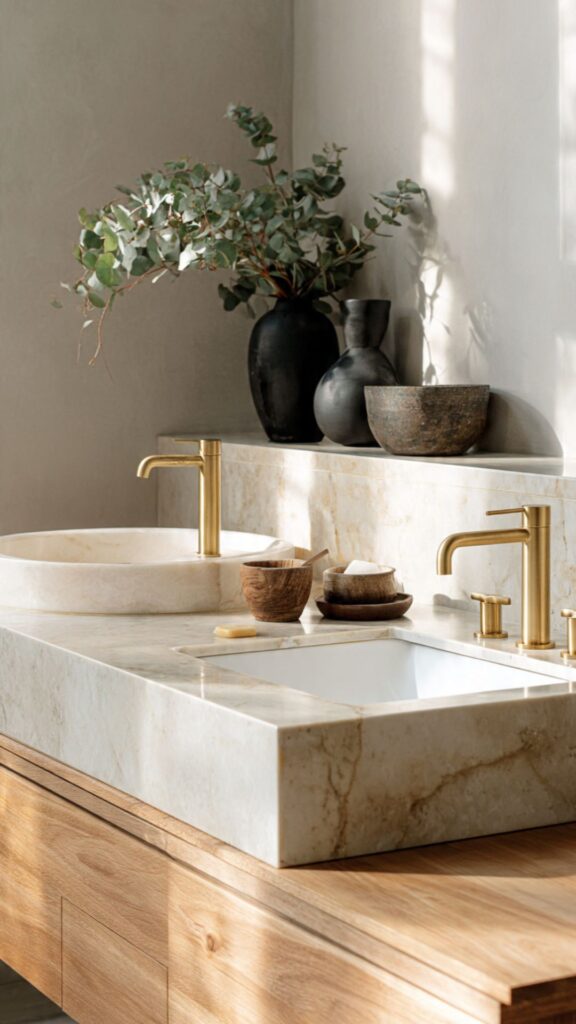
The countertop is one of the most visible and tactile components of a double vanity, and your choice significantly affects both aesthetics and maintenance workload. Quartz is currently the most popular countertop material for double vanities, and for good reason it’s non-porous, requires no sealing, resists staining from makeup and personal care products, and comes in hundreds of color and pattern options. Engineered quartz also offers consistent veining that natural stone cannot match.
Natural marble countertops bring unmatched elegance to a double vanity, but they require annual sealing and are susceptible to etching from acidic products like toothpaste, perfume, and some cleansers. For homeowners willing to commit to proper maintenance, marble delivers a luxury bathroom aesthetic that no engineered material fully replicates. Honed finishes (matte) tend to show fewer water spots and daily wear than polished marble surfaces.
Granite remains a reliable workhorse material harder and more stain-resistant than marble, with a distinctive crystalline appearance. Porcelain slabs (large-format tiles) are an emerging countertop option that delivers a stone-like appearance at a significantly lower cost, with excellent durability. Cultured marble and solid surface (like Corian) are budget-friendly alternatives that integrate the sink and countertop into a single mold-free unit a practical choice for high-use family bathrooms.
Concrete countertops are gaining popularity in industrial and modern farmhouse bathroom designs. They’re custom-cast, highly personalized, and durable when properly sealed but they require professional installation and ongoing sealing to prevent cracking and staining. For a double vanity showpiece in a custom-designed bathroom, poured concrete can be an extraordinary design choice that competitors overlook in their standard guides.
Sink Styles:
That Work Best with Double Vanities
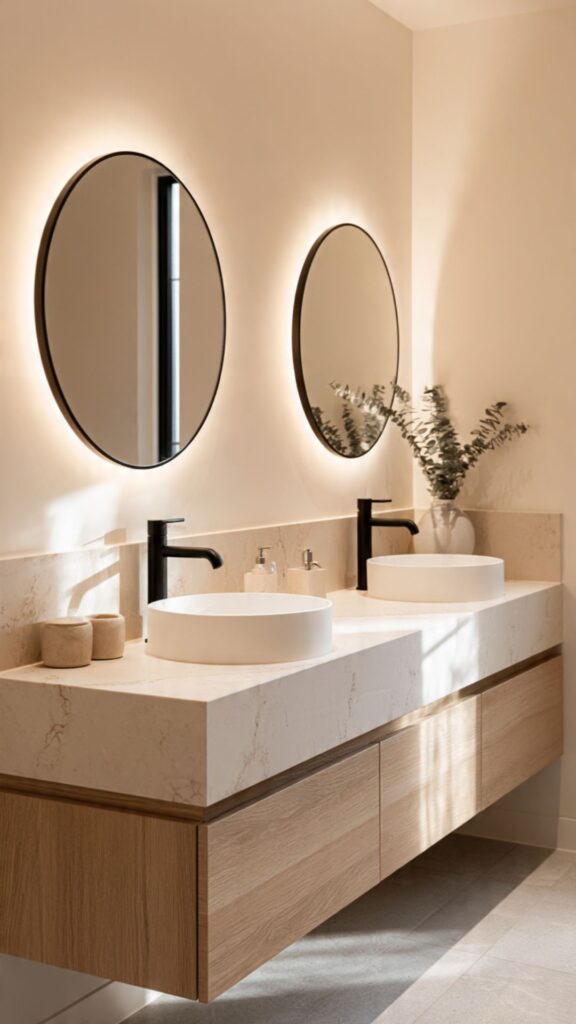
The sink configuration is a defining design decision for any double vanity. Undermount sinks are the most popular choice they install beneath the countertop, creating a seamless surface that’s easy to wipe clean. Because there’s no rim break at the counter edge, undermount sinks look sleek and work with any countertop material. They work particularly well with quartz and granite, where the full beauty of the stone surface is uninterrupted.
Vessel sinks (above-counter bowl sinks) have surged in popularity for double vanities in contemporary and boutique-style bathrooms. They sit on top of the countertop like a bowl, available in ceramic, stone, glass, and hammered copper. Vessel sinks create a dramatic visual statement and allow for lower countertop heights (reducing material cost) since the sink bowl adds height above the counter. However, they require tall faucets and can collect water splatter around the base.
Integrated sinks where the countertop and sink are cast from the same material are the gold standard for hygiene and maintenance. Common in solid surface and concrete countertops, integrated sinks eliminate the seam where bacteria and mold commonly accumulate. Cultured marble integrated double vanity tops are a popular pre-fabricated option that combines affordability with hygienic design.
Design scenario: A spa-inspired master bathroom paired a 72″ white oak floating double vanity with two round concrete vessel sinks, matte black faucets, and an unlacquered brass hardware accent. The result was a high-end boutique hotel aesthetic all under $4,200 total installed cost.
Storage Solutions & Smart Drawer Design:
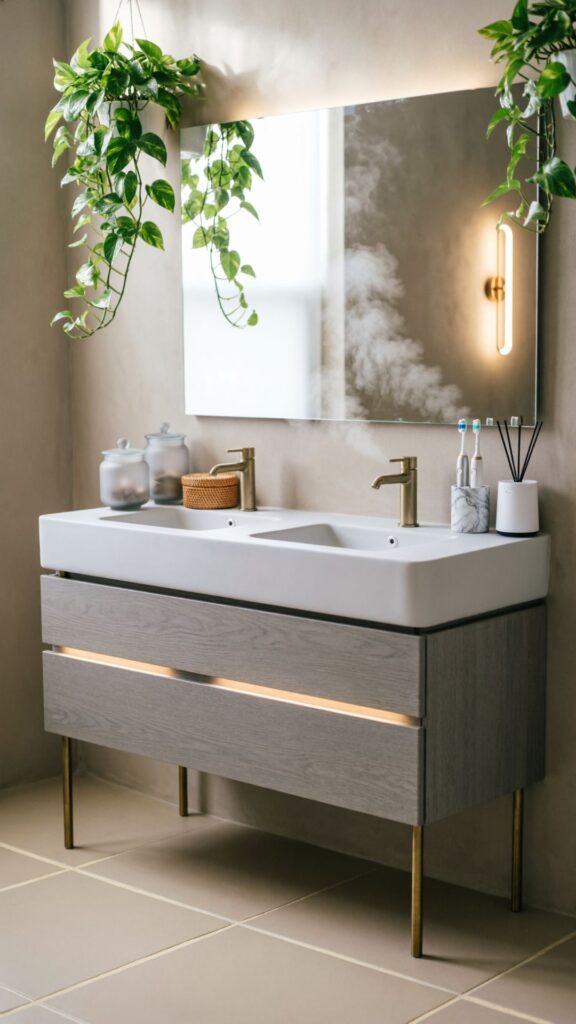
Storage efficiency separates a good double vanity from a great one. Most standard double vanities offer a combination of drawers and doors. The most functional configurations place 3–5 drawers on each side of the vanity (one per person) with a central open shelf or door cabinet underneath the sinks where plumbing is housed. Deep bottom drawers are ideal for hair dryers, curling irons, and bulky items; shallower top drawers organize small accessories like makeup and jewelry.
Drawer interior organization is something most buyers overlook until after installation. Many vanity manufacturers now offer removable dividers, built-in outlets (for charging devices or using small appliances inside the drawer), and pull-out trays. These smart storage features reduce countertop clutter one of the biggest daily complaints in shared bathrooms and keep the vanity surface visually clean and functional.
The door hardware selection also plays a functional role beyond aesthetics. Soft-close hinges on cabinet doors prevent slamming (critical in homes with children or in condos with thin walls) and extend the life of the cabinet box joints. Full-extension drawer slides allow full access to the entire drawer depth standard slides only extend 75% of the way, leaving items at the back frustratingly out of reach.
Smart storage insight: Future-forward vanity buyers are now specifying interior USB-A and USB-C charging ports built into top drawers a practical touch that eliminates cluttered charging cables on the countertop. Some vanity brands now offer this as a factory option.
Keep This in Mind: White Bathroom Ideas That Show How a Beautiful Double Vanity Can Make Your Bathroom Look Luxurious
Lighting Above Double Vanities:
What Actually Works
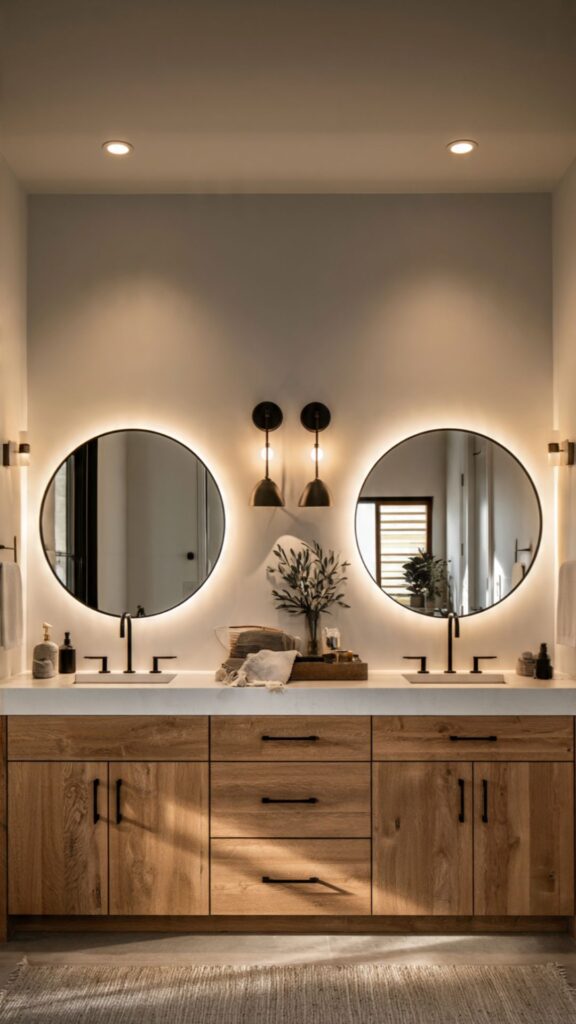
Lighting is one of the most underinvested areas in bathroom renovations, and it dramatically affects how usable and flattering a double vanity truly is. The worst lighting mistake is relying solely on an overhead ceiling fixture this casts downward shadows on the face, making it difficult to apply makeup, shave, or see skin accurately. Instead, proper vanity lighting should illuminate the face from the front and sides, mimicking natural daylight.
For a double vanity, you have two lighting approaches: a single long fixture centered above both sinks (usually a 36–48″ horizontal bar light) or two individual sconces or pendants positioned above or beside each mirror. Side-mounted sconces flanking each mirror at approximately eye level (60–65 inches from the floor to the center of the fixture) deliver the most flattering and accurate light for grooming tasks. This is the setup used in professional makeup rooms and theatrical dressing rooms for good reason.
Color temperature (measured in Kelvin) is as important as fixture placement. A range of 2,700–3,000K (warm white) is most flattering for everyday use and creates a spa-like ambiance. However, if one person uses the vanity for precision makeup application, a 3,500–4,000K (neutral white) bulb provides more accurate color rendering. Dimmer switches for vanity lighting are increasingly considered a standard feature rather than an upgrade they allow the same fixture to serve both bright task lighting and soft evening ambiance.
LED strip lighting integrated beneath a floating double vanity adds a secondary ambient layer that’s both practical (illuminates the floor at night without switching on overhead lights) and visually elegant. Combined with backlit mirrors, layered vanity lighting creates a luxury hotel bathroom experience that’s achievable at a relatively modest fixture budget.
Color & Finish Trends:
For Double Vanities in 2026
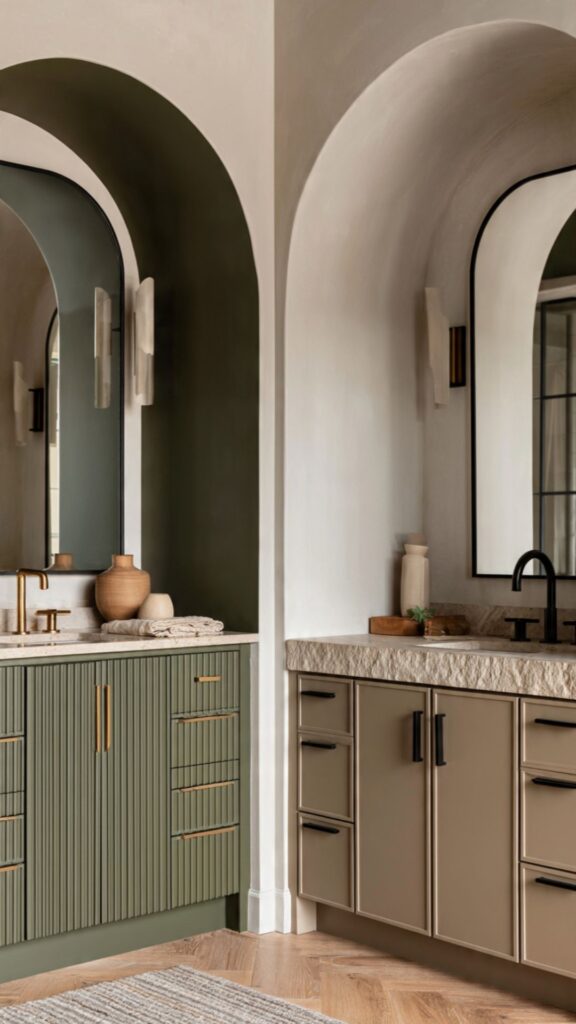
The era of the all-white bathroom is evolving. While bright white and soft gray double vanities remain perennial classics, 2026 design trends show a strong shift toward warmer and more expressive color palettes. Deep forest green, muted sage, terracotta, aged navy, and warm cognac are the dominant vanity cabinet colors appearing in high-end renovation projects and design publications. These colors pair beautifully with warm metal hardware in brushed gold, unlacquered brass, or satin nickel.
Two-tone double vanities where the upper cabinet or countertop is a different material or color from the lower cabinet are a significant emerging trend. A common example is a navy lower cabinet with a warm white quartz countertop, or a natural wood upper shelf with a painted lower cabinet. This layered approach adds visual depth and customization without requiring a fully custom cabinet build, making it accessible at mid-range price points.
Hardware finishes are another area seeing dramatic shifts. Matte black has been dominant for several years and remains strong, but it’s now being complemented and in some cases, replaced by warmer options. Brushed bronze, vintage brass, and mixed-metal hardware (combining two finish tones on the same vanity) reflect a broader interior design movement away from cold minimalism toward warm, tactile, and personal spaces.
Trend forecast: Fluted or reeded cabinet fronts vertical parallel grooves routed into the drawer and door faces are the single biggest texture trend in double vanity design right now. They add shadow, depth, and artisan quality to an otherwise flat surface, and they photograph beautifully for social media sharing.
Mirror Choices:
For Bathroom Double Vanities
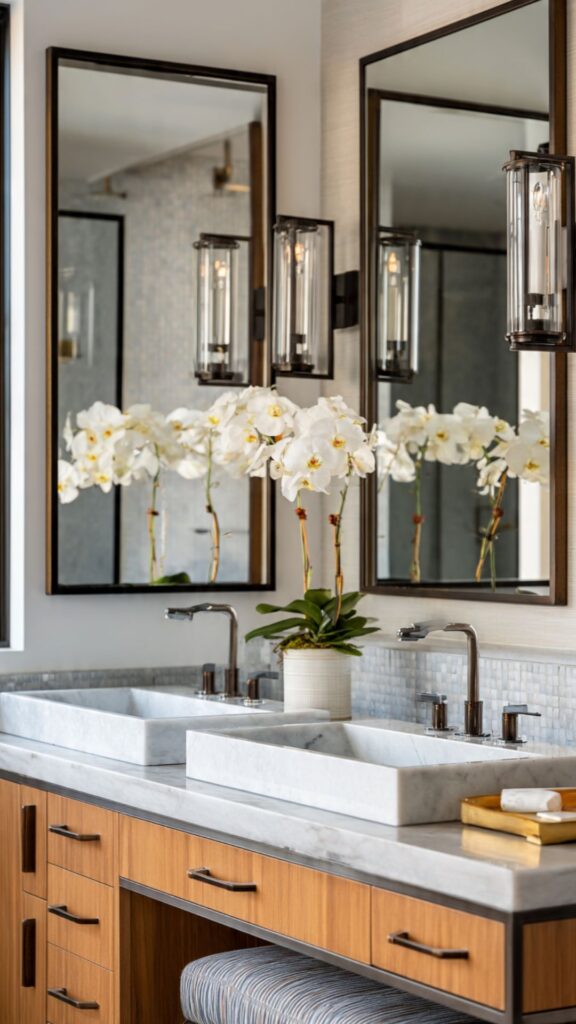
The mirror configuration above a double vanity is a critical design decision with functional and aesthetic consequences. You essentially have three options: one large single mirror spanning the entire vanity width, two individual mirrors (one per sink), or two framed mirrors with a decorative element between them. Each option creates a distinctly different visual impact, and the right choice depends on your bathroom dimensions, ceiling height, and overall design language.
A single large mirror (or mirrored wall panel) maximizes the illusion of space and works beautifully in bathrooms with lower ceilings. It reflects more light, makes the room feel larger, and is the most streamlined option. However, it can feel less personal couples often prefer individual mirrors to claim their own visual space. Medicine cabinet mirrors that integrate storage behind the reflective surface are an especially practical option here, doubling as concealed storage without adding cabinet bulk to the wall.
Two individual framed mirrors allow more decorative flexibility you can choose mirrors with ornate carved frames for a traditional space, simple rectangular frames for a modern aesthetic, or arched-top mirrors for a transitional design. The gap between the two mirrors is an important design detail: too wide and it looks accidental; too narrow and it appears cramped. A 4–8 inch gap is generally ideal, often filled with a small sconce or a decorative tile inset.
Backlit LED mirrors are perhaps the most functional upgrade available for double vanity spaces. They provide soft diffused light around the entire perimeter of the mirror, eliminate shadows on the face, and can include smart features like anti-fog technology, touch dimming, and even Bluetooth speakers. Once considered a luxury-only addition, backlit bathroom mirrors are now available at accessible price points from $150–$600 per mirror, making them a practical upgrade for most double vanity renovations.
Small Bathroom Double Vanity Ideas:
That Actually Work
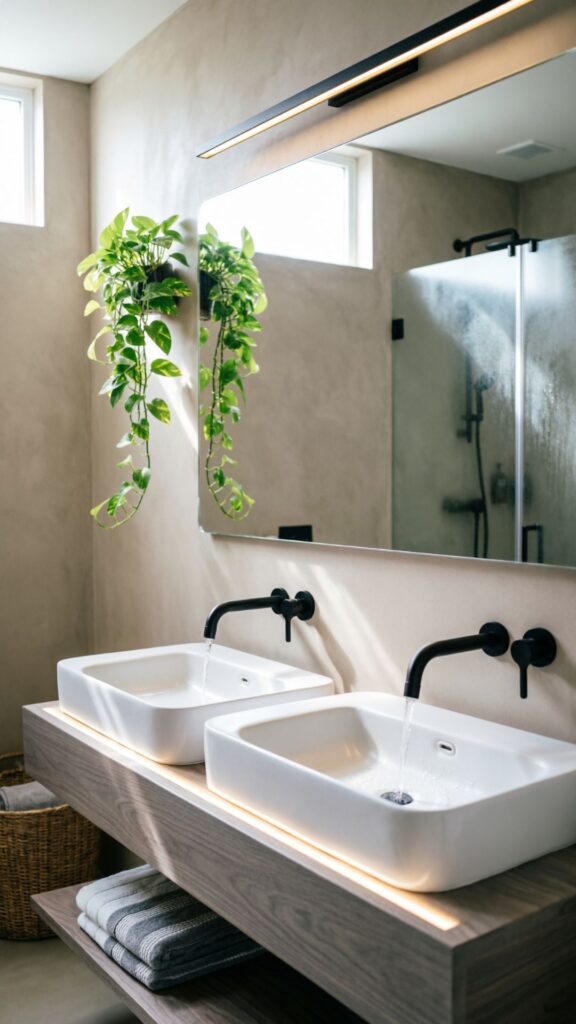
The most common objection to installing a double vanity is square footage “our bathroom is too small.” But designers consistently find creative solutions that prove a double vanity can work in surprisingly compact spaces. A 48-inch double vanity (the smallest standard size) requires a bathroom roughly 7–8 feet wide to function comfortably with code-compliant clearances. That’s achievable in many master baths that homeowners assume are too small.
For truly tight spaces, corner double vanities offer an unconventional solution. L-shaped configurations place two sinks at a 90-degree angle, utilizing a corner that would otherwise be wasted behind a door or in a dead zone. While less common, corner double vanities are manufactured by several specialty cabinet makers and can serve bathrooms as narrow as 60 inches on each wall. This approach requires careful plumbing planning but can dramatically transform a functionally limited bathroom.
Visual tricks can make a compact double vanity space feel larger. Floating installations, frameless mirrors that extend to the ceiling, continuous countertop runs without breaks, and light-colored cabinet finishes all amplify the perceived size of the space. Avoid overly ornate hardware or heavily textured cabinet fronts in small bathrooms they add visual weight that makes the room feel busier and tighter.
Small-space solution: One designer installed a 48″ floating double vanity with vessel sinks in a 7×9 master bath. Using a full-width mirror, a single horizontal LED bar light, and a matte white cabinet finish, the bathroom felt open and modern not cramped. The vessel sinks added height perception without increasing the cabinet footprint.
Plumbing Considerations:
Before You Buy
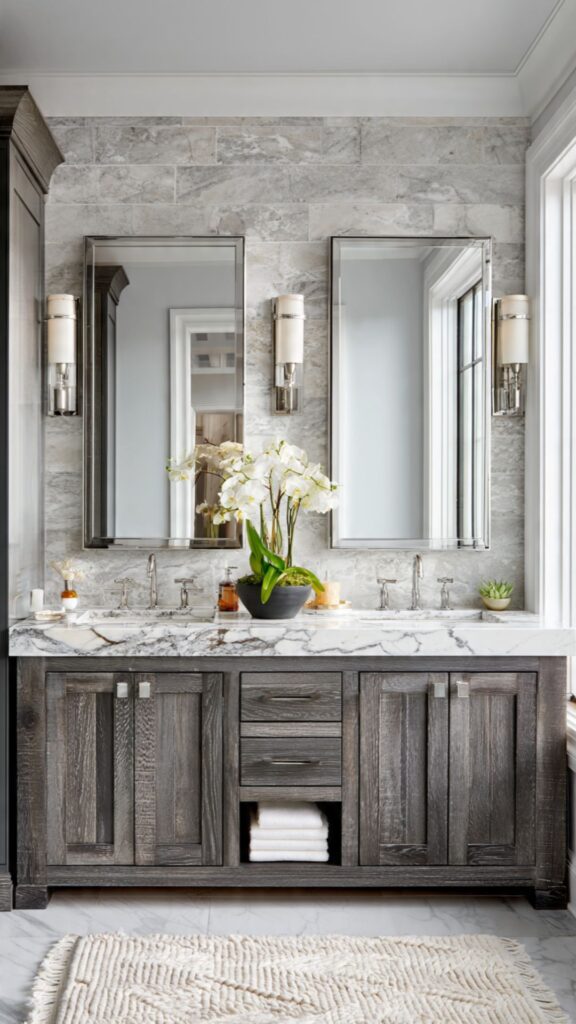
Plumbing is where many double vanity installations get expensive and complicated. Adding a second sink to a bathroom that previously had one requires running a new supply line (both hot and cold), a new drain line, and potentially a new p-trap configuration. In an existing bathroom, this often means opening the wall which adds significant labor cost. Before purchasing your double vanity, get a plumber to assess whether your current drain line can handle the additional sink or if you’ll need to run new waste lines to the main stack.
Faucet hole configurations are another plumbing detail that catches buyers off guard. Bathroom vanities come pre-drilled with 1-hole (for single-hole faucets), 3-hole (for widespread or centerset faucets), or 4-hole configurations. Make sure you match your faucet style to the countertop or sink pre-drilling or verify that your countertop can be custom-drilled before ordering. Changing faucet holes on a stone countertop after cutting is difficult and expensive.
Water pressure is worth considering when adding a second sink. Most residential supply lines handle dual-sink use without issue, but older homes with galvanized steel pipes may experience reduced pressure when both faucets run simultaneously. A plumber can check supply line diameter and suggest upgrades if needed. PEX plumbing upgrades during a vanity renovation are relatively affordable and solve this problem permanently.
Plumbing insight rarely mentioned: Ask your plumber about installing individual shutoff valves behind each sink (not just a single pair for both). This allows one sink to be serviced without cutting water to the entire vanity a detail that seems minor but pays off during any future faucet repair or replacement.
This Changes Everything: Bathroom Lighting Ideas That Perfectly Highlight and Elevate Your Beautiful Bathroom Double Vanity
Budget vs. Luxury Double Vanity Options:
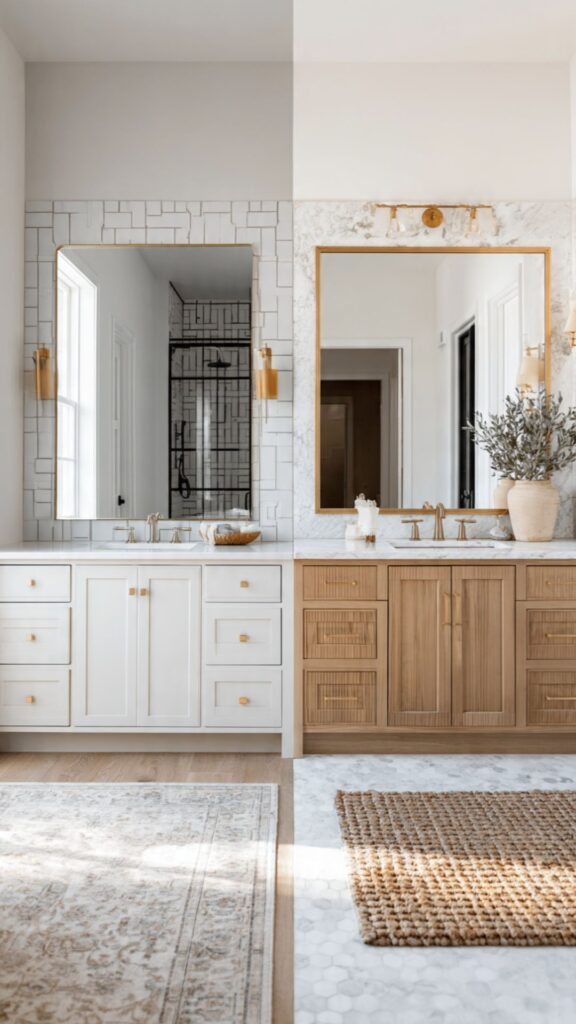
The price range for bathroom double vanities is extraordinarily wide from under $500 for a basic box-store unit to $15,000+ for a custom cabinetmaker creation. Understanding what drives price differences helps you spend intelligently. Entry-level vanities ($400–$900) typically use MDF construction with thermofoil or painted finishes, ceramic undermount sinks, and a basic cultured marble or engineered stone top. They function adequately in guest bathrooms or rental properties but may show wear in daily-use master bathrooms within 5–8 years.
Mid-range double vanities ($900–$2,500) represent the sweet spot for most homeowners. In this price bracket, you’ll find solid wood or plywood-core construction, soft-close hardware throughout, better sink materials, and more design options including on-trend finishes and hardware choices. Brands like James Martin Furniture, Kohler, Strasser, and Fresca offer excellent quality in this range. A 60″ mid-range double vanity with a quartz top and undermount sinks typically runs $1,200–$1,800 all-in before faucets and installation.
Luxury double vanities ($2,500–$8,000+) use premium solid wood, hand-crafted joinery, natural stone countertops, and bespoke finishing. Brands like Robern, Newport Brass, and Waterworks operate in this category. Custom cabinet shops will build to exact specifications for bathrooms with unusual dimensions or highly specific design requirements. At this level, you’re also paying for fit-and-finish perfection flush, evenly gapped doors; hand-rubbed finishes; and hardware that feels substantial and precise with every use.
The smartest budget strategy: invest in the cabinet box and countertop quality, and be more flexible on decorative details. Upgrading from a budget faucet to a designer faucet is far easier (and cheaper) later than replacing a warped MDF cabinet. Spend on structure and surfaces; save on fixtures you can swap out later.
Final Thoughts
A bathroom double vanity is far more than a functional fixture it’s the centerpiece of your daily routine, a reflection of your design sensibility, and a long-term investment in your home’s value. From choosing the right size and material to planning lighting, mirrors, and plumbing, every decision compounds to create either a bathroom you love or one you merely tolerate.
The insights in this guide go deeper than surface-level product comparisons. Use them to ask better questions, avoid expensive mistakes, and make choices that serve both your style preferences and your practical needs for years to come.
Ready to transform your bathroom? Start with a tape measure, your bathroom dimensions, and a clear vision of how you want your mornings to feel the rest will follow naturally.

Team TrandyVilla is the passionate home decor team behind Trandy Villa, where style meets comfort in everyday living. The team loves transforming simple spaces into beautiful, functional homes through smart ideas, budget-friendly hacks, and modern design trends. Their content focuses on helping readers create homes that feel both stylish and personal without spending too much.