
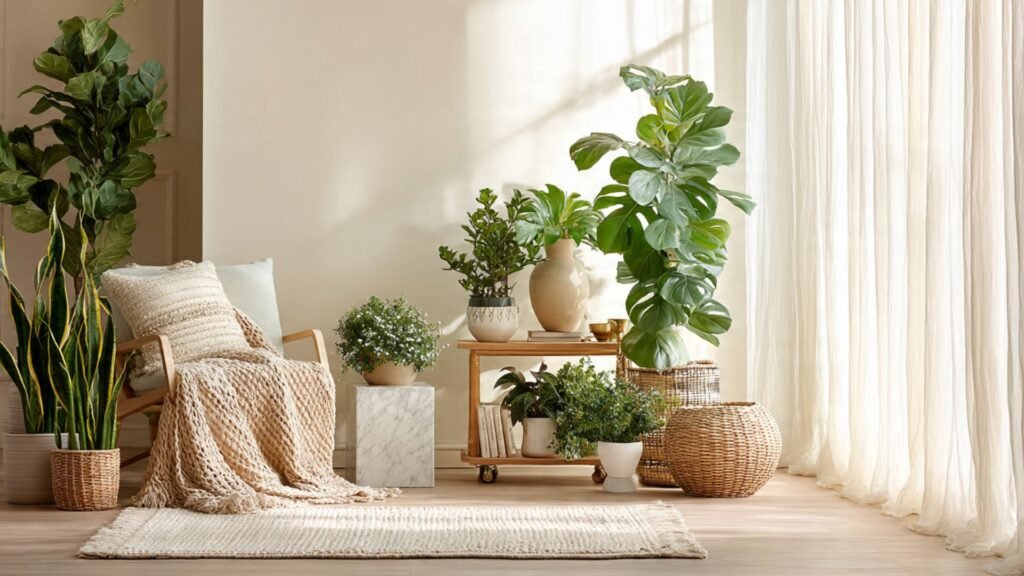
Indoor plants styling has evolved from a simple hobby into a fully developed interior design discipline one that combines horticultural knowledge, spatial awareness, color theory, and object curation into a practice that can transform any room from ordinary to genuinely extraordinary.
As biophilic design the intentional integration of nature into living spaces continues to grow as one of the dominant forces in residential and commercial interior design, understanding how to style houseplants with the same intentionality applied to furniture, art, and lighting has become increasingly valuable.
Indoor plants styling is the intentional practice of placing, arranging, and presenting houseplants to enhance a room’s visual composition and atmosphere. It combines plant selection, pot choice, scale, and positioning into a unified design approach.
Good plant styling improves air quality, adds natural texture, and brings warmth to any interior. It works across every room from living spaces and bathrooms to shelves and entryways. Every placement decision serves both the plant’s health and the room’s overall aesthetic.
Few design choices transform a living space as immediately and affordably as indoor plants styling done with intention and care. The right plant, in the right pot, placed in the right position turns an ordinary room into something genuinely alive and beautiful. With thoughtful selection and smart arrangement, houseplants become one of the most powerful styling tools available to any homeowner.
Statement plants like Fiddle Leaf Figs and Birds of Paradise create instant focal points in living rooms. Trailing species styled on shelves add movement, depth, and organic layering to flat surfaces. Grouping plants in varying heights, forms, and textures produces rich, composed arrangements. Bathroom plants thrive in humidity and create a spa-like, luxurious atmosphere with minimal effort. Seasonal plant styling and propagation displays keep interiors feeling fresh, personal, and intentionally connected to nature throughout the year.
Statement Plants as Living Focal Points:
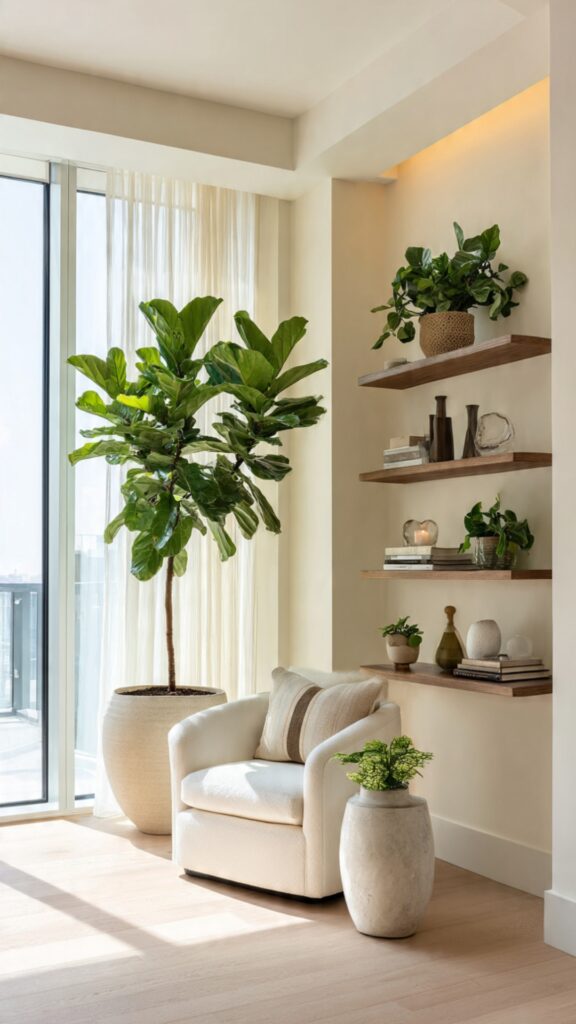
A statement plant is a single large, architecturally significant plant species given enough space and visual prominence to function as a room’s primary focal point the equivalent, in living material, of a significant piece of art or a major furniture piece.
Statement plants earn their place through scale, silhouette, or both: their size and form are significant enough that the eye is drawn to them naturally from across the room, and they anchor the surrounding composition of furniture, objects, and surfaces in the way that a focal point always should.
The most effective statement plant species for interior styling purposes combine significant size with strong architectural form. The Fiddle Leaf Fig (Ficus lyrata) remains the most widely recognized and effectively used statement plant, its large, violin-shaped leaves and upright, tree-like growth habit creating a silhouette of genuine sculptural power.
The Bird of Paradise (Strelitzia nicolai or reginae) produces paddle-shaped leaves of considerable size that develop natural splits as the plant matures a tattered quality that paradoxically increases its visual sophistication. The Olive tree (Olea europaea) brings a Mediterranean, almost silvery-green quality that suits contemporary and Mediterranean interior styles with particular elegance.
Positioning a statement plant requires the same spatial thinking applied to positioning a large piece of furniture or a significant artwork. Corner placement is the most common and usually most effective option a statement plant in a corner occupies otherwise dead space, softens the hard architectural right angle, and creates a backdrop that frames the surrounding seating arrangement without blocking any sightlines or movement paths.
Flanking a window or doorway with a pair of matched statement plants creates a more formal, symmetrical arrangement that suits traditional or classical interior styles. A single statement plant placed in the center of a clear wall given generous negative space on all sides creates a gallery-like presentation of maximum impact.
The pot selection for a statement plant carries enormous weight in the overall styling composition. A beautiful, architecturally significant plant in an inappropriate pot too small, wrong material, wrong color loses much of its visual power. Statement plants deserve statement pots: large-format ceramic pots in matte finishes, raw concrete or terrazzo planters, hand-thrown stoneware, or simple basket-weave rattan or seagrass covers that add natural texture while allowing the plant’s form to dominate.
The pot should support and frame the plant rather than compete with it a simple, well-proportioned pot in a material and color that connects to the room’s existing palette is almost always the right choice.
Grouping Plants for Visual Impact:
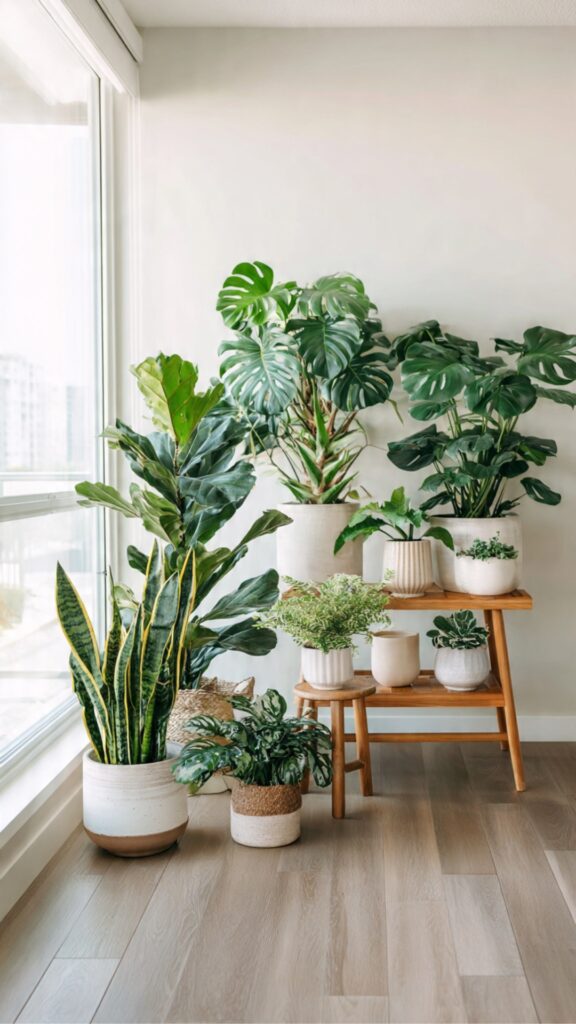
Plant grouping arranging multiple plants together in a deliberate composition is one of the most powerful tools in indoor plants styling, capable of creating lush, abundant arrangements that read as designed rather than collected. However, the difference between a plant grouping that works and one that looks like a random accumulation is entirely in the application of a few key composition principles that most styling guides never articulate clearly.
The most important grouping principle is variation across three dimensions: height, form, and texture. A successful plant group should include plants of at least three distinct heights typically a tall background plant, one or two medium mid-ground plants, and one or more low-growing or trailing foreground plants.
This staggered height arrangement creates visual depth and allows each plant to be seen clearly rather than being hidden behind its neighbors. A grouping of plants all at the same height, regardless of how many or how beautiful individually, reads as flat and unconsidered.
Form variation within a plant group creates visual dynamism. Combining an upright, architectural plant (snake plant, bird of paradise, dracaena) with a mounding, rounded form (pothos, prayer plant, Chinese evergreen) and a trailing or cascading form (string of pearls, ivy, heartleaf philodendron) creates a complete visual vocabulary within the group vertical energy, horizontal mass, and downward movement that makes the arrangement feel self-contained and visually complete.
This three-form principle mirrors the “thriller, filler, spiller” approach used by professional garden designers in outdoor container planting. Texture variation is the third and often most overlooked dimension of successful plant grouping. Glossy, smooth-leaved plants (rubber plant, peace lily, philodendron) catch and reflect light differently than matte, textured leaves (Calathea, velvet-leafed Alocasia, fuzzy Gynura).
Narrow, grass-like leaves (spider plant, carex) contrast beautifully with broad, flat leaves (Monstera, Hosta) or with the fine, feathery texture of maidenhair fern. Building this textural variety into a plant group creates an arrangement that rewards close examination and appears richer and more complex than its component plants would individually suggest.
Worth Exploring : Rooftop Garden Ideas That Take Your Love for Plants to a Whole New Level!
Indoor Plants Styling on Shelves and Bookcases:
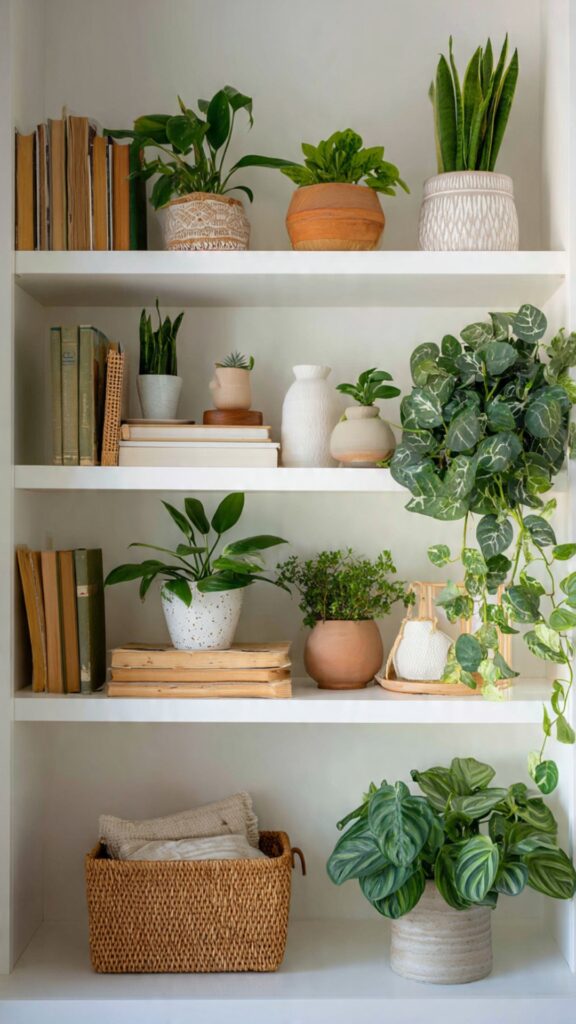
Shelves and bookcases offer some of the most versatile and visually rewarding opportunities in indoor plants styling. Unlike floor or windowsill placement, shelf styling positions plants within an existing composition of books, objects, and decorative items requiring the plant to function as one element within a broader visual arrangement rather than as a standalone statement. This contextual integration demands more care and intention but produces arrangements of extraordinary richness when executed well.
The fundamental challenge of styling plants on shelves is managing the relationship between plant scale and shelf scale. Plants placed on shelves must be proportional to the shelf’s height and depth a large, bushy plant on a shallow shelf with limited vertical clearance looks squeezed and uncomfortable, while a tiny succulent on a deep, tall shelf looks lost and purposeless.
As a general guideline, the plant and its pot together should occupy between one third and two thirds of the available vertical space on the shelf, leaving sufficient clearance above the plant and sufficient depth to prevent the pot from sitting precariously close to the shelf’s front edge.
Trailing plants are the most useful and most underused category in shelf styling. A trailing plant placed at the edge of a shelf allowing its stems to cascade downward over the shelf face creates a vertical connection between different shelf levels and introduces organic movement into what can otherwise be a static, horizontal composition.
Pothos (Epipremnum aureum) is the most practically reliable trailing shelf plant, tolerating the range of light conditions found across different shelf heights in most rooms. String of Pearls (Senecio rowleyanus), String of Hearts (Ceropegia woodii), and Tradescantia (spiderwort) all offer beautiful trailing forms with distinctive leaf shapes that add specific character to different shelf styling approaches.
Integrating plants with non-plant objects on shelves requires attention to the compositional relationships between organic and manufactured elements. Plants look most natural and most styled when grouped with objects that share their material vocabulary ceramics, woven baskets, raw wood, stone, and natural fiber objects all complement plant styling more naturally than glass, metal, or highly polished surfaces.
However, strategic contrast a lush green trailing plant cascading in front of a stack of books, a small succulent sitting on a marble coaster beside a glass vase can create deliberately beautiful juxtapositions that are just as effective as material harmony. The key is that every relationship between plant and object should feel intentional rather than accidental.
Using Plants to Define Zones in Open-Plan Spaces:
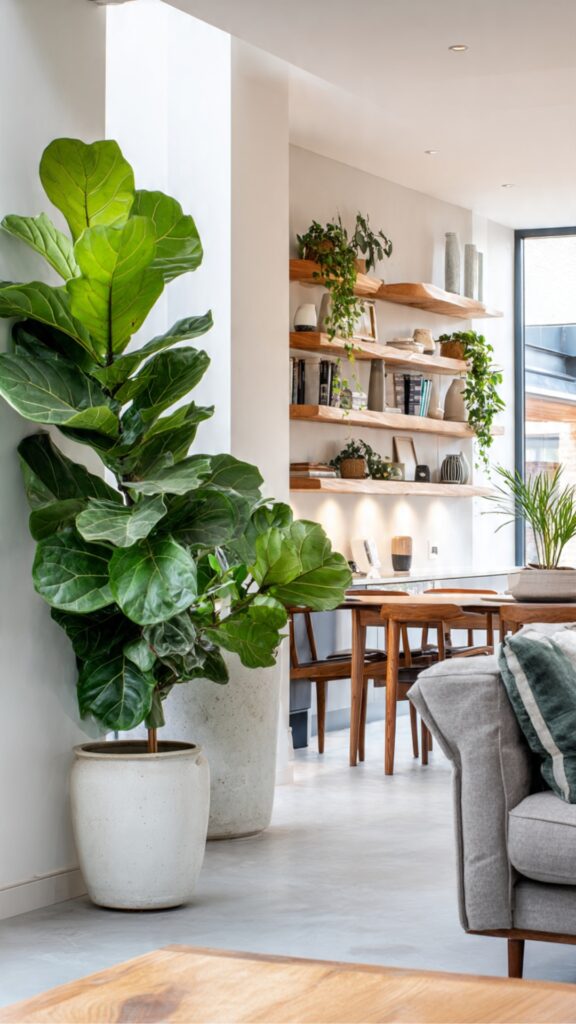
One of the most practically valuable and visually sophisticated applications of indoor plants styling is using plants to define, separate, and articulate zones within open-plan living spaces. As open-plan floor plans have become the dominant residential configuration in new construction, the challenge of creating distinct, purposeful zones within a continuous space has become increasingly relevant. Plants, unlike walls or furniture, can create visual and psychological boundaries without physical barriers making them uniquely valuable spatial planning tools.
A row of tall, upright plants snake plants, dracaenas, bamboo palms, or slim columnar cacti can function as a living room divider between a dining area and a living area in an open-plan space. Unlike a fixed architectural partition, this plant division allows light to pass through, creates no permanent structural commitment, and contributes positively to the room’s air quality and aesthetic simultaneously.
The plants should be consistent in species or at least in overall height and visual weight a mixed hedge of random species looks accidental rather than deliberate. A large statement plant or a cluster of medium-sized plants positioned at the corner of a rug creates a powerful visual anchor that reinforces the rug’s zone-defining role within the open plan.
The plant marks the corner of the seating arrangement, reinforcing the reading of the rug and surrounding furniture as a complete, self-contained zone. This is a technique used consistently in high-quality interior photography and showroom design, where plants appear in compositions not simply for their own beauty but for their spatial role in grounding and defining furniture arrangements.
In the kitchen-dining zone of an open-plan space, plants on a kitchen island or at the base of a breakfast bar serve a zone-softening function introducing organic warmth into what is typically the hardest-surfaced area of the home.
Here, scale is particularly important: kitchen and dining zones require plants that can coexist with surface activity and cleaning, which typically means selecting species with sturdy, robust foliage (pothos, snake plant, ZZ plant) and placing them in positions where they will not be routinely disturbed by cooking preparation or cleaning activity.
Hanging Plants and Ceiling-Level Styling:
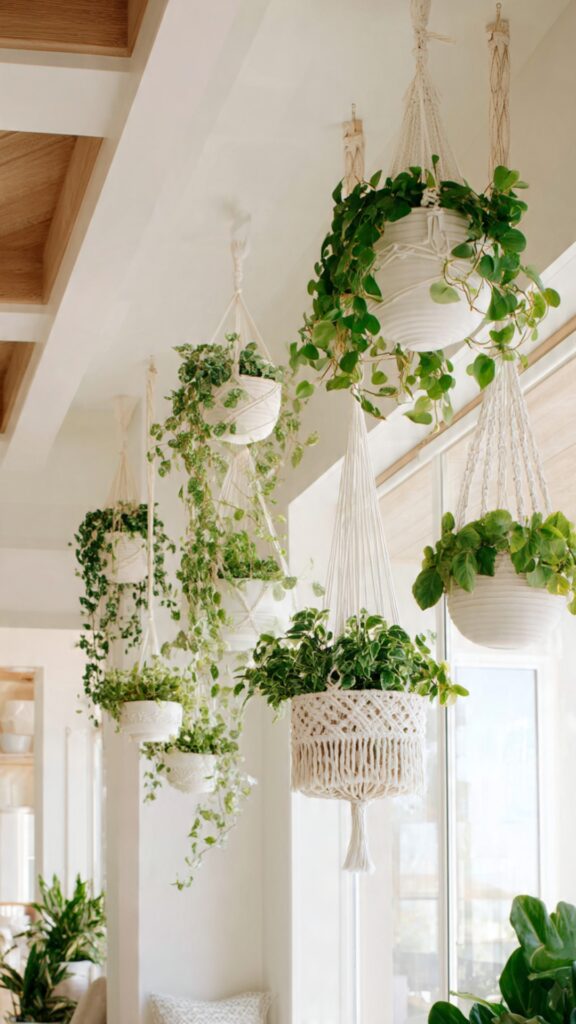
Hanging plants bring indoor plants styling into a dimension that is almost universally underused the ceiling plane. Most indoor plants styling arrangements exist at floor, surface, or eye level; the space between the top of the furniture and the ceiling is typically left empty.
Hanging plants fill this vertical void, creating a layered, lush interior environment that uses the room’s full height and transforms the experience of being in the space from standing beneath a flat ceiling to existing within a living, organic canopy.
Macramé plant hangers hand-knotted rope or cord cradles for suspended pots are the most widely used hanging plant support and are available in a range of styles from simple functional holders to elaborate decorative knot-work that is visually significant in its own right. The natural fiber of macramé (typically cotton, jute, or hemp) connects to the botanical and natural material vocabulary that complements indoor plants styling most naturally.
Contemporary macramé plant hangers are available in styles that suit minimalist Scandinavian interiors, bohemian maximalist spaces, and contemporary tropical-inspired rooms the variety of available designs makes it possible to find an appropriate hanger for virtually any interior context.
Plant species selection for hanging installation is constrained by two practical requirements: the plant must be either a natural trailer (one whose stems cascade downward naturally) or a compact, upright species that remains balanced and stable in a hanging cradle.
The best trailing species for hanging installation include String of Pearls (Senecio rowleyanus), Burro’s Tail (Sedum morganianum), Devil’s Ivy (Pothos), heartleaf Philodendron, Spider Plant (Chlorophytum comosum), and Boston Fern (Nephrolepis exaltata) each offers a different trailing texture and form, allowing variety within a hanging plant arrangement.
Ceiling hook installation for hanging plants requires proper structural anchoring into ceiling joists, not simply into plasterboard, which cannot safely support the weight of a planted pot when saturated with water. A standard hanging plant pot fully watered can weigh between 5 and 25 pounds depending on its size, and the attachment point must be rated for that load with a significant safety margin.
For renters or homeowners who prefer not to make permanent ceiling fixings, adjustable tension rod systems positioned within door frames or window recesses, or free-standing plant stand systems with overhead hanging arms, provide alternatives that achieve the same visual effect without ceiling modification.
Indoor Plants Styling in Minimalist Interiors:
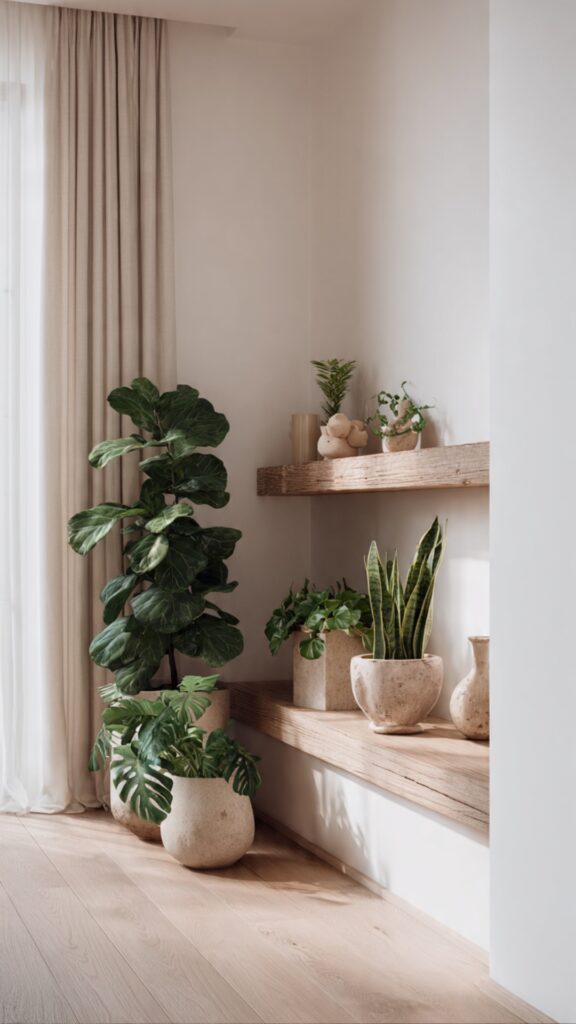
Styling indoor plants styling within a minimalist interior requires a fundamentally different approach than styling within a richly layered or maximalist space. In minimalism, every object is scrutinized for its contribution to the whole clutter is not tolerated, and anything that does not serve a clear compositional purpose is removed. Plants, in this context, must earn their place through form quality, pot selection, and precise positioning rather than through abundance or variety.
The most effective indoor plants styling for minimalist interior styling are species with strong, clean architectural silhouettes that read beautifully as objects in their own right. The Snake Plant (Sansevieria trifasciata) is perhaps the archetypal minimalist plant its upright, sword-like leaves create a graphic, almost two-dimensional silhouette that looks as much like sculpture as plant life.
The ZZ Plant (Zamioculcas zamiifolia) offers a similar sculptural quality with its deep green, waxy oval leaves arranged in precise, arching rows. The Aloe Vera, with its geometric rosette form, suits minimalist bathroom and kitchen styling with particular elegance.
Pot selection is the most critical variable in minimalist plant styling. The minimalist aesthetic demands pots of restrained beauty: simple geometric forms (cylinder, sphere, cone, rectangular prism) in matte, undecorated finishes. Concrete, matte white ceramic, raw terracotta, and matte black are the most appropriate materials and colors.
Patterned, decorated, or brightly colored pots are almost always inappropriate in a genuinely minimalist interior they introduce visual complexity that the surrounding design philosophy deliberately excludes. The relationship between a perfectly proportioned matte concrete pot and a graphically beautiful snake plant is a minimalist styling ideal clean, resolved, and quietly beautiful.
Quantity discipline is the most demanding aspect of minimalist plant styling and the area where most plant enthusiasts struggle. A minimalist interior can successfully accommodate one to three carefully chosen plants, positioned with deliberate intention and given genuine negative space. More than this number almost always creates visual complexity that begins to undermine the minimalist composition.
For those who love plants but also love minimalism, the solution is not to acquire fewer plants overall it is to style them in a dedicated space (a plant room, a greenhouse window, a plant-focused corner) where abundance is contextually appropriate, while maintaining discipline in the main minimalist living spaces.
Dive Into : Garden Room Ideas That Perfectly Complement Your Indoor Plants Styling.
Terracotta and Ceramic Pot Styling for Indoor Plants:
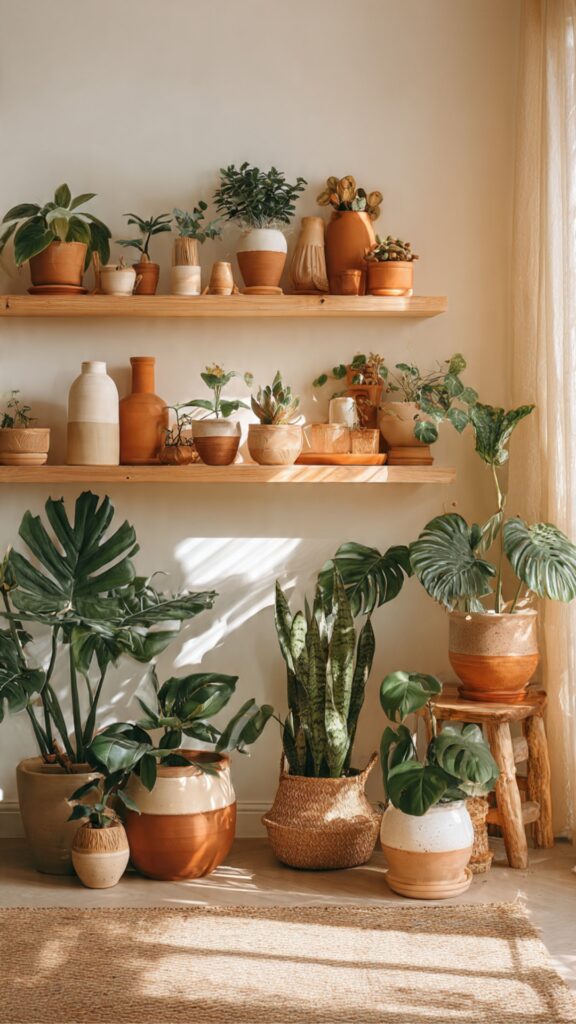
The pot is as important as the plant in indoor plants styling arguably more so, because while plants grow and change over time, the pot remains relatively constant and therefore forms the stable visual foundation of the plant arrangement. Yet pot selection receives far less attention in most plant styling guides than plant species selection, creating a consistent gap between plant collections that look curated and those that look accumulated.
Terracotta pots are experiencing a significant design renaissance, moving from their association with basic garden center utility to recognition as genuinely beautiful objects in their own right. The warm, earthy orange-red of terracotta clay complements green plant foliage in a way that is both naturally harmonious and visually warm the complementary relationship between terracotta’s warm orange and the green of most foliage is one that occurs throughout nature and reads as instinctively satisfying.
Aged terracotta with its white salt deposits, moss patches, and weathered surface variation has a particularly beautiful patina that new terracotta develops only with time and outdoor exposure, making well-aged antique terracotta genuinely valuable in plant styling.
Ceramic glazed pots in matte finishes offer the broadest range of color and form options in indoor plants styling. The current design preference is strongly toward matte glazes rather than glossy matte finishes absorb light rather than reflecting it, creating a surface quality that reads as quieter, more refined, and more compatible with the organic textures of plant foliage.
Color selection should connect to the room’s existing palette: a dark charcoal matte pot reads beautifully in a contemporary or dark-walled room; a warm cream or blush matte pot suits a soft, warm-toned interior; a deep forest green pot creates a tonal relationship with the plant’s foliage that is sophisticated and restrained.
Mixing pot materials within a plant arrangement adds textural richness that single-material consistency cannot achieve. A grouping that includes a raw terracotta pot, a matte ceramic vessel, a woven seagrass basket cover, and a concrete planter creates a layered material composition that is more interesting and more resolved than a matching set of identical pots in the same material and finish.
The rule for successful pot material mixing is the same as for mixing any materials in interior design: vary the material but connect through color, connect through form, or connect through scale to create cohesion within the variety.
Indoor Plants Styling for Small Spaces and Apartments:
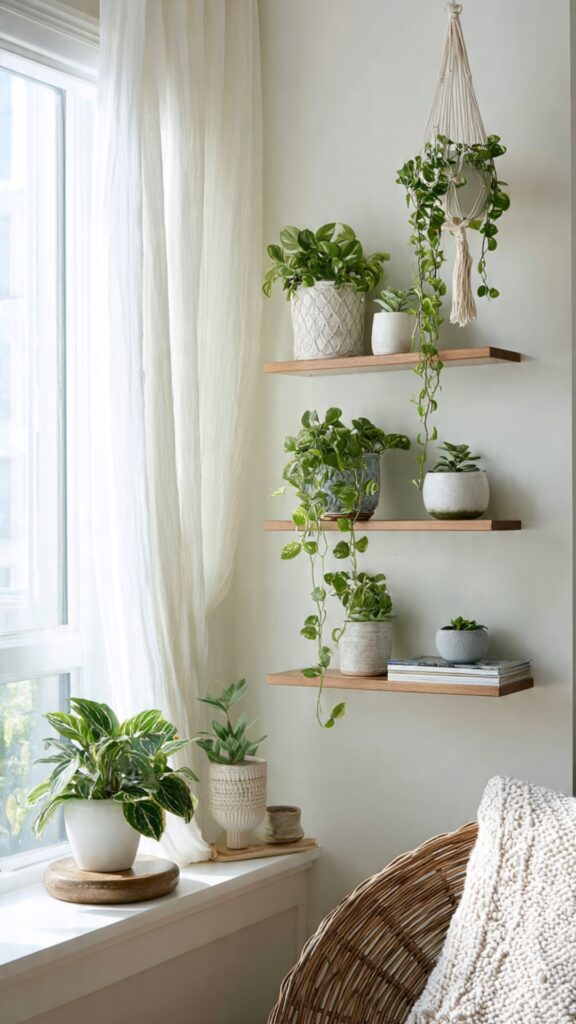
Small spaces present both the greatest challenge and the greatest opportunity in indoor plants styling. The challenge is obvious: limited floor area, reduced natural light, and fewer surfaces all constrain the range and scale of plants that can be accommodated.
The opportunity is less obvious but equally real: in a small space, even a single well-chosen, beautifully styled plant has a disproportionately large visual impact because it represents a greater proportion of the room’s total visual composition than the same plant in a larger room.
Vertical planting strategies are essential in small-space indoor plants styling. Wall-mounted plant holders, tall plant stands that use height rather than floor area, hanging plants that use the ceiling zone, and tiered plant shelving all expand the plantable surface area of a small room without consuming precious floor space.
A single wall-mounted grid or pegboard system fitted with hooks and shelves at varying heights can accommodate six to twelve small plants in the same wall area that a single large floor plant would occupy, creating a lush plant display without sacrificing any floor space at all.
Plant selection for small spaces should favor compact, slow-growing species that remain appropriately scaled to their environment over time. Fast-growing species like Monstera deliciosa, Bird of Paradise, or Fiddle Leaf Fig will eventually outgrow a small room and create maintenance challenges they require regular pruning to keep them proportional to their space, and without pruning they can overtake a small room in a single growing season.
Better choices for small-space plant styling include: compact Snake Plants (particularly the dwarf ‘Hahnii’ variety), Peperomia species in their many beautiful forms, African Violets, compact Pothos varieties, miniature Orchids, and Haworthia succulents all of which remain compact by nature and scale appropriately to small-room environments.
Window styling is the most powerful plant styling opportunity in a small apartment. A window filled with plants in hanging holders, on a windowsill shelf, and in tall plants positioned to one side of the window frame creates a room-defining moment of lush, light-filled beauty that makes the most of the window’s natural light resource.
From outside, a plant-filled window gives the apartment building’s facade a warmth and life that bare windows entirely lack. From inside, the window becomes a living picture frame a view of plants and sky that brings the outside world in and makes even a small urban apartment feel connected to nature.
Styling Plants in Bathrooms:
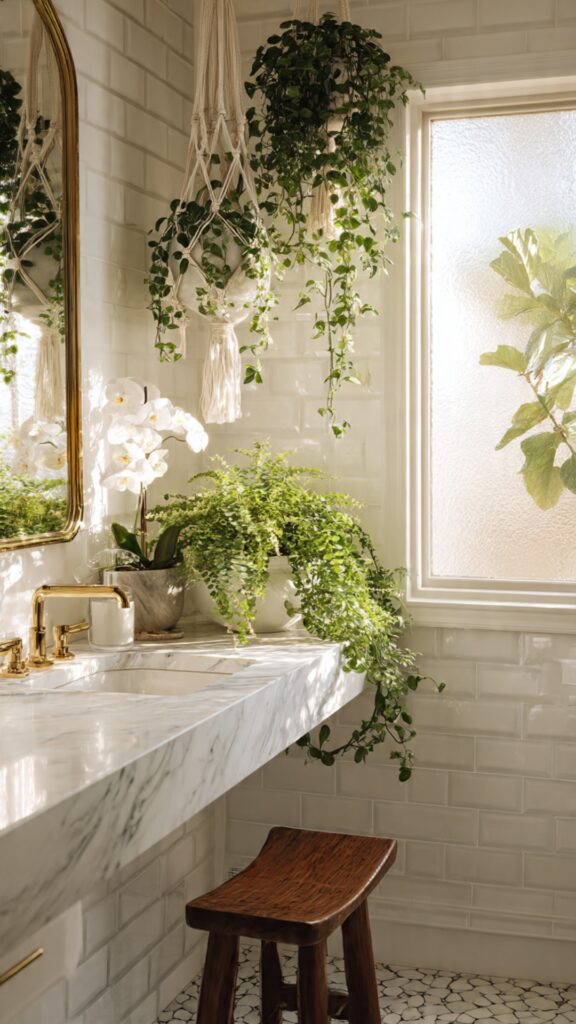
The bathroom is one of the most rewarding and most underexplored rooms for indoor plants styling. Its naturally high humidity, warm temperatures, and reflected light from tiles and mirrors create conditions that are genuinely ideal for a wide range of tropical plant species that struggle in the drier conditions of most other rooms.
A beautifully planted bathroom creates a spa-like, luxurious atmosphere that elevates the entire experience of the room, making it one of the highest-impact plant styling investments available. Species selection for bathroom plant styling should prioritize humidity-loving tropical species that genuinely benefit from the steamy conditions generated by daily showers and baths.
Boston Ferns (Nephrolepis exaltata), which dry out and develop brown tips in most indoor plants styling environments, thrive in bathroom humidity and develop the lush, full fronds that their reputation promises but their typical indoor plants styling conditions rarely deliver.
Orchids (Phalaenopsis) prefer the high humidity of bathroom air over the dry air of most other rooms, and their long-lasting flower spikes create extraordinary beauty for months at a time. Peace Lilies, Maidenhair Ferns, Anthuriums, and Calatheas are all excellent bathroom species for the same reasons.
Positioning in a bathroom requires understanding the light variation across different parts of the room. The area closest to the window receives the most light and suits higher-light species; the area furthest from the window, perhaps near the toilet or in a corner, receives the least light and requires the most shade-tolerant species.
The shower area itself typically very high in humidity suits air plants (Tillandsia) mounted on driftwood or wire structures, which absorb moisture directly from the air without needing soil or a container. A collection of Tillandsias mounted on a piece of driftwood hung on the shower wall is one of the most striking and practically appropriate bathroom plant displays available.
Pot and container selection for bathroom plant styling must account for the environment’s moisture. Terracotta, which is porous and naturally wicks moisture, is not ideal in a high-humidity bathroom it can develop mold or algae on its exterior surface relatively quickly in these conditions. Glazed ceramic, plastic (in a beautiful form), glass, or sealed concrete are more appropriate bathroom pot materials that resist moisture-related degradation.
Floating shelves in teak or moisture-resistant sealed wood, mounted beside or above the bath, create the most beautifully spa-like plant styling opportunity in the bathroom the horizontal shelf at bath height, planted with a trailing species and one or two upright forms, transforms the bath area into a genuinely tropical sanctuary.
Plants and Lighting:
Using Natural and Artificial Light
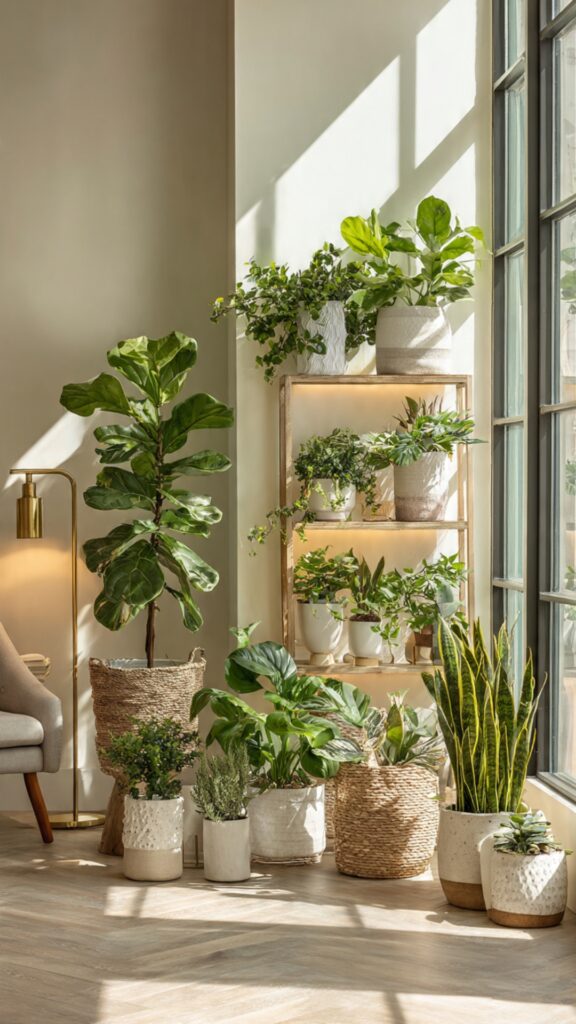
Light is the single most important variable in indoor plants styling health, and plant health is the single most important variable in indoor plants styling quality. A plant receiving insufficient light becomes etiolated its stems stretch toward any available light source, its leaves reduce in size, and its color fades from rich green to pale, washed-out yellow-green.
An etiolated plant is not a beautiful plant, regardless of how thoughtfully it has been positioned or how elegant its pot. Understanding and managing light is therefore not simply a horticultural concern it is a design imperative. Natural light management for indoor plants styling involves not just identifying the brightest spots in a room but understanding light quality and duration throughout the day and across the seasons.
South-facing windows in the northern hemisphere provide the most light hours annually but also the most intense direct sunlight, which can scorch delicate tropical species. East-facing windows provide gentle morning direct sun followed by bright indirect light ideal conditions for the widest range of tropical houseplants.
Sheer curtains diffuse harsh direct sunlight while maintaining bright indirect light levels a styling addition that serves both the plants and the human occupants of the room simultaneously. Grow lights have advanced dramatically in design quality and are now available in forms that are genuinely aesthetically compatible with interior styling rather than the industrial purple-spectrum fluorescent tubes associated with earlier horticultural applications.
Sleek LED grow light bars in warm white spectrums, designed to look like premium interior lighting fixtures, can supplement natural light in darker rooms or extend the light period in winter months when day length drops below what most tropical species need for healthy growth. These contemporary grow lights are now available in designs by furniture and lighting brands rather than solely from horticultural suppliers a clear indicator of the indoor plants styling market’s integration into mainstream interior design.
The relationship between plant positioning and interior lighting also works in reverse: plants can be used to enhance the quality of lighting in a room. A large-leaved plant positioned in front of a bright window creates dappled, leaf-filtered light that moves across surfaces as the plant gently sways one of the most beautiful ambient light effects available in interior design without any electrical installation.
Backlit plants where a grow light or accent light is positioned behind rather than above the plant create a dramatic silhouette effect on the surrounding wall that transforms the plant into an architectural light feature. This backlighting approach is particularly effective with plants that have interesting leaf silhouettes: Monstera, Fiddle Leaf Fig, and Bird of Paradise all produce spectacular shadow patterns when backlit.
Propagation Displays as Styling Elements:
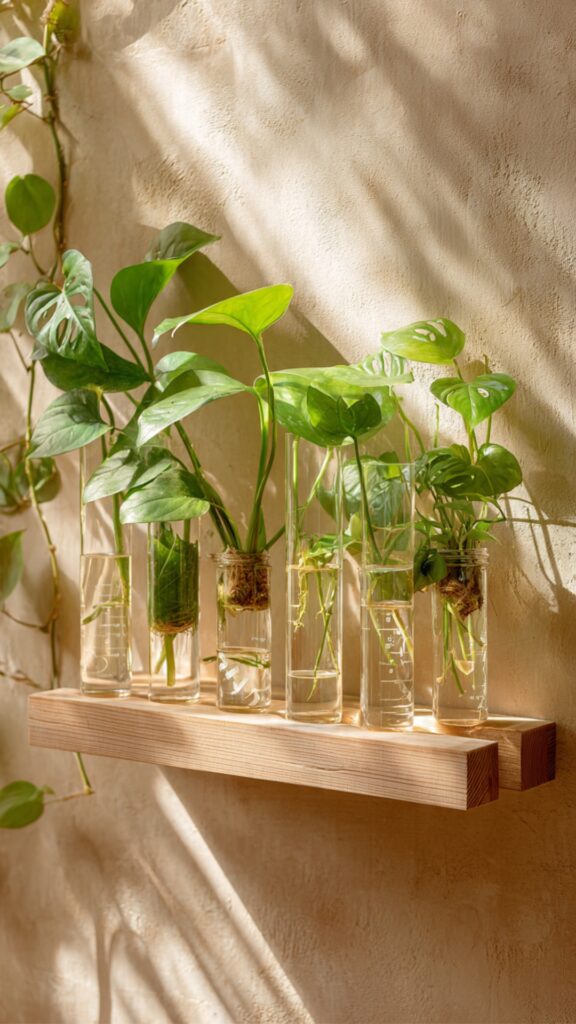
Propagation the process of creating new plants from cuttings, offsets, or leaf sections has become one of the defining practices of contemporary plant culture, and propagation displays have emerged as a genuinely beautiful indoor plants styling category in their own right.
A collection of cuttings in glass vessels filled with water, arranged on a windowsill or shelf, creates a styling moment that is simultaneously functional (the cuttings are growing roots), visually beautiful, and deeply personal in a way that purchased, fully grown plants cannot replicate.
Glass propagation vessels are the most important element of a propagation display, and the variety of beautiful glass forms available makes this a styling decision of real consequence. Vintage glass bottles in amber, cobalt, and clear glass create rich, jewel-toned water vessels that catch and refract light beautifully. Scientific glassware Erlenmeyer flasks, graduated cylinders, round-bottom flasks creates a laboratory aesthetic that suits contemporary and industrial interior styles with particular sophistication.
Simple bud vases in clear blown glass, grouped in varying heights, create a clean, contemporary propagation display that suits minimalist and Scandinavian interiors. The visual relationship between the glass vessel, the water within it, and the developing roots of the cutting is one of the most quietly beautiful sights in indoor plants styling.
Cutting selection for propagation displays should balance the visual quality of the cutting itself with its propagation practicality. The most effective propagation display cuttings are species that develop visible, attractive root systems in water Pothos, Tradescantia, Begonia, and Impatiens all develop roots quickly and visibly in water, making the root development itself a visual element of the display.
Monstera cuttings with their dramatic leaf shape create immediately beautiful single-stem displays even before root development begins. Succulents and cacti, which propagate from leaf or stem sections rather than water-rooted cuttings, create a different kind of propagation display tiny leaf sections arranged on a bed of dry soil in a shallow ceramic dish, each developing a tiny rosette with time.
Positioning propagation displays requires the same light thinking as positioning mature plants cuttings in water need the same light conditions as the mature plant they came from. However, a specific positioning advantage of propagation displays is their small scale and portability. Individual glass vessels can be easily moved to follow the best light conditions throughout the day without the weight or root disturbance concerns of a potted plant.
A propagation display on a kitchen windowsill, regularly refreshed with new cuttings as rooted ones are potted up, creates a living, changing styling moment that communicates plant knowledge, care, and the ongoing creative engagement with plant life that characterizes the most authentic plant-styling environments.
Seasonal Indoor Plant Styling:
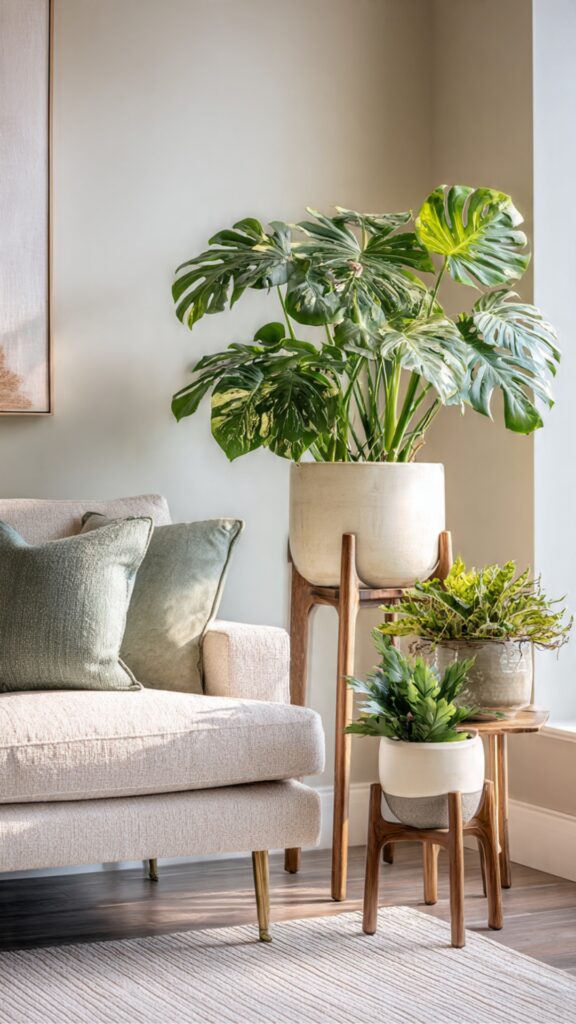
Indoor plants styling, like other aspects of interior design, benefits from seasonal attentiveness adjusting the plant palette, the arrangements, and the supporting decor elements in response to the shifting qualities of natural light, temperature, and the seasonal mood of the outside world.
Unlike seasonal exterior garden changes, which are forced by weather and growing cycles, seasonal indoor plants styling is a deliberate, optional practice but one that keeps indoor plants styling arrangements feeling fresh, intentional, and genuinely connected to the living world outside.
Spring indoor plants styling celebrates renewal, growth, and the return of strong natural light. This is the season to propagate and pot up new plants, to move plants back to brighter positions from the lower-light accommodations of winter, and to introduce flowering species forced bulbs (hyacinths, paperwhites, tulips), orchids in fresh flower, and new-growth tropical plants that celebrate the season’s energy.
A windowsill of forcing bulbs in simple ceramic pots, arranged by height and coordinated in color, is one of the most beautiful and seasonally resonant indoor plants styling arrangements available in early spring.
Autumn and winter indoor plants styling compensates for the reduction in natural light and the shift toward interior living with a greater emphasis on atmospheric, textural, and emotional qualities. In autumn, bringing in plants with rich, warm foliage color Coleus in deep burgundy and gold, Croton with its spectacular multicolored leaves, and the Nerve Plant (Fittonia) in red-veined varieties creates a visual connection to the outdoor color shift.
In winter, the emphasis shifts to plants that provide structure and interest without requiring high light levels: architectural Haworthias, Snake Plants, and ZZ Plants maintain their beauty through the shortest days, while a forced Amaryllis in bloom creates a dramatic winter focal point of extraordinary beauty.
Transitional seasonal styling the practice of adding and removing small decorative elements around plants rather than replacing the plants themselves is the most practical and least disruptive approach to seasonal indoor plants styling.
A Snake Plant that remains in its position year-round might receive a terracotta pot in autumn, a collection of pinecones arranged at its base in winter, a small nesting bird figurine in spring, and a collection of smooth river stones in summer each seasonal addition taking five minutes to arrange but shifting the plant’s contextual character with the season. This layered, cumulative approach to seasonal plant styling requires minimal investment and creates maximum seasonal responsiveness.
Tap to Explore : Sunroom Ideas That Make the Perfect Home for Your Beautiful Indoor Plants.
Styling Succulents and Cacti Indoors:
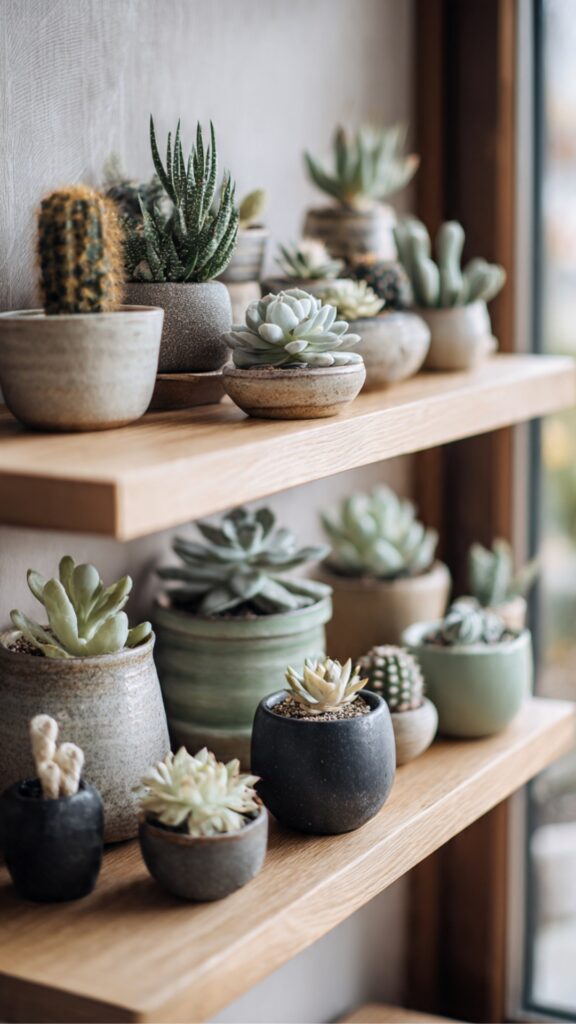
Succulents and cacti represent one of the most design-flexible categories in indoor plants styling their extraordinary variety of form, color, size, and texture makes them among the most visually interesting plants available, while their low water requirements make them among the most practically forgiving.
However, they are also among the most frequently styled poorly cluttered in groups of identical terracotta pots, lost on shelves without adequate light, or arranged with insufficient attention to the compositional quality that their remarkable forms deserve.
The most important principle for succulent and cactus styling is the provision of adequate light. Most succulents and cacti are desert plants adapted to intense, full-spectrum sunlight they require the brightest possible indoor plants styling position, ideally a south-facing windowsill with several hours of direct sun daily.
In insufficient light, succulents etiolate rapidly their compact rosette forms stretch toward the light source, losing the tight, geometric beauty that makes them so visually appealing. A stretched, etiolated succulent is one of the saddest sights in indoor plants styling and one that is entirely preventable by correct initial positioning.
Arrangement strategies for succulents fall into two broad categories: the dish garden approach (multiple species planted together in a single shallow container) and the individual pot approach (each plant in its own vessel, arranged as a collection). Dish gardens work best when the species selected have similar growth rates and care requirements, and when the arrangement is designed with deliberate attention to height variation, color contrast, and form variety.
Individual pot arrangements allow more flexibility in species selection and in the evolution of the arrangement over time pots can be added, removed, and repositioned as plants grow and as new acquisitions join the collection. Color is one of the most underexplored dimensions of succulent and cactus styling.
The succulent palette extends far beyond green: Echeveria species are available in dusty pink, steel blue, deep purple, and silver-gray; Sedum pachyphyllum develops vibrant red tips in strong light; Aeonium ‘Zwartkop’ produces spectacular near-black rosettes; and the paddle cactus Opuntia comes in blue-gray and purple-tinged varieties.
Building a succulent arrangement around a deliberate color palette all blue-gray species in a concrete bowl, all pink-tinged species in a blush ceramic, or a complementary green and purple contrast in separate adjacent pots creates a styling composition that uses the plants’ natural color variation as deliberately as any paint or textile choice in interior design.
Future Trends in Indoor Plants Styling:
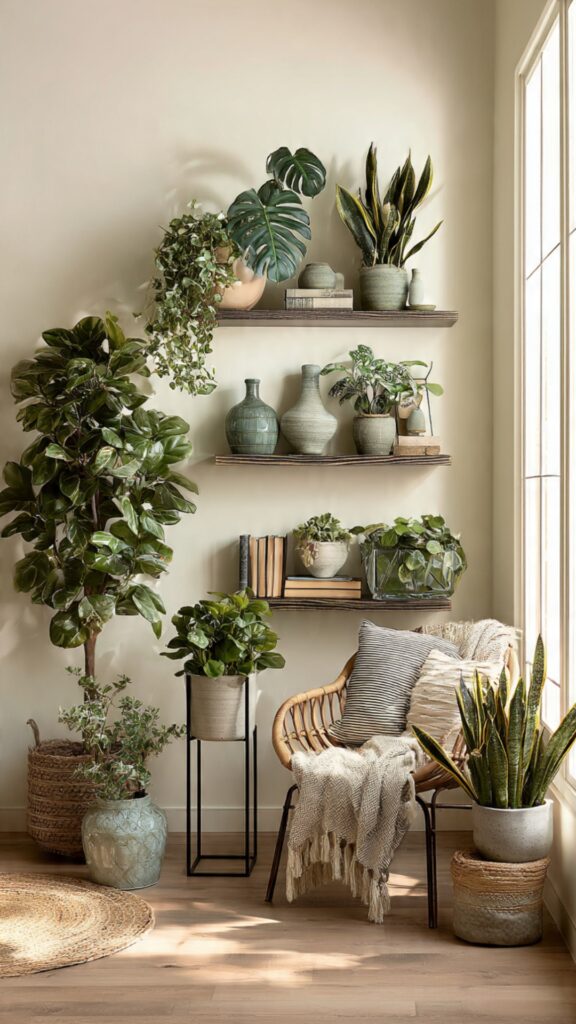
Indoor plants styling is a rapidly evolving design discipline, shaped by developments in interior design taste, advances in plant breeding and horticultural science, growing environmental awareness, and the continuing influence of social media communities that have elevated plant styling into a mainstream design conversation. Understanding where the discipline is heading allows homeowners and design enthusiasts to make plant styling investments that will feel current and considered for years rather than dated within months.
The most significant near-term trend in indoor plants styling is the shift toward what horticultural designers are calling “considered rewilding” creating indoor plants styling environments that reference the complexity and layering of natural ecosystems rather than the ordered, curated arrangements that have dominated plant styling for the last decade.
This approach layers plants of different heights, forms, and ecological origins in ways that feel genuinely natural rather than designed the goal is a corner or room that feels as though plants have chosen to colonize it rather than been placed there by a decorator. Achieving this naturalistic effect, paradoxically, requires significant design skill and horticultural knowledge.
Rare and unusual plant species are becoming increasingly accessible through specialist online nurseries, plant swaps, and the expanding global plant trade and their influence on indoor plants styling is growing rapidly. Species that were collector rarities five years ago variegated Monstera Thai Constellation, Philodendron Pink Princess, Hoya Kerrii, and Alocasia‘Dragon Scale’ are now available through mainstream plant retailers, allowing broader access to the extraordinary visual qualities these plants possess.
As plant breeding continues to produce new variegations, new leaf forms, and new color expressions, the vocabulary of available indoor plants styling material will expand significantly, supporting ever-more-sophisticated plant styling compositions.
Sustainability and provenance are becoming increasingly important considerations in indoor plants styling, reflecting broader cultural values around environmental responsibility and the ethics of the global plant trade. Tissue-cultured plants (produced in laboratory conditions rather than wild-collected) are the most ethical choice for rare species; locally propagated plants carry the lowest carbon footprint; and vintage or reclaimed pots significantly reduce the environmental cost of the ceramic production required to house a plant collection.
The most forward-thinking indoor plants styling of 2026 and beyond will integrate these provenance considerations into their plant styling practice as naturally as they integrate color and form making sustainability not an add-on but a foundational design value.
Conclusion
Indoor plants styling is one of the most rewarding and accessible forms of interior design offering the rare combination of aesthetic transformation, biophilic wellbeing benefits, and ongoing creative engagement that few other design disciplines can match.
Whether you begin with a single statement plant in a well-chosen pot, a propagation display on a sunny windowsill, or a carefully composed shelf grouping, every thoughtful plant styling decision brings your space closer to the living, breathing interior that plants uniquely make possible. Choose one idea from this guide, apply it with intention, and let your indoor plants styling journey build naturally from there.

Team TrandyVilla is the passionate home decor team behind Trandy Villa, where style meets comfort in everyday living. The team loves transforming simple spaces into beautiful, functional homes through smart ideas, budget-friendly hacks, and modern design trends. Their content focuses on helping readers create homes that feel both stylish and personal without spending too much.