
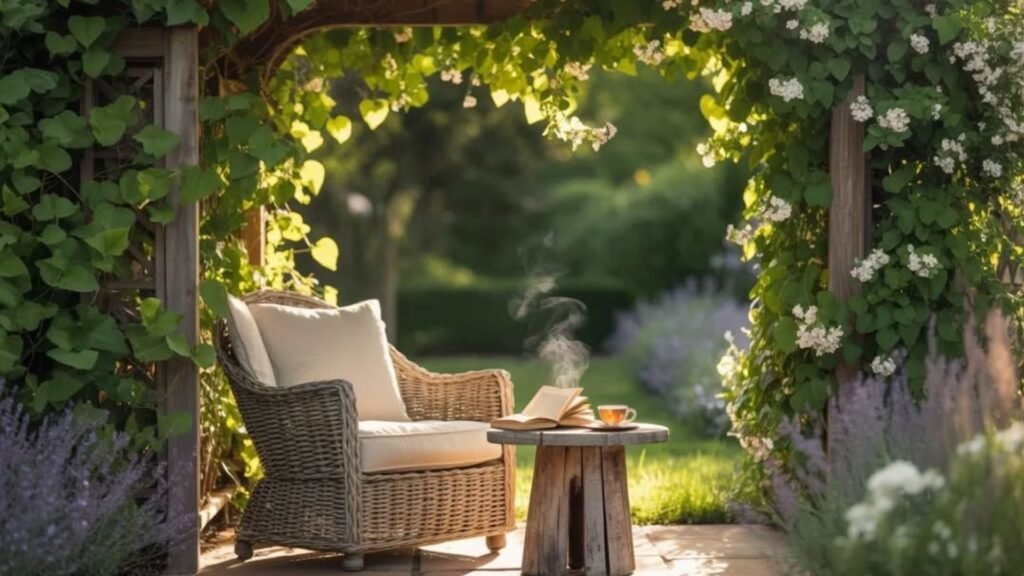
A garden nook is a small and cozy outdoor space designed for relaxation and comfort. Garden Nook Ideas help create peaceful corners for reading, resting, or enjoying nature. They add charm, improve privacy, and make outdoor areas feel more welcoming and personal.
Garden Nook offers a simple way to turn an ordinary outdoor corner into a peaceful retreat. It creates a comfortable space for relaxation, quiet moments, and fresh air. Thoughtful seating, greenery, and décor help make the area feel inviting and enjoyable every day.
Garden Nook Ideas include reading corners, pergola retreats, hammock spaces, and flower-filled seating areas. These designs improve outdoor living and add visual appeal. Simple details, natural elements, and comfortable furniture help create a relaxing and functional garden space.
The Cozy Reading Nook Surrounded by Greenery

One of the most beloved garden nook ideas is the classic reading corner nestled among plants. The key is layering start with a comfortable, weather-resistant chair or loveseat, then surround it with tall ornamental grasses, climbing roses, or bamboo to create natural walls. This sense of enclosure is what turns a simple seat into a sanctuary. You’re not just sitting outdoors; you’re tucked inside the garden itself.
Lighting is where most DIY reading nooks fall short. Rather than stringing a single set of fairy lights and calling it done, think in layers: a solar-powered lantern at ground level, Edison bulbs draped overhead, and perhaps a small battery-powered reading lamp clipped to your chair. This three-layer approach extends usability into the evening without requiring electrical wiring, which means it’s accessible even for renters or beginners.
Plant selection matters more than most people realize. For a reading nook that feels genuinely private, choose plants that bloom at different heights. Lavender and salvia at knee height, hydrangeas at waist height, and a trained jasmine or wisteria overhead creates a living enclosure that also provides fragrance proven to reduce anxiety and improve focus. This multi-sensory design is what separates a memorable nook from a forgettable one.
One underrated tip: face your reading chair away from the house. Many people instinctively position seating to look toward the home, but facing outward toward a hedge, a tree line, or a fence covered in ivy psychologically signals “escape.” It’s a small detail with a surprisingly large impact on how restorative the space feels.
A Rustic Wooden Pergola Nook With Climbing Plants
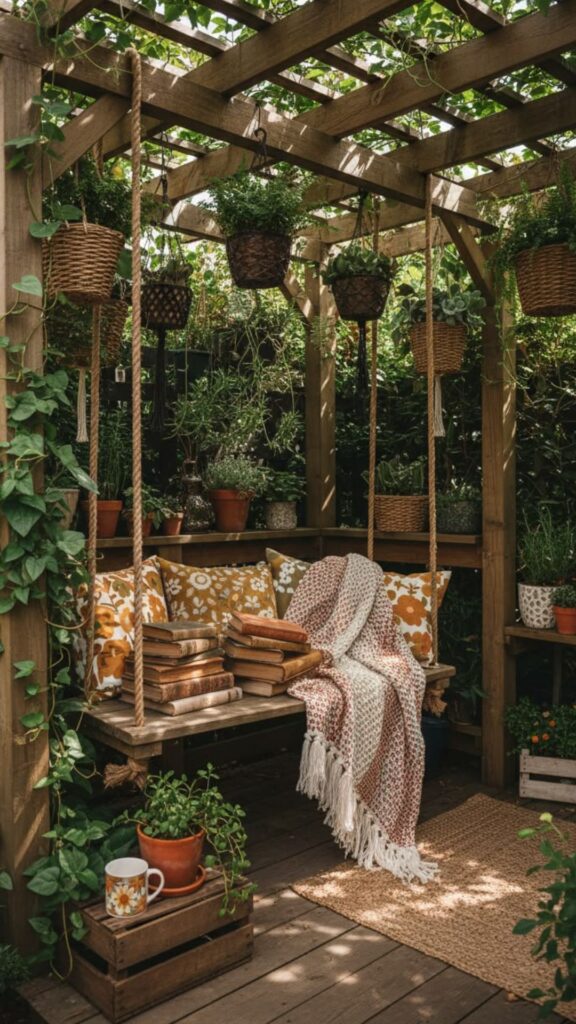
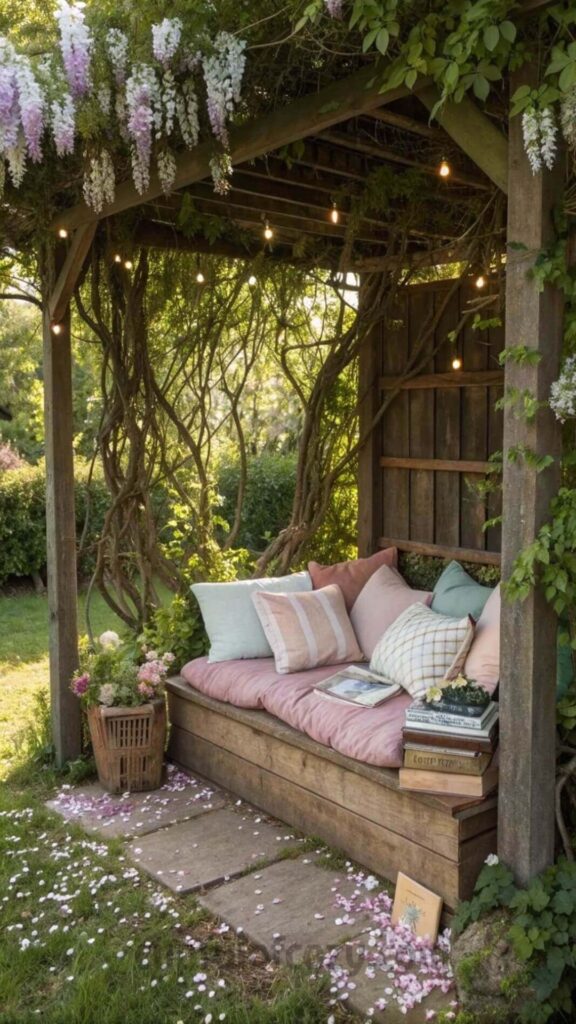
A pergola doesn’t need to dominate the garden even a small, freestanding 8×8 ft structure can anchor a beautiful garden nook. Rustic cedar or reclaimed wood pergolas pair especially well with naturalistic planting styles, and they’re far more achievable as a weekend DIY project than most people expect. The overhead beams provide the structural canvas for one of nature’s best design tools: climbing plants.
Wisteria, passionflower, and chocolate vine (Akebia quinata) are all excellent choices for climbing a pergola quickly and creating dense, aromatic shade. However, for year-round interest, consider mixing evergreen and deciduous climbers a combination of star jasmine (Trachelospermum jasminoides) for winter fragrance and a deciduous clematis for summer colour ensures your nook is never bare. This interplay of seasons is something most pergola guides ignore entirely.
For furniture inside the pergola nook, resist the urge to overcrowd it. A simple bistro table with two chairs, or a daybed with a weather-resistant cushion, keeps the space functional without making it feel cluttered. One key practical detail: always seal or stain the wood before installing, because fixing it once the climbers are established is genuinely difficult. Use a tung oil finish for a natural, non-toxic look that ages beautifully.
Looking forward, smart pergola kits are emerging with adjustable louvred roofs slats you can open or close depending on sun and rain. Brands like Renson and Bioclimatic are producing affordable versions of these for residential gardens. If you’re building something permanent, it’s worth future-proofing the structure now so you can add a louvred system later without rebuilding from scratch.
Just What You Were Looking For: Whimsical Garden Ideas for a Magical Nook
A Hidden Garden Nook Behind a Living Wall
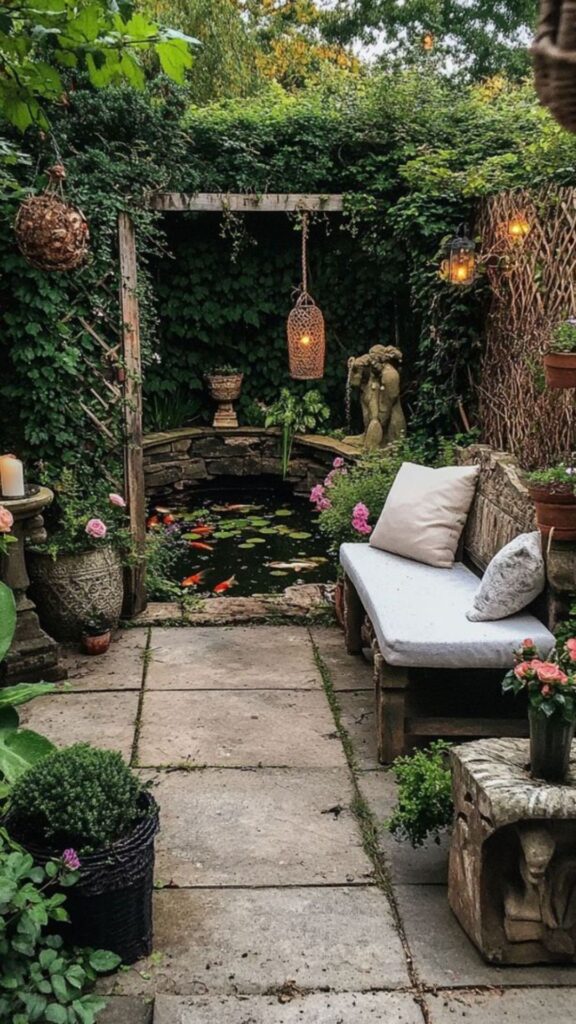
A living wall or vertical garden isn’t just an aesthetic choice; it’s a functional privacy screen that works in gardens where horizontal space is limited. Positioning a seating nook directly behind or adjacent to a living wall creates an instant sense of discovery and seclusion. This works particularly well in urban gardens, terraced houses, or properties where neighbours are close.
The most durable living walls for this purpose use modular panel systems, like those from Florafelt or Woolly Pocket, which allow you to replant individual sections without dismantling the whole structure. For low-maintenance options, stick to hardy ferns, sedums, or ivy. For high-impact seasonal colour, try a mix of trailing petunias, calibrachoa, and trailing verbena these cascade beautifully and create a lush, cottage effect.
What competitors rarely discuss is the acoustic benefit of living walls. Research from the University of Sheffield has found that plant-covered surfaces especially those with layered, textured foliage can reduce ambient noise by up to 15 decibels. In an urban garden nook, this turns a noisy terrace into a noticeably quieter retreat, without any hard construction. It’s one of the most underrated reasons to use a living wall as a nook backdrop.
From a design perspective, pair the living wall with a stone or concrete bench rather than timber furniture. The contrast between soft, organic greenery and cool, industrial stone creates visual tension that feels intentional and contemporary. Add a single hanging lantern in front of the wall and you have a nook that feels designed rather than assembled.
A Zen-Inspired Meditation Garden Nook
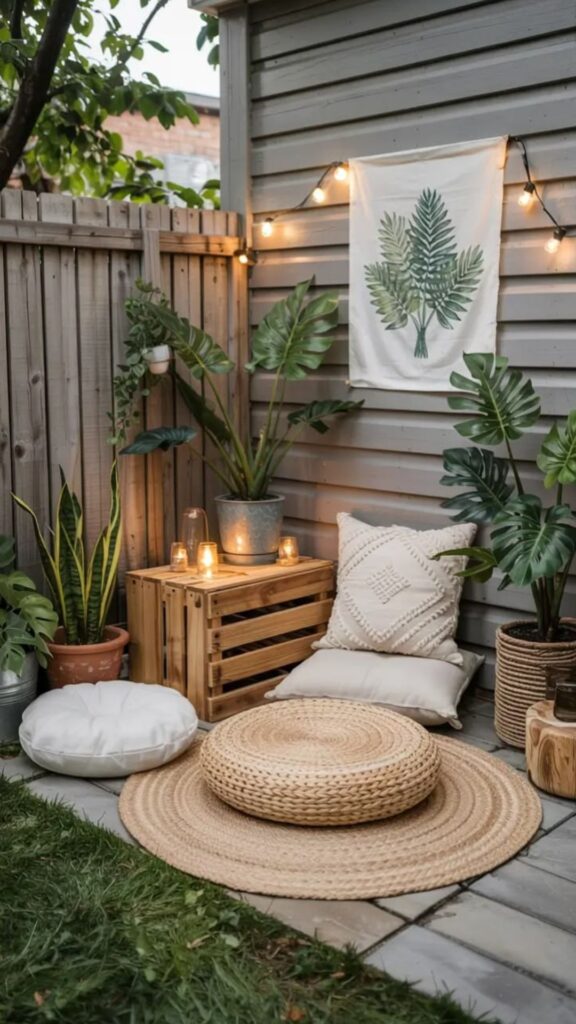
Meditation and mindfulness gardens are rising sharply in popularity, and for good reason. A dedicated outdoor nook designed for stillness is one of the most genuinely restorative things you can add to any garden. The Zen philosophy of ma meaningful empty space should guide the design: resist the urge to fill every gap. The restraint is the design.
Start with a base of raked gravel or decomposed granite, which provides the classic Zen texture underfoot. Add two or three carefully placed large stones irregularly shaped granite or basalt works beautifully. A single dwarf Japanese maple (Acer palmatum) provides seasonal interest without overcrowding the space. Bamboo screening on one or two sides adds both sound dampening (bamboo rustles gently in wind) and visual privacy.
Seating in a meditation nook should be low to the ground. A simple teak meditation bench or a pair of floor-level cushions on a raised timber platform signal immediately that this space operates at a different pace. Avoid chairs that face a screen, a road, or a busy sight line. If possible, orient the seating toward a single focal point a stone water bowl, a bonsai on a plinth, or simply a single large rock. Singular focus is the design objective.
One future-forward detail worth adding: a small wind chime tuned to a pentatonic scale. Unlike randomly tuned chimes that can feel jarring, pentatonic scales are inherently harmonious regardless of which notes sound together. Japanese craftsmen have understood this for centuries. It adds a layer of ambient sound that’s genuinely calming, and in a science context, research on nature soundscapes consistently finds that gentle, unpredictable sound patterns reduce cortisol levels.
A Cottage Garden Nook With Wildflower Borders
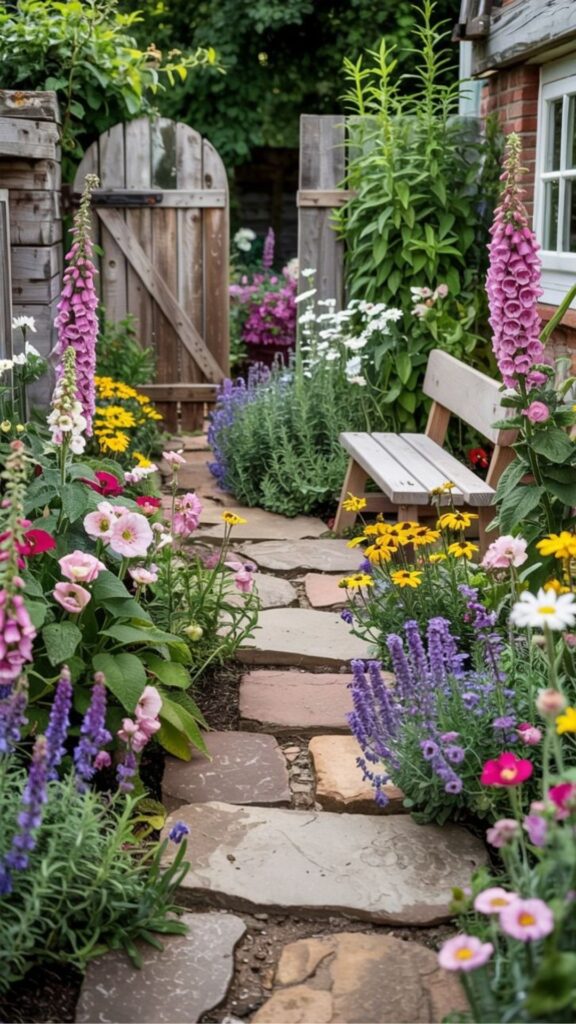
The cottage garden aesthetic never really goes out of fashion and in 2026 and beyond, there’s a growing interest in making it ecological as well as beautiful. A wildflower-bordered garden nook combines the romance of the traditional English cottage garden with modern pollinator-friendly planting that actively benefits biodiversity. It’s a nook that looks good and does good.
For the borders, choose a mix of native and near-native species that bloom in sequence from early spring through to autumn. In the UK context: alliums and foxgloves in spring, echinacea and rudbeckia in summer, and sedum and aster into autumn. In North American gardens, black-eyed Susans, coneflowers, and native asters perform a similar role. The key principle is succession planting ensuring something is always flowering, always feeding pollinators, always providing colour and movement.
The seating area itself benefits from a slightly elevated position within the wildflower borders a raised timber deck platform just 15–20 cm above ground level visually separates the nook from the surrounding planting while still allowing the wildflowers to feel like they’re enclosing you. Unpainted, naturally weathered timber looks most at home in a cottage nook. Add an arbour or rose arch at the entrance point for a sense of threshold crossing through it triggers a psychological shift into the nook’s slower pace.
One insight that’s rarely shared: plant your wildflower borders in broad drifts of three to five plants per species rather than dotted individually. Single plants of multiple varieties creates a visually restless, spotty look that never settles. Broad drifts create the sweeping, romantic effect you see in the best cottage gardens and they’re actually easier to maintain because the plants compete less with each other.
A Garden Fire Pit Nook
For Cosy Evenings
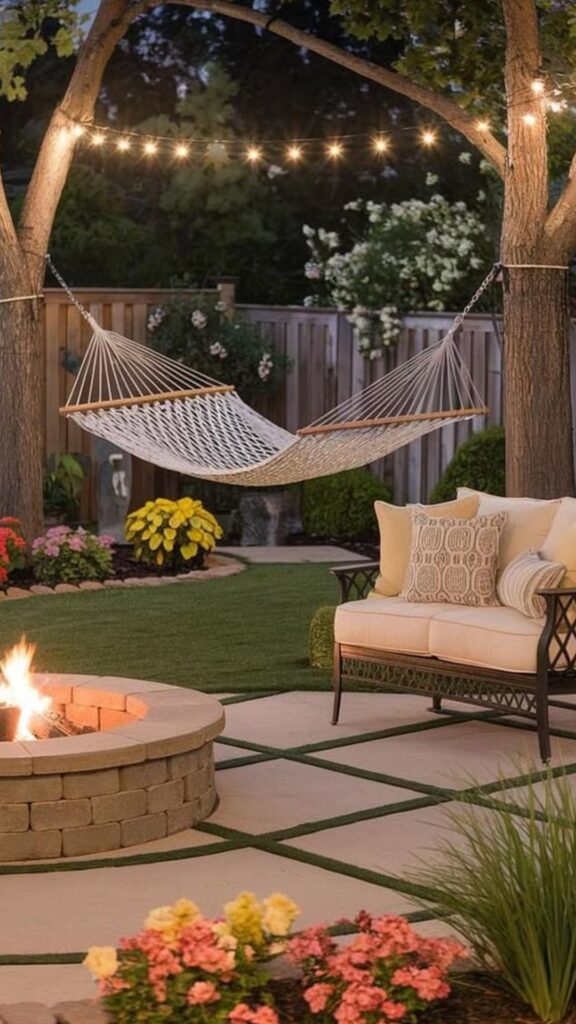
A fire pit transforms a garden nook from a daytime feature into an all-season, all-hours destination. The key is designing the fire pit area as a room rather than just placing a pit in an open space. Think about enclosure first: a low curved stone wall, raised planters arranged in a horseshoe, or a natural slope can all function as informal seating and wind-blocking boundaries that make the fire feel like a hearth rather than a campfire.
Seating arrangement matters enormously. Unlike dining furniture which typically faces inward across a table fire pit seating should form a gentle arc or full circle, with each seat angled slightly toward the fire. The social dynamic shifts completely: rather than talking across a table, everyone naturally faces a common centre point. This is why fire pits consistently rate as one of the highest-return garden investments for social use.
For surface material beneath and around a fire pit nook, choose non-combustible options: flagstone, brick, concrete pavers, or gravel. Many people make the mistake of placing a fire pit on a timber deck even “fire-resistant” treated decking can char or warp over time. A gravel or stone apron of at least 90 cm around the pit on all sides is the safe and visually appropriate choice. Edge the gravel zone with steel or corten steel edging to keep it crisp.
Plants near a fire pit nook need careful selection. Avoid highly flammable species like ornamental grasses positioned too close. Instead, use low-moisture, drought-tolerant plants that won’t create a fire hazard: lavender further back, agapanthus in pots, and rosemary as a scented border plant. The rosemary has an added bonus it releases its fragrance when warmed by the fire, which is an underrated sensory detail that your guests will notice and remember.
Cannot Skip This One: Small Courtyard Garden Ideas for a Cozy Outdoor Nook
A Children’s Secret Garden Nook
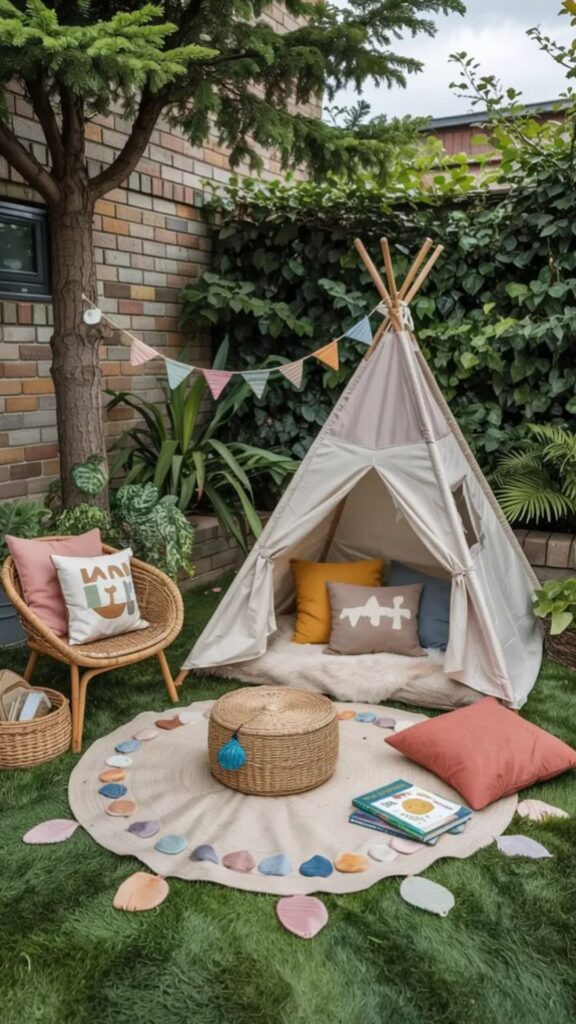
Creating a dedicated garden nook for children does something that play equipment alone rarely achieves: it gives children a place, a sense of territory and ownership in the natural world. Research in developmental psychology consistently links early positive experiences in nature with lifelong environmental stewardship and reduced anxiety. A children’s secret garden nook is, therefore, far more valuable than it might appear.
The design principles are straightforward but important: low scale (everything sized to child height), sensory richness (textures, smells, sounds), and a sense of discovery (ideally reached through a child-sized gate, hedge gap, or tunnel). A simple willow dome made from living willow withies pushed into the ground in a circle and woven together at the top creates a magical enclosure that grows and leafs out each spring. Living willow structures are fast, cheap, and genuinely enchanting for children aged 4–10.
Inside the nook, prioritise natural play elements over plastic. A log round table, tree stump stools, a small chalkboard mounted on a fence post, and a simple digging patch give children open-ended play opportunities that stimulate creativity far more than fixed equipment. Add a seed-growing station a small shelving unit with pots and compost and you introduce a genuine gardening practice that builds patience and responsibility.
One forward-thinking detail for 2026 and beyond: consider a “nature journal station” inside the children’s nook. A weatherproof box stocked with pencils, magnifying glasses, and blank notebooks encourages observational drawing and nature journaling skills that schools are increasingly incorporating into STEM and wellbeing curricula. It transforms the nook from a play space into a learning environment that parents and educators actively value.
A Hammock Garden Nook Strung Between Trees
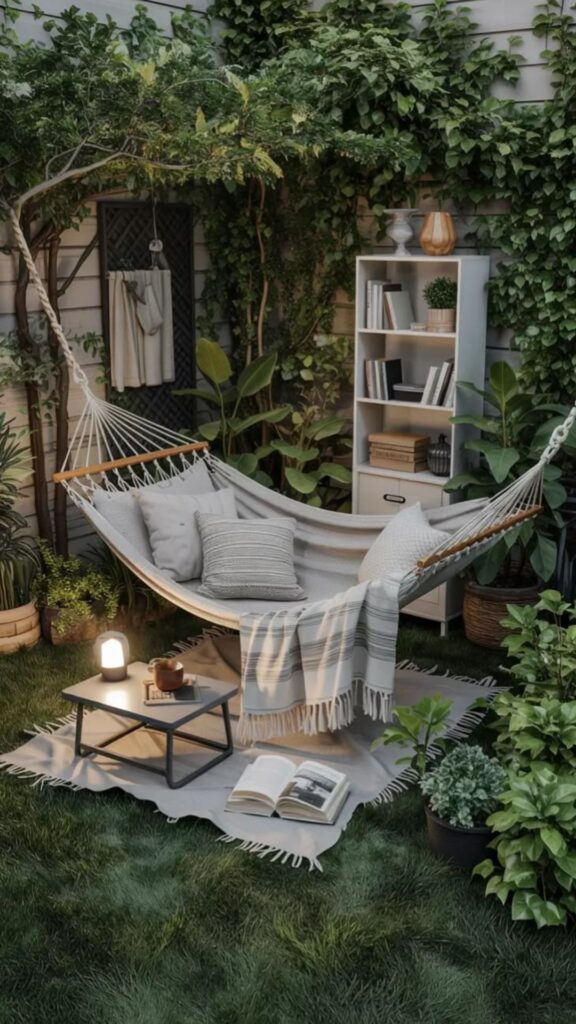
Few garden nook ideas are as immediately appealing or as underestimated in their design potential as a hammock nook. Most people simply hang a hammock and consider the job done. But a truly excellent hammock nook is a considered outdoor room, and the difference in experience is significant.
Start with tree selection or post installation. Natural trees are ideal if they’re mature and the right distance apart hammocks need between 4 and 5 metres between anchor points for most standard sizes. If you don’t have suitable trees, a free-standing hammock frame or a pair of wooden posts set in concrete work perfectly. Cedar or larch posts weather beautifully and don’t require painting. Set them at a slight outward angle for visual elegance and structural stability.
Beneath the hammock, consider the ground surface carefully. Bare soil compacts and becomes muddy with regular use. A bed of pea gravel, bark chip, or even a section of planted thyme lawn works well thyme is low-growing, releases fragrance when stepped on, and handles occasional traffic. Around the hammock, plant or position container plants that can be appreciated from a horizontal vantage point: tall, airy plants like fennel, verbena bonariensis, or ornamental grasses are particularly beautiful when viewed from below.
Accessorise the hammock nook with intention: a small side table or tree stump beside it holds a drink and a book without requiring you to get up. A weather-resistant basket nearby stores an extra blanket and a cushion. If you’re investing in a quality hammock, choose a hand-woven cotton version rather than polyester the breathability and comfort difference in warm weather is dramatic, and they’re far more durable than they appear.
A Water Feature Garden Nook
For Tranquillity
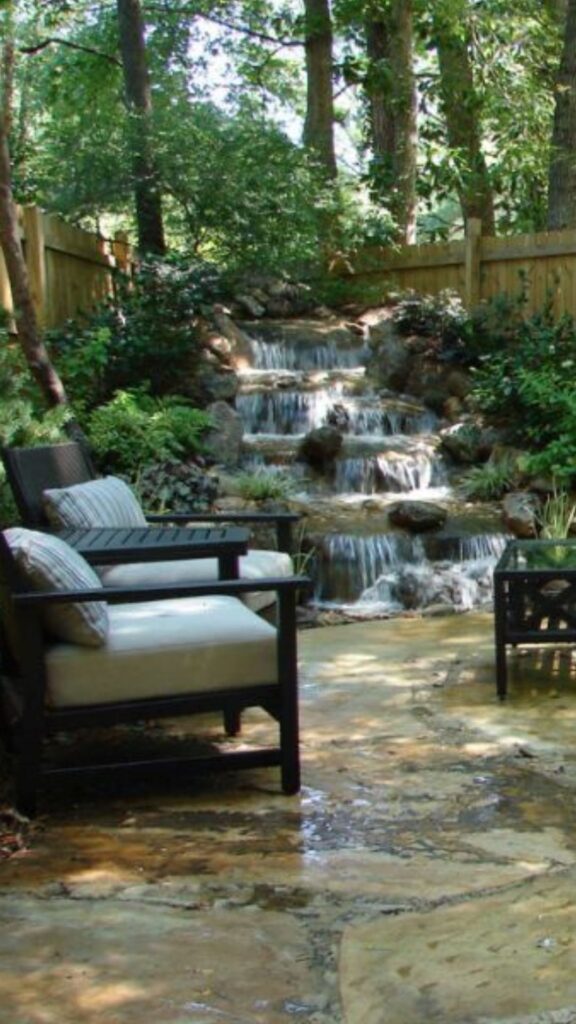
The combination of water sound and natural greenery is one of the most powerful stress-reduction environments that landscape design can create. Multiple studies including foundational research from the University of Exeter have found that proximity to water features in garden settings produces measurable reductions in heart rate and self-reported stress within minutes. Designing a nook around a water feature isn’t a luxury it’s a wellbeing strategy.
The water feature doesn’t need to be large to be effective. In fact, a small recirculating millstone fountain, a simple urn fountain, or a naturalistic wildlife pond with a seating edge can all anchor a nook beautifully. The key characteristic is moving water the gentle, unpredictable sound of water in motion masks intrusive urban noise far more effectively than still water. Position the feature so it’s audible from your seating but not so close that the sound becomes overwhelming.
Plant selection around a water nook should lean toward moisture-loving species that complement the water’s presence: hostas, ligularia, iris sibirica, and ferns all thrive in slightly damp conditions near a feature. For a more tropical effect which is growing in UK garden popularity gunnera, cannas, and tree ferns create an immersive, lush atmosphere that makes a small water nook feel expansive and exotic.
One design insight that’s genuinely underused: angle your seating so you can see the water without staring directly at it. The most relaxing position is one where the water is in peripheral vision rather than dead ahead. This mirrors how people naturally sit near rivers and lakes slightly angled, not directly confrontational. It’s a subtle positional choice that significantly changes the feel of the experience.
A Potting Shed Corner Nook
For Garden Enthusiasts
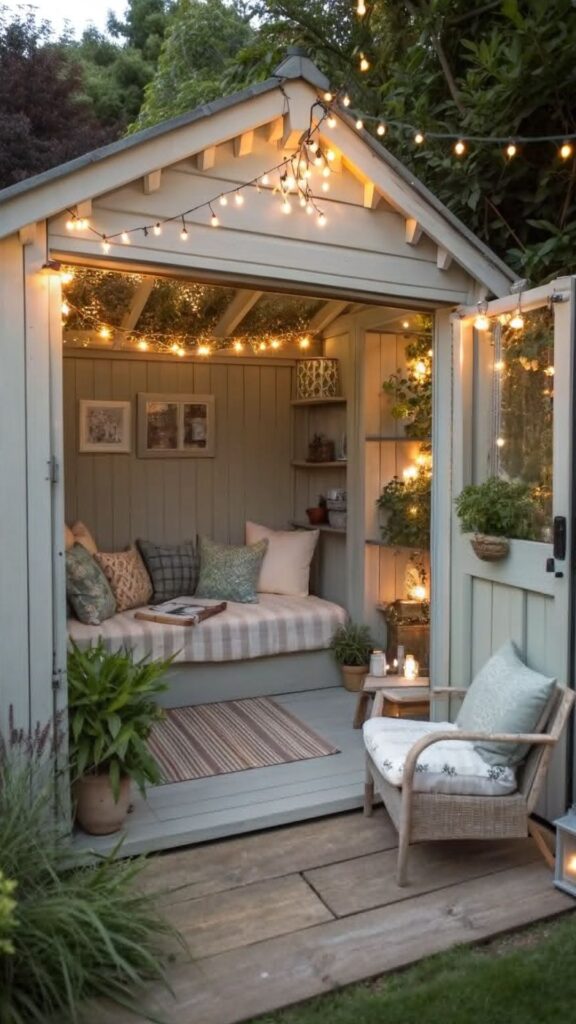
For serious gardeners, the potting shed isn’t just functional storage it can become the most personalised and satisfying garden nook of all. The key is treating the working area of the shed as a designed space rather than a utility room. This distinction shifts the experience from chore-focused to pleasure-focused, even when the work is the same.
Start with a potting bench at the correct working height 90–95 cm for most adults standing, or lower if you prefer to sit on a stool while potting. A custom timber bench with a galvanised zinc top is both beautiful and practical; zinc is easy to clean, doesn’t rust, and develops a gorgeous patina over years of use. Pegboards above the bench keep tools visible and accessible, which is both efficient and when the tools are quality carbon steel genuinely attractive.
Decorative touches in a potting shed nook make the space feel like yours rather than purely functional. A collection of terracotta pots in graduated sizes, a few favourite seed catalogues on a shelf, a jar of river stones, a small botanical print these details are inexpensive but transformative. They signal that this is a space you inhabit, not just a place where tasks happen. This distinction between a space you use and a space you inhabit is at the heart of great garden nook design.
For 2026 and beyond, the potting shed nook is evolving. Vertical hydroponic growing systems that fit on a single wall are increasingly affordable and allow year-round seed starting and herb growing from a corner of the shed. LED grow lights on timers mean this no longer requires a south-facing window. If you’re designing a potting shed nook from scratch, consider roughing in an electrical outlet now so these options remain available to you later.
A Greenhouse Garden Nook
For Year-Round Growing
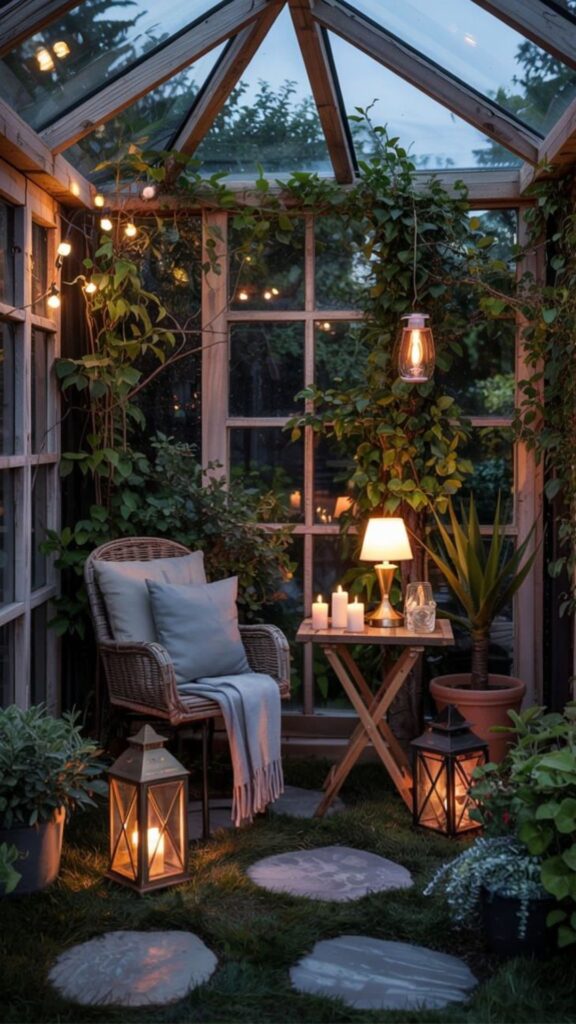
A small lean-to greenhouse or a freestanding 6×8 ft greenhouse creates a year-round garden nook that most outdoor spaces simply can’t offer. In climates where the garden is unusable for three to five months of the year, a greenhouse nook extends your season completely and with the addition of a small electric fan heater or paraffin stove, it can become a genuinely comfortable retreat even in winter.
The interior design of a greenhouse nook is as important as the planting. Long potting benches down both sides leave an unused central space consider using that central zone for a small café chair and table where you can sit among your plants, drink coffee, and work with seed catalogues on cold mornings. This transforms the greenhouse from a production space into a restorative one. The combination of warmth, humidity, plant fragrance, and green colour is profoundly calming a mood effect that’s well-documented in horticultural therapy research.
For plants that make a greenhouse nook genuinely special, go beyond tomatoes and peppers (which are productive but not particularly beautiful or aromatic). Add a climbing passionflower trained up the back wall, a few pots of scented geraniums (Pelargonium graveolens), a banana plant for tropical drama, and a collection of cacti on a windowsill shelf. These create an interior landscape rather than a growing operation, and they change how the space feels to be inside.
Ventilation is the most commonly underestimated aspect of greenhouse nook comfort. A greenhouse without adequate airflow becomes unbearably hot in spring and summer, making it uncomfortable to spend time in. Automatic vent openers heat-sensitive pistons that open roof vents at a set temperature cost under £30 and require no electricity. Fit them during installation rather than retrofitting later. The difference to usability is enormous.
A Rooftop or Balcony Garden Nook
For Urban Spaces
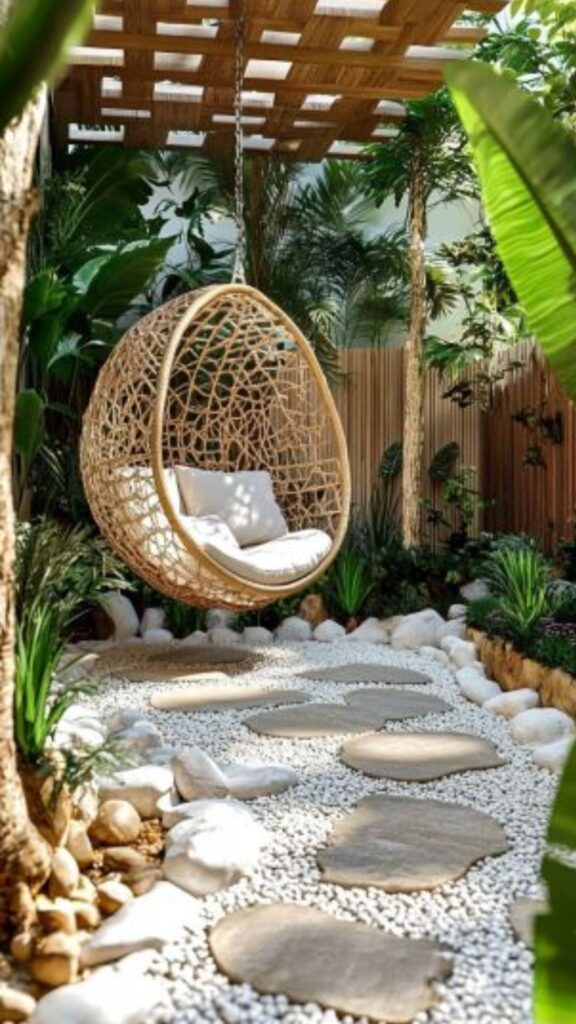
Urban gardens are often limited to rooftops, balconies, or tiny courtyard terraces but these constraints, when embraced as design parameters rather than limitations, produce some of the most inventive and intimate garden nooks possible. The vertical dimension becomes your primary design tool: walls, railings, and overhead structures replace the ground-level planting that’s available in larger gardens.
Begin with a structural assessment before adding anything heavy to a balcony or rooftop a structural engineer consultation is inexpensive relative to the cost of damage, and it’s essential if you’re planning raised beds, large container trees, or heavy stone features. Most balconies comfortably support lightweight containers, vertical planters, and fabric grow bags, all of which are ideal for small-space garden nooks. Weight distribution matters more than total weight spread containers along the structural edges rather than loading the centre.
For planting, focus on a few high-impact choices rather than many mediocre ones. A single large Phormium (New Zealand flax) in a statement pot provides year-round structure and drama. Trailing plants along railings Bacopa, Diascia, or trailing rosemary soften hard edges without adding significant weight. A wall-mounted vertical planter of herbs brings utility, fragrance, and colour in a single installation. The best urban garden nooks feel curated rather than collected.
Privacy is the defining challenge of a rooftop or balcony nook. Rather than solid screening which can create wind tunnels and block light consider semi-transparent solutions: bamboo roll-out screens, outdoor sheer curtains hung from a tension wire, or a trellis with light climbers like Thunbergia. These filter views without eliminating airflow and light. Combined with a well-positioned seating arrangement that faces away from overlooking windows, they create genuine seclusion even in a dense urban environment.
Sneak a Peek Here: Garden Lighting Ideas That Glow Up Your Garden Nook
A Sculptural Garden Nook
As an Art-Inspired Retreat
The most avant-garde and perhaps most personally meaningful of all garden nook ideas is one built around art and sculpture. Rather than plants or architecture as the primary design driver, this nook positions a piece of art or a collection of sculptural objects as the focal point, with everything else designed to complement it. The result is a space that feels profoundly individual and impossible to replicate.
The sculpture itself doesn’t need to be expensive. A weathered concrete sphere, a hand-thrown ceramic vessel, a piece of driftwood balanced on a stone, or a commissioned steel abstract all of these can anchor a sculptural nook, provided they’re chosen with intention and positioned with care. The three rules of outdoor sculpture placement: never centre it symmetrically (off-centre positioning creates tension and interest); always consider sight lines from multiple angles; and ensure the backdrop wall, planting, or sky serves the piece rather than competing with it.
Seating in a sculptural garden nook should be considered but unobtrusive the art is the experience, and seating is the vehicle for experiencing it. A simple concrete bench, a floating timber platform, or a single raw-edged stone slab all work beautifully without drawing attention away from the focal point. The minimalist quality of the seating amplifies the sculptural impact by contrast.
Lighting a sculptural garden nook is where the magic truly happens. A single well-positioned outdoor spotlight an adjustable ground spike light with a warm 2700K LED bulb can transform a sculpture at dusk into something genuinely theatrical. Position it at a 45-degree angle to the sculpture, slightly to one side, to create shadow and dimension. This directional, single-source lighting approach is used in museum and gallery settings for exactly this reason, and it’s entirely achievable in a domestic garden context.
Conclusion
A well-designed garden nook ideas isn’t just an outdoor trend it’s one of the most meaningful investments you can make in how you experience your own home. Whether you choose a cosy reading corner wrapped in lavender, a Zen-inspired meditation space, or a sculptural retreat built around art, the principles remain the same: intentional enclosure, thoughtful planting, and design that prioritises how the space feels over how it looks in a photo. Start with one idea that resonates most, and let it evolve organically the best garden nooks always do.

Team TrandyVilla is the passionate home decor team behind Trandy Villa, where style meets comfort in everyday living. The team loves transforming simple spaces into beautiful, functional homes through smart ideas, budget-friendly hacks, and modern design trends. Their content focuses on helping readers create homes that feel both stylish and personal without spending too much.