
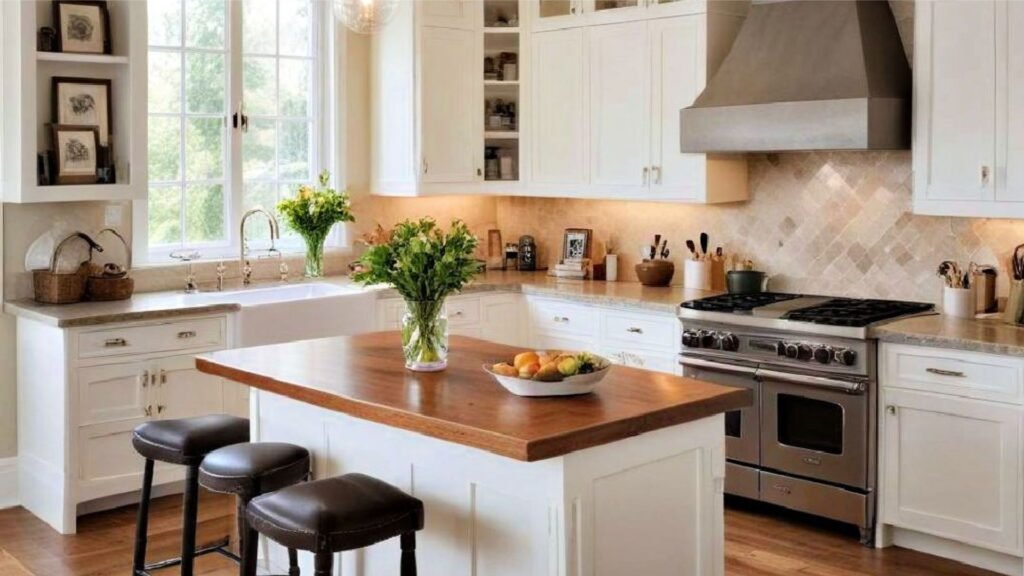
Kitchen Island Ideas with Seating add both function and comfort to a kitchen. They create a place for dining, socializing, and everyday tasks. These ideas improve space use, increase seating options, and help create a practical and welcoming kitchen layout for modern homes.
A Kitchen Island with Seating brings people together while making daily routines easier and more enjoyable. It offers extra workspace and a convenient dining area in one feature. This smart addition enhances kitchen flow, supports family activities, and adds lasting value to the home.
Many Kitchen Island Ideas with Seating include stools, benches, banquettes, and multi-level designs. Each option supports different needs and room sizes. Thoughtful seating, proper spacing, and stylish materials create a balanced kitchen that feels functional, comfortable, and visually appealing every day.
Waterfall Countertop Islands:
For a Seamless Look
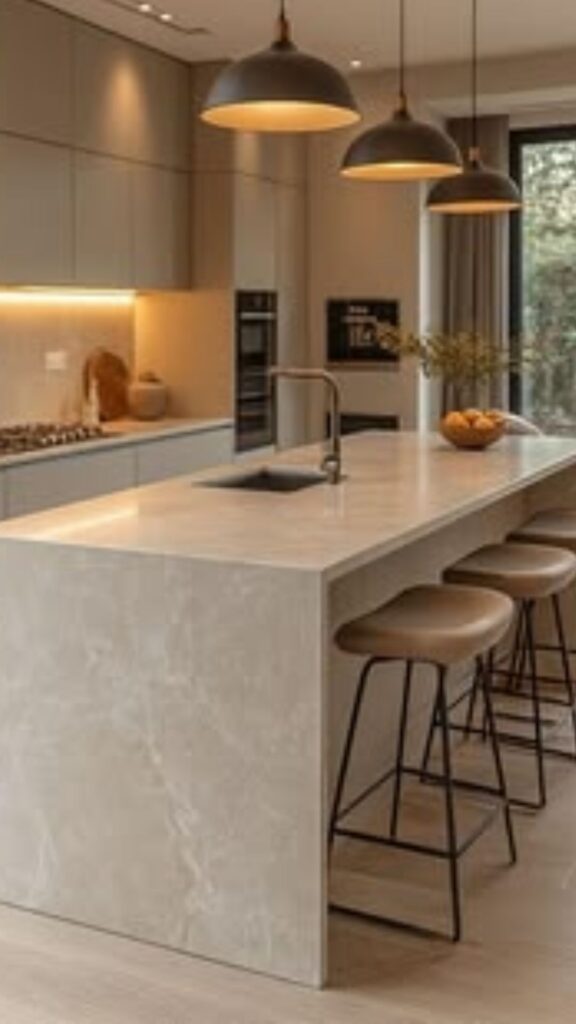
Waterfall countertops extend the slab material down the sides of the island all the way to the floor, eliminating visible seams or wood paneling. This creates a sculptural, monolithic look that reads as high-end even in mid-range renovations. For example, a quartz waterfall island in a soft white or veined gray instantly becomes the visual anchor of an open kitchen. The continuous surface also hides the structural support, so seating can be tucked underneath without exposed brackets disrupting the line.
Functionally, waterfall edges work best when paired with overhang seating on just one side, since wrapping seating around two waterfall edges can make the island feel boxed in. Homeowners often pair this style with quartz or porcelain slabs because both resist staining and chipping along the vertical edge, which takes more wear than a standard countertop. This detail matters for long-term durability, not just aesthetics.
One often-overlooked insight: waterfall islands require more precise stool height planning, since the overhang depth is usually shallower than traditional islands to preserve the clean drop. Aim for a 10 to 12-inch overhang minimum so knees clear the waterfall panel comfortably. Skipping this detail is one of the most common mistakes in waterfall island seating design, leading to cramped or unusable seating.
Two-Tier Islands That Separate Cooking and Seating Zones:
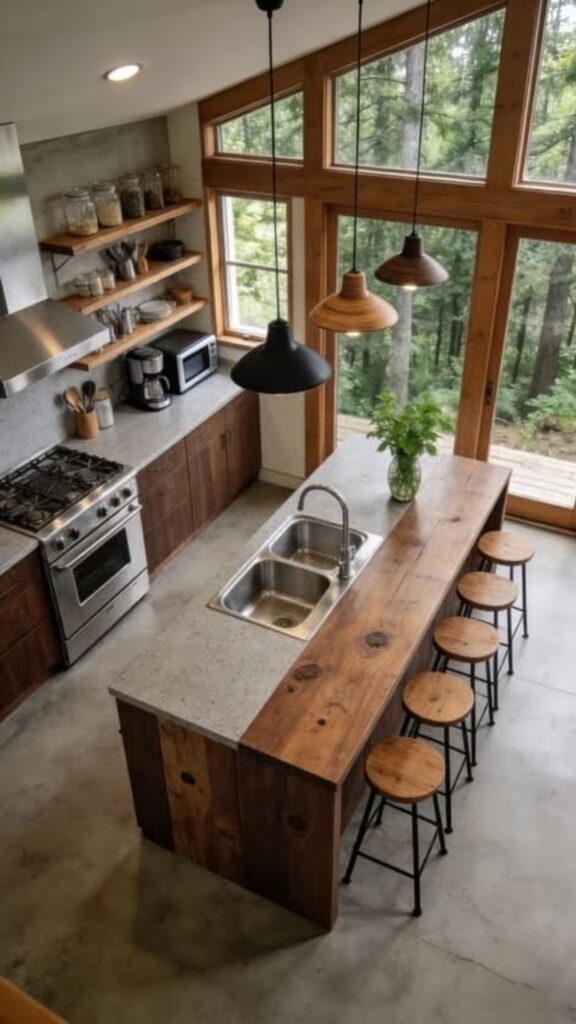
A two-tier island raises the seating section above the main work surface, typically by four to six inches, creating a natural barrier between food prep and dining. This layout is especially popular in family kitchens because it keeps splashes, knives, and hot pans out of reach of kids sitting at the counter. For instance, a lower 36-inch prep counter paired with an upper 42-inch bar-height seating ledge gives both zones their own visual identity while staying connected.
This design also solves a common complaint: guests sitting at the island while you cook can feel like they’re “in the way” of food prep. The tiered height creates psychological and physical separation, even though everyone remains in the same room. For elderly family members or anyone with mobility concerns, the upper tier can double as a more comfortable seated-height surface compared to standard 36-inch islands.
A future-focused tip: two-tier islands are increasingly built with mixed materials, such as a quartz lower counter and a warm wood or laminate upper ledge, to add texture without raising costs significantly. This contrast also helps define the kitchen’s overall color story, especially in open-plan homes where the island is visible from the living room.
Trust Me on This One: Farmhouse Kitchen Ideas That Perfectly Complement Your Beautiful Kitchen Island with Seating
Curved or Rounded Islands:
For Soft, Social Seating
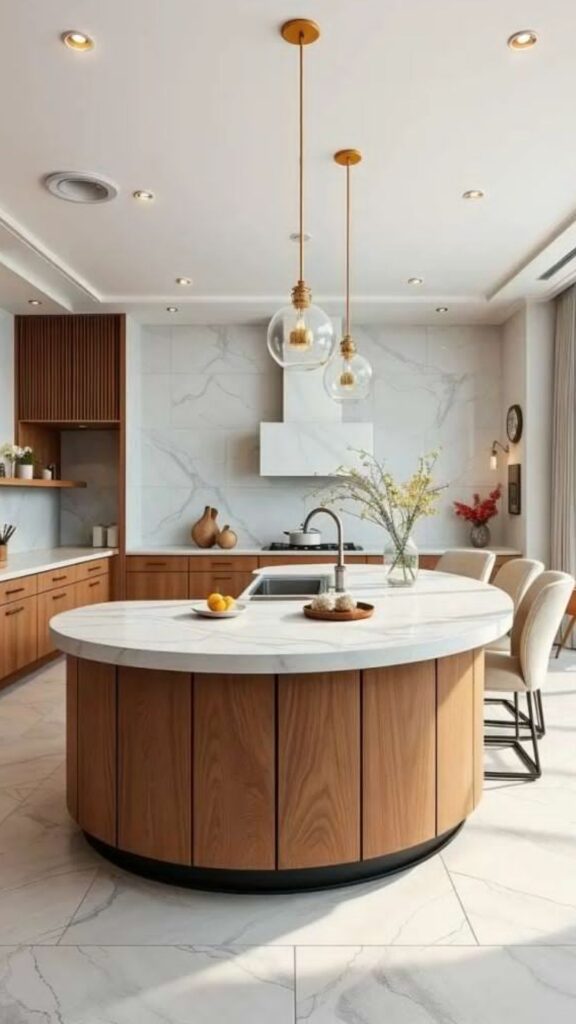
Straight-edged islands dominate most kitchens, but a curved or rounded island offers a noticeably different seating experience. Rounded edges remove the sharp corners that often limit how many stools comfortably fit, allowing three to five seats to wrap around the perimeter without anyone feeling boxed into a corner. This shape also improves traffic flow in tighter kitchens, since there are no 90-degree edges for people to bump into.
Socially, curved islands change how conversation happens. Guests face each other more naturally instead of sitting in a straight line, which makes the island feel more like a casual dining table than a workstation extension. This is particularly effective in kitchens that double as the primary entertaining space, where the island needs to support both food prep and genuine social interaction.
From a construction standpoint, curved islands cost more due to custom cabinetry and curved countertop fabrication, typically 15 to 25 percent above a standard rectangular island. However, many homeowners find the investment worthwhile specifically for the seating experience it creates, not just the visual appeal. If budget is tight, a partial curve on just the seating end can offer a similar effect at a lower cost.
Galley-Style Islands with Bench Seating:
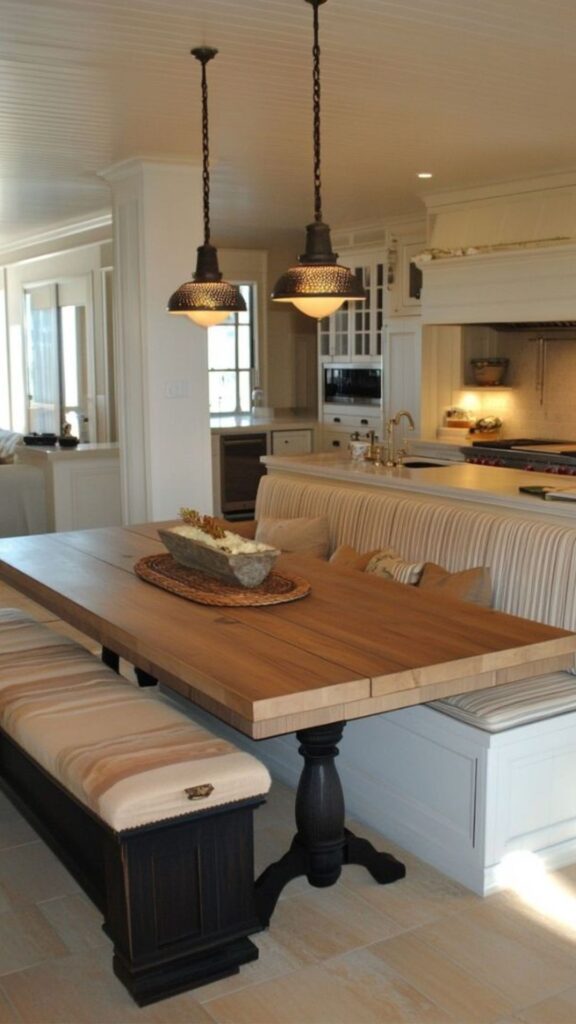
In narrower kitchens, a traditional overhang with stools can eat up walkway space that’s already limited. Bench seating along one side of a galley-style island solves this by tucking seating closer to the island’s footprint, often saving 8 to 10 inches of clearance compared to stool seating. A built-in bench with a slim cushion can seat two to three people without requiring stools to be pulled out and pushed back in constantly.
This approach works particularly well in narrow homes, condos, or older houses being renovated, where every inch of floor space matters. For example, a galley kitchen renovation might use a 14-inch-deep bench fixed to the island’s base, paired with a slightly lower counter height of around 30 inches to keep proportions comfortable for both prep and casual seating.
A detail many guides skip: bench seating against an island needs at least 36 inches of clearance behind it for people to walk past comfortably while someone is seated. Without this clearance, the bench becomes a bottleneck rather than a feature. Pairing the bench with a fitted cushion in performance fabric also makes it easier to clean in a kitchen environment where spills are inevitable.
Mixed-Material Islands That Define Zones Visually:
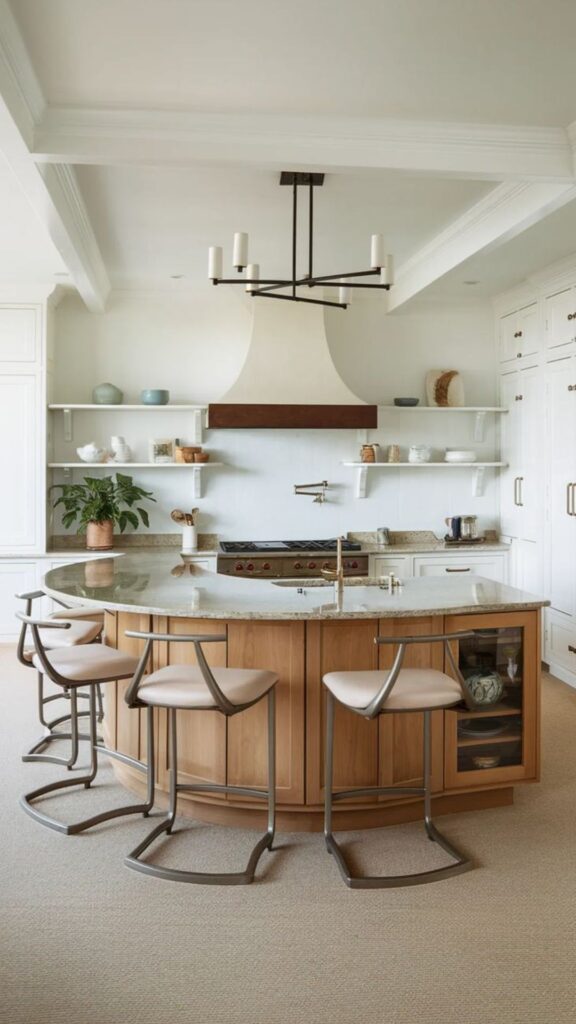
Using two different materials on the island, such as a butcher block prep surface paired with a quartz or stone seating ledge, helps visually separate the cooking zone from the seating zone without changing the floor plan. This is a practical alternative to a full two-tier design when ceiling height or budget doesn’t allow for a raised section. For example, a wood-topped prep area paired with a marble-look quartz overhang gives the island depth and warmth while keeping the seating surface easy to wipe down.
This approach also extends the island’s functional life. Butcher block surfaces can be sanded and refinished over time if they show prep wear, while the seating-side material stays pristine since it sees less cutting and staining. Homeowners get the warmth of natural wood in the cooking zone and the durability of engineered stone where guests actually sit and eat.
A trend worth noting for 2026 renovations: matte-finish quartz in warm taupe and greige tones is increasingly paired with light oak or white oak prep surfaces, replacing the high-gloss white-and-gray combinations that dominated the past decade. This shift reflects a broader move toward warmer, more textured kitchens rather than stark, clinical-looking spaces.
Compact Islands with Fold-Down Seating Extensions:
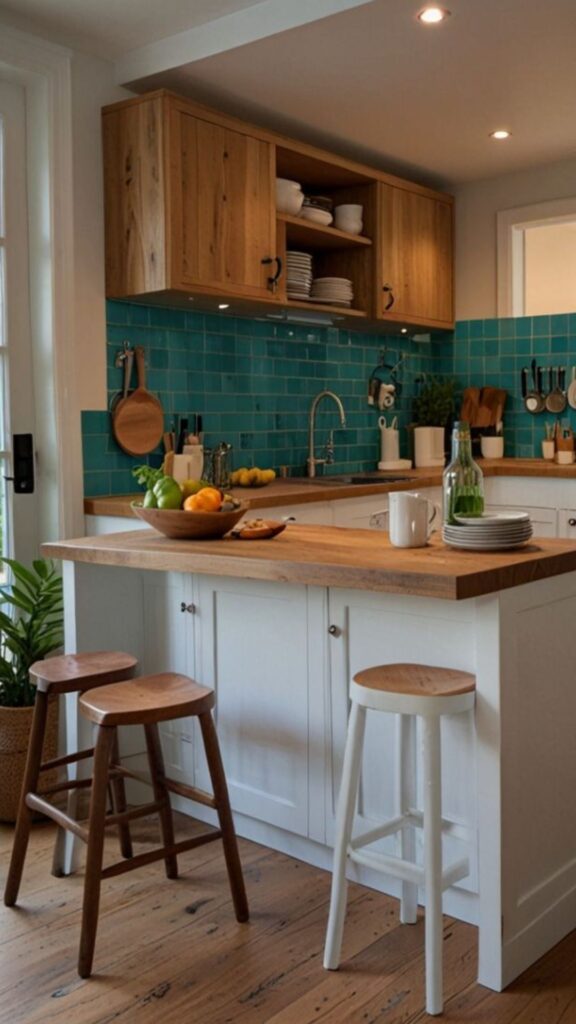
Small kitchens often assume seating isn’t possible, but a fold-down or pull-out extension can add seating only when needed. A hinged leaf attached to one end of the island can fold flat against the cabinetry when not in use and extend outward to create a small two-person seating area during meals. This is one of the most space-efficient kitchen island ideas with seating for apartments, tiny homes, or kitchens under 150 square feet.
The mechanism typically uses a folding bracket rated for at least 50 pounds of even weight distribution, which comfortably supports two place settings and elbows resting on the surface. For instance, a galley kitchen with only 24 inches of spare floor space could still support breakfast seating for two using this method, something fixed islands simply can’t achieve in such tight footprints.
One insight competitors rarely mention: fold-down extensions work best when the hinge is mounted at counter height rather than bar height, since lower height keeps the folded leaf from protruding too far when collapsed. Pairing this with lightweight folding stools that tuck under the island when not in use completes the space-saving setup without sacrificing the option to seat guests occasionally.
A Must Bookmark: Modern Kitchen Design Ideas That Show How a Stunning Kitchen Island with Seating Can Transform Your Whole Kitchen
Islands with Integrated Banquette Seating:
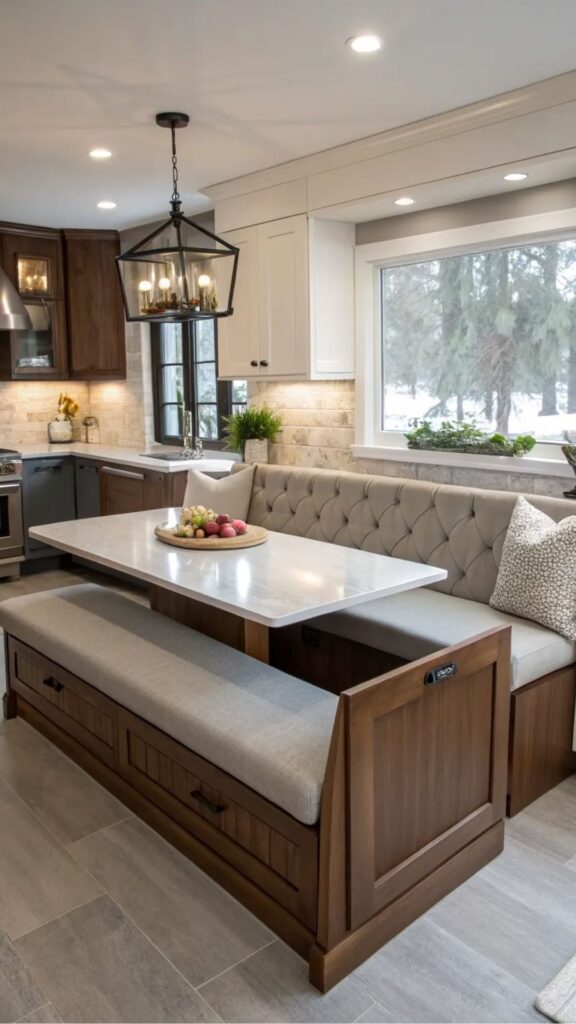
A banquette built directly into one end of the island combines the comfort of upholstered bench seating with the function of an eating nook, all without requiring a separate dining table. This works especially well in open-concept kitchens where the island serves as the primary everyday dining spot rather than a formal dining room. A small banquette might seat three to four people around a fixed or pedestal table extension attached to the island’s end.
Unlike simple bench seating, a banquette typically includes a back cushion and sometimes built-in storage underneath the seat, which is a major advantage in kitchens lacking pantry space. For example, families with young children often find banquette seating safer and more stable than stools, since kids can’t tip backward or slide off as easily during meals.
A practical consideration often missed: banquette seating needs its own dedicated lighting, separate from the island’s general task lighting, to make it feel like a distinct dining zone rather than an extension of the workspace. A pendant or small chandelier positioned directly over the banquette table helps create that separation, even though it’s physically connected to the island structure.
Multi-Level Islands:
For Multigenerational Homes
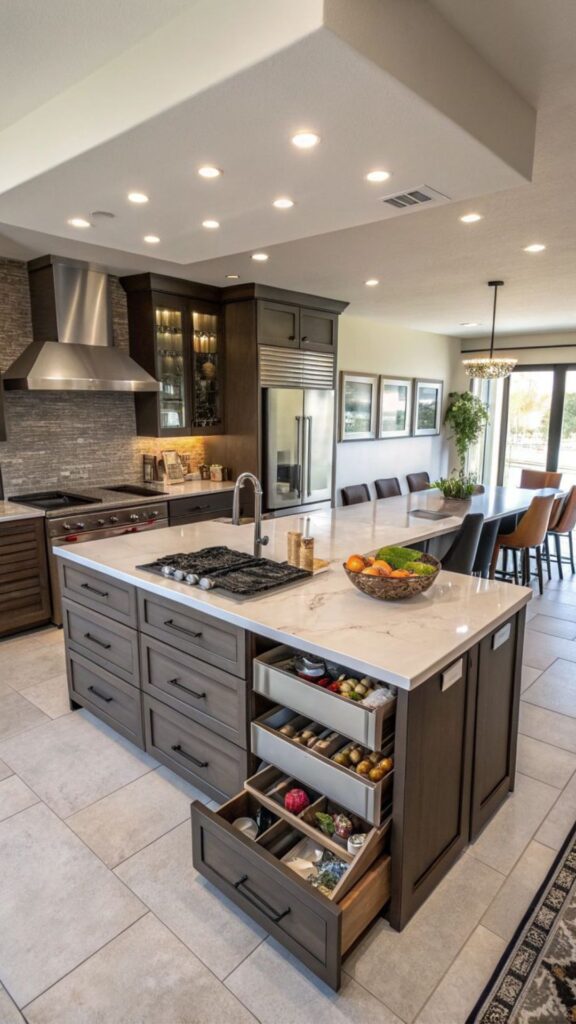
Multigenerational households often need seating that accommodates different ages, heights, and mobility levels at the same island. A multi-level island with two or three distinct height zones, such as a 30-inch table-height section, a 36-inch standard counter, and a 42-inch bar-height ledge, allows everyone from young children to grandparents to use the island comfortably without separate furniture. This is increasingly common in homes built for aging-in-place or households where adult children live with parents.
For example, the 30-inch section can serve as a homework or craft area for kids using a standard chair, while the 42-inch bar section accommodates adults perching for quick meals. This layered approach also means the island can serve three different functions simultaneously, prep, casual dining, and homework, without anyone interfering with another’s space.
This is a forward-looking design choice, since aging-in-place renovations are projected to keep growing as more households support multiple generations under one roof. Building in height flexibility now avoids costly retrofits later, and it signals genuine long-term planning rather than a purely trend-driven layout. Universal design principles, like rounded edges and varied seat heights, are becoming a standard expectation rather than a luxury add-on.
Islands with Hidden or Pull-Out Stool Storage:
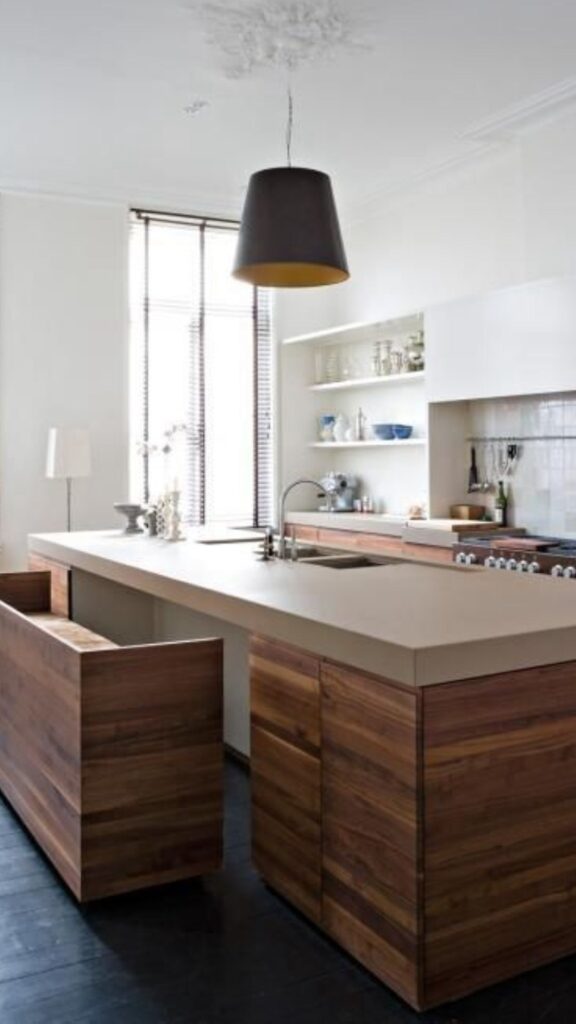
In smaller kitchens, stools left out at all times can clutter the walkway, even when no one is seated. An island designed with a recessed kick space or pull-out stool storage solves this by allowing stools to slide completely underneath the overhang when not in use. This keeps the floor plan visually open and the walkway clear, which matters in kitchens under 200 square feet where every inch of circulation space counts.
For example, backless stools with a slim profile, typically under 16 inches deep, tuck fully beneath a 12-inch overhang without leaving any visible footprint when the kitchen isn’t in active seating mode. This is especially useful in kitchens that serve as a passageway between other rooms, since stools sticking out can become a tripping hazard during regular movement through the space.
A detail rarely covered elsewhere: pull-out stool storage works best when the island’s toe-kick area is built slightly deeper than standard, around 4 to 6 inches instead of the typical 3 inches, to fully accommodate stool legs without forcing people to push stools in at an awkward angle. This small adjustment during the cabinetry planning phase prevents daily frustration once the kitchen is in use.
Dual-Sided Islands:
For Open-Concept Entertaining
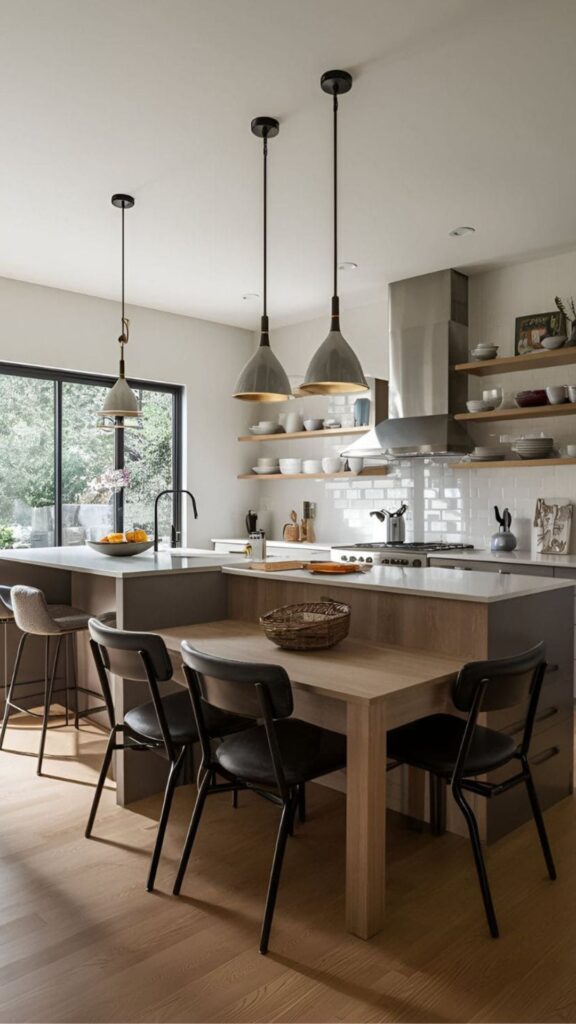
In open-concept homes where the kitchen flows directly into the living or dining area, a dual-sided island with seating on opposite ends serves two rooms at once. One side might face the kitchen for casual breakfast seating, while the other faces the living room, functioning more like a bar-height divider between spaces. This layout maximizes seating capacity, often six to eight seats total, without requiring a larger island footprint.
This design also improves how the island functions during entertaining. While one host is finishing food prep, guests can sit facing the living area, staying engaged in conversation without crowding the kitchen workspace. For example, a dual-sided island might pair a 36-inch standard counter with stool seating on the kitchen side and a 42-inch bar ledge with seating that faces the television or fireplace area.
A nuance often missed: dual-sided seating needs at least 60 inches of total island depth to comfortably support seating on both sides without people sitting back-to-back too closely. Without enough depth, both seating areas feel cramped, defeating the purpose of separating them in the first place. This makes dual-sided islands better suited to larger great rooms than compact open-plan layouts.
Islands with Built-In Booth-Style Corner Seating:
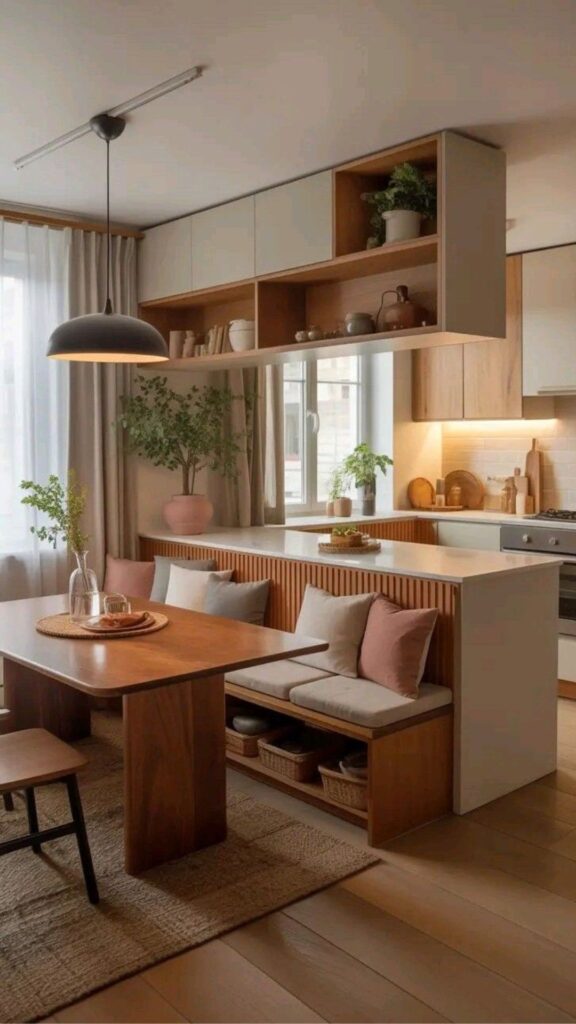
Borrowing from restaurant design, booth-style corner seating attaches an L-shaped upholstered bench to one corner of the island, paired with a small table extension. This creates a cozy, enclosed seating nook that feels distinct from the rest of the kitchen, while still remaining physically connected to the island structure. It’s particularly effective in kitchens with an awkward corner that’s otherwise hard to use functionally.
For example, a corner that might normally house empty floor space can instead seat three to four people in a booth that feels more like a casual restaurant nook than a typical kitchen seating arrangement. This style is popular in farmhouse and transitional kitchens, where the booth’s cushioned seating contrasts nicely with the island’s harder surfaces and adds a layer of textile warmth to the room.
One insight worth highlighting: booth seating attached to an island needs a slightly recessed table height, typically 28 to 30 inches, rather than standard counter height, since people are usually seated in fixed-height bench seats rather than adjustable stools. Getting this proportion wrong is one of the most common mistakes in booth-style island design, often resulting in uncomfortable knee clearance once the cushions are installed.
Stop Scrolling for This: Round Dining Table Ideas That Inspire the Same Warm and Inviting Seating Style for Your Kitchen Island
Statement Islands with Designer Pendant Lighting and Seating:
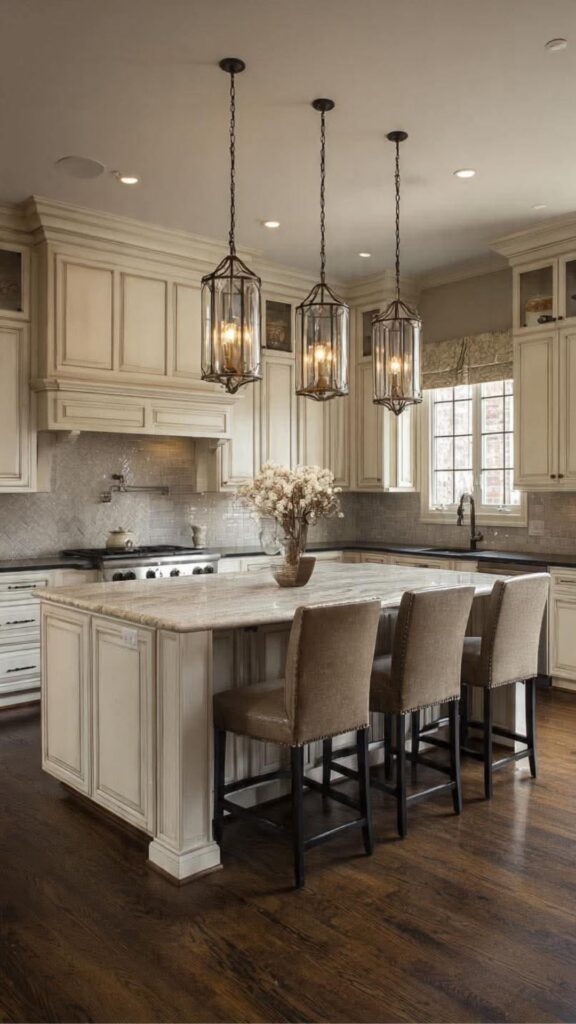
While not a structural seating change, the lighting above an island seating area dramatically affects how usable and inviting that space feels. A row of three pendant lights, spaced evenly above a seating overhang, creates both functional task lighting and a strong visual anchor for the entire kitchen. For example, three 12-inch pendants spaced 24 to 30 inches apart over a 6-foot island provide even light coverage across the full seating row without harsh shadows.
Lighting height matters as much as placement. Pendants hung 28 to 34 inches above the counter surface provide adequate task light for eating and conversation without blocking sightlines across the island when people are seated. This is a frequent oversight in DIY renovations, where pendants are either hung too high to create ambiance or too low, forcing seated guests to duck under the fixture.
A 2026-forward insight: warm-toned, dimmable LED pendants in mixed materials, such as amber glass paired with brushed brass or matte black, are replacing the cooler-toned fixtures common a few years ago. Dimmable lighting also allows the same island seating area to transition from bright task lighting during meal prep to a softer ambiance for evening conversation, extending the functional life of the space throughout the day.
Outdoor-Inspired Islands:
For Indoor-Outdoor Seating Flow
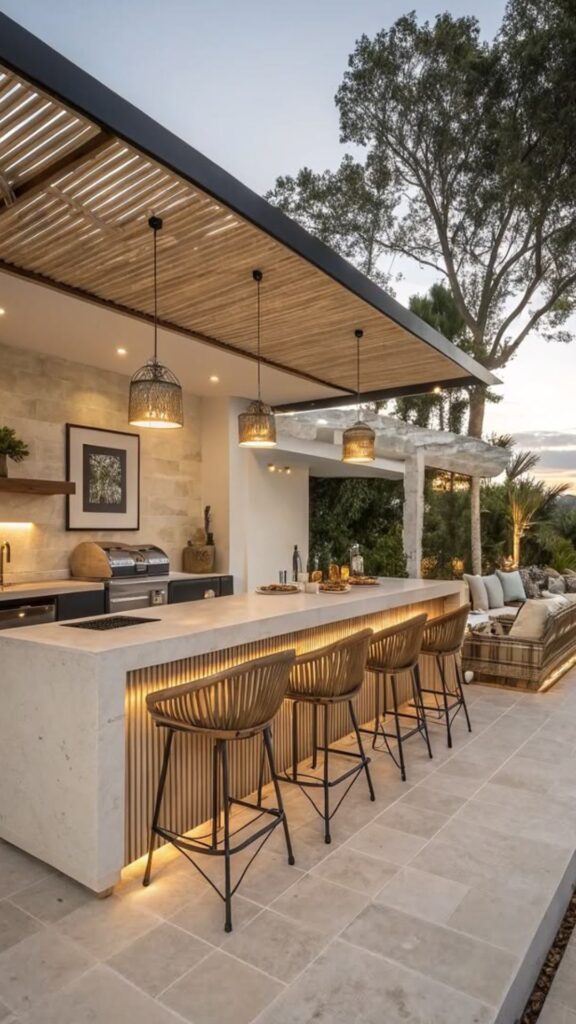
In homes with kitchens opening onto a patio, deck, or covered porch, extending the island’s seating concept toward sliding or folding glass doors creates a seamless indoor-outdoor flow. A seating overhang positioned near the opening allows guests to sit at the island while remaining visually and physically close to the outdoor living space, which is especially valuable in warmer climates or homes designed for year-round entertaining.
For example, a kitchen with a 10-foot multi-slide door leading to a covered patio might position the island’s seating side perpendicular to the opening, so seated guests have a direct sightline outdoors rather than facing into the kitchen. This small positioning choice significantly changes how connected the space feels during gatherings, even though the island itself doesn’t physically move.
This concept is gaining traction as more renovations prioritize blended indoor-outdoor living, particularly in regions with mild climates where outdoor seating can be used most of the year. Pairing the island’s material palette, such as matching stone or matching cabinet tones, with an adjacent outdoor kitchen or bar area creates visual continuity between spaces. This approach future-proofs the kitchen design against the growing demand for flexible, multi-use living spaces rather than strictly separated indoor and outdoor zones.
Conclusion
These 13 kitchen island ideas with seating prove there’s no single “right” layout, only the right fit for your space, household, and lifestyle. From waterfall countertops to booth-style nooks, each option balances comfort, function, and style differently.
The key takeaway: plan seating height, clearance, and traffic flow early, not as an afterthought. Ready to redesign your kitchen? Pick one idea that fits your space best and start sketching your layout today.

Team TrandyVilla is the passionate home decor team behind Trandy Villa, where style meets comfort in everyday living. The team loves transforming simple spaces into beautiful, functional homes through smart ideas, budget-friendly hacks, and modern design trends. Their content focuses on helping readers create homes that feel both stylish and personal without spending too much.