
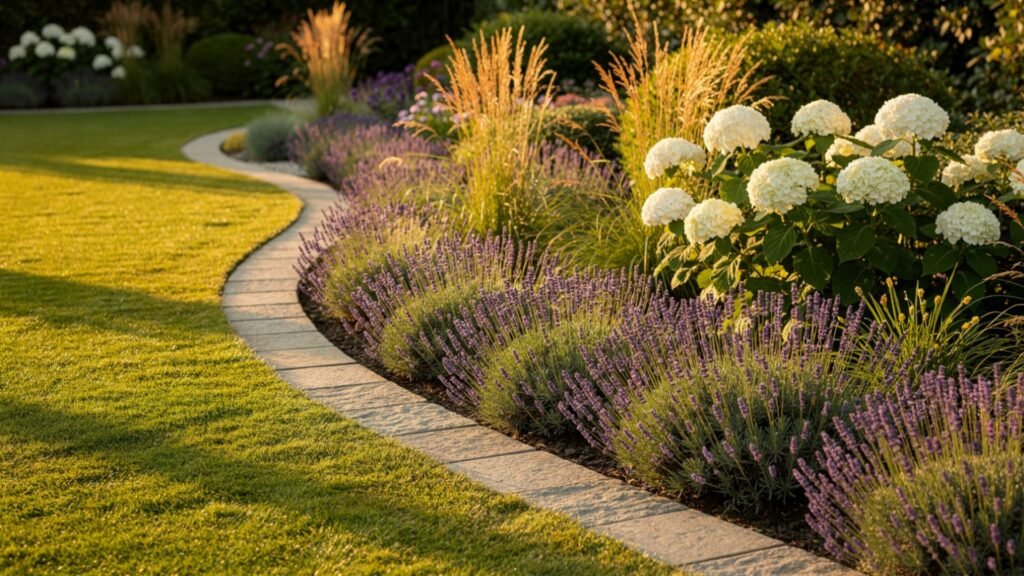
A well-designed garden border ideas is one of the most powerful tools in landscaping. It defines your outdoor space, controls weeds, frames your lawn, and gives your garden a finished, intentional look that no amount of planting alone can achieve.
A Garden Border ideas defines planting areas and creates a clean outdoor layout. Smart Garden Border Ideas improve structure, control weeds, and increase curb appeal. Borders organize flowers, shrubs, and pathways neatly. Good designs also improve maintenance, drainage, and overall garden appearance for every home style.
A beautiful Garden Border ideas gives outdoor spaces a polished and organized appearance every season. Thoughtful edging, layered plants, and decorative materials improve texture, shape, and visual balance. Simple border upgrades create stronger landscape definition while adding color, charm, functionality, and long-lasting style to modern gardens beautifully.
Garden Border Ideas include brick edging, flowers, shrubs, gravel, and natural stone designs. Raised borders improve drainage and add depth to landscapes. Wildflowers and herbs support pollinators and create seasonal beauty. Decorative lighting, textures, and structured layouts improve organization and outdoor comfort throughout the entire year.
Use Classic Brick Edging:
For a Timeless Garden Border ideas
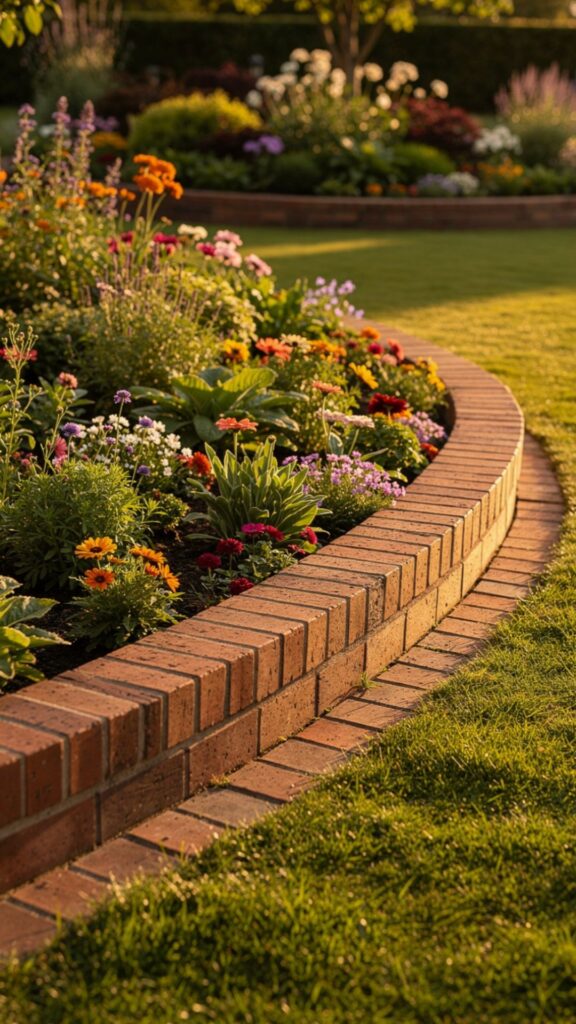
Brick edging is one of the oldest and most enduring garden border ideas materials for good reason. It delivers clean, defined lines between lawn and planting beds, holds its shape through freeze-thaw cycles, and improves with age as it weathers to a warm, rustic tone.
Unlike plastic or metal alternatives, brick feels genuinely permanent it signals that a garden was designed with intention and care. For traditional, cottage, or formal garden border ideas style, it’s almost always the right choice. Installation is more accessible than most gardeners expect. Bricks can be set vertically (soldiers), at an angle (sailors), or horizontally in a trench each giving a slightly different visual effect.
The vertical soldier course creates a taller, more dramatic edge that’s particularly effective at separating lawn from raised beds. Setting bricks at a 45-degree angle produces the classic sawtooth pattern that was popular in Victorian kitchen gardens and is seeing a genuine revival in contemporary heritage-style gardens.
One detail most garden border ideas guide overlook: the mortar question. Dry-set bricks laid without mortar in a compacted sand base are actually preferable to mortared ones in most home gardens. They allow water to drain naturally, are easier to repair if one brick cracks or heaves, and can be repositioned if you want to change the border’s shape in the future.
Mortared edges look slightly neater but lock you into a permanent configuration and can crack along the joints over time. From a long-term maintenance standpoint, brick edging is one of the lowest-effort options available.
Grass runners can occasionally creep over the top, but a quick pass with a half-moon edging tool once or twice a season keeps things sharp. Over decades, the bricks may settle unevenly, but releveling them is a simple weekend project. For gardeners who want a border that essentially takes care of itself, brick remains the benchmark.
Create a Cottage Garden Border with Mixed Perennials:
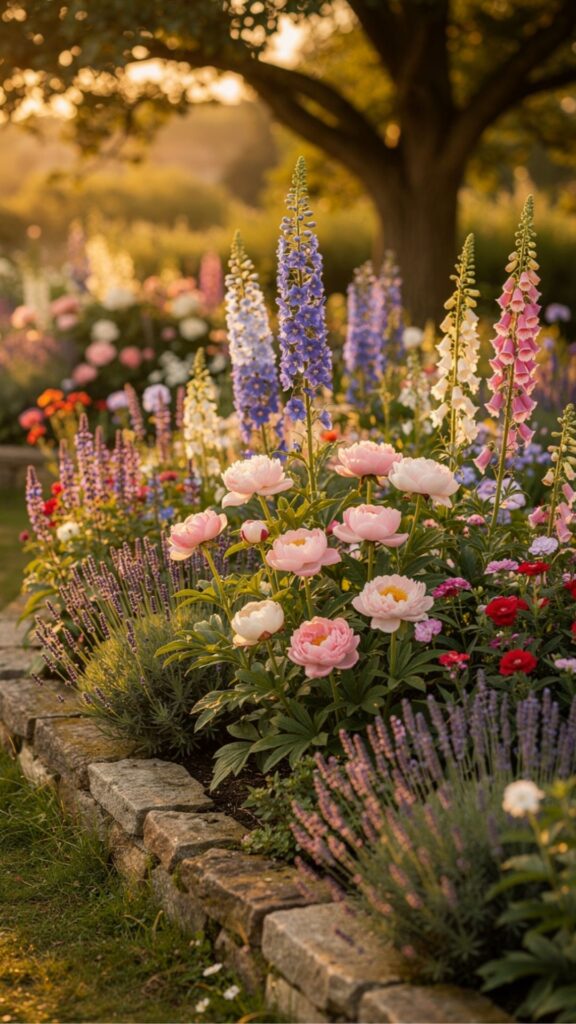
The cottage garden border ideas is perhaps the most romantic style in all of residential garden design. It layers plants of different heights, textures, and bloom times to create a border that feels abundant, slightly wild, and continuously interesting from early spring through late autumn.
Unlike formal borders that rely on symmetry and repetition, the cottage style celebrates a beautiful kind of controlled chaos where plants are allowed to self-seed, lean into each other, and create combinations that no designer could have planned.
The structural key to a successful cottage garden border ideas is the height gradient. Tall plants delphiniums, foxgloves, verbena bonariensis, or ornamental grasses go at the back. Mid-height plants like salvia, echinacea, peonies, and geraniums fill the middle layer.
Low growers alchemilla mollis, campanula, or creeping thyme tumble along the front edge. This three-tier structure creates depth and ensures that every plant is visible rather than swallowed by its neighbors. Bloom succession is the detail that separates an ordinary mixed border from a truly great one. Plan so that as one plant finishes flowering, another is coming into its peak.
A simple three-season framework: bulbs (tulips, alliums) in spring; roses, salvias, and geraniums in early summer; echinacea, rudbeckia, and sedums in late summer and autumn. Leaving seedheads standing through winter adds structure and feeds birds a practice that’s both ecologically sound and increasingly fashionable in naturalistic garden design.
One insight most cottage garden guides miss: the importance of a few anchor plants with strong architectural form. Without them, even a beautifully planted cottage border can look like a blur of color rather than a designed space.
A clipped box ball, a standard rose, or a tall ornamental grass repeated at intervals gives the eye resting points and prevents visual chaos. It’s the difference between a border that photographs well from ten feet away and one that rewards close inspection and holds its structure across the entire season.
Explore This: Rooftop Garden Ideas That Take Your Garden Border Ideas to a Whole New Level.
Try Low-Maintenance Evergreen Shrub Borders:
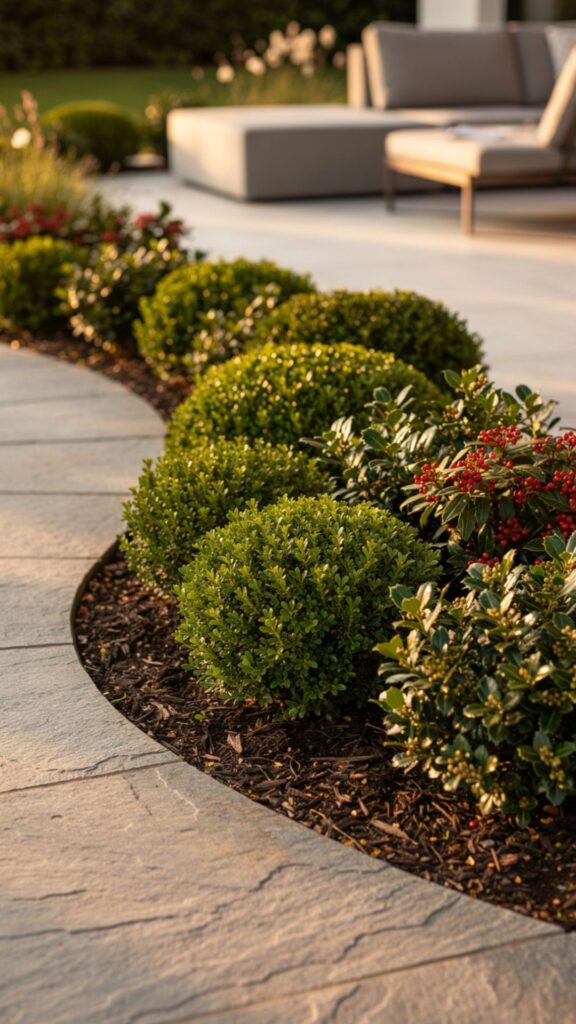
Evergreen shrub borders are the garden world’s best-kept secret for homeowners who want year-round structure without proportional effort. Unlike perennial borders that die back in winter and require cutting, splitting, and replanting on a regular cycle, evergreen shrubs maintain their shape, color, and ground-covering density through all four seasons.
For gardeners with limited time, limited mobility, or simply limited interest in high-maintenance planting, an evergreen border delivers maximum return on minimum ongoing investment. The plant palette for evergreen borders is far more diverse than most people realize. Beyond the ubiquitous box (buxus) which has faced significant pressure from box blight disease there are excellent alternatives: ilex crenata (Japanese holly),
pittosporum, euonymus, sarcococca (Christmas box, which also perfumes winter air beautifully), osmanthus, and choisya (Mexican orange blossom, which also flowers). Mixing two or three of these species with contrasting leaf sizes and textures creates a border that’s visually interesting without relying on flowers for its appeal.
For front garden border ideas and street-facing beds, evergreen shrubs also provide privacy, noise reduction, and a degree of security benefit that purely herbaceous plantings cannot. A dense, knee-high evergreen border along a property boundary creates a clear visual and physical demarcation that also reduces the risk of casual boundary encroachment over time.
These are practical benefits that rarely appear in gardening articles but matter enormously to homeowners in urban and suburban settings. The pruning schedule for most evergreen shrubs is surprisingly simple: one or two light clips per year typically in late spring after any frost risk has passed and again in late summer keeps them looking neat without demanding the deep knowledge that topiary or formal hedging requires.
A cordless hedge trimmer makes the job fast and easy. For newer gardeners especially, establishing an evergreen shrub border in the first year gives the garden structure it can grow around for decades to come.
Install Metal Garden Edging:
For a Modern, Sleek Look
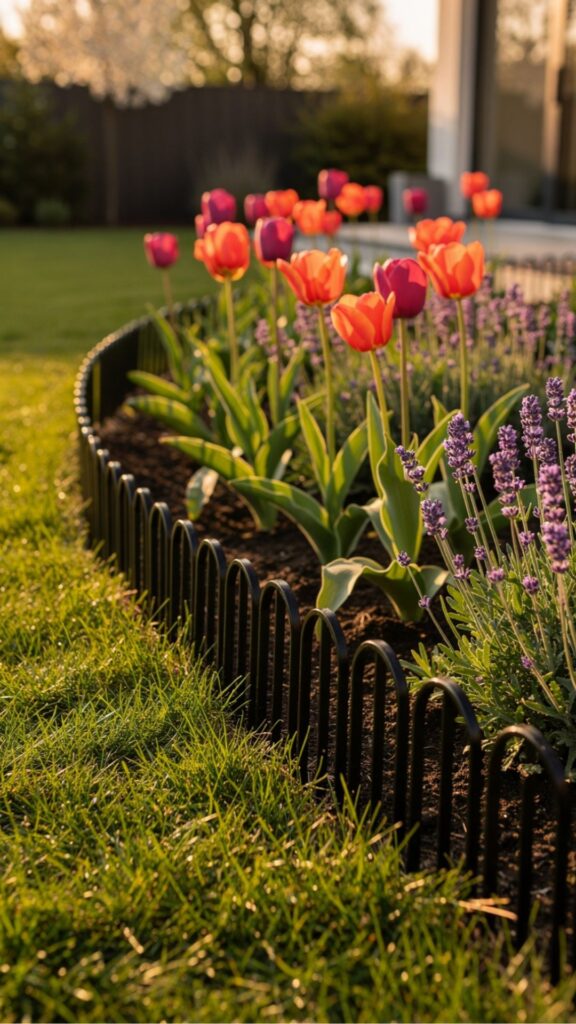
Metal garden edging particularly Corten steel and powder-coated aluminum has become one of the defining features of contemporary landscape design over the past decade. Where plastic edging flexes, warps, and fades, and where concrete crumbles and stains, metal holds a razor-sharp, perfectly consistent line indefinitely.
It’s the edging of choice for professional landscapers working on high-end residential projects, and increasingly accessible to home gardeners through online suppliers at prices that have dropped significantly. Corten steel (also called weathering steel) develops a distinctive rust-colored patina that deepens over time without the steel actually degrading.
This warm, earthy tone bridges beautifully between contemporary architecture and naturalistic planting it looks equally at home next to ornamental grasses and structural perennials as it does alongside polished concrete and glass. The patina also means Corten edging essentially finishes itself; no painting, sealing, or maintenance is required once installed.
Powder-coated aluminum is the alternative for gardeners who want a color-consistent edge. Black is the most popular choice it creates a sharp visual boundary that makes adjacent lawn and planting colors pop but dark green, grey, and even warm bronze finishes are available.
Aluminum is lighter than steel, making installation easier, and it won’t rust if the powder coating chips. For raised garden beds with geometric shapes, aluminum edging is particularly useful because it bends cleanly into straight lines and gentle curves. Installation depth matters more than most suppliers explain. Metal garden edging should be installed with at least two-thirds of its height below soil level.
This prevents the edge from being pushed up by frost heave, maintains stability against root pressure from lawn grass, and creates enough above-ground height to serve as an effective barrier. A rubber mallet and a long spirit level are the only tools you really need the actual installation process takes less time than most gardeners expect.
Design a Wildflower Garden Border:
For Pollinators
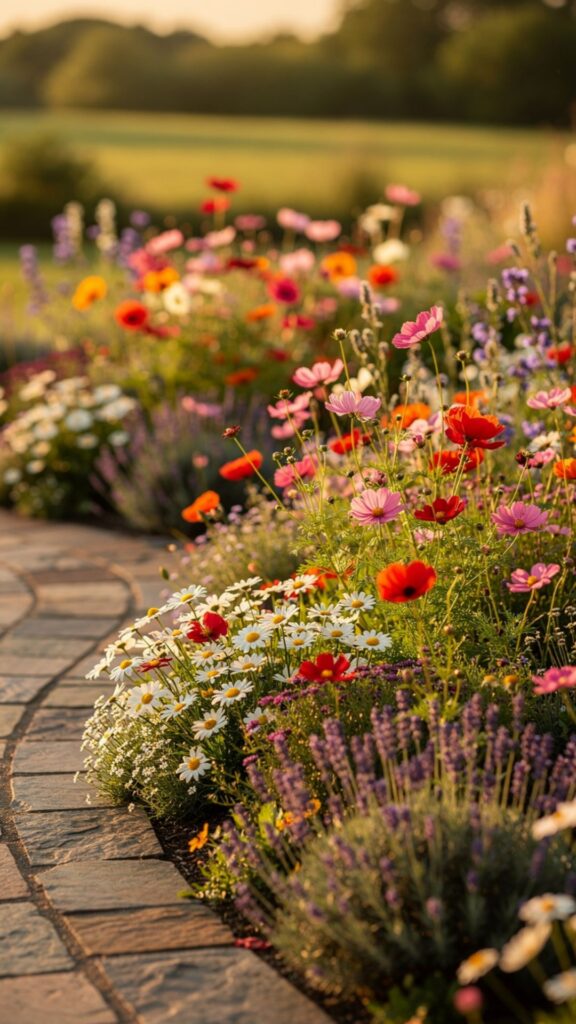
Wildflower borders are the fastest-growing trend in residential garden design right now and for reasons that go far beyond aesthetics. A well-sown wildflower border actively supports declining pollinator populations (bees, butterflies, hoverflies, and moths), reduces garden maintenance compared to traditional planted borders, costs very little to establish from seed, and produces a genuinely stunning display of color from late spring through early autumn. In short, it’s one of the most ecologically valuable garden border ideas available.
The key to a successful wildflower border is soil preparation specifically, making the soil less fertile, not more. This counterintuitive step is where most first attempts fail. Wildflowers evolved on poor, well-drained soils where vigorous grasses and weeds can’t dominate.
Sowing directly into rich, amended garden soil means coarse grasses outcompete the delicate wildflower seedlings almost immediately. Instead, remove the top layer of topsoil, expose the lower subsoil, rake it level, and sow directly into that. The results are dramatically better. Seed mix selection is critical. Annual mixes (poppies, cornflowers, chamomile, cosmos) flower spectacularly in their first year but must be resown annually.
Perennial mixes (oxeye daisy, knapweed, betony, scabious, yarrow) take longer to establish often two full growing seasons but then largely self-sustain year after year with minimal intervention. The best approach for a border is a combined annual and perennial mix: the annuals provide a brilliant first-year display while the perennials establish below the surface and take over from year two onward.
One detail competitors rarely mention: mowing timing is as important as the planting itself. Cut wildflower borders once per year, in autumn after the seedheads have dispersed never in spring or summer when plants are actively growing and flowering.
Rake off all cuttings immediately after mowing; leaving them to decompose adds organic matter to the soil, which encourages the weedy plants you’re trying to exclude. This once-a-year cut is genuinely the only maintenance a well-established wildflower border needs.
Use Natural Stone:
For Rustic Garden Borders
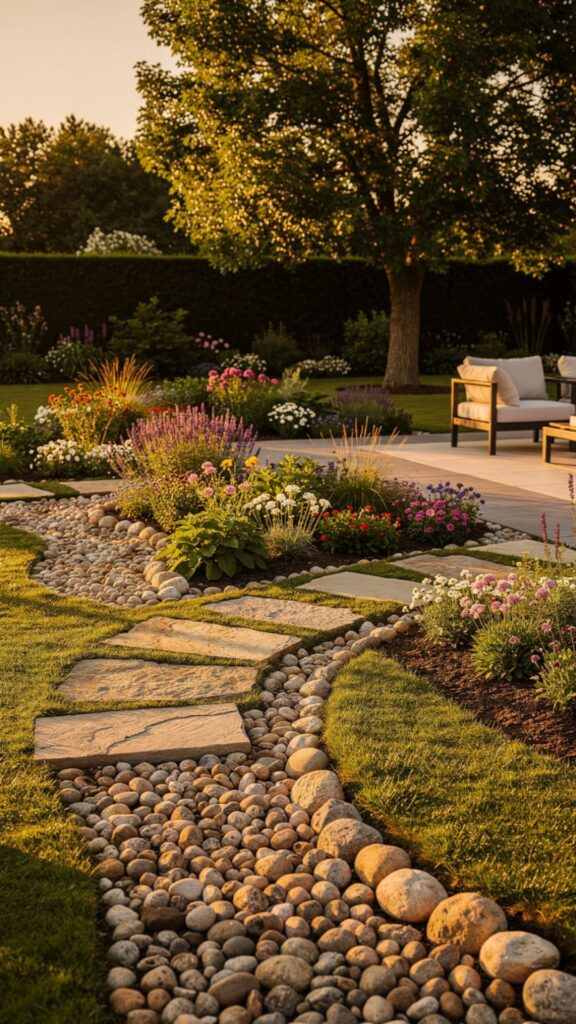
Natural stone edging brings a quality to garden border ideas that no manufactured material can replicate: genuine geological character. Every piece of natural stone is unique in shape, color, and texture, which means a stone-edged border has a built-in organic quality that looks like it evolved with the garden rather than being installed in an afternoon.
For country gardens, woodland gardens, Mediterranean-style landscapes, or any space with a naturalistic planting philosophy, stone edging is almost always the most harmonious choice. The most commonly used stones for garden edging include sandstone, slate, limestone, granite, and cobblestone, each with distinct aesthetic and practical properties.
Sandstone is warm-toned and slightly porous, developing a beautiful weathered look as mosses and lichens colonize its surface a process that actually improves its appearance in naturalistic gardens. Slate splits cleanly into flat pieces that can be set on edge for a modern-rustic look. Granite cobbles, set tightly together, create a robust border that handles heavy foot traffic without any risk of movement or cracking.
Sourcing local stone wherever possible offers three advantages that most garden design guides never articulate: it’s geologically appropriate for the landscape (limestone naturally occurring in your area looks more correct beside local clay soil than imported tropical stone), it reduces transportation costs significantly, and it supports regional quarrying businesses rather than imported stone supply chains.
Many local quarries will sell offcuts and irregular pieces at prices far below premium landscape suppliers and these irregular pieces often look more natural in a garden border ideas setting anyway. One creative application: using larger, flat-topped stones set at ground level as a combination edging and stepping-stone path along the front of a border.
This creates a practical maintenance path you can step onto the stones to reach plants without compressing the soil in the bed while also defining the border edge. It’s a design technique borrowed from traditional Japanese garden design, where every element serves multiple purposes simultaneously.
Plant a Low-Growing Hedge as a Living Garden Border:
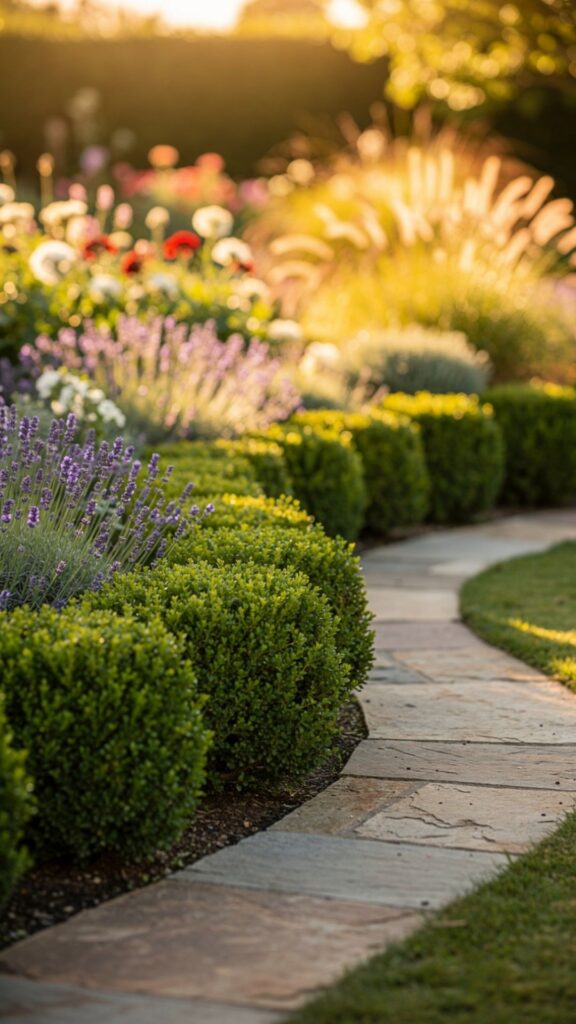
A living border a low, clipped hedge that defines a planting bed brings something no hard material can: biological life, seasonal change, and a connection between the garden’s structure and its planting. Low hedges have been used to define garden border ideas space since formal gardens first appeared in Renaissance Europe, but they’re equally relevant in modern landscape design when the right plant species and scale are chosen. At knee height or below, a clipped hedge border reads as structured without feeling imposing.
Box (Buxus sempervirens) was the traditional choice for low hedge borders, and for centuries it was unrivaled for its fine texture, slow growth, and tolerance of tight clipping. However, the spread of box blight (Cylindrocladium buxicola) and box tree caterpillar across much of Europe and North America has made box a riskier investment for new plantings. Ilex crenata ‘Dark Green’ is the closest substitute in terms of appearance and growth habit.
Lonicera nitida (box honeysuckle) is faster-growing and more tolerant of heavy pruning. Lavender offers a softer, more fragrant alternative for Mediterranean-style gardens. Spacing is the detail most guides get wrong. For a dense, gapless hedge border, plant more closely than you think necessary.
Most low-hedging plants need to be spaced at roughly 30cm (12 inches) apart for ilex and box, or 45cm (18 inches) for lavender, to produce a solid line within two to three growing seasons. Plant too far apart and you’ll spend years waiting for gaps to fill in a frustrating experience that makes the living border feel like a failure before it’s had a chance to establish.
One forward-looking insight: the trend in contemporary garden design is moving toward informal clipped shapes cloud pruning, undulating top lines, or lollipop-shaped standards rather than the rigid flat-top hedge of previous generations.
These looser shapes are actually more forgiving to maintain and look more dynamic in photographs, which matters as garden border ideas design becomes increasingly social-media-influenced. A low undulating hedge border, combining different species clipped to slightly different heights, is a genuinely fresh take on this classic idea.
Add a Raised Garden Border:
For Better Drainage and Depth
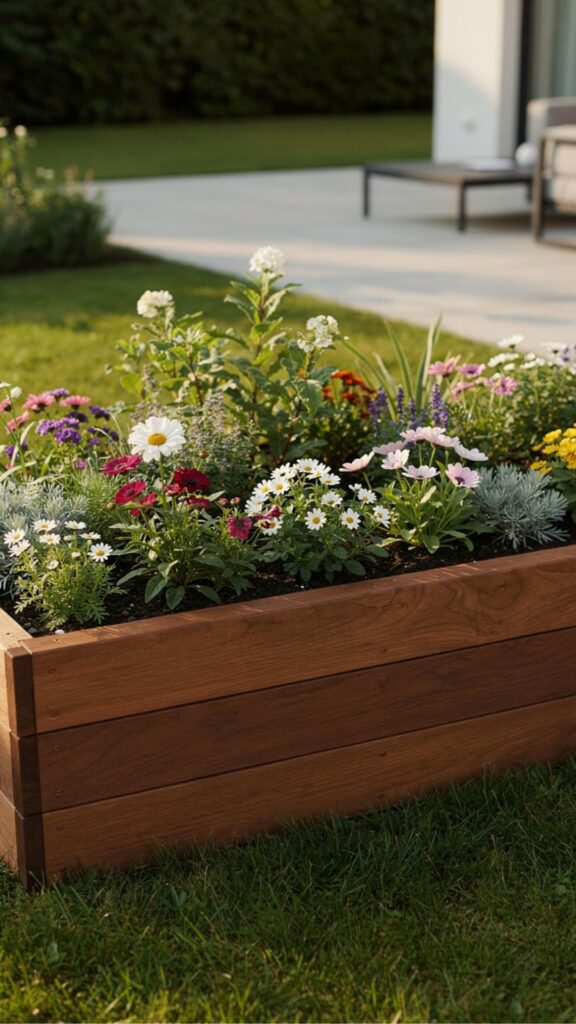
Raised garden border ideas where the planting bed sits several inches or feet above the surrounding ground level solve several practical gardening problems simultaneously. They improve drainage dramatically, which is critical on heavy clay soils where waterlogging kills plant roots over winter.
They warm up earlier in spring, extending the growing season. They bring plants closer to eye level, making them easier to tend, appreciate, and photograph. And they create a strong visual sense of separation between lawn and planting that flat-level borders simply can’t achieve.
The material used for the raised edge defines the style of the entire border. Reclaimed railway sleepers (railroad ties) are the most popular choice for rustic and contemporary gardens they’re incredibly robust, add substantial height, and have a warm, textural quality that weathers beautifully.
However, new pressure-treated timber is often a more practical choice because it doesn’t leach the same oils that old creosote-treated sleepers can. Galvanized steel or Corten raised bed frames offer a contemporary alternative with sharp, modern lines.
Height selection is a decision that deserves more thought than most guides give it. A shallow raised border (15–20cm / 6–8 inches) improves drainage but doesn’t add significant visual impact. A medium-height border (45–60cm / 18–24 inches) is the sweet spot for most gardens it’s tall enough to create genuine architectural presence.
Deep enough to grow almost any perennial, shrub, or vegetable comfortably, and low enough that you can reach the centre of a standard-width bed without bending awkwardly. Taller borders (above 75cm) function more like garden walls and require proper footing in some cases.
One often-overlooked benefit of raised garden border ideas: accessibility. For gardeners with mobility challenges, back problems, or age-related limitations, a raised border at 60–75cm height allows most gardening tasks to be done from a seated position either on the edge of the frame itself or from a chair.
This future-proofs a garden in a way that matters enormously as gardeners age. Building raised borders from the start is far easier than retrofitting them later, making it a smart investment for any gardener over forty.
See The Magic: Small Courtyard Garden Ideas That Inspire Creative and Stunning Garden Border ideas Style.
Create a Gravel and Pebble Garden Border:
For Low Maintenance
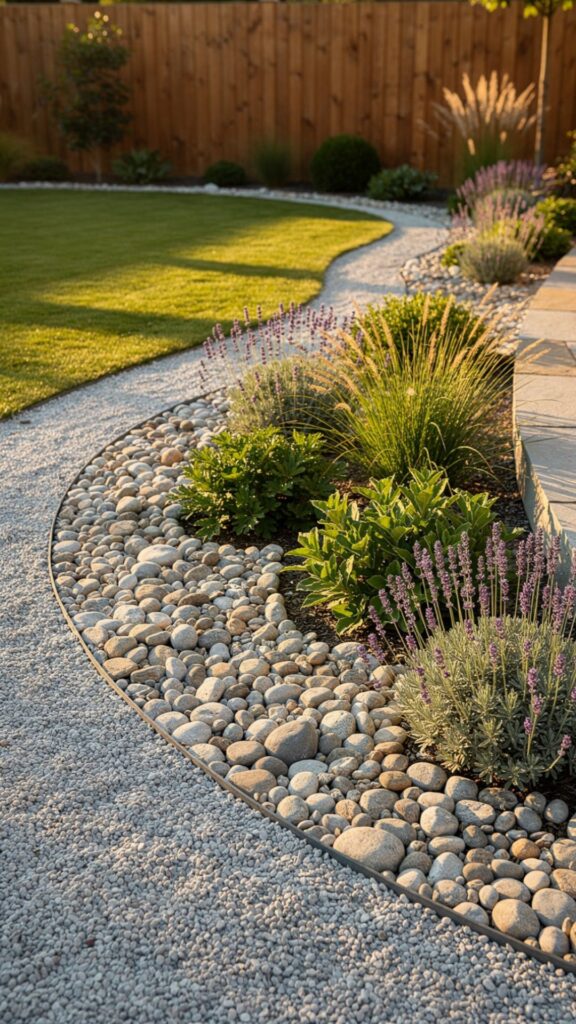
Gravel and pebble borders occupy a uniquely practical space in garden border ideas design: they suppress weeds, retain soil moisture, improve drainage, reflect heat to warm adjacent plants, and require virtually no maintenance once properly installed.
For gardeners in hot, dry climates or simply those who want a beautiful garden that doesn’t demand constant attention a gravel border around planting beds is one of the most intelligent choices available. It’s also deeply compatible with the drought-resistant, Mediterranean-inspired planting styles that are becoming increasingly relevant as summers grow hotter.
Material selection is more nuanced than simply choosing between gravel and pebbles. Pea gravel (small, rounded stones, typically 10mm) is the most versatile: it’s comfortable to walk on, drains quickly, and provides a neutral backdrop for planting.
Angular crushed slate adds color interest plum-colored or blue-grey slate against silver-leaved plants like artemisia or stachys byzantina creates striking combinations. Large white or cream pebbles make small borders appear larger by reflecting light but can look stark without careful planting to soften them.
The installation detail that determines long-term success is the membrane layer or lack of it. Many gardeners install landscape fabric beneath gravel expecting it to suppress weeds permanently. In practice, wind-blown soil deposits on top of the fabric within a few seasons, creating the perfect growing medium for weeds to establish on the surface.
A better approach is to lay gravel directly onto well-prepared, firm soil (after removing all perennial weed roots) and apply a deeper layer at least 7–10cm (3–4 inches) which suppresses weeds through depth alone and can be topped up annually.
For front garden border ideas, gravel and pebble surfaces carry an additional practical benefit that’s rarely mentioned: they act as a security deterrent. The crunching sound of footsteps on gravel is difficult to muffle, which is why gravel paths and borders around the perimeter of a home are actively recommended by some security consultants as a passive home security measure. It’s an unexpected intersection of garden border ideas design and home protection that makes the gravel border even more compelling.
Design a Colorful Annual Flower Border:
For Seasonal Impact
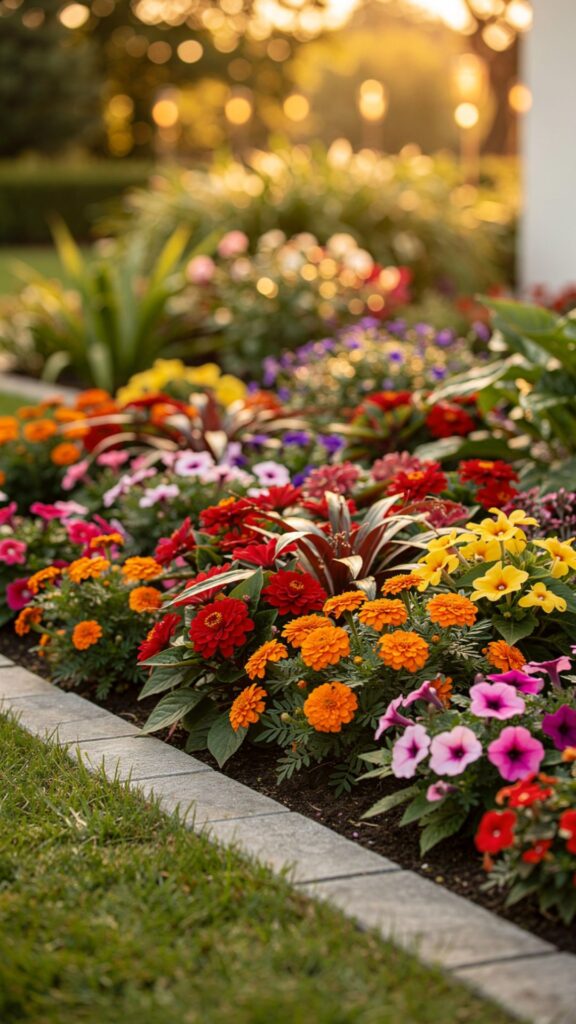
Annual flower borders offer something no other garden border ideas can match: complete creative reinvention every single year. Because annuals complete their entire life cycle germination, growth, flowering, and seed production in a single growing season, you’re never locked into last year’s choices.
Each spring is a fresh canvas. This makes annual borders particularly appealing to gardeners who enjoy experimentation, who want high-impact color for specific events (a summer party, a wedding at home), or who are still developing their planting aesthetic and want to test ideas before committing to permanent plantings.
The plant palette for annual borders has expanded remarkably in recent years. Beyond the traditional marigolds, petunias, and impatiens still excellent performers there are now exceptional annual varieties developed specifically for cutting gardens that translate beautifully into borders: ‘Apricot Sprite’ zinnias, ‘Black Knight’ cosmos, ‘Giant Imperial’ larkspur, celosia in flame and velvet shades, and the spectacular annual dahlias that rival their perennial cousins in flower size and impact.
These newer introductions tend to be more sophisticated in color and form, and they photograph extraordinarily well. Color theory matters more in annual borders than in any other garden border ideas context because the effect is concentrated and intentional rather than evolved over time. A monochromatic border all shades of one color, for example deep purples through lilacs through soft mauves creates an elegant, gallery-like effect.
A hot border mixing oranges, reds, and deep yellows feels vibrant and energetic. A cool pastel border of whites, soft pinks, and pale blues reads as romantic and restful. Choosing a deliberate color story before buying plants prevents the mixed-up, visually chaotic result that many annual borders unintentionally produce.
One practical insight most annual border guides skip: the key to continuous color is deadheading combined with succession sowing. Removing spent flowers before they set seed signals the plant to produce more blooms rather than directing energy into seed production.
For many popular annuals (zinnias, cosmos, sweet peas, marigolds), weekly deadheading can extend the flowering period by six to eight weeks. Sowing a second batch of seeds six weeks after the first gives you replacement plants ready to go in as first-sown plants begin to decline in late summer a technique professional garden designers use in public planting schemes.
Add a Bamboo or Woven Willow Border Edge:
For a Natural Look
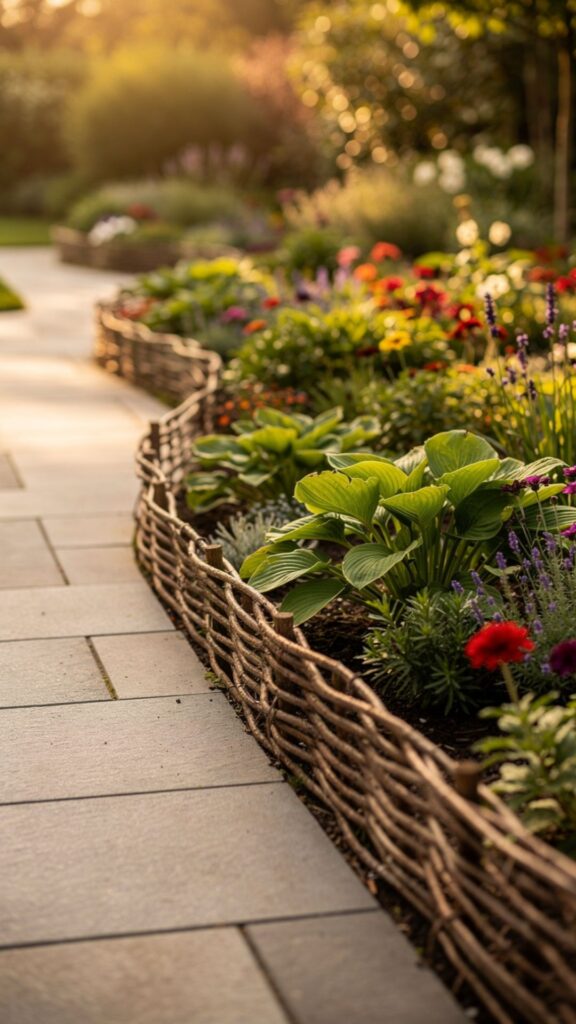
Natural woven edging materials bamboo rolls, woven willow hurdles, and hazel panels bring a warmth and handcrafted quality to garden border ideas that manufactured materials simply can’t replicate. They’re particularly effective in cottage gardens, woodland gardens, vegetable gardens, and any space where a natural, slightly rustic aesthetic is the goal.
Unlike rigid edging materials, woven panels have a gentle visual softness that connects the hard boundary of the border edge to the living plants within. Bamboo roll edging is the most accessible option, widely available at garden border ideas centers and online in a range of heights from 30cm to 120cm. It installs quickly simply unroll alongside the border edge and stake at intervals and creates a clean, consistent line.
The natural tan color of bamboo weathers to an attractive silver-grey over two to three seasons. For vegetable gardens especially, bamboo edging creates a pleasantly defined, productive-looking space that feels organized without being sterile. Woven willow hurdles are the premium version of this concept.
Traditionally made by weaving freshly cut willow shoots around upright stakes, they create panels with visible texture, variation, and genuine craft quality. Some willow hurdle makers use live willow, which can actually take root and begin to grow creating a truly living border edge that changes with the seasons.
This living willow technique is one of the most genuinely innovative garden border ideas available and produces results that become more beautiful and more structurally interesting every year. The honest limitation of natural woven edging is longevity. Even treated bamboo and willow will eventually degrade typically within five to eight years for bamboo, somewhat longer for willow.
However, this isn’t necessarily a disadvantage. The natural decomposition of these materials returns organic matter to the soil, and the relatively short lifespan gives you a natural opportunity to redesign the border’s layout without the effort of removing a permanent hard edge. For gardeners who enjoy evolving their spaces, that flexibility has real value.
More Check: Whimsical Garden Ideas That Perfectly Complement Your Beautiful Garden Border Design.
Use Recycled and Upcycled Materials:
For Creative Garden Borders
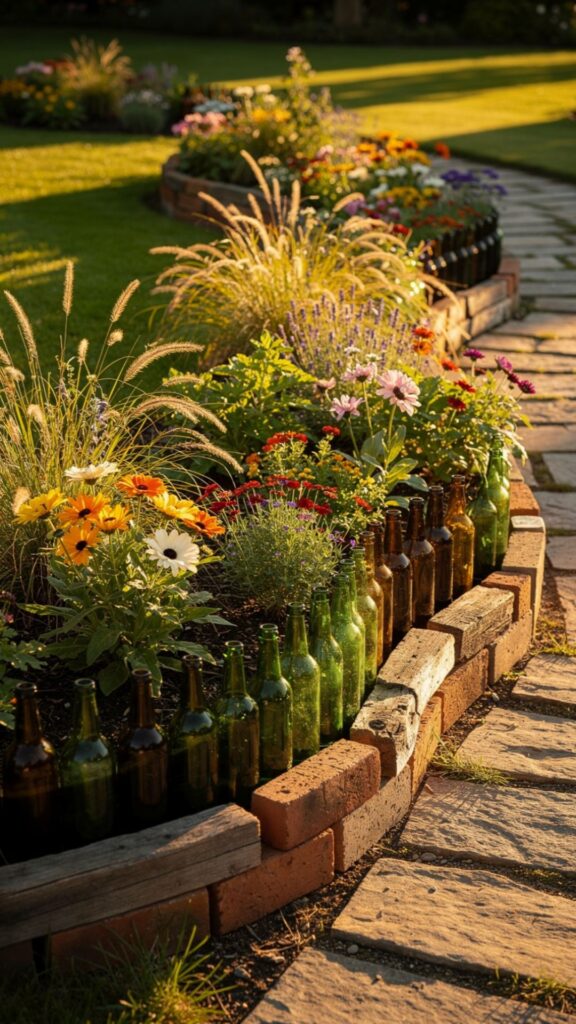
Garden border ideas are one of the most forgiving places to experiment with upcycled and repurposed materials because the edging is partially buried, visually framed by plants, and viewed from a distance where minor imperfections disappear.
Recycled wine bottles (set neck-down in the soil for a jewel-like effect), salvaged roof tiles set on edge, old terracotta pipes, reclaimed bricks in unusual colors, vintage cast-iron railings, or even split logs from a fallen tree all can create genuinely original border edges that reflect personality and resourcefulness.
The wine bottle border deserves specific attention because it consistently produces reactions of genuine delight from garden visitors. Set the bottles with their necks pushed into the soil and bases pointing skyward, the bottoms catch and refract light beautifully particularly blue, green, and brown glass.
When sunlight hits them at low angles in the morning or evening, the effect is genuinely striking. A full wine bottle border requires more bottles than most people expect (roughly 15–20 per meter of border), but the collection process becomes a pleasantly social challenge.
Salvaged ceramic and clay roof tiles are a particularly underrated edging option. Their curved profile, when set on edge alternating direction, creates the classic scalloped edging pattern that was used in Victorian kitchen gardens and it’s currently seeing a significant revival in heritage-inspired garden border ideas design.
Salvage yards often sell broken or irregular tiles for a fraction of the cost of new garden edging materials, and the slight variation in weathering across different tiles actually improves the overall effect. One consideration most upcycled garden border ideas articles overlook: material safety.
Some salvaged materials particularly older railway sleepers treated with creosote, painted wood that may contain lead-based paint, or industrial materials that could have contaminated uses are genuinely not safe near food-growing areas. In decorative borders away from vegetables, they’re generally fine, but it’s worth checking the provenance of any industrial salvage before installing it in a kitchen garden or anywhere that children play regularly.
Conclusion
The right garden border ideas can elevate your entire outdoor space adding structure, color, and personality while making your garden easier to manage and more rewarding to spend time in. Whether you choose the timeless elegance of brick, the ecological generosity of a wildflower border, or the functional beauty of a herb edge.
The key is matching the idea to your garden’s specific style, your available time, and your long-term vision. Start with one border this season, implement it well, and let it inspire the rest. Your garden and everyone who sees it will notice the difference.

Team TrandyVilla is the passionate home decor team behind Trandy Villa, where style meets comfort in everyday living. The team loves transforming simple spaces into beautiful, functional homes through smart ideas, budget-friendly hacks, and modern design trends. Their content focuses on helping readers create homes that feel both stylish and personal without spending too much.