
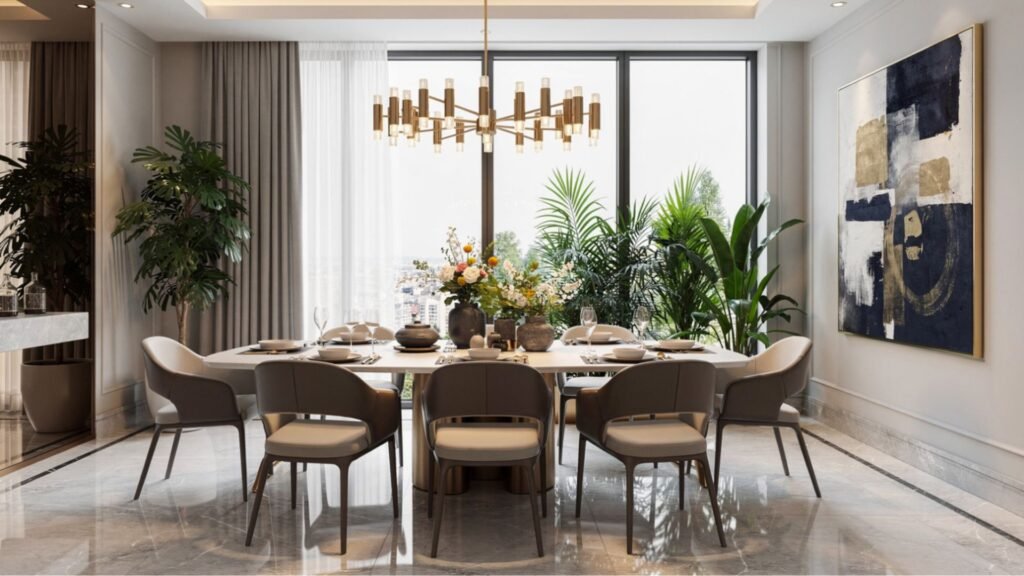
Your dining room is more than just a place to eat it’s where memories are made, conversations flow, and your home’s personality shines. Yet, many homeowners treat it as an afterthought, choosing generic furniture and leaving walls bare. The truth is, a well-decorated dining room can increase the perceived value of your entire home, improve your mood at mealtimes, and even encourage longer, more meaningful family gatherings.
Dining room decor improves the style, comfort, and atmosphere of a dining space with furniture, lighting, colors, and decorative details. Dining room decor ideas help create a welcoming area for meals and gatherings. Smart layouts, textures, and accessories make the room feel organized, elegant, and functional every day.
Dining room decor creates a warm and inviting space that supports family meals, conversations, and entertaining guests with comfort and style. Thoughtful lighting, coordinated furniture, wall art, and soft textiles improve the room’s appearance. A balanced design also adds personality, comfort, and visual harmony to everyday dining experiences.
Dining room decor ideas focus on beauty, functionality, and personal style in modern homes. Statement lighting adds warmth and elegance. Area rugs, mirrors, plants, and wall art improve texture and visual depth. Comfortable seating, layered accessories, and cohesive color palettes create a practical and stylish dining environment for daily use.
Choose a Focal Point Before Anything Else:
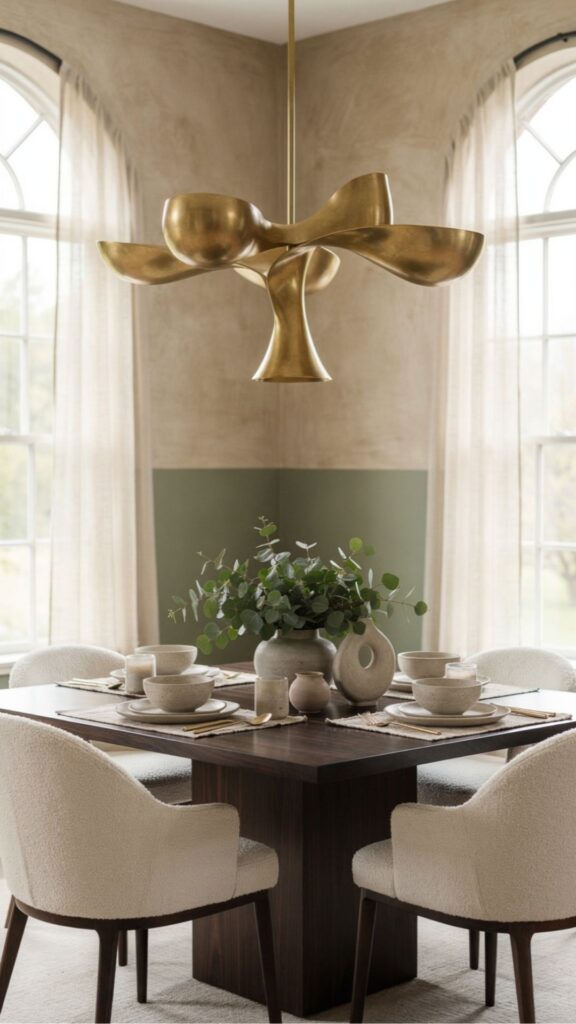
Every great dining room decor starts with a focal point one design element that commands attention when you walk into the room. This could be a dramatic chandelier, a statement wall with bold wallpaper, an oversized piece of art, or even a beautifully crafted dining table itself. Without a focal point, a room feels visually scattered no matter how many expensive pieces you add.
Interior designers consistently emphasize that the focal point anchors your entire decorating scheme. It tells you what colors to pull, what scale of furniture to use, and how to balance the rest of the room. For example, if you choose a navy blue accent wall as your focal point, you can pull in gold hardware, warm wood tones, and cream upholstery the wall does the heavy lifting for you.
A practical tip: before buying a single piece of decor, stand in your dining room doorway and ask yourself, “What should my eye go to first?” If you can’t answer that, your room lacks direction. Once you define the focal point, every other decision becomes easier and more cohesive. This single step separates rooms that look “designed” from rooms that just look “decorated.”
What competitors miss: the focal point doesn’t have to be expensive. A simple DIY shiplap wall painted in a deep hue can anchor a dining room decor just as powerfully as a $2,000 art piece if it’s done with intention and scale.
Get the Dining Room Lighting Right:
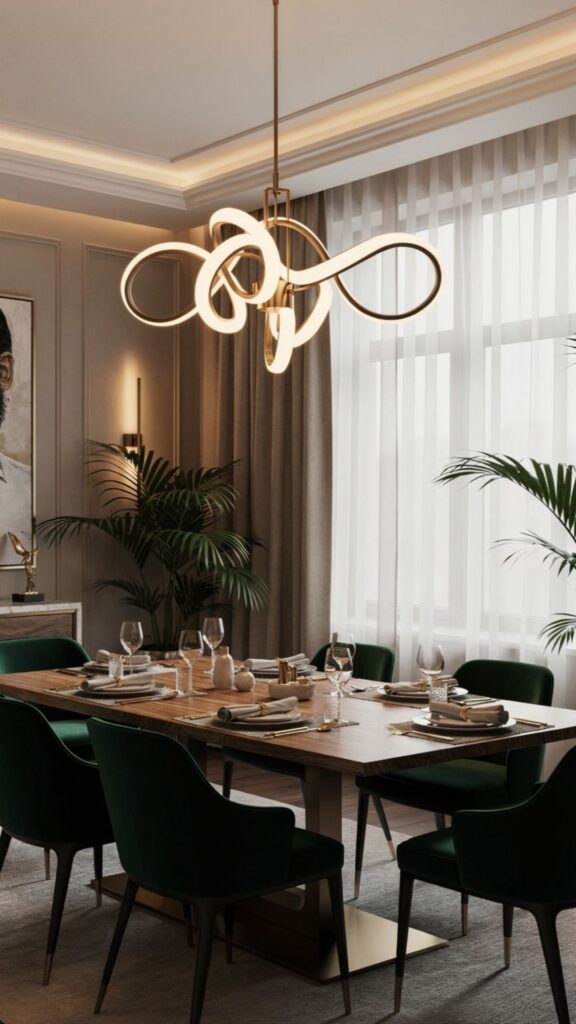
Lighting is arguably the most transformative element in dining room decor interior design, yet it’s the most commonly rushed decision. The right lighting sets the mood, flatters your food, and makes guests feel comfortable. A chandelier hung too high, or a fixture too small for the table, can visually shrink even a large, beautiful room.
The golden rule: your chandelier or pendant light should be 12 inches narrower on each side than your dining table. For a standard 72-inch rectangular table, that means a fixture roughly 48 inches wide. Hang it 30–34 inches above the tabletop for optimal illumination and proportion. If you have higher ceilings (9 feet and above), raise it slightly to maintain visual flow.
Layer your lighting for maximum effect. Combine an overhead statement fixture with dimmer switches, wall sconces for ambient warmth, and possibly under-cabinet lighting if your dining room decor is adjacent to a buffet or built-in shelving. Dimmers alone can transform a dining room decor from daytime functional to evening intimate without changing a single piece of furniture.
Current trend to note: Sculptural pendant lights in organic shapes think rattan, blown glass, or blackened steel are replacing the traditional crystal chandelier in contemporary homes. These feel current, work across multiple design styles, and often cost significantly less than traditional fixtures while delivering even more visual impact.
Must See: https://trandyvilla.com/front-door-decor/
Select the Right Dining Table:
For Your Space
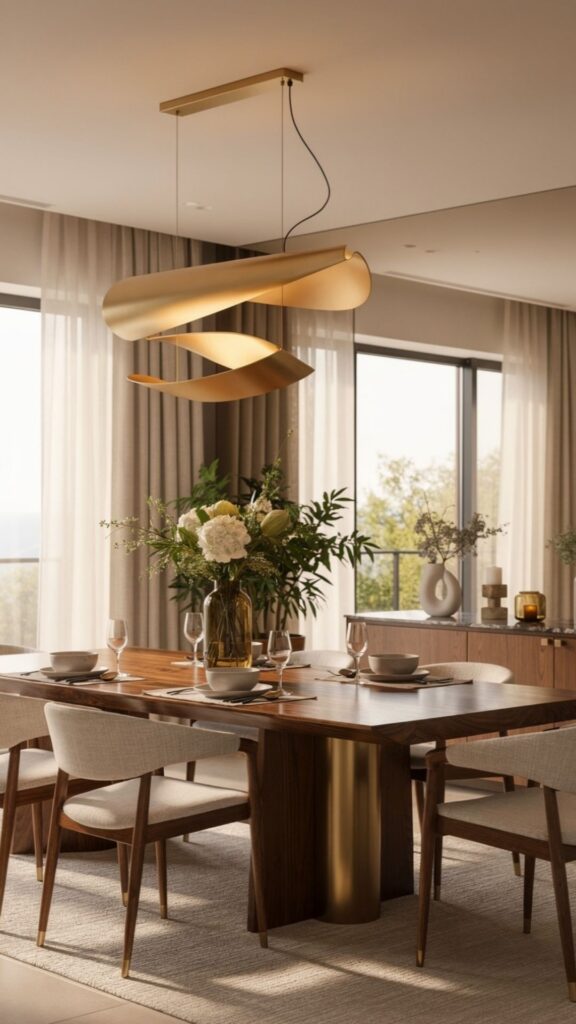
The dining table is the undisputed centerpiece of every dining room decor, and getting its size, shape, and material right is non-negotiable. A table that’s too large crowds the room; one that’s too small feels lost. As a baseline rule, allow at least 36 inches of clearance on all sides of the table for comfortable chair movement and traffic flow.
Table shape matters more than most people realize. Round tables encourage conversation and work beautifully in square rooms, making them ideal for families with young children where no one sits at the “head.” Rectangular tables maximize seating capacity and suit longer, narrower rooms. Oval tables offer the best of both they seat more guests than round tables but soften the formality of a rectangle.
Material choice reflects your lifestyle. Solid wood (oak, walnut, maple) ages beautifully, develops character, and is repairable making it the best long-term investment. Marble or stone tops add undeniable luxury but require sealing and careful maintenance. Extendable tables are a smart choice for smaller spaces that occasionally need to host larger groups modern designs hide the extension mechanism so seamlessly that guests rarely notice.
Unique insight: the fastest-growing trend in dining tables for 2026 is the “live edge” wood table where one or both edges retain the natural curve of the tree trunk. These tables function as art pieces, telling a unique story, and no two are identical. Pair one with sleek, modern chairs for a compelling organic-meets-contemporary aesthetic that photographs beautifully and ages even better.
Mix Dining Chair Styles Intentionally:
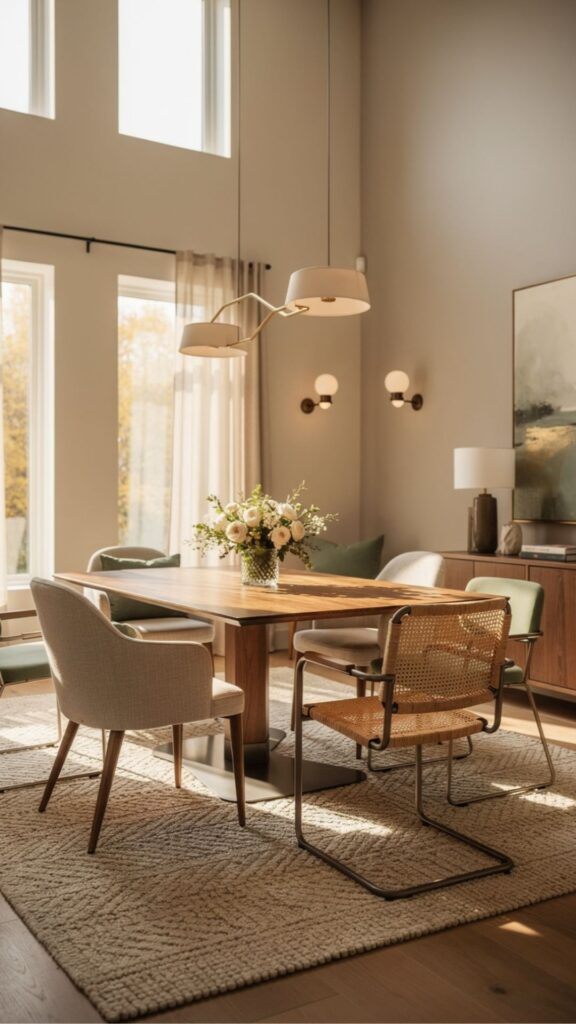
Gone are the days of matching dining chair sets. Today’s most visually interesting dining rooms intentionally mix chair styles and doing it well requires understanding a few key principles. The most popular approach is to use one style of chair for the sides and a different, more dramatic chair for the heads of the table. This creates hierarchy and visual interest without chaos.
Alternatively, mix materials within the same silhouette: imagine four chairs in natural rattan alongside two chairs in black painted wood same general shape, different textures. This creates cohesion with personality. Or go bolder: mix two completely different chair styles but tie them together through a shared color, like all-white upholstery on very different chair frames.
Upholstered dining chairs add comfort and encourage lingering at the table a behavioral design choice that makes your dining room decor feel more welcoming. Performance fabrics like Crypton or Sunbrella are now available in beautiful textures that mimic linen or velvet while being wipeable, making them ideal for families. This is an insight that almost no competitor article discusses: the fabric choice affects how long people actually sit at your table.
Budget-friendly tip: buy two to four accent chairs from a higher-end brand and fill remaining seats with more affordable options in a complementary style. Most guests won’t notice the difference, but the room will look elevated because of the anchor pieces you invested in.
Use an Area Rug to Define and Warm the Space:
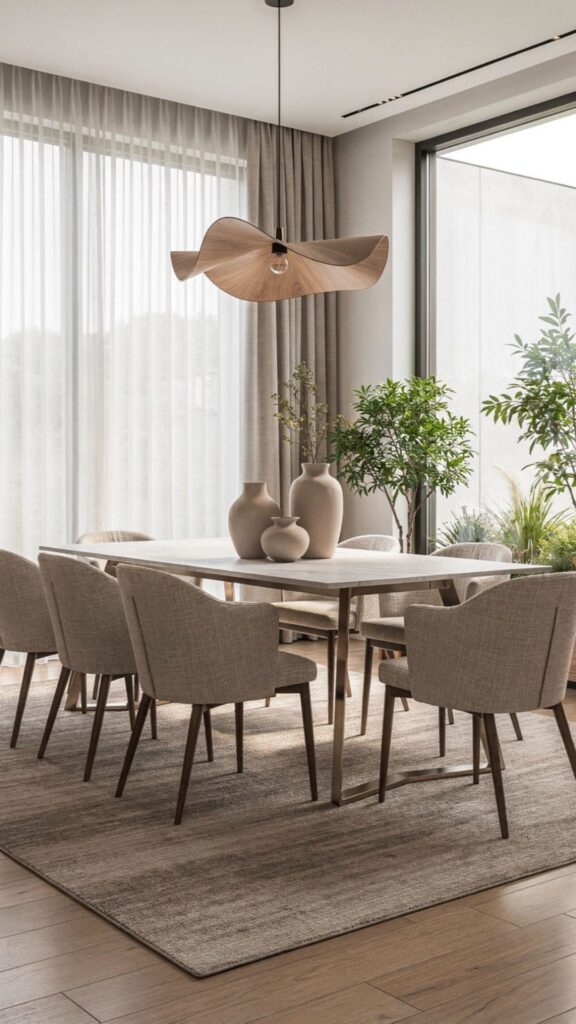
An area rug beneath your dining table is one of the highest-impact, most cost-effective upgrades you can make to a dining room decor. It visually defines the dining zone (essential in open-plan homes), adds warmth and texture, reduces noise, and protects flooring from chair scratching. Despite all these benefits, many homeowners skip the rug often because they’re unsure about sizing or worried about cleaning.
Sizing is everything. The rug must be large enough that all chair legs remain on it even when chairs are pulled out. As a general guideline, add at least 24 inches to each side of your table. For a 72-inch table, you need a rug that’s at least 8×10 feet. Going too small is the single most common decorating mistake in dining rooms and makes the whole space look off-balance.
For material, flat-weave rugs (like kilim or dhurrie) are easiest to clean and work well under dining tables since chair legs glide smoothly over them. Low-pile wool rugs add luxury and durability. Avoid high-pile or shag rugs they trap food, make chairs difficult to move, and look dated quickly. Natural fibers like jute and sisal are beautiful but absorb stains easily and aren’t ideal for messy households.
Pattern strategy: if your dining room decor has a bold wallpaper or statement furniture, choose a simple, neutral rug. If your space is more understated, a geometric or botanical-patterned rug can do the heavy lifting for visual interest. The rug is your secret weapon for adding pattern without commitment it’s far easier to swap than wallpaper or furniture.
Create a Gallery Wall with Purpose:
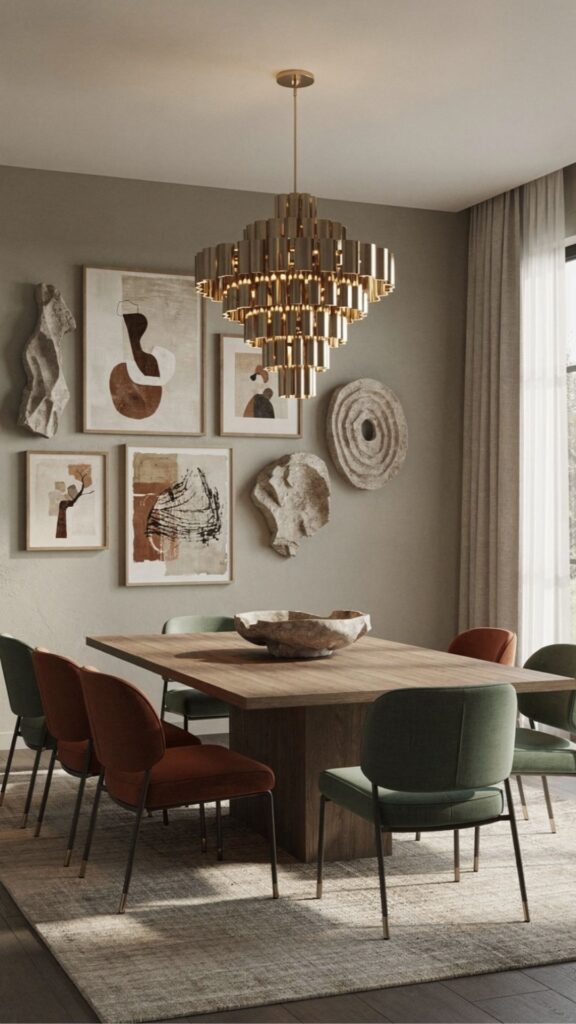
A thoughtfully curated gallery wall can transform a plain dining room decor wall into a conversation piece that reflects your personality and travels. The key word here is “purpose” a random collection of mismatched frames looks cluttered, while a well-planned gallery wall looks editorial and intentional. The difference lies in curation and spacing.
Start by choosing a theme or color palette for your gallery. This doesn’t mean everything must match it means there’s a visual thread connecting the pieces. For example: all black-and-white photography, or botanical prints in various sizes, or a mix of abstract art all pulling from the same color family. Laying your arrangement on the floor first before hammering a single nail is a designer trick that saves enormous frustration.
Frame consistency creates cohesion even when artwork varies dramatically. Using all black frames (in different sizes) to display a mix of photography, typography, and abstract prints creates a unified gallery that still feels eclectic. Alternatively, use all natural wood frames for a warmer, Scandinavian-inspired feel.
Emerging insight for 2026: digital art prints on demand have revolutionized gallery walls. Sites like Society6, Desenio, and even Etsy offer high-quality prints at low cost, making it easy to build a sophisticated gallery for under $200. The real design secret is spending more on quality frames than on the artwork itself a well-framed $15 print can look more expensive than a poorly framed $200 piece.
Paint or Wallpaper One Accent Wall:
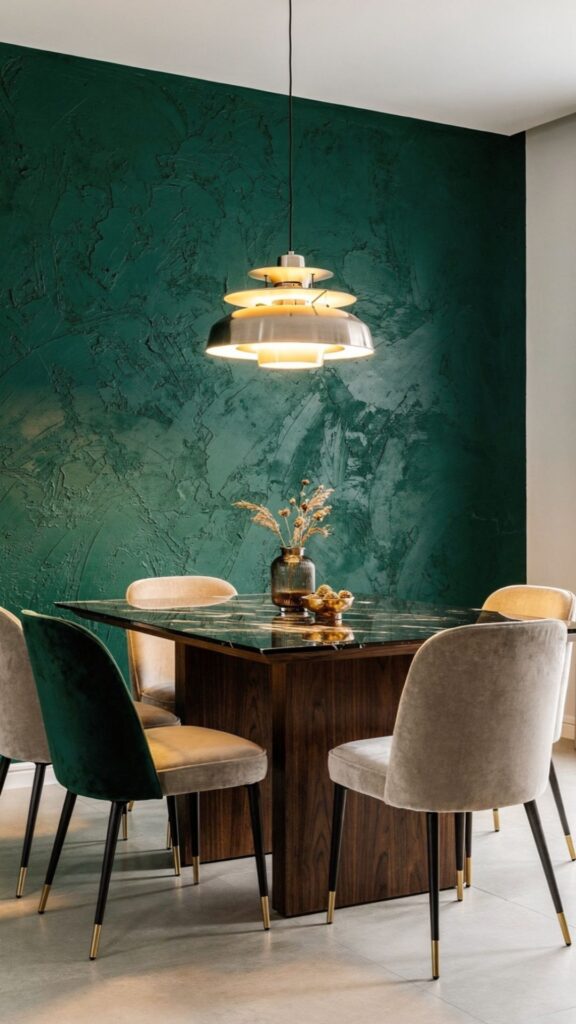
If full-room transformation feels overwhelming, an accent wall is your best entry point. A single wall in a bold paint color or dramatic wallpaper pattern can redefine the entire mood of a dining room decor without requiring a complete overhaul. The wall behind a buffet, bar cabinet, or built-in shelving is the most natural choice for an accent treatment.
Deep, saturated colors work exceptionally well in dining rooms because they create intimacy and make the space feel more “evening-ready.” Shades like forest green, navy, burgundy, charcoal, and terracotta have proven staying power in dining room decor design and photograph beautifully for dinner parties. These colors also recede visually, making furniture and tableware pop against them.
Wallpaper has made a massive comeback, and rightly so. Modern peel-and-stick wallpaper options have improved dramatically in quality, making temporary installations viable for renters and commitment-phobic decorators alike. Botanical prints, maximalist florals, geometric patterns, and grasscloth textures are all trending in 2026 dining room design. A single wallpapered wall can cost as little as $80–$150 in wallpaper materials.
Unique insight: consider painting not just the wall but the ceiling above the dining table in the same color or a complementary shade a technique called a “ceiling canopy.” When you frame just the ceiling above the table, it creates a sense of intimacy and enclosure around the dining area,
psychologically cuing the brain that this is a special, set-apart space. It’s a designer technique rarely discussed in mainstream decor articles but used in high-end restaurant interiors worldwide.
Add Texture Through Layered Textiles:
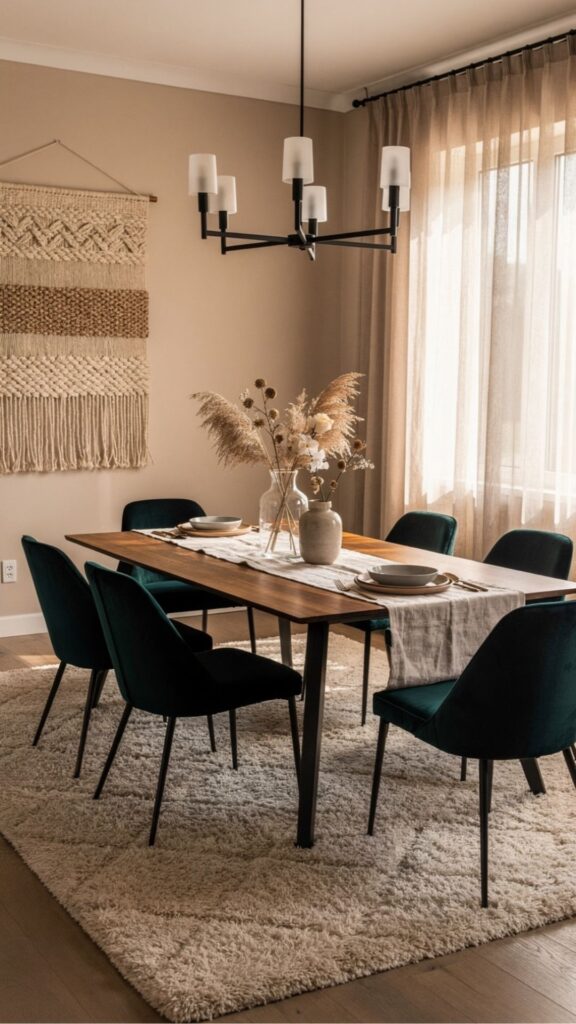
Texture is what separates a flat, sterile dining room decor from one that feels rich, lived-in, and inviting. It’s also one of the most affordable ways to elevate a space. Textiles from linen tablecloths and velvet chair cushions to woven placemats and linen curtains add tactile and visual depth that no paint color or furniture piece can achieve alone.
Think about texture in terms of contrast. If your dining table is smooth marble, introduce rough textures: a chunky woven table runner, rattan placemats, or a textured linen napkin. If your chairs are sleek metal, add cushions in a plush fabric. The brain reads texture as warmth, and warm rooms feel more welcoming a psychological benefit that directly affects how comfortable your guests feel.
Curtains are one of the most underutilized textural elements in dining rooms. Floor-to-ceiling linen or velvet drapes add instant elegance and height to a room, even when windows are modest in size. The key is to hang curtain rods as close to the ceiling as possible and let curtains pool slightly on the floor this makes ceilings appear taller and rooms appear grander than they are.
Seasonal textile swapping is a cost-effective strategy many designers use privately but rarely publish: store two sets of textile “layers” for your dining room decor one for warm months (light linen, natural fibers, bright colors) and one for cool months (velvet, wool, deep tones). Swapping textiles alone can make your dining room decor feel completely refreshed twice a year for less than the cost of a single furniture piece.
Explore This: https://trandyvilla.com/bedroom-wall-decor/
Incorporate Plants and Greenery:
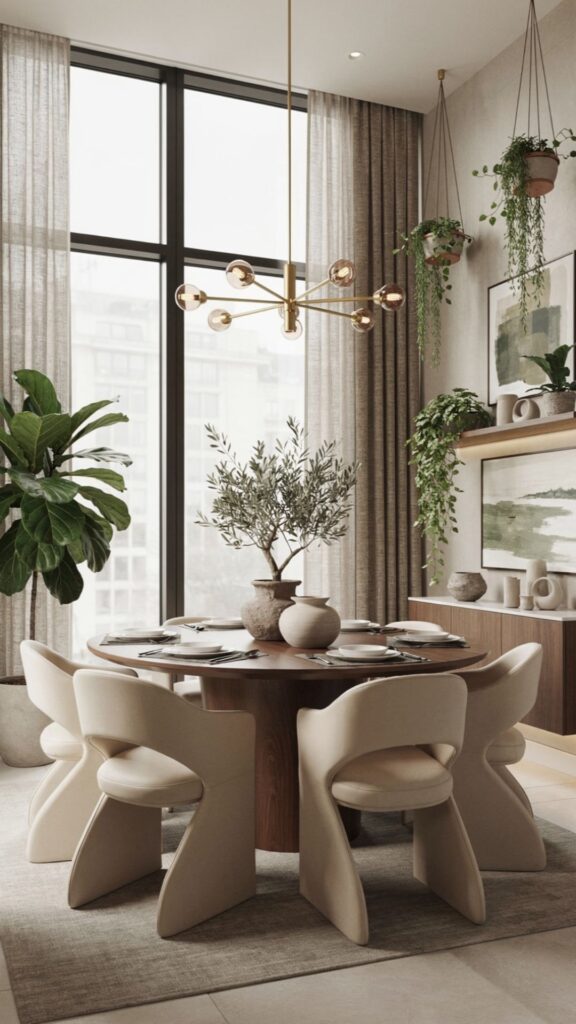
Nothing makes a dining room decor feel more alive literally than plants. Greenery brings biophilic design principles into your home: research consistently shows that the presence of living plants reduces stress, improves mood, and even encourages slower, more mindful eating. For a room centered around nourishment and gathering, this is a powerful design choice.
The dining table centerpiece is the most obvious plant placement, but it shouldn’t be the only one. Consider a large statement plant in a corner a fiddle leaf fig, monstera, or olive tree all work beautifully and add sculptural presence. Trailing plants (like pothos or devil’s ivy) work well on top of buffets or floating shelves. A small herb arrangement at the center of the table is both functional and aromatic.
Scale matters enormously with plants. One large statement plant almost always looks better than five small ones clustered together. A 5-foot fiddle leaf fig in a handsome ceramic pot is a design move. A collection of tiny succulents on the table is a craft project. Match your plant scale to your room scale for maximum impact.
Care consideration (often overlooked): before choosing plants, honestly assess your dining room’s light levels. North-facing rooms with limited natural light should focus on low-light tolerant species like ZZ plants, snake plants, or pothos.
South-facing bright rooms can support almost anything. Artificial plants have improved dramatically in quality high-end silk or preserved botanical arrangements now fool even experienced plant enthusiasts and require zero maintenance, making them valid for light-poor spaces.
Build or Style a Sideboard or Buffet:
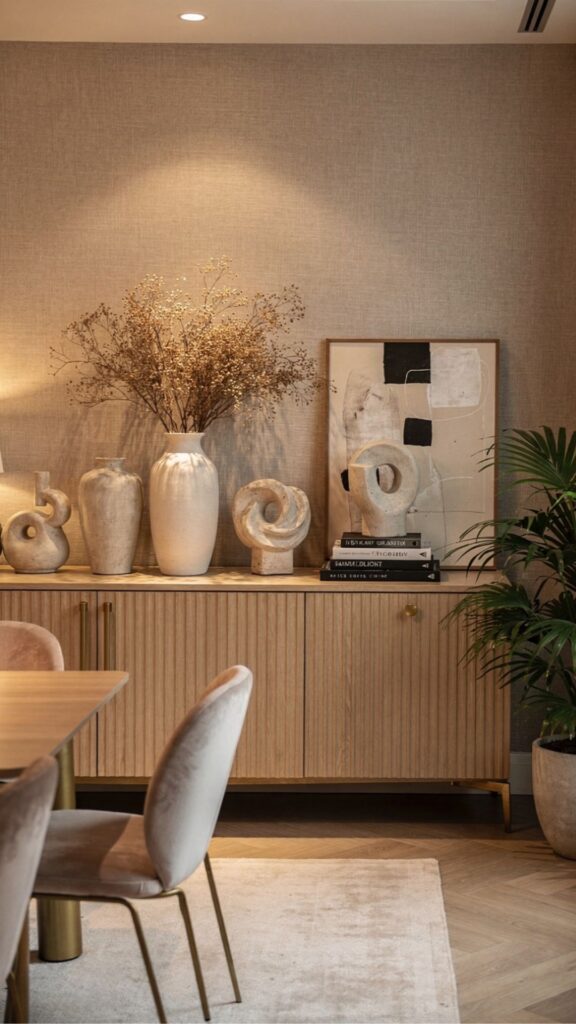
A sideboard or buffet table is one of the most functional yet decorative pieces you can add to a dining room decor. It provides storage for linens, serving pieces, and tableware while offering a flat surface for styling, serving, and display. In rooms that feel bare or unfinished, a well-styled sideboard instantly adds purpose and personality.
Styling a sideboard follows a simple principle: work in odd numbers and vary heights. A three-piece arrangement tall item, medium item, and low item creates natural visual flow. For example: a tall floor lamp or vase at one end, a framed piece of art or mirror in the center-back, and a low bowl or decorative objects at the other end. Add a candle or two for warmth and a small plant for life.
The mirror above the sideboard is a classic move for good reason. Mirrors reflect light (brightening the room), create depth (making the space feel larger), and add a decorative element that’s both functional and beautiful. In smaller dining rooms especially, a large mirror on the sideboard wall can visually double the space. Choose a mirror with a frame that complements not necessarily matches your table and chairs.
Shopping insight: some of the best sideboards on the market in 2026 are being produced by brands like Crate & Barrel, Article, West Elm, and IKEA’s higher-end STOCKHOLM line.
However, the highest-value finds are consistently at estate sales and vintage furniture shops mid-century credenzas from the 1960s and 70s offer incredible craftsmanship, solid wood construction, and unique character for prices that often undercut flat-pack modern alternatives.
Design a Statement Ceiling:
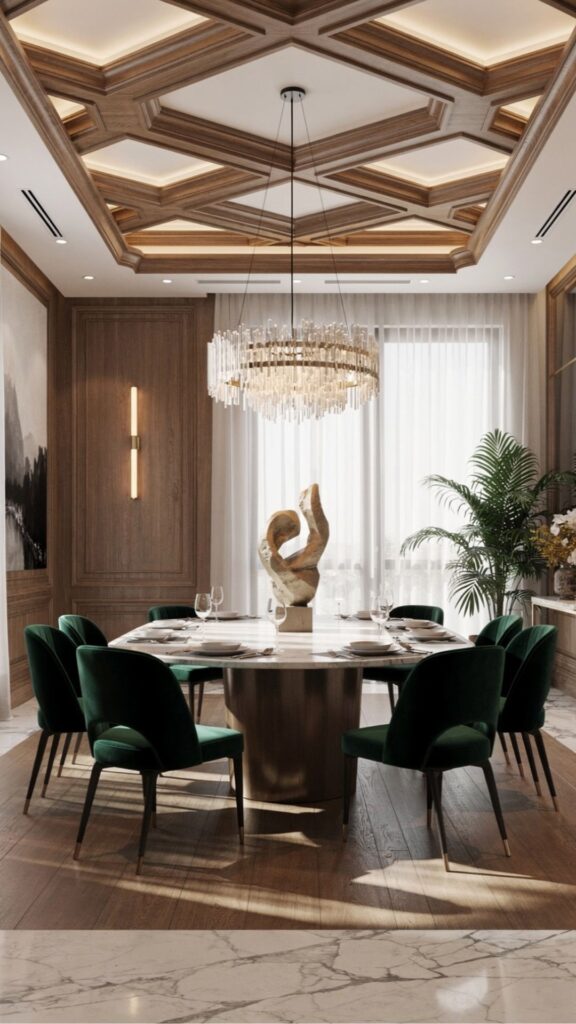
The ceiling is the most neglected surface in most dining rooms, and that’s exactly why treating it creates such a dramatic, unexpected effect. Interior designers call the ceiling the “fifth wall” and in dining rooms, it’s the perfect canvas for a design moment that surprises and delights. You don’t need an elaborate renovation to make it count.
The simplest ceiling upgrade is paint. Painting your ceiling in a color whether it matches your walls, complements them, or contrasts dramatically immediately makes a room feel more intentional and custom. A deep navy ceiling over a white-walled dining room decor creates a tent-like intimacy. A warm terracotta ceiling adds Mediterranean warmth. Even a soft blush or sage green creates a subtle, sophisticated lift.
Coffered ceilings, ceiling medallions, and decorative molding can be added as DIY projects using lightweight polyurethane pieces available at most hardware stores. These architectural details add perceived value, depth, and formality without structural changes. Paired with a statement chandelier, a ceiling medallion anchors the light fixture and creates a finished, custom look at very low cost.
Wallpaper on the ceiling is the boldest move but has the highest impact. A botanical print, geometric pattern, or even a subtle textured wallpaper overhead transforms the dining room decor into something genuinely memorable. When your guests look up as they inevitably do they see something unexpected and beautiful. This is the detail that gets talked about after every dinner party.
Use Mirrors Strategically:
For Light and Space
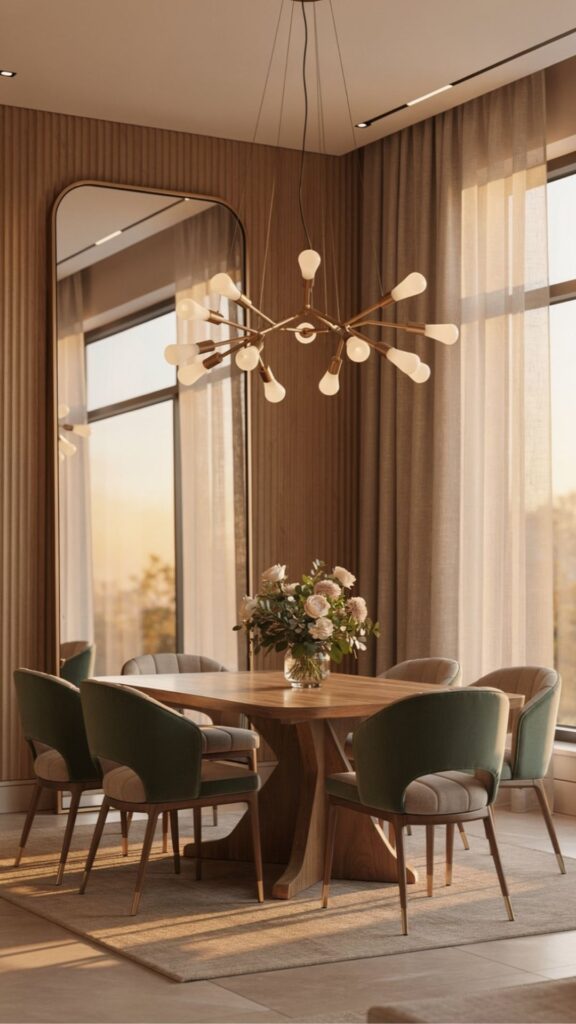
Mirrors are among the most powerful tools in a dining room decorator’s arsenal, especially in smaller or darker spaces. A strategically placed mirror can visually double the size of a room, reflect natural light deep into a space, and create a sense of openness that no floor plan change could achieve without renovation. Yet they’re often used thoughtlessly hung too small, too high, or in the wrong location.
The most effective mirror placement in a dining room decor opposite or adjacent to a window. This bounces natural light throughout the room and creates the illusion of a second window. A large mirror (at least 24×36 inches bigger is almost always better) in this position can transform a dim dining room decor into a bright, airy space. This is particularly valuable in urban apartments or rooms with limited window exposure.
Beyond function, mirrors are a design statement. An ornate baroque frame adds drama and romance to a traditional dining room decor. A minimal black-framed rectangle elevates a contemporary space. A collection of smaller mirrors in varied shapes (a gallery mirror wall) creates a maximalist, eclectic look. The frame style and finish should feel like jewelry for your wall it should suit the outfit (room) it’s worn with.
Design insight from restaurant interiors: many beloved, upscale restaurants line entire walls with mirrors not just for aesthetics but to make smaller spaces seat more people comfortably without feeling crowded. The same principle applies in residential dining rooms. If your dining room decor feels tight, a floor-to-ceiling mirror panel on one wall can make it feel twice as spacious while adding significant visual sophistication.
Set Up a Bar Cart or Drinks Station:
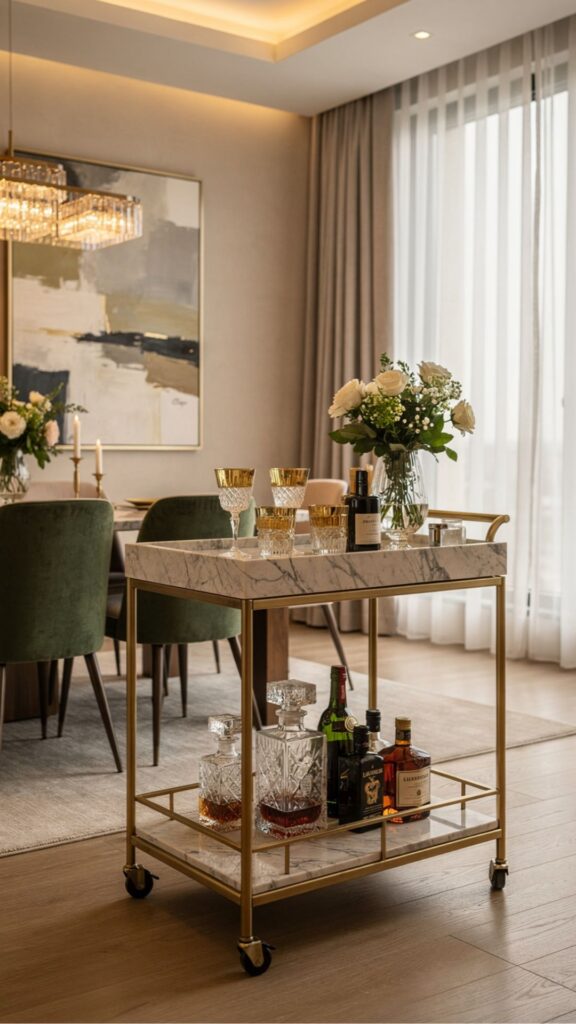
Adding a bar cart or dedicated drinks station to your dining room decor is a lifestyle upgrade as much as a decor move. It signals hospitality, makes entertaining effortless, and adds a functional vignette that’s inherently beautiful when styled thoughtfully. In 2026, the bar cart has evolved beyond a simple rolling trolley it’s now a curated expression of personal taste and aesthetic sensibility.
A bar cart works in dining rooms of any size. In larger rooms, a dedicated bar cabinet or drinks trolley creates a defined entertaining zone. In smaller spaces, a slim console table with a few carefully arranged bottles, a cocktail shaker, and a small ice bucket achieves the same effect without requiring extra floor space. Even a floating shelf dedicated to barware and a curated selection of bottles makes a stylish and functional statement.
Styling a bar cart follows the same principles as a sideboard: vary heights, add unexpected elements, and include at least one living element (a small plant or fresh herb). A quality cocktail book propped open, a set of handsome glassware, a beautiful carafe of water these elements transform a bar cart from a storage surface into a designed moment.
Emerging trend: alcohol-free bar carts are growing rapidly in popularity as the sober-curious movement accelerates. A thoughtfully curated collection of premium sparkling waters, artisan sodas, non-alcoholic spirits, and specialty syrups in beautiful decanters can look just as sophisticated as a traditional bar setup while being inclusive to all guests. This is a hosting evolution that most decor articles haven’t caught up to yet.
Also Check: https://trandyvilla.com/coffee-table-decor/
Layer Lighting with Candles and Tabletop Ambiance:
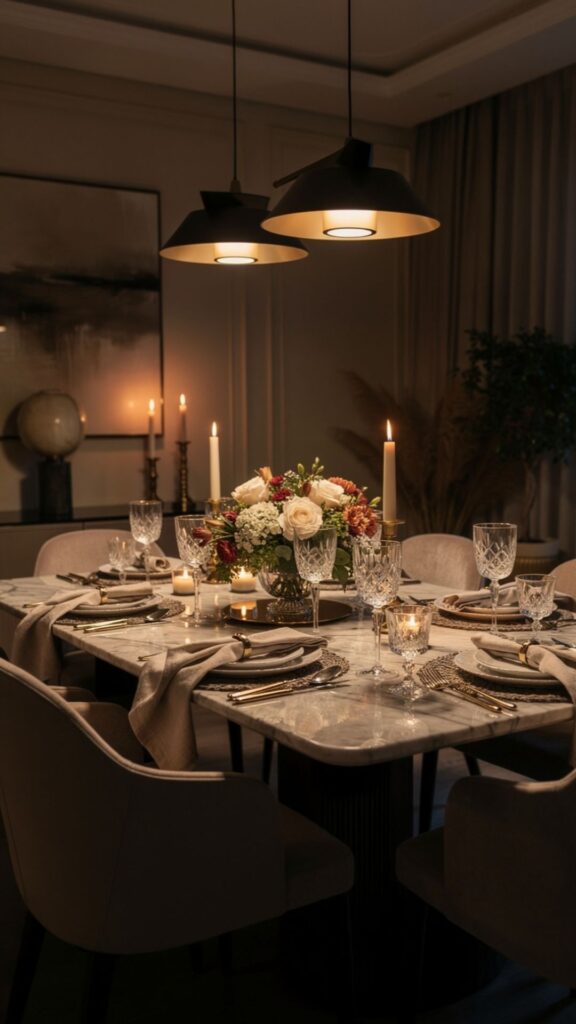
Beyond overhead lighting, candles remain the single most effective tool for creating dining room decor ambiance that feels warm, romantic, and human. There’s a neurological reason for this: candlelight flickers at a frequency that is uniquely calming to the human brain, lowering heart rate and reducing cortisol. A dining room decor lit primarily by candlelight with overhead fixtures dimmed low triggers a physiological relaxation response in everyone at the table.
The tabletop is your most accessible ambiance canvas. A cluster of pillar candles in varying heights at the center of the table creates warmth without blocking sight lines. Taper candles in sculptural candlesticks add elegance and vertical interest. Tea lights scattered in glass votives create a fairy-light effect across the table surface. The key is scale use more candles than feels comfortable at first. Abundance reads as luxury here.
For everyday dining, battery-operated flameless candles have dramatically improved in quality and now offer realistic flame simulation with timers and remote controls. They’re safe around children, don’t drip wax, and can be left unattended making them a practical choice for frequent use while still delivering the warm, flickering ambiance of real candles.
Scent adds an invisible but powerful layer to dining ambiance. Lightly scented candles choose subtle fragrances like beeswax, sandalwood, or light citrus can enhance the dining experience without overwhelming food aromas. This multisensory approach to dining room decor is borrowed from Michelin-starred restaurants, which carefully consider not just visual and auditory but olfactory ambiance as part of the guest experience.
Personalize with Meaningful Decor Details:
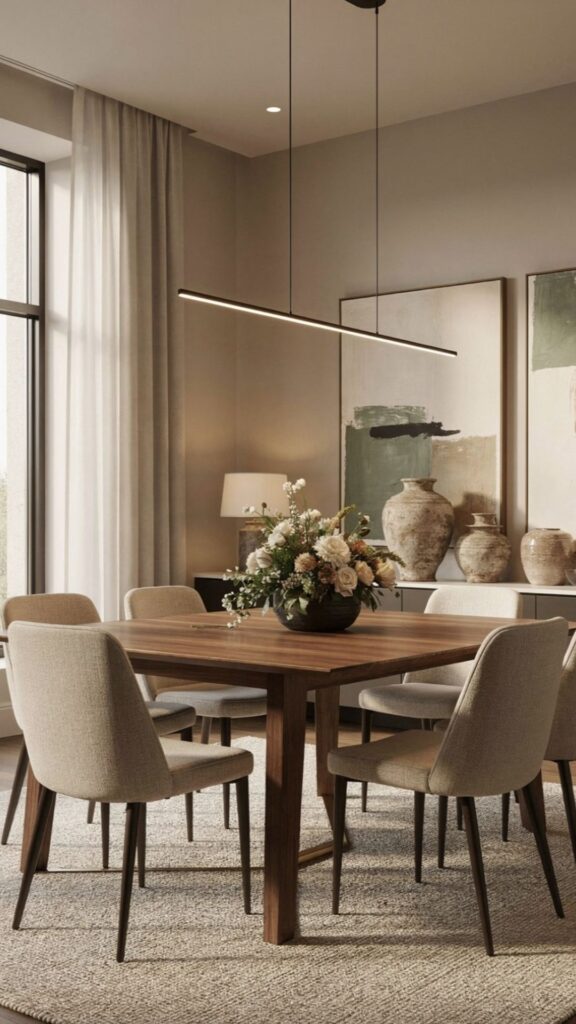
The dining rooms that people remember are never the most expensive or the most trend-forward they’re the most personal. The details that reflect your actual life, travels, interests, and relationships are what make a room feel genuinely beautiful rather than showroom-perfect. This is the layer of decor that algorithms can suggest but only you can execute.
Think about what objects carry meaning for you. A ceramic bowl made by a local artisan. Vintage plates collected from antique markets during travels. A framed letter or piece of handwriting from someone you love. A plant propagated from a cutting at a meaningful place. These are the elements that stop guests mid-sentence and prompt them to ask, “Where did you get that?” and your answer tells a story.
Display philosophy matters here. The principle of “if in doubt, leave it out” applies curate ruthlessly rather than displaying everything at once. A few truly meaningful objects displayed with intention and space around them have infinitely more impact than a shelf crowded with sentimental clutter. Rotate objects seasonally: not everything needs to be displayed all the time. Storage allows you to bring things out with fresh eyes.
The future of dining room decor is moving toward what designers call “slow interiors” rooms that are built gradually over time, prioritizing quality and meaning over instant Instagram-ready results. This means buying one exceptional piece rather than ten mediocre ones,
choosing artisan craftsmanship over fast furniture, and allowing your space to evolve organically as your life does. A dining room decorated this way will always feel current, because it’s rooted in who you actually are rather than who the trend cycle suggests you should be.
Conclusion
Great dining room decor begins with intention choosing a focal point, layering light, and personalizing your space with details that matter. From the right table and lighting to statement ceilings and curated sideboards, each idea in this guide builds toward a room that’s both beautiful and deeply livable.
The best dining rooms aren’t designed in a day they evolve thoughtfully over time. Start with one or two changes that excite you most, and let your dining room grow into a space that genuinely reflects your life.

Team TrandyVilla is the passionate home decor team behind Trandy Villa, where style meets comfort in everyday living. The team loves transforming simple spaces into beautiful, functional homes through smart ideas, budget-friendly hacks, and modern design trends. Their content focuses on helping readers create homes that feel both stylish and personal without spending too much.