
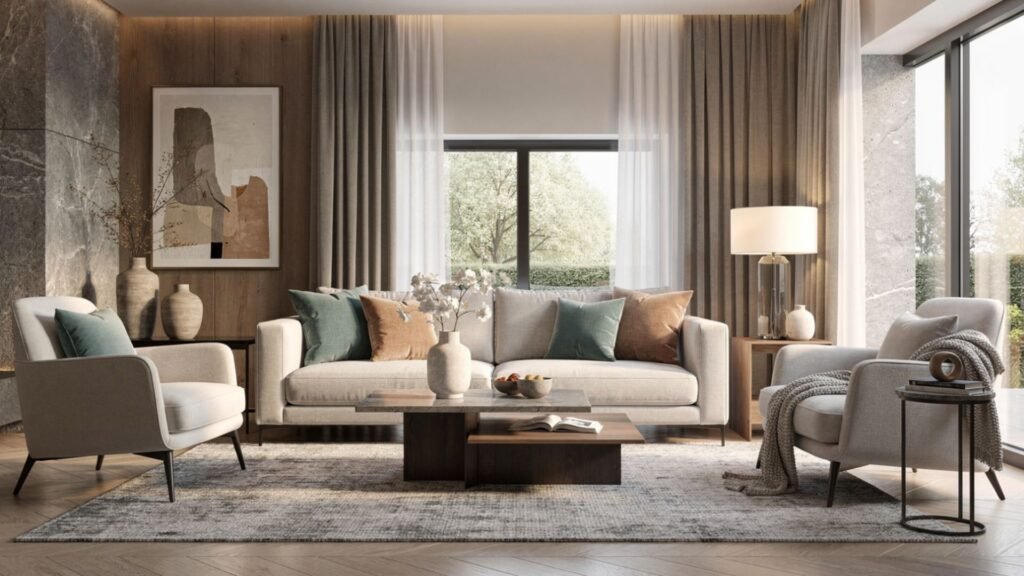
A sitting room is more than just a place to rest it’s the heart of your home. It’s where conversations happen, where families gather, and where first impressions are made. Whether you’re starting from scratch or refreshing a tired space, the right sitting room ideas can completely transform how the room looks, functions, and feels.
A sitting room ideas is a comfortable space for relaxing, talking, and spending time with family or guests. Sitting room ideas help improve style, comfort, lighting, storage, and furniture layout. Simple design choices can make the room feel warm, functional, modern, and inviting every day.
A beautiful Sitting Room ideas creates comfort, style, and balance in every home. The right colors, furniture, lighting, and décor can completely change the atmosphere. Smart design ideas help make the space cozy, practical, elegant, welcoming, relaxing, and suitable for modern everyday living.
Sitting room ideas focus on comfort, organization, and personal style. Soft textures, layered lighting, stylish rugs, and indoor plants add warmth and character. Modern layouts also improve movement, conversation, storage, and daily functionality while keeping the room visually clean and attractive.
Choose a Timeless Color Palette:
That Sets the Mood
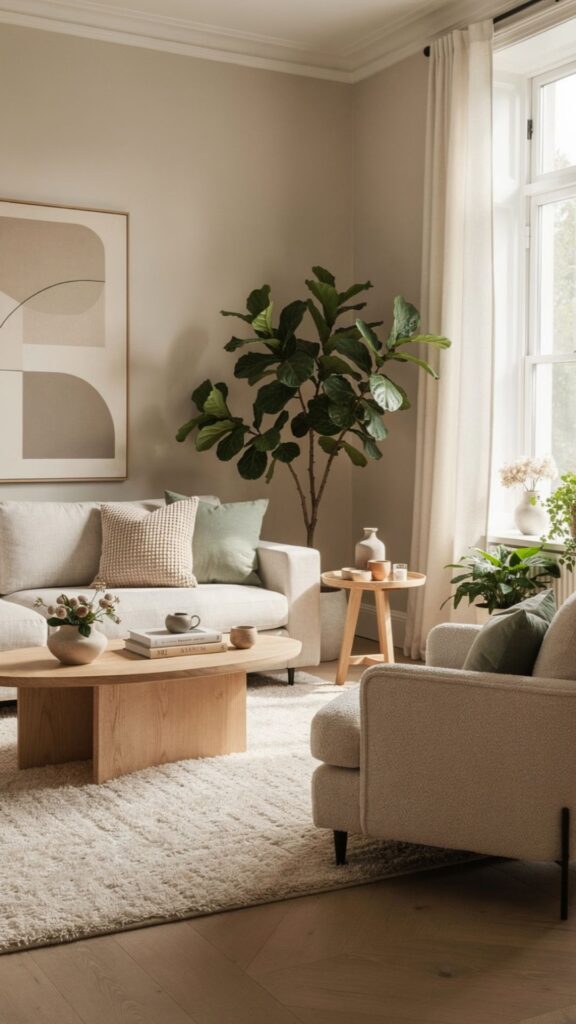
Color is the single most transformative decision you’ll make in any sitting room ideas and the one most likely to be either underthought or overthought. The right color palette doesn’t just make a room look beautiful; it shapes how the space feels to occupy, how it photographs, and how cohesive it appears alongside adjacent rooms.
Getting the color strategy right before buying a single piece of furniture saves significant time, money, and the frustration of finding that a sofa you love looks completely wrong in a room painted the wrong shade.
The most enduring sitting room ideas color palettes are built on a 60-30-10 framework: 60% dominant color (walls and large upholstered pieces), 30% secondary color (curtains, rugs, and accent chairs), and 10% accent color (cushions, artwork, accessories, and small decorative objects).
This distribution creates a room that feels balanced and cohesive without being monotonous. For example, a sitting room ideas built around warm greige walls (60%), terracotta soft furnishings (30%), and brass and deep navy accents (10%) produces a sophisticated, layered result that looks far more considered than a single-color approach.
Undertone awareness is the color principle most homeowners learn the hard way. Every paint color has an underlying warmth or coolness that only reveals itself in your specific room’s light conditions. A grey that looks sophisticated in the paint store can read purple or blue-green on your walls depending on the direction your room faces.
North-facing sitting rooms receive cool, indirect light that amplifies cool undertones these rooms benefit from warm-undertone neutrals (greige, cream, warm taupe) to compensate. South-facing rooms receive warm direct light that can make already warm colors feel overwhelming cooler neutrals and softer tones work better. Testing large paint samples on the actual wall for at least 48 hours before committing is non-negotiable.
One color insight most sitting room guides miss: the transformative power of painting the ceiling a color rather than leaving it white. A ceiling painted one to two shades lighter than the walls using the same color family creates a sense of cohesion and envelopment that a stark white ceiling disrupts.
Farrow & Ball’s design team calls this the “envelope” effect, and it’s one of the most consistently praised design choices among homeowners who try it. In a sitting room ideas, this technique makes the space feel like a curated environment rather than a box of colored walls with a white lid.
Create a Focal Point with a Statement Fireplace:
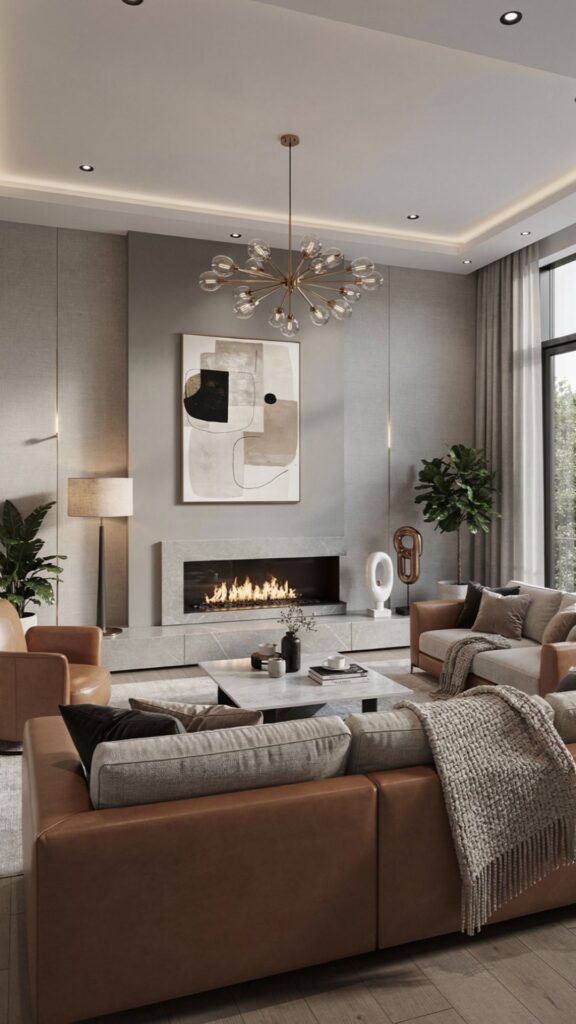
Every great sitting room ideas has a focal point a single element that anchors the room’s design and gives the eye a clear place to land when entering the space. The fireplace has served this role in sitting rooms for centuries, and it remains unrivaled in its ability to create atmosphere, define the seating arrangement, and provide both physical warmth and psychological comfort.
Even in homes without a functional fireplace, creating the visual language of a fireplace surround and mantel is one of the most powerful sitting room ideas design moves available. For homes with existing fireplaces, the mantel surround is the design detail that most dramatically affects the room’s character. A chunky, painted timber mantel reads as warm and traditional.
A sleek, plaster-smooth surround with minimal profile signals contemporary minimalism. Marble or stone surrounds with classical proportions anchor formal, high-end sitting room ideas designs. The fireplace opening treatment whether original cast iron, a modern steel insert, a tiled recess, or a clean painted opening completes the picture.
Modernizing just the surround and hearth while keeping an existing functional fireplace is one of the highest-ROI sitting room ideas renovation moves available. The mantel display is a design element in its own right, and most homeowners underuse its potential. The most effective mantel displays follow an asymmetric principle: one larger anchor object (a mirror, a piece of art, a sculptural vase) combined with a grouping of smaller objects at varying heights.
Repeating an odd number of objects three or five creates a visual rhythm that feels balanced without being symmetrical. Seasonal updates to the mantel display (swapping summer botanical arrangements for autumn candles and winter evergreen branches (for example) allow the sitting room ideas to feel current year-round without any structural changes.
Electric fireplaces have improved dramatically in realism and design quality over the past five years, making them a genuinely viable option for sitting rooms without chimneys. Modern electric fireplace inserts with 3D flame effects, ember beds, and realistic log sets are convincing enough to photograph as real fires and many homeowners who install them report that the psychological warmth of a flame effect is surprisingly genuine even when they intellectually know it’s electric.
Wall-mounted electric fireplaces with built-in media consoles are particularly popular in apartment and flat sitting rooms, combining the visual anchor of a fireplace with the practical function of a TV unit two focal point problems solved simultaneously.
Peek Inside: Japandi Living Room Ideas That Bring Calm and Elegant Style to Your Sitting Room
Design a Furniture Layout, Sitting Room Ideas:
That Encourages Conversation
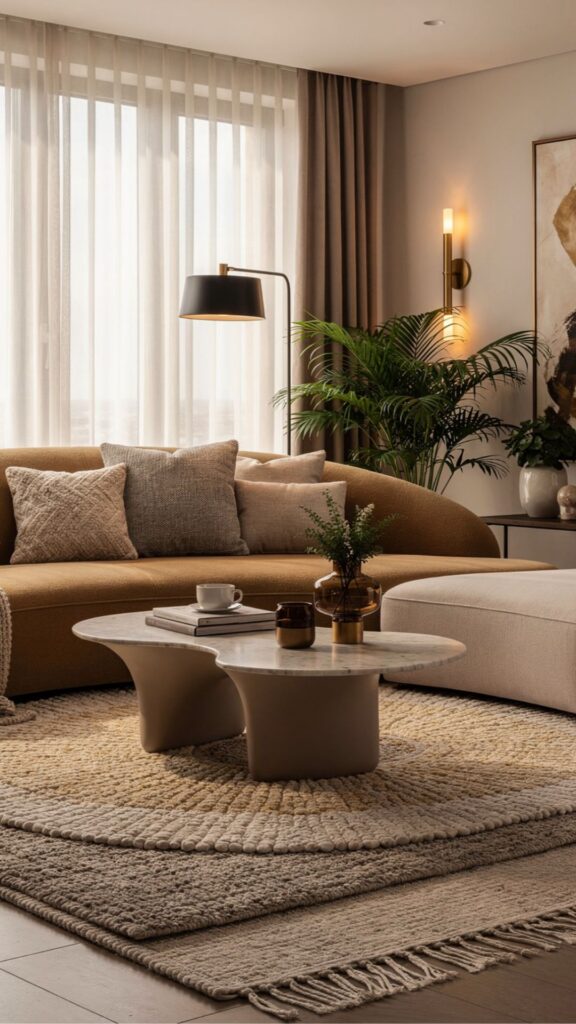
Furniture arrangement is the sitting room ideas design decision with the biggest impact on how the room actually functions day-to-day and it’s the one most commonly done wrong. The most frequent mistake is pushing all furniture against the walls in an attempt to maximize floor space.
This creates a room where everyone sits as far apart as possible, conversation feels effortful, and the center of the room becomes a dead zone of empty floor that makes the space feel bigger but emptier. Professional interior designers almost universally advocate for floating furniture pulling seating away from walls and arranging it around a central point.
The conversation circle principle is the foundation of effective sitting room ideas furniture layout. Arrange seating so that all pieces face inward toward a central point typically a coffee table or a rug with no seat more than 2.5–3 meters (8–10 feet) from any other. Beyond this distance, normal conversation becomes effortful and the group tends to fragment.
A sofa facing two armchairs across a coffee table, with an additional side chair at one end to close the circle, is the classic configuration. This arrangement works in rooms of almost any shape and creates an instinctively comfortable social environment.
Traffic flow planning is the practical complement to the conversation circle principle. Every furniture arrangement needs clear pathways for movement through the room typically at least 90cm (36 inches) of clear passage between furniture pieces. In sitting rooms that connect to other spaces (dining rooms, hallways, kitchens), the traffic paths must remain unobstructed regardless of how the seating is arranged.
Mapping these pathways before placing furniture prevents the common problem of a room that looks beautiful in photographs but requires a sideways shuffle to navigate in real life. Rooms with unusual shapes L-shaped rooms, rooms with multiple doors, rooms with bay windows or alcoves require specific layout strategies that generic advice doesn’t cover.
An L-shaped sitting room ideas, for example, is best handled by defining two distinct zones within the L: a primary seating area in the larger section and a secondary reading nook or games area in the shorter arm. A bay window creates a natural third zone for a small table and chairs, a reading chair and ottoman, or a built-in window seat. These architectural features are constraints that, with the right approach, become the most interesting parts of the room’s design.
Layer Lighting:
For Ambiance and Functionality
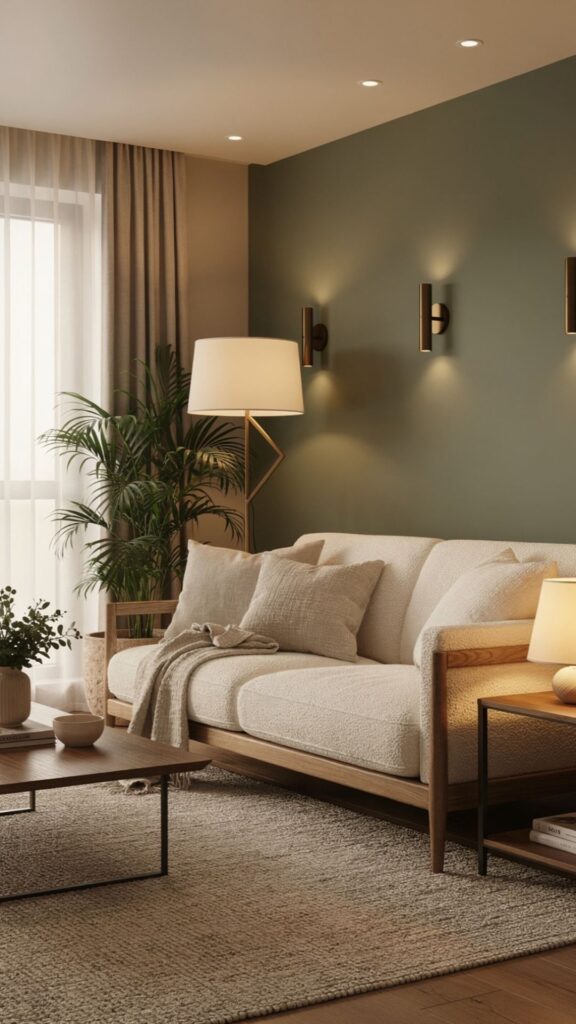
Lighting is the most undervalued element in sitting room ideas design and the one that most dramatically separates professional-looking rooms from amateur ones. A sitting room ideas lit only by a central ceiling fixture is one of the most common and most fixable design errors in residential interiors.
That single light source casts flat, even illumination that eliminates shadows, flattens textures, and makes everything in the room look equally unremarkable. Layered lighting multiple sources at different heights and intensities creates the depth, warmth, and visual interest that makes a sitting room ideas feel genuinely designed.
The three-layer lighting system is the professional standard for sitting rooms. Ambient lighting provides the base level of general illumination recessed downlights, a semi-flush ceiling fixture, or indirect LED cove lighting. Task lighting serves specific functional needs a floor lamp beside a reading chair, a table lamp on a console table, a directional spot over a piece of art.
Accent lighting creates atmosphere and highlights design features LED strips inside display shelving, uplights behind a floor plant, a decorative pendant hung low over a side table. Each layer operates on its own circuit and ideally on a dimmer, giving you full control over the room’s atmosphere at any time of day.
Lamp height and placement are details that most sitting room ideas lighting guides don’t address specifically enough. The bottom of a table lampshade should sit at approximately eye level when you’re seated roughly 60–65cm from the floor for a standard sofa seat height. This positioning directs light at the most useful angle for reading and conversation without creating glare.
A lamp that’s too tall shines light into your eyes from above; one that’s too short sends light downward and creates an unflattering uplighting effect on faces. This simple calibration makes an immediate, noticeable difference to the quality of the light in the room.
Smart lighting systems Philips Hue, LIFX, Lutron Caséta, and their equivalents are becoming the standard in new sitting room ideas renovations because they allow color temperature adjustment alongside dimming. Being able to shift the room’s lighting from cool, alert-supporting daylight tones (useful for working or playing games in the sitting room) to warm, relaxation-supporting tones (ideal for evening conversations or watching films) without changing bulbs or fixtures is a genuine quality-of-life improvement.
Voice control and preset“scenes” a “movie mode” that dims everything except a single warm lamp, or a “party mode” that brings all lights to mid-brightness make the sitting room ideas more responsive to how it’s actually used throughout the day.
Invest in a Quality Sofa:
That Anchors the Room
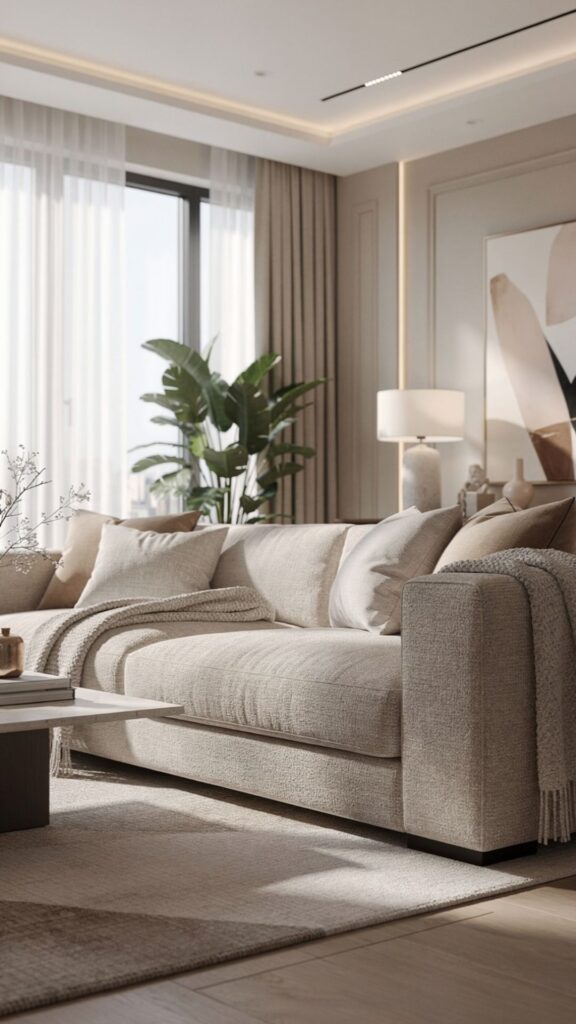
The sofa is the single most important furniture investment in any sitting room ideas and the piece most likely to be bought too quickly, too cheaply, or in the wrong size. A well-chosen sofa anchors the room’s entire design, sets the style direction for every other furniture decision, and will be used more intensively than almost any other piece of furniture in the home.
Getting it right in terms of scale, comfort, durability, and aesthetic is worth the time and research investment, because a quality sofa bought correctly should last fifteen to twenty years. Size is the most commonly misjudged dimension when buying a sitting room ideas sofa. The mistake almost always goes in the same direction: buying a sofa that’s too small for the room.
A small sofa in a large room looks like an afterthought. A generous sofa one that fills the primary seating wall with appropriate scale makes the room feel properly furnished and inviting. The rule of thumb used by professional furniture specifiers is that the sofa should be roughly two-thirds the width of the wall it faces.
Measure this distance carefully before shopping, and don’t let the showroom environment mislead you sofas always look smaller in a large showroom than they will in your home. Fabric selection for sitting room ideas sofas involves a trade-off that most buyers don’t fully understand until after purchase: the inverse relationship between practicality and luxury. Velvet looks extraordinary and feels wonderful but shows every impression, pet hair, and wear mark.
Linen has beautiful texture and ages with character but marks and stains relatively easily. Performance fabrics solution-dyed acrylics, microfibers engineered for durability are the practical champions: resistant to staining, fading, and abrasion, but often lacking the tactile luxury of natural fibers. The right choice depends honestly on who uses the room a sitting room ideas used primarily by adults for occasional quiet evenings is very different from one occupied daily by children, pets, and general family life.
Sofa leg style is a detail that significantly affects both the visual weight of the piece and the practical ease of cleaning beneath it. Sofas with short legs or with a fully skirted base have more visual mass they feel grounded and substantial, which works well in traditional and formal sitting rooms.
Sofas raised on tapered or turned legs have visual lightness they feel less heavy in the room, allow more light to pass beneath them, and are significantly easier to vacuum under. In a small sitting room ideas especially, the visual lightness of a raised-leg sofa can make the difference between a room that feels furnished and one that feels stuffed.
Use Rugs to Define Zones and Add Warmth:
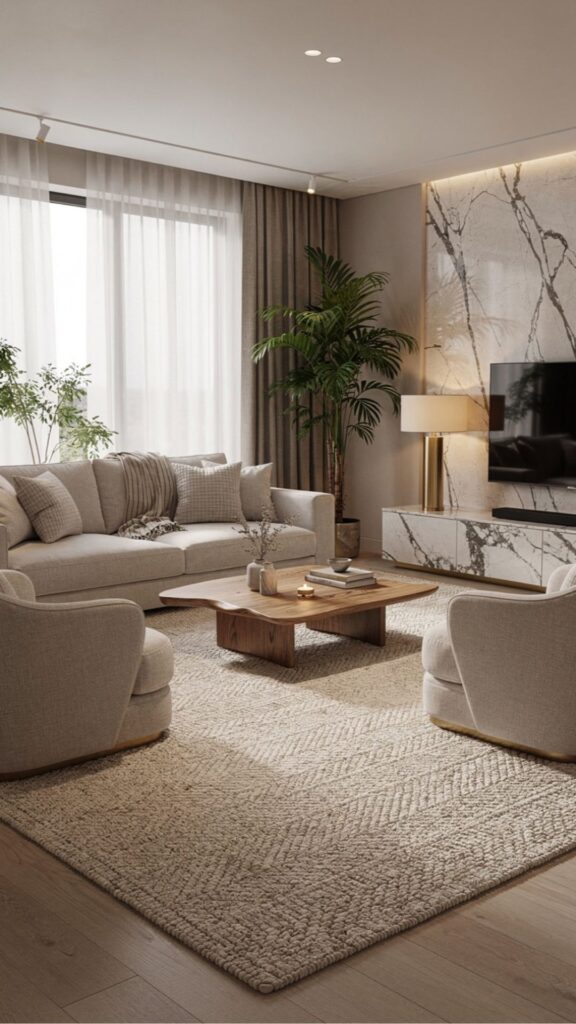
A rug in the sitting room does something that floor-to-ceiling redesigns often fail to achieve: it immediately defines the space, creates a sense of purpose, and adds warmth in both the visual and physical sense simultaneously. Yet the rug is one of the most consistently undersized purchases in sitting room ideas furnishing because rugs look deceptively large in isolation but shrink dramatically relative to the furniture once they’re in place.
The single most common and most impactful rug correction a designer makes when walking into an existing sitting room is recommending a significantly larger rug. The sizing rule for sitting room rugs is specific and worth memorizing: all four legs of the primary sofa should sit on the rug, and ideally all major seating pieces (armchairs, ottomans) should be at least partially on the rug as well.
In practical terms, this typically means a rug of at least 240 x 340cm (8 x 11 feet) in a standard-sized sitting room, and 270 x 370cm (9 x 12 feet) or larger in a spacious room. If budget is a constraint, a slightly smaller rug with at least the front two legs of every seating piece on the rug is an acceptable minimum but front-legs-only is the floor, not the ideal.
Rug material selection in the sitting room involves different priorities than other rooms. Wool is the gold standard: naturally soil-resistant, resilient under heavy furniture, comfortable underfoot, and available in the widest range of patterns and pile depths.
A hand-knotted wool rug even an older vintage or antique piece bought from an auction or specialist dealer is often better value over a twenty-year period than a new machine-made rug at a similar price point, because its construction quality means it improves rather than degrades with age and use.
For sitting rooms with underfloor heating, ensure any thick wool rug is an appropriate TOG rating to avoid insulating the heat from reaching the room. Layering rugs placing a smaller patterned or textured rug on top of a larger natural-fiber base rug is a designer technique that creates visual richness and allows for seasonal rotation. A large jute or sisal rug as the base provides neutral texture year-round.
A smaller vintage kilim, a sheepskin, or a boldly patterned wool rug layered on top adds character and can be swapped with the seasons or when your aesthetic preferences change. This approach is significantly more cost-effective than buying a single large, expensive statement rug and allows for much greater creative flexibility over time.
Add Personality with Artwork and Wall Décor:
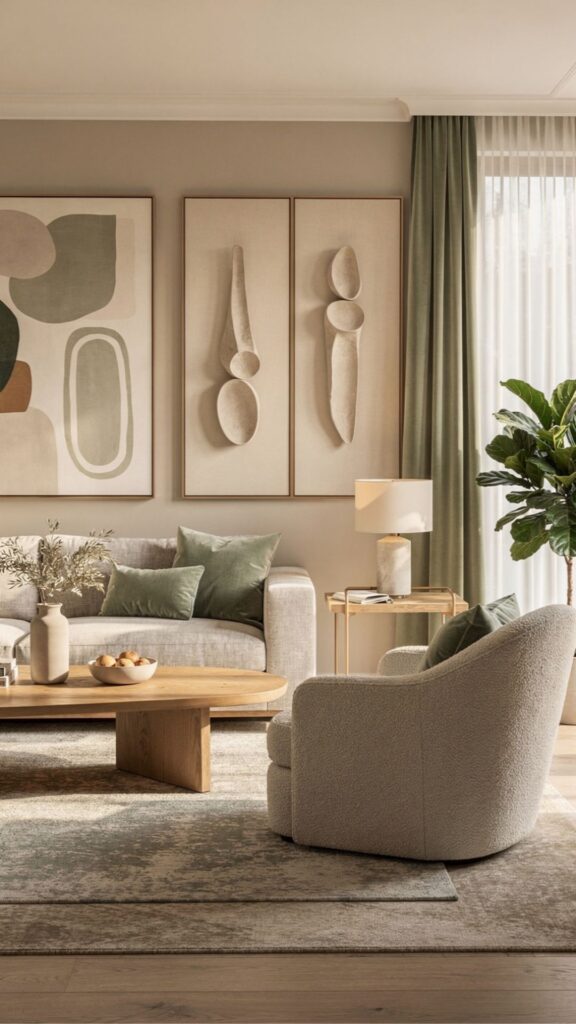
Bare walls are the most common sign of an unfinished sitting room and the most easily remedied. Artwork and wall décor give a sitting room its personality, its story, and its sense of inhabitation. They transform a space from a room that could belong to anyone into one that clearly belongs to a specific person or family with specific tastes and experiences.
Yet wall decoration is also the area where most homeowners feel least confident, leading to either safe, generic choices that add nothing to the room’s character or a paralysis that leaves walls bare for years. The gallery wall is the most versatile wall décor approach for sitting rooms because it accommodates artwork of different sizes, formats, and origins photographs, prints, paintings, mirrors, and objects within a single cohesive arrangement.
The key to a gallery wall that looks curated rather than chaotic is a unifying element: consistent frame color or material (all black frames, all natural wood), consistent matting (all white mats regardless of frame style), a consistent subject matter (all botanical prints, all family photographs), or a consistent color story across the works.
One of these unifying elements, applied consistently, allows the individual pieces to be completely different in style and scale while the overall arrangement still reads as intentional. Scale is the most important and most misunderstood principle in sitting room wall art. A small piece of art on a large wall looks tentative and sad as if it was placed there by accident or as a placeholder.
Artwork should feel appropriately scaled to its wall: a piece hung above a sofa should ideally be approximately two-thirds the width of the sofa, or a gallery arrangement should achieve that collective width. When in doubt about scale, go larger a piece that’s slightly too large for a wall reads as confident and bold, while one that’s slightly too small reads as an error.
Three-dimensional wall elements woven wall hangings, sculptural reliefs, ceramic wall panels, mounted architectural fragments, taxidermy, or plant installations add texture and depth that flat artwork cannot. In a sitting room with strong architectural bones but limited natural texture, a large woven wall hanging in natural fibers provides warmth, acoustic softening, and visual interest simultaneously.
Mounted on a wall where a painting might otherwise hang, it transforms the entire character of the space. This approach is particularly effective in contemporary sitting rooms where the risk of the space feeling cold or sterile is most significant.
Incorporate Indoor Plants:
For Life and Freshness
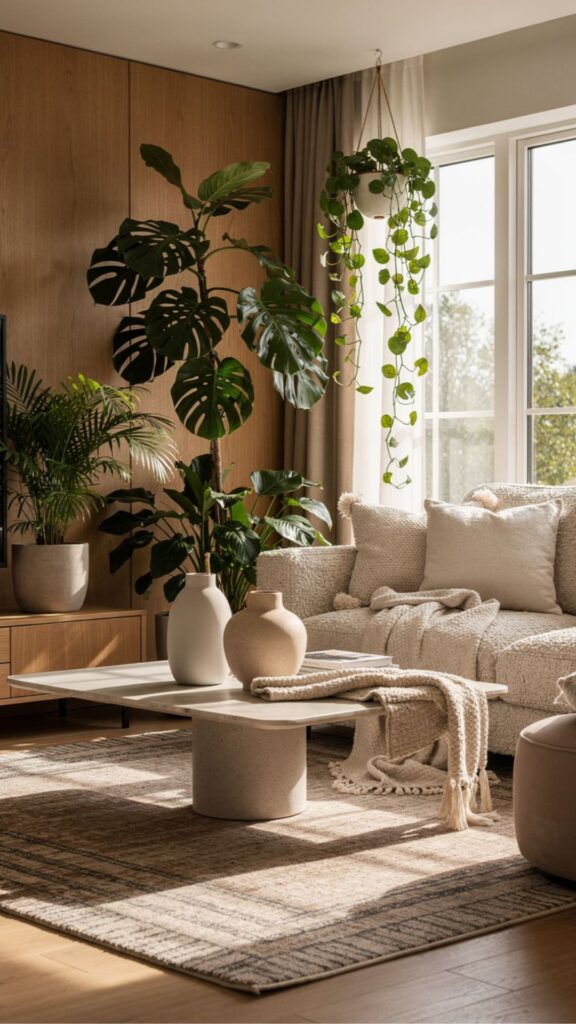
Indoor plants have moved decisively from trend to permanent fixture in sitting room design and for reasons that go beyond aesthetics. A growing body of research supports the psychological benefits of living plants in interior spaces: reduced stress levels, improved mood, and increased perception of space quality.
The sitting room, as the primary social and relaxation space in the home, is perhaps the most important place to benefit from these effects. The question is no longer whether to include plants but how to use them most effectively. Scale matters as much with plants as with furniture and artwork. A single large plant a fiddle leaf fig, a monstera deliciosa, a large bird of paradise, a mature olive tree in a statement pot makes more impact than a collection of small plants scattered randomly around the room.
One confidently sized plant in a well-chosen pot creates a moment of genuine drama. A grouping of three plants at different heights tall architectural, medium leafy, low trailing creates a mini landscape that enriches an entire corner without cluttering it. The impulse to buy many small plants is understandable but rarely produces the same design impact as fewer, larger specimens.
Pot selection deserves as much consideration as plant selection. The pot is the plant’s frame, and an extraordinary plant in a cheap, thin plastic pot looks significantly worse than a modest plant in a beautiful ceramic, stone, or hand-thrown vessel. Investment in high-quality pots even if it means buying fewer, smaller plants initially pays dividends in the visual quality of the room.
Current design directions favor pots in earthy terracotta, matte white or stone, dark glazed ceramics, and natural basket weavings. Matching pot materials to other organic elements in the room (timber, linen, jute rug) creates a cohesive material story that elevates the entire sitting room design. The plant maintenance reality is worth addressing honestly.
Some of the most beautiful sitting room plants fiddle leaf figs, maidenhair ferns, orchids are genuinely difficult to keep healthy without specific conditions. For sitting rooms without ideal light or for owners without much time for plant care, there are beautiful alternatives that are genuinely forgiving: pothos, ZZ plants, snake plants (sansevieria), rubber plants, and heartleaf philodendrons all tolerate lower light, irregular watering, and general neglect better than most.
Choosing plants appropriate for your actual conditions rather than the conditions you imagine having is the difference between a thriving, living sitting room and a graveyard of dying plants that makes the space feel neglected.
Click to Discover: Small Living Room Ideas That Inspire Smart and Cozy Sitting Room Designs
Style a Beautiful Coffee Table as a Design Feature:
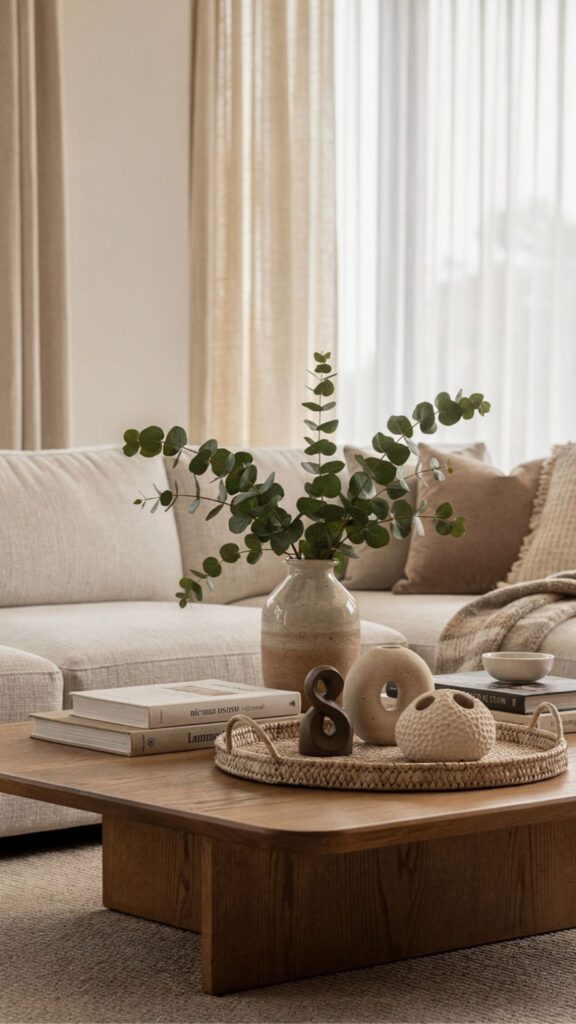
The coffee table sits at the literal center of the sitting room’s seating arrangement, which makes it one of the most visually prominent surfaces in the entire space. Yet it’s consistently styled as an afterthought either left empty, piled with remote controls and magazines, or decorated with a single candle that looks lonely on its large surface.
A deliberately styled coffee table is one of the simplest and most immediately rewarding sitting room upgrades available, requiring no renovation, no significant expenditure, and no professional help. Coffee table styling follows a principle borrowed from retail visual merchandising: the rule of thirds and the use of objects at varying heights.
Divide the table surface into thirds mentally and arrange objects across these sections rather than clustering everything in the center. Include at least one tall vertical element (a stack of coffee table books topped with a small object, a tall vase, a sculptural piece), one middle-height element (a bowl, a small plant, a decorative box), and one low, flat element (a single large candle, a tray, a spread of objects within a contained area).
This hierarchy of heights creates visual movement that draws the eye across the whole surface. The tray is the coffee table stylist’s most useful tool. A large tray in lacquered wood, woven rattan, hammered metal, or marble corrals a grouping of objects into a single visual unit, making an arrangement of several small objects read as one cohesive composition.
It also provides a practical function: the tray can be lifted to clear the table surface quickly for entertaining or for children to use the table. Choosing a tray in a material that bridges the coffee table’s material and the room’s accent colors creates a layered connection between the table styling and the broader room palette.
Coffee table material and form choices significantly affect the sitting room’s overall design language. A large rectangular solid oak coffee table grounds a room with natural warmth and visual weight. A glass-topped table with metal or brass legs adds lightness and transparency particularly valuable in smaller sitting rooms where reducing visual mass helps the space feel larger.
A round or oval table softens a room full of angular furniture and improves traffic flow around the seating area. Nesting tables, a paired ottoman, or a set of smaller side tables used in place of a single coffee table offer flexible alternatives that adapt more easily to different uses entertaining, working from the sofa, families with young children.
Design a Reading Nook Within the Sitting Room:
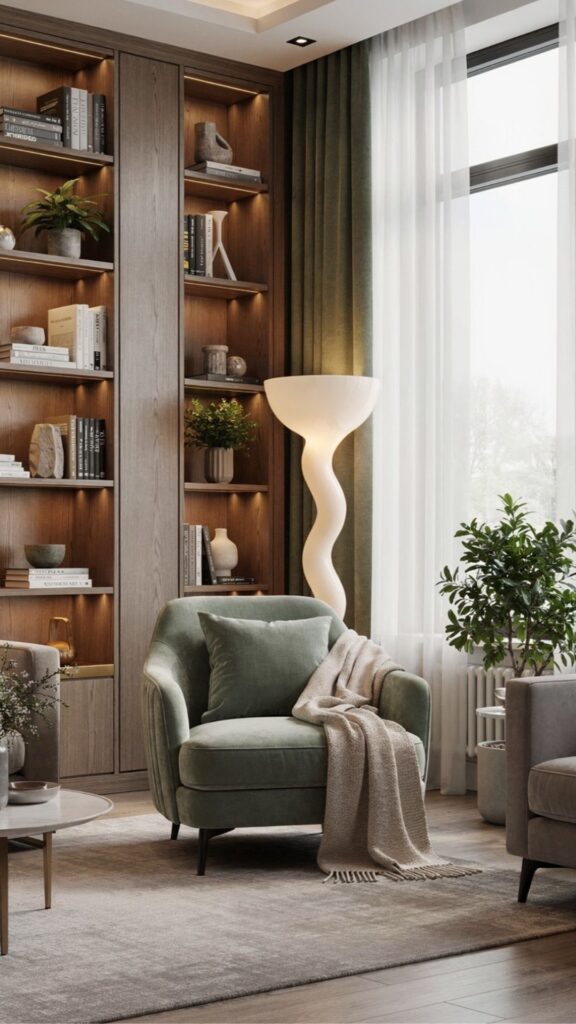
A dedicated reading nook within a sitting room is one of the most beloved design features in residential interiors and one of the most underimplemented. Most sitting rooms are designed for collective use: the sofa faces the television, the seating arrangement centers on conversation, and the room optimizes for the needs of a group.
A reading nook carves out a genuinely personal space within that collective environment a corner that belongs to the individual rather than the family, defined by comfort, quietness, and light rather than by social function. The physical requirements of a good reading nook are specific and worth designing to precisely. A chair wide enough to curl up in an oversized armchair, a small loveseat, or a deep window seat is the foundation.
Good reading light positioned correctly (a floor lamp to the side and slightly behind the seated position, at a height that illuminates the page without shining into the reader’s eyes) is non-negotiable. A small surface for a cup of tea, a drink, or a phone at arm’s reach eliminates the need to get up constantly.
And some form of visual or physical separation from the main seating area a bookcase, a change in floor level, a curtain on a ceiling track, a different rug creates the sense of a room within a room. Built-in bookshelves flanking and surrounding a reading chair or window seat create the most architecturally resolved version of the sitting room reading nook.
Floor-to-ceiling shelving on two or three sides of a chair creates the enveloping, literary atmosphere that readers find most conducive to sustained concentration. The shelving also serves a practical storage function housing books that would otherwise need their own space while simultaneously providing the kind of visual texture and warmth that no paint color or wallpaper alone can achieve.
This is a feature that adds genuine monetary value to a home while also being one of the most personally satisfying home improvements available. Window seats are the most spatially efficient reading nook solution for sitting rooms with bay windows or deep window reveals.
A built-in padded seat spanning the width of a bay window with hinged lid storage beneath, cushions above, and bookshelves to either side converts what is often the sitting room’s most architecturally distinctive feature from a complicated furniture arrangement problem into the room’s best feature.
Morning light, the view outside, and the slightly raised position relative to the main room floor (which bay windows typically create naturally) combine to make a window seat reading nook one of the most genuinely pleasurable spots in an entire home.
Make a Small Sitting Room Feel Larger with Smart Design:
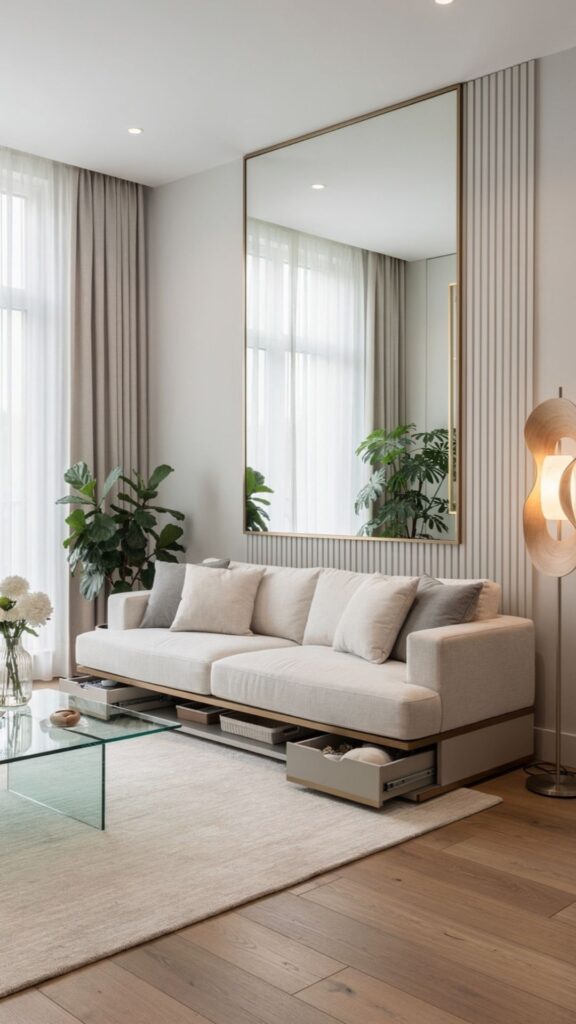
Small sitting rooms are among the most common design challenges in residential interiors and among the most solvable with the right approach. The instinctive responses to a small room (keeping everything small, choosing pale colors, minimizing furniture) are partially correct but incomplete.
A more sophisticated understanding of how spatial perception works reveals that some counterintuitive approaches a large rug, a bold color, a significant piece of furniture can actually make a small sitting room feel more generous than timid, downsized choices do.
Decluttering is the precondition for every other small sitting room strategy. In a small room, every object carries disproportionate visual weight, and the cumulative effect of too many objects furniture, accessories, plants, books, cushions creates a sense of compression that no design trick can overcome. The edit is as important as the addition.
A small sitting room with five carefully chosen pieces of furniture and a curated collection of accessories will always feel more spacious than the same room filled to capacity. The discipline of removing things is harder than adding them but more reliably effective.
Vertical design elements are particularly powerful in small sitting rooms. Curtains hung from ceiling height (rather than just above the window frame) make the room feel taller. Floor-to-ceiling bookshelves or display cabinets draw the eye upward and make the room’s vertical dimension feel more generous.
A tall mirror leaning against a wall or mounted floor-to-ceiling creates the impression of a doorway into additional space. Even the choice of vertically striped wallpaper on a single accent wall measurably affects the perceived height of the room a principle rooted in environmental psychology research on spatial perception.
Multifunctional furniture is the practical cornerstone of a well-designed small sitting room. A storage ottoman that functions as a coffee table, extra seating, and hidden storage simultaneously saves the space of two separate pieces of furniture. A console table behind the sofa serves as a surface for lamps, drinks, and display without consuming floor area within the seating zone.
Nesting tables that tuck under each other when not in use expand the sitting room’s surface area for entertaining and contract it for everyday use. The principle is always the same: every piece of furniture in a small sitting room should earn its floor space by serving more than one purpose.
Embrace Maximalism:
For a Bold, Personality-Filled Room
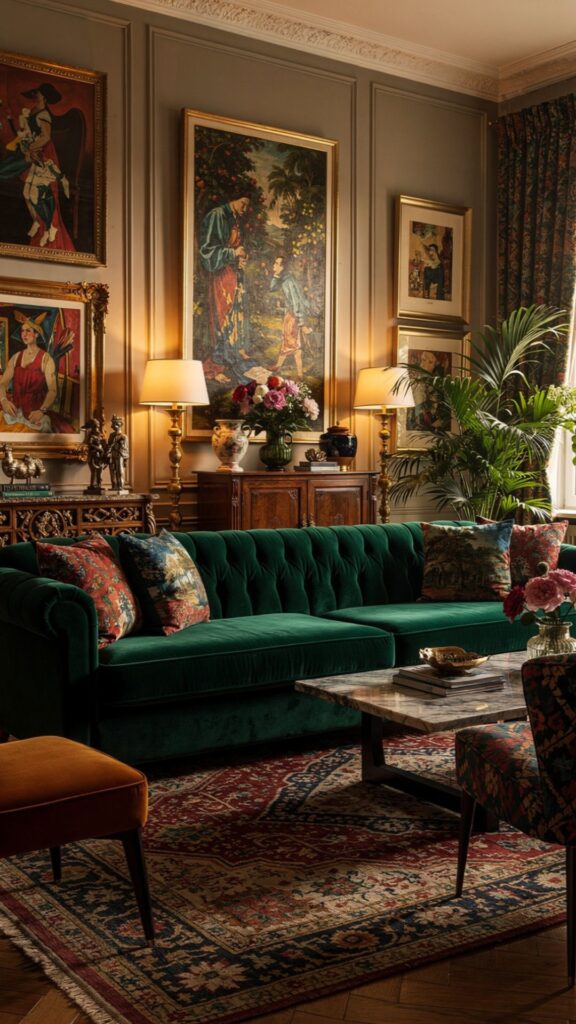
Maximalism is the design philosophy that directly opposes the “less is more” orthodoxy and in sitting rooms, it often produces the most memorable, personality-rich results of any design approach. A maximalist sitting room layers pattern, color, texture, and object with confidence and intention, creating a space that tells a story, rewards exploration, and feels unmistakably inhabited by a specific person.
Crucially, maximalism done well is not the same as clutter it’s the result of disciplined curation applied to a larger and more varied collection of elements. The governing principle of successful maximalist sitting room design is cohesion through repetition. When a color, material, or motif recurs throughout the room even across wildly different objects and surfaces the eye registers a rhythm that signals intention rather than chaos.
For example, a maximalist sitting room that repeats deep green across the wallpaper pattern, the velvet of one armchair, the glaze of a ceramic lamp base, and the spine of several books reads as curated and designed, not random. That single repeated color is the thread that ties everything together, allowing everything else to be as varied, textured, and layered as it likes.
Pattern mixing is the skill at the heart of maximalist sitting room design, and it’s less mysterious than it appears. The fundamental rule is to vary the scale of patterns while connecting them through color. A large-scale floral wallpaper, a medium-scale geometric rug, and a small-scale stripe on a cushion can coexist beautifully if all three share at least one color in common.
The variation in scale prevents the patterns from competing directly each occupies a different visual frequency, so they harmonize rather than clash. This pattern-mixing principle is used by every successful textile and interior designer working in the maximalist tradition, from Colefax and Fowler’s historical output to contemporary designers like Luke Edward Hall.
Collecting as decoration displaying personal collections of ceramics, glassware, books, fossils, vintage textiles, or found objects as intentional design elements rather than hidden in drawers is the detail that makes maximalist sitting rooms feel genuinely personal rather than styled.
The difference between a curated collection on display and random clutter is usually organization: grouping objects by color, material, or theme within a display, using consistent display surfaces (a set of matching shelves, a unified color of display cabinet interior), and editing the collection to include only pieces that genuinely delight you. The objects in a maximalist sitting room should be things you love, not things you’ve simply accumulated.
Create a Cozy Sitting Room with Layered Textiles:
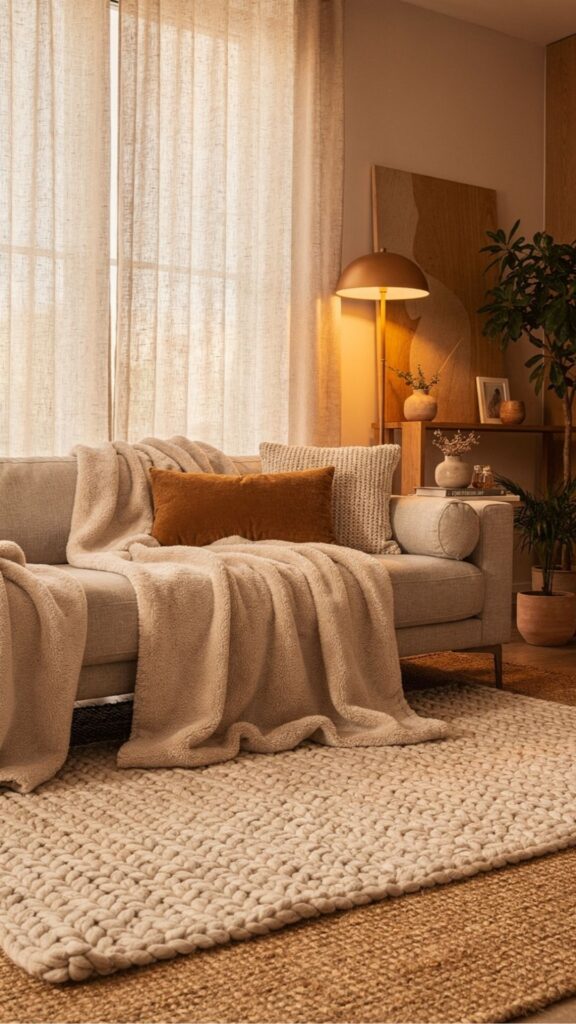
Cosiness the Danish concept of hygge translated into interior design is perhaps the most universally desired quality in a sitting room, and it’s achieved primarily through textiles. Layered fabrics, varied textures, and an abundance of soft surfaces create the sensory warmth that makes a sitting room feel genuinely inviting rather than merely adequate.
The sitting rooms that guests consistently describe as “cozy” or “welcoming” are not the ones with the most expensive furniture or the most elaborate design they’re the ones where the textiles have been layered with generosity and thought.
Cushion styling is an art form that most homeowners practice by instinct rather than principle with mixed results. The most effective sitting room cushion arrangements use a deliberate size hierarchy (large cushions at the back, medium in front, small or bolster in the center), an odd number of total cushions (three or five reads more naturally than two or four), and a mix of textures across cushions in a related color family.
A sofa cushion arrangement of two large linen cushions, two medium velvet cushions in a complementary color, and one small embroidered bolster creates exactly the kind of layered, professional result that photographs well and looks welcoming in person.
Throws deserve more design attention than they typically receive. Most homeowners fold a throw and lay it over one arm of the sofa which looks tidy but feels like a display rather than an invitation. A casually draped throw, partially unfolded with a natural-looking pleat where it meets the seat cushion, signals comfort and ease rather than show-home tidiness.
From a practical standpoint, a throw in wool, cashmere blend, or quality cotton is one of the most used and most appreciated objects in a sitting room reaching for it on a cool evening is one of those small daily pleasures that genuinely contributes to the quality of life in a home.
Curtain fabric weight and fall have more impact on sitting room ideas cosiness than almost any other textile choice. Heavy, lined curtains velvet, heavyweight linen, woven fabric with interlining hang with a depth and substance that sheers and lightweight drapes cannot replicate. When drawn in the evening, properly weighted curtains transform the sitting room into a genuinely enveloping, private space.
The thermal benefit is also significant: interlined curtains provide meaningful insulation against heat loss through windows, which makes the room physically warmer in winter and reduces energy costs. Investing in quality curtains with proper lining and interlining is one of those decisions that improves daily life far more than its cost suggests.
Design a Sitting Room That Works:
For the Whole Family
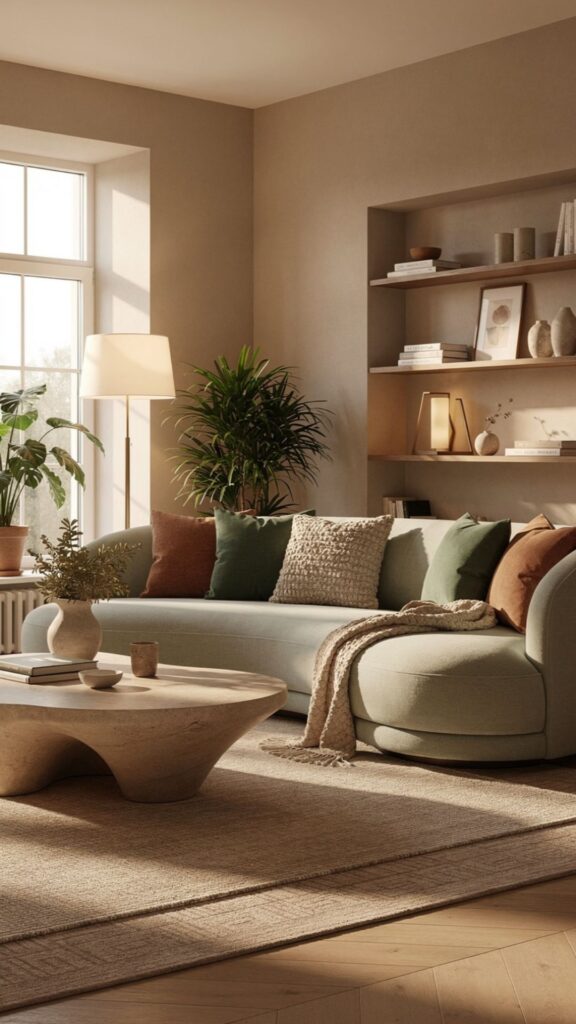
Family sitting rooms face a design challenge that most interior design guides sidestep: the need to function beautifully across the full spectrum of household activities from quiet reading and grown-up entertaining to children’s play, family film nights, homework sessions, and everything in between.
Designing a sitting room ideas that serves all these uses without looking like a compromise requires more sophisticated planning than a room designed for a single purpose, but the result is a space that genuinely works for everyone, every day.
Material durability is the foundation of a family-friendly sitting room ideas design and it should be addressed before any other aesthetic decision. Performance fabrics for upholstery (Crypton, Sunbrella, or Revolution fabrics are the industry leaders) resist staining, moisture, and abrasion far better than natural alternatives without sacrificing the full range of color and style options.
Washable slipcovers on sofas and armchairs offer another approach: entire covers can be removed and machine-washed, returning the sofa to pristine appearance. Choosing flooring, rugs, and surfaces that can handle spills, foot traffic, and the general entropy of family life prevents the sitting room ideas from becoming a space that family members feel they have to be careful in which defeats its entire purpose.
Storage within the sitting room ideas is more important in a family context than in any other. Toys, games, remote controls, chargers, books, craft supplies, and the general accumulation of household life tend to migrate to the sitting room ideas because that’s where the family spends most time.
Designing storage into the sitting room ideas from the start built-in cabinetry with closed doors below open shelving, a large storage ottoman as the coffee table, baskets on lower shelves that children can access and return things to independently prevents the sitting room from becoming the primary dumping ground for household clutter.
The tidiest family sitting rooms are not those where tidying is enforced; they’re the ones where storage is so accessible that putting things away is easier than leaving them out. The television’s role in a family sitting room ideas deserves thoughtful design consideration rather than the default approach of centering the room entirely around it.
A TV mounted at the correct viewing height (the center of the screen at approximately eye level when seated typically lower than most people mount them), integrated into a media unit or built-in shelving that frames it with visual context, and flanked by objects and materials that make it recede when not in use.
Is a far more successful approach than a TV mounted high on a blank wall that dominates the room regardless of whether it’s switched on. Recessed or cabinet-mounted TVs that can be concealed when not in use represent the ideal keeping the sitting room ideas functional as a genuine living space rather than a screen-watching room.
Refresh Your Sitting Room with Seasonal Décor Updates:
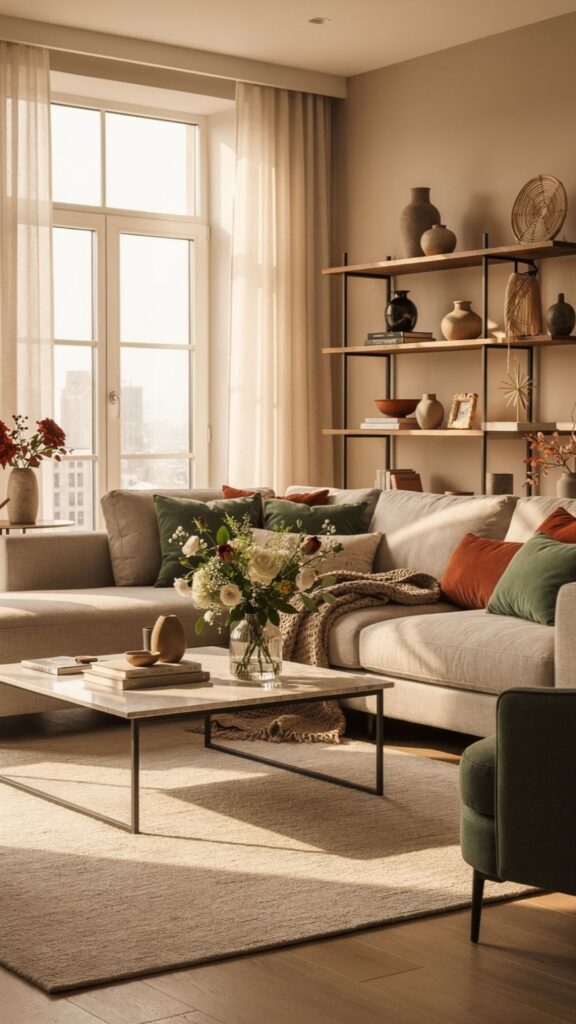
One of the most underappreciated approaches to keeping a sitting room ideas feeling fresh, interesting, and aligned with your current taste is seasonal updating making deliberate, relatively small changes to the room’s accessories, textiles, and plant life at the transition of each season.
This approach keeps the room dynamic without requiring structural changes, spreads the cost of room refreshes across the year, and gives the sitting room a quality that design magazines call “livedness” the sense that someone actively inhabits and cares for the space rather than having furnished it once and left it untouched.
The seasonal update framework for a sitting room ideas typically involves three categories of change. First, textiles: swapping heavy velvet and wool cushion covers for lighter linen versions in spring and summer, exchanging the dense winter throw for a lighter cotton version.
Second, plants and botanicals: bringing in seasonal blooms, switching from tropical statement plants in summer to structural dried arrangements and evergreen botanicals in winter. Third, accessories and color accents: rotating artwork, changing the mantel display, swapping out candles and decorative objects to reflect the season’s tones.
None of these changes are expensive individually, but together they create a room that feels deliberately maintained rather than statically installed. Color temperature shifts between seasons deserve specific attention. The human eye registers warm colors as summery and energizing in spring and summer but as uncomfortably hot in winter. Cool blues, soft greens, and pale yellows feel refreshing in a sitting room in July but bleak in January.
Autumn and winter sitting rooms benefit from deeper, warmer tones amber, terracotta, rust, forest green, deep plum that feel genuinely comforting when the weather outside is cold and dark. Spring and summer sittings rooms respond to lighter, airier palettes soft sage, warm white, sky blue, botanical green.
Achieving these seasonal shifts through cushions, throws, and accessories rather than repainting each season is the practical and cost-effective approach.Scent is the seasonal sitting room ideas element that is almost never discussed in design guides but has a profound effect on how a room feels.
The olfactory sense bypasses the analytical brain more directly than any other sensory input, meaning that a sitting room ideas that smells right for the season creates an immediate emotional response that visual design alone cannot achieve.
Candles and reed diffusers in cedarwood, clove, and leather in winter; fresh citrus, linen, or white tea in spring and summer; warm amber, fig, or dried herbs in autumn these scent shifts reinforce the seasonal visual changes and complete the full sensory experience of a sitting room ideas that truly responds to the time of year.
Don’t Scroll Past: Guest Room Ideas That Share the Same Warm and Welcoming Feel as Your Sitting Room
Style a Contemporary Sitting Room with Minimalist Principles:
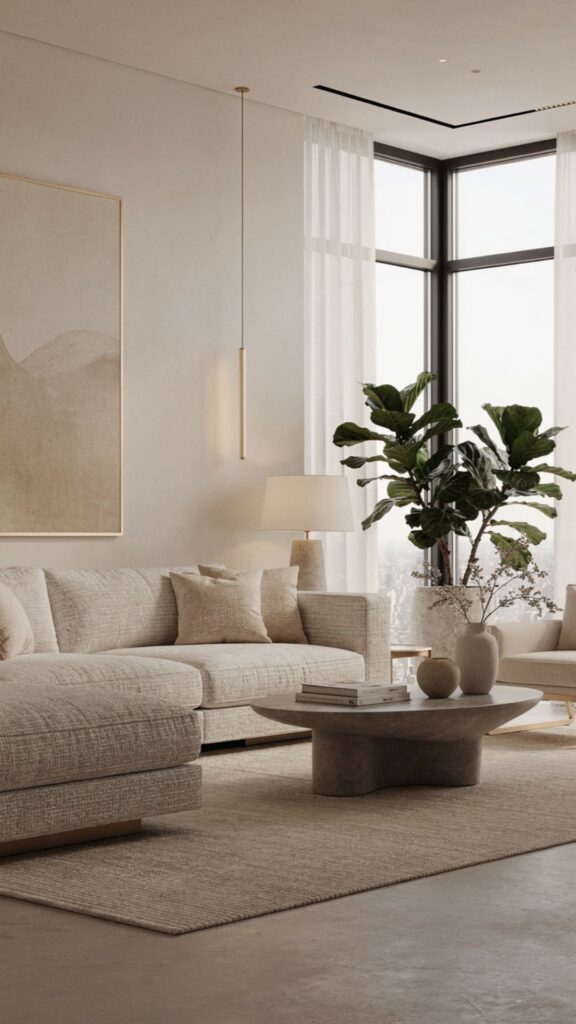
Contemporary minimalism in sitting room ideas design is frequently misunderstood as an aesthetic of emptiness a room with nothing in it. In reality, the best minimalist sitting rooms are among the most carefully designed of all, because every single object, material, and surface is visible and must justify its presence entirely on its own merits.
There is nowhere to hide poor choices, and no volume of additional objects to compensate for them. Minimalism is a discipline that produces rooms of extraordinary serenity and visual clarity when applied with genuine understanding.
The minimalist sitting room ideas achieves its effect through what designers call “editing to essence” identifying the three or four elements that define the room’s character and eliminating everything that doesn’t reinforce them. A minimalist sitting room ideas might be built around: a perfect sofa in a considered fabric, a single large piece of art, a handmade ceramic lamp, and a beautiful rug.
These four elements, in a calm, light-filled room with painted walls and simple window treatments, can constitute a complete and satisfying interior. Every additional object should be judged against the question: does this addition strengthen the room’s essential character or dilute it?
Material quality is non-negotiable in minimalist sitting rooms, because materials are doing almost all the decorative work that objects and pattern perform in more layered interiors. A sofa in an ordinary fabric looks adequate in a room full of distracting accessories; the same sofa in a minimalist room must be extraordinary, because it’s one of only five things to look at.
This principle elevates material selection from a secondary decision to a primary one. Natural materials stone, solid timber, hand-thrown ceramics, linen, leather, wool have the surface depth and character to sustain visual scrutiny in a way that synthetic materials typically do not.
Negative space the empty areas of a room that contain nothing is the minimalist sitting room’s most important and most counterintuitive design element. Interior designers working in the minimalist tradition treat empty space as a positive design choice, not an absence of furnishing. An empty wall, an unobstructed expanse of flooring, a coffee table with a single object rather than a styled arrangement these emptiness choices give the room a quality of breathability and calm that crowded spaces cannot achieve.
The challenge for most homeowners is resisting the impulse to fill empty space. Doing so is the essential minimalist skill, and the reward is a sitting room ideas that feels genuinely peaceful in a way that no amount of addition can create.
Personalize Your Sitting Room with Meaningful Objects and Story:
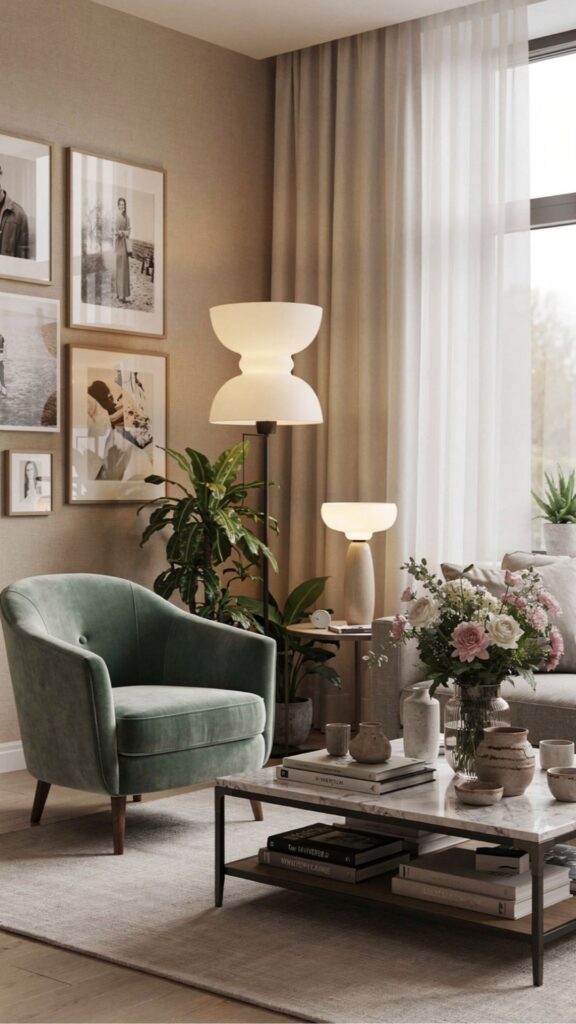
The most beautiful sitting rooms in the world share a quality that transcends furniture, color, and styling: they feel like they belong to someone specific. They contain objects that carry meaning, evidence of travel and experience, things that were chosen slowly over time rather than purchased wholesale from a showroom.
This quality call it personal narrative or lived-in character is what separates rooms that appear in shelter magazines from rooms that people genuinely love to be in. And it cannot be bought ready-made; it must be built deliberately, object by object and layer by layer.
The traveling collector approach to sitting room ideas personalization is one of the most effective and most enjoyable: making a habit of bringing back one considered object from every significant trip a piece of local ceramics, a market-found textile, a small piece of indigenous craft, a print from a gallery visit. Over years and decades, these objects accumulate into a sitting room that tells the story of a life lived with curiosity and engagement.
Each piece prompts a conversation, carries a memory, and contributes to a whole that no interior designer working from a budget and a brief can replicate, because it’s genuinely irreplaceable. Family photographs are one of the most powerful personalizing elements in a sitting room ideas and one of the most underused, largely because people aren’t sure how to display them attractively.
A gallery wall of black-and-white family photographs in consistent frames creates a beautifully cohesive personal display that feels curated rather than sentimental. Choosing images for their compositional quality as well as their emotional content a photograph that is also a beautiful image means the gallery wall works as art as well as family history.
Printing and framing photographs from phones is one of the simplest and most impactful sitting room ideas personalizations available to anyone. Heirlooms and inherited objects are the sitting room ideas personalization category that most interior design guides completely ignore because they can’t be recommended or purchased, only appreciated.
A grandmother’s lamp, a grandfather’s reading chair reupholstered in a contemporary fabric, a piece of inherited china displayed in a new context, a collection of vintage books from a family library these objects bring something genuinely irreplaceable into a sitting room ideas: continuity, connection, and the comforting sense that the space participates in a longer story than the current occupant’s lifetime.
Designing a sitting room ideas that accommodates and honors these inherited pieces, rather than treating them as stylistic obstacles, produces a space with a depth of character that no amount of new furniture can replicate.
Conclusion
A well-designed sitting room ideas is one of the most rewarding investments you can make in your home it improves daily life, reflects your personality, and creates the environment where your most important moments happen. Whether you start with a statement fireplace, a new furniture layout, or simply a better lighting scheme.
Each idea in this guide moves your sitting room ideas closer to the space it has the potential to be. Choose the ideas that resonate most with your lifestyle, your taste, and your budget and start with just one. The best sitting room ideas is the one you actually begin transforming today.

Team TrandyVilla is the passionate home decor team behind Trandy Villa, where style meets comfort in everyday living. The team loves transforming simple spaces into beautiful, functional homes through smart ideas, budget-friendly hacks, and modern design trends. Their content focuses on helping readers create homes that feel both stylish and personal without spending too much.