
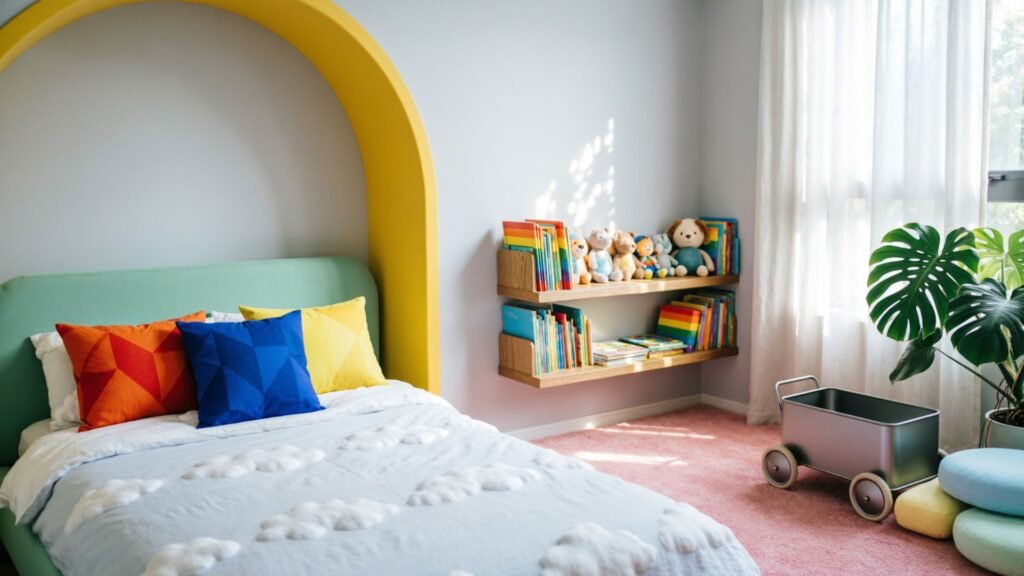
A colorful kids room is a thoughtfully designed space that uses bold colors, playful themes, and smart furniture to support a child’s growth, creativity, and comfort. It is more than decoration. It shapes how children think, sleep, and play every day. Colors influence mood, focus, and energy levels in children from a very young age.
A well-designed room uses warm tones to spark creativity and cool tones to encourage rest. Every color choice serves a clear purpose. This makes a colorful kids room one of the most powerful environments parents can create for their child.
Children spend a large part of their early years inside their rooms. The design of that space directly affects their development, behavior, and sense of independence. Research in environmental psychology shows that the right colors reduce anxiety, improve concentration, and promote better sleep in children.
A room designed with intention goes far beyond matching curtains to a bedspread. It creates zones for learning, play, and rest. It uses storage as a tool for teaching organization. It grows alongside the child. Parents who invest in thoughtful design early save time, money, and stress in the long run.
Colorful kids room ideas range from simple accent walls and themed zones to sensory-friendly layouts and gender-neutral palettes. Each idea serves a different need depending on the child’s age, personality, and space. Some ideas focus on maximizing small rooms through smart storage and multi-functional furniture. Others prioritize creating a calming environment for children with sensory sensitivities.
Budget-friendly options like peel-and-stick murals and removable decals make it easy to refresh a room without renovation. The best approach combines strong visual appeal with long-term practicality. A great kids room design is one the child grows up in, not out of.
Rainbow Accent Walls:
Making a Bold First Impression
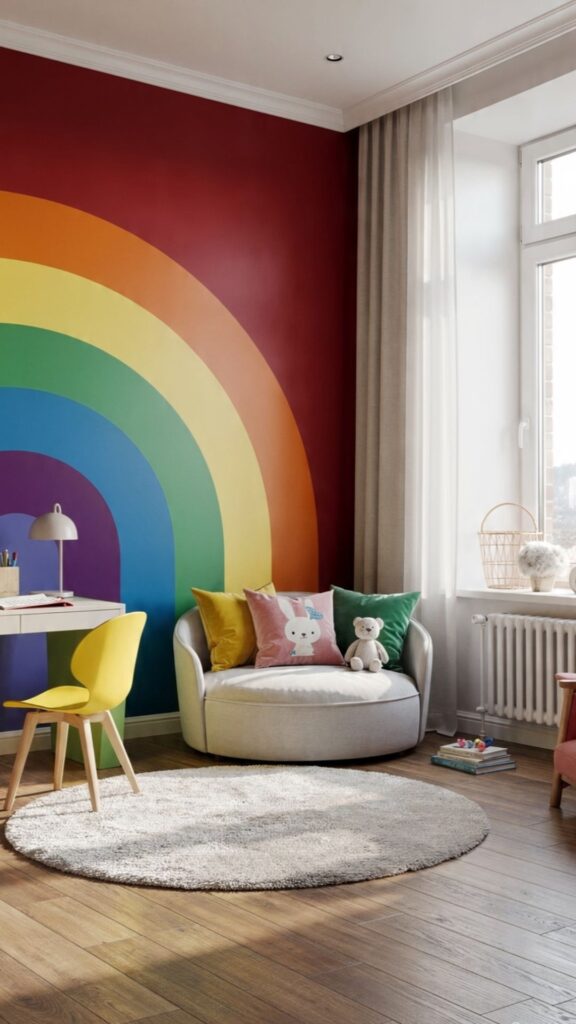
A rainbow accent wall is one of the most searched and beloved colorful kids room ideas and for good reason. When done thoughtfully, it creates an instant focal point that sparks imagination and excitement. Rather than a literal painted rainbow arc, today’s design trends favor horizontal color-blocking in muted rainbow tones think dusty coral, pale lemon, sage, and sky blue arranged in wide bands. This approach feels modern and curated rather than childish or dated.
For maximum impact, choose the wall behind the bed headboard. This framing effect naturally draws the eye and makes the room feel intentional. If your child already has colorful bedding, keep the wall tones slightly desaturated so they complement rather than compete. Conversely, if the walls are vibrant, opt for white or neutral bedding. The balance between wall art and furniture color is what separates a well-designed colorful kids room from a visually overwhelming one.
An often-overlooked technique is using geometric shapes within a rainbow scheme. Painting triangles, arches, or half-circles in different colors on one wall creates a graphic, almost mural-like effect without requiring artistic skills. Tape and a level are your best tools here. This also doubles as a growth chart opportunity you can mark heights on the geometric panels and repaint as the colors shift over the years.
From a practical standpoint, use low-VOC or zero-VOC paint in kids rooms to protect air quality. Brands like ECOS and Benjamin Moore Natura are popular choices among health-conscious parents. Satin or eggshell finishes are ideal for kids’ spaces because they’re easier to wipe clean than matte a consideration that becomes very real when crayons and yogurt enter the picture.
Multi-Functional Colorful Furniture:
That Grows With Your Child
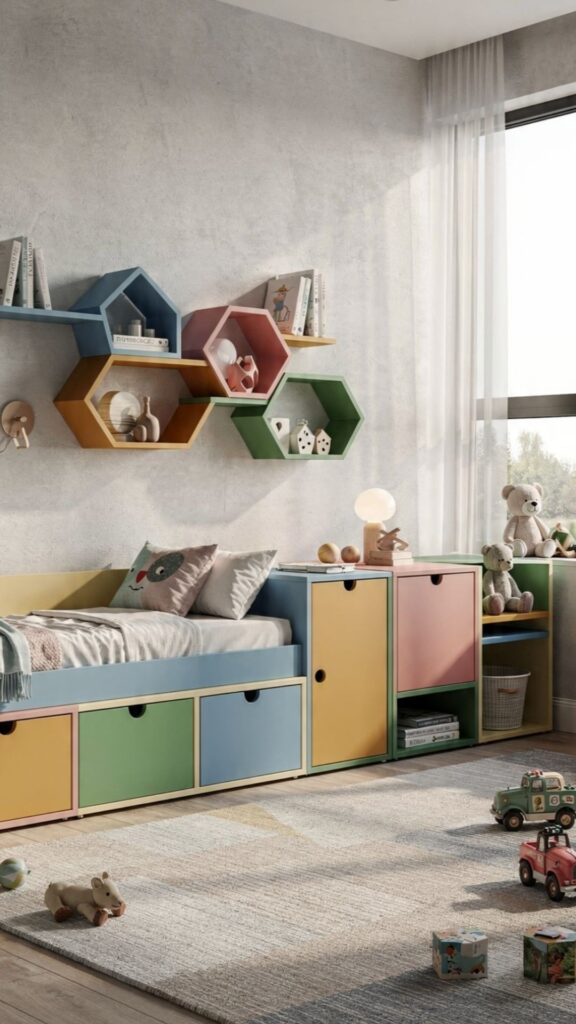
Smart colorful kids room design isn’t just about looks it’s about longevity. Multi-functional furniture pieces solve one of parents’ biggest challenges: rooms that look outdated or are outgrown within a few years. A brightly colored loft bed with a built-in desk below,
for example, serves a toddler as a play fort and transitions seamlessly into a homework station for a 10-year-old. The color keeps it fun; the function keeps it useful.
Consider modular shelving systems in bold primary colors, like the iconic KALLAX from IKEA or Flexa’s colored storage towers. These can be reconfigured as needs change toy storage becomes book organization, which later becomes a display shelf for trophies and collectibles.
The key is choosing pieces with neutral structural frames and colorful inserts or bins that can be swapped as tastes evolve.
Convertible cribs that grow into toddler beds and then full-size frames are another worthwhile investment. When chosen in a classic white or natural wood tone and paired with colorful bedding and accessories, they provide a stable base that never goes out of style. Layer on colorful ottomans, poufs, or bean bags that double as seating and storage especially popular in gender-neutral colorful kids room setups.
Designer Insight: Invest in neutral large pieces (bed frame, wardrobe) and express color through smaller, affordable items like pillows, baskets, and wall art. This makes redesigning 80% cheaper when your child’s tastes change.
Take a Peek : Indoor Plants Styling Ideas That Bring a Fresh and Playful Touch to Your Kids Room.
Themed Room Zones:
Adventure, Art, and Learning All in One
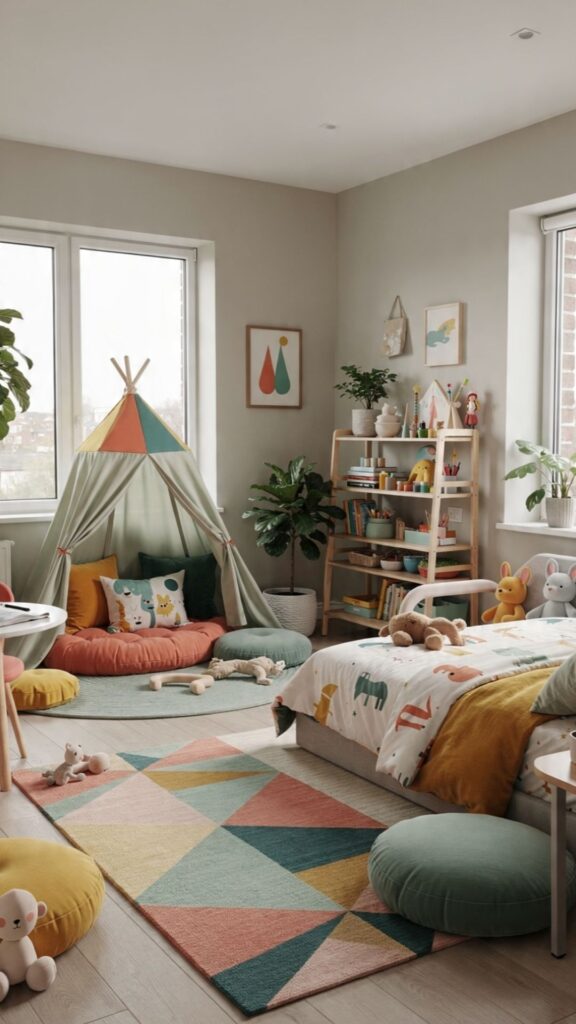
One of the most effective and underused strategies for a colorful kids room is dividing the space into distinct activity zones. Rather than one open space that tries to do everything, a zoned room uses color as a wayfinding tool.
A reading nook in navy blue with a string of warm-toned lights signals ‘calm, focused time,’ while a bright yellow art corner signals ‘creative time.’ The child intuitively understands what each zone is for. Themed zones work even in small rooms. A loft bed transforms the area beneath it into an adventure cave with the help of a canopy, fairy lights, and a rug.
A corner of the room becomes a stage with a simple curtain and a colorful kids room chalkboard backdrop. You don’t need square footage you need intentional layering. Color plays a major role: different hues for different zones create clear visual boundaries without needing walls or dividers.
Consider your child’s specific interests when choosing themes. A space-obsessed 7-year-old might love a ‘galaxy learning zone’ with deep navy walls, glow-in-the-dark star decals, and planet-shaped LED lights. A child who loves animals might prefer a safari sleep area with jungle-green walls and animal print accents.
The more personal the design, the more ownership the child feels and research shows this sense of ownership supports emotional security and independence.
Importantly, themed zones don’t have to be permanent. Use removable wallpaper, peel-and-stick decals, and modular furniture to create flexibility. Today’s market offers stunning peel-and-stick murals in themes ranging from underwater scenes to enchanted forests, making it easy to completely transform a room’s character without a single nail or brush stroke.
Nature-Inspired Color Palettes:
for a Calm, Vibrant Room
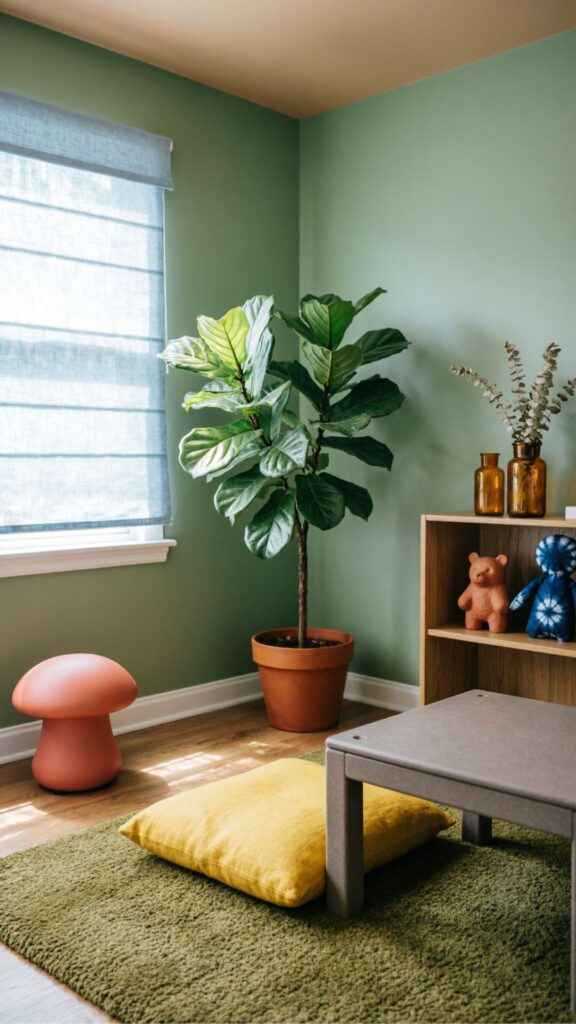
Nature-inspired palettes are having a major moment in colorful kids room design and they’re far from boring. Think terracotta, leaf green, sky blue, sandy beige, and sunflower yellow a palette that feels vibrant yet grounded. These colors work beautifully together because they’re pulled from the same natural world your child explores every day.
This biophilic approach is also supported by studies showing that natural tones reduce anxiety and improve concentration in children. The forest-themed room is a standout example of this trend done right. Deep botanical greens paired with warm earthy browns, linen whites, and pops of mustard yellow create a richly textured environment.
Add wooden furniture, a woven rattan hanging chair, and leaf-print bedding, and you’ve built a room that feels like an adventure without being overstimulating. This aesthetic appeals across gender lines and ages beautifully as the child grows.
Ocean-inspired rooms are equally effective. Soft aqua walls, coral accents, sandy neutral flooring, and driftwood-toned furniture create a serene yet colorful kids room space. This palette particularly benefits children who are sensitive to overstimulation, since the colors are vibrant enough to feel joyful but soft enough to not disrupt sleep. Layer in tactile elements a chunky knit throw, a rope-knotted wall hanging, or a seashell mobile to engage multiple senses.
Sustainability Note: Nature-themed rooms pair perfectly with sustainable materials. Look for FSC-certified wood furniture, organic cotton bedding, and non-toxic, plant-based paints choices that honor the natural aesthetic and protect your child’s health.
Glow-in-the-Dark Decor:
Colorful by Day, Magical by Night
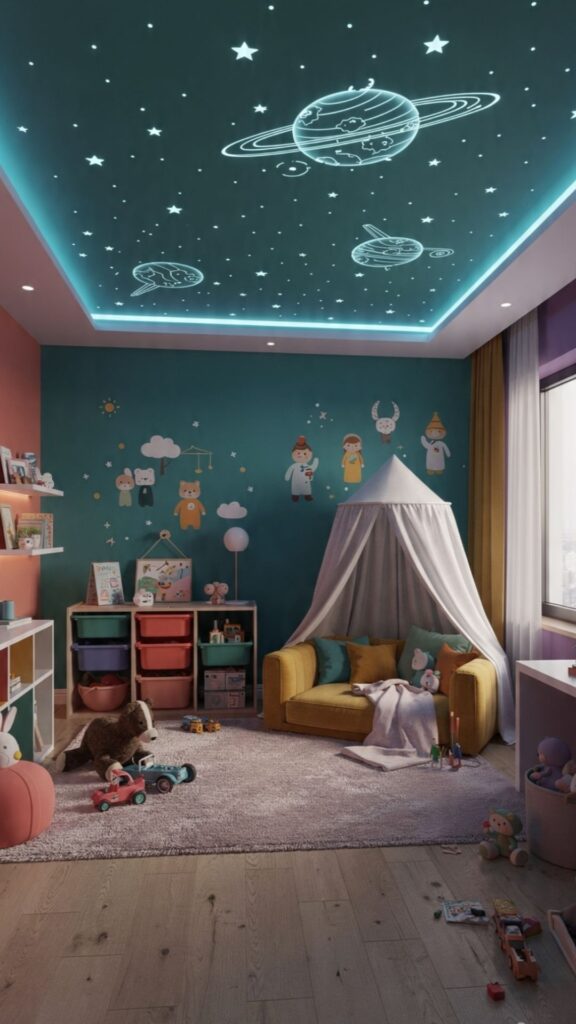
One of the most innovative ideas in modern colorful kids room design is glow-in-the-dark elements that create two completely different atmospheres. During the day, a room might feature a bold yellow, teal, and orange color scheme.
At night, phosphorescent star decals, glowing constellation maps, and UV-reactive mural details transform the same space into a soft, magical environment that eases the transition to sleep. Glow-in-the-dark paint has improved dramatically in recent years. Brands like Rust-Oleum and Krylon offer bright, long-lasting glow paints that can be applied over regular wall paint.
A galaxy mural painted with a mix of regular dark blue and glow paint looks like abstract art during daylight hours, but comes alive after dark in a way that completely captivates children. This dual-nature design maximizes value from a single surface.
For younger children especially, the fear of darkness is common. A room that glows softly after lights-out reduces this anxiety without relying on harsh plug-in nightlights. Glow-in-the-dark decals shaped like moons, stars, or friendly animals can be arranged on the ceiling in meaningful patterns like a child’s name in star form, or a constellation that matches their birth month. These personalized touches transform bedtime from a challenge into a ritual children actually look forward to.
DIY Mural Art:
Bold Expression Without a Big Budget
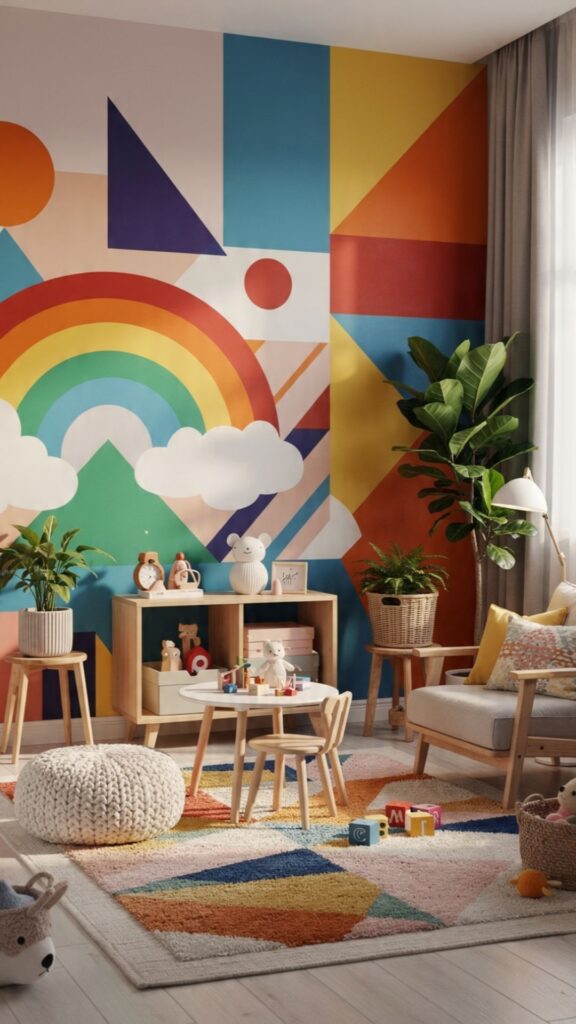
A hand-painted mural is one of the most dramatic transformations you can make in a colorful kids room and it doesn’t require professional artist skills. Simple geometric shapes, oversized botanicals, cartoon characters, or abstract color splashes can all be achieved with basic painting techniques, painter’s tape, and a projector to trace complex outlines. The result is a one-of-a-kind piece of art that no store-bought item can replicate.
Start simple: a giant rainbow arch above the bed, a tree mural in the reading corner, or a city skyline along the lower third of a wall. These iconic shapes are forgiving for first-time muralists and have strong visual impact. Using chalk paint for the initial sketch and then going over with regular wall paint helps avoid costly mistakes.
Many parents report that involving their child in the mural even as young as 3 creates a profound sense of shared ownership and pride. Peel-and-stick mural panels are a game-changer for renters or those who want flexibility. Companies like Minted, Photowall, and Murals Wallpaper offer stunning designs from tropical jungle scenes to abstract watercolor splashes that install in under an hour and remove cleanly.
The quality has improved so dramatically that even design professionals now use them. This is the fastest way to achieve a fully transformed, colorful kids room without a single drop of paint.
Budget Tip: A chalkboard wall is both a mural and an activity center. Apply chalkboard paint to one section, add a simple color border around it, and let your child become the artist refreshable daily at zero extra cost.
Must Read: Bedroom Bench Ideas That Add a Practical and Stylish Touch to Your Colorful Kids Room.
Smart Colorful Storage:
Where Function Meets Fun
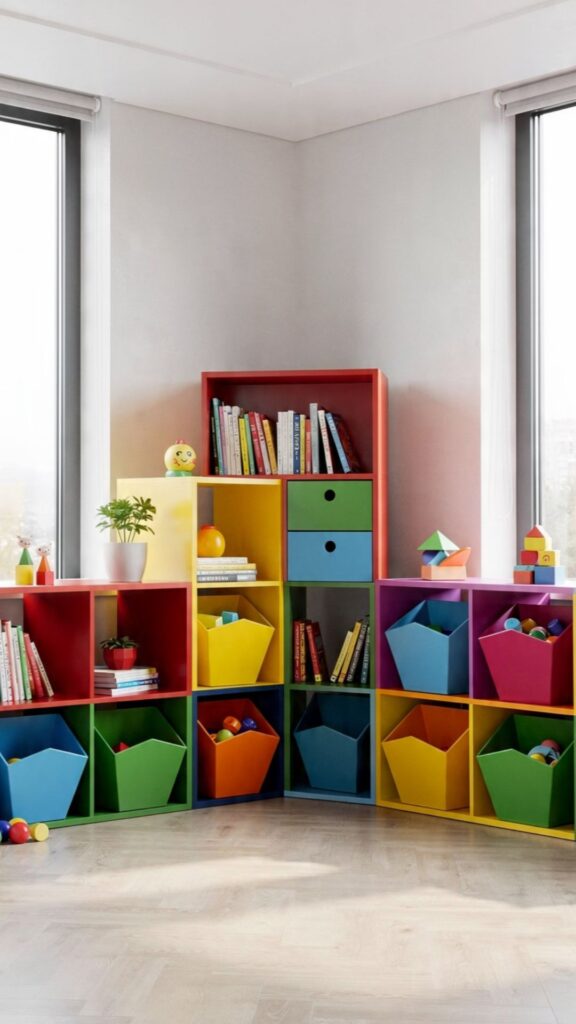
Storage is one of the most overlooked design opportunities in a kids room. Most parents treat it as a practical afterthought, but storage can and should be a major decorative element in a colorful kids room. Brightly colored bins, baskets, and drawer systems add visual rhythm and help children understand organization instinctively.
When the green basket is always for Lego and the red one is always for art supplies, color itself becomes a system. Open-shelf storage with colorful kids room labeled bins is highly recommended by child psychologists because it makes toys accessible and encourages independent play and cleanup.
Rainbow-arranged bookshelves where books are sorted by cover color have become a popular trend, but they serve a real function: children as young as 3 can find and return books by matching colors, building early organizational skills without it feeling like a chore.
Wall-mounted storage is especially powerful in smaller rooms. Floating shelves in bold colors, pegboards painted in primary tones, and magnetic painted strips for artwork display all keep the floor clear while adding personality. A magnetic chalkboard strip along the lower portion of the wall doubles as a drawing surface and a display area for magnetic letters and numbers combining storage, play, and learning in a single colorful kids room element.
Don’t ignore under-bed storage. Rolling drawers in bright colors that match the room palette turn dead space into a toy library. Some designers use color-coded systems where toys stored under the bed rotate on a weekly basis, keeping the room tidy and making old toys feel new again a clever trick that reduces the urge to constantly buy new items.
Textiles and Rugs:
The Softest Way to Add Color
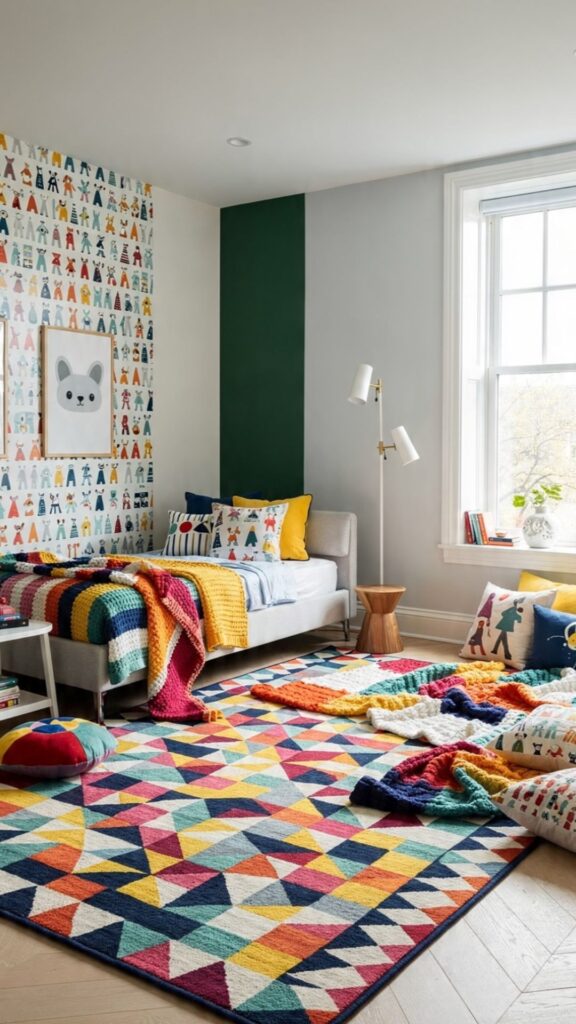
Textiles are the most flexible and affordable way to introduce color into a kids room and the easiest to update as trends and tastes change. A bold multicolored area rug can anchor an entire room’s palette, pulling together furniture, bedding, and wall accents in one cohesive design. Because rugs cover a large floor area, they deliver significant visual impact without the permanence of paint or wallpaper.
For bedding, layering is key. Start with a neutral base (white or pale gray duvet), then add colorful kids room throw pillows, a patterned quilt, and a textured knit blanket. This approach lets you update the room’s feel seasonally swap out the orange and green for winter holidays, or bring in bright tropical colors for summer. It’s a low-cost refresh strategy that keeps the room feeling alive and current without any renovation work.
Curtains often go underappreciated in colorful kids room design. A pair of bold, patterned curtains like a wide-stripe pattern in teal and white, or a block-print botanical in earthy tones can frame the window as a genuine art piece.
Layering sheer white curtains underneath adds softness and light control without sacrificing the color impact. For nurseries and younger children’s rooms, blackout curtains hidden behind decorative outer panels offer both beauty and sleep-quality benefits.
Material Matters: Choose OEKO-TEX certified textiles for kids rooms. These fabrics have been tested for harmful substances, making them a safe choice for children who love to roll around, nap, and be very close to every surface in their room.
Creative Lighting Ideas:
That Elevate the Whole Room
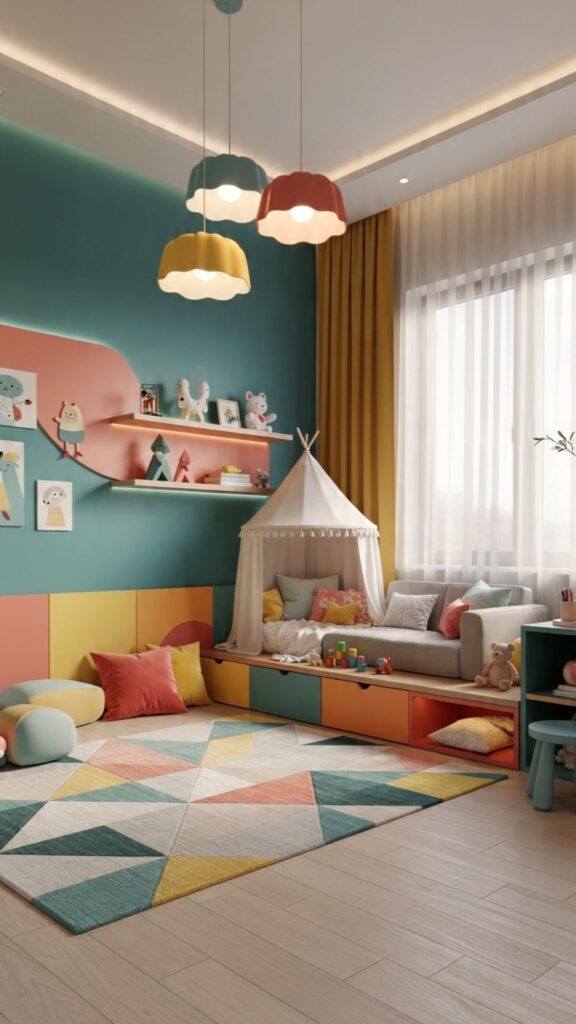
Lighting is the element that ties every colorful kids room together yet most parents default to a single overhead light and call it done. Strategic, layered lighting transforms a room dramatically. The combination of ambient, task, and accent lighting creates depth, changes the feel of colors throughout the day, and gives children the ability to control their environment which is enormously beneficial for developing autonomy and emotional regulation.
String lights are a perennial favorite for good reason: they’re warm, flexible, and instantly cozy. Draping them above a reading nook, around a canopy bed, or along a window frame turns an ordinary corner into something special.
LED string lights in multiple colors with app or remote control allow the room to shift from a vibrant, energetic pink-red during playtime to a soft warm amber at bedtime. Novelty lamps and sculptural pendant lights are having a design moment in colorful kids rooms.
Cloud-shaped ceiling lights, mushroom table lamps, neon sign letters, and animal-shaped bedside lights are popular choices that double as decor and light sources. A neon sign spelling a child’s name or a simple word like DREAM or PLAY adds a striking pop of color and a deeply personal touch that no mass-produced artwork can match.
Task lighting for study and art areas is critical but often skipped. A clip-on LED desk lamp in a bold color (think mustard yellow or poppy red) adds functional lighting for homework while reinforcing the room’s palette. Pair it with a color-matched desk organizer and you’ve created a genuinely functional, cohesive workspace that encourages focus and productivity even for young learners.
Sensory-Friendly Colorful Room Design:
for Neurodiverse Children
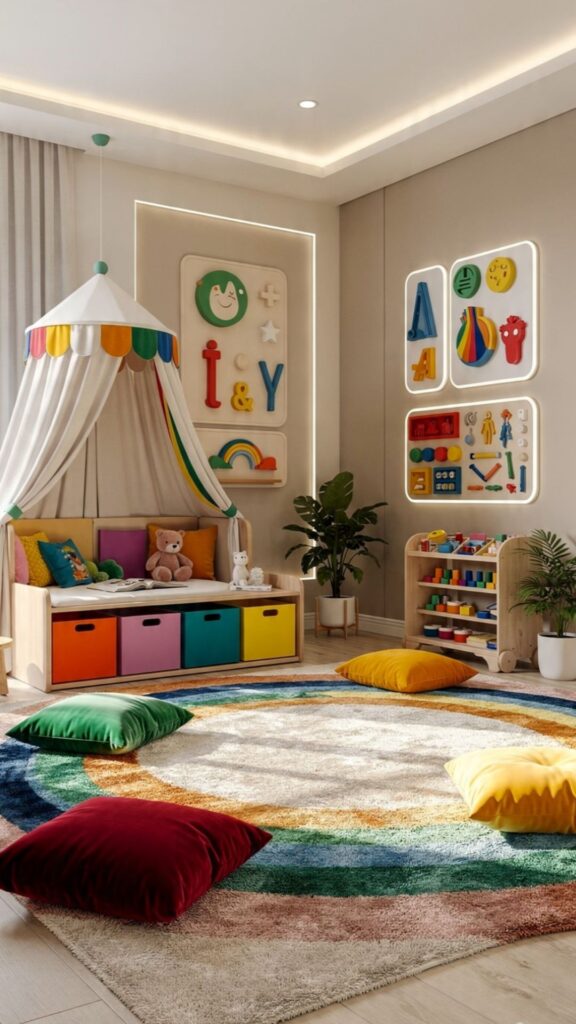
For children who are neurodiverse including those with autism spectrum disorder, ADHD, or sensory processing differences the concept of a colorful kids room requires extra thoughtfulness. Color can be deeply stimulating, which is wonderful for some children and overwhelming for others.
The key is understanding your individual child’s sensory profile. General principles suggest prioritizing muted, nature-inspired tones with small pops of vibrant color rather than saturated walls on all sides.
The ‘sensory diet’ approach to room design involves providing specific zones that deliver different sensory inputs. A calming corner with weighted blankets, soft textures, and cool blue or lavender tones serves as a decompression area.
A movement zone with a mini trampoline, a swing chair, and stimulating color contrast meets the need for vestibular and proprioceptive input. Color becomes a functional tool, not just an aesthetic choice.
Texture is as important as color in sensory-friendly rooms. Smooth walls contrast beautifully with a fluffy rug, a bumpy brick-patterned wallpaper, or a silky velvet cushion. Multi-textural environments give sensory-seeking children constructive ways to meet their tactile needs.
Incorporating these tactile elements alongside a thoughtful color palette creates a room that supports the whole child cognitively, emotionally, and physically.
Key Insight: Install dimmer switches in children’s rooms. The ability to reduce light intensity calms the nervous system more quickly than changing color and it works for all children, not just those with sensory needs.
Kids’ Gallery Walls:
Turning Artwork Into Room Decor
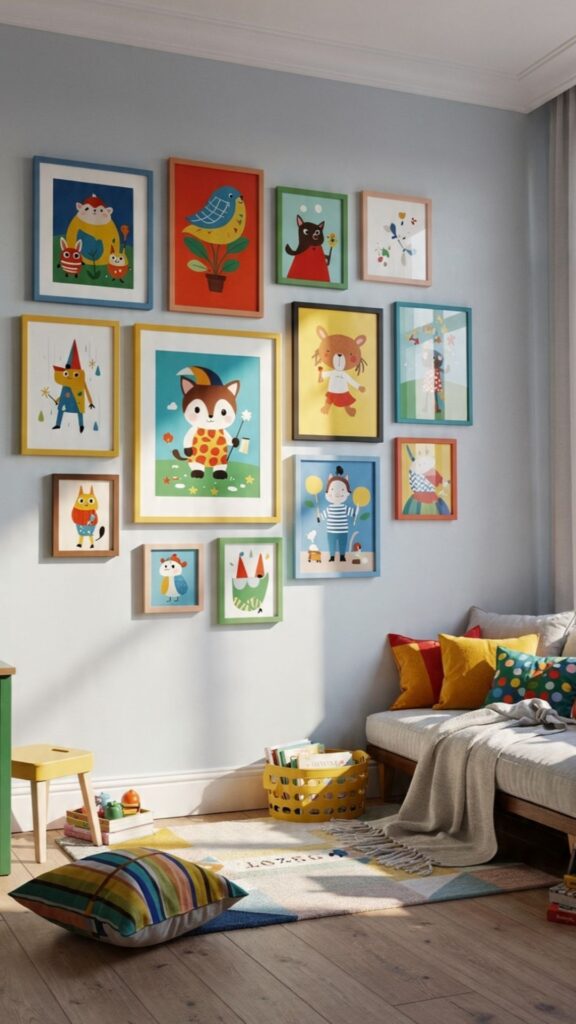
A gallery wall is one of the most personal and endlessly customizable features you can create in a colorful kids room. Unlike adult gallery walls, which tend toward curated prints, a kids’ gallery wall celebrates childhood itself crayon drawings, finger paintings, class photos, hand-print art, and illustrated quotes. The result is a living, ever-changing display that evolves as the child grows and creates new work.
The most effective gallery walls in kids’ rooms use a consistent framing system to create visual cohesion across wildly different artwork. Matching frame sizes even if the artwork inside varies in a single bold color (all-white, all-black, or a primary color) prevents the wall from looking chaotic. Some designers use a mix of frames in a tightly edited palette like gold, white, and natural wood to add warmth while maintaining order.
A rotating gallery system is ideal for prolific young artists. Install a wire display system like a simple tension wire with clips that allows artwork to be swapped without putting new nails in the wall. This approach not only protects the walls but teaches children a meaningful lesson: all creative work has value, and showcasing it is a form of celebration. The gallery wall becomes a confidence-building tool that reinforces self-expression.
For a more cohesive look, frame illustrations from the same artist or book series alongside the child’s own work. Prints by beloved children’s illustrators paired with the child’s own art communicate that their creativity belongs in the same space as professional artwork a powerful message for developing young minds.
Discover More : LED Lights Bedroom Ideas That Add a Fun and Colorful Glow to Your Kids Room.
Gender-Neutral Color Schemes:
That Are Bold and Beautiful
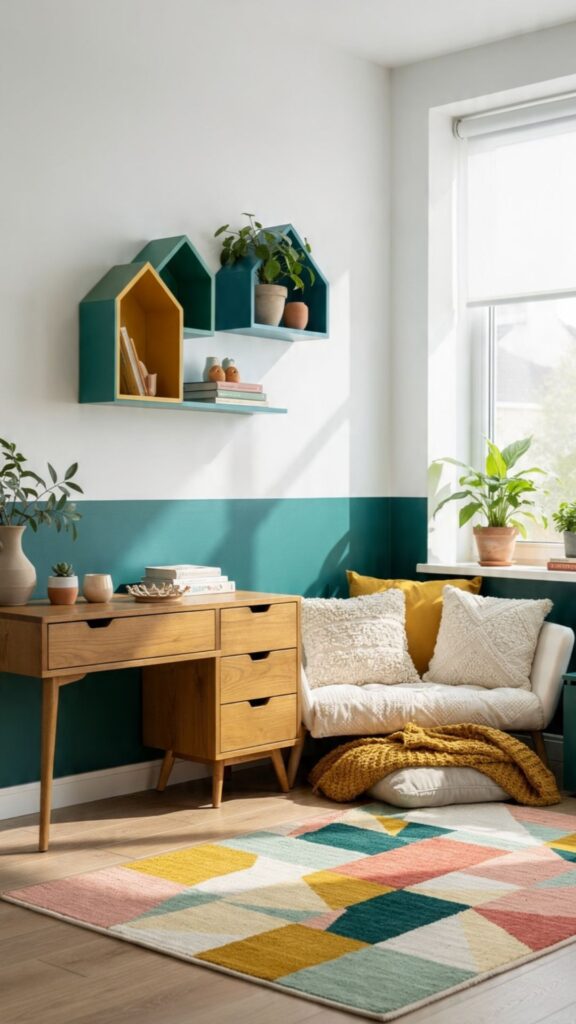
The era of pink-equals-girl and blue-equals-boy is well and truly over and colorful kids room design has evolved beautifully in response. Today’s gender-neutral palettes are some of the most sophisticated and exciting in children’s interior design.
Burnt orange and forest green, mustard yellow and deep teal, terracotta and warm cream these combinations are bold, contemporary, and completely free from outdated gender coding. They also have a longer design lifespan since they’re not tied to passing trends.
Gender-neutral design matters practically when siblings of different genders share a room an increasingly common scenario in modern homes. Rather than compromising, use a shared palette of neutrals with each child’s personal accent color.
Both children might share warm gray walls and natural wood furniture, but one section uses rust-orange accents and the other uses deep blue creating distinct personal zones within a unified space.
Many parents choose gender-neutral rooms because they want to give their child freedom to develop their own aesthetic preferences rather than inheriting one.
A room designed in earthy tones, geometric patterns, and bold naturalistic colors gives a child a canvas to express themselves through the toys, books, and personal items they choose to display. This tends to result in rooms the child stays happily in for much longer saving parents from constant redesign costs.
Trend Watch: The ‘Japandi for Kids’ aesthetic Japanese minimalism meets Scandinavian warmth is growing rapidly. Think warm beiges, muted sage, natural rattan, and clean lines, with a single bold color accent. Timeless, gender-neutral, and genuinely beautiful at any age.
Conclusion
A thoughtfully designed colorful kids room is one of the greatest gifts you can give your child a space that supports their growth, celebrates their personality, and sparks their imagination every single day. From smart color psychology to future-proof planning, the ideas in this guide prove that vibrant doesn’t have to mean chaotic, and beautiful doesn’t have to mean expensive.
Start with one idea that resonates most whether that’s a bold accent wall, a sensory-friendly reading nook, or a rotating gallery of your child’s own artwork and build from there. The best colorful kids room is the one your child helps create.
Ready to transform your child’s space? Pick your favorite idea from this guide and take the first step today. Your child’s dream room is closer than you think.

Team TrandyVilla is the passionate home decor team behind Trandy Villa, where style meets comfort in everyday living. The team loves transforming simple spaces into beautiful, functional homes through smart ideas, budget-friendly hacks, and modern design trends. Their content focuses on helping readers create homes that feel both stylish and personal without spending too much.