
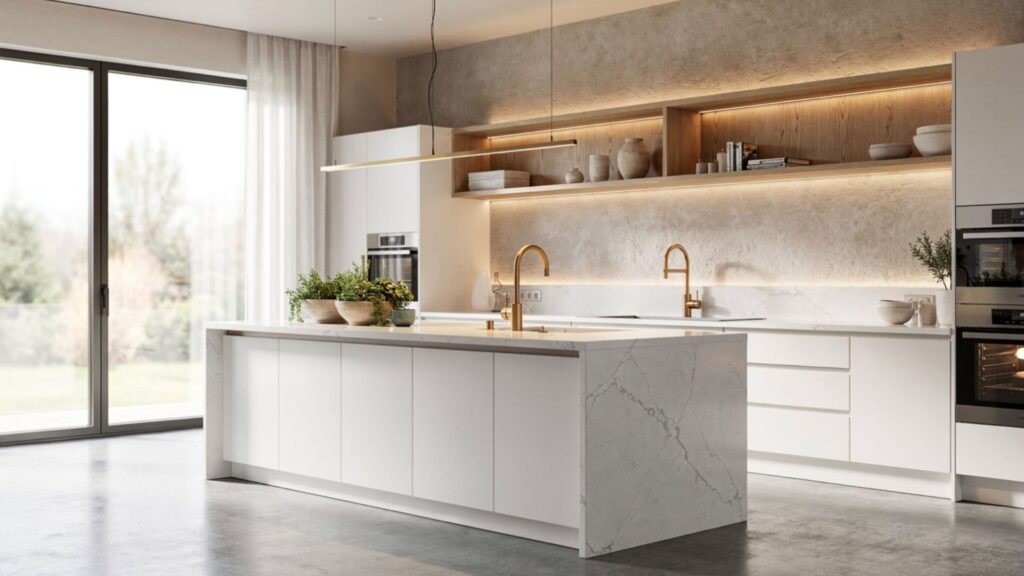
The kitchen is no longer just a place to cook it’s the heart of the home. In 2026, modern kitchen design has evolved into a sophisticated blend of function, aesthetics, and technology. Whether you’re doing a full renovation or a simple refresh, the right design choices can dramatically change how your kitchen looks and feels.
Modern Kitchen Design focuses on clean layouts, smart storage, functional spaces, and stylish finishes. Modern kitchen design ideas combine beauty, comfort, technology, and efficiency in one space. Open layouts, sleek cabinets, natural lighting, durable materials, and organized zones help create kitchens that feel practical and visually modern every day.
Modern Kitchen Design transforms ordinary kitchens into stylish, efficient, and comfortable living spaces for everyday use. This design style combines smart layouts, clean lines, warm colors, and functional storage beautifully. Modern kitchens improve organization, simplify cooking routines, and create welcoming spaces for family gatherings, dining, and social interaction naturally.
Modern Kitchen Design ideas include handleless cabinets, waterfall countertops, layered lighting, smart appliances, and space-saving storage systems. Natural materials, bold backsplashes, and open-concept layouts add warmth and personality. These design elements help create kitchens that feel elegant, organized, modern, and highly functional for long-term daily living.
Embrace the Open-Concept Kitchen Layout:
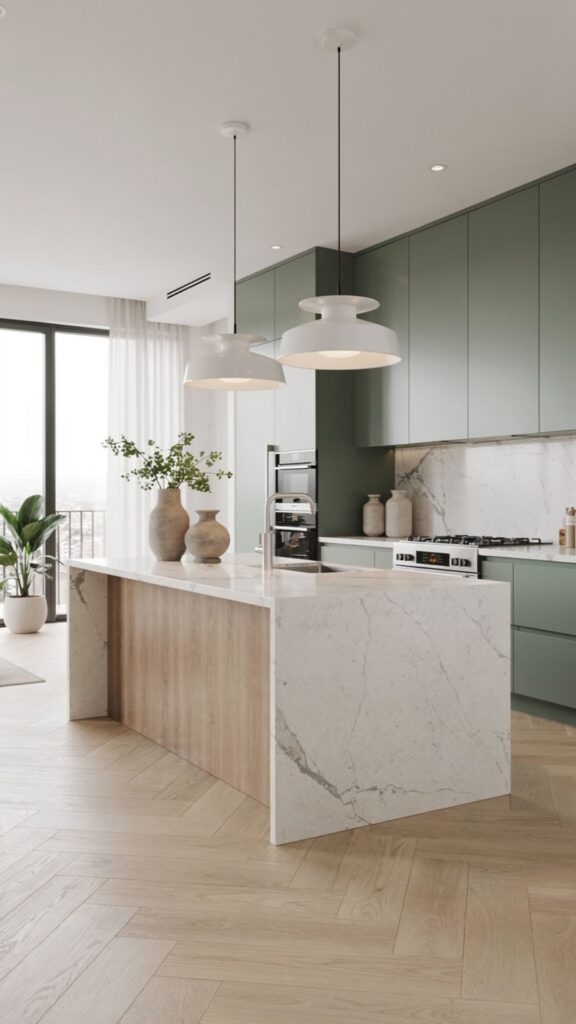
The open-concept kitchen remains one of the most sought-after layouts in modern home design. By removing walls between the kitchen, dining, and living areas, you create a seamless flow that makes the entire home feel larger and more connected. This is especially valuable for smaller homes or apartments where space is limited.
For example, imagine hosting a dinner party where you can talk with your guests in the living room while still keeping an eye on the stove. That’s the magic of an open layout it removes the isolation that traditional kitchens created. Interior designers consistently recommend this approach for families with children, since parents can supervise kids in the living area while preparing meals.
From a future-focused perspective, open layouts also offer more flexibility. As your household changes whether you add a home office corner or need more dining space an open kitchen adapts without major structural changes. According to real estate data, homes with open-concept kitchens consistently command higher resale values than those with closed layouts.
One important caveat: open kitchens require smart ventilation. Without walls to contain cooking smells and smoke, a powerful range hood becomes essential. Choose one with at least 600 CFM (cubic feet per minute) capacity for a proper open-concept setup. This is a detail many design guides skip, but it makes a real difference in day-to-day living comfort.
Choose a Timeless Color Palette with a Modern Twist:
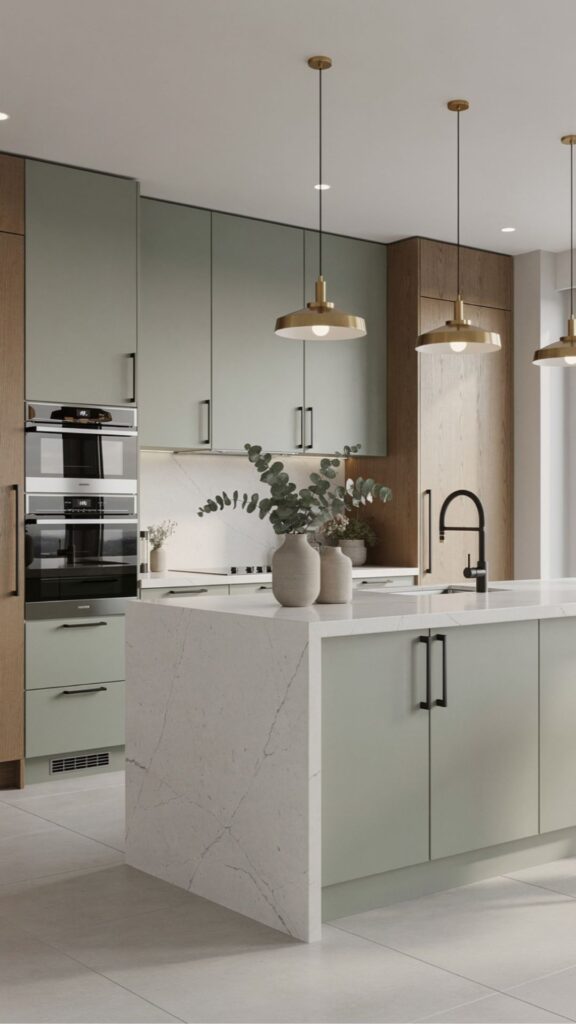
Color is one of the most powerful tools in modern kitchen design. The most effective palettes in 2026 lean toward warm neutrals creamy whites, soft taupes, greige (grey-beige), and warm clay tones rather than the stark, cold whites that defined kitchens a decade ago. These warmer tones photograph beautifully and feel welcoming in real life.
The modern twist? Bold accents. Think deep forest green islands, navy blue lower cabinets paired with white uppers, or rich terracotta tiles used as a backsplash. These accent choices add personality without overwhelming the space. Designers refer to this as the “60-30-10 rule” 60% dominant color, 30% secondary, 10% accent and it works perfectly in kitchen contexts.
One often-missed insight is the role of undertones. A white that looks warm in the paint store can appear cold and clinical under your kitchen’s specific lighting. Always test paint swatches under both natural daylight and your kitchen’s artificial lighting before committing. This simple step saves thousands in costly repaints.
For cabinetry specifically, 2026 trends show a strong move toward two-tone kitchens. Upper cabinets in a lighter shade keep the kitchen feeling airy, while darker lower cabinets ground the space and hide scuffs and fingerprints more effectively a practical detail that makes a surprising difference in kitchens used daily.
Check This: https://trandyvilla.com/farmhouse-kitchen/
Invest in Handleless Cabinetry:
For a Sleek Finish
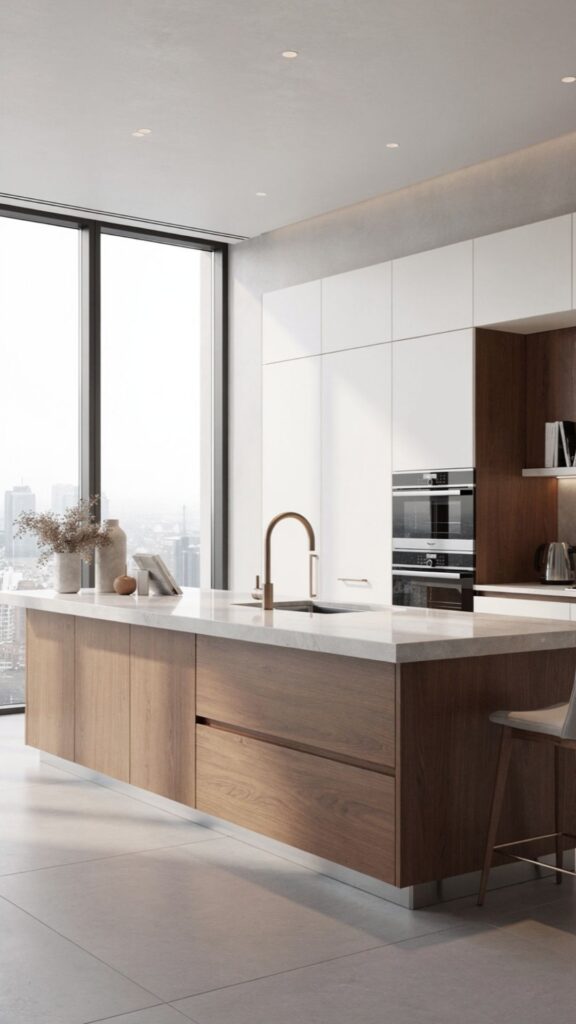
Handleless cabinets have moved from high-end showrooms into mainstream modern kitchen design. By eliminating hardware, the kitchen achieves a cleaner, more streamlined look that photographs exceptionally well and ages gracefully. Push-to-open mechanisms or integrated finger-pull channels replace traditional knobs and pulls.
This design choice offers unexpected practical benefits. Without handles to catch on clothing or bump into, the kitchen becomes safer and easier to navigate a genuine advantage for households with young children or elderly members. Cleaning also becomes faster, since there are no hardware crevices to scrub around.
The key to making handleless cabinetry work is getting the mechanism right. Soft-close push-to-open systems (like those from Blum or Hettich) are far more reliable than budget alternatives. Investing in quality hardware here pays off the mechanism is used dozens of times daily, and cheap versions wear out within a couple of years. Always ask your cabinetmaker about the specific brand of hardware they plan to use.
From a design perspective, handleless kitchens pair beautifully with other modern elements: waterfall countertops, integrated appliances, and seamless backsplash panels. The result is a kitchen that looks like one continuous, thoughtfully designed object rather than a collection of separate pieces which is precisely the aesthetic modern homeowners are chasing.
Install Waterfall Countertops:
For a Luxury Statement
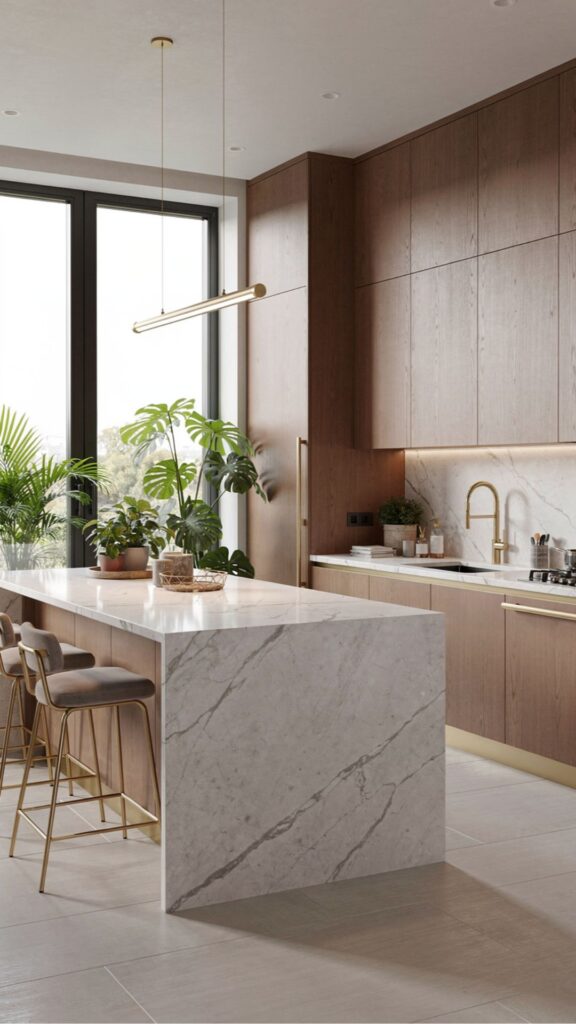
A waterfall countertop where the countertop material continues vertically down the side of the kitchen island to the floor is one of the most impactful single design choices you can make. It transforms a standard island into a sculptural focal point that immediately elevates the perceived quality of the entire kitchen.
Marble and quartzite are traditional choices for waterfall edges, but engineered quartz (like Siles tone or Caesarstone) offers the same visual drama with significantly better durability and stain resistance. For 2026, sintered stone surfaces like Dekton are gaining traction they’re nearly indestructible, heat-resistant, and UV-stable, making them suitable even for outdoor kitchen extensions.
One design detail that competitors often skip: matching the book-matched grain across the waterfall edge. When done correctly, the veining of the stone continues seamlessly from the horizontal surface to the vertical face, creating a stunning visual continuity. This requires precise cutting and planning from your stone fabricator, so discuss it explicitly during the quoting process.
Budget-conscious homeowners can achieve a similar effect with thick-format porcelain tiles (12mm+) that mimic natural stone. Modern large-format porcelain has become remarkably convincing, and it costs 40–60% less than natural stone. The key is choosing a porcelain with a realistic, non-repetitive pattern something high-quality brands like Marazzi or Florim specialize in.
Maximize Storage with Clever Cabinet Systems:
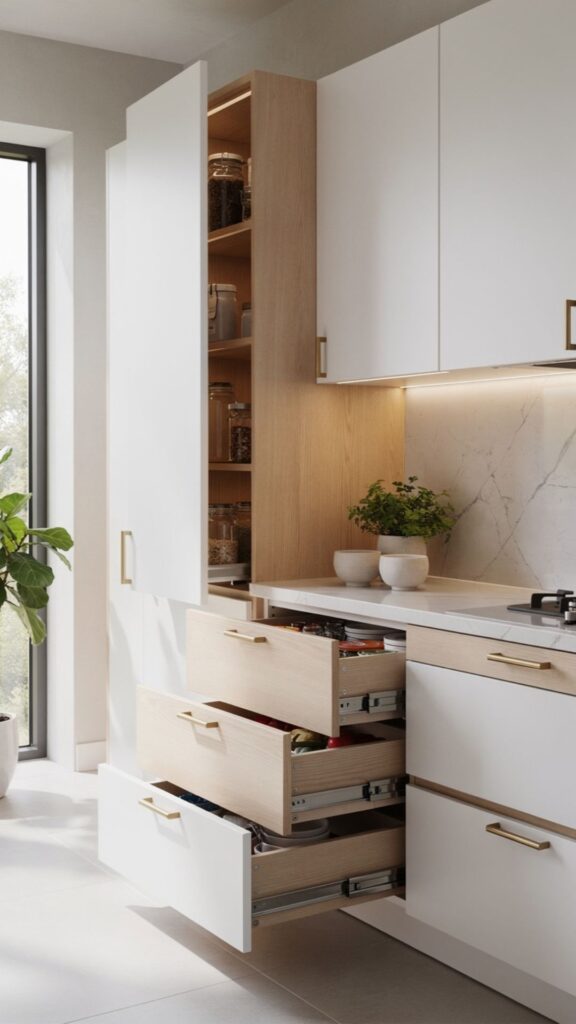
One of the most common complaints about kitchens is insufficient storage yet most kitchens waste enormous amounts of space with inefficient cabinet interiors. Modern kitchen design addresses this through purpose-built cabinet systems that treat every cubic inch as valuable real estate.
Pull-out pantry towers, corner carousel units, and drawer organizers are just the beginning. Consider deep drawer systems for pots and pans (replacing traditional lower cabinets with doors), integrated spice racks within cabinet doors, and custom cutlery trays that fit your specific utensils. Blum’s SPACE TOWER system, for example, turns a narrow 15cm gap into a fully functional pull-out pantry something most homeowners don’t know exists.
Vertical space is chronically underused. Full-height cabinetry that reaches the ceiling eliminates the dust-collecting gap above traditional upper cabinets and provides significant additional storage. In a typical kitchen, this can add the equivalent of an entire extra cabinet run effectively giving you more storage without increasing the kitchen’s footprint.
For a future-focused approach, design your storage around how you actually cook, not around standard cabinet configurations. If you bake frequently, dedicate a lower drawer to baking trays and a pull-out for stand mixer storage. If you’re a coffee enthusiast, build a dedicated coffee station into a cabinet run. Personalized storage systems reduce daily friction and make the kitchen genuinely more pleasurable to use.
Incorporate Smart Kitchen Technology Seamlessly:
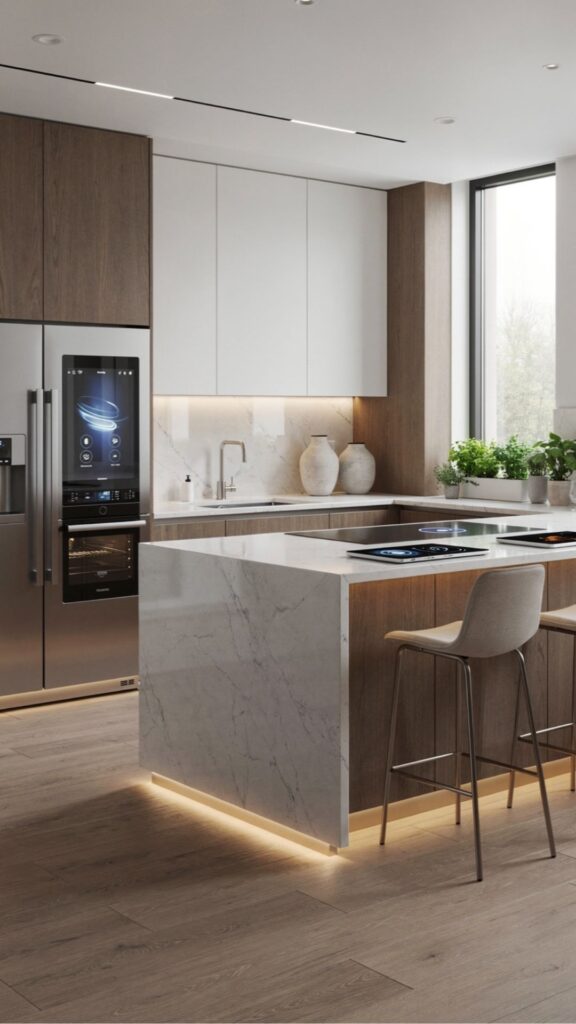
Smart technology is reshaping what a modern kitchen can do but the best smart kitchens hide their technology rather than flaunt it. The goal is a kitchen that feels more effortless and intuitive, not one that looks like a tech showroom.
Practical smart kitchen features with real daily impact include: touchless faucets (dramatically reducing cross-contamination during cooking), smart ovens with internal cameras that monitor food remotely, and induction cooktops with integrated downdraft ventilation that eliminate the need for an overhead range hood entirely. The latter is a game-changer for open-plan kitchens where a bulky hood disrupts the aesthetic.
Integrated charging stations and USB ports within kitchen drawers are another detail that transforms daily life. Rather than hunting for chargers, phones and tablets charge invisibly inside a dedicated drawer out of sight but always ready. This is the kind of functional smart feature that doesn’t appear in most design articles but makes a genuine difference.
Looking ahead, the next frontier is AI-assisted kitchen management. Refrigerators with internal cameras that track inventory, ovens that suggest recipes based on what’s available, and dishwashers that optimize water usage based on load size are all available today. Rather than buying these features impulsively, plan your kitchen layout to accommodate them ensure sufficient electrical circuits, proper Wi-Fi reach, and the structural flexibility to upgrade appliances without a full redesign.
Use Statement Lighting to Define Zones and Mood:
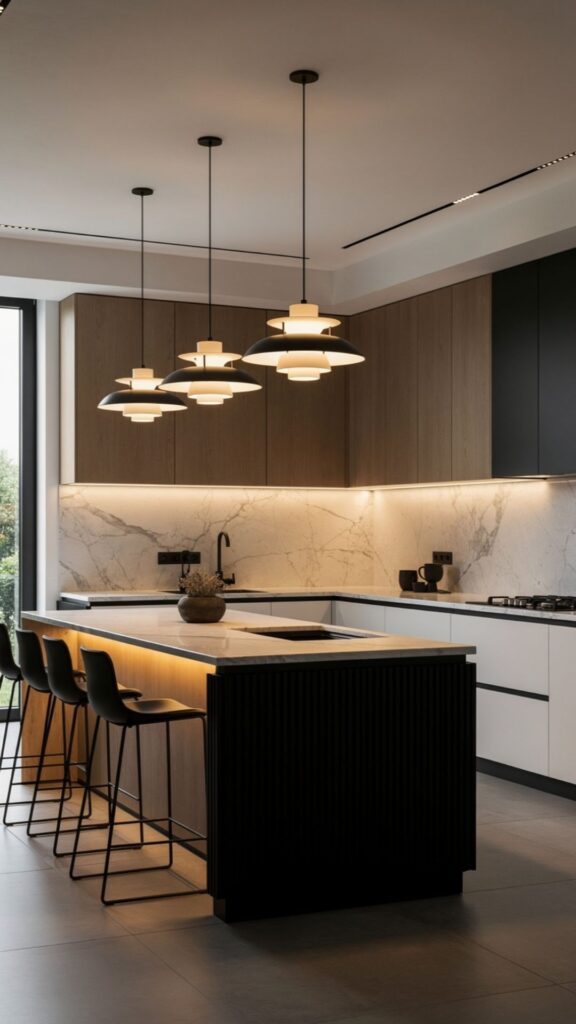
Lighting in a modern kitchen serves three distinct functions: task lighting for safe food preparation, ambient lighting for general mood, and accent lighting to highlight design features. The most successful modern kitchens layer all three, with each type on separate dimmable circuits so the room can shift from bright and functional at noon to warm and atmospheric at dinner.
Pendant lights above an island are the most visible lighting choice, and therefore the most important to get right. In 2026, the strongest trend is toward sculptural, oversized pendants single large fixtures rather than clusters of small ones.
Materials like rattan, blown glass, spun brass, and matte black steel add texture and warmth that hard kitchen surfaces like stone and steel cannot provide on their own. Under-cabinet lighting is the most underrated upgrade in kitchen design.
LED strip lights mounted beneath upper cabinets flood the countertop work surface with shadow-free task lighting which is both safer for cutting and more comfortable for extended cooking sessions. Warm white LEDs (2700–3000K) are recommended over cool white, which can make food look unappetizing and creates a clinical atmosphere.
One advanced technique most guides miss: toe-kick lighting. LED strips installed along the bottom of base cabinets create a subtle glow at floor level that makes the kitchen appear to float. Used at night without other lights on, it creates an architectural effect that feels genuinely luxurious. It costs very little to install during a renovation but adds significant visual impact.
Just see to know: https://trandyvilla.com/pink-kitchen/
Choose Sustainable and Durable Materials:
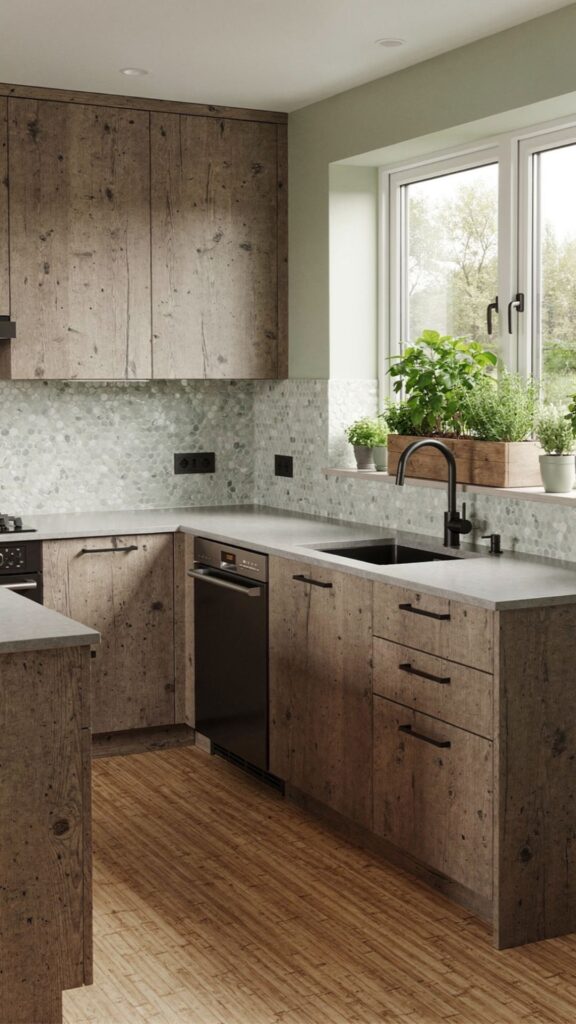
Modern kitchen design in 2026 is increasingly shaped by sustainability not as a trend, but as a genuine priority for homeowners and designers alike. The most sustainable choice is also the most economical in the long run: selecting materials that last decades rather than years, reducing the environmental cost and financial expense of future replacements.
Recycled glass countertops, FSC-certified timber cabinetry, and reclaimed stone are all gaining traction. However, sustainability also means durability a high-quality quartz countertop that lasts 30 years is far more sustainable than a trendy but fragile alternative replaced every five years. Always evaluate materials on their full lifecycle, not just their initial appearance.
For cabinetry specifically, look for CARB2-compliant boards (California Air Resources Board standard) which have the lowest formaldehyde emissions of any composite wood product. This is particularly important in a space where you prepare food air quality in kitchens directly affects food safety.
Many budget kitchen brands use lower-grade boards that off-gas significantly, especially in warm conditions near the stove. Natural materials like solid oak, walnut, and marble bring irreplaceable warmth to modern kitchens. Unlike engineered alternatives, they develop a patina over time that many homeowners come to love.
Solid wood cabinet fronts, for example, can be sanded and refinished decades later giving them a longevity that no laminate or vinyl-wrapped alternative can match. Investing in natural materials where budget allows is one of the wisest long-term decisions in kitchen design.
Design a Functional Kitchen Triangle (or Zone Layout):
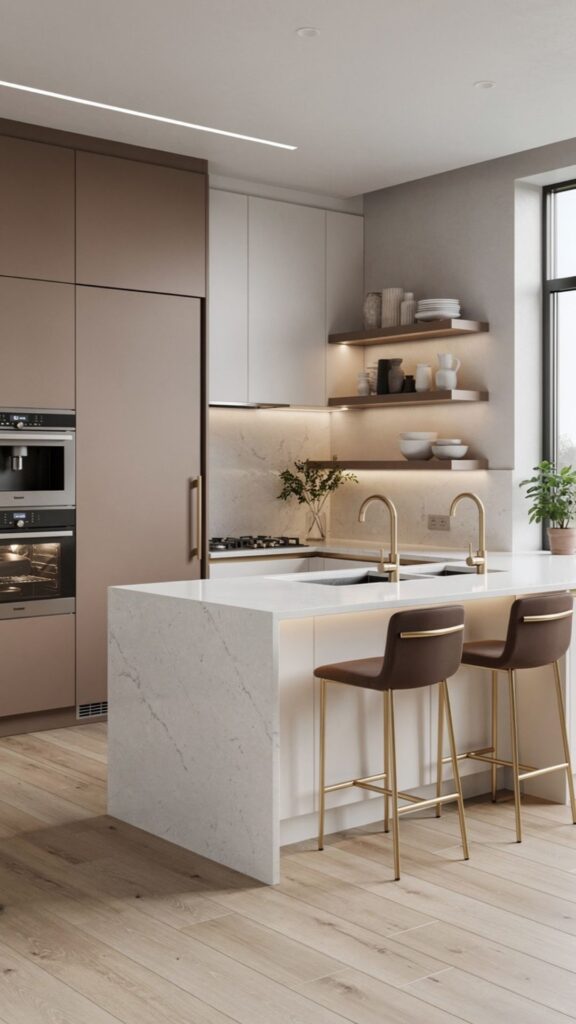
The classic kitchen work triangle connecting the sink, stove, and refrigerator has been the organizing principle of kitchen design for over 70 years. In modern kitchens, this concept has evolved into a zone-based approach that better reflects how contemporary households actually cook and live.
Rather than three points, modern designers think in terms of zones: a prep zone (countertop space adjacent to the sink), a cooking zone (around the hob and oven), a storage zone (pantry and refrigerator), and increasingly, a social zone (usually the island).
Each zone has its own storage, surfaces, and infrastructure, so multiple people can work in the kitchen simultaneously without collision. The social zone deserves special attention. As kitchens open up to living and dining areas, the island becomes a multifunctional hub: breakfast bar, homework station, serving area, and casual gathering point.
Designing an island with knee-high seating on one side and full-height prep space on the other gives it maximum versatility. Adding a secondary prep sink to the island makes it genuinely functional as an independent work zone.
One insight that most kitchen planning guides overlook: the landing space rule. Every major appliance needs dedicated landing space adjacent to it at least 40cm of countertop beside the refrigerator, at least 30cm on each side of the hob, and 60cm beside the oven.
Without these landing zones, the kitchen becomes dangerous and frustrating to use, regardless of how beautiful it looks. Plan these spaces deliberately, even if it means slightly reducing cabinet runs.
Integrate a Bold Backsplash as a Design Anchor:
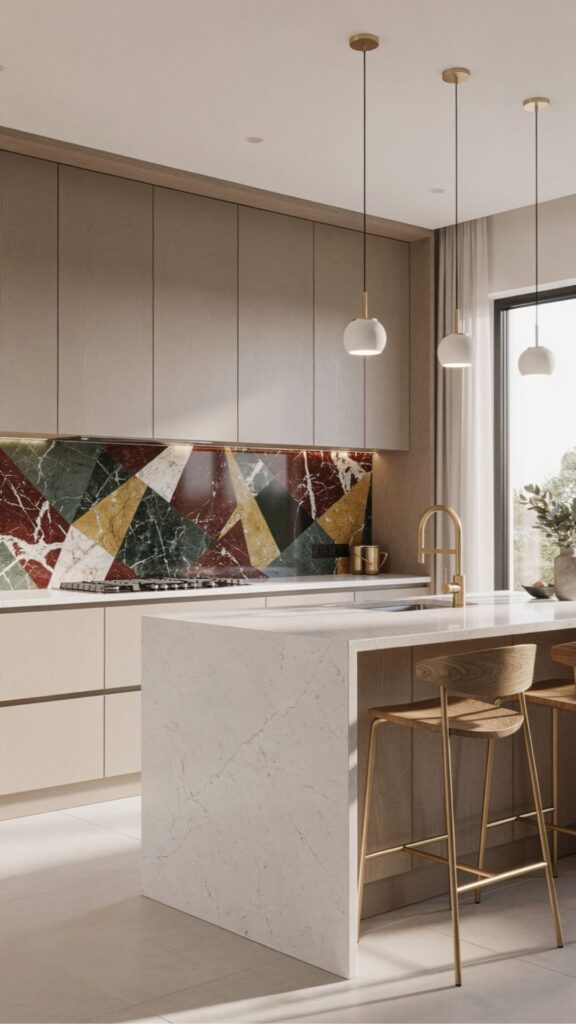
The backsplash is the kitchen’s artwork the one surface with maximum visual exposure that offers the greatest opportunity for creative expression. Modern kitchen design in 2026 treats the backsplash not as an afterthought but as the design anchor around which other elements are coordinated.
Full-height backsplashes that extend from countertop to ceiling have become the standard in high-end kitchen design. Rather than stopping at the bottom of the upper cabinets, a continuous tile or slab surface creates a dramatic visual sweep that makes the kitchen feel taller and more intentional.
This is particularly effective with large-format tiles (60×120cm or larger) or continuous stone slabs, where fewer grout lines enhance the seamless effect. Handmade zellige tiles from Morocco have become one of the most coveted backsplash materials their irregular surfaces catch light in unpredictable ways, creating visual texture that no factory tile can replicate.
Similarly, unlacquered brass insets, custom ceramic murals, and fluted glass panels are all appearing in forward-thinking kitchen designs that resist the expected in favor of something genuinely distinctive. For a practical note: always use epoxy grout in kitchen backsplashes, particularly around the cooking zone.
Traditional cement-based grout stains and discolors within months in a heavily used kitchen. Epoxy grout is stain-proof, mould-resistant, and practically maintenance-free. It costs more upfront but eliminates one of the most common sources of kitchen dissatisfaction a backsplash that looks tired and grimy within a year of installation.
Bring Nature Indoors with Biophilic Design Elements:
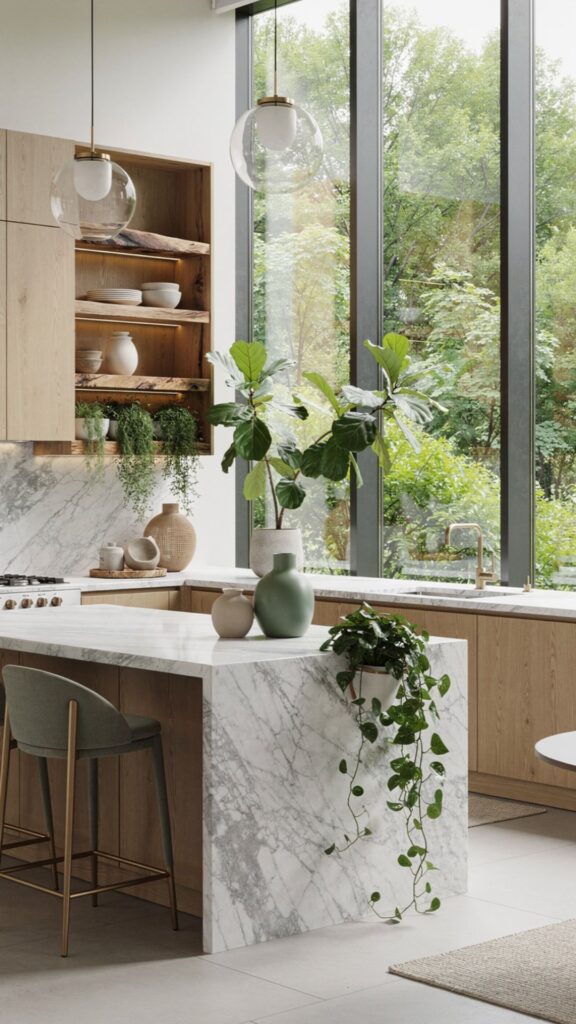
Biophilic design incorporating natural elements to strengthen the human-nature connection is one of the most significant design movements of the 2020s, and kitchens offer unique opportunities to apply it. Research from environmental psychology consistently shows that exposure to natural materials, plants, and natural light reduces stress and improves wellbeing qualities especially valuable in a space where people spend significant time daily.
The most immediate biophilic upgrade in any kitchen is maximizing natural light. If your kitchen has small or poorly positioned windows, consider a tube skylight (solar tube) if a full skylight is structurally complex. These inexpensive additions channel daylight from the roof directly into the kitchen ceiling, flooding dark areas with natural light without expensive structural modifications.
Living herb walls, potted plants on open shelving, and fresh-cut botanicals in simple vessels all add life and oxygen to the kitchen environment. A dedicated built-in planter beside a bright window growing basil, mint, chives, and rosemary connects the kitchen directly to the food it produces.
This is functional biophilia: beauty that also serves a practical purpose. Material choices matter enormously in biophilic kitchen design. Rough-textured linen curtains, raw concrete shelving brackets, brushed brass hardware, and live-edge wood accents all introduce the visual and tactile complexity of the natural world into an otherwise hard, reflective environment.
These materials age gracefully, developing character that engineered surfaces cannot replicate creating a kitchen that looks better at ten years than it did the day it was installed.
Explore More: https://trandyvilla.com/apron-sink/
Plan for Multi-Generational and Accessible Kitchen Design:
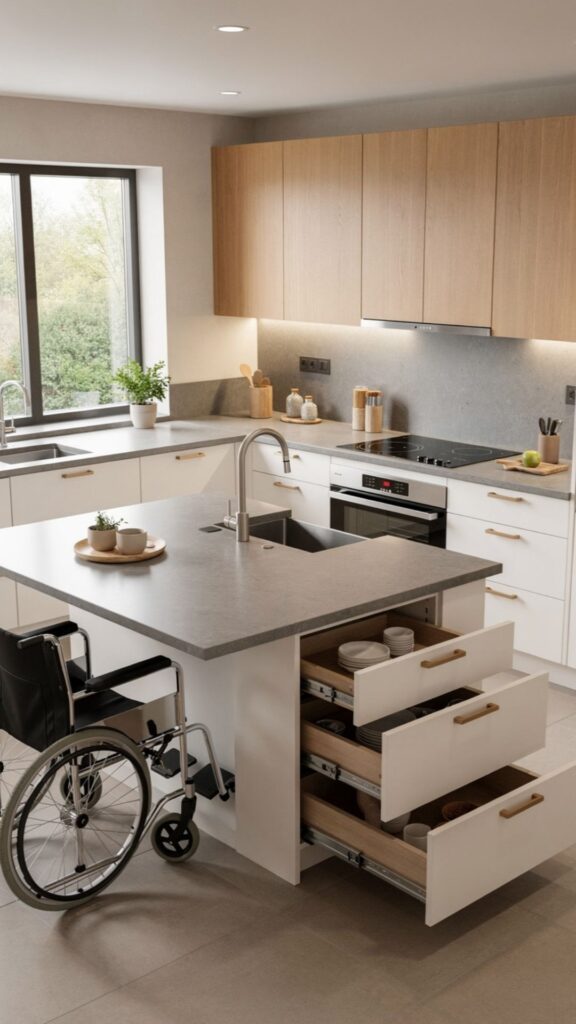
One of the most forward-thinking decisions in modern kitchen design is designing for accessibility and multi-generational use not just for today’s household, but for the household it may become in 10 or 20 years. Universal design principles, once associated exclusively with disability accommodation, are now recognized as making kitchens better for everyone.
Varying countertop heights 90cm standard with a 75cm lowered section at the island allows seated users, shorter family members, and children to participate in kitchen activities. This is also ergonomically superior for tasks like kneading dough or detailed decorating work, which are more comfortable at a lower surface.
Many designers now routinely include one lower prep section in every kitchen plan, regardless of the client’s current physical needs. Pull-out base cabinet drawers instead of traditional door-and-shelf units are universally more accessible they bring contents forward and into view without requiring users to crouch and reach.
Drawer refrigerators, touch-activated faucets, and lever-style door handles (rather than round knobs) all reduce physical demand without compromising aesthetics. These are choices that make the kitchen safer and more comfortable for everyone, from young children to older adults.
Looking further ahead, aging-in-place design is becoming a significant consideration for homeowners in their 40s and 50s planning long-term renovations. A kitchen that accommodates a wheelchair, that has non-slip flooring, good contrast between surfaces, and excellent lighting isn’t just accessible it’s better designed. The best modern kitchens are inclusive by design, flexible enough to serve changing needs over a multi-decade lifespan.
Conclusion
Modern kitchen design is about creating a space that works as hard as it looks good balancing beauty, function, technology, and longevity in every decision. From open-concept layouts and waterfall countertops to smart storage systems and biophilic touches, each of these 12 ideas offers a real, actionable path to a kitchen that elevates daily life.
Start with the changes that address your biggest frustrations first, then layer in the aesthetic upgrades that reflect your personal style. Your kitchen has more potential than you think these ideas are your roadmap to unlocking it.

Team TrandyVilla is the passionate home decor team behind Trandy Villa, where style meets comfort in everyday living. The team loves transforming simple spaces into beautiful, functional homes through smart ideas, budget-friendly hacks, and modern design trends. Their content focuses on helping readers create homes that feel both stylish and personal without spending too much.