
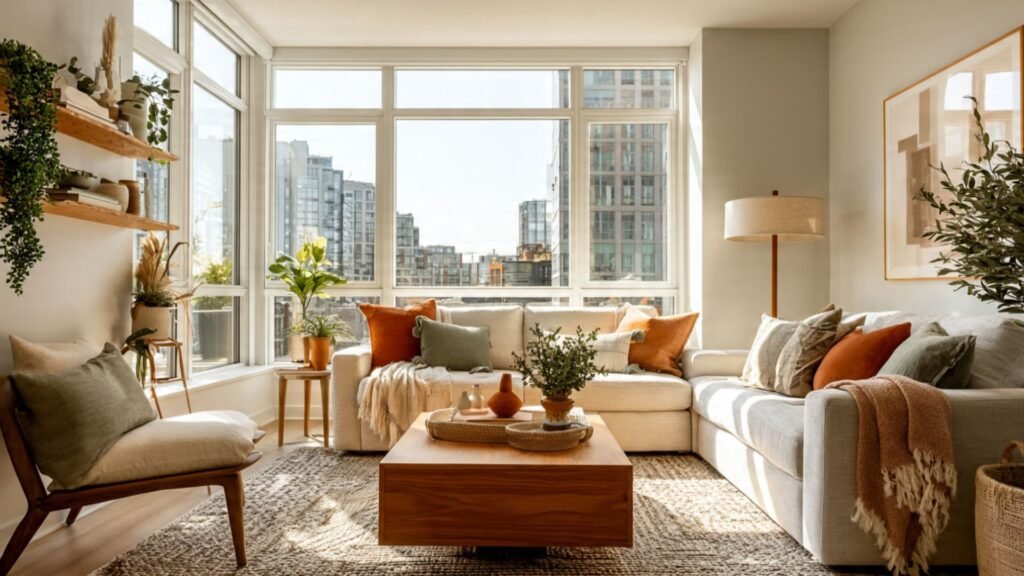
Living in a small apartment doesn’t mean sacrificing style or comfort. In fact, some of the most beautifully designed spaces in the world are compact ones think Parisian studio apartments or Tokyo micro-lofts. The real challenge isn’t the size of your space; it’s knowing which decorating strategies genuinely work versus which ones just look good in magazines.
Small Apartment Decorating focuses on improving comfort, storage, and style in limited spaces. Small Apartment Decorating Ideas help create better layouts, brighter rooms, and organized living areas. Smart furniture, soft colors, mirrors, and vertical storage make compact apartments feel larger and more functional every day.
Modern Small Apartment Decorating transforms compact rooms into stylish and comfortable living spaces with smart layouts, better lighting, and practical furniture choices. Simple details like floating shelves, neutral colors, rugs, and hidden storage create a clean atmosphere that feels open, welcoming, balanced, and visually appealing indoors.
Small Apartment Decorating Ideas combine beauty, organization, and space-saving solutions for everyday living. Multi-functional furniture, natural light, indoor plants, and wall storage improve comfort without adding clutter. Careful decorating choices help apartments feel brighter, calmer, modern, and more spacious while supporting practical daily routines.
Use Mirrors Strategically to Expand Visual Space:
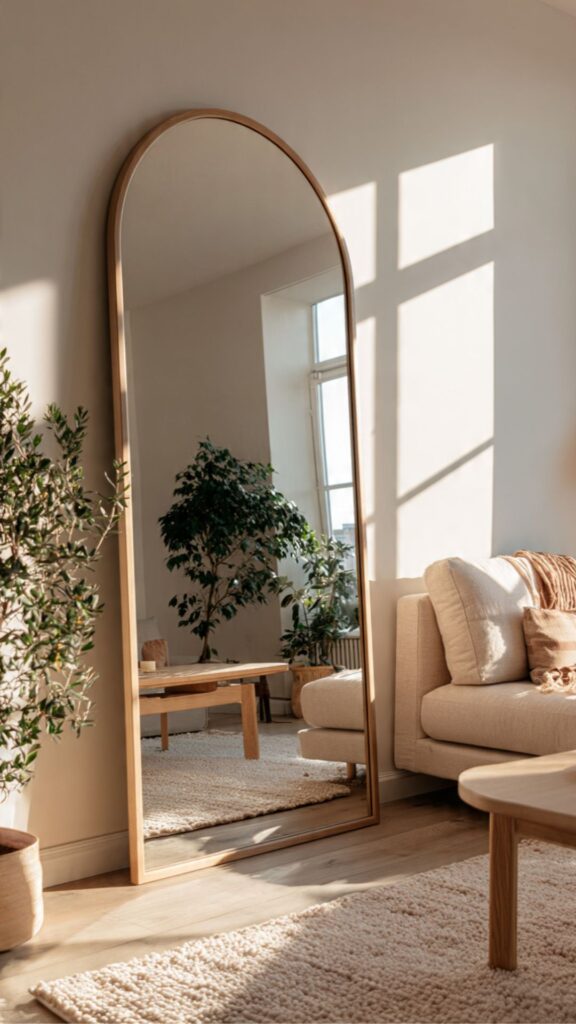
Mirrors are one of the most powerful and underused tools in small apartment decorating. A well-placed mirror doesn’t just reflect light it creates the illusion of depth, making a room feel like it extends beyond its physical walls. Interior designers have relied on this trick for decades, and it works particularly well in narrow hallways, dark corners, and living rooms with limited natural light.
The key is placement. A large mirror hung opposite a window will bounce daylight deep into the room, brightening even north-facing apartments. Leaning an oversized floor mirror against a wall in a studio apartment can visually double the perceived square footage. Avoid cluttering mirror surfaces with decals or frames that are too ornate clean, simple frames keep the focus on reflection.
For a more architectural effect, consider a gallery wall of smaller mirrors in varied shapes. This approach adds visual interest without the bulk of a single oversized piece. Mirrored furniture like a mirrored console table or dresser serves double duty by reflecting light while also functioning as storage. It’s a smart investment that pays dividends in both style and perceived space.
One often-missed insight: mirrors work even better when paired with warm lighting. Place a floor lamp or sconce near a large mirror to amplify the effect at night, keeping your apartment feeling open and inviting even after dark.
Choose Multi-Functional Furniture as Your Foundation:
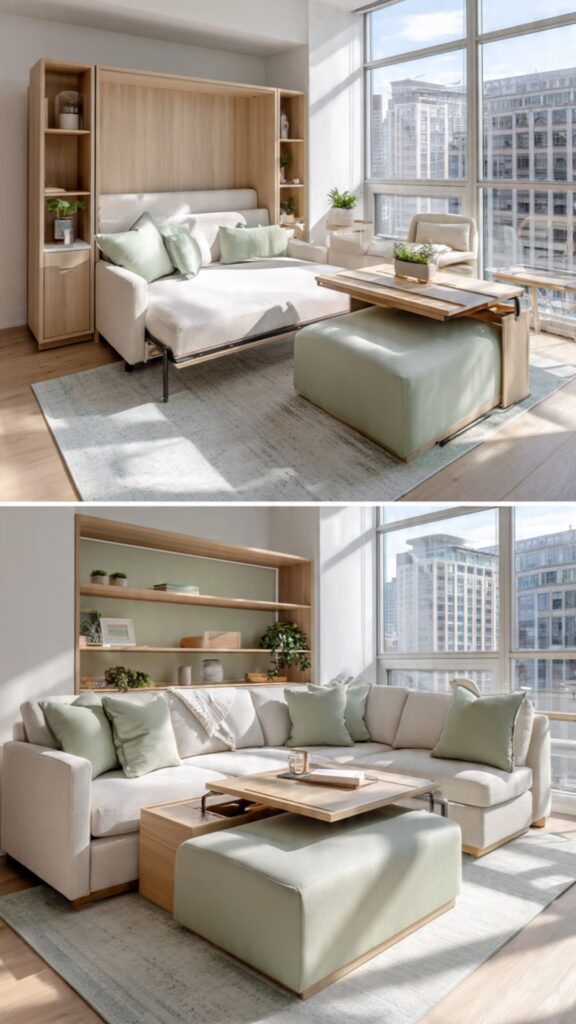
In a small apartment decorating, every piece of furniture needs to earn its place. Multi-functional furniture pieces that serve two or more purposes is the cornerstone of intelligent small-space design. A sofa bed is obvious, but the category goes much further. Think ottomans with hidden storage, dining tables that fold against the wall, beds with built-in drawers, and benches that double as shoe storage.
The Murphy bed, once associated with budget living, has had a major design renaissance. Modern Murphy beds integrate seamlessly with shelving units, desks, and even sofas, transforming a bedroom into a fully functional home office or living room during the day. Brands like Resource Furniture and IKEA’s SMÅSTAD system offer solutions that are both attractive and genuinely practical for everyday use.
When selecting multi-functional pieces, prioritize quality over quantity. One well-made convertible sofa will outperform three cheap pieces that wear out quickly. Look for furniture with smooth mechanisms, durable upholstery, and a design aesthetic that fits your overall style. A piece that frustrates you daily because it’s hard to convert defeats the entire purpose.
A future-focused insight: the rise of remote work has made the home-office-in-a-box concept increasingly popular. Foldaway desks that mount to walls and disappear when not needed allow small apartment decorating dwellers to maintain a professional workspace without permanently sacrificing living space. This trend will only grow as hybrid work arrangements become permanent for many people.
Read This First: Small Living Room Ideas That Inspire Smart and Stylish Small Apartment Decorating
Embrace Vertical Space with Floor-to-Ceiling Storage:
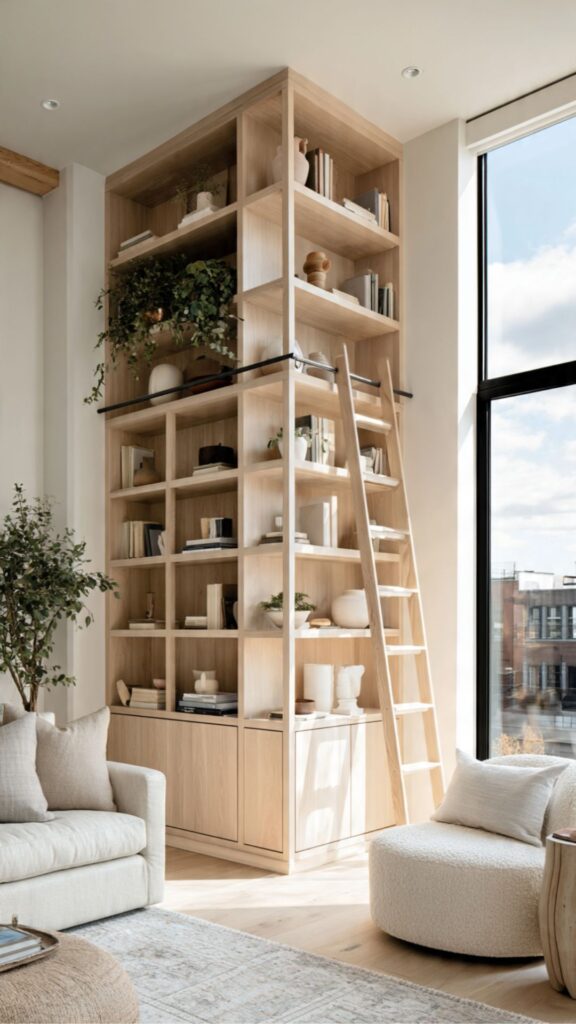
Most small apartment decorating dwellers think horizontally how to arrange furniture across the floor. The real opportunity, however, is vertical. Walls are essentially free real estate in a small home, and exploiting ceiling height is one of the fastest ways to expand both storage and the feeling of spaciousness.
Floor-to-ceiling bookshelves are a classic example. They draw the eye upward, making ceilings feel higher than they are, while providing enormous storage capacity. In a 300-square-foot studio, a full wall of shelving can house books, plants, decorative items, kitchen overflow, and folded linens eliminating the need for multiple standalone pieces of furniture.
Floating shelves offer a lighter, more flexible alternative. Unlike freestanding units, they don’t touch the floor, which keeps sightlines clear and makes rooms feel airier. Arrange floating shelves in a staggered pattern to add visual dynamism, or keep them uniform for a cleaner, more minimalist look. Either approach works the important thing is intentionality.
Don’t overlook the space above kitchen cabinets, above door frames, or in the dead zone near the ceiling in a bedroom. These areas are perfect for decorative baskets, seldom-used items, or seasonal storage. A simple wooden crate mounted high on a wall becomes both storage and decor. The habit of thinking vertically will permanently change how you see and use your apartment.
Select a Light, Cohesive Color Palette:
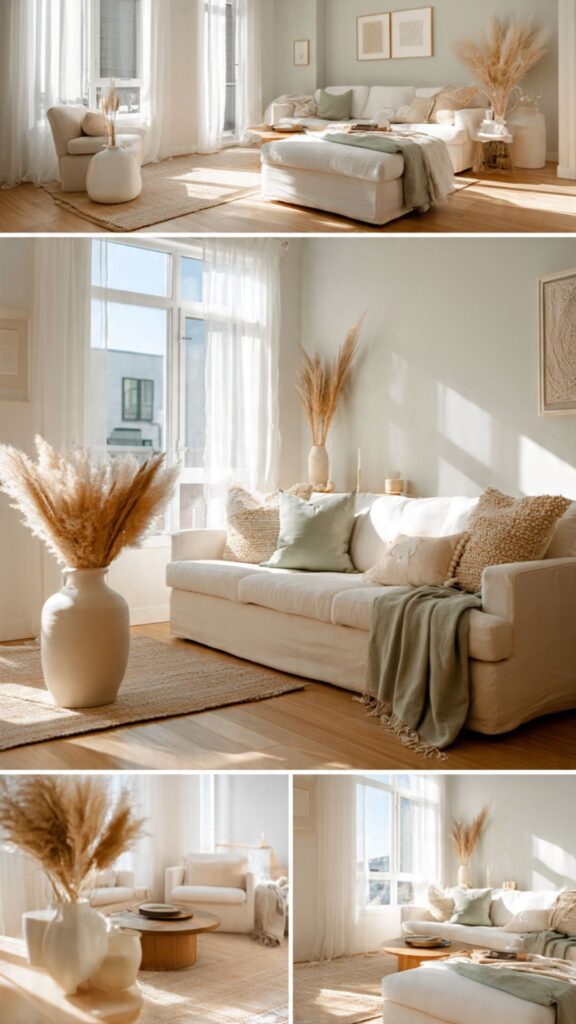
Color is one of the most immediate and impactful tools in small apartment decorating. Light, neutral tones soft whites, warm creams, pale grays, and gentle beiges reflect more light and make walls feel farther apart. This isn’t just a visual trick; it’s rooted in how the human eye perceives spatial depth based on contrast and luminosity.
That said, “light color palette” doesn’t mean boring. The secret is layering tones within the same family. A room painted in soft white can feel rich and dimensional when you add ivory textiles, cream furniture, and warm wood tones. The variation in texture and shade creates visual interest without introducing colors that visually shrink the space. Think of it as a tonal composition rather than a single flat color.
An often-missed strategy is painting the ceiling the same color as the walls, or even a shade lighter. Traditional design separates ceiling from wall with a stark white ceiling, which creates a “lid” effect that compresses the room. When the ceiling and walls blend together, the room feels taller and more expansive. This technique is especially effective in apartments with standard 8-foot ceilings.
For renters who can’t paint, removable wallpaper has transformed in quality and variety. Modern peel-and-stick options from brands like Chasing Paper or Tempaper look indistinguishable from permanent wallpaper and can completely refresh a room without risking your security deposit. A single accent wall in a soft botanical or geometric print can anchor a small room and give it a personality that plain white walls never could.
Define Zones in an Open-Plan Studio Apartment:
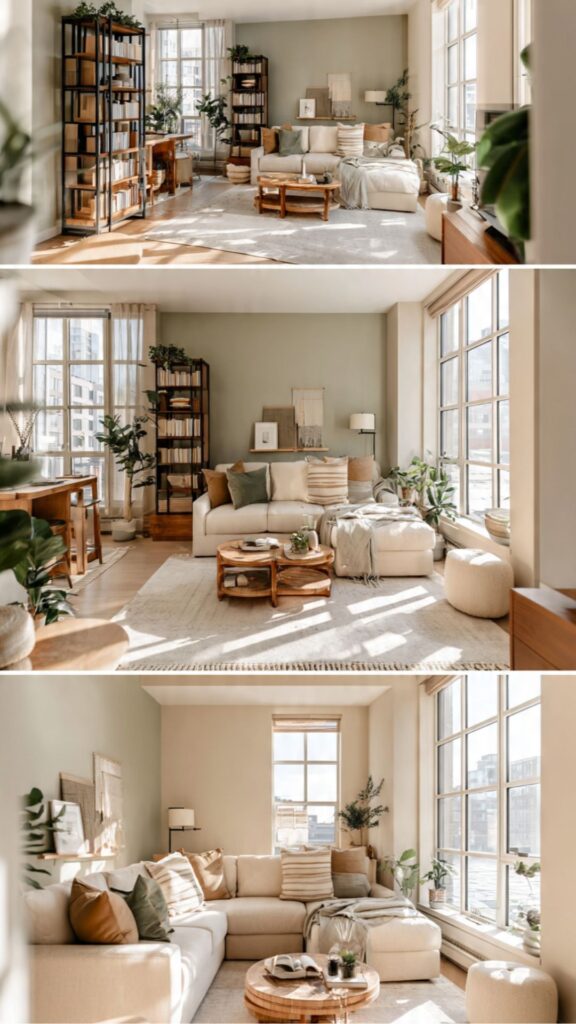
One of the biggest challenges in studio apartment decorating is making one open room feel like a complete, livable home rather than a single awkward box. The solution is zone definition using furniture arrangement, rugs, lighting, and visual cues to create distinct areas for sleeping, living, dining, and working, even without physical walls.
Area rugs are the most powerful zoning tool available. Place a large rug under your sofa and coffee table to define the living area, and a smaller one under your bed to anchor the sleeping zone. The visual separation created by two distinct rugs on the same floor communicates “these are different spaces” to both residents and visitors and more importantly, to your own psychology as you move through your home.
Furniture placement reinforces zone boundaries. Positioning the back of a sofa toward the sleeping area creates a soft partition that divides without blocking light or making the space feel smaller. Open bookshelves used as room dividers are even more effective they separate zones while remaining transparent enough to preserve sightlines and airflow.
Lighting is the zone-definition tool most people overlook. A pendant light over a dining table, a floor lamp beside a reading chair, and a bedside lamp in the sleeping area each signal that these are distinct functional zones. When all lighting comes from a single overhead source, the entire studio feels like one undifferentiated room. Layered lighting, on the other hand, makes even the smallest studio feel thoughtfully designed and surprisingly spacious.
Maximize Natural Light with Smart Window Treatments:
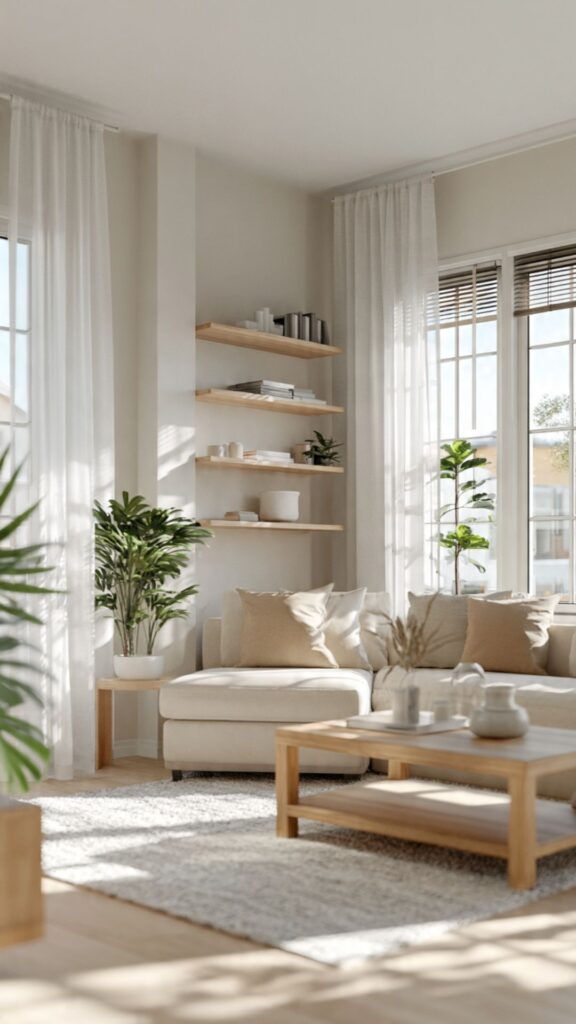
Natural light is the single most valuable decorating asset in any small apartment decorating and yet many people inadvertently block it with heavy curtains or poor window treatment choices. Maximizing the light your windows bring in can transform a dark, cave-like apartment into a bright, airy retreat without moving a single piece of furniture.
Start by swapping heavy drapes for sheer or linen curtains that filter light rather than block it. If privacy isn’t a concern, removing window coverings entirely is the most effective option. For apartments facing busy streets or neighboring buildings, sheer white panels allow light in while maintaining privacy a balance that heavy blackout curtains can never achieve during the day.
Hang curtain rods as close to the ceiling as possible and extend them beyond the window frame on both sides. This technique makes windows appear dramatically larger than they actually are, which increases both perceived room size and the amount of light that enters. A window that looks 60 inches wide with curtains properly staged can appear 90 inches wide a significant visual difference in a small room.
Window sills deserve attention too. Keep them clear of clutter, or use them intentionally for small potted plants that frame the window beautifully. Reflective surfaces near windows a glass vase, a metallic lamp capture and scatter light further into the room. These small, inexpensive additions compound the effect of good window treatments and help smaller apartments feel sun-drenched even on cloudy days.
Invest in Smart, Hidden Storage Solutions:
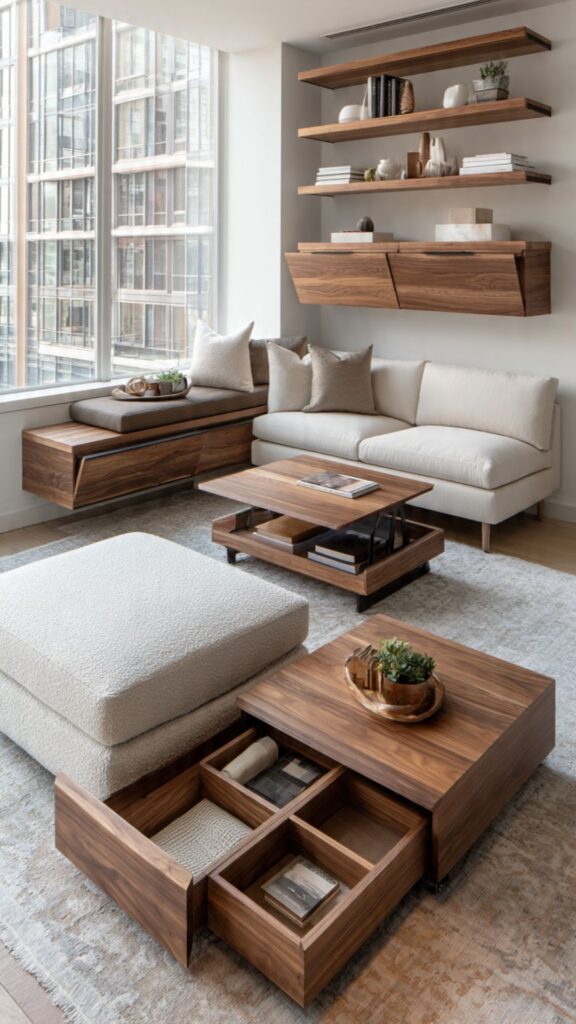
Clutter is the number one enemy of a well-decorated small apartment decorating. When storage is insufficient, belongings end up on countertops, chairs, and floors visually shrinking the space and creating daily stress. The solution isn’t minimalism for its own sake; it’s intelligent storage design that keeps possessions accessible but out of sight.
Bed risers are a criminally underused tool. Elevating your bed frame by six to eight inches creates enough clearance to store large flat containers underneath perfect for out-of-season clothing, extra bedding, luggage, or shoes. Combined with a bed frame that has built-in drawers, the area under your bed can replace an entire dresser, freeing up valuable floor space for other furniture or simply open breathing room.
In kitchens, the inside of cabinet doors is frequently wasted space. Tension rod organizers, mounted spice racks, and adhesive hooks on the inside of doors dramatically expand storage without adding a single item to countertops. The same principle applies in bathrooms an over-toilet shelving unit, a magnetic strip for hair tools, and a shower caddy can quadruple bathroom storage in apartments where cabinets are minimal.
Entryways in small apartments are particularly prone to chaos. A slim console table with a drawer, paired with wall-mounted hooks and a small bench with hidden storage, can contain coats, bags, shoes, keys, and mail in a footprint of just 18 inches. The entryway is the first thing you see when you come home getting this zone organized sets a calm, welcoming tone for the entire apartment.
Use Rugs to Anchor and Scale Your Rooms:
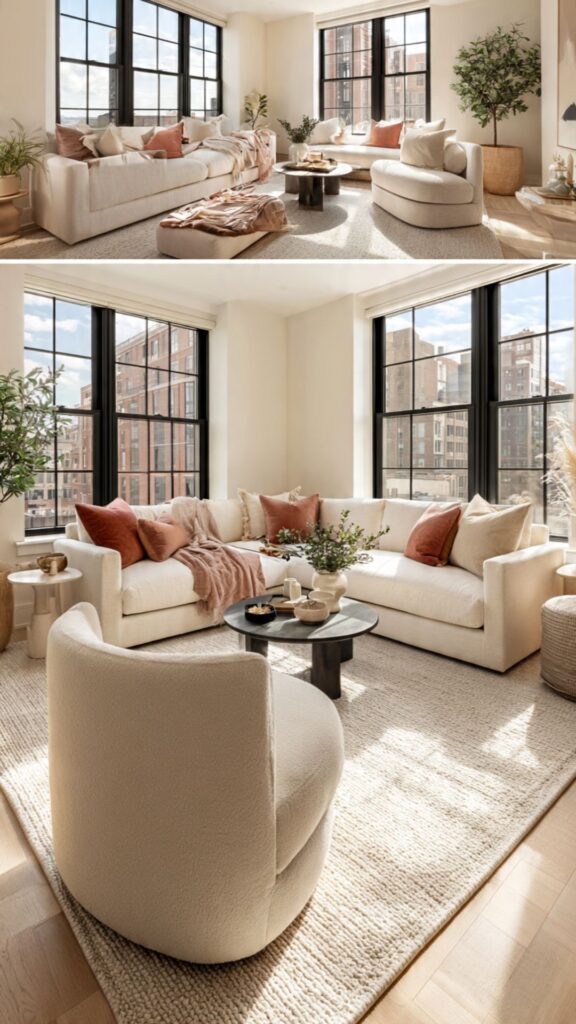
The most common rug mistake in small apartment decorating is choosing one that’s too small. An undersized rug gets “lost” in a room, failing to anchor the furniture and actually making the space feel more disjointed and cramped. In most living rooms, the rug should be large enough for the front legs of all major seating pieces to rest on it creating a unified, grounded furniture grouping.
Choosing the right rug size is one of the most impactful and inexpensive ways to transform a room. In a small living room, a 8×10 or 9×12 rug will almost always look better than a 5×7, even though the instinct is to go smaller in a small space. The larger rug connects the furniture, defines the zone, and makes the room feel considered rather than accidental.
Rug texture and pattern matter too. Low-pile rugs in light, neutral tones keep small rooms feeling open and easy to maintain. However, a bold geometric pattern in a limited color palette can add tremendous personality without overwhelming the space. The key is to limit the patterned rug to one room or zone layering multiple patterns in a small apartment creates visual chaos.
Natural fiber rugs jute, sisal, seagrass are an underrated option for small apartments. Their organic texture adds warmth without visual weight, and their neutral tones work with virtually any color palette. They’re also typically more affordable than wool or synthetic alternatives, making them a smart choice for renters who want to invest in quality but remain budget-conscious.
One More Thing: Apartment Balcony Ideas That Add Extra Living Space to Your Small Apartment
Incorporate Plants:
To Add Life Without Adding Bulk
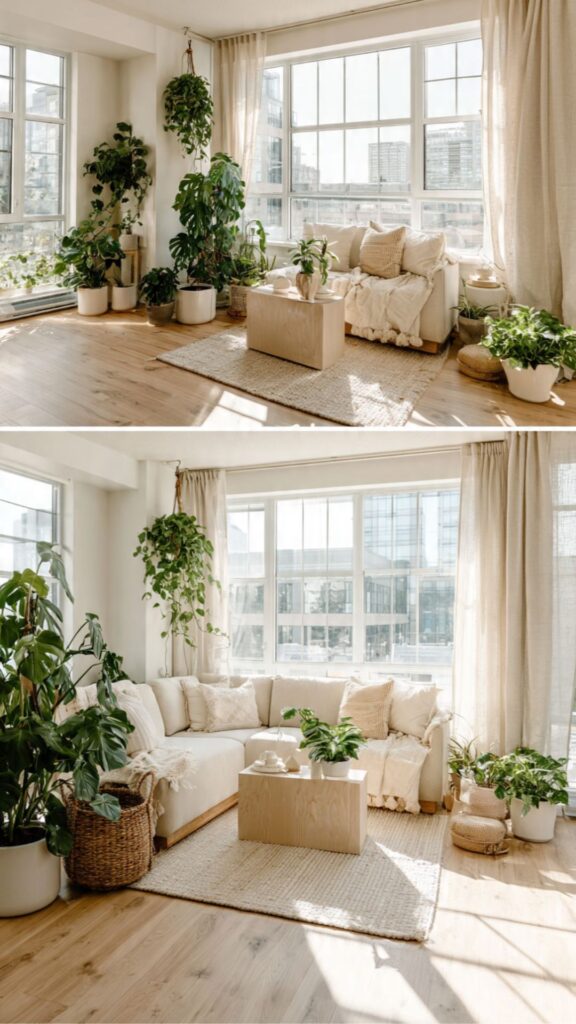
Indoor plants are one of the most effective ways to make a small apartment feel alive, fresh, and designed without taking up the valuable floor space that large furniture requires. The key is choosing the right plants and positioning them in ways that enhance the room’s architecture rather than compete with it.
Hanging planters and wall-mounted plant holders are ideal for small apartment decorating. A macramé hanging planter near a sunny window takes up zero floor or shelf space while adding a lush, organic element that softens the hard lines of a compact room. Similarly, a simple wall-mounted shelf dedicated entirely to a plant collection creates a living art installation that functions as a focal point and biophilic design element simultaneously.
Tall, architectural plants like fiddle leaf figs, snake plants, or bird of paradise are excellent for small spaces because they grow upward rather than outward. A single large plant in the corner of a living room draws the eye up, reinforces vertical scale, and adds a dramatic, hotel-lobby quality to an otherwise modest space. These plants require minimal floor space but deliver maximum visual impact.
Research increasingly supports what good designers have always known: indoor plants reduce stress, improve air quality, and increase feelings of well-being in compact living environments. For apartment dwellers who may feel constrained by their space, introducing greenery provides a psychological sense of openness and connection to nature. This isn’t just aesthetic it’s a quality-of-life investment with documented benefits.
Create the Illusion of Height with Vertical Design Elements:
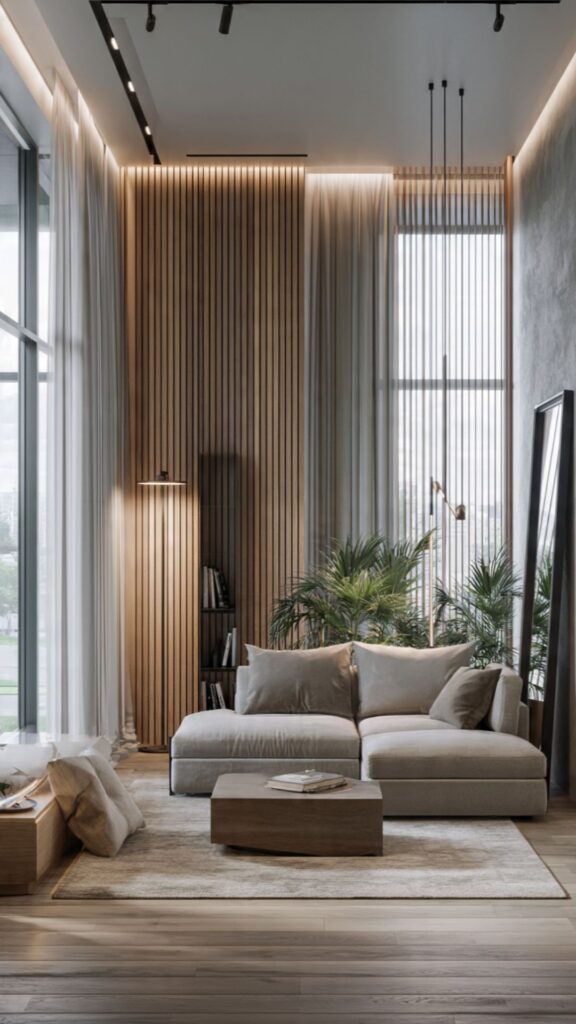
Ceiling height is one of the hardest things to change in an apartment but it’s one of the easiest things to fake with smart design choices. Vertical design elements draw the eye upward, tricking the brain into perceiving more height than physically exists. This strategy is particularly valuable in apartments with standard 8-foot ceilings, which can feel oppressive without intentional design intervention.
Tall, narrow bookshelves are a simple starting point. A bookcase that reaches within a foot of the ceiling signals height more powerfully than one that stops at five feet. The same principle applies to artwork hanging pictures slightly higher than eye level (approximately 60–65 inches to the center) and grouping pieces in vertical arrangements reinforces the sense of a tall, spacious room.
Striped vertical wallpaper or wall paneling is another powerful tool. Vertical lines whether in wallpaper patterns, shiplap, or even a gallery wall arranged in a tall, narrow formation create a strong upward visual movement. This is the same reason vertical stripes in clothing make people appear taller; the brain extends the line beyond where it actually ends.
Curtains hung from ceiling to floor are perhaps the single most effective height-amplifying trick available to renters. Even if the window itself is only four feet tall, ceiling-height curtains that puddle slightly on the floor create the impression of a dramatically tall, elegant window. This one change which costs only the price of longer curtain panels and repositioned rods can make an apartment feel significantly more luxurious and spacious.
Design a Functional Home Office in Minimal Space:
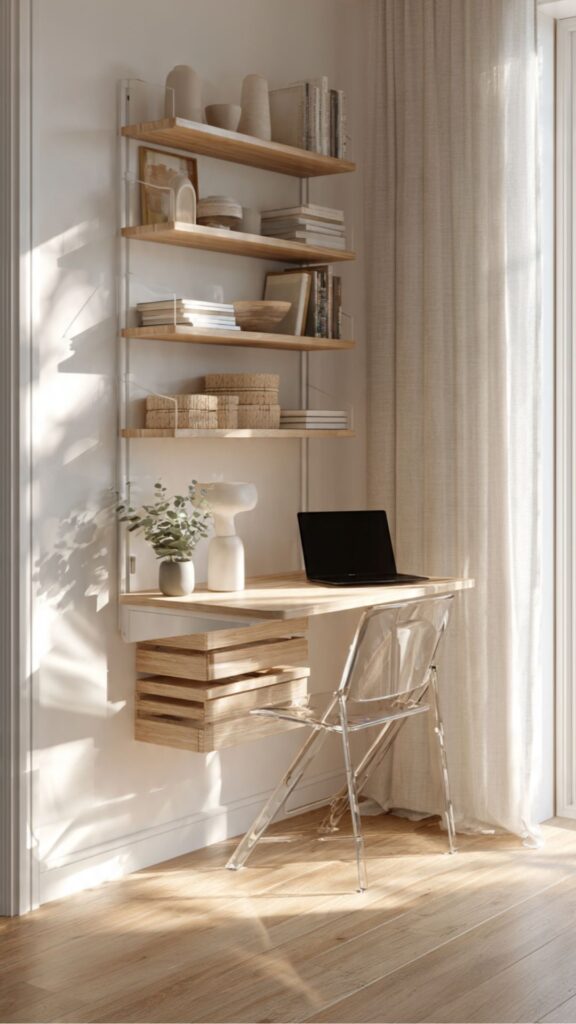
The permanent shift toward hybrid and remote work has made a functional home workspace a necessity rather than a luxury even in the smallest apartments. The challenge is creating a work environment that supports focus and professionalism without permanently consuming living space or creating visual clutter that disrupts the sense of home.
Wall-mounted fold-down desks are the gold standard for small apartment Decorating home offices. When folded down, they provide a proper working surface with room for a monitor, keyboard, and accessories. When folded up, they disappear entirely returning the wall to a clean, uncluttered surface.
Paired with a comfortable but compact chair (one that can slide under a nearby table when not in use), this setup creates a complete home office with a footprint of essentially zero when inactive. If a dedicated desk isn’t feasible, a styled cart on wheels can serve as a mobile office station.
Roll it out when you need to work, roll it away when you don’t. Pegboards mounted above any work surface add vertical storage for stationery, headphones, and small plants, keeping the desk surface clear for actual work. Visual organization at a desk directly impacts focus and productivity a chaotic desk in a small apartment Decorating affects the entire room’s atmosphere.
Lighting for a home workspace deserves special attention. Natural light is ideal, but positioning your workspace near a window in a small apartment Decorating isn’t always possible. A quality adjustable desk lamp with color temperature control warm for evenings, cooler and brighter for focus work is an investment in both work performance and the overall ambiance of your apartment. Good lighting in a work zone also prevents the “office” area from making the rest of the apartment feel dimly lit by contrast.
Apply the Rule of Odd Numbers in Decorating:
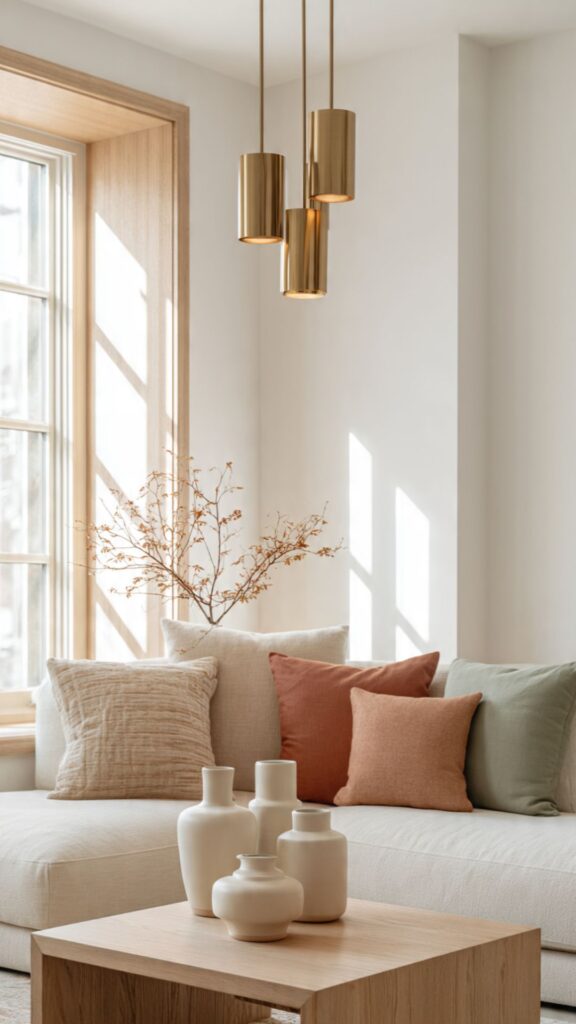
Professional interior designers instinctively arrange decorative objects in odd numbers groups of three, five, or seven because the human brain finds these groupings more visually interesting than even-numbered arrangements.
In small apartments, where every decorative choice is amplified by the limited space, applying this principle consistently elevates the overall design from “furnished apartment” to “intentionally decorated home.” The rule of odd numbers works because it creates a natural hierarchy within a grouping. In a trio of objects, one is typically tallest, one medium, and one shortest forming a visual triangle that gives the eye a path to follow.
This dynamic is inherently more engaging than two equal-height objects or four symmetrically arranged pieces. The result feels curated rather than accidental, which is exactly the effect small apartments need to feel special rather than cramped.Apply this principle on shelves, coffee tables, mantels, and bathroom counters.
A shelf decorated with a tall vase, a medium framed photo, and a small succulent immediately looks more intentional than four matching candles in a row. On a coffee table, a large tray holding a candle, a small bowl, and a stack of books anchors the living area without overwhelming the space. The objects themselves don’t need to be expensive the arrangement does the heavy lifting.
One nuanced insight: vary the height, texture, and visual weight within each grouping for maximum effect. A grouping of three tall, similar objects fails to create the visual hierarchy the rule of odds is designed to produce. Think: one tall sculptural piece, one medium organic element (plant, woven basket), and one small reflective or colorful accent. This combination almost always works, regardless of the specific objects chosen.
Use Wallpaper or an Accent Wall:
As a Focal Point
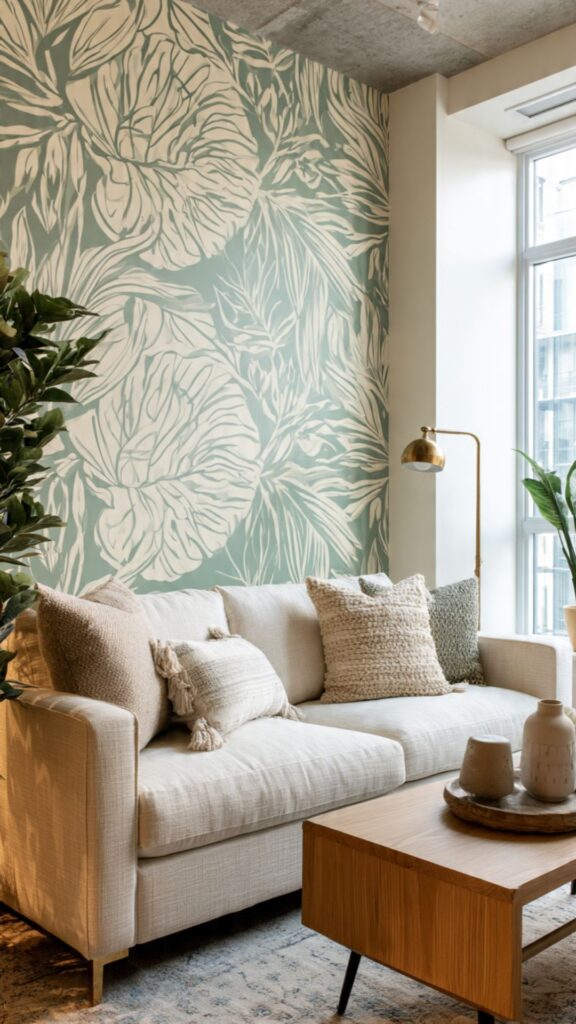
In small apartments, the absence of a clear focal point is a common but overlooked problem. Without something for the eye to land on, rooms feel undefined and visually restless which perversely makes them feel smaller. Creating a deliberate focal point through an accent wall, a gallery arrangement, or a bold piece of furniture gives the room a center of gravity and makes the entire space feel more intentional.
A single accent wall in a small bedroom or living room is one of the most cost-effective ways to introduce personality and depth. The wall behind a sofa, the wall behind a headboard, or the wall facing the entrance to a room are all natural candidates. A deep, rich color navy, forest green, terracotta on one wall adds drama without closing in the space, especially when the remaining three walls stay light and neutral.
Removable wallpaper has made accent walls accessible to renters who previously couldn’t make permanent wall changes. The current generation of peel-and-stick wallpapers is genuinely impressive in quality and design variety. A botanical print, an architectural stripe, or a subtle textured pattern can completely transform a bedroom in a single afternoon without tools, mess, or any damage to walls.
Gallery walls are another excellent focal point strategy for small apartments. The instinct is to spread art throughout a small apartment Decorating, but this actually dilutes impact. Instead, concentrating all artwork on a single gallery wall creates a powerful visual statement, while the other walls remain calm and uncluttered. Use consistent frame colors or mats for cohesion, and arrange pieces before hanging by laying them out on the floor to perfect the composition.
Keep Walkways Clear:
To Create Flow and Spaciousness
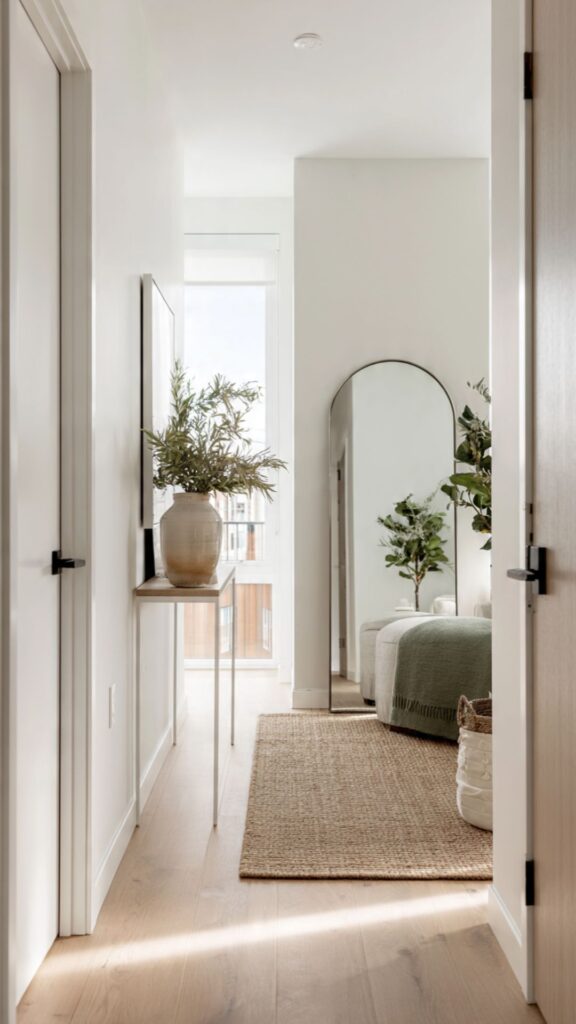
One of the most common small apartment decorating mistakes is over-furnishing filling every available area with furniture or decor until the apartment feels stuffed and difficult to move through. Clear walkways are not wasted space; they are active contributors to the feeling of spaciousness and comfort in any home. The relationship between open floor space and perceived room size is direct and significant.
Interior designers generally recommend a minimum of 36 inches of clear walkway space in any primary circulation path the routes you naturally travel from room to room or zone to zone. In a small apartment Decorating, even 24–30 inches can feel adequate if the path is unobstructed and the adjacent furniture is low-profile.
The visual continuity of an unbroken floor line makes a room feel significantly larger than its actual dimensions. One practical approach is to audit your apartment by walking its primary paths with deliberate attention. If you naturally angle your body to pass between pieces of furniture, if you brush against chairs when walking to the kitchen, or if the path to your bed feels like an obstacle course those are signals that furniture needs to be reassigned, reduced, or replaced with more compact alternatives.
Flow through a space is both a physical and psychological experience. Furniture with legs rather than pieces that sit directly on the floor also contribute to a sense of clear, flowing space. A sofa on legs allows you to see the floor beneath it, which visually extends the floor plane and makes the room feel less cluttered. This applies to dining chairs, coffee tables, beds, and accent chairs. The more floor you can see, the larger the room appears a simple principle with a surprisingly large impact.
Bookmark This Now: Bathroom Storage Ideas That Help You Maximize Every Inch of Your Small Apartment
Personalize with Intention:
Less Is More in Small Spaces
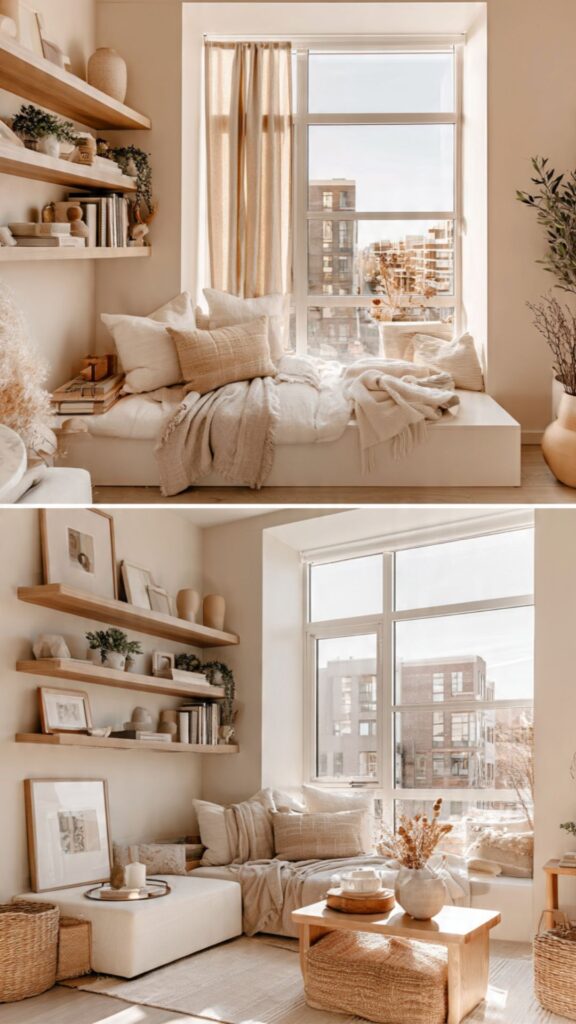
The final and perhaps most important principle of small apartment decorating is intentional personalization. It’s tempting especially when first moving into a small space to bring everything you own and fill every surface. Resist this impulse. In small apartments, editing your possessions and decor choices is not deprivation; it’s the discipline that separates a thoughtfully designed home from a cluttered storage unit.
Intentional personalization means selecting the objects, art, and textiles that genuinely matter to you and giving them prominent, considered placement rather than distributing everything you own across every available surface. One meaningful piece of art hung at the right height in the right room has more emotional impact than a dozen mismatched pieces competing for attention.
One beautiful plant in a quality pot does more for a room’s atmosphere than five mediocre ones. A practical exercise: before decorating a new small apartment Decorating or refreshing an existing one, lay out all your potential decorative items on a large surface a bed or table.
Then select only the pieces that genuinely spark a positive response things you love, things with meaning, things that are genuinely beautiful. Everything else goes into storage or donation. What remains becomes the foundation of an apartment that feels personal, curated, and calm rather than busy and overwhelming.
As design trends increasingly favor authenticity over trend-chasing, small apartment decorating is shifting toward slower, more intentional curation. Rather than seasonal refreshes driven by fast-furniture trends, the most admired small apartment Decorating are those with a clear point of view a coherent aesthetic built around real objects that tell a story about the person who lives there. This is achievable at any budget; it requires taste and editing, not spending.
Conclusion
Small apartment decorating is ultimately about working smarter, not harder using light, layout, multi-functional furniture, and intentional curation to create a home that feels larger, more beautiful, and more livable than its square footage suggests. The 15 ideas in this guide are not just aesthetic tips; they’re practical, design-informed strategies that compound when applied together.
Start with two or three changes a large mirror, a floor-to-ceiling shelf, or clearer walkways and experience the difference firsthand. Your small apartment Decorating has more potential than you think; it just needs the right approach to unlock it.

Team TrandyVilla is the passionate home decor team behind Trandy Villa, where style meets comfort in everyday living. The team loves transforming simple spaces into beautiful, functional homes through smart ideas, budget-friendly hacks, and modern design trends. Their content focuses on helping readers create homes that feel both stylish and personal without spending too much.