
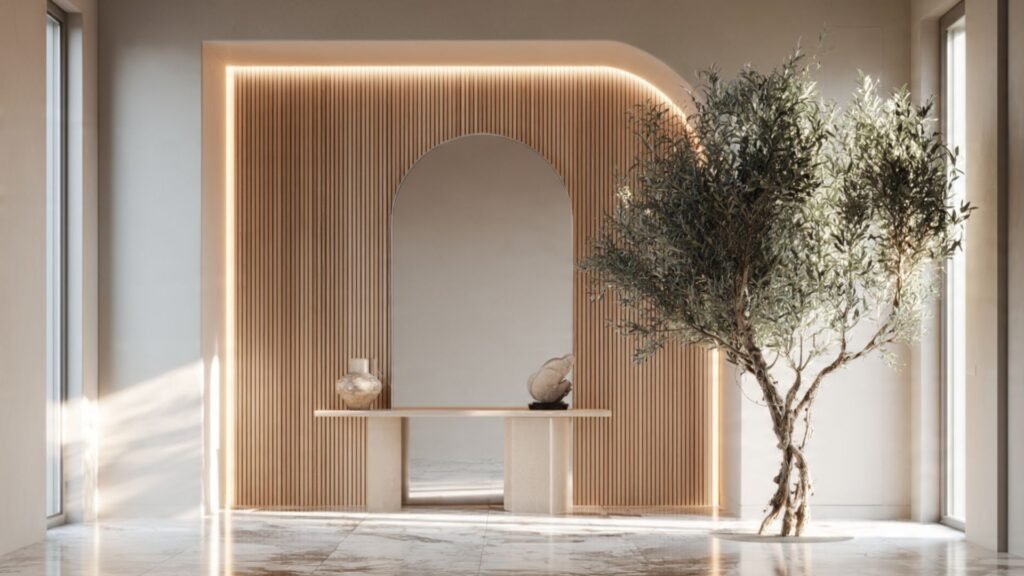
Your entrance foyer is the handshake of your home the very first thing guests experience when they walk through the door. Yet most homeowners treat this space as an afterthought, leaving blank walls that miss a powerful design opportunity. A well-designed foyer wall doesn’t just look beautiful; it sets the emotional tone for your entire interior. It signals your personality, your taste, and how much thought you’ve invested in your living space.
A well-designed entrance foyer creates a strong first impression and adds style to the entire home. Entrance Foyer Wall Design Ideas focus on color, texture, lighting, storage, and artwork. These ideas improve visual appeal, increase function, and make small or large entryways feel more inviting and elegant.
Entrance foyer spaces deserve attention because they shape the mood of the home from the first step inside. White walls, wood panels, mirrors, and modern lighting create balance and character. Entrance Foyer Wall Design adds beauty, personality, comfort, and a polished appearance to daily living spaces.
Modern Entrance Foyer Wall Design Ideas include gallery walls, textured panels, floating shelves, bold wallpaper, and statement mirrors. These simple design choices improve lighting, organize space, and create a welcoming atmosphere. Smart wall styling also supports storage, decoration, and long-lasting interior appeal.
Statement Wall Murals:
Go Big or Go Home
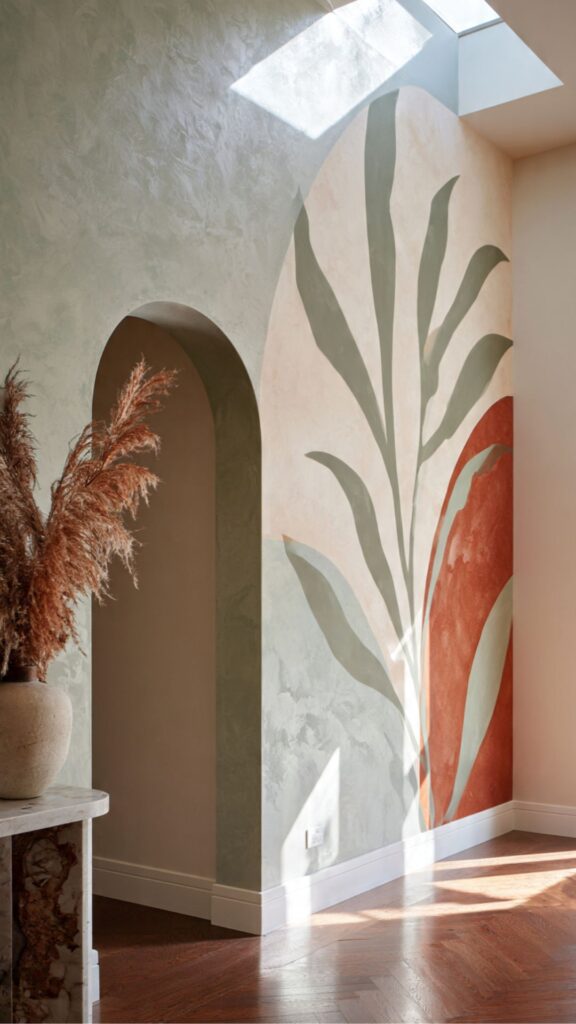
One of the most underutilized yet highest-impact entrance foyer wall design ideas is the full-scale mural. Unlike a simple paint color or a framed print, a mural completely transforms the visual identity of your entryway in a single stroke. Botanical murals, abstract watercolor washes, and architectural trompe-l’œil scenes are among the most popular choices right now and for good reason. They create instant depth and visual interest without requiring furniture or accessories.
What many homeowners don’t realize is that murals don’t have to be permanent or expensive. Modern peel-and-stick mural wallpapers from brands like Chasing Paper or Photowall make the look achievable without professional painters or long-term commitment. You can swap them seasonally or when you tire of the design. This flexibility is especially useful for renters or those who love to refresh their interiors frequently.
From an SEO and interior design authority standpoint, murals rank highly in foyer transformation guides for a reason: they photograph beautifully, generate strong social sharing, and genuinely wow first-time visitors. If you’re staging a home for sale, a well-chosen mural in the entryway can create an emotional first impression that raises perceived home value. Choose colors that complement the natural light of your foyer warm yellows or terracottas for north-facing entries, and cooler blues or greens for south-facing ones.
For a more bespoke touch, consider commissioning a local artist to create a custom mural that tells a personal story your family name in calligraphy, a map of a meaningful city, or abstract art inspired by your heritage. This level of personalization makes your home genuinely one-of-a-kind and unforgettable to every guest who enters.
Wainscoting and Panelling:
Classic Elegance That Never Ages
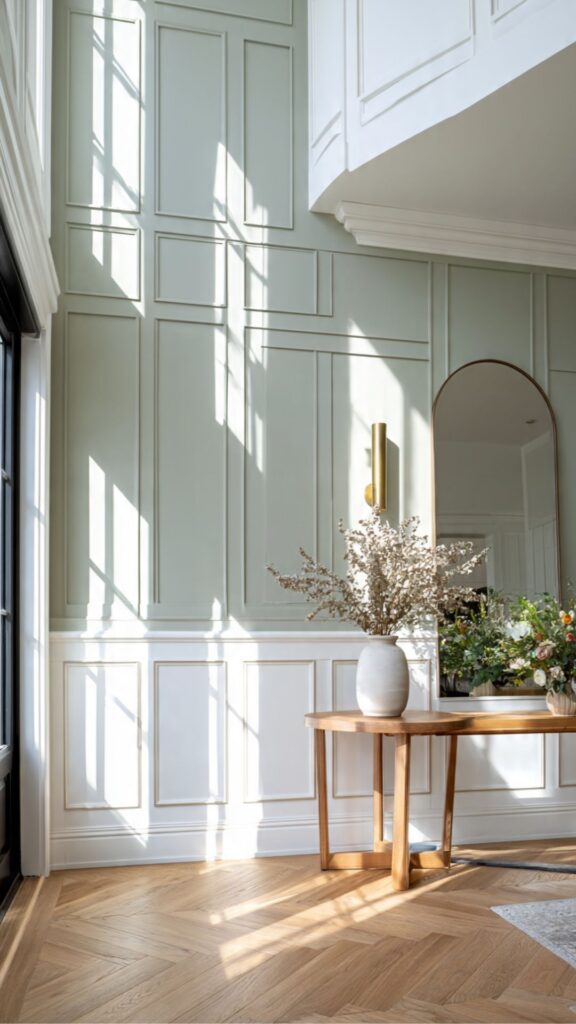
Wainscoting is one of those architectural details that quietly elevates every home it touches. Applied to the lower half of a foyer wall, wainscoting whether traditional beadboard, shaker-style flat panels, or ornate raised molding instantly adds structure, dimension, and a sense of craftsmanship that paint alone cannot achieve.
It’s a design technique that has been used since the 18th century, and it continues to feel relevant because it plays with texture, shadow, and proportion in deeply satisfying ways.
The upper portion of the wall above the wainscoting offers a complementary canvas. Many designers paint it in a contrasting or coordinating tone for example, soft white panels below with a moody navy or sage above creating a two-tone look that feels sophisticated and intentional. This approach also makes low ceilings appear taller by drawing the eye upward, which is a common challenge in older homes or apartment entryways.
One insight that competitors often overlook: wainscoting in the foyer also serves a practical purpose. It protects the lower walls from scuffs, shoe marks, and umbrella damage the inevitable wear-and-tear of a high-traffic entry zone. Choosing a semi-gloss or satin finish on the panels makes them easy to wipe clean, which is a consideration that should factor into every foyer design decision, especially for families with children.
Modern takes on wainscoting go beyond the traditional. Fluted or ribbed wall panelling is trending strongly in 2025 and 2026, offering a more contemporary, sculptural alternative that works beautifully in both minimalist and maximalist interiors. Paired with brass or matte black hardware on nearby hooks or light fixtures, fluted panelling creates a foyer that feels curated and professionally designed.
Gallery Walls:
Curated Storytelling Through Art
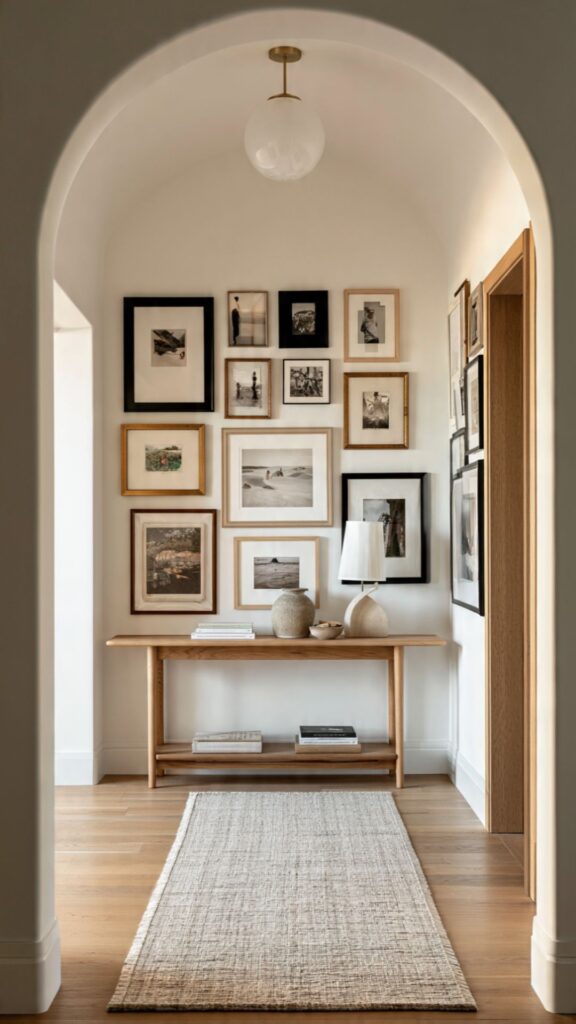
A gallery wall is more than just a collection of frames it’s a curated narrative. In an entrance foyer, a well-executed gallery wall communicates your personality to every person who visits, before they’ve even sat down. The key to doing this well is intentionality: a cohesive gallery wall has a clear theme, a consistent color palette within the frames or mats, and a layout that feels balanced rather than random.
There are several gallery wall styles that work especially well in foyer spaces. The “salon-style” hang where frames are packed densely floor to ceiling creates a bold, maximalist impact perfect for narrow walls in townhouses or Victorian homes.
The “linear grid” style, where identical frames are spaced evenly in a horizontal or vertical line, feels modern and architectural. For an eclectic, collected-over-time look, mix frame sizes and orientations but keep the mat color or frame finish consistent.
A trend that’s gaining momentum is the mixed-media gallery wall, where framed photography or prints are combined with 3D objects small shelves holding plants, sculptural ceramic pieces, or woven wall hangings. This approach adds tactile dimension to your foyer wall and breaks the monotony of flat surfaces. It also allows you to rotate and refresh individual elements without dismantling the entire arrangement.
One practical tip most guides skip: before hammering a single nail, lay your gallery wall arrangement on the floor first. Photograph it, then tape paper templates of each frame to the wall. This saves hours of patching holes and repositioning. Consider using a gallery wall planning app like Canvass or even a simple grid on graph paper. The investment of planning time pays dividends in a result that looks effortlessly professional.
Mirrors The Foyer Designer’s Secret Weapon:
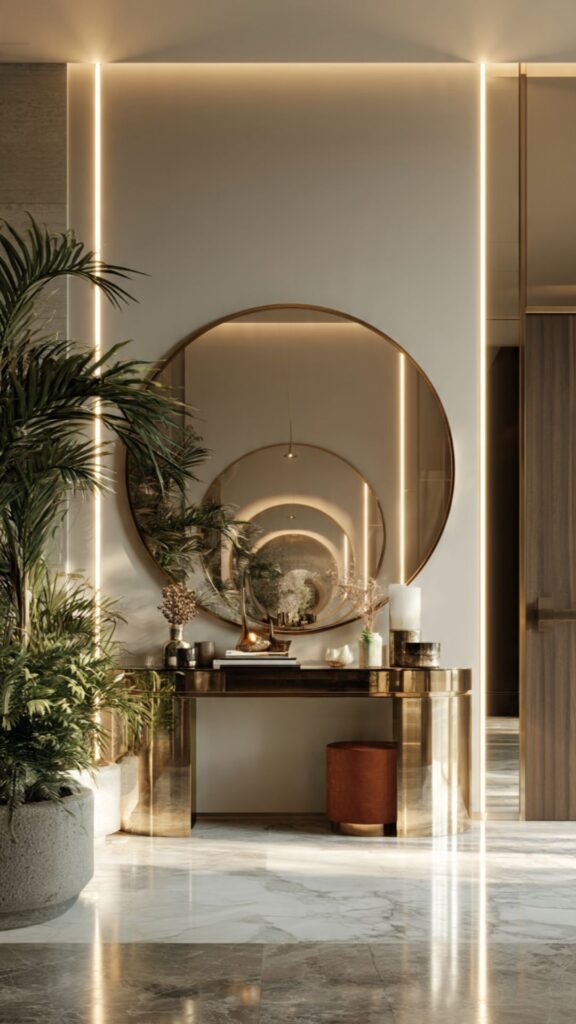
No list of entrance foyer wall design ideas is complete without mirrors and with good reason. A strategically placed mirror performs multiple functions simultaneously: it bounces natural light deeper into the space, makes the foyer feel larger, gives guests a quick appearance check before they enter, and adds a decorative focal point. In compact foyers especially, a floor-to-ceiling mirror or a large arched mirror can visually double the perceived square footage.
The shape and frame of your mirror should harmonize with the overall design language of your home. An ornate gold sunburst mirror pairs beautifully with eclectic or maximalist interiors. A simple round mirror with a thin black frame suits minimalist or Japandi-inspired spaces. For a transitional or traditional home, an arched or rectangular mirror with a painted wooden frame in a complementary tone ties the look together gracefully.
What many homeowners miss is the power of mirror placement relative to other foyer elements. Positioning a mirror directly opposite a window or glass door maximizes light amplification. Pairing a mirror above a console table creates a classic vignette that anchors the space elegantly add a small plant, a sculptural object, and a tray for keys or mail, and you have a foyer moment that looks like it belongs in an interior design magazine.
Looking ahead, smart mirrors with built-in lighting and LED frames are entering the home design mainstream. These offer adjustable color temperature, making your foyer lighting functional in the morning rush (cool, energizing light) and warm in the evening (soft, relaxing tones). As home automation evolves, expect mirrors with integrated displays showing weather, calendar reminders, and even art a futuristic but increasingly accessible foyer upgrade.
Accent Paint Colors:
Moody, Bold, and Transformative
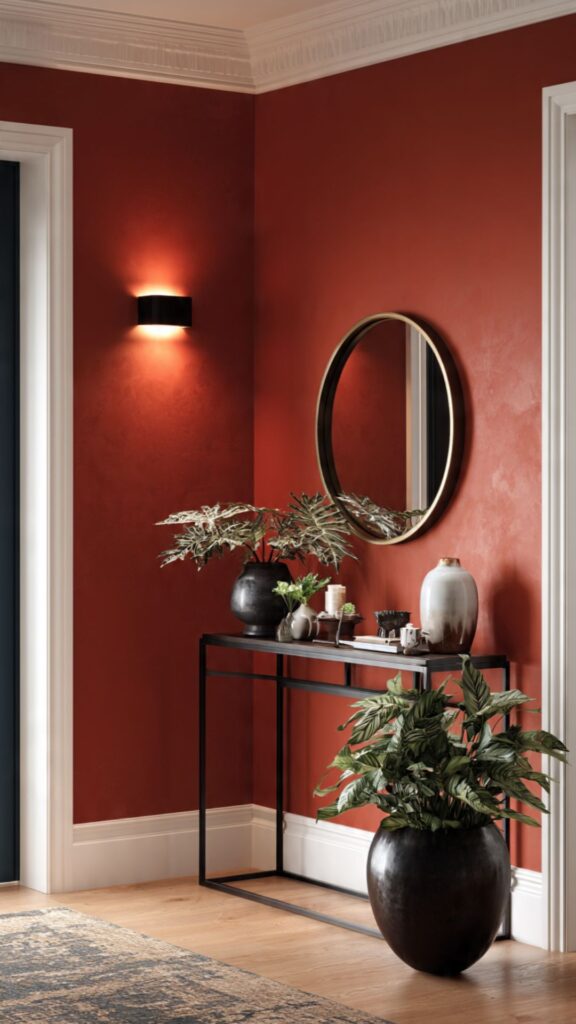
Choosing the right paint color for your entrance foyer wall design is one of the highest-leverage design decisions you can make and the lowest cost. The foyer is a contained space where bold color choices feel exciting rather than overwhelming, making it the ideal testing ground for the deeper, moodier tones that many homeowners are too cautious to try in larger rooms. Deep forest green, inky navy, warm terracotta, or rich burgundy can make a foyer feel cocooning, luxurious, and deeply memorable.
The psychology of color is particularly relevant in entry spaces. Research in environmental psychology consistently shows that color affects how people perceive a space’s proportions and emotional warmth. Darker colors in small spaces, contrary to popular belief, don’t always make them feel smaller they can create a sense of intimacy and depth that feels intentional and sophisticated. This is especially true when the dark wall color is balanced with good lighting and reflective surfaces like mirrors or glossy fixtures.
An advanced technique that interior designers often recommend: paint not just the wall but also the ceiling of your foyer in the same deep accent color. This creates an immersive, jewel-box effect that stops guests in their tracks. Benjamin Moore’s “Black Pepper,” Farrow & Ball’s “Hague Blue,” or Sherwin-Williams “Urbane Bronze” are perennial favorites for this treatment. The effect is dramatic but entirely achievable on a DIY budget.
For those who aren’t ready to commit to a full wall of deep color, consider an accent or “drenched” approach painting just the wall behind a console or the space between two doorways. This creates a framed, gallery-like backdrop that highlights art, a mirror, or decor without overwhelming the entire entry. It’s a strategic, low-risk way to introduce color with high visual payoff.
Wallpaper Pattern, Texture, and Personality at Scale:
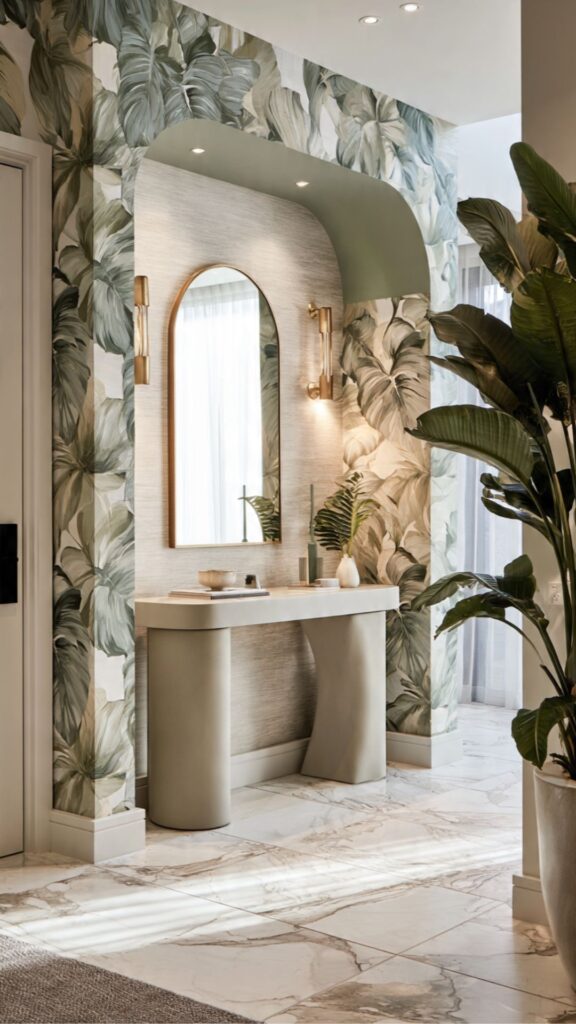
Wallpaper is experiencing a genuine renaissance in interior design, and the entrance foyer wall design is where it shines most brilliantly. Because foyers are small and self-contained, you can use a bold, pattern-heavy wallpaper that might feel too intense in a living room or bedroom. The result is an entry space that feels considered, layered, and deeply personal exactly what a first impression should be.
The range of wallpaper styles available today is staggering. Grasscloth wallpaper adds organic texture and warmth, perfect for coastal, bohemian, or nature-inspired homes. Geometric Art Deco patterns in gold and black create an instant glamour-hotel energy.
Floral or botanical wallpapers in oversized scales are particularly popular for Victorian, farmhouse, and maximalist foyers. For contemporary homes, abstract or painterly wallpapers in muted palettes offer sophisticated pattern without visual chaos.
Textured wallpapers deserve special attention in the foyer context. Unlike flat printed wallpaper, textured options including fabric-backed, embossed, or 3D tile-effect papers add a tactile dimension that photographs don’t fully capture.
Guests experience it differently in person, which makes for a more memorable impression. Velvet-effect wallpapers, in particular, absorb light in a way that makes colors look richer and more saturated as daylight changes throughout the day.
One forward-looking insight: digital printing technology is making custom wallpaper increasingly accessible. Companies like Spoonflower allow homeowners to design or commission completely unique patterns that can be printed to exact specifications.
This means your foyer wallpaper can incorporate your family’s motifs, a favorite landscape, or an abstract design created by an artist of your choosing a level of personalization that was previously available only to luxury clients with five-figure budgets.
Floating Shelves:
Functional Art Meets Smart Storage
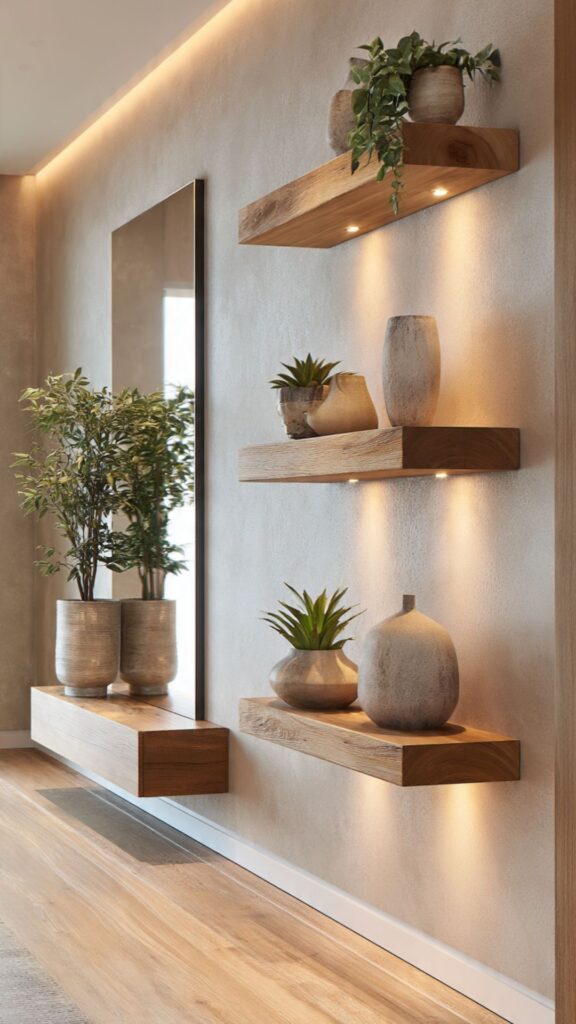
Floating shelves on entrance foyer wall design serve double duty: they add visual layering and sculptural interest to otherwise flat surfaces, while also providing genuinely useful storage for everyday items. In a space where every square inch counts, shelves mounted at varying heights can display art books, small plants, candles, and decorative objects all while keeping the floor clear and the overall look uncluttered.
The material and finish of your floating shelves should echo the design language of your home. Solid oak or walnut shelves with visible grain bring warmth and organic texture, ideal for Scandinavian, Japandi, or rustic interiors. Painted MDF shelves in a tone matching the wall create a seamless, built-in look that feels architectural rather than accessorized. For industrial or modern loft aesthetics, raw steel brackets paired with reclaimed wood tops create an intentionally rough-hewn contrast.
Styling floating shelves well is an art form in itself. The rule of odd numbers applies: groups of three objects varying in height, texture, and mass feel more natural to the eye than pairs or even numbers. Combining a tall sculptural vase, a trailing plant, and a small framed print creates a visually dynamic vignette.
Avoid the common mistake of overfilling shelves; generous negative space between objects reads as confidence and intentionality in interior styling.
A creative approach increasingly seen in contemporary foyer design is the “living shelf” floating shelves populated primarily with plants, trailing vines, and air plants rather than decorative objects. This biophilic design approach brings the natural world into the first moments of the home experience, creating an immediate sense of calm and vitality. Combined with a small grow light, living shelves can thrive even in north-facing or windowless foyers.
Keep This in Mind: Staircase Wall Design Ideas That Beautifully Continue the Same Elegant Feel of Your Entrance Foyer Wall
Reclaimed Wood and Natural Texture Walls:
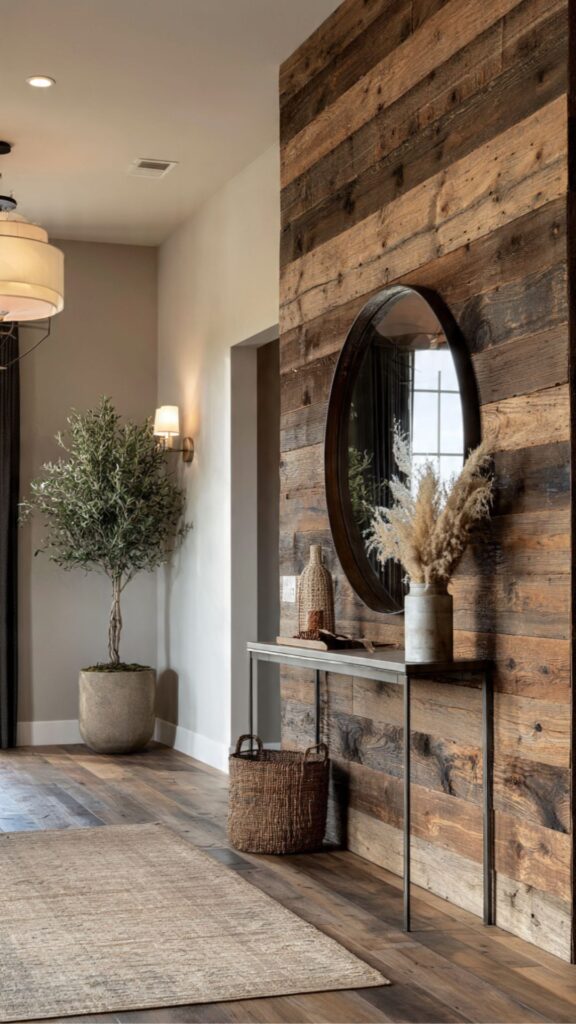
One of the most impactful entrance foyer wall design ideas is the use of natural, tactile materials that engage the senses beyond sight. Reclaimed wood accent walls, stone veneer, exposed brick, or woven cane panels transform a flat, painted surface into a rich, dimensional experience.
The moment a guest enters your home and their eyes land on a wall of weathered barn wood or soft-gray limestone, there’s an immediate sense of character and rootedness that no paint or wallpaper can replicate.
Reclaimed wood accent walls are particularly compelling because of their sustainable story. Using wood salvaged from old barns, factories, or demolished buildings gives your foyer wall a genuine history and provenance. No two boards are alike, which means no two installations are identical you’re getting a truly one-of-a-kind wall. This authenticity resonates strongly in an era when mass-produced, look-alike interiors feel increasingly hollow to discerning homeowners.
The installation of natural texture walls has become more accessible with the advent of lightweight veneer panels that mimic the look and feel of solid stone or thick brick, without the structural requirements or expense. Products like Norstone stone veneer panels or Stikwood reclaimed wood panels are designed for DIY installation over standard drywall, making the transformation achievable over a weekend without a contractor. The result looks indistinguishable from the real thing and dramatically elevates perceived home quality.
For a more contemporary take on natural textures, consider limewash or Venetian plaster. These specialty paint finishes are applied in layers with a trowel, creating a surface that has depth, variation, and movement capturing light differently at different times of day. Limewash is enjoying a significant trend moment in 2025 and 2026, appearing in editorial interiors and luxury home builds alike. Its chalky, aged quality adds instant sophistication to any foyer, regardless of the home’s age or architectural style.
Oversized Artwork:
One Bold Piece, Maximum Impact
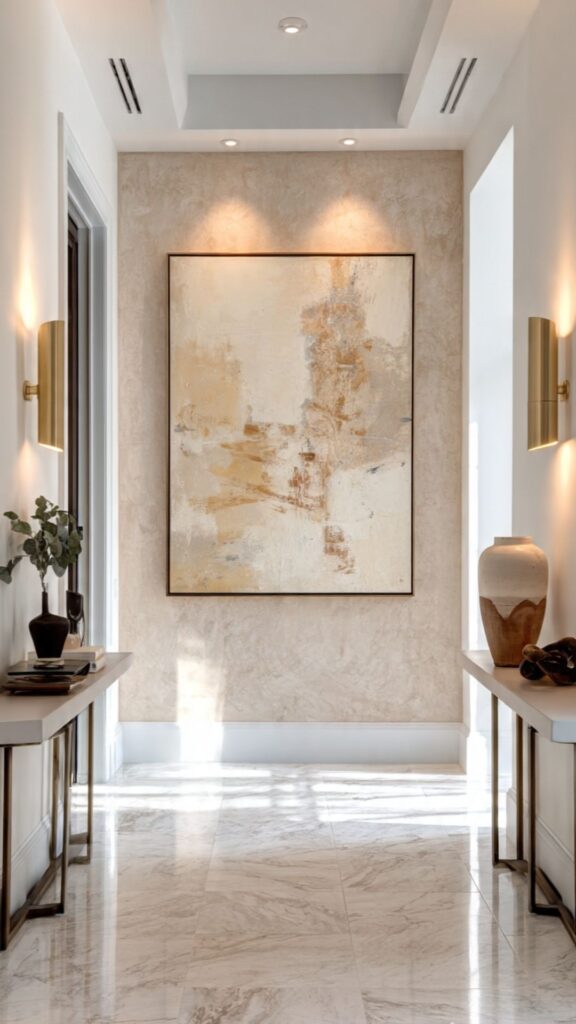
In entrance foyer wall design, the maxim “go big or go home” applies perhaps most powerfully to artwork. A single oversized piece whether it’s an abstract canvas, a large-scale photograph, a textile, or a graphic print can transform a bare foyer wall into a genuine gallery moment. This approach is also refreshingly simple: rather than coordinating multiple frames and worrying about spacing, you make one confident choice and let it breathe.
The scale of the artwork relative to the wall is critical. As a rule of thumb, your art should occupy between 60% and 80% of the available wall width. In a foyer, where walls are often narrow, this means a piece that might feel modest in a large room becomes exactly right in the entryway. Use a paper template or tape measure to visualize the scale before purchasing what looks huge in a gallery or online can appear surprisingly small on a wall.
Abstract art works particularly well in foyer spaces because it invites interpretation without requiring explanation. Unlike a family portrait or a specific landscape, an abstract piece creates an open, contemplative first impression. Deep charcoal, warm ochre, and earthy rust tones in abstract work are popular choices because they pair with a wide range of interior palettes and feel both timeless and contemporary simultaneously.
Beyond canvas prints, consider oversized textile art as a dramatic foyer wall statement. Handwoven tapestries, macramé panels, quilted textile works, and hand-painted linen pieces bring warmth and acoustic softness to the space an often-overlooked sensory benefit.
Hard foyer surfaces (tile floors, plaster walls) tend to create echo and noise; a large textile piece actually improves the acoustic quality of the space while adding significant visual richness. This functional-aesthetic dual benefit makes oversized textile art one of the most underrated foyer wall ideas available.
Vertical Garden or Living Wall:
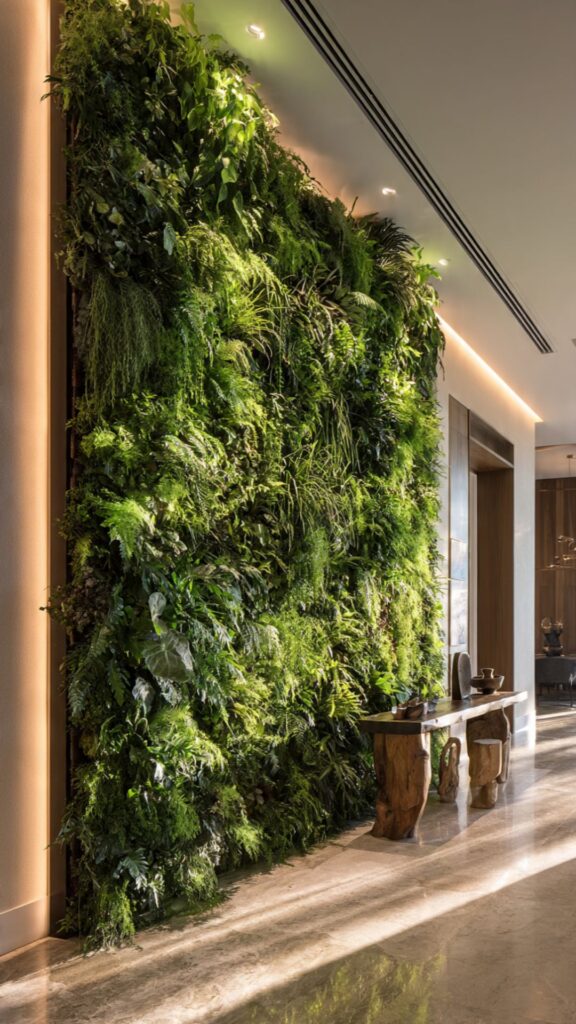
A living wall sometimes called a vertical garden or plant wall in your entrance foyer wall design is perhaps the most visually striking and conversation-worthy wall design idea on this list. A well-executed living wall installation creates an immediate biophilic immersion: you enter the home and are met with a lush, verdant surface of cascading plants, mosses, and ferns that feels like a slice of nature transplanted into your interior. The effect is simultaneously dramatic and calming.
Historically, living walls were associated with high-budget commercial installations hotel lobbies, restaurant entryways, corporate atriums. However, modular panel systems now make residential living walls accessible at a wide range of price points.
Companies like Florafelt and Florafit offer modular felt pocket systems and hydroponic panels that can be installed on a single foyer wall without complex plumbing. Self-watering systems with reservoir trays make maintenance manageable even for those without a green thumb.
Plant selection for a foyer living wall should account for the available light. For bright, south-facing foyers, drought-tolerant succulents, air plants (Tillandsia), and trailing pothos thrive beautifully. For lower-light north-facing entries, shade-tolerant species like ferns, philodendrons, moss varieties, and ZZ plants are more appropriate choices. Adding a small, full-spectrum grow light hidden within the wall structure can expand your plant palette significantly.
Looking beyond pure aesthetics, living walls offer measurable air quality benefits research published in environmental science journals consistently shows that indoor plants reduce VOCs (volatile organic compounds), improve humidity balance, and contribute to psychological wellbeing.
Your foyer living wall isn’t just beautiful; it’s actively improving the air quality of every room beyond it. As indoor air quality awareness grows, living walls are moving from trend to a long-term standard in thoughtful home design.
Built-In Bookshelves:
The Literary First Impression
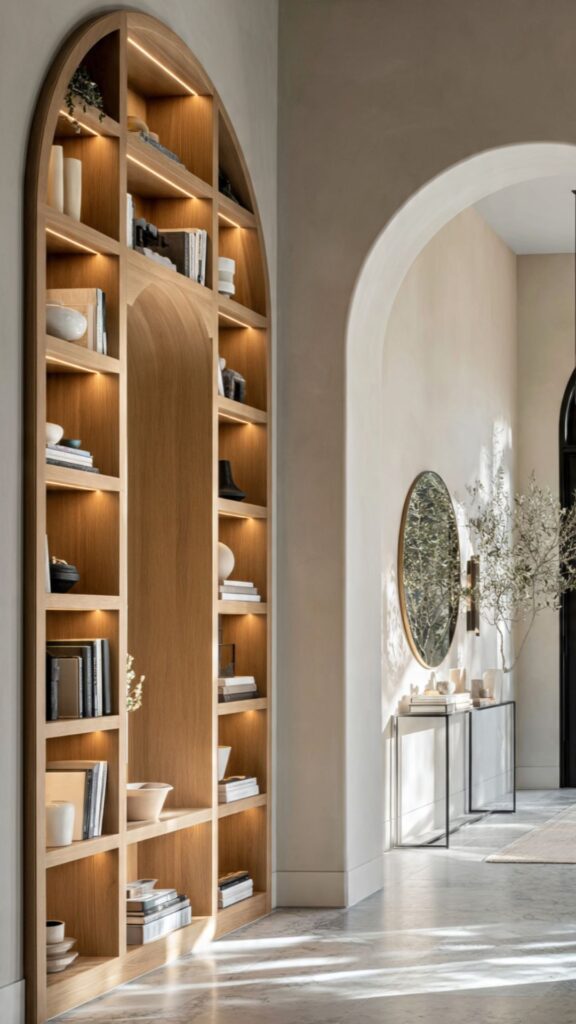
A foyer lined with built-in bookshelves sends a powerful, immediate message about the people who live within those walls. It’s an entrance foyer wall design choice that is equal parts functional, intellectual, and deeply personal. More than almost any other design element, a well-curated bookshelf communicates character the spines of your books tell visitors about your interests, your travels, your education, and your curiosity.
From a practical standpoint, built-in bookshelves in the foyer eliminate the problem of where to store overflow books while creating an architectural feature that adds genuine structural value to the home. Custom built-ins, when executed well, are among the home improvements most likely to increase resale value because they signal quality, craftsmanship, and thoughtful design. Even a modest set of floor-to-ceiling bookshelves flanking a doorway creates a sense of grandeur that can make an ordinary foyer feel like an extraordinary library anteroom.
For smaller foyers where full floor-to-ceiling shelves aren’t feasible, consider a single wall of lower shelves approximately 4 to 5 feet high topped with a run of artwork or a continuous shelf for plants and decorative objects.
This approach creates a “collector’s cabinet” feeling that’s richly detailed without being visually overwhelming. Paint the interior back panels of the shelves in a deep contrasting color such as navy behind white shelves to add depth and make the books pop as graphic elements.
The styling of foyer bookshelves should balance books with non-book objects for visual rhythm. Groupings of three to five books can be interspersed with small sculptural objects, globes, framed photos, potted plants, or art objects.
Color-organizing books by spine color creates an aesthetically pleasing, almost painterly effect a trend that’s been popular in interior design since the late 2010s and shows no sign of fading, precisely because it transforms books from storage into visual design elements in their own right.
Chalkboard or Writable Walls:
Family Function Meets Design
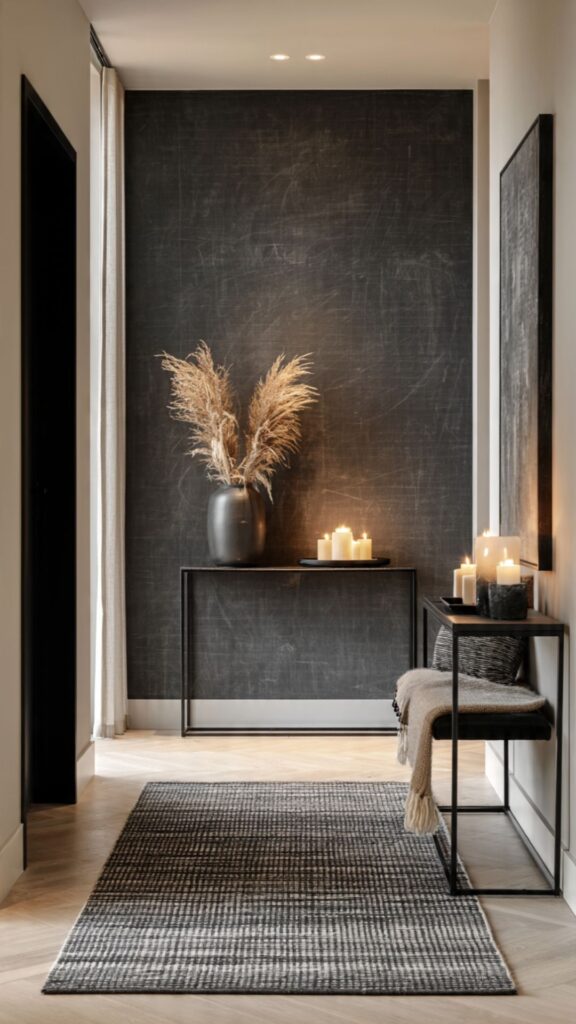
A chalkboard or writable wall in the entrance foyer is one of those ideas that sounds casual but can be executed with real design sophistication. In family homes especially, the foyer is the command center of daily life the place where coats are hung, bags are dropped, and the day’s logistics are coordinated. A writable wall makes this choreography visible and manageable without cluttering the space with paper notes, sticky pads, or bulletin boards.
Chalkboard paint has evolved significantly from the rough, flat-black versions of the early 2000s. Modern formulations are available in a wide range of colors deep forest green, navy, slate gray, and warm charcoal are popular and in smoother finishes that integrate more elegantly with upscale interiors. Some homeowners apply chalkboard paint to a framed panel or a custom-cut board that hangs on the wall like a piece of art, rather than painting the entire wall, creating a more intentional, curated look.
For a more premium writable wall option, magnetic chalkboard paint combines writability with magnetic functionality allowing notes, cards, photographs, and kids’ drawings to be adhered with magnets. This turns the foyer wall into a dynamic, ever-changing family bulletin board that feels alive and engaged rather than static. Magnetic glass whiteboards are the luxury tier of this category, offering a sleek, modern surface in glass-white or tinted finishes that suits contemporary and minimalist homes.
The key to making a writable wall feel designed rather than utilitarian is context. Pair it with a refined floating shelf below for chalk storage and small accessories. Frame the chalkboard area with a painted border or simple wooden molding. Hang a small plant or mirror nearby to balance the graphic weight of the dark writing surface. With these finishing touches, a chalkboard wall becomes a design feature in its own right and one that the whole family will actually use every day.
Wallpaper Dado and Two-Tone Wall Design:
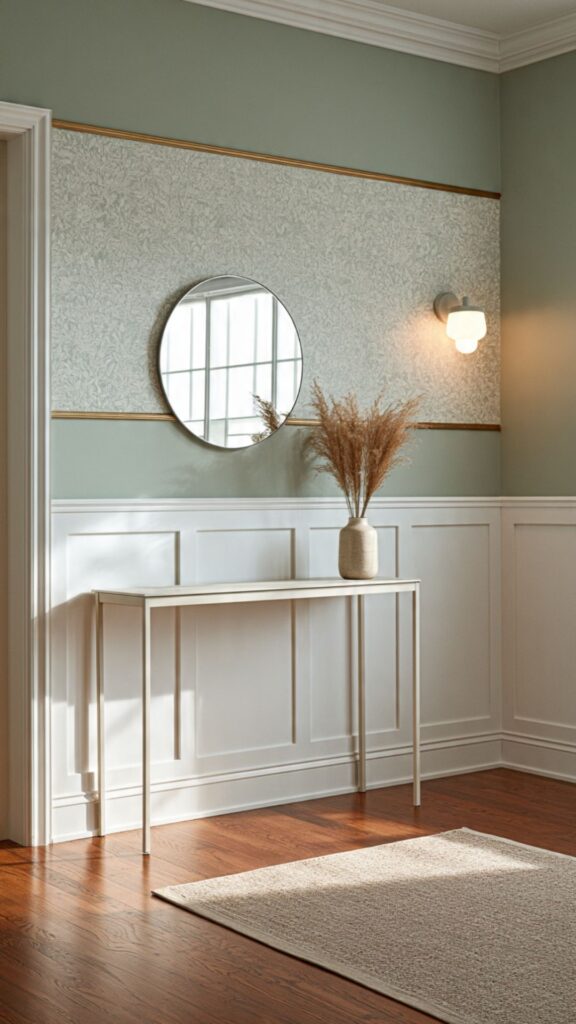
The dado rail a horizontal molding that divides a wall roughly one-third of the way up is one of the most enduringly practical and beautiful architectural elements in interior design. In an entrance foyer wall design, using this division to create a two-tone wall treatment (with contrasting wallpaper below and paint above, or vice versa) adds visual structure, architectural interest, and a sense of considered detail that elevates the space significantly.
The classic approach is bold patterned wallpaper below the dado line with a complementary solid paint color above. This protects the most vulnerable section of wall (the lower third is most susceptible to scuff marks and contact) while adding visual richness where the eye naturally falls.
A popular combination: a heritage-style geometric wallpaper in navy and white below, with warm off-white paint above and a gilded brass picture rail as the dividing element. The result is a foyer that feels like a boutique hotel or a beautifully restored period townhouse.
Contemporary designers are subverting the traditional dado approach in exciting ways. Using a bold solid color in the lower half with a more subtle textured or embossed wallpaper above creates a reversed weight that feels modern and unexpected. Or placing a narrow band of decorative border tile a technique borrowed from bathroom design at the dado height instead of a traditional molding creates a more graphic, architectural effect. These creative deviations signal design confidence and an informed awareness of interior design history.
The proportion of the division matters enormously and is a detail that most DIY guides neglect. In rooms with standard 8-foot ceilings, the traditional dado height of around 32–36 inches can feel low and proportionally awkward.
Many contemporary designers raise the division to roughly half the wall height around 48 inches creating a more balanced, modern look. In foyers with higher ceilings, the division can be pushed even higher, creating a more dramatic, immersive effect in both zones of the wall treatment.
This Changes Everything: Picture Wall Ideas That Transform Your Entrance Foyer Wall into a Stunning Visual Masterpiece
Pegboards and Modular Wall Organizer Systems:
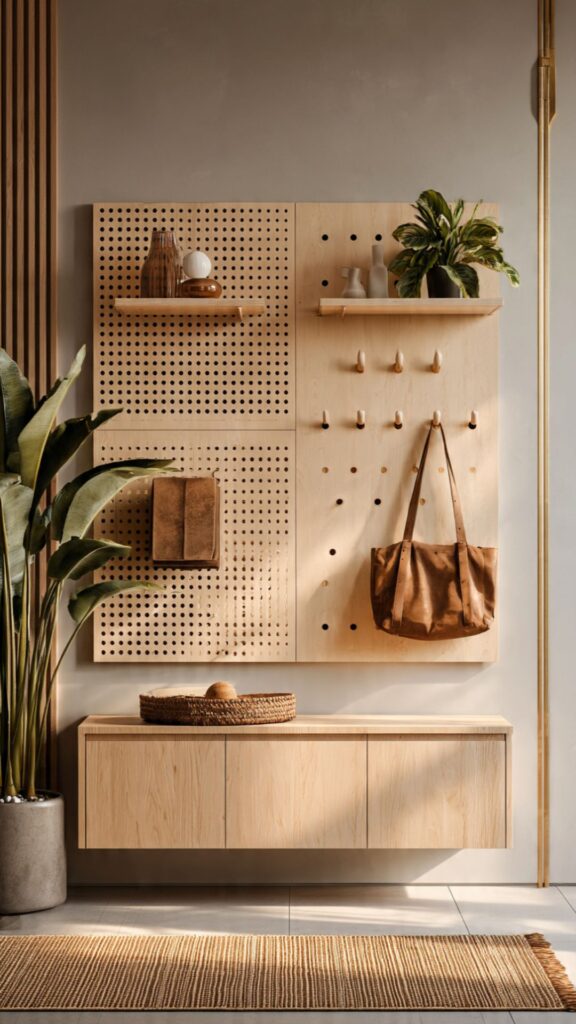
The entrance foyer is, above all, a transitional and functional space and a thoughtfully designed pegboard or modular wall organizer system honors that function while creating a design statement in its own right. This is an entrance foyer wall design idea that’s increasingly being adopted in urban apartments and small homes where the foyer must simultaneously store coats, bags, keys, dog leashes, umbrellas, and mail, without descending into visual chaos.
The humble pegboard has been radically elevated by the design community. Companies like Nooks and Muuto offer premium pegboard systems in powder-coated steel, solid oak, and brushed aluminum, with modular accessories hooks, shelves, bins, and trays that can be configured and reconfigured as needs change.
When installed thoughtfully and accessorized with quality hooks and a refined color palette, a modular pegboard wall becomes an expression of intentional, systems-based design rather than a utilitarian afterthought.
Styling a pegboard wall for the foyer requires the same compositional thinking as any gallery wall. Balance heavy items (coats, bags) with lighter accessories (plants, small art prints, mirrors). Use hooks at varying heights to create visual rhythm. Choose accessories in a consistent material finish all brass, all matte black, or all natural wood to create coherence within the modular arrangement. A well-styled pegboard looks deliberately composed rather than haphazardly assembled.
For families with children, a layered pegboard system with lower hooks at kids’ height and upper hooks for adult outerwear solves a real daily-life friction point. Teaching children to hang their own coats and bags from day one builds autonomy and reduces the clutter that plagues most family entryways. This functional benefit, combined with the visual interest of a well-organized modular wall, makes the pegboard system one of the most genuinely practical foyer wall ideas in this guide.
Lighting as a Wall Design Element:
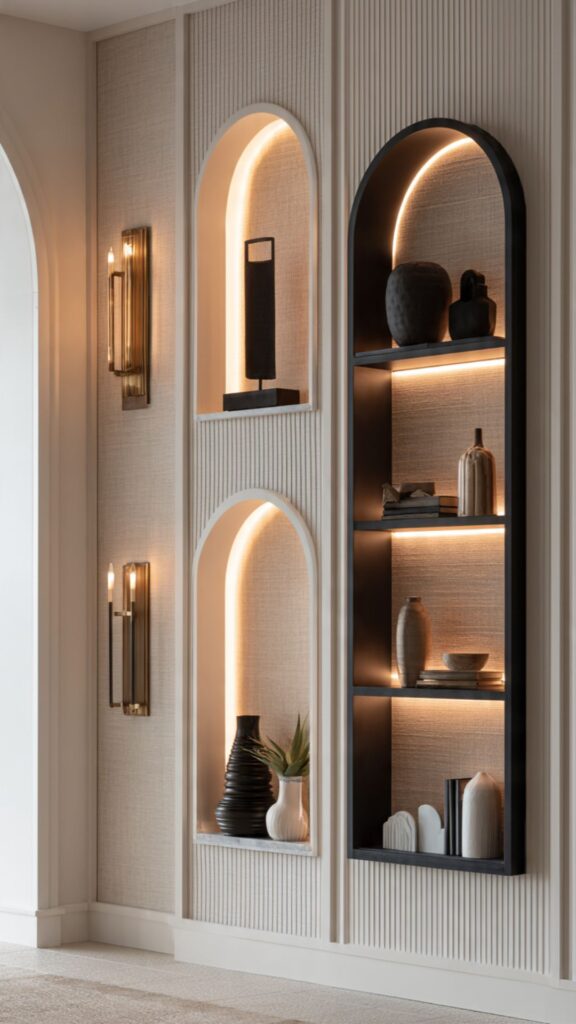
Most homeowners treat lighting in the foyer as a purely utilitarian decision overhead fixture, done. But in a space where the wall is the primary design surface, wall-mounted lighting can become one of the most impactful design elements in the room. Sconces, picture lights, uplighters, and illuminated architectural panels are all tools that transform your foyer wall from a passive backdrop into an active, dynamic, and atmospherically rich surface.
Wall sconces flanking a mirror or a piece of art in the foyer create a layered lighting effect that is both functional and deeply beautiful. Unlike overhead lighting that casts flat, shadowless illumination, well-placed sconces create pools of warm light that add depth and dimension to the wall.
They also draw the eye to specific focal points the mirror, the artwork, the console table below guiding the visual experience of the space intentionally. In foyers without natural light, strategic sconce placement can make the difference between a space that feels dim and unwelcoming and one that feels warm and inviting.
LED strip lighting installed behind floating shelves, within alcoves, or along the top of wainscoting panels creates an illuminated edge that adds a contemporary, almost cinematic quality to your foyer wall. This type of indirect lighting is highly popular in luxury residential and hospitality design, and it’s now accessible to homeowners through affordable LED strip systems controllable via app or smart home integration.
Warm white LEDs (2700K) are typically recommended for foyer spaces, as they complement wood tones, metallics, and warm paint colors without the sterile quality of cooler color temperatures.
Looking forward, tunable LED systems that shift in color temperature throughout the day mimicking the natural arc of daylight from cool morning to warm evening are becoming a standard consideration in thoughtful home lighting design.
In the foyer, this kind of circadian-aligned lighting serves both aesthetic and practical purposes: energizing, cool light for busy weekday mornings and soft, warm light to welcome you home in the evening. As smart home technology becomes more integrated and affordable, lighting as a design element in the foyer will become an expectation rather than an exception.
Conclusion
Your entrance foyer wall design is one of the highest-impact, most personal surfaces in your entire home and with the right design choices, it can leave a lasting impression on every person who steps inside. From bold statement murals and textured natural materials to smart modular organizers and biophilic living walls, these 15 entrance foyer wall design ideas prove that even the smallest entryway can become a genuinely extraordinary space. The key is to choose a direction that reflects your lifestyle, commit to it with intention, and execute it with care.
Take one idea from this guide and start there even a single bold paint color or a thoughtfully styled floating shelf can transform how you feel every time you walk through your own front door.

Team TrandyVilla is the passionate home decor team behind Trandy Villa, where style meets comfort in everyday living. The team loves transforming simple spaces into beautiful, functional homes through smart ideas, budget-friendly hacks, and modern design trends. Their content focuses on helping readers create homes that feel both stylish and personal without spending too much.