
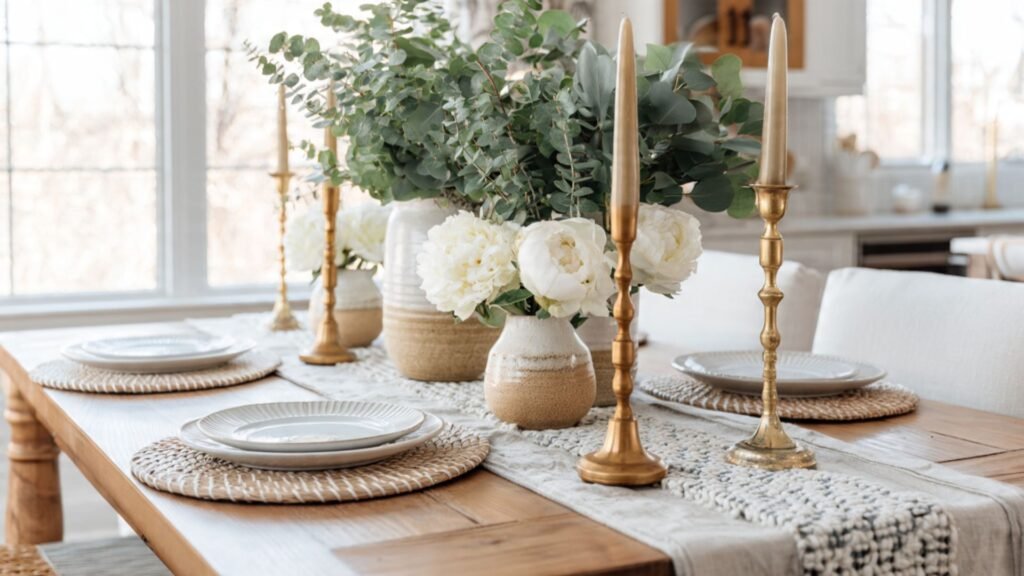
Your dining table is more than a surface for meals it’s the social heart of your home. Whether you host dinner parties weekly or simply sit down for family breakfasts, how you decorate your dining table shapes the entire energy of the room. Good dining table decor transforms an ordinary meal into a memorable moment, and a plain table into a design statement that reflects your personal style.
Dining Table Decor Ideas define creative ways to style dining tables for beauty and function. They improve dining experiences, reflect personal style, and enhance home atmosphere. These ideas focus on centerpieces, lighting, textiles, and seasonal arrangements for visual appeal impact.
Dining Table Decor transforms dining spaces into stylish, welcoming areas through centerpieces, lighting, and textures. It is the art of styling a dining table to improve mood, function, and visual appeal for everyday meals and special gatherings at home design.
Dining Table Decor Ideas provide simple and creative methods to upgrade dining spaces. They include centerpieces, candles, runners, and natural elements. These ideas improve home style, support gatherings, and create balanced, attractive table settings for daily use and special occasions.
Build a Statement Centerpiece:
That Commands Attention
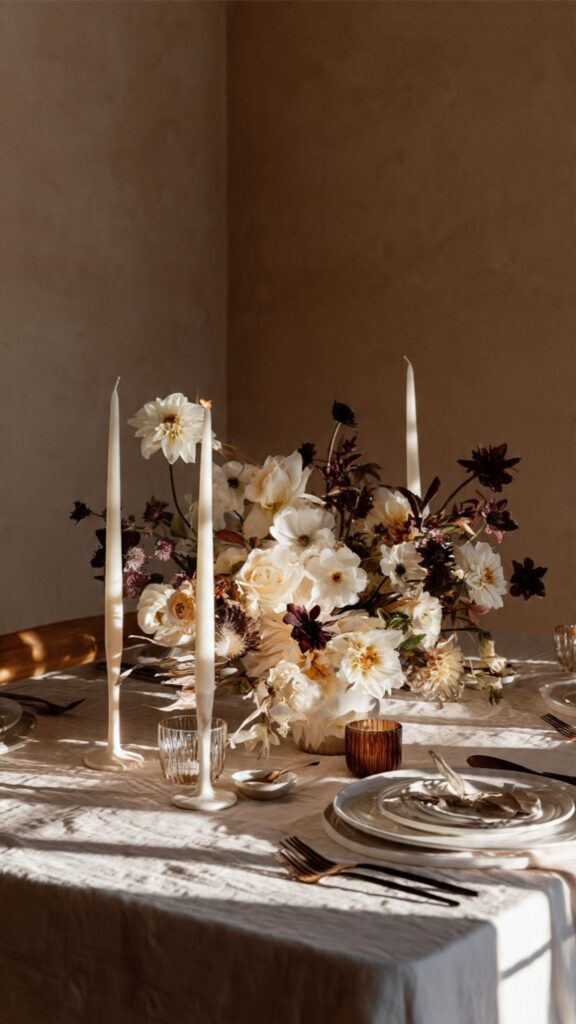
A statement centerpiece is the single most impactful element in any dining table decor scheme. Interior designers consistently point to the centerpiece as the “anchor” a visual focal point that ties color, texture, and scale together. Unlike a random vase placement, a thoughtfully constructed centerpiece uses the rule of three: combine a tall element (a sculptural vase or candelabra), a mid-height element (clustered smaller vessels), and a low textural element (moss, pebbles, or woven coasters) for a layered, professional result that doesn’t feel accidental.
What most guides skip is the concept of breathing room. A centerpiece that crowds the table actually makes meals feel stressful. The standard design principle is that no element should be taller than 30–35 cm if you seat guests face-to-face, preserving sightlines and conversation flow.
For long farmhouse tables, a series of three staggered vignettes along the table’s length creates far more visual interest than a single large arrangement placed dead-center, a technique borrowed from restaurant tablescaping.
In 2026, sculptural ceramic vessels particularly in warm travertine, sand, or clay tones are replacing the classic floral arrangement as a go-to statement centerpiece. These are lower maintenance, timeless, and pair beautifully with both dried botanicals and fresh seasonal blooms. For example, a trio of unglazed terracotta vessels in different heights, loosely filled with dried pampas grass and a few sprigs of eucalyptus, creates an effortlessly curated look that stays fresh for months without any upkeep.
The “odd number rule” applies strongly here three or five objects always feel more dynamic than two or four, because the eye naturally moves between them rather than settling into symmetry.
Master the Art of Layered Table Runners:
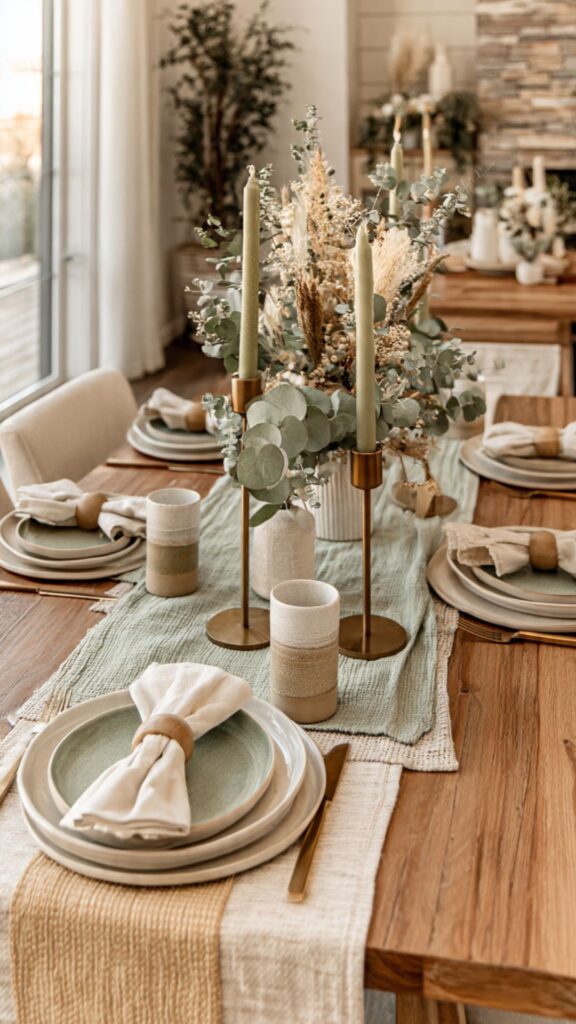
The table runner has evolved far beyond a simple strip of fabric down the center. Layering two runners one longer linen runner beneath a shorter woven or macramé piece creates depth and visual richness that immediately elevates your table decor from flat to three-dimensional. This is particularly effective on wood tables, where the textile layers soften the hard surface and introduce warmth, color, and tactile contrast simultaneously, without the formality of a full tablecloth.
Consider the runner as a color bridge between your dining chairs and your centerpiece. If your chairs are upholstered in sage green and your centerpiece uses terracotta tones, a runner in warm ochre or rust creates a visual thread that unifies the whole space.
This concept of “color bridging” is standard practice in professional interior photography and staging, but rarely discussed in consumer home decor content it’s the reason styled tables in magazines always look so cohesive even when the individual elements seem mismatched.
Material choice matters enormously for different occasions. A rougher-textured jute or seagrass runner suits casual daily dining, while a linen-cotton blend works beautifully for dinner parties. For festive occasions, a velvet runner in deep emerald or midnight blue instantly signals celebration without requiring full table setting changes. In a practical scenario: keep a rotation of two or three runners in different materials and neutral tones this alone allows you to completely transform your dining table decor four seasons a year with minimal investment.
Create a Candlescape:
For Instant Atmosphere
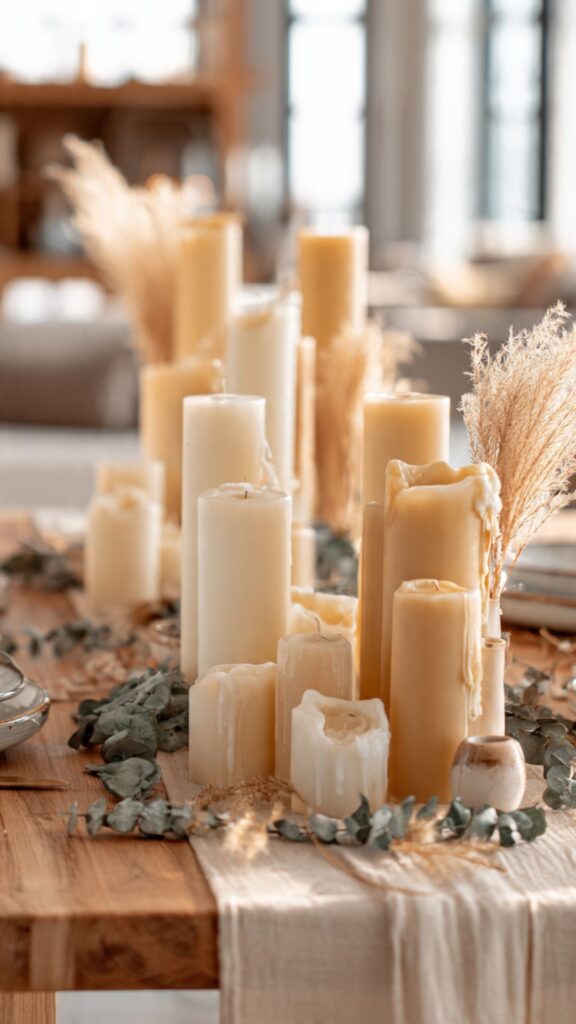
Candles are arguably the most transformative and budget-friendly dining table decor tool available. What separates a beautiful candlescape from a basic candle setup is intentional grouping and varied heights.
Rather than placing two candlesticks at equal height on either side of your centerpiece, cluster candles in groups of three to five across different heights a tall taper in a brass candlestick, two medium pillar candles on a stone coaster, and a few tea lights in low glass holders all within a relatively tight arrangement that looks deliberately styled rather than casually placed.
The warmth of candlelight changes the entire mood of a dining space. Research on dining environments consistently shows that warm, lower ambient light encourages people to linger longer at the table, eat more slowly, and report higher satisfaction with the meal experience. This is exactly why upscale restaurants invest heavily in candle and low-light design.
You can replicate that atmosphere at home by pairing your candlescape with the overhead dining light dimmed down to roughly 30–40% the combination creates a layered lighting scheme that feels genuinely luxurious. For safety and convenience in 2026, high-quality LED flameless candles have become remarkably convincing some models include a warm flicker mode powered by rechargeable batteries, and they’re completely safe around children and tablecloths.
Reserve real candles for dinner parties and special occasions if you prefer the authentic scent, but consider flameless alternatives for everyday dining table decor that still delivers beautiful ambiance. If you do use real candles, always trim wicks to 6mm before lighting to prevent soot and extend burn time a detail most guides never mention.
Before You Go: Dining Room Decor Ideas That Perfectly Complete and Elevate Your Beautiful Dining Table Decor
Embrace Seasonal Tablescapes:
That Evolve Year-Round
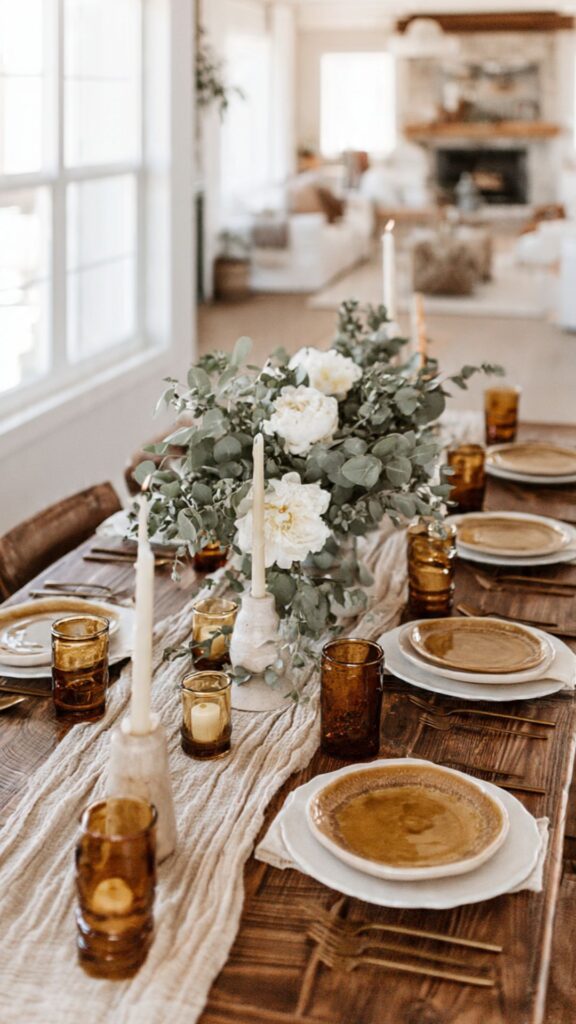
Professional interior stylists don’t decorate a dining table decor once and leave it unchanged. They work in seasonal “capsules” a small curated collection of decor items that rotate roughly every 12 weeks to reflect the season’s colors, textures, and natural materials.
This approach keeps your dining space feeling fresh and alive without requiring a large budget. It also creates a natural rhythm of change in your home that many people find emotionally satisfying there’s a reason people look forward to the transition from summer linens to autumn harvest decor.
A smart seasonal tablescape system works from a core neutral base permanent items like a quality runner, a set of simple candlesticks, and one or two classic vessels that remain year-round, with seasonal “swap-in” elements that change the mood.
In autumn, add gourds, amber glass votives, and cinnamon-toned napkins. In winter, bring in deep green foliage, metallic elements, and white pillar candles. In spring, rotate to pastel florals, delicate ceramic bud vases, and soft linen. In summer, introduce woven textures, citrus-toned accents, and air-dried botanicals.
The practical benefit of seasonal dining table decor goes beyond aesthetics. It also reduces decision fatigue once you’ve built your four seasonal capsules, decorating becomes effortless. Store each season’s items together in a single labeled box, and you can completely refresh your dining table decor in under 15 minutes. This is how professional stylists manage multiple homes simultaneously: a tight, curated system beats a large, disorganized collection every single time.
Use Mixed-Height Vignettes:
For Professional-Looking Depth
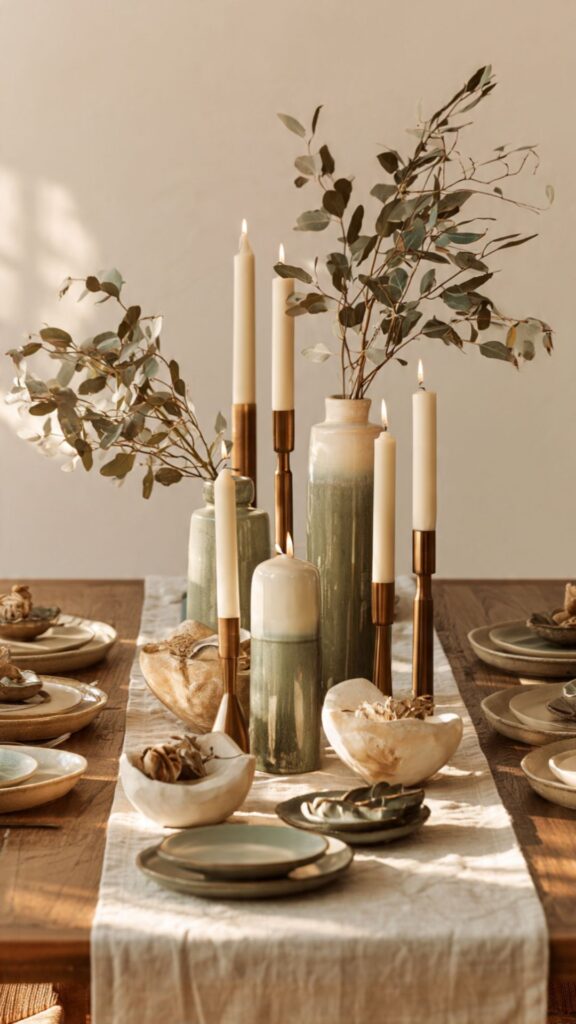
One of the biggest gaps between a professionally styled dining table and a home-decorated one is the use of height variation. When every decorative element sits at the same level, the result looks flat and unresolved like objects placed rather than composed.
Mixed-height vignetting is a foundational principle from retail visual merchandising and editorial photography: by creating a “mountain range” silhouette from tall to medium to short, you direct the eye on a journey across the table rather than letting it skim indifferently across a flat plane.
In practice, this means deliberately pairing a tall sculptural element perhaps a 45 cm ceramic bottle vase with a mid-height cluster of books or a wooden box at roughly 20 cm, and finishing with a ground-level element like a slate cheese board, smooth river stones, or a low tray. The transition from tall to low creates visual rhythm.
The key insight that most people miss is that the negative space between elements is just as important as the objects themselves overcrowding objects at similar heights creates visual noise, while generous spacing lets each element breathe and be appreciated on its own terms.
This technique is especially effective on long rectangular dining table decor where a single centered arrangement feels underwhelming. Try creating three distinct vignette zones along the table’s length, each at a different average height, connected visually by a runner or consistent color palette.
This transforms a large empty table into a curated gallery-like surface that impresses guests before anyone sits down. For everyday use, scale down to just two height levels one tall vase and one low tray to keep the look manageable and practical.
Photograph your styled table from the angle your guests will see it usually eye level while seated. This reveals height relationships and sightlines you miss when styling while standing.
Bring Natural and Organic Elements:
To the Table
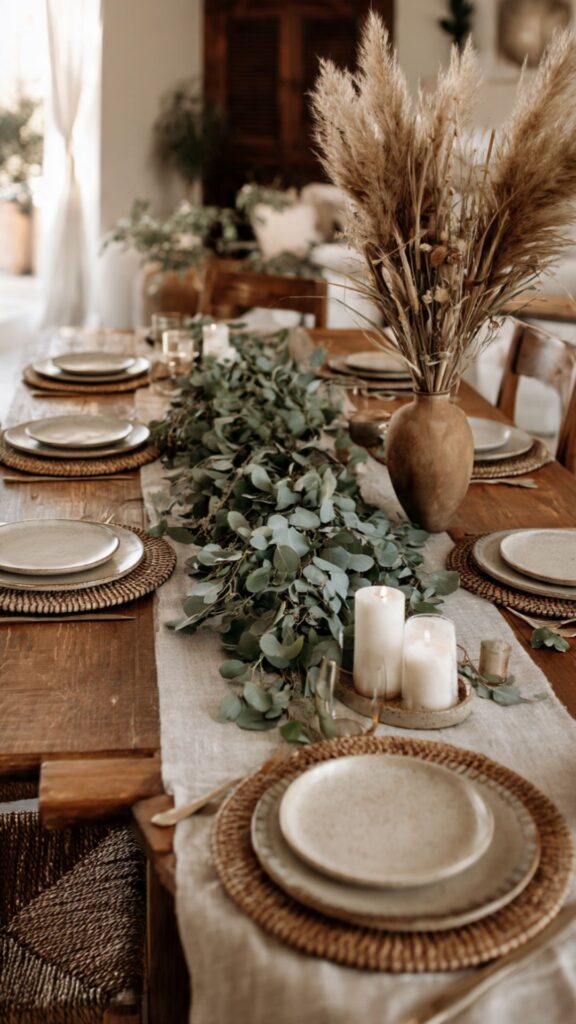
Biophilic design the practice of incorporating natural materials and living elements into interior spaces has moved from trend to mainstream principle in contemporary home decor. For dining table decor, this means embracing raw, organic materials: a rough-edged wooden serving board, a cluster of real branch cuttings in a stone vessel, stones or pebbles as object weights, dried seed heads or wheat grasses, and living potted herbs.
Each of these elements introduces texture, color variation, and natural imperfection that manufactured decor objects simply cannot replicate.
There is genuine science behind why natural elements on a dining table decor improve the meal experience. Studies in environmental psychology show that exposure to natural materials and greenery during meals reduces stress hormones, improves mood, and enhances the perceived quality and flavor of food. This is not simply aesthetic.
A small pot of fresh basil or rosemary on your dining table decor genuinely makes people feel more relaxed and engaged with their food. Restaurants with higher natural material density consistently score higher in ambiance ratings, regardless of price point.
For practical implementation, consider a simple herb centerpiece: three small terracotta pots planted with rosemary, thyme, and mint, arranged on a wooden tray or marble slab. This costs very little, requires minimal maintenance, adds fragrance to the dining environment, and gives you fresh herbs for cooking.
It’s a perfect example of decor that is simultaneously beautiful and functional one of the hallmarks of thoughtful, future-oriented home design. Swap the herbs seasonally (lavender in summer, winter savory in cooler months) to keep it aligned with your seasonal tablescape capsules.
Adopt the Minimalist Japandi Approach:
For Timeless Elegance
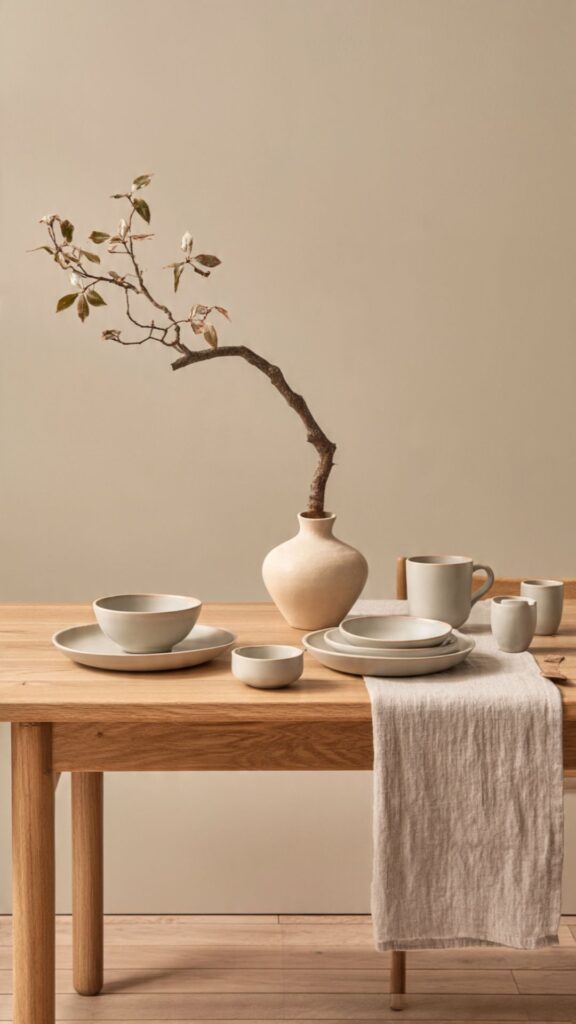
Japandi the fusion of Japanese wabi-sabi philosophy with Scandinavian minimalism is one of the most enduring design aesthetics in contemporary home decor, and it translates exceptionally well to dining table styling. The core principle is restraint: using fewer objects, but choosing each one with great intentionality, so that every element on the table is genuinely purposeful and beautiful in its simplicity.
A Japandi dining table decor typically features a single beautiful ceramic or stone object, a low arrangement of dried or fresh botanicals, and perhaps one handmade textile nothing more. What makes Japandi dining table decor particularly relevant in 2026 is its inherent sustainability. By investing in fewer, higher-quality handcrafted objects a hand-thrown ceramic bowl from a local potter, a hand-woven linen runner, a single piece of sculptural driftwood you build a table aesthetic that never looks dated and never needs replacing.
This contrasts sharply with the trend-chasing approach that requires constant purchasing of seasonal decor. The wabi-sabi element of Japandi also means that imperfect, aged, and worn objects are celebrated rather than hidden a beautiful patina on an old wooden tray is an asset, not a flaw.
To achieve this look at home, start by removing everything from your dining table decor and placing back only the objects you genuinely love and find beautiful in their own right. The Japandi principle of ma (negative space) means the empty table surface is itself part of the composition the absence of clutter is a deliberate aesthetic choice that communicates calm, confidence, and sophisticated taste. One exquisite ceramic vessel, one quality hand-stitched runner, and one small bowl of smooth stones or sand that’s often all you need.
Must Read: Coffee Table Decor Ideas That Share the Same Stylish and Elegant Touch as Your Dining Table Decor
Experiment with Bold Color Blocking:
For Maximum Impact
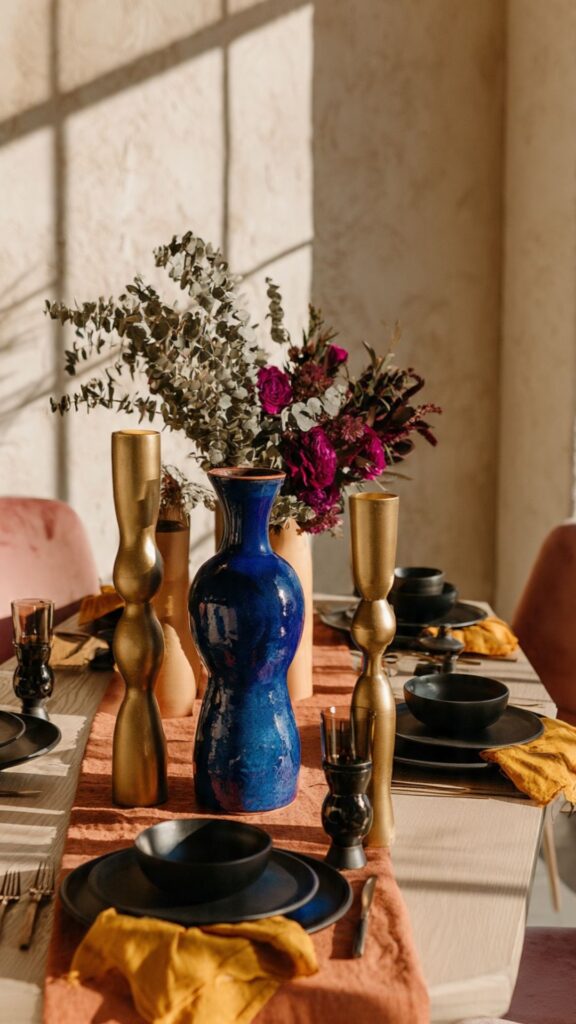
While neutral palettes dominate most dining table decor advice, bold color blocking is having a significant moment in 2026’s interior design landscape. Color blocking on a dining table decor means deliberately pairing two or three strong, contrasting colors deep cobalt and warm terracotta, rich forest green and blush pink, mustard yellow and charcoal within your tablescape to create a graphic, high-energy aesthetic.
This works particularly well in modern, contemporary, and maximalist dining spaces where you want the table to be a bold design statement rather than a quiet backdrop.
The key to making color blocking work without looking chaotic is the 60-30-10 color rule, borrowed from interior design: 60% of your tablescape in a dominant color (usually the runner and largest vessel), 30% in a secondary contrasting color (placemats, smaller objects, napkin rings), and 10% in an accent that bridges the two (a metallic tray, a small floral element, or a textured weave).
This ratio prevents any single color from overwhelming the composition and creates a sense of intentional tension rather than accidental clutter. For those hesitant to commit to bold colors permanently, color blocking can be achieved entirely through replaceable textile elements colored placemats and napkins are the lowest-commitment, highest-impact change you can make to dining table decor.
A set of deep navy placemats with terracotta linen napkins can completely transform a neutral wooden table in under two minutes, and swap back out just as easily. This is particularly worth considering for entertaining: choose a color scheme that complements your menu’s visual presentation as well as the food itself, a technique used by professional food stylists and event designers.
Mix Vintage and Contemporary Pieces:
For Character
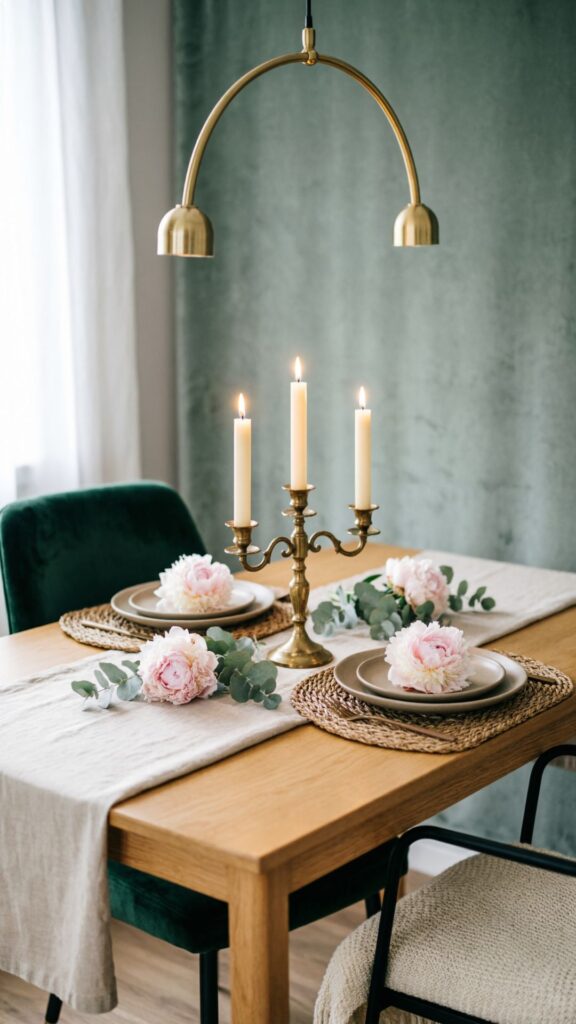
The most characterful dining tables are rarely decorated exclusively with new pieces. Mixing vintage or antique objects with contemporary items creates a sense of history, personality, and visual layering that purely modern or purely traditional tables simply cannot achieve.
A brass candlestick from a charity shop, a hand-painted ceramic bowl found at a craft fair, and a modern geometric marble trivet these pieces in dialogue with each other tell a story about the person who curated them, which is exactly what great home decor should do.
The principle that makes vintage-modern mixing work rather than look like a jumble sale is material consistency. Even if the styles, ages, and sources of your objects vary wildly, keeping a consistent material palette all natural materials (stone, wood, unglazed ceramic), or all metallics (brass, bronze, copper), or all white and off-white ceramics creates an invisible thread that unifies the disparate objects into a cohesive composition.
Interior stylists use this principle constantly: it’s why a Victorian brass candlestick, a mid-century teak bowl, and a handmade contemporary ceramic can sit together on a table and look perfectly at home.
Where to source vintage dining table decor without spending a fortune: estate sales, charity and thrift shops, flea markets, and online resale platforms are goldmines for quality vintage ceramics, glassware, linens, and small decorative objects at a fraction of retail prices.
A beautifully shaped vintage cut-glass bowl can become a striking centerpiece filled with fruit or flowers. Antique silver-plate napkin rings add a layer of elegance and history to a dinner table setting that no mass-produced equivalent can replicate. The hunt is part of the pleasure.
Style Coffee Table Books and Art Objects as Decor:
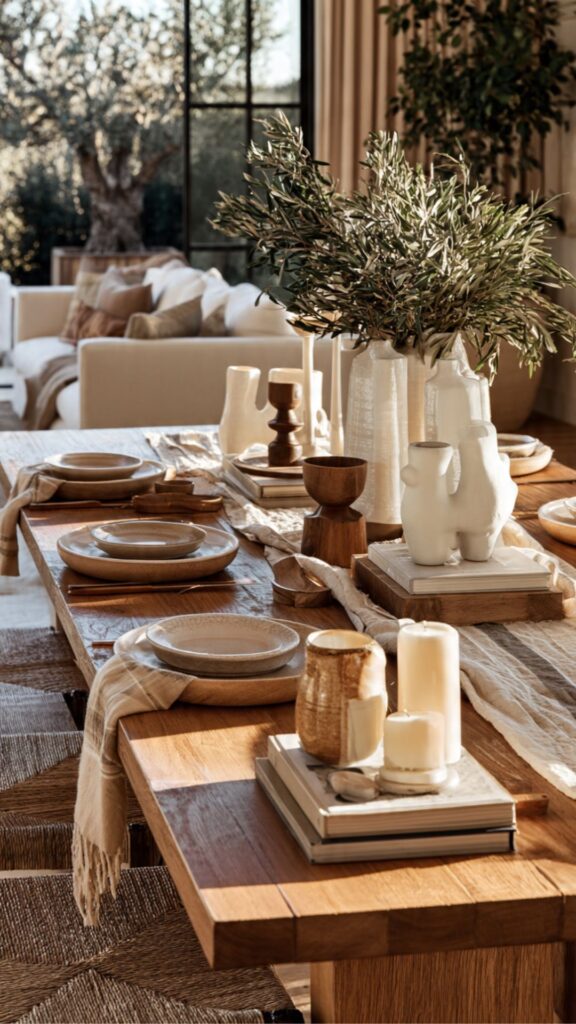
Large-format art and design books have become one of the most versatile and intellectually engaging elements in contemporary home decor, and they work beautifully on dining tables as a foundation layer for centerpiece vignettes. A stack of two or three oversized books perhaps one on botanical illustration, one on architecture, one on a favorite cuisine adds significant visual height and intellectual personality to a tablescape.
The spines themselves introduce typography, color, and a window into the household’s cultural tastes that purely decorative objects cannot. Beyond books, small sculptural art objects are increasingly used in dining table decor to replace the predictable vase-and-flowers formula.
A ceramic sculpture, a hand-carved wooden object, a small abstract figurine, or even a beautifully shaped piece of natural crystal or mineral specimen can serve as the “conversation starter” object in your centerpiece vignette something that guests notice, ask about, and engage with. This transforms passive decor into active social infrastructure, which is ultimately what the best dining table decoration achieves: it starts conversations.
A practical arrangement: place your stack of two or three books slightly off-center as the base, add a small sculptural object on top of the uppermost book, flank with a small low vase on one side, and a candle holder on the other. This three-minute arrangement looks curated and thoughtful because it borrows directly from window display and retail visual merchandising principles.
Rotate the books seasonally a book on Scandinavian food design in winter, a book on Mediterranean gardens in summer and the arrangement feels fresh even without changing any other decor elements.
Elevate Placemats, Chargers, and Napkin Presentation:
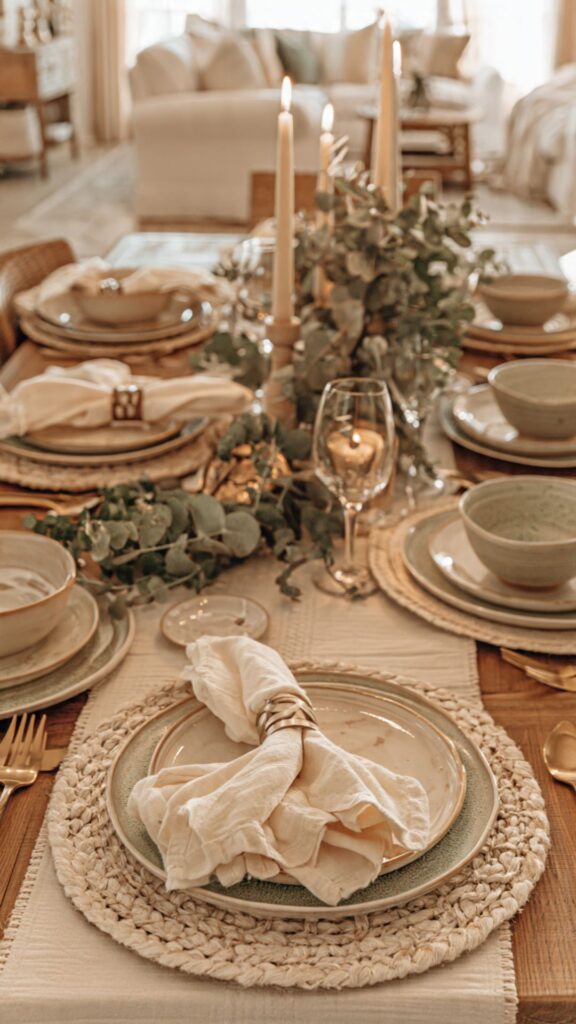
The individual place setting including the placemat, charger plate, napkin fold, and napkin ring plays an important role in making a dining table decor feel thoughtful and inviting. While many people focus mainly on the centerpiece, these smaller details are the elements guests interact with throughout the meal.
A well-arranged place setting adds a personal and welcoming touch that makes guests feel valued. It reflects care and attention to detail in a more direct way, creating an experience that feels both elegant and meaningful for everyone at the table.
Charger plates, the decorative plates placed underneath dinner plates, are often overlooked in everyday dining table decor styling. They come in a variety of materials like rattan, marble, hammered metal, acrylic, and ceramic, and instantly add more depth and elegance to a table setting without requiring complicated decorating.
Besides improving the overall look, chargers also help protect tablecloths and runners from heat and scratches. Woven or rattan chargers work well for daily family meals because they feel warm and practical, while gold-rimmed ceramic or hammered brass styles create a more polished and impressive look for special gatherings or entertaining guests.
Napkin presentation is the detail that most separates a styled table from an ordinary one. Beyond the classic flat fold, explore the simple bishop’s hat fold (a tall triangular point placed in the wine glass), the loose linen scrunch (a relaxed, gathered bunch tied with twine or a sprig of herbs), or the ribbon-tied flat fold for a clean modern look. Using a small sprig of fresh rosemary, a cinnamon stick, or a dried flower as a napkin tie costs almost nothing and creates an individually beautiful moment for each place setting that guests invariably notice and appreciate.
Use Fruit, Vegetables, and Edible Elements as Decor:
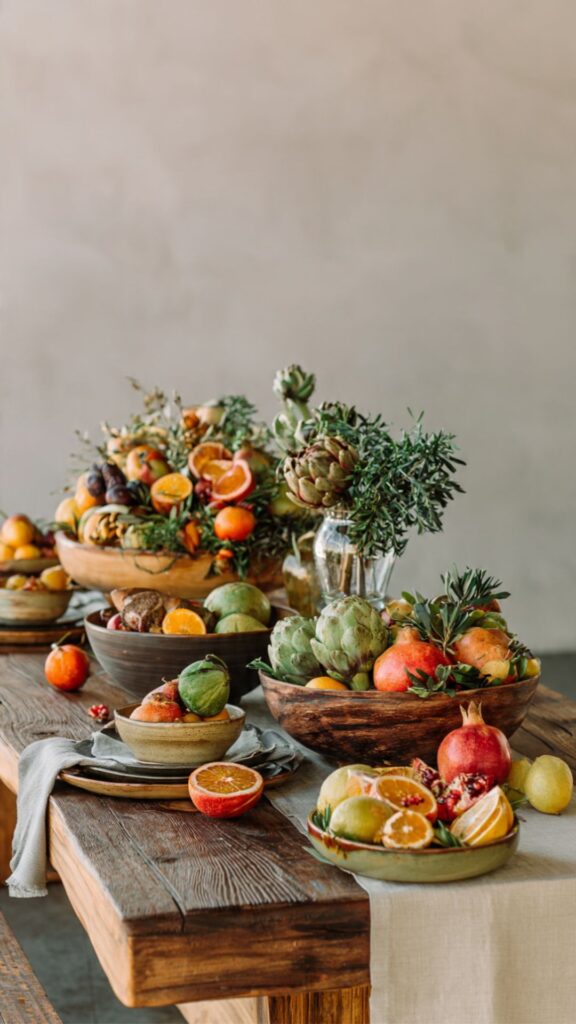
Fruit as dining table decor is one of the most ancient and culturally universal styling traditions, yet contemporary home decorators often overlook it in favor of purely ornamental objects. A generous bowl of seasonal fruit deep red pomegranates in autumn, vibrant citrus in winter, figs and peaches in late summer is simultaneously one of the most beautiful, functional, and fragrant elements you can place on a dining table decor.
The rich natural colors and varied textures of seasonal fruit rival any florist arrangement, change with the seasons automatically, and ultimately get eaten, making this zero-waste decor at its finest. The key to making fruit work as serious decor is the vessel and the arrangement. A shallow, wide ceramic bowl allows fruit to be seen from all sides and creates a low, abundant composition that doesn’t obstruct sightlines.
Mounding fruit slightly above the bowl’s rim, mixing sizes and types (a few lemons nested among green apples and a cluster of deep plums, for example), creates a still-life quality that is immediately more beautiful than a single-fruit bowl. Adding a few decorative leaves, dried botanicals, or even a single taper candle alongside the fruit bowl elevates it from kitchen practicality to genuine dining table decor.
Going further, some contemporary table stylists use artichokes, globe thistles, dried chili peppers on the vine, or bundles of cinnamon sticks as purely decorative edible elements that contribute color, texture, and fragrance without being intended for immediate consumption. These bridge the gap between produce and floristry in a way that is particularly suited to Mediterranean, Moroccan, and farmhouse interior styles.
For a dinner party, filling a tall terracotta urn with a mix of ornamental gourds, artichokes, and a few branches of bay laurel creates a dramatic centerpiece that costs a fraction of a florist arrangement.
Incorporate Lanterns and Ambient Lighting Elements:
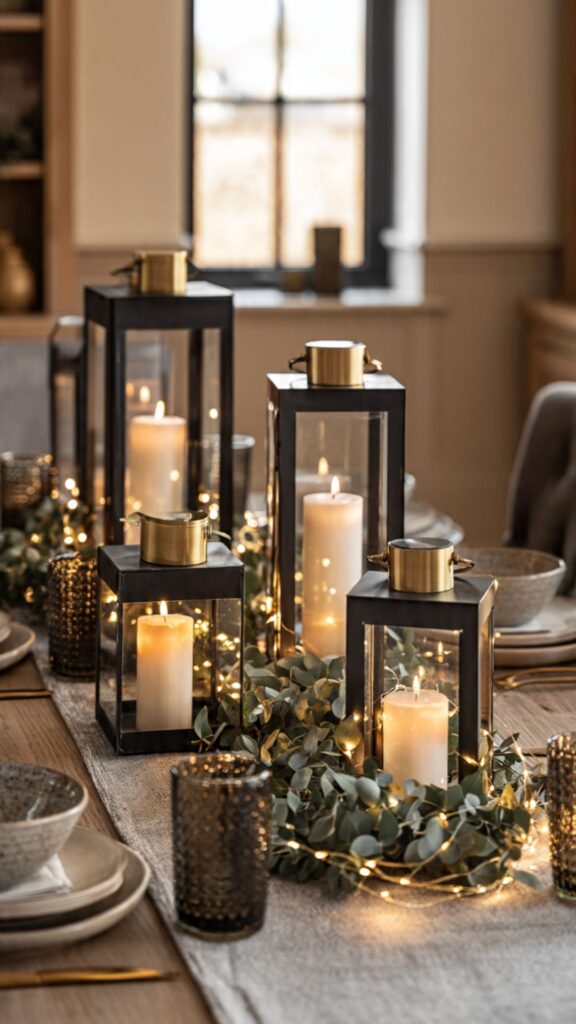
Lanterns are a beautiful way to add warmth and atmosphere to a dining table decor beyond traditional candles. Different styles such as Moroccan pierced metal lanterns, glass hurricane lanterns, Japanese paper lanterns, or modern geometric brass designs each bring their own unique cultural and decorative feel while still serving as soft lighting elements.
They also add height and structure to the table, helping create a more layered and inviting display. Whether used with candles or LED lights, lanterns work especially well as statement pieces that make the entire dining setup feel warmer, cozier, and more visually balanced.
The distinction between decorative and functional lighting in a dining context is increasingly blurred in 2026. Table-placed decorative LED lanterns with warm-temperature bulbs (2700K–3000K) can genuinely supplement your overhead dining table decor light and create the layered, multi-source lighting environment that professional restaurant designers use to create premium dining atmospheres at any budget.
Using two or three lanterns of varying sizes and heights grouped together at one end of a long table, with the centerpiece vignette at the other, creates an asymmetric composition that is far more dynamic and visually interesting than a single centered arrangement.
A thoughtful practical scenario: for a winter dinner party, line three lanterns of descending height along the center of the table a tall iron-framed lantern, a medium amber glass hurricane, and a small clear glass tea light holder with a low arrangement of pine cones, star anise, and dried orange slices interspersed between them.
Add a velvet runner in deep forest green, your best napkin fold, and natural beeswax candles. The combination of materials, textures, warm light, and fragrance creates a multi-sensory dining table decor experience that guests will remember and comment on long after the meal.
A Perfect Read: Farmhouse Kitchen Ideas That Pair Absolutely Wonderfully with Your Stunning Dining Table Decor
Add Personal and Custom Touches:
That Tell Your Story
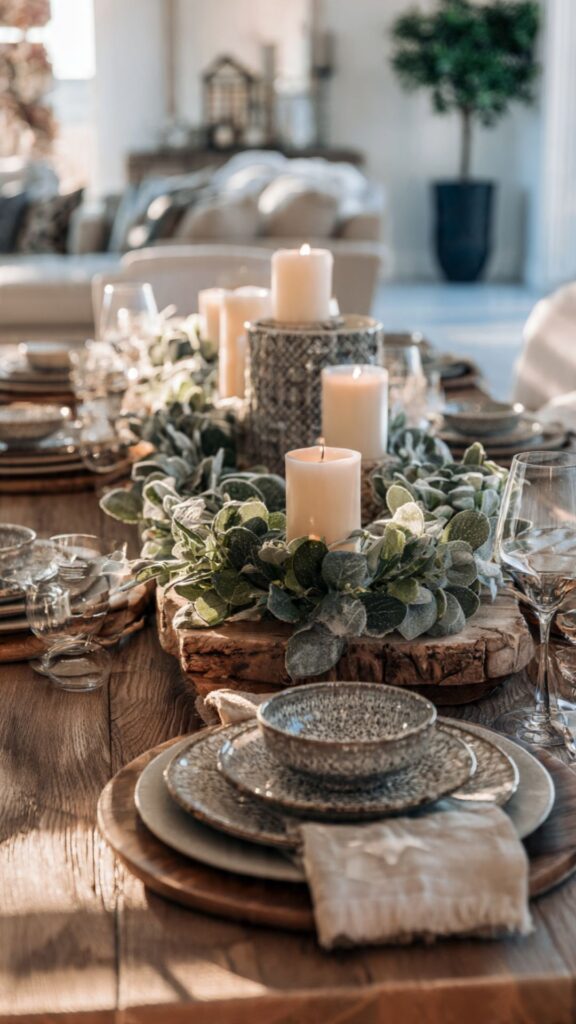
The most meaningful dining table decor are the ones that reflect the personality, memories, and values of the people who use them. It’s not just about choosing beautiful decor, but about adding pieces that have personal significance and tell a story about your life.
This could include a framed photo from a special family moment, a vase inherited from a grandparent, a hand-embroidered runner made by a loved one, or even small objects like stones collected during a memorable trip. These thoughtful details turn a simple table setup into something more emotional and personal, where every item has meaning beyond its appearance.
In an era of mass-produced home decor, handmade and commissioned elements carry significant social and aesthetic value on a dining table. A custom ceramic name card holder from a local ceramicist, a hand-lettered menu card for a dinner party, individually place-carded with a handwritten note for each guest these details require minimal financial investment but demonstrate the kind of personal attention that elevates a meal into an experience. This is the practice of hospitality as an art form, and the dining table decor is its primary stage.
Custom elements don’t have to be expensive or time-consuming. A small chalkboard placed in the centerpiece area where you write the evening’s menu, a collection of small vintage postcards propped against vessels as table decor, or even hand-stamped cotton napkins using a simple lino-cut or block stamp each adds a layer of personality and creative investment that manufactured decor objects simply cannot provide.
As AI-generated imagery and mass personalization become ubiquitous in 2026, genuine human handcraft and thoughtful personal touch become increasingly rare and valued in home environments.
Smart Decor Strategies:
For Small and Compact Dining Tables
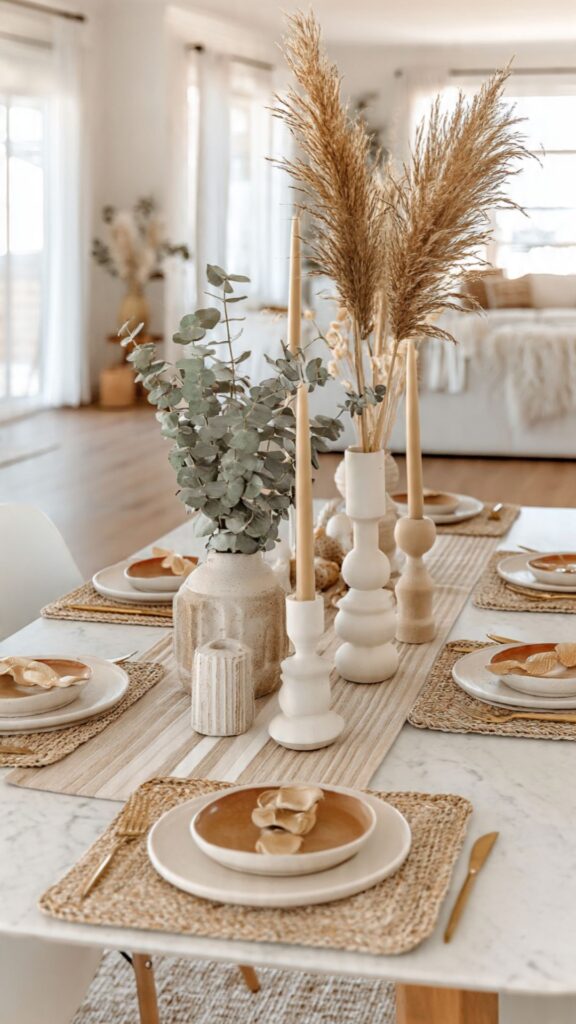
Small dining tables particularly those in studio apartments, breakfast nooks, and compact dining spaces require a fundamentally different decorating approach than their larger counterparts. The temptation to scale down a large-table decor formula rarely works: a miniaturized version of a grand centerpiece vignette just looks crowded and cluttered on a small table.
Instead, the most effective strategy for small dining table decor is the single statement object principle: one beautifully chosen, appropriately scaled object that earns its place and leaves generous breathing room around it.
Scale is the critical variable. A small table calls for objects with a low visual footprint a single narrow bud vase rather than a wide bowl arrangement, one small candle holder rather than a candelabra, a slim runner rather than a layered textile combination.
The proportional relationship between decor and table surface matters enormously: generally, the decor elements should occupy no more than 20–25% of the total table surface, leaving the remaining 75–80% visually clear. This counter-intuitive restraint actually makes a small table look larger and more elegant than adding more elements would.
For compact dining table decor that double as work surfaces or homework stations, consider a decor tray system: a small round or rectangular tray holding your chosen decor items a tiny vase, a small candle, one or two small objects that can be moved as a single unit to a sideboard or shelf when the table is needed for other purposes, then returned instantly when dining. This practical approach maintains the aesthetic benefits of dining table decor without the friction of clearing many individual objects.
In 2026, as multi-functional living spaces become the norm rather than the exception, adaptable, modular decor systems like this are increasingly standard practice in thoughtful home design.
On a compact dining table decor, one perfect object always outperforms five adequate ones. Invest in something genuinely beautiful and give it space to be fully appreciated.
Final Thoughts
Great dining table decor isn’t about spending more it’s about choosing more thoughtfully. Whether you’re drawn to the quiet restraint of Japandi minimalism, the warmth of natural botanicals, or the drama of a bold color-blocked candlescape, the principles in this guide give you the tools to style a table that genuinely reflects your taste and transforms every meal into a more memorable experience.
Start small: pick just one idea from this guide, apply it this week, and observe how it changes the feeling of your dining space. The smallest intentional change a quality runner, a considered vignette, a seasonal fruit bowl can shift the entire energy of a room.

Team TrandyVilla is the passionate home decor team behind Trandy Villa, where style meets comfort in everyday living. The team loves transforming simple spaces into beautiful, functional homes through smart ideas, budget-friendly hacks, and modern design trends. Their content focuses on helping readers create homes that feel both stylish and personal without spending too much.