
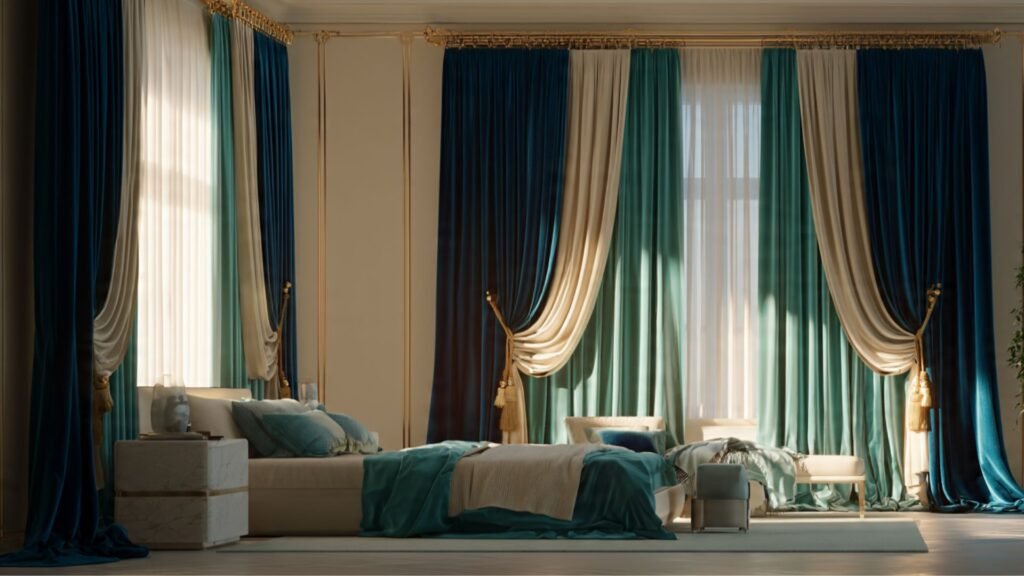
Choosing the right bedroom curtains does more than dress up a window. The right window treatment shapes the mood of your entire room, controls natural light, improves sleep, and adds a layer of acoustic insulation that most homeowners overlook entirely. Whether you’re redesigning from scratch or simply refreshing a tired space, bedroom curtain ideas can make a dramatic difference with relatively little investment.
Bedroom curtain ideas describe styles and designs used for window coverings in sleeping spaces. They improve privacy, control light, and enhance comfort. They also support décor goals, create calm mood, and help manage temperature in bedrooms effectively and easily today
Bedroom Curtain helps transform sleeping spaces by controlling light, privacy, and style. It improves comfort and supports interior design goals in modern homes while offering practical solutions for rest, mood, and elegant room presentation overall for better living experience today
Bedroom curtain ideas include blackout, sheer, linen, and layered styles. They help control sunlight, improve sleep quality, and enhance room aesthetics. These designs suit different preferences and budgets, offering flexible solutions for modern bedroom decoration and daily comfort effectively today
Blackout Curtains:
For Deep, Restorative Sleep
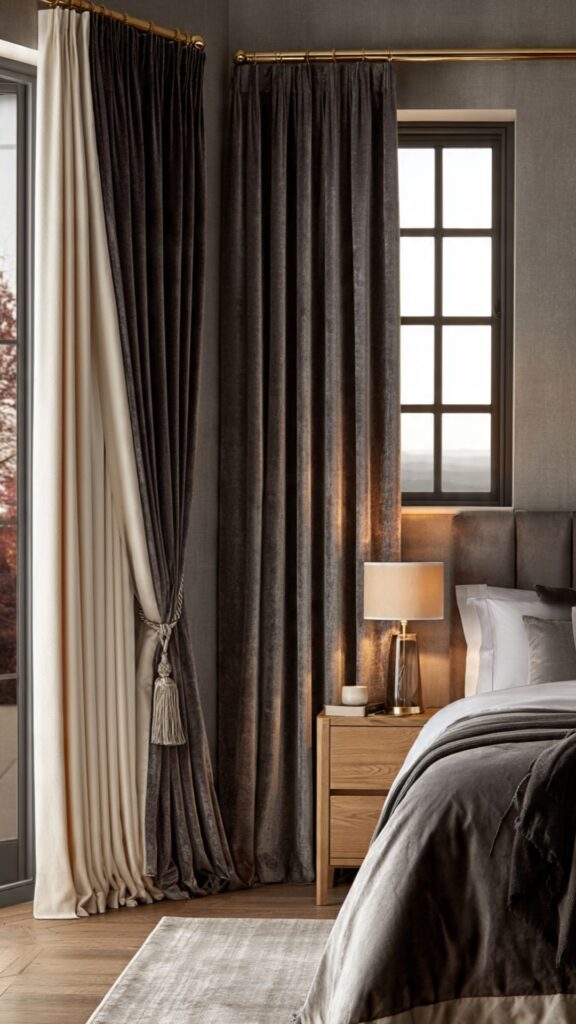
Blackout curtains are arguably the single most impactful bedroom upgrade you can make if sleep quality is your priority. Unlike standard curtains, true blackout panels use a multi-layer fabric construction typically a tightly woven front layer bonded to a foam or thermal lining that blocks 99% of incoming light. This matters enormously because even low levels of ambient light during sleep suppress melatonin production, disrupting your circadian rhythm over time.
When shopping for blackout curtains, don’t confuse “room darkening” with genuine blackout. Room-darkening curtains filter light; blackout curtains eliminate it. Look for curtains with a triple-weave or thermal-bonded backing. Brands that specialize in sleep-focused bedroom décor often certify their blackout percentage, which is worth checking before purchasing.
Style-wise, blackout curtains have shed their clinical reputation. Today’s options come in rich jewel tones like deep teal, forest green, and midnight navy, as well as neutral linen-look textures that blend seamlessly into Scandinavian or minimalist interiors. Velvet blackout panels, in particular, add a sense of luxury while performing exceptionally well acoustically a dual win for city apartment dwellers.
One underrated tip: install your blackout curtain rod at ceiling height and extend it at least 6 inches beyond each side of the window frame. This approach prevents light leakage from the sides and creates the illusion of taller, grander windows a visual trick beloved by interior designers and entirely free of charge.
Sheer Curtains:
For Soft, Diffused Natural Light
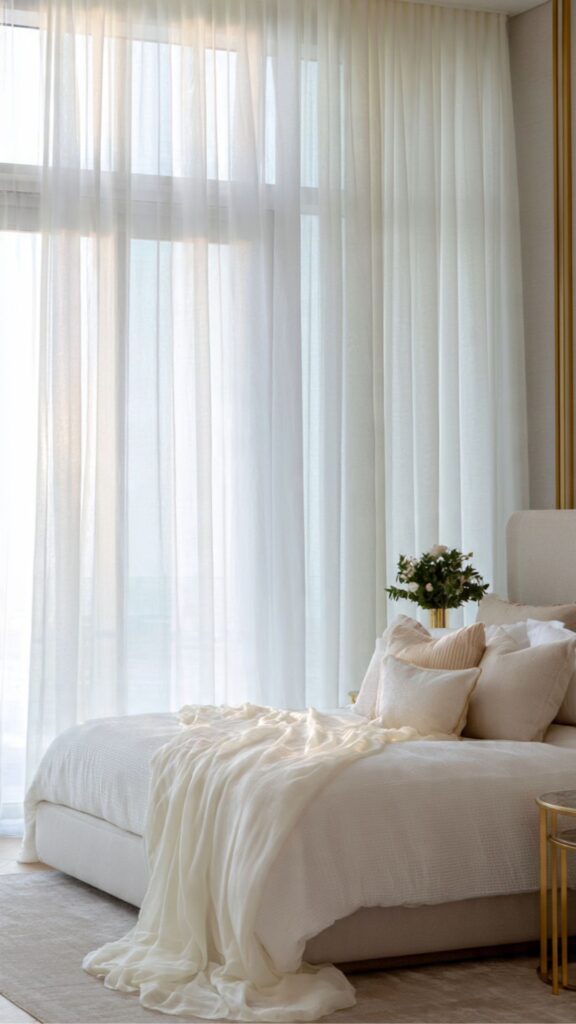
Sheer curtains occupy the opposite end of the spectrum from blackout panels, but their value in a bedroom shouldn’t be underestimated. Made from lightweight, semi-transparent fabrics like voile, chiffon, or linen gauze, sheer curtains filter harsh sunlight into a soft, flattering glow that fills the room without creating glare. This quality of light is particularly beautiful in east-facing bedrooms that catch the morning sun.
The key design principle with sheers is layering. Sheer curtains work best when paired with a heavier drape or roller blind behind them, giving you full control over privacy and light levels throughout the day. During daylight hours, let the sheers do their work. At night, draw the heavier panels for complete privacy. This two-layer system is a cornerstone of professional interior design and one of the most versatile bedroom window treatment strategies available.
Color choice matters here more than people realize. Pure white sheers can wash out in direct sunlight and show dust quickly. Off-white, ivory, or blush-toned sheers tend to be more forgiving while adding warmth to the space. For bedrooms with a bohemian or coastal aesthetic, consider natural linen sheers with a visible weave the texture adds visual depth without heaviness.
A lesser-known benefit of sheer curtains is their effect on perceived room size. Because they allow light to flow freely through the space, they prevent the visual weight that heavier drapes can create, making smaller bedrooms feel larger and more open. For tight urban apartments or compact guest rooms, this effect can be genuinely transformative.
Floor-to-Ceiling Drapes:
For a Dramatic, Luxurious Look
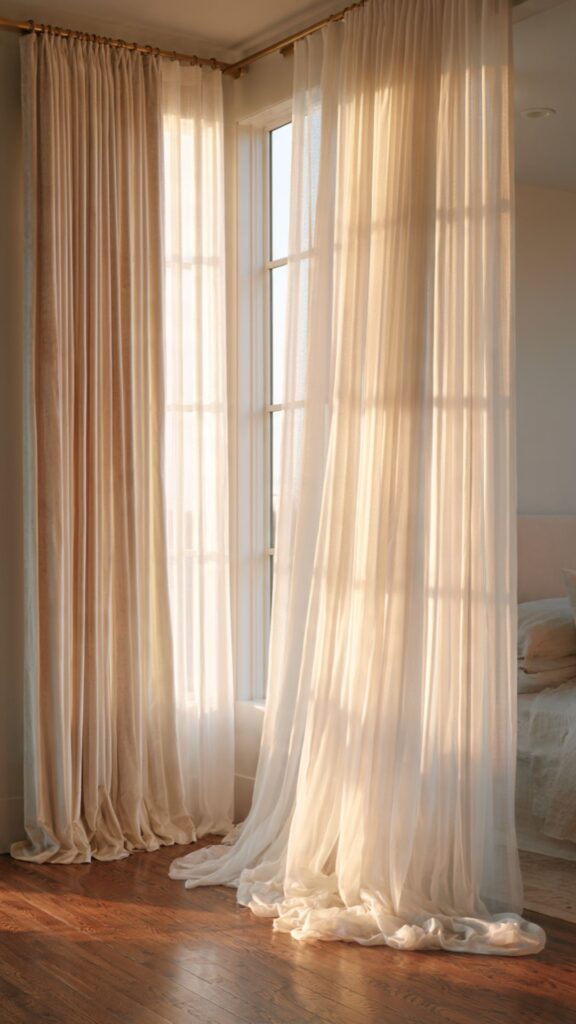
Few bedroom curtain ideas command attention quite like floor-to-ceiling drapes installed from cornice to floor. This approach, long favored in high-end hotel design, creates a sense of grandeur and architectural completeness that standard-length curtains simply cannot replicate. The vertical emphasis elongates the room visually, making ceilings feel higher and spaces feel more considered and intentional.
The fabric choice for floor-to-ceiling drapes is critical. Heavy fabrics like velvet, jacquard, or lined linen drape beautifully and hold their form, creating those elegant, cascading folds you see in editorial bedroom photography. Lighter fabrics like chiffon or sheer linen create a more romantic, billowing effect gorgeous for a soft, feminine aesthetic but less suited to a clean, architectural look.
For maximum visual impact, mount the curtain rod directly at the ceiling line or even use a ceiling-mounted track system that hides hardware entirely. This creates a sleek, built-in appearance that elevates even budget-friendly curtains into something that looks custom-made. The absence of visible brackets and rods creates a cleaner, more refined look that reads as genuinely high-end.
One practical consideration often missed: floor-to-ceiling drapes in a bedroom collect more dust and pet hair than shorter panels. Choose fabrics that are machine washable or easy to maintain. Microfiber-backed velvet, for example, repels dust better than traditional velvet, making it an intelligent choice for both style and practicality in a bedroom setting.
Do Not Leave Without Reading: Master Bedroom Decor Ideas That Perfectly Complement Your Beautiful Bedroom Curtain Style
Layered Curtains:
For Maximum Versatility and Style
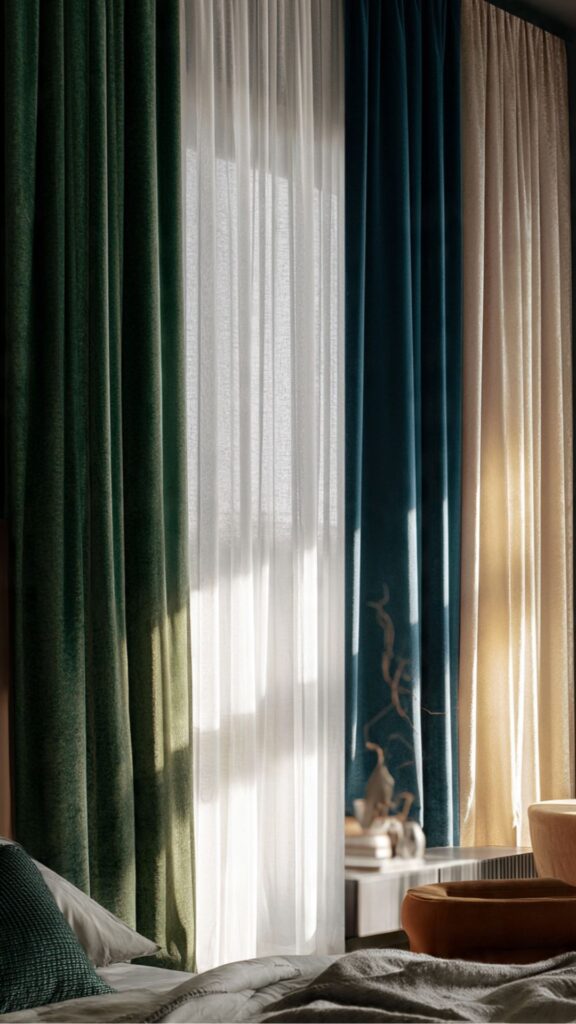
Layering curtains pairing sheers with blackout or semi-opaque panels on separate rods or a double track is one of the most functionally superior bedroom window treatment approaches available. It gives you precise control over light levels, privacy, and aesthetics throughout the day and across seasons, all without swapping out your curtains entirely.
The mechanics are simple: a double curtain rod or ceiling-mounted double track holds two separate panels. The inner sheer filters light softly during the day; the outer panel provides full privacy and darkness at night. But the real design opportunity lies in how these layers interact. Choosing a sheer in a complementary tone to your outer panel say, a pale gold sheer with a deep terracotta outer drape creates a rich, layered color story that shifts beautifully as light changes through the day.
Interior designers often use layering as a way to introduce texture without pattern overload. A plain linen sheer paired with a textured boucle outer curtain, for example, adds tactile interest without introducing competing prints or designs. This approach is particularly effective in bedrooms with already-busy wallpaper or patterned bedding where the window treatment needs to complement rather than compete.
The future of layered curtains is increasingly motorized. Smart home integration allows both layers to be controlled independently via an app or voice command, adjusting automatically based on time of day or light sensor data. For those building a modern bedroom environment with sleep optimization in mind, motorized layered curtains represent one of the most meaningful technology upgrades available.
Linen Curtains:
For a Relaxed, Breathable Aesthetic
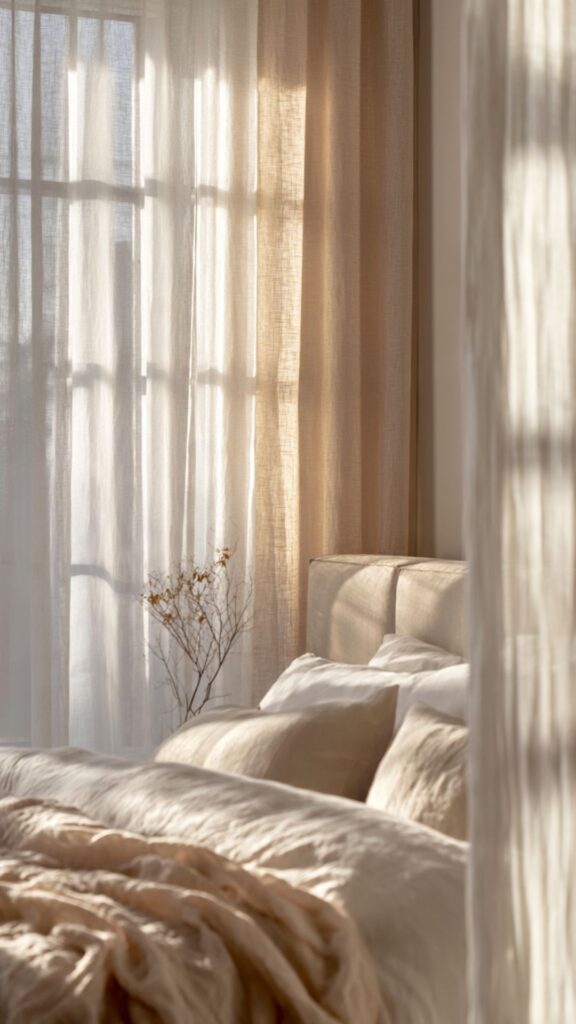
Linen curtains have experienced a remarkable surge in popularity over the last few years, and for good reason. Natural linen offers a unique combination of textural beauty, breathability, and relaxed elegance that synthetic fabrics struggle to replicate. In a bedroom setting, where comfort and calm are paramount, linen’s organic, slightly irregular weave creates a softness that feels inherently restful.
One of linen’s most appealing qualities in a bedroom context is how it interacts with light. Unlike opaque fabrics that block light or synthetics that create a harsh filter, linen diffuses natural light gently, creating a warm, honeyed glow in the room. This effect is particularly beautiful in west-facing bedrooms that catch afternoon and evening light. The texture of the fabric becomes visible as light passes through it, adding a subtle visual interest that painted walls or solid-color curtains cannot provide.
Linen is also a genuinely sustainable choice a factor that matters increasingly to design-conscious consumers. Flax plants, from which linen is derived, require significantly less water and pesticide than cotton, making natural linen curtains a lower-impact option.
Many premium linen curtain manufacturers now offer OEKO-TEX certified options, meaning the fabric has been tested for harmful substances an important consideration in a sleeping environment where you spend hours breathing the surrounding air.
Practical care has historically been a concern with linen, but modern linen curtains are increasingly pre-washed and stonewashed before sale, dramatically reducing shrinkage and wrinkling. The slight wrinkle that remains is actually embraced as part of linen’s character it’s the fabric’s equivalent of a deliberately “undone” look that works beautifully in relaxed, coastal, or Japandi-style bedrooms.
Velvet Curtains:
For Rich Color and Acoustic Comfort
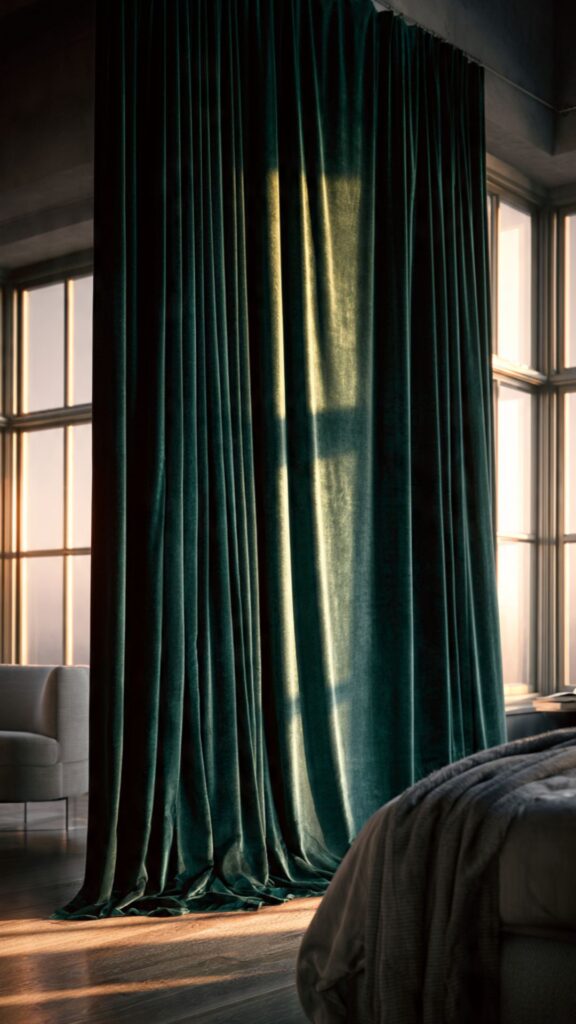
Velvet curtains represent the pinnacle of sensory luxury in bedroom design. The dense pile of velvet fabric not only creates that deep, saturated color that photographs so beautifully but also functions as a surprisingly effective acoustic barrier. In rooms with hard floors, bare walls, and minimal soft furnishings, velvet curtains can noticeably reduce echo and ambient noise a meaningful quality-of-life improvement in open-plan apartments or rooms adjacent to noisy streets.
The thermal performance of velvet is equally impressive. A full-length velvet panel creates a dead-air layer between the window and the room, reducing heat loss in winter and heat gain in summer. This insulating effect is significant enough that some energy-conscious homeowners install velvet curtains specifically as a heating cost reduction measure. It’s a beautiful solution to a practical problem which is the hallmark of great interior design.
Color selection is where velvet curtains truly shine. Emerald green, deep plum, burnt sienna, and dusty rose all become extraordinary in velvet because the pile absorbs and reflects light differently depending on the angle, creating a subtle color shift that moves through the day. This optical phenomenon, called dichroism, is unique to pile fabrics and gives velvet curtains an aliveness that flat-woven fabrics simply cannot achieve.
A common concern about velvet curtains is maintenance. Modern synthetic velvet specifically crushed velvet and velvet-polyester blends is considerably more durable and easier to clean than traditional silk velvet. Many are machine washable on a gentle cycle, and the crushed or burnished finish actually conceals minor marks better than flat velvet. For a high-impact, low-maintenance bedroom curtain, synthetic velvet deserves serious consideration.
Patterned Curtains:
To Add Personality and Visual Interest
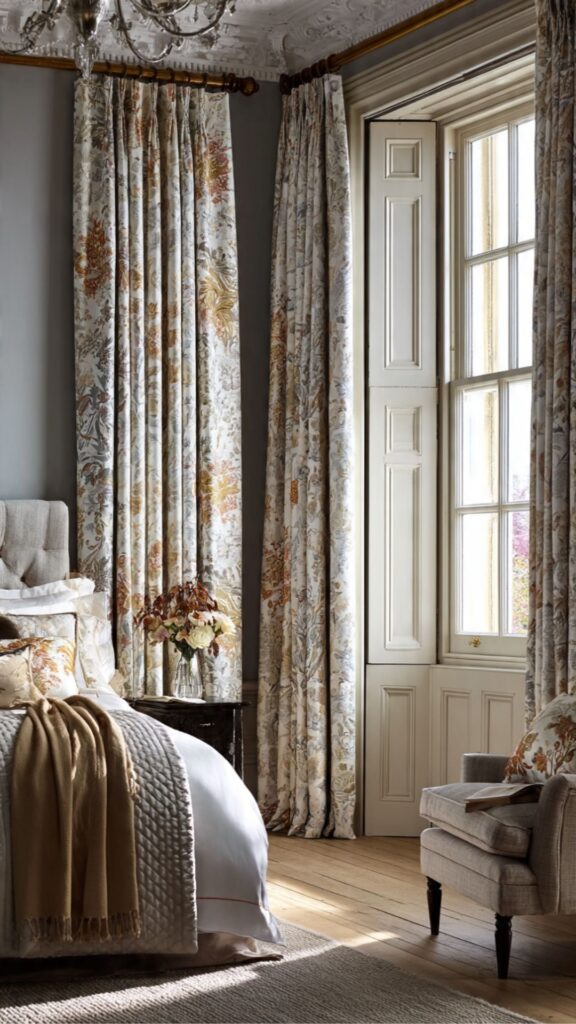
Patterned curtains are one of the most effective tools for injecting personality into a bedroom without the permanence of wallpaper or the expense of new furniture. From bold geometric prints to delicate botanical motifs, the right pattern can anchor a room’s design narrative, echo colors from your bedding or artwork, and give the space a distinctive character that plain curtains simply cannot provide.
The scale of the pattern matters enormously in relation to room size. In small bedrooms, large-scale patterns can feel overwhelming and visually shrink the space. Medium to small-scale patterns think fine stripes, small florals, or subtle geometric repeats work more harmoniously in compact rooms. In larger bedrooms, conversely, you have the visual real estate to support bold, oversized prints like painterly botanicals or graphic abstract designs without the room feeling cluttered.
One design principle that separates amateur from professional pattern use is the concept of “pattern mixing.” A patterned curtain doesn’t need to stand alone it can coexist beautifully with patterned bedding provided you observe the rule of scale differentiation.
A large-scale floral curtain pairs well with a small-scale stripe duvet cover because the patterns operate at different scales, creating visual interest without chaos. Both should share at least one common color to create cohesion.
An often-overlooked consideration with patterned curtains is the pattern repeat and fabric waste during installation. Large patterns require matching at the seams, which means you’ll need to purchase more fabric than the window measurement alone would suggest. When ordering custom or semi-custom patterned curtains, always ask the supplier about the pattern repeat measurement and factor that into your quantity calculation to avoid the frustration of mismatched panels.
Neutral Curtains:
For Timeless, Versatile Elegance
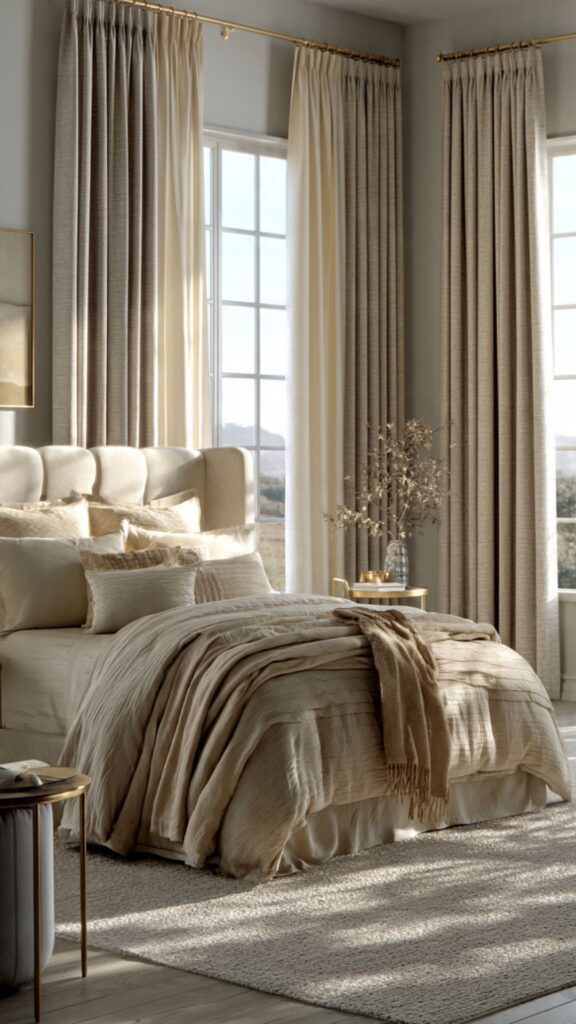
Neutral curtains in shades ranging from crisp white and warm cream to greige, taupe, and soft gray are the most enduring choice in bedroom window treatments for a very practical reason: they never go out of style and never argue with the rest of the room. A well-chosen neutral curtain creates a calm, cohesive backdrop that allows other design elements your headboard, artwork, bedding, or a statement light fixture to take center stage.
The key to making neutral curtains feel elevated rather than generic lies in texture. A flat, lifeless cotton in off-white reads as uninspired. The same off-white in a slubby linen weave, a ribbed jacquard, or a matte velvet becomes a sophisticated design choice. When working with neutrals, texture is your substitute for color it provides depth and visual interest without introducing hues that might date or clash.
Greige the warm midpoint between gray and beige has emerged as one of the most interior-designer-approved neutral curtain tones of the current decade. It reads warmer than gray (preventing that cold, clinical feeling in north-facing rooms) while being cooler than beige (avoiding the dated associations of pure beige from 1990s interiors). Greige works beautifully with warm timber furniture, soft white walls, and natural material accents like rattan or jute.
One strategic advantage of neutral curtains is their investment value. When you eventually update your bedroom’s color scheme new bedding, a freshly painted wall, reupholstered furniture neutral curtains require no replacement. They simply adapt. For homeowners who enjoy evolving their interiors regularly, a high-quality neutral curtain is one of the most cost-effective long-term design investments available.
Your Next Favorite Read: Dark Feminine Bedroom Ideas That Show How the Perfect Curtains Can Transform Your Whole Bedroom
Ceiling-Mounted Curtain Tracks:
For a Clean, Modern Finish
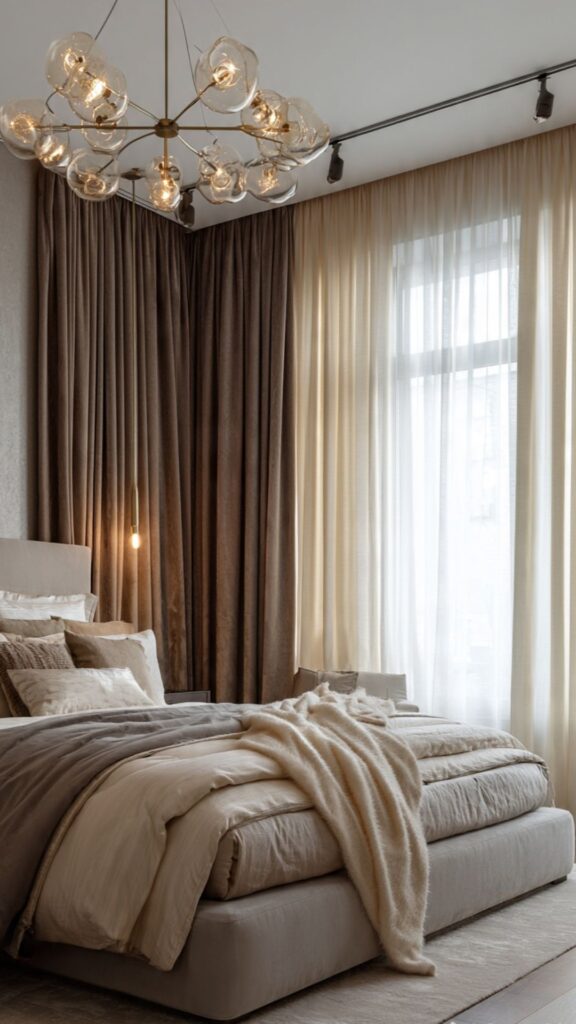
The installation method of bedroom curtains is as important as the curtains themselves and ceiling-mounted curtain tracks represent the most architecturally refined approach available. Unlike wall-mounted rods with visible brackets, ceiling-mounted tracks run flush along the ceiling line, creating a seamless, built-in appearance that makes curtains look like a deliberate architectural feature rather than an afterthought.
Ceiling-mounted tracks are particularly effective in rooms with low ceilings, as they draw the eye upward along the full height of the curtain, creating an illusion of additional vertical space. This effect is well-documented in interior design: the eye naturally follows vertical lines upward, and when those lines originate at the ceiling rather than mid-wall, the perceived height of the room increases measurably.
From a functional standpoint, ceiling-mounted tracks allow the curtain to cover the full width of the wall including areas beside windows when drawn open. This creates the appearance of a wider window and maximizes the amount of natural light entering the room when curtains are pulled back. In contrast, wall-mounted rods often position curtain panels over part of the window even when open, unnecessarily blocking light.
Ceiling tracks have also become the preferred installation method for bay windows, curved walls, and non-standard window configurations where a rigid rod would be impractical. Modern ceiling track systems are available in both manual (cord or wand operated) and fully motorized versions that integrate with smart home ecosystems. The motorized version is particularly useful for floor-to-ceiling curtains that would otherwise require a ladder to open and close manually.
Curtains with Tie-Backs:
For a Classic, Tailored Look
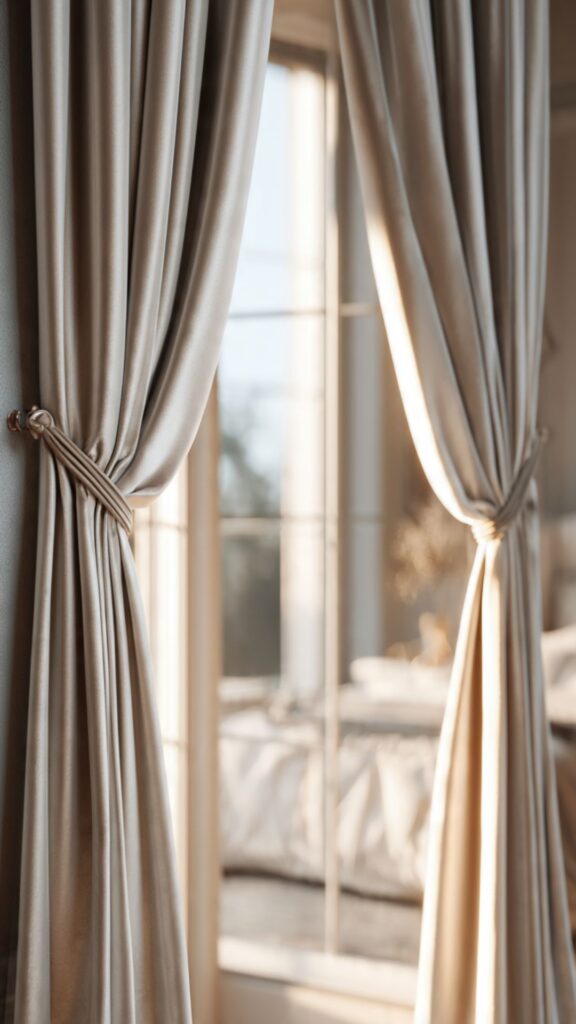
Tie-backs transform the way curtains interact with a room by creating a deliberate, architectural drape that frames the window rather than simply covering it. When a curtain is gathered and held back to one side either with a fabric tie, a decorative hook, or a braided holdback it creates what designers call a “swept” silhouette. This shape softly echoes classical architectural forms and gives the bedroom a sense of curated, deliberate elegance.
The position of the tie-back dramatically affects the visual proportion of the curtain. A high tie-back, positioned at about two-thirds of the curtain’s height, creates a sleek, elongated sweep that suits modern and minimalist interiors. A low tie-back, positioned closer to the midpoint, creates a generous, poufy billow above and a long tail below a look associated with traditional, romantic, or country-house aesthetics. Neither is superior; both are intentional design choices.
Material choice for the tie-back itself offers a creative opportunity. Matching fabric ties in the same material as the curtain create a tailored, tonal look. Contrasting tie-backs a brass or bronze holdback hook against linen curtains, for example introduce a metallic accent that can echo hardware elsewhere in the room (door handles, light fixtures, picture frame finishes). Rope tie-backs work beautifully in coastal or nautical-themed bedrooms, adding a material authenticity that metal or fabric alternatives cannot replicate.
One underappreciated functional benefit of tie-backs: they maximize daylight access. A curtain held neatly to one side exposes the full window glass, allowing unobstructed natural light to enter the room during waking hours.
In north-facing bedrooms that receive limited sunlight, this can make a meaningful difference to the room’s overall brightness and warmth a practical argument for tie-backs that goes beyond their obvious aesthetic appeal.
Roman Blinds:
For a Streamlined, Space-Saving Alternative
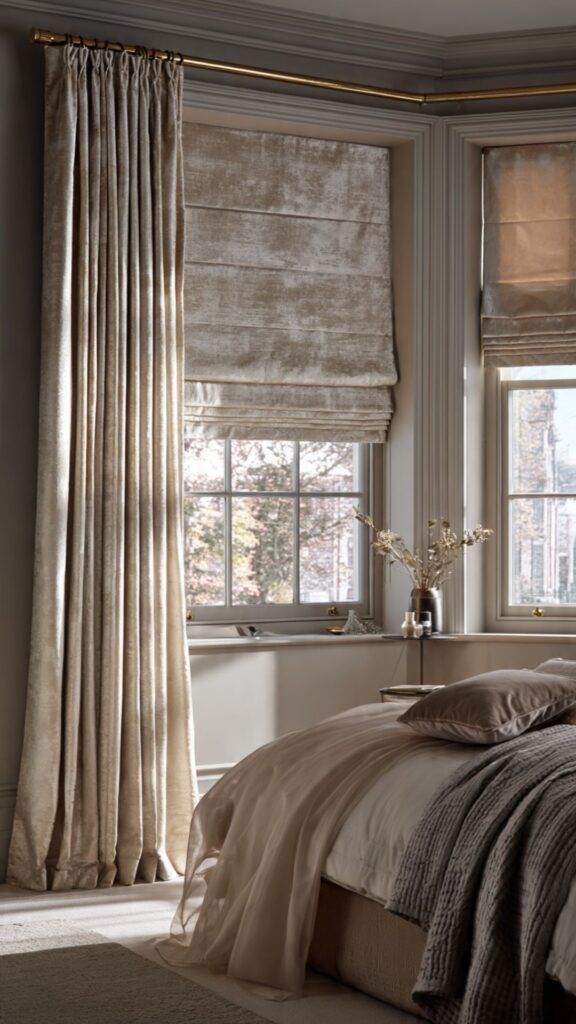
Roman blinds occupy a unique category in bedroom window treatments they combine the softness of fabric with the clean lines of a blind, making them an ideal choice for bedrooms where a traditional curtain’s sweep might feel too informal or too voluminous. When raised, Roman blinds stack into neat, horizontal folds that sit above the window; when lowered, they present a flat, elegant fabric panel that functions similarly to a curtain.
The variety of fabrics available in Roman blind form is extensive. Blackout-lined Romans are among the most effective light-blocking window treatments available their flat, snug-to-frame installation eliminates the side gaps that curtains sometimes create, providing a more complete seal against light intrusion. This makes blackout Roman blinds an excellent choice for shift workers, young children’s bedrooms, or anyone who prioritizes sleep environment optimization.
Roman blinds work particularly well in bedroom spaces where architectural details deserve to be showcased. In a room with beautiful window trim, a bay window, or a distinctive window shape, Roman blinds allow the architectural feature to remain visible while still providing privacy and light control. Heavily draped curtains can obscure these details; Romans frame them instead, acting more like a picture frame than a curtain.
The current trend in Roman blinds is toward bold, graphic fabrics geometric prints, artisan block prints, and abstract patterns that treat the lowered blind as a piece of wall art. When the blind is down, it becomes a deliberate visual focal point. When raised, it disappears. This dual-function quality is particularly valuable in smaller bedrooms where every design element needs to work hard and the window treatment is prominently visible from the bed.
Eco-Friendly and Organic Curtains:
For a Healthier Bedroom
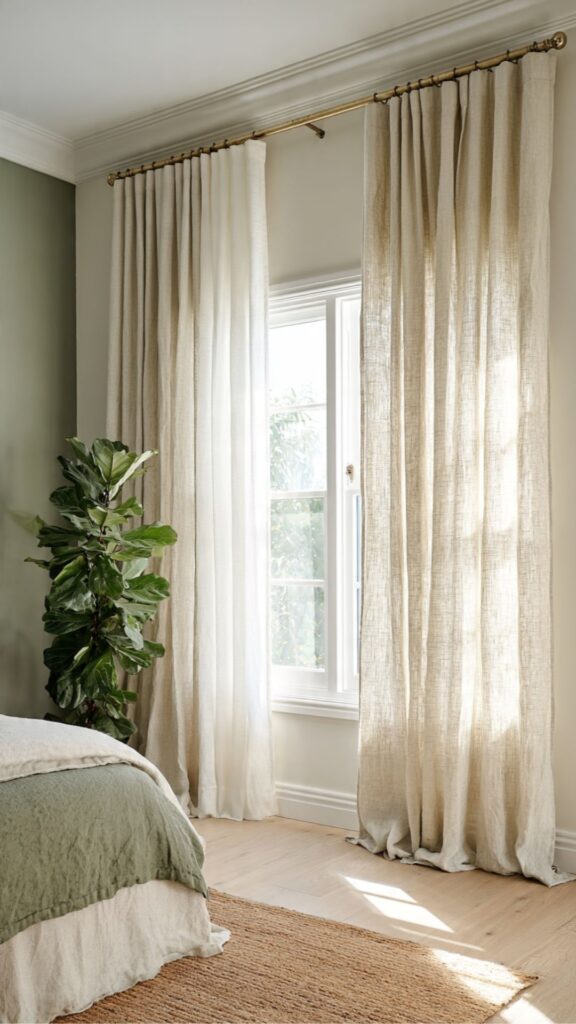
The bedroom is where most people spend a third of their lives, and the environmental quality of that space matters far more than most interior design discourse acknowledges. Conventional curtain fabrics are often treated with formaldehyde-based wrinkle-resistant finishes, flame retardants, and synthetic dyes that off-gas volatile organic compounds (VOCs) into your sleeping environment particularly noticeable in new curtains with a strong “chemical” smell.
Organic cotton curtains certified by GOTS (Global Organic Textile Standard) are produced without synthetic pesticides, harsh chemical finishes, or toxic dyes. The certification process requires traceability throughout the supply chain, from raw cotton to finished product, making it one of the most rigorous environmental standards available in textiles. For a bedroom environment, GOTS-certified curtains represent a meaningful investment in air quality and long-term health.
Beyond organic cotton, hemp and recycled polyester are emerging as compelling alternatives in the eco-curtain space. Hemp grows rapidly without pesticides, requires minimal water, and produces a strong, naturally textured fabric with excellent durability. Recycled polyester typically made from post-consumer plastic bottles offers the performance characteristics of conventional polyester (wrinkle resistance, colorfastness, ease of care) with a significantly lower carbon footprint.
Several Scandinavian and British curtain brands now offer fully traceable, recycled-content curtains with detailed environmental impact data available to consumers. The intersection of sustainability and style in this category is increasingly sophisticated. Early eco-textiles were limited in color range and finish options.
Today, low-impact natural dyes and innovative finishing processes have expanded the aesthetic range considerably. Earth tones, plant-based colors, and undyed natural textures are all available at competitive price points, meaning the eco-friendly choice is no longer a compromise it’s frequently the most beautiful option in the room.
Curtains with Warm Lighting Integration:
For Ambient Evening Mood
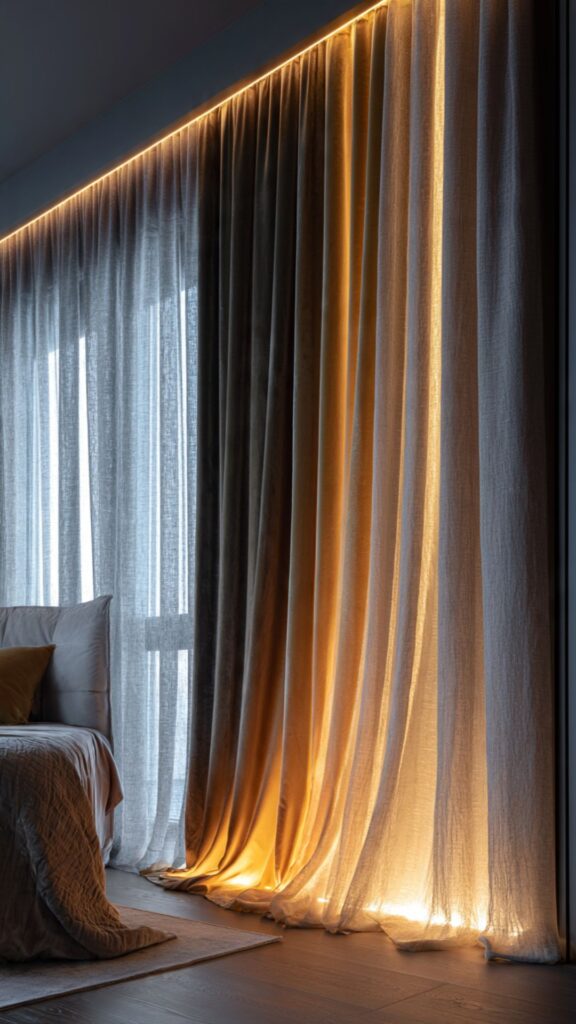
One of the most forward-thinking bedroom curtain ideas emerging in contemporary interior design is the integration of soft lighting directly into the curtain installation. LED strip lighting mounted along the top of a curtain rod or within a ceiling-mounted pelmet box creates a gentle upward wash of light that illuminates the ceiling above the curtain producing a warm, ambient glow that’s fundamentally different from overhead or bedside lighting.
This pelmet-lit curtain approach was popularized in luxury hotel design, where ambient lighting architecture is engineered to create a specific emotional atmosphere. The indirect nature of the light originating behind the curtain header and projecting upward and outward is inherently softer and more flattering than direct light sources. It creates depth and dimension in the room without producing harsh shadows, making it ideal for a pre-sleep wind-down routine.
Smart LED systems now allow this lighting to be tuned in both color temperature and intensity, shifting from a cool daylight white during morning routines to a warm amber in the evening mirroring the natural progression of daylight and supporting healthy melatonin production. Integrated with a smart home system, the curtain lighting can be programmed to dim gradually at a set time, replacing the jarring experience of manually switching off overhead lights before bed.
Beyond the pelmet application, some contemporary curtain manufacturers have developed fabrics with embedded fiber optic threads that create a gentle, starlight-like luminescence within the fabric itself. These are niche and premium products, but they represent the frontier of what bedroom window treatments can become functional, beautiful, and deeply connected to the experience of rest. For those designing a bedroom from scratch with a generous budget, this is the kind of innovation worth exploring.
Bohemian Macramé and Textured Curtains:
For Artisan Character
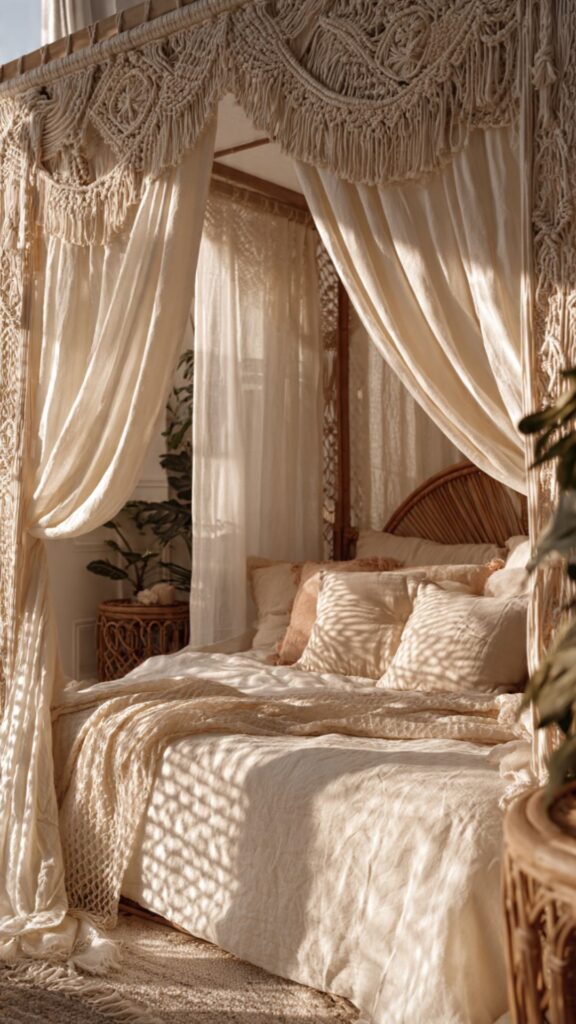
Macramé and handwoven textile curtains represent a growing movement in bedroom design that prioritizes craft, individuality, and natural materials over the mass-produced uniformity of standard curtain retail. A macramé panel created by knotting cotton rope into intricate geometric or organic patterns functions as both a window treatment and a fiber art installation, bringing artisanal texture into the bedroom that no machine-made fabric can replicate.
Functionally, macramé panels are semi-transparent, making them best suited for windows that don’t require full privacy or blackout performance. They work beautifully as room dividers, decorative accents over a window that already has a roller blind, or as a partial treatment in a bedroom with a secondary window in a less exposed position. Their open-weave structure allows gentle air circulation while providing just enough visual filter to soften the view beyond the window.
The bohemian aesthetic in which macramé curtains most naturally belong is itself undergoing a sophisticated evolution. Contemporary boho interiors pair natural fiber textiles with clean-lined furniture, restraint in color palette (earthy naturals, terracottas, soft whites), and a deliberate minimalism that prevents the look from becoming cluttered. A single, well-made macramé curtain panel in this context reads not as kitschy but as considered a handmade focal point in a room that celebrates materiality.
For those who want the artisan quality without the macramé aesthetic specifically, woven textile curtains offer a related but distinct alternative. Handloomed fabrics from regions like Morocco, India, and Central America feature stripe patterns, ikat designs, and textural weaves that bring global craft traditions into the bedroom.
These textiles carry a narrative of origin and making that machine-produced fabrics cannot compete with a quality that increasingly resonates with design-conscious consumers seeking authenticity in their interiors.
One More Thing: Coastal Bedroom Ideas That Pair Absolutely Beautifully with Light and Breezy Bedroom Curtains
Smart Motorized Curtains:
For a Future-Ready Bedroom
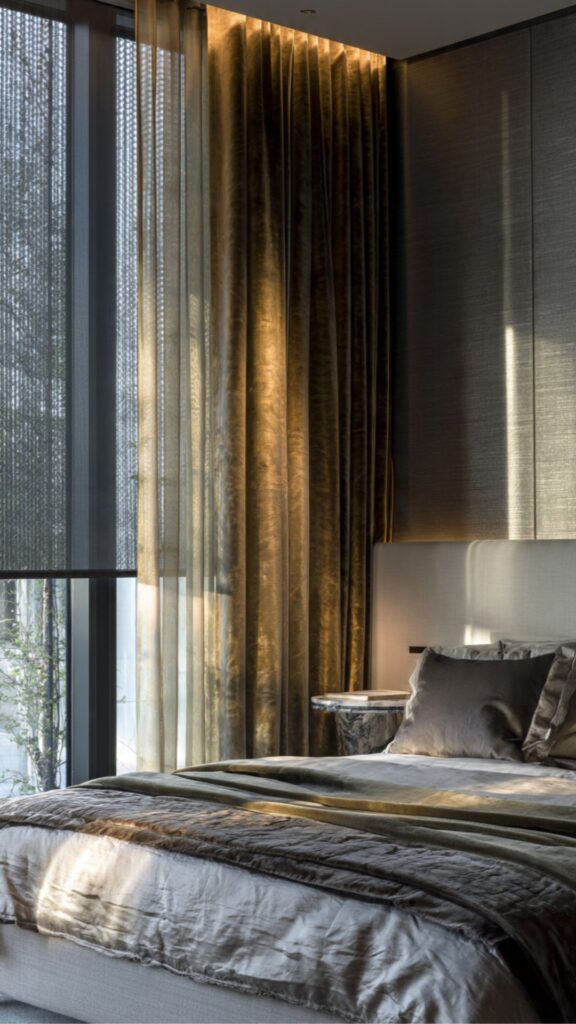
Motorized curtains represent the most significant functional evolution in bedroom window treatments of the past decade. Driven by a quiet electric motor mounted within the curtain track or rod, motorized systems allow curtains to be opened or closed via smartphone app, voice command (compatible with Alexa, Google Home, and Apple HomeKit), or automated schedule without physically touching the curtain at all.
The sleep optimization case for motorized curtains is compelling. Many systems can be programmed to open gradually at a set time each morning, simulating a natural sunrise by progressively introducing daylight into the room.
Research in chronobiology consistently shows that light exposure upon waking is among the most powerful regulators of circadian rhythm more reliable, in fact, than alarm sounds. Automating this process removes the friction of remembering to open curtains and creates a consistent, biologically supportive morning routine.
For large windows, bay windows, or floor-to-ceiling panels that are physically cumbersome to operate manually, motorization is not merely a luxury but a genuine quality-of-life upgrade. The ability to adjust curtains from bed without getting up particularly valuable in cold months or for individuals with mobility considerations makes motorized systems increasingly mainstream rather than exclusively premium. Entry-level motorized curtain systems with basic app control are now available at price points accessible to most homeowners.
The integration potential of motorized curtains within a broader smart home ecosystem is what makes them truly future-ready. They can be linked to light sensors that automatically close curtains when direct sun hits, to temperature sensors that close them to reduce solar heat gain, or to security systems that automatically close curtains at nightfall.
As home automation becomes increasingly sophisticated, the bedroom curtain becomes not merely decorative but a dynamic, responsive component of a living environment an idea that would have seemed extravagant a decade ago and is now entirely achievable.
Conclusion
The right bedroom curtain does far more than cover a window it shapes how you sleep, how you feel in the space, and how the entire room reads as a design statement. From the sleep-optimizing performance of blackout panels to the artisan beauty of handwoven textiles and the future-forward intelligence of motorized systems, there is a bedroom curtain ideas in this guide for every style, budget, and priority.
Start with one change whether that’s layering your existing curtains with a sheer, switching to ceiling-height installation, or exploring eco-friendly fabrics and experience the difference a thoughtful window treatment makes.

Team TrandyVilla is the passionate home decor team behind Trandy Villa, where style meets comfort in everyday living. The team loves transforming simple spaces into beautiful, functional homes through smart ideas, budget-friendly hacks, and modern design trends. Their content focuses on helping readers create homes that feel both stylish and personal without spending too much.