
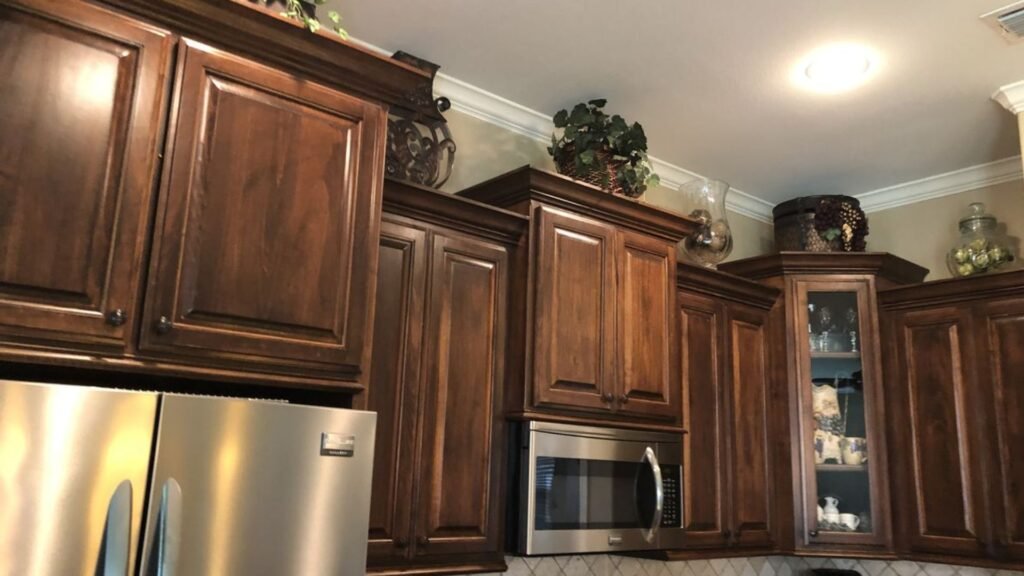
Above kitchen cabinet decor ideas help decorate the empty space above cabinets. They add style, create visual interest, and improve the kitchen’s overall look. These ideas use baskets, plants, pottery, and artwork. They also make the space feel warm, organized, and complete.
An empty space above cabinets can make a kitchen feel unfinished and plain. Above kitchen cabinet decor adds personality, texture, and charm while turning unused areas into attractive design features. Smart decorating choices create balance and help the kitchen feel more inviting every day.
Above kitchen cabinet decor ideas include woven baskets, ceramic pieces, greenery, vintage finds, and decorative lighting. Seasonal accents keep the display fresh throughout the year. These simple additions enhance the kitchen’s appearance, add character, and create a stylish, well-designed space.
Layer in Woven Baskets:
For Texture and Warmth
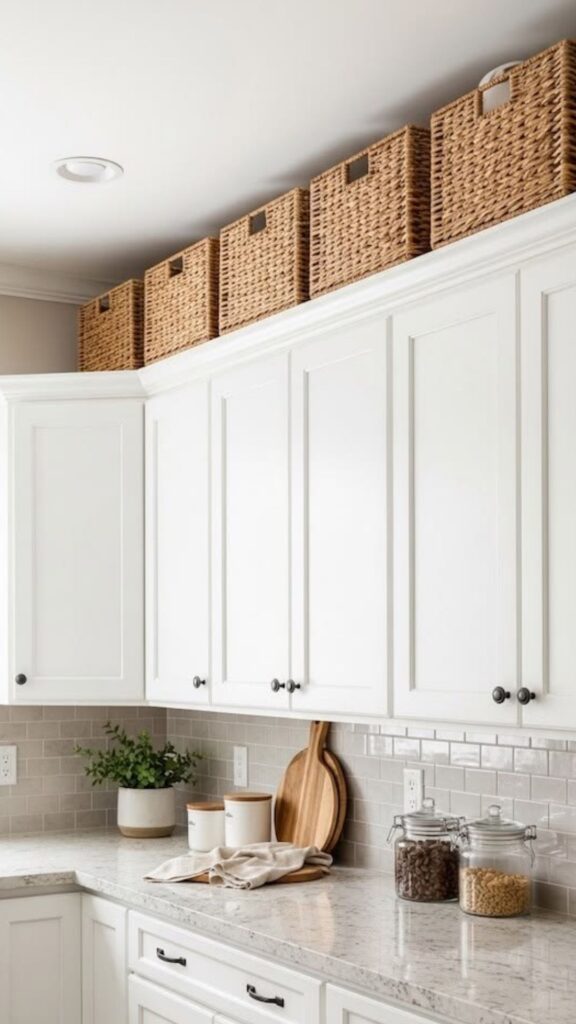
Woven baskets remain one of the most popular above-cabinet choices for a reason: they soften the hard lines of kitchen cabinetry instantly. Seagrass, rattan, and wicker baskets bring an organic texture that contrasts beautifully with painted or laminate cabinet fronts. For the best visual balance, choose baskets that fill roughly two-thirds of the height of the gap anything shorter looks lost, anything taller feels cramped against the ceiling.
A detail most guides skip is grouping psychology. Three baskets of varying height arranged in an asymmetrical cluster reads as intentional, while two identical baskets placed symmetrically often looks like an afterthought. Try a tall basket on one end, a wide low one in the middle, and a medium one near the other end to create natural visual movement across the cabinet run.
Baskets also solve a real storage problem. Use one or two as functional containers for items you rarely need holiday linens, extra coffee filters, or paper goods so the display earns its space rather than just sitting there. Just keep heavier items toward the back wall, since cabinet tops aren’t built to bear much forward-facing weight without a sturdy lip.
One practical note: light-colored woven baskets show kitchen grease and dust faster than darker tones. If your range sits within ten feet of the cabinets, a honey or charcoal-toned weave will hide buildup far longer between cleanings than a pale natural fiber.
Build a Curated Ceramic and Pottery Vignette:
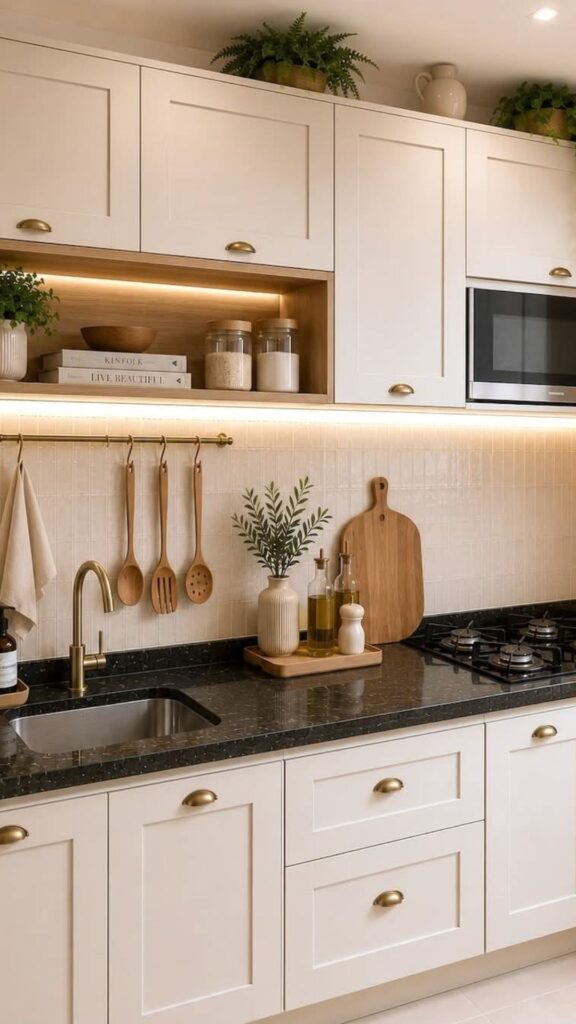
Ceramic vessels vases, jugs, and decorative bowls are a designer favorite for above-cabinet styling because they add color and shape without competing with countertop clutter. The key to making this look intentional rather than random is sticking to two or three unifying tones. A cream, terracotta, and sage palette, for example, feels curated, while five different colors scattered across the run feels chaotic.
Height variation matters just as much as color here. Designers often use a loose triangulation method: place your tallest piece slightly off-center, a mid-height piece beside it, and a low, wide piece anchoring the opposite end. This creates a visual triangle that the eye naturally follows, which is far more satisfying than a straight row of same-sized pots.
Here’s an insight most articles miss entirely: finish matters more than style in a kitchen environment. Matte and unglazed ceramics show airborne grease film far less visibly than glossy glazed pieces, which can develop a hazy residue within weeks near an active stove. If your cooking happens close to the cabinets, lean toward matte stoneware finishes that are also easier to wipe clean without streaking.
For renters or anyone wary of permanent décor, thrifted ceramic pieces work beautifully here. A mismatched but tonally coordinated set from secondhand shops often looks more authentic than a matching boxed set, and it keeps the project budget-friendly.
Must See This: Kitchen Storage Ideas That Perfectly Complement Your Beautiful Above Kitchen Cabinet Decor
Add Trailing Greenery and Heat-Smart Faux Botanicals:
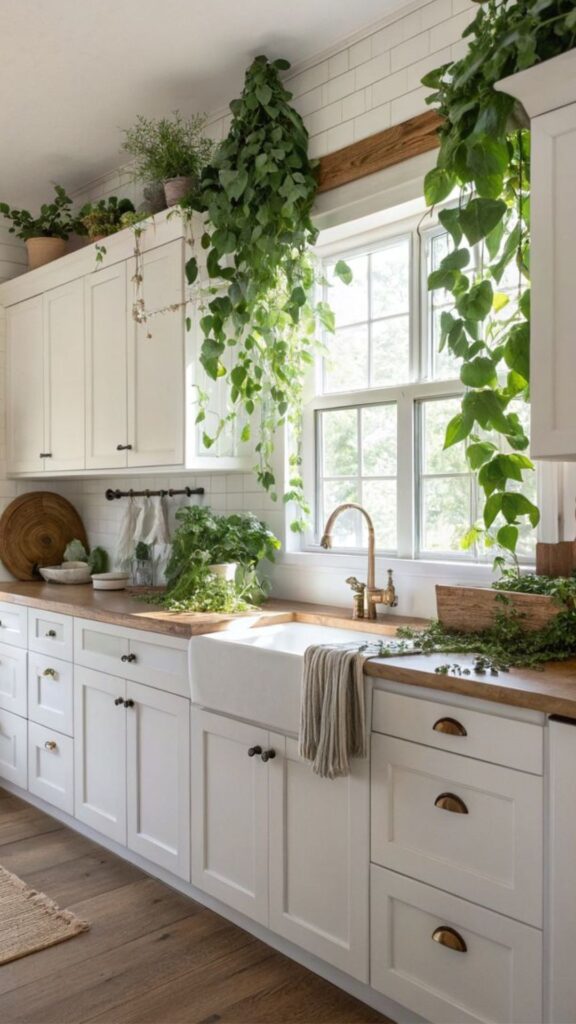
Plants bring life to an otherwise static display, and trailing varieties like pothos or string of pearls cascading slightly over the cabinet edge create a soft, lived-in feel. However, the space above kitchen cabinet decor ideas is one of the harshest microclimates in the home rising heat from cooking, fluctuating humidity, and often minimal natural light all work against real plants thriving there.
If you do go with live plants, pothos and ZZ plants are the most forgiving choices because both tolerate low light and irregular watering. The catch is access: watering something six feet up means either a step stool every week or a long-spout watering can. A simple workaround few guides mention is using self-watering plant globes, which let a trailing plant go two to three weeks between refills.
For most kitchens, UV-protected faux botanicals are actually the smarter long-term choice, not a compromise. Cheap plastic plants fade and yellow within a year near heat sources, but UV-treated silk varieties resist discoloration and never need watering at an awkward height. Mixing one or two real low-maintenance plants with quality faux greenery gives you the best of both visual texture without constant upkeep.
Avoid placing any greenery, real or faux, directly above or within two feet of an open flame range. Beyond the obvious fire risk with dried foliage, the heat will degrade both real leaves and synthetic materials far faster than anywhere else in the kitchen.
Display Vintage and Antique Finds:
For Character
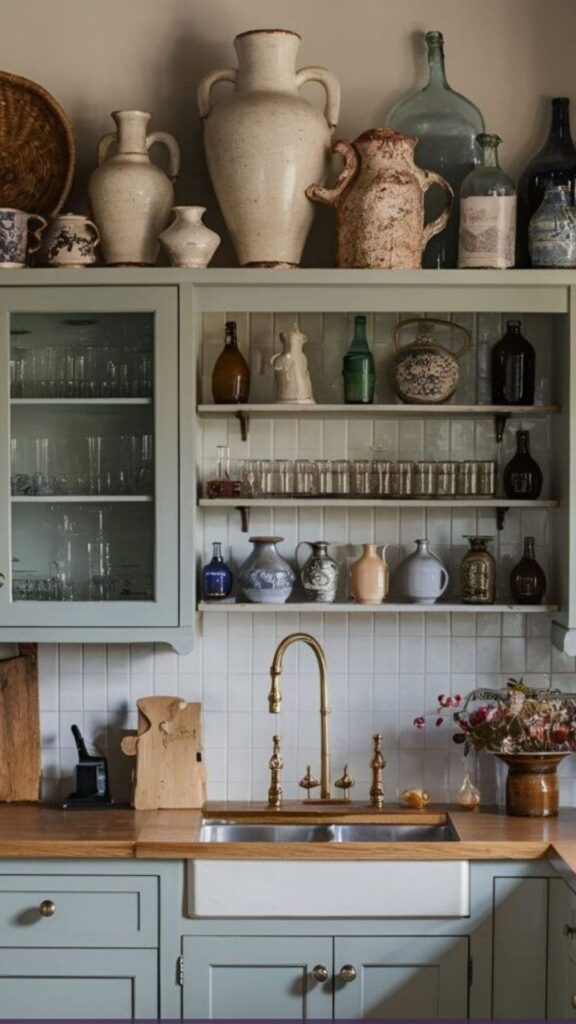
Nothing makes a kitchen feel collected over time quite like vintage pieces an old enamel scale, a chipped ironstone crock, or a row of mismatched vintage tins. These items carry a story that mass-produced decor simply can’t replicate, and they’re often the detail guests ask about when they walk into your kitchen.
Antique pieces also age into kitchen environments more gracefully than new ones. A patinated copper kettle or a worn wooden crate actually looks better with a little dust and grease softening its edges, while a brand-new glossy item shows the same wear as damage. This makes vintage finds a genuinely practical choice for the harsh above-cabinet zone, not just an aesthetic one.
When arranging vintage pieces, the rule of thirds works well: divide your cabinet run into three visual sections and place one anchor piece per section rather than spreading small items evenly across the whole space. This avoids the cluttered “garage sale shelf” look that vintage displays can fall into when overcrowded.
Flea markets, estate sales, and online marketplaces are the best low-cost sources here. Look specifically for pieces with some weight and stability tall, top-heavy antiques near the front edge of a cabinet can be a tipping hazard, especially in households with kids reaching up out of curiosity.
Use Statement Lighting to Highlight the Display:
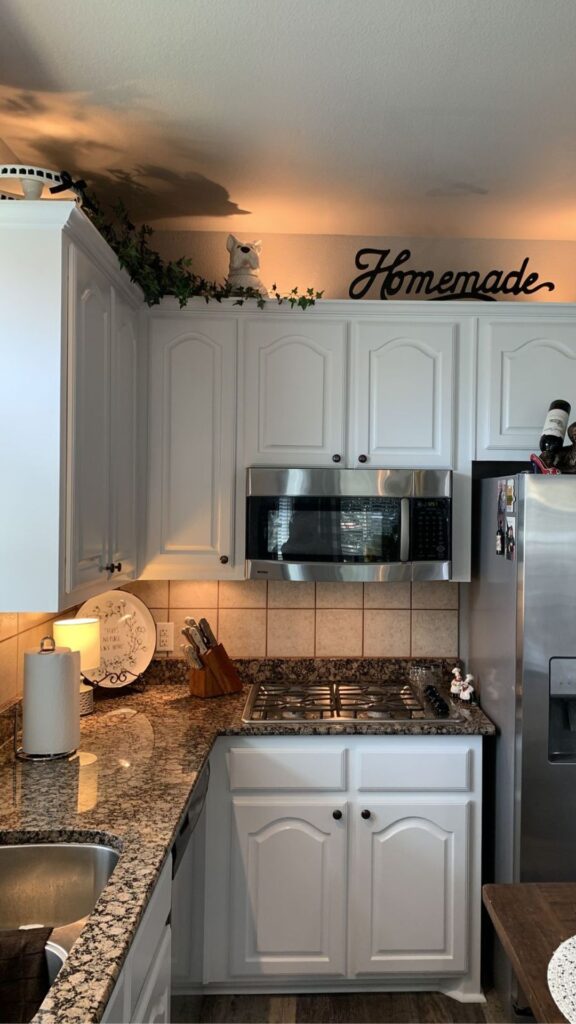
Lighting is the single most overlooked element in above-cabinet decor, yet it’s what separates a flat display from one that feels like a designed feature. Hidden LED strip lighting tucked behind the cabinet’s front lip washes the wall and decor in a soft glow without any visible fixture, instantly elevating even simple decor like baskets or plants.
Color temperature changes the entire mood of the space. Warm white light in the 2700K to 3000K range creates the cozy, inviting feel most kitchens are going for, while cooler 4000K+ light tends to feel clinical and sterile above cabinetry more suited to task lighting under cabinets than ambient lighting above them. This is a detail many DIY guides gloss over, but it’s the difference between a display that feels warm and one that feels like a display case.
For a more dramatic option, small picture lights mounted along the cabinet top and aimed at a vignette of art or pottery mimic gallery lighting, drawing the eye exactly where you want it. Battery-powered, motion-activated puck lights are also a smart addition for nighttime kitchen visits, providing just enough glow to navigate without flipping on harsh overhead lights.
Whichever option you choose, opt for dimmable LEDs where possible. Being able to lower the brightness for everyday cooking and raise it for entertaining gives the same display two completely different moods without changing a single decor piece.
Convert the Gap Into Open Shelving:
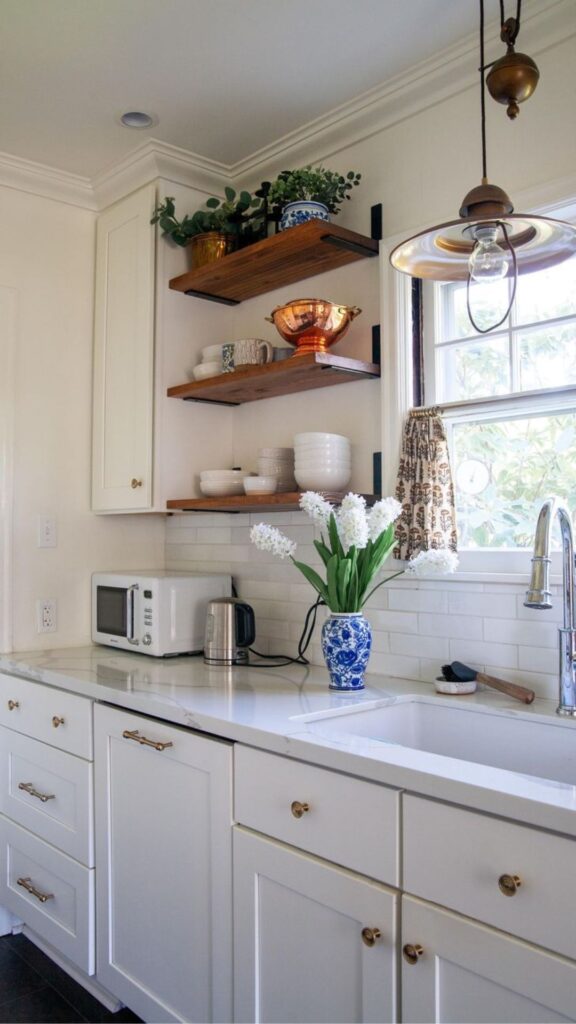
If your cabinets sit several inches below the ceiling, consider installing a single floating shelf along the top instead of relying on loose decor placement. This works especially well in kitchens with at least 12 to 18 inches of clearance, turning an awkward void into intentional, usable display real estate that reads as a built-in design feature rather than an afterthought.
A floating shelf also solves the stability problem that loose items on a flat cabinet top can have. Decor sits flush and secure rather than perched on an uneven surface, and a shelf with a slight lip or raised edge prevents lighter pieces from sliding forward over time, which is a common complaint with bare cabinet tops.
Matching the shelf material to either your cabinets or your countertop creates a cohesive, custom-built look rather than an obvious add-on. A wood shelf that echoes butcher block countertops, for instance, ties the upper and lower halves of the kitchen together visually, making the whole room feel more intentionally designed.
This option requires more upfront effort than simply arranging decor, but it pays off in versatility. A shelf gives you a stable base to rotate seasonal decor, art, or plants on without re-measuring or worrying about whether items will tip on the cabinet’s bare surface.
This One Hits Different: Farmhouse Kitchen Ideas That Show How Stunning Above Cabinet Decor Can Transform Your Whole Kitchen Look
Style a Glassware and Bar Cart Display:
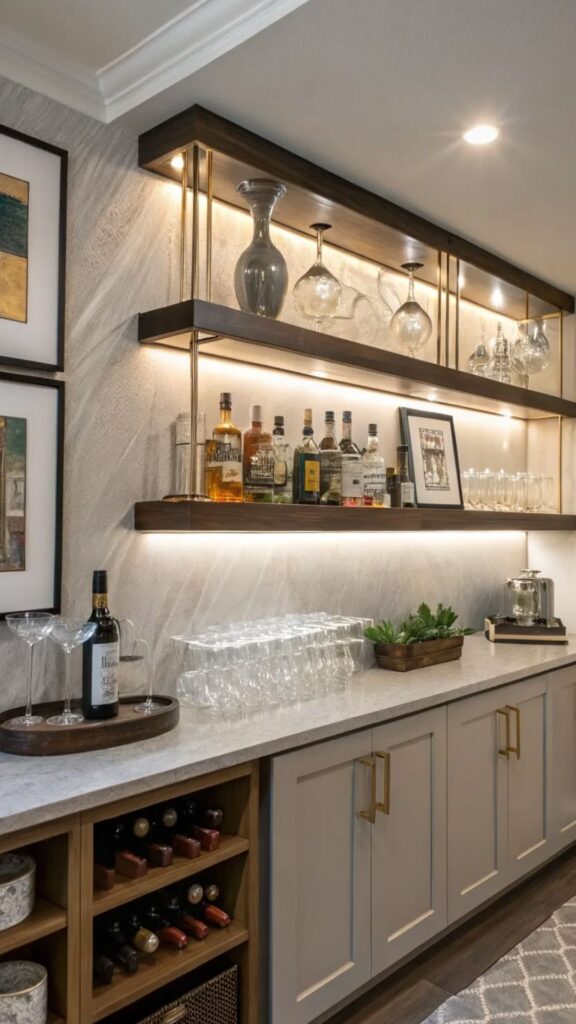
For kitchens that double as entertaining spaces, a curated glassware display above the cabinets adds sparkle and function in one move. Cut crystal decanters, vintage stemware, or a row of coupe glasses catch ambient light beautifully, especially when paired with the warm LED lighting mentioned earlier, creating a subtle shimmer effect across the kitchen.
This idea works particularly well because it’s genuinely functional rather than purely decorative. Rarely used items like a punch bowl, champagne flutes, or a cocktail shaker set earn their display space by being both attractive and accessible for the few times a year you actually need them, solving storage and styling problems simultaneously.
A small brass or copper bar tray placed at one end can anchor the display and give it a defined edge, preventing the glassware from looking like it’s floating randomly across the cabinet top. Keep at least a third of the space empty rather than filling every inch; negative space is what keeps a glassware display looking elegant instead of like an overstuffed liquor cabinet.
Avoid this approach in households with young children or in kitchens directly beside high-traffic walkways, since the combination of height and fragile glass increases breakage risk. In those cases, sturdier ceramic or metal pieces are the safer substitute for a similar visual effect.
Showcase Cookbooks and Vintage Cookware:
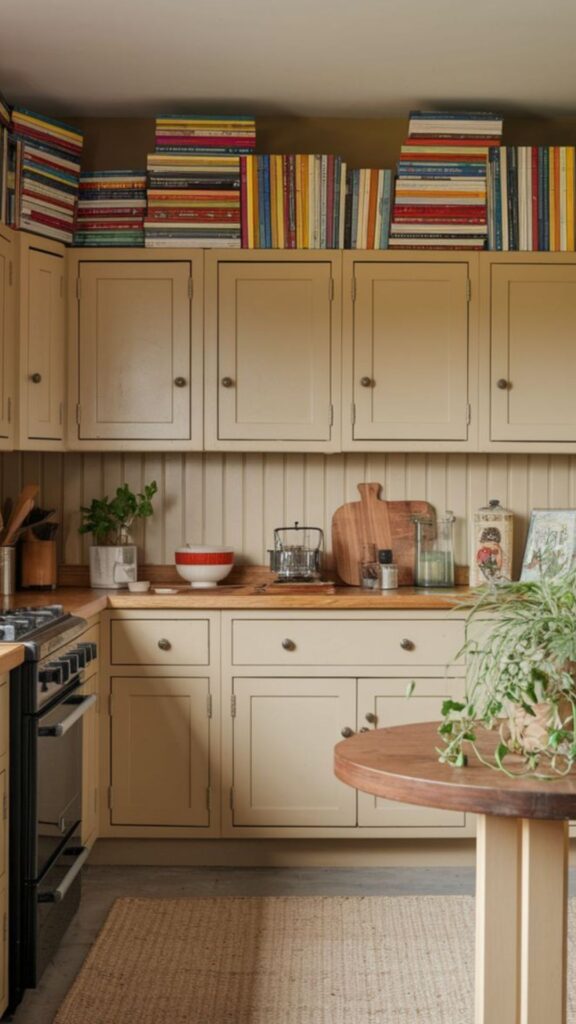
A row of well-loved cookbooks above the cabinets does double duty: it’s a genuinely useful library and an instant style statement that signals a kitchen actually gets used. Arranging spines outward in color-coordinated groupings, rather than alphabetically, creates a more visually pleasing gradient effect than a typical bookshelf arrangement.
Pairing cookbooks with a few pieces of vintage cookware a hammered copper pot, a cast iron skillet, or an old wooden rolling pin — adds dimension and breaks up the flat lines of stacked books. Copper especially benefits from this placement, since the warm tones develop a beautiful patina that only improves with light kitchen exposure over time rather than degrading like other materials.
A scenario worth considering: a busy home cook with a growing cookbook collection but no extra shelf space downstairs can solve two problems at once by relocating overflow cookbooks above the cabinets. It clears valuable lower-cabinet or counter space while giving the collection a visible, browsable home that guests actually engage with.
Keep cookbooks you reference often closer to eye level or toward one end where a step stool isn’t required, and reserve the higher, harder-to-reach sections for cookware and books that are purely decorative or rarely used.
Create a Seasonal Rotating Vignette:
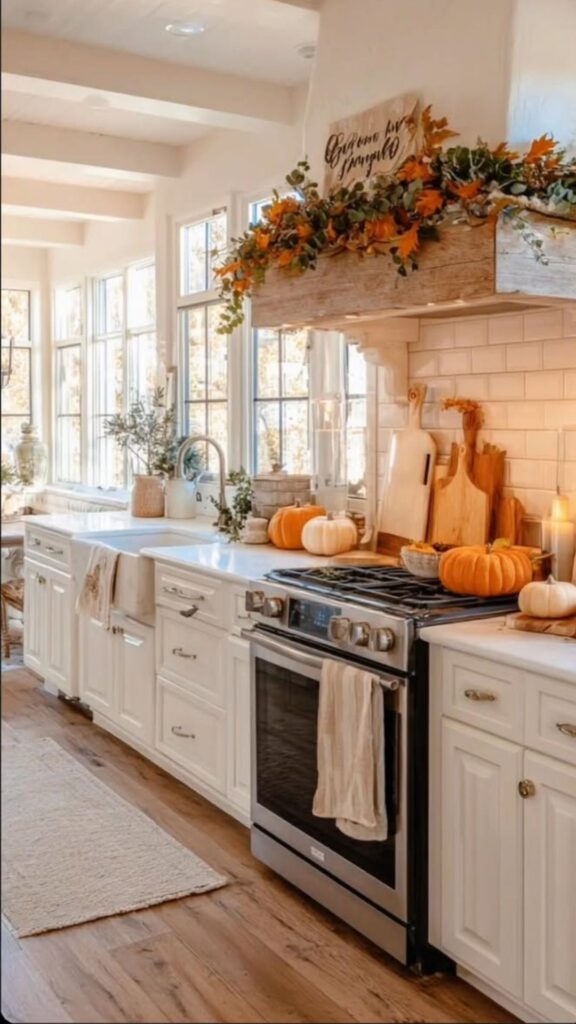
One of the biggest mistakes in above-cabinet styling is treating it as a one-time, permanent setup. Decor that never changes starts to visually disappear over time your eye simply stops registering it. A smarter approach borrowed from professional stylists is what’s sometimes called the 80/20 display rule: keep 80 percent of the display as permanent base pieces like baskets or large vessels, and reserve 20 percent as a swappable zone for seasonal accents.
In practice, this might mean keeping your large ceramic jugs and woven baskets in place year-round while swapping in small pumpkins and dried wheat for fall, pine sprigs and red berries for winter, or a bowl of lemons and fresh greenery for spring and summer. This keeps the display feeling fresh and current without requiring a full redesign every few months.
This approach also makes the space more budget-friendly long term. Instead of buying entirely new decor seasonally, you’re investing once in quality anchor pieces and only purchasing small, inexpensive accents throughout the year a far more sustainable habit than most seasonal decorating advice accounts for.
Set a simple reminder to rotate the accent layer at the start of each season. It takes ten minutes but keeps the kitchen feeling intentionally cared for rather than static, which is often the subtle difference between a kitchen that feels “done” and one that feels genuinely lived in.
Consider Oversized Art, a Mirror, or Crown Molding:
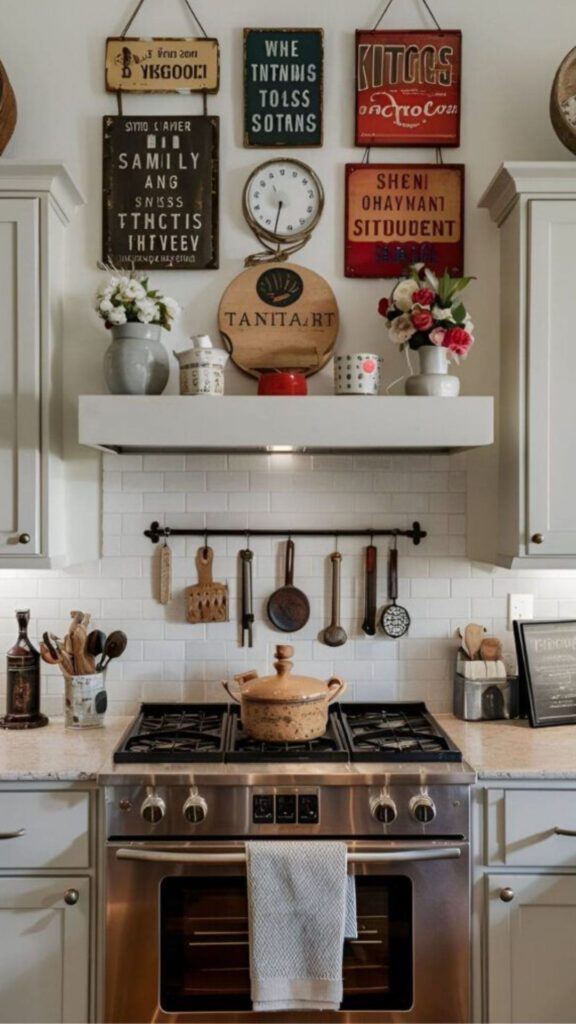
Not every kitchen has the clearance for traditional above-cabinet decor, and that’s worth addressing directly. If your cabinets reach close to the ceiling, the better move is often extending them with crown molding for a seamless built-in look rather than forcing decor into a gap that’s only a few inches deep.
For kitchens with a wall section beside the cabinets rather than directly above them, one oversized piece of art or a large framed mirror can serve the same visual purpose as a cluttered shelf of small items, often with more impact. In smaller or galley-style kitchens specifically, a mirror placed thoughtfully can bounce natural light deeper into the room, making the whole space feel larger.
A mini scenario illustrates this well: a narrow galley kitchen with only six inches of cabinet clearance has too little room for baskets or pottery, but a slim, wide piece of art mounted just above the cabinet line transforms the same wall into a clear design statement, no precarious balancing required.
Whichever route fits your kitchen’s proportions, the underlying principle stays the same across every idea in this guide: above-cabinet decor should solve a real visual or functional gap, not just fill empty space for the sake of it.
Grab This Idea Now: Kitchen Wallpaper Ideas That Pair Absolutely Beautifully with Your Above Kitchen Cabinet Decor Style
Hang a Curated Plate or Charger Display:
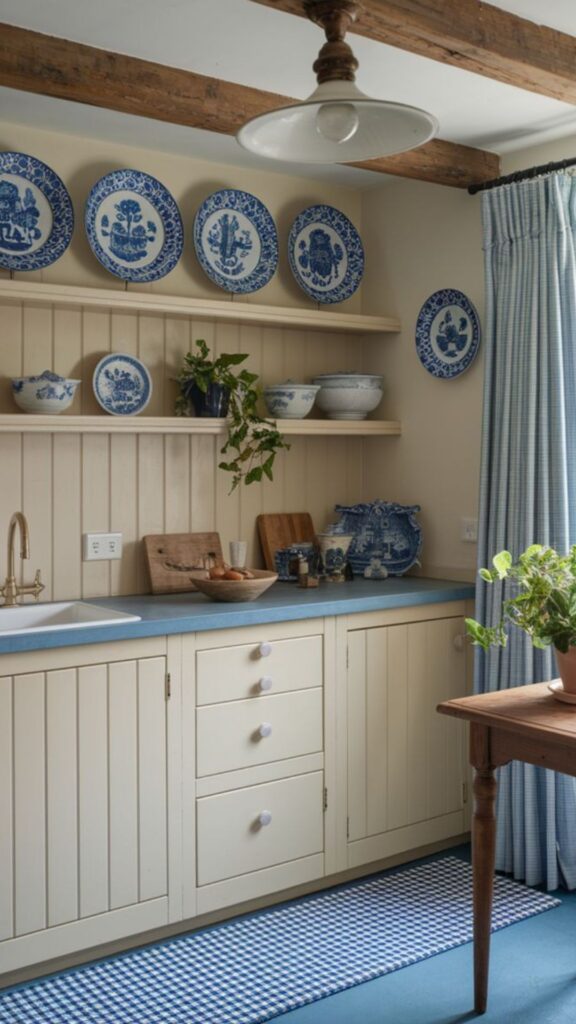
A row of vintage or patterned plates leaned against the wall above the cabinets is a classic farmhouse and cottage-style move that still feels fresh when done with restraint. Unlike a traditional plate rack mounted flush to the wall, leaning plates at a slight angle against a backing surface creates a softer, more collected look, almost like art propped on a gallery ledge rather than tableware on display.
Color coordination matters more here than with most other items on this list, since plates have large, flat surfaces that dominate the eye. Sticking to a single pattern family blue-and-white transferware, for example, or solid stoneware in three complementary shades keeps a plate display looking curated instead of like a mismatched cupboard overflow. Odd numbers, typically three or five plates, also read more naturally than an even row.
A mini scenario: a kitchen with inherited or thrifted china that’s too delicate for daily use can give those pieces a permanent, visible home above the cabinets instead of leaving them boxed away. It’s a practical way to keep sentimental items in the room without risking everyday chips or breakage.
One safety note worth repeating: plate leaning relies on gravity and a lip or ledge for support, so avoid this option directly above a busy walkway or in households where the cabinet top gets bumped often. A small clear acrylic plate stand or museum putty on the back edge adds stability without being visible from below.
Final Thoughts
Above kitchen cabinet decor ideas work best when they balance style with the practical realities of a working kitchen heat, grease, dust, and reach. From woven baskets and curated pottery to seasonal vignettes and smart lighting, the right combination can turn that overlooked space into one of the kitchen’s most charming features.
Start with one or two ideas from this list, see how they fit your space and routine, and build from there.

Team TrandyVilla is the passionate home decor team behind Trandy Villa, where style meets comfort in everyday living. The team loves transforming simple spaces into beautiful, functional homes through smart ideas, budget-friendly hacks, and modern design trends. Their content focuses on helping readers create homes that feel both stylish and personal without spending too much.