
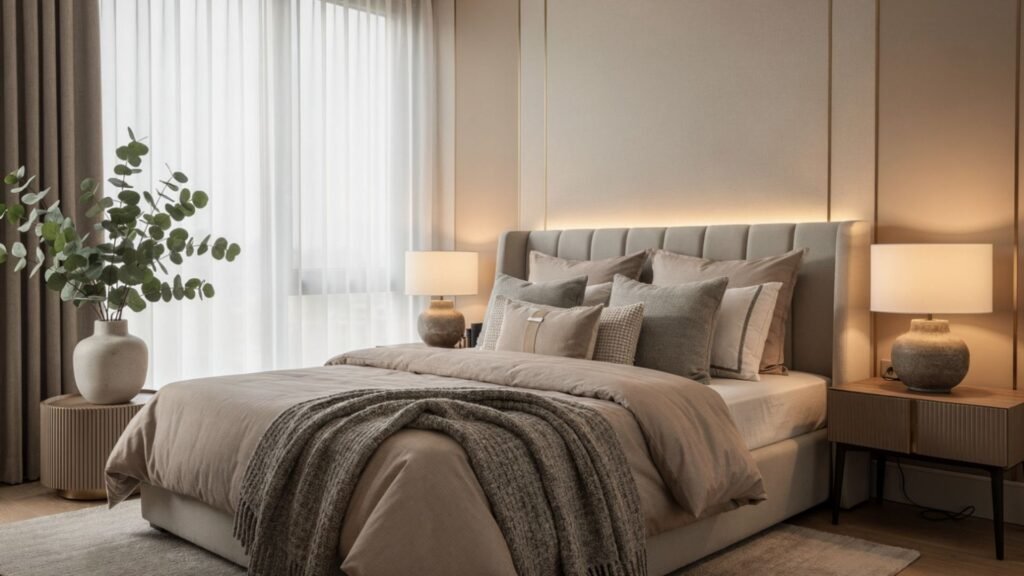
A well-designed guest bedroom ideas isn’t just a courtesy it’s an experience. The difference between a room that feels like a spare closet and one that feels like a boutique hotel often comes down to a handful of thoughtful choices.
Guest Bedroom Ideas help create a comfortable and welcoming space for visitors. These designs improve relaxation, increase storage, and support better sleep. Soft bedding, warm lighting, and practical furniture add comfort while keeping the room organized, functional, and visually balanced for everyday hosting needs.
A stylish Guest Bedroom ideas creates comfort, warmth, and a relaxing experience for every visitor. Simple details like layered bedding, soft lighting, and practical storage improve both appearance and function. This space supports restful sleep while helping guests feel calm, welcome, and completely comfortable during stays.
Modern Guest Bedroom Ideas include neutral colors, blackout curtains, seating corners, and smart storage solutions. These features suit small and large spaces while improving comfort and organization. Balanced layouts, cozy textures, and thoughtful accessories create a timeless atmosphere that supports practical and elegant interior design.
The Layered Bedding System:
That Guests Love
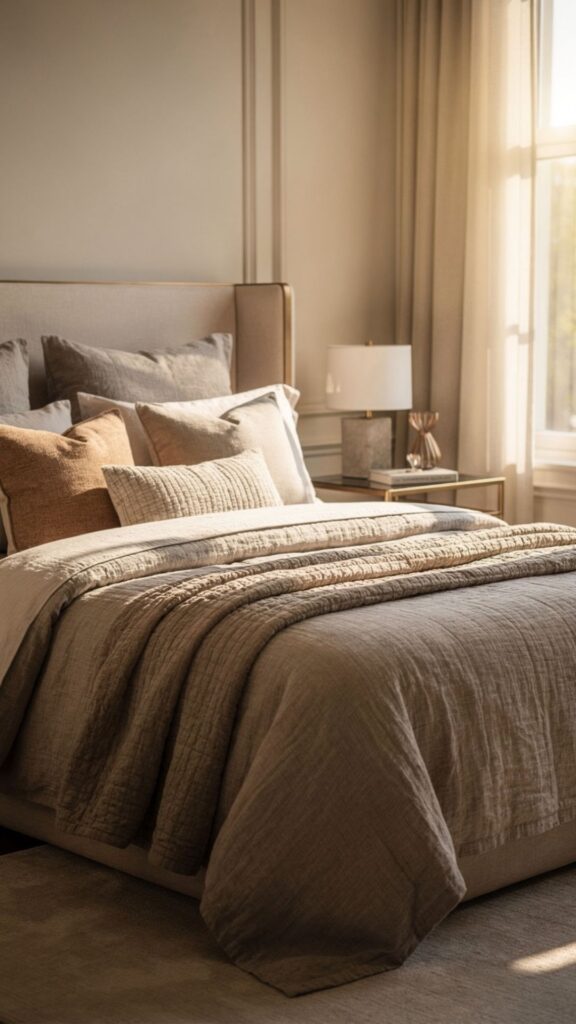
The single biggest upgrade you can make to any guest bedroom ideas is investing in a proper layered bedding system. Most people know to have clean sheets, but what sets a truly memorable guest room apart is the hotel-style stacking of textures and weights a fitted sheet, a flat sheet, a lightweight duvet, and then a heavier throw folded neatly at the foot of the bed.
This layering approach gives your guest full control over their comfort without them ever needing to ask you for an extra blanket at midnight. Thread count matters, but it isn’t everything. A 400-thread-count cotton-percale sheet with a crisp, cool feel often outperforms a cheap 1000-thread-count polyester blend that traps heat and pills after two washes.
The sweet spot for most guests is percale or sateen cotton in the 300–500 range. Pair this with a duvet insert rated for all seasons many brands now offer dual-layer construction that guests can split apart for warmer months and you’ve essentially solved 90% of nighttime comfort complaints before they happen.
Pillow arrangement deserves its own attention. The industry rule of thumb is four pillows minimum for a queen bed: two sleeping pillows at medium firmness, and two decorative pillows that get removed at night. But here’s what competitors rarely mention always leave at least one firm and one soft sleeping pillow option available. Different guests have wildly different neck and shoulder needs, and a simple label or a note saying “firm on left, soft on right” is a small touch that guests genuinely appreciate and remember.
Pro Tip: Wash and dry all bedding with a dryer sheet or a small sachet of lavender before guests arrive. Freshly laundered bedding that smells subtly clean is one of the most universally comforting sensory experiences a host can offer.
Creating a Guest Space That Feels Like Home
A great guest bedroom ideas isn’t about having the largest room or the most expensive furniture — it’s about the accumulation of thoughtful, anticipatory decisions that communicate genuine care.
The 17 ideas in this guide each address a real, practical aspect of the guest experience, from the weight of a duvet to the temperature of a light bulb to the placement of a mirror.
For homeowners with outdoor space, taking hospitality a step further could mean building a dedicated guest ADU — and working with the best ADU contractors Sacramento has to offer ensures that this standalone space is designed with the same attention to comfort, privacy, and style as the ideas in this guide.
Neutral Walls with Strategic Warm Accents:
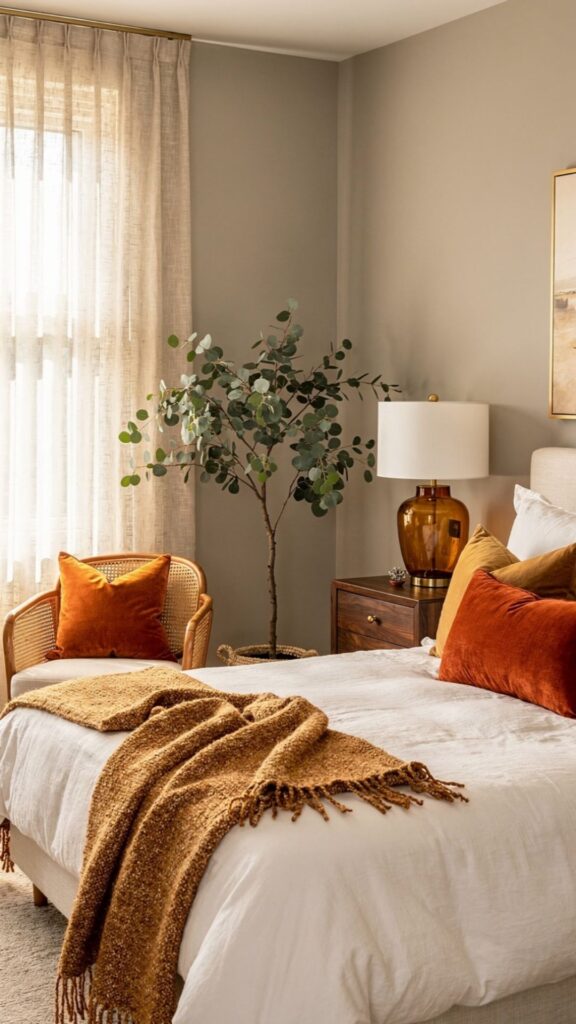
When it comes to guest bedroom ideas wall colours, neutrals are not a boring default they are a genuinely thoughtful choice. A guest room serves people with wildly varying aesthetic preferences, and a strongly opinionated colour scheme (think deep navy or bold terracotta) can feel personal and slightly jarring for someone who doesn’t share your taste.
Warm off-whites, soft greige, pale sage, and creamy linen tones create an almost universally appealing backdrop that photograph beautifully and make the space feel restful rather than stimulating.
The real design skill lies in what you add to that neutral base. Accents done in natural materials a jute area rug, a rattan lamp base, a terracotta ceramic vase bring warmth without committing to a colour scheme your guest might dislike.
Textiles are the lowest-risk way to add personality: a dusty rose lumbar pillow, a stone-blue throw, or amber-toned curtains introduce colour that reads as curated without overwhelming the senses. Interior designers frequently call this the “60-30-10 rule” 60% neutral base, 30% secondary texture or tone, and 10% deliberate accent colour pop.
One insight that rarely appears in standard design advice: pay attention to how your accent colours interact with the specific light conditions in your guest room. A room with north-facing windows that gets cool, diffused light all day can make grey-based neutrals feel cold and institutional.
In that case, leaning toward warm tones creamy whites, warm beige, soft amber accents actively counteracts the coolness of the light. This is why always testing paint swatches in the actual room at different times of day is essential before committing.
Real-World Scenario: Imagine a guest with design sensitivity staying in a room painted a bold mustard yellow. Even if it’s stylish, she might spend three nights subtly unsettled without knowing why. Contrast that with a warm linen wall colour, natural wood accents, and a single sage-green throw she instantly relaxes. The room feels like it was made for her even though it was made for everyone.
Check This: https://trandyvilla.com/master-bedrooms-decor/.
The Perfectly Curated Nightstand Setup:
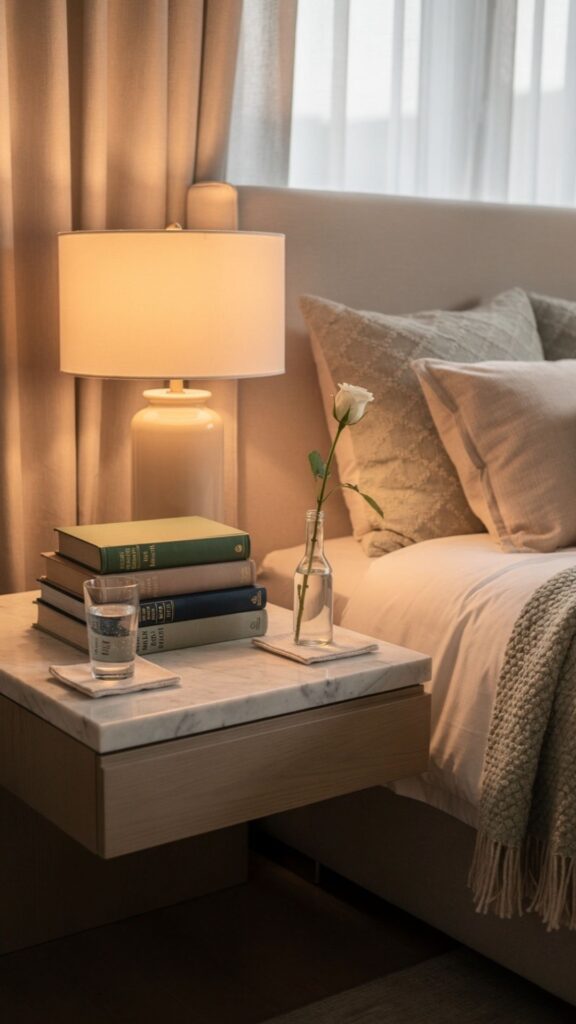
A good nightstand setup is one of those things guests notice even when they can’t articulate why. It signals that you thought ahead about their needs. The foundation is simple: a surface at roughly mattress height (between 24 and 27 inches is ideal), a lamp with a warm bulb in the 2700K range, and a charging solution.
But the execution is where most host rooms fall short too often, the nightstand is cluttered with the homeowner’s own books, outdated magazines, or an impractical decorative lamp that produces harsh overhead-style light rather than a gentle reading glow.
Think of the nightstand like a hotel would: clear and purposeful. A small carafe of water with a glass, a power strip or multi-port USB charger (visible and accessible, not hidden behind furniture), and one or two current books or a local magazine.
If you want to add a personal touch, a small notepad and pen is genuinely useful guests often want to jot down a Wi-Fi password, a restaurant name, or a thought at 2am when their phone is charging. This detail is commonly overlooked but consistently appreciated.
When space allows, two nightstands one on each side of the bed is significantly better than one, even if the room will often host a solo traveller. A guest sharing the room with a partner should never have to reach across their companion to find their phone charger or glass of water.
If budget is a concern, a simple rattan tray on the floor beside the bed serves as a functional nightstand alternative for smaller rooms. The point is always intentionality: the guest should feel that someone thought specifically about their comfort, not that they were slotted into whatever furniture was left over.
Design Note: A lamp with a dimmer or a separate switch from the overhead light is transformative. Guests should be able to read in bed without disturbing a partner or navigate to the bathroom at night without full overhead glare.
Built-In & Hidden Storage Solutions:
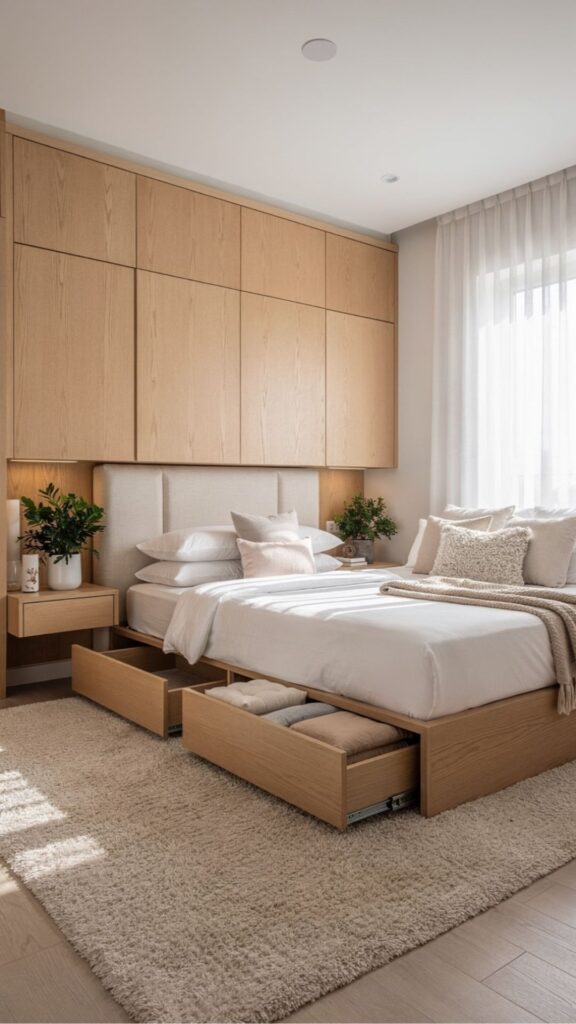
One of the most common frustrations for guests especially those staying more than two nights is having nowhere to put their things. Living out of a suitcase on the floor is uncomfortable, slightly undignified, and makes the room feel chaotic. Storage is where a guest bedroom ideas either succeeds as a functional space or quietly fails as a glorified storage room that happens to have a bed in it.
The solution doesn’t require a renovation: even a simple luggage rack at the foot of the bed costs under £40 and immediately elevates the sense of welcome by giving the guest a designated place to set their bag at an accessible height.
For guests staying longer, clear out at least half of any wardrobe or closet space and leave empty hangers. This single action takes five minutes but dramatically shifts how a guest feels about the space. They go from being a visitor navigating your belongings to someone who has genuinely been given their own territory.
If your storage is limited, consider a low-profile storage ottoman at the foot of the bed it doubles as a surface and provides discreet internal storage for extra linens, which guests can access on their own without feeling like they’re intruding.
Built-in solutions like floating shelves beside the bed or a shallow alcove with hooks near the entry of the room are longer-term investments that pay off beautifully in a frequently used guest room. Under-bed storage drawers either built into the bed frame or in pull-out containers are a particularly efficient option for smaller rooms.
Where floor space is limited. Store extra blankets, pillows, or seasonal items there rather than cluttering the closet. The goal is to make the room feel like it belongs to the guest the moment they step in, not to you.
Thoughtful Layered Lighting Design:
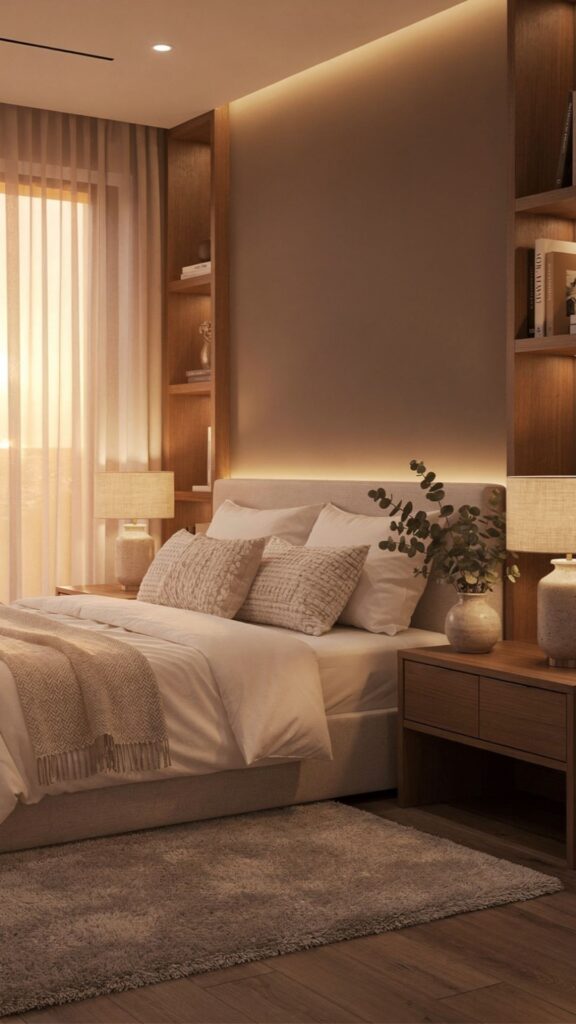
Lighting is arguably the single most transformative and underestimated element of interior design, especially in a guest bedroom ideas. Most spare rooms rely on a single overhead light controlled by a wall switch and that’s it. The result is either too bright and harsh for evening relaxation or too dim for reading.
Professional interior designers always work in three lighting layers: ambient (the general fill light from a ceiling fixture or recessed lights), task (focused light for reading from a bedside lamp), and accent (decorative or atmospheric lighting like a small table lamp, LED strip behind a headboard, or a candle-style wall sconce).
The practical challenge in a guest room is that your guest needs to control these lights independently and intuitively without fumbling in the dark or asking for your help. Smart plugs on bedside lamps connected to a simple app, or even traditional plug-in dimmer switches, allow guests to set exactly the atmosphere they need without rewiring anything.
If you’re considering a renovation, installing a dimmer switch on the main overhead light changes the entire feel of the room it can go from bright and functional during packing to soft and warm during an evening wind-down. Bulb temperature deserves serious attention. Bulbs labelled “daylight” (5000–6500K) are energising and ideal for a home office but will actively prevent sleep in a bedroom.
Always use “warm white” (2700–3000K) bulbs in guest bedroom ideas. They cast the same golden, restful light as incandescent bulbs, which most people instinctively associate with comfort and relaxation. This is the kind of detail that costs almost nothing to change and has an outsized impact on how the room feels at the end of the day.
Evening Scenario: A guest bedroom ideas finishes dinner, heads to their room, and instead of harsh fluorescent overhead light, they walk into warm, softly lit ambience from a bedside lamp already on. They didn’t have to figure out an unfamiliar switch system. They simply walked into calm. That’s the power of pre-set, layered lighting.
Hotel-Style Closet Space for Guests:
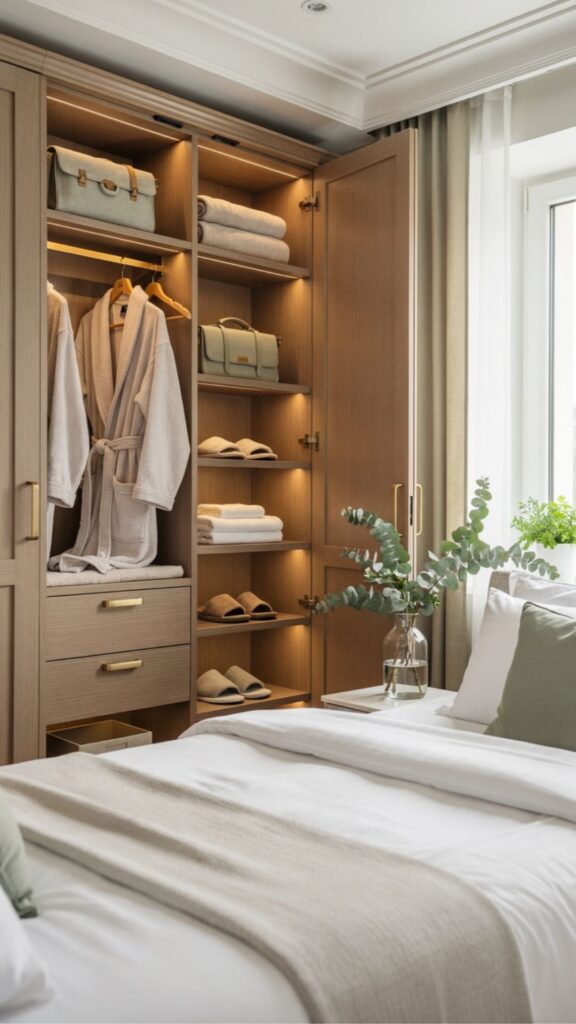
Hotels have spent decades engineering closet experiences for strangers, and there’s a lot a home host can borrow from that playbook. The most overlooked rule: every guest bedroom ideas should have a minimum of eight to ten empty hangers available. Not buried in a crowded rail behind your own off-season coats, but visibly accessible and inviting.
Matching hangers all wooden, all velvet-grip, or all the same plastic look dramatically more considered than a mismatched collection and signal that the space was intentionally prepared. It’s a tiny visual cue that carries significant psychological weight.
If your guest bedroom ideas doesn’t have a built-in wardrobe, a free-standing clothing rack in a neutral metal or natural wood finish works beautifully and can be tucked into a corner or behind a curtain when not in use. Many contemporary homes are actually moving toward open clothing storage intentionally, and a well-curated rack with matching hangers, a small shelf below for shoes, and a hook section for bags can look genuinely stylish while solving a real functional need for guests.
Add a full-length mirror nearby and you’ve created a complete dressing area that guests will appreciate every single morning. One forward-thinking addition that most guides never mention: a small lint roller, a shoe brush, or a fabric steamer left visibly available in the closet area. For guests attending an event, a wedding, or a business meeting during their stay, access to these grooming tools is enormously helpful.
They remove the awkwardness of asking you directly and demonstrate that you anticipated needs they hadn’t thought to mention. This level of anticipatory hospitality is exactly what separates a good host from an exceptional one.
A Small Seating Nook:
That Changes Everything
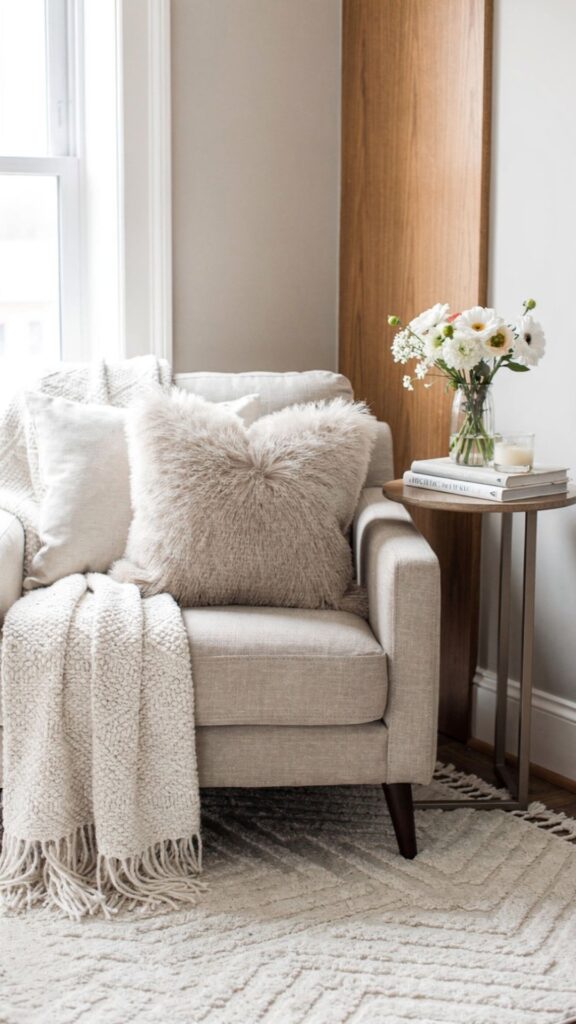
A bedroom that contains only a bed is a sleeping room. A bedroom with even one additional seat an armchair, a small loveseat, a window bench, or a generous pouf becomes a living space where your guest can comfortably read, video call home, fold laundry, or simply sit and think without being in bed.
This distinction sounds minor but profoundly affects how comfortable a guest feels during a multi-day stay. The ability to exist in their own space without being horizontal all evening signals genuine comfort rather than survival-mode lodging.
The most space-efficient seating option for a guest room is a classic armchair placed in a corner with a small side table and a floor lamp behind it. This creates a complete reading nook that takes up roughly 4 square feet of floor space but delivers enormous functional and aesthetic value.
For rooms that genuinely can’t spare that space, a window seat even a simple padded bench cushion placed on a deep windowsill performs the same function beautifully and takes up zero additional floor space while also framing the window as an architectural feature.
When selecting a seating piece for a guest room, prioritise upholstery durability and ease of cleaning over pure aesthetics. Guests are strangers in your home, and some will eat a snack, sit in damp clothes after a shower, or let a bag rest on the fabric. Performance fabrics (like Crypton, Sunbrella, or any tightly woven linen-cotton blend) look elegant but wipe clean and resist staining.
This isn’t pessimism it’s practical hospitality planning that protects both your furniture and your guest’s comfort, because a guest who spills something on pristine white upholstery will feel terrible, and neither of you needs that dynamic.
Blackout Curtains & Privacy Done Right:
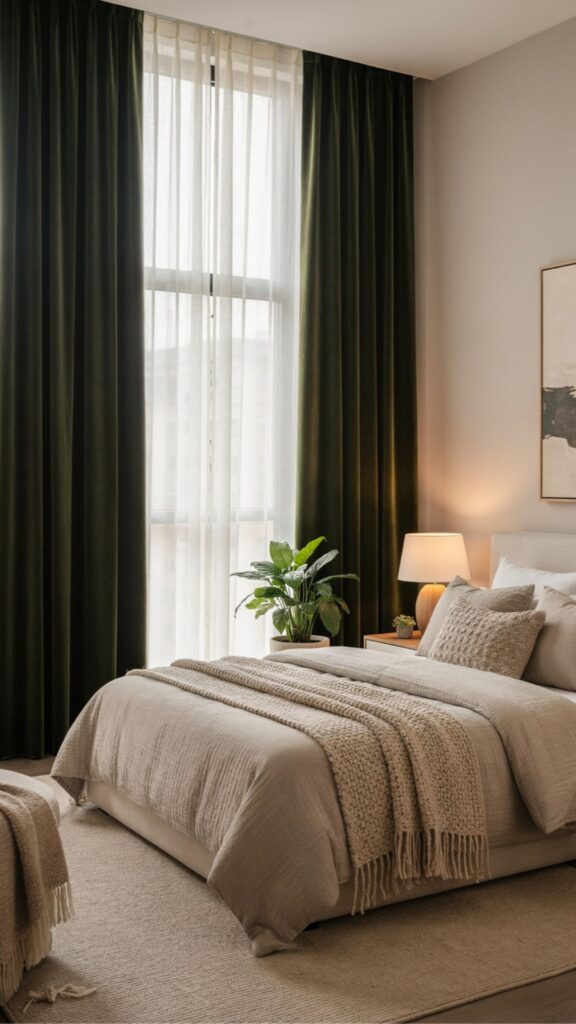
Sleep quality is the foundational purpose of a guest bedroom ideas, and nothing undermines it faster than light intrusion. Early sunrise through thin curtains, streetlights casting orange glows at midnight, or a neighbour’s security light cycling on at 3am these are all sleep disruptors that your guest cannot control and won’t mention to you but will absolutely feel.
Investing in proper blackout curtains or blinds for the guest room is one of the highest-return improvements you can make per pound or dollar spent, and it’s one that genuinely improves the physiological quality of your guest’s sleep.
True blackout curtains need to extend beyond the window frame on all sides typically 4 to 6 inches wider on each side and 2 to 4 inches above the top of the frame. This prevents the light bleeding that often undermines cheaper blackout solutions and is the difference between “mostly dark” and the hotel-quality complete darkness that supports deep, restorative sleep.
Pair blackout panels with a sheer or day curtain on a separate rod if you want guests to have the option of natural light during the day without removing the blackout layer entirely. Privacy from outside is equally important, particularly for ground-floor or street-facing guest rooms. A guest should never feel exposed or observable while getting dressed, moving around at night, or simply existing in their private space.
Frosted window film applied to the lower half of a window is an elegant, inexpensive solution that maintains natural light flow while providing complete visual privacy from outside particularly useful in older homes where windows sit close to the pavement or neighbouring buildings. It’s a detail that guests rarely notice consciously but feel constantly as a sense of security.
Sleep Science Note: Research consistently shows that sleeping in complete darkness improves the quality of REM sleep and reduces cortisol levels on waking. Blackout curtains aren’t a luxury they’re a genuine wellness investment for anyone hosting guests regularly.
Must See: https://trandyvilla.com/bedroom-bench/.
The Right Rug Makes the Room:
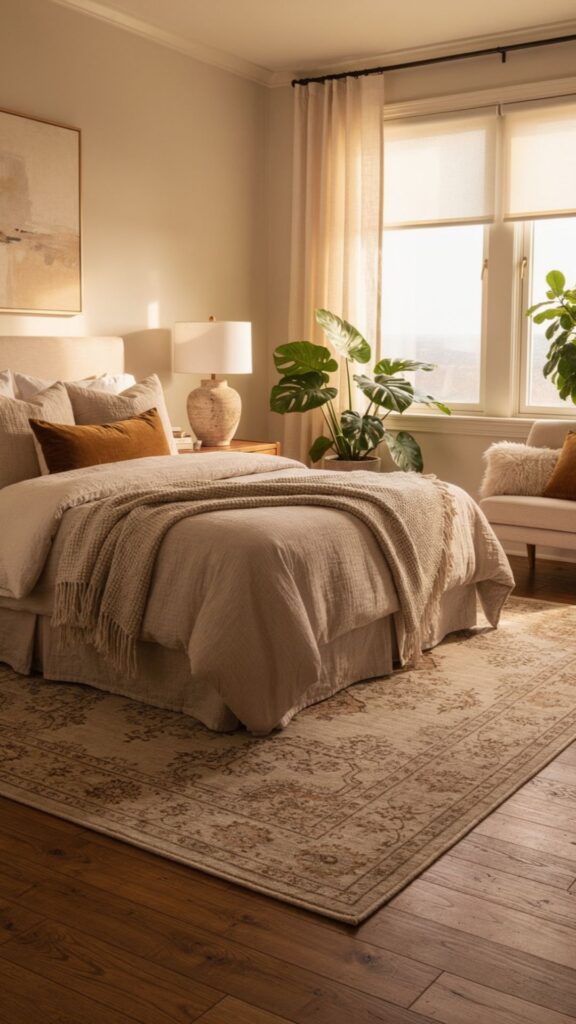
Cold hard floors are one of the most instinctively unpleasant sensory experiences a guest can have when stepping out of bed in the morning, and yet many guest bedroom ideas with beautiful hardwood or tile floors miss the simple solution of a quality area rug.
A rug in a bedroom does several things simultaneously: it softens acoustics so footsteps and movement don’t echo through the house at night, it creates a visual anchor for the furniture arrangement, it adds colour and texture to the space, and most practically it provides warm, soft contact underfoot at precisely the moments when it’s most welcome.
Size matters significantly more than most people realise. The most common rug mistake in bedrooms is choosing one that’s too small it sits only under the bed frame and the exposed ends of the room feel disconnected and awkward.
The ideal guest bedroom ideas rug should extend at least 18 to 24 inches beyond the sides and foot of the bed, creating a continuous soft landing zone. For a queen bed, this typically means a rug in the 8×10 foot range. A large rug that the furniture partially sits on looks intentional; a small rug that floats in the centre of the room looks accidental.
Material selection for a guest room rug involves balancing comfort, durability, and allergen considerations. High-pile shag rugs feel luxurious but trap dust, are harder to clean, and can be a problem for guests with allergies. A flatweave wool or wool-blend rug in the medium pile range gives warmth, durability, and relatively easy maintenance.
Natural fibres like jute or sisal look beautiful but can feel scratchy underfoot not ideal for a bedroom. If you’re committed to a natural fibre aesthetic, layer a smaller, softer wool rug on top of a sisal base for the best of both worlds.
The Welcome Corner:
A Host’s Secret Weapon
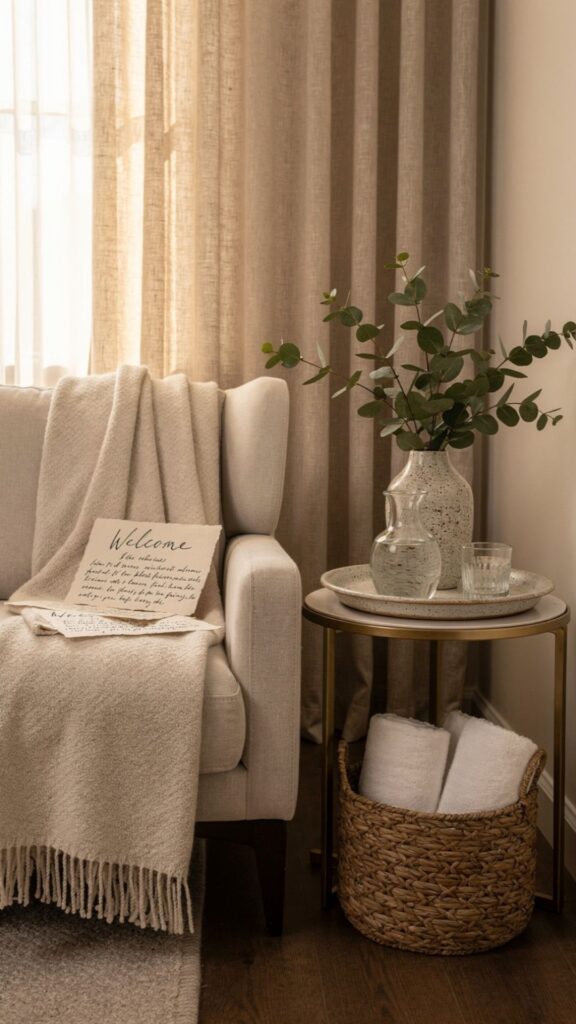
The welcome corner is perhaps the most distinctively thoughtful design feature you can add to a guest bedroom ideas, and it’s almost never mentioned in standard decorating guides. The concept is simple: designate a small surface a console table, a dresser top, a floating shelf, or even a decorative tray on the nightstand as a curated collection of the things your guest might need or enjoy during their stay.
Done well, it functions like a hotel minibar but with genuine personality and no bill attached. Done poorly, it’s clutter. The key is intentionality and restraint. A well-curated welcome corner might include: a small kettle or French press with a selection of teas and coffees, a local bar of chocolate or a packet of biscuits, a bottle of still water, and a handwritten note with the Wi-Fi password and any helpful house information (what time breakfast is, parking instructions, how the shower works).
This last item a simple physical note consistently emerges as one of the most appreciated gestures hosts can make. Guests don’t want to interrupt you to ask basic questions, and having the information written down removes that social friction entirely.
For longer stays or special guests, the welcome corner can be personalised. If you know your guest drinks a particular type of tea or has a favourite snack, including it demonstrates attention and care that transcends standard hospitality.
A small fresh-cut flower in a bud vase, a scented candle, or a locally published magazine all add warmth without adding significant cost or complexity. Interior designers who consult on Airbnb property staging consistently report that this kind of curated welcome element generates more positive guest reviews than almost any furniture upgrade or renovation project.
Dual-Purpose Furniture:
That Does the Heavy Lifting
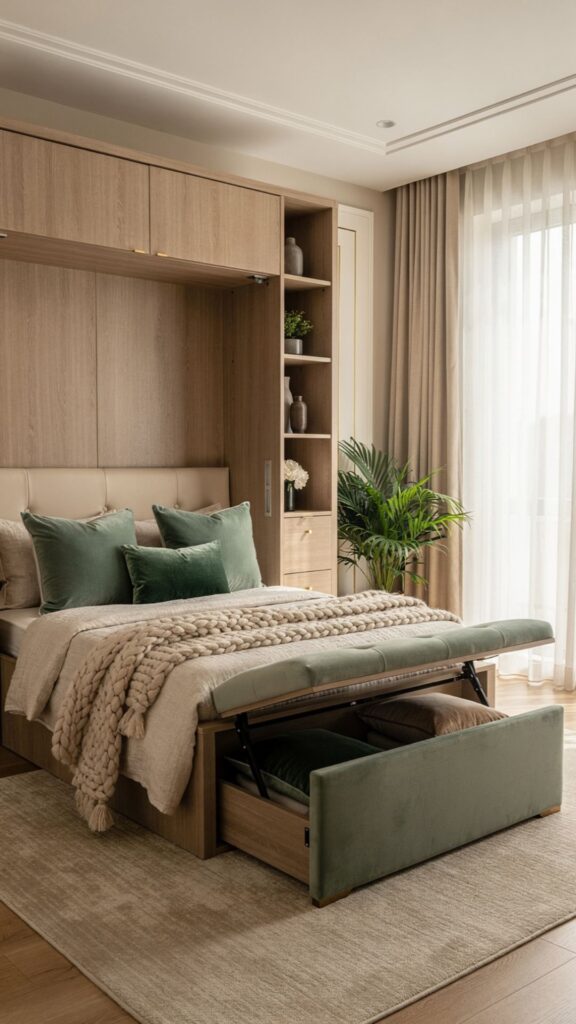
Dual-purpose furniture is the design philosophy that separates genuinely functional guest rooms from those that look nice but fail in practice. The most immediately useful example is the storage ottoman: it provides a seat, a foot rest, a luggage platform, and hidden storage for extra blankets or pillows in a single piece of furniture that takes up about the same footprint as a side table.
A daybed with a trundle pull-out is another masterful solution for a guest room that occasionally hosts two people but also needs to read as a comfortable single-occupancy space for solo visitors. A desk with a slim profile can serve as both a workspace for a guest who needs to check emails and as a vanity with the addition of a small mirror.
This is particularly valuable in smaller guest rooms where dedicating square footage to a piece of furniture with only one function is a difficult design choice. Murphy beds once associated with tiny urban apartments and novelty have undergone a significant design renaissance and now come in sophisticated cabinet systems that allow a guest room to double as a home office, reading room, or yoga space when not in use.
For rooms that host guests fewer than 30 nights per year, a Murphy bed is arguably a more sensible choice than a dedicated bed frame. What design-savvy hosts are increasingly doing is approaching the guest bedroom ideas as a room that serves them most of the year and their guests for shorter periods.
This means choosing pieces that work in both configurations: a writing desk that becomes a dressing table, a reading chair that becomes an armchair for a working session, shelves that hold books for the homeowner and clear to become display space for the guest’s belongings. This dual-state thinking is the design frontier in multi-functional residential spaces and is becoming increasingly relevant as urban living continues to prioritise spatial flexibility.
Artwork & Personal Touches:
That Welcome Without Overwhelming
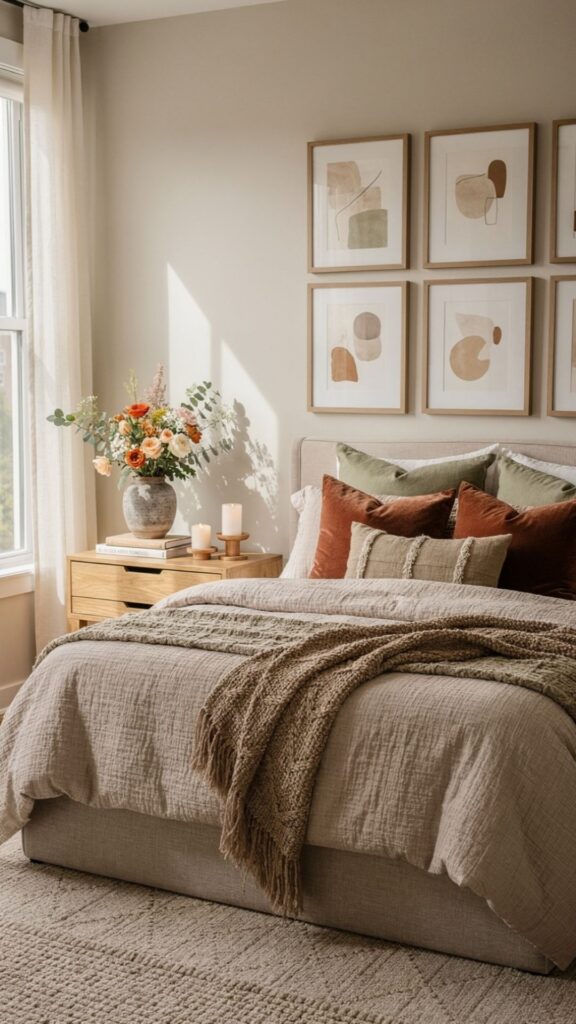
Art in a guest bedroom ideas occupies a delicate balance. Too little and the room feels sterile, like a budget hotel with bare walls. Too much particularly work that is bold, politically charged, emotionally complex, or highly personal can make a guest feel like they’re sleeping inside someone else’s psyche.
The most successful approach for guest bedroom ideas art is selecting pieces that are visually engaging, aesthetically cohesive with the room’s palette, and emotionally neutral landscapes, botanical prints, abstract forms, architectural photography, or simple line drawings all tend to work universally well without demanding an emotional response.
Gallery walls in guest bedroom ideas are a contemporary favourite, but they require careful editing. The most common mistake is including family photographs particularly large ones which can create a slightly unsettling feeling for a guest sleeping under the watchful gaze of people they may barely know. Reserve family photos for the living room or hallway.
For the guest room, a curated collection of four to six prints in coordinating frames all black, all brass, or all natural wood creates visual interest without visual noise. Frame sizes that vary but maintain proportion feel collected; wildly mismatched frame sizes feel accidental.
Beyond wall art, consider what personal touches in the room tell a story about the place itself rather than about you personally. A small framed map of the local area, a print referencing the city or countryside you’re in, or a piece of locally made pottery on the nightstand gives the guest a sense of place without intruding on their privacy.
This is particularly effective for holiday homes or rural retreats, where the surrounding environment is often part of why the guest came. Connecting them to the landscape or community through subtle visual cues makes the stay feel more meaningful.
Smart Temperature Control:
For All-Season Guests
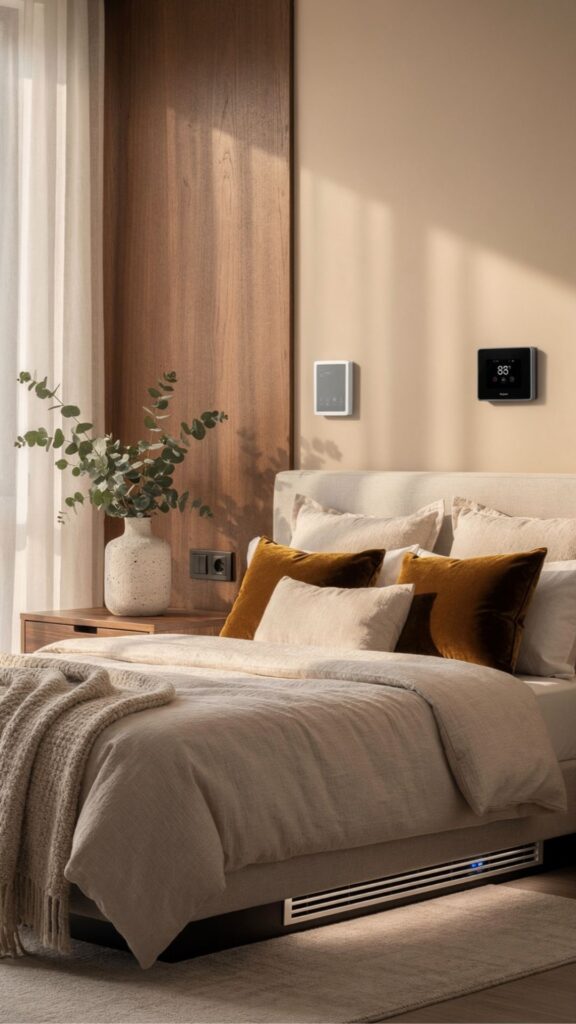
Temperature is perhaps the most personal of all bedroom comfort variables, and it’s also the one guests are most reluctant to raise with their host. Nobody wants to seem like a difficult guest by asking you to adjust the thermostat at 11pm because they’re either freezing or sweating.
A guest bedroom ideas with no independent temperature control is at the mercy of whatever the household is comfortable with which may be significantly different from what your guest needs for restful sleep. The research is clear that most people sleep best between 16 and 19 degrees Celsius, but individual preferences vary enormously based on age, health, activity level, and genetics.
The most practical solution for hosts who can’t retrofit independent temperature zones is providing multiple bedding weight options (covered in Idea 1) combined with a portable fan for summer use and an electric blanket or heated throw for winter stays.
A small fan in particular is enormously valuable it not only helps with heat but provides white noise that masks household sounds, which is a genuine sleep quality improvement many guests don’t expect but immediately appreciate. Position it on a dresser or shelf pointed toward the bed, with a clear note that it’s available for their use.
Smart home thermostats are increasingly worth considering for homes that host guests regularly. Devices like the Nest or Ecobee allow zone control and can be programmed with a specific “guest mode” temperature schedule that runs without you needing to think about it warming the room before the guest goes to bed and allowing it to cool slightly in the early morning hours.
More forward-thinking hosts are noting guest bedroom ideas temperatures in smart home systems as a hospitality metric alongside thread count and amenity quality. For multi-night stays, this level of consideration genuinely differentiates your space from others.
Using Mirrors to Amplify Light & Create Space:
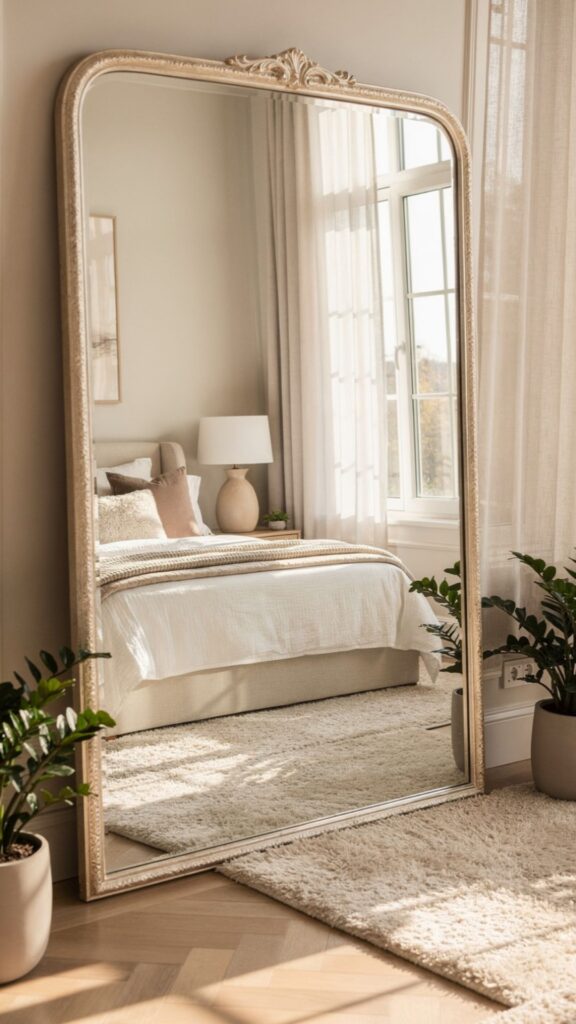
Mirrors are one of the most powerful tools in the small-room design arsenal, and a guest bedroom ideas is almost always a room where more apparent space and light are welcome. The physics are straightforward a mirror reflects the light sources in a room back into the space, effectively doubling the perceived brightness without adding a single bulb.
Strategically placed opposite a window, a large mirror creates the illusion of an additional window and bounces natural light deep into the room. Placed at the end of a narrow room, it visually extends the space significantly and reduces the closed-in feeling that can make small guest rooms feel slightly claustrophobic.
For a guest bedroom ideas specifically, a full-length mirror is almost a necessity rather than a luxury. Guests need to check their full outfit before leaving the room particularly for events, business meetings, or travel days and a mirror only at face height creates a genuine practical frustration.
Lean a full-length mirror against the wall (secured with furniture straps for safety), mount one on the back of the bedroom door, or invest in a freestanding floor mirror with a frame that complements the room’s aesthetic. Antique gilt frames, simple black metal, natural wood, and rattan all offer distinct personality options that also serve as decorative focal points.
Mirror placement has a few underrated rules worth knowing. Avoid positioning a mirror directly across from the bed this is a long-standing Feng Shui principle, but also a practical one, because waking up to your own reflection in the night or early morning is frequently disorienting.
Also avoid mirrors that reflect a cluttered or unappealing part of the room whatever a mirror reflects, it amplifies, so make sure it’s reflecting something worth doubling: a window, a beautiful piece of art, or a well-styled dresser. Used thoughtfully, mirrors are among the most cost-effective design upgrades available.
Dive In: https://trandyvilla.com/led-lights-bedroom/.
A Dedicated Power & Tech Station:
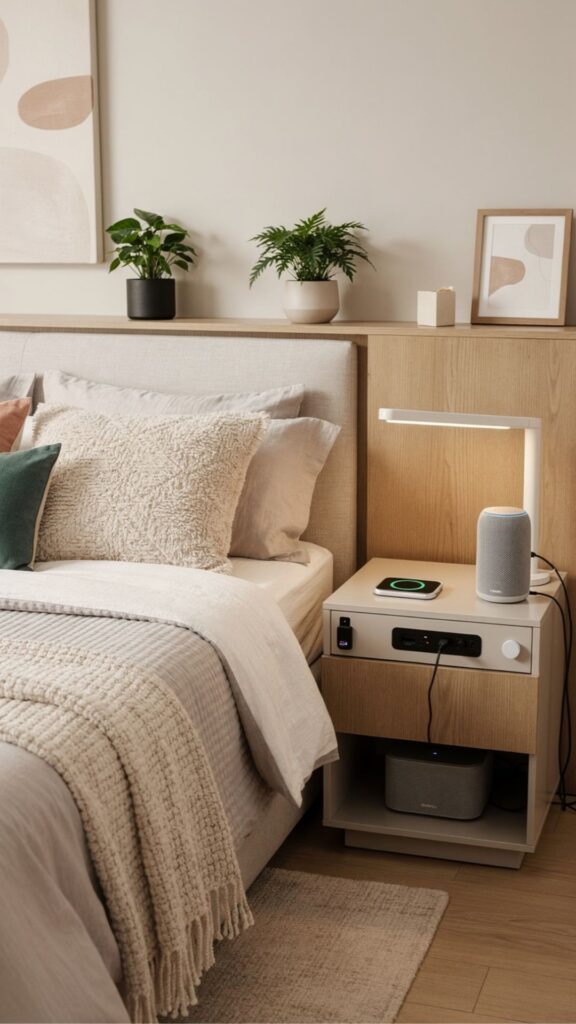
In 2026, a guest bedroom ideas without accessible power outlets is as much of an oversight as one without pillows. Modern travellers arrive with a smartphone, often a laptop, sometimes wireless earbuds, a smartwatch, and occasionally a travel CPAP machine. The single outlet hidden behind the bed that requires moving furniture to access is simply not sufficient and communicates, however unintentionally, that the room was designed for a different era.
The minimum viable power setup for a contemporary guest room is two accessible multi-port USB-C charging stations on or near the nightstands, plus a multi-socket extension within reach of where a guest might work or sit. Wi-Fi access information should be displayed in the room not just told verbally, which guests will immediately forget.
A small framed card, a handwritten note, or a printed tag on the nightstand with the network name and password is an act of practical hospitality that eliminates an awkward conversation and allows guests to settle in and connect on their own timeline.
If your home uses a mesh network system, confirm that the guest bedroom ideas is within reliable coverage range before hosting patchy Wi-Fi in a guest room is one of the most frequently cited frustrations in short-stay accommodation reviews, both commercial and personal.
A Bluetooth speaker or a small smart speaker (with clear instructions on how to use it, and privacy settings configured appropriately) adds tremendous value for guests who want to listen to music in the morning, follow a podcast while getting ready, or play ambient sounds at night.
This is an increasingly expected amenity in quality guest rooms and one that doesn’t require significant investment a £30–50 Bluetooth speaker looks intentional and generous. If you’re concerned about privacy with smart speakers, a simple Bluetooth-only device avoids the always-listening concern entirely while still providing the functionality.
Tech Essentials Checklist: Multi-port USB-C charging station on nightstand · Wi-Fi credentials displayed visibly · Power strip accessible from the desk or seating area · Bluetooth speaker with clear pairing instructions · Confirmation that the room has strong signal coverage.
A Subtle, Welcoming Scent Strategy:
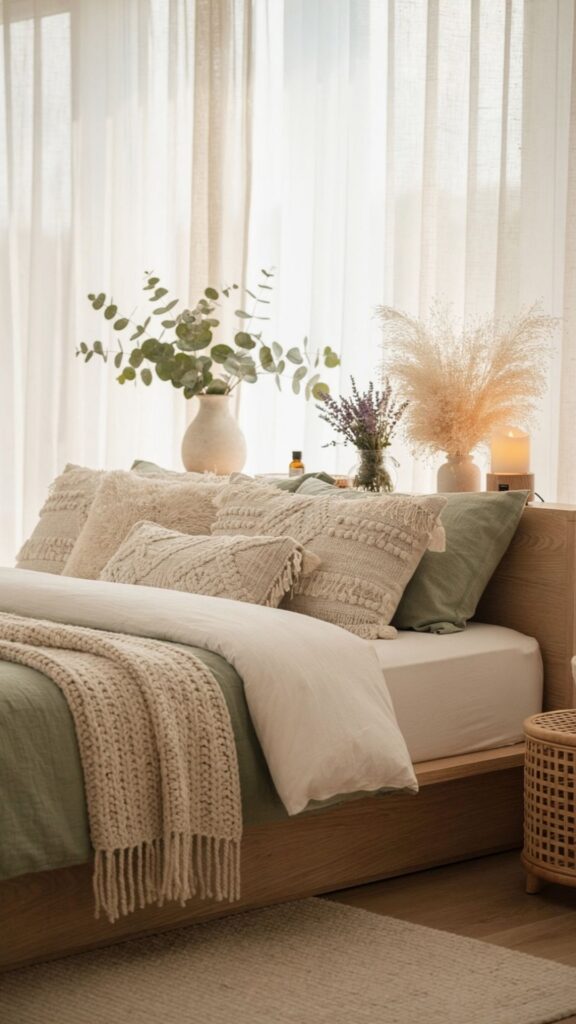
Scent is processed by the brain’s limbic system the same region that governs emotion and memory which is why entering a room with the right fragrance can immediately create a feeling of calm, cleanliness, and welcome that no amount of visual decoration can replicate at the same speed.
Luxury hotels understand this deeply; many flagship properties have signature scents designed specifically to be associated with their brand and revisited every time a loyal guest checks in. You don’t need a brand perfumer to achieve this in a guest bedroom ideas, but you do need to be intentional about what the room smells like.
The first rule is always to eliminate the negative before adding the positive. A room that smells musty, of stored linens, or faintly of the previous occupant’s toiletries cannot be fixed with a scented candle the overlay creates something stranger and more unpleasant than either element alone.
Air the room thoroughly for several hours before your guest arrives, wash all soft furnishings including pillowcases and curtains if possible, and ensure adequate ventilation. Only once the room has a neutral baseline should you introduce your chosen fragrance.
For the actual scent, choose something that is fresh, light, and broadly appealing rather than distinctive or polarising. Lavender, eucalyptus, clean linen, and light citrus tones are consistently well-received across diverse demographics and are associated with cleanliness and calm.
Reed diffusers are ideal for guest rooms because they provide continuous, low-level fragrance without requiring lighting or active management they simply sit and work. A lightly scented linen spray applied to pillowcases just before your guest arrives is another elegant touch, bringing together the tactile comfort of fresh bedding with the olfactory cue of cleanliness in a single sensation.
Guest Bedroom ideas Design:
For Compact Rooms
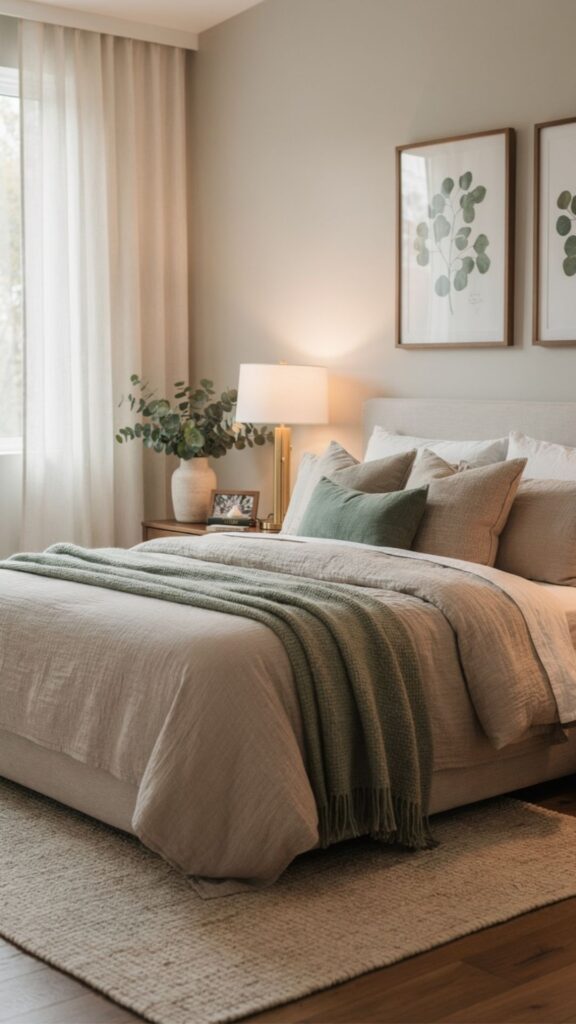
Designing a small guest bedroom ideas well is arguably harder than designing a large one, and the temptation is to either overcrowd the space with too much furniture or give up and leave it sparse and unwelcoming. Neither approach serves your guest. The first principle for small guest rooms is to resist the urge to fill every inch negative space is not wasted space, it is visual breathing room that prevents a small room from feeling oppressive.
A queen bed with a clear path on both sides and no additional furniture often feels better than a queen bed plus a dresser that requires guests to turn sideways to pass. Furniture scale is critical in compact spaces. An oversized headboard in a low-ceilinged room amplifies the cramped feeling. A queen or full-size bed with a simple, low-profile frame and no footboard maximises the sense of available floor space while still providing comfortable sleeping.
Wall-mounted nightstands instead of freestanding ones eliminate two table legs from the floor plan and visually open the floor area significantly. A floating shelf above the bed can serve as both a headboard and a storage solution without adding any furniture footprint at all it’s one of the cleverest small-room strategies available.
Colour and light are your most powerful tools in a small guest room. Pale walls, a light ceiling, and sheer curtains (layered with blackout behind if needed) make the room feel larger and airier than dark, heavy treatments would. A single large mirror as described in Idea 14 is particularly high-impact in a compact space.
Strategic lighting placed at different heights a ceiling fixture, a mid-height wall sconce, and a low table lamp creates visual depth and prevents the flat, single-level lighting that makes small rooms feel like boxes. The goal is always to design the experience of spaciousness, not just to work around the reality of limited square footage.
Small Room Success Story: A 90-square-foot spare room transformed with a wall-mounted full bed frame, two floating nightstand shelves, a floor-length curtain replacing a door, a large mirror on the opposite wall, and a single lush plant in the corner reads as cosy and intentional rather than cramped. The key decisions: eliminate legs from the floor wherever possible, choose one large statement piece over several small ones, and let the walls and floor breathe.
Final Thoughts
A great guest bedroom ideas isn’t about having the largest room or the most expensive furniture it’s about the accumulation of thoughtful, anticipatory decisions that communicate genuine care. The 17 ideas in this guide each address a real, practical aspect of the guest experience, from the weight of a duvet to the temperature of a light bulb to the placement of a mirror.
What separates truly memorable hospitality from adequate accommodation is almost always found in the details: a note with the Wi-Fi password, a second pillow option, a blackout curtain that actually works, a warm bulb instead of a cold one. None of these require significant investment they require attention.
Start with one or two ideas from this list that you can implement this week, and build from there. Your guests may never be able to explain exactly why they slept so well or felt so at ease but they will remember how your home made them feel.

Team TrandyVilla is the passionate home decor team behind Trandy Villa, where style meets comfort in everyday living. The team loves transforming simple spaces into beautiful, functional homes through smart ideas, budget-friendly hacks, and modern design trends. Their content focuses on helping readers create homes that feel both stylish and personal without spending too much.