
Your dining room is more than just a place to eat it’s where memories are made, conversations flow, and your home’s personality shines. Yet, many homeowners treat it as an afterthought, choosing generic furniture and leaving walls bare. The truth is, a well-decorated dining room can increase the perceived value of your entire home, improve your mood at mealtimes, and even encourage longer, more meaningful family gatherings.
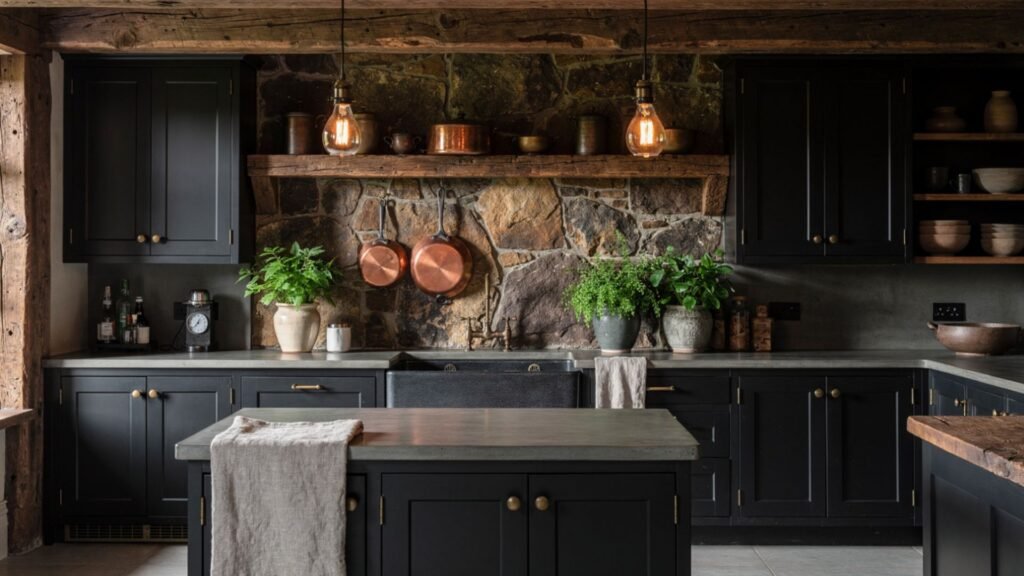
Dark Rustic Kitchen ideas combine deep colors, natural wood, warm lighting, and vintage textures. This style creates a cozy and timeless cooking space. It adds comfort, strong character, better storage, and a balanced rustic look for modern homes with practical daily function.
Dark Rustic Kitchen designs create a warm and stylish atmosphere with dark cabinets, wood finishes, stone accents, and soft lighting throughout the space. This kitchen style feels bold, welcoming, timeless, practical, and comfortable for cooking, gathering, relaxing, and enjoying everyday family living beautifully.
Dark Rustic Kitchen ideas include reclaimed wood shelves, matte black hardware, stone countertops, warm pendant lights, and farmhouse sinks. These details improve texture and visual depth. Natural materials add charm and comfort. Simple decorative pieces help the kitchen feel organized, elegant, inviting, and functional every day.
Start With Dark Cabinetry as Your Foundation:
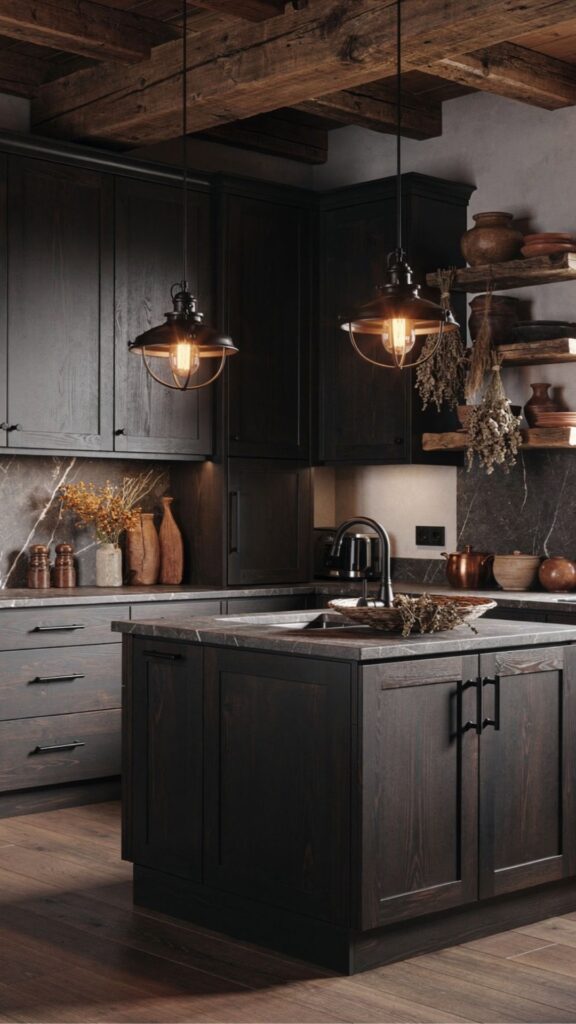
The single most impactful change you can make in a dark rustic kitchen is choosing the right cabinetry color and finish. Deep tones like charcoal, midnight navy, forest green, and espresso brown are the cornerstones of this aesthetic. These shades create an instant sense of depth and drama without overwhelming the space when balanced correctly.
What separates a professionally designed dark kitchen from an amateur attempt is the finish on the cabinets. Matte finishes absorb light beautifully and feel more authentically rustic, while a slight sheen can add a contemporary edge. For a truly rustic look, consider distressed or hand-painted finishes that mimic aged wood this adds character that factory-finished cabinets simply cannot replicate.
Shaker-style cabinet doors are particularly popular in dark rustic kitchens because their simple paneling adds architectural interest without looking ornate. Pair them with open shelving on one or two sections to break up the visual weight and display curated items like ceramic crocks, cast iron pans, or fresh herbs in terracotta pots.
For homeowners who rent or are working with a limited budget, cabinet paint is a game-changer. A quart of high-quality chalk paint in a deep charcoal shade, applied with a brush (not a roller, for authentic texture), can completely transform flat, builder-grade cabinets into something that looks custom.
Use Reclaimed Wood to Build Authentic Rustic Character:
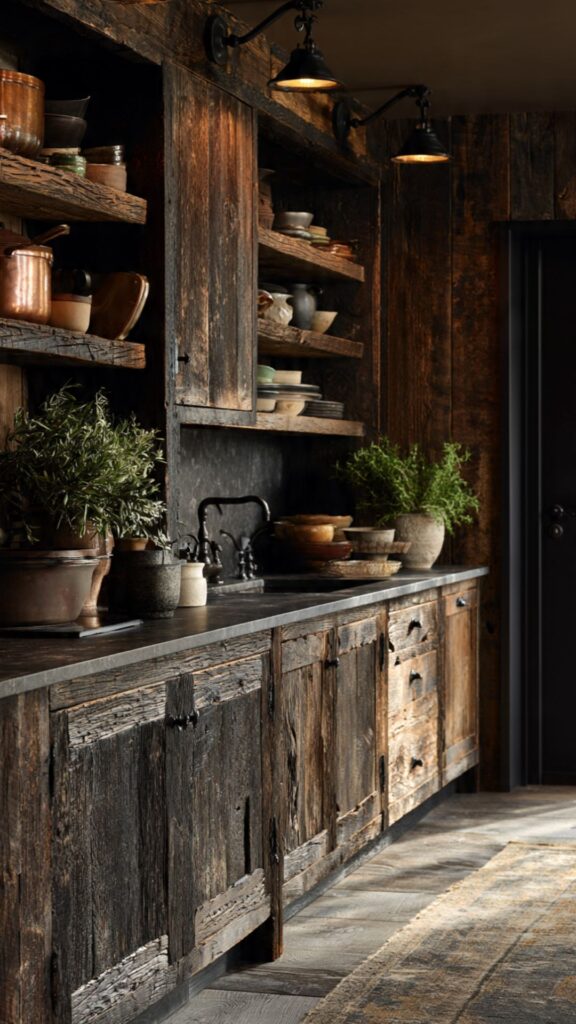
No element communicates rustic authenticity quite like reclaimed wood. In a dark rustic kitchen, reclaimed timber can be used on open shelving, ceiling beams, kitchen islands, range hoods, and even accent walls. The beauty of reclaimed wood is that it carries history nail holes, saw marks, and color variation that no factory-made product can fake.
When sourcing reclaimed wood, look for material salvaged from barns, industrial warehouses, or old-growth forests. Each type has a different grain and color profile. Barn wood tends to be silvery-grey with weathering. Factory timber is often darker and denser. Your choice should complement your overall color palette a dark cabinetry scheme pairs exceptionally well with warm-toned reclaimed oak or walnut.
One underrated application is using reclaimed wood for the kitchen island top. While marble and quartz are popular, a thick butcher-block or live-edge slab from reclaimed lumber creates a focal point that is both functional and visually arresting. Seal it properly with food-safe oil to protect it from moisture and daily use.
A practical tip most guides skip: before purchasing reclaimed wood, check for lead paint, insect damage, and moisture content. Wood with a moisture content above 19% can warp after installation. Ask your supplier for kiln-dried reclaimed wood whenever possible it gives you the aesthetic of aged timber with the structural stability of new lumber.
Choose the Right Dark Wall Colors to Set the Mood:
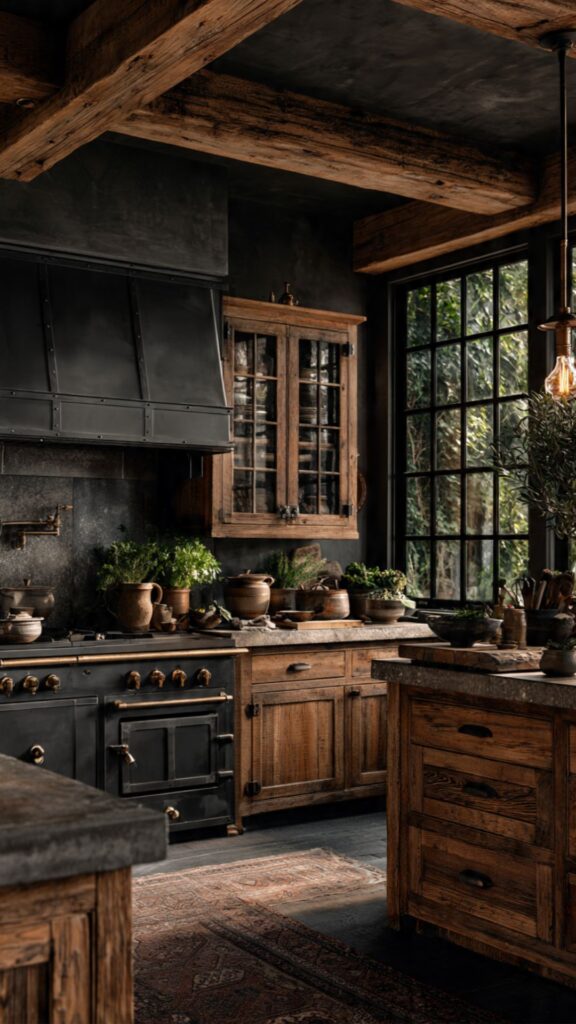
Wall color in a dark rustic kitchen does more than cover surface area — it controls the entire emotional atmosphere of the room. The key is choosing shades that feel rich and intentional rather than heavy and oppressive. Warm-based darks like deep terracotta, smoked plum, or dark olive green read very differently than cool-based darks like slate grey or navy.
Benjamin Moore’s “Black Pepper,” Farrow & Ball’s “Railings,” and Sherwin-Williams’ “Iron Ore” are three of the most widely praised dark kitchen wall colors among interior designers for good reason. They all have enough warmth to prevent the space from feeling cold, and they shift beautifully under different lighting conditions appearing almost green in daylight and deeply charcoal under warm incandescent light.
In a small dark rustic kitchen, one common mistake is painting all four walls the same deep shade. Instead, consider using the darkest tone on a single feature wall typically the one behind the range or the one visible from the main entrance and choosing a slightly lighter tone for the remaining walls. This creates depth and prevents the space from collapsing visually.
Textured plaster walls are an advanced technique that elevates the rustic feel dramatically. Venetian plaster, limewash finishes, or even basic trowel-textured drywall compound adds a dimensional, hand-crafted quality to the walls that flat paint simply cannot achieve. When painted in a dark tone, the texture catches light and shadow in constantly shifting ways throughout the day.
Stop and Read This: Modern Kitchen Design Ideas That Create a Stunning Contrast with Your Dark Rustic Kitchen
Layer Lighting Strategically:
For Warmth and Function
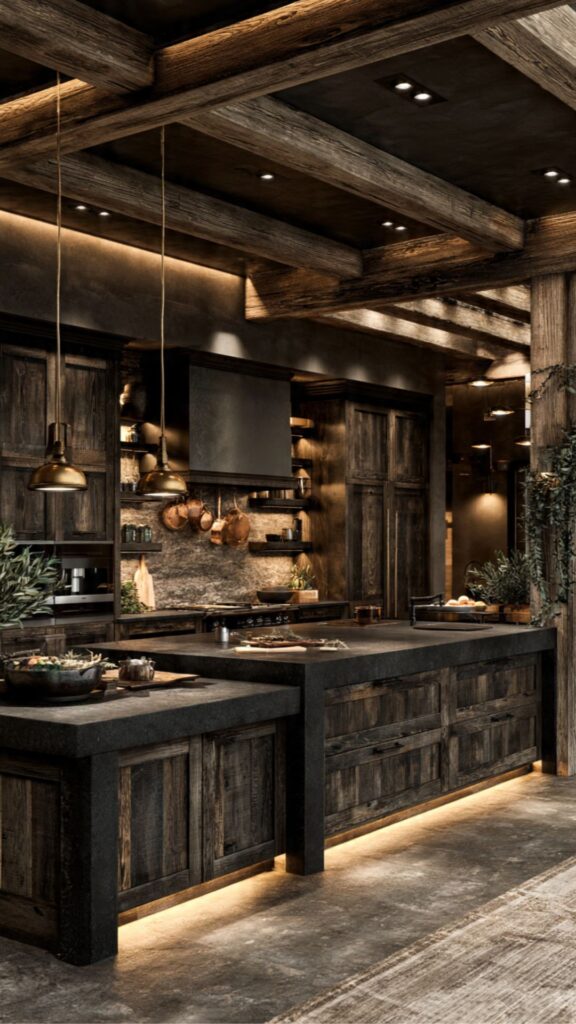
Lighting is the invisible architecture of any kitchen, and in a dark rustic kitchen, it becomes even more critical. Without thoughtful lighting design, a dark kitchen can feel gloomy. With the right layering ambient, task, and accent lighting working in harmony it feels dramatic, cozy, and deeply atmospheric.
Start with warm-toned bulbs. Always choose bulbs with a color temperature between 2700K and 3000K in a dark rustic kitchen. Cooler daylight bulbs (5000K+) will make dark walls and cabinets look grey and flat. Warm bulbs, by contrast, bring out the richness in wood tones, deepen the look of dark paint, and create that candlelit glow that makes this aesthetic so inviting.
For pendant lighting over an island or dining area, wrought iron, aged brass, or matte black fixtures with Edison-style filament bulbs are the gold standard for this style. They reference industrial history while complementing the rustic warmth of the rest of the space. Cage pendants, lantern-style fixtures, and oversized dome pendants all work exceptionally well.
Under-cabinet lighting is a practical necessity in dark kitchens and doubles as ambient mood lighting. LED strip lights in warm white, tucked beneath upper cabinets, illuminate countertops for safe food prep while casting a beautiful glow that reflects off stone or tile backsplashes. This single addition can completely transform the kitchen’s evening atmosphere without any structural changes.
Select Stone or Concrete Countertops:
For Maximum Impact
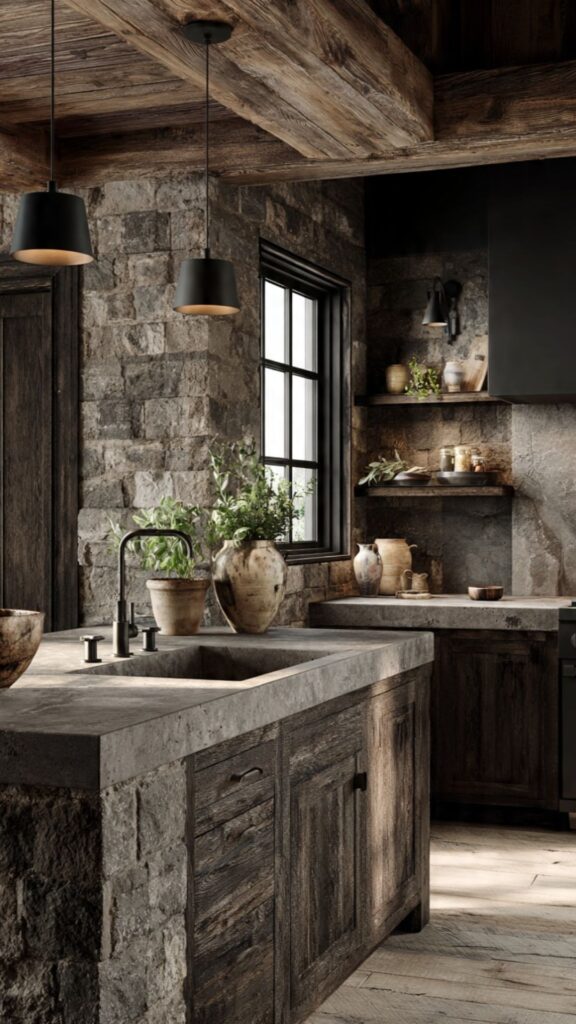
Countertops in a dark rustic kitchen need to do double duty they must be hardworking surfaces that handle daily kitchen tasks, and they must contribute to the design story of the space. Stone and concrete are the two materials that do this most convincingly.
Leathered granite is one of the most underappreciated countertop finishes in the design world. Unlike polished granite, which reflects light aggressively, leathered granite has a low-sheen, tactile surface that feels almost like touching a riverbed. In dark tones like Black Galaxy or Ubatuba, it creates a countertop that looks like it has always been part of an old stone farmhouse.
Soapstone is another excellent choice for dark rustic kitchens. It’s naturally dark ranging from grey-green to deep charcoal and develops a beautiful patina over time. Unlike marble, soapstone is non-porous and highly resistant to stains from oils and acids. Historically, it was used in old farmhouse kitchens precisely because of these properties, making it one of the most authentically rustic countertop choices available.
Concrete countertops offer a more contemporary interpretation of the rustic industrial look. They can be cast in any shape, tinted in custom colors, and embedded with aggregate for texture. They require sealing and occasional maintenance but reward owners with a surface that is genuinely unique no two concrete countertops look exactly alike, which fits perfectly with the hand-crafted philosophy of rustic design.
Install a Statement Range Hood as a Focal Point:
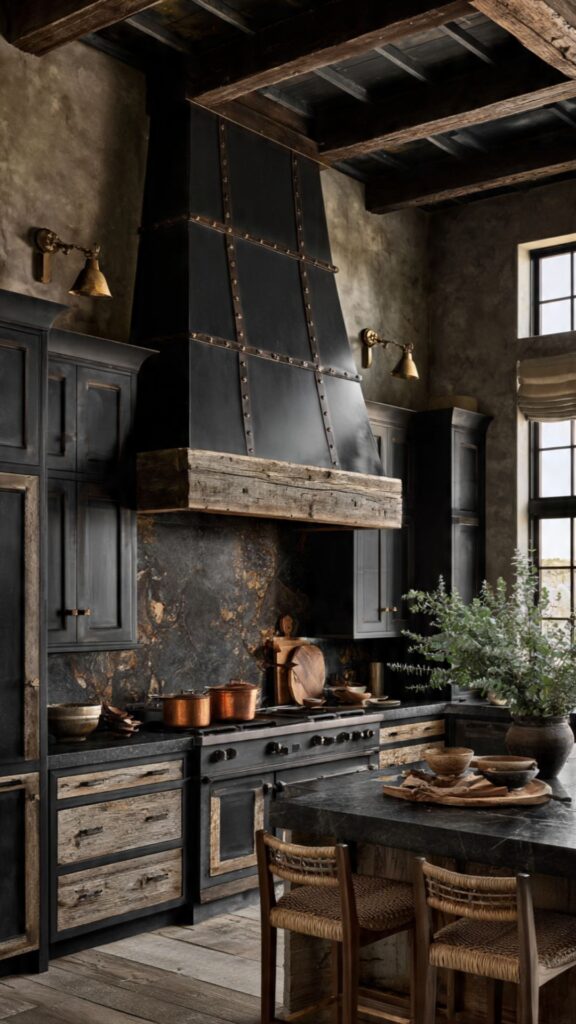
In dark rustic kitchen design, the range hood is one of the most powerful and most overlooked opportunities to make a bold design statement. A thoughtfully designed range hood above the cooktop anchors the kitchen visually and serves as a piece of architectural sculpture rather than just a functional appliance.
Shiplap or reclaimed wood range hoods are a signature element of the farmhouse-rustic style. They soften the industrial nature of the cooking zone and introduce natural material in a space that can otherwise feel heavy with metal and stone. When painted the same dark tone as the cabinetry or left natural against dark surroundings, they create beautiful contrast.
Stone or plaster range hoods reference the architectural heritage of Old World farmhouses, Mediterranean villas, and English country homes. A plaster hood in a textured, hand-troweled finish painted in a warm white or soft cream can act as the one light element in an otherwise dark kitchen, creating a focal point that draws the eye upward and makes the ceiling feel higher.
For those who prefer a more industrial-rustic approach, a raw steel or blackened metal range hood makes a striking statement. Powder-coated matte black hoods have a strong, modern edge that still feels at home in a rustic kitchen when surrounded by warm wood and stone. Many custom fabricators offer these at prices comparable to standard decorative hoods.
Embrace Open Shelving With Curated, Intentional Styling:
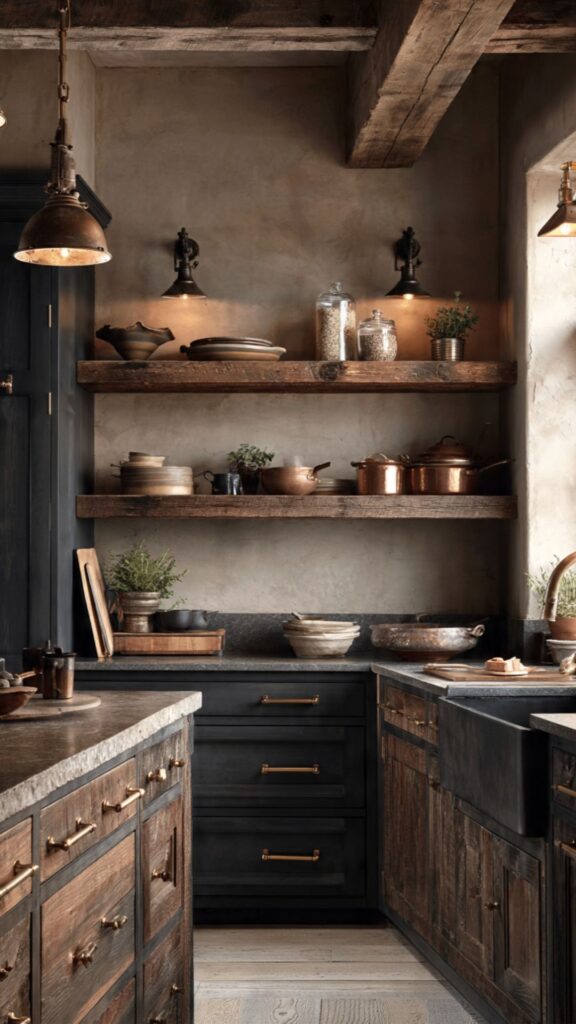
Open shelving in a dark rustic kitchen serves a dual purpose: it lightens the visual weight of heavy dark cabinetry, and it creates an opportunity to display objects that reinforce the rustic narrative. However, open shelving only works when it is styled with intention cluttered or disorganized shelves undermine the entire aesthetic.
The best materials for open shelving in this style are thick solid wood slabs (walnut, oak, or pine), raw-edge boards with live edges left intact, or reclaimed timber cut to shelf depth. Metal brackets in matte black or aged iron complement the rustic-industrial intersection beautifully. Avoid thin, standard-depth shelves they look inadequate against the visual weight of dark cabinetry.
When styling open shelves in a dark rustic kitchen, think in clusters of three a principle borrowed from classic interior design. Group items by texture and tone: a stack of linen-covered cookbooks, a ceramic pitcher, and a bundle of dried herbs. Or a cast iron skillet, a wooden cutting board, and a cluster of mason jars filled with dry goods. Each cluster should tell a small visual story.
One insight most design guides miss: lighting your open shelves dramatically changes how they read in the overall space. A small, warm-toned LED puck light tucked at the back of each shelf illuminates items from behind, creates depth, and turns your everyday kitchen objects into something that feels curated and intentional like a still-life photograph.
Incorporate Exposed Brick or Stone:
For Textural Depth
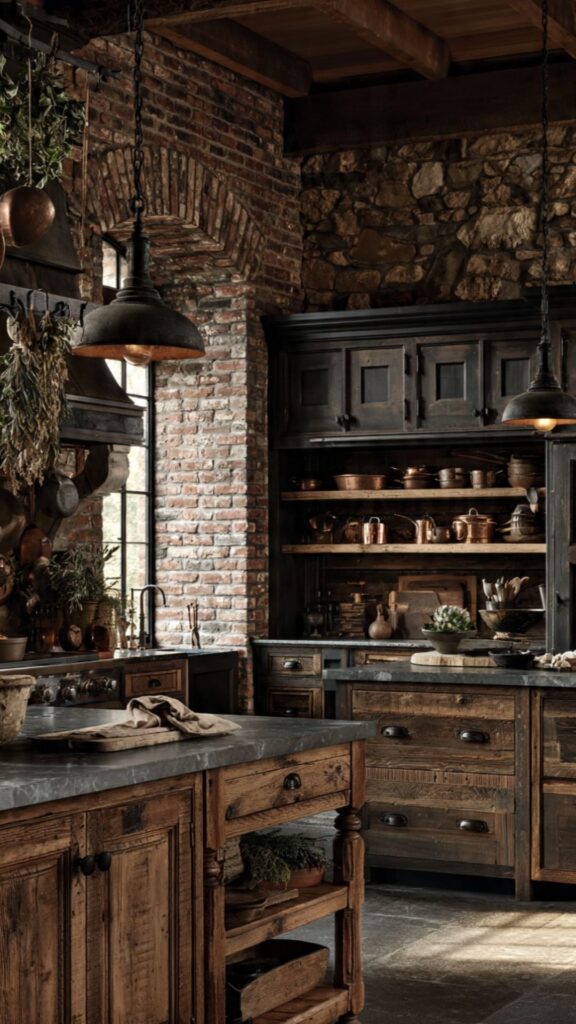
Exposed brick and raw stone are among the most beloved textures in rustic kitchen design. They reference centuries of architectural history from Italian farmhouses to English country manors and bring an irreplaceable sense of age and permanence to a space. In a dark rustic kitchen, they also serve as a counterpoint to the smooth surfaces of cabinetry and countertops.
If your home has original brick walls that have been covered with drywall, this is the moment to consider exposing them. The process involves removing drywall and cleaning the original masonry a manageable DIY project in many cases. Original brick almost always has more character than manufactured brick veneer because it carries real age, imperfection, and history.
For homes without existing brick, thin brick veneer panels offer a convincing alternative that can be installed over standard drywall with mortar or construction adhesive. They’re available in a wide range of tones — from warm red-orange to grey and charcoal and can be grouted in dark mortar to give a more aged, cohesive look.
Field stone, river rock, or slate tile are powerful alternatives for homeowners who prefer a more rugged, natural texture. A floor-to-ceiling stone accent wall behind a farmhouse range creates the impression of a fireplace kitchen one of the most powerful visual references in the rustic aesthetic. Even a partial stone treatment on a kitchen island base or below a breakfast bar dramatically elevates the tactile richness of the space.
Also Check: Black Kitchen Cabinet Ideas That Take Your Dark Rustic Kitchen to a Whole New Level
Design a Dark Rustic Kitchen Island That Works Hard:
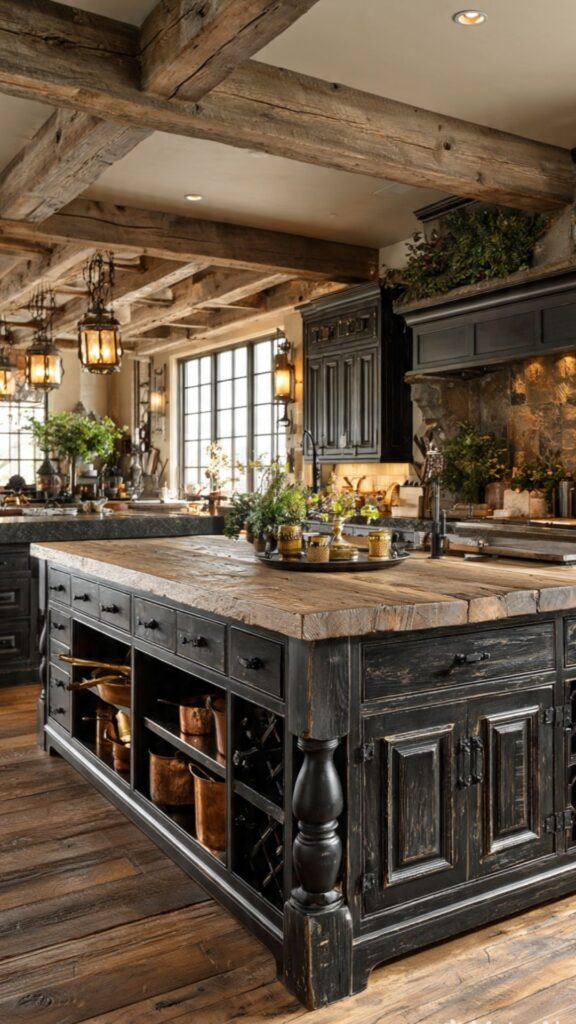
The kitchen island is often the most functionally complex and visually prominent element in the entire kitchen. In a dark rustic kitchen, it has the opportunity to serve as a statement piece a furniture-like object with its own character rather than a simple extension of the cabinetry run.
One of the most effective design moves is to finish the island in a different color or material than the perimeter cabinets. If your main cabinets are deep charcoal, consider an island in rich espresso brown, deep forest green, or even a warm cream. This contrast creates visual interest and makes the island feel like a piece of furniture that was added over time a hallmark of authentic rustic interiors.
A butcher-block or live-edge wood countertop on the island pairs exceptionally well with stone countertops on the perimeter. The warmth of the wood introduces a necessary softness that prevents the kitchen from feeling monolithic. Functionally, a wood surface is ideal for food prep particularly for bread-baking, pastry-making, and chopping and adds to the working-kitchen character of the rustic aesthetic.
Consider adding lower shelves or drawers on the island’s non-seating side for accessible storage of heavy cast iron cookware, large mixing bowls, or baking equipment. Wicker baskets slid into open lower shelves add texture and practicality simultaneously. For the seating side, counter-height stools in leather or rush-woven seats continue the tactile, natural material story of the space.
Integrate a Farmhouse Sink as a Functional Anchor:
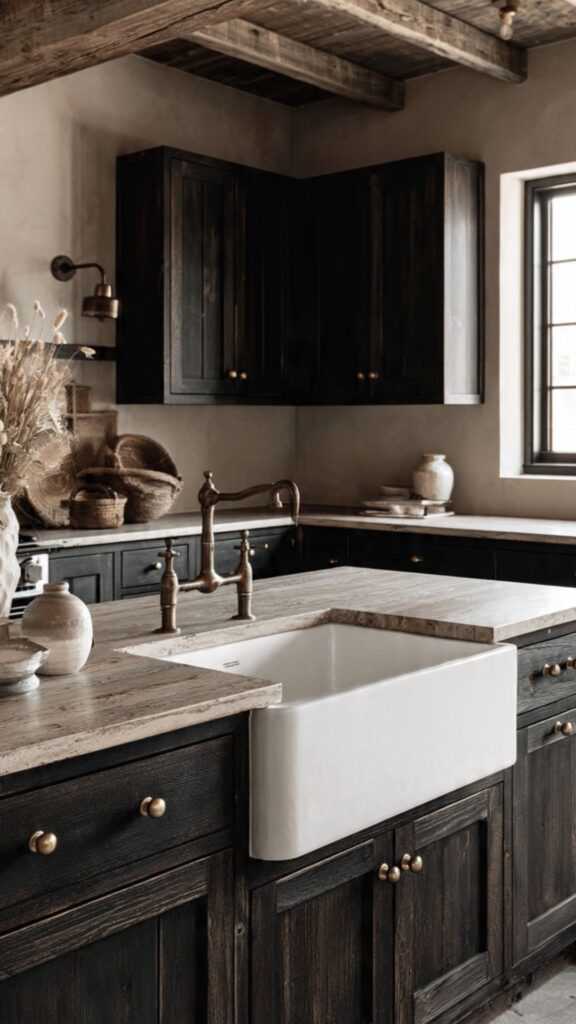
The farmhouse sink also called an apron-front sink is one of the most recognizable signatures of rustic kitchen design. Its origins are practical: the deep, wide basin allowed for washing large pots and laundry before indoor plumbing brought pressurized water to the countertop. Today, it endures because it is genuinely better for kitchen tasks and visually anchors the sink wall with undeniable presence.
In a dark rustic kitchen, a fireclay farmhouse sink in matte white or off-white creates one of the most effective light-to-dark contrasts in the entire space. The apron front, typically 8–10 inches tall, sits proud of the cabinetry and becomes an architectural detail in its own right. Over time, fireclay develops a beautiful depth its glaze is applied at kiln temperatures that make it uniquely resistant to chipping and staining.
Soapstone farmhouse sinks are an extraordinary choice for homeowners who want to fully commit to the dark palette. A deep charcoal soapstone apron sink, paired with unlacquered brass faucets, creates a moody, sophisticated focal point that feels rooted in 19th-century kitchen design while remaining completely contemporary. Because soapstone is naturally non-porous, it requires no sealing and is virtually impervious to heat.
Faucet selection for a rustic farmhouse sink should lean toward bridge faucets two-handle styles that reference old plumbing aesthetics in aged brass, oil-rubbed bronze, or matte black. Bridge faucets are having a remarkable design resurgence precisely because they have a sculptural quality that single-handle pull-down faucets lack. Pair with a matching soap dispenser and pot filler for a cohesive, period-appropriate look.
Use Dark Tile Backsplashes to Unify the Design:
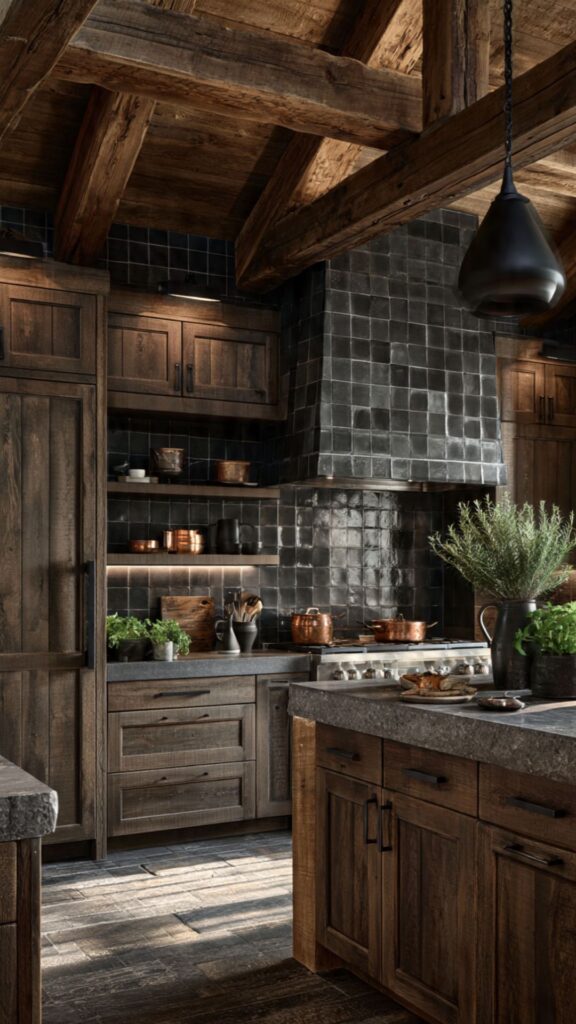
The backsplash is the most visible vertical surface in most kitchens, and in a dark rustic kitchen, it plays a critical role in either elevating or undermining the entire design. The best backsplash choices for this style have texture, character, and a sense of handcraft they are never flat, uniform, or generic.
Handmade ceramic subway tiles in deep charcoal, forest green, or midnight blue are enormously popular for this style. Unlike machine-made subway tiles, handmade ceramic has slight variations in color and surface some tiles will be slightly lighter or darker than their neighbors, and the glaze will pool at edges and corners. This variation is what gives the backsplash a sense of age and authenticity.
Zellige tiles handmade Moroccan clay tiles with a distinctive reflective glaze have become a signature of the elevated rustic kitchen. Each tile is entirely unique, with irregular edges and color variation that catches light in constantly shifting ways. In dark jewel tones like deep teal, ink black, or dark olive, they create a backsplash that feels genuinely extraordinary.
Sawn slate tiles or natural stone mosaics are excellent choices for homeowners who want a more geological, textural quality. The surface irregularity of natural stone particularly when split rather than sawn creates a backsplash that looks like it was assembled from rock pulled directly from a riverbed or quarry wall. Seal thoroughly and consistently to prevent staining from cooking splatter.
Bring in Natural Elements: Plants, Copper, and Ceramics:
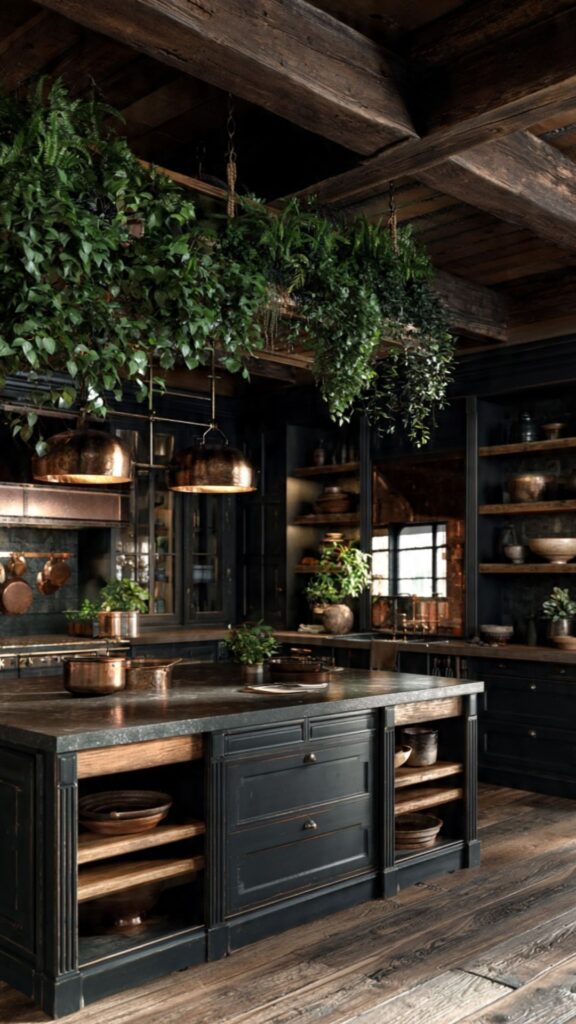
One of the most important principles in dark rustic kitchen design and one that is frequently overlooked in design guides is the role of living and organic elements in preventing the space from feeling static or oppressive. Dark palettes absorb light, and without carefully placed organic elements, they can start to feel heavy and lifeless.
Plants are the most immediate and impactful solution. In a dark rustic kitchen, the vivid green of fresh herbs or trailing plants creates a powerful visual contrast that brings the space to life. A windowsill lined with terracotta pots of rosemary, thyme, and sage is not just beautiful it’s a sensory experience that reinforces the cooking-focused identity of a rustic kitchen. For lower-light areas, pothos, devil’s ivy, or cast iron plants thrive admirably.
Copper is one of the most strategically effective metals in a dark rustic kitchen. A hanging rack of copper cookware above the island or range, copper measuring cups hanging from open shelving, or even a copper farmhouse sink all of these elements introduce warm, luminous tones that glow against dark backgrounds. Copper is also a deeply historical kitchen material, used in professional kitchens for centuries, which makes it feel perfectly at home in the rustic aesthetic.
Handmade ceramics bowls, pitchers, mugs, and crocks in earth tones are the finishing touches that transform a designed space into a lived-in one. Display them openly on shelves and countertops. Choose pieces in warm creams, smoky blues, terracotta, and ash grey. Avoid anything overly uniform or factory-finished the slight imperfection of hand-thrown pottery is exactly what the rustic kitchen aesthetic calls for.
Design Dark Rustic Kitchen Flooring That Grounds the Space:
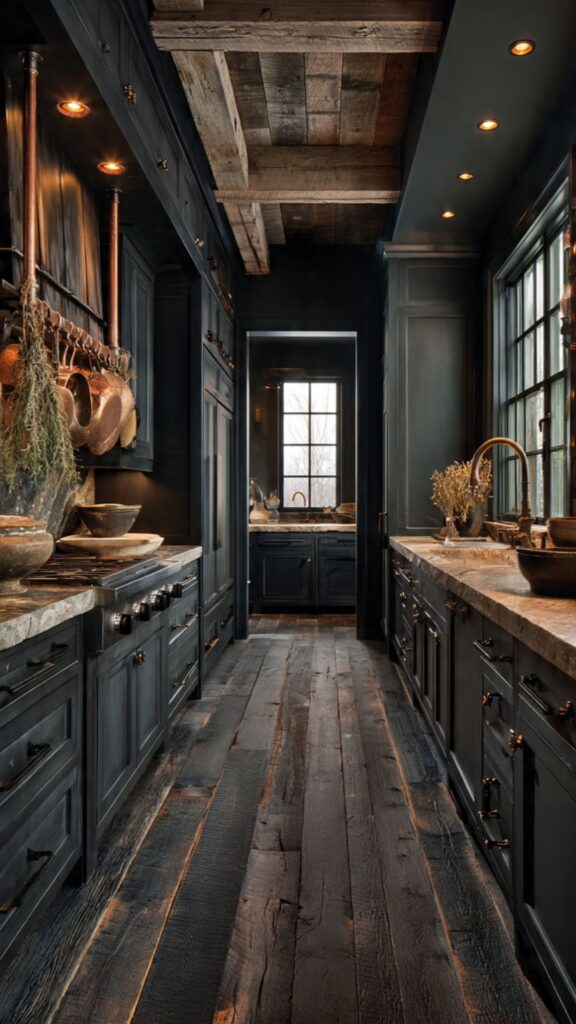
Flooring in a dark rustic kitchen must achieve a difficult balance: it needs to be durable enough for the most heavily used room in the house, visually consistent with the rustic aesthetic, and distinct enough from the cabinetry to prevent the space from collapsing into a single undifferentiated dark mass.
Wide-plank hardwood flooring is the gold standard for rustic kitchen floors. Planks 5 inches or wider have a more historic, artisanal quality than narrow-strip flooring, which looks contemporary and commercial. Species like white oak, hickory, and heart pine are traditional choices all of them have pronounced grain patterns and natural color variation that reinforce the rustic character of the space.
Distressed or hand-scraped hardwood floors add another layer of authenticity. The physical texture of the wood surface achieved by running a steel brush along the grain, or by literally scraping the surface with a drawknife mimics the natural wear patterns of floors that have been walked on for decades. In dark rustic kitchen spaces, this texture catches raking light beautifully and looks extraordinary in photographs.
For a more durable and water-resistant option, large-format porcelain tiles in wood-look or stone-look finishes have advanced dramatically in recent years. The best options are nearly indistinguishable from real stone or wood at a casual glance, and they offer practical advantages in a kitchen environment: no warping, no refinishing, and complete resistance to moisture. Choose tiles with a matte, low-sheen finish in warm grey, slate, or dark terracotta tones.
Must See: Farmhouse Kitchen Ideas That Perfectly Complement Your Bold Dark Rustic Kitchen Style
Style the Dark Rustic Kitchen With Textiles and Finishing Details:
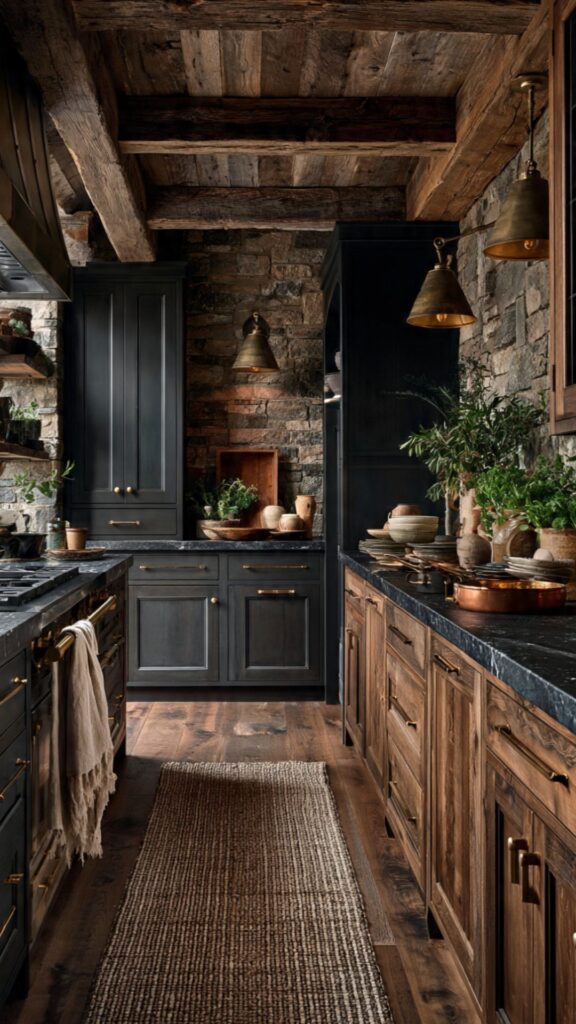
The final layer in any well-designed interior is the one most people rush through or ignore entirely: textiles, accessories, and finishing details. In a dark rustic kitchen, these elements are the difference between a space that looks like a magazine photograph and one that feels like a real, warm, lived-in home.
Linen and cotton textiles are the natural fabric choices for rustic kitchen styling. A set of loosely woven linen dish towels hung from oven handles, a heavy cotton runner on the kitchen floor in front of the sink, or Roman shades in natural undyed linen over the kitchen window all of these elements introduce softness, tactility, and warmth that hard surfaces cannot provide.
Choose colors in warm neutrals: oatmeal, natural linen, soft sage, and warm cream all complement dark rustic kitchen palettes without fighting them. Wicker, rattan, and natural fiber baskets deserve a dedicated place in the dark rustic kitchen. Use them for fruit storage on countertops, as liners in open lower shelves, for bread storage, or as catchalls for the constantly accumulating small items of daily kitchen life.
Their warmth, texture, and inherent rusticity make them more effective than any decorative object purchased for purely aesthetic purposes. Don’t underestimate the power of scent and experience in completing the dark rustic kitchen atmosphere.
A beeswax candle on the island, a bundle of dried lavender hanging from an open beam, or a cast iron pot of mulled cider simmering on the range these sensory details are as much a part of the design as the hardware and the paint. The most successful rustic kitchens are those that appeal to all five senses, not just vision.
Conclusion
A dark rustic kitchen is one of the most rewarding interior design projects you can undertake it’s a space that grows richer, more characterful, and more personal with every year that passes. The key is building it layer by layer: starting with bold foundational choices like dark cabinetry and reclaimed wood, then refining with thoughtful hardware, lighting, and organic finishing touches.
Whether you’re planning a full renovation or a series of targeted upgrades, the ideas in this guide give you a proven, expert-level roadmap to follow. Start with one element, see how it transforms your space, and let the kitchen evolve from there.

Team TrandyVilla is the passionate home decor team behind Trandy Villa, where style meets comfort in everyday living. The team loves transforming simple spaces into beautiful, functional homes through smart ideas, budget-friendly hacks, and modern design trends. Their content focuses on helping readers create homes that feel both stylish and personal without spending too much.