
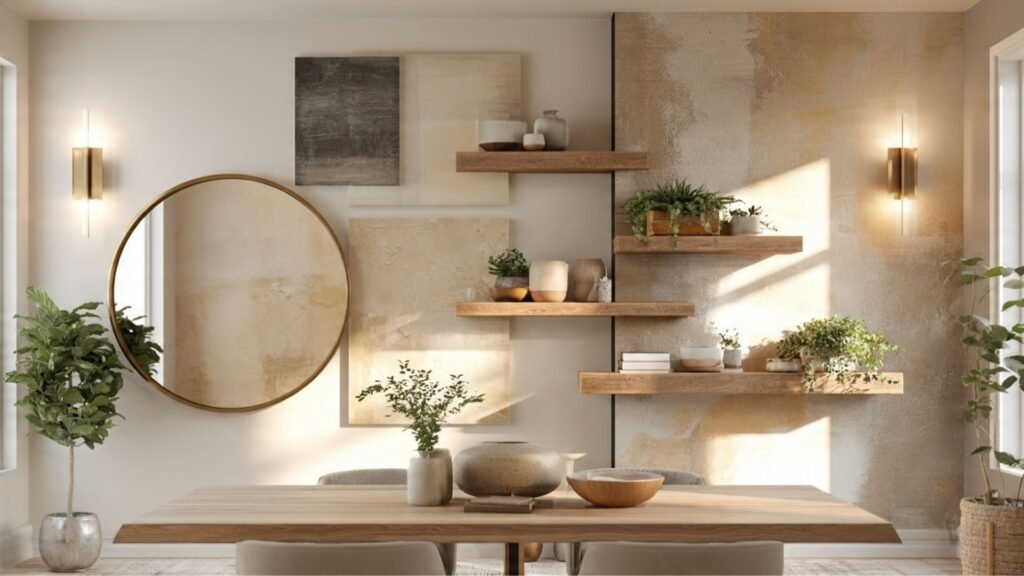
Dining room wall decor ideas include artwork, mirrors, shelves, and textured designs used to improve dining spaces. They add personality, create visual balance, and support interior style. These ideas also enhance comfort, warmth, and the overall dining atmosphere inside modern homes today
Dining Room Wall Decor transforms empty walls into stylish focal points that improve comfort and dining experience. It adds warmth, texture, and personality while supporting modern interior design goals. Simple decorative changes create a welcoming atmosphere for family meals and social gatherings every day
Dining room wall decor ideas include gallery walls, statement mirrors, floating shelves, and accent wallpaper. These styles improve room appearance and create a more inviting setting. They match different home themes, support creativity, and help dining spaces feel elegant, balanced, and visually appealing today
Gallery Wall Arrangement:
Curated Stories on Your Walls
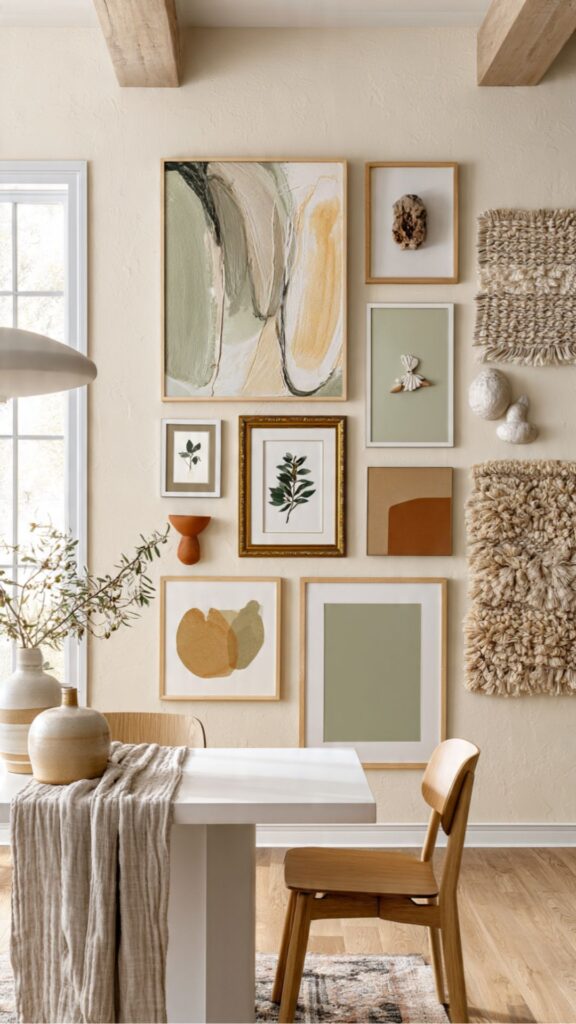
A gallery wall is one of the most versatile and personal forms of dining room wall decor you can create. Unlike a single piece of art, a gallery wall lets you layer multiple frames, photos, prints, and objects into a cohesive visual story that grows with you over time. The key is intention mixing frame sizes, textures, and subject matters while maintaining a unifying element like color palette, matting style, or frame finish.
For dining rooms specifically, consider curating around a theme that connects to shared experiences: travel photography, botanical prints, vintage food illustrations, or a collection of black-and-white family portraits. A well-executed gallery wall becomes a conversation starter at every dinner. For example, imagine a warm-toned gallery wall above a mid-century sideboard, combining terracotta abstract prints with sepia travel photographs the effect is layered, warm, and inviting without being cluttered.
Design Insight: Most galleries fail because frames are too small for the wall. As a rule, your gallery arrangement should occupy at least 60–75% of the wall’s width. Lay everything on the floor first to plan the arrangement before committing a single nail.
In 2026, designers are moving away from the perfectly symmetrical “Instagram gallery” toward more organic, salon-style arrangements with varied spacing and unexpected mixed media ceramic wall hangings between framed prints, small sculptural elements, or even a mounted vintage clock. This approach gives dining rooms a collected-over-time quality that feels genuinely personal rather than staged. The future of gallery walls is less grid, more story.
Oversized Statement Art:
One Piece, Maximum Impact
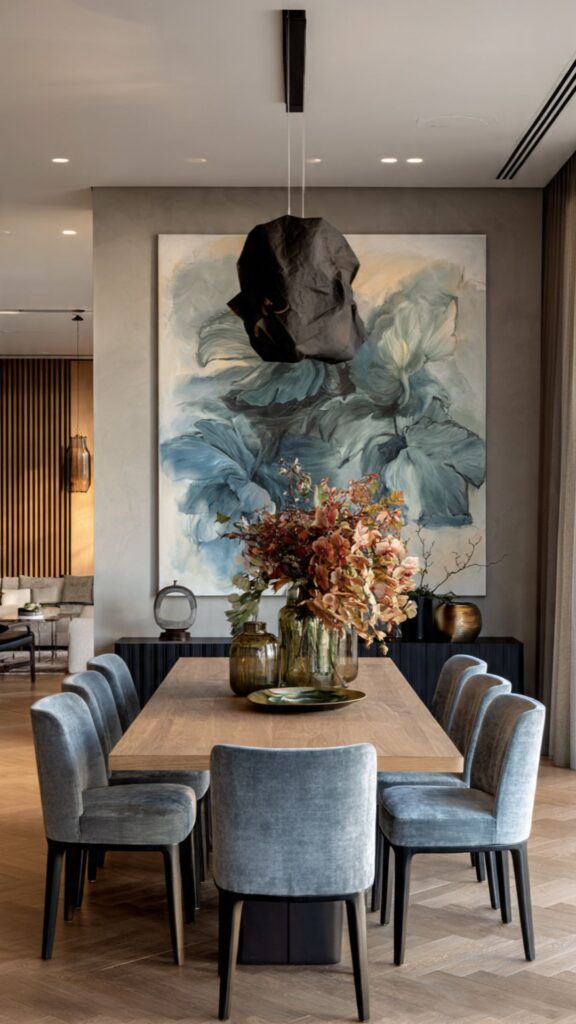
Sometimes the boldest choice is the simplest one. A single oversized artwork whether an abstract canvas, a large-format photograph, or a hand-painted mural panel can anchor a dining room with dramatic authority. The scale creates an immediate focal point that pulls the eye and defines the room’s personality without visual clutter. This approach works especially well in modern, minimalist, or Scandinavian-influenced dining rooms where negative space is celebrated.
When selecting oversized statement art, consider the dining table’s shape and the room’s undertones. Warm-toned rooms benefit from abstract art with earthy ochres, terracottas, and sage greens. Cool-toned or all-white dining rooms can handle bolder, more graphic pieces in navy, charcoal, or blush. Scale matters critically here: for a standard 10-foot dining room wall, an artwork that is at least 40–60 inches wide is usually the minimum to look intentional rather than lost.
Expert Tip: Hang statement art so its vertical center sits approximately 57–60 inches from the floor that is the average human eye level and the standard gallery hanging height. Dining rooms are an exception; if you have a sideboard or buffet below, center the art over the furniture piece, not the room.
One trend gaining real traction in contemporary dining room design is the use of artist commissions for oversized dining room walls. Platforms like Saatchi Art, Artfinder, and even Etsy now offer affordable custom commissions at large scale. Commissioning art specifically for your dining room’s dimensions and color story is no longer reserved for luxury interiors and it creates a piece with meaning that no mass-produced print can replicate.
Hidden Gem: Dining Room Decor Ideas That Perfectly Complete the Look of Your Beautiful Dining Room Wall Decor
Decorative Mirrors:
Light, Depth, and Elegance Combined
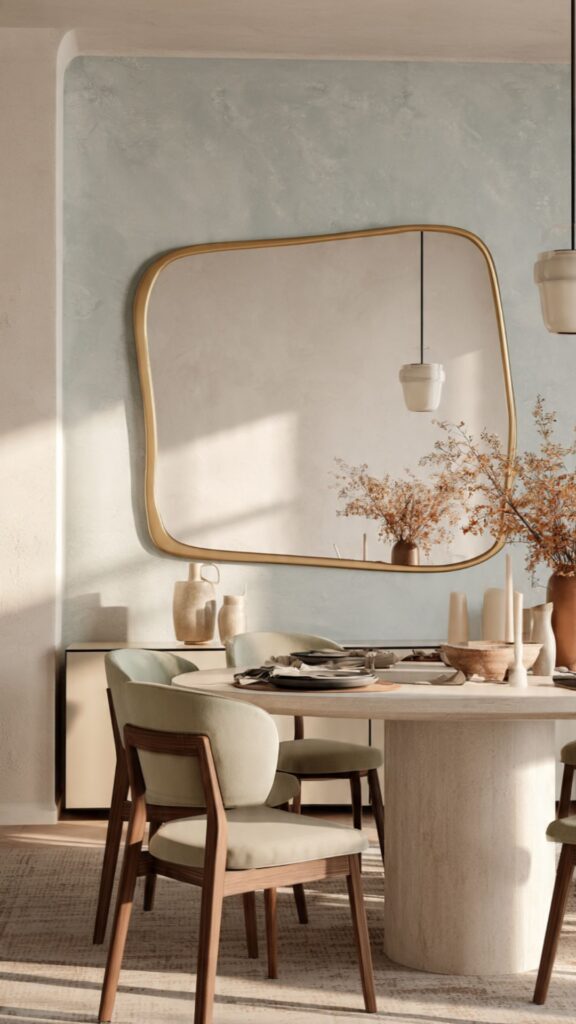
Mirrors are one of the smartest investments in dining room wall decor because they do two jobs simultaneously: they function as a decorative element and they physically alter how the room feels. A well-placed mirror reflects natural light, doubles the perceived depth of a space, and makes smaller dining rooms feel significantly more expansive. In darker dining rooms with limited windows, mirrors can almost simulate a window by bouncing ambient light across the space.
The frame style of your dining room mirror should harmonize with the room’s overall design language. A sunburst brass mirror brings warmth and a vintage Hollywood Regency flair to traditional dining rooms. An arch-shaped rattan or wood mirror adds organic texture to bohemian or coastal spaces.
A frameless rectangular mirror with clean beveled edges suits ultra-modern dining rooms beautifully. Consider leaning a large floor mirror against the dining room wall for a casual, editorial effect that is particularly popular in open-plan living and dining areas.
Unique Insight: Many designers place mirrors to reflect a specific focal point a stunning chandelier, a garden view through a window, or a beautiful floral centerpiece. This intentional reflection doubles the visual impact of your best design elements rather than just reflecting the room randomly.
For a more layered approach, groupings of multiple mirrors in varying shapes a round, an oval, and an octagonal arranged as a cluster work like a gallery wall but with the added benefit of light amplification. This trend is particularly effective in dining rooms with statement lighting, where the mirrors catch and scatter candlelight or pendant glow during evening dinner parties, creating an almost cinematic warmth.
Accent Wallpaper or Murals:
Transformative Pattern and Depth
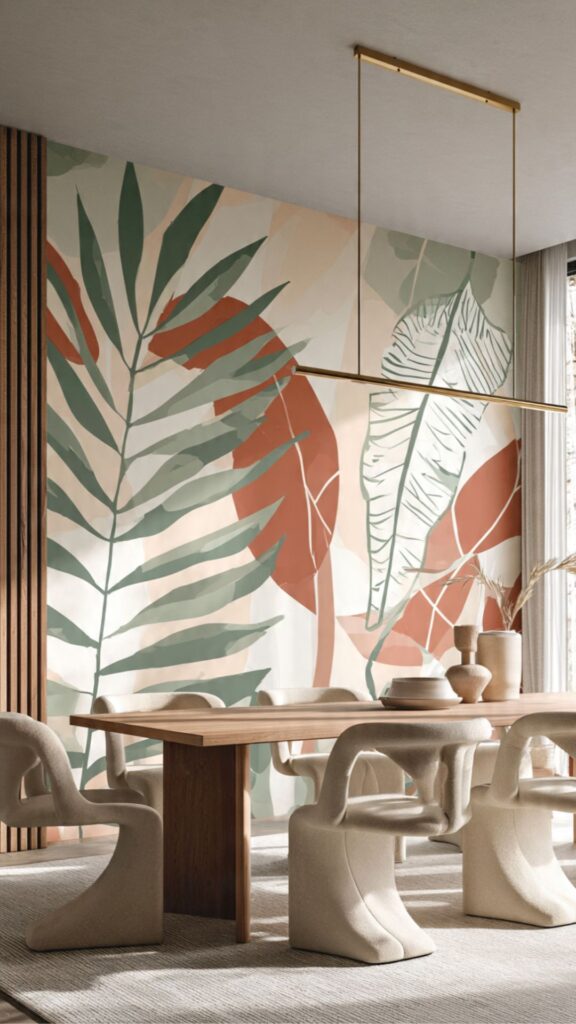
Wallpaper has made one of the most triumphant comebacks in interior design, and dining rooms are where it shines most brilliantly. Unlike living rooms that need to feel restful or bedrooms that need calm, dining rooms thrive with pattern, richness, and drama. An accent wall of bold botanical wallpaper, geometric pattern, or a hand-painted chinoiserie mural creates an immersive backdrop that makes every meal feel like an occasion.
The most impactful approach for dining room wall decor is papering a single accent wall typically the one your dining table faces or the one with the most visual significance in the room. This creates maximum drama without overwhelming the space.
Popular choices in 2026 include maximalist floral patterns in jewel tones, vintage-style damasks in earthy neutrals, abstract watercolor murals, and nature-inspired designs featuring trailing leaves or moody landscapes. Brands like Graham & Brown, Rifle Paper Co., and Brewster Home Fashions offer peel-and-stick options that are renter-friendly.
Trend to Watch: Panoramic photo murals large-scale photographic prints of forests, mountains, cityscapes, or abstract textures applied as a full accent wall are increasingly popular in dining rooms because they create an immersive sense of place and change the entire emotional register of a meal.
Murals painted directly on the plaster are the most luxurious and bespoke option. Many independent artists now offer dining room mural services at more accessible price points than you might expect. A mural tailored to your dining room’s exact dimensions and color scheme becomes a true piece of functional art one that quite literally wraps your dining experience in creativity. For longevity, commission murals in water-resistant paints or have them sealed with a matte varnish for easy cleaning.
Wood Paneling & Shiplap:
Warmth Through Texture
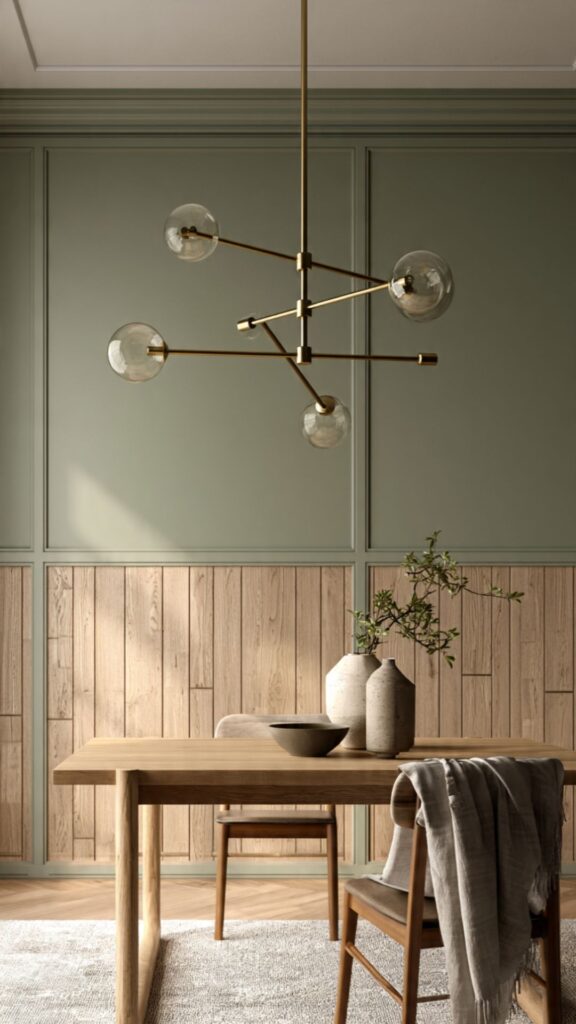
Textured wall treatments have become one of the defining trends in contemporary dining room design, and wood paneling sits at the top of that list. Far beyond the dated dark paneling of the 1970s, today’s wood wall treatments range from whitewashed shiplap and limewashed pine to sleek walnut slat panels and geometric wainscoting. These treatments add genuine architectural interest and warmth to dining rooms that paint alone simply cannot achieve.
Shiplap horizontal boards with a small reveal between each plank creates a relaxed, farmhouse-inspired texture that works beautifully with neutral dining rooms. When painted the same shade as the walls (a technique called “tonal layering”), shiplap adds dimension without visual noise.
For a more refined, contemporary look, vertical slat panels in a warm wood tone against a dark-painted wall create a dramatic, almost club-like atmosphere that is extremely popular in upscale restaurant design being adapted for residential dining rooms.
Designer Secret: Applying wood paneling to just the lower half of the dining room wall using traditional wainscoting proportions of about one-third of the wall height with a contrasting paint color above creates an instant sense of architectural sophistication. This two-tone treatment makes ceilings feel taller and rooms feel more considered.
For renters or those who prefer a non-permanent approach, peel-and-stick wood panel systems have improved dramatically in quality and realism. Companies like Stikwood and WALLTERNATIVES offer real wood veneer in peel-and-stick formats that install in hours and can be removed without wall damage.
For dining rooms with existing art or mirrors, wood panel accent walls create an instant backdrop that makes every piece hung against them feel more elevated and purposeful.
Floating Shelves:
Functional Beauty at Eye Level
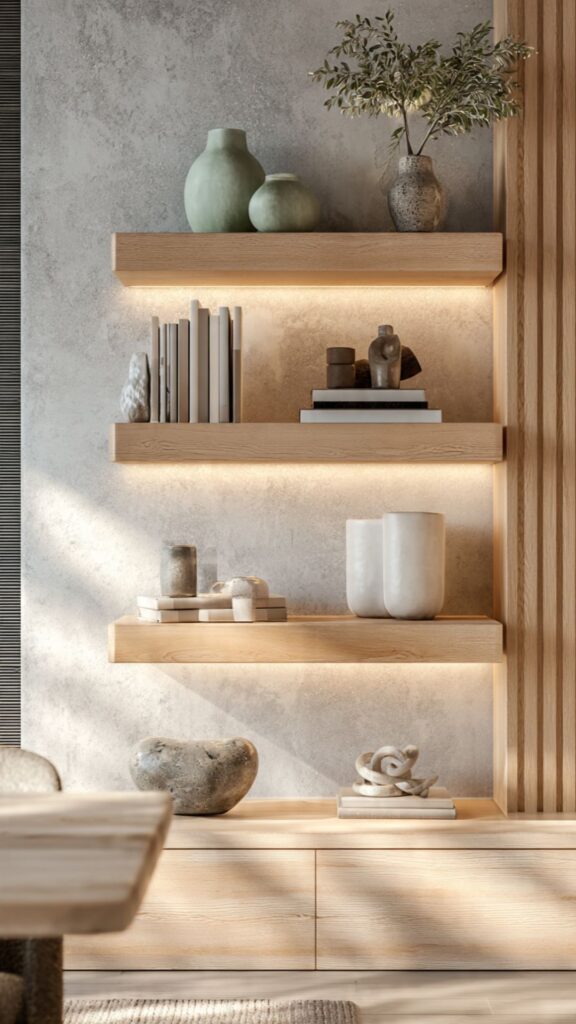
Floating shelves in the dining room represent the perfect marriage of form and function in wall decor. Unlike purely decorative wall art, shelves actively participate in the room by displaying objects that can be changed seasonally, curated to reflect current interests, and even serve practical purposes. In open-plan homes where the dining area flows into the kitchen, floating shelves provide visual continuity between the spaces while adding warmth and character to otherwise plain dining room walls.
The most successful dining room shelf arrangements balance objects at three scales: one or two large anchor pieces (a vase, a plant, a sculptural object), medium decorative elements (framed photos, candles, small artwork), and small detail items (a tiny figurine, a crystal, a stack of books).
This three-tier principle creates visual rhythm without clutter. Materials matter enormously thick oak shelves with invisible brackets look architecturally intentional, while narrow, delicate shelves in white can disappear into the wall and let the objects take center stage.
Practical Insight: Dining room shelves are prone to grease and moisture if positioned near a kitchen. Seal wooden shelves with a wipe-clean finish, and avoid displaying items that are difficult to clean near cooking zones. Switching to ceramic, metal, or glass objects on dining-adjacent shelves keeps maintenance minimal.
One forward-thinking approach gaining traction is using dining room shelves to display a curated collection of dinnerware, serving pieces, or vintage cookware as decorative objects. A row of antique blue-and-white plates, a collection of handmade ceramic bowls, or a lineup of colorful vintage pitchers turns functional objects into wall decor that tells a story.
This approach is particularly effective in farmhouse, eclectic, and cottagecore dining rooms where everyday objects are celebrated rather than hidden away in cabinets.
This is Exactly What You Need: Picture Wall Ideas That Transform Your Dining Room Wall into a Stunning Visual Masterpiece
Woven Tapestries & Textile Wall Art:
Softness and Soul
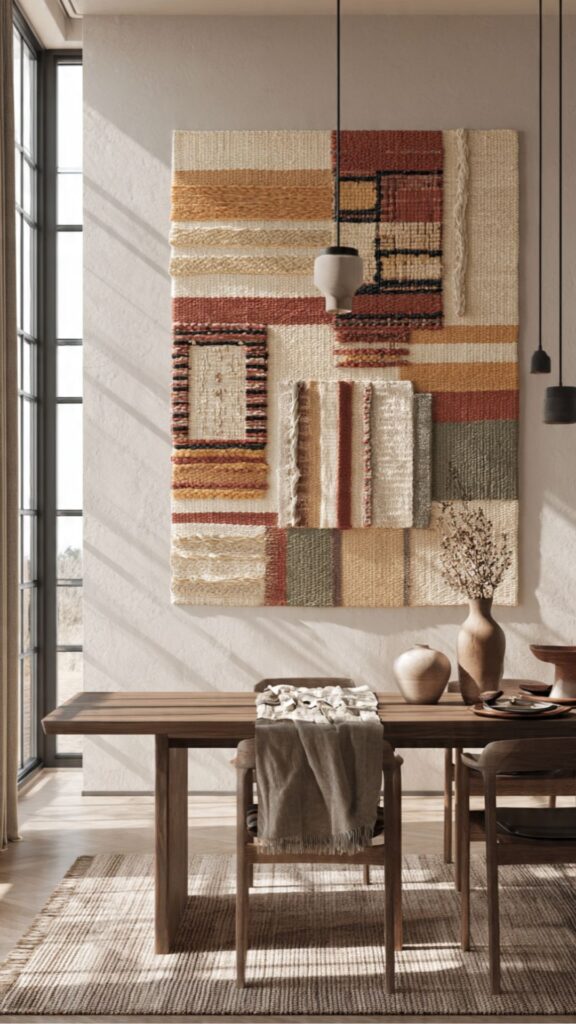
Textile art brings something to dining room walls that no framed print or mirror can replicate: genuine tactile texture and acoustic warmth. Woven tapestries, macramé hangings, fabric panels, and textile art soften the hard surfaces of a dining room the glass table, ceramic tiles, wooden chair and introduce a handmade quality that feels increasingly valuable in a world of mass-produced interiors. This is dining room wall decor with genuine soul.
Modern tapestries have moved far beyond the medieval hunting scenes of castle halls. Contemporary textile artists work in everything from tight geometric weaves in neutral linen tones to loose, abstract fiber art in vibrant jewel colors.
Moroccan-inspired woven pieces with bold geometric patterns translate beautifully to boho or global-inspired dining rooms. Subtle, neutral linen panels work brilliantly in minimal Japandi or Scandinavian dining spaces. The key is scale tapestries for dining rooms should be substantial, ideally at least 3–4 feet wide, to read confidently on the wall.
Hidden Benefit: Textile wall hangings genuinely improve dining room acoustics. Hard-surfaced dining rooms (with tile floors, glass tables, and painted walls) can suffer from echo and noise amplification during meals. A large woven tapestry absorbs sound and makes dinner conversation feel more intimate and comfortable a detail most competitors miss entirely.
For those who want to incorporate textiles more subtly, framed fabric panels offer a middle ground. Stretching an interesting fabric a piece of vintage kantha quilt, a block-printed Indian cotton, or even an oversized embroidered piece over a canvas frame creates a soft, layered artwork that bridges the gap between traditional framed art and textile hanging. This technique is also budget-friendly and allows for seasonal swaps by simply re-stretching new fabric over the same frame.
Vertical Plant Walls:
Living, Breathing Dining Room Decor
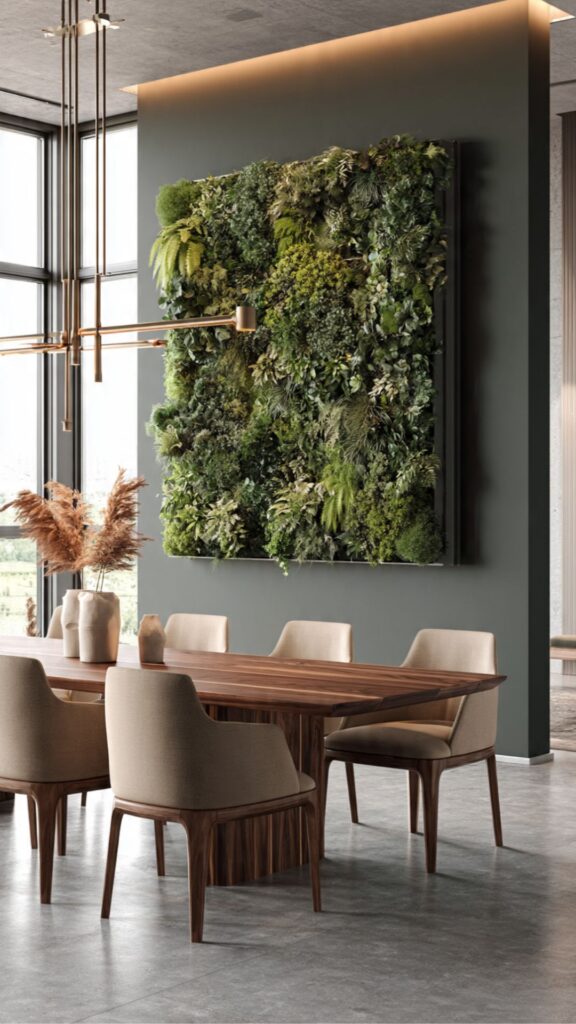
A living plant wall also called a vertical garden, green wall, or living wall is arguably the most dramatic and immersive form of dining room wall decor available today. It transforms a flat wall surface into a lush, layered, breathing backdrop that changes subtly with the seasons, purifies the air, and creates an undeniable sense of connection to nature that diners find deeply relaxing. Biophilic design research consistently shows that dining in proximity to plants reduces stress and enhances enjoyment of food.
Full living walls with plumbing and grow lights are the most impressive option, but far more accessible is a curated arrangement of wall-mounted planters, hanging terracotta pots, wooden plant shelves, and trailing plants. Pothos, philodendrons, and ivy are ideal dining room plant wall candidates they’re tolerant of moderate light and their trailing vines create beautiful cascading movement.
For dining rooms with south-facing windows, adding herbs like rosemary, basil, and thyme to the plant wall creates an aromatic backdrop that is both decorative and genuinely useful for cooking.
Forward-Looking Insight: Self-watering modular planter systems designed specifically for wall installation brands like Urbio, Woolly Pocket, and IKEA’s HYLLIS hacks are making DIY living walls increasingly low-maintenance and affordable. In 2026 and beyond, expect plant walls to appear in more mainstream dining rooms as the technology becomes simpler.
For those who love the look but worry about maintenance, high-quality preserved or artificial plant panels have improved remarkably. Real preserved moss walls made from preserved (not fake) natural moss that requires no watering bring genuine organic texture and deep green color to dining room walls with zero upkeep. Paired with warm wall-mounted spotlights, a preserved moss panel creates a dramatic, restaurant-quality backdrop for your dining room that guests will talk about long after the meal ends.
Wall Sconces & Decorative Lighting:
The Decor That Transforms at Night
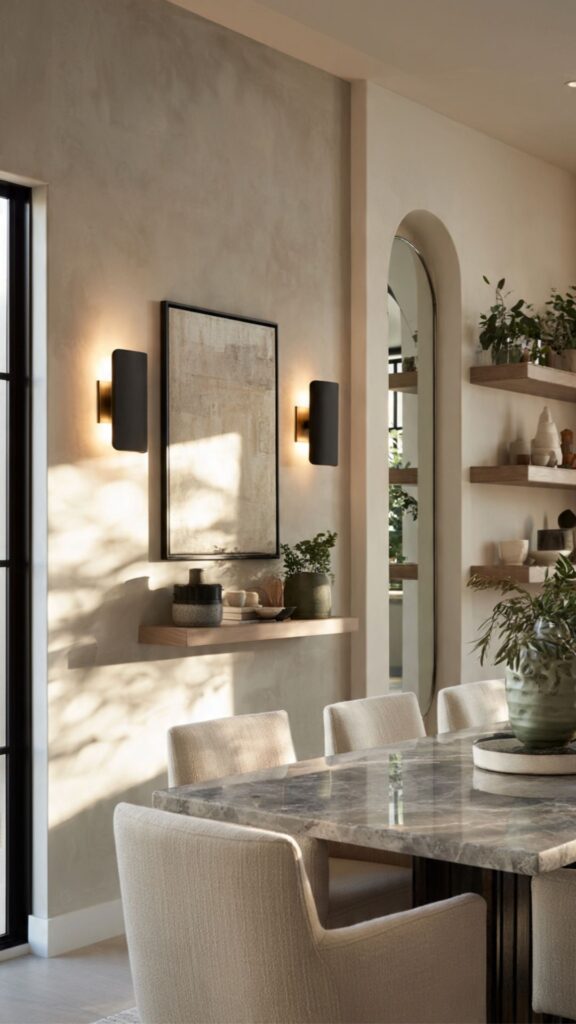
Wall sconces occupy a unique position in dining room wall decor: they are simultaneously functional and decorative, and their impact changes completely depending on the time of day. A beautiful brass or ceramic wall sconce reads as a sculptural object during daylight hours, but at night it becomes a source of warm, directional light that entirely changes the mood of the dining room. No other wall decor element has this transformative, time-dependent quality.
For dining rooms, the most effective sconce placement is typically flanking a focal point on either side of a large mirror, a piece of statement art, or a buffet table. This creates a symmetrical composition reminiscent of boutique restaurant interiors.
Plug-in sconces with fabric cord covers have made this look accessible to renters, eliminating the need for electrician installation. Hardwired sconces on dimmer switches are the premium option, allowing infinite light level adjustments from bright and practical during family dinners to dim and romantic for dinner parties.
Layered Lighting Principle: Interior designers use a rule of three for dining room lighting: ambient (overhead chandelier or pendant), task (table candles or direct lighting), and accent (wall sconces). Most home dining rooms only deploy one layer. Adding sconces as the accent layer creates the depth and warmth that makes restaurant dining feel so different from eating at home.
Beyond traditional sconces, the category of decorative wall lighting now includes plug-in picture lights that illuminate art, flexible LED neon art installations that create custom ambient glow, and smart LED panel art like Nanoleaf shapes that respond to music and time of day.
These tech-forward options are particularly popular in modern and contemporary dining rooms where the boundary between art and function is intentionally blurred. The future of dining room lighting-as-decor is adaptive, responsive, and deeply personal.
Chalkboard, Plaster & Limewash Walls:
Texture as the Art
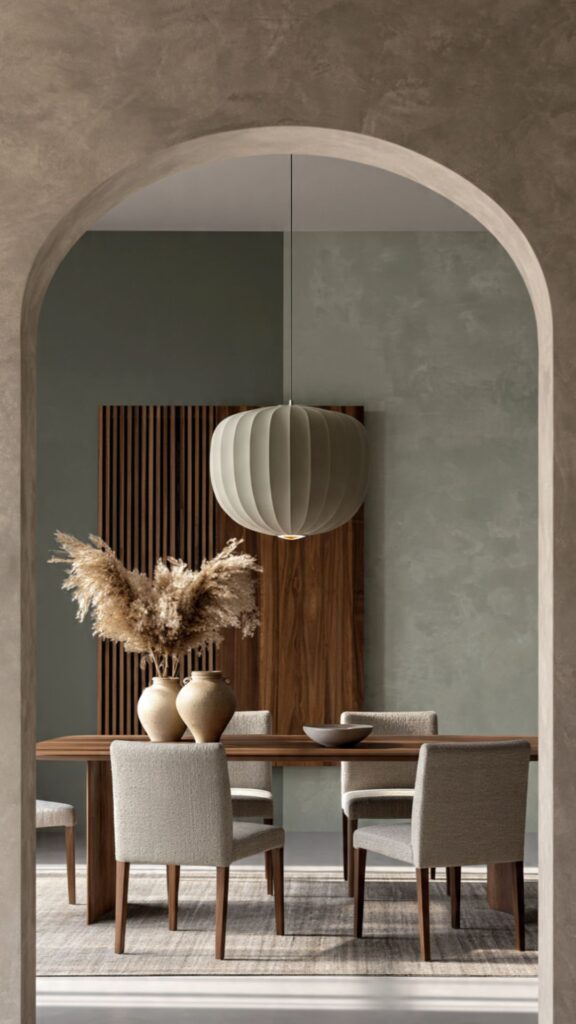
Not every dining room wall decor solution needs to be an object hung on a wall. Sometimes, the wall itself becomes the art. Decorative wall finishes chalkboard paint, Venetian plaster, limewash, microcement, and textured clay plasters create surfaces with depth, movement, and character that flat paint simply cannot achieve. These treatments turn the wall into a living material that reflects light differently throughout the day and develops a unique patina over time.
Chalkboard walls in dining rooms offer a beautifully functional twist: the wall can display a rotating seasonal menu, a hand-lettered quote, a family message board, or a hand-drawn illustration that changes for special occasions. Dining rooms with a chalkboard accent wall feel both playful and sophisticated particularly when the chalkboard is framed with simple molding to give it a “blackboard as art” quality. Chalk ink markers allow for precise, permanent-looking designs that can be wiped away and redrawn seasonally.
Texture Deep-Dive: Limewash paint a centuries-old Italian finish made from limestone creates a mottled, cloudy depth on walls that photographs beautifully and looks genuinely aged. Brands like Portola Paints and LIMEWERK offer DIY limewash kits that can be applied over standard latex-painted walls.
In dining rooms, limewash in warm ivory, warm gray, or dusty terracotta creates an old-world Italian trattoria atmosphere that no standard paint can match.
Microcement and Venetian plaster represent the premium end of this category and are increasingly popular in upscale residential dining rooms because they deliver the aesthetic of high-end restaurant interiors. Venetian plaster achieves a depth and luminosity from its multiple layers of tinted plaster and wax finishing that is strikingly beautiful under dining room candlelight. While professional application is recommended, the result is a wall finish that lasts decades and requires no art, frames, or additional decor to feel complete the texture is the statement.
Also Read This: Wall Panel Design Ideas That Add a Gorgeous Dimensional Touch to Your Dining Room Wall Decor
Personalized Word Art & Typography:
Meaning Made Visible
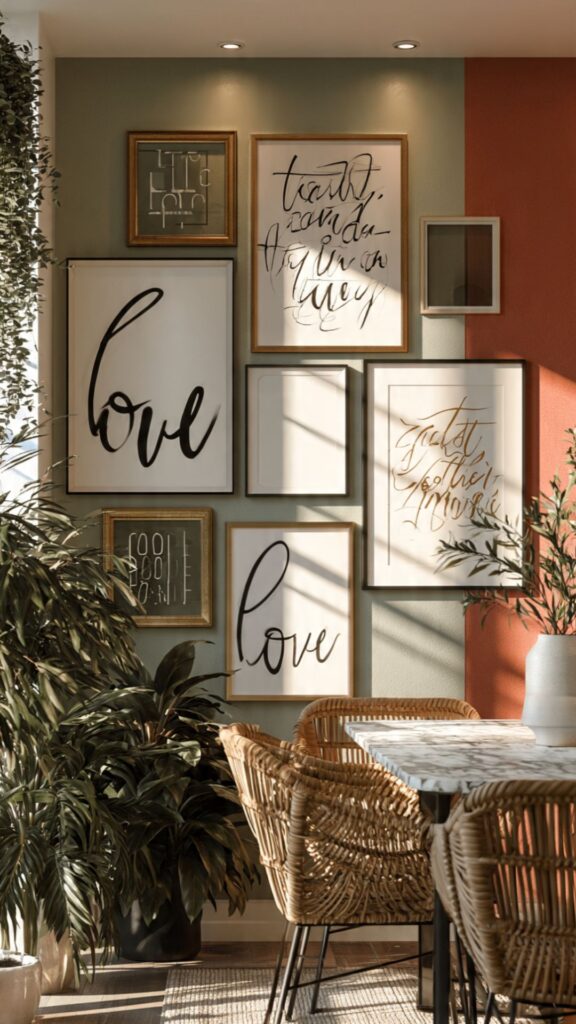
Typography and word art hold a special place in dining room wall decor because they communicate intention directly. A beautifully typeset quote about food, family, or gathering displayed on your dining room wall immediately tells every guest what this space is about and what it values.
Done well, typographic art is not clichéd; it is specific, personal, and often deeply moving. The difference is in the execution: custom typography commissioned from a lettering artist or a museum-quality fine art print is worlds apart from a generic “EAT” sign from a big box store.
Neon sign art has become one of the most popular forms of typographic dining room wall decor, and the technology has evolved dramatically. LED neon flex signs (not true glass neon, but visually nearly identical) are now available in custom shapes, fonts, and colors through companies like Echo Neon, Neon Mama, and custom Etsy shops.
A personalized neon sign with a meaningful family phrase, a wedding date, or simply a soft warm glow in a meaningful shape creates an intimate, restaurant-quality ambiance that becomes the centerpiece of the room.
What Competitors Miss: The most powerful word art in dining rooms is not motivational quotes it is personal. A hand-lettered version of a grandmother’s recipe, a poem that holds family significance, or typography spelling out the coordinates of a meaningful place creates an emotional resonance that generic “gather here” signs simply cannot. Commission a calligrapher on Fiverr or Minted for a one-of-a-kind piece.
Three-dimensional letter art is another typographic approach gaining momentum large raw wood letters, metal script words mounted to the wall, or laser-cut acrylic words that cast beautiful shadows. These sculptural typographic pieces bridge the gap between wall art and installation, particularly effective when backlit or side-lit to create shadow play on the wall behind them.
In future-forward dining room design, word art is increasingly interactive digital display frames (like Samsung’s The Frame TV) can cycle through rotating quotes, family photos, and curated artwork, bringing the dining room wall to life in a genuinely dynamic way.
Final Thoughts
Great dining room wall decor does more than fill empty space it shapes the atmosphere, deepens the experience, and turns an ordinary meal into a memorable occasion. From gallery walls and statement mirrors to living plant panels and custom neon signs, the ideas above give you a full toolkit to work with, whatever your budget, style, or room size.
The best dining room walls reflect the people who eat there every day. Start with one idea that genuinely excites you not just what looks good online and build from there. Small, intentional changes compound into a room that feels wholly yours.
Pick one idea from this guide and try it this week. Your dining room and everyone who sits in it will feel the difference.

Team TrandyVilla is the passionate home decor team behind Trandy Villa, where style meets comfort in everyday living. The team loves transforming simple spaces into beautiful, functional homes through smart ideas, budget-friendly hacks, and modern design trends. Their content focuses on helping readers create homes that feel both stylish and personal without spending too much.