
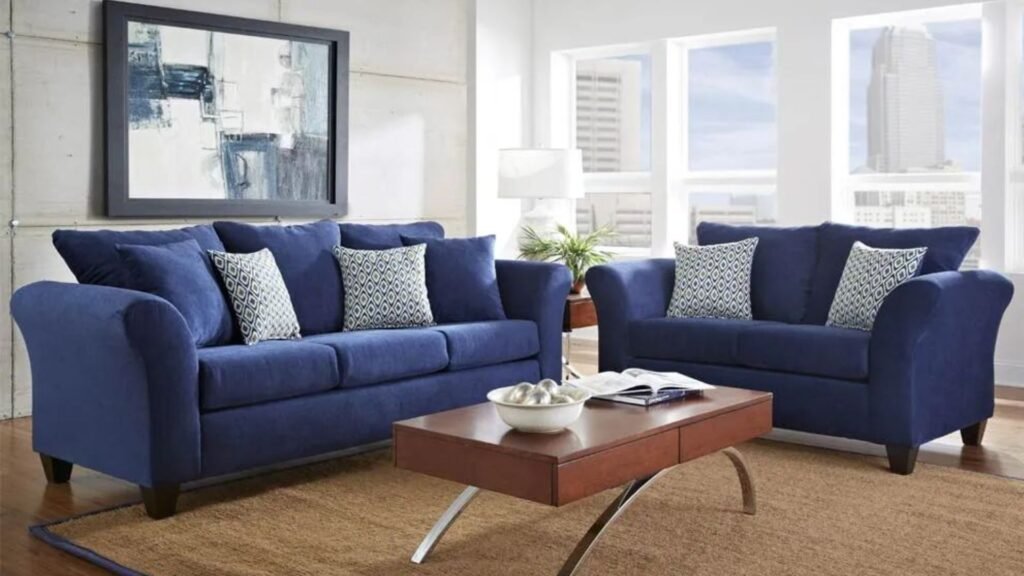
A blue sofa living room centers around a blue sofa as the main design feature. It adds color, style, and balance to the space. Blue sofa living room ideas help with color matching, furniture placement, texture selection, and overall room design. They create a comfortable and attractive living area.
A blue sofa living room brings charm, comfort, and timeless style to any home. This design choice works with modern, classic, coastal, and minimalist interiors. A blue sofa living room creates a strong focal point and helps build a balanced, welcoming space with ease.
Blue sofa living room ideas offer many ways to refresh your home. They include smart color combinations, layered textures, stylish decor, and practical layouts. These ideas improve visual appeal, increase comfort, and help create a cohesive living room design.
Pair a Navy Blue Sofa with Warm Brass Accents:
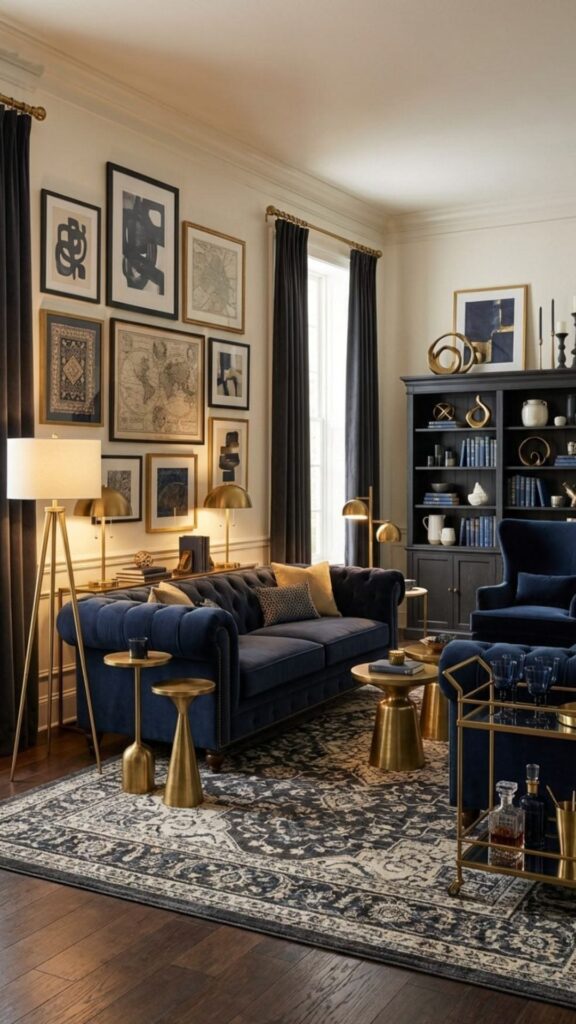
Navy blue is arguably the most versatile sofa color ever produced, and pairing it with warm brass accents is the interior designer’s secret weapon. The cool depth of navy creates an immediate visual anchor, while brass in the form of side table legs, floor lamps, or picture frames injects warmth that prevents the room from feeling cold or corporate. This combination draws on color theory: cool and warm tones in balance create a room that feels both dynamic and inviting.
For the walls, consider warm white, soft greige, or even a dusty terracotta. These tones amplify the contrast between navy and brass without competing. Avoid pure cool white, as it tends to flatten the navy rather than celebrate it. A jute or wool rug in caramel or oatmeal tones grounds the seating area and adds natural texture that neither navy nor brass provides on their own.
Layer in throw pillows in cream, rust, or deep olive to extend the warm color story. Velvet cushions in those colors look particularly luxurious against a navy linen or cotton sofa. If your navy sofa is already velvet, opt for textured woven throws to avoid monotony. The goal is sensory variety different fabrics catching light differently which keeps the eye moving and the room feeling rich.
One often-overlooked tip: keep your coffee table low and light. A glass-and-brass coffee table floats visually, making the navy sofa feel more elevated rather than heavy. Darker wood coffee tables work too but choose lighter finishes like walnut or oak rather than mahogany, which can darken the space unnecessarily.
Create a Coastal Vibe with a Sky Blue Sofa and Natural Materials:
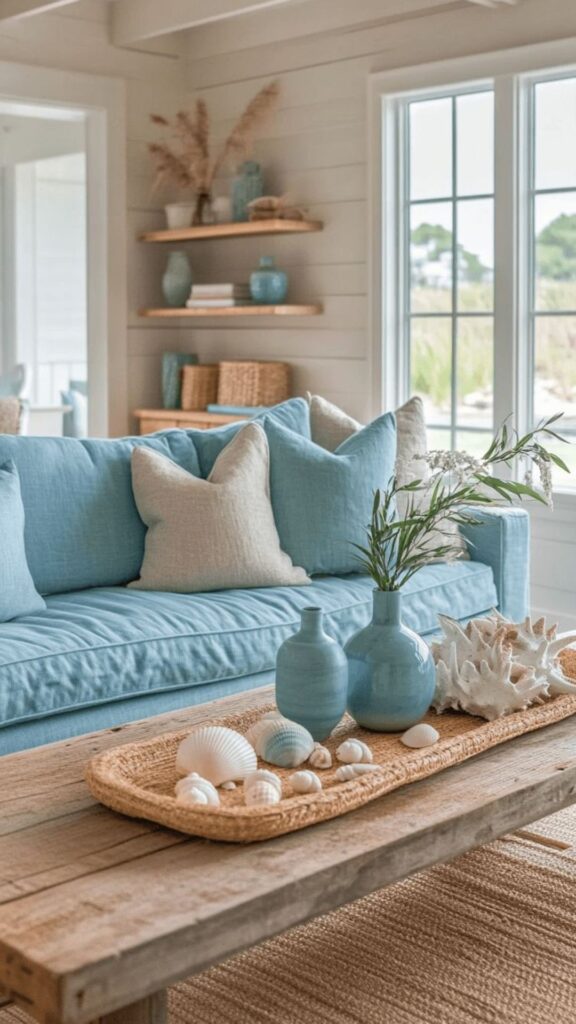
Sky blue sofas are the gateway to effortless coastal living room design even if you’re nowhere near the ocean. The secret is in the supporting cast of materials. Rattan chairs, sisal rugs, driftwood-finish coffee tables, and linen curtains in sandy beige immediately signal a relaxed, breezy aesthetic. These textures do the heavy lifting, so you don’t need to overload the room with nautical clichés like anchors or rope.
Keep your wall color in the warm white or pale greige family to mimic natural light. If you have the option, maximize window treatments that let light flood in coastal design is built on brightness. Sheer white linen panels soften the light beautifully without blocking it. A sky blue sofa against flooded natural light almost glows, which is visually uplifting and photographically stunning.
Plants play an essential role in coastal-inspired rooms. Large leafy varieties like monstera, fiddle-leaf fig, or bird of paradise in simple terracotta or white ceramic pots add greenery that feels organic rather than decorative. Position one near the sofa to create a layered scene that photographs well and feels alive year-round. Smaller succulents or air plants on shelves extend the organic theme without cluttering.
Consider a gallery wall of framed coastal photography or abstract prints in blues, whites, and sandy tones above the sofa. Keep frames simple white-painted wood or thin brushed brass works well. This grounds the sofa visually and prevents the light-colored couch from floating unattached on a bare wall, a common styling mistake in bright coastal rooms.
Trust Me on This One: Japandi Living Room Ideas That Show How a Beautiful Blue Sofa Can Elevate Your Whole Living Room Style
Go Bold with a Cobalt Blue Sofa and Monochromatic Styling:
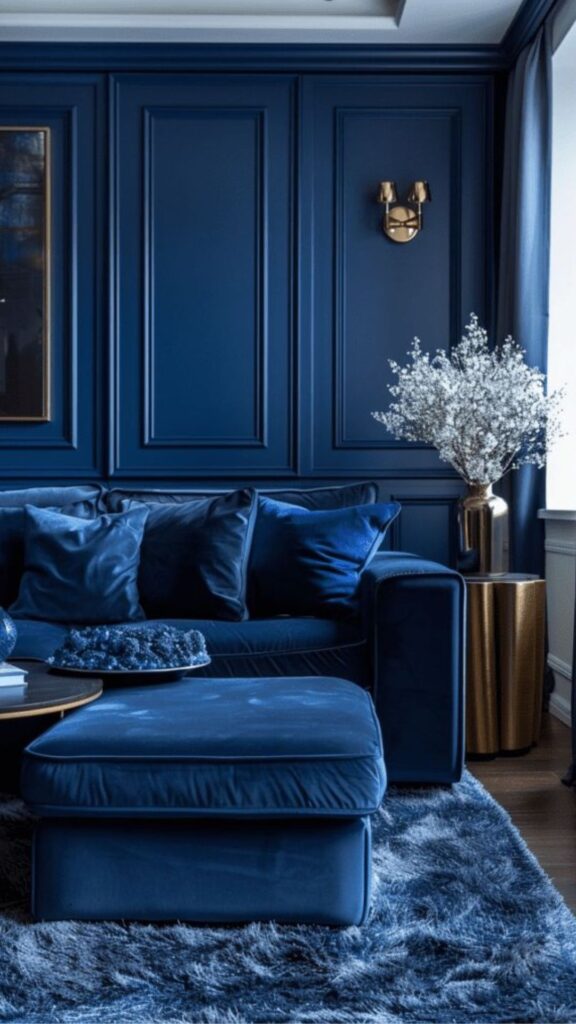
Cobalt blue sofas demand confidence, and the most sophisticated way to style one is to lean into a monochromatic blue palette rather than fight against it. This means layering different shades of blue throughout the room midnight navy accent chairs, dusty blue throw pillows, soft cerulean curtains unified by varying textures and finishes. The result is a room with enormous depth and visual intelligence that feels curated rather than chaotic.
The key to successful monochromatic blue styling is contrast in texture, not color. Matte walls paired with a glossy side table, a rough linen sofa paired with smooth silk cushions, a chunky knit throw against smooth velvet these contrasts keep a single-color palette from feeling flat or overly themed. Without texture variation, monochromatic rooms feel like they were designed by someone who bought everything in one online order.
Metals and neutrals become your neutralizing agents. Brushed nickel, chrome, or polished silver complement cobalt beautifully because they’re visually cool and match the undertone. A mirrored console table, silver photo frames, and crystal-clear glass vases amplify the cool elegance. White or light gray rugs ideally with a subtle geometric pattern anchor the seating group without pulling the eye away from your cobalt centerpiece.
Artwork is critical in monochromatic rooms. Look for abstract art that includes cobalt and complementary jewel tones like emerald or amethyst. These pieces introduce color variety subtly without breaking the blue theme. A large canvas above the sofa provides a focal point that makes the whole composition feel intentional and gallery-worthy rather than accidental.
Style a Blue Velvet Sofa, Blue Sofa Living Room Ideas:
For Maximum Luxury
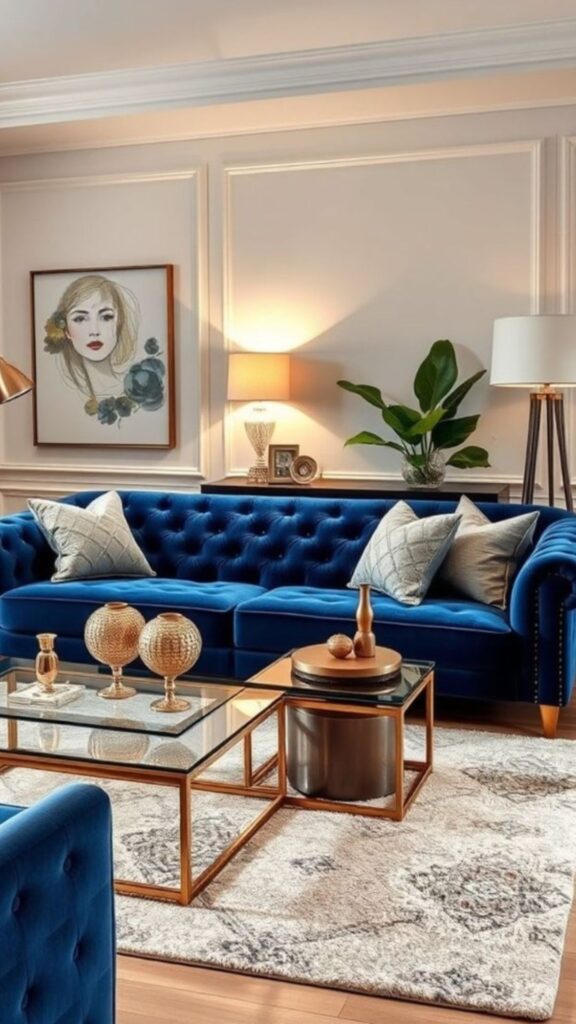
Blue velvet sofas have a natural affinity with Old Hollywood glamour, and the trick is to channel that richness without tipping into overly theatrical territory. Start with the room’s bones: dark-painted walls in charcoal, deep forest green, or even plum create a jewel-box effect that velvet loves. Paired with gold or antique brass light fixtures a dramatic chandelier or a sculptural floor lamp the velvet catches the light in ways that feel genuinely luxurious.
Layering is everything with velvet sofas. Because velvet has a directional pile that shifts color as light moves across it, the sofa itself becomes a dynamic element. Keep surrounding furniture quieter a simple marble-top coffee table, streamlined side tables, and clean-lined shelving units prevent competition with the sofa’s inherent drama. In a room with a blue velvet sofa, the couch is always the star; everything else is supporting cast.
Throw pillows deserve careful selection. Velvet-on-velvet can work beautifully if you mix colors (blush, emerald, or champagne velvet cushions on a midnight blue velvet sofa), but introducing different fabrics bouclé, brocade, or even genuine silk elevates the sensory experience further. Avoid using flat cotton or cheap polyester blends that look noticeably cheaper next to genuine velvet upholstery.
Lighting is the final and most underestimated element for velvet sofa styling. Because velvet is so light-responsive, warm-toned bulbs (2700K–3000K) make blue velvet look richer and more jewel-like, while cool-toned LEDs can make it look flat or even grayish. Invest in warm ambient lighting through table lamps and floor lamps rather than relying on harsh overhead downlights, and you’ll be amazed at the transformation.
Use a Blue Sofa as the Anchor in an Open-Plan Living Space:
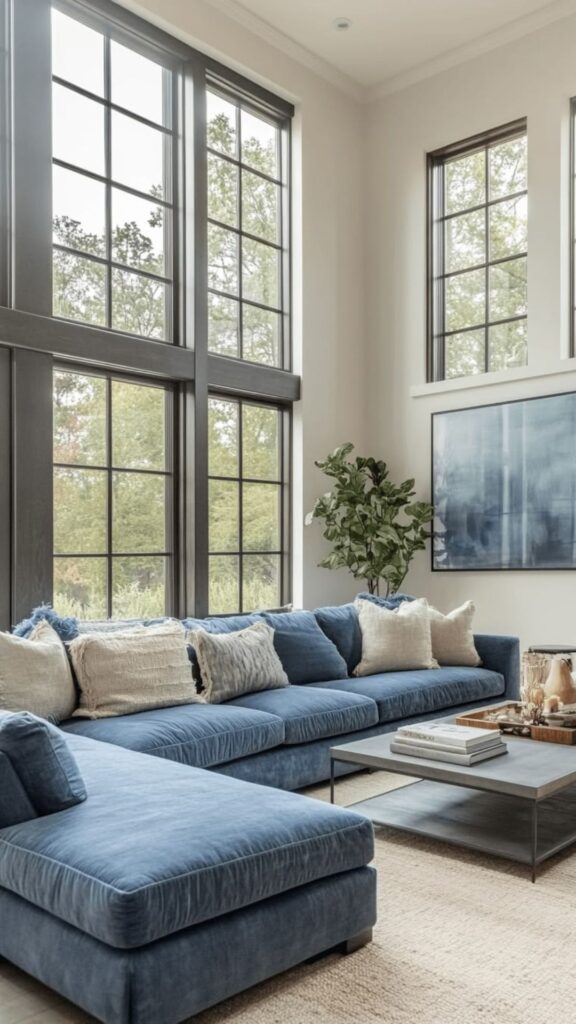
In open-plan homes, the challenge is always spatial definition how do you create distinct zones in a room with no walls? A blue sofa is an exceptionally effective zoning tool because its strong color creates a visual boundary without requiring any physical barriers. Position it with its back to the kitchen or dining area, and it naturally signals where the “living room” begins, making the entire floor plan feel more intentional and organized.
The rug you choose is equally important in open-plan spaces. A generously sized area rug at minimum large enough that all sofa legs sit on it visually contains the seating zone and reinforces the boundary the sofa has established. In terms of color, a rug that picks up one of the sofa’s blue tones while incorporating other room colors (like warm neutrals from the kitchen cabinetry) serves as a visual bridge, unifying the entire open floor plan rather than sectioning it off aggressively.
Furniture arrangement around a blue sofa in an open-plan space should create an obvious conversational grouping. Two armchairs or a loveseat facing the sofa, with a coffee table at the center, form a clearly defined seating cluster. This arrangement also improves acoustics slightly, as the furniture forms a soft barrier against sound traveling across the larger space a practical benefit worth noting in families with mixed-use living areas.
Consider the sightlines from adjacent areas. The back of the sofa is often seen from the kitchen or dining area in open-plan layouts, so choose a sofa with a well-finished back not all sofas are designed for this. Many designers add a narrow console table behind the sofa, which both defines the space further and provides a surface for lamps, books, or decorative objects that improve what you see when looking across the room from the kitchen.
Combine a Blue Sofa with Earthy Terracotta Tones:
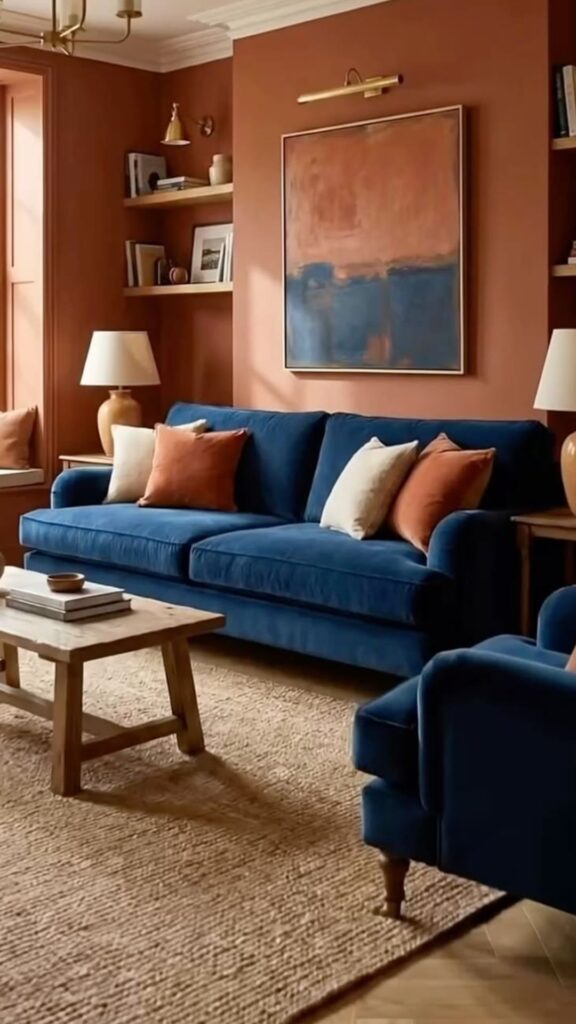
The blue-and-terracotta combination has become one of the defining color pairings of contemporary interior design, and for good reason. These two colors sit at almost opposite ends of the warmth spectrum blue cool and recessive, terracotta warm and advancing creating a natural visual tension that feels both exciting and deeply livable. Unlike trend-driven pairings, this combination has historical roots in Mediterranean, Moroccan, and Southwestern design traditions, giving it genuine longevity.
Introduce terracotta through multiple entry points rather than one large element. A terracotta-painted accent wall works beautifully, but so does a combination of smaller touches: terracotta ceramic vases, a kilim-style rug with terracotta tones, clay plant pots, and ochre or rust-toned throw pillows. This distributed approach feels more sophisticated and flexible than committing all your terracotta to one dominant surface.
The specific blue you choose affects how the pairing reads. A muted dusty blue sofa with terracotta accents reads as bohemian and earthy perfect for eclectic or maximalist spaces. A brighter cobalt blue sofa with terracotta creates a more vibrant, Mediterranean-inspired energy. A cool navy with terracotta introduces the strongest contrast and feels most contemporary and design-forward. Consider which aesthetic aligns with your overall direction before committing.
Natural materials mediate the pairing beautifully. Wood in warm tones especially oak, teak, or reclaimed pine bridges the gap between blue and terracotta without taking sides. A chunky wooden coffee table, wooden picture frames, and wood-accented shelving prevent the room from feeling too polished or trend-focused. Add in woven baskets, macramé wall hangings, or linen-covered ottomans to complete the organic, handcrafted feel that terracotta and blue naturally evoke.
Layer Textures Around a Blue Linen Sofa:
For a Relaxed Look
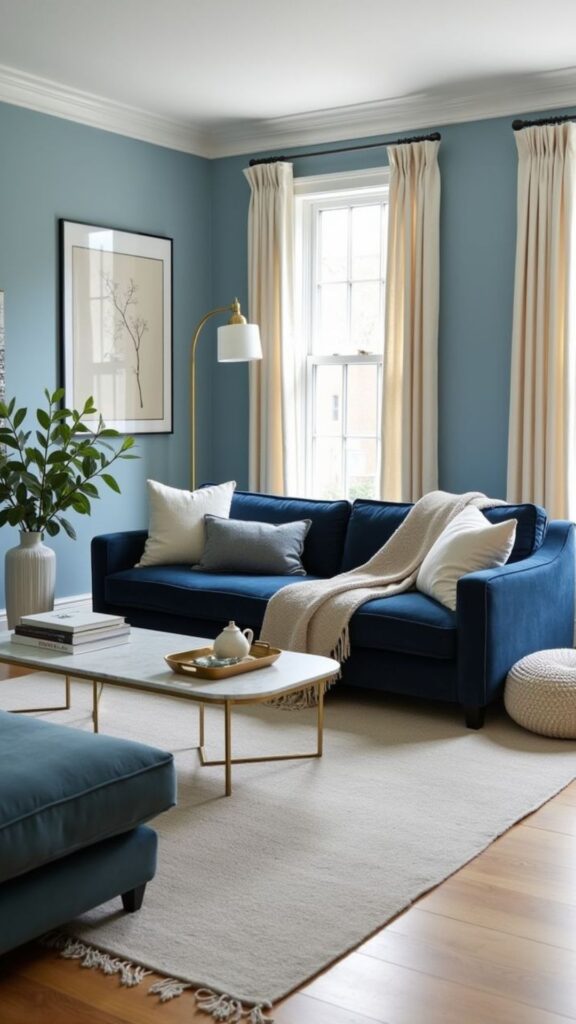
Blue linen sofas occupy a special place in interior design they’re casual enough for everyday family living but refined enough to anchor a sophisticated space. The challenge is that linen’s naturally relaxed texture can easily tip a room toward looking unfinished if not layered thoughtfully. The solution is to pair it with textures that have just slightly more visual weight: chunky knit throws, bouclé accent chairs, jute or wool rugs, and ceramic accessories with matte glazes.
Color-wise, blue linen works best in rooms that lean into natural, organic palettes. Think sage green, warm white, sand, and soft terracotta as your supporting colors. These hues complement linen’s inherent casualness and prevent the room from looking overly designed. Linen sofa rooms should feel like they happened organically as though the owner assembled beautiful things gradually over time rather than ordered everything from a single catalogue.
Cushion selection for blue linen sofas should prioritize variety in weave and weight. Mix textured woven fabrics with smooth cotton twills, add one or two velvet cushions for contrast, and don’t forget the value of oversized floor cushions placed nearby for extra seating or casual lounging. The goal is a layered softness as though the sofa area invites you to sink in and stay for hours, which is ultimately the emotional promise of good living room design.
Lighting in a blue linen room should be warm and diffused. Table lamps with fabric shades in cream or amber cast gentle pools of light that make linen look even more inviting in the evenings. Avoid spotlights directly overhead the sofa, as they create harsh shadows in the textile’s natural weave and make linen look tired rather than relaxed. Floor lamps positioned at the sofa’s end can also create a reading-nook ambiance that suits the casual, comfortable nature of linen-upholstered seating.
A Must Bookmark: Cottagecore Living Room Ideas That Pair Absolutely Beautifully with a Stunning Blue Sofa
Mix Blue Sofas with Black and White:
For a Graphic, Modern Look
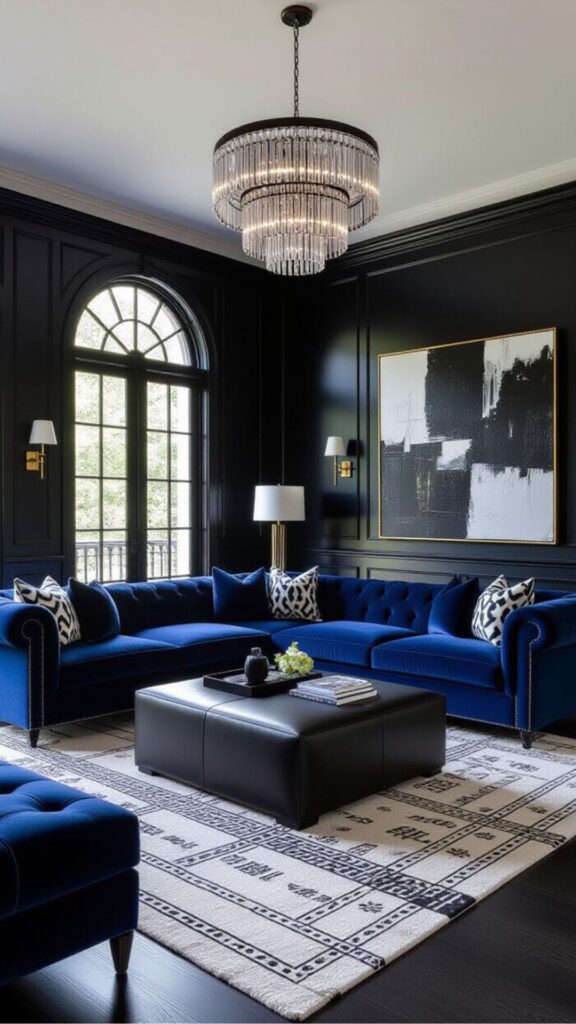
Black, white, and blue is an underrated trio in living room design clean, graphic, and endlessly sophisticated. The blue sofa acts as the singular color injection in an otherwise high-contrast neutral palette, and that restraint is precisely what makes it so powerful. Think crisp white walls, a black-and-white geometric rug, black picture frames, a white marble coffee table, and one dramatic navy or cobalt sofa as the room’s sole chromatic statement.
The proportions matter enormously in this palette. Too much black makes the space feel heavy and cave-like, even with a bold blue sofa living room ideas present. Aim for roughly 60% white, 30% blue, and 10% black or invert the black and white ratios for a moodier, more dramatic outcome. Black should appear in accents and architectural details (shelving frames, light fixtures, window frames, picture frames) rather than large furniture surfaces.
Typography-inspired artwork or bold geometric prints work particularly well in black-and-white-and-blue rooms. These flat, graphic pieces reinforce the clean, controlled energy of the palette and feel genuinely contemporary. Abstract expressionist paintings with bold brushstrokes rather than detailed realism also integrate well because they bring movement and energy without introducing competing colors that disturb the tight palette.
Material choices should lean toward hard, polished surfaces to match the palette’s crispness: marble, lacquered finishes, chrome, and polished concrete all work brilliantly. Contrast these with one or two softer elements a white bouclé throw, a geometric cushion in soft gray to prevent the room from feeling sterile. The balance of hard and soft, graphic and tactile, is what separates a thoughtfully designed modern living room from one that feels like a showroom.
Use a Blue Sectional Sofa to Maximize Small Living Room Space:
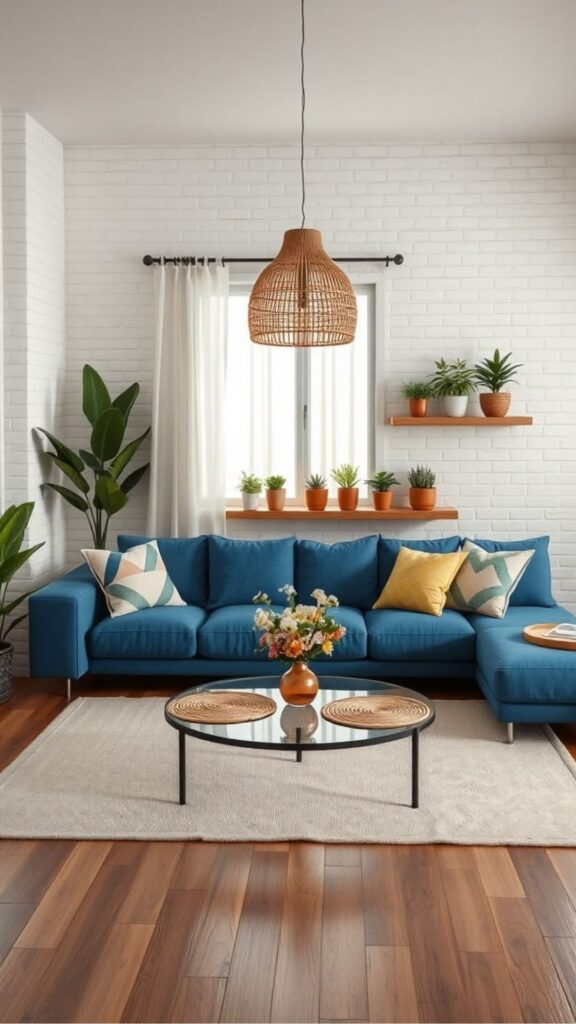
Sectional sofas often get dismissed as “too big” for small rooms, but a well-chosen blue L-shaped or U-shaped sectional can actually make a compact living room function better and look larger than a traditional sofa arrangement would. The key is the configuration: an L-shaped sectional positioned in a corner uses space that typically sits empty, clears the room’s center, and creates an illusion of more floor area by pushing seating to the perimeter.
Choose a sectional in a lighter blue sky blue, powder blue, or soft slate for smaller rooms. Darker blues absorb light and can make tight spaces feel compressed. A lighter upholstered sectional in a pale blue bounces light around the room, contributes to a more open feeling, and pairs naturally with the lighter wall tones (soft white, pale gray, warm beige) that maximize perceived square footage in small spaces.
Leg height is a technical detail most shoppers overlook. Sectional sofas with visible legs even 4-6 inch tapered wood or metal legs look significantly lighter and more floating than sofas that sit directly on the floor. The floor-to-sofa gap your eye sees between legs gives a small room more visual breathing room and prevents the furniture from feeling like it’s swallowing the floor. Always prioritize raised-leg sectionals over floor-sitting options in smaller living areas.
Avoid cluttering the area around a small-room sectional with excessive additional seating. One or two lightweight accent chairs (rattan, lucite, or thin-legged upholstered options) are enough. Keep the coffee table low and compact a round table in glass or light-toned wood prevents the sharp corners that can make small rooms feel cramped. A few well-chosen decorative objects and one or two plants complete the arrangement without overwhelming the space.
Create a Serene Reading Nook with a Blue Sofa and Built-In Shelving:
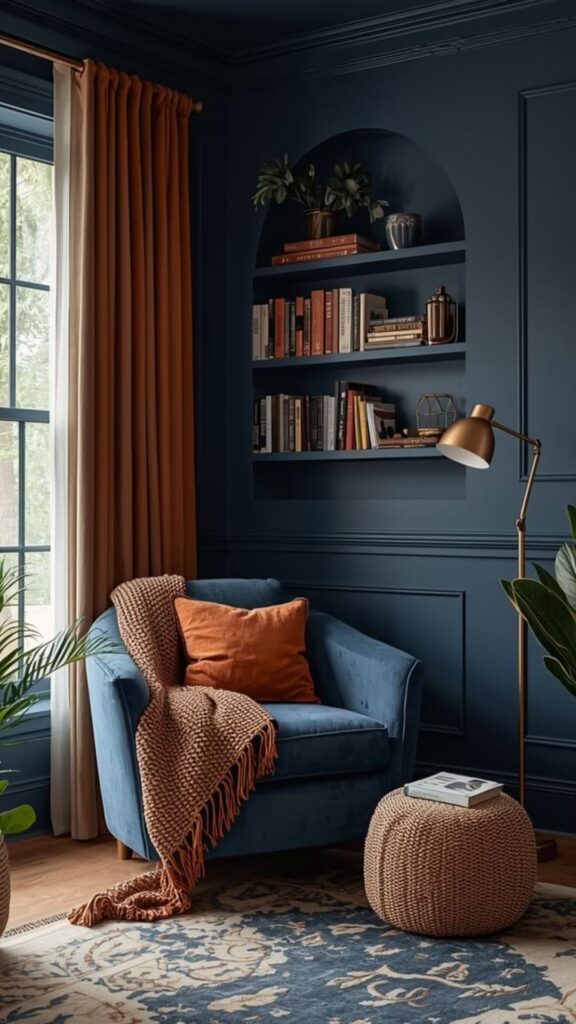
One of the most underutilized blue sofa styling concepts is the reading nook setup positioning a mid-sized blue sofa against a wall of built-in bookshelves to create a deeply cozy, intellectual living space. This arrangement works particularly well with navy or peacock blue sofas, whose richness contrasts beautifully against the warm tones of books, wooden shelves, and the curated objects you place among them. The result is a space that feels lived-in, intelligent, and genuinely personal.
The shelving layout matters here. Built-in shelving painted in the same color as the walls (rather than contrasting white) creates a seamless, architectural backdrop that makes the blue sofa pop without competing. Floor-to-ceiling shelves are ideal they draw the eye upward and make ceilings feel higher, which is especially valuable in rooms with standard 8-foot ceilings. Lighting the shelves with integrated LED strip lights or small picture lights adds drama and warmth in the evenings.
Accessories on the shelves should be curated rather than crammed. Designers use the “one-third rule”: approximately one-third books, one-third decorative objects, and one-third empty space. The empty space is what makes the display feel intentional rather than overwhelming. Objects should vary in height, material, and color mixing ceramics, plants, small artworks, and sculptural pieces creates a layered display that rewards repeated looking.
Complete the nook with a floor lamp positioned at one end of the sofa for practical reading light. A small side table or floating shelf at sofa arm height is essential it holds a cup of tea, a bookmark, or whatever the reader needs at arm’s reach. A soft throw draped over one arm of the blue sofa and a well-worn rug underfoot seal the deal, creating a reading environment that rivals any dedicated home library.
Balance a Blue Sofa with Green Plants:
For a Biophilic Living Room
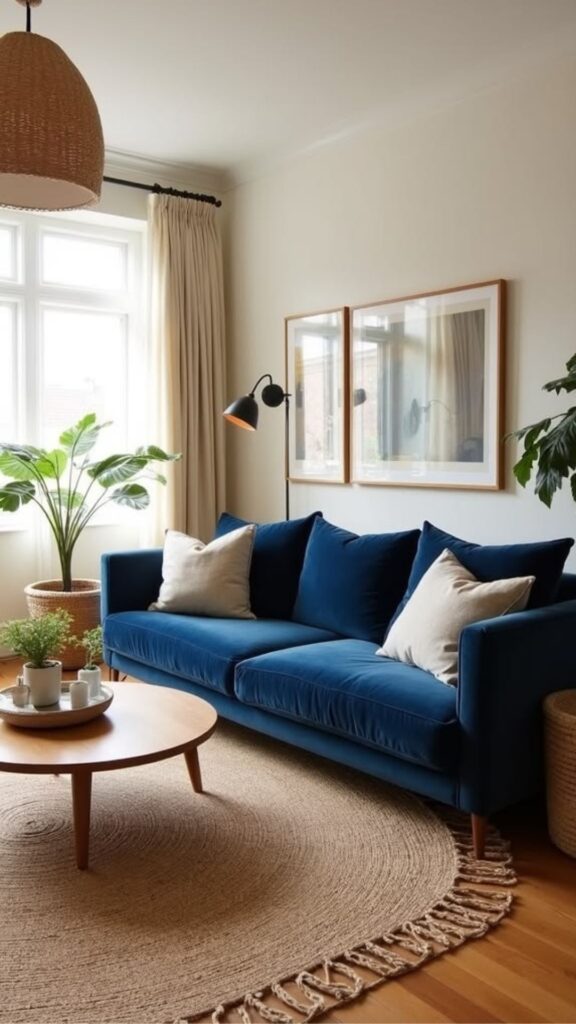
The science of biophilic design incorporating nature into interior spaces has transformed how forward-thinking designers approach room styling. A blue sofa is an ideal partner for lush plant life because the cool, watery quality of blue resonates with natural landscapes: think of blue skies reflected in water, or the blue-green of tropical shorelines. Plants bring the complementary green that makes blue look more vibrant and alive, and together they create a room that feels like a natural retreat.
The scale and placement of plants matters enormously. A single large plant a fiddle-leaf fig, monstera, or tall snake plant beside one end of the sofa creates a dramatic, sculptural statement. Several medium-sized plants grouped at varying heights (using plant stands, window ledges, and hanging planters) create a lush, layered effect. Avoid distributing too many small plants evenly around the room, as it looks dotted and lacks the impact of intentional groupings.
Plant pot selection should harmonize with your blue sofa’s tone and the room’s overall palette. White and cream pots create a clean, minimalist feel. Terracotta pots introduce warmth that balances cooler blues. Matte black pots bring graphic contrast and work especially well with navy sofas in more contemporary settings. Woven seagrass baskets used as pot covers add natural texture and blend seamlessly with earthy or coastal-inspired blue sofa rooms.
Don’t overlook the practical benefits of plants in living rooms. Studies consistently show that greenery reduces perceived stress levels, improves air quality (particularly species like peace lilies and spider plants), and increases productivity and focus benefits worth mentioning to anyone hesitant about the maintenance. If you’re plant-averse, high-quality artificial plants in statement sizes have improved dramatically in realism and deserve consideration as a low-maintenance alternative.
Style a Blue Sofa in a Scandinavian-Inspired Minimalist Room:
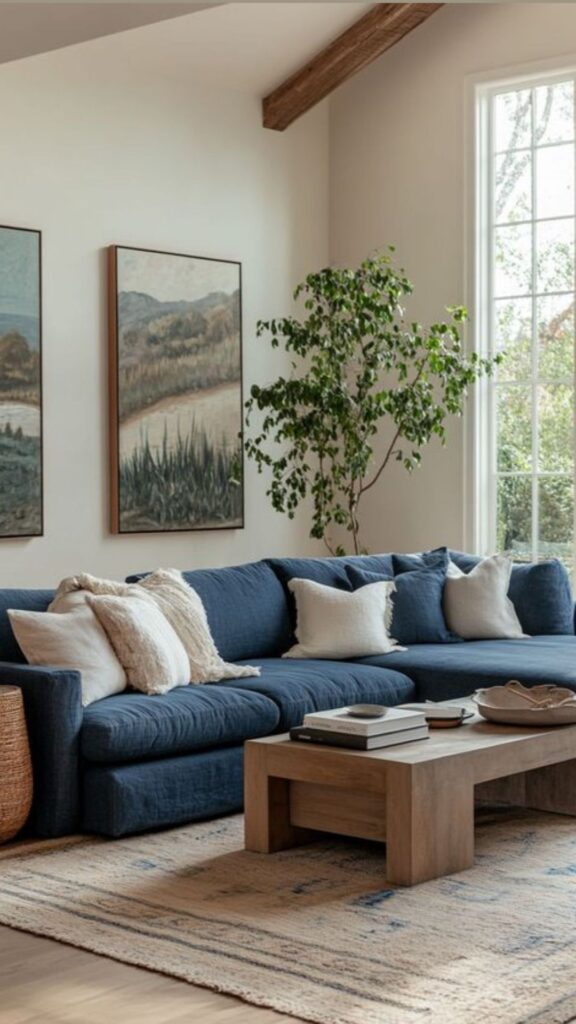
Scandinavian design’s core principles simplicity, functionality, warmth, and connection to nature align beautifully with blue sofa styling when executed thoughtfully. The Scandi approach to a blue sofa is to treat it as the room’s singular focal point and resist the urge to add more. White or light ash wood floors, white walls, one geometric area rug, a simple oak coffee table, and the blue sofa that restraint creates a room that feels calming, spacious, and quietly beautiful.
The specific blue that works best in Scandinavian-inspired spaces tends toward muted, greyed-down tones: dusty blue, slate blue, or blue-gray rather than vibrant cobalt or true navy. These tones have the Nordic quality of colors seen through a cool northern light they feel sophisticated without demanding attention. Pair them with the muted, warm neutrals of Scandinavian design: cream, oatmeal, light birch, and soft gray, all of which complement muted blues without competing.
Hygge the Danish concept of cozy well-being is the emotional aspiration of this approach. Achieve it through layered textiles: a chunky wool throw over the sofa back, several cushions in cream and muted dusty rose or terracotta, and a plush rug underfoot. Candles are non-negotiable in a hygge-inspired room, as their warm flickering light creates an atmosphere that no electric lamp fully replicates. Group three to five pillar candles on the coffee table for an effect that’s simple and genuinely beautiful.
Functional design is central to Scandinavian philosophy, and your living room layout should reflect this. Furniture should be well-spaced for easy movement, storage should be integrated and tidy (ottomans with storage, coffee tables with drawers), and surfaces should be kept relatively clear. The blue sofa should be easy to access from multiple angles and face the room’s natural light source in Scandinavian homes, maximizing the precious winter light is considered a functional priority, not just an aesthetic one.
Create Drama with a Blue Sofa Against Dark Moody Walls:
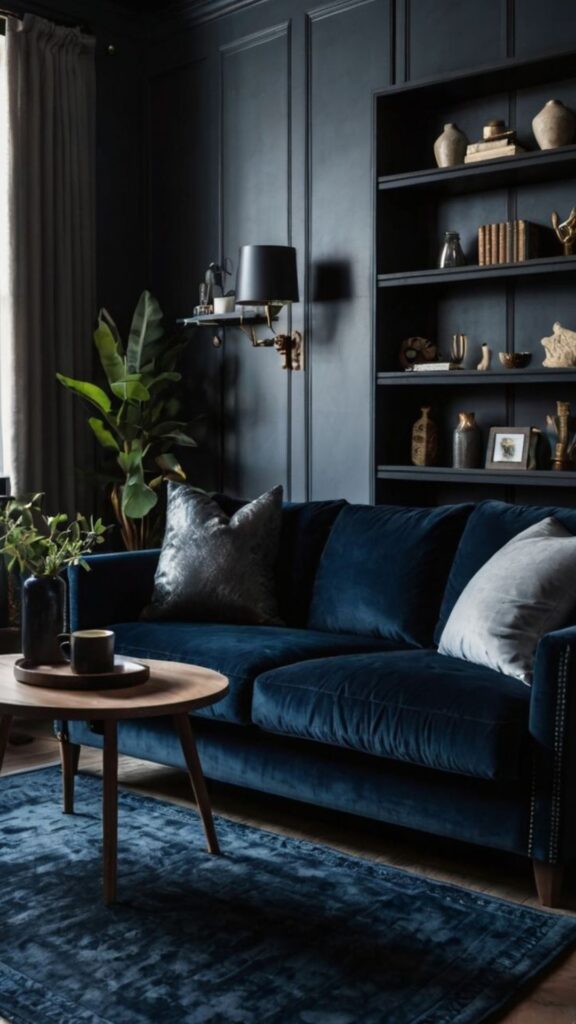
The dark-wall trend has fundamentally shifted how designers think about interior color, and a blue sofa against a deeply painted wall charcoal, forest green, plum, or even a dark navy-on-navy creates some of the most dramatically beautiful living rooms in contemporary design. The conventional wisdom that dark walls make rooms feel smaller is increasingly recognized as a myth: when executed well, dark walls make rooms feel more enveloping, intimate, and jewel-box luxurious.
The most interesting dark-wall choices for blue sofa rooms are not simply black or gray, but rich, complex tones with visible undertones. A deep forest green wall with a peacock blue sofa creates a lush, botanical atmosphere. Dark plum with a cobalt sofa is unexpectedly elegant. A dark charcoal with warm undertones (rather than cool blue-gray) paired with a navy velvet sofa reads as deeply sophisticated and gender-neutral. The undertone relationship between wall and sofa color is the nuance most people miss.
Lighting becomes critically important against dark walls. The room needs multiple, layered light sources table lamps, floor lamps, wall sconces, and potentially recessed lighting on a dimmer to prevent the space from feeling gloomy. Warm-toned bulbs (2700K) at low-to-medium brightness levels create the ideal moody, intimate atmosphere. Avoiding overhead-only lighting is essential; a single overhead light with dark walls and a blue sofa will make the room look underlit and uninviting rather than dramatically styled.
Use reflective surfaces strategically to bounce light in dark-walled rooms. Mirrors particularly large, ornate, or simply framed mirrors reflect lamp light back into the space and visually expand the room. A mirror above the fireplace or leaning casually against one wall adds both light and depth. Metallic accents in gold, brass, or bronze catch and reflect the warm lamp tones, creating a shimmering quality against dark paint that’s deeply atmospheric and impossible to achieve in lighter rooms.
Stop Scrolling for This: Small Living Room Ideas That Prove How a Perfect Blue Sofa Can Transform Even the Tiniest Living Room
Introduce Pattern with Blue Sofas in Eclectic or Maximalist Rooms:
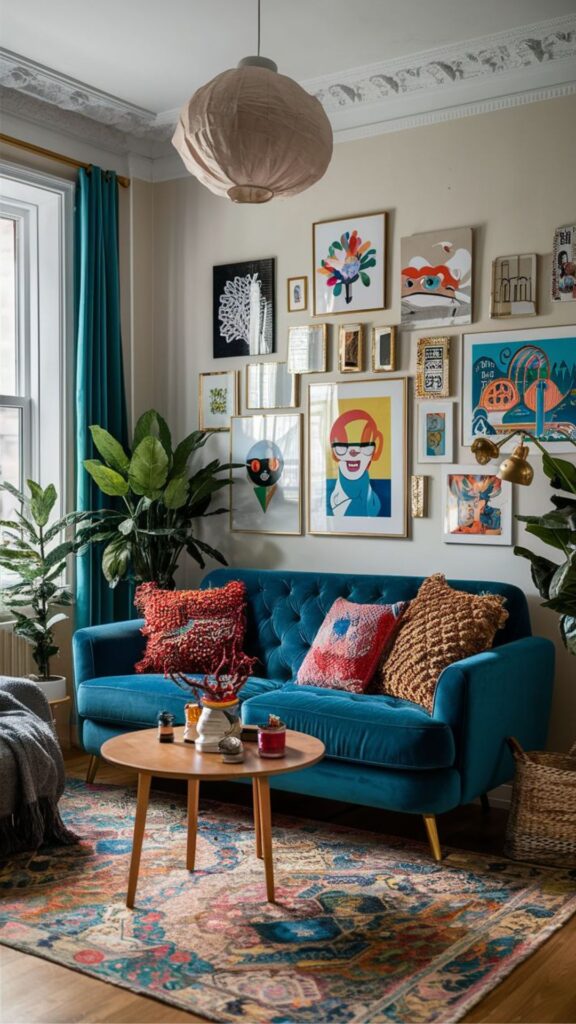
Maximalist and eclectic interiors are experiencing a significant cultural renaissance a direct response to years of minimalist dominance and the blue sofa is ideally positioned for this aesthetic. In maximalist rooms, pattern plays a central role, and the blue sofa can function as either the patterned star (a blue-and-white striped or floral fabric) or the solid anchor that allows surrounding patterns to sing. Both approaches work; the choice depends on how much visual complexity you’re comfortable curating.
If your blue sofa is solid-colored, the freedom to mix patterns in the surrounding room is considerable. Layer a geometric rug with floral cushions, botanical wallpaper with striped curtains the key rule in successful pattern mixing is to maintain a consistent color palette across all patterns. If every pattern includes at least one shade of blue, the diverse patterns read as a unified family rather than a chaotic collision. Scale variety is also essential: mix large-scale patterns with small-scale ones to create hierarchy and prevent any single pattern from dominating.
A patterned blue sofa say, a blue-and-white Delft-inspired floral or a Ikat print requires more restraint in the surroundings. Let the sofa’s pattern drive the room’s color palette, extracting two or three colors from the fabric and using them for accessories, art, and accent furniture. This approach, where the sofa literally dictates the room’s color story, creates a cohesive and impressive result that demonstrates genuine design confidence.
Eclectic rooms built around a blue sofa benefit enormously from vintage and antique elements. A mid-century modern side table, an antique Persian rug, a contemporary abstract painting, and a blue sofa from this decade coexisting in one room that mix of time periods creates the layered, collected quality that makes eclectic interiors feel rich rather than haphazardly assembled. The blue sofa, as the room’s consistent modern anchor, provides the visual stability that allows older, more varied pieces to harmonize around it.
Upgrade Your Blue Sofa Styling with the Right Coffee Table Choice:
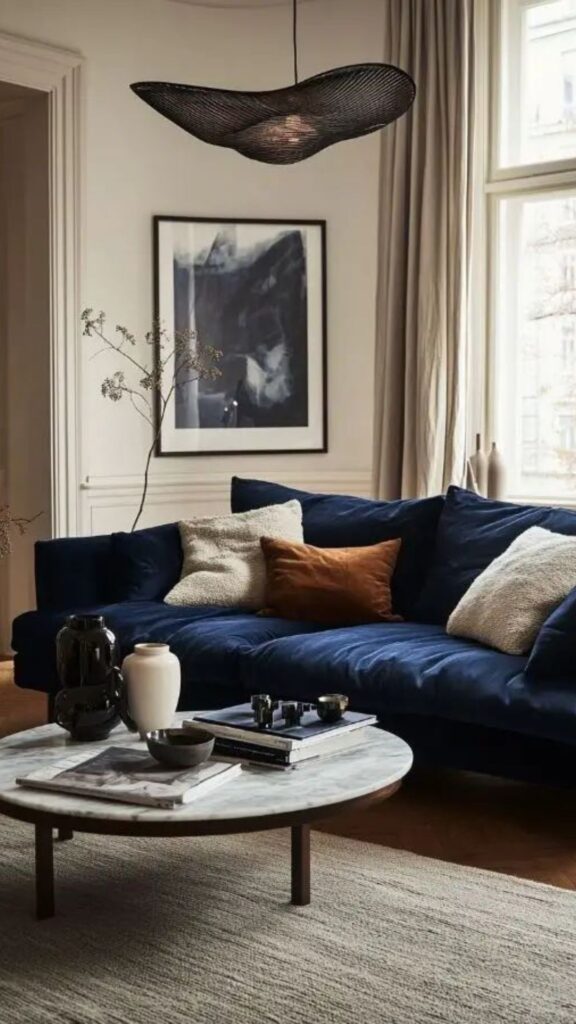
The coffee table you pair with your blue sofa has more impact on the room’s overall aesthetic than most people realize. It sits directly in front of the sofa at eye level when you’re seated making it the second most visually dominant element in the seating group. The right choice completes and elevates your blue sofa; the wrong choice undermines it, regardless of how beautiful the sofa itself might be. Understanding this relationship transforms how you approach the selection.
For navy or dark blue sofas, light-toned coffee tables create the most effective contrast: white marble with brass legs, bleached oak with hairpin legs, or glass with chrome or gold frames. This contrast lifts the room and prevents it from feeling too heavy at the seating level. The visual logic is similar to wearing light-colored shoes with dark trousers it creates a grounding line that defines the base of the composition. Avoid dark wood coffee tables with dark navy sofas unless your room is very light and airy overall.
For lighter blue sofas sky blue, powder blue, or dusty blue the coffee table can afford to be richer in tone. A walnut coffee table, a black lacquered option, or even a dark green marble surface adds the visual weight that lighter sofas sometimes lack. This toning-down of the coffee table relative to the sofa creates balance preventing the light sofa from looking washed out or insubstantial in the room’s overall composition.
Shape is the final variable. Round and oval coffee tables soften the hard lines of rectangular sofas and improve traffic flow in the seating area particularly valuable in smaller rooms or homes with young children where sharp corners are a concern.
Rectangular coffee tables align naturally with rectangular sofas and feel more architectural and formal. Irregular shapes raw wood slabs, organic-form stone tables add an artisanal quality that works beautifully in bohemian, eclectic, or biophilic blue sofa rooms. Match the table shape not just to the sofa, but to the emotional register of the entire room.
Conclusion
A blue sofa is one of the most rewarding furniture investments you can make versatile enough to anchor a minimalist Scandinavian room, bold enough to steal the scene in an eclectic maximalist space, and sophisticated enough to ground a glamorous, dark-walled jewel box.
The 15 blue sofa living room ideas in this guide prove there is no single “correct” way to style this piece only the approach that best expresses your space and personality. Start with the idea that resonates most, apply one change at a time, and enjoy the process of transforming your living room around the beautiful, endlessly adaptable blue sofa.

Team TrandyVilla is the passionate home decor team behind Trandy Villa, where style meets comfort in everyday living. The team loves transforming simple spaces into beautiful, functional homes through smart ideas, budget-friendly hacks, and modern design trends. Their content focuses on helping readers create homes that feel both stylish and personal without spending too much.