
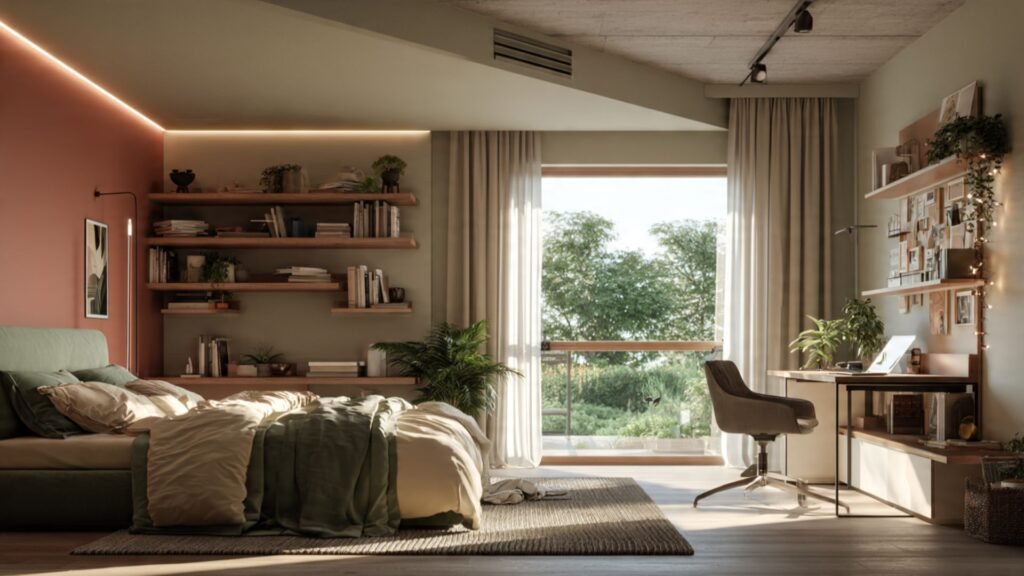
Teen bedroom ideas include smart layouts, stylish furniture, and personal decor choices for modern teenage spaces. They improve comfort, support study routines, and encourage creativity. These ideas also help organize belongings, maximize space, and create a relaxing environment for everyday teenage life today
Teen Bedroom creates a personal space for studying, relaxing, and socializing in modern homes. It combines comfort, storage, and style to support daily activities and self-expression. Simple design choices help teens feel organized, confident, and comfortable while spending time in their rooms every day
Teen bedroom ideas include smart lighting, storage beds, gallery walls, and cozy reading corners. These designs improve room function and support modern lifestyles. They match different personalities, encourage organization, and create balanced spaces that feel stylish, practical, and comfortable for teenagers today.
Build a Study-Lounge Hybrid Zone:
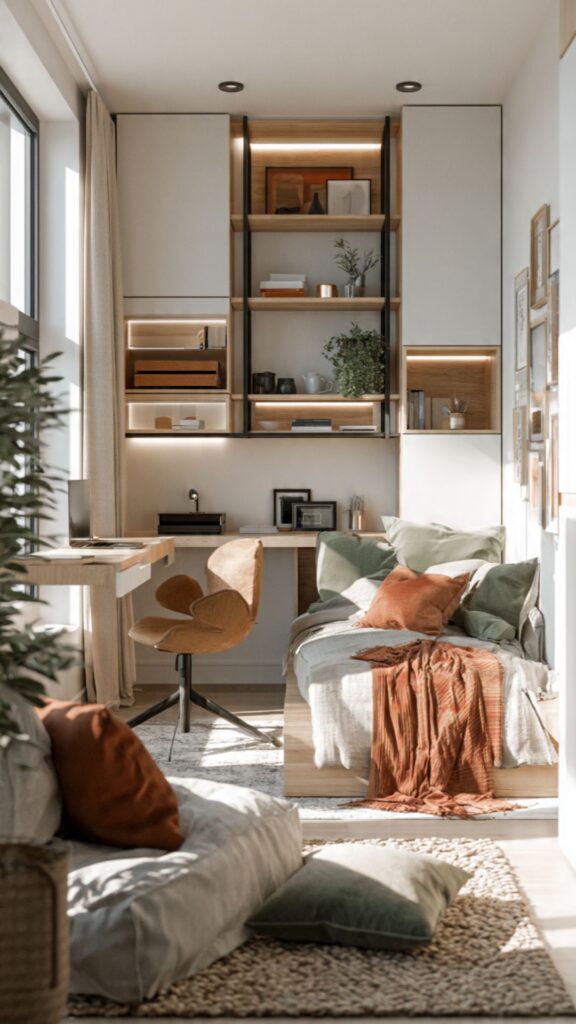
One of the most underrated teen bedroom ideas is designing a study-lounge area that doesn’t feel like a classroom. Teens are more productive when their study space feels intentional yet comfortable think a sturdy desk paired with a stylish ergonomic chair, warm task lighting, and a small floating shelf for books and supplies.
Adding a pegboard above the desk for organization keeps things tidy without sacrificing personality. Color-coding supplies or using aesthetic storage boxes can make the space feel curated rather than cluttered.
The key insight most bedroom guides miss is this: teens study better when their environment doesn’t feel punishing. A workspace that also doubles as a content creation setup with room for a laptop stand, ring light, or microphone speaks directly to how Gen Z actually uses their rooms. This dual-purpose approach means the desk gets used consistently, not just during exams.
Consider placing the study zone near a window for natural light, which research links to improved focus and reduced eye strain. Layer in a small indoor plant like a pothos or snake plant to improve air quality and add a calming visual element. The goal is a space that invites the teen to sit down and get things done without feeling like they’re being punished for existing.
For small rooms, a wall-mounted fold-down desk is a game-changer. It frees up floor space during off-hours and creates a clear psychological boundary between “study mode” and “relaxation mode” something that’s increasingly important for teens managing academic pressure alongside social lives.
Use a Neutral Base With Bold Accent Colors:
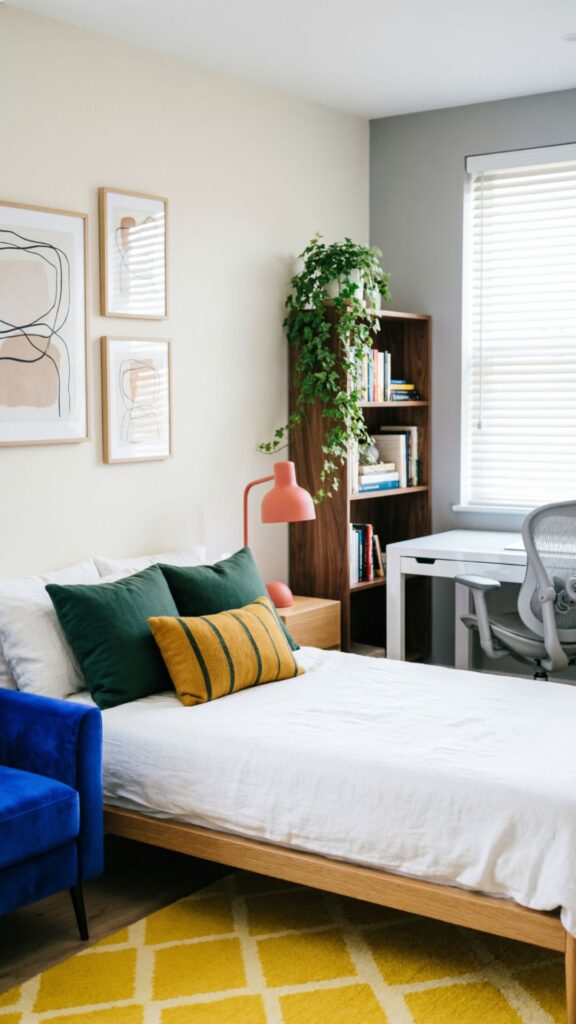
A common mistake in teen bedroom design is going all-in on a trendy color that the teen will outgrow in six months. The smarter approach one interior designers consistently recommend is to use a neutral base (warm white, soft greige, or light sage) and introduce bold personality through removable or replaceable accents like cushions, rugs, poster frames, and LED strip lighting. This approach gives the room longevity without sacrificing energy.
Accent walls are a particularly effective tool here. A single deep-toned wall think terracotta, navy blue, forest green, or muted mustard can completely transform a room’s mood without overwhelming the space. Teens can repaint or wallpaper just one wall if their tastes change, keeping renovation costs low. Peel-and-stick wallpaper has made this process even more accessible and damage-free, which is ideal for rented homes.
Color psychology plays a real role in how teens feel in their rooms. Blues and greens promote calm and focus great for study-heavy teens. Warmer tones like peach and rust create a cozy, energizing atmosphere ideal for creative teens. Involving the teen in the color selection process also gives them ownership over their space, which psychologists link to greater respect for and care of the room.
Don’t overlook the ceiling as a design canvas. A painted ceiling even in a soft version of the accent color adds unexpected depth and sophistication. It’s a detail that competitors rarely mention but that professional designers use constantly to make rooms feel complete and intentional.
Before You Go: Colorful Kids Room Ideas That Perfectly Inspire a Fun and Vibrant Teen Bedroom Style
Maximize Small Spaces With Loft or Bunk Bed Designs:
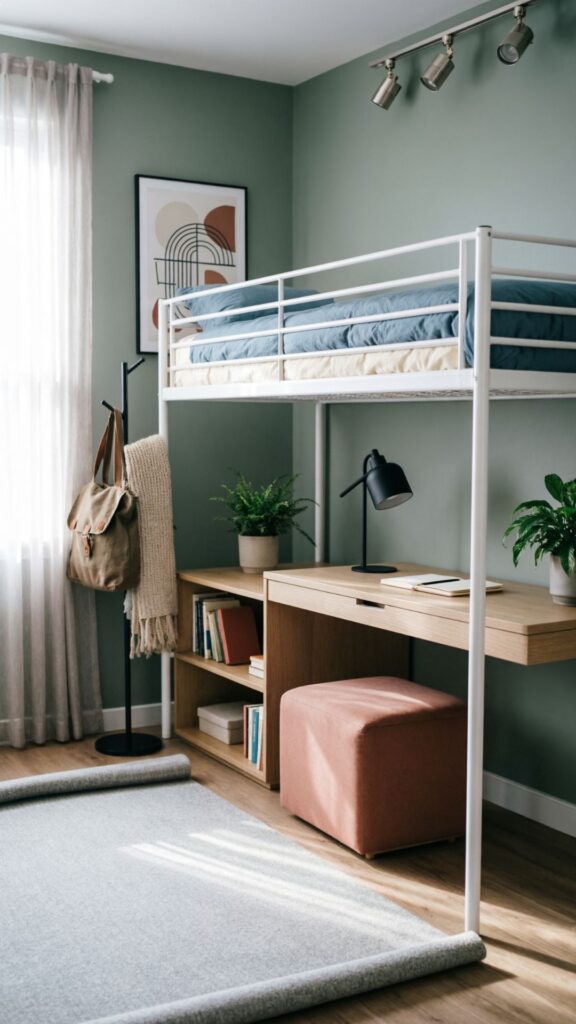
For teens living in smaller homes or apartments, a loft bed is one of the highest-impact teen bedroom ideas available. By elevating the sleeping area, you instantly create usable floor space underneath which can become a study nook, a mini lounge, or even a custom wardrobe area. Modern loft beds come in sleek metal or wood finishes that look far more sophisticated than the bunk beds of childhood.
The space beneath the loft is where the real creativity happens. Installing a built-in desk with drawers underneath the loft creates a private, cave-like study atmosphere that many teens find deeply focusing. Add curtains around the desk area and string lights, and you’ve created what designers call a “focus den” a micro-environment within the room that signals the brain to concentrate.
For teens who have a sibling sharing the room, a bunk bed with differentiated zones for each occupant respects both teens’ individuality. Each bunk can be personalized with different bedding, curtain colors, and personal shelf items creating two distinct personalities within one shared structure. This is a practical solution that many guides overlook entirely.
When choosing a loft or bunk bed, prioritize solid construction and weight limits appropriate for a teenager’s size and activity level. Look for beds with built-in ladders that have wide, slip-resistant steps, and consider models with integrated USB charging ports a small feature that teens consistently rank as a high priority in bedroom design surveys.
Create a Gallery Wall:
That Reflects Their Identity
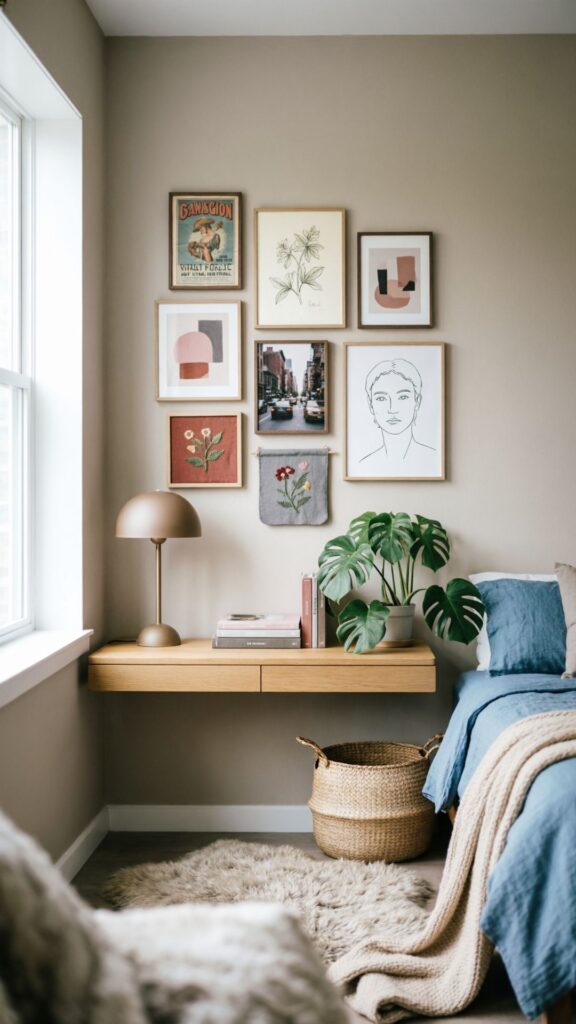
A gallery wall is one of the most cost-effective and deeply personal teen bedroom ideas available and when done well, it transforms a blank wall into the most compelling feature in the room. The key is curation over chaos. Rather than pinning everything randomly, encourage teens to choose a loose theme: concert memories, travel photography, artwork from favorite artists, or a mix of inspirational quotes and personal photos printed in black and white for a cohesive look.
Frames don’t need to match, but they should share something in common a color family, a material (all wood, all black metal), or a consistent mat color. This creates visual harmony even when the content varies wildly. Using a mix of frame sizes, from small 4×6 prints to larger 8×10 focal pieces, adds dimension and makes the wall feel dynamic rather than static.
One insight that separates great gallery walls from average ones: include three-dimensional elements. Small floating shelves among the frames can hold a succulent, a figurine, or a favorite book spine-out. This breaks the flatness of a pure print gallery and makes the display feel alive and curated more like a personality showcase than a decoration.
For teens who change their minds frequently, command strips and adhesive picture ledges allow easy reshuffling without wall damage. Picture ledges in particular are brilliant for teens prints can lean casually, be swapped out in seconds, and new pieces can be added without any tools. This keeps the gallery wall evolving alongside the teen’s identity, which is exactly what it should do.
Invest in Multi-Functional Furniture:
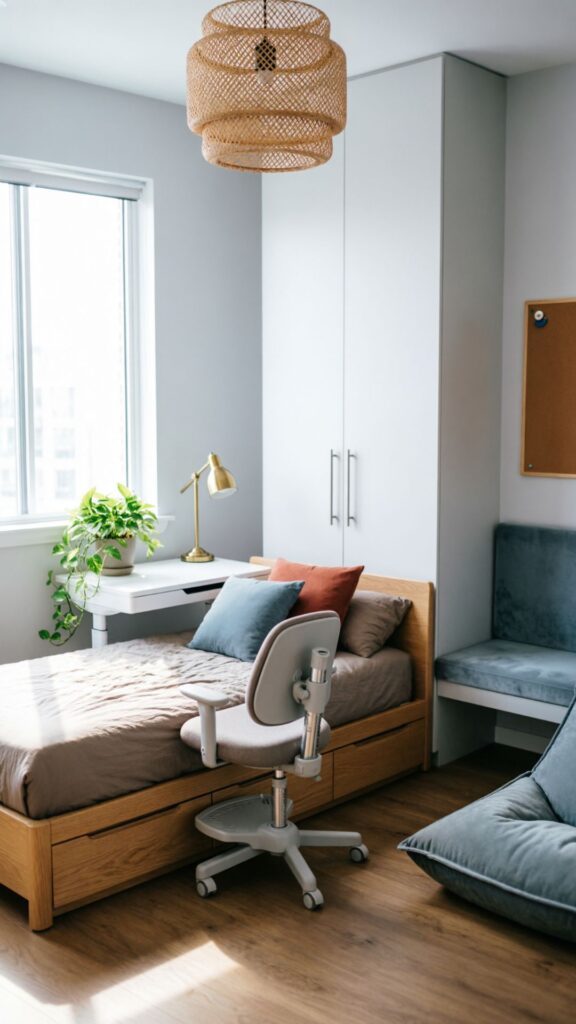
The smartest teen bedroom ideas treat furniture as infrastructure, not decoration. Multi-functional furniture pieces that serve two or more purposes is the cornerstone of a well-designed teen room, particularly when square footage is limited. An ottoman with internal storage, a bed with built-in drawers, a bookshelf that doubles as a room divider these choices eliminate clutter while adding utility.
A bed with storage drawers underneath is perhaps the single most valuable investment in a teen’s room. Teens accumulate belongings rapidly sports gear, seasonal clothing, art supplies, books and under-bed storage provides a discreet, accessible home for all of it. Some bed frames even include hydraulic lift mechanisms that reveal a full storage platform beneath the mattress, offering the equivalent of a small closet’s worth of space.
Seating is another area where multi-functionality pays off. A daybed or trundle bed serves as a comfortable lounging spot during the day and transforms into sleeping space for sleepovers. Floor poufs can act as footrests, impromptu seating for friends, or even makeshift side tables when topped with a tray. This kind of flexible thinking is something teens inherently appreciate it mirrors how fluidly they move between activities.
Looking ahead, modular furniture systems like those offered by brands focused on youth design are becoming increasingly popular for teen bedrooms. These systems allow teens (and parents) to reconfigure layouts as needs change, whether that means adding more desk space during exam season or opening up floor space for a workout area. Investing in a modular system once can serve a teen through high school and even into college dorm life.
This Will Inspire You: Fairy Lights Bedroom Ideas That Add a Magical and Dreamy Touch to Any Teen Bedroom
Design a Cozy Reading and Relaxation Nook:
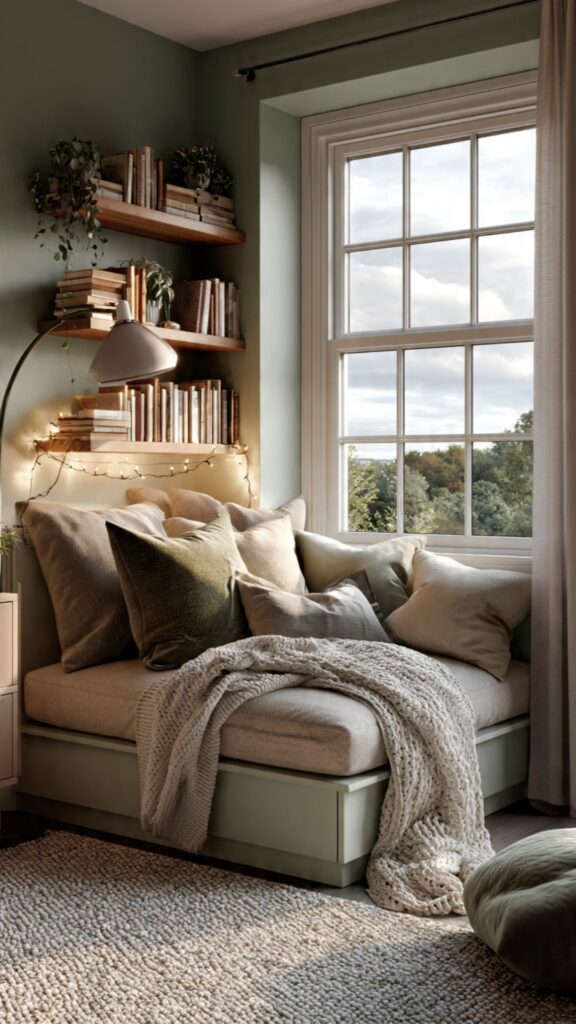
Not every teen bedroom idea needs to serve productivity some of the best ones serve restoration. A reading nook or relaxation corner acknowledges that teens need a space to decompress, and designing one intentionally signals that rest is valued. A window seat with cushioning and storage underneath is the gold standard, but even a floor corner transformed with a large bean bag, layered rugs, and a floor lamp creates a powerful sense of sanctuary.
Canopy beds and bed curtains are experiencing a major resurgence among teen bedroom design trends, and for good reason they create a micro-environment of calm within the larger room. Sheer curtains hung from a ceiling-mounted hoop or a simple rod draped at the head of the bed give the sleeping area a dreamy, cocooned quality that teenagers tend to love. This is especially effective for anxious teens who benefit from clearly defined “safe” spaces.
Lighting is critical to the success of a relaxation nook. Harsh overhead lighting kills the vibe entirely. Instead, layer in a dimmable floor lamp, fairy lights, or a salt lamp light sources that emit warm, low-intensity glow. Smart bulbs that the teen can control via phone to shift between study mode (cool white) and wind-down mode (warm amber) are a relatively affordable upgrade with outsized lifestyle impact.
For book-loving teens, a small rotating bookshelf or a simple wooden crate stack beside the nook keeps reading material organized and visually appealing. Displaying books with covers facing outward rather than spines only turns the collection into part of the room’s art. This detail makes the nook feel curated and personal rather than utilitarian.
Incorporate Smart Lighting:
For Mood and Function
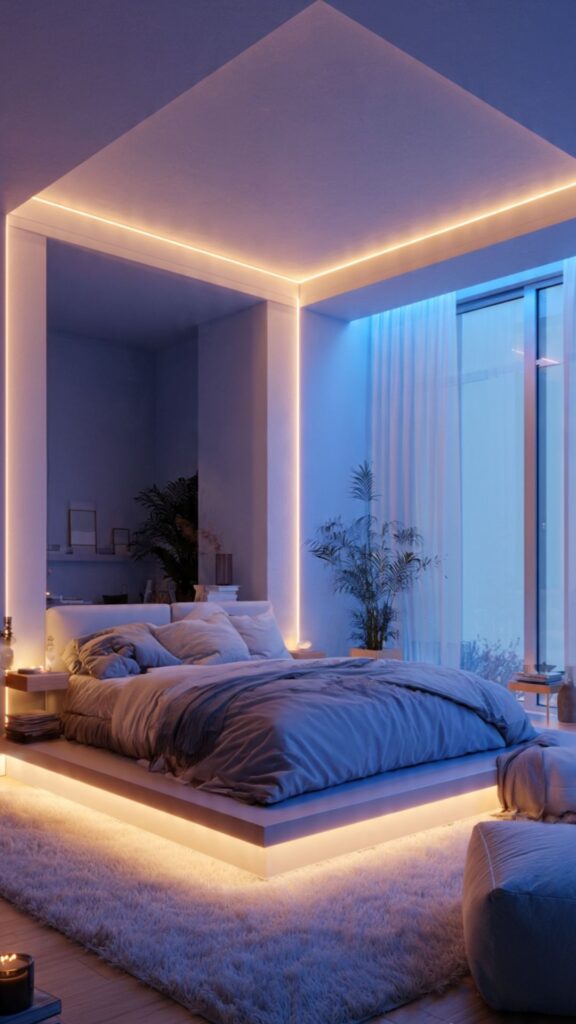
Lighting is the single most transformative element in any room, and teen bedrooms are no exception. Yet it’s consistently the most overlooked aspect of teen bedroom design. Most rooms rely on a single overhead fixture a setup that creates flat, unflattering light and offers zero flexibility. A layered lighting approach, by contrast, uses multiple light sources at different heights and intensities to serve different moments throughout the day.
Smart LED strip lights have become a defining feature of teen bedrooms in recent years, and the trend shows no signs of slowing. Placed behind a desk, under a bed frame, along a ceiling perimeter, or behind a television, these lights create depth and ambiance at very low cost. Brands like Govee and Philips Hue offer app-controlled options that let teens sync lighting to music, set schedules, or choose from millions of colors a feature that speaks directly to how teens personalize their environments.
Task lighting at the desk is non-negotiable for teens who spend significant time studying. A high-quality LED desk lamp with adjustable color temperature reduces eye strain during long study sessions a health benefit that’s worth communicating to teens who might otherwise reach for the cheapest option. Clip-on book lights and USB-powered lamps are compact, affordable options for smaller desks.
For future-proofing, consider wiring in a dimmer switch for any overhead lighting during a renovation. The cost is minimal, but the impact is significant the ability to dial the overhead light down low in the evening supports the body’s natural melatonin production, helping teens (who are already chronically sleep-deprived) wind down more effectively before bed.
Add Personalized Wall Art and DIY Decor:
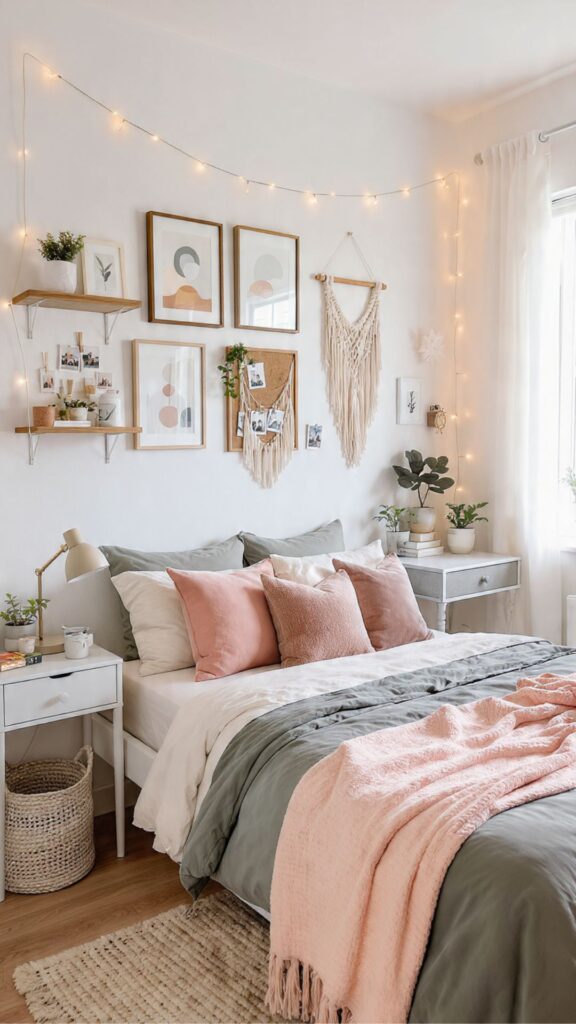
Personalized decor is what separates a bedroom from a showroom, and teens instinctively know the difference. Encouraging teens to create or curate their own wall art gives them a sense of agency over their space that store-bought decor simply can’t replicate.
This doesn’t require artistic talent it requires intention. Printing personal photos through services like Chatbooks or Artifact Uprising, framing them thoughtfully, and arranging them deliberately creates meaningful, one-of-a-kind wall art for very little money.
DIY decor projects have a secondary benefit beyond aesthetics: they teach teens creative problem-solving and give them a tangible sense of accomplishment. A macramé wall hanging, a hand-painted canvas, a corkboard covered in fabric these are weekend projects that result in genuinely beautiful room features. YouTube and Pinterest have made these projects more accessible than ever, and the results are far more distinctive than anything purchased from a mass-market retailer.
Custom neon signs have become a popular teen bedroom feature, and while the real thing can be expensive, LED neon flex alternatives achieve a nearly identical look at a fraction of the cost. Teens can choose words, shapes, or even custom quotes something deeply meaningful to them that also functions as ambient lighting. It’s a dual-purpose decor element that feels premium without requiring a premium budget.
One underexplored idea: showcase the teen’s own creative work as room decor. If they draw, paint, photograph, or design digitally, printing and framing their own work at poster scale is deeply affirming and creates artwork that’s completely unique. It signals confidence in their creative identity a powerful message for a teenager navigating questions of self-worth and direction.
Optimize Closet and Storage Organization:
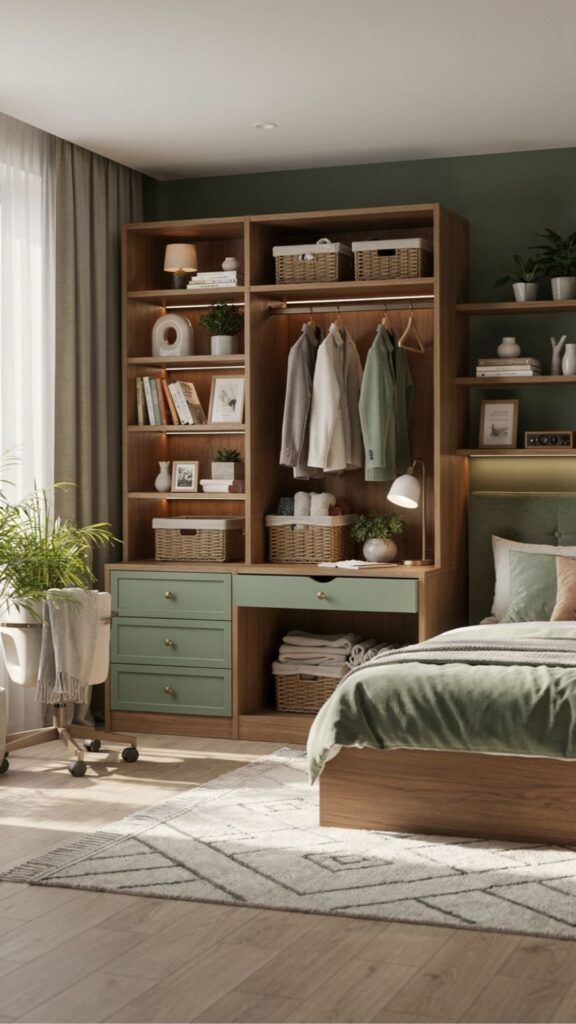
No teen bedroom idea will succeed long-term without addressing storage the invisible backbone of a functional room. A disorganized closet creates chaos that bleeds into the rest of the room, no matter how beautifully designed the visible areas are. The goal is a storage system that’s easy enough to maintain that the teen will actually use it consistently, not just right after a clean-up.
Modular closet systems like those from IKEA’s PAX line or The Container Store’s Elfa system allow complete customization of hanging space, shelf height, and drawer configuration. For teens with specific storage needs (an athlete with bulky gear, a musician with instruments, an artist with supplies), these systems can be configured precisely around those items. The investment pays off in reduced clutter and reduced time spent searching for things.
Vertical space is chronically underused in teen closets. Adding a second hanging rod below the primary one effectively doubles the hanging capacity for shorter items like jackets, shirts, and folded pants. Over-the-door organizers add storage for shoes, accessories, or small items without using any additional floor or shelf space. Hooks simple, affordable, installed in a row are one of the highest-utility additions to any teen room.
Labeling storage is a strategy that sounds elementary but makes a measurable difference in how consistently teens maintain organization. Clear bins with labeled fronts remove the cognitive friction of deciding where things go which is often what leads to items being dropped on the floor instead of put away. This is a behavioral design principle applied to bedroom organization, and it works remarkably well for teens who respond better to clear systems than open-ended storage.
Bring in Nature With Plants and Organic Textures:
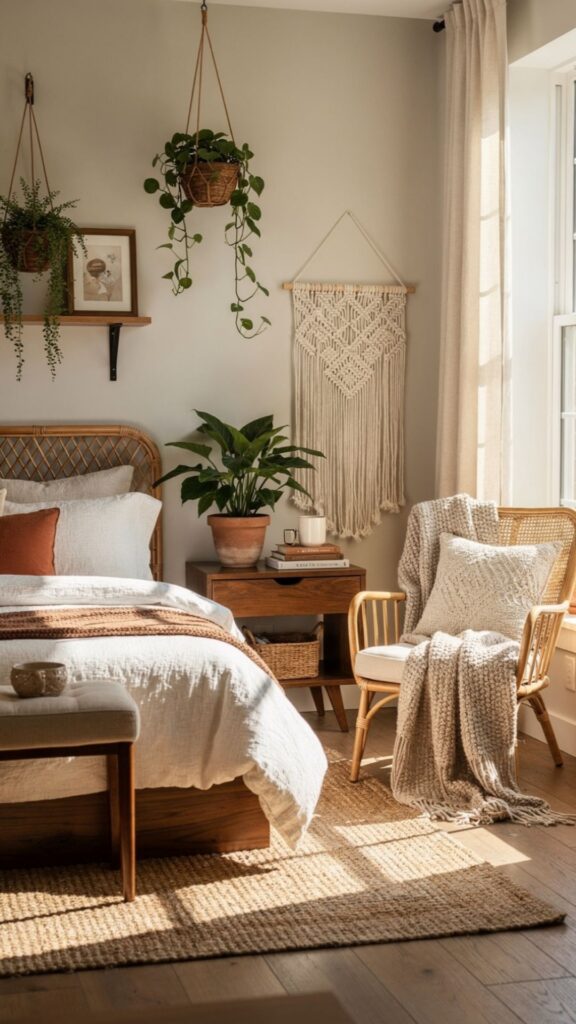
Biophilic design incorporating natural elements into interior spaces has moved from architectural trend to evidence-backed practice. Studies from environmental psychology research consistently show that exposure to natural elements reduces cortisol levels, improves focus, and promotes emotional wellbeing. For teens navigating academic pressure and social complexity, a bedroom that incorporates plants and organic textures is more than just aesthetically pleasing it’s genuinely restorative.
Low-maintenance plants are the right starting point for teen bedrooms. Snake plants (Sansevieria), pothos, ZZ plants, and succulents all thrive in typical bedroom conditions indirect light, variable watering schedules and are nearly impossible to kill with reasonable neglect. A small cluster of plants at different heights (one tall floor plant, one mid-height shelf plant, one trailing plant in a hanging pot) creates a lush, layered effect that elevates the room’s visual sophistication immediately.
Organic textures extend the biophilic effect beyond plants. Rattan furniture pieces, jute rugs, linen bedding, wooden shelving, and woven wall hangings all introduce natural materials that contrast beautifully with the harder surfaces of a typical bedroom. These textures also add tactile richness to a space something that’s easy to underestimate but deeply influences how a room feels to inhabit over time.
For teens particularly interested in sustainability a value that research shows is increasingly central to Gen Z identity sourcing decor from thrift stores, vintage markets, or sustainable brands adds another layer of meaning to the room. A vintage rattan chair, a second-hand wooden dresser refinished in a fresh color, or bedding from an ethical textile brand all tell a story about the teen’s values. This kind of intentional design is something top competitors in this niche rarely address but that resonates deeply with the actual demographic.
A Perfect Read For You: Bedroom Wall Decor Ideas That Help Every Teen Create Their Perfect Personal Bedroom Space
Design for Social Connection and Flexible Hangout Space:
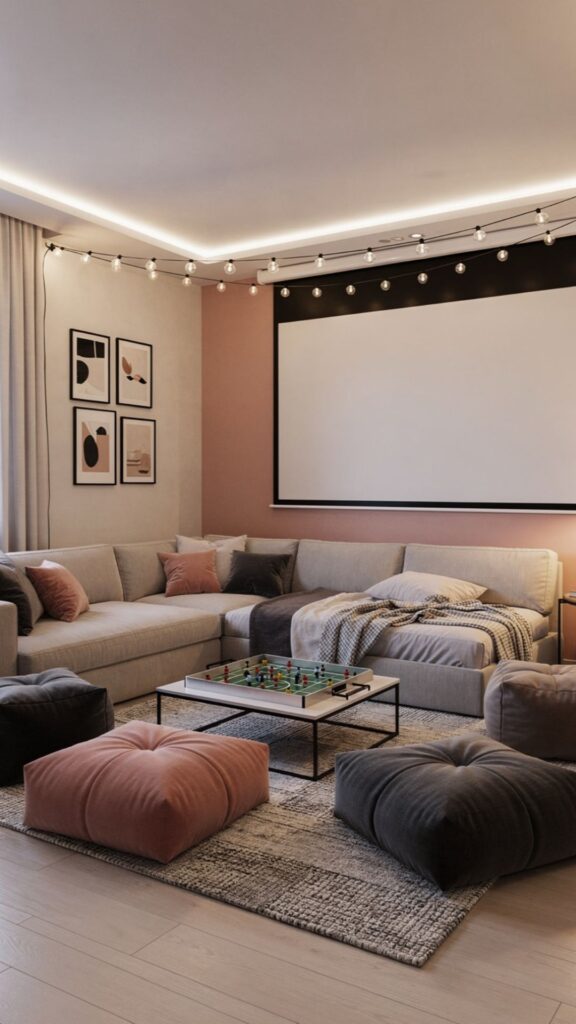
Teen bedrooms aren’t just personal retreats they’re social spaces. Designing for social connection means thinking beyond the single bed and desk setup to accommodate the reality that friends will gather in this room regularly. Floor seating, extra cushions, a small Bluetooth speaker setup, and a clear zone of open floor space transform a bedroom from a solo sanctuary into a comfortable hangout spot without sacrificing the room’s primary function.
Floor seating is the cornerstone of a teen hangout setup. Large floor cushions, poufs, and layered rugs create a casual, inviting atmosphere that chair-based seating simply doesn’t. A futon or daybed along one wall serves double duty a comfortable surface for one or two people during the week, and flexible overflow sleeping for weekend sleepovers. Stackable or foldable floor cushions can be stored easily when the hangout session is over.
A dedicated entertainment corner a wall-mounted screen or monitor, a small console or streaming device, and a cable management setup that keeps cords tidy legitimizes the teen’s social use of their room without letting tech dominate the entire space. Framing the screen with a gallery wall or surrounding it with shelving integrates it into the room’s design rather than making it feel like an afterthought.
For teens who host study groups as well as social hangouts, a small folding table that can be set up for collaborative work and stored flat against the wall afterward is a practical and inexpensive addition. The broader principle here is designing for flexibility acknowledging that a teen’s room serves different purposes on different days, and building in the capacity to shift between those modes quickly and easily.
Conclusion
A great teen bedroom isn’t built in a single shopping trip it’s designed thoughtfully around the teen who will actually live in it. These 11 teen bedroom ideas cover the full spectrum from functional storage solutions to mood-enhancing lighting, giving you a complete framework to create a space that’s both stylish and genuinely livable.
The common thread across every idea is intentionality: every choice should serve the teen’s real life, not just look good in a photo. Start with one or two ideas that resonate most, implement them well, and build from there a room that evolves alongside its owner is always better than one that tries to do everything at once.

Team TrandyVilla is the passionate home decor team behind Trandy Villa, where style meets comfort in everyday living. The team loves transforming simple spaces into beautiful, functional homes through smart ideas, budget-friendly hacks, and modern design trends. Their content focuses on helping readers create homes that feel both stylish and personal without spending too much.