
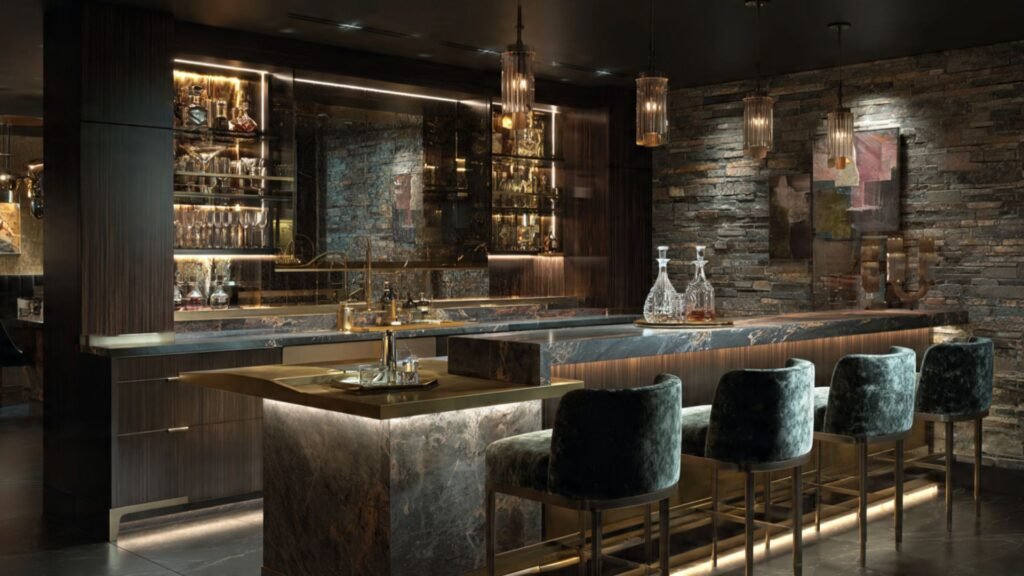
A basement bar Ideas is one of the smartest home investments you can make. It adds functional entertaining space, increases your home’s resale value, and gives you a personalized hangout spot just steps from your living room. Whether you have a sprawling unfinished basement or a compact utility room, there’s a basement bar ideas concept that fits your space, budget, and style.
The key is moving beyond the generic “mini fridge and a shelf” setup and designing something that genuinely reflects your personality and serves your lifestyle.
Basement Bar Ideas refer to creative design concepts for turning basements into functional home bars. They help homeowners use unused space for entertainment, relaxation, and social gatherings. They improve home value and create a personal leisure environment. These ideas include layouts, themes, and storage solutions suited for different basement sizes and budgets. Each concept focuses on style and functionality balance
Basement Bar transforms unused basement space into a stylish entertainment area for relaxation, social gatherings, and modern home living experiences. A Basement Bar is a home entertainment space in the basement designed for serving drinks and hosting social gatherings comfortably.
Basement Bar Ideas provide practical guidance for designing stylish and functional entertainment spaces at home. They include modern layouts, rustic designs, and compact solutions for small or large basements. Homeowners choose these ideas to improve usability, increase comfort, and enhance visual appeal in living areas. Proper planning ensures efficient use of space, better storage, and smooth entertainment flow in basements.
The Classic L-Shaped Bar:
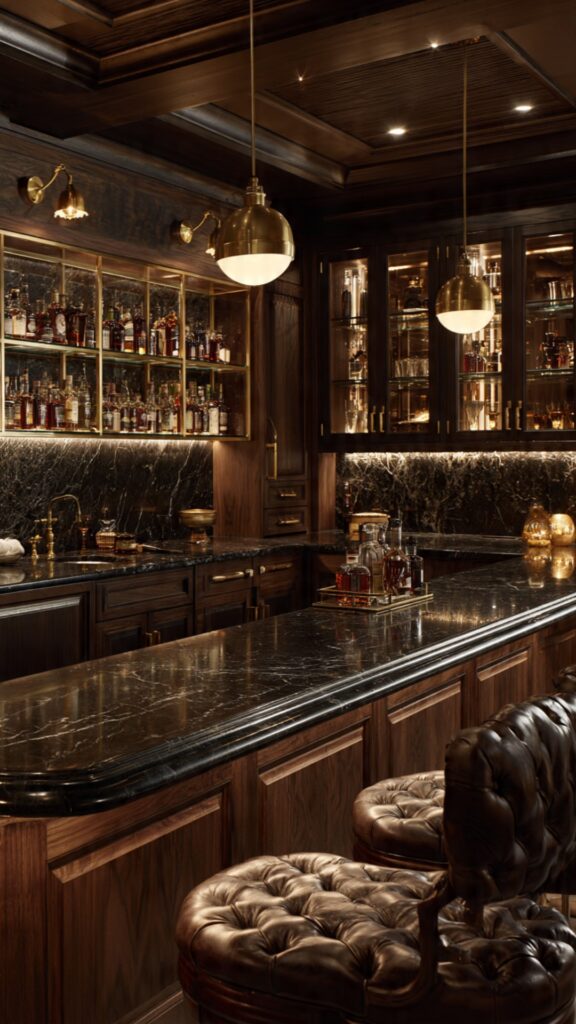
The L-shaped bar layout is the gold standard of home basement bar ideas and for good reason. It maximizes corner space, creates a natural flow for both the bartender and guests, and provides ample counter space for food prep, drink mixing, and display. One side of the “L” typically handles the working bar area with a sink, bottle storage, and a mini fridge, while the other side serves as a seating counter where guests pull up barstools and socialize.
What makes this layout particularly smart is the traffic flow it creates. Guests naturally gather around the open side of the bar without crowding the work area exactly how a real bar operates. When planning your L-shaped bar, consider using one material for the base cabinets and a contrasting material for the countertop. For example, dark navy shaker-style cabinets with a white quartz countertop create a sharp, timeless look that ages beautifully.
Don’t underestimate the importance of the corner section. That junction point is prime real estate use it to install an under-counter wine fridge, a specialty glass rack, or a built-in ice maker. Corner shelving above this section is also ideal for displaying premium spirits or a curated collection of glassware. Many homeowners overlook the vertical space above a corner, but floating shelves or open cabinetry here can become a focal point.
Budget-wise, an L-shaped bar typically runs between $3,000 and $12,000 depending on material quality and whether you hire a contractor or go the DIY route. If you’re building it yourself, pre-made IKEA kitchen cabinets repurposed as bar cabinets can dramatically cut costs while still delivering a polished, customized look when paired with the right countertop and hardware.
The Rustic Reclaimed Wood Bar:
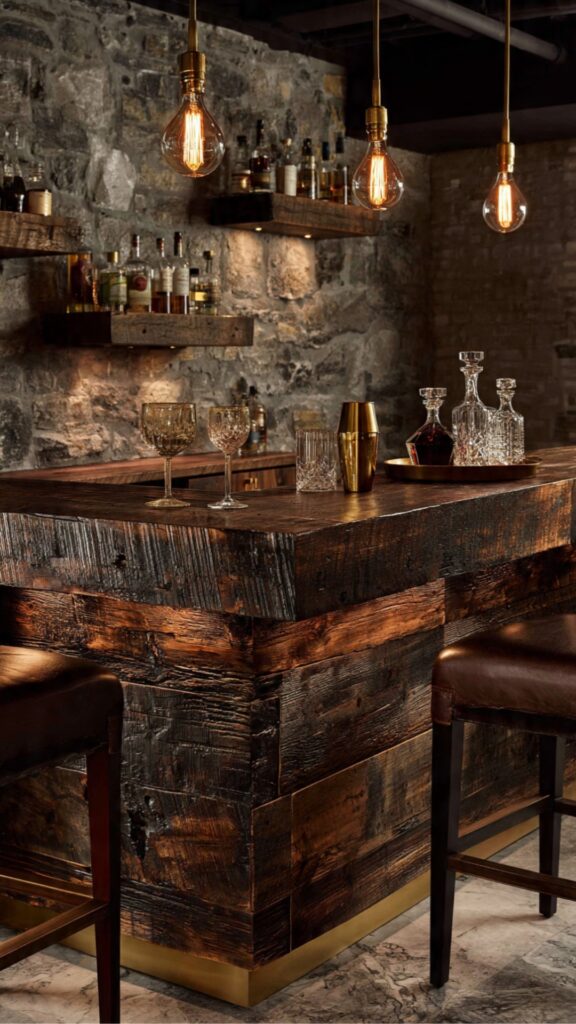
There’s something deeply satisfying about a basement bar ideas built from reclaimed wood it tells a story, adds warmth, and feels completely unlike the sterile, showroom-perfect bars you see in new construction homes. Reclaimed barn wood, salvaged whiskey barrel staves, or repurposed pallets can be used to build bar fronts, shelving, and even ceiling accents that create an authentic, lived-in atmosphere that no laminate finish can replicate.
The beauty of this style is its forgiving nature. Unlike marble or polished wood, reclaimed materials hide scratches, ring marks, and general wear remarkably well making it incredibly practical for a busy entertainment space. The natural knots, nail holes, and weathered grain add to the character rather than detracting from it. Pair this with Edison bulb pendant lighting and black iron hardware, and you have a space that feels like a craft brewery tap room.
One underrated tip: mix reclaimed wood with industrial metal elements. Steel pipe for footrails, black powder-coated shelving brackets, and cast iron tap handles all complement rough-hewn wood beautifully.
This industrial-rustic hybrid is one of the most search-popular basement bar ideas aesthetics right now and works especially well in older homes where the basement itself has exposed brick or concrete block walls elements that become features rather than flaws.
Sourcing reclaimed materials doesn’t have to be expensive. Architectural salvage yards, Facebook Marketplace, and Habitat for Humanity ReStores are excellent sources for genuinely aged wood at a fraction of custom lumber costs. Always seal reclaimed wood properly with a food-safe finish before using it on a bar surface raw wood can harbor bacteria and is difficult to clean in a high-use bar environment.
The Sports Bar Theme:
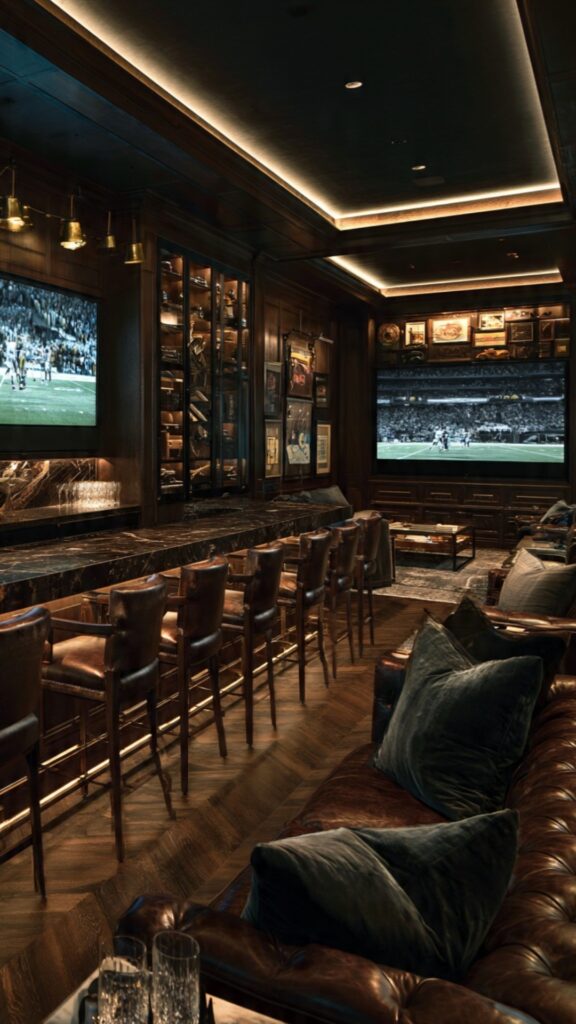
For sports fans, the basement bar ideas represent the ultimate opportunity to build a dedicated watch party destination. A well-executed sports bar theme goes far beyond mounting a TV it’s about replicating the energy and comfort of your favorite sports bar in a space that belongs entirely to you. Multiple screens, directional seating, and team-branded décor all work together to make this feel intentional rather than cobbled together.
Start with screen placement as your planning anchor. If you love multiple sports or follow different leagues, plan for two to three screens arranged so every seat has a clear sightline to at least one. Wall-mounted TVs at bar height are ideal 55 to 65 inches each and running the wires in-wall before drywalling will save you from ugly cable management headaches later. A surround sound system tied to the main screen elevates game nights from casual to genuinely immersive.
Seating strategy matters enormously in a sports bar setup. A combination of barstools at the bar counter, a few pub-height tables in the middle, and a comfortable sectional sofa in front of the main screen creates distinct zones for different types of viewers. Some guests want to lean into the game; others want to relax with a drink. Giving both groups their ideal environment keeps everyone happy and extends the time they spend in your basement.
Details make this theme pop. Think about adding team memorabilia in frames, a dedicated snack station with a popcorn machine or hot dog roller (yes, they’re genuinely fun), team-colored neon signs, and a chalkboard wall for writing game-day stats or predictions. Concrete floors with area rugs handle spills gracefully, and commercial-grade barstools are worth the extra investment for durability under heavy use.
Hidden Gem Alert: Basement Bedroom Ideas That Perfectly Complement Your Stylish Basement Bar Design
The Speakeasy-Style Hidden Bar:
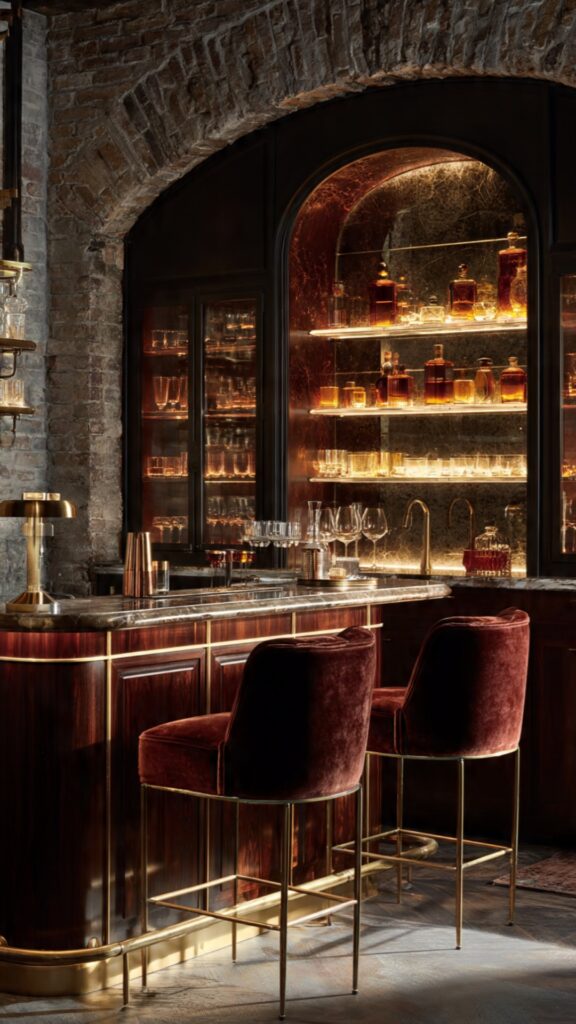
The speakeasy concept a hidden, Prohibition-era-inspired basement bar ideas is one of the most exciting and dramatically different directions you can take your project. The core idea is concealment and surprise: the bar is tucked behind a bookshelf door, a panel that looks like a wall, or even a false fireplace facade. The moment of revelation when guests discover the space is genuinely thrilling, and nothing else quite creates that impression in a home setting.
The bookshelf door is the most popular entry mechanism, and for good reason it’s functional as actual shelving, looks completely natural in a living space, and the hidden room concept never gets old. You can buy pre-made hidden door kits from companies like Creative Home Engineering or build one with a piano hinge and wooden shelving frame. The key to a convincing false door is ensuring it aligns perfectly with the surrounding wall and swings smoothly with minimal effort.
Inside the speakeasy, lean hard into the 1920s aesthetic. Tin ceiling tiles (affordable at most home improvement stores), deep jewel tones on the walls, velvet bar stools, and vintage cocktail posters all create the right atmosphere. Low, warm lighting ideally from sconces and under-shelf LEDs on a dimmer is essential. This is not a space for bright overhead lighting; the whole mood depends on intimacy and a sense of being somewhere secret.
The speakeasy concept also pushes you toward a curated cocktail bar rather than a general all-purpose setup. Stock it with the ingredients for classic Prohibition-era cocktails Old Fashioneds, Sidecars, Bees Knees, and the Dark and Stormy.
A small cocktail book collection displayed on the bar, a proper cocktail shaker set, and quality glassware complete the experience. This is a bar that tells people something interesting about you the moment they step inside.
The Modern Minimalist Bar:
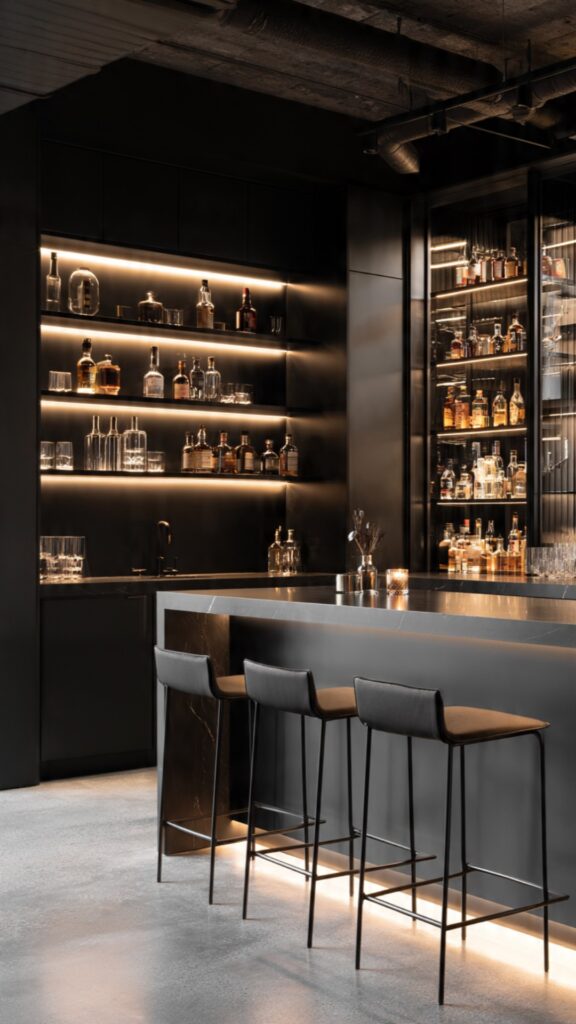
Not every homeowner wants rustic warmth or themed drama. For those who prefer clean lines, understated elegance, and a contemporary aesthetic, the minimalist basement bar ideas is a genuinely sophisticated choice. Think flat-front cabinetry in matte white or slate gray, a waterfall-edge countertop in quartz or concrete, and recessed lighting paired with a single sculptural pendant above the bar. Less is deliberately more.
The minimalist approach actually solves a common basement problem: making a low-ceiling or narrow space feel larger and more open. By eliminating visual clutter open shelving with only essential items on display, handleless cabinetry, and a monochromatic color palette you create a sense of airiness that traditional bar setups simply can’t achieve. Choose reflective surfaces like glossy cabinet fronts or mirrored backsplashes to bounce light around and make the space feel even larger.
Appliance integration is critical in a minimalist bar. A fully integrated panel-ready refrigerator (where the cabinetry panel covers the appliance face completely), an under-counter wine cooler with a stainless interior, and a flush-mount sink with a sleek matte black faucet all maintain the clean visual line. Even the bottle display should be intentional limit spirits to a single curated collection displayed on one floating shelf rather than a crowded, disorganized array.
Technology fits naturally in a minimalist bar. Smart home integration automated lighting scenes, a hidden Sonos sound system with in-ceiling speakers, and a smart display that can show cocktail recipes or ambient visuals enhances the space without disrupting the clean aesthetic. The minimalist bar is the one basement bar ideas style that actually looks better over time, as long as you resist the temptation to fill every surface with objects.
The Tiki Bar and Tropical Escape:
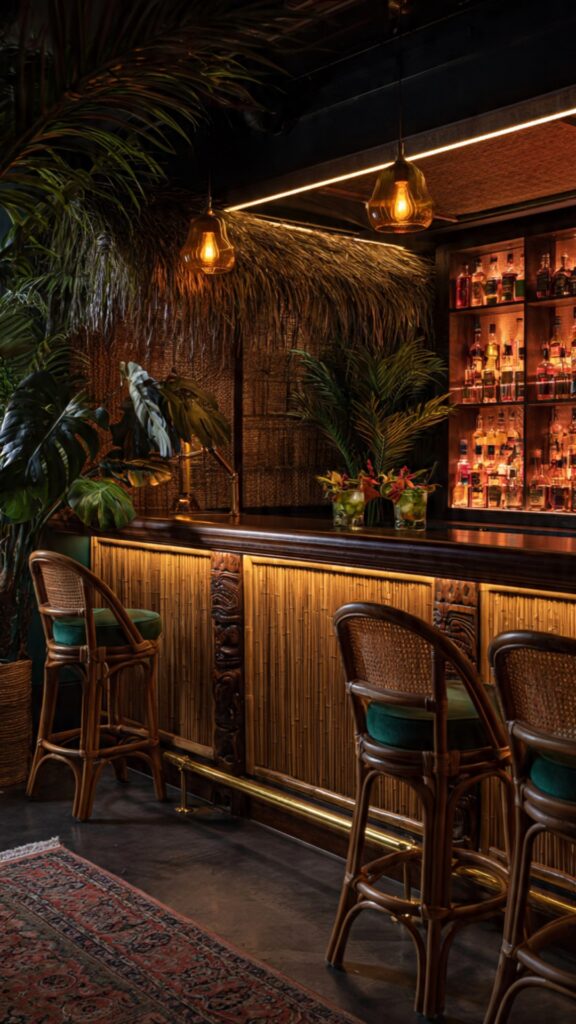
The tiki bar is arguably the most fun, boldly committed aesthetic in home bar design and the basement is the perfect place to go all in. When executed well, stepping into a tiki-themed basement bar ideas should feel like teleporting to a seaside resort in the Pacific. Thatch roof panels, bamboo bar fronts, tropical murals, and the smell of aged rum all contribute to an immersive escape that’s genuinely unlike any other room in your home.
The structural elements of a tiki bar are surprisingly accessible and DIY-friendly. Bamboo poles are inexpensive at garden or landscape supply centers and can be used to clad bar fronts, create wall texture, or frame entry arches. Synthetic thatch roofing panels available from specialty tiki décor suppliers and Amazon are fire-rated, mold-resistant, and remarkably convincing. Combined with a few hanging puffer fish lanterns and a carved wooden tiki totem, you can transform even a plain drywall basement into something that feels genuinely transported.
The cocktail program matters enormously in a tiki bar. Stock the essentials: multiple styles of rum (white, aged, dark, and agricole), orgeat syrup, falernum, fresh citrus juices, and a good collection of coconut and pineapple mixers.
A dedicated blender for frozen drinks, a crushed ice machine, and tiki mugs in a variety of shapes complete the service experience. Tiki cocktails like the Mai Tai, Zombie, and Navy Grog are surprisingly complex and genuinely delicious this bar will motivate you to actually learn mixology.
One practical consideration: manage moisture carefully in a tiki bar. Natural bamboo can absorb humidity and grow mold in a basement environment, so seal all natural materials thoroughly or opt for faux-bamboo alternatives made from PVC or resin. A dehumidifier is a worthwhile investment in any basement bar ideas, but it’s especially critical in a tiki setup where organic materials and tropical-style decorations are prevalent.
The Wine Cellar Bar Hybrid:
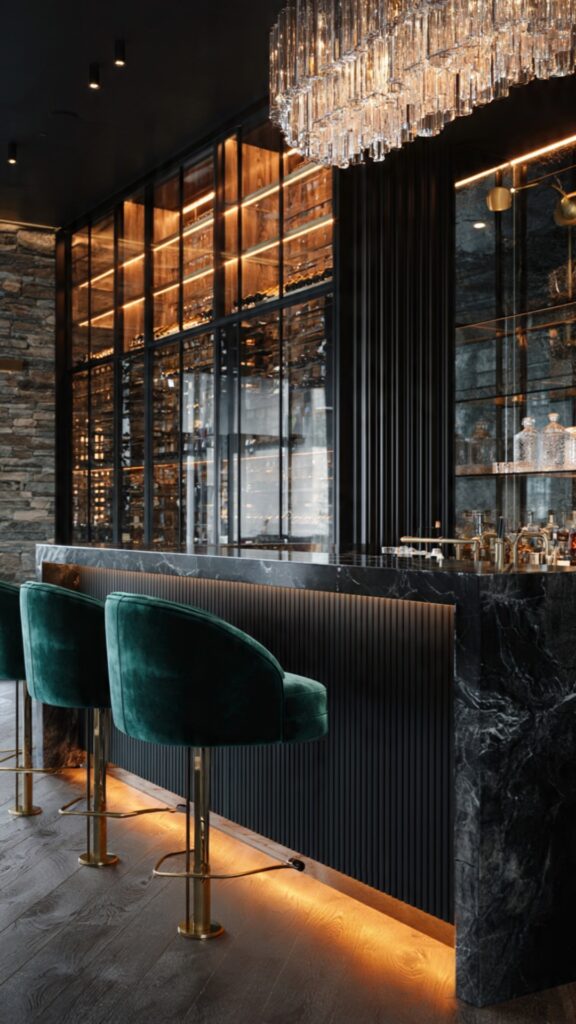
Combining a wine cellar with a functional bar creates one of the most elegant and value-adding basement upgrades possible. This isn’t just aesthetically impressive a properly built wine cellar can preserve a collection worth thousands of dollars, and the combination of active wine storage with a tasting and serving area is something you typically only find in high-end restaurants.
In your own basement bar ideas, it becomes a remarkable entertainment feature and a meaningful investment. The climate control system is the technical heart of this concept. A dedicated wine cellar cooling unit (not a standard HVAC system) maintains the ideal temperature of 55–58°F and humidity of 60–70% that wines require for long-term aging.
The cellar section needs to be properly insulated typically with closed-cell spray foam and vapor-sealed before the cooling unit is installed. This is one area where professional installation is strongly recommended, as errors here directly impact the quality and value of your wine collection.
The bar section connects naturally to the cellar with a serving counter at standard bar height, a wine preservation system like Coravin for keeping open bottles fresh, proper Riedel or crystal stemware displayed on overhead glass racks, and a small prep area for decanting and pairing cheeseboards or charcuterie. The visual contrast between the organized bottle racks in the cellar and the warm, hospitality-focused bar area creates a genuinely beautiful spatial narrative.
For the aesthetic, wood wine racks particularly in mahogany or redwood are the traditional choice and look stunning paired with limestone or brick walls. Modern wine cellars are increasingly using metal modular racking systems, which allow for greater flexibility as your collection grows and create a more contemporary look. LED lighting inside the cellar that highlights bottle labels is both functional and visually dramatic when viewed through a glass cellar door one of the most impressive details you can add to this concept.
The Pub-Style Bar with Dart Board and Games:
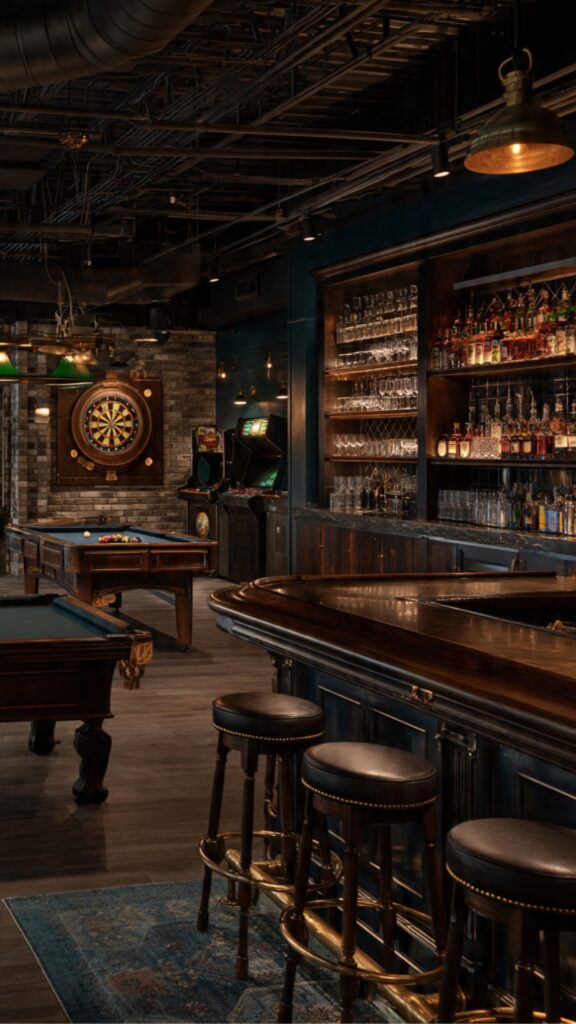
The English pub-inspired basement bar ideas capture something essential: the idea that a bar should be a place of genuine social interaction, not just passive drinking. A dart board, a proper pool table, a shuffleboard surface, or a vintage pinball machine all give guests something to do, which keeps gatherings going longer and creates the kind of natural, competitive energy that makes people genuinely happy to be somewhere.
The dartboard setup deserves serious attention because it’s frequently done poorly. A regulation dartboard should be mounted so the bullseye is exactly 5 feet 8 inches from the floor, and the throwing line (oche) should be 7 feet 9.25 inches from the face of the board. Surround the board with a proper wooden dartboard cabinet to protect your walls, and install a rubber or cork floor mat at the throwing line for both safety and floor protection. These details separate a casual dartboard from a proper game setup.
Pool tables require thoughtful space planning. A regulation 9-foot table needs at least 5 feet of clearance on all sides for comfortable cueing meaning you need a minimum room footprint of roughly 19 by 15 feet just for the table and its play area.
If your basement is smaller, consider a 7-foot table, which is actually used in many professional bar settings and plays excellently in a home environment. Overhead lighting specific to pool a billiard pendant light fixture improves play quality significantly and adds a strong visual anchor to the room.
Pub aesthetics work brilliantly in basements with low ceilings because they’re inherently intimate and don’t rely on dramatic vertical space. Dark wood paneling, vintage beer signage, frosted glass pendant lights, a brass beer tap system, and worn leather barstools all contribute to the authentic pub feeling. A chalkboard behind the bar listing available beers on draft or just the week’s specials is a charming, functional detail that makes the space feel genuinely operational.
This is Exactly What You Need: Dark Academia Living Room Ideas That Bring the Same Moody and Sophisticated Vibe to Your Basement Bar ideas
The Craft Beer Bar with Draft System:
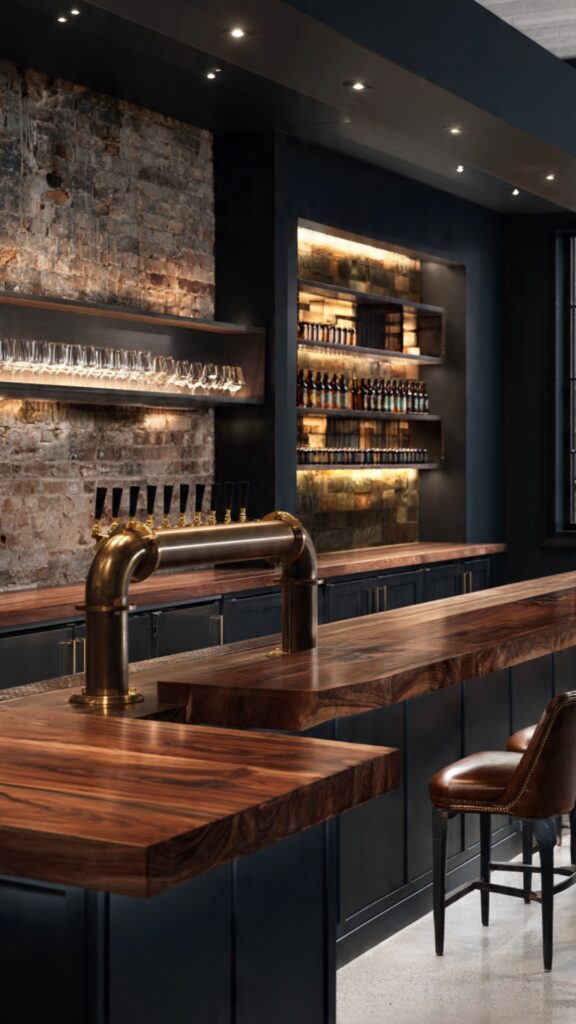
For the craft beer enthusiast, building a home draft system is the definitive basement bar upgrade. Instead of bottles and cans, you’re pouring fresh draught beer from a commercial-style keg system and the difference in taste, presentation, and experience is dramatic. A properly maintained draught system keeps beer at optimal temperature and carbonation, which means every pour comes out exactly as the brewer intended.
The core of a home draft system is the kegerator or converted chest freezer (known as a “keezer”). A single-tap keezer built from a 7-cubic-foot chest freezer costs around $300–400 to build yourself, compared to $500–800 for a commercial unit and the DIY version typically holds a full-size keg with room to spare.
Add a temperature controller, a CO2 regulator, beer line, and a shank with a tap handle, and you have a functioning system. Many enthusiasts expand to four-tap or even eight-tap systems as their passion grows.
The bar tower and tap handles are where you can really express personality. Custom tap handles are available in virtually any shape and material from wooden paddles with your family name engraved to miniature replicas of liquor bottles.
Mounting a polished chrome tower on your bar surface with multiple taps creates that authentic brewery taproom look that photo-quality bar images always feature. It’s the single detail that most transforms a home bar into something that looks and functions professionally.
Consider pairing your draft system with a dedicated beer fridge for canned craft beers, a glass rinsing fountain (that small water jet you see bartenders use to clean glasses between pours it makes a real difference), and a tap list chalkboard that you update seasonally. Rotating kegs to match the season a wheat beer in summer, an Octoberfest in fall, a stout in winter gives your basement bar ideas an evolving character that regular guests genuinely appreciate.
The Cocktail Enthusiast’s Home Bar:
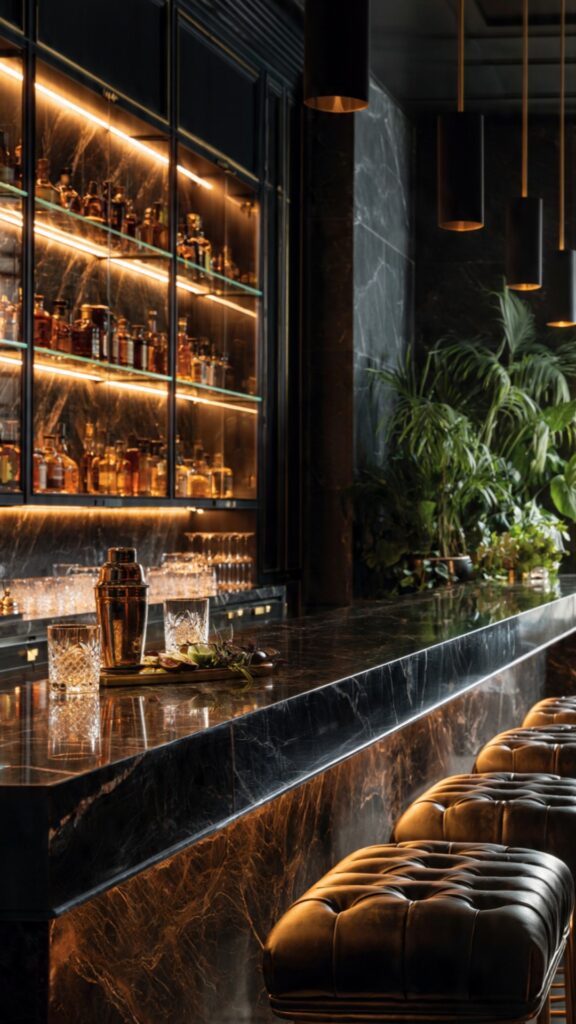
The craft cocktail movement has fundamentally changed what a home bar can be. A cocktail-focused basement bar ideas prioritizes technique, quality spirits, and the tools that allow you to execute drinks at a genuinely high level. This isn’t just a place to pour drinks it’s a dedicated workspace for someone who approaches cocktail-making as a creative and culinary pursuit, not just a party convenience.
The back bar display the wall of spirits behind the bartending area is the visual centerpiece of a cocktail bar. Floating glass shelves with LED strip lighting underneath create a display that shows off your bottle collection beautifully.
Organize spirits by category: base spirits (whiskey, gin, rum, vodka, tequila) on the main shelf, liqueurs and modifiers on the next, and bitters, syrups, and garnishes within easy reach at bar level. This organizational approach isn’t just aesthetic; it speeds up drink-making meaningfully during busy gatherings.
Equipment investment separates a cocktail bar from a simple liquor shelf. A Hawthorne strainer, Japanese jigger, bar spoon, muddler, channel knife, and quality shaking tins are essential and collectively cost under $100 for good versions. More significant investments include a sous vide circulator for making fat-washed spirits and infusions, a Vitamix blender for perfectly smooth frozen drinks, a carbonation rig for making sparkling cocktails, and a clear ice system either a Wintersmiths maker or a directional freezing method for producing the crystal-clear ice that elevates any cocktail presentation.
The cocktail bar concept also invites you to think about a house cocktail menu two or three signature drinks that reflect your taste and that you’ve refined over time. Printing a small card-sized menu for parties is a genuinely impressive touch that signals to guests that this bar has a genuine identity. It also helps manage requests during large gatherings, since you can prep batches of your signature cocktails in advance and serve them efficiently.
The Basement Bar with Built-In Entertainment Wall:
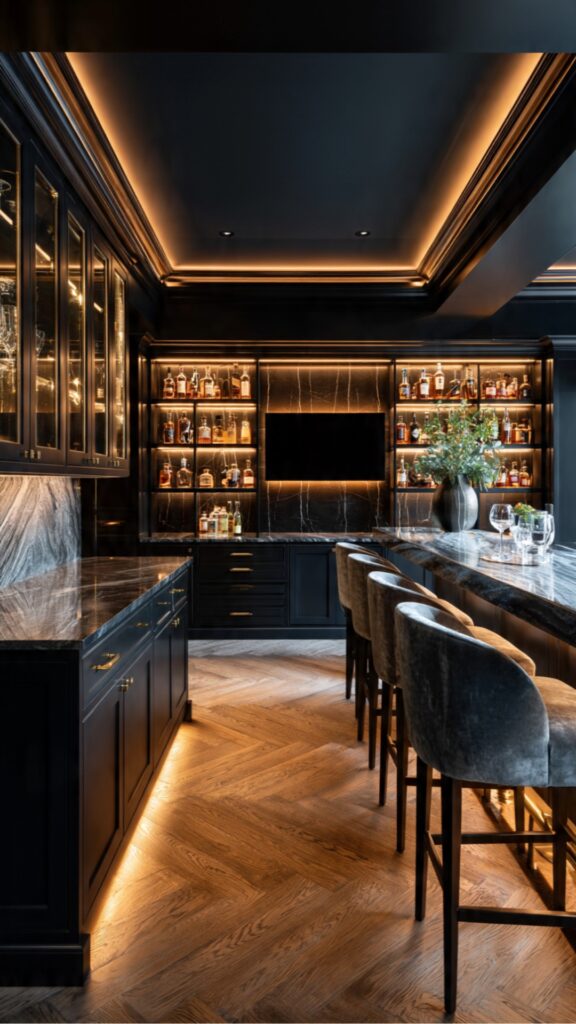
One of the most popular and functional basement bar ideas concept today integrates the bar with a full entertainment wall combining the drink service area with a large-screen TV, sound system, gaming consoles, and media storage into one cohesive, purpose-built installation. This approach works particularly well in open-plan basements where the bar and lounge area exist in the same visual space.
The key to making this work aesthetically is designing the cabinetry as a single, continuous unit that spans the wall. The bar section (with countertop, sink, and fridge) is flanked by media cabinetry that includes the TV mount at center, closed cabinets below for consoles and receivers, open shelving for display, and possibly a built-in fireplace beneath the screen. When designed cohesively, this wall becomes an architectural feature rather than a collection of individual pieces.
Cable management is the invisible foundation of a clean entertainment wall. Before any cabinetry goes in, run conduit through the wall for HDMI cables, power outlets, speaker wire, and ethernet. Surface-mounted cable raceways always look cheap and temporary investing in proper in-wall routing at the construction stage pays dividends in the finished appearance.
Mounting a structural wall plate behind the TV location and using a full-motion mount gives you flexibility to adjust the viewing angle for different seating configurations. Gaming has become a central part of home entertainment, and a modern basement bar ideas should accommodate it deliberately.
A dedicated gaming zone whether it’s a separate console setup or a gaming PC area within the entertainment wall with comfortable gaming chairs or a sectional, appropriate screen distance, and possibly a gaming-specific display (OLED or 120Hz monitor) serves a genuinely growing segment of how people use their basement bars. This is a detail most traditional bar design guides completely overlook.
The Outdoor-Indoor Bar with Sliding Door Access:
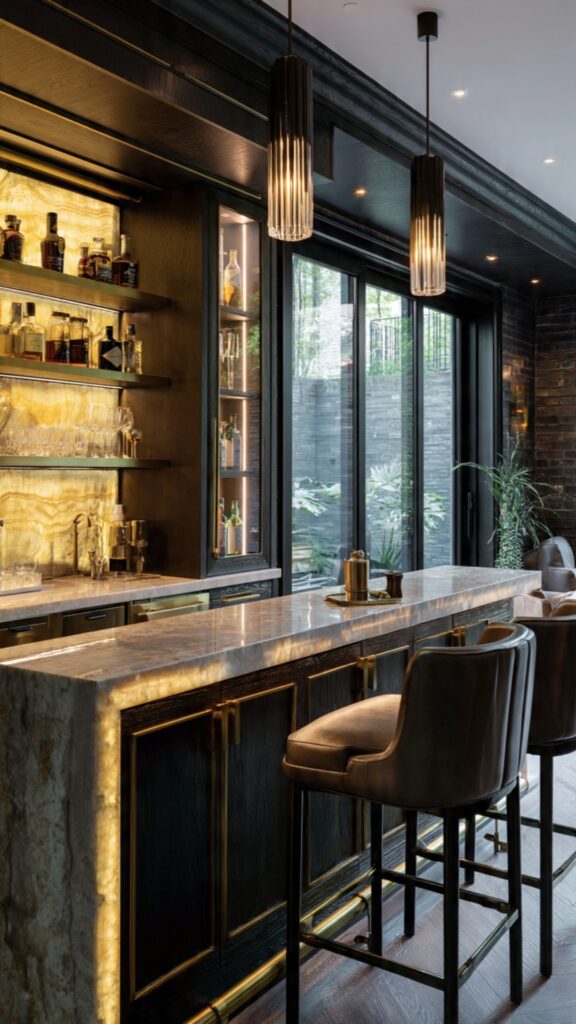
If your basement has a walkout level or garden access, designing a basement bar ideas that flows naturally between indoor and outdoor spaces is one of the most valuable and enjoyable configurations possible. A folding glass wall, bi-fold patio door, or full-width sliding door transforms the basement bar ideas from a self-contained room into an expansive entertaining zone that expands onto a patio, deck, or garden during warmer months.
The transition between interior and outdoor surfaces requires careful material planning. The indoor bar floor (typically tile, concrete, or hardwood) needs to meet the outdoor surface (concrete patio, pavers, or composite decking) at roughly the same level to create a seamless visual and physical flow. Flush thresholds where the door track is set below the floor surface are the gold standard here, though they require more planning at the construction phase. This detail single-handedly determines whether the indoor-outdoor connection feels intentional or improvised.
Outside the door, create a dedicated outdoor bar extension a covered pergola or awning over a concrete pad with an outdoor bar counter, a built-in gas grill or pizza oven, and weatherproof seating. Outdoor-rated materials like teak, cedar, marine-grade plywood, and porcelain tile handle weather beautifully. String lights or café lights above the outdoor space create ambiance in the evening and signal to guests that the outdoor area is as intentional and welcoming as the indoor bar.
From a resale perspective, a walkout basement bar ideas with outdoor access is one of the highest-return basement bar ideas features you can add. Real estate data consistently shows that basement entertainment spaces with natural light and exterior access command significant premiums over traditional windowless basements sometimes 10–20% in home value. Even if you don’t plan to sell, the quality-of-life improvement from having this connection to the outdoors is difficult to overstate.
The Small Basement Bar, Basement Bar Ideas:
That Maximizes Limited Space
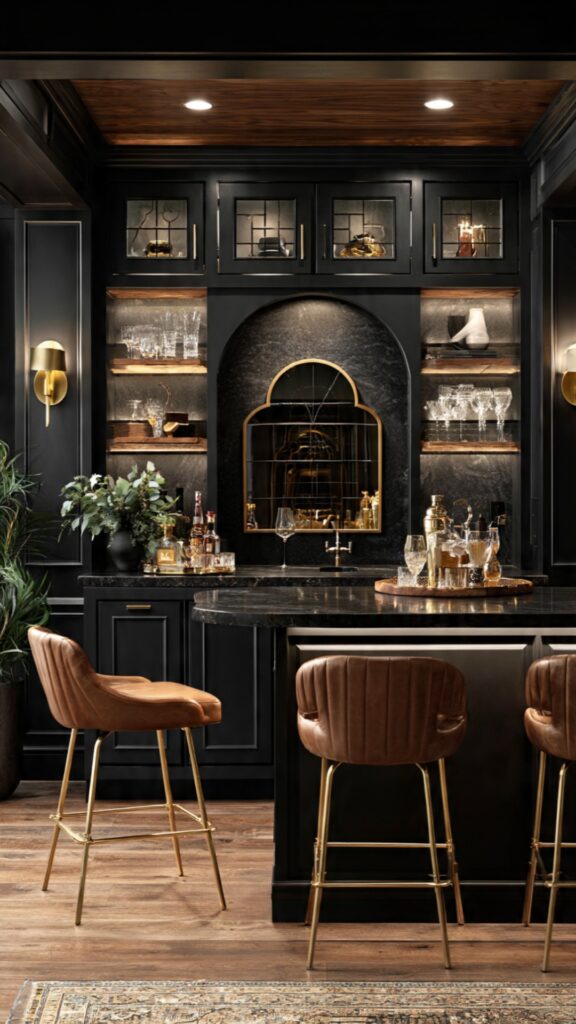
Not every basement bar ideas need or has a large footprint. A well-designed compact bar can deliver everything a larger bar does in as little as 6 to 8 linear feet of wall space. The key is vertical thinking: using the full height of the wall for storage and display rather than spreading horizontally across a room. This approach actually forces a level of curation and intentionality that oversized bars often lack.
Start with a single straight bar run a countertop with bar cabinets below and open shelving above. A 24-inch deep countertop provides ample workspace; you don’t need a wider surface than that for most bartending tasks. Under the counter, install a 24-inch undercounter refrigerator, a 15-inch dishwasher if space allows, and a small sink. Above the counter, three or four floating shelves at progressively decreasing depth give you enough display space for a well-curated spirit collection without overwhelming the wall.
Barstools that tuck completely under the counter are essential in a small bar they disappear when not in use and free up the floor space that makes compact rooms feel cramped. Counter-height stools (28–30 inches for a standard 36-inch countertop) should have no backrest or a very low one to maximize the under-counter clearance. Wall-mounted fold-down tables are another underused trick they provide additional surface area for parties and fold flat against the wall when not needed.
Light plays an enormous role in how small spaces feel. Avoid single overhead light sources, which cast flat, uninspiring light in a compact bar. Instead, layer your lighting: recessed lighting for general ambient light, LED strip lighting under the floating shelves for mood and bar task lighting, and a small pendant light above the bar counter for visual warmth. This layered approach makes even a compact basement bar ideas feel designed and considered rather than squeezed in.
The Movie and Bar Lounge Combo:
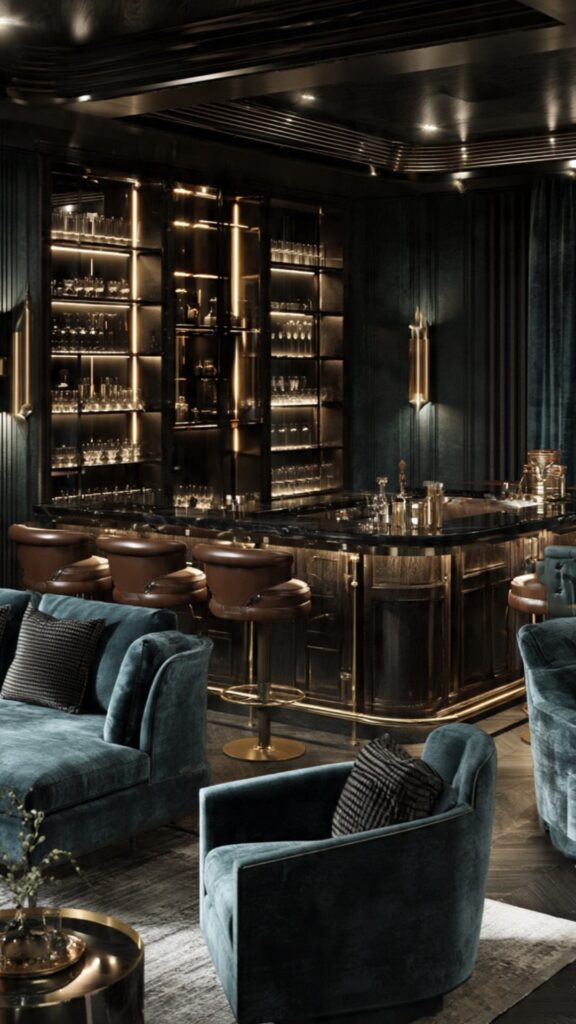
Combining a basement bar ideas with a dedicated home theater creates what is legitimately one of the best room concepts available in residential design. The synergy is obvious: great movies are better with a great drink, and the theater-going experience is dramatically enhanced by having premium food and beverage service steps away from the screen. Getting the balance right ensuring neither the bar nor the theater compromises the other is where thoughtful planning earns its value.
The acoustic relationship between the bar and theater areas requires careful attention. Hard bar surfaces countertops, cabinet faces, tile backsplashes reflect sound and can muddy the theater’s acoustic environment.
Place the bar at the back of the theater room or in an adjacent area separated by a half-wall or doorway with a sound-buffering curtain. Inside the theater itself, acoustic panels on the walls (which can be fabric-covered and look completely finished), a thick area rug, and upholstered seating all absorb sound and improve the listening experience dramatically.
Seating design in a movie-bar combo should span the comfort spectrum. Traditional theater-style reclining seats available from companies like Valencia Theater Seating and Octane Seating for $400–1,200 per seat are the gold standard for primary viewing.
Supplement with a bar counter at the back of the room where guests can perch on stools with a clear view of the screen, pour their own drinks during the film, and move around without disturbing seated viewers. This dual-zone approach handles the reality that not everyone watches movies the same way.
The projector versus large-screen TV debate is worth addressing directly. For a dedicated theater room, a 4K laser projector on a 120-inch screen almost always delivers a more cinematic and immersive experience than any flat-panel TV.
However, projectors require a dark room meaning that windows, if any exist, need blackout solutions. For a combo bar-theater that needs to function in daylight hours, a large-format TV in the 85–98 inch range is more practical. The LG G-series OLED and Samsung Frame TVs are worth the premium investment in this application.
The DIY Budget Basement Bar:
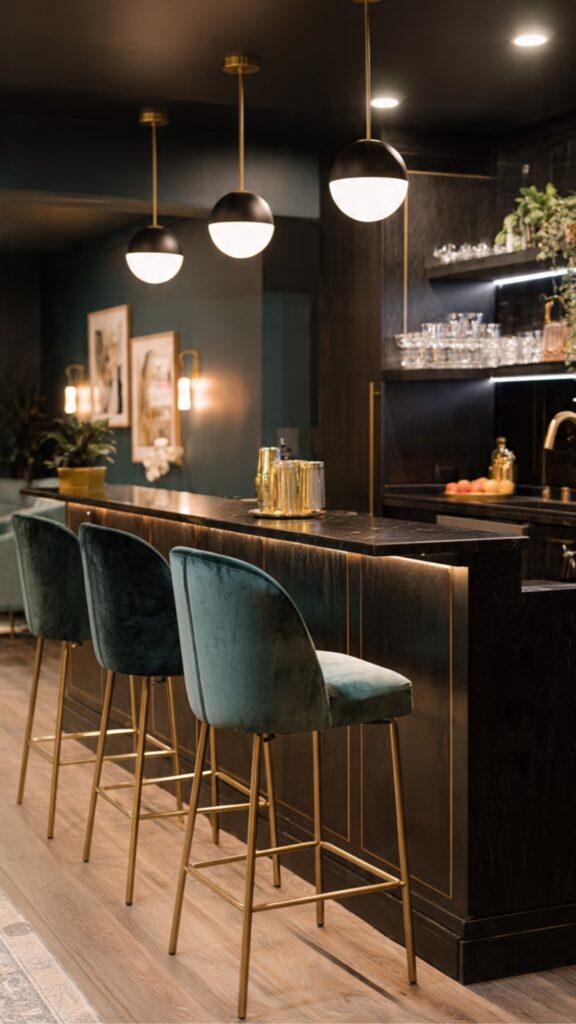
Building a functional, attractive basement bar ideas doesn’t require a contractor budget or premium materials. A well-executed DIY basement bar ideas built for $500 to $2,000 can rival the look and function of a professionally built bar costing several times more if you approach the project strategically, invest in the right places, and accept smart compromises where the difference isn’t worth the price gap. This is one of the most genuinely achievable home improvement projects for a motivated weekend builder.
The IKEA METOD or SEKTION kitchen cabinet systems are the secret weapon of budget basement bars. Designed for kitchens, these systems are robust, well-engineered, and available in dozens of configurations. Used as bar base cabinets, they provide exactly the storage and structural foundation you need.
Add a butcher block countertop from IKEA or a remnant granite slab from a local countertop fabricator (fabricators often sell remnants at steep discounts), and you have a bar base that looks entirely custom.
Concrete block or plywood bar fronts are two DIY-friendly alternatives to traditional cabinetry that create excellent visual impact at low cost. A plywood bar front built from three-quarter-inch birch plywood with a router profile along the edges, sanded smooth, and painted in a bold color looks completely professional and costs a fraction of cabinet-grade materials. Concrete block bars are increasingly popular in industrial-style basements and are one of the most structurally sound and inexpensive bar builds possible.
Where you should not cut corners: the plumbing and electrical work. Even in a budget build, running proper water lines to a bar sink (or at minimum a kegerator drain line) and adding dedicated electrical circuits for appliances are investments worth making correctly.
A bar sink with running water is not just a convenience it’s a fundamental sanitation tool that changes how usable and hygienic the space is. Many jurisdictions require permits for this work; always check local requirements before beginning.
We Saved the Best for Last: Black Living Room Decor Ideas That Match the Same Bold and Elegant Feel of Your Basement Bar ideas
The Bar with a Dedicated Cocktail Garden or Herb Wall:
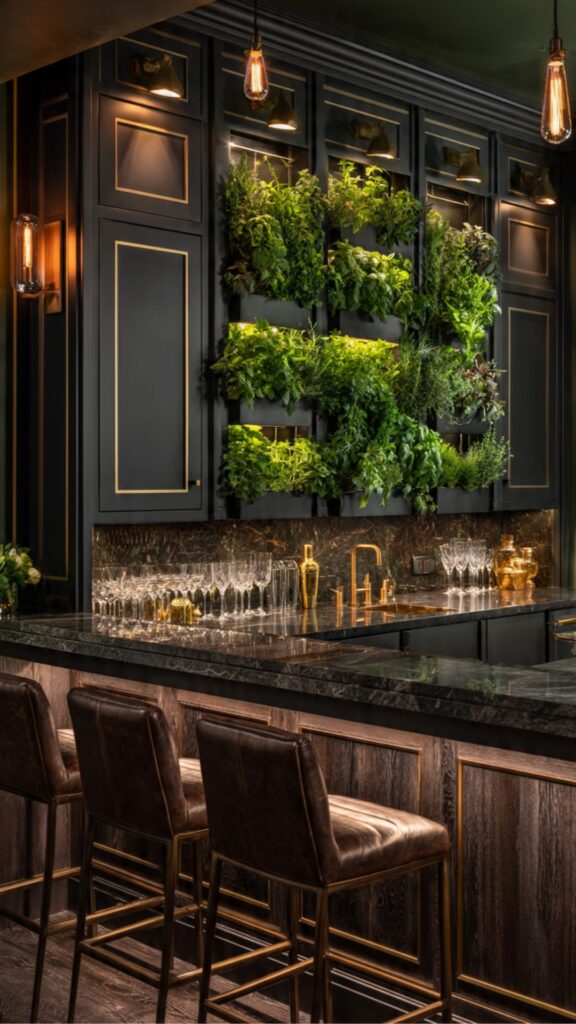
One of the most genuinely original and underexplored concepts in home bar design is integrating a living herb wall or indoor growing station into your basement bar ideas. Fresh herbs mint for mojitos and juleps, rosemary for gin cocktails, basil for Italian-inspired drinks, lavender for botanical infusions are game-changers in cocktail quality, and growing them steps from your bar eliminates the need to buy sad, wilting bunches from the grocery store.
A vertical herb garden on a single basement wall can be achieved with hydroponic growing systems like the AeroGarden or a wall-mounted tray system using grow lights. Since basements lack natural sunlight, full-spectrum LED grow lights (6,500K color temperature) are essential and remarkably energy-efficient.
A 4-foot-wide wall panel with six to eight growing slots is enough space to maintain a meaningful cocktail herb garden year-round with minimal maintenance beyond weekly watering and occasional fertilizing.
Beyond herbs, consider extending the concept to specialty garnishes: edible flowers (pansies, nasturtiums, and violets look stunning in a crystal-clear cocktail), microgreens for savory garnishes, and small citrus trees like a dwarf Meyer lemon or a calamondin orange both of which produce usable fruit on a compact plant that can thrive under grow lights. This level of culinary integration in a home bar is virtually unheard of and creates an experience that genuinely surprises and impresses guests who have never seen anything like it.
The practical benefit compounds over time. Fresh herbs and homemade infusions spirits steeped with rosemary, chili, citrus peel, or vanilla are the foundation of what separates genuinely good cocktails from mediocre ones.
Having these ingredients consistently available at zero incremental cost after the initial investment changes how you approach drink-making. It encourages experimentation, reduces waste, and gives your basement bar ideas a genuine culinary identity that pre-bottled mixers can never provide.
The Smart Basement Bar with Automated Features:
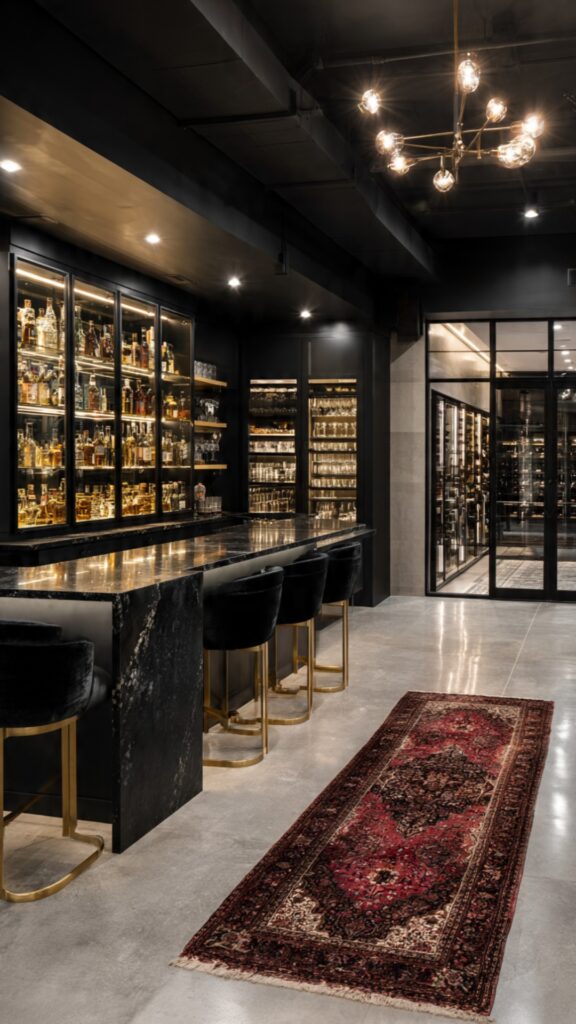
The integration of smart home technology into basement bar ideas design is accelerating rapidly, and the possibilities go well beyond voice-controlled lighting. A truly smart basement bar ideas use automation to manage the guest experience from the moment someone walks downstairs to the ambiance during a late-night gathering in ways that feel effortless rather than gimmicky. Getting this right is about choosing technology that serves genuine needs rather than adding complexity for its own sake.
Lighting is the most impactful smart home upgrade in a bar environment. A Lutron Caseta or Philips Hue system allows you to create and recall lighting scenes “Party Mode” (full brightness, color-shifting LEDs), “Cocktail Hour” (warm, dimmed ambient light with bar task lighting on), and “Movie Time” (nearly dark with only subtle accent lighting) from a single button press or voice command.
This level of lighting control is what professional bars pay designers to create, and it’s now accessible in a home setting for a few hundred dollars in hardware. Smart appliance integration is the next frontier. A smart wine cooler that reports temperature and humidity to your phone, a connected kegerator that tracks keg levels and CO2 pressure, and a refrigerator with a built-in camera (so you can check what needs restocking from the grocery store) all add genuine functional value.
A small tablet mounted in the bar backsplash running a cocktail recipe app or a digital cocktail menu for parties is a low-cost detail with high visual impact and real practical use. Audio zoning deserves special attention. A Sonos or Denon HEOS system with in-ceiling speakers allows you to play different music in the bar area versus a connected outdoor space, control volume by zone, and integrate with streaming services all from a phone.
Critically, in a multi-zone setup you can keep the basement bar ideas at party energy levels while the rest of the house stays quiet. For a basement bar ideas that sees regular use, this kind of thoughtful audio design is not a luxury it’s a quality-of-life feature that you’ll appreciate every single time you use the space.
Conclusion
A well-designed basement bar ideas is far more than a home upgrade it’s the room that becomes the heart of your home’s social life, a personal retreat, and a lasting investment in your property’s value. Whether you go all-in on a cinematic speakeasy, build a practical craft beer station, or carve out a compact but beautifully curated cocktail corner, the right basement bar ideas is the one that fits how you actually live and entertain.
Start with the concept that excites you most, plan the plumbing and electrical infrastructure first, and build the rest around what brings your vision to life. Your perfect basement bar ideas is closer and more achievable than you might think.

Team TrandyVilla is the passionate home decor team behind Trandy Villa, where style meets comfort in everyday living. The team loves transforming simple spaces into beautiful, functional homes through smart ideas, budget-friendly hacks, and modern design trends. Their content focuses on helping readers create homes that feel both stylish and personal without spending too much.