
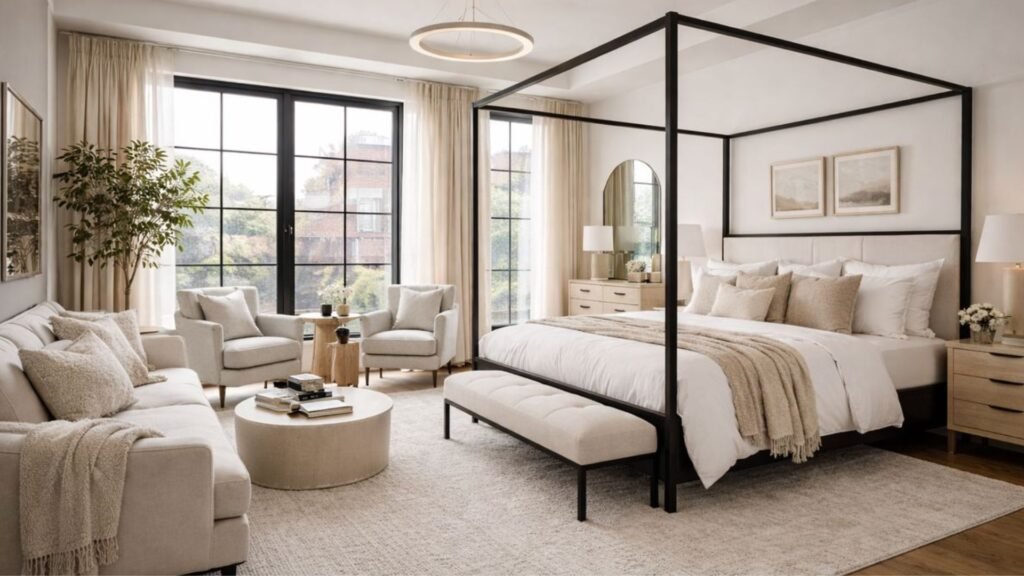
A Bedroom Rug is a soft floor covering that adds comfort, warmth, and style to a bedroom. It defines the sleeping area and creates a cozy feel. The right rug improves the room’s balance, supports your décor, and makes every step more comfortable. Bedroom Rug Ideas help you choose the best size, material, color, and placement.
A well-chosen Bedroom Rug can completely refresh your space without a full makeover. It adds texture, softens hard flooring, and creates a welcoming atmosphere. Smart styling choices also improve comfort, enhance visual appeal, and give your bedroom a polished, finished look.
Bedroom Rug Ideas include oversized rugs, layered designs, neutral colors, bold patterns, and natural materials. Each idea suits different room sizes and decorating styles. Simple placement tips and quality materials improve both function and appearance. These ideas help create a comfortable, stylish, and timeless bedroom.
Go Large or Go Home:
The Oversized Rug Approach
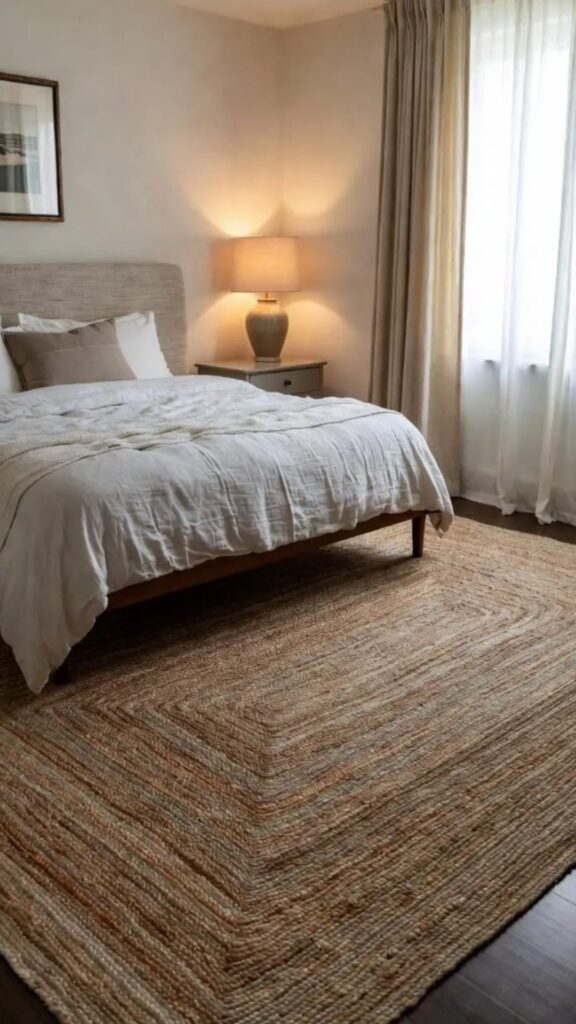
One of the most common bedroom rug mistakes is choosing a rug that’s too small. An undersized rug floats awkwardly in the room, making the space feel disconnected and cheap. Interior designers consistently recommend going at least one size larger than your first instinct. For a queen-sized bed, an 8×10 rug is the minimum a 9×12 is often better. For a king bed, a 10×14 gives the most grounded, luxurious feel.
The oversized rug approach works because it visually anchors the bed to the floor, making the entire room feel intentional and cohesive. When you place a large rug so that it extends at least 18–24 inches beyond each side of the bed, you create a soft landing zone that feels genuinely luxurious every morning. This is especially effective in rooms with hardwood or tile floors where bare feet meet cold surfaces.
A practical tip most guides skip: always pair your oversized rug with a quality rug pad. Not only does this prevent slipping, but it also lifts the pile slightly, making even mid-range rugs feel more plush and premium. Look for pads made from natural rubber and felt, which grip better and last longer than foam alternatives.
For future-proofing your choice, opt for neutral base tones warm ivory, soft taupe, or greige in an oversized format. These colors hold their versatility across furniture changes and seasonal decor shifts, making the investment stretch further over time.
Layer It Up:
The Rug-on-Rug Trend
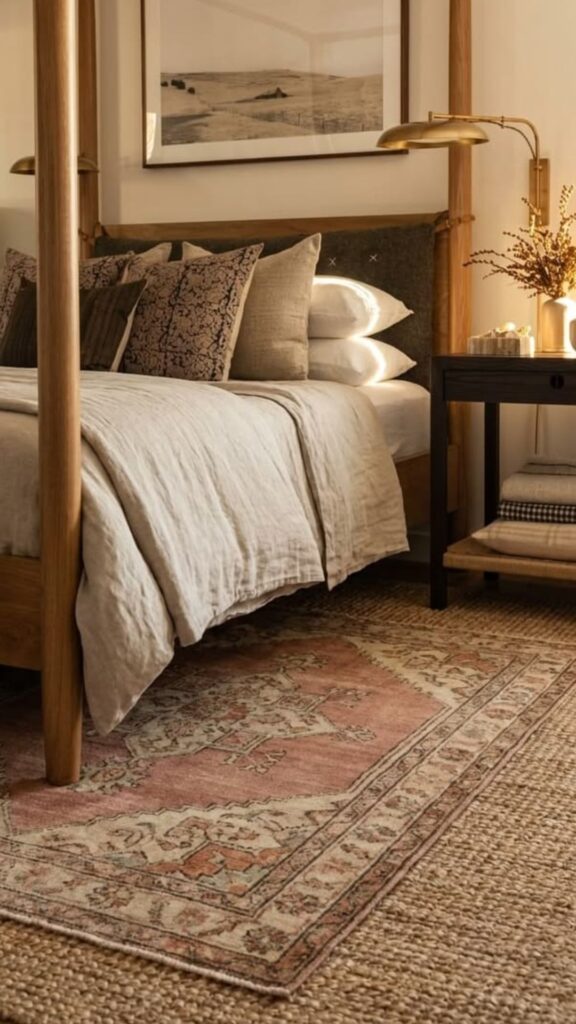
Layering rugs is a designer technique that has moved firmly into mainstream bedroom design, and for good reason. The method involves placing a smaller, more decorative rug on top of a larger, neutral foundation rug. This creates visual depth, texture contrast, and allows you to introduce bold patterns without overwhelming the room. It’s also a budget-smart strategy: use a simple jute or sisal base rug (affordable and durable) and layer a more luxurious or patterned piece on top.
The most effective layered bedroom rug ideas combination pair different textures think a flat-weave kilim or printed cotton rug layered over a plush wool or shag base. The contrast between smooth and fluffy creates an artisan, well-traveled aesthetic that feels curated rather than decorated. For a bohemian bedroom, try a Moroccan-style beni ourain over a natural jute. For a contemporary space, a geometric wool layer over a simple linen base works beautifully.
Sizing matters a lot in layered arrangements. The base rug should be large enough to frame the bed (an 8×10 minimum), while the top rug should sit in the middle third roughly a 5×7 or 4×6 so both layers are clearly visible. Avoid centering the top rug perfectly; a slight off-center placement looks more organic and intentional.
A tip competitors often miss: when layering, make sure both rugs have rug pads beneath them one under the base rug and a thin non-slip mat between the two layers. This prevents creeping, bunching, and the frustrating daily reset that makes layering feel like a hassle rather than a design win.
Cannot Miss This: Master Bedroom Decor Ideas That Show How a Perfect Rug Ties Your Whole Bedroom Together
Placement Perfection:
The ⅔ Under the Bed Rule
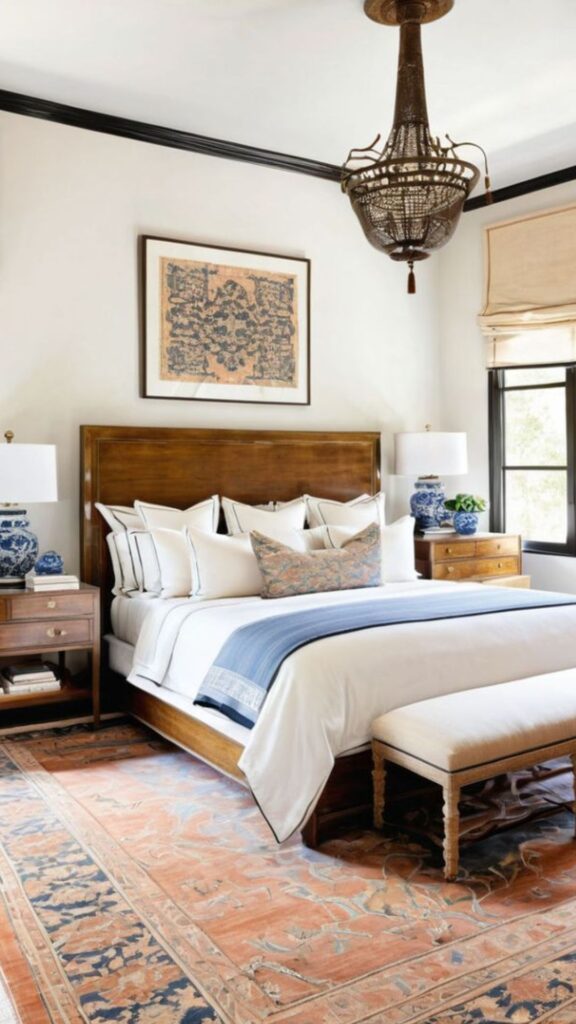
Rug placement is where most bedroom designs silently fail. Even a beautiful, expensive rug will look wrong if it’s positioned poorly. The golden rule followed by professional interior designers is the two-thirds rule: the rug should extend roughly two-thirds of the bed’s length from the foot of the bed inward meaning the headboard end of the bed sits on the floor, while the foot of the bed and about 18–24 inches beyond it rest on the rug.
This placement method works for several reasons. It keeps the rug visible and functional in the areas where you actually step (beside the bed and at the foot), without requiring you to buy an enormous rug to cover the hidden area under the entire bed frame. It’s also practical for maintenance you can access most of the rug for cleaning and rotation without moving heavy furniture.
An alternative approach that works in smaller rooms is to place the rug entirely at the foot of the bed in a horizontal runner configuration. A 2.5×8 or 3×10 runner placed across the foot of the bed adds a grounding element and a soft step-down spot without taking over the floor plan. This is particularly effective in narrow or rectangular bedroom layouts where a standard area rug would feel cramped.
For rooms with nightstands, placing two matching accent rugs one on each side of the bed is another approach that’s gaining traction. This works especially well in modern and Scandinavian bedroom designs where symmetry, simplicity, and functionality are prioritized over decorative layering.
Material Matters:
Choosing the Right Rug Fiber for Your Bedroom
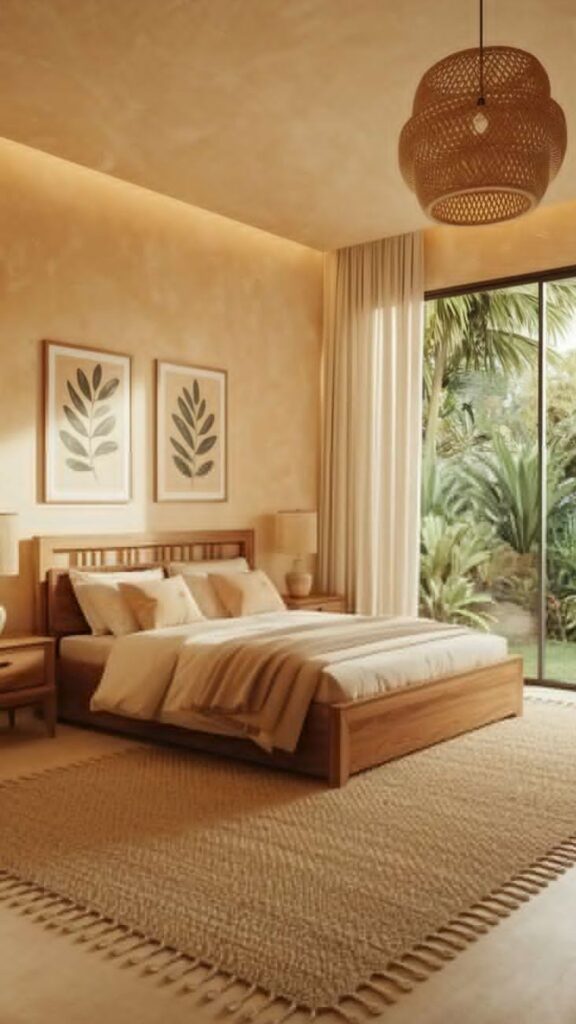
The material of your bedroom rug affects not just how it looks, but how it feels underfoot, how it performs over time, and how easy it is to maintain. Most bedroom rug guides stop at “wool is great” but the real decision matrix is more nuanced than that. Wool is indeed the gold standard: it’s naturally resilient, regulates temperature, resists soil, and gets softer with age. However, it carries a higher price tag and can feel coarser initially compared to synthetic alternatives.
For budget-conscious shoppers, polypropylene (synthetic) rugs offer impressive durability and stain resistance, making them a practical choice for households with pets or children. The downside is they don’t breathe as well as natural fibers and can feel slightly plastic-like in lower quality versions. Cotton rugs are soft and washable a genuine advantage in bedrooms but they flatten quickly under furniture and need more frequent cleaning.
Viscose and bamboo silk rugs have surged in popularity because of their silky sheen and luxurious appearance at a lower cost than true silk. However, they’re notoriously difficult to clean and highly sensitive to moisture, making them a poor long-term choice for high-humidity climates or rooms prone to spills. If you love the look, reserve viscose rugs for low-traffic areas or use them as decorative accent pieces rather than primary floor coverings.
The fiber that’s genuinely underrated in bedroom design is hand-knotted or hand-tufted wool-cotton blends. These combine the durability of wool with the softness of cotton, often at a mid-range price point. They’re a smart investment for anyone who wants a rug that improves aesthetically over years of use rather than degrading a quality most synthetic rugs simply can’t match.
Must Read: Coastal Bedroom Ideas That Prove How the Right Rug Brings a Fresh Beachy Vibe to Your Room
Color Strategy:
Using Rugs to Build a Bedroom Color Palette
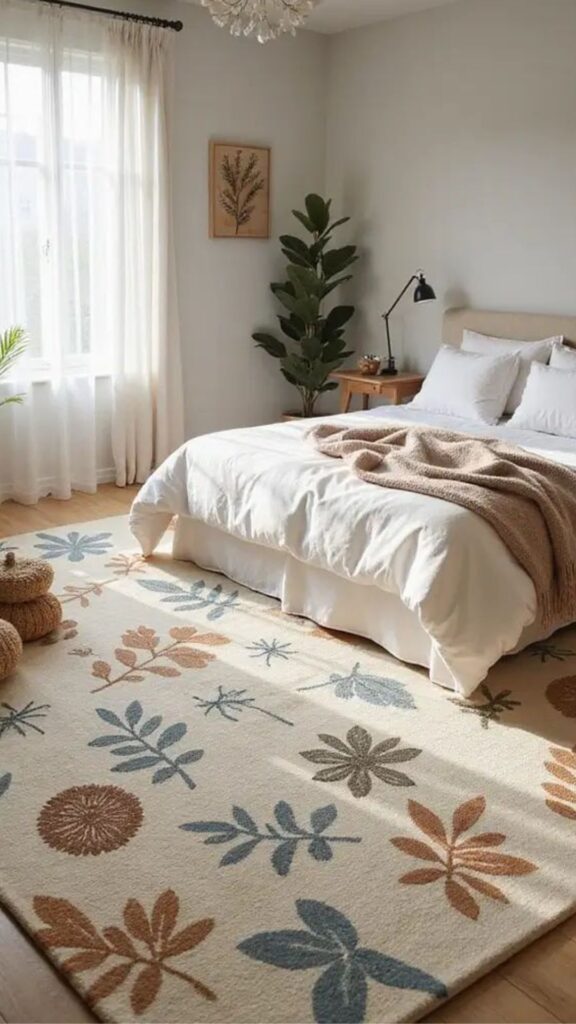
Your bedroom rug is often the largest single piece of color in the room, which means it plays a foundational role in your overall palette. Rather than choosing a rug color that simply matches your bedding, designers recommend using the rug as the palette anchor selecting it first, then building wall color, linen, and furniture tones around it. This approach creates rooms that feel designed rather than assembled.
Neutral bedroom rugs in shades of cream, oat, stone, sand, and soft grey offer the most flexibility and longevity. They work across seasonal bedding swaps and furniture changes without clashing. However, a purely neutral bedroom can feel flat. The smarter approach is to choose a rug with a subtle variation: a cream rug with a thin geometric border, a taupe base with faint abstract pattern, or a grey rug with a heathered texture that catches light differently throughout the day.
For those willing to be bolder, a jewel-toned rug deep teal, terracotta, dusty rose, or forest green can become the single most transformative element in a bedroom. When paired with neutral walls and linen-toned bedding, a bold rug grounds the space in warmth and personality without overwhelming it. The key is to keep everything else restrained so the rug has room to be the statement.
In 2026, earthy and nature-inspired tones are dominating bedroom rug trends: warm clay, muted sage, and burnt sienna are replacing the cooler grey palettes that dominated the previous decade. These tones align with the broader biophilic design movement bringing organic, grounding energy into the bedroom environment and they pair effortlessly with natural wood furniture, linen bedding, and rattan or ceramic accent pieces.
Texture Play:
Shag, Flatweave, and Everything Between
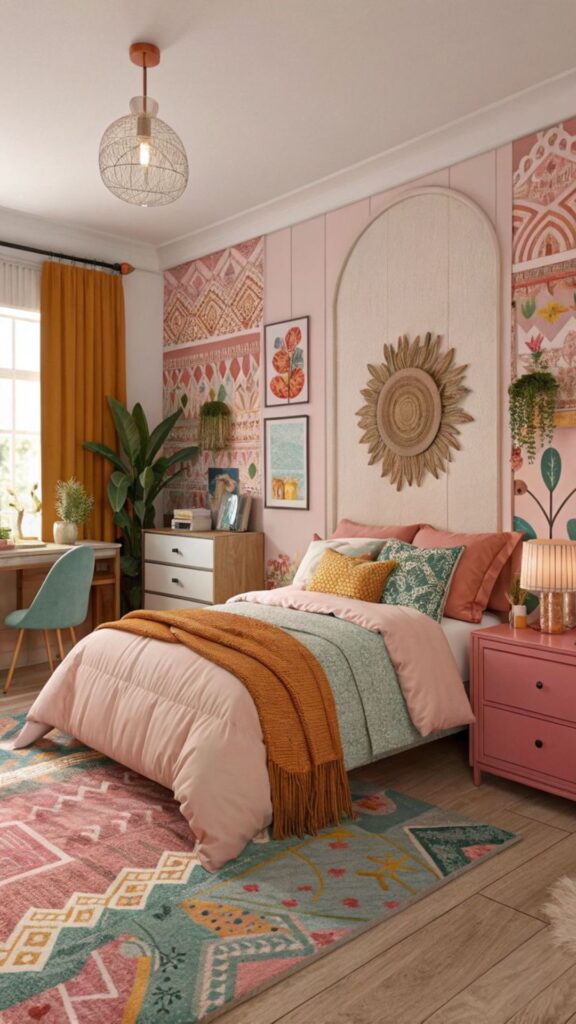
Texture is the dimension of bedroom rug ideas design that photographs can’t fully convey but it’s the dimension you live with every single day. Walking barefoot across a dense wool shag rug on a cold morning is a fundamentally different sensory experience than stepping onto a flatweave cotton kilim. Getting texture right for your lifestyle and comfort preferences matters just as much as getting the color or pattern right.
High-pile and shag rugs with pile heights above 0.75 inches deliver that cloud-like, sink-in-your-feet feeling that makes a bedroom feel indulgent and cozy. They’re especially effective in minimalist or Scandinavian bedrooms where the visual simplicity of the design is balanced by tactile richness underfoot. However, high-pile rugs trap more dust and pet hair, require more frequent vacuuming, and can be harder to move furniture on. A robot vacuum will struggle with deep-pile rugs, worth noting if that’s part of your cleaning routine.
Low-pile and flatweave rugs offer the opposite trade-off: they’re easier to clean, work better under rolling furniture or chairs, and photograph beautifully with their intricate patterns clearly visible. Dhurrie rugs, kilims, and flatweave wool rugs fall into this category and bring a global-inspired, artisanal quality to bedroom design. Their one downside is that they offer less cushioning underfoot pairing them with a thick felt rug pad largely solves this problem.
Medium-pile rugs (0.25–0.75 inch pile height) hit the sweet spot for most bedrooms: enough softness for comfort, enough density for durability, and enough visual presence to anchor the space. Hand-tufted wool rugs in this pile range are the workhorses of bedroom design versatile, long-lasting, and comfortable across every season.
Pattern and Print:
How to Use Design Without Overwhelming the Room
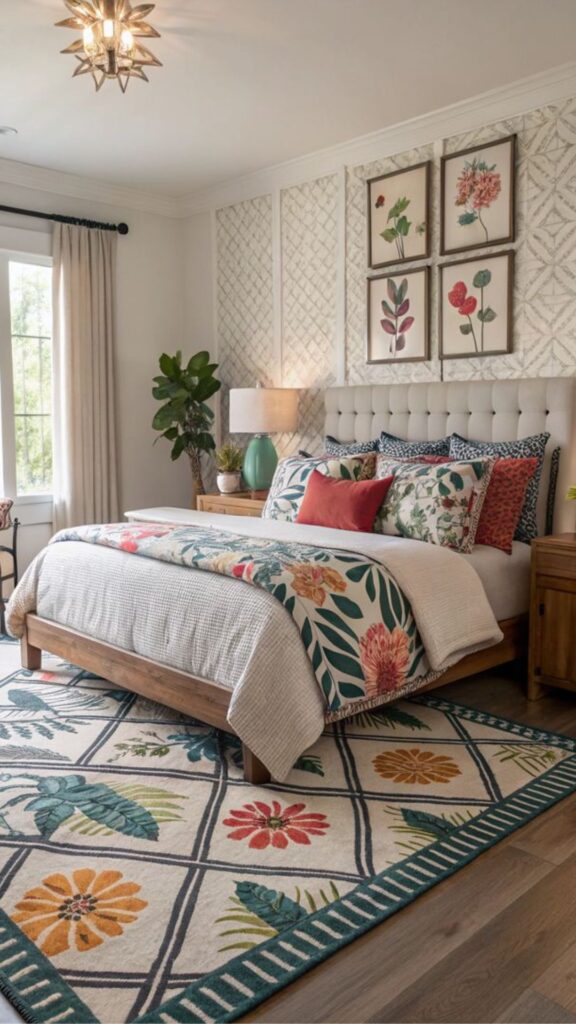
Pattern selection is where many bedroom rug projects go wrong either playing it too safe with a completely blank rug, or going so bold that the pattern competes with everything else in the room. The key is understanding pattern scale and how it interacts with your existing bedroom elements. A large-scale geometric pattern on a rug can anchor a minimalist bedroom beautifully, but the same pattern in a room with patterned wallpaper, printed bedding, and busy curtains becomes visual noise.
The most reliable approach for integrating pattern into a bedroom rug is the 60-30-10 color rule applied to pattern density. If your bedroom has mostly solid surfaces painted walls, plain bedding, simple furniture you have runway for a medium-to-bold patterned rug. If your room already has one patterned element (say, a floral wallpaper or a graphic headboard), keep the rug subtle: a tonal damask, a tone-on-tone geometric, or a simple border design.
Traditional and global patterns are having a significant resurgence in 2026 bedroom design. Persian-inspired medallion rugs, Moroccan lattice designs, and South American kilim-style prints are all finding their way into contemporary bedrooms often paired with modern, clean-lined furniture for an intentional eclectic effect. This fusion of old-world pattern and modern simplicity is one of the most compelling bedroom design directions right now.
Abstract and organic patterns watercolor-style blends, botanical prints, and hand-drawn irregular geometrics offer a softer entry point for anyone drawn to pattern but nervous about it feeling too traditional or too bold. These patterns read as artistic rather than decorative, and they adapt exceptionally well to changing bedroom styles over time.
You Deserve to See This: Sage Green Accent Wall Ideas That Pair Beautifully with a Stunning Bedroom Rug
Small Bedroom Solutions:
Rugs That Make Compact Spaces Feel Larger
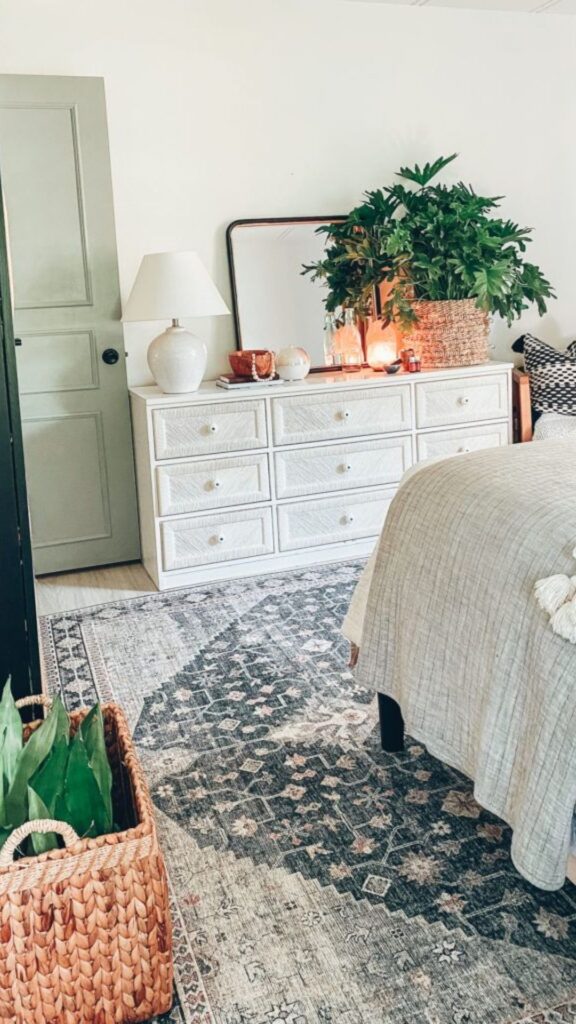
A common misconception is that small bedrooms should use small rugs. In reality, the opposite is often true. A small rug in a small room draws attention to the room’s limited size, while a correctly sized larger rug placed strategically can make a compact bedroom feel more expansive, defined, and intentional. The trick is choosing the right size relative to the bed, not the room.
For a small bedroom with a full or queen bed, an 8×10 rug placed so it extends beyond the sides and foot of the bed will feel proportionate and grounding rather than overwhelming. Choose a rug in a light or neutral tone soft ivory, warm white, pale blush to keep the visual weight low and maintain an airy feel. Dark rugs in small bedrooms absorb visual space rather than expanding it.
Pattern and direction can also be used strategically in compact bedrooms. A rug with a linear pattern subtle stripes or a grid oriented with the lines running the length of the room creates an optical elongation effect, making the room feel deeper than it is. This is the same principle used with striped flooring in narrow spaces. Even a slight directional quality in an abstract pattern can contribute to this effect.
Flatweave rugs are particularly well-suited to small bedrooms because their low profile keeps the room from feeling visually crowded. They also allow easier traffic flow around a bed in a tight space, since there’s no high pile to trip on or bunch up against furniture legs. Pair a flatweave with a quality cushioned rug pad to compensate for the reduced underfoot softness.
Sustainable and Ethical Bedroom Rugs:
The Future-Forward Choice
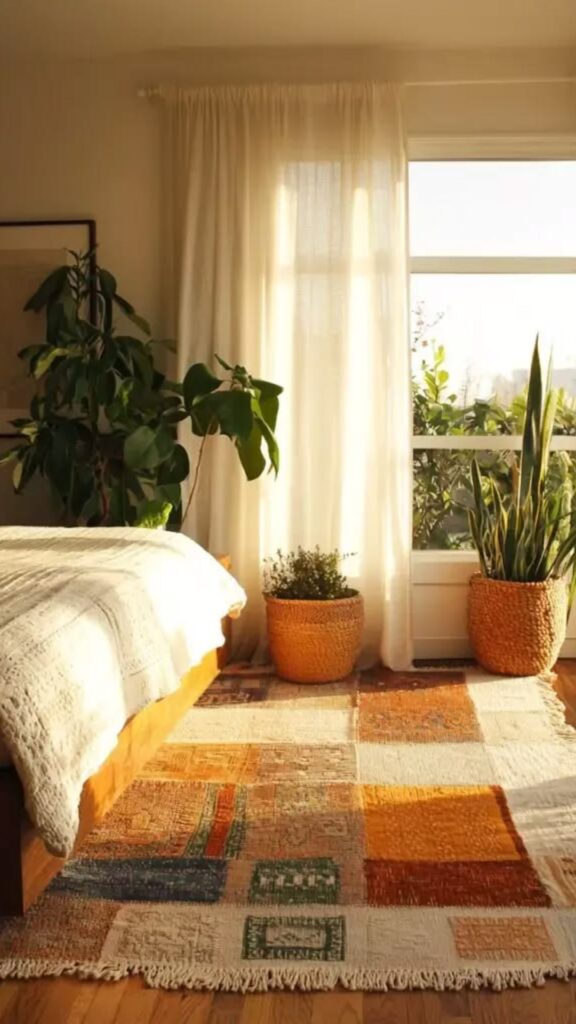
Sustainability has moved from a niche consideration to a mainstream priority in home furnishings, and bedroom rugs are no exception. The rug industry has historically involved significant environmental impact chemical dyes, synthetic fibers derived from petroleum, poor labor conditions, and high carbon footprints from long supply chains. However, the landscape is shifting, and 2026 offers more genuinely sustainable options than ever before.
Natural fiber rugs wool, jute, sisal, seagrass, and organic cotton are the most straightforward sustainable choice. Wool in particular is a renewable, biodegradable fiber that sequesters carbon during its growth and naturally resists flame, soil, and mildew without chemical treatments. Look for wool rugs certified by the Responsible Wool Standard (RWS), which ensures animal welfare and sustainable land management throughout the supply chain.
Hand-knotted rugs from artisan communities in Nepal, India, Morocco, and Turkey carry their own form of sustainability: they’re made without power machinery, support traditional craft economies, and are built to last decades rather than years. A hand-knotted wool rug with proper care can outlast multiple generations of mass-produced alternatives, making it a significantly lower long-term environmental impact choice despite the higher upfront cost.
Recycled material rugs are also becoming a serious design option, not just an eco-compromise. Brands are now producing genuinely attractive bedroom rugs from recycled PET plastic bottles, upcycled denim, and reclaimed fibers. These rugs have improved dramatically in quality and appearance, offering durability and texture variety that competes meaningfully with virgin synthetic rugs while keeping waste materials out of landfills and oceans.
Conclusion
Choosing the right bedroom rug comes down to three things: size (always go larger than you think), material (match the fiber to your lifestyle), and placement (the ⅔ rule rarely fails). Whether you’re layering textures for a designer look, going bold with a jewel-toned statement piece, or investing in a sustainable hand-knotted heirloom, the right bedroom rug ideas can completely transform how your space feels to live in. Take one of these ideas and test it even a single well-placed rug can make a bedroom feel finished, warm, and entirely your own.

Team TrandyVilla is the passionate home decor team behind Trandy Villa, where style meets comfort in everyday living. The team loves transforming simple spaces into beautiful, functional homes through smart ideas, budget-friendly hacks, and modern design trends. Their content focuses on helping readers create homes that feel both stylish and personal without spending too much.