
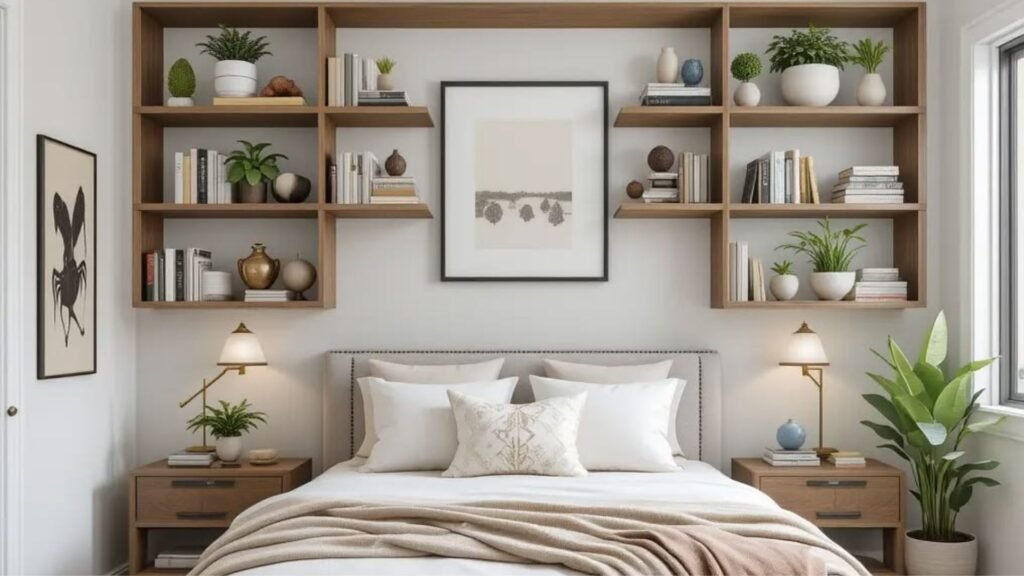
Bedroom shelving ideas help organize and decorate a bedroom with smart storage solutions. They use wall space, corners, or built-in shelves to hold books, décor, plants, and everyday essentials. These ideas reduce clutter, improve room layout, and create a clean, stylish, and functional living space.
Bedroom shelving offers a simple way to add storage without taking up extra floor space. It keeps essentials within easy reach while displaying decorative accents neatly. Smart shelf placement improves organization, enhances room style, and creates a balanced, comfortable bedroom that feels both practical and inviting every day.
Bedroom shelving ideas suit bedrooms of every size and design style. Floating shelves, corner units, ladder shelves, and built-in storage provide flexible options for different needs. The right shelving solution adds character, maximizes available space, and keeps the bedroom organized with a polished and welcoming appearance.
Floating Shelves Above the Bed
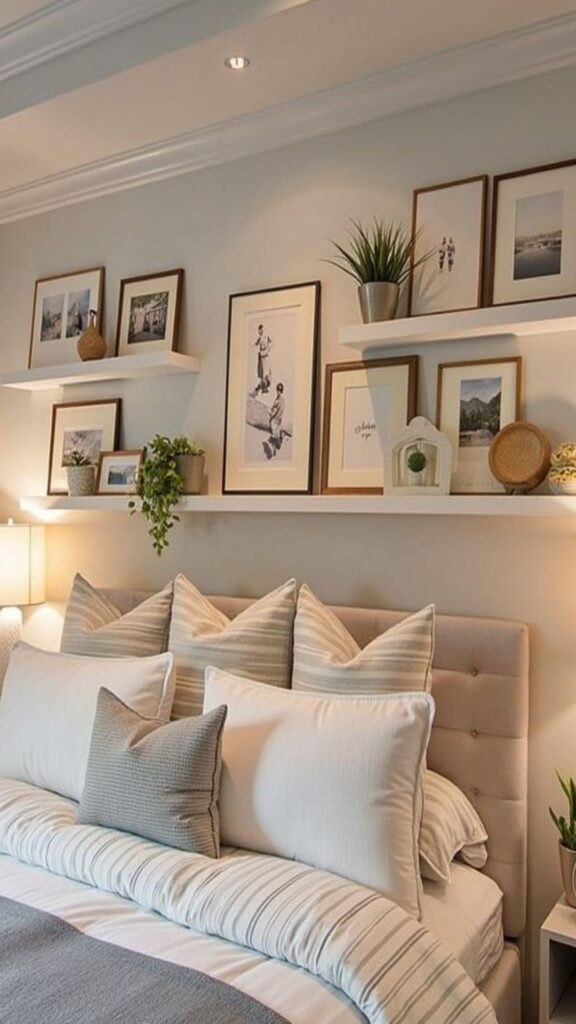
Floating shelves installed above the headboard are one of the most popular bedroom shelving ideas because they use vertical space that’s otherwise wasted. A pair of 24–36 inch shelves mounted with hidden brackets can hold books, framed photos, or a small reading lamp without eating into floor area. For safety, always anchor into wall studs rather than drywall alone, especially if you plan to display anything breakable directly above sleeping heads.
The visual impact is significant even with minimal effort. Staggering two or three shelves at slightly different heights creates a gallery-wall effect that feels curated rather than accidental. In a rented apartment, look for tension-mounted or adhesive-strip shelf systems that avoid drilling, since many landlords restrict wall damage. These hold up to 15–20 pounds depending on the brand, which is enough for lightweight decor.
One mistake homeowners make is overloading these shelves with heavy items like stacked hardcover books or ceramic lamps. This creates both a safety risk during sleep and a visually heavy look that can make a small bedroom feel cramped. Instead, treat above-bed shelving like a rotating display swap items seasonally to keep the space feeling fresh and intentional rather than static.
Corner Shelving Units
For Awkward Spaces
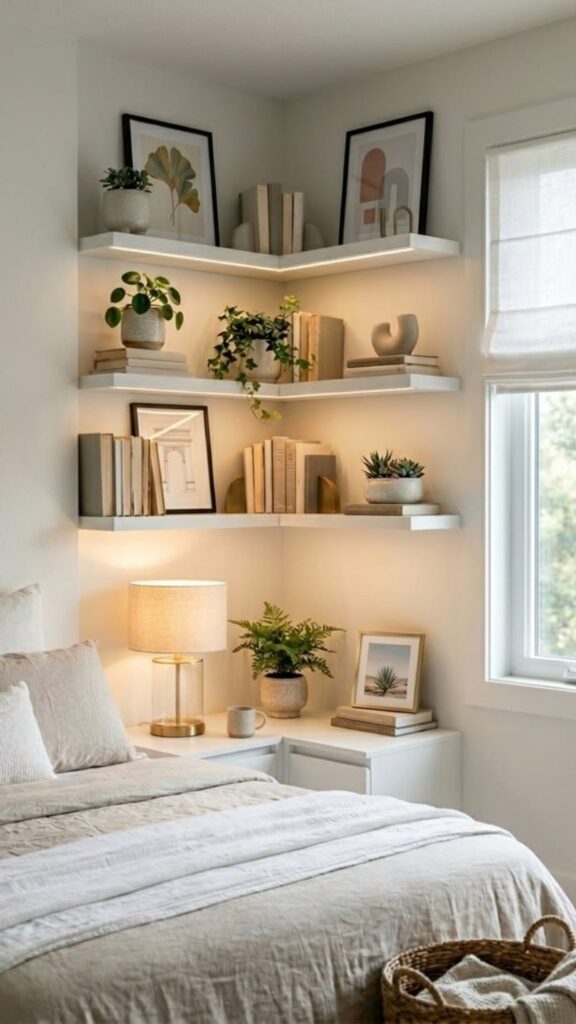
Bedroom corners are frequently ignored, yet they’re some of the most valuable square footage in the room. Corner shelving units, whether triangular floating shelves or a tall corner bookcase, turn dead space into functional storage. This works particularly well in bedrooms with limited wall length due to windows, doors, or closets interrupting flat surfaces.
A five-tier corner shelf can hold everything from folded sweaters to a small plant collection, and because it doesn’t project far into the room, it rarely disrupts walking paths. For renters or those on a budget, freestanding corner units require no installation and can be relocated easily. Homeowners who want a built-in look can commission custom corner shelving that follows the wall angle precisely, which adds resale value to the home.
A subtle design tip most articles miss: paint the inside back panel of a corner shelf a contrasting color, like a deep terracotta or forest green, to make the storage area feel like an intentional design feature rather than an afterthought. This technique, borrowed from retail display design, draws the eye and makes even a basic corner unit look custom-built.
Stop Scrolling for This: Bedroom Wall Decor Ideas That Show How Beautiful Shelving Can Transform Your Whole Bedroom
Built-In Wall Shelving Around a Headboard
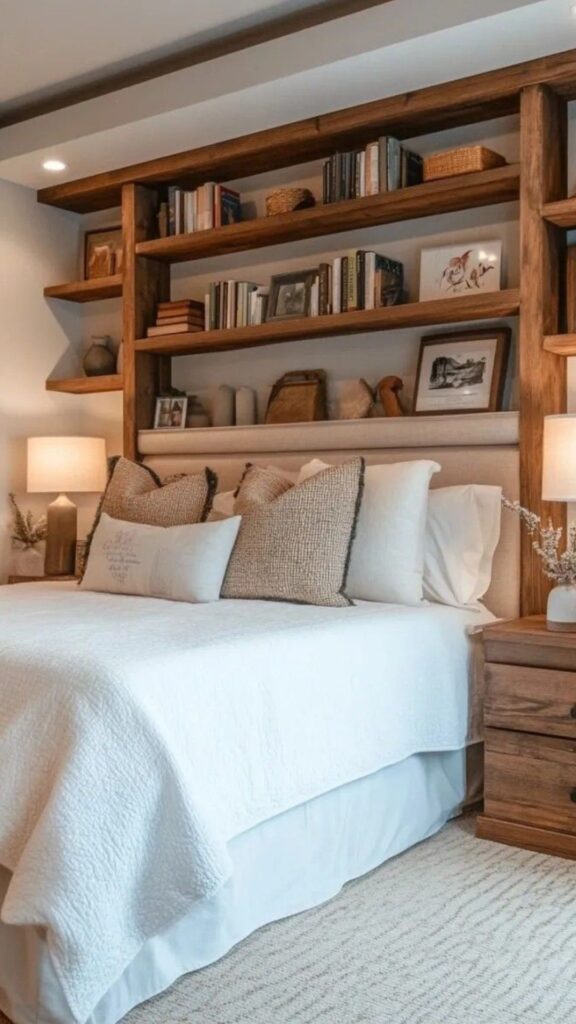
Built-in shelving that wraps around or flanks a headboard creates a cohesive, hotel-style focal point while doubling as a nightstand replacement. This bedroom shelving idea is especially effective in bedrooms with an existing wall niche or in newly built homes where framing can accommodate recessed shelves. The result is a headboard that looks architecturally integrated rather than added on.
Because built-ins are permanent, they suit long-term homeowners more than renters. Expect a materials and labor cost typically higher than floating shelf kits, but the payoff is a custom fit with no wasted space and the ability to include hidden outlets or USB charging ports within the shelving structure a detail increasingly requested in 2026 bedroom renovations as more people charge devices bedside overnight.
Consider incorporating soft LED strip lighting along the underside of each shelf. This adds a warm ambient glow for reading without needing a separate lamp, and it visually separates the shelving from the wall for a more dimensional look. Builders report this lighting detail is now one of the most requested upgrades in custom headboard-shelving projects.
Ladder Shelves
For a Relaxed Vertical Look
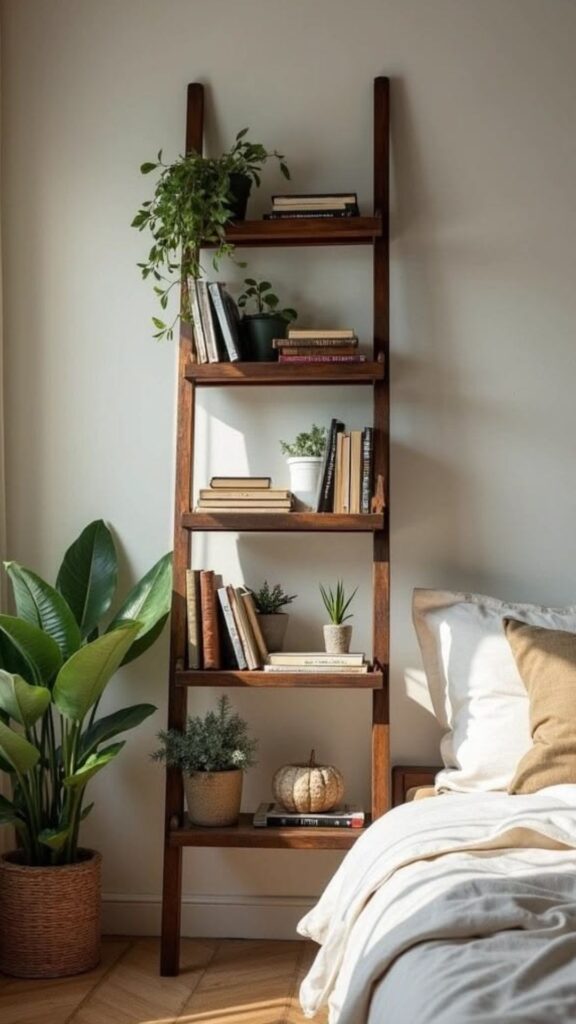
Ladder shelves lean against the wall at an angle, mimicking the shape of an actual ladder, and they’ve become a staple in modern and boho bedroom design. Unlike wall-mounted shelves, they require no drilling, making them ideal for renters or anyone who rearranges furniture often. Their open-back design also keeps the room feeling airy rather than boxed in.
These shelves work best in bedrooms with at least a few feet of unused wall space near a chair or reading corner. A five-rung ladder shelf can display books on lower tiers and lighter decorative items like framed art or a small plant on upper tiers where stability matters less. Because they’re freestanding, always check the manufacturer’s tip-resistance rating if children or pets share the space.
A practical insight many buyers overlook: ladder shelves distribute weight unevenly, with lower shelves handling more stress from the leaning angle. Placing your heaviest items on the second-from-bottom rung, rather than the very top, improves stability significantly and reduces the risk of the unit shifting over time on hardwood or tile flooring.
Open Bookshelf Room Dividers
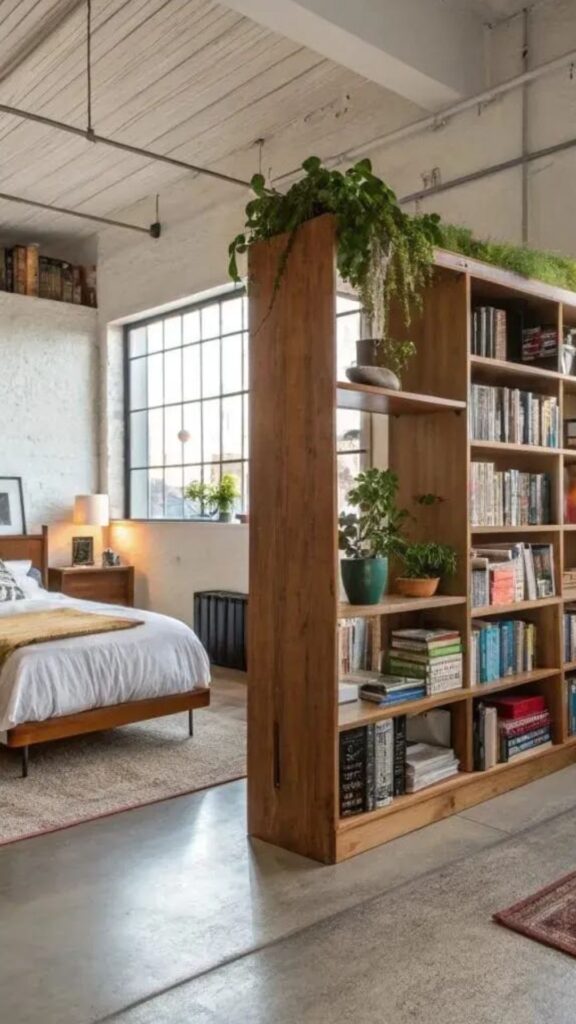
In studio apartments or shared bedrooms, an open bookshelf can double as both storage and a room divider, separating a sleeping area from a workspace or living zone without blocking light. This bedroom shelving idea has grown in popularity alongside the rise of multi-functional micro-living spaces in cities where square footage is at a premium.
Choose a shelving unit with an open back rather than a solid one so light and airflow pass through both sides, keeping the room from feeling divided into two dark boxes. A unit around 5–6 feet tall divides visually without touching the ceiling, which helps maintain a sense of openness. Adding baskets to lower cubbies hides clutter from both sides simultaneously.
Interior designers increasingly recommend anchoring these dividers to the wall or floor with an L-bracket, even though they’re freestanding by design. This prevents tipping in earthquake-prone regions or homes with young children, a safety detail that’s frequently left out of general shelving advice but matters significantly for real households.
Under-Window Shelving Nooks
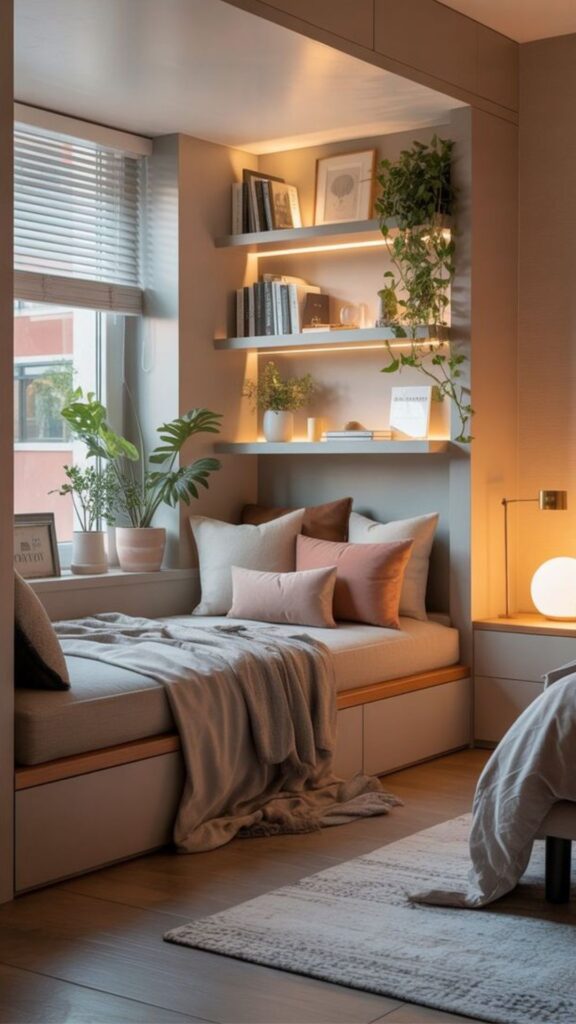
The wall space beneath a window is often left empty, yet it’s perfectly suited for low-profile shelving or a built-in bench with shelves underneath. This idea works particularly well in bedrooms with large windows or window seats, turning an unused nook into a reading corner with built-in storage for blankets, books, or seasonal clothing.
Because this shelving sits below window height, it won’t block natural light, which is a key advantage over taller units placed elsewhere in the room. A shelf depth of 10–12 inches is usually enough to hold folded linens or decorative boxes without protruding too far into the walking path. Adding a cushioned top turns the structure into seating as well as storage.
One detail worth noting: under-window shelving is exposed to more temperature fluctuation and occasional condensation, especially in older homes with single-pane windows. Choosing moisture-resistant materials like sealed engineered wood, rather than raw particleboard, prevents warping over time a durability consideration most shelving guides skip entirely.
Just What You Were Looking For: Walk In Closet Ideas That Inspire Smart and Stylish Shelving for Your Bedroom
Modular Cube Shelving Systems
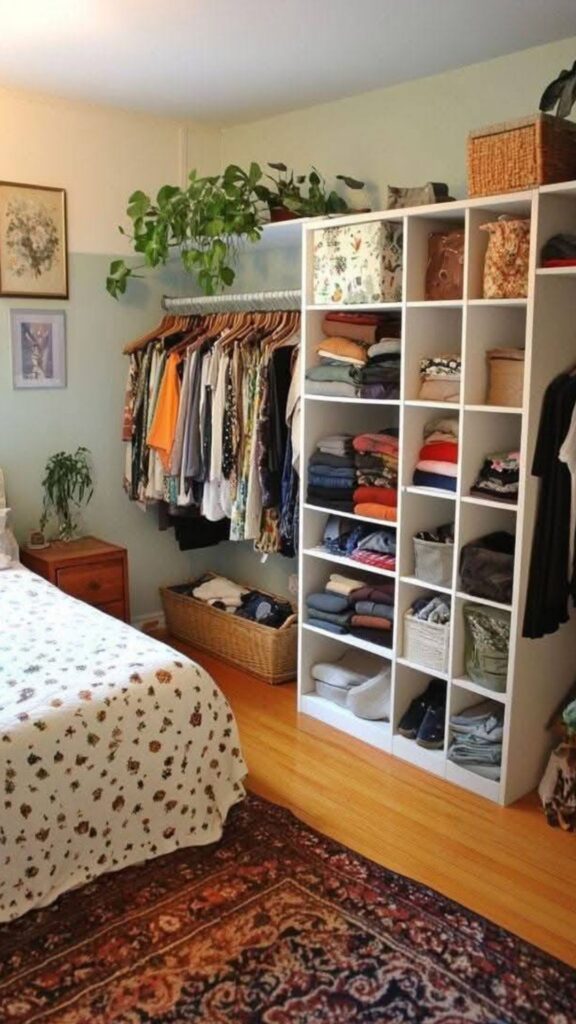
Cube shelving systems, made from stackable square units, offer flexibility that fixed shelving can’t match. Homeowners can rearrange, add, or remove cubes as storage needs change, making this one of the most adaptable bedroom shelving ideas for growing families or frequently moving renters. Cubes can be used vertically as a bookshelf or horizontally as a low media console-style unit.
Mixing open cubes with fabric storage bins creates a balance between visible display and hidden clutter control. For example, books and decorative objects can sit in open cubes at eye level, while off-season clothing or extra bedding stays out of sight in bins on lower cubes. This flexibility makes cube systems especially popular in children’s and teen bedrooms where needs shift yearly.
A frequently overlooked advantage is that modular cubes can be reconfigured without buying new furniture when moving to a different home. A 3×3 grid that fit one wall can become a 2×4 configuration elsewhere, which reduces long-term furniture waste an increasingly relevant point as more consumers prioritize sustainable, adaptable home goods over disposable furniture.
Wall-Mounted Shelves
For a Bedroom Home Office Corner
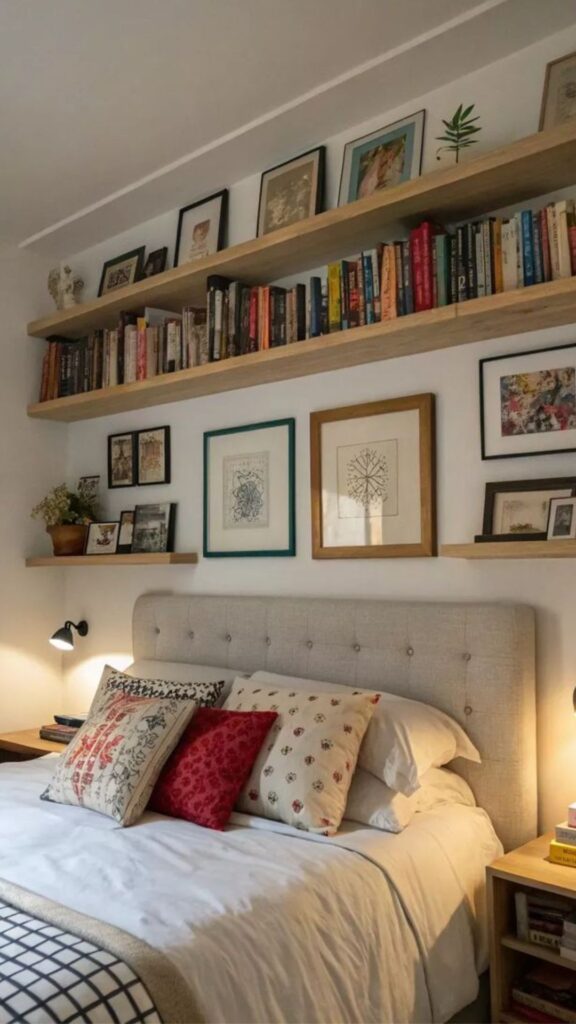
As remote and hybrid work remain common in 2026, many bedrooms now double as part-time home offices. Wall-mounted shelving above a small desk provides storage for files, monitors, or books without requiring a full office setup. This keeps the work zone visually separate from the sleeping area while still fitting within a single room.
Positioning shelves slightly above eye level when seated prevents the space from feeling cramped and keeps the desk surface clear for actual work. A depth of 8–10 inches is usually sufficient for binders, small plants, or a printer, without shelves feeling bulky in a bedroom setting. Choosing a finish that matches the bed frame or nightstands helps the office corner blend into the room’s overall design rather than looking like an afterthought.
A practical tip for better sleep hygiene: keep the shelving directly above the desk visually distinct from shelving near the bed, perhaps through a different shelf color or material. This subtle boundary helps the brain associate one zone with rest and the other with focus, which sleep specialists note can improve both work concentration and sleep quality in shared-purpose rooms.
Hanging or Suspended Shelves
For Minimalist Bedrooms
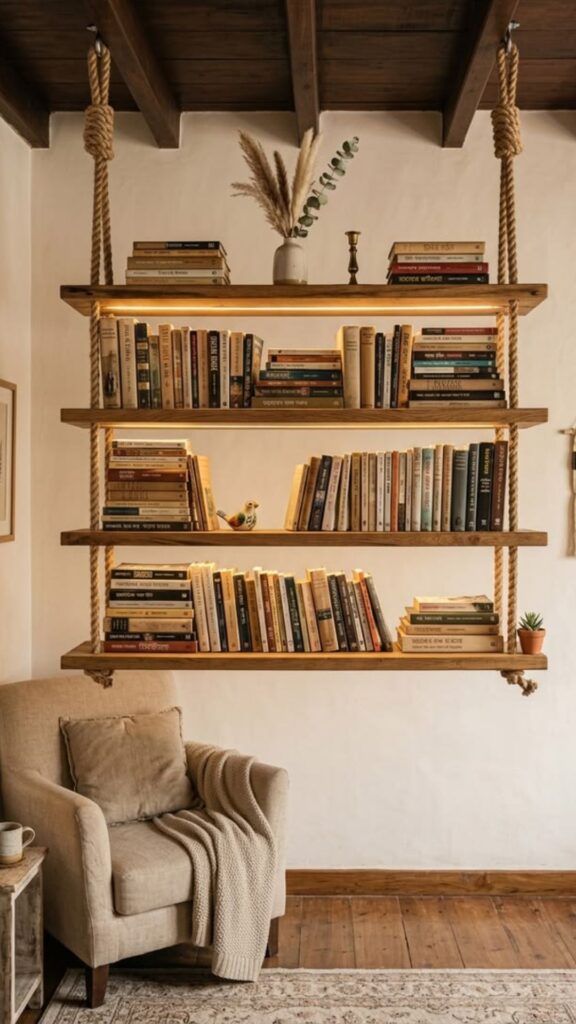
Suspended shelves, hung from the ceiling using rope, chain, or metal rods, add visual interest without touching the wall at all. This bedroom shelving idea suits minimalist or Scandinavian-style interiors where the goal is an airy, uncluttered look. Because the shelf appears to float independently, it draws the eye upward and can make a low-ceilinged room feel taller.
These shelves are best suited to lightweight decorative items rather than heavy storage, since ceiling anchor points typically support less weight than wall studs. A small suspended shelf holding a plant, a candle, or a few paperback books adds character without visual bulk. Installation requires locating ceiling joists accurately, so it’s worth using a stud finder or consulting a professional for anything beyond the lightest décor.
Designers note that suspended shelving works exceptionally well near a window, where the rope or chain casts subtle shadow patterns as natural light shifts throughout the day. This is a small but effective way to add dynamic visual texture to a bedroom without any additional decor something static wall shelves simply can’t replicate.
Closet-to-Shelving Conversions
(Open Wardrobe Shelving)
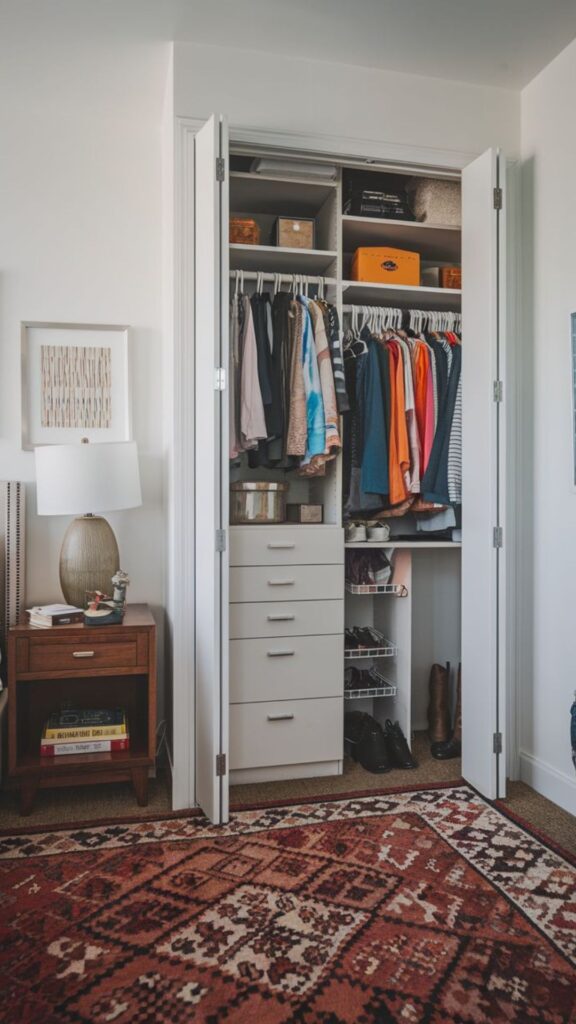
Converting an underused closet into open shelving is a bedroom shelving idea gaining traction as more people embrace visible, organized storage over hidden clutter. Removing closet doors and replacing hanging rods with a mix of shelves and cubbies creates a boutique-style wardrobe display, which works particularly well for those with curated clothing collections or limited closet space elsewhere.
This conversion typically costs less than a full closet renovation since it reuses the existing frame and only requires new shelving inserts. Adding shelf dividers keeps folded clothing from toppling over, while a few open cubbies for shoes or bags adds functional variety. Because everything stays visible, this approach naturally encourages tidier habits, since disorganization is immediately noticeable rather than hidden behind a door.
The main trade-off is dust exposure, since open shelving lacks the protection of closed doors. For bedrooms in dustier climates or homes near construction, reserve open shelving for frequently worn items and keep out-of-season or delicate garments in closed bins on the same shelves a hybrid approach that balances style with practicality.
Floating Nightstand Shelves
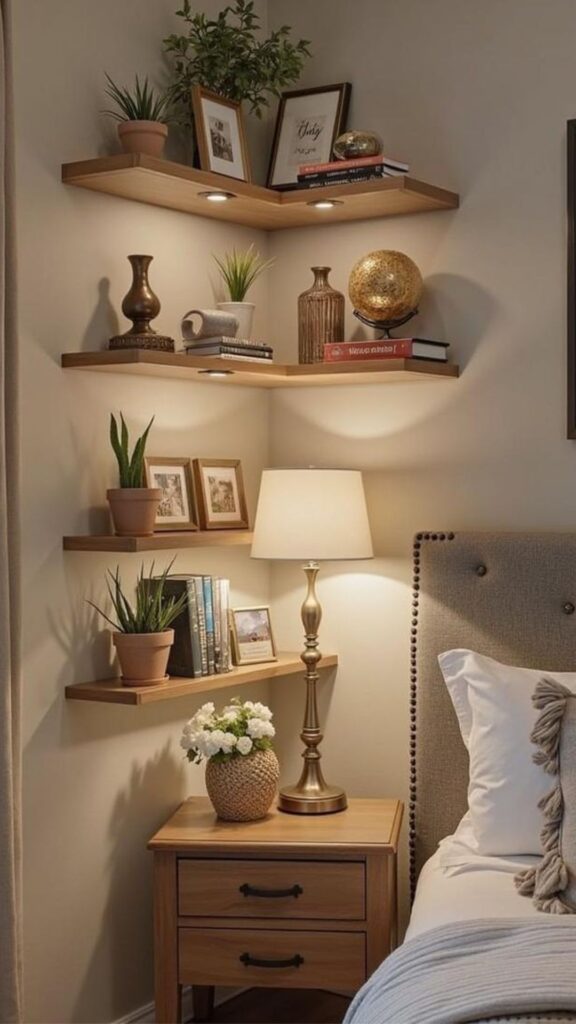
Replacing a traditional nightstand with a small floating shelf is one of the simplest ways to make a bedroom feel more spacious, especially in compact rooms where floor-standing furniture eats into walking space. A single shelf at bed height holds a lamp, phone charger, and a book, covering the essentials without the visual bulk of a full nightstand.
This idea works particularly well in small apartments or guest rooms where every square foot matters. Because the shelf has no legs, cleaning underneath is easier, and the open space beneath visually lowers the furniture’s footprint even though the storage capacity is smaller than a traditional nightstand. Pairing the shelf with a small wall hook for headphones or a robe adds function without adding surface clutter.
A detail worth considering: mount floating nightstand shelves at a height that allows an outlet or charging cable to reach comfortably, since running cords along open wall space can look messy. Planning the shelf placement around existing outlets, rather than the reverse, keeps the finished look clean and avoids visible extension cords near the bed.
Cannot Skip This One: Bathroom Shelf Decor Ideas That Spark Creative Shelving Solutions for Your Bedroom Too
Ceiling-Height Shelving
For Small Bedrooms
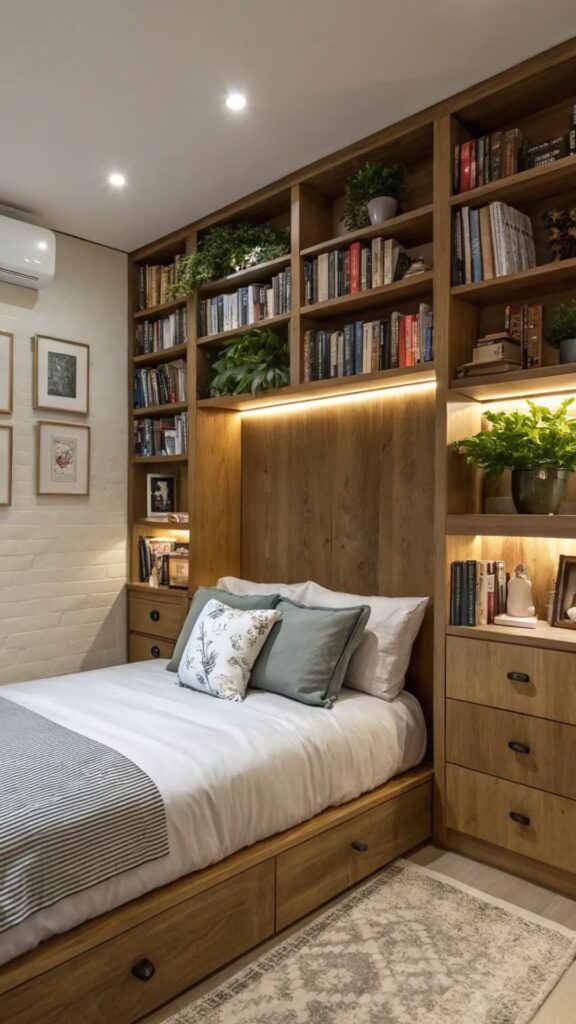
In small bedrooms, building shelving all the way to the ceiling makes full use of vertical space that’s almost always wasted above eye level. This bedroom shelving idea is particularly valuable in city apartments where floor space is limited but ceiling height is standard or above average. Lower shelves hold everyday items, while upper shelves store seasonal or rarely used belongings.
A rolling library ladder adds practicality and a touch of visual drama, making tall shelving both functional and a design statement rather than purely utilitarian. For safety, secure tall units to the wall with anti-tip brackets, since a floor-to-ceiling shelf carries more risk of tipping than a shorter unit, particularly in homes with children.
Painting ceiling-height shelving the same color as the wall behind it is a technique professional designers use to make the unit visually recede, preventing a small room from feeling boxed in despite the large amount of storage. This trick allows homeowners to maximize storage capacity without the shelving visually dominating the room.
Conclusion
These 12 bedroom shelving ideas prove that smart storage doesn’t require sacrificing style or space. From floating shelves to ceiling-height built-ins, there’s a solution for every bedroom size and budget. The key takeaway: choose shelving that matches how you actually live in the room. Ready to declutter and refresh your bedroom? Pick one idea from this guide and start planning your setup this week.

Team TrandyVilla is the passionate home decor team behind Trandy Villa, where style meets comfort in everyday living. The team loves transforming simple spaces into beautiful, functional homes through smart ideas, budget-friendly hacks, and modern design trends. Their content focuses on helping readers create homes that feel both stylish and personal without spending too much.